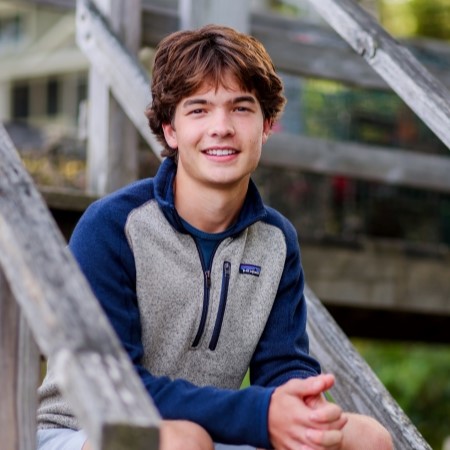
Meet Daily Point of Light Award honoree Nat Rathbone. Read his story, and nominate an outstanding volunteer or family as a Daily Point of Light.
For Nat Rathbone, the hallways of Brunswick High School revealed more than just the usual academic pressures; they highlighted a critical gap in support for a growing population of asylum-seeking peers. Observing that many “New Mainers”—students hailing from Afghanistan, Haiti and the DRC—were navigating a complex new academic system without sufficient resources, Nat stepped in to help. He began as an independent tutor, dedicating roughly 20 to 25 hours a month to guide more than 30 students through the intricacies of math, science and English. Over three years, he’s logged approximately 300 service hours with contributions that go far beyond checking homework. Nat has helped peers write resumes, apply for scholarships and even secure funding for driver’s education, ensuring they had the practical tools to succeed in their new home.
Nat viewed these connections as a two-way street, where he could develop his own communication skills and learn just as much as he taught. While strengthening his grasp of Portuguese, Spanish and Pashto, he immersed himself in the traditions of the students he supported, sharing in West African food, music and dance, and learning about Pashtun customs. These multi-year connections fostered genuine friendships and a profound sense of belonging, proving that inclusion is built on mutual respect and shared experiences.
Realizing that the need for support exceeded what one person could provide, Nat turned his personal initiative into a structural solution. In early 2024, he co-founded Dragon PALS (Partners in Academic Language Support), the school’s first peer-tutoring initiative specifically for multilingual learners. By recruiting 16 fellow students to serve as tutors, he expanded the network of support to upwards of 40 ESOL students. The program has been a massive success, coordinating sessions every other school day and tracking over 1,200 program hours to date.
Nat’s ability to turn observation into organized action has garnered significant recognition, earning him both a school community service award and the prestigious 2025 Young Maine Volunteer of the Year Award. However, his focus remains on expanding the program’s reach through strategic partnerships with community staples like Bowdoin’s McKeen Center, the Amjambo Africa newspaper and the Midcoast New Mainers Group. By building bridges between the school and the broader community, Nat has created a powerful model for youth leadership.
Nat Rathbone, founder of Dragon PALS./Courtesy Nat Rathbone
Tell us about your volunteer role.
I run Dragon PALS, which is my school’s first and only ESOL peer tutoring network. ESOL is English for Speakers of Other Languages, so I tutor multilingual learners in English, science—whatever they need on that specific day. I help out with resumes, as well as applying to scholarships and colleges; that’s a big thing right now. Beyond that, I recruit and coordinate with this team of peer tutors to arrange their tutoring sessions, and I work pretty closely with the ESOL department and some community organizations to expand support.
What inspired you to get started with this initiative?
I got started when I was a freshman. I noticed that there was already a huge community of ESOL learners, with dozens coming over every year from really all around the globe. Then, sophomore year, I became friends with this group of Angolan boys that happened to be in my homeroom. I started helping them out with their homework here and there, nothing super formal. I noticed it wasn’t that they couldn’t understand the material. They just needed somebody else to break it down a little bit more for them. I realized, if these kids have a problem and it’s a fixable one, how many other students are there that could be helped? So from there, I joined together with a couple of my friends, and we kept building.
Why is this issue so important to you?
Public schools have a responsibility to bring a sense of belonging. These kids, a large percentage of them, are seeking asylum—not because their home lives were easy. They’re facing a whole new school, a new language, a new culture and new policies. I want school to feel like more of a doorway than a wall. So I’m just trying to do what I can to open that doorway. I’ve had a wonderful high school experience, and I just want to show that our community is one that can bring in other people and make them feel welcome and a part of it.
What are your long-term plans or goals for the organization?
My next big step is college, wherever that might be. Especially this year, I’ve been working on building up a leadership structure beneath me. We have a super strong junior class, with five or 10 peer tutors who are incredibly committed to the program. I’ve been working on tutoring guides so we can more easily get future tutors in and ease them into the program.
Eventually, I’d love to expand this to other schools in the district. Brunswick is lucky enough to have fantastic community-based organizations and local nonprofits doing great work, so I want to partner with them. Of course, I’m graduating, so this is something I want to see continue. I’d love to bring this work with me, but I also rely on the structure I’ve built here. I think I can still help out with transitions and larger-scale plans, but I can successfully pass this program down as something that won’t fall apart right after I leave.
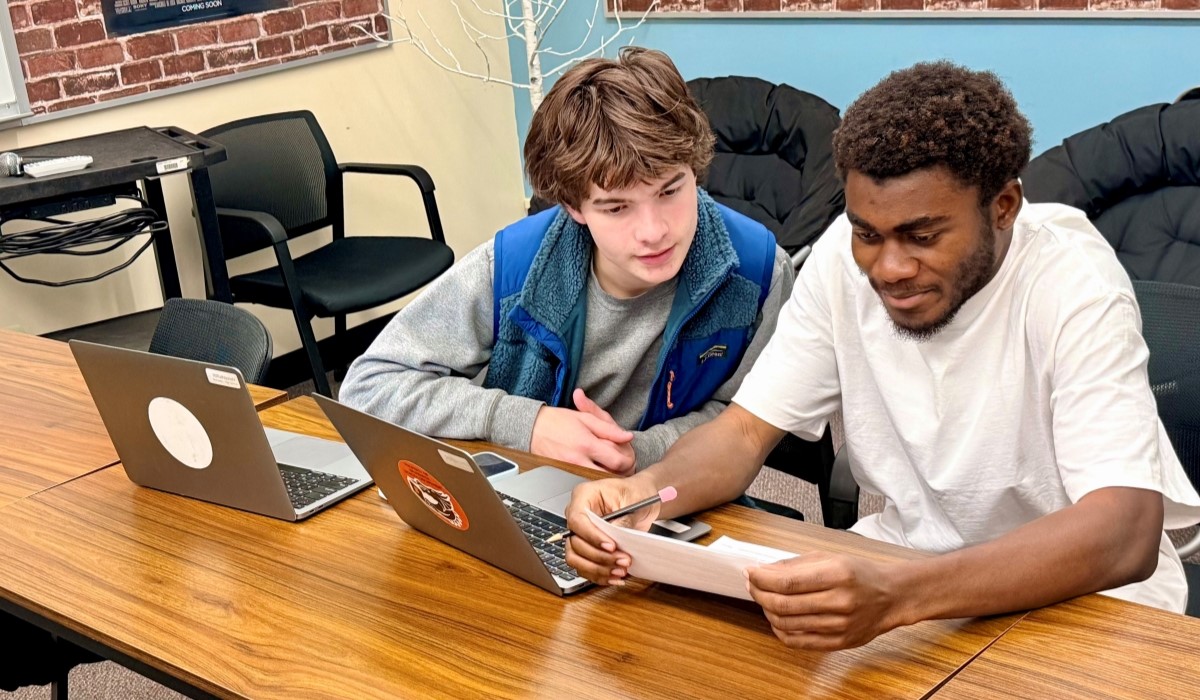
Nat Rathbone, on the left with a blue vest, works with an ESOL student during a Dragon PALS tutoring session./Courtesy Nat Rathbone
What’s been the most rewarding part of your work?
I’ve known some of these kids, really my friends, for going on three years now, and it’s been amazing to see them grow confident. Their English has, of course, blossomed incredibly. They’ve made friends, and I’ve gotten to see their personalities really open up. Sometimes they come here nervous, closed up and scared about school, but some of them have really transformed into these wonderful students and human beings.
Something that’s rewarding is that it’s become a community. I’ve gotten to know one ESOL teacher who has a flex period of ESOL students that I see a couple of days a week, and I’m pretty much best friends with all of them. I get a lot of joy out of it. It’s like making new friends, while also doing something that’s good.
What have you learned through your experiences volunteering?
A big thing is communication in general. It’s not always about language fluency (although I have improved my Spanish and Portuguese skills) but definitely about learning to communicate. Whether it’s body language, using examples or finding methods that might not be how it’s always been done, building mutual understanding between the tutor and the tutee makes things a lot better.
Since I’ve been leading this initiative, I’ve realized that leadership is a lot of behind-the-scenes work. I tutor kids quite a lot, and sometimes I get to do cool things like this, but it’s also a lot of scheduling, spreadsheets and sending a ridiculous amount of emails. In terms of actually helping, a big lesson I’ve learned is to listen to the people I’m trying to help and understand what they actually need, not what I think they need.
Why is it important for others to get involved with causes they care about?
I can speak for myself and say that it’s given me a sense of purpose that school, work or other monotonous things don’t always have the chance to provide. Helping somebody else is a unique thing. I get to expand my world and my worldview. With all the cultures that I get to see, it’s like a big melting pot, and it’s great.
Any advice for people who want to start volunteering?
Start small and consistent. That’s how momentum builds. Consistency will always beat intensity. Don’t worry about scaling things immediately, and don’t worry about it being a note on a resume. If you put in the time, it could turn into something big.
Meet Daily Point of Light Award honoree Charlotte Gould. Read her story, and nominate an outstanding volunteer or family as a Daily Point of Light.
For Charlotte Gould, a needle and thread are tools for healing not just fabric, but self-esteem. Born with a cleft condition herself, Charlotte founded Stitches by Charlotte in 2017 with a poignant mission: to ensure no child faces surgery alone or feels invisible. She creates “surgery companion” dolls that are customized to mirror the children who receive them, featuring stitched smiles and tiny scars that match their own. This labor of love transforms a scary medical journey into a moment of validation, telling each recipient that they are seen and perfect exactly as they are.
Over the past eight years, the dedicated founder has created close to 1,000 custom dolls, sending them to children in every U.S. state and over 15 countries. Each doll serves as a tangible reminder of resilience, providing comfort during vulnerable moments in hospitals. By allowing children to hold a doll that looks just like them, Charlotte provides a profound sense of belonging that helps young patients navigate the complexities of medical procedures with newfound confidence.
Charlotte has also emerged as a powerful voice for the medical community. She currently serves as the president of the Phoenix Children’s Hospital teen board and is a sitting member of the Phoenix Children’s Cleft and Craniofacial Care Center. In these roles, she works tirelessly to prioritize the patient and provider experience, plan community events and raise essential funds. Additionally, working as a facial equality advocate with organizations like Operation Smile and the National Foundation for Ectodermal Dysplasia, she has taken her message all the way to Capitol Hill to champion kindness and inclusion.
Whether she is speaking on racial equality, advocating for facial differences or carefully stitching a smile onto a doll, Charlotte’s goal remains the same: to change the world one smile at a time. Her journey inspires people of all ages to embrace what makes them unique and to lead with love.
Tell us about your organization and volunteer role.
I started Stitches by Charlotte when I was a kid; I think I was 7 years old. The main thing that I do is make surgery companion dolls for kids that are going through medical procedures like I did. I was born with a cleft lip and palate, so I make these dolls for kids that are going through surgeries. Each one comes with a customizable sewing kit so that way a mom, a dad, the doctor, the nurse, the cousins or the big sister can add stitches to the doll to match the scars that the child will have.
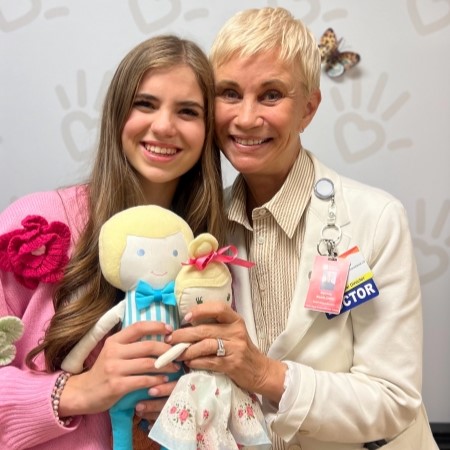
Charlotte Gould and Phoenix Children’s Hospital Cleft & Craniofacial Care Center director, Dr. Patricia Beals, hold dolls sewn by Charlotte./Courtesy Charlotte Gould
It is really just to promote education around medical procedures because it is something that is really terrifying, especially as a young child going through a pediatric procedure. It is also to promote facial inclusivity, because it was really hard for me as a kid to see something that looked exactly like me until I made it for myself. It is just being able to provide children with that tangible look of their medical journey and everything that they are, just really easily and accessibly.
I’m the Arizona advocacy lead for the ELSA bill, which is the Ensuring Lasting Smiles Act. It is a bipartisan bill that guarantees full and complete healthcare coverage for individuals facing surgeries because of their congenital abnormalities. A lot of times with a cleft lip and palate or other congenital craniofacial conditions, surgeries are viewed as cosmetic and not medically necessary.
For me personally, because of my cleft, I cannot breathe through my nose at all. If I were to have surgery to fix that, it would be considered cosmetic because it is a “nose job,” rather than medically necessary, even though I can’t breathe. Insurance companies use these loopholes to deny coverage to a lot of families that need these surgeries for their children. ELSA focuses on closing those loopholes and making sure that every child, or any individual born with a congenital abnormality, gets access to the care they need.
For the past two years, I’ve traveled to Washington, D.C. I’ve been able to speak with congressional members, senators and House representatives about the importance of this bill. I talk to them about my family’s experiences and what this bill would do for families like mine if it were passed. It has been such an incredible experience to be able to meet with the people who are shaping the policies that are impacting the rest of America.
What inspired you to get started with these initiatives?
I had four surgeries as a kid. I have a terrible fear of needles; it is the scariest thing in the world to me. A shot, a needle—any of that is terrifying. My grandma gave me a sewing machine for Christmas when I was a kid, and I was so, so scared of this needle. Then I started sewing, and my Nana kind of guided me through it. It was this scary experience, but I remember trying to push the fabric through, and her hands were over mine. This fear turned into such a productive source of making something.
I was able to make that first doll that looked just like me, and I brought it with me everywhere. When I brought it with me to my doctor’s appointments, the kids sitting next to me would ask for one. It just started as this one doll that was made out of my fear and my need to see myself in something, and it turned into something so much bigger.
Why is it important for kids to see representation in these dolls?
It was really hard for me growing up without seeing anything because Barbies and American Girls don’t have any that represent any medical procedures throughout their doll line. When I was watching TV as a kid, it wasn’t the hero that had a facial difference; it was always the villain that did. That was really hard for me to reconcile: the fact that I thought my cleft was so special and made me so unique, with the fact that society thought it was something that made me a villain, or unworthy in a lot of ways.
I really had to work through that over the past couple of years. I am finally coming to the conclusion that it is okay that that happens, but I know what my cleft means to me. Being able to provide a kid with a doll that shows who they are—so they know that and see that tangible representation—is important. It is also important for them to have someone to look at and think, “Oh, they have a cleft like me, and they are speaking out about it, and they are being a positive influence on their community.” That is why I have stepped into this advocacy role: to speak up and share my story for the kids who haven’t shared theirs yet, or aren’t able to share theirs yet.
What’s the most rewarding part of your work?
Last year, I was able to go into my hospital on a new patient day. There were so many little babies in there, just 3-week-olds, and a lot of girls coming in for checkups. I brought a bunch of dolls with me, and I got to go into a little patient’s room. She had to have been 4 or 5 years old. I handed her a doll that looked like her, and we worked together and added the stitches to it. Then she ran her finger over the doll’s stitches, then over the stitches on her cleft and then pointed at mine. It was just this full-circle moment of being able to give a kid that realization—to see themselves in an object—and then to have them recognize that there are other people who look like them.
What have you learned through your experiences volunteering?
Running an organization like this, I know 100% it takes a village to do it, especially when I was a kid. Because I started at 7 or 8 years old, I didn’t understand how any of the business side of it worked. I just wanted to sew and give my dolls to as many people as possible. So my family had a big role in it. My sister was employee of the month almost every month; she would help stuff all of the dolls, stuffing all the little feet and legs. My mom and my grandma were really big in helping run the social media since I was 8 years old and definitely not running an Instagram.
As I grew older, I did get a lot more autonomy, which is really nice. I am able to be involved in all sides of the business, whether it is the sewing, the packaging and shipping or running the social media aspect. Just from a human side, there is so much kindness and acceptance out there when you look for it. I’ve always said, “Throw kindness like confetti,” because a single smile can change the world. That has been my motto through all of it. It is about going out there and being kind to as many people as you can. Approach every situation with this idea of kindness and acceptance, and try to prioritize curiosity over everything. That is reciprocated so much because you don’t know what someone is going through; just a smile can really change someone’s day.
Why is it important for others to get involved with causes they care about?
If you care about something, there is just so much passion and drive in what you are doing. I think it is important for people to find something that they are passionate about, find a way to change an issue or to create positive change and then just go and do it. There is nothing stopping you from starting a small business or helping with an organization. Just going out and trying to make positive change is so powerful.
Any advice for people who want to start volunteering?
There are organizations all over. I know that Operation Smile is one that I’ve worked with really closely; they have chapters all across America and all across the world. Just find something close by, like a food bank, or volunteer at your local hospital. Find a local organization or something national that has a presence in your city, and just start working with them. Just dive in and see where it takes you because you don’t know. You might end up doing something incredible. That is so powerful and so inspiring.
At the Intersection of Environmentalism and Democracy
Meet Daily Point of Light Award honoree Sophie Kim. Read her story, and nominate an outstanding volunteer or family as a Daily Point of Light.
For someone interested in existential risk, or threats to the future of humanity and civilization as a whole, Sophie Kim is surprisingly upbeat. In fact, she’s a highly motivated individual who has founded an organization and multiple initiatives to combat issues that she identifies as particularly worrisome.
Her environmental group, The Clean & Green Initiative (TCAGI) has received $4,000 in grants and lists 650 members across 40 countries as well as a 30-person executive team. Sophie co-authored a 16-page report after performing a school food waste audit that involved sorting through 277 pounds of trash. And in an effort to inspire young people, she is preparing to publish three children’s books.
Sophie also started Bipartisan Bridges, a program that facilitates civil political discussions between youth who identify with different parties in an effort to depolarize the American electorate and raises money for Ukraine’s fight for democracy with Chains of Hope. She also spends time teaching English to non-native-speaking peers.
What isn’t surprising is Sophie’s interest in social entrepreneurship. Her thoughtful, proactive leadership will be an asset to Stanford University where she will begin her undergraduate degree next fall.
What inspires you to volunteer?
I was fortunate to have easy access to the beach and nature growing up. In 2021, there was an oil spill off the coast of my hometown. That was a pivotal experience, because I’d had a false sense of security, thinking environmental issues wouldn’t affect me personally. Following that, I started to get more actively involved in environmental work.
Sophie Kim, founder of The Clean & Green Initiative, gives a TEDx Talk on the health impacts of plastic pollution./Courtesy Sophie Kim
I was reading lots of news during the pandemic about the climate and started a Discord community for environmentalists to address ecoanxiety. As I started doing my own projects, we recruited volunteers from the Discord server, and it became TCAGI in June 2020.
My depolarization work started because I was engaging in policy advocacy with environmental organizations. I was on a working group that proposed bills to California State Assembly members, researching past efforts for environmental laws, and I realized that environmentalism had become polarized in ways that it previously wasn’t in the ‘70s and ‘80s.
Now, it’s an issue considered along party lines, and it’s halting progress on environmental legislation and other things. You can see it in the decreasing productivity levels of Congress. Because we’re becoming more polarized as an electorate and sending more polarized representatives to Washington, we’re seeing less of an emphasis on compromise and collaboration towards shared goals.
And I started fundraising for Ukraine earlier this year after seeing the White House confrontation with President Zelensky. I sourced new merchandise to develop a sustainable fundraising model that would give people something in return for their donations. Essentially, Chains of Hope sells necklaces and donates 100% of the profits to Ukrainian organizations.
Tell us about your volunteer role with The Clean & Green Initiative.
I’m the founder and executive director. Right now, I’m working on publishing a children’s book series that a couple of our volunteers created centered on environmental themes. Two are intended to help kids with ecoanxiety by showing them that promising solutions are being developed and encouraging them to be part of it. The third will be a compilation of some of the 627 entries to our Nature Contest, which we ran earlier this year to get participants to pause and take a moment to enjoy nature. We’re working with Bow Seat Ocean Awareness and will donate all proceeds to their programs.
What did you learn from your food waste audit?
Well-intentioned policies intended to influence people’s behavior in certain ways, oftentimes don’t successfully end up doing so. We found over 250 untouched fruits in the trash from one school day. California has a policy requiring that any student buying lunch at a public school gets a certain composition of items, one of which is a fruit or vegetable. The intention is to help students eat healthier, but it seems that mandating people take something they may not want is just creating more food waste.
What is your role with Bipartisan Bridges?
I started it sophomore year. One of the things I spent the most time on was recruitment for an in-person politics and polarization fellowship cohort. We brought together high school students from opposite sides of the political spectrum for eight weeks to engage in civil discussions regarding the issues facing the U.S. We first focused on building personal connections between them and hosted a workshop called Skills for Challenging Conversations. Then we dove in.
To increase the impact, we recorded sessions and uploaded them online. Now, we’re working on transitioning to a one-on-one model instead of doing a multi-person group fellowship.
A Bipartisan Bridges cohort learns skills for difficult conversations in a workshop led Greg, a representative from partner organization Braver Angels./Courtesy Sophie Kim
What’s been the most rewarding part of your work?
It’s being able to read something in the news without feeling totally helpless. For example, things in Ukraine aren’t great, but I know that I’m contributing the best I can.
What have you learned through your experiences as a volunteer?
I’ve learned how to manage teams of people for different projects and coordinate their efforts. I’ve learned graphic design for social media and video editing and web website design for Bipartisan Bridges, because I’ve designed all three of our websites.
I’ve also learned that there are more people who care about these causes than it seems. Often, they’re just searching for the right way to get involved.
Why is it important for others to get involved with causes they care about?
I derive fulfillment from feeling as though I’m contributing to the world in whatever way I can. I think there’s some innate human tendency to derive meaning from being involved in something larger than oneself.
What do you want people to learn from your story?
If you’re experiencing difficult emotions about the state of the world, know that you have agency and power. You can contribute, even if it seems like your contribution is small relative to the scale of an issue. Get involved, because something that starts out small can become very impactful, and your example could inspire others. Collective action is, ultimately, what will lead to change.
A Voice for the Vulnerable Is Redefining Student Support
Meet Daily Point of Light Award honoree Niharika Shukla. Read her story, and nominate an outstanding volunteer or family as a Daily Point of Light.
At only 18 years old, Niharika Shukla has already cemented herself as a formidable voice for Pennsylvania’s most vulnerable populations. Driven by a desire to secure critical support for youth—particularly BIPOC students who often face systemic barriers to care—she serves as a co-chair of the PA Youth Advocacy Network. Her leadership involves guiding a teen committee of fellow activists who are determined to reshape how the state approaches student well-being, effectively turning personal passion into statewide policy.
This dedication culminated in a historic legislative push where Niharika led her team in co-writing Senate Bill 886 and House Bill 1519 alongside state senators and representatives. These bills aim to establish excused mental health days for over 1.7 million public school students across the commonwealth. To ensure these measures move forward, Niharika has been a relentless presence at the State Capitol, testifying in the Rotunda and presenting to the House Education Committee. Her grassroots efforts also rallied over 600 signatures on a petition, demonstrating that the demand for prioritizing student mental health is both urgent and widespread.
Beyond the legislature, Niharika has worked to institutionalize awareness at the executive level. She co-wrote the official Statewide Teen Mental Health Awareness Day Proclamation, as well as serving as the sole author of the Cumberland County Teen Mental Health Awareness Day Proclamation, ensuring that the message of support reaches far and wide.
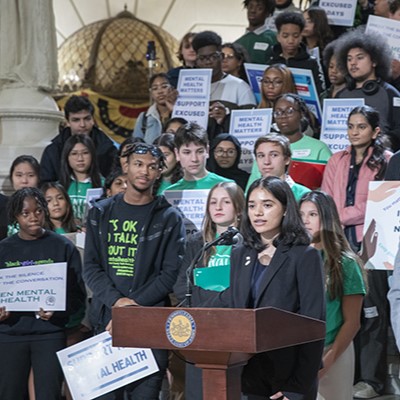
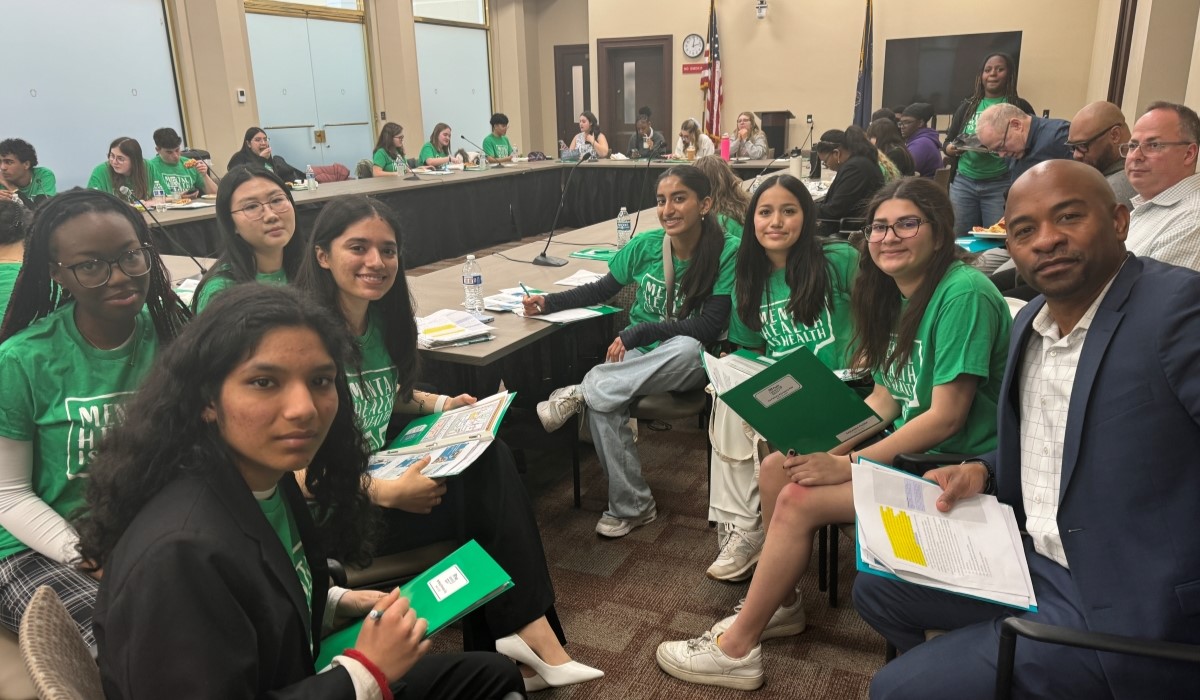
Niharika Shukla testifying for the Excused Mental Health Days Legislation that she co-wrote, alongside senators and representatives in the Pennsylvania Capitol Rotunda./Courtesy Niharika Shukla
Her advocacy has garnered significant acclaim, including features by ABC News, a spotlight on the Nasdaq Billboard in New York City and the prestigious National Princeton Prize in Race Relations. But the true measure of Niharika’s success lies in the infrastructure of care she is building. By bridging the gap between student needs and government policy, she is crafting a future where mental health is treated with the same seriousness as physical health, offering hope and tangible resources to the next generation.
Tell us about your volunteer role.
I work as the co-chair and team lead of the PA Youth Advocacy Network, a statewide organization dedicated to increasing mental health resources for students in our state. I led our Teen Committee of high school advocates in co-writing Pennsylvania Senate Bill 886 and House Bill 1519, re-introduced as SB 781 and HB 1648, alongside Senator Kane, Senator Schwank and Representative Nelson to amend the public school code and allow for excused mental health days for 1.7 million students. I worked to advance this legislation by rallying over 600 signatures across Pennsylvania through the Excused Mental Health Days petition, along with presenting the bills to the House Education Committee and Mental Health Caucus at the State Capitol.
I also co-wrote the official Statewide Teen Mental Health Awareness Day Proclamation, signed by Governor Shapiro, recognizing May 23 for the past two years, reaching over 850,000 teens, along with being the sole author of the Cumberland County Teen Mental Health Awareness Day Proclamation, by county commissioners and reaching over 50,000 teens countywide.
Why are these issues so important to you?
With addictive social media algorithms, lack of support systems and the current political climate, it’s been heartbreaking to see the effects of the nationwide youth mental health crisis in my community over the past few years. Growing up seeing depression, anxiety and suicidal ideation affecting young people nationwide, I began raising my voice to fight for positive change. I hope to be a voice for my community and create systemic change to bring mental health support and culturally-responsive care to tackle the youth mental health crisis.
What are your long-term plans or goals for the organization?
Our team is so excited to continue collaborating with bipartisan senators and staffers so the Commonwealth of Pennsylvania can adopt our bill and bring excused mental health days and mandated mental health support to over 1.7 million students across the state. I personally hope to continue fighting for youth voice in policy, working at the intersection of activism, policy and research, and keep learning and growing as a leader!
Niharika Shukla and her team working with Representative Nelson at the Capitol for Excused Mental Health Days legislation House Bill updates./Courtesy Niharika Shukla
What’s been the most rewarding part of your work?
It’s been so incredible seeing the progress we’ve been able to achieve, whether it’s building a movement for recognizing mental health with the Governor, working with senators and representatives to pass the legislation we drafted on youth mental health support in schools or mobilizing petitions and campaigns to get the message out. Knowing that our lived experiences and youth voice in policy decisions can help shape resources that directly affect students like us makes this journey feel so much bigger than ourselves.
What have you learned through your experiences as a volunteer?
I’ve learned that no matter how small, our actions can create real change. And I’ve learned to find joy in the process! Whether in the moments we were negotiating with staffers, drawing rally signs or researching for a policy memo, I found so much purpose in standing up for what I believe in and mobilizing more young people to stand beside me in this journey.
Why is it important for others to get involved with causes they care about?
Volunteering is all about having the courage to raise your voice and knowing that your ideas matter!
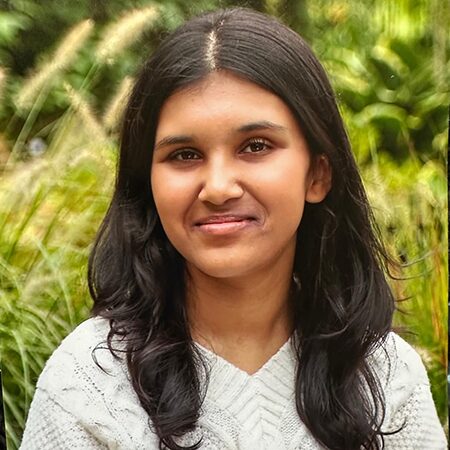
Meet Daily Point of Light Award honoree Aanya Gupta. Read her story, and nominate an outstanding volunteer or family as a Daily Point of Light.
High school senior Aanya Gupta has trained in dance for many years. One of her favorite styles is Bollywood, and her participation in one the Bay Area’s largest Bollywood dance troupes has also led to her work teaching young students the art. At school, she’s made friends who love the style as much as she does through leadership of her school’s Bollywood Dance Club.
Shared passion connects people, as it did with Aanya and her grandparents, inspiring her to extend the joyful experience to other seniors. Through The Dancing Hearts Project, Aanya and other teachers lead senior dance classes both in person and online. They meet students where they are, both geographically and physically, including those with Alzheimer’s.
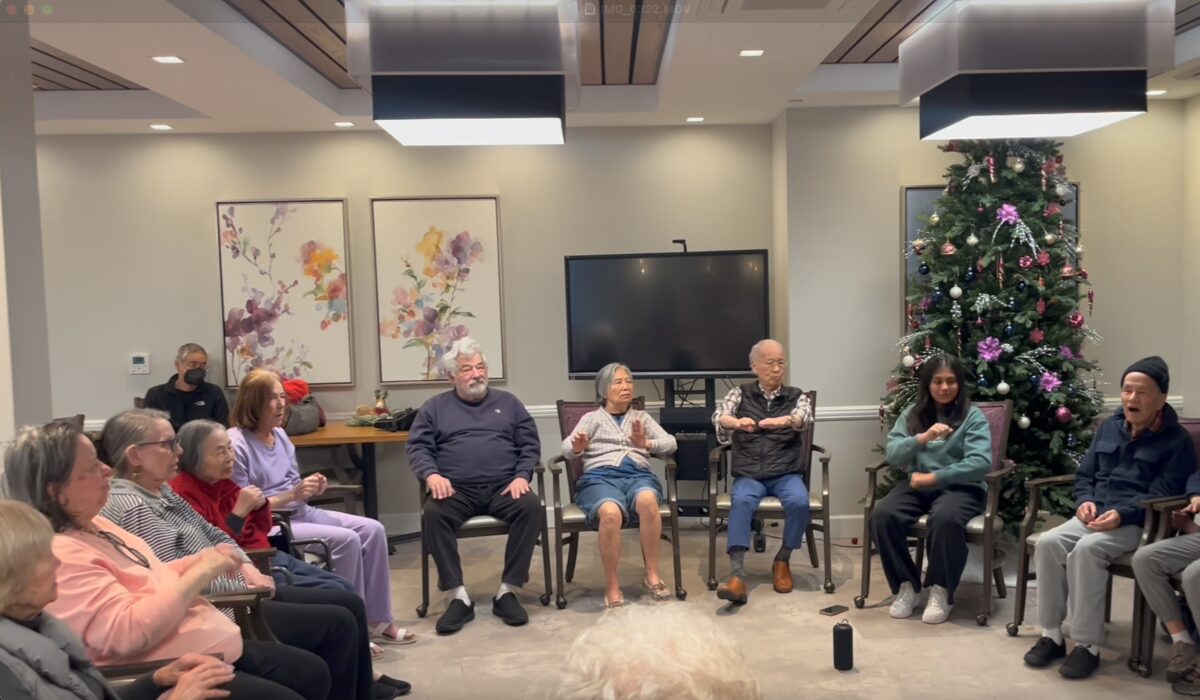
Dancing to familiar music can unlock memories and inspire smiles, singing and laughing. What began as small workshops at local memory care centers, has become weekly classes in 46 centers across five states. More than 25 volunteers from elementary through high school participate.
The Dancing Hearts Project adds a little something to brighten the days of communities that are often lonely and in need of some good fun. Students can thank Aanya for that. And, of course, her grandparents.
What inspires you to volunteer in general, and particularly with this initiative?
I’ve been dancing since I was 3 and have had the chance to learn several styles: ballet, Indian classical, Bollywood. Dance is one of my passions, and it’s part of the reason why I started The Dancing Hearts Project. I started teaching younger students near the end of ninth grade and realized I could scale it up.
The other part is due to my grandparents. I’m lucky to have all four live with me. When they moved here from India, dancing was one of the activities we used to do together. None of them are professional dancers, but they love to watch me dance, and they love doing it with me. Whenever they had their friends over, we’d have a dance party, or I’d teach them some moves. It was a really special way for me to connect with them.
I saw how much dancing could help seniors, despite being something you don’t typically associate with them. Many are hesitant. They don’t even see it as a form of exercise and sometimes think, “Oh, I’m old. I wouldn’t really be able to do it.” But seeing how much joy it’s brought my grandparents to move to their favorite songs inspired me to take my teaching to the next level just before summer of last year.
Seniors try out Bollywood moves for the first time at a Diwali class led by Aanya (seated in front)./Courtesy Aanya Gupta
Tell us about your volunteer role with The Dancing Hearts Project.
We’re an organization of youth volunteers of all ages. We do flexible routines that can be modified for whatever community we work with. It can be seated, so it’s gentler, or it can be more active and standing.
Our sessions cover a variety of styles with songs that seniors know and love. That makes it more fun, even for those in memory care. People with dementia may not be able to hold a conversation with you, but can sing along to the music, remembering it from decades ago.
I go to three or four centers a week. We do in-person sessions in the Bay Area and online sessions nationally. They’re mostly live, but we put some of our routines on YouTube.
As the founder and CEO, I build partnerships with other organizations. For example, we’ve worked with Ekal Vidyalaya for their annual fundraiser, donating proceeds to their programs building schools in rural India. I work with our advisory board made up of physical and occupational therapists, whom we typically approach for advice on connecting with seniors and feedback on choreography. We’ll send them videos and clips to get their take on if it’s working and if there are any moves that could injure someone.
Overall, the vision for the organization, its growth, outreach and more all fall under my role. And I lead an officer team of three that helps me run things smoothly.
What’s been the most rewarding part of your work?
It’s connecting with the seniors. You can see the difference on their faces when they hear one of their favorite songs, or even just recognize it. Their smile is huge, and they love the movements. In the first session, they’re usually a little hesitant, but every time we meet, their confidence grows.
I’ve learned so much about them beyond just their dancing. I’ve heard their life stories. I’ve also gotten to know the amazing activities directors whom I coordinate sessions with, and of course, the volunteers. I’ve built strong friendships.
What have you learned through your experiences as a volunteer?
It’s taught me about working with different people and leading an organization. There’s been a lot of growth over the last year and a half, so I’ve learned a lot through that, too. It’s allowed me to grow creatively by brainstorming new ideas and strategizing ways to grow it even further.
Tell us about future partnerships, programs or events that you are excited about.
We’re hoping to offer our classes as a resource for people with Alzheimer’s and dementia through the Alzheimer’s Association.
Why is it important for others to get involved with causes they care about?
Getting involved in helping others is rewarding in and of itself, but you learn so much through it. You learn unique lessons through different causes, but I’ve also learned larger life skills applicable outside my work with the organization.
Any advice for people who want to start volunteering?
Find something that resonates with you and figure out what you can do with it. It might be joining an initiative that already exists or starting something, like I did. If you’re doing the latter, don’t be scared. It’s going to seem hard, but start small. It’ll grow if you keep working at it. Just go for it and learn along the way.
THIS VOLUNTEER STARTED A NATIONAL MOVEMENT AROUND LOCAL ELECTIONS
Meet Daily Point of Light Award honoree Sanya Nadeem. Read her story, and nominate an outstanding volunteer or family as a Daily Point of Light.
It all started with a statistic for Sanya Nadeem. The Massachusetts high school student heard that her hometown of Walpole had a 78% voter registration rate, which is relatively high. But when Sanya heard that only 9% of those people showed up to vote in local elections, she knew she had to make a change.
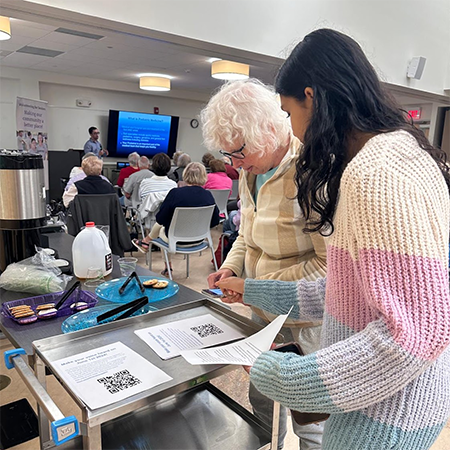
Sanya created a nonpartisan digital voter brochure listing polling times, open positions and short candidate bios and distributed it via QR codes, businesses, libraries and senior centers. The brochure reached more than 1,000 residents in one election cycle, and Sanya knew she had something big in her hands. She established The VOTE Movement, an organization that ensures every eligible voter, particularly young people, has the tools to make informed decisions about their local government.
One of Sanya’s greatest achievements with The VOTE Movement is the establishment of the town ambassadors program, which was designed to bolster civic education. Ambassadors reach out to candidates, design flyers, translate guides, host Q&As and knock on doors, so young people can practice democracy even if they aren’t old enough to vote. Currently, over 100 high school students across 25 states and three countries participate in the program, creating and distributing nonpartisan voter brochures for their towns while partnering with local organizations to help locals understand the ballot for their local election.
Slowly but steadily, Sanya has built the nation’s largest youth-led nonprofit dedicated to increasing voter turnout in local elections. The world is noticing, too: The organization recently received the National Carnegie Young Leaders for Civic Preparedness Fellowship, which included a $7,500 grant that enabled the organization to train town ambassadors in all 50 states and create school civic readiness workshops.
When Sanya heads off to college, she hopes to major in government or political science before eventually attending law school, where she can become a constitutional lawyer or civil rights lawyer. Her goal is to help protect voting access for every person in the country. But no matter where she goes, The VOTE Movement will continue right alongside her. Sanya’s dedication to the cause as a volunteer is a powerful example of just how much we can accomplish when we passionately believe in a cause.
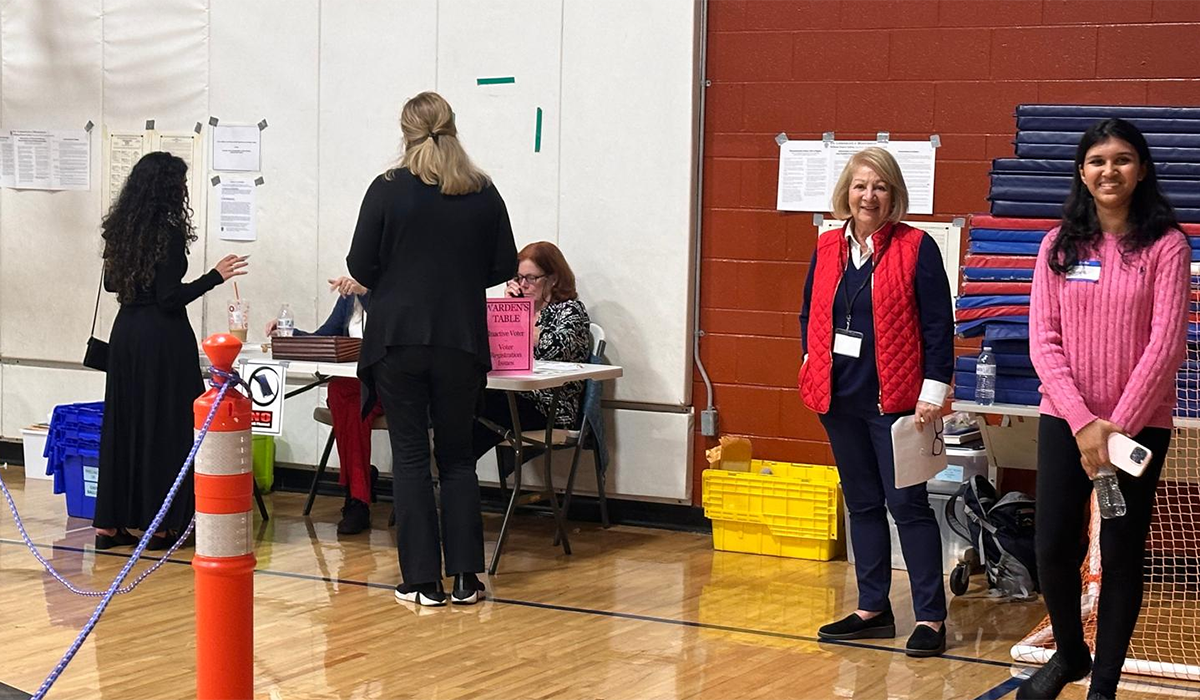
SANYA NADEEM IS THE FOUNDER OF THE VOTE MOVEMENT, AN ORGANIZATION THAT ENSURES ELIGIBLE VOTERS HAVE THE TOOLS TO MAKE INFORMED DECISIONS ABOUT THEIR LOCAL GOVERNMENT. /COURTESY SANYA NADEEM
What inspired you to get started with this initiative?
I heard a statistic in my own hometown that was incredibly shocking. My hometown of Walpole, Massachusetts, had a 78% voter registration rate, which is pretty high, but only 9% of those people actually showed up to vote in our local election. I started asking neighbors why, and the answers were almost identical. Every time, they would say they didn’t know when the election was, who was running or that the position mattered. That was the moment I realized that people weren’t apathetic. They were uninformed. I came up with a hypothesis that if I lower the barrier to information, maybe voter turnout in our local elections would rise.
I created a digital voter brochure that pulled together everything residents needed, like where to vote, what positions are on the ballot, and the short candidate bios taken directly from campaigns to avoid any bias. I raised awareness about the brochure everywhere, like senior centers, grocery stores, local newspapers and social media, and asked to reach all the demographics of the town. To my surprise, over 1,000 residents interacted with it, and that one-town experiment showed me two things. One is that people pay attention when information is accessible. Second is that students don’t need to wait until they’re 18 to lead this sort of civic change. That’s what inspired me to turn that single brochure in Walpole into this national youth-led movement, which I call The VOTE Movement today.
Tell us about your volunteer role with The Vote Movement.
I serve as the founder president of The VOTE Movement, which stands for voter outreach, turnout and empowerment. We’ve grown to be the nation’s largest youth-led nonprofit dedicated to increasing voter turnout in local elections. In my volunteer role, I dedicate about 28 hours each month to running and expanding our work. That means I oversee our town ambassador program, a network of over 100 high school students across 25 states and three countries who create and distribute nonpartisan voter brochures for their towns. They host Q&As, partner with local organizations and transmit materials so every resident can understand the ballot for their local election. I write and update the toolkits for ambassadors, which have email and flyer templates, onboard and mentor each new student and coordinate our diverse national executive team, which is made up of students of many religions, cultures and income levels. I also manage partnerships with town clerks, libraries, senior centers, the League of Women Voters and state departments of education.
SANYA NADEEM CONVERSES WITH SENIORS ABOUT LOCAL ELECTIONS IN WALPOLE AT THE LOCAL SENIOR CENTER. /COURTESY SANYA NADEEM
What are your long-term plans or goals for the organization?
Our long-term vision is to build the first national youth-led civic infrastructure for elections. Our goal is to train town ambassadors in all 50 states so that every town, no matter its size or income level, has a trusted student leader providing nonpartisan voter information. One major priority is expanding our partnerships. In places like California, Wyoming, Nevada, Colorado, Maine and more, we have agencies and people who are already sharing our resources with schools that historically receive little civic support.
But another long-term goal is to scale those through workshops. We want to continue equipping students with the skills and resources necessary, not only to inform voters but also to build sustainable civic habits in their communities. Ultimately, I want The Vote Movement to make local elections impossible to ignore. In 10 years, I envision a country where students lead civic life in their town, where local election information is accessible to every resident and where young people don’t inherit this broken system that we currently have.
What’s been the most rewarding part of your work?
The most rewarding part has been watching who is now leading this movement. When I started the vote movement, the goal was to fix low voter turnout. But as the organization grew, I came to realize that rebuilding civic participation also means rebuilding who gets to lead it. When forming our executive team, I didn’t just look for resumes. I also wanted to look for lived experience, health perspective and ensure that our organization was as inclusive as possible. Today, our executive team includes students who are Latino, Asian, Middle Eastern, Hindu, Catholic, LGBTQ+ and from a wide range of socioeconomic backgrounds. What’s most meaningful and rewarding for me is hearing ambassadors say that they’ve never seen a team that looks like this, or that they actually feel represented here, because this is actually one of the first times they have seen civic leadership that reflects their faith, culture, background or even the state that they’re from.
What have you learned through your experiences as a volunteer?
We’re not going to see an increase in voter turnout just because there’s one brochure I’ve given to town ambassadors. What works is having a dialogue with every town ambassador and seeing which centers in each community people interact with most. Are all the different demographics in your town going to interact with social media? Is it going to be something posted in the newspaper? Being able to understand that has really applied to all my other work, whether it’s in school or outside. The second part of it is this idea of understanding youth leadership. I think the rhetoric is very much that you should only be involved in politics once you turn 18. But the truth is that you can start at any age. That creates lifelong voters, and that creates future leaders.
Why is it important for others to get involved with causes they care about?
When someone gets involved in an issue that they care about, they’re not just adding another volunteer; they’re adding another lived experience, another perspective, another angle that no one else can bring, and that collective diversity of experience is actually what makes community solutions effective. It is one thing to care about climate change, food insecurity, education or civic engagement, but it’s another thing to help run a food drive, tutor a student or testify at a hearing. Once someone steps into action, that issue stops feeling distant. It becomes something that you are personally connected to, and that personal investment is what sustains movements over the long term. Involvement creates these ripple effects that people don’t always realize. When one young person volunteers, their friends are more likely to do the same.
THE VOTE MOVEMENT FOUNDER SANYA NADEEM WORKS AT THE WALPOLE POLLS. /COURTESY SANYA NADEEM
Any advice for people who want to start volunteering?
Start with something that genuinely stays in your mind. It could frustrate you, it can concern you or excite you. But the best volunteers are never the ones who pick a random cause just to volunteer. They’re the ones who pick the thing that they can’t ignore. Passion is not enough on its own, but it does tell you where your effort will actually feel meaningful. I think volunteering becomes tangible the moment you attach your interest to a specific responsibility.
The second thing I would say is don’t disqualify yourself before anyone else has a chance to include you. Everyone experiences imposter syndrome at the beginning, even adults who have been working for decades. Organizations, especially like ours, don’t expect volunteers to know everything. What we need are people who are passionate about the issue, who follow through, communicate clearly and don’t leave when something is inconvenient.
What do you want people to learn from your story?
You have the power to make a real difference in democracy. Young people have the capacity and the power to lead the change. Just because we might not have those decades of experience doesn’t mean that we don’t have that passion. I would argue that we have a lot of energy and excitement to get involved. When young people get involved in politics at an early age, and when they pair what they’re learning about US history in high school with what they’re learning through the town ambassador program, they’re able to practice democracy. They’re gaining the sort of skill set that is very, very important and that is going to help them ensure that they can take on the idea of civic leadership as soon as they turn 18, whether it’s running for office at a young age, voting in their local elections or inspiring the next generations of change makers and constituencies to go in their local elections.
Meet Daily Point of Light Award honoree Madi Nguyen. Read her story, and nominate an outstanding volunteer or family as a Daily Point of Light.
It began with a simple, perhaps overly ambitious goal: to make STEM fun and accessible for everyone. When a local educator first encountered Madi Nguyen, they admittedly viewed her vision as just another idealistic student project. However, skepticism quickly vanished upon meeting Madi. Her energy was infectious, transforming a hesitant observer into a dedicated chapter sponsor who found themselves hauling equipment on weekends, inspired by a student who was already pushing herself to influence thousands.
As the founder and CEO of Stembark, Madi’s dedication goes far beyond the typical volunteer role. She pours approximately 50 hours a month into the organization, overseeing everything from program development to volunteer coordination. The result of this tireless work is visible in the classrooms where Stembark operates. Children who previously claimed to “hate science” can be found programming robots with enthusiasm, and other quiet, more reserved students blossom into confident team leaders during workshops. Madi’s curriculum is a blueprint for engagement that even veteran teachers admire.
The logistical backbone of this youth-led nonprofit is as impressive as its emotional impact. Under Madi’s leadership, Stembark has launched varied initiatives, including a micro-grant program, virtual tutoring efforts and global STEM engagement projects. To date, the organization has mobilized over 1,000 volunteers and raised more than $30,000 to support these endeavors. These resources are poured directly back into the mission, ensuring that cost and distance are never barriers to a quality science education.
Ultimately, the true measure of Madi’s success isn’t just in the robots built or the equations solved, but in the culture she has cultivated. Stembark fosters a deep sense of belonging, convincing young people that there is a place for them in the world of science and technology. Even as her original supporters retire, Madi continues to change lives and teach others to do the same, proving that with the right leader, an idealistic project can indeed change the world.
Tell us about your volunteer role.
I founded my youth-led organization, called Stembark. The organization inspires young people to become involved in STEM through multiple avenues: community-based projects, hands-on learning and volunteer opportunities. Our goal is to make STEM impactful, welcoming and meaningful for students from all backgrounds by giving them real ways to explore their interests, support their communities and grow as leaders.
What inspired you to get started with this initiative?
Growing up, I was very quiet and often hesitant to put myself out there. Stembark became the outlet that helped me step out of my shell while creating something meaningful for others. I wanted to build the kind of community I wish I had when I was younger—one where creativity, curiosity and compassion shape the learning experience.
Why is STEM so important to you?
STEM has always been something I’ve loved, but at first, it was hard for me to find a community where learning felt inspiring and impactful. I know how isolating it can be to feel like you don’t belong in a field you care deeply about. That’s why creating supportive, empowering spaces for youth to try STEM without pressure or judgment matters so much to me.
What are your long-term plans or goals for the organization?
Long-term, I hope to expand our volunteer outreach, strengthen partnerships across schools and nonprofits, and build a sustainable fundraising model so we can broaden our impact. Ultimately, I want Stembark to become a platform that supports more youth-led initiatives and brings STEM opportunities to areas where access is limited.
What’s been the most rewarding part of your work?
The most rewarding part has been meeting so many incredible people: volunteers, students, families and community partners. Seeing the excitement in students when they try something new or begin to see themselves in STEM is a feeling that never gets old!
What have you learned through your experiences volunteering?
Volunteering has taught me to recognize and appreciate the differences in people—their perspectives, strengths and backgrounds—and how much beauty there is in that diversity. It has shaped the way I approach leadership, collaboration and service.
Why is it important for others, especially youth, to get involved with causes they care about?
For youth especially, getting involved in causes you care about creates a ripple effect. When young people take initiative, it builds stronger communities and shows others that their voice and actions matter. Passion-driven service inspires connection, growth and positive change.
Any advice for people who want to start volunteering?
Volunteering can take many forms; it doesn’t have to look one specific way. Whether it’s tutoring, organizing events, creating art, mentoring or using a skill you love to help someone else, every contribution matters. Start with something small that feels meaningful to you, and let it grow naturally.
Board Leader Helps Hundreds of Kids Experience Summer Camp
Meet Daily Point of Light Award honoree Ben Kern. Read his story, and nominate an outstanding volunteer or family as a Daily Point of Light.
Growing up, Ben Kern spent his summers on a lake in Maine with his cousins—swimming, exploring the woods and soaking up long days outside as they created their own little summer camp. Those carefree summers were formative, and the memories stayed with him well into adulthood.
Today, Ben is working to give that same sense of freedom and possibility to kids who might never otherwise get to experience camp. As board president of Agassiz Village, a 90-year-old overnight summer camp in Maine serving primarily low-income youth, he’s poured his time, talent and financial expertise into expanding access. Over the past five years, he’s become one of the camp’s biggest champions—personally contributing more than $30,000 and helping secure $150,000 in additional support from PwC and L.L. Bean.
Through roles as president, former governance chair and finance committee member, Ben has helped Agassiz Village deepen its mission of preparing youth for life’s journey—giving kids a chance to enjoy the outdoors, discover hidden talents and build skills that last long after summer ends.
What inspired you to get involved with Agassiz Village?
I actually became aware of Agassiz coincidentally through my employer. But I grew up spending all of my summers on a nearby lake about 20 minutes away with a number of extended cousins. We had our own little mini-Agassiz summer camp with no less than eight to 10 of us, sometimes 12, running around at any given time.
I know how formative that was for me as a child. So I wanted to get involved with something that does the same for other children, and arguably children who frankly need that support and those opportunities even more than I did.
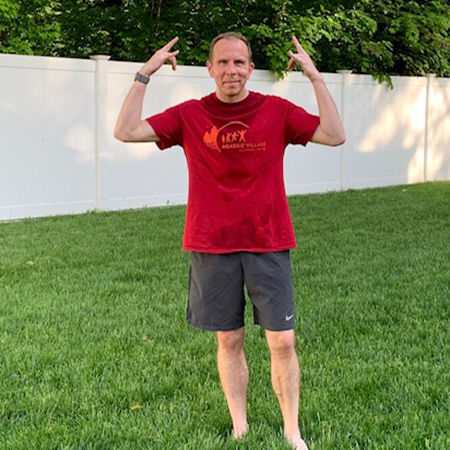
Ben Kern participates in the Agassiz Village 5K for Kids, a virtual fundraising run held during the Covid-19 pandemic./ Courtesy Ben Kern
As board president, what does your role involve?
Day-to-day, I really serve from an overall governance perspective. But we have an incredible team led by our executive director, Lisa Carter—plus our development director Mike Smith, our facilities personnel Ryan and our camp director Chris. They make everything easier.
I often serve as a sounding board for Lisa on strategic initiatives she wants to undertake and help bring a governance lens to decision-making. But candidly, the team makes it easy.
Why is Agassiz Village’s mission so meaningful to you?
The mission is to prepare youth for life’s journey, and that says it all. The world can be a cruel and unfair place. Having a safe haven for kids to come back to every summer—and to strive toward each year—matters.
When I think back to my own childhood, I spent every year returning to Maine and updating my cousins and friends on what I had done over the past year. That created motivation to do something meaningful in between summers. Being involved with something that provides that same kind of grounding and inspiration for other kids felt very worthwhile.
What sort of background or situations are some of your campers coming from?
I don’t have the exact income levels, but many are below the poverty line. Almost 40% report some level of homelessness. Others may have a parent who is incarcerated or face other extremely difficult circumstances at home—beyond just financial hardship.
What does camp look like for the kids you serve? What kinds of activities help build life skills?
A lot of our programming is rooted in social-emotional learning (SEL). But a huge part of it is simply getting kids outdoors, into nature.
Many of our campers come from dense urban areas where there aren’t lakes to swim in or woods to explore. Being in the forest, seeing wildlife, swimming in the lake, being in a remote setting—it’s all very different for them. It lets kids just be kids.
Is there a particular moment with a camper that you always remember?
I don’t know if there’s one single moment. There are so many. The kids are extremely polite, thoughtful and articulate. It’s clear they love camp.
I’m always impressed by their answers when we ask questions, especially when they talk about the waterfront and swimming. Many come to camp having never swum before, so they’re proud of the badges they earn as they progress. It’s fun to see that growth.
Another thing that has struck me is meeting former campers—people who went to Agassiz decades ago. The impact the camp had on their lives is unmistakable. They’re deeply committed to the cause because the camp made such a difference for them.
You helped secure $150,000 in corporate support from PwC and L.L. Bean. How did those partnerships form?
My company is very supportive of individual community outreach. If I can demonstrate significant personal commitment, the firm and our charitable foundation are willing to consider additional grant dollars. And they’ve clearly deemed Agassiz worthy.
As for L.L. Bean, that was really their own decision. I helped open the door and introduce them to Agassiz based on relationships I had with the company—they’re a PwC client I served for a time—but it was no more than an introduction. I told them, “If you’re interested, we’d love to show you the camp.” And they saw the alignment and came on board. It’s been great.
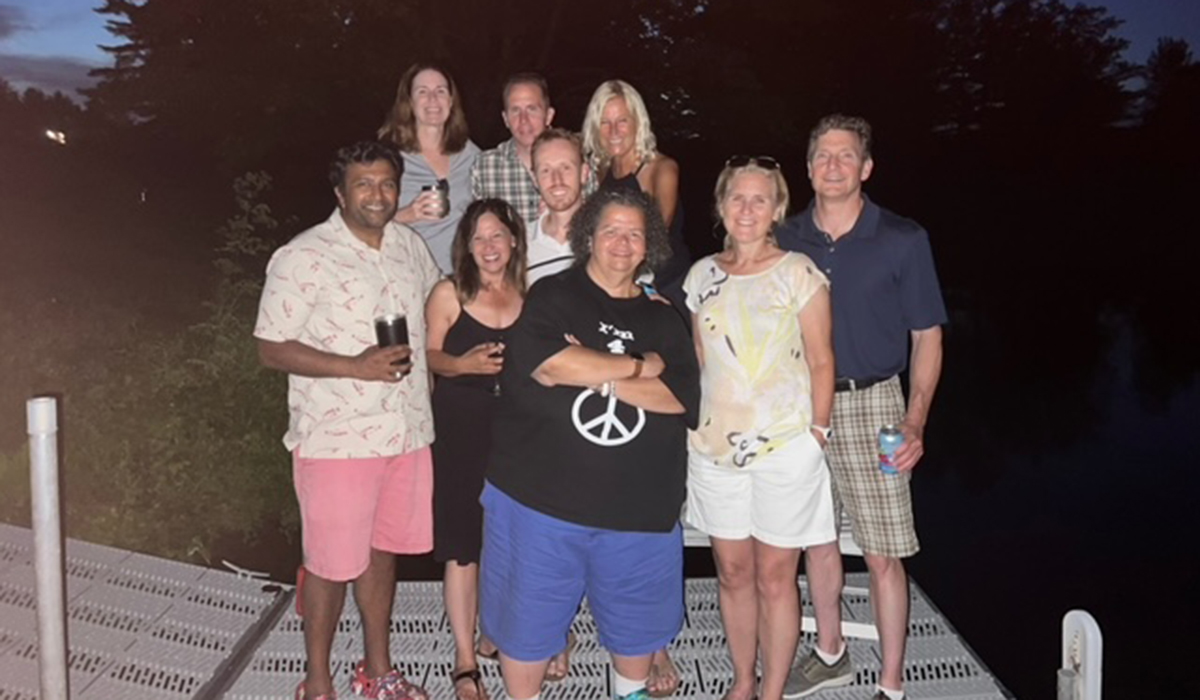
Ben Kern (top center) joins fellow board members for a photo following an Agassiz Village event./ Courtesy Ben Kern
Are there upcoming initiatives or partnerships you’re excited about?
All of the above. We were recently awarded a project through Harvard’s Community Activity Partners, where a group of alumni volunteers are helping us refresh our strategic plan. It’s a six-month project digging into our financials and operating programs.
What are your long-term goals for Agassiz Village?
We just finished our 90th anniversary, and I hope to see Agassiz thriving at year 100—completely in its stride. We’re in the early stages of the quiet phase of our Capital Campaign, which will help us shore up our older facilities. And then we’re looking toward creating an endowment to ensure long-term stability and affordability.
We’re also always looking for additional youth-based organizations to partner with so we can reach more deserving children.
Why should people get involved with causes they care about?
Our day jobs can be a grind, so selfishly, volunteering gives me enjoyment. But beyond that, we have a responsibility to look out for one another. Some people have easier lives than others. Any way we can be kinder and make a difference in someone’s life is worth our time.
Do you have advice for people who want to start volunteering?
Find a cause that resonates with you—and just get involved. Nobody’s going to tell you “no” if you want to help. It doesn’t have to start with a board role. There are volunteer opportunities everywhere.
Meet Daily Point of Light Award honoree Lucia Noto. Read her story, and nominate an outstanding volunteer or family as a Daily Point of Light.
Lucia Noto has always loved to read, and she wants every child to have that same opportunity. Growing up, Lucia found inspiration in the pages of the many books that filled her bedroom. Before bed every night, she would read stories about women who changed the world through service and leadership, no matter their ages. As she got older, Lucia was emboldened by those stories to help others. Wanting to share the excess books she had with other children who didn’t have many, she started selling her books on Amazon. When she learned that approximately 40% of students across the nation can’t read at a basic level, she instantly knew what she wanted to do with the profits.
At age 13, Lucia started Butterfly Books, an organization dedicated to providing literature to children in underserved communities and children with medical needs. Since then, Lucia has dedicated thousands of hours to addressing child literacy through read-aloud events that provide each child with a book of their choice, distributing book bundles and establishing a Little Library program. The program has been a resounding success, serving 23,984 children while hosting 51 events. They’ve also recruited 63 teen volunteers and raised over $11,000 while establishing over 14 community partnerships.
Currently a student at Rice University studying biomedical engineering on the pre-med track, Lucia is overflowing with interests, and describes her passions as STEM, music and service. But just because she’s started college doesn’t mean Lucia is going to leave Butterfly Books behind. She’s currently in the process of founding a chapter of Butterfly Books in Texas at Rice, while continuing to run the nonprofit in conjunction with the trusted volunteer leaders she’s recruited. Lucia dreams of seeing Butterfly Books establish chapters run by teen volunteers in every state, and eventually across the globe. Her mission to improve child literacy is a passionate declaration of just how influential reading can be, and how a volunteer can change the world, no matter their age. Above all, Lucia says she wants people to know that it’s possible to build an organization through forming connections, working with others and their passion to make a change in the world.
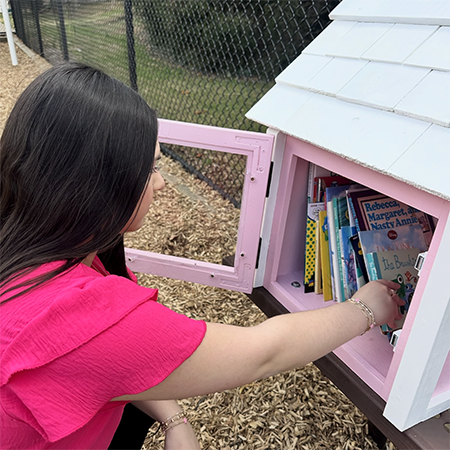
LUCIA NOTO RESTOCKS A BUTTERFLY BOOKS’ LITTLE LIBRARY IN A LOCAL COMMUNITY SPACE. /COURTESY LUCIA NOTO
What inspires you to volunteer?
I’m inspired by the idea that we all have the power to make the world just a little bit brighter, regardless of our age or our background. So my work with Butterfly Books has all taught me that volunteering lets me turn compassion into action, and I love seeing how like even the smallest gestures, like a read-aloud or a letter of love or a book bundle for my organization, can truly make someone’s day just that much better.
What inspired you to get started with this initiative?
I’ve been an avid reader my entire life, and I would say books have really shaped who I am as a person. When I was in middle school during the pandemic, I realized that I had so many books in my bedroom, some of which I no longer wanted. I wanted to share those with others who could read them. I started a book-selling business on Amazon, selling books from my collection. As the business grew and I started making more profit, I was trying to figure out what I wanted to do with that money, because I didn’t want to just keep it for myself.
I did some research, and I learned that approximately 40% of students across the nation can’t read at a basic level. What I wanted to do was spread my love for reading with students who otherwise wouldn’t be able to afford books. I started my organization called Butterfly Books, and our goal is to promote literacy for children in underserved communities and children with medical needs who may not have access to books because they’re in treatment or in hospitals and medical centers.
Tell us about your volunteer role with Butterfly Books.
I’m the founder and CEO, which means I lead and manage all aspects of the organization. That includes establishing community partnerships, developing strategic growth plans, overseeing all of our volunteers and overseeing our junior Advisory Committee, organizing events and fundraising efforts, and just serving as the public face of the organization. We have three main initiatives that we work on: read-aloud events, book bundle donations and our little library program. Those are the three main things that I oversee.
What are your long-term plans or goals for the organization?
Currently, the organization is centered in D.C., Maryland and Virginia, and my dream is to expand it from just a local organization into a national and eventually international organization. I’m envisioning chapters in multiple states led by teen volunteers that are each running read-aloud events, distributing book bundles and installing little libraries in their own communities and medical centers to leave a lasting impact on not just kids in the DMV, but kids everywhere.
What’s been the most rewarding part of your work?
When I’m in person at the events, I see the impact that we’re having firsthand. The way that the children react when they open a book, or when they see a handwritten message just for them. Their smiles, their excitement and the sense that they have felt seen and supported are definitely what keep me going. It’s also really rewarding to witness the teenagers on my team and the volunteers on my team step into new leadership roles and discover that they can also make a big difference in someone else’s life.
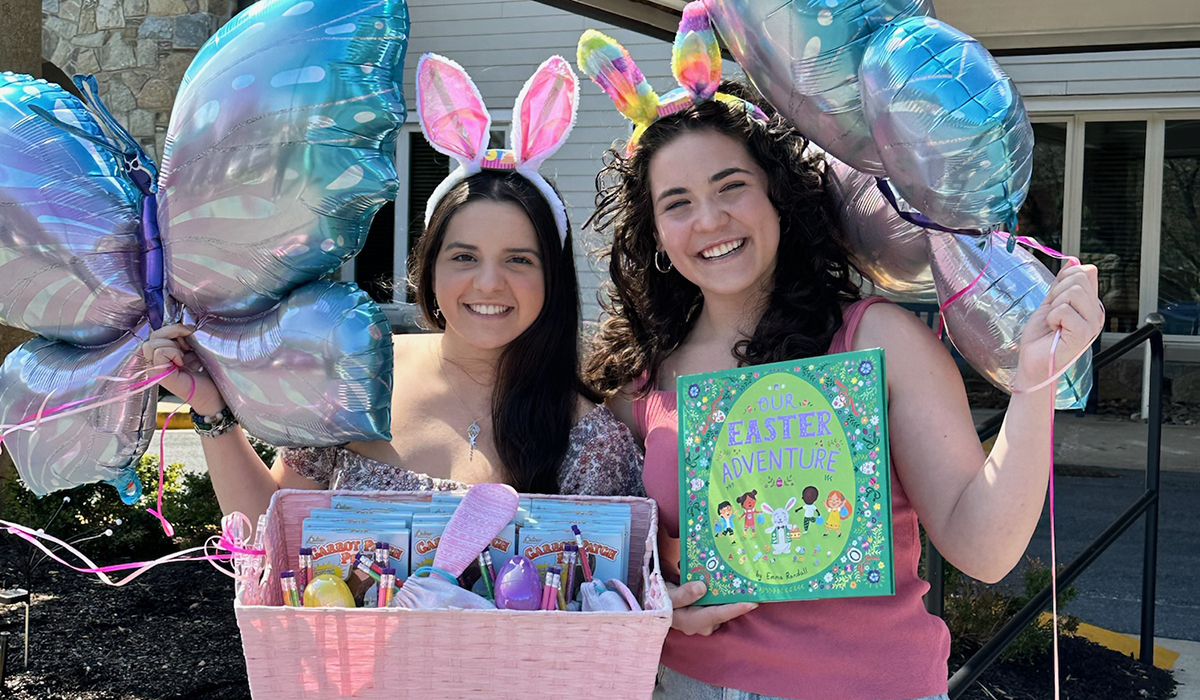
BUTTERFLY BOOKS FOUNDER LUCIA NOTO (LEFT) AND HER COO SYDNEY HANG OUTSIDE THE CHILDREN’S INN AT NIH BEFORE THEIR MONTHLY EVENT THEMED AROUND EASTER. /COURTESY LUCIA NOTO
What have you learned through your experiences as a volunteer?
The biggest takeaway is that leadership, to me, is about empowering other people. I think that a strong leader doesn’t do everything alone, but instead creates space for other people to be able to grow and discover their own talents, which involves listening to different ideas, taking into account various perspectives, trusting other members of the team with responsibilities and being able to give volunteers the encouragement and tools that they need to succeed.
Why is it important for others to get involved with causes they care about?
I think when you help someone else, you’re able to strengthen your community and also discover new things about yourself, your values, your potential and your own unique voice. I want to emphasize that you don’t have to wait until you’re older or more experienced or more ready, whatever that’s supposed to mean, because change can start exactly where you are now. The world can become a better place every time you decide to show up for it.
Any advice for people who want to start volunteering?
My first piece of advice is to start small and follow what you’re genuinely excited about. You don’t need to have a big master plan or a huge organization. You just have to have the willingness to take the first step. The second piece of advice would be don’t be afraid to reach out to people and start forming connections, even when you’re starting from ground zero. Some of the best opportunities come from just introducing yourself and sharing your passion with others. For example, Butterfly Books’ very first partnership was with National Institutes of Health (NIH), and I got in contact with them by cold emailing them and asking if they would be interested in partnering. Whether you’re reaching out to nonprofits, schools, businesses or individuals, you’ll never know who will say yes until you ask.
Young Environmentalist Teaches the Community to Be More Sustainable
Meet Daily Point of Light Award honoree Bella Kalra. Read her story, and nominate an outstanding volunteer or family as a Daily Point of Light.
At 13 years old, Bella Kalra was awarded a grant to launch a recycling program at her middle school that continues to recycle around 400 pounds of waste each year. Recognizing her power to affect change set her on a path to enact even more impactful initiatives that shape her community.
Today, the 16-year-old environmental activist is on the City of Bellaire’s Youth Advisory Board and in her school’s Sustainability Club. She often collaborates with UNICEF and the city’s Environmental Sustainability Board (ESB). With the last of these, Bella helped introduce a city-wide composting program. Eleven percent of the 17,000 residents regularly compost for city landscaping projects, reducing annual food waste by over 2,000 pounds.
Bella also loves combining climate work with things that might not be an obvious partnership, like writing slam poetry about the environment and, as president of her school’s Open Mic Club, giving students a safe space to write about issues they’re passionate about, regardless of subject. In the years ahead, she hopes to channel her passion for environmental science and teaching into a career where she can engage more people in the fight for the future of the planet.
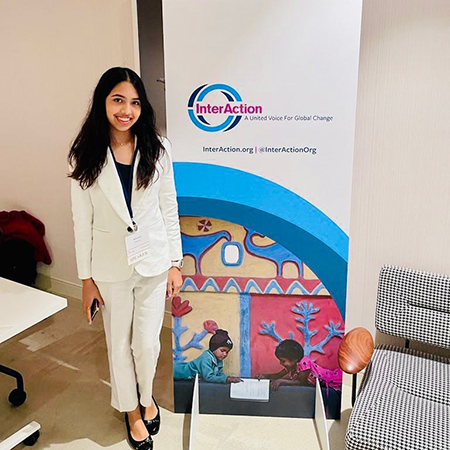
Bella speaks about the effects of eco-optimism and anxiety at the InterAction Forum in Washington, D.C.
What inspires you to volunteer?
When I was in fifth grade, during the COVID-19 pandemic, a couple of friends and I won second place in the “Create for UNICEF” competition with an original song about climate change. It was the first time I realized that my words could be a catalyst for change. Ever since then, I’ve been working with UNICEF. They helped me start a recycling program at my middle school and have opened me up to opportunities. I’ve become extremely passionate about the environment.
In Houston, we see the effects every single day. We have hurricanes. The temperatures are so high. It’s 85 degrees in November. Even freezes are becoming more frequent.
Tell us about your volunteer role with the Bellaire Youth Advisory Board and High School of Performing and Visual Arts (HSPVA) Sustainability Club.
As vice chair and environmental liaison of the Youth Advisory Board, I’m in charge of coordinating our environmental opportunities and volunteer events. I collaborate closely with the City of Bellaire’s ESB, which is a separate city government board dedicated to the environment, but with adults. I’m the only youth who attends those meetings. I help them make short educational videos about things like light pollution and reducing carbon footprints for the city’s website. One thing I’m especially proud of is our composting program.
I’m vice president of HSPVA’s Sustainability Club, and we host sustainable school events to engage students in caring for the planet and learning about climate change. Our thrift stores are always a hit. We also do holiday events, like pumpkin drives after Thanksgiving to donate and compost. During Christmas, we teach students ways to make or purchase sustainable presents.
I’m also an Evelyn’s Park teen ambassador. On weekends, I get to teach kids about nature, lead a fun class or clean up the park.
What inspired you to get started with these initiatives?
A big part of my mission is education, because people can’t make a change if they’re not knowledgeable about what’s happening in the first place. There is a teaching component with all of my volunteer roles.
What are your long-term plans or goals for the organization and your environmental work?
One of my goals is to extend the city composting program to HSPVA and potentially even the district. Food waste is the largest component in landfills, and composting is a great way to divert that.
What’s been the most rewarding part of your work?
Every year, I volunteer at a community Earth Day event, and I make hanging gardens out of plastic water bottles with kids around 5 to 10 years old. I do a drive to collect old water bottles, and I cut out the side. We buy seeds—fruit, vegetables, flowers–and together, we plant those in the side of the water bottles to create hanging gardens.
They have so much fun. It’s a great way to teach them about recycling, planting and sustainability. They’re our next generation. I want them to grow up empowered to create change and live more sustainably.
What’s one easy way for people to become more sustainable that they might not immediately think about?
Buy secondhand or reuse. For my Halloween costume this year, I borrowed one item from a friend and used part of a costume from last year to make something new. Not only was it sustainable, but it saved money and was an exciting way to be creative.
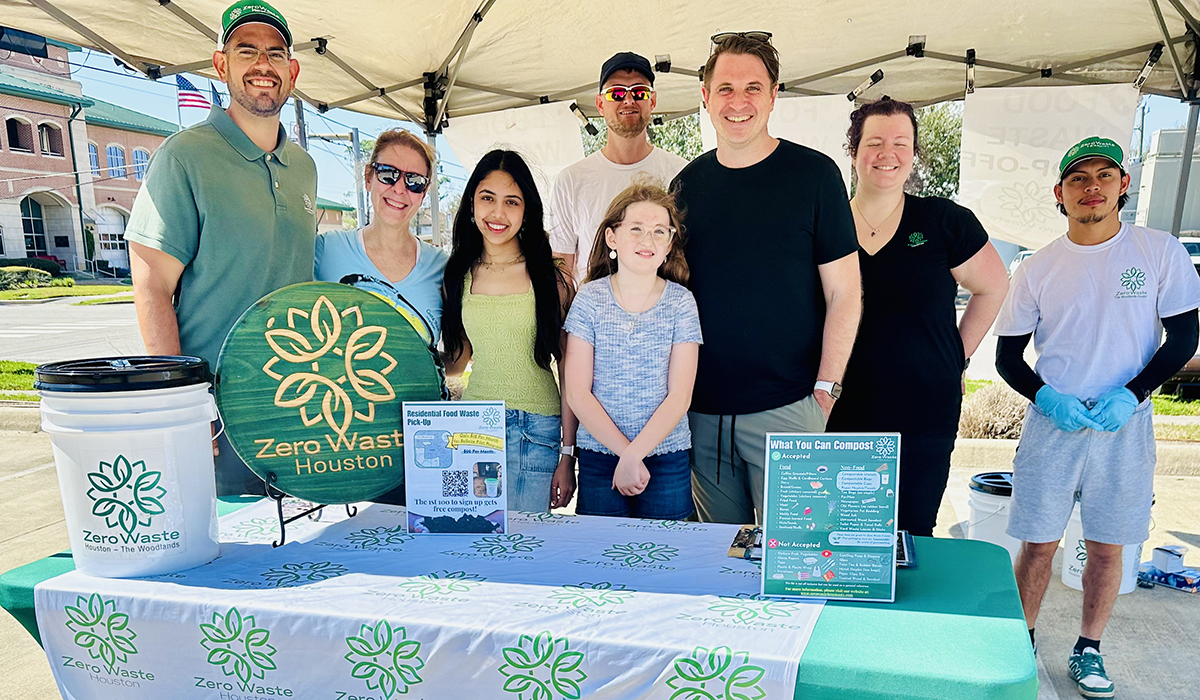
Bella Kalra (light green shirt), a climate activist and member of the Bellaire Youth Advisory Board, helps her city’s Environmental Sustainability Board advertise their composting program.
What have you learned through your experiences as a volunteer?
Children can make an impact. My freshman year, I was chosen as the only UNICEF Youth Representative to speak at a climate interaction forum in Washington, D.C. Despite being the only child in a room full of adults speaking on the panel, I learned that people actually wanted to hear what I had to say. I want to empower other kids to feel that, too, because they have so much to offer.
Why is it important for others to get involved with causes they care about?
That’s the only way to create change. We can’t wait around for someone else to do it, because nothing will ever be accomplished. Volunteering is a great way to build community, meet new people and impact someone’s life. Also, it’s fun.
Any advice for people who want to start volunteering?
When you’re feeling lost about where to start, think about how you can directly better your own community. Sometimes, people feel the best way to create change is to get involved with their government, save a species or something extreme. In reality, it might be easier to make a positive impact on something that hits closer to home. Think about a problem that directly impacts the people surrounding you and ask yourself, what you can do to make it better.