Meet Daily Point of Light Award honoree Kavinitha Venkatesh. Read her story, and nominate an outstanding volunteer or family as a Daily Point of Light.
Kavinitha Venkatesh has grown tremendously through volunteer work.
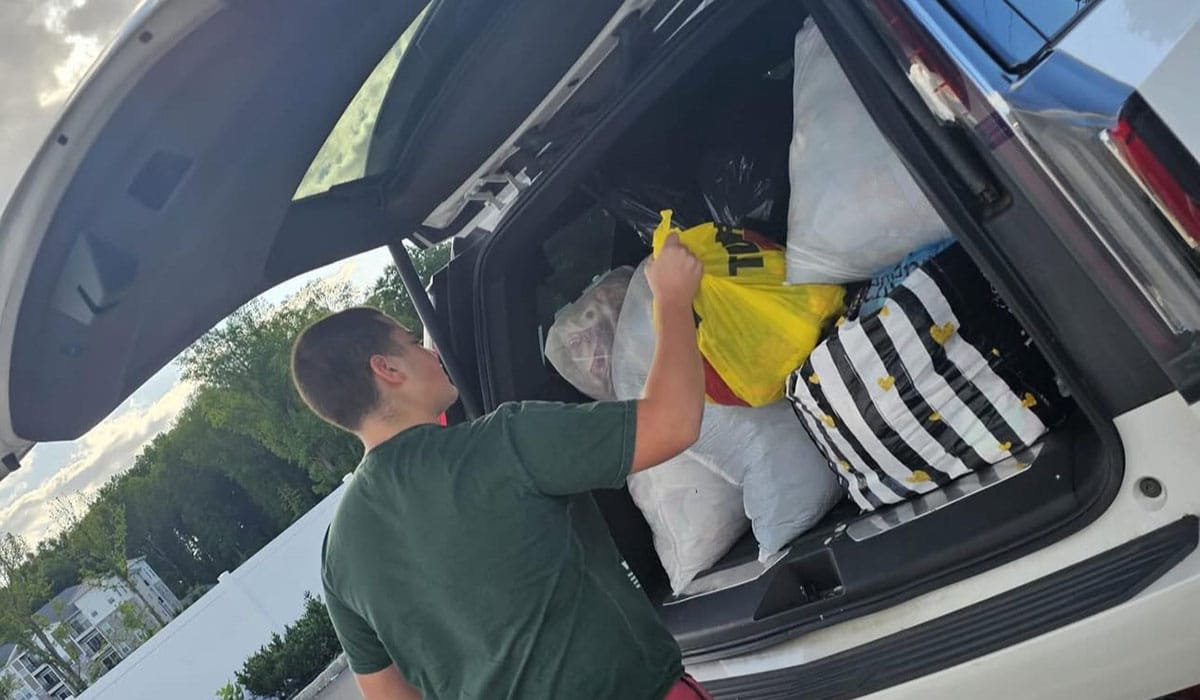
Raised in an environment where helping others was encouraged, Kavinitha saw her father get involved with Charity Crossing, a volunteer-run organization that provides basic needs to individuals within the community, ranging from hygiene items to school supplies. At a young age, she saw the volunteers gather items and ship them off in trucks to be distributed to communities that didn’t have anything. By the time Kavinitha was 14, she knew she was ready to take part herself. She started by collecting and sorting donations from retailers, and eventually started fundraising by leading events throughout the neighborhood. By raising funds for seniors, children and unhoused individuals, Kavinitha felt her work as a volunteer opened her eyes to see the world from an entirely new perspective.
In the past three years, Kavinitha has volunteered more than 200 hours with Charity Crossing. Along with her dad, she participates in five to eight events a month where the duo distributes items to communities in need. A rising high school senior, she’s planning on heading off to college eventually. However, her dedication to Charity Crossing won’t end there. Kavinitha’s years of work with the organization have culminated in her greatest responsibility yet: running the organization’s newsletter. She’s even hopeful to start her own chapter wherever she lands in the future.
Kavinitha says that her volunteer work has given her an entirely new perspective on life. By dedicating her time to serving others, Kavinitha has discovered the opportunity to do more than she has ever imagined. Her journey through volunteerism is a path that’s available to anyone who dares to take hold of it.
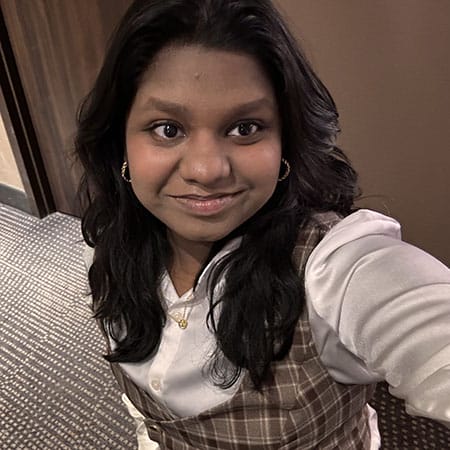
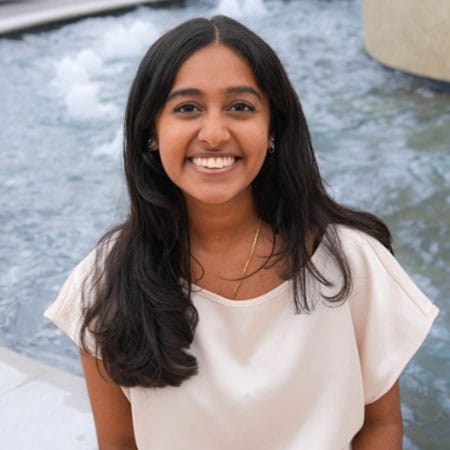
CHARITY CROSSING VOLUNTEER KAVINITHA VANKATESH SMILES FOR THE CAMERA WHILE ATTENDING A CONFERENCE. /COURTESY KAVI VENKATESH
What inspires you to volunteer?
When I go out for serves with my parents or a couple of my friends, I notice that there are a lot of different types of people in the world. When I go out, I see a whole new world, which I wouldn’t normally see on a daily basis. I get to meet people and hear their stories, and listen to what they have gone through. It’s so nice to know that us coming out there and giving them these items gives them light.
Tell us about your volunteer role with Charity Crossing.
We distribute boxes filled with useful everyday items. We sort them beforehand at our house, and then we go out to locations, like senior homes or other places. As I grew older, I got more roles because of my age. I did fundraisers where we would bake things, or we would buy cookies and go in front of stores and sell those things to make money to support certain initiatives. Recently, I’ve started working on the newsletter section, because as a senior in high school, it’s getting tougher for me to go out every weekend for service. So, another way I thought I could help out is by doing the newsletter for our New Jersey chief. Whatever events we have, I gather all the information and put it into our template, and then they will publish it.
What inspired you to get started with this initiative?
My dad had been part of this organization. When I started, I was a kid, but not even a teenager. I thought this sounded interesting because that meant I got to go places other than the ones I was used to. One day, we got a whole truckload of items shipped from Delaware to New Jersey. Looking at all those items, it changed my perspective on this world. How many things do people buy and then return, or throw away? These are really good items that can be used by anyone. I thought that was a good thing that we were doing, giving it to people. That was striking for me, and I realized I wanted to do this more.
What are your long-term plans or goals for the organization?
Next year, I will be going to college. I will stick to the newsletter, or anything that I can do with the digital marketing team, whether it’s helping reorganize or redesign the website or something along those lines. Whenever I come back for break, I can go out and volunteer, but I think my biggest plan once I get into college, or towards the end of my time there, is to start another chapter.
What have you learned through your experiences as a volunteer?
I’ve learned not to take things for granted. I was a spoiled kid who would buy things that I knew I wouldn’t use for that long. But I started looking at things from a different perspective. I realized that there are so many people in the world who need these things that I just wanted to buy and not use. Many of the things I end up throwing out. So I think helping people changed my perspective and ensures I’m more responsible with the way I spend things.
Why is it important for others to get involved with causes they care about?
Initially, I knew that I cared about helping people, but I never had that push to go and do something about it. When I did, I got a different viewpoint on life. It was very helpful to know that there are so many people in the world whom I could help. I think it just gave me a new perspective. When you do something that you care about, it gives you the chance to see if that’s really what you want to do with your life.
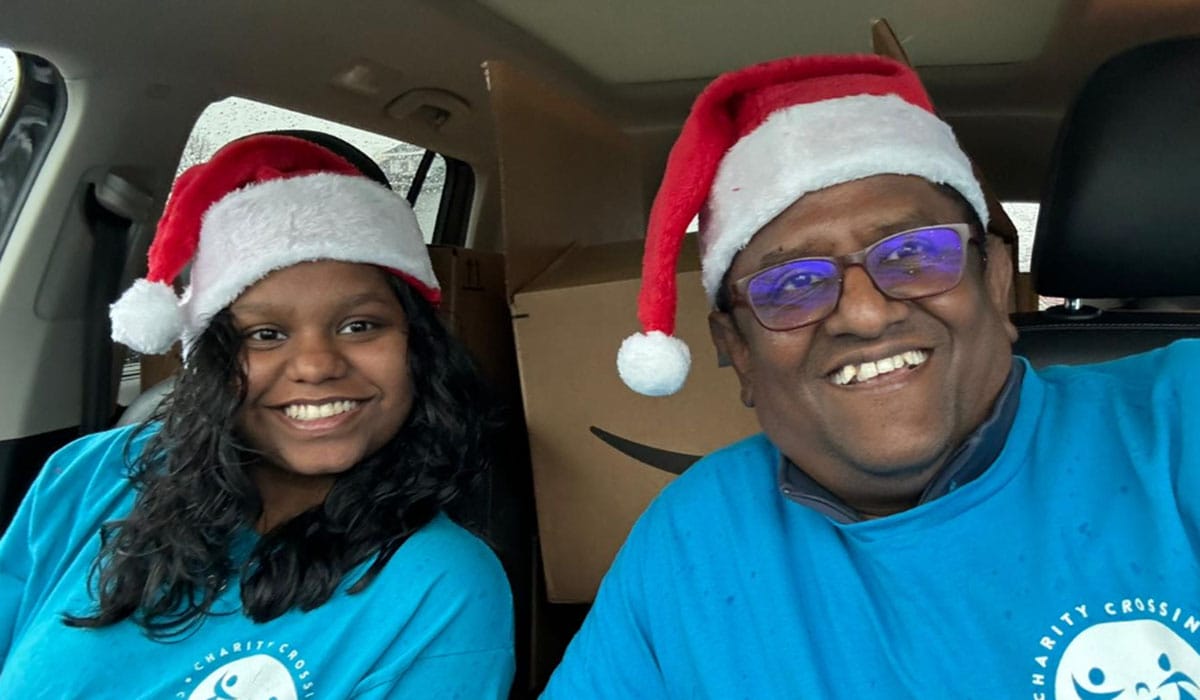
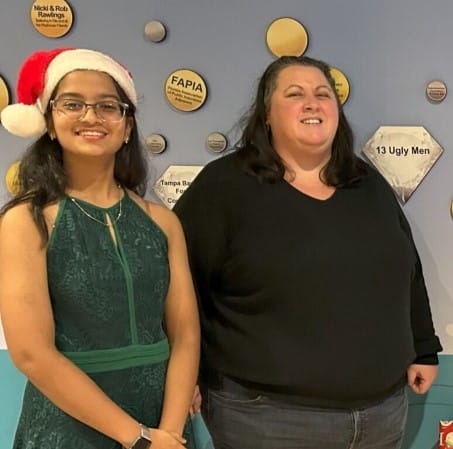
CHARITY CROSSING VOLUNTEER KAVINITHA VANKATESH (LEFT) DONS A SANTA HAT FOR A CHRISTMAS-THEMED VOLUNTEERING EVENT. /COURTESY KAVI VENKATESH
Any advice for people who want to start volunteering?
Just look around. Charity Crossing is in our local county municipal office, so they know that there’s something like this. Almost every state has something for youth to volunteer for if they just ask. Whether it’s doing work in an animal shelter or gathering donations like us, having parents involved in an organization pushes them to go, and then they end up having fun.
What do you want people to learn from your story?
You have to try things. I would have never tried if my dad hadn’t pushed me. I always said I wanted to help people, but I never actually took the initiative to do it. If you don’t push yourself, you’re going to miss out on a lot of things in life. After getting into this, I realized I have a lot of different potential, and I want to go into a path where I can help people. Doing these things allows you to explore things that you wouldn’t necessarily explore in the first place, and helps you figure out new things about yourself.
Concerts of Compassion That Uplift Lives Through Music
Meet Daily Point of Light Award honoree Chloey Cho. Read her story, and nominate an outstanding volunteer or family as a Daily Point of Light.
Chloey Cho has turned her love for music into a global force for good. As the founder of Solis and Luna Arts, she created a platform that brings the joy of live musical performances to often-overlooked communities—such as seniors in retirement homes and veterans in hospitals. What began as a high school club has grown into an international nonprofit that provides meaningful moments of connection and healing through the arts.
Under Chloey’s leadership, the organization has grown from a single school group to a network spanning 45 regions across 17 states and 10 countries. Solis and Luna Arts now boasts over 500 volunteers, ages 8 to 28, and has reached more than 5,000 patients through its outreach. Chloey’s logistical and creative efforts include preparing music resources, coordinating performances, mentoring regional leaders and overseeing communications—all while maintaining the heart of the mission: uplifting others through music.
The impact of the organization is significant, in both emotional well-being as well as in fundraising. Solis and Luna Arts has raised over $20,000 for Alzheimer’s patients and medical centers. Their performances bring awareness, comfort and a sense of joy to individuals who may feel isolated or forgotten. Each concert serves as a reminder of the power of youth-driven service and the healing potential of the arts.
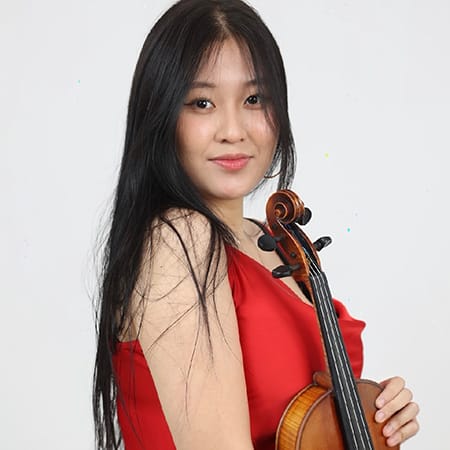
Chloey, founder of Solis and Luna Arts, brings live music to overlooked communities like seniors and veterans, spreading joy through performance.
Chloey also fosters a strong community within the club, where members meet weekly to rehearse, write blog posts and organize events. Even with over 20 students bustling around during meetings, Chloey’s ability to keep everything running smoothly speaks volumes about her leadership and passion. Her role as president is not just honorary, but hands-on and heartfelt, making her a role model for service-minded youth.
Through Solis and Luna Arts, Chloey Cho has built more than a student club—she’s built a movement. Her vision and leadership have inspired chapters beyond her hometown and continue to bridge generations with compassion, creativity and music. Read on to hear more of her story.
Tell us about your volunteer role.
As the founder of Solis and Luna Arts, I work with the Executive Board and 48 region directors of Solis and Luna Arts. Constantly, I aim to make Solis bigger and better, resulting in monthly executive board and region director meetings, where we all come together to put our minds together and brainstorm how we can make Solis a more successful organization and reach more people. Moreover, I focus on keeping track of our impact and engagement. For example, currently we hold 500+ youth members aged 8 to 26 who help in making music therapy more accessible to all. As founder, I also aim to raise funding for our organization. By applying for grants and scholarships, we have raised over $20,000 in funding for our organization.
Why is music so important to you?
When my grandfather experienced mental and physical health issues after the Vietnam War, he was unable to receive proper treatment due to financial burdens and living situations. On top of that, he was unfamiliar and uncomfortable with the bitter tastes of medicine. Music therapy is important to me because it is a healthcare treatment that mitigates such miseries—not only is it free and accessible, but it is also passionate and enjoyable. People overlook music’s potential. Music has so many different benefits, whether it be helping an Alzheimer’s patient remember an old memory, or reducing breast cancer cells to a lesser extent.
What inspired you to get started with Solis and Luna Arts?
It wasn’t in a concert hall that I first learned of the power of music—it was at my grandfather’s house. After I played “Arirang,” a traditional Korean folk song often considered the unofficial national anthem, he began to tell me about his life before he got drafted for the Vietnam War. He spoke in detail about the stray dog that used to follow him home, the times when he would make chapssal-tteok with his family. Never having seen my grandfather talk so much about his personal life before, I sat down with him on the couch. It was like I was getting to know him for the first time—“Arirang” had opened a valve that had been closed shut for so many years. Seeing the powerful effects a single song had on my grandfather, I was inspired to start Solis and Luna Arts.
What are your long-term plans or goals for the organization?
Currently, we implemented a new program in our organization called LunaTunes. This is where Solis members will be paired with a patient who requests a song—a piece—and the Solis member will spend a week preparing the piece, which will then be sent to the patient directly. As we have visited numerous hospitals and nursing homes this year to perform as Solis and Luna, we noticed that there are patients who cannot leave their hospital rooms, their schedules do not align with ours or other obstacles that prevent some patients from watching our music therapy concerts or having music therapy sessions with us. Through this program, we wish to reach everyone. Knowing the importance of music therapy, we want to share this with those who are unable to receive first-hand music therapy. This is just one thing, but it is one step closer in reaching my goal of making music therapy accessible in every way possible.
What’s been the most rewarding part of your work?
The simple things—the nods to Frank Sinatra, the quiet hums to Bohemian Rhapsody, the smiles that erupt when hearing “Can’t Help Falling in Love.” All those little things make me remember why I started Solis and Luna Arts in the first place. Music is medicine and can heal wounds that we may not see. It’s rewarding to see that I, along with other youth, are able to make people’s days a little bit brighter.
Tell us about future partnerships, programs or events that you are excited about.
This year, we received the Yuriko Kikuchi Arigato Award as a fellow of the Riley’s Way Foundation Call for Kindness Fellowship. This is the partnership I am most excited for because it is a fellowship that not only grants us $5,000 to reach our expansion goals, but also curates youth leaders through leadership workshops and meetings. Additionally, I’m excited to collaborate with the New York Youth Symphony Chamber Music Program to continue introducing the importance of youth chamber music programs in the tri-state area.
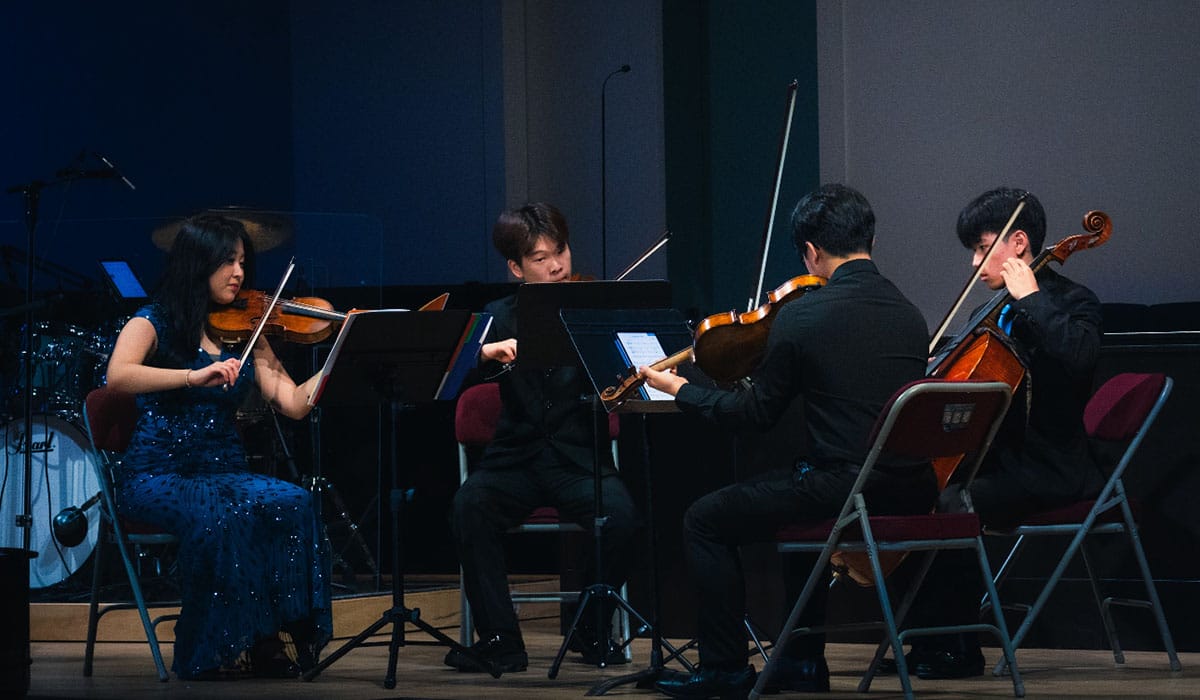
Ember Quartet of Solis and Luna Arts performing tango at the First Presbyterian Church of Englewood.
Why is it important for others to get involved with causes they care about?
I am an avid believer that anyone and everyone can make an impact in society. It is important for people to get involved in the causes they care about because while they gain experience in these fields, they are also able to help others along the way. Even if it is a niche topic, don’t be scared—I wasn’t sure if I would make much of an impact because music therapy is not well known. However, my passion made up for it. With my passion and dedication to music therapy, I was able to make an impact, all because I cared.
Any advice for people who want to start volunteering?
Don’t be afraid to try anything! When I was first starting music therapy volunteering, I was hesitant because of two major reasons: people didn’t know what music therapy was, and my young age. But looking back, I realize those doubts were unnecessary. Through my advocacy and work, I was able to spread the notion of music therapy to people. They were curious, and they learned. Age doesn’t matter when volunteering. Neither does any aspect of your background! As long as you love and are passionate about something, you are able to create a difference.
Mobilizing a Corporate Army for the Fight Against Hunger
Meet Daily Point of Light Award honoree Brian Sherrick. Read his story, and nominate an outstanding volunteer or family as a Daily Point of Light.
Brian Sherrick, vice president of Engineering and Projects at American Electric Power (AEP) is more than an executive—he’s a committed advocate for food security in Central Ohio. As a member of the Board of Trustees for the Mid-Ohio Food Collective (MOFC), Brian plays a critical role in supporting an organization that serves 20 counties surrounding AEP’s headquarters. His efforts help ensure that thousands of families gain access to meals, resources and hope.
“Mid-Ohio Food Collective supports a network of over 600 partners, which include food pantries, soup kitchens, senior centers and afterschool programs, across a 20-county footprint in Central and Eastern Ohio,” Brian says. “This network includes Mid-Ohio Markets, which provide wrap-around services and extended shopping hours that mirror grocery store experiences to help combat stigma.”
Additionally, MOFC offers a Mid-Ohio Farmacy program that integrates healthcare and nutrition putting focus on a Food Is Heath strategy, two urban farms geared towards food production and community education, and a Mid-Ohio Kitchen that provides hundreds of thousands of meals each year to afterschool programs, summer feeding programs and community meals. These assets align to aid in the organization’s mission to end hunger in the area—a challenge that is more prevalent than you’d think.
Brian explains, “Hunger is not necessarily about a lack of food. It’s driven by competing priorities. The other bills stack up, and when people must choose between housing payments, medication and other things, the food bill gets put off because it’s the least important at that time. That’s why the Mid-Ohio Food Collective is there. In fact, over 60% of our customers only come once a year. Most people do not continuously need assistance. They’re not constantly looking for a handout, but rather a little help in those brief, specific moments of need.”
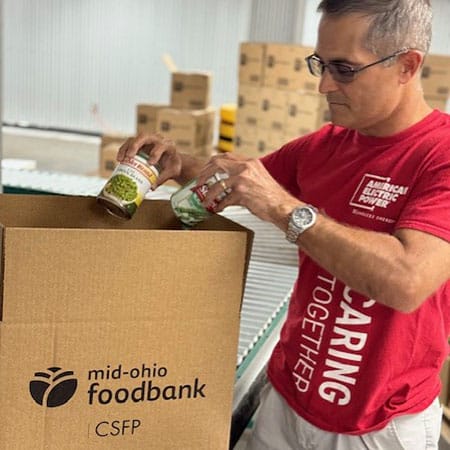
Brian Sherrick packing boxes at Mid-Ohio Food Collective.
Brian’s leadership goes far beyond attending board meetings. As chair of MOFC’s Development Committee, he actively guides strategy for fundraising and donor engagement. His deep understanding of nonprofit development makes him an ideal champion of the cause, bridging the gap between corporate resources and community need. While representing AEP on the board, he also amplifies MOFC’s mission across every level of the company.
One of Brian’s most impactful contributions is his work as the executive sponsor of AEP’s Operation Feed campaign. Under his guidance, the Spring 2025 campaign raised over $30,000, and AEP’s involvement in MOFC’s Drive Out Hunger event generated an impressive $150,000. Thanks to MOFC’s strategic partnerships, these funds translate into hundreds of thousands of meals for individuals and families struggling with food insecurity.
“One of the things I love about MOFC is their efficiency,” Brian shares. “They take advantage of grants. Federal, state and county funding. Partnerships with farms and grocery stores. They combine efforts with other organizations. Think about every dollar you spend at the grocery store being worth $4.56 at the MOFC. They maximize every dollar for the most benefit of the community.”
Upon moving back to Ohio after his time in the U.S. Army, and driven by his faith, Brian got involved in helping to fight food insecurity and hasn’t looked back. Despite the demands of his high-level role, he consistently dedicates time to advance MOFC’s mission. Whether leading meetings, mentoring volunteer captains or organizing food drives, Brian brings energy and vision to every task. His quiet, steadfast leadership style inspires others to get involved too.
A key focus of Brian’s leadership at the Mid-Ohio Food Collective is supporting the “Food Is Health” initiative, a broader approach to treating food insecurity not just as a social challenge, but as a critical public health issue. This program reframes the traditional image of food banks by prioritizing fresh, nutritious options—over 65% of the food distributed includes produce, meat, eggs and dairy. By emphasizing healthy eating, the initiative not only addresses hunger but also helps prevent chronic, food-related illnesses such as diabetes.
“If you’ve ever been really, really hungry, you know you it’s hard to think about anything else except satisfying that immediate need,” Brian says. “Our biggest goal is to end hunger. It may be something we never get to, but we’d like to work ourselves out of business, so to speak. Beyond that, we’re currently renovating an old Kroger to make it into a market, but also looking at bringing some outside agencies in for skills development. We’d like to help empower people to gain more income and work themselves off the need for assistance.”
Beyond his personal devotion to the cause, what really sets Brian apart is his ability to mobilize others. Within AEP, he has built a growing coalition of volunteer leaders who activate their networks across nearly 6,000 employees in Central Ohio. These grassroots efforts reflect the culture of giving within the company, reinforcing that corporate success is deeply tied to community well-being.
“When you get involved in a cause, you get the positive endorphins that come from helping,” Brian reflects. “And I think you can harness that by getting involved in a hands-on way. When you physically do something, it maximizes that positive influence. We need the financial gifts of course—it’s all crucial—but you can also see so much personal impact when you get to see firsthand how what you’re doing is making a tangible difference, how it’s bettering people’s lives and the community overall.”
Brian’s influence also extends beyond the workplace. His example reminds fellow board members, colleagues and community members that fighting hunger is not someone else’s job—it’s everyone’s responsibility. Through thoughtful leadership and a personal commitment to getting involved in a hands-on way, Brian has become a force multiplier in the movement to end hunger. As Central Ohio continues to face economic challenges, leaders like Brian offer a blueprint for corporate-community partnership.
“There’s a greater need now than ever for people to donate and volunteer,” Brian says. “With recent changes in funding, with less governmental aid, there’s a more urgent call for individuals to get involved. If you’ve ever considered it, now is the time. The need is definitely there.”
Shreyashi Bodaka, 17, has two main passions: science and music. She’s interested in computational biophysics—modeling biological systems—and genomics, and is looking to earn an MD-PhD to work with neurodiverse patients like her younger sister. She currently does research through multiple internships. Shreyashi also plays piano both professionally and recreationally. Her work encompasses solo and accompanist performances, ensembles, her school orchestra, competitions and fundraisers.
It’s these two interests, combined with her desire to enrich the life of her sister, that led her to create The Healing Harmony. Through this nonprofit, Shreyashi teaches students, but she also trains others to teach music to students with learning differences viaa method she created through research and working with her sister. They use music therapy and applied behavior analysis (ABA) based methodology to accomplish both musical and non-musical goals. Her goal is to make music accessible by sharing an adaptive teaching methodology that can address the way each student learns.
Shreyashi has helped train hundreds of music teachers and 35 volunteers, organized over 500 volunteer hours and donated $25,000-worth of instruments to schools that work with the neurodiverse population, including a grand piano to a school that focuses on children with autism.
What inspired you to get started with this initiative?
My sister is homeschooled. For her, it doesn’t really make sense to focus on academic goals. We have ABA therapists for her, which is the most common type of therapy. Music has been a part of my life for forever, and I’ve always wanted to share that with her. When COVID hit, I had a lot more time. I started to teach her piano but realized that the way I was taught wasn’t going to work, so I tried to use ABA techniques. It’s a way of breaking down tasks into their simplest components and then teaching each of those, step-by-step. It ended up being particularly effective when combined with color-coding, a trick I learned with my research.
At Christmas, Shreyashi (left) donates a piano starter set to GiGi’s Playhouse after playing sensory-friendly music at their WinterFest event./Courtesy Shreyashi Bodaka
One of our family friends with neurodivergent children asked me to teach their kid as well, because she was interested in piano. The primary issue that sparked The Healing Harmony was that no one can really find lessons for these kids, because most people aren’t prepared to adapt to their needs. According to a report I found called “Reshape Music” by Youth Music, a majority of neurodivergent learners can’t find music teachers who can adapt to their needs, even though 80% of them find music enjoyable. Because of this, only 7% of them are regularly making music.
My method was effective with this other child, so I showed it to several ABA therapists and piano teachers who thought it looked solid. Then, I started expanding with The Healing Harmony.
Tell us about your volunteer role with The Healing Harmony.
Originally, this was all me, but that wasn’t a sustainable model. So, I started putting out calls for volunteers. Our major initiative is running sessions with music activities oriented towards neurodivergent kids. We want to get them moving—for example with maracas—and excited about music. We’ll teach them basic songs on the piano with labels on the keys and color-coding. We’ll also encourage them to engage with each other. We partner with several major organizations—Ronald McDonald House, GiGi’s Playhouse, Children’s Cancer Center—and have reached over 1,100 kids so far.
I used to create and implement lessons, but now I focus on the former so that I can pass them on to volunteers and other teachers through trainings. We’ve now established a few positions, including an outreach manager who reaches out to piano teachers across the country and organizations we might be able to either donate to or run sessions at. I oversee that and offer teachers one-on-ones to walk through the method and answer questions on how to apply it.
I also work on fundraisers, and I still perform. This December will be my fifth year performing at a sensory-friendly Santa-meeting group. I volunteer at some sessions, but at this point, there are too many to go to all of them. It’s also a lot of coordination and administrative tasks for directing donations.
What are your long-term plans or goals for the organization?
We’re looking to expand, fundraise more and get a system in place to ensure this method is eventually standard for piano teachers to learn. Our job won’t be done until it’s as easy to find a music teacher for a neurodivergent child as it is for a neurotypical child.
What’s been the most rewarding part of your work?
It’s seeing kids go from shy or hesitant to opening up. I vividly remember working with one girl, because she was so vibrant by the end of the session. Someone once asked me if I thought I’m being a voice for the neurodivergent community. To me, it’s the opposite. I’m giving them a voice through music, and that’s the most rewarding part.
(At piano) Shreyashi leads an adaptive music session she designed to be sensory friendly for neurodivergent children./Courtesy Shreyashi Bodaka
What have you learned through your experiences as a volunteer?
Every neurodivergent learner is different, just as every neurotypical learner is different. I’m most accustomed to working with the challenges my sister has, but through my sessions, I’ve become even more adaptable. There are preconceptions that neurodivergent people are very different, but they’re really not. They have the same basic needs. They want to have fun and connect with people, even if it’s in a different way. They still want to be respected. They still want to enjoy things like music.
Why is it important for others to get involved with causes they care about?
Your own effort is never too small to make an impact. We always think these are such global issues that one person would never be able to do anything about, but if hundreds of individuals participate, now it’s no longer small. You might end up with something like The Healing Harmony, where you’ve made a really big impact on people that you deeply care about, like my sister.
WORKING TO MAKE PERIOD POVERTY A THING OF THE PAST
Meet Daily Point of Light Award honoree Amrutha Venkat. Read her story, and nominate an outstanding volunteer or family as a Daily Point of Light.
Amrutha Venkat is working to erase stigma around bodily functions. Growing up in an Indian culture where menstruation was treated with silence, Amrutha was a bit perplexed by the customs she faced. If she had her period, she couldn’t attend temple or eat off the same plates as her family. After going away to college and meeting her roommates, she determined that it wasn’t her Indian or religious background that motivated these customs, but the traditions of the caste system. Seeking to shed the stigma of menstruation, Amrutha wanted to help individuals facing period poverty by distributing menstrual hygiene products and promoting menstrual health education.
In March of 2023, Amrutha cofounded Every 28 Days, a Chicago-based organization that strives to donate 500 million sanitary pads to underserved populations. Amrutha has raised $30,000 toward providing essential hygiene products for marginalized populations, including LGBTQ+ communities. The organization has distributed more than 40,000 menstrual products across underserved communities in multiple U.S. states, becoming a force in addressing menstrual health disparities, particularly for underrepresented communities. The team has also had a tremendous impact across the globe, raising funds for a donation to Nyaka Global, which provided menstrual hygiene products to girls at a school in Uganda. No matter their location, the Every 28 Days team is fighting to alleviate the stigma of menstruation.
Amrutha’s work with Every 28 Days has also served as a catalyst for her future life path. Currently a busy college student studying public health, she volunteers 20 to 30 hours per month with Every 28 Days. She’s planning on attending medical school, where she’ll continue to focus on helping others from a public health perspective. Amrutha’s dedication to smashing stigma and eliminating period poverty is a powerful testament to the impact volunteerism can have. Not only did she inspire positive change within her community, but she also discovered the path that would pave the way toward her bright future.
What inspired you to get started with this initiative?
I was raised in a culture where menstruation was regarded in silence and shame. I come from an Indian background, and growing up, I followed caste traditions. I was told not to enter the kitchen or that I couldn’t go to the temple while on my period. I couldn’t be around or touch my male family members. I have a brother and a father. If I had my period, then I had to eat off different plates. It was just tradition. It was just how my parents grew up. Those were always just rules that I followed and never really thought about. I never really thought much about it. I just thought that that’s how it worked for everybody. I didn’t know until coming to college, where I met my roommates, that it wasn’t an Indian thing or a religious thing, but it was more from caste traditions. I didn’t realize until college that it was a stigma, and that is what began this whole initiative.
AMRUTHA VENKAT IS THE CO-FOUNDER OF EVERY 28 DAYS, AN ORGANIZATION THAT ADDRESSES MENSTRUAL PRODUCT SCARCITY. /COURTESY AMRUTHA VENKAT
Tell us about your volunteer role with Every 28 Days.
I co-founded Every 28 Days to address period poverty and dismantle menstrual stigma that still exists. We partner with organizations to donate products locally and globally. We do a lot of educational campaigns. We’ve spoken at storefront fundraisers, libraries and pride festivals. We do fundraising and advocating for transgender youth. It’s a lot of fundraising and advocacy events and speaking out locally. Now we have five other chapters in Virginia, Georgia, Colorado, Texas and New Zealand. These chapters are also run by girls like our age, so it’s really cool to see that impact nationally.
What are your long-term plans or goals for the organization?
In the long run, the goal is to donate 500 million pads. But also, we’re working on an educational menstrual health game with a coding organization for young girls. The idea of that is to destigmatize menstrual health at a young age. We also want to continue expanding our chapters and deepening the global partnerships that we already have. This is in the very long run, but we want to develop some type of low-cost, reusable pad for rural areas and underserved communities.
What’s been the most rewarding part of your work?
The impact of being able to see the difference that we’re making from these organizations like Nyaka Global, where we were able to see the young girls holding the pads that we had provided for them. We partnered with Wings, which is the local domestic violence shelter. They had sent us a picture of the boxes that we had sent to their shelter. The fact that this is going to women who are in need, and we can use our privilege to make an impact, was cool. It still fascinates me that we’re able to do this, even though our whole team is so young.
What have you learned through your experiences as a volunteer?
I’ve learned that you don’t have to be a certain age or at a certain point in your life to make a difference. I started this when I was freshly 18. My co-founder was 16 when we started. We’re both young, and it’s been more than two years, but we’ve been able to raise so much money and make a difference.
Why is it important for others to get involved with causes they care about?
Even if it’s volunteering two hours of your time, not only is it helpful for the populations that you’re serving, but it also brings a sense of peace to you. Doing public health work and this work with Every 28 Days drives me to the work that I want to go into. It gives me a lot to talk about for med schools, because I feel like I’ve experienced so much, and not all necessarily related to the field that I’m going into. If you have that sense of purpose, I feel like that can fuel so much more in your life.
Any advice for people who want to start volunteering?
Don’t wait to be ready. Impacting one person can make a difference. It can be easy to overthink it, but even donating one hour of your time can make a difference. Also, be open to feedback and take that constructive criticism to grow.
What do you want people to learn from your story?
You have to start small. When we started this, I was 18 and had just come to college. I go to school in Florida, so going from Chicago to Florida already felt like a huge thing. At our first fundraiser, we got $25. We wondered what we could change to make it better. At the second fundraiser, we got $500. It was just making small changes and seeing what we could do better, taking constructive feedback and growing it into this movement we never expected. What people can learn is to just plant the seed. You don’t have to know where it’s going to go, but just start small and see what happens.
At the heart of the Historic Jersey City and Harsimus Cemetery, Tony Susco is an animated force driving preservation, beauty and community spirit. As a longtime volunteer, he dedicates his time and energy to transforming the cemetery into a welcoming, well-maintained historical site. His “Wake and Rake” program has become a staple, gathering volunteers multiple mornings a week to rake leaves, trim trees, clean pathways and tend to gravestones. His consistent leadership and dedication have made the once-overgrown space a peaceful and vibrant environment.
Tony’s passion for conservation goes beyond basic groundskeeping. He introduced pollinator gardens throughout the cemetery, creating a thriving habitat for butterflies and birds. His eye for sustainable solutions even led to the use of goats and sheep to manage thick grass in hard-to-reach areas. As the cemetery’s volunteer coordinator, Tony also manages a diverse group of regular and one-time volunteers. Whether it’s guiding newcomers or motivating seasoned helpers, Tony ensures each hour spent at the cemetery contributes to the site’s preservation and dignity.
In addition to overseeing volunteers, Tony (affectionately known throughout the community as “Dancing Tony”) serves as the events coordinator, helping to bring new life to the historic space. He supports community events and fundraisers that not only raise money for upkeep but also draw attention to the cemetery’s rich cultural and historical significance. Through concerts, seasonal events and educational tours, Tony helps connect residents to local history in engaging, memorable ways.
Tony’s 15-hour weekly volunteer commitment is helping ensure that the Historic Jersey City and Harsimus Cemetery is not just a resting place, but a living testament to community care, heritage and environmental stewardship. Read on to learn more of his story.
What inspired you to get started with volunteering at the cemetery?
I initially was involved with the historic cemetery because I throw a Halloween fundraiser there each year called “Ghosts of Uncle Joe’s.” It’s one of our biggest events and allows us to raise funds for the cemetery, which is completely maintained and run by volunteers.
I got more involved in the actual maintenance of the cemetery during COVID because a lot of the work that was being done there was being done by corporate volunteers. Once COVID struck, we lost a lot of that volunteer power. Sadly, our executive director also passed in 2020. So we all had to step in and fill different roles, which is how I got more and more involved.
Tell us about your volunteer role.
I’m the volunteer events coordinator at the cemetery. I also help with maintenance. We host an event that we call “Wake and Rake” on Tuesdays and Saturdays, and then we also do special corporate and large group volunteer groups. I always like to say, we have tasks for all shades of green thumbs. Things are always growing at the cemetery.
Why is this issue so important to you?
When I first got involved at the cemetery as an event promoter, hosting the Halloween fundraiser there, I started spending a lot of time there. It’s beautiful. It’s a historic cemetery that dates back to the 1830’s. It has some of the earliest notable people in Jersey buried there. That’s how I initially got involved, as an event promotor. I had found out though other people that the cemetery was hosting live music events.
Before parks existed, cemeteries were places for people to gather, for picnics and other things. People would go see their loved ones who had passed and then have picnics in the cemetery. I was having this Halloween concert at an art space, and we had many issues with city agencies – police, firefighters, zoning and more. So that was the catalyst, moving the event. The first year we did the event, we raised about $4,000 for the cemetery’s foundation. Last year, we raised upwards of about $40,000. It’s probably the biggest event we have there, fundraising-wise.
As for the maintenance of the cemetery, my partner is really involved with the historical garden boxes there. These are garden boxes of people who’ve been deceased for over 100 years, so they’re not necessarily getting taken care of by loved ones anymore. We’re constantly picking up plants and growing stuff there. She’s also behind the monarch butterfly station. Another thing we do is host goats and sheep, which is what we’ll be doing for the next few months. It’s great that we’ve been able to restore life to this historic cemetery.
What’s been the most rewarding part of your work?
A lot of it for us is that when we’re doing the landscaping and maintenance, we’re reclaiming the areas that have dealt with some really heavy overgrowth. Every gravestone has a story, so when it’s covered up, the story is hidden. It’s a good feeling of accomplishment to be able to recover the visibility of those stories, as well as contribute to the overall beauty of the cemetery. When we have an opportunity to restore a gravesite or an area, it’s really rewarding.
Tell us about the Halloween event.
Well since it’s in a cemetery, it’s the easiest party for me to decorate! It’s a two-day event with local bands who cover other bands. The guys who did Beach Boys five years ago reached out and asked if they could reprise their role this year. Sometimes it’s key when someone passes, people change their submission.
In addition to Ghosts of Uncle Joe’s, at the end of this month, since we’re hosting the goats and sheep, we’re hosting something we’re calling “Goat-chella.” It’s also a two-day music festival of more original local bands.
Why is it important for others to get involved with causes they care about?
I’ve been in Jersey City for 30 years. It’s become a part of my life in the community here. This is a cause I really care about, and it’s great that it meshes with what I do as an event promoter.
Any advice for people who want to start volunteering?
Don’t be scared to go. The importance of volunteers can’t be underestimated. Just getting there and showing up is 75% of the effort. And it’s great because you’re working with like-minded individuals so you’re likely walking into a group of people who will become your friends.
Helping Others Find a Brighter Future After Incarceration
Meet Daily Point of Light Award honoree Alex Saiz. Read his story, and nominate an outstanding volunteer or family as a Daily Point of Light.
Alex Saiz understands how challenging it is to get back on your feet when you have lived experience with the criminal legal system. But it wasn’t until he became directly involved with the Florida Justice Center that he came to understand just how much of an uphill battle that journey is.
A seasoned criminal defense attorney, Alex first met the founder of the Florida Justice Center, an organization that provides legal support and community education to people with experience in the criminal legal system, during the era of protests that occurred following the death of George Floyd. He agreed to sign on as the organization’s volunteer director of Legal Services and recognized that they could make significant progress by representing people in expungement motions. Realizing they could streamline the process of helping people get their criminal record expunged by using technology, the group started hosting legal clinics throughout the state, making the services available to anyone who needed them.
Alex views helping people get their records expunged as creating a brighter path for all members of their family. He cites data that demonstrates how the average person who gets a record sealed increases their income, therefore investing money into the community. It also benefits the children of people who face the stigma of having a criminal record, breaking the cycle and giving the next generation the opportunities they deserve.
Alex has seen a lot in his time at the Florida Justice Center, but he has high hopes for the future. He dreams of a time when the organization has an outpost in every major city in Florida. While his work helping people get their criminal records expunged is specific to his work as a lawyer, it’s also a great example of how everyone has a special skill that can be used to better someone else’s life. No matter what you do for a living, the willingness to help others is a valuable gift that can change someone’s life.
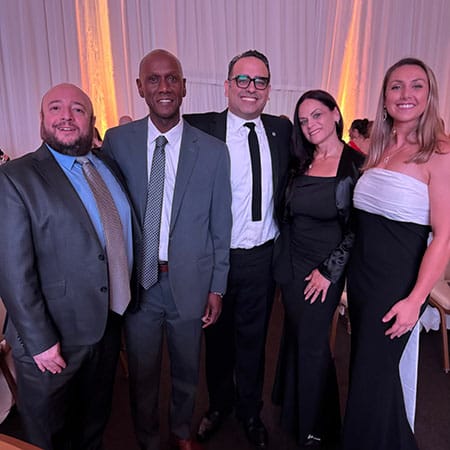
ALEX SAIZ (CENTER) IS JOINED BY MEMBERS OF THE FLORIDA JUSTICE CENTER TEAM AT THE FLORIDA ASSOCIATION OF CRIMINAL DEFENSE LAWYERS-MIAMI CHAPTER GALA. /COURTESY ALEX SAIZ
What inspires you to volunteer?
I’m one of those people who feel very lucky. I feel like I have advantages that other people don’t have, and I feel like many times in my life I got a benefit or received help from somebody who didn’t owe me anything. I want to give that same opportunity to other people. This is not one I’m very talkative about, but I’ve had many members of my family go to jail. In our country, when your parents go to jail, that stain kind of applies to you as well. Children of incarcerated people have a tougher way of life. I know that by helping a dad get his record sealed, or a mom get her record sealed, I’m going to help that next generation try to break these cycles. I was able to luck out, and I want to make it so that people who have parents who have been in custody before aren’t marked.
What inspired you to get started with this initiative?
It started up as a bail fund for protesters during the time of the George Floyd racial justice protests. I saw their organization, and I talked to the founder, Jonathan, and I wound up being his volunteer director of Legal Services. I told him they could be a lot more helpful to the community by representing people in expungement motions. In Florida, when you’re arrested, even if you’re found not guilty, your case still comes with a criminal charge. There’s still a record of your arrest. I advised him to help people by volunteering to do sealing and expungement of criminal records, because you have a lot of people who had their cases dismissed who are innocent. Every time they have to apply for a job, housing or education, they have to talk about this prior arrest. He wasn’t sure there was a need for that. But over the first three years, we had over 12,000 clients approach us.
Tell us about your volunteer role with the Florida Justice Center.
We’re averaging about 1,000 of these getting granted a year. Doing the math on that, you’re looking at $6 million invested in underserved communities every year. We realized that part of the problem was that lawyers were charging thousands of dollars for this easy service. But if we use technology to standardize the applications and motions, we saw that we could help thousands of people throughout the state. We started having legal clinics where we partnered with members of the community.
What are your long-term plans or goals for the organization?
There’s a statute that was passed to try to make sealing expungement automatic. I want to make this statewide, because if we do that, once your case gets dismissed, it’s off your record. And if we get to that level, we’re talking about a million people with criminal records in Florida.
I want to make sure I’m being clear. This isn’t a person who gets arrested, pleads guilty, gets found guilty at trial and is trying to escape their consequences. These are people who have criminal records, even though their charges were dismissed. Long term, I would like to see the implementation of the automatic sealing statute, where this could happen automatically for people. And separately, we want to expand our services so that we have a branch of our nonprofit in every major city in Florida.
What’s been the most rewarding part of your work?
I was a criminal defense lawyer for about 10 years before I joined here. I’m a little embarrassed to say that I didn’t understand the human element to the criminal justice system. Everyone in our organization is a returning citizen, meaning someone who has been to prison and turned their life around. They taught me a lot about how I was projecting myself. There are times when you meet with somebody and you explain that you’re a free lawyer here to answer their questions. There’s a certain level of gratitude that I really can’t even express.
Why is it important for others to get involved with causes they care about?
I believe that helping others does make the volunteer feel better. We live in difficult times. I’m not political, but there are a lot of things that are on the news that are very hard to see. When you go to a shelter and serve a meal, or when you volunteer for Habitat for Humanity, or when you volunteer at Special Olympics, you haven’t solved society’s problems, but you certainly don’t feel helpless.
When you spend six hours in a small town in Florida teaching criminal justice issues to 300 people who’ve never had a lawyer call them sir before, you feel like you’re making a difference. I never feel powerless. I feel like there is a solution that I can take part in. Also, I think that we all have a skill set, and that’s one of the things that I always advise people on. I always tell people, look for what you like.
Any advice for people who want to start volunteering?
The first thing I’d say is to think about what you care about. There are very few causes that I would look at and think you’re wasting your time. There’s always going to be an area where you can help. Find the thing that makes you passionate. At the end of the day, I feel like I’ve done something good for people.
What do you want people to learn from your story?
Never reach the point where you don’t think you can learn more. I was a tenured criminal defense lawyer when I started here. I’m the only lawyer for all those cases. I’m the only lawyer in our entire organization. I’ve learned more from the people I work with who don’t have law degrees than I ever expected. Be open to the idea that there’s always going to be a better way. Sometimes you benefit and learn more by putting yourself in uncomfortable situations.
New York Teen Leads Global Movement to Protect Monarch Butterflies
Meet Daily Point of Light Award honoree Cynthia Zhang. Read her story and nominate an outstanding volunteer or family as a Daily Point of Light.
Cynthia Zhang’s passion for environmental conservation didn’t start in a classroom or through a documentary—it started in a garden. While volunteering at a local community space on Long Island, she met a woman raising monarch butterflies and had the chance to witness their transformation up close. Holding a monarch in her hand and releasing it into the air sparked a curiosity that soon grew into action. Now 17, Cynthia is the founder of Monarchs Matter, a youth-led nonprofit that uses the story of the monarch butterfly to educate and inspire communities to protect biodiversity.
What began as a personal project—raising and tagging butterflies at home—quickly became something bigger. Cynthia learned that monarch populations had plummeted by as much as 90% over the last two decades in North America, due to habitat loss, pesticide use and climate change. Wanting to share the wonder she experienced and raise awareness about the butterfly’s decline, she started Monarchs Matter in 2023 with a simple goal: to connect people to environmental issues in a hands-on, meaningful way.
At the heart of the organization is an “education-to-action” model. Cynthia believes that learning about environmental issues is important, but it’s the action that follows that makes the real difference. Through summer programs, habitat restoration projects, community science and global webinars, Monarchs Matter gives people, especially youth, the tools to make a tangible impact.
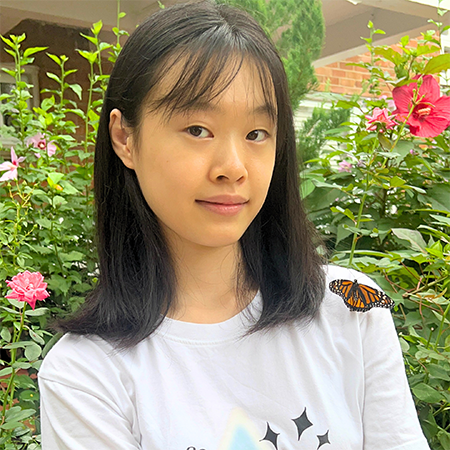
Cynthia Zhang is the founder of Monarchs Matter, a nonprofit that empowers youth protect monarch butterflies through education, habitat restoration and advocacy./Courtesy Cynthia Zhang
Though Monarchs Matter launched just two years ago, its impact has been remarkable. Cynthia and her team have planted more than 21,000 trees in Mexico’s Monarch Butterfly Biosphere Reserve, helping restore critical overwintering habitat. On Long Island, they’ve established 14 monarch waystations—vibrant gardens filled with native milkweed and nectar plants that provide essential breeding and feeding grounds for migrating monarchs. Spanning 28 acres, these waystations are now thriving at schools, churches, nature preserves and museums across the region.
But for Cynthia, the most meaningful impact isn’t in the numbers—it’s in the stories. She recalls one adult volunteer who told her, “You didn’t just teach us what to do. You made us feel like what we did mattered.” That same volunteer went on to build her own monarch waystation at home. Other participants have led butterfly releases at children’s hospitals or started projects in their own neighborhoods.
“After the summer program, I sent a survey to the students, and reading their reflections was really powerful,” Cynthia said. “Some had never done anything related to environmental conservation before, but they all said they felt inspired and empowered to keep taking action. That shift in mindset—that’s what I think is most important.”
Outreach for the program happens mostly through social media, school partnerships, and collaborations with local nonprofits like Rewild Long Island. Cynthia also developed a starter chapter initiative to help youth outside the U.S. take action in their own communities. In Pakistan, one chapter is building a rooftop garden to support the swallowtail butterfly, while in Nigeria, a group is planting native trees to reduce flooding and support pollinators.
Raju Rajan, founder and president of ReWild Long Island, has mentored Cynthia since the early days of her journey and watched her growth firsthand. “Cynthia is very mature in how she thinks, plans, and inspires others,” said Raju. “She’s thoughtful, creative and incredibly passionate It’s amazing that someone so young, in just a few years, went from knowing nothing about native plants to leading a global youth movement. She’s so driven and hardworking. I’m always telling her—take a break, goof off, be a kid sometimes,” he added.
Through it all, Cynthia continues to learn. She admits that launching a nonprofit as a high school student came with unexpected challenges. “I realized the hardest part wasn’t building a website or getting funding—it was getting people to care,” Cynthia said. “It’s hard to change your lifestyle to something more sustainable because it takes time and energy that many people aren’t ready to give. I’ve learned that my job is to help people find that inspiration and discover their own reason to care.”
“People are often surprised to learn that something so beautiful and once common is now at risk of extinction—and that their future kids might not even get to see it,” she said. “Connecting that to the broader biodiversity crisis helps people understand what’s at stake and motivates them to get involved.”
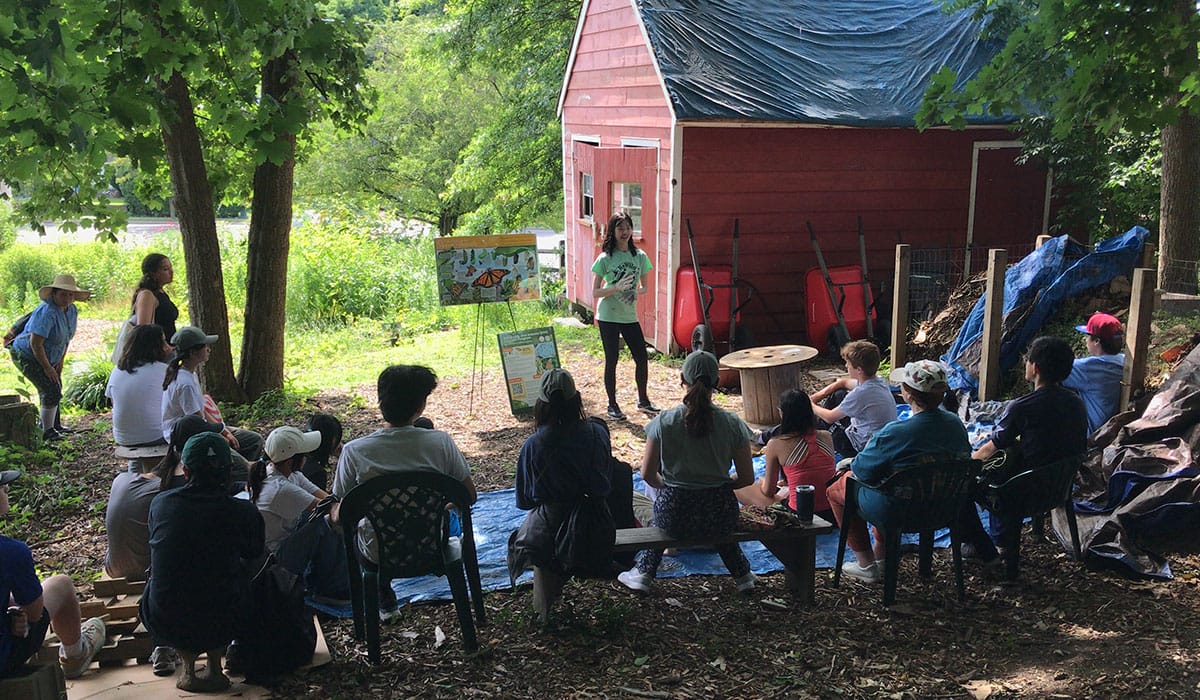
Cynthia (center) teaches Raise, Tag and Release (RTR) Summer Program students about the monarch butterfly life cycle during an outdoor session./Courtesy Cynthia Zhang
Volunteering has also changed Cynthia personally. She finds meaning in using her skills for a cause she believes in and often reflects on a Japanese concept called ikigai, which encourages people to pursue work that intersects what they love, what they’re good at and what the world needs. “Volunteering has given me more happiness and motivation,” Cynthia said. “When you use your passion to give back to the world, it helps you feel more fulfilled and find more meaning in what you do.”
Looking ahead, Cynthia hopes to continue expanding Monarchs Matter while exploring ways to advocate for policy change, especially around sustainable landscaping. For now, she’s focused on this summer’s program, which will bring together 40 students and volunteers to learn, plant and protect.
Her advice to other young people hoping to make a difference? “Don’t compare your journey to someone else’s. Start with what excites you, and don’t be afraid to grow from there.” Because as Cynthia knows, change often begins with something small—like a butterfly in your hand.
Meet Daily Point of Light Award honoree Yusuf Dagli. Read his story, and nominate an outstanding volunteer or family as a Daily Point of Light.
Yusuf Dagli, 17, didn’t move to New Jersey until high school, but he has made quite an impact on his adopted home. At school, he’s on both the track and soccer teams and serves as class president. Outside of school, he and his friend founded Scholarly Service Society with the goal of creating cleaner, safer and more educated communities.
In just under a year and a half, they’re already making a notable difference. Once or twice a month, Yusuf and his team organize volunteer opportunities and educational events that fall under one of four branches: medicine, business, STEM and community service. Volunteers can help others while gaining experience and building skills related to their interests and aspirations. Often, 15 to 20 people turn up for local events with 52 tuning in for the last Zoom discussion led by the group’s business administrator.
Through various drives, Yusuf’s organization has collected and donated roughly $15,000 of clothing to the local Goodwill, plus another 200 pounds of nonperishable food and $5,000 worth of hygienic products to a nearby soup kitchen. Already, their work has inspired others to start chapters across the U.S. and in Europe and Asia.
Yusuf Dagli, co founded Scholarly Service Society with the goal of creating cleaner, safer and more educated communities.
What inspired you to get started with this initiative?
I’ve always volunteered. I started at my local mosques and parks with cleanups or donations. But I wanted to make my own thing, host events that I would be particularly interested in and clean up our environment.
My friends—including my co-founder, Pahul Virk—and I had aspirations to start a school club, but it got denied for being too similar to one that already existed. That was the spark we needed to create Scholarly Service Society outside of school. Pahul and I originally thought of the idea and came up with a name, a logo and thoughts about what we were going to do.
Tell us about your volunteer role with Scholarly Service Society.
In the beginning, my day-to-day was planning what everything would look like: leadership positions, events, sponsorships, etc. We had to plan events with our township and get permission to clean up areas. They would supply our projects with vests, trash bags, gloves and other supplies. After that, we interviewed students within and outside of our school to see what would be the best fit for this organization. Now I work with my other leaders to plan events, collaborations, sponsorships and fundraisers.
In order to raise money for our boys’ basketball team, we’ve collaborated to clean up roads and parks and raised over $1,200. We’ve also collaborated with our class. As class president, I was able to go between the two groups and get more traction.
Each of our four branches does different events and is led by a president and vice president. We also have a social media manager and a project manager. I preside over staff meetings and support our other chapters.
What kinds of volunteer opportunities do you offer within each branch?
We plan a variety of different activities. Our first ever event was a food drive. We got food from all over New Jersey to donate to Trenton Soup Kitchen. We’ve also had hygiene product drives when they reached out to us about the need. Pahul and I contacted local businesses for donations as well as donating ourselves. And we’ve done cleanups at, for example, our community park. Drives are less time-consuming for people while still being helpful.
We’ve done online events where professors speak about business for those interested in that. We’ve also had a sandwich drive where volunteers make sandwiches to donate. Our local Taco Bell sponsored some peanut butter jelly and sandwiches for that.
What’s been the most rewarding part of your work?
The most rewarding part is seeing the results of our cleanups or our donations. For instance, when we cleaned a local road, we collected over four bags filled with trash. We took before and after pictures, and you could see how much trash was being left. At our local park, we picked up 12 bags. It demonstrated how polluted the area was and how we were able to make it safer for children and families who might want to visit. I also like to see the expressions of the Trenton Soup Kitchen volunteers when they see the donations we bring, because they can really help a lot of people.
Tell us about future partnerships, programs or events that you are excited about.
Right now, we’re on a break, because we’re trying to plan a blood drive with Bucknell University and the Red Cross. Those take a little longer.
After a successful clothing drive, Yusuf loads some of the $15,000 worth of donations for delivery.
Why is it important for others to get involved with causes they care about?
It’s important for people to take initiative and really understand what is going on. Not only are you helping your own community, but you could help others. Many people need volunteer hours that we’re able to provide, so it helps fulfill them in that way. It’s important kids not be surrounded by trash and litter when they’re trying to have a fun day at the park. It’s important for underserved people to be fed and provided basic necessities to live. And it’s important to come together as a community to work on something bigger than ourselves.
Any advice for people who want to start volunteering?
Join our Google Classroom. We post many volunteering opportunities ahead of time. We don’t want to just keep our volunteers just for us. We provide volunteer opportunities that go beyond our organization.
What do you want people to learn from your story?
No matter who you are, you can always make a difference. You just have to put the energy and the work in.
Lifelong Volunteer Coordinates Therapeutic Horseback Riding Program
Meet Daily Point of Light Award honoree Jessica Farber. Read her story, and nominate an outstanding volunteer or family as a Daily Point of Light.
Jessica Farber has always been an animal lover. Even today, she keeps two cats, Indiana and Gotham —the former she jokes is a foghorn. But she was captivated by horses as a 9-year-old when she tagged along with a friend to a therapeutic riding program called Equi-Ed. It was her first experience with them, but it wouldn’t be the last.
For over two decades, Jessica has been an Equi-Ed volunteer. Today, she volunteers on site and coordinates 30 to 40 volunteers—and many who fill in sporadically—on top of her full-time job at a financial institution. From serving as a side walker for lessons to caring for horses, colleagues estimate Jessica has walked over 900 miles, donated over 10,000+ hours in service of the horses and students and scooped tons of manure.
With nine horses and around 20 riders—aged 5 years old to 50s—the small staff relies on volunteers to keep things running smoothly. Riders with a wide range of emotional, physical and developmental challenges thrive in the supportive environment. And volunteers like Jessica, someone who enjoys solving problems and with an affinity for puzzles, is vital to its success.
What inspired you to get started with this initiative?
I accompanied a childhood friend to one of her lessons, and it became a weekly thing. I would go with her and, while she was riding, would do chores. That’s how it started. Also, my mom worked in the school district with our founder, so they knew each other a bit.
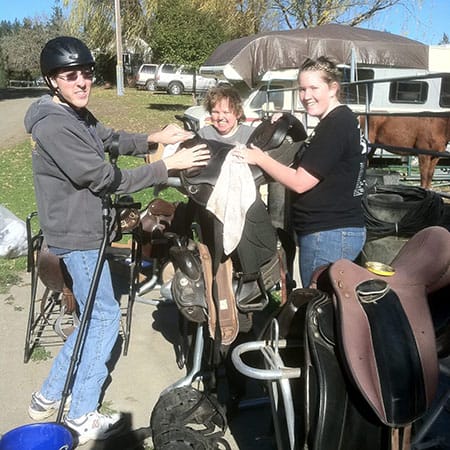
(Right) Jessica cleans tack with a few Equi-Ed riders.
Tell us about your volunteer role with Equi-Ed.
I’m the volunteer coordinator, so my day-to-day is usually via phone and email, unless I’m on the property. I do a lot of little things. I maintain the schedule for all of the volunteers. If we’re in between lesson sessions, I schedule people to do chores. I maintain a contact list and volunteer paperwork and send out weekly announcement emails. I’m the main point of contact, so if someone’s ill or on vacation and they need a substitute, they reach out to me. I’ll sometimes fill in. On Saturday mornings, I assist in lessons—horse handling, side walking, grooming and tacking horses before and after—and I feed Monday, Wednesday and Friday nights. Caring for horses also involves cleaning stalls, turning them out to pasture for the day and bringing them back in, filling water and other responsibilities..
How has that role changed over the years?
I started as a volunteer and a rider, and just before I turned 20, I started working in a paid role, doing chores every morning. Then, we got a full-time person for that, so I went back to just volunteering. I was assisting our program manager, sending out emails and doing some of the stuff that I do now. That brings me up to when I moved to Washington for three years.
I was already the go-to person. Now, after moving back and starting up again, the title just comes along with a bit more responsibility. It allows me to connect to people that I may not see on days I’m on the property. I still get to talk to them, which is my favorite part.
What’s been the most rewarding part of your work?
I’ve had a lot of first-time students who have never been on or around a horse. They’re shy and timid. It’s nice to see them open up a bit, and now, you can’t get them off the horse. That’s always been my favorite part with the students—seeing them go from being wallflowers to open, spunky little kids.
One of my volunteers started off as a student when she was 7 or 8, shy and a little scared. Now, she volunteers every Saturday, and she still rides. She’s like a completely different person. It’s really helped with her anxiety and the inner things that a lot of us deal with. I have another rider who has muscle and balance problems, so the movement of the horse helps warm up their muscles to give them a nice stretch. This is particularly helpful for people if, for example, they’re paralyzed, and it helps their balance.
What have you learned through your experiences as a volunteer?
Basically, everything that I know about the horse world. I’d always loved horses, but I came in with no knowledge of them. It’s also nice from a therapeutic riding perspective, to be able to know why we match certain horses to certain riders. For instance, we have a horse named Mike, and he might be the best suited for this particular rider, because Mike has these particular qualities. It’s like learning the personalities of the riders. Horses also have their own personalities and strengths.
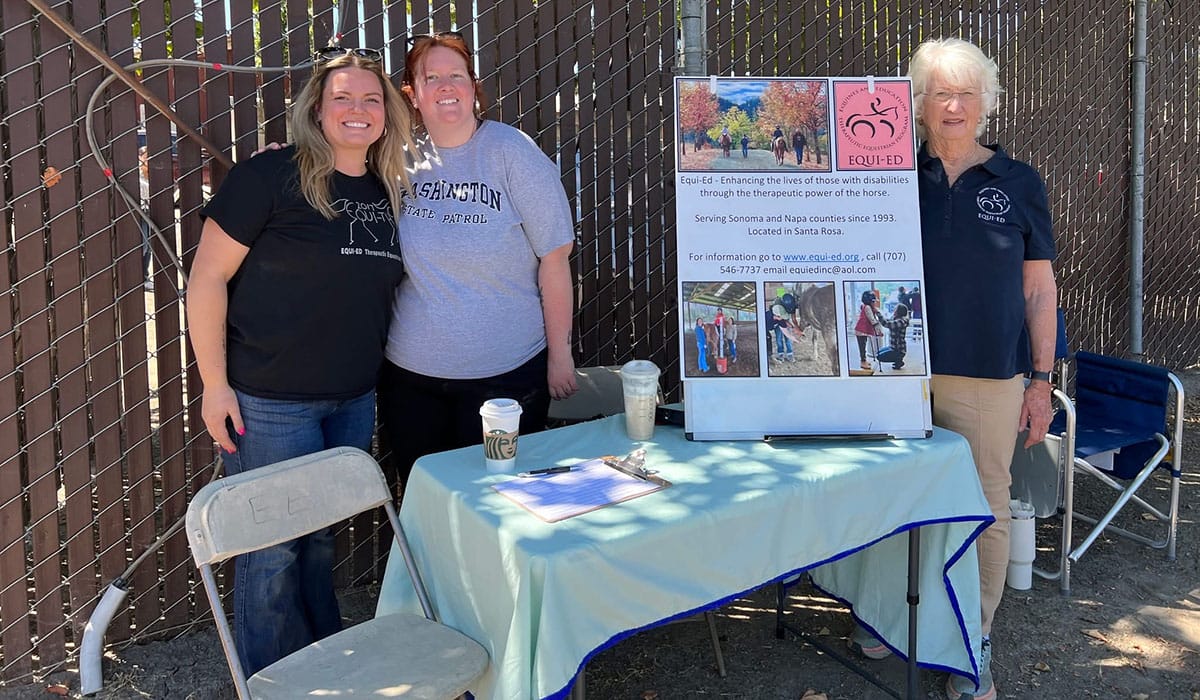
(Left) Jessica Farber, 20-year volunteer with Equi-Ed, works the organization’s booth at a horse show.
Tell us about future partnerships, programs or events that you are excited about.
Every year, we participate in the Calistoga Fourth of July parade. That was where our founder lived, so a lot of people in that community know us. It’s a fun way to get the students out. They ride in the back of the truck and decorate. We’re also going to be riding in a horse show dedicated to riders with disabilities, though it hasn’t been set in stone just yet.
Why is it important for others to get involved with causes they care about?
From my experience working with Equi-Ed, I’ve seen how much good it can do. I’ve seen how much our riders have benefited. It helps me too. It’s good for my soul. A lot of our volunteers are only out there for a few hours a week. It’s not that much of anyone’s time. So, anyone who can volunteer should.
What do you want people to learn from your story?
I found something that I’m really passionate about, and I found a way to get involved that helps other people. That adds to the joy it brings me. If you find something that you’re passionate about, see if there’s a way you can do something that incorporates that while helping others.