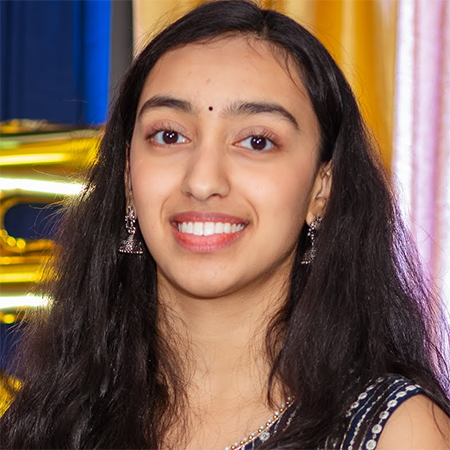
Meet Daily Point of Light Award honoree Meghana Aduri. Read her story, and nominate an outstanding volunteer or family as a Daily Point of Light.
India, some estimates show, is home to 30% of the world’s visually-impaired people. During the COVID-19 pandemic, 17-year-old Meghana Aduri saw firsthand how lack of sight can create limitations for otherwise very capable people when she engaged the services of a remote music teacher skilled in Carnatic music. Meghana, an accomplished singer and violinist, quickly learned he was blind but still experiencing success with his music.
“He was the first person to show me that visual impairment doesn’t have to limit someone’s capability or skill,” Meghana says, noting his success in singing competitions and national recognition. “As I spent time under his guidance, learning music, I also saw some of the challenges that he faced.”
His college finals, however, presented a challenge. A passing grade was required for graduation, but none of his study material was in an accessible format. Often, those who are visually-impaired rely on scribes and facilitators when studying or testing, so Meghana offered to help.
As she recorded textbooks as audio files on her phone, she was struck by how inaccessible even basic educational resources are for this population and how simply converting a book could change someone’s future.
MEGHANA ADURI, founder of Vision Beyond Sight, supports visually-impaired individuals.
“What I felt wasn’t sympathy; it wasn’t pity. It was empathy. I wanted to create change, and then I started to wonder how many more students were out there just like him, who were bright and driven, but who were being held back,” Meghana recalls. ” I couldn’t just stop at one person, because there are so many out there who are left without access to equitable education.”
Meghana contends with low vision, herself. It’s an issue, for example, that can leave her vulnerable when she can’t see the board during swimming competitions, but it also follows her into the classroom. She deeply relates to and feels a moral responsibility to the population she supports as the founder of Vision Beyond Sight, the nonprofit she started in 2021.
Growing up, Meghana’s parents modeled the importance of helping others. They often traveled to India to visit family, adding volunteering to the itinerary.
“They would take me to local orphanages where I would help serve meals and donate clothing and candy that we brought from the U.S. Those early experiences were incredibly formative,” she explains.
She credits the experience with making her more empathetic as well as fueling her desire to commit to a long-term initiative when the inspiration hit. Today, Meghana continues to coordinate the conversion of textbooks and exams with her organization’s Accessible Digital Books Project. Together with volunteers and partnerships with nonprofits VT Seva and Saksham, she has completed 140,000 pages of material that will benefit thousands of people across the globe. She hopes to one day use AI to further streamline the process.
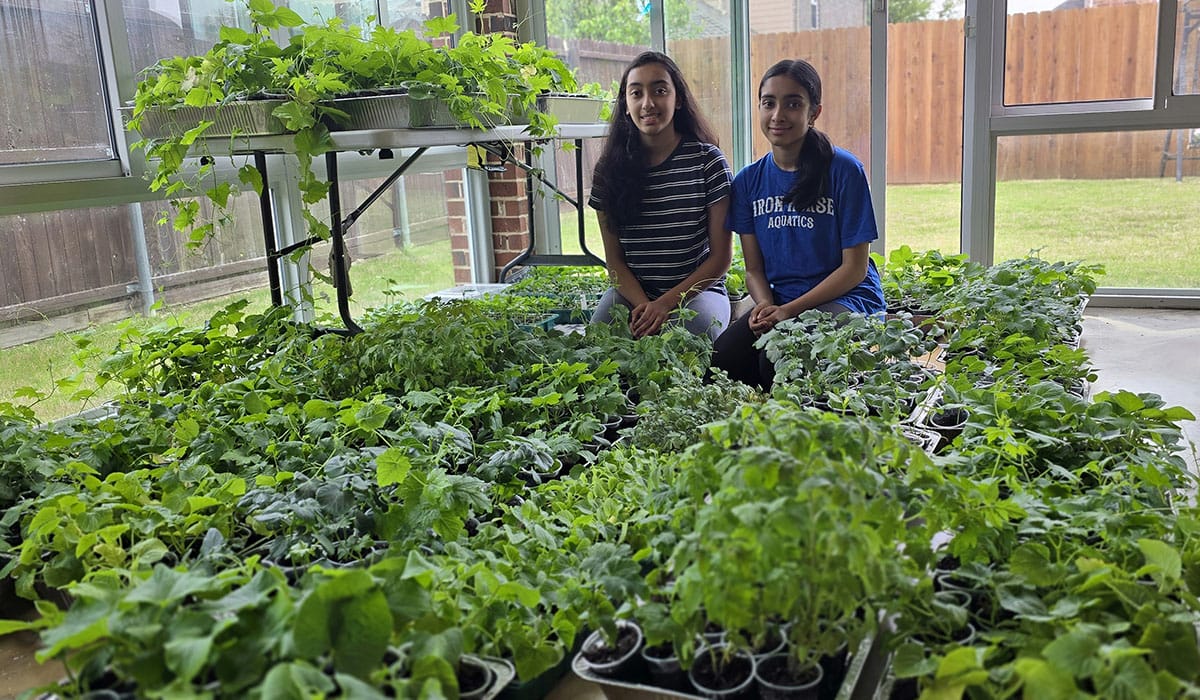
Meghana has also raised over $50,000 that she uses to sponsor assistive devices for the visually-impaired. For the past three years, she has organized Seedlings4Education and grows vegetable plants in her sunroom, selling them in stores when they become seedlings. In total, the organization has raised and sold 8,000+ plants that paid for 400 devices to aid in education.
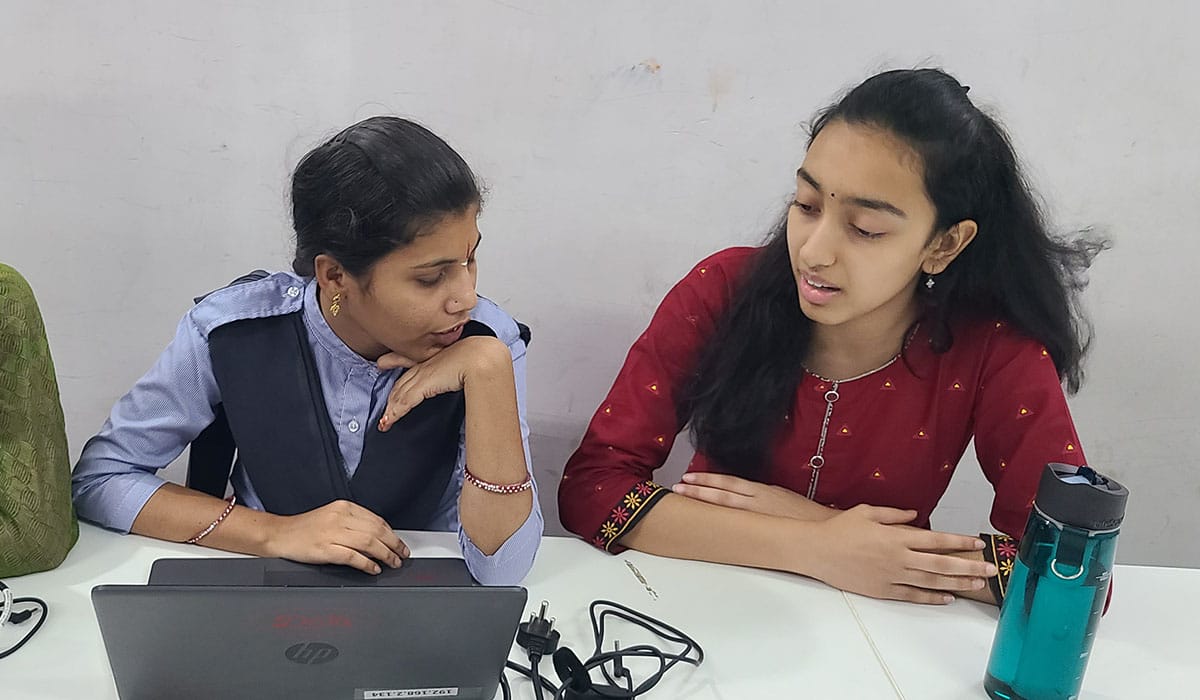
Working with staff, Meghana learns the requirements of visually-impaired students at Netra Vidyalaya College for the Blind.
In January, Meghana launched a college scholarship program to help talented, underserved students with visual impairments. So far, three beneficiaries have been named. One of them is Mayank, who comes from a remote village in Bihar and is 80% blind as well as being an amputee.
“Over half of those who are visually impaired have another kind of disability,” Meghana notes.
After sailing through a highly competitive entrance exam in India, Mayank received offers of admission from prestigious universities across the country. Sadly, he wasn’t able to attend, because his family couldn’t afford the fees.
“Once they gain admission into a university, they have to pay a huge entrance fee, and they only have two weeks to do that,” Meghana explains. “Regardless of the scholarships that they apply for, or even if they get loans from the bank, they can’t secure any of that in that two-week time span.”
With Vision Beyond Sight as a sponsor, Mayank will attend a well-respected technology school in Mumbai this fall.
“A lot of these students are the first in their families to go to college, to even earn a stable income. But this impact stretches farther than just them,” she emphasizes. “It impacts the community around them. It impacts generations after them. It’s changing their entire generation.”
Meghana also raises funds for scholarships by teaching local violin lessons. That particular skill branched out into a separate initiative when, a couple of years ago, a summer internship took her to the remote tribal village of Allampally, India. As she played for residents, she was struck by the kids’ enthusiasm for learning, many of whom had never even seen a violin. She continues to hold lessons via Zoom for around 60 students, and hopes to establish a music school there when she returns this summer.
“Even the smallest effort, a few hours a week, can have a huge impact, and that’s really what I’ve learned through this process,” she says.
Though India is home to many visually-impaired people, the need for help extends beyond the borders, and Meghana anticipates Vision Beyond Sight expansion into various African countries with the help of Saksham.
Meghana Aduri, founder of Vision Beyond Sight, turns her sunroom into a space for growing vegetable seedlings to raise funds for assistive devices for the blind.
As she prepares for her senior year in high school, Meghana is focused on her own future and is weighing her interests in both social entrepreneurship and finance while applying to colleges. In the meantime, she is helping improve the lives of eager, talented people who might otherwise be left behind due to their disability.
Meghana encourages others to find an organization or mission they’re passionate about and highlights the importance of asking for what you want.
“Initially, I was very reluctant to reach out to organizations like Saksham. They’re big organizations, and I was just a high schooler. What could I do?” she says. “But don’t be afraid to ask. The worst they can say is no.”
It’s her willingness to take chances and her deep-seated empathy that has enabled Meghana to implement far-reaching programs pushing for inclusion and equity for the visually-impaired community. It’s also what makes her a Point of Light.
From Suspension to Support: Changing How Schools Respond to Teen Vaping
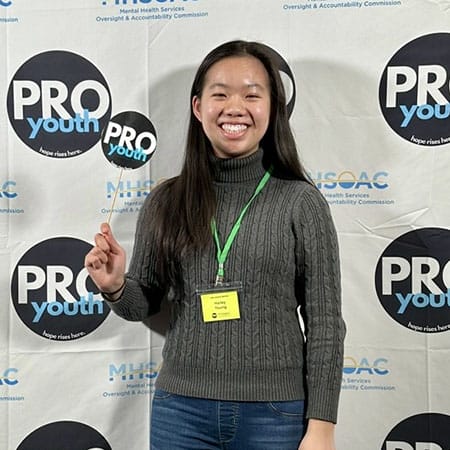
Meet Daily Point of Light Award honoree Hailey Young. Read her story, and nominate an outstanding volunteer or family as a Daily Point of Light.
Hailey Young just graduated high school, but she’s already leading a statewide movement to change how schools respond to tobacco and vape use among students. The 18-year-old advocate from Castro Valley, California has spent the past two years challenging punitive discipline policies and replacing them with restorative justice programs that prioritize healing, education and support. From building school-wide alternatives to suspension, to shaping county and state-level prevention efforts, Hailey is proving that youth-led change isn’t just possible—it’s powerful.
As president of the Tobacco Use Prevention Education (TUPE) program at her high school and Chair of the Alameda County Youth Advisory Board, Hailey saw firsthand how suspensions for substance possession disproportionately harmed students from certain communities. So, she took action. Partnering with counselors and local health clinics, Hailey helped build an alternative-to-suspension program that offers mental health resources, counseling and personalized quitting plans—giving students a path to stay in school and thrive.
Now working with more than 30 students struggling with addiction, her program has led to a significant drop in re-offense rates and has been written into school policy. Beyond her campus, Hailey brings educational programming to underserved communities, trains peers to be advocates and helps lead events like Fentanyl Awareness Night and the 1,200-person “Action Changes Things” youth conference at UC Berkeley.
Her advocacy even reached Capitol Hill. Inspired by her school’s success, Hailey drafted the “CARE Bill” (Comprehensive Approach to Restorative Education) and proposed it to the Office of Congressman Eric Swalwell. If enacted, it would allocate federal funds to launch similar age-appropriate restorative justice and mental health programs in schools across the country.
Hailey attends a youth conference on mental health, promoting peer-led education and community wellness. /Courtesy Hailey Young
What is TUPE and what’s your volunteer role?
TUPE stands for Tobacco Use Prevention Education. I was president of the TUPE program at my high school, and I also chair the Alameda County Youth Advisory Board, which brings TUPE efforts to 13 school districts. At school, I worked with counselors and administration to create a restorative justice alternative-to-suspension program for students caught with substances. At the county level, we focus on youth empowerment, reducing stigma and creating policy that addresses both substance use and mental health.
Can you walk me through how you created the restorative justice program?
We started noticing a big rise in suspensions for substance possession after COVID, and it was clear a lot of students were turning to tobacco and vape products to cope. I really didn’t want to see kids just being punished and pushed out of school—especially when they were struggling. So I partnered with our school’s on-site wellness center and a nearby clinic to create a system where students could get counseling and quitting support, and talk through what led them to use in the first place. We worked with certified counselors and used resources like Stanford’s wellness kit to build tailored support plans. It became this really powerful way for students to stay in school, get help and feel understood.
What inspired you to do this work?
A lot of it comes from personal experience. I had family and friends who were impacted by substance use, and that made me want to spread awareness and try to prevent others from going through the same thing. One person who really inspired me was my grandfather. He didn’t use tobacco himself, but he was constantly around people who smoked, and he ended up passing away from lung cancer. He played a big role in raising me, so losing him really pushed me to take action.
What’s been the most rewarding part of your service?
Definitely seeing how our work went from helping a few students to becoming part of our official school policy. And even beyond that, expanding to the county and state level and knowing that people outside of my school are benefiting too. It’s really meaningful when I hear that someone was able to help a friend or start something similar in their own school because they heard about what we were doing.
How are you working to make your impact reach beyond your school or community?
I got the opportunity to work with my local congressman, Eric Swalwell. I took the restorative justice model we built at my school and turned it into the CARE Bill, which stands for Comprehensive Approach to Restorative Education. I presented it to Congressman Swalwell’s office through a pretty intense 25-minute presentation, with the hope that it could become a national program. The bill would allocate federal funds to help schools across the country create similar restorative justice and mental health support systems for students who are caught in possession of substances. It’s still under consideration, but if he chooses to take any action with that, that would be really exciting.
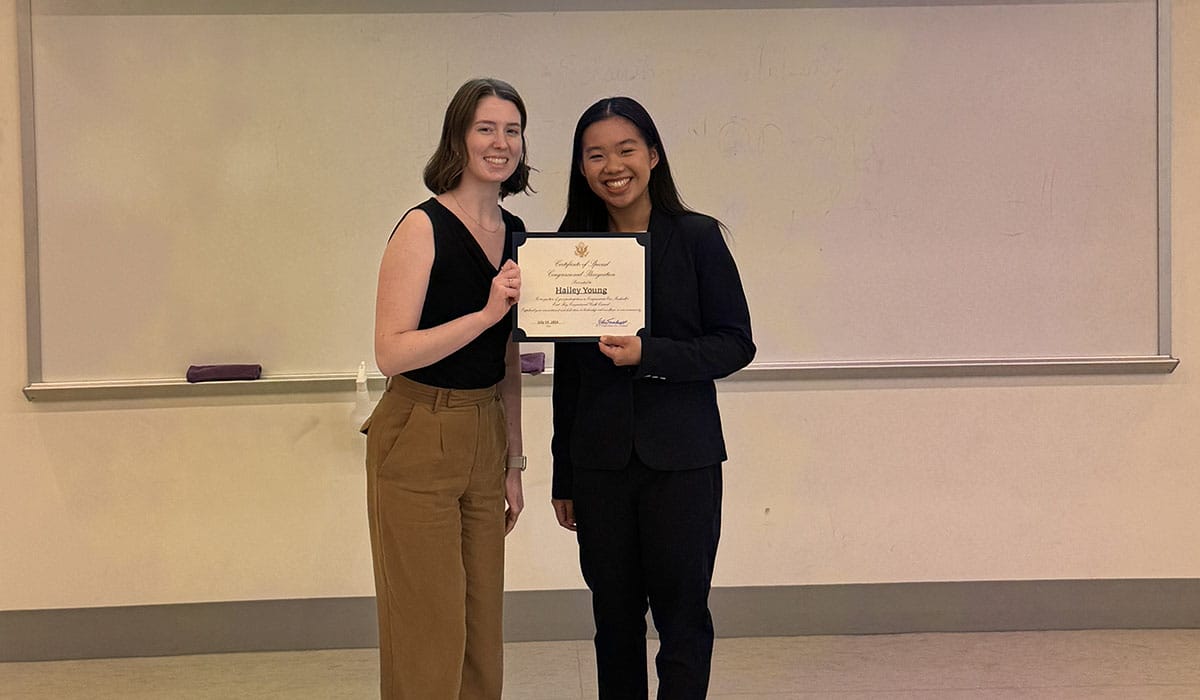
Hailey receives a Certificate of Congressional Recognition for her CARE Act proposal from Congressman Eric Swalwell’s staff. /Courtesy Hailey Young
Do you plan to continue this work in college?
I hope so! I’m attending Yale to study political science, and I want to keep advocating for policy and law reform around addiction, wellness and education. These issues aren’t just local or teen-specific. They exist everywhere. I definitely hope to continue seeing how the different communities I’m part of have their own unique struggles and trying to address them in the most healthy and beneficial way possible.
What’s one lesson you’ve learned from volunteering?
That we all need to have more compassion for each other. You never really know someone’s story or what led them to the situation they’re in. It’s so important to lead with kindness and care, which is why I abbreviated my bill to “CARE.”
What do you hope people take away from your story?
That the experiences and situations you grow up in don’t have to define your future. I was surrounded by addiction and substance use from a young age, and I could have gone down a very different path. But I’m proud that I chose to take those experiences and turn them into something positive—using what I went through as fuel to empower others and become the best version of myself.
Sisters with a Mission: How Two Girls Are Spreading Creativity and Kindness
Meet Daily Point of Light Award honoree Ally & Lizzy Small. Read their story, and nominate an outstanding volunteer or family as a Daily Point of Light.
Sisters Ally and Lizzy Small have been turning birthdays into acts of generosity since preschool, asking for charitable donations in lieu of gifts. When the pandemic halted their traditional collection drives, the teens pivoted by founding Sisters² 4 Kids, a 501(c)(3) that channels their love of reading and art into tangible support for children who lack these resources. In just four years, the nonprofit has distributed books and art supplies to more than 14,000 young people across Arizona and around the globe, proving that creativity and compassion can scale far beyond a living-room birthday party.
At the heart of Sisters² 4 Kids is a laser-focused mission: place at least one book and a set of art materials into the hands of every child who needs them. The sisters coordinate community book drives, partner with local businesses, and tap a growing network of volunteers to sort, pack and deliver donations. Their outreach stretches from Phoenix shelters to international schools, and every shipment reinforces the link between early literacy, creative development and long-term success.
The duo’s commitment to service doesn’t stop with their nonprofit. Recognizing the power of peer influence, Ally and Lizzy created an Excellence in Service award at their high school. Now in its second year, the honor spotlights students who devote time and talent to community causes, showing service as a core campus value. Even after they graduate next year, the sisters plan to oversee the nomination and selection process to keep the tradition—and inspiration—alive.
Outside school, the sisters brighten life for residents at their great-grandmother’s retirement community. Every month since early 2020, they gather relatives to craft 125 hand-made gifts—painted rocks, tissue-paper flowers, holiday trinkets—and place them on door ledges. What began as pandemic cheer has evolved into an enduring ritual; the pair, affectionately dubbed the “Village Elves,” still deliver these tokens of joy five years later, proving that small, consistent gestures can forge deep community bonds.
With thriving chapters, sustained local partnerships and an ever-growing volunteer base, Sisters² 4 Kids demonstrates the outsized impact young leaders can make when they blend passion with purpose. From global book shipments to front-porch art surprises, Ally and Lizzy Small continue to turn simple ideas into transformative acts, inviting teens everywhere to do the same… one storybook, paintbrush or handmade gift at a time.
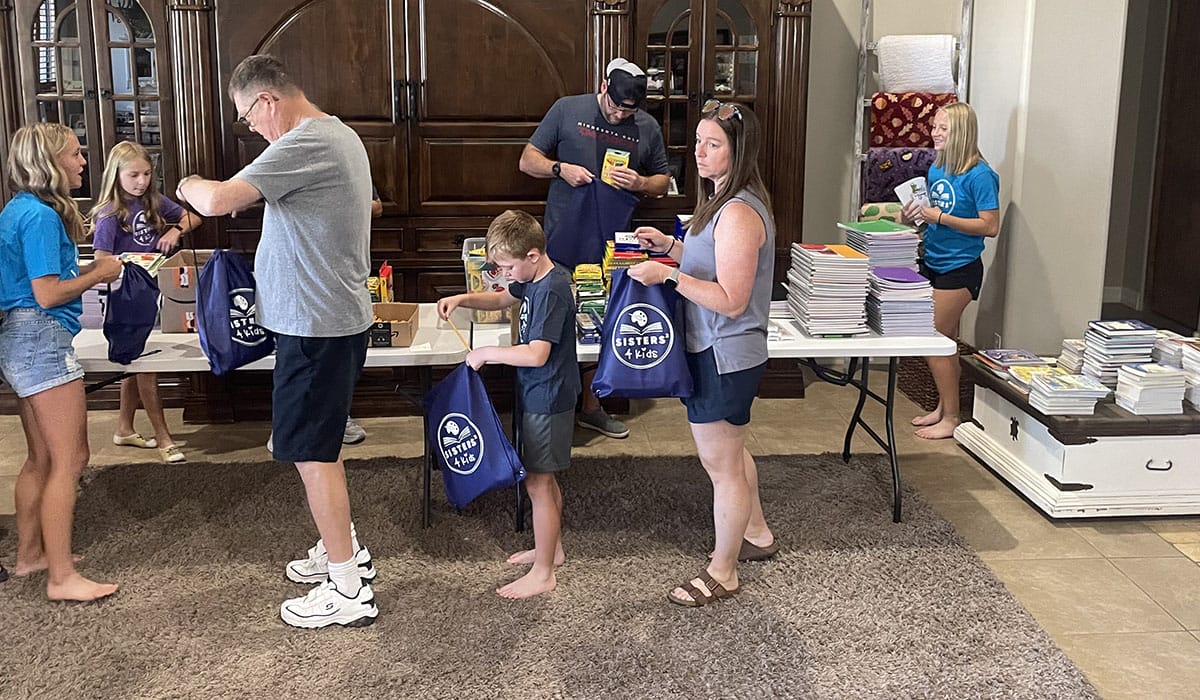
Many hands make light work! Ally and Lizzy’s friends and family helping to pack 275 backpacks.
Tell us about your volunteer role and organization.
We founded and currently run the daily operations of Sisters 4 Kids, a 501(c)(3) nonprofit. Its mission is to inspire imagination and creativity by ensuring that all children have at least one book of their own, and art supplies of their very own. We are twin teenagers, so we get the opportunity to run Sisters 4 Kids while also going to high school! We do pretty much everything together, but Lizzy usually focuses more on the community support, social media and financial donations, and Ally focuses more on material donations and outreach communications to schools, foster care agencies and other organizations that work with kids. We are so lucky to have a wonderful community, family and school community that help us in so many ways with Sisters 4 Kids.
What inspired you to get started with this initiative?
Growing up, our parents always talked about using our passions to find ways to serve, and how that would look different for everyone. They taught us that everyone has a gift to share, you just have to find it and then use it. Don’t overthink it. When we were really young, we painted rocks, because we loved to paint, and then we’d put them in our neighbors yard, at the store and so on. What a small thing that brightened someone’s day!
We then started thinking bigger, and for our 6th birthday party, we asked our friends and family to bring donations for the children’s hospital toy closet, instead of birthday gifts. Delivering those gifts to the hospital, seeing how one small thing we did could make an impact on others, fueled our excitement to continue looking for ways to serve and make impact. We did this in small ways throughout the year, and then every birthday, would collect donations for a specific cause instead of birthday gifts. It was a wonderful way to celebrate turning a year older, and our friends are family were very generous, but we knew we would need to find another way to collect donations that was sustainable long term, as we knew we wouldn’t have birthday parties where we could ask for donations forever!
In 2020, With lots of research and fundraising (we made and sold hot chocolate bombs to raise the money needed to start a nonprofit) Sisters 4 Kids was created. We decided to focus on art supplies and books, after we heard about how many children do not have any art supplies or a book of their own. Almost 25% of children in the United States do not have a book of their very own, and the number is higher in some other countries. Art and reading have been such an important part of our lives that we wanted to make sure every kid had these same resources of their very own. Research shows that kids exposed to books and reading, and having at least one book of their own, do better in school and post-graduation. Art and reading inspire imagination and creativity and we feel everyone should have this opportunity!
What are your long-term plans or goals for the organization?
With the incredible support of so many, we have been able to impact 14,621 children globally so far but have a long way to go to close the gap of 25% of children in the U.S. not having a book of their very own, so we will keep working toward that! Our other goal is to continue to inspire our peers and other kids to get involved in serving others (in any way they are passionate about) in the communities they live in. Kids are incredibly powerful with what they can do for others, and sometimes they just need a little inspiration.
What’s been the most rewarding part of your work?
There are so many different parts of it that have been so fulfilling to us. We of course don’t usually get to meet the kids that are impacted by Sisters 4 Kids, but hearing stories or getting letters about the difference it is making is so awesome. The other part that is really rewarding is seeing our friends, family and community come together to help, in so many ways. We have had people in our community hold donation drives and fundraisers, and reach out about a need they heard about so we can help.
Homemade positive encouraging cards are included in each backpack we give. Very young kids to adults in retirement communities are making these homemade cards to help out. Businesses are not only helping out financially, but also having their employees help make cards and send to us! Last week we got a big envelope full of cards from Delaware. Seeing how everyone, regardless of their age, coming together to serve and help is so rewarding!
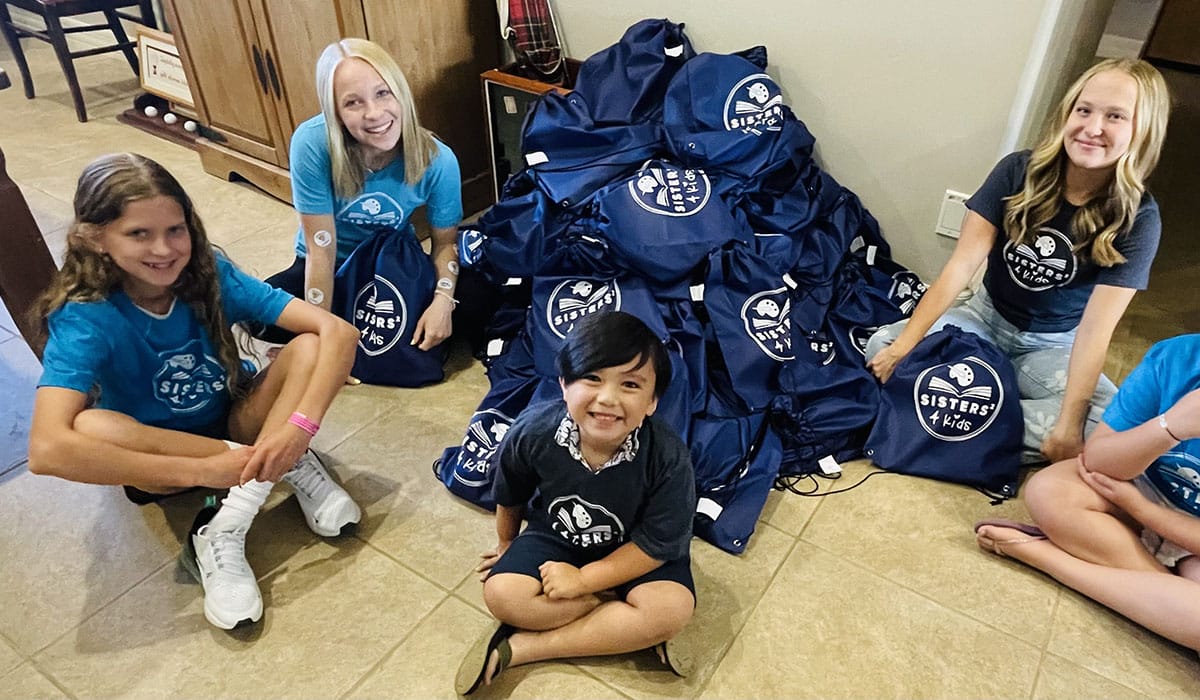
Some of the organization’s littlest helpers making a big difference.
What have you learned through your experiences as a volunteer?
We’ve learned that no matter your age, you can always find a way to volunteer and serve. It doesn’t have to be something big, just use what you are passionate about to serve others. It all matters. If you are struggling to figure out how to volunteer and serve, start with purposely smiling and genuinely thanking the cashier in the school cafeteria, or the cashier at the store. Take a piece of paper or card and write a genuine and specific thank you to a teacher, doctor, receptionist or mailman about why you appreciate them. Make someone else feel seen and that they matter. If you start there, you get in the habit of looking for ways to impact others, and then naturally you will be able to use your own gifts and passions to help others.
Why is it important for others to get involved with causes they care about?
It is important because the causes need your help in so many ways. It also goes both ways; the volunteer is internally rewarded knowing they are impacting others with something they believe in. Knowing you are making a difference to someone else, in any capacity, is truly the best feeling in the world!
What do you want people to learn from your story?
We hope to inspire others, no matter their age, to get involved in something that serves others. Start small and then see where it leads you, because you just never know.
EMPOWERING KIDS TO NAVIGATE ILLNESS BY SHARING HER STORY
Meet Daily Point of Light Award honoree Nell Choi. Read her story, and nominate an outstanding volunteer or family as a Daily Point of Light.
Nell Choi is a true trailblazer. At just 9 years old, she came down with serious flu-like symptoms. When doctors discovered major inflammation in her brain stem, they knew something significant was going on. Nell was diagnosed with a rare neurological condition called neuromyelitis optica (NMO), and her lifelong battle against the disease began.
During the worst of her experience with NMO, Nell felt isolated and confused over what she was going through. Previously an active lacrosse player, she was now experiencing long bouts of hospitalization and had trouble verbally expressing herself. But it was during this time that she found tremendous power in putting pen to paper. By journaling, Nell was able to emotionally process her experience and release some of the angst she was feeling. At 10 years old, she wrote My Hospital Story to combat those feelings of loneliness.
The book, which chronicles her life being thrown upside down by a mysterious illness, was such a success that Nell partnered with Children’s National Hospital, where she received treatment. It’s now distributed to some newer medical professionals in their medical internship program to give them an idea of what treatment is like from a kid’s perspective. Nell also provides several children going through treatment with the book, giving them not only someone to relate to when they’re experiencing medical struggles, but also an inspirational guide to remind them they can make it through hardships, too.
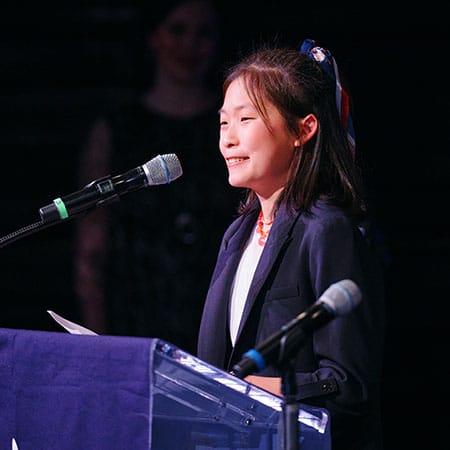
NELL CHOI GIVES A SPEECH AT THE RARE VOICE AWARD CEREMONY HONORING MEMBERS OF THE RARE DISEASE COMMUNITY WHO HAVE LEVERAGED THEIR STRUGGLES TO ADVOCATE FOR LEGISLATIVE CHANGE. /COURTESY NELL CHOI
Now 17, Nell is a beacon in pediatric rare disease advocacy. Since 2021, she has served as the first junior ambassador for the Sumaira Foundation, which is dedicated to raising awareness of rare neuroimmune conditions like NMO. She leads virtual support groups, moderates panels and speaks at conferences to raise awareness of pediatric rare disease challenges. She also shares copies of My Hospital Story on her monthly visits to the Children’s Inn at NIH, where she reads stories and does crafts with children participating in clinical trials.
With great updates in the treatment of her disease happening regularly, Nell is thriving on the cusp of adulthood. She’s even planning on moving away for college. But no matter what next steps Nell takes in her life, her willingness to share her story to help others demonstrates the true meaning of volunteerism.
What inspired you to get started with this initiative?
When I was 9 years old, I was suddenly diagnosed with a rare neurological condition called neuromyelitis optica. That led me to being hospitalized for about four or five weeks, and it was a pretty scary time for me. It pretty much felt like my whole life was turned upside down, and I felt very lost and alone. I ended up not being able to explain to anyone exactly how I was feeling, so that’s when I started turning to writing. I would journal every day, and that was my way of processing all that had happened to me. I felt like the journal sort of transformed itself into the idea for a book.
Tell us about your volunteer role with My Hospital Story.
I remember being in the hospital doing physical therapy in the hallways. I would see other kids in their rooms sitting alone with their IV poles next to them, and I always wanted to talk to them, connect with them and help each other feel a little bit less alone. That’s where the idea of the book came in. I’ve published the book, and my main target audience is children’s hospitals across the country.
What inspires you to volunteer?
Seeing even just the little impact that I can have brings me so much joy. Every time I volunteer specifically with my book, I feel like it’s a full circle moment, because I can sometimes see myself in the people I’m interacting with. I felt very lost and scared. Being mostly on the other side of it now and looking back, it just brings me a lot of purpose for all the struggles that I’ve been through personally.
What are your long-term plans or goals for the organization?
One thing that I would love to do is do an adaptation where it becomes a type of journal prompt book to help other kids harness the power of journaling that helped me get through my own time of hardship.
What’s been the most rewarding part of your work?
The face-to-face interactions that I get with patients and families when they tell me how much the book meant to them. Or that it made them laugh, made them cry or gave them a strong emotion – that’s so rewarding. Also, my neuropsychologist gave out a bunch of copies to a couple of his new patients, and hearing that feels super rewarding.
Why is it important for others to get involved with causes they care about?
First of all, you will be so much happier. I think it’s so easy to just get caught up in daily life. I like to call it inertia, where you’re just going through the motions and not thinking or feeling, but when you step back and you choose to do something that you truly do care about, it feels so good. You feel a sense of purpose, and you get to know yourself better and your community better.
Any advice for people who want to start volunteering?
I would say the first place to start is a combination of self-reflection and external reflection. For me, it was a lot of self reflection, understanding the challenges I’ve been through. Then it’s the day-to-day interactions of being the observer and noticing things in your community that you want to address. It’s a combination of knowing your strengths and your passions, and how you can apply those passions to address an issue.
What do you want people to learn from your story?
I think that any hardship that you’ve had can be a catalyst for you to do something that makes an impact on the lives of others. I would say that was a part of my healing process. I don’t think that it was a part of survival, per se, but to be able to move forward, and with the new reality of living with this disease, being able to help others is my drive to keep going forward.
Creating Space for Connection: A Teen’s Vision for Youth Belonging
Meet Daily Point of Light Award honoree Rodiyah Adewumi. Read her story, and nominate an outstanding volunteer or family as a Daily Point of Light.
When she was just 13, Rodiyah noticed a drop in the number of people her age attending events at her masjid. Aside from offering religious services, masjids often function like a community center and are central to community-building events and support. On a mission to bring back her peers, Rodiyah started the Mumineen Youth Group.
Now 16 years old, she works with a team of 15 dedicated to empowering Nigerian Muslim youth in the area through social events, trips, educational conventions and more. Everything is designed to foster community, cultural pride and authentic self-expression. Over 200 people ages 13+ actively participate, and she’s helped raise $15,000 to fund activities and events.
The joy she finds in community is the same joy she brings to others with her work.
What inspired you to get started with this initiative?
I’ve always been active in my masjid. As I got older, there was less youth involvement, and I felt like our community was slipping in front of me. So, I banded together with some peers and started planning events to get people to start showing up again.
I got the sense of community-making from my mother. She also felt this shift of what was once a really large, blossoming community into something that just didn’t feel the same. She took the initiative to get the adults to come back, and I thought I could do the same with the children. I wanted to ensure my community stayed intact and had a safe place to go, where they didn’t feel different. The younger generation deserve to have that opportunity the same way I did.
We had our first event in September 2023, a beach cleanup in Galveston, and got enough positive feedback to encourage us to keep planning events. They may not actively be seeking it, but subconsciously, youth still want a community like this.
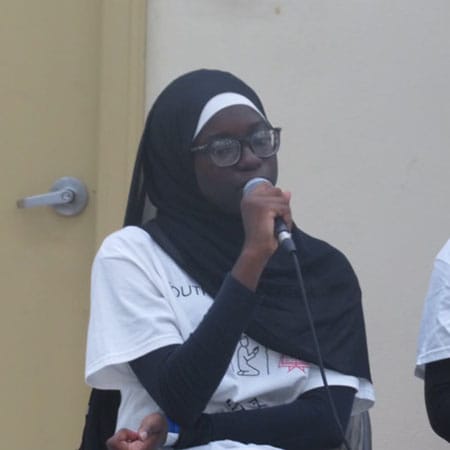
Rodiyah gives advice about high school and balancing extracurriculars to a crowd of 175 teens during Mumineen Youth Group’s annual youth convention.
Tell us about your volunteer role with Mumineen Youth Group.
My role right now is event coordinator. Our day-to-day is really dependent on school. We focus on having activities and events during the breaks. We recently had a potluck, and we’re planning another trip. Because we’re bringing a larger group, we’ll have to notify places beforehand, buy tickets and book things. I make flyers and market events, do community outreach, create Google forms, decorate, fundraise and more.
We also plan an annual convention for around 200 people that requires a lot more work. I organize speakers, reach out to restaurants for catering, discuss the budget and create a schedule. Every day is different. I didn’t realize how much effort it takes to plan things, and I feel more appreciative of anything that I see planned now.
What kinds of educational programs and practical resources do you organize?
For our convention, we bring in guest lecturers, like Hakeem Olajuwon, the retired Rockets basketball player. He spoke about goal-making, staying true to yourself and so on. We also do college and career panels where we invite people with different careers–for example a representative from Deloitte–talk about how they got their job and students at top colleges give advice.
Our youth group elevates and helps market four or five different small businesses owned by youth. We use them as an example for other youth interested in entrepreneurship. And I offer guidance with college essays and extracurricular development by providing internship and networking opportunities.
What have been some of your favorite events?
My favorite events to plan are the end-of-year galas and the youth convention. It’s a lot of work to plan, but we have the most creative liberty. My favorite events to go to are our trips. We take college trips. We go to amusement parks and museums and such. They don’t take as much work to plan–still transportation and logistics for 60 to 100 people, though!
What are your long-term plans or goals for the organization?
My personal goal for the convention is to bring in around 300 people, because I want to see if we’re able to accommodate that. We had our last one at a hall, but our goal is to make it a summer camp experience around four days at a campsite.
We’ll go hiking and do other outdoor activities. Lastly, I want to make sure that once I go to college, younger people who saw what we did for our age group want to continue it for their own.
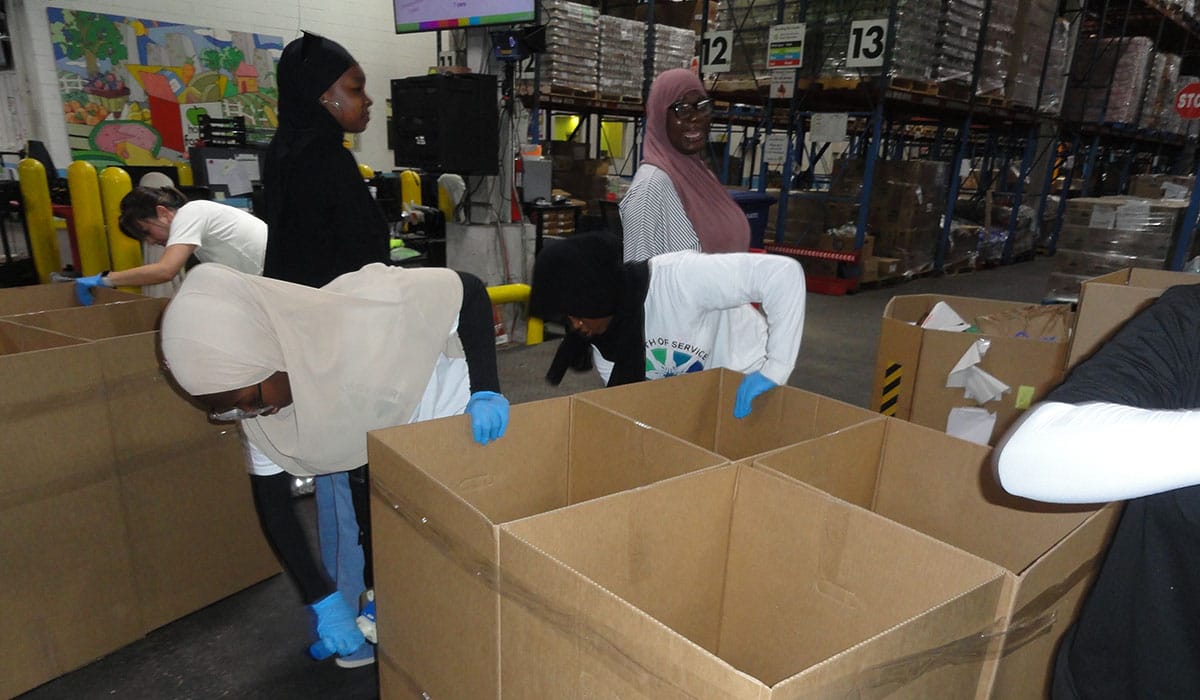
Mumineen Youth Group members pack hygiene sets for children and teens in foster care.
What’s been the most rewarding part of your work?
Seeing more young people continue to put their efforts into the community has been the most rewarding part. There was a time when I’d go to community events and see maybe three people my age. I grew up with over 30 who used to come to the masjid all the time. Now, going to those same events and seeing more people enjoy showing up, not even for a specific youth program but even to help out, is gratifying. I felt that slipping away. Knowing that I was able to bring it back is what keeps me going.
Why is it important for others to get involved with causes they care about?
We’re lacking “third spaces,” outside of home and the workplace, where people can just hang out and have a good time. People are focused on their phones and not living in the moment, building friendships or creating memories. Creating communities where people look forward to going is really important for maintaining our humanity. The most important reason to build a strong community is because you’ll have people who are looking out for you, and whom you’re looking out for as well.
What do you want people to learn from your story?
Young people need a community. They need places outside of school to feel supported and welcome. School can be isolating, especially if you don’t have a good support system, and finding a community where they feel welcome and supported, and where they’re not viewed as different, is something that should be prioritized across groups.
THIS VOLUNTEER MAKES SURE BIRTHDAYS ARE THE BEST DAYS
Meet Daily Point of Light Award honoree Rachel Themistokleous. Read her story, and nominate an outstanding volunteer or family as a Daily Point of Light.
Rachel Themistokleous has always loved her birthday. Now, the 17-year-old high school student is making sure that others in her community have the chance to experience that same level of celebration.
Growing up with divorced parents, birthdays always served as a wonderful opportunity for Rachel to spend time with both sides of her family. But Rachel also understood that everyone around her isn’t afforded the privilege to have a joyful birthday celebration. Hoping to spread a little light across her community, she knew that volunteering with an organization that aligned with her interests would be a great way to do it.
Rachel volunteers with the Birthday Giving Program, an organization whose mission is to provide birthday bags and celebrations to children, adults, seniors and veterans affected by various issues ranging from poverty and addiction to physical and mental health challenges. As the chapter president, Rachel focuses on creating birthday bags for the children at the Boys & Girls Clubs of Greater Washington’s Germantown branch. Not only does Rachel gather all the toys, gifts and surprises, but she also personalizes each one to create a special moment for the recipient who may not receive anything else on their big day. In just the last six months, Rachel has created and donated hundreds of bags for the kids, providing them with a bright spot on their birthday.
Rachel is currently a junior in high school and has a busy schedule of academic work. Still, she manages to dedicate 15 hours a month to the Birthday Giving Program, whether it’s delivering treats, taking photos or singing with the birthday boy or girl. Her volunteer journey is an inspiring example of one person taking something that means a lot to them personally and spreading that goodness throughout their community.
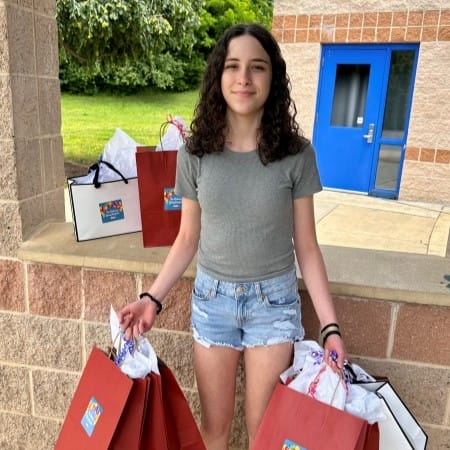
Rachel Themistokleous, a volunteer with the Birthday Giving Program, drops off bags each month to be distributed to kids on their birthdays. /Courtesy Rachel Themistokleous
What inspires you to volunteer?
I think it’s really important to show gratitude and help others who might be going through tough times. I believe that when we help others, it creates a cycle of kindness and support that strengthens our community. When I saw the opportunity to become the president of this chapter and take the responsibilities on myself, I wanted to be able to do what I’ve always believed in.
Tell us about your volunteer role with the Birthday Giving Program.
Each month, I spend a few hours customizing bags, ordering supplies and gathering age-appropriate toys and surprises. I usually try to personalize them based on the season or theme. I decorate and assemble the bags and deliver them at the end of each month. If the kids aren’t too busy, I celebrate with them, take photos, sing and hang out with them. For the younger kids, I do stuffed animals, journals, crayons and socks, and then for the older kids, I do things like drawstring bags and sunglasses. After school, I assemble the bags. I love being able to do it.
What inspired you to get started with this initiative?
Birthdays have always been a very important time for me. It was when I could spend time with both sides of my family, despite my parents being divorced. I’ve always wanted to be able to help people. When I was researching organizations, I found the one that I’m currently a part of. It was perfectly aligned with what I wanted to do for others, and that’s how I ended up being a part of this program.
What are your long-term plans or goals for the organization?
My goals are to allow children to experience the same joy that my birthday has always brought to me and make them feel cared for and celebrated. I hope to inspire more people to help their communities and let others be able to experience the same things that I had the privilege of enjoying growing up. I hope to be able to continue to help others even when I go to college. I hope to still maintain it, or maybe pass it on to a family member, or do it when I come back for breaks in the summer.
What’s been the most rewarding part of your work?
I think seeing the joy and impact it has on the others. One of the times I was dropping off the bags, it was one of the kids’ birthdays, and I was able to give him his gift, sing “Happy Birthday,” and celebrate with him. I enjoy seeing the impact it has on others and how I’m able to bring joy to someone else’s life by giving them birthday bags. On my birthday, I always woke up to presents waiting for me. But I know that isn’t the same for everyone, and the experience has taught me not to take things for granted.
What have you learned through your experiences as a volunteer?
I learned how rewarding it feels to be able to help others, and how not everyone has the same experiences as you. Even though a birthday is something everyone has, I’ve learned that not everyone has the privilege to celebrate their birthday. Doing little things, like making bags and giving gifts, can impact someone so much. It can strengthen a community as a whole. It’s a way to show gratitude and help others who may be going through tough times. When we help others, it creates a cycle of kindness and support. It makes the world a better place.
Any advice for people who want to start volunteering?
Do a little research to get started. Researching organizations that align with what you want to do is very helpful. It’s also important to keep in mind that you don’t have to do grand stuff that costs a bunch of money. You just have to do something that is from the heart and that has values that connect to yours.
What do you want people to learn from your story?
I want people to learn that even though something like a birthday is something everyone has, it is still a big privilege to celebrate it, and it shouldn’t be taken for granted. I want people to see that even small acts of kindness can make a big impact on a child who may not feel valued. I want to encourage people to help their communities. You don’t have to go above and beyond. You just need the heart, the intention and the willingness to do what you have to do.
The Power of Leading with Service, Not Just Strategy
Meet Daily Point of Light Award honoree Derin Granados. Read his story, and nominate an outstanding volunteer or family as a Daily Point of Light.
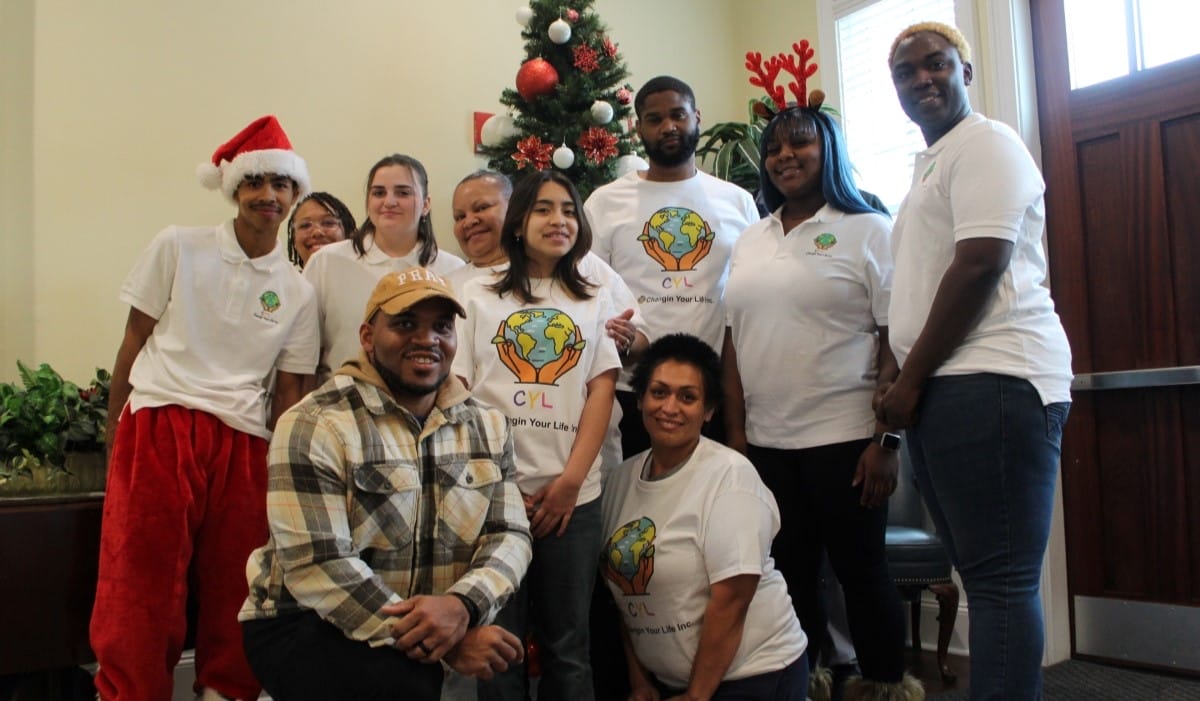
Derin Granados, vice president of the Changin Your Life Foundation, brings a rare blend of creativity, leadership and heartfelt service to everything he does. Since joining his brother’s nonprofit in 2022, Derin has been a driving force behind its growth and ongoing commitment to communities across Georgia. Whether he’s coordinating large-scale food drives or rallying a team for Toys for Tots, Derin approaches each initiative with care and a deep sense of purpose.
As VP, Derin wears many hats—from managing logistics and event planning to keeping the volunteer team motivated and mission-aligned. He views himself as an “on-call” community servant, always thinking about how to expand the reach and impact of Changin Your Life’s programs. His leadership ensures that every effort, from mile-adoption cleanups to mentoring initiatives, runs with efficiency and heart.
Derin also plays a key role in securing resources and streamlining operations so the foundation can keep growing. He estimates that their services have positively impacted over 2,500 people annually, with that number climbing steadily as their team expands its outreach. His passion for logistics and making sure the community receives everything the organization is able to give drives him to constantly improve the systems behind each life-changing initiative.
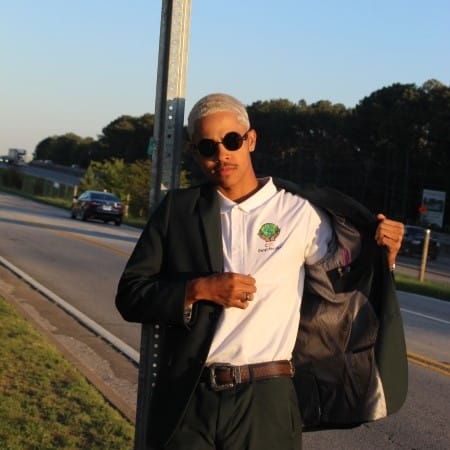
Derin Granados, vice president of Changin Your Life Foundation, in a special moment with the organization’s new Adopt a Mile sign./Courtesy Derin Granados
Through hands-on leadership, tireless energy and an unshakable belief in serving others with dignity, Derin proves that making a difference isn’t just about programs—it’s about people. Read more of his inspiring story below.
Tell us about your volunteer role.
CYL is an organization that my brother started in 2021. He had previously pursued fashion and music, until he discovered his passion for helping others, particularly addressing food insecurity in our community. We work with populations who “don’t have or can’t get.”
In my role, I focus on logistics and volunteer coordination, especially helping with our events, including food drives and clothing distributions. I organize, I answer the phones, I try to ensure we have the volunteers we need. We often provide cooked meals at our events to ensure participants are fed. I help with making these things happen!
What are your long-term plans or goals for the organization?
We really like to help with food insecurity, so expanding that is one of our main priorities. We currently hold events and drives, particularly helping families in Georgia. Our plans include expanding into mobile health units and food pantries in food deserts around the area.
We’ve also been focused on disaster relief efforts, especially in light of all of the hurricanes that have affected our region. We’re working on establishing a new disaster relief station and seeking grants to broaden our impact. We are volunteer-powered, currently with volunteers primarily recruited through word of mouth. Given what we represent, it’s not too hard to find volunteers, but time commitment can be an issue. People love helping, but we’re always looking for more volunteers and more funding to try to increase the organization’s impact. That said, we’re continually working on more areas of impact where we can do our due diligence.
Tell us about future partnerships, programs or events that you are excited about.
We have a handful of community events, including a successful yearly Halloween drive and ongoing partnerships with the City of Clarkston, including a Juneteenth event. We have ongoing water donations, clothing and book drives as well. Since we have to stay conscious of funding, we really aim to align our organization’s events with holidays and community needs. That way, we can do the most with what we have and make the most impact.
What’s been the most rewarding part of your work?
During our Halloween drive back in October, we were out there just cleaning up and this woman walking down the street stopped to talk to us. She didn’t have a kid and didn’t need anything from the drive. She said, “Man I really love what you guys stand for and all you’re doing. I haven’t seen anything like this done in our area.” That meant so much, for someone to acknowledge our impact in our specific region.
Making memories at the Toys for Tots toy drive for kids during the Christmas season./Courtesy Derin Granados
Why is it important for others to get involved with causes they care about?
I can’t speak for everyone, but I can share from a personal place. Anytime I’m stressed at work or at home, making time for volunteering increases your happiness. The personal fulfillment and stress relief that comes from volunteering is unparalleled.
Any advice for people who want to start volunteering?
The one thing I wouldn’t worry about is time commitment. Everything takes time. Work takes time. Learning takes time. I work overnight at Kroger, I deliver Papa John’s Pizza until 11 p.m. and I still find the time to volunteer. Whatever you can give matters. And remember that dedication and passion are more important than formal experience. I’ve found that you don’t need to have a ton of skills; if you’re willing to help, it will pay off for both you and the community you’re serving.
Folding Hope: Transforming Communities with Origami
Meet Daily Point of Light Award honoree Vivian Liu. Read her story, and nominate an outstanding volunteer or family as a Daily Point of Light.
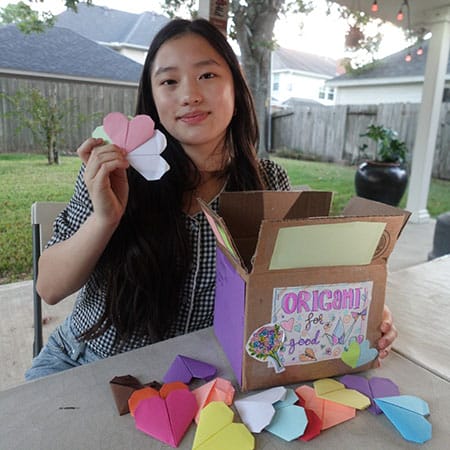
Vivian Liu has turned paper cranes into powerful symbols of compassion through her co-founded nonprofit, Origami For Good. What began as a creative outlet has evolved into a global movement that blends artistry, volunteerism and mental health advocacy. By mobilizing volunteers across 180 chapters in over 50 countries, Vivian has reimagined how a simple act—folding a piece of paper—can uplift spirits and bring comfort to those in need.
“My grandmother introduced me to origami when I was young, and it became something that brought me comfort during stressful times,” Vivian reflects. “As I grew older, I wanted to share that same feeling with others, especially those who feel isolated or forgotten.”
At the heart of Origami For Good is its mission to spread joy. The organization has delivered more than 820,000 origami pieces, each accompanied by heartfelt messages, to hospitals, nursing homes and military centers around the world. These small but meaningful gestures offer emotional support and encouragement to patients, seniors and veterans, creating a ripple effect of kindness and connection across communities.
“Mental health often goes unnoticed or unspoken about, especially in vulnerable communities,” Vivian says. “I’ve seen how a simple, thoughtful gesture like receiving a folded paper crane with a kind message can brighten someone’s day and remind them that someone cares.”
Vivian Liu, co-founder of Origami For Good.
Vivian’s leadership extends beyond distribution. She oversees an expansive network of global chapters, coordinates volunteer engagement and manages partnerships with medical facilities, schools and nonprofits. Through these connections, Origami For Good enables people of all ages and backgrounds to get involved—whether through folding paper or organizing donation drives. Under Vivian’s guidance, chapters have also raised over $15,000 to support cancer research and Asian cultural initiatives, blending service with advocacy.
In addition to uplifting others, Origami For Good nurtures leadership among youth. Each chapter operates independently with guidance from Vivian and her core team, encouraging young people to take initiative in their communities. From organizing folding events in schools to hosting mental health awareness sessions, volunteers not only spread kindness but also develop skills in public speaking, event planning and cross-cultural collaboration. This decentralized yet connected structure empowers students to become changemakers in their own right.
“We aim to donate over one million origami pieces, grow our chapter network even further and create more impact through new mental health and cultural education kits,” Vivian says. “We’re also building leadership resources to support the next generation of youth changemakers.”
Origami For Good also integrates sustainability into its model by encouraging the use of recycled paper and environmentally conscious practices. Many chapters collect used materials to fold their origami. This thoughtful approach emphasizes Vivian’s commitment to creating a movement that is not only emotionally impactful but also socially responsible and future-oriented.
The organization’s success has also garnered national attention. Vivian’s work has been featured in the Katy Times, in the Houston Chronicle and on multiple platforms for Katy ISD. Origami For Good has earned recognition from Packages4Patriots and has both received and awarded the Presidential Volunteer Service Award to highlight the impact of youth leadership in civic life. These honors reflect Vivian’s strategic vision and the widespread admiration for the movement she helped launch.
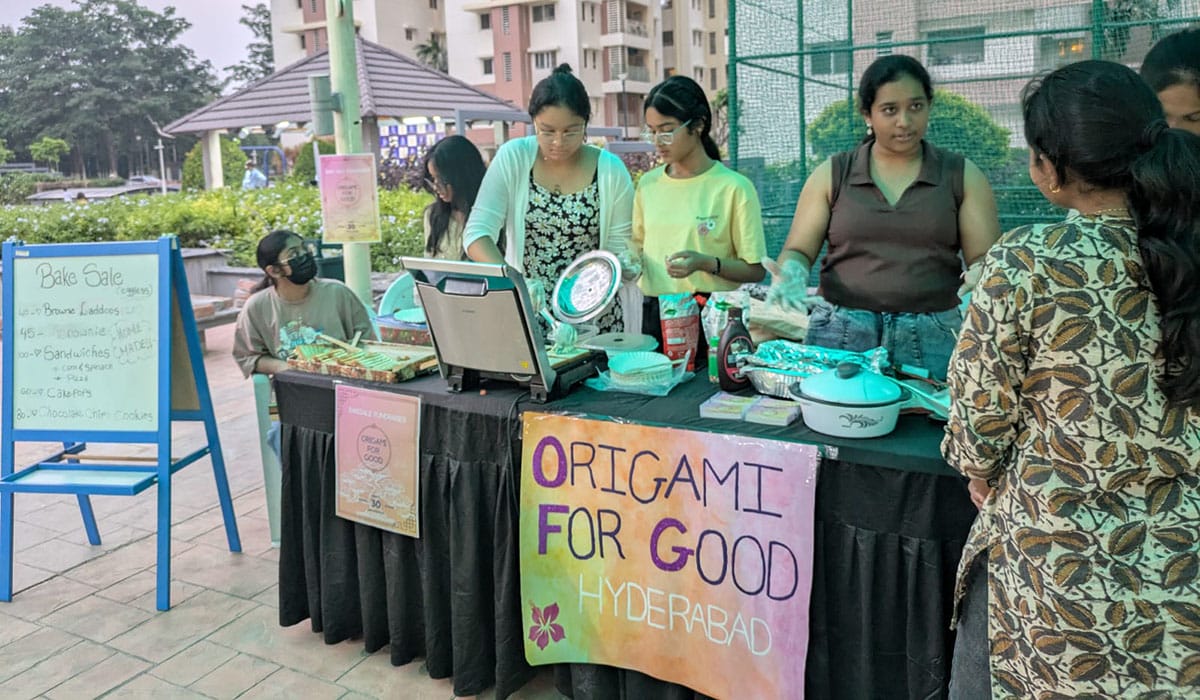
Origami For Good chapter in Hyderabad hosts a bake sale to fund origami kits for local children’s hospitals.
“We’re currently partnering with hospitals, shelters and military centers across new regions,” Vivian says of the organization’s trajectory. “We’re also launching a global origami exchange program between chapters and developing downloadable kits to help students combine service with cultural learning and emotional support.”
Vivian is equally focused on sustainability and outreach. With over 30,000 social media followers, she leverages platforms like Instagram to raise awareness, mobilize youth and promote community engagement. Through creative partnerships with companies like Krispy Kreme and Panda Express, she ensures a steady stream of fundraising support, all while amplifying her message of empathy and empowerment.
“The most rewarding parts of this work are the real human stories,” Vivian shares. “I once heard from a nurse who said our origami helped calm scared children during hospital stays. Another time, a senior wrote us saying our gifts made her feel like someone still remembered her. It’s in those quiet, personal moments that I really understand the power of what we’re doing. That’s what makes the hours of folding and organizing feel more than worth it.”
Through Origami For Good, Vivian has proven that compassion can be both global and personal. Her story exemplifies the power of youth leadership and reminds us that simple acts, multiplied by many, can create lasting change. She encourages, “Everyone has something meaningful to offer. Whether it’s your time, talent or creativity, taking action shows others that kindness is still possible. It starts small but can grow far beyond what you imagine.” From hospital rooms to classrooms and beyond, this sentiment is evident, as Vivian’s origami-based movement continues to fold joy into the fabric of everyday life.
Championing Culture, Engagement and Service: A Multifaceted Impact
Meet Daily Point of Light Award honoree Majdi Alameddine. Read his story, and nominate an outstanding volunteer or family as a Daily Point of Light.
Majdi Alameddin is a dynamic force for youth-led change, cultural advocacy and community service. At just 16 years old, this Lebanese-American student from Chattanooga, Tennessee, has already made an indelible impact both locally and nationally. As the founder of Arelvo, Majdi is transforming how students engage with Arab American and AAPI history, ensuring that their narratives are woven into the fabric of American education. His work doesn’t stop at history—he is deeply involved in public policy and civic engagement, serving on the Tennessee Youth Equity Board and as a civic innovator with Civics Unplugged.
Majdi’s leadership extends to grassroots and national service efforts. Through his role as national U.S. outreach officer for EcoBrothers, he has helped distribute over 225,000 books to underserved communities and raise more than $165,000 for literacy access. He also manages data for OutsideConnection, a Supreme Court-backed NGO connecting more than 10,000 formerly incarcerated individuals with second-chance employment. These experiences are part of a broader mission: building systems of opportunity, particularly for communities historically excluded from full civic participation.
Within his school community, Majdi is just as impactful. He founded the Chess, Science Bowl and Science Olympiad teams, promoting STEM engagement among his peers and helping foster a culture of curiosity and excellence. Beyond academics, he also helped lead his school’s soccer team to a state championship, showing the same spirit of teamwork and resilience that fuels his advocacy work. His initiatives through Nexus Learning have raised over $5,000 for childhood cancer research, and he continues to mentor others with a focus on local leadership and service.
Majdi’s service and scholarship have earned widespread recognition—including accolades from U.S. Congressman Chuck Fleischmann, Presidential Candidate Dr. Ben Carson and prestigious honors such as the Cornell National Contribution Project Award and National STEM Challenge Finalist. Yet what truly sets Majdi apart is his ability to lead across disciplines: blending research, policy, education and direct service into one cohesive mission to build a world where all can thrive.
Tell us about your role with Arelvo.
I started Arelvo and run our blog, podcast and ambassador program. We’re expanding this summer, so I’m mainly onboarding new volunteers while juggling writing posts, booking guests and convincing Arab Americans to share their stories. Some days I’m recording episodes. Others, I’m in the community talking with our members.
Why is this issue so important to you?
I didn’t really see many Arab American youth-run organizations out there. There are a lot of Arabs doing incredible things in America, but I wasn’t seeing anything led by young people like us. I wanted to show what we’re doing and represent young Arab Americans through Arelvo.
What inspired you to get started with this initiative?
I wanted to share Arab American stories. I didn’t see young people like us telling our own stories and I realized we had so many voices in our generation that truly weren’t being heard. It was much needed to create a platform for young Arab Americans like myself.
What are your long-term plans or goals for the organization?
Our long-term goals include reaching as many people as possible and partnering with other organizations that truly support our mission of uplifting young Arab American voices. The dream is that people will start to support our Arab Americans, especially youth, and start to see us as leaders instead of stereotypes.
What’s been the most rewarding part of your work?
It’s been rewarding growing the team and watching this community of Arab American youth come together. The best part, for me personally, is meeting and talking to incredible young Arabs in America. Our podcast episodes have typically been around 8 to 15 minutes, but the actual one-on-one conversations last longer and are around 30 to 40 minutes. These make for truly long-lasting connections with people I’ll never forget. Every week, I meet someone from our generation changing the world and I get to basically tell our audience, “Hey, look at this amazing Arab American young leader!”
Tell us about future partnerships, programs or events that you are excited about.
I’m excited about our partnership we have currently like the one with Bring Arab Youth Together (BAYT). We’re brainstorming events that show young Arab American talent and stories. It’s going to be a celebration of what our generation is accomplishing. In the future, we hope to partner with more Arab organizations that support our mission.
Why is it important for others to get involved with causes they care about?
Because complaining doesn’t fix problems. When you genuinely get involved, especially when you’re young, there’s an opportunity to find others, just like you, who truly care. It definitely feels amazing being part of something you care about. When you actually care about something, the work doesn’t necessarily feel like “work,” but rather like something you actually want to do to benefit society. The world is in great need of more young people who care.
Any advice for people who want to start volunteering?
Do things you actually care about. If you don’t care about something or are doing it just to say you did it, genuine impact won’t be brought at all. Also, your love for what you’re doing will never be there. You’ll eventually get to a point where you don’t want to do it anymore. Additionally, find like-minded people and connect with them. Before anything else, make sure it’s something that genuinely matters to you first and only makes the world a better place.
A Heart for Change: Reviving Cardiovascular Health Awareness Across Communities
Meet Daily Point of Light Award honoree Alina Yang. Read her story, and nominate an outstanding volunteer or family as a Daily Point of Light.
Alina Yang is rewriting the script on heart disease prevention—starting with the next generation. As the founder and CEO of Guardians of the Heart, a youth-led 501(c)(3) nonprofit, Alina has turned personal loss into a mission of national impact. After losing several loved ones to heart conditions, she committed herself to changing the narrative around cardiovascular health, focusing on prevention rather than treatment. What began as a school-based CPR initiative has grown into a multi-state movement that brings heart health education and resources to students, families and communities across the U.S.
Alina’s work is rooted in strengthening agency. Guardians of the Heart offers CPR and AED certification in schools, heart-healthy meal redesigns in cafeterias and free blood pressure screenings in under-resourced areas. Through 12 expert panels and dozens of workshops and health fairs, the nonprofit has reached more than 5,200 individuals and engaged over 1,150 students in meaningful learning experiences. The initiative has also supported bilingual nutrition outreach at food pantries and created interactive health programs for children to make prevention approachable and fun.
Beyond direct service, Alina plays a key role in legislative advocacy, pushing for broader adoption of preventive care education and school-based wellness practices. She manages partnerships with major hospitals, community health centers, libraries, summer camps and national nonprofits like the American Heart Association. With chapters active or emerging in six states, Alina also mentors student leaders in new regions, helping them replicate and adapt the program locally.
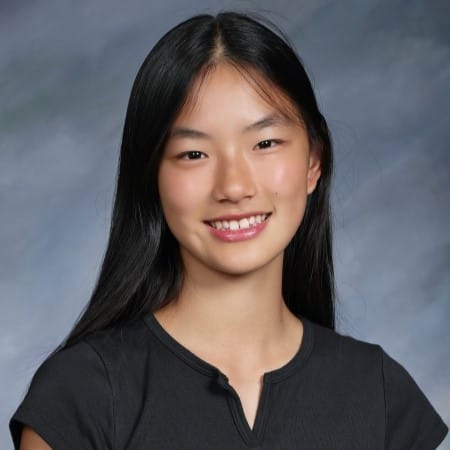
Alina Yang serves as the founder and CEO of Guardians of the Heart./Courtesy Alina Yang
This teen’s leadership is hands-on and far-reaching. From piloting Mediterranean and DASH-inspired school menus to producing a digital Youth Cardiovascular Health Resource Guide used by over 700 members, Alina’s commitment to public health touches every corner of her organization. She dedicates roughly 35 hours a month to coordinating volunteers, building community partnerships and ensuring that her nonprofit continues to evolve with both innovation and impact. Rather than waiting for a medical degree to save lives, Alina is saving them now. Read on to find out more about her mission.
Tell us about your volunteer role.
As the founder and CEO of Guardians of the Heart, I lead and support everything from outreach and advocacy to event planning and partnership building. I try to be as hands-on and present as possible, whether it’s coordinating health fairs, creating heart-healthy lunch programs with schools, organizing CPR demonstrations or expert panels or library workshops, or developing educational resource guides for students and families.
I work with an amazing team of volunteers and collaborators, and together, we aim to make heart health more accessible, especially for young people and underserved communities. We partner with hospitals, libraries, schools, food pantries, farmers’ markets, museums, you name it, to bring a culture of prevention into everyday spaces.
What inspired you to first get started with Guardians of the Heart?
Heart disease remains the leading cause of death in Westchester, across New York State, throughout the U.S. and globally. Yet, up to 80% of it is preventable through simple lifestyle changes, like eating well, exercising, not smoking, managing stress and staying informed. Despite this, many people, especially young people, are unaware of just how much power they have to protect their hearts early on. Some of my classmates have heart conditions already, while others have risk factors, including high cholesterol and high blood pressure.
Guardians of the Heart is purposefully dedicated to cardiovascular health promotion and disease prevention not among senior populations, but among us: students, peers, children and adolescents who’ve been told or believe “you’re too young to worry about that.” Because we’re not. Prevention starts early, and it’s never too soon to care about your heart.
Why is this issue so important to you?
When my grandfather had a stroke during the COVID lockdowns, we were thousands of miles away and helpless to do anything, and that feeling stuck with me. As I learned more about heart disease and its connection to my own family history through coronary artery disease, atrial fibrillation and diabetes (a major risk factor), I realized how preventable a lot of it is, with the right knowledge and support. I couldn’t go back and change family members’ outcomes, but I could do something with what I learned. So I did. I started where I was, with what I had and founded Guardians of the Heart.
What are your long-term plans or goals for the organization?
I would love to grow beyond New York and eventually reach across the country, and even internationally. We have already established a chapter in Pittsburgh, Pennsylvania, and have potential ones forming in other states as well. My goal is to give other young people the tools and support to make an impact in their own communities. Heart disease is a global issue, but real change begins at the local level. Every small step, whether it is advocacy, education or community action, has a compound interest. An individual makes a ripple, a community makes a wave and the world makes an ocean. Together, when we focus on prevention instead of treatment, we can build communities that don’t just survive, but thrive.
Alina Yang (left) engages with a community member at a local health fair, sharing insights on nutrition and distributing educational pamphlets./Courtesy Alina Yang
What’s been the most rewarding part of your work?
The most rewarding part of my work has been seeing the genuine engagement from the community. I’ve seen health fair attendees get genuinely excited about answering questions on trivia topics like blood pressure, cholesterol, and the impact of diet. They go beyond simply participating to ask curious, thoughtful follow-up questions, even challenging each other and our team to dig deeper.
What’s also rewarding is working alongside equally passionate individuals. Whether it’s student volunteers teaching CPR with as much care as any instructor, or peers brainstorming new outreach ideas late into the evening, there’s something incredibly fulfilling about being part of a team that truly believes in what we’re doing. And while we cannot bring back those we have lost, we can keep working to make sure that fewer lives are lost needlessly. That’s the promise that drives me forward.
Tell us about future partnerships, programs or events that you are excited about.
This summer, we’re partnering with the YMCA and Westchester Children’s Museum to bring heart health education to kids in fun, hands-on ways. At YMCA Camp Combe, we’re hosting Life’s Essential 8 workshops with stations featuring trivia, fitness games and more. For younger kids, we’re hosting a storytime and arts and crafts session centered around heart health. At the museum, we’re turning the workshop into a scavenger hunt with prizes to keep kids engaged as they learn.
We’re also teaming up with Feeding Westchester and the American Heart Association for a Kids in the Kitchen event, where kids will learn to make simple, nutritious meals using pantry staples. I’m excited to see the kids having fun while picking up the skills and knowledge that could truly shape their futures.
Why is it important for others to get involved with causes they care about?
It’s important for others to get involved with causes they care about because change doesn’t happen on its own. Change is a shared responsibility among all of us. Change must be proactive, not reactive. If something moves you, whether it’s health, the environment, social justice, education or something else entirely, then you’re probably the right person to do something about it. You don’t need to be an expert. Just start, be curious and learn as you go. Getting involved connects you with others, builds your skills and, most importantly, reminds you that your time and voice matter. When you contribute to something bigger than yourself, you also discover who you are.
Any advice for people who want to start volunteering?
Start small, start scared, but start anyway. You don’t need to have everything figured out to make a difference; you just need to care and be willing to try. At our very first fundraiser, my team had every detail planned, but when the event actually started, no one felt confident enough to approach people. Toward the end, a kind passerby reminded us: “The worst thing that could happen in asking is not getting something you didn’t have in the first place.”
That’s my advice: Don’t wait until you feel ready. You get ready by doing. You can think and plan everything in your mind all you want, but at some point, you must take a risk, speak up and put yourself out there for a cause you care about. Preparation becomes hollow without courage. And courage, more often than not, starts with the humility to risk being ignored. The learning curve from that is always worth the initial discomfort.