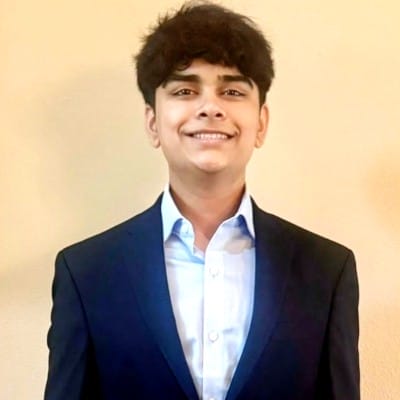
Meet Daily Point of Light Award honoree Samyukth Ayyar. Read his story, and nominate an outstanding volunteer or family as a Daily Point of Light.
Samyukth Ayyar, 16, is a highly empathetic person, something that is evident through how he spends his time. His fascination with history has led him to volunteer with The Junior Historians, where he aids in historical preservation projects for Denton County, where he lives. He’s also a passionate classical choral singer who competes both individually and with his school’s choir. As part of the Dallas Symphony Chorus and Teen Council, he puts together musical events to inspire kids.
Put simply, Samyukth loves working with people and cares deeply for their wellbeing. After a bout with mental health challenges and recognizing the struggles of those around him, it was that abundance of empathy that led him to create Commit to Break the Stigma in 2022. Now, he advocates for good mental health practices and, as the name implies, ending the stigma surrounding the topic.
The $18,000 he has raised supports educational workshops, awareness campaigns and subsidized therapy access for those with limited resources. Workshops are often conducted in partnership with other groups like Boy Scouts of America and other school-based mental health clubs. And 200+ members from around the world actively assist with the mission. Sometimes, all it takes to change someone’s mental state is a friendly peer reaching out. With Samyukth around, they can count on that, along with a list of tried-and-true suggestions for bringing back their joy.
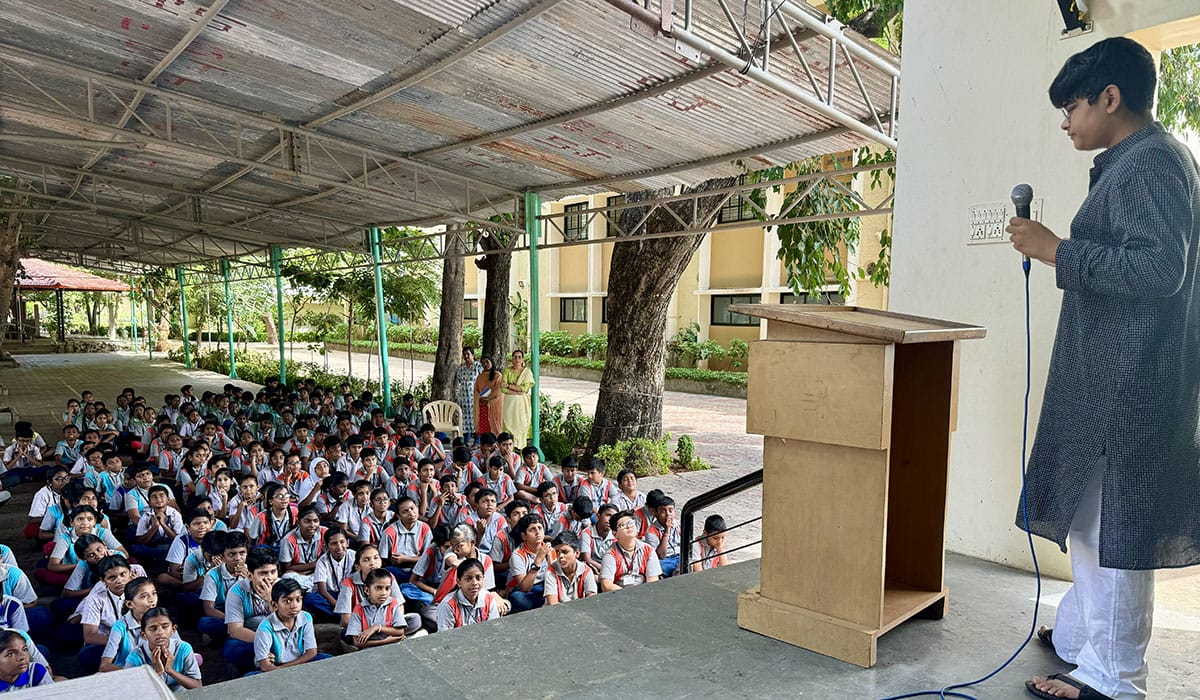
Samyukth Ayyar, founder and president of Break the Stigma, leads workshops and provides resources to young people, emphasizing the importance of mental health.
What inspires you to volunteer?
Volunteering is an opportunity for me to get involved in the community, while doing something I’m passionate about. Using what I’m good at to help the community inspires me to do good work and volunteer as much as I can.
What inspired you to get started with this initiative?
Mental health is a personal topic for me. I’ve dealt with issues in the past, and I see it within my family and friends. Historically, the importance of mental health has gone under-acknowledged. I wanted to spread awareness about how these issues can affect kids like me and shatter the stigma that surrounds the topic as a whole.
When we say “break the stigma,” we mean combating and dismantling these negative stereotypes, beliefs and attitudes that society holds about certain mental health conditions. We want to replace them with understanding, acceptance and empathy. We’re trying to challenge the negative connotation that the words “mental health condition” invokes that distinguishes them as something bad.
Tell us about your volunteer role with Commit to Break the Stigma.
I’m the president. I lead workshops with students, both locally and abroad. I went to India last summer and conducted workshops in Madurai and Bangalore, where I distributed mental health resources and talked about various issues that kids go through. The kids there didn’t even recognize some of the issues that kids in our society are dealing with, like stress. Once I explained those issues, they were able to talk about how they’ve experienced them in their daily lives. I also highlighted basic tips to feel better about themselves and develop positive wellbeing.
Outside of workshops, I also help manage the organization’s podcast and Instagram account. I help my officers, and I seek out opportunities to talk about or promote my organization.
What do you talk about on your podcast?
We discuss various mental health issues. I’m working to get a licensed therapist to come on and answer questions like, “Why does everything feel so overwhelming, even when I’m trying my best?” and, “How do I know if what I’m feeling is normal or is something I should be worried about?” I’m going to invite high school students to share their personal stories and eventually expand to discussions about things like depression, anxiety, ADHD and more, as well as tips for wellbeing.
Tell us about trying to establish an official Mental Health Day with the city.
As a high school student, I understand the stress that can develop in teens. The designated day would give both teens and adults in our city the opportunity to pause, reflect and prioritize their mental wellbeing. My goal is for residents experiencing higher levels of stress, burnout or anxiety to recognize that mental health matters, and that our community supports those struggling with these issues.
What have you learned through your experiences as a volunteer?
It was a big step for me to talk to people within my cultural heritage who might not understand or have knowledge of the things I’ve learned as an Indian-American living in the US. I conducted workshops for over 275 kids, first through eighth grade, at a school in Madurai and about 100 kids in a school in Bangalore. It was enlightening and reminded me why I’m doing this.
I love working with people on mental health, historical preservation and singing. And I love using what I’m good at and the knowledge I’ve gained. I’ve learned that I want to continue to do so. I can see how much people have benefited from my work and how valuable it is to step out of your comfort zone to make an effort to change something about society.
At a Break the Stigma workshop, Samyukth discusses the importance of prioritizing mental health by adopting simple habits like maintaining a routine and expressing gratitude.
What is one thing that people can do to prioritize their mental health every day?
For me, it’s journaling and writing down how I’m feeling, documenting my experiences and recognizing that it needs to be talked about. With one of the issues I went through freshman year, I held all the stress inside.
Now, when I finish the day, I practice gratitude or talk about my experiences. It helps me understand what I’m going through and how I can practice gratitude. Expressing gratitude is a way to combat stressful thought patterns. One way to do that is through journaling. To manage stress, understanding that it’s going to be okay and giving yourself positive self-talk or engaging in something you enjoy will also help you find a state of calm.
What do you want people to learn from your story?
I want people to understand the importance of community and of using what they’re good at to help bring others together. It not only helps the community but you as an individual.
Retired Nurse Reins in a New Purpose with Therapeutic Horses
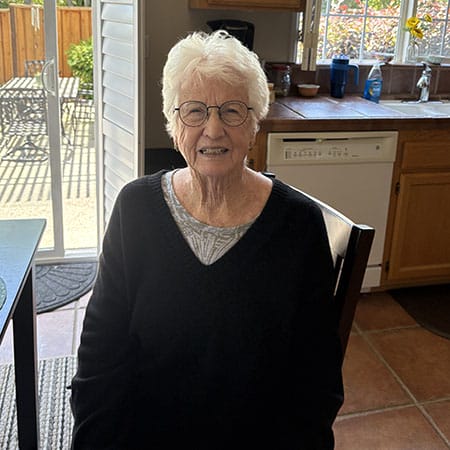
Meet Daily Point of Light Award honoree Bev Winton. Read her story, and nominate an outstanding volunteer or family as a Daily Point of Light.
As a retired pediatric nurse, Bev Winton spent decades of her life caring for children. So, when she discovered therapeutic horseback riding later in life, it felt like a natural next step. Combining her love for kids with a newfound passion for horses, Bev found her second calling at Equi-Ed, a therapeutic riding center in Santa Rosa, California. Now 82, she’s been a steady and warm presence at the center for 17 years, helping children and adults with disabilities build strength, confidence and connection through horseback riding. From mucking stalls to mentoring other volunteers, Bev says she finds deep purpose in every small act of care.
What is Equi-Ed, and what’s your volunteer role?
Equi-Ed is a therapeutic riding center that helps riders of all ages with different challenges—some may have autism, others might have physical or cognitive delays. Some kids can’t walk on their own, so we use a ramp to help them get on the horse. We have riders as young as four or five, and others in their 30s and 40s.
Bev Winton has spent the past 17 years volunteering at Equi-Ed, a therapeutic riding center supporting children and adults with disabilities./ Courtesy Bev Winton
When I first started volunteering, I was a sidewalker and horse handler. I’d walk beside the horse to support the rider or lead the horse during lessons. Now that I’m older and have some balance issues, I help behind the scenes. I groom and tack the horses, help prep feed, clean buckets, weigh out hay and grain, and get everything ready for the day. I also help train new volunteers and answer questions. I’ve been there so long, I’ve kind of become a resource person.
What moment stands out to you most from your volunteering?
There’s a young woman who’s been riding since before I started in 2007. She has autism, and over the years I’ve seen so much growth. She remembers my name now, and she can follow instructions during a ride. That may seem small, but it’s a big step.
And then there are the riders who come in terrified of horses. After a few sessions, they’re smiling and can’t wait to ride. We see a lot of those little miracles.
What inspired your passion for volunteering?
Well, I was a pediatric nurse for about 20 years, and I’ve always loved working with children. My love for horses started when I was around 10 or 11, visiting my great uncle in Sonora. There was a horse in the field next to his house, and I remember going up to the fence and just being drawn to it.
I didn’t start riding myself until I was nearly 50. I took lessons, leased a horse and rode trails all around Mount Tam. When I retired, I knew I wanted to do something with horses and children, and volunteering at Equi-Ed brought that all together.
You’re known as a mentor and role model at the barn. What does that mean to you?
It’s an honor. I just try to be helpful. We get a lot of high schoolers and junior volunteers who come in to help, especially in the summer. I like showing them the ropes and encouraging them to stick with it. Hopefully they see how meaningful this work is.
What advice would you give to someone thinking about volunteering, especially later in life?
There’s always something you can do. I talk to people all the time who are about to retire and don’t know what to do next. I tell them to get out there. You don’t need to work with horses—there’s always a letter to stuff or a shelf to organize. Volunteering has become my second career, and it’s kept me active and connected.
What do you hope people take away from your story?
That it’s never too late to start getting involved. Volunteering is a commitment, but the rewards are huge. You get back so much more than you give. It’s enriched my life in every way, and I hope others see that and feel inspired to find their own way to help.
Meet Daily Point of Light Award honoree Arav Bansal. Read his story, and nominate an outstanding volunteer or family as a Daily Point of Light.
From an early age, Arav Bansal enjoyed interacting with his neighbors. But he never knew those interactions would later inspire him to feed a community.
As a young child, Arav’s neighbors had apricot trees that would hang over the fence into his yard. When the neighbors had extra apricots, they would allow Arav to pick some and bring them home. When Arav relocated to Cupertino, he saw leftover fruit splattered on the sidewalk, triggering a memory of the neighbors’ generosity with their leftover fruit. On a school service trip to a local food pantry, Arav saw how many people don’t have access to fresh produce. This moment served as what Arav says was the “kicker” in his inspiration to form an organization that battles both sustainability and food insecurity.
Arav established FruitShare, an organization with a mission to reduce waste by providing homeowners with the resources they need to put their surplus fruits to good use. FruitShare dispatches volunteers to pick fruit from homeowners’ trees and then has it brought to local food pantries.
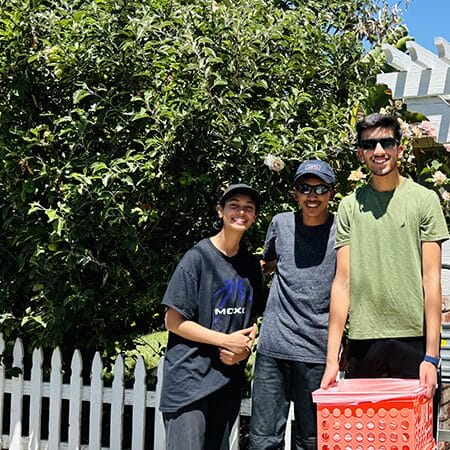
ARAV BANSAL (CENTER) AND TWO OTHER FRUITSHARE VOLUNTEERS SHOW OFF THE APRICOTS THEY PICKED THAT WILL BE DISTRIBUTED TO LOCAL FOOD BANKS. /COURTESY ARAV BANSAL
Not only is picking the fruit a service to homeowners, but the fruit also benefits those dealing with food insecurity.
While Arav is a rising high school senior dealing with the ups and downs of homework and regular teen responsibilities, he takes the time to handle the daily responsibilities of the organization, too. He fields requests from homeowners looking to have their fruit picked, and delegates picking sessions to volunteers. He also maintains the organization’s website and helps with outreach. He spends up to 12 hours per month coordinating FruitShare’s dedicated missions.
“I think that’s what has enabled us to be as successful as we’ve been,” says Aditya Jha, who co-founded the organization with Arav. “Both of us just genuinely want to help others. I’ve seen that drive in Arav, and that’s something that impresses me about him. He’s able to go out week after week and communicate with homeowners, schedule the pickings and do outreach.”
Arav cites the interactions with the homeowners and their diverse reasons for requesting the FruitShare team’s presence as his favorite part of the role. While some are elderly and cannot pick the fruit any longer, others have medication interactions with the fruit they grow. Others simply grow so much they can’t keep up with the amount they’re producing.
“Even if they contribute 30 pounds or 200 pounds, it’s one small step toward our bigger goal of making an impact, reducing waste and giving fresh produce to people,” says Arav.
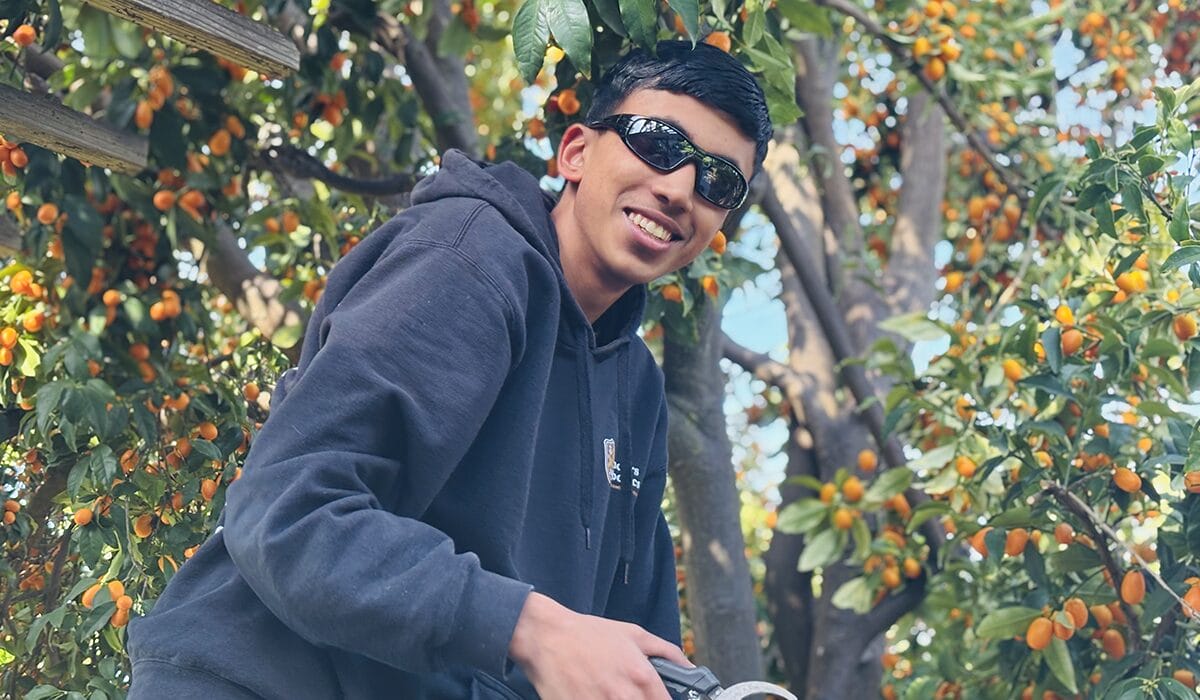
FRUITSHARE CO-FOUNDER ARAV BANSAL CLIMBS A LADDER TO PICK A KUMQUAT TREE. /COURTESY ARAV BANSAL
In the long term, Arav is hoping to expand FruitShare’s volunteer base so they can help more homeowners and feed more people. But when it comes to the opportunities we have to help those around us, Arav is adamant that it doesn’t take much to make a big difference.
“I think everyone can help in one way or another. Even if it’s the smallest thing, like helping out like your neighbor once a week to take out the trash cans,” he explains. “Even the smallest task can be so transformative in the community.”
One Volunteer’s Quest to Amplify AAPI Youth Voices in Connecticut
Meet Daily Point of Light Award honoree Jessie Zheng. Read her story, and nominate an outstanding volunteer or family as a Daily Point of Light.
Jessie Zheng isn’t just raising her voice—she’s making sure hundreds of others are heard too. As the executive director of AAPI Youth Advocates, Jessie spearheads a powerful youth-led organization that’s transforming civic engagement for Asian American and Pacific Islander (AAPI) communities across Connecticut. Founded to bridge the educational and advocacy gaps affecting AAPI students, the group has achieved milestone victories, from passing a state law incorporating Asian history in K–12 curriculums to building a statewide movement that secured Lunar New Year as an official school holiday.
Jessie dedicates around 30 hours each month to leading and expanding the organization’s impact. She mentors a team of 18 students and five adult advisors while also serving as the main liaison with local officials and legislators. Under her leadership, AAPI Youth Advocates has hosted workshops, organized protests and drafted policy testimony: initiatives that not only educate the public but also provide opportunities for young leaders to step into advocacy roles themselves. Jessie’s work with groups like UConn’s Asian American Studies Institute and the Commission on Women, Children, Seniors, Equity & Opportunity amplifies her team’s influence at both the community and policy levels.
The organization’s work demonstrates how culturally responsive education can foster belonging, dismantle stereotypes and validate student identity. And Jessie’s leadership bridges activism with art and storytelling. The organization produced a film highlighting the experiences of AAPI students navigating cultural identity and discrimination in school, giving visibility to narratives that are often overlooked. By encouraging youth to share their stories, Jessie fosters not just policy change, but healing, solidarity and confidence within the community.
With over 500 students engaged, $10.2k raised and real legislative wins under her belt, Jessie is creating lasting systems of change. Read on to hear more of her “why.”
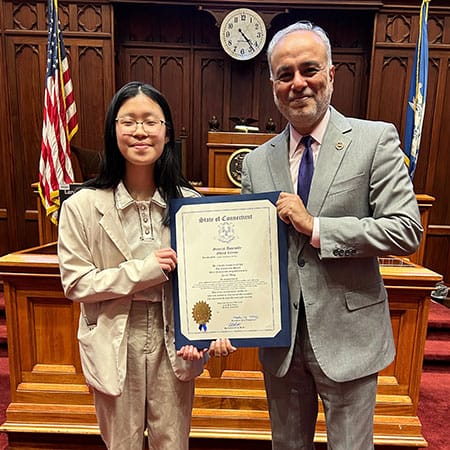
Jessie, at left, receiving a citation from the state legislature for her legislative work.
Tell us about your volunteer role.
As the founder and director of AAPI Youth Advocates, I lead a team of passionate students working to amplify the lived experiences of Asian American and Pacific Islanders in civic spaces. My role includes organizing statewide campaigns, mentoring youth leaders, developing educational initiatives and coordinating media outreach to raise awareness on key policy issues affecting our communities. I also oversee our advocacy projects, which have included pushing for the official recognition of Lunar New Year in local towns and promoting the incorporation of Asian American history in K-12 education.
Why is this issue so important to you?
Growing up, I rarely saw people who looked like me reflected in the curriculum, local leadership or policy conversations. That invisibility shaped my understanding of belonging and who gets to be heard. For many students, our experiences are overlooked or stereotyped. For me, I found that advocacy gives me a way to reshape that narrative. This work has become about reclaiming space, building power and creating safer, more welcoming environments for the next generation.
What inspired you to create AAPI Youth Advocates?
During the rise in anti-Asian hate and violence, I saw a lack of youth-specific resources and platforms for Asian students to process, respond and organize. I felt isolated, frustrated and invisible. Rather than waiting for someone else to step in, I created AAPI Youth Advocates to fill that gap—to create community, healing and power among young people like me.
What are your long-term plans or goals for the organization?
We’re currently in the process of transforming AAPI Youth Advocates into the Connecticut Youth Legislative Advisory Council (CYLAC) to better reflect the interconnected, cross-cultural work we’ve taken on. Rather than scaling vertically with just one organization, our goal is to expand horizontally, building a coalition of youth-led initiatives that each bring unique strengths and perspectives to the table. CYLAC will serve as an umbrella network that supports campaigns across racial, cultural and policy lines, with a shared focus on youth power and legislative advocacy. Our long-term vision is to create a more unified front of youth advocates who are pushing for change not only in AAPI issues, but across public education, mental health, civic engagement and more, while still preserving the distinct identities of each movement.
What’s been the most rewarding part of your work?
Seeing young people realize their own power has been the most rewarding. Whether it’s someone testifying at their first town hall meeting, running a voter registration drive or organizing a community art event, watching youth grow into confident advocates makes every challenge worth it. Moments like hearing a student say, “I finally feel seen,” remind me why we do this.
Tell us about future partnerships, programs or events that you are excited about.
AAPI Youth Advocates, as we transition to become Connecticut’s first-ever legislative council, have already formed a partnership with the legislative Commission on Women, Children, Seniors, Equity & Opportunity, becoming an official subcommittee of a newly formed Civic Engagement Committee. This official partnership gives us the power to propose legislation through the Commission for the review of the Connecticut General Assembly. Beyond the Commission, we are working to build sustainable cross-sector collaborations with student councils, youth activist groups, school boards and nonprofit organizations across Connecticut.
Why is it important for others to get involved with causes they care about?
Change does not happen overnight. And it takes many people, voices and passion behind every cause. When you get involved in issues you care about, you’re not only advocating for change but building community and inspiring others to act too. Your lived experiences matter, and using them to fuel your advocacy can ripple out and uplift countless others.
Any advice for people who want to start volunteering?
Start small and start where you are. You don’t need to have all the answers—you just need to care enough to take the first step. Find an issue that resonates with you, reach out to local groups or even start your own initiative. Your passion, no matter how young you are, has the power to create change.
As pro bono counsel for Entergy’s Legal Department, Christy Kane spends her days mobilizing attorneys and staff across five states to provide free legal help to those who need it most. In addition to leading the company’s pro bono program, she regularly volunteers herself—logging dozens of volunteer hours each month to support individuals and nonprofits navigating life’s most overwhelming legal challenges. Whether she’s walking someone through the divorce process, helping a family draft their first will or offering clarity at a courthouse help desk, Christy approaches each person with empathy and a desire to lighten their burden.
Based in New Orleans, Christy has been committed to pro bono legal work since the late 1990s and has built a career grounded in public service. She doesn’t measure her impact in case numbers—in fact, she’s never kept track of how many people she’s helped—but in the quiet, meaningful moments when a client leaves feeling seen and at peace.
She believes professional skills are meant to serve others, and she leads by example, showing how lawyers and business professionals alike can make a lasting difference, one conversation, one document, one person at a time.
Tell us about your role with Entergy.
Entergy is an electricity company that provides power to millions of customers across Louisiana, Mississippi, Arkansas and Texas, with an additional office in Washington, D.C. I serve as Entergy’s pro bono counsel, which means I’m an attorney in the legal department, but my full-time role is managing and directing our pro bono practice.
Our legal team includes about 150 professionals—roughly half attorneys, half staff—and together we contribute around 5,000 volunteer hours a year. My focus is on legal pro bono, helping low-income individuals and nonprofits access free legal support. Most of my own pro bono service is in Louisiana, since that’s where I’m licensed, but I also support projects in our other jurisdictions.
Outside of coordinating the program, I also participate directly—volunteering at legal clinics, helping with policy research and working one-on-one with clients. A lot of that is in partnership with legal aid or pro bono-focused organizations.
What inspired you to start doing pro bono work?
I started out at a law firm in New Orleans called Adams and Reese in the mid-90s. They had a really active volunteer program that included legal pro bono, and that was my first exposure to it. I realized I could use my legal skills to help people in the community, and that really stuck with me.
I feel like anyone who’s trained in a profession that can help others has a heightened responsibility to pay it forward. For lawyers, the American Bar Association suggests 50 hours of pro bono work a year. At Entergy, we ask our legal professionals to do at least 10 hours of volunteer work, and we really encourage them to focus on legal pro bono because the things that we do every day for a Fortune 500 company, those skills can really help members of our community.
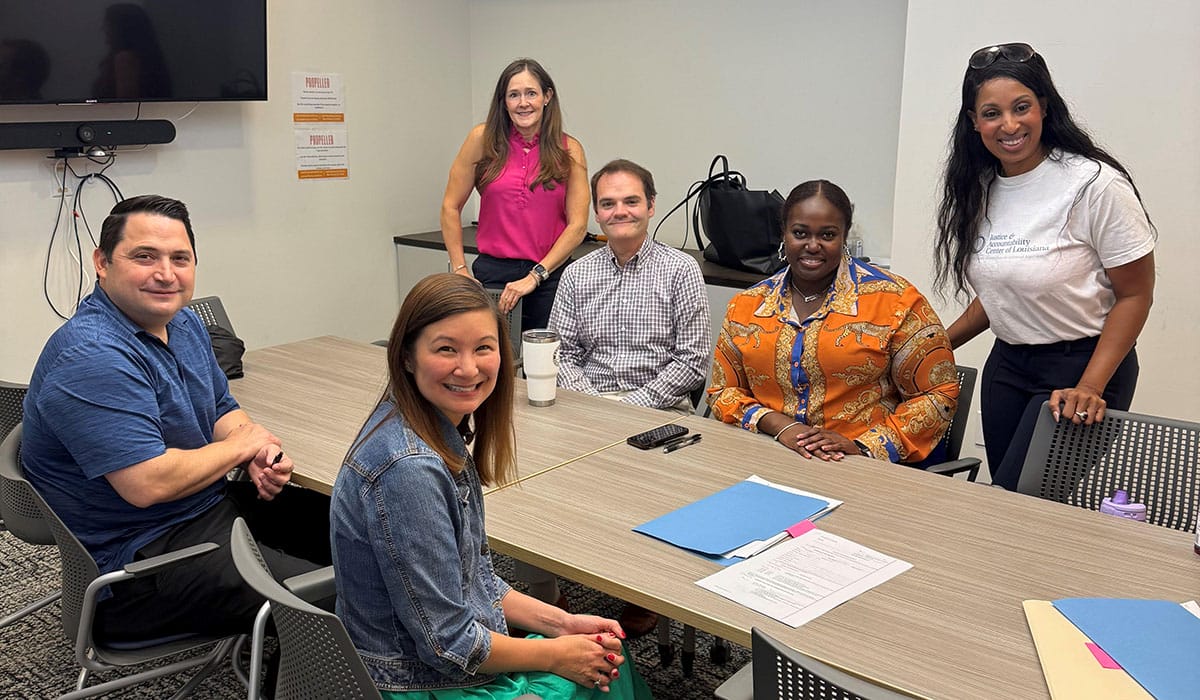
Christy, top left, assists participants at an expungement clinic focused on clearing minor criminal records./Courtesy Christy Kane
What kinds of clients do you usually work with?
The people we help are often facing significant challenges. A large portion of Entergy’s customer base falls at or near the poverty line, so the need is great in our community. A lot of my hours come from legal clinics. I go to places where a nonprofit sets up appointments or opens its doors to help people with urgent legal issues.
One example—last week I was at a divorce workshop. People came in needing help completing their divorce paperwork. Other times I volunteer at a self-help resource desk at the courthouse for folks who are representing themselves. We help them find the right forms, provide information about the process and connect them with any available resources. Most of the needs in legal aid are in family law—divorce, custody, name changes, adoptions. Those kinds of life events really matter, and even if it doesn’t take a lot of my time, it can make a huge difference for the client.
Is there a moment that stands out to you?
One of my favorite experiences was a will-generating clinic we did in the Lower Ninth Ward of New Orleans. It was around the time of the Super Bowl, and a bunch of companies, including Entergy, were hosting volunteer events. We partnered with a nonprofit and set up a community center where people could come in and leave with a completed will. I did some training ahead of time because I don’t draft wills in my day-to-day job, but I was able to sit with people, talk through their wishes and help them walk out with something important and concrete.
There was one man working the front desk at the center. He had helped me find where I needed to go that morning, and later someone said, “Hey, he realized what you’re doing, and he’s been meaning to get a will done—would you be willing to help him?” So, I said, absolutely. He didn’t have an appointment, but we sat down together, and when we were done, he said he was so excited to go home to his wife that night and show her that he had finally taken care of something that meant a lot to their family. That really meant a lot to me, too.
You work with people going through some of life’s most difficult moments. How do you approach that?
I think it’s about coming in with compassion and sensitivity. I’ve experienced grace in my life, and I think a lot of us have. When someone treats you with dignity and makes something that felt overwhelming a little easier, it just makes such a difference.
What’s the most challenging part of your work?
The emotional weight. You hear people’s stories, and even when you’re glad to be helping, it can be heavy. Sometimes it’s hard to leave that at the clinic. You carry it with you. So, I think it’s important to remember that while you’re helping others, you also have to take care of yourself too.
How does your volunteer work influence your day-to-day at Entergy?
I hope it inspires others. Before I offer a new volunteer opportunity to our legal professionals, I usually try it myself first—just to make sure it’s meaningful and impactful. I want people to feel confident stepping into a space they might not be familiar with.
When you work in-house, the legal work you do day-to-day for your company doesn’t usually overlap with community legal needs. We’re not doing divorce or custody or expungement work in our corporate roles. But with some training, and by volunteering together, we can learn from each other and inspire one another.
What role do you think legal professionals can play in strengthening communities?
I think it starts with professionals of all kinds realizing their skills can help. If you’re a lawyer, maybe you can help someone with a legal proceeding or review a nonprofit’s contract. If you’re in marketing, maybe you can help that same nonprofit with their website. An accountant might help an individual or small business file taxes. It’s about thinking: what do I know how to do, and who could benefit from that?
I love being a lawyer and using my skills to help, but I’d encourage any professional to think about how they can get involved.
What kinds of nonprofits have you helped?
At Entergy, we have a program called Power to Serve (we love a power pun!) Part of it is training employees to be good nonprofit board members, especially legal professionals who might get asked to review a nonprofit’s legal documents, including bylaws.
The nonprofits I’ve worked with often provide legal services themselves, like helping people expunge records or navigate civil legal issues. I’ve also supported groups that focus on education, housing or employment. There’s a lot of variety, but usually we’re just trying to help organizations that are already doing great work for the community.
Are there any upcoming projects you’re excited about?
Yes—this fall, we’re planning a legal clinic as part of EmPOWERing Pro Bono Day (another power pun!) It’s a day of service we started with the Pro Bono Institute, the Edison Electric Institute and other partners where electric companies across the country join in efforts to provide legal assistance. This year, we’re planning a clinic to help people reinstate their driver’s licenses, which are often suspended for reasons like unpaid taxes, insurance issues or child support arrears. We’ll help people understand what’s on their record and make a plan to resolve it.
How long do you see yourself continuing pro bono work?
Hopefully for the rest of my life. As long as I have the skills to help people, I want to keep doing it. Even after I retire—which won’t be for a while—I hope to continue being involved in pro bono work.
What do you hope people take away from your story?
Look around your community. Chances are, a lot of people need help. Sometimes we make assumptions about how someone got to where they are—and those assumptions are probably wrong. Sometimes people just need a lift. Something that feels small to you could make a big difference in that person’s day or even their life.
From Mentorship to Advocacy: A Local Leader’s Blueprint for Change
Content Warning: Points of Light is proud to share the following uplifting and inspiring story. However, we acknowledge that it may be difficult for some readers. We encourage you to please care for your own well-being above all.
Meet Daily Point of Light Award honoree Sydney Houlemard. Read her story, and nominate an outstanding volunteer or family as a Daily Point of Light.
Sydney Houlemard is not just a volunteer—she is a changemaker, a mentor and a fierce advocate for a stronger New Orleans. Over the past two years, she has poured her time, energy and heart into building opportunities for others through leadership development and compassionate service. As a project leader for the Young Leadership Council (YLC), Sydney is helping shape the city’s future by fostering its next generation of civic leaders.
In her role with the YLC’s leadership development series, Sydney does more than just show up—she drives the entire initiative. From recruiting influential speakers to securing venues and facilitating workshops, she is the engine behind the program’s success. Her attention to detail and passion for youth opportunity have created a space where young professionals can grow, lead and inspire others in turn.
“A lot of people think that getting involved looks like a monetary donation, but being able to give my heart and time is priceless,” Sydney reflects of her volunteerism. “Pouring into others is meaningful to me. So many people have and still pour into me. I could not imagine not doing the same for others.”
Sydney’s leadership is not confined to boardrooms and event halls. She also volunteers with Son of a Saint, a transformative organization dedicated to mentoring boys growing up without fathers. A seasoned and committed volunteer, whether she’s playing basketball with the boys, tabling or providing experienced volunteer support at big events, Sydney is a role model at the organization.
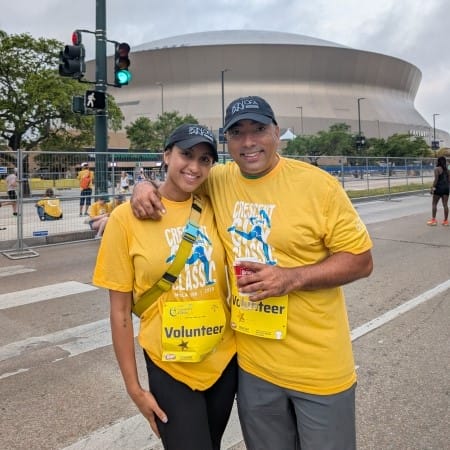
Sydney as an SOAS volunteer for Crescent City Classic./Courtesy Sydney Houlemard
But it doesn’t stop there. In her professional capacity, Sydney serves with the Special Victims Unit (SVU) at the DA’s office and the Greater New Orleans Human Trafficking Task Force (GNOHTTF). Whether she’s managing projects, leading community engagement or coordinating with other agencies, Sydney works to support and advocate for survivors of sexual assault and human trafficking. Her commitment to these vulnerable communities speaks volumes about her character and values.
“The most rewarding part of this work is that I’m able to build relationships I wouldn’t have otherwise had and I get to be a part of others’ journeys, which is cool,” Sydney says.
What sets Sydney apart is her ability to weave empathy into every aspect of her service. She understands that leadership is not just about influence—it’s about listening, learning and lifting others up. Whether she’s mentoring youth or supporting survivors, Sydney brings the same passion, poise and determination to every cause she embraces.
Her work with YLC has a ripple effect. By organizing high-impact leadership events and workshops, she’s inspiring young professionals to get involved, make change and pay it forward. The program’s success is a direct reflection of Sydney’s behind-the-scenes dedication—ensuring every detail, from budgets to breakout sessions, aligns with the mission of growing engaged and informed civic leaders.
Her advice to those wanting to volunteer? “The best thing to do is to look in your community and see what organizations exist, and then from there check out the websites of the ones that seem to align with your values. See what events are coming up or sign up for their newsletters. This allows you to see what they have going and attend an event. If you’re nervous, bring a friend with you! You can also reach out to them and see if they need volunteers, which usually they do, and try it out. Either way, it starts with you.”
Through her service, Sydney exemplifies the idea that real leadership means showing up consistently, even when no one’s watching. Whether she’s mentoring a boy through Son of a Saint or helping a woman find the courage to rebuild after trauma, Sydney’s actions echo a powerful message: community starts with care.
Sydney Houlemard’s volunteerism is a masterclass in intentional impact. With grace and grit, she’s transforming lives across New Orleans, proving that when you lead with heart, real change follows.
How One Woman Champions Opportunity and a Future for Girls in STEM
Meet Daily Point of Light Award honoree Kenyon Webber. Read her story, and nominate an outstanding volunteer or family as a Daily Point of Light.
Kenyon Webber’s volunteer work is changing lives and shifting the narrative for young people, and it’s her own life, history and career that make her a powerful example of expanding opportunities in STEM education. With a focus on strengthening and broadening STEM engagement, particularly for girls, she dedicates her time and energy to nurturing the next generation of scientists, engineers and innovators.
Through mentorship and hands-on engagement, Kenyon actively challenges gender stereotypes and opens doors for students who might not otherwise see themselves in STEM careers. Whether she’s judging robotics competitions, helping students troubleshoot Lego League designs or mentoring young girls during American Heart Association’s STEM Goes Red events, her message is clear: You belong in STEM. Her presence and encouragement have inspired countless students to pursue their passions with confidence and ambition.
One of Kenyon’s most impactful contributions has been her role in launching an apprenticeship and internship program between Entergy and the 1881 Institute of Technology. This partnership connects students with real-world career pathways in engineering and manufacturing, creating bridges between classroom learning and meaningful employment. As a board member of both the 1881 Institute and the STEM Library Lab, Kenyon also supports teacher training and curriculum innovation—ensuring that educators are equipped to spark curiosity and confidence in their students.
Kenyon Webber is a passionate and dedicated advocate for girls and women in STEM./Courtesy Kenyon Webber
From leading monthly STEM activities to devoting many hours a month volunteering in various other capacities, Kenyon Webber embodies a passion for education and opportunity for all. Her work not only uplifts individual students, but also strengthens the broader community by making science and technology accessible and welcoming. Read on to hear more of her remarkable story.
What inspired you to get started with this initiative?
I’ve been volunteering for many years, with girls going into STEM or interested in STEM. I started doing this in college, and what I found was that girls tend to interact differently when they’re around boys. They tend not to ask as many questions. I’ve found that they miss things when they’re not with other girls. I thought, why not do something STEM-related with just girls?
The more I got into it, the more I realized that when girls who like science see an adult who’s in a science-related field, they find safety in that. Science isn’t always the cool thing. But these students might see a grown-up who they might be able to see themselves becoming like, and they may be able to visualize themselves in the field. They also have a tendency to relate better to someone who looks like them. Sometimes these girls don’t relate to the guys.
I was already doing this, but I’m very fortunate to work for a company, Entergy, that loves when employees are doing work in their communities. They encourage this. They nominated me for this award.
Tell us about your volunteer role.
I started working with STEM-related programs. I started a girls program to instill more critical thinking in our community. COVID disbanded that, but I got more involved again after the pandemic. I work with the Girls in STEM program at Tulane, where I present to those young ladies there.
I’ve also presented at Girl Scout events to get them interested. We talk about engineering, circuits, what you can do with science. I do refereeing at robotics competitions. I talk to the girls’ teams, because they always need a little encouragement. There aren’t many girls teams, but two or three teams is better than zero, which is what it used to be.
After several years of doing this, I started to move into board service. I serve on the board of the STEM Library Lab. I speak as a board member to STEM educators at elementary schools about the importance of science and engineering, and strengthening access and engagement of young people in the future. I’m also a board member at the 1881 Institute. They do workforce development for manufacturing and science careers. These students are less traditional students. They aren’t college-bound students, but they also need a chance to make a good living in a science-related field.
Why is this issue so important to you?
When I was interested in science back in elementary and high school, there were not a lot of females in engineering. I couldn’t relate to people in the field. I found it difficult even in college. There were very few females in classes, and its important to reflect different experiences. Sometimes you need to see someone who looks like you to relate to, to be inspired by. I knew that someone needed to step up and encourage these students to get into these science fields. They may not have a person in their families who’s in the sciences. For me, I found that without this type of mentor or chance to see myself in STEM, it was more difficult. And I wanted to give young people something I didn’t have.
What’s been the most rewarding part of your work?
When the light goes on for a person. When they get it, or when they see that they can get it. When I’m teaching, and they ask a question and I can see them understand. When people start to understand – especially in small doses – that encourages them to go on to the next step. That means they’ll ask the next question. Maybe not to me, but maybe to their teacher in school. And that’s really rewarding to me. When they’re inquisitive, when they ask questions, it just fosters more learning.
What have you learned through your experiences as a volunteer?
I’ve learned that we have to encourage questions from young people. I think many times, they ask questions, and they want the answer, but often, they need to critically think. As adults, sometimes we’re lazy and we just want to give them the answer. What we need to be doing is encouraging more questions. Even though young people do things a little differently generation after generation, critical thinking never goes out of style.
Tell us about future partnerships, programs or events that you are excited about.
There are a couple of events coming up in the fall. One of them is STEM Goes Red with the American Heart Association. I typically present on the engineering portion. In the fall, I also do the Girls in STEM – it’s called GIST – events at Tulane. And The STEM Library Lab is a great resource for teachers. I’m on their board. I do encourage teachers and anyone who knows teachers to actually go there and take advantage of resources. Finally, the 1881 Institute of Technology provides workforce development, so it’s a great organization to check out.
A community girls group gathering with the purpose of teaching critical reasoning skills./Courtesy Kenyon Webber
Why is it important for others to get involved with causes they care about?
Hands-on work gives you a very different perspective. You can hear about things that are happening in the classrooms, but if you don’t interact with the people – the students, the teachers – you don’t truly understand. There’s always the “real” side of the story, and when you do the hands-on work, interacting with people, it’s the only way to really affect change. If there’s something that bothers you, how can you help?
Any advice for people who want to start volunteering?
It’s easy and it’s fun. There are so many ways to get involved in the community, in so many areas. This is the area I’m passionate about, but there are so many areas. What’s something you want to change? What’s something you didn’t get, that you want others to have? These are the best areas where you can affect some change. It doesn’t have to be very time consuming, and volunteering is something you’ll come to enjoy.
What do you want people to learn from your story?
Everyone has something to give. Everyone has something to contribute to their community.
Where Disaster Strikes, Louisiana Volunteer Brings Relief
Meet Daily Point of Light Award honoree Kristy Buras. Read her story, and nominate an outstanding volunteer or family as a Daily Point of Light.
With her sturdy white Tahoe in tow, Kristy Buras is always ready to help. Based in New Orleans, Kristy is a dependable force behind Fill the Needs, a grassroots disaster response group founded by Chef Amy Sins. When disasters hit, Fill the Needs jumps into action during the most critical window—those first two weeks when government agencies are mobilizing but not always actively engaged. The organization rapidly deploys its network to assess, evaluate and coordinate everything from hot meals to 18-wheeler deliveries, identifying needs and finding ways to fill them.
Kristy’s role? She shows up—whether it’s driving supplies to hard-hit areas, comforting families who’ve lost everything or simply making sure volunteers stay hydrated and grounded. She also volunteers at the local VA and serves on the board of her Disabled American Veterans chapter. A veteran herself, Kristy says her commitment to service was inspired by her late father and sustained by the healing power of helping others.
What is Fill the Needs and what’s your volunteer role?
Fill the Needs is a nonprofit that steps in when emergencies happen—floods, hurricanes, tornadoes. Chef Amy started it years ago, and I’ve known her for a while. The first time I volunteered, it was kind of chaotic. I didn’t know what to expect. I showed up with an empty car and a full heart, just ready to do whatever needed to be done. I’m not one of the cooks, but I help however I can: bringing supplies, packing water, delivering it where it needs to go.
As it grew, things got more organized, and I found myself doing more. Sometimes we’d have to drive over an hour, like to Baton Rouge, and bring supplies to shelters. I’d check on families, hand out gift cards and just be a friendly face—someone to talk to, pray with or help connect them to resources. I’ve made wellness bags with snacks, dropped off dog food, packed planes with donated supplies and done Costco runs. I always let Amy know I’m available. If something happens, I can pack up my Tahoe and bring whatever’s needed. Sometimes I’m just out there making sure volunteers have water. Sometimes I’m walking around talking to people who’ve lost everything. Wherever I’m needed, that’s where I go.
What moment stands out to you most from your volunteering?
The tornado that touched down in New Orleans. That area was already underserved, and a lot of people didn’t have insurance. I actually work in that community, so I knew a lot of folks who were affected. One of my clients lost her house completely, but luckily, she was able to stay with family during the rebuild.
Being out there was emotional. It brought me back to Hurricane Rita in Lake Charles, where I’m originally from. You’re used to seeing houses and trees, and now it’s just rubble. It was heartbreaking. But I knew I had to stay focused and help. I talked to people, held their pets, helped them get a plate of food or figure out how to apply for FEMA. The National Guard was there too, just making sure everyone stayed safe.
There was one older lady—we sat with her after walking through the area where her home had stood. She cried, and we cried with her. We helped her apply for housing and made sure she got out of the sun. That stuck with me.
Kristy (center) and other volunteers pack up her Tahoe with supplies for relief efforts./ Courtesy Kristy Buras
What inspired your passion for volunteering?
My dad. Growing up, we had a lot of older neighbors, and he’d always check on them. We’d cut their grass, sit on porches and talk with them. There was one lady a few houses down. We didn’t know it then, but she had mental health issues. We’d play in her yard and ask her to watch us do tricks. Later, my dad found her house wide open. She had passed away.
He also organized Halloween parties at my elementary school. He’d say, “You want to volunteer?” and I’d say, “Sure,” not realizing he needed the help. But I loved it. In high school, I’d eat lunch with the kids in special education because I didn’t understand why they were separated from us. I liked talking to people and making them feel included. That led me to working with people with developmental differences later on. After my time in the military, I volunteered with local agencies helping people with developmental differences while in college and ended up working in that field for 11 years.
Tell us more about your work with veterans.
I volunteer at the VA, especially in the critical care area, which is kind of like long-term care. I’d visit one older gentleman regularly. He used to work for the post office and didn’t have kids, His eyesight wasn’t great, so I’d help him with his phone or read with him. I’d also help organize his room and just talk about sports, his childhood or whatever he wanted.
I also help with events like the unhoused veterans’ day in October. They can come through and get eyeglasses, clothing, hygiene items, whatever we’ve collected. And I help at the local VA office, guiding people where they need to go or helping with paperwork. I’m hoping to get trained soon to help with VA claims because there’s such a big need. I serve on our DAV chapter board and help out at Bastion Homes too, which is housing for veterans and their families.
How long do you plan to keep volunteering with Fill the Needs?
As long as I’m needed. Chef Amy knows I’m always just a phone call or a text away. She’s a good friend with a heart of gold, and I’m honored to be part of her organization. I don’t really care about awards or recognition. I had to learn through therapy that it’s okay to accept appreciation, but I’d rather lift up others doing the work too. Fill the Needs deserves recognition for what they’ve built.
What’s one lesson you’ve learned from volunteering?
Compassion. Just listening to people when they’re vulnerable and scared. Being kind. Being humble. We’re not asked to be anything but ourselves, and when you really find yourself, it changes everything. Volunteering helped me find myself again.
What do you hope people take away from your story?
That it’s okay to take a break. To have a mental health day. But if you’re able to volunteer, do it. It doesn’t have to be big—just showing up for someone can make a huge difference. Volunteering is like soup for the soul. It helps me live my life better and be a better person. And if someone’s not ready for help yet, that’s okay too—I’ll still be there to listen.
New Orleans Senior Builds Community Through Gardening
Meet Daily Point of Light Award honoree Gloria Ward. Read her story, and nominate an outstanding volunteer or family as a Daily Point of Light.
In the historic New Orleans neighborhood of Tremé, visitors come to Miss Gloria’s Garden from all over. They come from down the street and across town. They come from nearby colleges, and stop in on vacations from France, Haiti, Russia and beyond. Many of these individuals volunteer, and often more than once.
Gloria Ward, a 77-year-old example of healthy living, started the approximately 2,250 square foot community garden in 2006 and filled it with vegetables, herbs and flowers. She made all of her own pots out of concrete and fabric. She also created a sandbox wrapped with a 30-foot vinyl snake and a swimming pool. And she designed a 1,500-yellow brick road twisting throughout, forming each brick herself.
“People like to just come out and hang out,” Gloria confirms. “They come to the garden and don’t want to leave.”
Volunteers help with upkeep. Visitors attend gardening and healthy eating classes as well as programming: plays, birthday parties, puppet shows and more. Many performances run under the gazebo with lawn chairs set up for the crowd. Jazz night is a particular favorite, where people can enjoy music alongside Gloria’s homegrown collards and fresh cornbread. “Self-Love Sundays” are also popular, engaging the services of three masseuses, two yoga teachers and two meditation teachers.
Gloria spent much of her life designing clothes for people like Miles Davis, Nancy Wilson and Marlena Shaw. Costuming for film and stage as well as set design was her passion.
“I used to make everything I wore and everything my kids wore,” she recalls. “I have been so lucky that I’ve been able to spend my life doing things I like to do.”
After a stint teaching art at the Chicago Park District, she learned to weld from a friend and opened a business she ran for nearly 12 years before retiring. In short, if something needs to be made, there’s a good chance Gloria can do it with one of her many skills.
Ten years ago, those skills led to meeting Oba Jordan Lorrius, someone who would become a grant writer, volunteer coordinator and all-around volunteer for the garden. Oba Jordan was the theater director for a local elementary school who reached out for help on a production.
“Gloria and I became besties the minute we met, and she made 15 costumes for these kids. The production was amazing,” he reminisces.
Gloria was also selling microgreens to restaurants at the time, because throughout her many reinventions, she has always gardened. Growing up in the south, her family grew everything they ate. She cites prejudice being the main factor for avoiding the grocery store, her grandmother hoping to shield her grandkids.
“I went to my first store when I was about 15,” she recalls. “When I was young, when we were in the store and someone white came in, we had to leave.”
Setting aside the harsh realities of the time, the skills she learned in childhood have led to a lifetime of healthy eating and a passion for cooking. Even while living in apartments, she kept buckets for growing.
“I treat my plants like I treat me. Plants like to be taken care of,” she explains.
Gloria has passed down her culinary interests to her daughter, a chef. Together, they use their harvest to run Miss Gloria’s Kitchen.
“From the soil to the soul,” she says, her penchant for catchy taglines on display.
Gloria sees many people her age plagued with illness and mobility limitations and stresses the importance of physical activity along with healthy food. She starts each day at 5:30 am with a water aerobics class. Oba Jordan, who joins her, is always impressed.
“I’m a strong man. I play rugby, hockey and did martial arts. I get sore and tired after water aerobics,” he says. “She goes to the gym!”
From there, she goes home, cleans up and heads straight out to the garden. She estimates she spends about 70 hours a week planting, harvesting, managing volunteers and schedules, and doing maintenance tasks.
“My goal is to educate the community on the importance of knowing what they’re eating, the health benefits of fresh vegetables and herbs and how to cook and enjoy them in ways that support wellness,” she explains. “I also teach children the value of healthy eating early in life so they can avoid health problems as they grow older.”
As a father and someone who has been heavily involved with children’s programming, Oba Jordan appreciates her outlook.
“She can’t stand to see kids go hungry,” he says, citing that Gloria will run programs for children regardless of their family’s resources.
But it’s not just kids. Gloria feeds the unhoused twice a year, more when funding is available.
“She’ll feed 300 to 500 people who are living under the overpass or in tents,” Oba Jordan says. “She builds a community around her through her giving.”
Gloria has volunteered most of her life for various initiatives, particularly as she began her career as a way to learn the ropes at theaters.
“I find that when you want to learn something, it’s good to go volunteer where they’re doing that,” she explains. “Everybody can use their interests to volunteer in different ways.”
This summer, Gloria is running her children’s weekly gardening program where young kids can learn to grow and cook their own vegetables then sell at the farmers’ market. They’ll also practice doing a balance sheet. Gloria works with a bank that will let them open up accounts with just $5.
“I try to teach the kids to be self-satisfied. Love yourself, and then learn how to treat other people,” Gloria states.
Looking ahead, she hopes to work with the city to grow on abandoned lots and share even more food with her community.
“I’d like to have lots where I can grow all field peas and another lot, all collard greens. Another would be all herbs so you can go pick vegetables anytime you want,” she muses. “It’s really a food desert out here.”
In the meantime, she’s teaching people to be healthy and self-sustainable. Her example inspires people to get involved.
“Gloria is such a selfless person,” Oba Jordan reflects. “She has so much love to offer to the community, and I want to be a part of supporting that.”
Renewal and Community at a Beloved Park in New Orleans East
Meet Daily Point of Light Award honoree Tangee Wall. Read her story, and nominate an outstanding volunteer or family as a Daily Point of Light.
For more than 16 years, Tangee Wall has been a constant and powerful advocate for New Orleans East. As president of both New Orleans East Matters and Friends of Joe W. Brown Park, she has dedicated over 120 volunteer hours each month toward revitalizing the area she’s called home for 35 years. From hosting community information sessions to leading beautification efforts and organizing local markets and cultural celebrations, Wall has remained unwavering in her mission to create a thriving future for her neighborhood.
One of Wall’s most persistent causes has been the redevelopment of the long-abandoned Six Flags site. For over a decade, she has advocated for a visionary project to replace the blight with meaningful development, and now, that persistence is paying off as the Bayou Phoenix project moves forward. In every public meeting and community update, Wall emphasizes the need for community-led planning and sustainable economic growth. Her goal has always been clear: to ensure New Orleans East receives the same investment and attention as other parts of the city.
Wall also sees public safety as intricately tied to opportunity and youth engagement. She firmly believes that continued engagement and activities for youth help curb crime, and she’s backed up that belief with action—hosting regular events that provide safe spaces for young people and bringing partners together to support crime prevention strategies through community involvement.
Whether advocating for strategic billboard placements to boost local messaging or planning health events and cultural festivals, Tangee Wall’s volunteerism is rooted in action, passion and deep love for her community. Her work is not just about rebuilding infrastructure—it’s about restoring dignity and pride to New Orleans East. Read on to hear more of her story.
What inspired you to get started with this initiative?
It began about 16 years ago, post Hurricane Katrina. My family moved to Baton Rouge for a limited period of time. I worked here at the University of New Orleans at the time, and the campus had been devastated by the storm. It was all just a complete change of everything, overnight, with Hurricane Katrina. In coming back to New Orleans – and specifically to the part of the city I live in, New Orleans East – after such devastation and seeing our neighborhoods, our homes, the churches, the schools. You just can’t imagine how that looked upon first coming back to the city.
Tangee Wall organizes many events that Friends of Joe W. Brown Park hosts throughout the year./Courtesy Tangee Wall
I was very fortunate to have homeowners and flood insurance, so my journey wasn’t as difficult with our personal home. But with the community, I just felt compelled to help. So many of our neighbors, friends and colleagues were in the same boat. I met Chris with HandsOn New Orleans. Organizations like that are just lifesavers. They equip volunteers from all over the country. We developed a great relationship, with his interest in trying to help us put our neighborhoods and our infrastructure back.
This became a mission of mine, as well as some colleagues and neighbors who were planning to come back. Many people were so frustrated, so devastated that they decided not to come back. For those of us who felt like there was hope in trying to rebuild, we formed the Friends of Joe W. Brown Park. We saw the park as a center of family life, as a beacon of hope to bring back to the community. Not just our homes, but beyond that, having a place again, something to look forward to. The desire for home really compelled the drive to do these things. And HandsOn New Orleans really helped with outreach.
Why is this issue so important to you?
The park had been meaningful. Joe W. Brown Park is a regional park, 125 acres of beautiful natural environment. We had seen that trees were destroyed, the brush, the wetlands, part of the nature center. Louisiana Nature Center had been very important too. The natural environment is what this part of the city is truly known for. The bird sanctuary. The different species of trees and insects. The flora and the fauna. We wanted it all back. Not just our houses, which are part of our homes, but the home that also included our community.
Tell us about your volunteer role.
I’ve helped build from ground zero, from the bottom up. We formed a 501(c)(3) nonprofit. The park is what I’m centrally focused on. The park opened up a world of opportunity to our entire community as a safe space, a place to recreate. There was nothing else to look to in terms of socializing or recreational benefits. The park became a mission.
Once we formed the organization, more and more people joined. We had frequent cleanups and beautification projects, with the help of HandsOn New Orleans and a couple of others. Pretty soon, we had the city involved to redo the surfaces of the park and bring back athletics. Our public-private partnerships were very helpful to us. Audubon was very helpful to us with the Nature Center. We started to be able to provide a place where the youth could actually form their athletic teams again, for the schools to enjoy again.
It’s a major task. Joe W. Brown Park is a sizable environment. Believe it or not, we’re still in the mode of clean up. Of course, there’s also continuous beautification. I’m so proud of all of these individuals who came together. We were the foundation in bringing the hope back in expanding these partnerships. No one was afraid to work, to go to the city, speak up on behalf of what the needs were and are.
During the pandemic, the park was essential as an open-air environment. We had opened up an environment that many people didn’t know existed. There was an awakening, and we reached out-of-state folks. We had a lot of help. These volunteers were very taken with our resilience. It was so worth it to do ourselves, as a total grassroots effort. We eventually, after a few years, received grants, support, sponsors, donors. And that was from the cry of the grassroots efforts, seeing people put their hands in the dirt and shovels in the grounds.
We made new friends and new neighbors, opening to new people and the kindness of strangers. We didn’t know a lot of these people from far away, as far as California, Georgia, Boston, Texas. These people understood the devastation of a hurricane, and they understood that if you’re fortunate enough to have your life, you know you need to rebuild.
Tell us about the carousel.
Always children at heart, our goal was to have a carousel. I remember as a kid, going to Lincoln Beach, which is also under redevelopment, and riding the carousel. So the goal is to bring back the jewels and the assets of our community. About two years ago, some folks from New York and California were doing some work in the park. We began a conversation. ‘How high was the water?’ ‘Which areas were affected?’ We told the story over and over to people. This particular team was doing some work in the front entrance of the park. I told them that our lifelong goal was to have a carousel. We were the only regional park and only area of the city that had so much devastation without bringing back something transformative, something from the past.
Just recently, we received a grant that will allow us to have the installation of our carousel. It’s going to be history-making. It’s going to be brand new. And we’re hoping to have it completed by the end of the year, in time for Christmas, which was always so special at the carousel.
What’s been the most rewarding part of your work?
The biggest positive blessing has been new friends. We mourn the loss of others, and we remember them. This year is so vital. It’s our 20th anniversary. There will be lots of activity, as well as memorializing. The kindness, truly, of strangers who had never met us, and those who are our neighbors. We’ve all embraced it. We feel very blessed and fortunate that we had help from all over.
Why is it important for others to get involved with causes they care about?
Direct contact is always felt. We believe in the personal touch. There is nothing that replaces it. Chris has been such a great leader, one who encourages boots on the ground. There’s nothing like a grassroots movement. Not only does it produce high-quality work, but it produces a certain camaraderie. It brings people together from very diverse backgrounds. Politics doesn’t matter. Race, ethnicity, gender, sexual orientation… you don’t see or recognize any of that when an entire community is in need, an entire city is devastated. People naturally come and embrace. We’re hospitable here. And to be shown that by others, seeing the hospitality that others brought, it lets you know that human nature is a good thing.
Any advice for people who want to start volunteering?
My advice is to reach out and get involved. If you’re in a neighborhood, find out if there are neighborhood meetings. Some of our young people weren’t even born when Katrina hit. We have to teach them. We open up volunteer opportunities to the schools. Just get involved. Take every opportunity you can to just get involved.