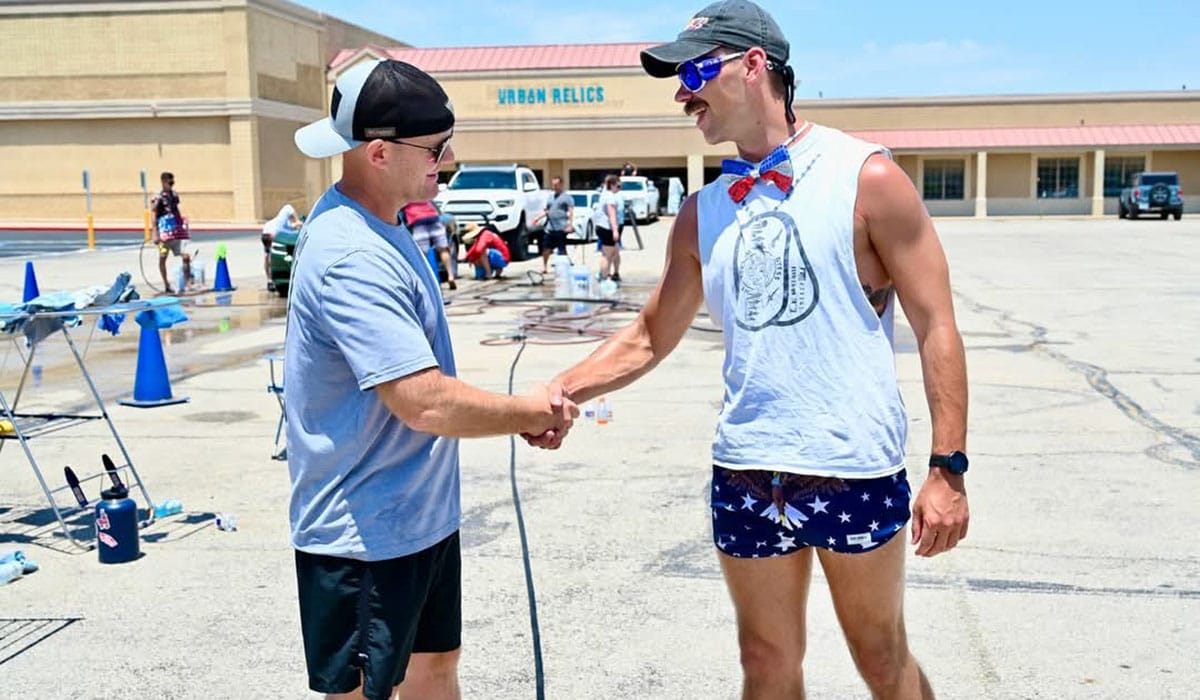
Serving with Purpose Across Communities – Corporate, Nonprofit and Beyond
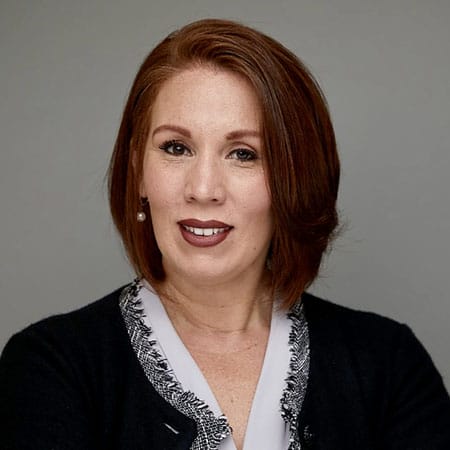
Meet Daily Point of Light Award honoree Melinda Cora. Read her story, and nominate an outstanding volunteer or family as a Daily Point of Light.
For two decades, Melinda Cora has left a remarkable legacy of service within her company, her community and even across borders. As a community champion at Prudential and PGIM, Melinda Cora has led financial literacy programs through Junior Achievement of New Jersey (JANJ), bringing elementary students into corporate settings to inspire their educational and career journeys. She is also a proud HISPA role model, having reached more than 600 students with messages of encouragement, resilience and the value of education.
Melinda’s impact is just as profound outside the workplace. Through Evangel Church, she has spent nearly 20 years teaching children and teens, hosting groups and now serving on the Board of Deacons where she’s helping shape the future of the church—including efforts to grow its outreach impact. As part of her prison ministry through God Behind Bars at Bedford Hills Correctional Facility, she brings messages of hope, healing and restoration to one of the most underserved populations in the country.
Her compassion crosses borders as well. As a board member for Marsha Mansour Ministries, Melinda has participated in mission trips to Guadalajara, Mexico, delivering supplies and encouragement to people in rehabilitation centers and orphanages. No matter the setting, her work centers on restoring dignity and helping people see that they are not defined by their current circumstances. At home, she opens her door to teenagers and young adults, encouraging them to expect more from life and pursue their purpose with confidence.
Whether mentoring colleagues over coffee, speaking on leadership panels or coordinating strategic plans through Prudential’s Juntos Business Resource Group, Melinda leads with humility and impact. She embodies the spirit of service at every level—empowering the next generation, uplifting marginalized voices and reminding everyone she encounters that they are seen, valued and capable of greatness.
Melinda Cora is passionate in all areas of her life, from her faith to her corporate volunteerism and beyond.
Tell us about your volunteer role.
I’ve been actively volunteering for over 20 years. At the heart of everything I do are four guiding words: “love God, love people.” That simple phrase shapes how I serve and why I serve. My volunteer roles span across church, community and corporate spaces, but they all share a common thread—helping people grow, heal and thrive. At my church, I teach children, teens and adults, helping them understand how to live with purpose and compassion. I encourage young people to recognize their value and potential, often mentoring them through life’s challenges and transitions.
I also focus on equipping others with practical tools, whether that’s teaching life skills, offering career advice or helping nonprofit organizations operate more effectively through governance, leadership development and strategic planning.
Whether I’m leading a student ministry class, mentoring a colleague or serving on a board, my goal is always the same: to serve with excellence, to uplift others and to leave every space better than I found it.
Why are these issues so important to you?
Serving is at the core of how I live my life. Getting involved isn’t just something I do; it’s part of who I am. I believe in living generously, which means offering my time, my talents and my resources wherever they’re needed. I see each act of service as a powerful opportunity to make a difference. It’s not always convenient, and it’s rarely glamorous, but it’s always meaningful.
I’ve also learned that serving transforms not just the lives of those we help, but our own hearts as well. It keeps me grounded, grateful and aware of the needs around me. It reminds me that we’re all connected, and that even the smallest act of kindness can impact in ways I may never fully see.
What have you learned through your experiences as a volunteer?
Volunteering has taught me that it truly is more rewarding to give than to receive. There’s something deeply uplifting about being able to encourage someone else and it fills me with purpose and joy every time. I’ve also learned that giving isn’t one-dimensional.
Over the years, I’ve discovered that I can bring all parts of who I am—my skills, experiences and even my passions—into service. Whether it’s through teaching, mentoring, planning or simply showing up with a listening ear, each act of giving can leave a lasting impact. And perhaps most inspiring of all, I’ve seen how volunteering creates a ripple effect. I’m incredibly grateful to see that reflected in my own family. My three children (ages 22, 18 and 15) all serve in their own unique ways. Watching them step into lives of service reminds me that when we lead with compassion, others follow.
What’s been the most rewarding part of your work?
For me, what keeps me going, is that at the end of a week like this one, where I’m doing something every single day, after my day job, I ask myself, ‘what is the impact?’ Those challenging weeks may seem challenging, but through the little investments we make, all of a sudden, we can see exponential growth happen. My family and I have been given so much. How do we not pause and give a little time in those areas where we can?
Why is it important for others to get involved with causes they care about?
It’s how we build stronger communities, how we live out our values and how we leave a legacy that truly matters. There are two aspects of volunteering: there are, obviously, the lives you change. But what I find more often than not is that I myself am the beneficiary. I walk away thinking, ‘Wow, that was literally food for my soul.’
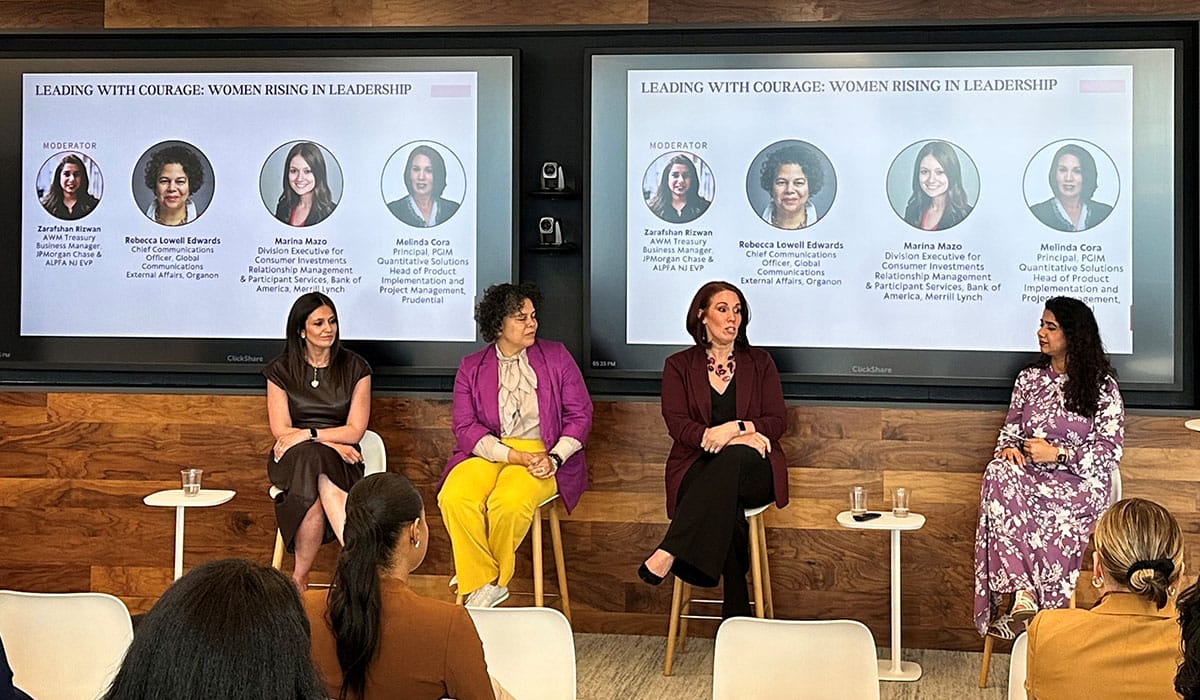
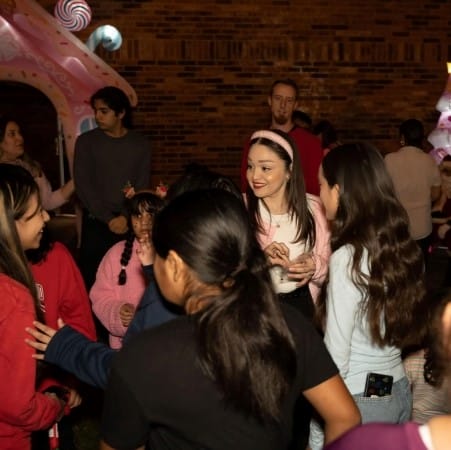
Melinda (third from left) speaking on a Women of ALPFA panel on leading with courage where she shared her professional journey, experiences and career advice with a room full of rising professionals.
When I walk into the prison, for instance, it’s hard. These are women with tough sentences. But when I walk out and I see the smiles on the women’s faces, when I hear them reciting back to us the encouraging words or thoughts we shared with them, when they say, ‘I was able to face this environment differently because you gave me hope,’ it’s all worth it. If each of us does our part, we’ll begin to see the long-term impact of those efforts. Our collective contributions can transform lives.
What do you want people to learn from your story?
I hope people see from my story that making a difference doesn’t always require grand gestures. It often starts with simply showing up. For me, whether it’s teaching children, mentoring a colleague over coffee or serving women in a correctional facility, every act of service matters. I want people to understand that their unique skills, experiences and even just presence can be used to meet real needs in the lives of others.
I also want to highlight the power of consistency. Over the years, I’ve learned that long-term impact is built little by little, bit by bit. It’s that compounding effect that leads to growth in people, communities and organizations. That’s why I serve across so many spaces: because I believe in the ripple effect of love in action.
And finally, I want people to know that legacy isn’t reserved for the famous or the powerful. It’s built by everyday people who choose to consistently give of themselves to lift others up. I’m honored to be one of many who are doing just that, and I hope my story encourages others to find their own way to give back and leave a legacy of impact.
Meet Daily Point of Light Award honoree Kavin Patel. Read his story, and nominate an outstanding volunteer or family as a Daily Point of Light.
The bond between Kavin Patel and his grandparents was the seed that sprouted a service revolution.
During the COVID-19 pandemic, Kavin and his brother spent a lot of time with their grandparents. As staying home was the primary form of virus prevention, the culture became increasingly reliant on digital communication. This was particularly difficult for seniors who didn’t grow up using technology in the way that Kavin and his brother did. But as the duo helped their grandparents use technology to communicate and navigate everyday life, they realized it was likely that other seniors could probably use the same assistance as their grandparents.
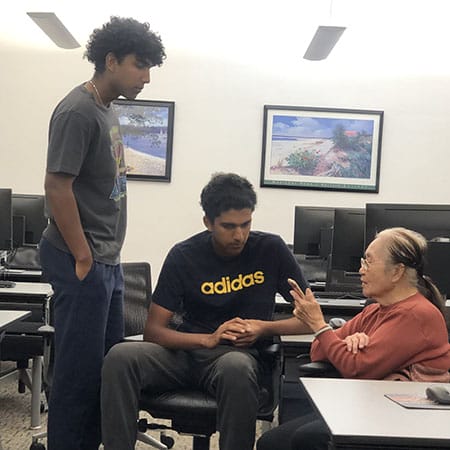
In 2023, Kavin and his brother founded Support for Seniors, an organization that enables seniors to connect and thrive in a digital age. The group started by hosting one-on-one sessions at local churches and eventually became so successful that they had to expand to hosting classes at local senior centers. There, community members can attend, learn and ask questions about everything from how to use a healthcare company’s iPhone app to creating a digital photo album for their grandchildren. The seniors trust Kavin to dedicate his time to helping them explore the world from a digital perspective, and that’s why Support for Seniors has reached more than 1,000 seniors to date. By providing them with essential digital support, the organization has ultimately fostered stronger connections within the community.
Currently a junior in high school, Kavin’s role as co-founder of the organization is a challenging one on top of his rigorous academic workload. Still, he’s looking toward the future. This summer, Support for Seniors will expand its offerings by adding new classes that focus on seniors’ health and wellness. By leading the seniors through companion walking and stretching, Kavin is hoping to connect with them more deeply.
The power of community connection is palpable in Kavin’s story of volunteerism. What started as a simple effort to help bridge the digital divide became a lesson in the power of helping others.
SUPPORT FOR SENIORS CO-FOUNDER KAVIN PATEL (STANDING) OFFERS FREE TECH SUPPORT TO A LOCAL SENIOR ALONGSIDE HIS BROTHER. /COURTESY KAVIN PATEL
What inspired you to get started with this initiative?
I think my grandparents were the biggest inspiration. During COVID, I spent a lot of time with them. I realized during that time that we had turned into a more technologically inclined society. My grandparents were kind of behind. Helping them stay connected and teaching them how to use their devices was one of the most prevalent things that I was doing when I was hanging out with them. I thought my brother and I could make a difference by doing this with other seniors in our community.
Tell us about your volunteer role with Support for Seniors.
I’m the co-founder of Support for Seniors with my brother. It started at a local church, where we provided one-on-one sessions for seniors. From there, we saw that there’s a lot of demand for it. We expanded to a local farmer’s market where we were able to help one-on-one, but we were also able to grow the movement to a booth where we could answer questions.
We could see even more demand, so we expanded to a senior center in our community. We created scheduling so we were able to not only help one senior, but many seniors who had similar questions. We created classes for them. I set up one-on-ones, communicate with the head of the senior center and figure out when we can come in to teach. We usually have a large class. We help them with any questions they have or with different apps that they may be using.
What are your long-term plans or goals for the organization?
To continue the support for the seniors in our community. Being a junior and my senior year coming up, I want to continue helping them in any way that I can. My vision for expansion is not only from a technology perspective, but also to other offerings, like companion walking. I think that’s one of the biggest goals. We noticed that a lot of people struggle, so we want to have an avenue to be able to connect with them and to be able to help them.
What’s been the most rewarding part of your work?
It just goes back to the personal satisfaction that I get from it. I see a lot of my grandparents in these seniors, and because I’m not able to see them a lot because they live on the East Coast, it’s nice to connect with others. I know that time is fragile with the seniors of our community, so definitely being able to connect with them and being able to help them is so rewarding. I think that’s one of the most rewarding parts – seeing how happy they become and how we can help them.
What have you learned through your experiences as a volunteer?
I think the biggest thing is that we never really know what people are going through. I think seniors have a different approach to everything. They have a different view of life, especially on technology. We should approach everyone with patience and grace. I think that’s so important.Everyone’s different, and they’re all going to have different perspectives on how to use technology.
Why is it important for others to get involved with causes they care about?
You learn a lot about yourself. Going into this, I thought volunteering was just helping other people and learning about their experiences. I didn’t realize that I would learn a lot about myself. I’ve realized that what I want to do in the future kind of coincides with what I volunteer for.
Any advice for people who want to start volunteering?
There are so many opportunities in your community. Getting out of your comfort zone is the biggest thing. I was nervous about a lot of things, because I didn’t know what to expect. But when you get into that rhythm of volunteering and become comfortable with the people around you, you begin to enjoy volunteering and you want to continue.
What do you want people to learn from your story?
Not everyone has the same help and support. As I said before, everyone’s in different situations, especially seniors. Do what you can to make a difference in your community. Even if it’s one person’s life, I would say that you’re helping a lot of people. Individually, you can make a large difference, even if it is just in one person’s life. If there were only one person rather than a whole community, you’re still making a difference. It’s still very important to that person’s life.
Meet Daily Point of Light Award honoree Gwen Davis. Read her story, and nominate an outstanding volunteer or family as a Daily Point of Light.
In good times and bad, every person looks after someone in their life, whether it be a child, a friend or an aging parent. For Gwen Davis, it’s more than one person. It’s her husband, Stanley, and it’s her 93-pound Staffordshire mix, Yoda. Before she retired, it was the people who passed through the workforce development department at the Santee-Lynches Council of Governments. As director of operations, her last assignment was analyzing skills and helping people prepare to enter the workforce.
So, when she left her career behind, it is unsurprising that she found herself in a similar position. For 6 ½ years now, Gwen has been part of the Santee-Lynches Volunteer Ombudsman Program where she is an advocate for residents in long-term and residential care facilities, nursing homes, etc. She’s a friendly face that brings comradery, empowerment and a listening ear to people who are often vulnerable. In short, Gwen enriches the lives of the people she visits in more ways than one and ensures they are treated with the dignity and respect they deserve.
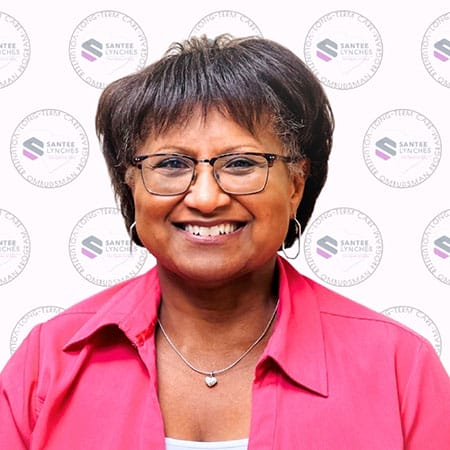
Gwen Davis, volunteer for the Santee-Lynches ombudsman program, advocates for the rights of long-term care residents while providing them and their families with resources, comradery and a listening ear.
What inspires you to volunteer?
I’ve always been a volunteer. Even growing up, I was always willing to help somebody wherever there was a need. I’m one of Jehovah’s Witnesses, and volunteering is one of the things that we do. It was ingrained in us that you don’t have to get something in return for everything, but if you can help somebody else, when you’re in need, somebody’s probably going to help you, too.
What inspired you to get started with this initiative?
When I retired, I wanted to be used wherever there was a need. I didn’t want to waste my days doing nothing or doing things that were unproductive. I talked to the executive director of the agency where I spent my career, and he mentioned the ombudsman program. By then, I’d started to be around more elderly friends and had been visiting them in assisted living facilities. They really enjoyed having somebody to talk to. Families are so busy sometimes and don’t always get a chance to come by. My visits supplement those family visits, or in some cases may be the only one a resident receives. That sparked my interest in doing something with the elderly and disabled.
Tell us about your volunteer role with Santee-Lynches.
My role is to visit facilities to engage and build relationships with residents, their families and caregivers. It’s an advocacy role. I help them understand their rights as a resident and to make sure they’re getting appropriate care. I help them have their wishes honored by being their voice. I listen and provide them with information and resources. If they have concerns, I see if there is something that can be addressed through the facilities or the family. I empower them to ask for what they need. Additionally, I’m responsible for reporting abuse, neglect, exploitation and problems to the regional ombudsman.
The cog is responsible for four counties. I work Sumter County, which is where I live. There are designated facilities that I visit. Every time I go in, I probably sit down and talk with six to 10 residents. I check on my regular residents, and then, if I see others, I’ll introduce myself and explain what I’m doing.
What’s been the most rewarding part of your work?
The biggest reward is knowing that I’m making a difference in someone’s life. When you walk into the building and one of your regular residents knows you’re coming to visit, their eyes light up. I try to make myself available to staff, too. Even though I’m there to advocate for residents, I want them to know that their concerns are our concerns as well, because they’re there to care for those individuals. I find it rewarding when I connect with people and when I see that something I had a hand in worked out for them, making their life a little bit better.
What have you learned through your experiences as a volunteer?
You can’t put a price on spending time with people in long-term care facilities. They might not have imagined this was where they’d be in this point in their life, but these are their circumstances. It also helps me to see that, as I’m aging too, there are people who genuinely care. People are willing to extend themselves and use their time to benefit others. We live in a fast-paced world where so much of the focus is on self, and we forget about the person on the sideline that may not be able to have the life that they once had.
What should people know about this work or the population you serve?
Our aging population is growing all the time, as well as the number of people with disabilities. Younger people can end up in assisted living or residential care facilities, too, due to injury or a health condition.
Why is it important for others to get involved with causes they care about?
We all need somebody. We’re designed to need others. Even if you’re having a bad day, consider that you might still be better off than somebody in a different situation. Sometimes, you can help someone by simply listening to them. There are times when they just want to talk and to not be hurried or told what they need to do. Even if they’re repeating a story, just engage and listen. It makes them feel better, and it makes you feel better as a volunteer, knowing you took the time to do so.
Any advice for people who want to start volunteering?
If you’re considering volunteering, don’t think about how much you have on your plate already. It could be 30 minutes or an hour each week that you volunteer. Whatever time you can fit in makes a difference. Look at it as a reward. You’ll always walk out feeling better than you did before, because you’ve helped somebody, and it didn’t cost much more than your time.
Meet Daily Point of Light Award honoree Fred Griffin. Read his story, and nominate an outstanding volunteer or family as a Daily Point of Light.
As far back as elementary and middle school, Fred Griffin was always the teacher’s aide.
Someone who found helping others tremendously rewarding as a child, Fred carried that motivation into adulthood. Almost 20 years ago, he started picking up trash throughout the community with another organization. A longtime volunteer for worthy causes in the Lake County area, Fred is known as a frequent presence on numerous boards and committees. But when he recommended himself as a potential board member for the West Leesburg Community Development Corporation, an organization that promotes education, unity and service within the West Leesburg area, Fred had no idea how far he would go.
Fred started as a board member for the WLCDC in October of 2019, right before the COVID-19 pandemic hit. By the summer of 2020, he was asked to become the organization’s president. In this volunteer role, Fred dedicates approximately 25 to 30 hours a month to supporting various community initiatives. Currently, West Leesburg is an underserved community, but Fred is spearheading the organization and facilitation of redevelopment. Whether it’s coordinating clean-up efforts and removing blight or helping residents fix up their homes and become first-time homeowners, Fred is there to improve the quality of life within the community. He also serves as a liaison to the local leaders, managing communications with local, state and federal government officials to serve as a voice for the community members.
Fred has big dreams of revitalizing the Leesburg area to the renaissance it deserves. However, he understands that the spirit of volunteerism starts with a simple gesture. When a resident reaches out in need of food assistance, he’s there to help no matter what. That spirit of helping another person is the true meaning of volunteerism.
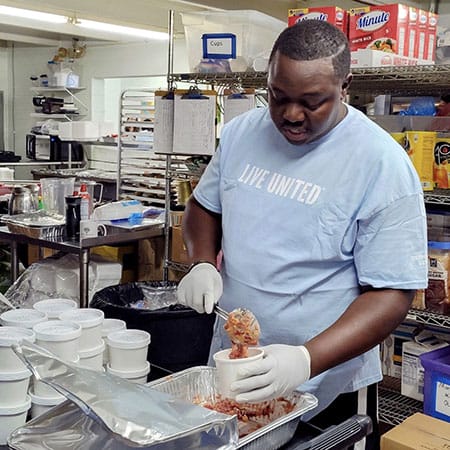
WEST LEESBURG COMMUNITY DEVELOPMENT CORPORATION PRESIDENT FRED GRIFFIN SERVES UP A MEAL AT A LOCAL SOUP KITCHEN. /COURTESY FRED GRIFFIN
What inspired you to get started with this initiative?
I noticed that there was a critical need within our community, especially here in Leesburg. I found myself in a position where people were coming to me looking for resources. I noticed that the board needed members, and I put my name out there and filled out the application, and they brought me right on. At that particular time, I was just a regular board member. Within six months, they asked me to be the president. I’ve been doing phenomenal things here in the community because they see I have a wealth of knowledge when it comes to resources, and that goes from the state to the federal level. That’s what they need here in West Leesburg.
Tell us about your volunteer role with the West Leesburg Community Development Corporation.
I plug into the community. My role with the West Leesburg CDC is to go out and see what the families need. I try not to limit it just to West Leesburg. If anyone calls from any side of the city of Leesburg, I’m here to help. It’s a very low-income area. I make sure that I connect with the local government and help with the beautification of West Leesburg. We help those who may need revitalization of their homes, or any resources when it comes to rent, utilities and food. That’s what we target. We aim to make sure the families are getting the resources that they need.
What are your long-term plans or goals for the organization?
I would love to continue to remove the blight. When I say that, I mean taking these abandoned lands and homes and redeveloping them, because that’s our mission and our vision. We want to help those first-time homebuyers who currently don’t have an opportunity. That’s what we’re all about. So I would love to see the community develop more, whether it’s new construction or redevelopment. For so long, we have taken our hands off the pulse due to the pandemic. Now that we’re stable, we need to step it back up like we never lost a beat.
What’s been the most rewarding part of your work?
The interaction within the community. I love interacting with people, no matter where I am. When I’m in the grocery store with my girls, they say I talk too much. People know me in the community, and they always ask me for information. I just love interacting and helping people in any way that I can, and if I don’t have the answer, you best believe I’m going to get the answer they need.
What have you learned through your experiences as a volunteer?
Everything doesn’t have to come with a price tag. This is a six-figure salary job that I’m doing, but everything has been pro bono. It just shows the commitment that I have for this community and the love that I have for this organization. I always make sure I tell people that when you do it from a pure heart, God will reward you publicly. It has brought a lot of recognition to what we’re doing here in the organization. I just want people to know that it’s coming from a pure place.
Why is it important for others to get involved with causes they care about?
It’s very important because your community needs you. If you don’t do it, then who will? That was my why. I’m a part of 10 different organizations within the city of Leesburg. Don’t ask me how I do it. It’s my gift and my talent. I was one of those who complained in my mind. I will advise those who want to get involved to find what they’re most passionate about and connect with these organizations. I promise you it will be very rewarding in the end.
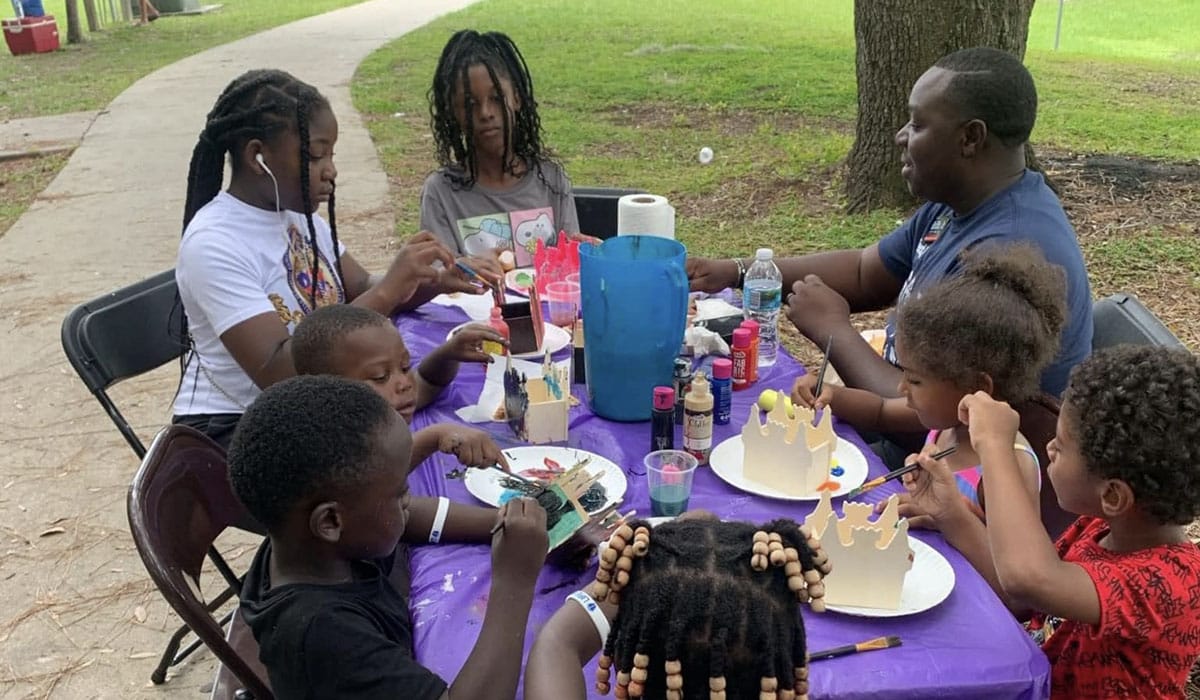
FRED GRIFFIN (BACK RIGHT) ENJOYS A MEAL WITH A GROUP OF CHILDREN DURING THE ANNUAL FALL FESTIVAL. /COURTESY FRED GRIFFIN
Any advice for people who want to start volunteering?
I would advise that they look within their community. Find what you’re most passionate about. You will be very surprised by the different organizations within your community that you can connect with. I would start there first, and also get with other leaders within your community, and see how you can get plugged in. There are always things to do when it comes to volunteerism, and it’s going to pay off with your involvement at the end of the day.
What do you want people to learn from your story?
I want people to learn that no matter what capacity or role you’re in, someone is always looking at you. You may not see it, and you may not hear it, but just know that people are watching and that you can be very impactful in anything that you do when you put your hands and feet to it.
Connecting Willing Hands With Meaningful Opportunity
Meet Daily Point of Light Award honoree Maitry Shah. Read her story, and nominate an outstanding volunteer or family as a Daily Point of Light.
Maitry Shah grew up with a family tradition of helping people, so when she had kids of her own, she made sure to pass it down. She became heavily involved in the community after leaving pharmacy to raise her kids full-time and often added volunteer elements to family vacations.
Over time, Maitry realized that people often needed help and encouragement to find meaningful volunteer opportunities and founded Charities2Love in April 2023, at the age of 54, to provide it. After building her own website, she picked six causes to support—hunger, homelessness, the environment, seniors, women and children, health and wellness—and now dedicates over 200 hours each month to creating and curating volunteer opportunities.
Two years later, she has organized over 40 community, corporate and virtual events and has collaborated with 80+ organizations. More than 1,300 volunteers have logged 2,400+ hours, inspiring many to find their cause. Though Maitry is sometimes questioned about why she started an organization at this time in her life, she is proud of her journey and the impact she is having on a grateful community.
What inspires you to volunteer?
I’m from an immigrant family and was raised in a household where that’s what we did. My parents didn’t call it volunteering; it was just helping others in whatever way they could. I wanted to be sure my kids also understood that, that you find ways to be useful.
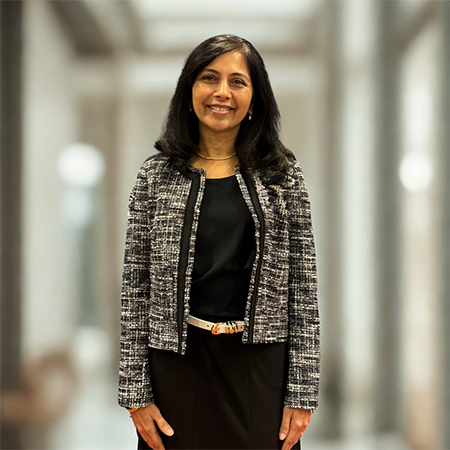
Maitry Shah, founder and president of Chatities2Love, connects volunteers to meaningful local community initiatives while helping nonprofits tackle their missions.
What inspired you to get started with this initiative?
A decade ago, my daughter was in high school and came across a local nonprofit that provides support to families who have lost a child called Camp Sol. She was starting to get into running and thought it would be fun to host a 5k for them. We didn’t know what we were doing at the time, but we decided to just go for it. It ended up being so much fun, and it was amazing to be able to see the impact we could make when everybody came together.
Since then, I’ve continued volunteering, doing many different things. People would ask me when I was going to an event and if they could join me. I realized that people want to get involved but don’t know how to get connected. The culmination of what comes to me naturally and what I love to do is not that easy for others. And so, I started this initiative.
The other important part is awareness. People love to learn about the nonprofit they’re working with, the cause and how their efforts are helping. We started by making sandwiches for those experiencing homelessness and had a small nonprofit come out to talk about what they did. You could see volunteers putting all of the pieces together.
Tell us about your volunteer role with Charities2Love.
We’re still small. As the founder, I do it all, but my main job is to engage nonprofits to source, create and curate the volunteer opportunities we do. It involves understanding their needs, figuring out if we’re collaborating with other nonprofits for the event, organizing those opportunities and publicizing them.
How do you choose specific organizations and initiatives?
I try to make sure that we are doing things for all of our causes and am attuned to their needs. For example, nonprofits that serve the unhoused need the most in the winter and summer. During those times, we make sure that we’re doing things to help. They are now familiar with me too, so they will also reach out when there’s a high need for something.
The second way is that awareness piece. For example, April is Child Abuse Prevention Month, and that’s a great way for us to offer a volunteer opportunity for children in crisis, which did recently in collaboration with a nonprofit whose mission aligns with ours.
What’s been the most rewarding part of your work?
I’m encouraged by meeting so many like-minded, inspiring people doing incredible work. The smaller nonprofits are amazing, with volunteers who show up behind the scenes doing whatever they can to help. It’s motivating to see how much people want to do when you just give them an opportunity, even young kids.
Also, as a south Asian woman, I’ve also been really inspired to see how many other female founders there are out there and how supportive the community is. It’s good for young people to see leaders who look like them or who are doing things they never imagined.
What have you learned through your experiences as a volunteer?
There’s always more to learn. I learn something new every day in this realm, even though I’ve been doing it for so long.
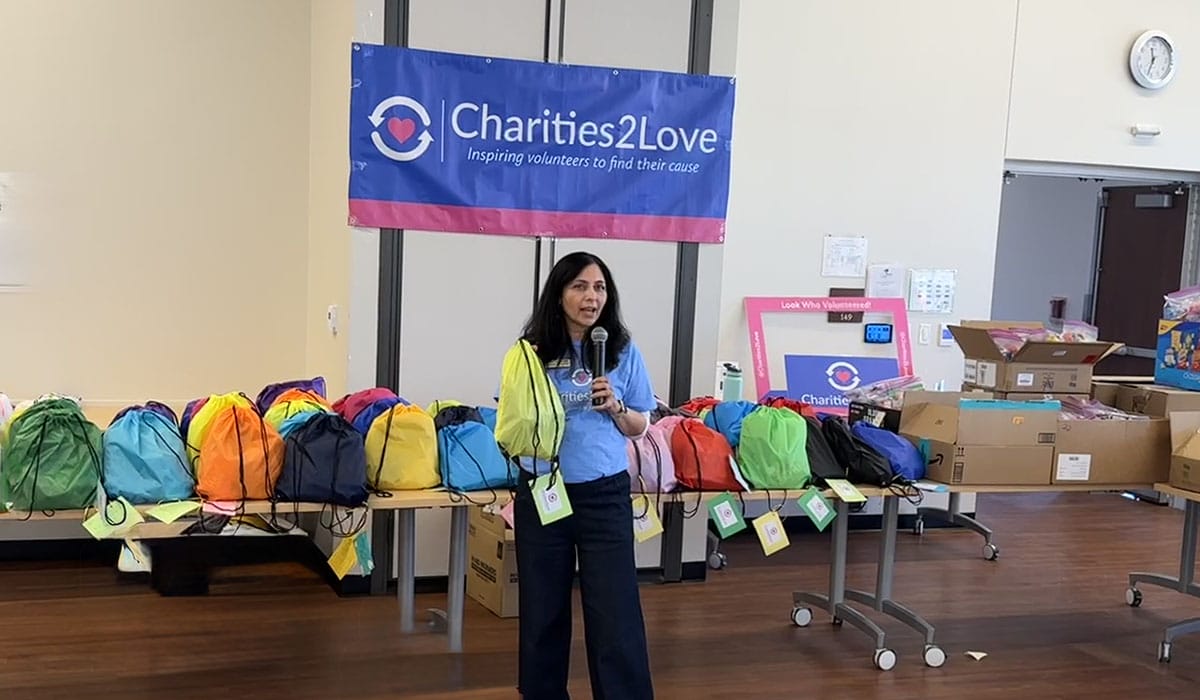
Maitry explains the impact the 100 bags volunteers assembled will have on those experiencing homelessness during a brutal winter at a Charities2Love event.
Tell us about future partnerships, programs or events that you are excited about.
We’re getting ready for our first collaboration for the environment, a park cleanup. This summer, we’ll be doing a backpack school supply drive that we’ve done in the past, though it feels new every year.
The other one I’m excited about supports women in shelters. October is Domestic Violence Awareness, and ahead of that, we’ll have a volunteer opportunity that is always impactful and eye-opening. It’s not a topic anybody likes to discuss, but it’s important to shed light on it.
Any advice for people who want to start volunteering?
Keep an open mind. I’ve had many people who are unsure if they’re able to volunteer at a certain place or if they can even make a difference. One person absolutely can make a difference. We’ve seen that over and over again. You can bring hope to another person and transform a life.
What do you want people to learn from your story?
I hope it inspires others to keep serving, to keep giving and to keep dreaming of what they can do. Don’t let your fear hold you back, because you can do it. From what I’ve seen, when you have a dream and give all of your effort with a pure heart, doors open and people show up. Keep pushing forward, and don’t give up.
TEEN VOLUNTEER SHOWS THE YOUTH’S WILL TO HELP OTHERS
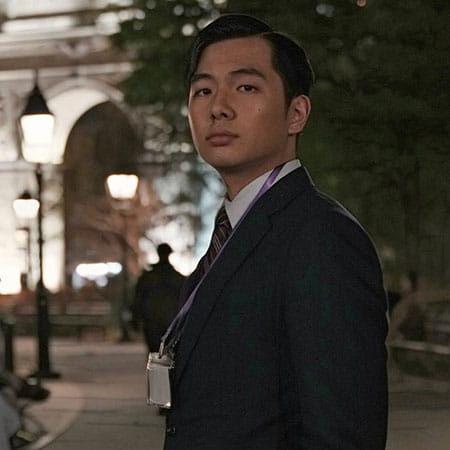
Meet Daily Point of Light Award honoree Jin Park. Read his story, and nominate an outstanding volunteer or family as a Daily Point of Light. Jin Park’s summer vacation turned into so much more.
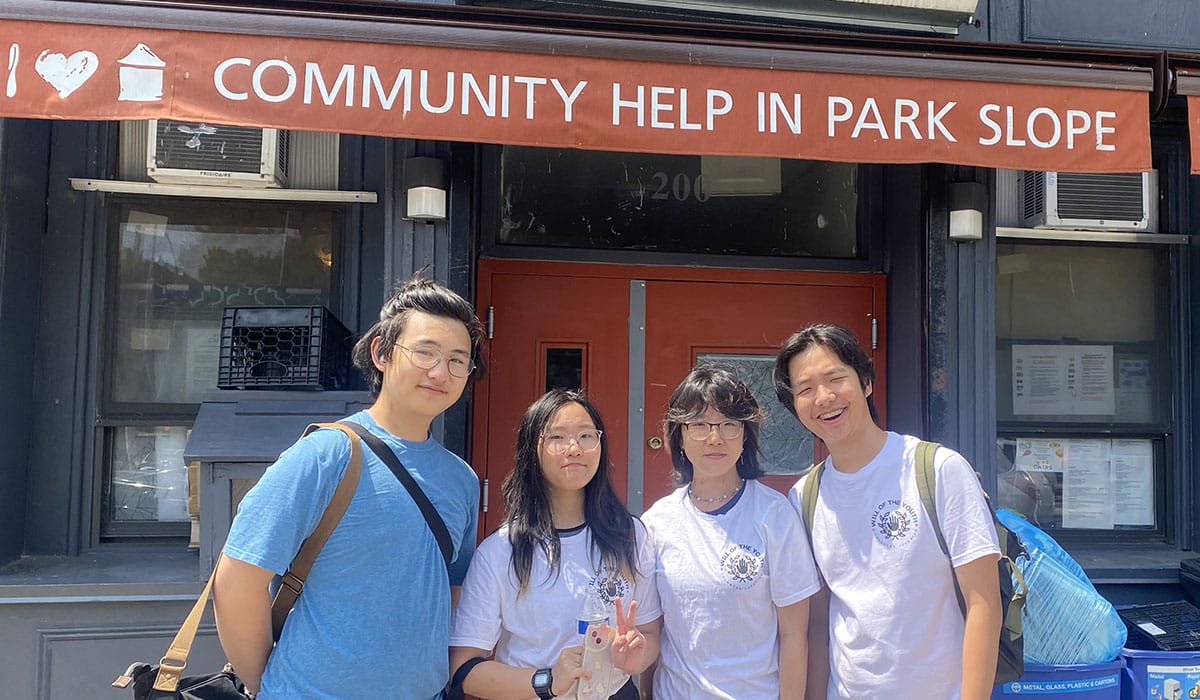
As a high school student, Jin was looking for opportunities to perform volunteer work during his summer break. Knowing that several of his friends were also looking for service opportunities, Jin wanted to take the obstacles out of finding volunteer work. In 2023, he formed Voluntas Juvenium, an organization that addresses critical needs in the community while helping young people grow into compassionate and engaged citizens. Functioning like a Craigslist platform for volunteering, Voluntas Juvenium, which means “will of the youth” in Latin, posts volunteer opportunities, which can then be picked up by interested volunteers. The organization became an official 501(c)(3) in 2024, and Jin hasn’t looked back.
The youth-led organization has spread like wildfire, becoming a network of 600 active volunteers across 17 countries on six continents. Last year, they had 700 volunteers who managed tasks like removing 10,000 pounds of waste, tutoring students for more than 2,500 hours and supporting 15 senior centers. In total, the Voluntas Juvenium network has contributed over 10,000 hours of volunteer work to worthy causes ranging from food banks and senior centers to cleanup campaigns and event organizations. Through every volunteer opportunity, the mission has been the same: to help the young people of the community address the needs of those around them.
Jin is a busy high school student navigating everything from pop quizzes to final exams. However, he still manages to get in volunteer hours every weekend, while simultaneously coordinating opportunities for other young people to take hold of their potential and serve others. A visionary for youth-led change, Jin believes that it’s the responsibility of young people like him who want to see a better future to start engaging with their community today. His work shows that through the power of volunteerism, the potential for a better future is possible.
JIN PARK IS THE FOUNDER AND CEO OF VOLUNTAS JUVENIUM, A GROUP THAT CONNECTS STUDENTS WITH LOCAL ORGANIZATIONS THAT NEED VOLUNTEERS TO FOSTER COMMUNITY ENGAGEMENT. /COURTESY JIN PARK
What inspired you to get started with this initiative?
I was planning to volunteer, and I realized that it’s hard for students to find a volunteer opportunity over the summer. I thought it would be helpful if we got rid of the boundaries by providing students with volunteer opportunities and organizations we have already partnered with. The thing that I realized was that it’s hard for the organizations to trust the volunteers that are coming in because they’re revealing their vulnerable parts. I thought that by going there together as a group, and saying that we’re all friends and we know each other, we can give a sense of comfortability and provide the students with access to volunteer opportunities.
Tell us about your volunteer role with Voluntas Juvenium.
In the beginning, this was a community of New York City-based high school students who felt very passionate about volunteering but couldn’t find opportunities. I would call around and ask if they wanted to volunteer over the weekend. Since it was during the summer, I would volunteer every day. Now that we have expanded the chapter into 17 different countries, my role is mostly to communicate with the local chapter leaders so that they can lead the volunteer events effectively. I also take care of training the new chapter leaders.
What’s been the most rewarding part of your work?
I think the most rewarding part is seeing the youth be happy after volunteering. Also, the sense of building a culture of service is a valuable and rewarding part. Our initiative has let the future generation be involved on a personal level. They aren’t just volunteers, but architects of a better future. Seeing that change happen to the volunteers is the most important part to me.
What have you learned through your experiences as a volunteer?
I think our impact on the community and the fact that the community requires our service and attention for it to be a positive and equitable society. We must engage with our community to be the changemakers of the future.
With a busy high school career, how do you balance running an organization?
I think that’s the toughest part. There are some days when I get a lot of homework. For the most part, I communicate with my teachers and see if any assignments are coming up. Based on that, I manage my shifts effectively. I think of it as having two-hour micro shifts every day while engaging with the community.
Why is it important for others to get involved with causes they care about?
At the end of the day, it’s the world that they live in. If they want to make a positive change in their community, they have to work on it. We believe that building a sense of community and having this impact on our community is the most crucial part of our organization, along with supporting youth voices.
VOLUNTAS JUVENIUM FOUNDER JIN PARK (FAR RIGHT) SMILES AT THE ORGANIZATION’S THIRD VOLUNTEER EVENT, A DAY AT THE CROWN HEIGHTS FOOD PANTRY. /COURTESY JIN PARK
Any advice for people who want to start volunteering?
I want them to truly care and enjoy what they’re doing, and be part of society and the community.
What do you want people to learn from your story?
I think adults often see us as future leaders, and our organization has proved that we are ready now. Our organization’s value doesn’t only lie in our volunteer work. We care about our society and community, and we continue to prove that the youth aren’t tomorrow’s promise, but a powerful force for today.
Championing Voices with a Global Impact on Speech & Debate Access
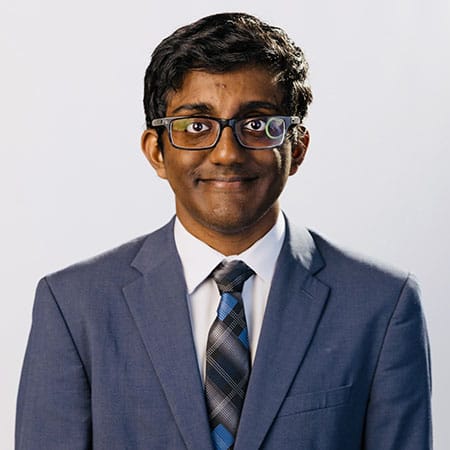
Meet Daily Point of Light Award honoree Kaushik Sathiyandrakumar. Read his story, and nominate an outstanding volunteer or family as a Daily Point of Light.
Kaushik Sathiyandrakumar has become a transformative force in the Speech & Debate community, driving and building important foundations: equity, education and opportunity. Initially joining the nonprofit Outreach Debate as Tennessee co-director, Kaushik led a grassroots fundraising campaign that raised over $500 and developed learning resources that reached more than 500 students. He also managed a social media network of over 5,000 users, amplifying the organization’s mission and connecting young debaters from all walks of life.
Recognizing his leadership, Kaushik was soon promoted to president of the International Cabinet. In this expanded role, he oversaw the creation and execution of five Speech & Debate camps designed to provide high-quality, accessible education to over 5,000 students in more than a dozen countries. From creating multilingual resources to curating mentorship opportunities, Kaushik worked to break down the barriers that often prevent students, especially those in underserved communities, from engaging in competitive speech activities.
Now, Kaushik is focused on expanding the Mockingbird Project in Alabama, a vital effort that is enabling hundreds of local students to participate in the National Speech & Debate Tournament. His work is opening doors not only to competition, but also to networking, confidence-building and lifelong skills in communication and critical thinking. Through every initiative, Kaushik brings a deep sense of purpose and inspiration, consistently encouraging others to rise with him.
With a time commitment of three hours per week year-round, Kaushik has juggled responsibilities that include organizing international tech platforms for 15,000 users, spearheading resource creation for 10,000+ students and raising over $10,000 in funding. His dedication, innovation and empathy exemplify what it means to lead with service, uplifting one student voice at a time.
Kaushik Sathiyandrakumar volunteers to break down barriers that prevent students from engaging in competitive speech activities./Courtesy Kaushik Sathiyandrakumar
Tell us about your volunteer role.
I served as the president of the International Cabinet for Outreach Debate, a nonprofit organization dedicated to promoting accessibility and connectivity within the Speech & Debate community. As part of this role, I facilitated three Speech & Debate camps and organized 150+ resources for over 5,000 international Speech & Debate students.
I also organized a fundraising effort that raised 5 figures for Speech & Debate accessibility initiatives to ensure that students would be able to enter and compete in tournaments with high entry fees. I am also spearheading an effort to publish a research paper to investigate political polarization among the youth and a media campaign that encompassed more than 20,000 followers. Additionally, I’ve facilitated an effort to be published in the Rostrum Magazine and the National Speech & Debate Association.
Why is this issue so important to you?
I understand the difference that it would make. Four years ago, I was a shy freshman who had been peer-pressured into joining Speech & Debate. A year later, I found Speech & Debate to be my passion, as it helped me find a voice in such a complex environment. When I began to compete more, I understood how hard it was to succeed at the activity. Fortunately, as I attended school in a high-income area, I was able to be mentored by qualified seniors, who allowed me to promote my trajectory in the activity. However, that’s not the case for many students. As I listened to hundreds of students learn the fundamentals for the first time, I realized that I wanted to make a difference and close this gap, which pushed me to join this initiative at the end of my sophomore year.
What are your long-term plans or goals for the organization?
To increase our name recognition to the extent that every student within the Speech & Debate community knows who we are as an organization and knows that we’re the place to look when they’re first entering Speech & Debate, and may need help making their mark at whatever competition they are attending.
With such a saturated community with nonprofits, it’s difficult to stand out as an organization. I want to ensure that we are able to stand out and make sure that we are helping each and every student with the resources that we have to make sure that they are able to reach their optimal trajectory.
What’s been the most rewarding part of your work?
The most rewarding part of my work is to see the gratification from students when they understand a specific concept or have a huge tournament performance. It warms my heart to see them improve and reach their goals as it justifies that our mission is worthwhile and us dedicating our efforts to the cause is not something that is wasted, and that it has a real impact as a whole.
Why is it important for others to get involved with causes they care about?
It’s what can help you find your passion and voice. For me, I was a student who was afraid to raise his voice and express his opinion. Speech & Debate taught me that every single word that was said has some sort of impact. It helped me make sure that I was able to grow and develop and get to the point where I am today. Every person has their own passion that’s undiscovered and needs to be found out. Being afraid of voicing your concern is going to hold you back from becoming the person that you’ll become.
Any advice for people who want to start volunteering?
Don’t hesitate. The decision will bring you joy, as well as connections to be able to help you reach whatever goal you’re trying to.
SHE’S HEALING HER PAST BY BUILDING A BETTER FUTURE
Meet Daily Point of Light Award honoree Maira Carrier. Read her story, and nominate an outstanding volunteer or family as a Daily Point of Light.
While Maira Carrier’s childhood wasn’t ideal, the people who helped her get through that challenging period serve as the inspiration for her work today.
“It was a tough childhood. It wasn’t a normal childhood where you played and thrived. It was more of a survival,” says Maira, recalling her childhood in Los Fresnos, Texas, just five minutes from the Mexican border. “School was my safe space.”
Amid her struggles, it was the teachers, community members and nonprofit leaders who took an interest in Maira that saved her from a potential downfall. Even as a child, Maira swore that she would grow up and do something to create a safe space for children to feel cared for during their tough times.
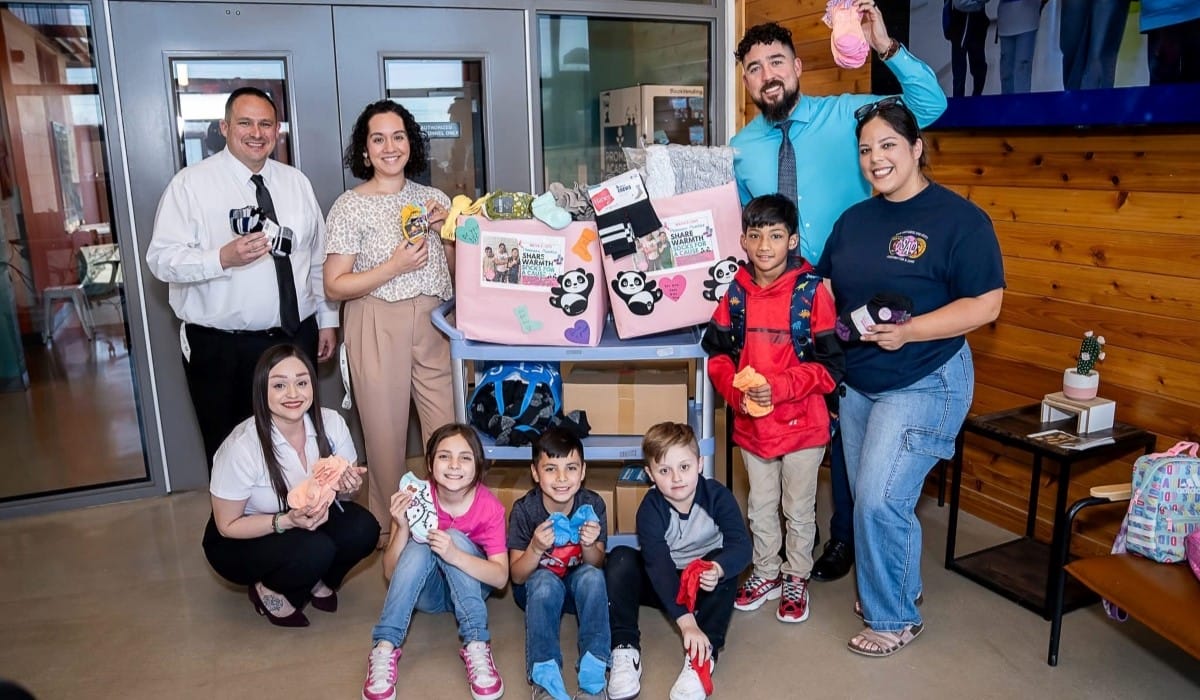
MAIRA CARRIER (CENTER) SMILES DURING THE 4TH ANNUAL HOLIDAY CAR PARADE IN LOS FRESNOS. THE MAYA’S LOVE TEAM DISTRIBUTES GIFTS AND MENTAL HEALTH RESOURCES TO THE LAS PALMAS HOUSING COMMUNITY DURING THE EVENT. /COURTESY MAIRA CARRIER
After leaving the military in 2019, Maira worked to expand her education, earning her college degree. Seeking to do more in her community, she established Maya’s Love, an organization that works to empower communities by bridging gaps with meaningful support and advocacy through targeted programs. While the organization was originally established to support children who had been through emotional trauma, Maira is looking to expand their reach in the long term. She’s hoping to help additional communities, so more children and their family members can access the assistance they need.
Currently, they’re creating more programs based on mental health and community service. They just expanded Roots to Resilience, a 17-week online program designed to inspire and equip middle and high school students with the skills they need to thrive by providing mindfulness training, self-care practices and volunteer practices. Each student creates a personalized community service project that resonates with their life experience and is then connected with a community leader who can help them put it into action. Another important program kicks off in the San Antonio region in June for middle school students who are dealing with the onslaught of gun violence and its effects on the community.
“In everything she does, she sprinkles a little bit of what helped her when she was younger,” says Noemi Bautista, a childhood friend of Maira’s who now serves as the president of Maya’s Love. “Everything she does has a purpose behind it. She’s an amazing human being.”
MAIRA CARRIER (LOWER LEFT) SMILES DURING A STUDENT-LED SOCK DRIVE TO BENEFIT HAVEN FOR HOPE, A LOCAL ORGANIZATION THAT ASSISTS THE UNHOUSED COMMUNITY. /COURTESY MAIRA CARRIER
Maira’s journey has been one of immense growth. From serving as her mother’s translator as a child to exploring the idea of getting her doctorate in political science in the present day, Maira’s story is one of reaching new heights that once seemed impossible to grasp. Above all, she wants people to know that they can make a difference in their community at any age. Maya’s Love volunteers range in age from small children to seniors, including a dedicated 99-year-old volunteer.
“I always tell our students, if you’ve ever felt that desperation of not knowing where your meals are coming from, there’s no one better to be an advocate for those people who are experiencing that right now,” Maira notes.
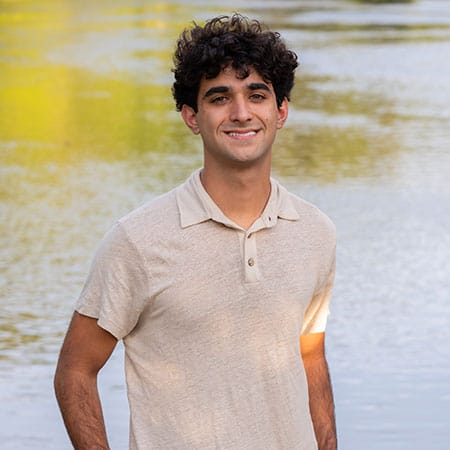
Meet Daily Point of Light Award honoree Sam Vahhaji. Read his story, and nominate an outstanding volunteer or family as a Daily Point of Light.
From slime to slippers, Sam Vahhaji has been running businesses since he was 6 years old. When he was older, friends and colleagues alike sought his hard-earned expertise, eventually leading him to create an organization to share his knowledge in April 2023, his sophomore year of high school. Through Business for the Youth (BFTY), Sam teaches his peers the skills to run a business before engaging them in real-life practices to solidify their understanding. The resulting profits are then used to help underserved populations in the community.
He now supports approximately 85 chapters in 18 US states and 15 countries. Some members are eyeing a career in business. Others join just for fun. Everyone learns entrepreneurship skills they can take with them in whatever direction they proceed.
Sam spends around 48 hours a month on Business for the Youth on top of serving as the president of Student Council and racing on his school’s ski team. He plans to study business, finance or economics in college and, though he’ll be away from his chapter, he has no plans to step away from BFTY any time soon.
Sam Vahhaji, long-time entrepreneur and founder of Business for the Youth, combines business lessons and real-life practices with supporting underserved communities.
What inspired you to get started with this initiative?
My mom is an entrepreneur. She came from Iran to the U.S. with limited English, so it was hard for her to get a job. Her solution was to build her own online consignment store, and I watched her run it as I grew up. It inspired me.
I had a snow cone business when I was 6 years old and hired friends to help me sell at our local park. In middle school, it was a candy business, which eventually led to selling slime. That was the first time I advertised on Instagram and sold on Etsy. Then, I started a clothing brand, Juicy Threads, during the COVID lockdown and made videos on TikTok to advertise. I’d learned how to utilize social media through a personal account that grew to 150,000 followers and applied those skills to my Juicy Threads account. My first video got about 100,000 likes overnight. In two weeks, I had my launch, and we sold out within 20 minutes. Ultimately, it was taking over my life, so I put it on pause.
A few months later, I started a drop shipping store called Cozy Step. When that started gaining traction, my friends started asking me to help them run a business. That’s what led to BFTY. I also wanted students to know there’s another path if they feel like college isn’t their next step.
Tell us about your volunteer role with Business for the Youth.
I host bi-weekly meetings with my chapter for business workshops, like how to find a winning product to sell. I invite guest speakers—mainly student entrepreneurs—to talk about their journey. One student with own landscaping business did a slideshow on how he started it, what he learned along the way and what he would do differently.
My chapter has a leadership team of 11 that I manage. And I market the nonprofit as a whole. I communicate daily with chapter presidents and design curriculum for any who need help. I’m there for support. We have an overarching executive team and chapter and volunteer coordinators whom I mentor as well. I also organize service projects and manage our website.
What kinds of things do you teach, and how do you engage students in real-life practices?
After her online consignment shop, my mom started a piroshki business. I learned from her, so together, we taught people how to run a small food business. Then, members sold Raising Canes at lunch as a simulation. Another time, we covered how to utilize social media for business, and members made mock accounts to reinforce the lesson.
Tell us about a couple of your favorite community service initiatives.
Last year, my chapter focused on helping Afghan refugees. In 2021 about 1,300 of them came here to escape the war in Afghanistan. I’m Persian, and a lot of them speak Persian or Farsi. My mom wanted to help, so she started interpreting for them. I met with one of the families she was working with. I learned about their experience adapting to America and shared my own story of navigating kindergarten with limited English skills.
Refugees don’t have much, so we collected around 100 toys around the holidays through a donation drive for the kids. We also bought some with our funds. Collaborating with a global nonprofit called Alight, we distributed them to 35 families. We also raised about $2,000 in business practices–$1,000 after costs–that we donated to Alight, specifically for Afghan refugees within the Twin Cities area.
This year, we made sandwiches and distributed them to the unhoused with our profits. We also raised about $1,000 for an entrepreneur whose home-based pastry business had to be put on hold due to the Eaton fire in southern California.
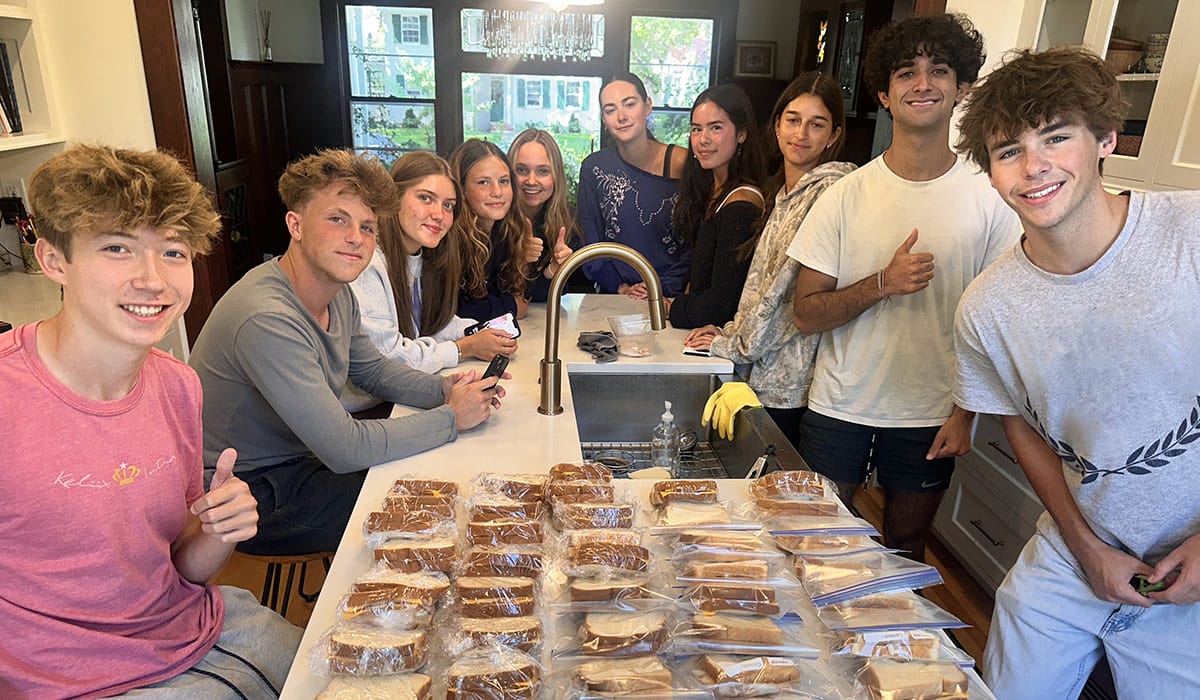
Business for the Youth volunteers help Sam (second from right) make sandwiches for those facing food insecurity, funded by business practices that reinforce lessons.
Tell us about future partnerships, programs or events that you are excited about.
My chapter will host a Shark Tank where students present business ideas, and board members will be the sharks. Whoever wins will get money to donate to an organization they resonate with. We’re considering a social session with the Afghan refugee kids and students at my high school as well.
The school year is ending, but we’re planning our second thrift convention where students can earn money by selling clothes and other items they no longer need. There will be a $5 entry fee that will go towards a big end-of-year service project.
What do you want people to learn from your story?
With business or volunteering, if you have an idea and the desire to do something, you just have to do it. See what happens. When I started Business for the Youth, it was to help my friends. I never would have thought it would get to where it is now. You’re capable of doing a lot more than you might think.
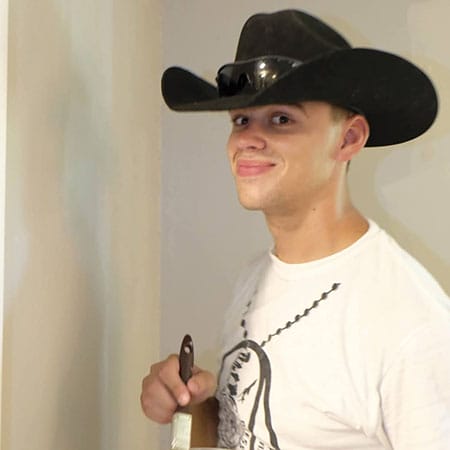
Meet Daily Point of Light Award honoree Nico Hucal. Read his story, and nominate an outstanding volunteer or family as a Daily Point of Light.
Whether he’s in Kosovo or deep in the heart of Texas, Nico Hucal is dedicated to helping others. Nico is a volunteer with the Dyess We Care Team, an organization made up of active duty Air Force, civilians, retired military members and their families who help Abilene residents in need of minor home repairs. From painting houses to building wheelchair ramps, the Dyess We Care Team is there when the community is in need, and Nico is an essential component of the group. The organization also works with other agencies within the area, creating a patchwork of assistance that demonstrates how working together to help others fosters a healthy and happy community.
As a committee member of the DWCT, Nico focuses primarily on project planning and execution to ensure the group’s volunteer efforts directly benefit underserved members of the Abilene community, especially veterans, seniors and individuals with disabilities. He also looks forward to their unique annual events, like “Project Grad,” an all-night lock-in for Abilene’s high schoolers to have a drug- and alcohol-free space to celebrate their graduation. Currently deployed to Kosovo but living in Germany, his military career keeps him moving around the globe, which means maintaining a consistent, hands-on presence within the organization can be difficult. However, Nico manages to support the DWCT no matter his location by managing tasks like recognition and writing, and encouraging new volunteers to get involved. In the long run, his goal is to ensure that the organization remains strong and continues to grow – even if he can’t be there in person.
In the last seven years, Nico has dedicated over 530 hours to 68 projects with the DWCT. He’s led eight of these projects, with a service impact valued at $2,236,000. His time with the organization has been so successful that he’s now a member of the DWCT Board of Directors, where he has overseen nearly 5,000 volunteers. With the swing of a hammer or the stroke of a paintbrush, Nico is fostering community. His mission shows not only how valuable a service volunteering provides for the Abilene community that needs the assistance, but also for the service members and their families who deserve a thriving community of their own, no matter where they live.
Nico Hurcal helps ensure the Dyess We Care Team’s efforts directly benefit underserved members of the Abilene community.
What inspires you to volunteer?
I’ve always believed that a rising tide lifts all boats – and that the most honorable use of our talents is to help those in need. I take pride in the work I’ve done and the people I’ve been able to support. There’s no feeling more rewarding than knowing that no matter what happens in my own life, I’ve left the world better than I found it.
Tell us about your volunteer role with the Dyess We Care Team.
As a longtime member and volunteer with the Dyess We Care Team (DWCT), my role has evolved significantly over the years. I started out swinging hammers and painting fences on weekends, and eventually moved into project leadership, mentoring new volunteers and handling communications and award writing. Even now, while living overseas, I remain involved remotely by helping draft recognition packages and promoting the organization’s mission. I like to think of myself as one of the team’s biggest cheerleaders, whether I’m onsite or supporting from afar.
What inspired you to get started with this initiative?
Growing up, my parents instilled strong values in me and encouraged my involvement in the Boy Scouts and the Order of the Arrow – both of which emphasized service and leadership. After joining the military at 18, I found myself searching for a new way to get involved. I was fortunate to be stationed at Dyess AFB in Abilene, Texas, where I discovered the DWCT. What began as a way to fill my weekends soon became something far more meaningful. The DWCT became a second family, and volunteering became a way to connect with others and contribute to something greater. I was also impressed by the organization’s transparency – every dollar and every bit of effort truly goes toward helping those in need, and no money whatsoever goes into the pocket of anyone in the organization.
What’s been the most rewarding part of your work?
The most rewarding part has been watching fellow volunteers grow into leaders. Many join as young service members with little experience outside their training. Through the DWCT, they gain real-world leadership experience – organizing teams, managing logistics and seeing their efforts make a visible difference. Watching someone evolve from an unsure beginner to a confident leader is truly incredible.
What have you learned through your experiences as a volunteer?
Volunteering has been one of the most educational experiences of my life. I’ve picked up skills I never expected – from carpentry and painting to fundraising and leadership. But more than that, I’ve learned how generous and patient people can be when asked to share their time or teach a skill. It’s a reminder that most people want to help – you just have to give them the opportunity.
In the last seven years, Nico (right) has dedicated over 530 hours to 68 projects with the DWCT
Why is it important for others to get involved with causes they care about?
Volunteering connects you to your community and helps you grow as a person. In a fast-paced, digital world, it’s easy to overlook others’ struggles. Helping someone else often helps you, too – it brings purpose, perspective and connection. At the end of the day, there’s no greater cause than making life better for those around you.
Any advice for people who want to start volunteering?
Start small. Don’t worry about changing the world overnight – if you can make one person’s life better, you’ve made a difference, and you should be proud of that. You don’t need a perfect plan or a huge impact. Just show up, lend a hand and do what you can. Enough small actions, done consistently, create real change.
What do you want people to learn from your story?
If there’s one message I want to share, it’s this: your neighbor matters. Extend your hand in fellowship. Make a small difference today – whether that’s picking up litter, returning a stray shopping cart or helping someone who can’t quite reach a lightbulb. These small acts of kindness add up. Together, they build stronger communities and a better world.