New York Teen Connects Peers with Meaningful Community Service Initiatives
Meet Daily Point of Light Award honoree Erin Ryou. Read her story, and nominate an outstanding volunteer or family as a Daily Point of Light.
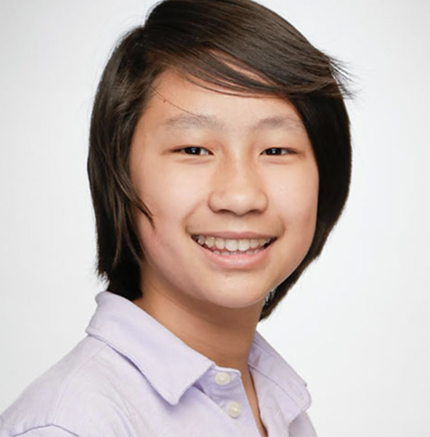
Enjoying a lifelong interest in singing, Erin Ryou started getting involved in her community through a nonprofit choir that performs for local organizations and events. Passion for the arts has led her to join a dance team and even volunteer to help with classes at an art center for neurodiverse children. But it wasn’t always easy to find opportunities to make an impact that aligned with both her interests and her availability.
Two years ago, after coming up against age-related barriers in her search for volunteer initiatives in New York City, Erin Ryou decided to make things easier for herself and her peers. Her organization, NYCvolunteer, filters opportunities for things like age requirements and scheduling flexibility—high schoolers tend to be most available on weekends and school breaks—with a wide variety of missions to present to young volunteers. Her goal is to make getting involved easy, fun and rewarding. Judging by the numbers, she’s succeeding. The team she has built encompasses 155 volunteers from 89 different schools, and has donated more than 500 hours of their time.
What inspired you to get started with this initiative?
A lot of the volunteer organizations that I was interested in had an 18+ age requirement, which was very limiting and discouraged me from getting involved. After talking to my friends, I realized that I wasn’t the only one with this issue, so I created a platform to make it easier for teenagers to find opportunities related to their passions.
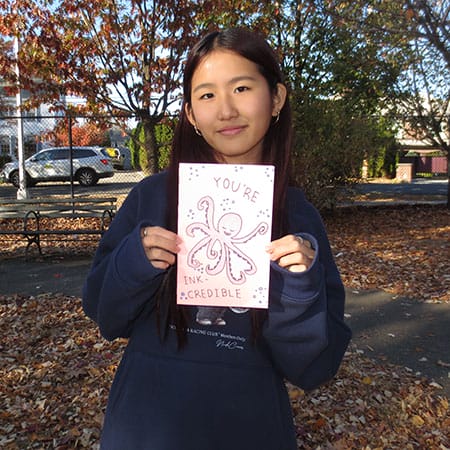
Erin Ryou, founder and president of NYCvolunteer, shows off a card she designed at her organization’s card making event.
Tell us about your volunteer role with NYCvolunteer.
I’m the founder and president, and I essentially oversee all the tasks of the organization–managing teams, tracking volunteer hours and organizing and planning service events. I manage our social media and coordinate with other organizations for collaborations. I also plan and attend all of our events, usually on Sundays or school breaks.
We share different volunteer opportunities, but we also hold our own. We’ve had two cardmaking events, one for a nonprofit called City Meals on Wheels. The other included a nursing home visit where we gave cards to residents. We’ve also had bake sales.
Our design coordinators mainly research and make posts for volunteer events. And our outreach coordinators work on reels and videos to expand our presence on social media.
NYCvolunteer was accepted into the Youth Leadership Council (YLC). What is that?
We applied for the YLC because we wanted to expand our organization and allow people who were familiar with the YLC to be able to be a volunteer for our organization under their banner. And also, for recognition, because the mayor is able to recognize our volunteers for their volunteer hours. It’s good motivation for people who start volunteering. There’s going to be a networking summit for YLC in June, and our members who have volunteered over 50 hours with the organization are going to be receiving certificates.
What are your long-term plans or goals for the organization?
Something that we want to do in the future is expand to different states. Right now, we’re focusing on New York. We want to influence people in different states and foster volunteers, possibly, all over the world, to create a ripple effect.
What’s been the most rewarding part of your work?
The most rewarding part of volunteering is seeing the tangible impact that our organization makes on our volunteers and the community. Whether it’s connecting someone to a volunteer opportunity that changes their perspective or knowing that we organized an event that brought people together under a common cause they’re passionate about, it’s incredibly fulfilling to know our organization is inspiring students to make investments in their communities.
What have you learned through your experiences as a volunteer?
Volunteering has taught me the value of empathy, patience and adaptability, especially when we’re able to work with such a diverse group of people. It also changed my perspective on what volunteering is. Initially, I thought volunteering was just devoting your time and energy to a cause, but I realized that it can benefit you, too. It’s mutual exchange during which you learn valuable life skills and build friendships.
Tell us about future partnerships, programs or events that you are excited about.
We’re currently trying to partner with the Queens Public Library to have a cardmaking program where volunteers can make cards on their own time and drop them off at their local library. Our volunteers would pick them up, and we would all ship them out to a local nursing home.
NYCvolunteer member creations are gathered before being sent to the nonprofit City Meals on Wheels to be distributed to homebound seniors.
Why is it important for others to get involved with causes they care about?
It allows you to address your issues in a hands-on way. By engaging with causes, you can contribute to solutions and make a tangible difference rather than just telling people that it matters to you. Volunteering allows people to get involved and support the community. I grew up with siblings who have disabilities, and being able to witness how support and inclusion can make a difference in their lives showed me how volunteering can build a more compassionate world.
Any advice for people who want to start volunteering?
The main thing is to research. Dedicate a day to doing a lot of research on things that you care about and volunteer opportunities that you could participate in.
What do you want people to learn from your story?
I want people to learn the importance of intention in everything they do. Of course, volunteering is a very good thing, but it should be driven by a genuine desire to make a difference in whatever you’re involved in, not just the need to put it on your resume or fulfill volunteer hour requirements for school. When we volunteer with intention, the experience is a lot more rewarding for you and the people you’re supporting, because it’s something that you actually care about.
Meet Daily Point of Light Award honoree Danny Jang. Read his story, and nominate an outstanding volunteer or family as a Daily Point of Light.
Danny Jang wasn’t always great with money. But unlike some, he wanted to do something about that. Quick to spend his allowance on food while hanging out with his friends, Danny realized that he needed a little bit of guidance when it came to financial literacy. When he recognized that it was likely that other young people were dealing with the same issues as him, Danny decided that working together to educate themselves would be the best way to resolve the situation.
What started as a small student-run club has blossomed into Futures Financials, a nonprofit organization committed to empowering individuals of all ages with essential financial literacy skills to foster lifelong financial confidence and independence. The team at FF helps young people learn about budgeting through student-led workshops, school partnerships and community partnerships. While financial education is the basis of FF, it’s also a pathway to guide young people toward a life of confidence and freedom.
Growth is one of Danny’s biggest goals for the organization, but advocating for improving financial literacy on a greater scale is also a key foundation of his mission. FF hopes to encourage public policy that mandates financial education in schools, which is currently not required in all states. By making this a subject in more schools, Danny hopes young people will get the opportunity to find peace in their lives through financial stability.
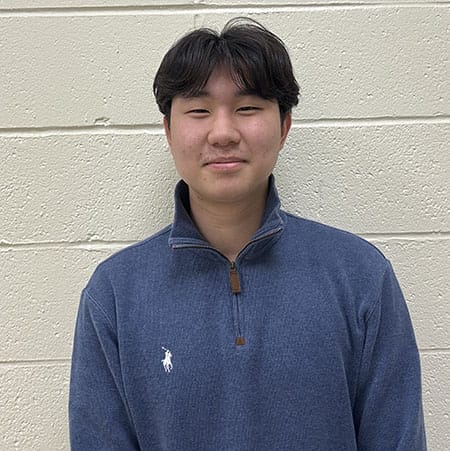
DANNY JANG IS THE FOUNDER AND CEO OF FUTURES FINANCIALS, AN ORGANIZATION COMMITTED TO EMPOWERING INDIVIDUALS WITH ESSENTIAL FINANCIAL LITERACY SKILLS. /COURTESY DANNY JANG
On top of a rigorous high school career, Danny devotes over 12 hours per week to volunteering with FF. He cites one of his favorite aspects of volunteering as realizing that he can positively affect the lives of someone in just one hour of financial education. When the students leave the classroom, those small moments of connection lead to great rewards. And those rewards have been plentiful: Over 2,000 students across more than 30 schools and 25 libraries have participated in the FF program. Danny’s mission to help others through financial education may have started as a personal problem, but it blossomed into a national movement.
Tell us about your volunteer role with Futures Financials.
When the organization was smaller, I used to do all the teaching. I went to the schools with a group of friends or members of my organization. Now the organization has gotten a lot bigger, so my responsibilities have shifted a lot. I do a lot of coordination of the events. Whenever schools email me and say they want me to come teach, I set everything up. I set up the transportation, the members, all the processes that lead to us getting to a certain location, and provide the workshops or the financial literacy workshops for the day. Another big thing I do is teach the new members in my organization. It’s like passing the torch forward so they can go and teach children.
What inspired you to get started with this initiative?
I had a lot of personal experience that led me to make this organization. I wasn’t financially literate myself. I would spend a lot of money every time I got an allowance. Everything would go into food, clothes and shoes. When I wanted to buy something or go out with friends or people I love the most, I really couldn’t. I felt like it was my fault for not being able to do those things with my friends or family because I spent so much money on irrelevant or useless items. That made me realize other people might be experiencing the same thing as me. I’m trying to fix the problems that other people might have. It was kind of a personal experience, but also a way to help people at the same time.
What are your long-term plans or goals for the organization?
Our long-term goal is to expand outside of the statewide level. In the past week, we expanded to the tri-state area. We’ve taught in New York City, Connecticut and Pennsylvania, and we’re accumulating more members over time based on this financial literacy movement. My goal is to ultimately expand nationwide, where kids, regardless of socioeconomic status, can have access to our workshops that help them be confident about financial literacy in the future. Another goal is advocacy. Many states lack laws that specifically state that students must take financial literacy in school. We say that we are the reason why financial literacy should be mandated in schools. Our goal is to advocate for a greater push in the education system for financial literacy.
What’s been the most rewarding part of your work?
When I see students, or when I see my members teach financial literacy, and they come up to me, or the younger kids go up to their parents, it’s rewarding. They always talk about what they learned throughout the day, and what made it fun to learn about financial literacy. Financial literacy is very academic, lecture-based teaching. But the way we teach it is on a peer-to-peer basis. We act like older brothers and sisters. The fact that they can go back to their parents or guardians and tell them about how enjoyable learning was is probably the biggest reward I experience.
What have you learned through your experiences as a volunteer?
I’ve learned two different things. The first one is a very personal experience. I’ve learned to become more financially literate. Like I said, I wasn’t financially literate before, but as I began to do more research about how to become more financially literate and how to teach students, I became better at being smarter with my money. The second thing I learned is the idea of leadership. Regardless of who you are, everyone is a leader in their own way. Through my organization, I felt like a leader. I’ve compelled other students to be more confident not only in their financial literacy, but also in other areas. A lot of people in my organization learned how to be leaders who can ultimately impact others in their own lives in a beneficial way, and not just regarding financial literacy.
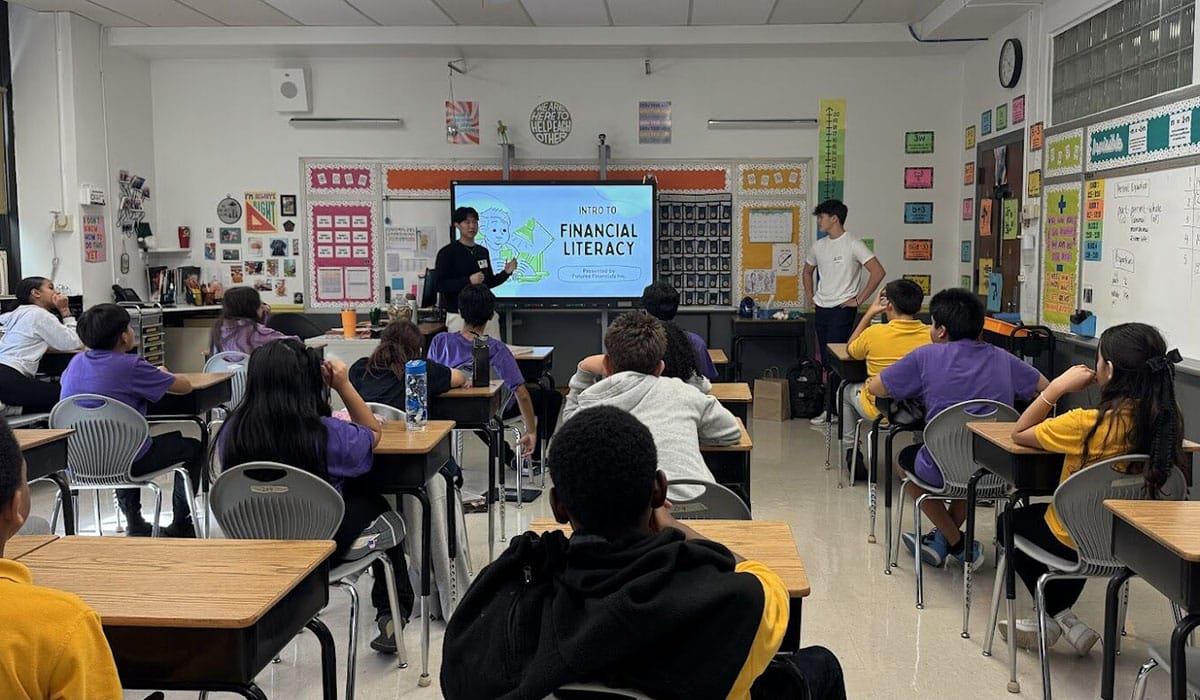
FUTURES FINANCIALS FOUNDER AND CEO DANNY JANG (CENTER) TEACHES CORE FINANCIAL CONCEPTS TO MIDDLE SCHOOL STUDENTS. /COURTESY DANNY JANG
Why is it important for others to get involved with causes they care about?
Ultimately, it ties you to the values you hold. The values I hold are family, friends, my loved ones and my freedom. And my form of freedom is being financially free. A lot of people in our society aren’t free in terms of finances. So, as a goal, my goal is to become financially free by learning financial literacy. And I think this applies to all people, regardless of what they do. If your values connect with what you truly love, or what your heart is connected to, that ultimately makes you more passionate about seeing changes within your society.
Any advice for people who want to start volunteering?
I think the biggest thing is to just ask. That may sound very cliche, but asking goes a very long way. Even reaching out to someone and asking about volunteer opportunities is probably the biggest thing. The one thing I’ve learned about that is that if you ask someone, they don’t view it as someone being annoying. The biggest thing I always say, in terms of volunteers, is to ask questions. That puts you out there, and that ultimately helps you help other people know more about you. That’s how you get more involved in volunteer opportunities.
What do you want people to learn from your story?
I want people to learn that, regardless of whatever job you pursue, helping others will help you even more. For me, I’ve always believed that my calling in life was to teach others, through education or as a leader, as a friend, as a brother or even just as a peer. When I teach people, I believe I become a better person. I think to become a true leader or a person with a genuine character, you have to learn how to lead others. It’s okay to make mistakes as a leader. The best thing is to learn from those experiences.
Big Buddy Volunteer Provides Kids with Positive Role Models
Meet Daily Point of Light Award honoree Chris Lancaster. Read her story, and nominate an outstanding volunteer or family as a Daily Point of Light.
Chris Lancaster is a mom. She has three kids of her own, all grown, and one with special needs whom she originally fostered then subsequently adopted. At times, she has had custody of her four grandnieces. Like most single moms, she manages to create extra hours in a day and has mastered multitasking and schedule coordination. After all, there aren’t many people who could parent eight kids while holding down a full-time job. And driving Uber to make ends meet. And singing with a rock band. Chris does all of that on top of volunteering as the lead case manager at Cape Fear Volunteer Center’s Big Buddy program.
Initially, Chris connected with Big Buddy in 2014 after struggling to find work. Vocational rehabilitation, a federal program designed to help adults who have hit a rough patch—like illness or a life situation—and barriers to employment, connected her with Cape Fear’s founder and CEO, Annie Anthony, via an “internship”.
Within six months of helping with Big Buddy, a one-to-one mentoring program for at-risk youth, she was hired to run it full time. A year later, she got a job as a senior membership director at Girl Scouts when the organization could no longer afford to operate and employ her. She continues to volunteer.
“I hope everybody has a Chris in their life,” Annie says. “She is worth her weight in gold.”
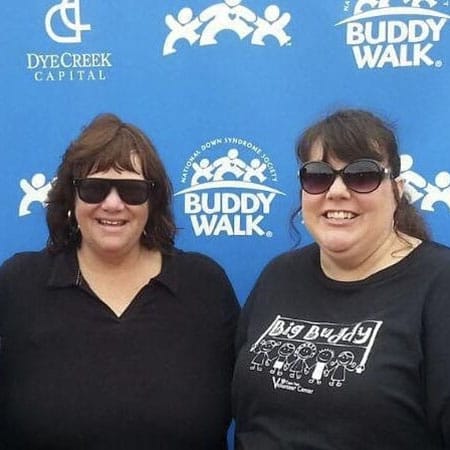
Annie, founder and CEO of the Cape Fear Volunteer Center, and Chris volunteer at the Buddy Walk for Downs Syndrome.
Annie likens her to Mary Poppins, citing her ability to somehow always be able to pull exactly what is needed from her bag or car. Chris’ compassion and dedication to listening makes her an asset.
Largely, her role is general support for those training big buddies and pairing them kids. Around 350 “little buddies” are in the program at any given time with 250 of them waiting for a mentor.
“We don’t match them up based on time of waiting. It’s based on who’s going to make the best match,” Annie explains.
Good volunteers come with all different backgrounds and experiences.
“Some of my best big buddies struggled when they were young, so they know that struggle, and they know how to relate to a kid that’s struggling,” she expounds.
Every kid needs something different, and Chris spends one-on-one time with those more difficult to place in order to assess that. But every day is different.
“I run events for the kids. I make sure that we’re connected in the community. I get local businesses and agencies to donate tickets to the museum or Battle House passes for kids to go play laser tag, things that give the big buddies and little buddies opportunities to bond,” she says.
One beloved event Chris created is a group party for the kids who have birthdays each month, complete with cupcakes. It’s something little buddies might not experience otherwise.
“Our town is wonderful if you’re a grown up and you have money or if you come here for vacation,” Annie explains. “But if you’re a little kid who is not a have, if you’re a have not, it’s a tough place.
Raised in a family that struggled financially, Chris often shares her story of overcoming associated challenges. It wasn’t until she was an employed adult that she went back to college, when she could pay for it herself.
At Christmas, she collects donations and runs an angel tree for 200 to 250 kids. And she assists with fundraising efforts. Annie describes Chris’ memory for details as unparalleled. She’ll bring umbrellas to events that rained the previous year or an extra table where people went without.
Chris also follows up on any issues. If a little buddy’s family is being evicted and needs resources or if they’re heading to truancy court because their kids are missing school, Chris shows up. In the case of the latter, she’ll take time off work to go to court and advocate on the kids’ behalf and emotionally support their mom. Recently, Chris even took on a temporary big buddy role to a 10-year-old girl.
“There have been times as a single parent where I’ve struggled financially, emotionally and mentally, where I just needed a little bit of help or some encouraging words,” she recalls.
When kids miss the bus, and their parents can’t drive them to school, Chris will. Sometimes, they just need a hug. She offers no judgement and only asks what they need to succeed.
“She wants to give them all that she has and more,” Annie says proudly.
Helping others has always been a regular practice for Chris. She became a Girl Scout at age seven and her mom, the troop leader, often led volunteer initiatives.
“My mom worked in a nursing home and was always taking us to visit, sing or sit and play games with residents while waiting for her to get off work. We were always around people that needed help,” she reminisces.
Passing down the tradition, Chris has always taken her kids volunteering. Even now, each Christmas Eve, they help run a meal delivery and then drive holiday meals to those in need.
“It doesn’t take time away from my kids to give to others,” she insists. “We do it as a family.”
Chris hopes community service remains a part of their lives. Judging by their chosen careers, she hardly needs to hope. Her son is a firefighter. One daughter is a special education teacher and the other, a social worker.
“It’s been ingrained in them the same way it was ingrained in me growing up. This is what I’m leaving to my children,” she muses.
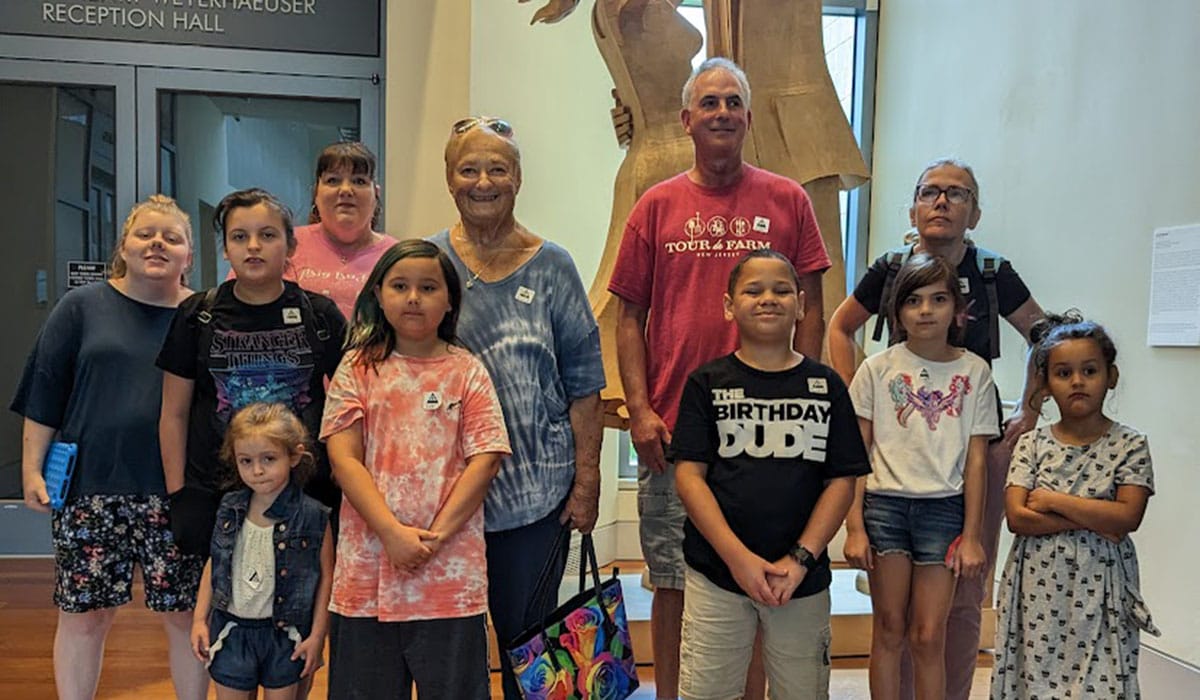
Chris (back row, second from left) takes a group of kids to explore an art museum.
Chris is often surprised when people say they’re too busy to volunteer, because she finds great satisfaction and motivation in getting involved. Simply put, it makes her happy.
“You find time for the things you want to do and the things that are important to you. These kids are important to me,” she emphasizes.
Her work is changing lives and building community. It’s giving overwhelmed parents a lifeline. It’s giving kids small joys while preparing them for the future. And it’s giving other volunteers a chance to be needed. She’s making life easier. After all, she is a mom.
Meet Daily Point of Light Award honoree Sophia Zheng. Read her story, and nominate an outstanding volunteer or family as a Daily Point of Light.
Sophia Zheng understands just how powerful an effect music has on the brain. A viola player since the age of five, Sophia is well aware of how music can boost moods and improve cognitive function. So when she saw an issue that needed to be addressed, she pulled directly from her musical background to make a difference.
When Sophia’s grandparents moved into a home for seniors, she recognized that loneliness is an issue that many residents were facing. Determined to better their experience, Sophia decided to use her talents as a young musician to hold a concert for the residents. The initial concert was such a hit that Sophia decided to take her passion even further. Now 16 years old, Sophia is the founder and president of Harmony for Hearts, a student-led organization dedicated to organizing concerts at hospitals, nursing homes and homes for individuals with disabilities.
Over 3,000 seniors, individuals with disabilities and patients in hospitals have had the opportunity to attend over 50 concerts hosted by Sophia and her fellow Harmony for Hearts volunteers, which now include over 80 other young musicians across six chapters. In addition to performing music, the Harmony for Hearts team has raised the funds to donate more than 350 pairs of earbuds to facilities, allowing residents the opportunity to enjoy the power of music when the Harmony for Hearts team isn’t there.
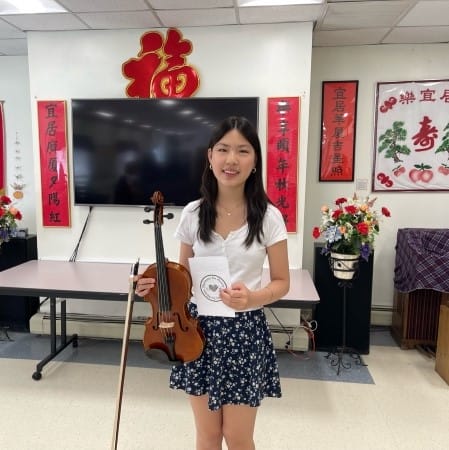
HARMONY FOR HEARTS FOUNDER SOPHIA ZHENG SMILES WITH HER VIOLA AFTER THE ORGANIZATION’S FIRST CONCERT AT A SENIOR CENTER. /COURTESY SOPHIA ZHENG
Sophia diligently spends nearly 25 hours per month making sure that Harmony for Hearts stays in operation, managing tasks that range from reaching out to centers and scheduling concerts to managing the organization’s social media presence. While Harmony for Hearts began as a single concert at Sophia’s grandparents’ senior center, it has blossomed into a tremendous example of how anyone can change the world for the better when they set their mind to it.
What inspires you to volunteer?
I’ve always done volunteer work, whether it’s tutoring children in math or teaching kids how to play the viola. I saw how these small acts can bring comfort to people, and I always feel as if it’s really meaningful to use my skills to help people by doing something that I love. It gives me purpose. It connects me with my community, and it reminds me that even simple efforts can make a really big difference.
Tell us about your volunteer role with Harmony for Hearts.
I’m the founder and president of Harmony for Hearts, and I organize performances, coordinate logistics and recruit and mentor volunteers, whether it’s through calling the centers or texting my friends to ask if they’re available for a concert. I also lead a team of over 80 musicians across six chapters. I look over these chapters and coordinate with them. I maintain an active social media presence. So far, we’ve organized over 50 concerts and reached over 3,500 individuals.
What inspired you to get started with this initiative?
I started Harmony for Hearts in my freshman year. I’ve always played music. But when my grandparents moved into a senior home, I saw how lonely some of the seniors were, and I decided to create a concert for them. I gathered all my friends from the Chicago Youth Symphony Orchestra, and we all came together and performed the concert. It was incredibly well received. Everyone loved it so much that I decided to continue organizing them. Since then, it’s been so amazing.
What are your long-term plans or goals for the organization?
I’d love to keep growing Harmony for Hearts and bring it to more communities. I’m always working on ways to help other students start their own chapters. I also want to explore partnerships with healthcare providers to integrate music more directly into patient care. I feel like there’s just so much more potential to reach more people.
What’s been the most rewarding part of your work?
I think the most rewarding part is seeing how music can touch people in unexpected ways, whether it’s through a smile, a tear or a moment of recognition. It reminds me why we do this: to make people feel less alone. I also love seeing how meaningful the experiences are for our volunteers. Performing at these venues gives them a real sense of purpose because they get to use their talents to better someone’s day. It’s fulfilling for all of us.
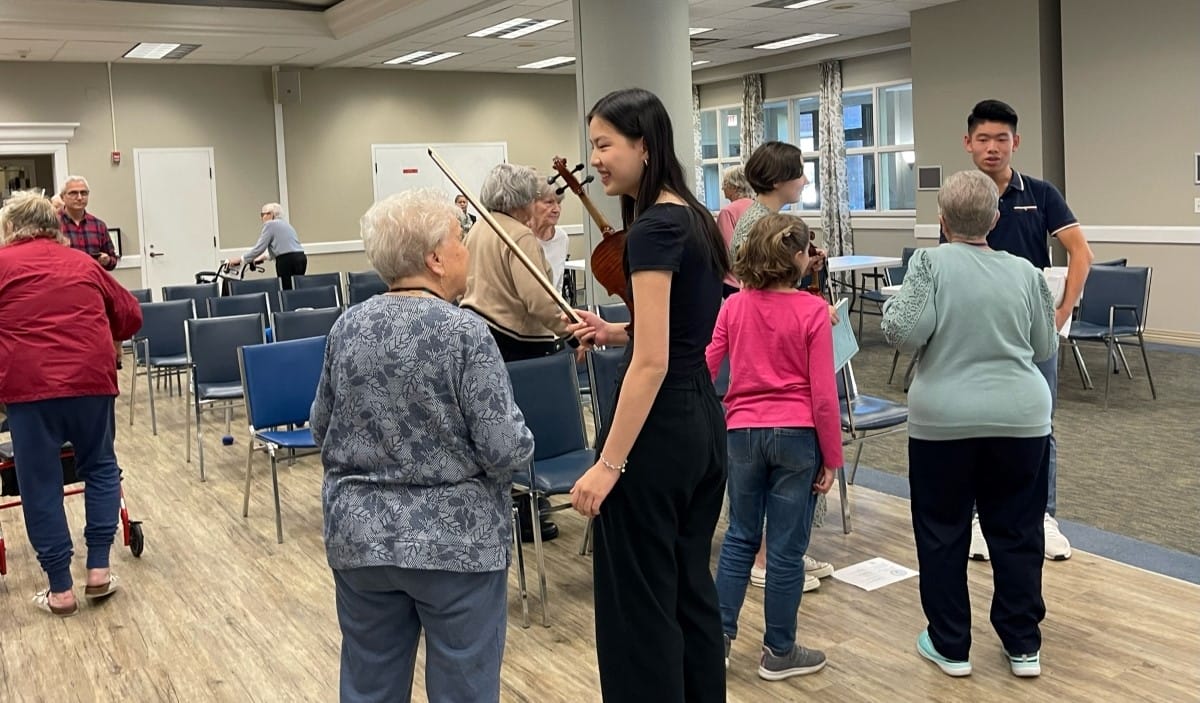
HARMONY FOR HEARTS FOUNDER SOPHIA ZHENG CHATS WITH AN AUDIENCE MEMBER AFTER A CONCERT PERFORMANCE. /COURTESY SOPHIA ZHENG
What have you learned through your experiences as a volunteer?
I learned that you don’t need to have everything figured out to make a difference. You just need to care and be willing to take that first step. My advice is to start with something you’re passionate about, even though it’s even if it’s something small. You’d be surprised how far it can go and how many people you can reach along the way.
Why is it important for others to get involved with causes they care about?
I think volunteering helps us see the world beyond ourselves. It builds skills like empathy and reminds us that everyone has something to offer. I think that when you take the time to help others, it brings people together and shows that no matter how old you are or where you come from, you can make a difference.
What do you want people to learn from your story?
I want people to know that you don’t have to wait until you’re older or have everything figured out to make a difference. Harmony for Hearts started with just one small concert at my grandparents’ senior home, and it turned into this huge community. It also became a space where other young musicians can use their talents to give back, which has been amazing to see. You just never know what can happen when you care deeply and take action. Sometimes it leads to something amazing.
Texas Teen Empowers Global Youth Through STEM Education
Meet Daily Point of Light Award honoree Yuvi Parmar. Read his story, and nominate an outstanding volunteer or family as a Daily Point of Light.
At just 16 years old, Yuvi Parmar isn’t waiting for the future – he’s shaping it. The Katy, Texas high school junior is the founder of Empower and Connect, a youth-led nonprofit that’s providing STEM education and public health solutions to historically underserved communities both locally and around the world.
Since launching Empower and Connect in January 2024, Yuvi and his team have hosted coding workshops for local students, launched 3D modeling classes for youth in Kenya and installed a small, free library in a park to promote literacy and community connection. With a team of passionate teen volunteers, Yuvi is leading a movement that transforms bold ideas into tangible change.
What inspired you to found Empower and Connect?
I actually started the nonprofit out of frustration. I kept seeing clubs at school that looked great on paper but didn’t create lasting impact. A lot of them were just repeating the same projects or awareness posts without answering the question: “What’s next?” I wanted to build something strategic and technical that could grow and last. So I combined my interests in medicine, engineering, and global equity and launched Empower and Connect to create something youth could lead, that would actually make a difference locally and globally.
How did you get it off the ground?
The first step was building the right team. I didn’t want volunteers who just needed hours. I wanted people who were truly passionate about the mission. Once we had our core team, we filed the paperwork to become a registered 501(c)(3) nonprofit in Texas. Our first two projects were local: teaching Scratch coding workshops and installing a free library in an underserved park. After that, we expanded internationally by partnering with nonprofits in Kenya and India.
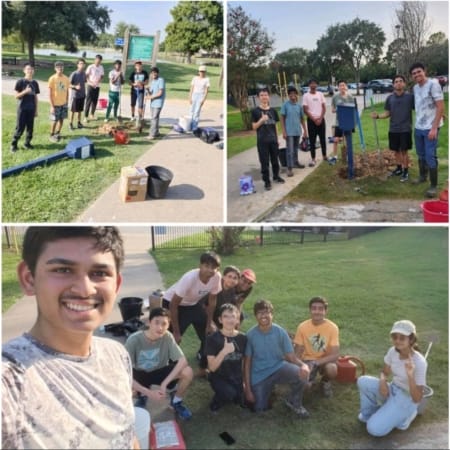
A collage shows the Empower and Connect team installing a free library in a park. Yuvi, in a white shirt (bottom image), helps lead construction. / Courtesy Yuvi Parmar
Why did you choose to focus on STEM?
STEM gives people opportunities. I’ve shadowed doctors and volunteered in different settings, and I realized that technical education can truly change someone’s future. We focus not just on helping underserved communities, but also on empowering our volunteers. They gain professional skills, like coding, engineering, public speaking, that can shape their careers. For example, our Inventor workshops not only teach Kenyan youth 3D modeling, but they also challenge our volunteers to learn and teach real-world applications of engineering.
What have been some of your favorite projects?
Two of my favorites are our Inventor workshops and our water filter project. For the Inventor project, we started by training our own volunteers in Autodesk Inventor, a 3D design software. A group of volunteers who were already proficient created a full curriculum and taught the rest of the team over eight weeks. Once everyone was ready, we partnered with a nonprofit in Kitale, Kenya—the Christian Community Healthcare Foundation, which has a small building with computers. That allowed us to hold weekly virtual sessions teaching Kenyan youth 3D modeling skills. Most of the students are between 17 and 25 years old, so they’re at a point where they’re about to enter the workforce. Our goal is to give them a strong foundation in engineering and design that they can build on. Some had never used a computer before, and within a week, they were already creating 3D objects and asking advanced questions.
The water filter project, led by our Team B, is focused on designing and testing an affordable filtration system for underserved communities in Kenya and India, specifically Kitale, and the slum regions of Dharavi and Parel in Mumbai. We’re currently testing prototypes in partnership with labs in Houston. Once finalized, the filters will be distributed through our nonprofit partners, and we’re also compiling a report on waterborne diseases in these areas. Since I want to become a Navy surgeon, the public health side of this project really speaks to me. It combines engineering with medical impact, which is something I’m passionate about.
What’s been the most rewarding moment so far?
During one of our first Inventor sessions in Kenya, a student came up to me and said, “I didn’t even know how to use a computer. Now I can create things I didn’t think were possible.” That moment reminded me why this matters. It’s not about resumes or appearances. It’s about opening doors for someone who might never have had the chance otherwise.
What are your long-term plans or goals for the organization?
We want to travel to the communities we’re working with, to see the impact firsthand and build deeper partnerships. Long term, I’d love to see regional chapters led by students as they go off to college. The idea is to create a blueprint for how youth-led nonprofits can drive scalable, meaningful change, without losing sight of what really matters: passion, cultural empathy, and commitment.
What have you personally learned from founding this nonprofit?
It takes time, discipline, and discomfort. Junior year of high school is tough, but I’ve had to balance it with medical research, shadowing, and leading this nonprofit. I’ve learned patience, time management, and humility. And I’ve learned that being young isn’t a limitation. It’s actually an advantage. We’re not tied to “how it’s always been done.” We can build new paths.
What advice would you give to young people who want to make a difference but don’t know where to start?
You don’t need to be the smartest or most connected person to start something. Just care enough to begin and stay committed. Don’t be afraid to question the norm. If you see a gap in healthcare, education, or technology—fill it. Not for now, but for what it could become. You can create impact that lasts far beyond yourself.
Driving Donations: Volunteer Connects Community Members with Vital Items
Meet Daily Point of Light Award honoree Vincent Barango. Read his story, and nominate an outstanding volunteer or family as a Daily Point of Light.
Vince Barango had a varied career, mainly landing in real estate and construction, though he did own a golf store for a period. As he neared retirement, it was his role as a landlord that led him in a new direction, giving his post-career chapter new purpose. Many tenants who participate in the government’s housing assistance program, Section Eight, also known as Housing Choice Vouchers, have unmet basic needs. Vince decided to make it easier to meet them.
He volunteers to drive countless miles across Indiana and parts of Illinois to pick up and deliver donations for Porter County Aging and Community Services (PCACS), an organization that directly provides resources and assistance to seniors, individuals with disabilities and low-income community residents. He is the practical connection between things–shoes, socks, undergarments, food and more–and those who need them most. It’s work that keeps food on tables and restores dignity to those going through difficult times.
What inspires you to volunteer?
I remember being in high school and going to a soup kitchen for school. I went to a private school, and I realized we were insulated from seeing people in need. I was always sensitive to people who needed things, because at one point, while we weren’t destitute, we were poorer at times. I looked at the disparity in people’s wealth and understood that some people really needed things, and there are a lot of reasons why this can happen.
When I’d see people who would help, I thought that was really nice. A sign of a good, healthy population is when you help those who need it.
Dedicated volunteer Vince Barango and Cindy Dudgeon, a friend and occasional helper, are recognized by Porter County Aging and Community Services for their part in putting on multiple giveaway events for those facing barriers to basic needs./Courtesy Vince Barango
What inspired you to get started with this initiative?
As a landlord, I worked with a lot of Section Eight tenants. That’s how I met Valerie Martinez, who worked as the director of Section Eight here in Porter County. Few landlords would take them, because they didn’t pay as much. I decided to take many, because there were advantages for both me and them. Plus, it helped people.
Due to that, Valerie and I spoke frequently. A few years ago, when I went in to sign papers, she asked me to sponsor a box of women’s hygiene products for people who needed them. I wrote her a check, and it shipped for free. I did that a few times and then didn’t hear any more about it. When I followed up, she said shipping had tripled in price, and it was getting hard to run the program. I was nearing retirement and offered to start picking stuff up. So, she sent me out. That’s how it started.
Tell us about your volunteer role with Porter County Aging and Community Services.
I was just on the phone with Valerie, whose job is now seeking out donations. She was trying to set up another, bigger pickup in Indianapolis with feminine products. Most of the people on Section Eight are single women and don’t have enough money to buy critical things.
She finds donations, and I pick them up. I went to Fort Wayne to pick up 1,200 pairs of shoes, then Joliet for food. That was about a 10-hour trip from start to finish. At Helping Hands in Buffalo Grove, we schedule pickups, and they help you load. If items are big or heavy, I have to figure out how much I can carry. There’s a lot of coordination.
I don’t have the means to take perishables, because there’s no way to keep them cool. Recently, Valerie found a place that had 6,000lbs of peanut butter. They wanted to forklift it on, and since we don’t have a forklift to get it off, we had to coordinate volunteers on the other end. I’ve taken some friends with me occasionally, but for the most part, it’s just me picking up. I’ll average three to five times a month.
What have you learned through your experiences as a volunteer?
There are some very genuine people willing to help. The fact that these programs exist is a good sign. It busts the stereotype about who’s poor and who’s helping.
What should people know about the process?
For many organizations, there are tax deductions for donations. They can use them as a write off. A lot of times, they can get rid of B stock. Maybe labels were screwed up or packages weren’t filled enough. It’s a good way to help somebody and prevent waste.
I heard that one country passed a law requiring extra food to be donated. You can’t just throw it out. There are regulations here–you don’t want to donate something that could get someone sick, but that’s not what we’re talking about. People have reservations about things that are past date. If you look it up, not everything is scary. There are some things you probably wouldn’t touch, but some just lose some flavor. They’re not dangerous.
Jars of peanut butter, prized items, are set out of laid out for people in need to collect./Courtesy Vince Barango
Tell us about future partnerships, programs or events that you are excited about.
There are several pickups scheduled. Valerie also has periodic giveaways, whenever she gathers enough to warrant it. Peanut butter is great, but is someone going to burn $3 in fuel just to get a $3 jar of it? It has to be worthwhile. And if they don’t have the means to come, that’s another problem. I think some people might even be embarrassed to come, so Valerie has tried to make it comfortable.
What do you want people to learn from your story?
There are people out there who need help, and you can make a difference, even if you think it’s small. And people are not selfish or greedy. I think that’s the stigma. Somebody pulled up for a giveaway in a BMW, and someone made the comment that they didn’t need donations. But you don’t know. You don’t know if they borrowed the car, rented it, or if it’s about to be repossessed. So, please don’t judge. Helping somebody get something they really need or couldn’t have gotten on their own is what drives me.
Meet Daily Point of Light Award honoree Christina Porter. Read her story, and nominate an outstanding volunteer or family as a Daily Point of Light.
Christina Porter knows that her city has a litter program. That’s why she’s dedicated to doing something about it.
An Oakland native, Christina has tremendous pride in her hometown, and is constantly working to make it better. From a young age, she was inspired to eradicate litter from her community. In the present day, Christina sees the influence that litter and pollution has on Oakland, from garbage on the streets as parents walk their children to school to a serious illegal dumping issue. But she also sees the potential in changing it for the better.
Christina is the board chair of Keep Oakland Beautiful, which works to create and sustain a clean, green, litter-free Oakland through education, community engagement and volunteer action. One of 800 organizations across the country that is affiliated with Keep America Beautiful, the Oakland chapter has thrived under Christina’s leadership, expanding its reach from traditional efforts to more proactive and generative projects.
These include planting 2,000 trees to combat climate change and awarding 50 community grants that extend the impact of the organization’s mission beyond the board members. Public art projects illuminate formerly abandoned public spaces, and an “adoption” program allows residents to care for select spots in the community, like a drain or a trash receptacle.
CHRISTINA PORTER IS THE BOARD CHAIR OF KEEP OAKLAND BEAUTIFUL, AN ORGANIZATION THAT SEEKS TO KEEP THE CITY OF OAKLAND CLEAN AND LITTER-FREE. /COURTESY FIR
While picking up litter is an important piece of Christina’s work, it’s also just one component of it. Christina is a steadfast believer that the influence of beautifying one’s city goes far beyond just making it look good. In fact, it’s a vital part of our overall health and wellbeing. Christina notes that data shows how community cleanups are linked to better health and quality of life, especially in communities of color. This is particularly true in an era when loneliness is everywhere. Bringing people together to improve their community affects us all for the better.
Despite her major accomplishments, Christina still believes in her original message to start small by picking up a single piece of litter that you come across on a walk. Her dedication to the idea that even the smallest task can better our community is a powerful testament to the idea that volunteering can take any shape and form.
What inspires you to volunteer?
When you ask people to volunteer, you’re asking them to be optimistic about a future they can’t see. You’re out there doing all these things, but you don’t know if they are ever going to happen. My vision is for a world with zero litter. I know that’s just a vision, but then it’s about how you inspire others to align with your mission. We protect what we love. I really love the idea that when we care about something, we do everything that we can to show it and to live it each day.
What inspired you to get started with this initiative?
I was a child growing up at a time when there was Woodsy Owl, the character used by the United States Forest Service that encouraged children to form healthy relationships with nature. I was anti-litter at age seven. It started as a kid and evolved into wanting to help my community more formally in adulthood. The city of Oakland has a formal adopt-a-spot program, where you can maintain a public area and be an adopt-a-spot owner, so that was how I got started into the world of really keeping my city beautiful.
Tell us about your volunteer role with Keep Oakland Beautiful.
I’m the board chair, which means that I’m responsible for everything that the board does in terms of making sure that we achieve our mission of keeping our city clean, green and litter-free. Then there’s all of the day-to-day operations, like making sure that the board is doing all the things that are in our charter and bylaws. I’m responsible for pretty much everything for Keep Oakland Beautiful. Our board members run and support our cleanup events, annual programs and community initiatives.
What are your long-term plans or goals for the organization?
I want Keep Oakland Beautiful to be the very first place that everybody in the city turns to when they want to do something beautiful in the city, whether it’s picking up trash or installing a mural or converting an abandoned lot into a beautiful garden oasis. I would like for us to be that first place that people turn to. If I had to visualize what that looks like, it would almost be like we have a building that’s called the Keep Oakland Beautiful Greening Center, and people can walk in and get help and go out and be empowered and get all the tools that they need to beautify their community.
What’s been the most rewarding part of your work?
When we hear the community tell us the impact our support has made in their communities. Every month during our board meeting, I like to share community kudos, because through our grants program, we’re giving out funding to communities. They’re saying things to us like we’re helping make their community safer. Being able to bring it back to the most fundamental wellbeing makes a big difference for us. When they’re telling us they’re able to install flowers and that they’re having less graffiti or illegal dumping. Hearing the voices of the community and the change that they’re making, that’s what really makes it all worth it to us.
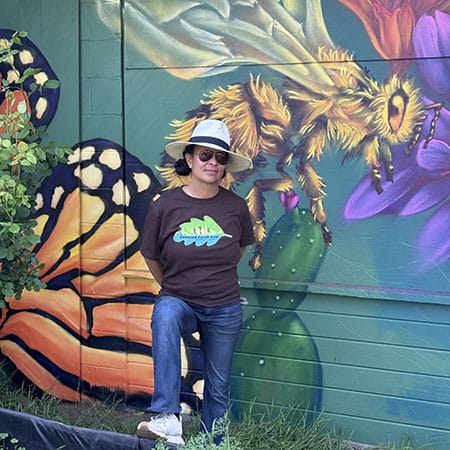
KEEP OAKLAND BEAUTIFUL BOARD CHAIR CHRISTINA PORTER SMILES IN FRONT OF A COLORFUL MURAL AT MOSSWOOD COMMUNITY GARDEN IN OAKLAND. /COURTESY FIR
What have you learned through your experiences as a volunteer?
You need to be grateful to everybody that is out there doing the work every day. As a volunteer, you’re not getting paid. You’re being asked to give up your time, your energy, your resources and your money. Just be grateful to all the volunteers. As a volunteer you like to be recognized.
As the chair of the board, I just recognize people. I am still a volunteer. Make sure you’re thanking them as many times as you can, because we’re only as strong as the work of the volunteers that are out there, and they need to feel like they’re doing good work too. Express gratitude every single day.
Why is it important for others to get involved with causes they care about?
To be able to connect people with each other. To help them understand that we can’t rely on others to do the work. It’s on us. We have to be that change that we want to see. We can’t rely on the government to do everything. Our city government is always stretched for resources.
There’s always more work than there is money or other resources. It’s on us.
What do you want people to learn from your story?
We’re one of 800 organizations across the country that are doing this work. In 2026, the United States is celebrating its 250th anniversary of the signing of the Declaration of Independence, which is a once-in-a-generation time for all of us to come together and celebrate the proud legacy of our nation. Our goal is to pick up 25 billion pieces of litter and beautify 25,000 communities across the country between now and next Independence Day. I really want folks to just pick up one piece of trash. Just start by picking up one piece of litter in your community, and then pick up two, and then pick up three. Keep going, because through this movement, we know we’re not alone. We’re all in this together.
Meet Daily Point of Light Award honoree Spencer Chaisanguanthum. Read his story, and nominate an outstanding volunteer or family as a Daily Point of Light.
When Spencer Chaisanguanthum’s parents signed him up for a week-long debate camp, the New Jersey teen wasn’t eager to participate. However, it was the best thing that could have happened.
Struck by how much he enjoyed it, Spencer asked to join a debate club on a more consistent basis. It was then that he saw how much the experience improved his life. Not only was he more confident, but his critical thinking and analytical skills improved. The tools he learned in debate benefited his academic performance, particularly in English and history classes. But most of all, it kicked off a mission to bring debate to students who wouldn’t normally have the opportunity to participate.
“For me, debate has just been such a transformative activity,” says Spencer. “Because of all those factors, I was inspired to start the organization to spread access to more youth, especially in historically excluded areas.”
Now 15 years old, Spencer is the founder and CEO of Eloquence Academy, an organization that offers free online debate classes and biannual tournaments. Founded in 2022, EA expands access to public speaking and academic debate opportunities for students who may not have the opportunity otherwise, particularly due to their location. By breaking down these geographical barriers, students have a greater opportunity to reach their potential.
SPENCER CHAISANGUANTHUM IS THE FOUNDER OF ELOQUENCE ACADEMY, AN ORGANIZATION THAT OFFERS FREE ONLINE DEBATE CLASSES AND BIANNUAL TOURNAMENTS. /COURTESY SPENCER CHAISANGUANTHUM
Spencer is always working to expand the organization’s reach, whether it’s through recruiting new volunteers to coach classes and judge at tournaments or curating a dedicated social media following. He tackles everything from writing grant applications and organizing the programming to writing the debate curriculum and meeting with the board. Currently, he’s creating a free, online debate course that provides access to video modules, quizzes and interactive worksheets, leveling the playing field so debate is an endeavor that anyone with access to the Internet can pursue.
While Spencer’s mission is an ambitious one for a high school sophomore, he‘s utterly dedicated to the cause. He has spent over 2000 hours volunteering to foster educational equity, which has resulted in working with 2100 students and 50 partner schools.
“I’ve had the opportunity to observe his leadership firsthand and work closely with him on Eloquence’s initiatives,” says Conray Tseng, a member of Eloquence Academy’s Board of Directors. “His leadership and dedication to Eloquence follow naturally from his love of debate.”
While Eloquence Academy has blossomed tremendously, it all started with Spencer’s goal of helping other young people find their strength and confidence through debate, just like he did.
“I’ve learned that everybody can make an impact in their local community,” he shares. “Even impacting one person for the better is still very worth it.”
Eloquence Academy currently serves students in person and virtually throughout the United States, but Spencer hopes to take the programming further. He dreams of expanding to other countries, giving students in Canada and Asia the chance to participate as well. But in the meantime, Spencer will be working hard on the home front. Next year, he’ll be the captain of his high school’s debate team.
Meet Daily Point of Light Award honoree Jackson Drumgoole. Read his story, and nominate an outstanding volunteer or family as a Daily Point of Light.
Jackson Drumgoole knows how difficult it is to age out of the foster care system. That’s why he’s working to build a brighter future for that vulnerable young population.
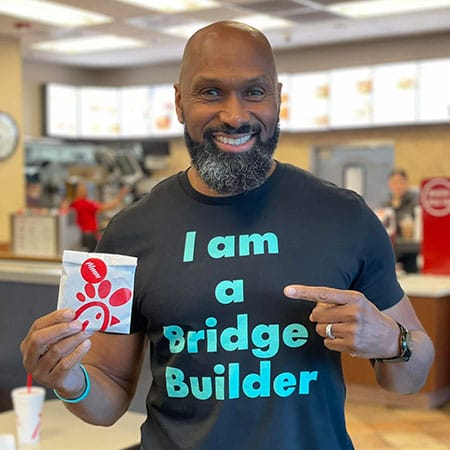
Growing up, Jackson saw several members of his family struggle with the effects of being in foster care as they grew into adulthood. Now a retired military veteran, he is working to make the transition from the foster care system to adulthood smoother. Jackson is the founder of Bridge Builder Communities, an organization dedicated to improving the lives of young adults aging out of Georgia’s foster care system by providing housing, education and other vital resources. A devout believer in applying leadership beyond the workplace, Jackson’s mission is to address the systemic challenges that face his community’s most vulnerable youth. By working to defeat these obstacles, Jackson is bridging the gap between the vulnerable teen years and creating a solid path to adulthood.
In his role with Bridge Builder Communities, for which he devotes 30 to 40 hours each month, Jackson has raised millions of dollars to develop a tiny home community that offers stable housing and support to those aging out of foster care. In addition to providing them with a reliable place to live, the community will offer an integrative program that provides everything from basic life skills, like managing a checking account, to trauma-informed mental health counseling. He calls his system a community of care that creates a soft place for vulnerable people to land.
When they leave the tiny home community, which just celebrated its groundbreaking, they’re equipped with what Jackson refers to as the four E’s: education, employment, enlistment and entrepreneurship.
Establishing a system of support for young people is no simple task, and Jackson’s journey is one of steadfast determination. As a result, he’s directly impacted the lives of over 11,000 children in foster care. His unwavering commitment to bettering the lives of children and families in Georgia shows just how impactful volunteer work can be.
JACKSON DRUMGOOLE IS THE FOUNDER OF BRIDGE BUILDER COMMUNITIES, AN ORGANIZATION DEDICATED TO IMPROVING THE LIVES OF YOUNG ADULTS AGING OUT OF GEORGIA’S FOSTER CARE SYSTEM. /COURTESY JACKSON DRUMGOOLE
What inspired you to get started with this initiative?
Several of my family members were in foster care here in the city of Augusta. I saw the impact of the displacement and adverse childhood experiences that they all went through, including mental, emotional, spiritual, physical and sexual abuse. 40 years later, not one of them has ever recovered. Because they didn’t recover, I didn’t forget. I knew this was the problem I wanted to solve, but I didn’t know how. Years later, I recognized that this was something that I really could get behind. I can help solve this problem by creating a community where young adults can flourish, transition and be protected.
Tell us about your volunteer role with Bridge Builder Communities.
I founded the organization, put it together, and built teams throughout the city of Augusta from top to bottom. In August of 2022, I held a community stakeholder session with the city of Augusta and shared how I wanted anybody impacted by the success or the failure of young people to be at the meeting. I put together whiteboard sessions, created the strategy and articulated the vision to politicians, pastors, business owners and schools. I shared how this is the proposed solution, and now we need to put everybody together. Along with a Youth Advisory Board of young people who aged out of foster care, I pulled the city together towards this one particular problem. Over time, we worked with builders who will build 26 tiny homes and a 5000-square-foot community building for free. This is where we will provide all of the life skills, training, mental health counseling and workforce Initiatives for these young adults to ensure that they transition successfully into adulthood within a community that cares about them.
What are your long-term plans or goals for the organization?
We consider this to have three phases: the projects, the program and the people. The project is a tiny home community that supports the program. The program is program directors, therapists and counselors who work here. We have a parent cottage, which is kind of like a college RA, and we have multiple individuals in the community who are crisis-informed to live on the site. Young adults come into the program, receive an individual success plan and an assessment. Once they have completed the assessment, we plug them into our local colleges, employers and tech schools. The program is having that leadership, counseling and mentorship, and helping them to transition successfully to adulthood. That’s along with basic life skills training, like how to manage a household.
What’s been the most rewarding part of your work?
Seeing a young adult say that if they had not met this organization, they don’t know where they would be. We have been working with young adults for the past three or four years. One young lady was living in a tent behind a grocery store. She wanted to get her Commercial Driving License, and she’s now a truck driver on the road. Our program director took her six times to get that test, which she couldn’t pass because she was living in a tent trying to study. She finally passed the test, and she’s on the road now every morning at four o’clock. My wife and I get a text message from her every morning, wherever she is across the United States. The most rewarding part about it is just knowing that we can help the young adults navigate and find themselves.
What have you learned through your experiences as a volunteer?
I served 30 years in the military, and I was out in Washington volunteering at a church and the pastor and I became good friends. He said something to me that I will never forget. He said that in the military, people follow you because of your rank. In volunteer work, people follow you because of the mission. I’ve learned that the vision and the mission have to resonate. It has to be real, and it has to be credible. I believe the mission and the vision have to be paramount. They have to resonate, and it has to be bigger than you. The vision, of course, has to outlive the mission to resonate.
Why is it important for others to get involved with causes they care about?
I served in the military and taught college for several years, but that wasn’t my purpose. That was just my preparation. Many folks have been prepared, and they have skills, talents, gifts, and natural proclivities outside of their day-to-day work. Volunteering allows you to pour yourself into other people. That’s the greatest way to grow in capacity: to pour yourself out to other people. If you’ve been trained or educated in a specific area, it is almost imperative for your personal growth and personal edification to volunteer and give your time, because we are truly one person away from changing the trajectory of someone’s life.
Any advice for people who want to start volunteering?
Find something that resonates with you. I call it finding your G.A.P. G is the intersection between God’s will, intent and plan. A is your natural abilities. Then your pain and your passion point. Where that place intersects is where you can find your place in the community to pour your time, energy, talents and treasures. Find something that resonates with you and just knock on the door and say that while you don’t have much to offer, this is what you can do.
What do you want people to learn from your story?
That you don’t have to be a king to be a servant. I model everything I’m doing off the book of Nehemiah. Nehemiah was a cupbearer, and he was moved with compassion. He went back to his hometown and built a wall in 52 days. I want to encourage people to find that place of pain or passion and serve where they are. Build a team around you, because you’re going to need help. It’s okay to ask for help. I ask for help every day. Ask for help and see the vision through.
This Teen Is Powering a Citywide STEM Revolution in San Diego
Meet Daily Point of Light Award honoree Siddharth Yelisetty. Read his story, and nominate an outstanding volunteer or family as a Daily Point of Light.
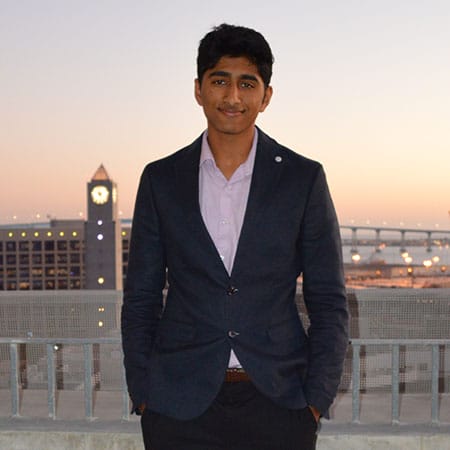
Siddharth Yelisetty is not just building robots—he’s building bridges to opportunity. As a standout student, AI researcher at UCSD and captain of a FIRST Robotics team, Siddharth has long recognized robotics as more than a competition. For him, it’s a powerful tool to inspire future innovators, especially those who might not otherwise have access to STEM education. With this vision, he launched a groundbreaking citywide initiative in partnership with the San Diego Mayor’s Office, transforming libraries and schools into vibrant STEM hubs. His workshops—free and hands-on—have now reached over 3,000 students across diverse neighborhoods.
Through his Keep It Simple II initiative, Siddharth teaches coding, engineering and robotics with a real-world twist. He designs the curriculum himself and leads sessions that emphasize creativity and problem-solving. But his reach goes well beyond teaching. Siddharth recruits and trains teen volunteers, organizes logistics and repurposes retired robotics gear and laptops to ensure that no student is left behind due to resource limitations. His innovative use of underutilized technology has bridged a critical digital divide in communities that need it most.
Recognizing the power of sustainability, Siddharth has also expanded his efforts beyond libraries. By partnering with organizations like the Girl Scouts, Boys & Girls Clubs and local elementary schools, he has created replicable models that can continue to run even without his presence. His dedication consistently exceeds 20 hours a month.
For his efforts, Siddharth has been honored as one of San Diego County’s “25 Most Remarkable Teens” and awarded the Presidential Volunteer Service Gold Award. But these accolades are merely a reflection of his deeper mission: to make STEM education universally accessible and equitable. With each session he leads, each laptop he repurposes and each student he inspires, Siddharth is doing more than teaching STEM—he’s building a more inclusive future for innovation.
Siddharth has been honored as one of San Diego County’s “25 Most Remarkable Teens.”
Tell us about your volunteer role.
As the founding member and captain of Keep It Simple II, a community-based FIRST Tech Challenge (FTC) robotics team, I lead both technical and outreach activities. My volunteer role involves mentoring team members, teaching robotics and programming skills, coordinating logistics, developing engaging curriculum and organizing regular STEM workshops for youth.
Beyond competitions, I’ve dedicated myself to expanding community outreach by collaborating with local libraries, schools, Girl Scout troops and Boys & Girls Clubs, ensuring STEM education reaches underserved communities. My responsibilities include managing a large group of teen volunteers recruited citywide, overseeing the repurposing of retired robotics equipment and laptops to bridge resource gaps and continuously working toward creating sustainable, lasting impacts in our community. My Eagle Scout journey has deeply shaped my approach to service and leadership, instilling strong ethics and morals that guide every aspect of my volunteer work.
What inspired you to get started with this initiative?
My journey with Keep It Simple II began when I co-founded it as a small community robotics team, driven by a shared passion for robotics and technology among peers in my neighborhood. Initially focused on competitions, our vision quickly expanded when I recognized an opportunity to leverage our skills to address educational disparities in STEM.
I initiated partnerships with San Diego’s public libraries and schools to host community workshops. By recruiting and training volunteers from across San Diego, we built a citywide outreach initiative. This transformation from a competition-focused team into an impactful community STEM resource is a pivotal and meaningful aspect of my volunteer journey, reinforced by the leadership skills and ethical foundation gained from my Eagle Scout experiences.
Why is it important for the community to have access to resources like the library and STEM workshops?
Access to community resources like libraries and STEM workshops is essential because they provide equitable opportunities for young people to discover their passions and talents. Libraries offer safe, inclusive and familiar environments where anyone, regardless of socioeconomic background, can engage in hands-on learning. Our STEM workshops remove barriers to STEM education, making robotics and coding accessible to everyone. I have witnessed firsthand how these resources can significantly boost students’ self-confidence and inspire lifelong interest in science and technology, ultimately fostering a diverse, innovative and empowered future workforce.
What are your long-term plans or goals for the organization?
My overarching goal is to create equitable and sustainable STEM learning experiences that ignite curiosity, build skills and inspire confidence in youth from all backgrounds. Specifically, I aim to expand the reach of our workshops to more communities across San Diego and beyond, develop a robust volunteer network to sustain these efforts long-term and integrate STEM programs into educational institutions permanently.
Another critical objective is to bridge technology resource gaps by repurposing retired equipment, ensuring every participant has the tools to succeed. Ultimately, I hope our workshops encourage young learners to pursue STEM careers and empower them to see themselves as capable innovators and creators.
What’s been the most rewarding part of your work?
One particularly memorable moment happened during a robotics workshop when a young participant initially struggled, hesitant and unsure of her abilities. Through encouragement, patience and guidance, she not only completed her robot but confidently explained its functions to the entire group, even demonstrating her creation in our final challenge. Witnessing her transformation—from self-doubt to proud accomplishment—reinforced my belief in the transformative power of STEM education and mentorship. Moments like these constantly remind me of the importance and profound impact of our volunteer work.
What have you learned through your experiences as a volunteer?
Volunteering has taught me invaluable lessons in empathy, leadership, perseverance and collaboration. I’ve learned that true leadership involves empowering others, creating opportunities for their growth and encouraging collective success. Volunteering also demands adaptability, especially when faced with unexpected challenges.
Additionally, volunteering has shown me how seemingly small actions can have significant impacts, inspiring me to continuously seek new and innovative ways to contribute positively. Most importantly, volunteering has deepened my understanding of diverse communities and reinforced my commitment to equity and inclusivity in education, all grounded in the ethical foundation instilled through my Eagle Scout journey.
Why is it important for others to get involved with causes they care about?
Getting involved strengthens our communities by creating cycles of empathy, support and growth. When individuals share their time, talents or resources, they contribute to a culture of compassion and collective advancement. Volunteerism also enriches personal growth, fostering valuable life skills, new perspectives and meaningful relationships. I believe everyone has the potential to make a difference, regardless of scale. Encouraging others to give back ensures that communities continually thrive, creating pathways for future generations to achieve even more.
What do you want people to learn from your story?
I hope people see from my story that meaningful impact doesn’t require abundant resources—just dedication, creativity and a willingness to act. My journey, from starting in robotics to securing internships with prestigious institutions such as Hyperplanar, UCSD and Northrop Grumman, illustrates a path available to anyone driven by curiosity and commitment. My experiences show that young people can identify community needs and proactively develop solutions. I want others to realize they have the power to ignite change, inspire others and cultivate inclusive opportunities through consistent effort and collaboration. Ultimately, I hope my journey motivates more people, especially youth, to step forward, pursue their passions and positively shape their communities.