Meet Daily Point of Light Award honoree the Sorensen Family. Read their story, and nominate an outstanding volunteer or family as a Daily Point of Light.
For Jeff and Nicole Sorensen, the drive to serve stems from a deep appreciation of their own upbringing. Reflecting on how their parents prioritized community involvement, they felt a strong desire to instill those same values in their own household. In 2020, amidst the uncertainty of the pandemic, Jeff and Nicole found a pathway to do just that. They introduced their two children, Emme and Theo, to The Honeycomb Project, an organization dedicated to family volunteering. This sparked a journey of community engagement that would bring them closer together.
Their first mission involved grocery shopping for families facing resource limitations. After carefully selecting the items, the family drove to a recipient’s home to leave the supplies on the doorstep. As they pulled away, Jeff observed a poignant moment that resonated deeply during a time of isolation. When Emme and Theo saw the other family come outside to retrieve the groceries, the emotional gap closed instantly. Despite the physical distance required by the pandemic, the children made an immediate connection regarding the similarities between themselves and the neighbors they were helping.
That initial experience ignited a passion for service that has since taken the family across the greater Chicago area. The Sorensens have turned volunteering into an opportunity to explore their city while aiding its residents. Their service portfolio has grown significantly, ranging from stocking shelves at local food pantries and caring for animals at shelters to contributing to the Love Fridge and working with Sew Crafty Studio. Each location offers a new lesson and a new way for the family to weave themselves into the fabric of their community.
Today, the family remains actively involved with The Honeycomb Project, making service a regular habit rather than a sporadic event. By prioritizing this time, Jeff and Nicole are not only supporting their city but are succeeding in their original goal: raising a generation of volunteers who understand that kindness is a powerful force in changing the world.
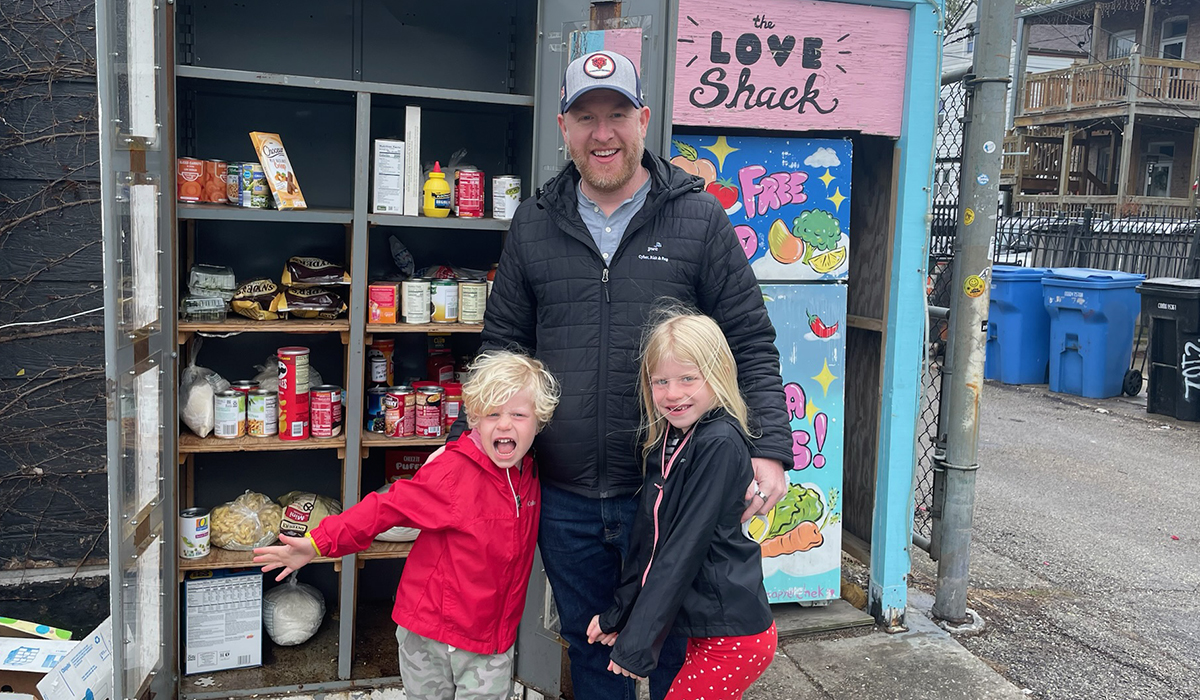
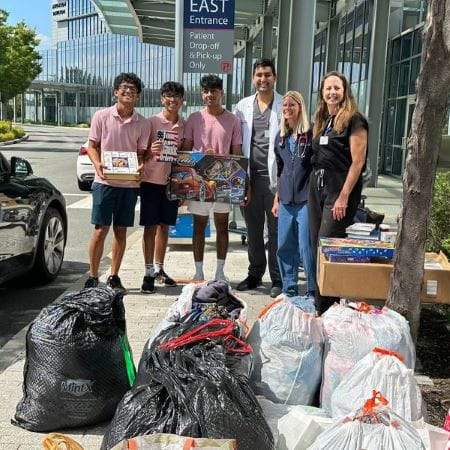
Jeff Sorensen and the kids stock the Love Fridge.
What inspired you to get started with Honeycomb?
Jeff: I work at a firm called PwC, and I was actually looking to get associated with a local organization and join a board. I came across The Honeycomb Project through a vetting process in partnership with PwC and loved it so much—it was my first priority. But in order to make sure I was making the right, informed decision, we decided as a family to volunteer and be a part of Honeycomb.
We actually started in the middle of COVID, so it was very different. It was the heart of the pandemic where you couldn’t really be within six feet of people. The event we signed up for was to shop for groceries and drop them off for a family in need, leaving them at the front door.
It was great for the kids to understand a little bit of what we’re doing and why. We used the toolkits that Honeycomb provided around having a dialogue. But the most impactful moment was as we were pulling away from the house. After we left the groceries, two kids—an older sister and a younger brother, just like we had, probably the same age—came out to get them.
I think our kids didn’t really realize that they were doing this to help kids that looked exactly like them, with that same older sister and younger brother dynamic. Our son turned to us and said, “Can we do that again tomorrow?” That was such a great feeling. He basically assumed we should do it every day. That was our first experience, and we’ve been hooked ever since.
Tell us about your volunteer roles.
Nicole: We try to do a range of things, but it’s natural that some favorites seem to come to the top. One of our favorites is volunteering at a park district pretty close to our home. Our kids are really active and like to get out, move their bodies and help nature. It’s not something you get to do often when you live in the city or even the suburbs.
First, you learn about invasive species. Then you go out to pull weeds and cut things down and finally, you burn them in a bonfire. We did one event with the kids where you get muddy, get dirty and have very physical involvement. They liked it so much that we actually ended up sponsoring an event. We invited a bunch of friends and got other families involved. They were able to volunteer and do some of that forestry cleanup work with friends, which really makes a bigger impact for them. It shows that getting involved can be something fun. We have continued to support that project.
Jeff: Those events are high touch—the same as our first one. The kids can see a direct impact of what they’re doing. Like Nicole said, with pulling the weeds, from start to finish they can see a stretch of the nature preserve that we worked on, and they feel proud of the accomplishments.
I think any of the other events we do are similar. For example, where we’ve cleaned out a fridge—when we get there, it’s very dirty and doesn’t have a lot in there, but when we leave, it’s fully stocked. That instant high impact, where they can understand the work they do, why it’s important, and the impact it has, makes those some of our favorites because it just stays with them a little bit more.
What are your long-term plans or goals for volunteering as a family?
Jeff: It’s become a family tradition to try to do a diversity of projects throughout the year, like Nicole said. We try to sit down as a family to pick a new event or at least take turns. The brother and sister love to fight, so one of them gets to pick, and then the other picks the next time.
As part of Honeycomb, you also get to see a lot of the older high school kids, who have been doing this for a long time, run the events. This is a very long-lasting experience for kids. A goal of ours—and why we got involved in volunteering—is that it was something passed on by our parents to us, and we want to pass that on to them. Continuing this process and hoping that they pick this up on their own, and eventually want to run some of these programs themselves, is a great goal. We actually see those role models for the kids when we volunteer because they’re the ones running these programs.
Nicole: The high schoolers are 15, 16, 17 years old, and they’re so articulate about their experiences. They’re comfortable helping others, and confident about their volunteering. We want our kids to emulate that same kind of leadership and community focus, and seeing the teens at Honeycomb shows us that goal in action.
What’s been the most rewarding part of your work?
Jeff: We’re a very busy, active family. Life can get hectic, and you can get bogged down by the daily schedule. I think when we have an opportunity to step away from some of that and dedicate focused time, it’s not only to help others but to do that as a family together.
Sometimes Nicole will take one kid in one direction, I’ll take another to another activity and weekends can fly by. So volunteering is not only a time to get involved, but to spend quality time with each other. That’s really important, especially as they continue to grow older. They’ll have different interests, and it will be less and less of the four of us doing things together, but this, I think, will always be something that we can center ourselves on as a family.
What have you learned through your experiences as a volunteer?
Nicole: It’s interesting; the more we think about it, we tend to really gravitate toward ensuring people are fed. Thinking back on the different projects we’ve done, we’ve actually done quite a bit around food insecurity. I work in the food industry, so that’s maybe one reason why it’s always really sensitive to me. It’s one of those most basic needs.
Seeing people who live so close to you and struggling is impactful. We did an event in the neighborhood we lived in before we had kids. There were apartment buildings right next to where we used to live, and we couldn’t believe there were people living there who were food insecure. That’s probably one of the biggest lessons I learned: you just never know. You never know what people are going through or how close they might be to you. They are suffering in a way that is foundational to who they are and their survival.
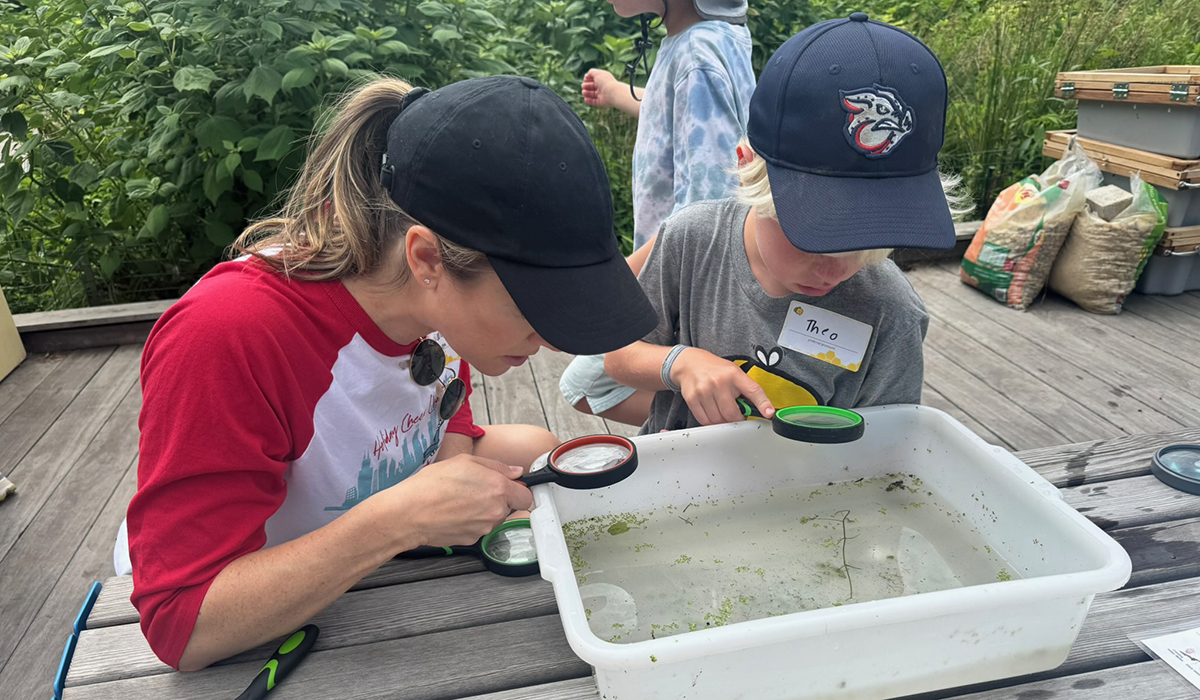
Nicole and Theo clean up the Chicago River.
Why is it important for others to get involved with causes they care about through volunteering specifically?
Jeff: Honeycomb is great about empowering us when we have conversations with our kids. We talk about how it’s not just about giving money—though that’s helpful—but it’s actually about giving our time and energy to the community.
That belief is rooted in both of our upbringings. We were raised by great parents who did the same thing for us and made sure we understood the power of getting involved through different community events.
Nicole: The results just feel more personal. To hear our son, who was three and a half years old, have a personal connection that drove him to want to do it again, showed us everything. What could be more powerful than that, versus donating through an electronic transfer of funds? You see the people, and you have more of that personal connection. It builds empathy. You realize we’re really not separated by much, when you are able to physically get involved.
Any advice for people who want to start volunteering?
Nicole: Find something that you love and tie it to how you volunteer. If you love being outside, pulling weeds or gardening, there are plenty of opportunities to do that. If you like sports, there are probably ways that you could coach. I would find something that you love first; that’ll make it a lot easier. The hurdle won’t feel so high if you can connect it to something that you already enjoy doing.
Jeff: There is often a lot of hesitation—people thinking, “Well, we aren’t experts.” But I would say 99% of the time, volunteers aren’t experts. They are there to give their time and energy however they can. It’s something you just have to embrace. It’s okay not to be an expert in those areas; you’re there to try your best.
What do you want people to learn from your story?
Nicole: I’d encourage people to get others involved. If you think someone else might enjoy something, invite them—they can always say no. A lot of people might be hesitant, but inviting friends is one of the key ways we’ve made an impact. We’ve gotten people we know and their families involved. It makes it more fun for ourselves, and it helps them find fulfillment as well.
Jeff: When someone is looking for something to do, if they can find someone to introduce them to these opportunities, it makes it that much easier for them to say yes. It’s rare that we’ve had somebody say no, because we’ve been able to say, “Hey, this is an opportunity, and we support it.” They usually respond, “All right, we’ll give it a try,” because they trust us. I think that helps bridge the gap a little bit more.
NJ Teen Leads Nonprofit Making Tech Accessible for All
Meet Daily Point of Light Award honoree Umang Sharma. Read his story, and nominate an outstanding volunteer or family as a Daily Point of Light.
During the COVID pandemic, when others were perfecting sourdough or passing the time with puzzles, Umang Sharma was busy assembling computers in his Princeton, New Jersey home. While searching for parts online, he stumbled across an ad for a $7,000 Braille keyboard, a price that made him wonder why essential technology for people with disabilities was so inaccessible. That curiosity drove him into months of research and hands-on tinkering, eventually leading him to develop a functional Braille keyboard using 3D-printed keys and repurposed hardware for just $10 per unit.
That single project became the spark for Jdable, the youth-led nonprofit that Umang, 17, went on to create. Today, Jdable has designed 10 assistive devices—from autonomous wheelchairs to smart canes and tactile Braille maps—reaching more than 1,000 individuals across the U.S., Canada, India, Finland and the UAE. What started as a passion project is now a 50-member volunteer network that includes engineers, Ivy League professors, students and advocates—all united around a simple idea: technology should empower everyone, not just those who can afford it.
What inspired you to start Jdable?
It really began during COVID. I was already interested in building computers and keyboards, so I was buying parts and came across an ad for a $7,000 Braille keyboard. That shocked me. I knew how much keyboards should cost because I was making my own for far less, so I wanted to understand how something designed for people with disabilities could be priced so high, especially for a community that often has fewer accessible job opportunities.
I did research and confirmed my suspicions: the cost didn’t match the materials or the need. I felt I could genuinely make a difference, so I spent about a year designing a new model. By repurposing donated keyboards from local offices and schools and redesigning the key structure, I brought the cost down to $10. We tested versions, gathered feedback and criticisms, and kept improving it until it was durable, comfortable and reliable for everyday use.
That first product opened my eyes to how many assistive technologies were either too expensive or too inaccessible for people who needed them most. I started seeing the same pattern with wheelchairs, canes, maps, everything. That’s when I formally launched Jdable as a 501(c)(3) so I could recruit people, build a team and scale solutions for more communities.
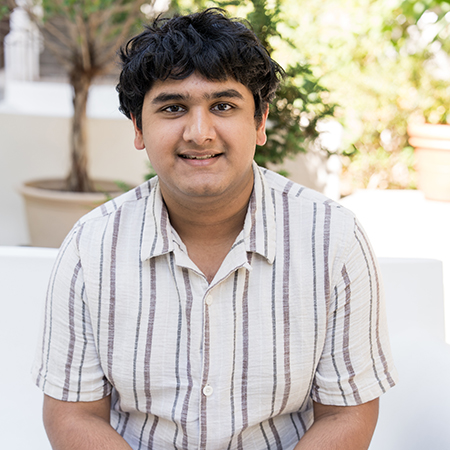
Umang Sharma is the founder of Jdable, a youth-run nonprofit creating affordable assistive technology for people with disabilities./ Courtesy Umang Sharma
How did you come up with the name Jdable?
It came from “jobs for the differently abled.” J for jobs, D for differently, and able for abled. We wanted the name to reflect our mission of empowering people with disabilities.
Why does this work matter so much to you?
The keyboard got me started, but other experiences made this work more personal. For example, my grandmother once had to walk a long distance in the airport because a wheelchair wasn’t available in time, and we ended up missing our flight. She was in pain, and watching her struggle really hit me.
It made me realize how many people lose independence simply because the right tools aren’t available—or are too expensive. That experience, and others like it, made me want to restore even a little bit of independence for people who need it most.
Can you describe some of Jdable’s products and how they came to be?
Right now, we have about 10 products, ranging from small-scale tools to major, engineering-heavy projects. They come from a mix of sources—my experiences, ideas from people with disabilities and suggestions from partner organizations and professors.
For example, Braille Maps & Globes came from Silver Line Inspiring School, one of our earliest partners. They asked if tactile navigation tools could be made more affordable and accessible, so we worked with them to develop a solution.
Our IoT smart cane originated from our chief operating officer, who had a family connection to visual impairment and wanted to create a cane with obstacle detection and navigation alerts.
Braille readers, Braille glasses, autonomous wheelchairs and more came from ongoing conversations with students, families, disability centers and volunteers.
Everything we build comes from a collaborative process. We have a global team of over 50 volunteers—engineers, researchers, students—who help design, test and refine each product to match the actual needs of the people who will use them.
How did you build such a large volunteer network at such a young age?
A lot of it started with finding people who shared the same passion. We used LinkedIn and social media to reach out widely, and we discovered that many people had personal experiences with a disability in their own families and were excited to contribute.
As our projects grew, professors and engineers started reaching out to us after seeing our work online. From there, it expanded like a tree: each new volunteer knew someone else who cared about the same issues. That’s how we built partnerships at places like Harvard, and how we grew a network of over 50 people worldwide.
Did you face challenges because of your age?
Definitely. Funding was the biggest challenge early on. Many people hesitated to donate because they assumed a youth-led organization lacked experience or accountability. There was also a trust issue. People weren’t sure if our products would truly work.
We overcame that by demonstrating real-world impact: showing people specific examples and the specific places where our products have done good. We also built a finance department that applies for grants each month. We’ve reached out to companies like Google, Microsoft, OpenAI and LinkedIn and we were able to receive donations that go right back into our product development.
What has been the most rewarding part of your work?
Seeing people interact with our products for the first time. Their faces light up, especially kids who have never had access to this kind of technology.
One student we worked with used to rely on old Windows technology that required navigating letter by letter to type. With our Braille keyboard, their typing speed improved drastically, and they were so excited that they started doing typing tests to see how much faster they were getting. Moments like that stay with me.
We’ve also received thank-you letters from schools, and we value both the positive and the critical feedback because it helps us improve every device we build.
What are your long-term goals for Jdable?
In the next four years, I want to reach one million people. Long-term, I want to expand globally—through chapters in more countries, larger partnerships and possibly a for-profit arm whose revenue can fund our nonprofit work.
We’re also planning a hackathon and accelerator program, similar to Y Combinator, but focused entirely on assistive technology. Students will create solutions, receive mentorship and get connected with experts in accessibility. My goal is to keep Jdable youth-driven and make it the world’s largest student-powered accessibility network.
Why is it important for others to get involved in causes they care about?
Volunteering is one of the biggest forces for good. Even helping one person can restore independence and change a life. And if one person volunteers, it often sparks a chain reaction in their community. You don’t need a title or a lot of money—you just need empathy and curiosity.
Do you have advice for people who want to start volunteering or launch their own service project?
Find a problem that’s personally meaningful or something you see affecting people around you. Your first step doesn’t need to be perfect. It just needs to come from genuine care. Don’t be afraid if people don’t trust your work at first or if funding is hard. Start small, stay curious and let your passion guide you.
It all started in a gym class where the only people they knew were each other. Sixteen-year-old Jordan Chen and his co-founder bonded over their love for artistic endeavors—him, painting and her, theater—while simultaneously realizing that many students didn’t have the materials to participate in art education. It’s an area that is chronically underfunded around the world.
In 2024, they founded Restoring Rainbows to address that unequal access as well as environmental sustainability. In just over a year, the organization has grown to more than 200 branches across 50+ countries. They’ve diverted more than 40,000 school supplies from landfills by refurbishing and putting items into the hands of underserved students. While they prioritize art supplies, they also provide basics like pencils, erasers and paper to those who need it. And, of course, they accept new supplies to donate. It’s work that relieves parents’ financial burden and empowers students’ creativity.
As a high school junior, Jordan is starting to look towards life after graduation. He is eyeing an environmental science degree due to his concern for climate change and the future of the planet. And of course, he will continue to paint.
What inspires you to volunteer?
Restoring Rainbows was my first time doing philanthropic work. My friend and I just wanted to start something and landed here.
Apart from that, I volunteer with my school’s Leo Club. We do a lot of free face painting for children at local events. I also run my school’s Color Run Club. We host an annual run to raise money for the American Diabetes Association. Last year, we donated around $2,200.
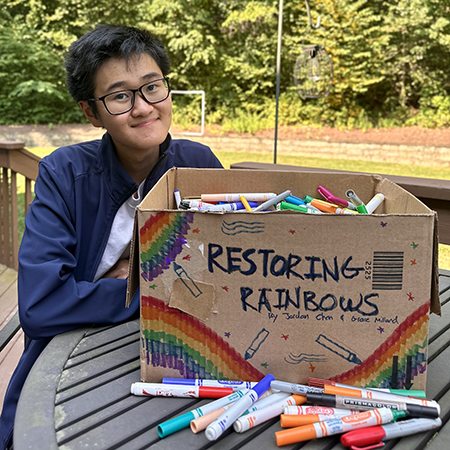
Jordan Chen, co-founder of Restoring Rainbows, diverts art and school supplies from landfills and gets them into the hands of students who need them.
Tell us about your volunteer role with Restoring Rainbows.
As co-executive director, I manage global operations. I work with a 15-person executive team, each of whom handles a different department of our organization–operations, branches, partnerships, finances and more. I check in with everyone, give them weekly tasks, offer support to our executive team and branches. I also make sure grant applications are getting submitted and foster partnerships. We work with local schools, museums and youth to ensure continued supply collection and distribution.
Many of our branches, including our own, also do a lot of bake sales and in-person events to fund projects and to cover things like cleaning and shipping costs.
What inspired you to get started with this initiative?
From a young age, I was into oil painting and drawing, and my co-founder Grace was into multimedia art and musical theater. We knew how important art is. We also shared an interest in activism, particularly around addressing climate change. It was clear there was a problem in our community that sat at the intersection of both.
Every day, we saw usable school supplies on the floor, like a pencil that was dirty or had been snapped in half. They were still usable, but people weren’t doing so because they weren’t nice-looking. At the same time, a few towns over, schools don’t have pencils, erasers or paper, let alone extras like paint brushes or watercolors. With this realization, we decided to take new and refurbished school supplies—sanitized, sharpened, refilled, etc.—and redistribute them to where they’re needed, recycling what can’t be used.
What do kids gain from art education?
Oil painting is a way for me to cope with stress. It’s incredibly relaxing to express yourself through art, and it’s a way to bond with other people, especially for younger kids. It’s important for their development to be able to show creative expression that’s unique to them.
What are your long-term plans or goals for the organization?
We hope to donate over 1 million school supplies by 2030. We’re trying to expand our impact, and ensure we’ll continue to operate if Grace or I ever decide to step down.
What’s been the most rewarding part of your work?
I find strength, hope and inspiration from the young people I talk to and work with every day. It’s not easy. It’s a choice every single day to wake up and be positive in the face of all the hard things going on in our world, and it’s one of the most rewarding aspects of being involved.
What have you learned through your experiences as a volunteer?
There’s a surprising number of people willing to help you if you have good intentions. When we first started, we reached out to dozens of partners in our local community asking them to set up a donation box. Many didn’t respond, but we thought if we asked enough people, someone would say yes. Our first partners did.
Someone out there will believe in you. You just have to look for them.
Tell us about future partnerships, programs or events that you are excited about.
We’re currently developing our inaugural Branch Advisory Board. Our shortlist is made up of branches in multiple countries that have the biggest impact. They’ll consult with us on areas where branches need work, how we can better support them, where resources are needed. We look forward to their insights and ideas about how we can grow the organization.
How can people reading this take steps to address environmental sustainability and unequal access to art education where they live?
Think before you throw anything out or buy anything. Before I shop for school supplies, I look for folders I can reuse and notebooks I didn’t use last year so I don’t have to buy new. Using supplies you already have cuts down on carbon emissions.
What do you want people to learn from your story?
Initially, I was really worried about how my friends and existing climate, art and education movements would perceive what I was doing. But if you have an idea you’re super passionate about, whether it’s a nonprofit or a business or a club, go for it. Put 110% effort into it, and see how far it goes.
Meet Daily Point of Light Award honoree Anthony Waters. Read his story, and nominate an outstanding volunteer or family as a Daily Point of Light.
When Anthony Waters inquired about a boating safety class, he never expected to find one of his greatest opportunities right in front of him. Anthony first discovered the United States Coast Guard Auxiliary while searching through an instruction manual for another group. At the time, he didn’t even know Pittsburgh had a Coast Guard Auxiliary. When he learned that the city’s prime location at the confluence of the Allegheny, Monongahela and Ohio Rivers meant they had an active boating community, both recreationally and commercially, Anthony wanted to know how he could get further involved beyond the typical boating course.
From teaching safety courses to educating youth about how their choices on the water affect the natural environment around them, Anthony has consistently put in the work as an active volunteer. Fast forward 13 years with the organization, and Anthony now serves as the district chief of staff of the Auxiliary. He has dedicated over a decade to public safety, youth mentorship and emergency preparedness as a volunteer leader.
Anthony’s time with the Auxiliary has benefited several facets of the waterfront community, from creating a national award system that resolved years of backlogs to supporting the PA State Animal Response Team. For over 60 hours each month, Anthony tackles a variety of tasks that make the water experience safer and more enjoyable for everyone.
Some of the most exciting parts of Anthony’s involvement with the Auxiliary are the opportunities it provides him with. In the future, Anthony is looking forward to interacting more with the Sea Scouts BSA, the branch of Scouting America for young men and women that focuses on water safety and boating skills. Of course, he’s also revved up to help with the upcoming 2026 NFL Draft, which is set to take place in Pittsburgh next April. Because of the city’s location on the water, Anthony will have the chance to assist with monitoring the waterways during the major football event.
While Anthony’s journey to become an upstanding volunteer was an unplanned one, he’s now a vital component of the Coast Guard Auxiliary team. In his role, he sees it as his responsibility to train the young Coast Guard leaders of tomorrow. With his dedication and devotion to building the next generation of civic-minded volunteers, it’s easy to see just how contagious the power of volunteerism can be.
What inspires you to volunteer?
This is always the cliche answer, but it’s always important to help people. Throughout life, I’ve been dealt a pretty good hand, and I just want to go and do stuff to help people, because not everyone does it. It’s amazing to see how many people don’t volunteer to help others. You see it all the time: people just don’t want to help. A lot of stuff we do is at little or no cost to everyone.
ANTHONY WATERS, A VOLUNTEER WITH THE UNITED STATES COAST GUARD AUXILIARY.
What inspired you to get started with this initiative?
About 13 years or so ago, I was looking through an instruction manual for another group, and they mentioned my local Coast Guard Auxiliary group teaches boating safety courses. I found out that we have a Coast Guard Auxiliary in Pittsburgh, which was awesome. I reached out to find out about a boating safety course, and a guy I talked to told me that, in addition to teaching boating safety courses, they work with the community by doing vessel safety checks and program visits. We go out to different places, like libraries and doctors’ offices, and put information out. We do boat patrols on the water. He told me more, and I was enamored enough by it that I joined. Then I found out about all the other things that were possible with the auxiliary. Thirteen years later, I’m still here.
Tell us about your volunteer role with the United States Coast Guard Auxiliary.
The biggest part of it is outreach. We’re either teaching a class, doing the vessel safety checks or work vessel safety checks, or working at an information booth, just talking to people about how they can be safer on the water and how they can be a good steward of the environment. One thing I always look at is that not everyone is a boater. But in Pittsburgh, at least, water is a big asset. People come there to use it recreationally. It’s used commercially. I tell people that if they use a plastic bag, that plastic bag is something that could end up in the ocean, and you could see a sea turtle eating it. So that’s why I like to educate the public about how their actions impact. Not only the local community, but the global community at large.
What are your long-term plans or goals for the organization?
We are always looking for ways to interface better with the general public. In the past couple of years, we started working more closely with the Sea Scouts, which is the program offered by the Scouts of America, with different partnership opportunities to get those youth more involved in understandable marine domain awareness and the ecological benefits and getting more youth ingrained in the Coast Guard way. As the role of the Coast Guard changes, we adapt to whatever they need. A lot of things that we might be doing in the future are more stuff with no local emergency management. If we have a disaster around here, we will have the auxiliaries that will be able to help either at a command center or on the ground.
What’s been the most rewarding part of your work?
I do like it whenever we have an interaction with a boater and they come back and they say we really helped them. Or when we teach a class and tell someone to wear their life jacket for a reason, and they say they never thought of that. I look at that as me giving someone some knowledge. Hopefully, they apply it. Who knows? It may help them avoid an accident or may help them avoid falling overboard or becoming injured. I think when people come back to you later and they thank you for helping them out, that’s the best part.
What have you learned through your experiences as a volunteer?
There’s so much. One of the biggest things I’ve learned is the impact of boating on the Pittsburgh area. For myself, I learned that there are a lot of things that I was probably afraid to try and do earlier until I came here and had people saying I should just go ahead and do it. It’s that community of people to assist you and help you reach whatever goal you want to reach.
Why is it important for others to get involved with causes they care about?
How else can you help out a cause if you don’t get involved with it? If you care about something, and you don’t even volunteer or talk about or work on it, then how else can you promote that cause or get other people to help you with it? Lead by example. If you’re out there doing it and you’re showing people that you like doing it, it will probably attract more people. And on top of that, you could find people who share your cause and be able to have a community.
Any advice for people who want to start volunteering?
Do it. In my case, I just reached out for a completely different reason. The person I talked to just walked me through it. So I would say just be open to opportunities. If there’s something you’re interested in volunteering for, don’t be afraid to ask if the place you want to help has an option to volunteer. They may say no, but that’s the worst they can say.
Meet Daily Point of Light Award honoree Ananya Nagendra. Read her story, and nominate an outstanding volunteer or family as a Daily Point of Light.
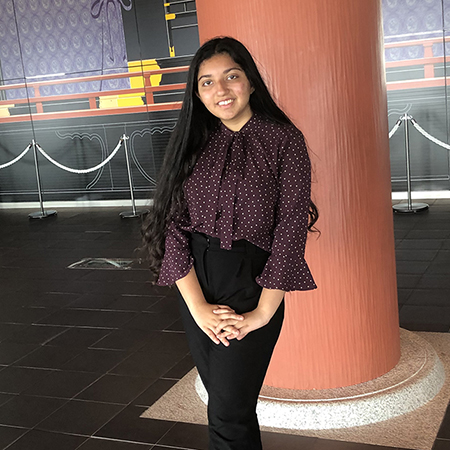
Empathy and compassion are at the forefront of everything 18-year-old Ananya Nagendra does. She adopted her guinea pigs from the Texas Rustlers Small Animal Rescue, where she has volunteered for nearly seven years after learning they were often abandoned, surrendered or from neglected homes.
Ananya’s main focus is Letters of Light, the 401(c)3 she founded to bridge the gap between mental and physical healthcare for cancer patients. The original initiative involved sending encouraging letters and care packages to patients through partner oncology centers. Over 10,800 people have been on the receiving end of such uplifting expressions of solidarity.
As a Riley’s Way Call for Kindness Fellow, she’s been given a grant to establish “Books of Light,” a program that creates library systems at underfunded oncology centers so those in treatment can distract themselves with a related resource book or a personally requested one.
Ananya has also developed preventative healthcare workshops across the state that serve around 500 high school students each year, and she connects patients to support groups and guidance via the social workers who work with her organization. But she doesn’t do it alone. 1,200 student volunteers from 57 schools across the country assist at events, as long-term administrative help and through writing handwritten letters.
Ananya is looking forward to exploring the intersection between environmental science and public health in her collegiate studies where she will, of course, continue to lead with compassion.
What inspires you to volunteer?
My introduction to volunteering was at the animal rescue and my local temple. I didn’t really know what volunteering meant; I just knew I wanted to help out and found it exciting that, at the rescue, I could help these animals that I’d loved for so long.
What I really enjoyed about volunteering at my temple was getting to meet people in my community. Through that, I realized that I could teach younger people who might not know as much about Indian culture and want to learn more.
These experiences helped me understand what community support is and how it can look different in different communities. I learned the same skills at both places–to work in a team, to support others and to contribute to a bigger cause.
What inspired you to get started with this initiative?
I lost my mom to metastatic breast cancer when I was 15. At that time, I didn’t know what cancer entailed or what treatment would look like, but soon after, I started spending my holidays, weekends and time after school at her chemotherapy sessions. I’d sit in the lobby because I was too young to enter the chemotherapy ward, and I constantly saw people going in alone. My mom also saw many people without any support when they were struggling to even walk into their sessions. Cancer is as much a mental battle as a physical one, and through my mom’s experiences, I learned more about how it takes both kinds of strength to get through treatment.
I looked for ways someone my age could support patients in treatment but found few options with established nonprofits. Many times, opportunities include driving them, cooking or doing different physical support things. Rarely did options involve mental health support. That made me realize that letters would be a great way to connect with people and brighten their day.
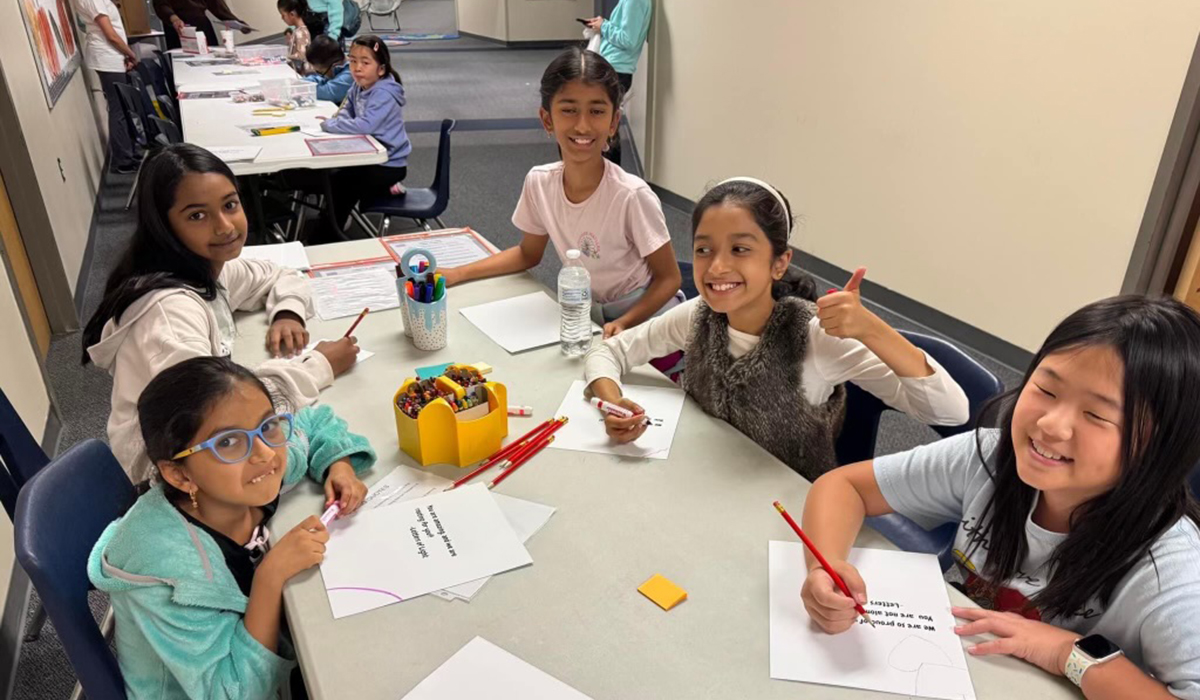
Elementary school students learn about community support and write letters of encouragement to people going through cancer treatment in December 2024.
Tell us about your volunteer role with Letters of Light Foundation.
When I first started, it was finding grants and funding sources, forming a team, setting up a board, setting up letter auditing guidelines and standards, etc.
High schoolers don’t really get preventative health care or cancer awareness education. That scared me, because one in four people go undiagnosed with cancer. So, I also created online and in-person preventive healthcare workshops with interactive activities like quizzes. We hand out pamphlets and talk about different forms of screenings, as well.
The team I manage has grown from two to 16 people, which has allowed me to take on more creative tasks—deciding how to expand, what to change, how to better target certain groups. I do a lot of outreach, networking, answering requests and planning out partnerships.
What are your long-term plans or goals for the organization?
I want to do more policy work to subsidize screenings and offer college-level preventative healthcare or cancer education classes to students. Quite a few people under the age of 25 are diagnosed with cervical cancer.
What’s been the most rewarding part of your work?
I love seeing patient’s reactions when they open their letters. People tell me they’re not only joyful to receive them, but they feel that someone else is there for them. The head of nursing from one of our partner oncology centers told us that many of the patients bring their letters to each treatment session as a talisman and find new strength.
That’s exactly the response we hope to hear. We just want to let them know that they’re stronger than they think they are and can get through this.
What have you learned through your experiences as a volunteer?
Many of our youngest volunteers are 4 or 5 years old. They don’t know what cancer is or how brutal treatment is. What they do understand is that they have a bunch of love to give, and they can make people happy through these letters. That makes them happy.
For many people, we’re their introduction to what community support looks like. We can’t introduce our youngest volunteers to cancer yet, but we can teach them compassion.
What do you want people to learn from your story?
You’re never too young to do something like this. You’re capable of leading a change in any field you’re passionate about.
When I lost my mom, I thought that I would never be happy with my life again. But you can find things that not only make you feel connected with someone you’ve lost, but that make you feel content. As time passes, you truly get better. You’re stronger than you know.
Meet Daily Point of Light Award honoree Gwenevere Persaud. Read her story, and nominate an outstanding volunteer or family as a Daily Point of Light.
Gwenevere Persaud doesn’t remember a time when she wasn’t enthralled with the ocean and the life it contained. Growing up near the California coast, her time at the beach or on the water fed her passion. At its peak, she decided to funnel her energy into The Persaud Foundation, a marine biology nonprofit founded to support the ocean through conservation and education.
It started with an educational newsletter called The Persaud Catalog in mid-2022 which, as of today, Gwenevere has written nearly 200 articles for. She covers everything from marine life to how oceanic charts have aided sailors from the 1700s onward.
Slowly, she scaled things up to increase her impact and the foundation was born. She added online classes, creating seven out of eight and co-authoring the other. In her podcast, The Marine Enthusiasts, she and her co-host Skylar Kang discuss marine organisms like, for their Halloween episode, ghost and goblin sharks. Over 16 beach cleanups and seven local educational events attract crowds of all ages. With the help of 40 volunteers, Gwenevere has removed 120lbs of trash from Santa Monica State Beach this year alone. And she still finds time to explore the coastline with her four-legged land-dweller, Shadow Neptune, who shares a name with the Roman god of the sea.
What inspired you to get started with this initiative?
There is no one person, place or film that sparked my passion. I’m from Los Angeles, and as a child, I would often explore the coastline. I’m lucky to have grown up with parents who encourage my curiosity and interest in our natural world.
There aren’t many free and reliable resources for marine biology. I thought that by doing service work, I’d be able to spread appreciation and understanding of the ocean. I also wanted to encourage people to care about it more. All life began in the oceans, and all life depends on them, no matter how far away you are. It shocked me that so many people seem to have so little regard for its health and wellbeing. That inspired my volunteer work.
Enthusiastic volunteers join The Persaud Foundation at a Santa Monica State Beach cleanup.
Tell us about your volunteer role with The Persaud Foundation.
As executive director, each day looks different. Some days are about hosting events. Some are about writing newsletter articles. Sometimes, I’ll spend more time doing administrative tasks or working on our online courses.
We started our volunteer program in March, and we have eight long-term volunteers who work on either our science communication or social media efforts in addition to short-term volunteers for beach cleanups. I’m the primary volunteer coordinator, so I support their work as well.
I’ve organized every board meeting, written every tax return, designed as well as maintained our website, negotiated strategic partnerships and coordinated each fundraiser we’ve hosted. Additionally, I’ve written and produced 18 episodes of our podcast. My co-host has inspired me a lot in my work, too.
What are your long-term plans or goals for the organization?
I’d like to publish more online courses and find ways to create more free options. Additionally, I want to focus on hosting beach cleanups more frequently and in different areas. We began at Santa Monica Beach because it sees some of the heaviest usage in the country. It gets about 8 million visitors per year, and many people throw trash on the ground.
What’s been the most rewarding part of your work?
It’s hearing people say that, through my educational resources, they’ve discovered that they want to go into marine science. Eco-anxiety is a really big problem these days, and I strive to fight against it, so hearing people say that their passion for the ocean was reignited is amazing.
I also enjoy seeing the difference we’ve made after each cleanup. It’s extremely important to me that marine life and people have access to this beautiful coastline without it being ruined by litter.
What have you learned through your experiences as a volunteer?
I’ve learned how amazing humanity can be. You’d think I’d come to the opposite conclusion, because it’s disheartening when you look at the destruction people have caused to marine life, the coastline, the ocean and marine ecosystems. But humanity can be amazing when passionate, determined people are united in a cause.
I’ve learned to be as optimistic as I can, because there are always going to be things working against me. You have to push forward anyway. And I’ve learned to be resourceful. Things are unlikely to be perfect a lot of the time. They are always going to be conditions I can’t control. I make the most of what I have access to.
Tell us about future partnerships, programs or events that you are excited about.
I have a beach cleanup on December 13. In January, I have another Oceanic Literacy Day. We host free local educational events to increase people’s understanding of the ocean, especially children and families.
One of the partnerships that’s made this possible is with The Open Book in Topanga. They’re an amazing independent vintage bookstore that has allowed us to use their space. They’ve also helped us fundraise by giving us 20% of any person’s sales who mentions our fundraiser.
Any advice for people who want to start volunteering?
I recommend looking into local organizations that could use your help. There are a lot of different ways to get involved. Google is one of the best resources, along with Facebook. A lot of organizations which don’t have the energy, time or money will post their events there.
Why is it important for others to get involved with causes they care about?
You’re given one life. You have to fit everything you want to do into this short, 80- or 90-year period. Be as passionate, involved and vivacious as possible. One way to do that is by getting involved with your community and trying to positively impact lives. The method doesn’t matter as much as the action.
Working to Prevent Even One More Death from Drunk Driving
Meet Daily Point of Light Award honoree Beth McBride. Read her story, and nominate an outstanding volunteer or family as a Daily Point of Light.
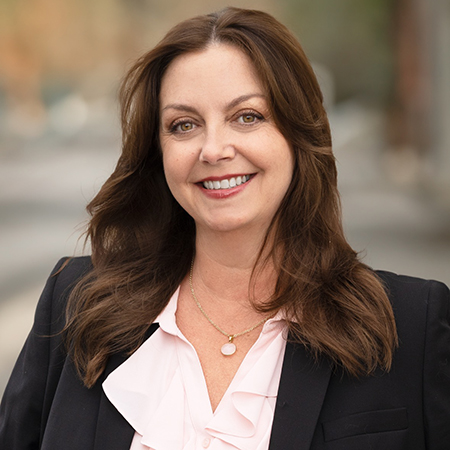
Sometimes, there are moments in life that become so significant that time becomes measured only as “before” and “after.” Approximately two and a half years ago, Beth McBride’s life changed in an instant when her son was killed by a drunk driver. But her “after” inspired others when she turned her grief into a mission to prevent her tragedy from repeating itself in other families with Montana Bar Fairies.
Together, with a group of volunteers, she leaves coffee shop gift cards on the windshields of cars left at bars and events to thank the owners for not driving under the influence. Her goal is to change the culture, using positive reinforcement while pushing for legislation changes. The program has proliferated across Montana and the rest of the country, garnering donations from individuals as far as England, and even an unsolicited $5,000 thank you from Jägermeister. Beth finds strength in the knowledge that people care about the issue and motivates many to do so.
What inspires you to volunteer?
My mother has always volunteered, so she taught us. She was a prison chaplain for many years. She worked for an adult special needs daycare when I was a child. They would go to the Special Olympics, and she would take us all. My mom often took in families, too. We’d come home and there would a Vietnamese family in need living with us. Or she would bring home people on Christmas.
I was raised to look after my fellow human. I’ve always volunteered in church. I’ve worked in the soup kitchen, Shepherd’s Hand—a medical clinic—and concession stands at the baseball fields when the kids played sports.
Beth McBride, founder of Montana Bar Fairies, uses positive reinforcement and advocacy for legislation to keep people from driving drunk. /Courtesy Carli Seymour
What inspired you to get started with this initiative?
On March 11, 2023, my son was killed by a drunk driver while celebrating his 21st birthday at a bar with friends. When it closed, they walked across the street to catch a sober ride, and he was hit. That was the darkest time of my life and my family’s life.
I could barely leave my house. My daughter, Carly, used to come over, and we would just sit together. One morning, as she drove by a local bar notorious for pumping out drunk drivers, she saw a few cars in the parking lot with the windows frosted over. And she thought, I wish there was a way to thank them for not driving home drunk.
When she got here, we started brainstorming. Why not? Why can’t you thank people? Maybe they’ll make a better decision. We put everything together and started January 1, 2024.
Tell us about your volunteer role with Montana Bar Fairies.
Our daily duties start with answering our emails and social media comments. Sometimes, we get so many comments, it’s impossible to return them all. We focus on everybody who wants to get started in their community or donate money.
My favorite part is seeing that other people care. Once we saw that this was taking off, we got our 501(c)3, and I hired a bookkeeper. We collect donations, order supplies, send out information and new kits, schedule volunteers and document their hours. We’re now in most major towns in Montana, as well as Wenatchee and Tacoma, WA, and Lake of the Ozarks, MO. Soon, we’ll launch in Cleveland, OH and Charlotte, NC.
Early Saturday or Sunday mornings, we meet at around 5:30 am with our safety vests on and go out in pairs to bar parking lots and roads where cars are parked after a night out. We leave up to 20 $5 coffee cards and victim story cards with a picture of a local victim, their name, birth and death dates on car windshields. We buy coffee cards from local places so each community we’re in has a vested interest in saving lives. On the back, they say, “Thank you for doing your part to keep our community safe by getting a sober ride. Enjoy coffee on us.” We also cover shows and events like Ladies’ Night and holiday parades.
Additionally, I track the number of people in jail for DUIs and DUI-related accidents for all the counties in Montana we’re in. It takes about an hour every day, and we post it weekly to raise awareness for the need for stronger legislation.
Is there a state doing this well? What kinds of legislative changes would you like to see?
My family lives in California. People drive drunk there, too, but the majority don’t. They have Ubers available. The fines are incredible. There’s automatic jail time long enough to know you don’t want to be there again.
I talked to one sheriff in Montana who said they just pull them over, write them a ticket and release them into the hands of a responsible party on the side of the road. We’re doing our part by using positive reinforcement, but there also has to be a deterrent factor enforced.
We brought new DUI legislation to Montana this last session and got Bobby’s Law passed. My son was outside of the crosswalk when he was struck by a man with a blood alcohol level of .20. The man was so drunk he barely remembers the night, and because my son was jaywalking in Montana, the driver was charged with misdemeanor aggravated DUI and careless driving. He spent 18 months in the county jail.
Now, if you kill someone with a blood alcohol level of .16 or higher, twice the legal limit or more, regardless of circumstance, you are inherently negligent. You’re charged with aggravated vehicular homicide while under the influence, which carries a minimum of a three-year prison sentence and increased fines.
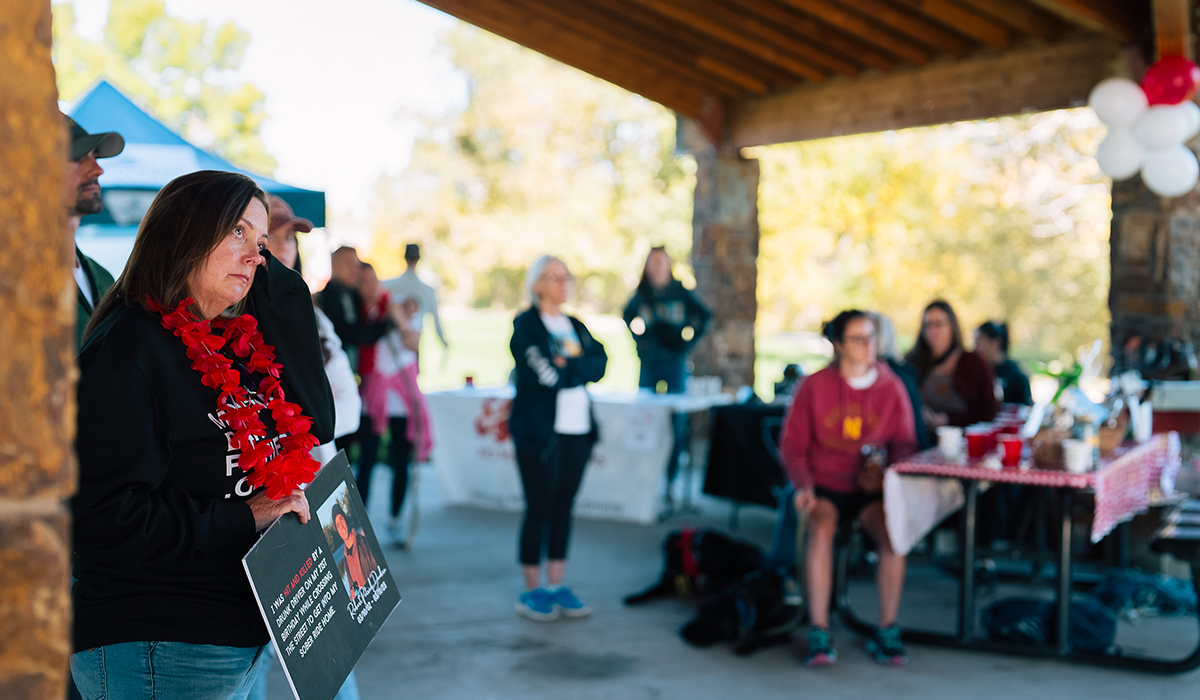
At Boseman’s 2024 Walk Like MADD event benefitting Mothers Against Drunk Driving, Beth wipes away tears while holding Bobby’s victim card. /Courtesy Carli Seymour
What are your long-term plans or goals for the organization?
The goal is to do whatever it takes until it ends. We’re going to do this until people stop donating and volunteering. Until that happens, I’m committed. We have the highest number of DUI fatalities in the country, and they’re 100% avoidable.
Locally, we want a Fairy Ferry. People are begging us to add a transportation component, because we don’t have a big taxi or Uber presence here. We want people to be able to leave their car at the bar and get a free ride home.
What have you learned through your experiences as a volunteer?
When you volunteer, you see the good in others, and it increases one’s sense of community. It makes you aware of and grateful for what you have and builds confidence, compassion and knowledge. Everyone should volunteer in whatever capacity they can. Help each other out.
What do you want people to learn from your story?
There hasn’t been a significant change in Montana DUI legislation since Bill Clinton had all the states use .08 blood alcohol limit or lose their federal funding for roads. Things fall into place when you work hard and your heart is in the right place. It takes faith and elbow grease. But you can do it.
High School Senior Mobilizes Youth for Cancer Awareness and Support
Meet Daily Point of Light Award honoree Ali Rizwan. Read his story, and nominate an outstanding volunteer or family as a Daily Point of Light.
At JP Stevens High School in New Jersey, Ali Rizwan is known as the student who loves a good challenge — whether it’s solving physics problems, tackling math competitions or conducting research on light toxicity. But beyond the classroom, the 17-year-old is using that same curiosity and problem-solving mindset to make a difference.
As president of Hope2Heal’s New Jersey chapter, Ali blends his passion for STEM with service, creating innovative ways to support cancer patients and their families. From organizing international online Quiz Bowl tournaments to developing an AI therapist chatbot, Ali’s efforts have helped the nonprofit raise thousands of dollars and more than $100,000 worth of donated clothing, books and essentials to provide to cancer patients and their families, as well as to homeless shelters. His work has also helped Hope2Heal secure sponsorships with major organizations such as Penn Medicine Princeton Health and the American Cancer Society, showing how even small, youth-led initiatives can create large-scale change.
Hope2Heal’s mission focuses on teaching young people about cancer — how it develops, how it impacts patients and families, and how students can get involved. Ali is central to that work in New Jersey, coordinating school outreach, organizing donation drives and rallying volunteers to write encouraging cards for those undergoing treatment. Under his leadership, the chapter has strengthened Hope2Heal’s reach across the state, raising money for cancer research while offering emotional support to families fighting cancer.
What inspired you to start volunteering with Hope2Heal?
I was first introduced to Hope2Heal by a few friends who helped start the initiative. They had traveled to India over the summer and saw how many of their relatives were being diagnosed with cancer. Since cancer ran in their family, they wanted to do something to help. They reached out to me to see if I could support their cause in my city, and I’ve been volunteering ever since.
Ali and his fellow volunteers deliver nearly $20,000 worth of donated books and clothing to Penn Medicine Princeton Health for cancer patients and their families. /Courtesy Ali Rizwan
Tell us about your volunteer role with Hope2Heal.
Right now, Hope2Heal is in eight states and 70 cities. I serve as president of the New Jersey chapter, where I organize donation drives to collect items like clothing, books and board games—really anything people no longer use but that could be valuable to someone else. We also hold bake sales and fundraisers at schools to raise money and awareness.
Another major part of my role is leading our annual online Quiz Bowl competition, which I helped launch. It’s a trivia tournament with questions on everything from math and history to pop culture. It’s open to participants worldwide, and through it, we’ve raised more than $3,000 to fund care packages for homeless shelters and families in need.
What message are you trying to share with other youth and high schoolers about cancer?
There are really two main messages we want to spread. The first is that you don’t need to have a title or be a doctor to make a difference. You can be a student at a middle school or high school and still have an impact in your community. No matter how small it seems, you’re still helping someone.
The second message is about the mental side of cancer. A lot of people understand the physical challenges, but they overlook how much it affects patients emotionally — and their families too. Cancer isn’t something that impacts only one person. It affects their parents, siblings and friends. We really want to highlight that mental aspect.
That’s also why we recently started using artificial intelligence to create an AI therapist on our website. It gives cancer patients, family members or anyone affected by cancer a private, secure place to talk about the mental challenges they’re dealing with. They can reach out to us, but they can also use the chatbot whenever they need support.
What’s been the most rewarding part of your work?
The most rewarding part has been seeing the impact firsthand—the expressions of gratitude from cancer patients and their families, and the excitement from students who learn about our cause and want to volunteer.
We’ve had families thank us for the donations and care packages they’ve received, and that really shows how meaningful even small acts can be. We also include handwritten cards with uplifting messages for patients, made by local students. It just gives them another light to keep fighting.
Why is it important for others to get involved with causes they care about?
It’s important because not everyone has the same opportunities or resources. If you have the time, support, or even just a small platform, you can make a difference for someone who doesn’t. It’s not about owing society something. It’s about realizing how much impact we can have when we care. Even if you volunteer just a few hours on weekends, you’re creating change.
If you could send one message to cancer patients or their families, what would it be?
I’d want them to know that they’re not alone. There are people out there who are rooting for them, supporting them and ready to help—whether through donations, emotional support or just being there to listen. Even if they can’t talk to their family about what they’re going through, they can always reach out to others who understand. There’s always someone willing to help.
Emily Ades, the volunteer co-founder and co-president of Impact 100 NYC, a women-led giving circle, has dedicated herself to pooling resources and awarding transformative, high-impact grants across New York City. Since its launch in 2020, Emily’s commitment has seen the organization soar to over 400 members, collectively awarding a remarkable $1.5 million to underfunded nonprofits. This crucial funding has impacted the lives of countless individuals by addressing critical community needs, from food insecurity and youth development to social justice and environmental sustainability.
Emily’s vision is about much more than grantmaking. It is, most fundamentally, about building inclusive community engagement and amplifying women’s voices in philanthropy. She dedicates approximately 40–50 hours per month as a founding leader and active volunteer, focusing on strengthening community ties and mentoring. Her dedication ensures that Impact 100 NYC’s grantees receive not only vital funding but also long-term support and essential visibility. This commitment to fostering community is rooted in her 25 years of experience in education, child advocacy and nonprofit leadership, which she also applies as the director of the Kinnect Foundation.
One of Emily’s most inspiring initiatives is her focus on the next generation of changemakers. Recognizing the power of early inspiration, she launched a teen chapter of Impact 100 NYC. This program has successfully mobilized and impacted hundreds of students, inspiring them to actively participate in community service and philanthropy. By creating a platform for young people to engage with and contribute to their communities, she is mentoring the future leaders who will continue the cycle of civic engagement and service.
Through her organization, Emily has cultivated a collective heart for the city, proving that when women unite, their impact is nothing short of extraordinary. Read on to hear more of her story, in her own words.
Tell us about your volunteer role.
I’m the founding co-president of Impact 100 NYC, a women’s collective giving group that combines individual donations to make significant grants to local nonprofits. We launched in March 2020, literally days before the world shut down due to the COVID-19 pandemic. None of us could’ve predicted what was coming, but in a strange way, the timing was right. People were isolated and looking for purpose, and our city’s nonprofits needed help more than ever. Impact 100 NYC became a way to connect and do something meaningful together. What started as a handful of women has turned into this incredible community of hundreds across the city. I also mentor our nextgen group, which brings teens into the world of giving and community service. I love watching them discover that they can make a difference right now, not “someday.”
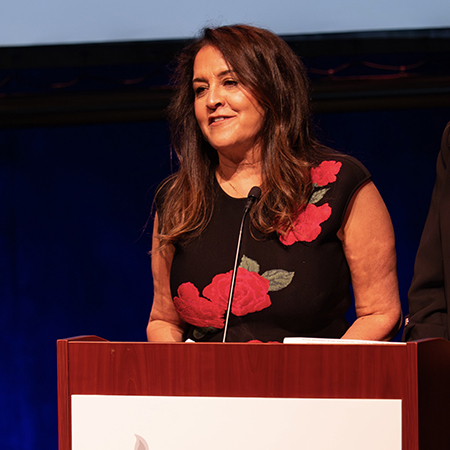
Emily Ades has volunteered as the Founding Co-President of Impact 100 NYC since 2020.
Why is this issue so important to you?
I’ve always believed that everyone deserves a chance to be part of something bigger than themselves and that philanthropy shouldn’t just belong to the wealthy. Collective giving opens that door. I’ve seen firsthand how powerful it is when women and teens come together to support local organizations. One of my favorite moments was watching our nextgen teens present their grant recommendations to the adult members. They were nervous but so passionate. It reminded me that this work isn’t just about funding; it’s about fostering confidence in teens, building community leaders and supporting the nonprofits that are tackling the real challenges on the ground.
What inspired you to get started with this initiative?
A few years ago, my friend and volunteer co-president, Mindy Wigutow, invited me to attend an Impact 100 event in Fairfield County, Connecticut, and it completely lit me up. The idea that 100 women could come together, each giving $1,000, and make a $100,000 grant was so simple but so powerful. A few conversations later, a small group of us were brainstorming over coffee, and Impact 100 NYC was born. We didn’t know exactly how it would work, but we knew it mattered, and that belief carried us through those early growing pains.
What are your long-term plans or goals for the organization?
I’d love to see Impact 100 NYC continue to grow with more members, more grants and deeper relationships with the nonprofits we support. I’m also really focused on building out our nextgen program so that it becomes a true pipeline for young leaders. When one of our nextgen members told me she changed her college major after working on a grant review because she “wanted to help people for a living,” it hit me that this program isn’t just teaching philanthropy… it’s shaping futures.
What’s been the most rewarding part of your work?
Hands down, it’s the ripple effect. Each May, we announce the $100,000 grants to the nonprofits. Sometimes there is stunned silence, sometimes tears and always celebration. You can feel what it means to them. The funding makes a transformational project they’d only dreamed about finally possible. But what really fills me with pride is what happens next. Our volunteer corps steps up to help build furniture, paint murals, serve Thanksgiving meals and offer pro bono legal and financial services throughout the year. It’s not just about the money, but also about the community showing up, together, to make something extraordinary happen. Watching people find connection through giving has been the biggest reward.
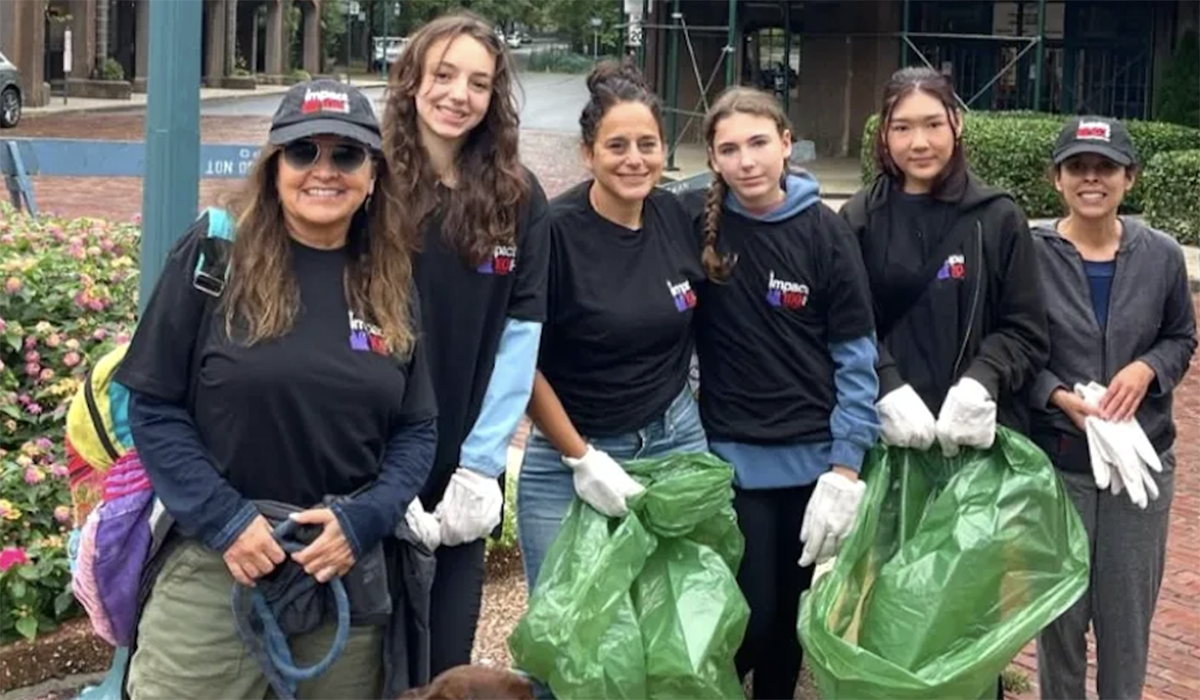
Emily Ades is the volunteer founding chair and mentor of Impact 100 NYC NextGen, a youth-led service organization. She actively engages alongside the teens in community service initiatives, including street cleanups and other hands-on volunteer projects.
What have you learned through your experiences volunteering?
I’ve learned that volunteering is really about listening and showing up. When we visit our grantee organizations and see their work up close, it’s impossible not to be humbled. One founder told me, “You didn’t just fund us, you believed in us.” That’s when I realized that support, when it’s given with heart, goes way beyond money. I’ve also learned that the best ideas often come from the collective. When you bring people together with different backgrounds and experiences, the results are always stronger.
Why is it important for others to get involved with causes they care about?
Volunteering changes not just how you see the world, but how you see yourself. When you get involved, you stop being a bystander and start being part of the solution. One of the things I love about Impact 100 NYC is that our giving is interactive, not just transactional. I’ve seen members join saying, “I don’t have much to offer,” and a few months later they’re leading committees, mentoring others and making a real difference. Even small actions can have a huge impact.
Any advice for people who want to start volunteering?
Start where you are. You don’t need a plan. Just follow what moves you. Say yes to the next opportunity, even if you’re not sure what to expect. Some of my favorite moments came from simply raising my hand and showing up. Volunteering doesn’t have to be huge or complicated; it just has to be heartfelt. The rest unfolds naturally once you get started.
Mayas Smith always had an interest in government, but he wanted to share that passion with younger generations. Through the magic of volunteerism, his mission became a reality. As a high school freshman, Mayas began volunteering at a local elementary school where he taught the students about government. Now a senior in high school, his passion for civics has blossomed into so much more.
Mayas is the founder of Young Citizens Academy, a student-led, global initiative inspiring civic engagement among youth. Whether he’s running interactive civics workshops or continuing his work inside elementary school classrooms, Mayas shares his passion for civics in a way that’s relatable for younger populations. In one second grade classroom, he had the students create their own class flag based on their values of friendship and respect. He also taught them how elections work by having the students vote on a Dr. Seuss book to read using an anonymous process. His diligence has been a tremendous success; since establishing Young Citizens Academy, Mayas has expanded the organization to 60 chapters in 24 states within the United States and nine countries. Over 7,000 individuals have been reached through his mission to improve civic literacy.
Mayas estimates that he dedicates 40 hours per month to his role with Young Citizens Academy, which is a heavy task with his heavy high school courseload. As he prepares to head off to college next year, he’s hoping to study political science and history, either in his home state of Michigan or on the East Coast. But no matter where he ends up, Mayas is determined to bring the Young Citizens Academy along with him so he can continue to support younger generations by educating them in the world of civics. His passion for the topic is a testament to just how far we can go as volunteers when we’re dedicated to the endeavor.
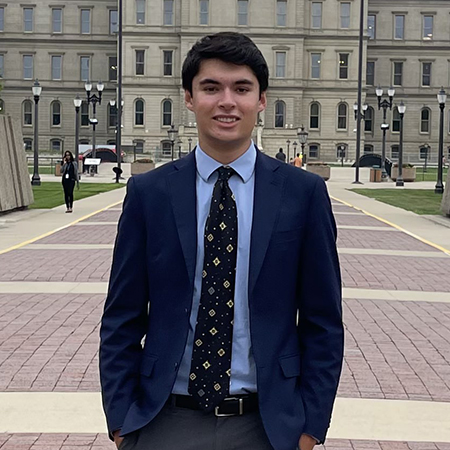
MAYAS SMITH, FOUNDER OF YOUNG CITIZENS ACADEMY, STANDS IN FRONT OF THE MICHIGAN STATE CAPITOL AFTER TESTIFYING BEFORE THE SENATE EDUCATION COMMITTEE TO PROMOTE SCHOOL SAFETY AND SMALL CLASSROOM SIZES. HIS WORK WITH YOUNG CITIZENS ACADEMY INSPIRED HIS STATEMENTS. /COURTESY MEGAN JOHNSON
What inspires you to volunteer?
I see improving civics education as pivotal to preparing future generations of leaders from my community and communities oceans away. I’ve noticed a lack of emphasis on this specific topic in schools. Even if I could only change minds in just one elementary school, I would see it as a major win in uplifting our future society. I hope to continue Young Citizens Academy for this reason in the years ahead, so that this movement’s collective positive impact will only increase.
Tell us about your volunteer role with Young Citizens Academy.
For four years, I have been leading the Young Citizens Academy in its mission to promote civic education, both locally and worldwide. It began in my freshman year of high school as a volunteer project with my brother, and it grew into the thriving organization it is today through the diligent work of an amazing team of volunteers across Michigan, the United States and abroad. In terms of what we do at any given chapter, we run civics workshops and school outreach, and we initiate government-oriented student organizations.
What inspired you to get started with this initiative?
I have been interested in civics from a very young age. When I had the chance to teach a second grade class about something while volunteering at a local elementary school, it was the first topic that came to mind. I had been reading a lot about the upcoming presidential election, and the first lesson I ever taught involving civics was about how elections work, as demonstrated by having a vote on which Dr Seuss book I would read aloud to the class.
After I had made a significant local impact, I reached out to other civically minded students from around the state to invite them to start Young Citizens Academy chapters at their respective schools. From there, our success allowed us to balloon into a national and international organization by connecting with leaders beyond just Michigan’s borders. In total, we now have chapters in 24 states and nine countries across five of the world’s continents.
What are your long-term plans or goals for the organization?
I’m a high school senior right now. In college, I seek to expand the reach of Young Citizens Academy by adapting to university-level civic education needs, which is obviously a lot higher level civics than what I’ve been teaching to second graders. I am confident that we can become even stronger as an organization, and can build even greater support among students while on college campuses for the first time.
What’s been the most rewarding part of your work?
The most rewarding part of Young Citizens Academy is when I’m in the classroom teaching students about government. It is something I have been passionate about for a very long time, and I can only hope that I inspire the same interest in others to pursue it. I’m glad to have set up the necessary networks for other students across the globe to start their own Young Citizens Academy chapters. I think that is great, to have it in as many countries and states as we do. But my greatest satisfaction always comes from leaving a school having brought a class of students up to speed on that day’s engaging topic surrounding civics. I’d say I take the most pride in actually going to the classrooms myself and tangibly making a difference in my local community.
What have you learned through your experiences as a volunteer?
I’ve learned that more individuals than you likely realize share your passions. Even though Young Citizens Academy connected me with a bunch of different students from around the world with very diverse backgrounds, it just so happened that we all shared the commonality of being interested in civics. If not for volunteering, I would not have met such an amazing group of people.
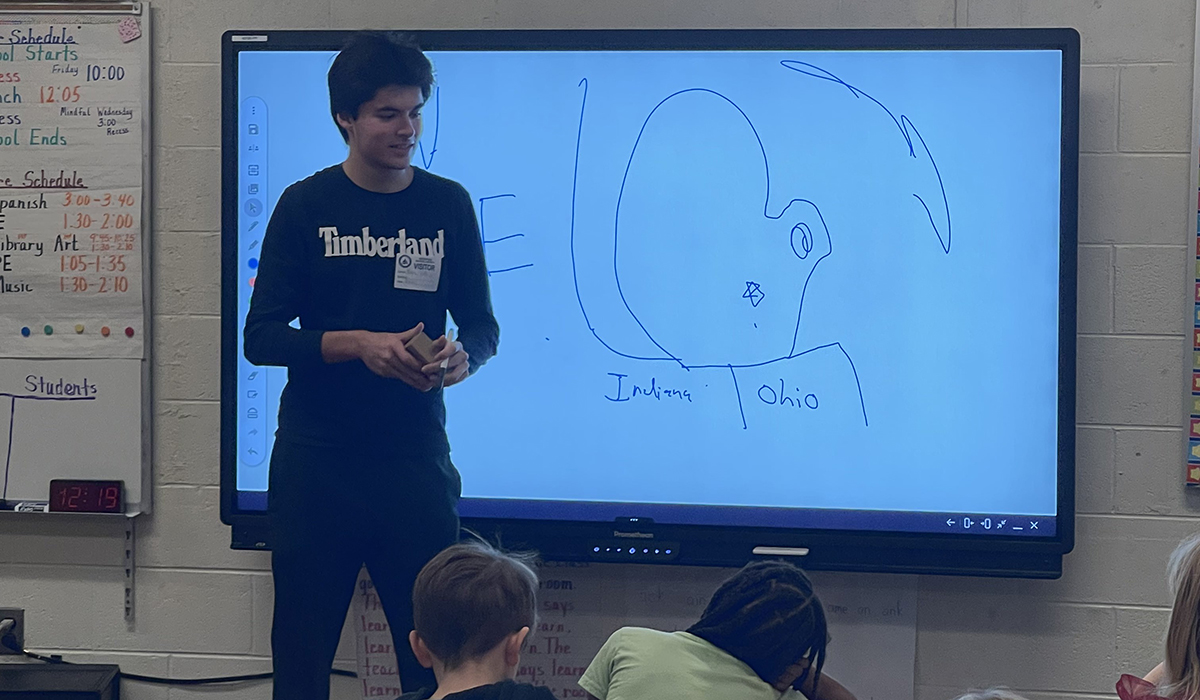
MAYAS SMITH, FOUNDER OF YOUNG CITIZENS ACADEMY, TEACHES A CLASSROOM ABOUT THE GEOGRAPHY OF THE MIDWESTERN STATES. /COURTESY MEGAN JOHNSON
Why is it important for others to get involved with causes they care about?
Being involved in something you care about is one of the most fulfilling ways for you to make an impact on the world. If you care about it, you will always go one thousand times further and make a much more meaningful difference in whatever you’re doing. If you don’t get involved in what you care about, then you shouldn’t really expect anyone else to either. You have to take control of both your own life to do what you care about, but also you have to take control of what you care about. I cared about civic education in my community and I took charge in leading a push to make sure that civic education is something emphasized now in schools across Michigan, across the US and in places around the world.
Any advice for people who want to start volunteering?
The first step is always the hardest, but once you make it, you never need to look back. You should make the most of every opportunity, and don’t be afraid to take risks. Failure is inevitable, but in a way, it’s also required for you to ever appreciate what true success feels like.
What do you want people to learn from your story?
Once you volunteer with whatever cause you’re passionate about, so many new doors will open up to you. So to any other high schoolers out there who have an interest in whatever it may be, government or something else, feel free to go out there and actually initiate a project on your own. One of the major issues getting started was that whenever I would tell people about Young Citizens Academy, the first thing they would ask me was whether it was Republican or Democrat. I would always have to explain to them that it’s neither. It’s supposed to be a totally non-partisan initiative to improve civic education. A lot of people thought it was a crime to not take a side in 2025, but it’s one of the best things I’ve ever done, because I got to meet people from so many different perspectives and take it so much further than if I had remained closed-minded. If I hadn’t taken that initial step to include everyone in my organization, then maybe Young Citizens Academy wouldn’t have even left my high school.