Empowering Youth for Public Health: Students Lead the Fight Against HPV
Meet Daily Point of Light Award honoree Sophie Wang. Read her story, and nominate an outstanding volunteer or family as a Daily Point of Light.
Sophie Wang is making a profound impact in public health through her leadership in the Youth HPV Champions initiative, an organization she co-founded to educate and advocate for HPV prevention. With support from the OHSU Knight Cancer Institute, Sophie has trained nearly 30 students as facilitators to help spread awareness about HPV, fostering a youth-led movement dedicated to breaking stigmas and increasing vaccination rates.
Sophie’s ability to mobilize and inspire young leaders has rapidly expanded the initiative, engaging over 850 youth in just one year, making it the largest geographically-reaching youth HPV program in the Pacific Northwest. Under her leadership, Youth HPV Champions has developed Oregon’s first HPV awareness toolkit, a resource that guides students and educators in hosting HPV events and increasing vaccination outreach. This toolkit has been distributed to 36 schools, with over 500 additional copies shared with healthcare professionals, students and teachers through OHSU.
Beyond educational materials, Sophie and her team have organized community-wide efforts, including 41 tabling events, school presentations and outreach efforts, reaching over 3,800 individuals. The initiative has also hosted an annual summit conference at OHSU’s Knight Cancer Research Building, bringing together over 200 attendees for keynote speeches, workshops and training sessions led by national HPV experts. Additionally, Sophie has built a sustainable framework for youth advocacy by training 64 students as Youth HPV Champions Ambassadors. These students have gone on to establish HPV awareness chapters in 31 schools across three states—Oregon, Washington and Illinois.
Sophie has been recognized at the national level for her contributions, invited to deliver 12 speeches at major public health events, school assemblies and health fairs. Her efforts have also been acknowledged through prestigious accolades, including becoming a 2025 Coca-Cola Scholar, a National Honor Society Scholarship National Finalist and an Elks Most Valuable Student Scholarship Quarter-Finalist. In addition, her research abstract, “Youth Are the Future, So What Are They Saying About HPV?” has been accepted for an oral presentation at the 2025 National HPV Conference.
Tell us about your volunteer role.
I’m the co-founder of Youth HPV Champions, an initiative partnered with the Oregon Health and Science University Knight Cancer Institute focused on educating, advocating and promoting HPV prevention and awareness among youth. I have dedicated nearly two years to leading this initiative, earning me several accolades. Through my work with Youth HPV Champions, we developed Oregon’s first-ever HPV toolkit, which provides comprehensive resources for hosting awareness events and encouraging vaccinations. Additionally, our initiative has engaged more than 2,000 people by tabling and presenting at community events, helping to grow the initiative into the largest youth-led HPV education movement in the Pacific Northwest.
Why is this issue so important to you?
I have seen firsthand the devastating impact of this preventable disease within my loved ones, seeing
close peers who chose not to get vaccinated develop cancer as a result. Beyond the personal toll, there’s
a pervasive stigma surrounding HPV that makes it difficult for youth to talk openly about the topic, even
though it is crucial for their health.
HPV can be seen as taboo or uncomfortable to discuss, yet it’s a conversation we must have to prevent future cancers. The work we are doing through Youth HPV Champions is so important because it breaks down these barriers, encouraging young people to have these critical conversations, get vaccinated and ultimately protect their health and tackle the global cancer burden.
What inspired you to get started with this initiative?
I actually attended an HPV conference organized by a previous student in my community. At that event, I realized the potential for something much bigger—a sustained initiative that could unite youth voices across Oregon to fight for HPV awareness and vaccination. I was struck by how this important topic hadn’t had an organized, youth-led effort to tackle it in the Pacific Northwest.
I wanted to change that. I wanted to turn a one-time conference into a movement, one that could start in Oregon and expand beyond borders to include schools and communities across multiple states. Additionally, in my own high school experience, I noticed a major gap—while HIV and cancer were regularly discussed in health classes, HPV was strangely absent. This hole in my curriculum fueled my determination to spearhead an initiative that would fill such educational gaps.
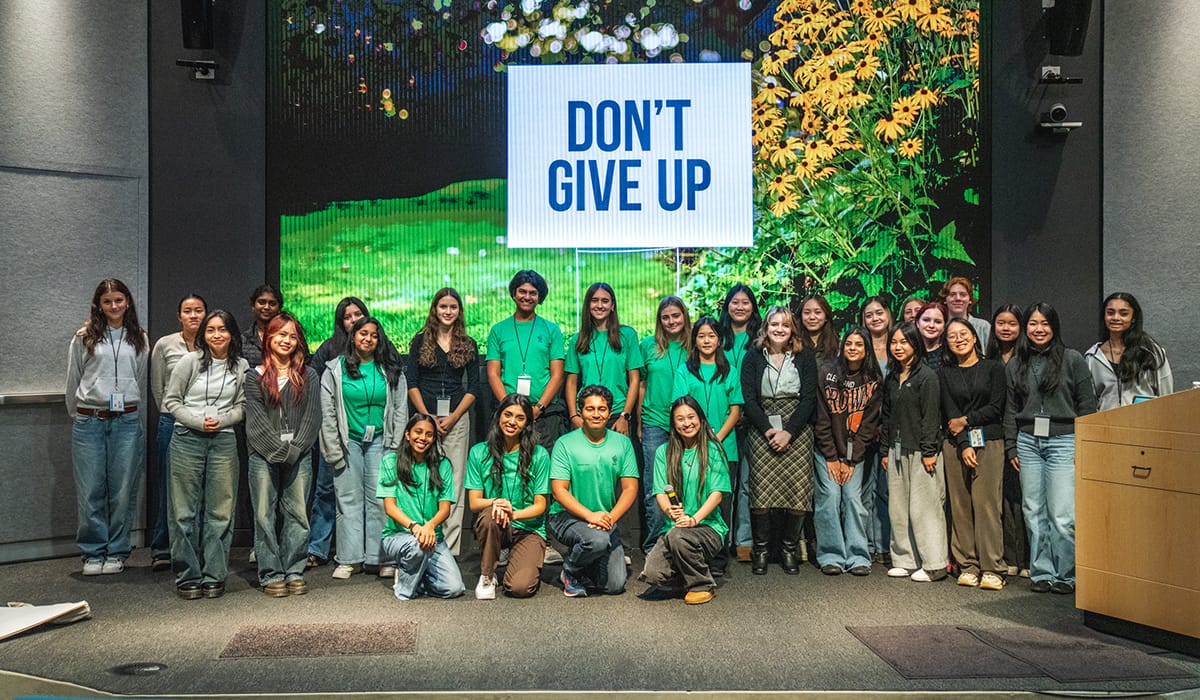
Executive Council and Ambassadors of Youth HPV Champions gather for a full-team photo on stage.
Tell us about partnerships, programs or events that you are excited about.
We are organizing our annual Spring Conference at the Oregon Health & Science University Knight Cancer Research Building scheduled for March 10, attracting over 100 attendees and featuring expert speakers in the healthcare field. As part of my leadership, I also have recruited and hosted a training conference for over 40 youth members from grades 9-12, equipping them to become Youth HPV Champions leaders and establish HPV awareness chapters in schools across Oregon. Additionally, our abstract titled “Youth Are the Future, So What Are They Saying About HPV,” which was accepted for an oral presentation at the 2025 National HPV Conference, highlighting our initiative’s work.
What are your long-term plans or goals for the organization?
Looking ahead, one of our key goals is to expand the reach of our organization and have a measurable
impact on HPV vaccination rates. We’re in the process of implementing data collection tools that will allow us to track the direct effect of our outreach on vaccination rates, which will be critical for demonstrating the tangible benefits of our efforts.
Our ultimate goal is to see our organization not only become a leading force in the Pacific Northwest but also to go global, creating an international network of youth advocates working to eliminate HPV-related cancers worldwide. The dream is to foster a generation of young people who are empowered with knowledge, breaking down the barriers that have long existed around HPV and reproductive-causing cancers and ensuring that future generations are vaccinated and protected.
What’s been the most rewarding part of your work?
Planning and organizing our upcoming conference scheduled for March. The planning process has been demanding, yet seeing it come together has been incredibly fulfilling. We’ve received over 100 sign-ups, and we’re bringing together a lineup of amazing guest speakers, workshops and merchandise, all with the goal of furthering HPV awareness and advocacy.
The student booths, led by our chapter ambassadors, will allow youth to share their stories and engage with attendees, which will bring our community even closer. Watching the entire Youth HPV Champions network—students, educators, healthcare professionals and advocates—come together for a shared cause has been such a rewarding experience. It’s moments like this that reaffirm why this work is so important.
Why is it important for others, especially youth, to get involved with causes they care about?
It’s critical for others to get involved in causes they care about because passion and commitment aren’t limited by age. Young people often underestimate their power to influence change, but I’ve seen firsthand that if you care about something deeply, your passion can fuel you to make a tangible difference—and you’ll find others who share that passion. The more people who get involved, the more collective power we have to address challenges and create real change. When youth come together, it creates a transformative ripple effect that’s positively contagious. We need more of it!
Any advice for people who want to start volunteering?
My advice to anyone wanting to lead their own initiative is simple: just go for it, and find a team. There are other youth out there who care just as much as you do about the issues you’re passionate about—you just have to find them. Whether it’s through social media, community organizations or local events, connecting with like-minded individuals is the first step to building something meaningful.
Starting a cause or project on your own can feel overwhelming, but with the right team, you can amplify your efforts and achieve something much greater than you could alone. Don’t be afraid to put yourself out there and take that first step—the people you need are waiting to join you.
What do you want people to learn from your story?
I want people to understand that youth-led advocacy is not only possible but essential. Tackling challenging topics like HPV, which can feel uncomfortable or taboo, is a vital part of the work we must do as the next generation of leaders. We need young people who are willing to take charge of these tough conversations, spark curiosity and inspire their peers to take action. I hope that my story shows others that what you’re advocating for should never be an obstacle in fighting for what’s right. The work we’re doing is about empowering youth to lead, challenging the status quo and ultimately changing the narrative around HPV. HPV vaccination is cancer prevention, and together, we can build a world where HPV-related cancers are a thing of the past.
Strength in Numbers: California Students Improve Education Access
Meet Daily Point of Light Award honoree Tiantian Yang. Read her story, and nominate an outstanding volunteer or family as a Daily Point of Light.
Some people are intimidated by the ambition of those in Silicon Valley. Some are a bit put off. Tiantian Yang, a 17-year-old high school senior, finds motivation from it. Born in Fuzhou, China, Tiantian arrived in a place that was, in many ways, culturally different from her previous home when she was just 3 years old. She has always been attuned to the world around her, including to the traditions of her family. Not only is she bilingual, but she draws inspiration from—and strongly identifies with—her ancestors’ emphasis of the importance of education.
Amidst the global pandemic, Tiantian founded the Tap Initiative to support local and international cultural institutions and to remove barriers to education. In just a few years, the organization has grown to 11 student-led chapters across local schools whose members participate in monthly projects. They have raised over $14,000 for international partners Bajrayogini Meditation Center to renovate its water filtration system and Cambodian Community Dream Organization to support its health education program. Living in an area centered around high-level technology, sometimes, simple solutions and enthusiastic volunteers are all that are needed to make a lasting impact.
Founder and executive director of the Tap Initiative, Tiantian Yang, helps addresses education inequality through the support of cultural institutions.
What inspired you to get started with this initiative?
I come from a Hakka family. Hakka is an ethnic group in China characterized by and known for our culture of sharing. My ancestors instilled in my family the belief that education is vital and that its acquisition can change one’s destiny.
Unfortunately, a lot of cultural frameworks and academic barriers perpetuate academic inequality, which limits students with incredible potential.
During online schooling in 2020, I did some research and found that a lot of cultural institutions depend on volunteers and donations to run. My search led me to a local temple requesting volunteers to help renovate rundown buildings for an academic center, and so the Tap Initiative started. Initially, it was just three people. I began inviting peers on weekend volunteering trips. We assisted with projects like flood restoration and clearing overgrown greenery to prepare the land for building purposes. The latter is an ongoing project.
Tell us about your volunteer role with the Tap Initiative.
I created the Tap Initiative to address educational inequality within cultural institutions. I oversee communication efforts between chapters and check in to see their individual needs and how members are doing.
I’m leading a 40-officer team and have over 250 student members from across the Bay Area who have participated in our monthly trips. Together, we do activities like landscaping, clearing overgrown land and renovating local facilities at the Fa Yun Chan temple and the Tri-Valley Native American Center. We’ve also organized archives and common rooms and transformed spaces into functioning classrooms for students.
In coordination with institutions in both Nepal and Cambodia, I’ve arranged panels where members and chapter leads can learn about the impact of ongoing humanitarian crises and how those impact educational standards and enduring conditions. We’ve held discussions on how we could best support at-risk students. With fundraising across the different campuses, we’ve also helped supply around 11,000 Nepalese and Cambodian students with study material, health care, water filters and more.
What is your multicultural night market?
Tap Into the Night, our biggest fundraiser, started two years ago and is unique to our Quarry Lane chapter. Our team hosts food vendors from around the East Bay area on our campus. We had 550 guests come out for our first year, and this year, we had 500. Our goal is to connect guests with different cultures through food while bringing attention to current educational systems through speeches.
What are your long-term plans or goals for the organization?
I’m currently working alongside our director’s team to set up additional chapters in the Bay Area. The institutions we’re currently partnered with have expressed a growing need for volunteers and funding to address infrastructure and operational needs for their academic centers and students.
What’s been the most rewarding part of your work?
It’s seeing the enthusiasm we all share. For example, I recently hosted a panel with our current international partner, the Cambodian Community Dream Organization (CCDO). In this panel, professional leaders shared their thoughts on educational standards and current circumstances in Cambodia.
Our members were able to fully share their curiosity and extroverted nature, which was really nice to see. They suggested potential projects after listening to the multitude of challenges and considerations that students and staff in Cambodia encounter. This shared enthusiasm has really become the drive behind all of our work and what makes me love collaborating.
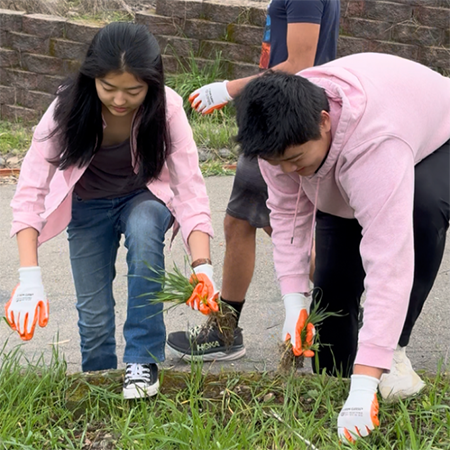
Tiantian (left) leads volunteer landscaping efforts for an academic center in the process of being constructed.
Tell us about future partnerships, programs or events that you are excited about.
Our director’s team and chapter leadership teams are working on a documentary to share our service work and testimonies from both our leadership and institutional partners. By sharing this with the schools we have chapters with and on social media, we hope to promote both educational and cultural awareness while encouraging others to engage with our shared mission.
Why is it important for others to get involved with causes they care about?
Being involved, you’re able to actively contribute to our surrounding world and learn from collaboration with professional leaders, students and fellow volunteers. No matter who you are, your ambitions have the ability to create incredible impact.
Any advice for people who want to start volunteering?
I would encourage them to first learn about the community they’re a part of. There are so many challenges, and by learning about those first, you’ll see where your interests are.
What do you want people to learn from your story?
I want to encourage others to be open-minded about the vast and varying needs and circumstances of our world and to take action either through volunteering or alternative means like donating. There is so much to achieve, and by working together, we can find answers to problems that have yet to be solved.
Chicago Woman Feeds Hope with Her Leadership in Food Security
Meet Daily Point of Light Award honoree Thalia Anguiano. Read her story, and nominate an outstanding volunteer or family as a Daily Point of Light.
For Thalia Anguiano, volunteering is more than just an act of service—it’s a commitment to uplifting communities and recognizing individuals’ dignity. What began with routine visits to a local food pantry quickly turned into a leadership role, where Thalia has become a driving force in supporting unhoused individuals, asylum seekers and those facing food insecurity in Chicago. Today, Thalia’s impact is felt all across the Northwest and Southside of Chicago.
“It was November 2022, and we were just doing a work event out in the community. I came across the New Hope Food Pantry,” Thalia reflects. “I went there for two hours thinking I’d spend time with the team, help out with the community and leave, but I fell in love with it. The food pantry family has been so welcoming. Being a Latinx resident of Chicago myself, I’ve enjoyed being able to connect with folks in my community and get involved in that way.”
At New Hope Food Pantry, Thalia’s role extends far beyond distributing groceries. She ensures that every volunteer feels welcomed and prepared for their shift, coordinating efforts to stock food, assemble bags and create an efficient yet compassionate shopping experience for neighbors who need a little help filling their bellies. From organizing inventory to tidying up at the end of each shift, Thalia plays a key role in keeping the pantry running smoothly.
Thalia Anguiano is passionate about feeding Chicago’s food insecure individuals and families, as well as providing an experience that restores dignity./Courtesy Thalia Anguiano
Thalia shares, “Food insecurity has been a really big part of my personal and professional stories. It all started back in my undergraduate years, doing research around what food insecurity means and what it looks like, for college-level students specifically. Then everything came full circle here. I found a home in Chicago and feel like I’m making an impact and making a difference. I never left.”
At New Hope Food Pantry, the experience for neighbors is designed to provide a sense of normalcy. Rather than receiving pre-packed bags, individuals and families get in line and receive a shopping cart, allowing them the autonomy to select the foods they want and need. This personalized approach empowers them to make choices that best suit their dietary needs and preferences.
Once they finish shopping, volunteers assist in bagging their groceries, creating a supportive and respectful environment. This process not only gives neighbors a sense of control over their experience but also fosters meaningful connections between volunteers and the community, reinforcing the idea that everyone deserves the ability to shop for food with dignity.
“The most rewarding parts are the conversations I have with people,” Thalia says. “That fills my cup—being reminded of the impact we’re having. Sometimes folks get food items they’ve never tried before, and being able to see the excitement on their faces when they share what they’re planning on making, is so rewarding.”
Beyond the pantry, Thalia has devoted herself to projects that provide critical assistance to asylum seekers and unhoused individuals. She has worked tirelessly to create hygiene kits and pre-prepped meals, ensuring that those in crisis receive immediate relief. Her ability to balance both direct aid and advocacy has made a significant difference in many lives. By acting as a Spanish translator for multiple service organizations, she breaks down language barriers and ensures that all community members can access the resources they need.
“Providing equitable opportunities to ensure that everyone can get their basic needs met ultimately builds up our cities to become more fruitful, to become stronger-standing foundations for people to live, work, eat, play, send their kids to school,” she says.
One of Thalia’s standout qualities as a volunteer leader is her dedication to the volunteer environment itself—which she helps to ensure is a supportive and efficient space. She regularly checks in with volunteers, offering them breaks and opportunities to rotate tasks in order to prevent burnout. Her ability to recognize the needs of both volunteers and those they serve has made her an invaluable part of Chicago’s nonprofit network.
Thalia’s leadership also extends beyond her immediate volunteer duties. She collaborates with food pantry staff to anticipate and address challenges, ensuring that operations run as smoothly as possible. Her adaptability and problem-solving skills allow her to pivot based on the needs of the pantry, whether that means coordinating additional volunteers or adjusting workflows to improve efficiency.
“There are so many different reasons to volunteer,” Thalia expresses. “I’m a big believer that our existence is intertwined and interconnected with everybody’s. If one of us in the community is struggling, then we all are. When volunteers have the ability to help alleviate circumstances where neighbors are struggling, it ultimately leads the community to be stronger.” Thalia encourages people to get out of their neighborhood bubbles and explore their cities through volunteerism.
Thalia embodies what it means to lead with compassion, helping individuals facing hardship receive not only essential resources but also respect and care. Whether through direct service or strategic planning, she continues to set an example for others looking to make an impact. She encourages those wanting to volunteer to be intentional with their search, thinking about which social causes matter to them the most, as well as not being afraid to think outside the box.
“Post-COVID volunteering has gotten so creative with opportunities,” she shares. “There are many virtual or at-home opportunities now. But it starts with reflecting on what matters to you. Volunteering is really rooted in a lot of self-reflection.”
Meet Daily Point of Light Award honoree Ethan Sun. Read his story, and nominate an outstanding volunteer or family as a Daily Point of Light.
Ethan Sun, 17, loves learning languages. He’s taking Spanish in school but is independently studying French and Arabic as a way to enable himself to speak to more people. His communitive approach also prompts his enjoyment of music across genres and country of origin, intrigued with the way people express themselves. Ethan’s hobbies and his experience volunteering with refugee students have left him full of empathy for those facing roadblocks due to the lack of resources and opportunities that have been available to him.
Three years ago, Ethan took this empathy and founded Hope4Kids shortly after volunteering as a weekly tutor for Casa de Amistad, a nonprofit that helps underserved students reach educational goals. Hope4Kids supports Casa’s mission through recruiting tutors for the cause, organizing fundraising events and hosting STEM initiatives. Through his organization’s efforts, Ethan has raised over $34,000 with an annual benefit performance that highlights local students’ multitude of talents—dance, music, magic, Wushu and more.
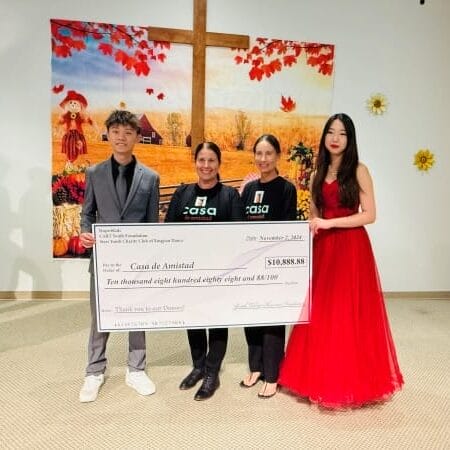
Ethan Sun (left), founder of Hope4Kids, and co-president Melanie Yau (right) present a check to Casa de Amistad (middle left to right) executive director Nicole Mione-Green and operation manager Corey Ford at the second Youth Talent Showcase fundraiser./Courtesy Ethan Sun
What inspires you to volunteer?
My first major experience was at Casa de Amistad at the beginning of 10th grade. I started tutoring every week. I really enjoy that, because it’s an opportunity to talk to kids who have similar interests, like STEM, but who don’t have the same resources.
I did other service events with San Diego Refugee Tutoring, too. They hosted events with refugee kids, and we could come volunteer and, for example, help lead them through mini games or help pick shoes for them. It was really cool to be able to connect with them. I was doing a meaningful thing while having fun. It really inspired me. So, I thought that I should probably use my knowledge in order to help, and I started Hope4Kids around the same time.
Tell us about your volunteer role with Casa de Amistad and Hope4Kids.
Casa de Amistad’s students are from kindergarten to 12th grade. I’ve tutored a middle schooler for most of my time there. We help them with homework and to prepare for tests, but if they need specific help, we can also provide that.
Hope4Kids started as a school club and has become a nonprofit. We started by recruiting high schoolers to tutor and mentor at Casa de Amistad. Then, we expanded. We hosted a math summer camp for Casa two summers ago to help students who were falling behind. I also initiate donation drives and coordinate service events. Two years ago, we started a fundraising event as well called the Annual San Diego Young Artists Showcase.
It takes about three months to plan and brings together students from across the community to perform. Over 100 performers from 10+ schools, elementary through high school, have participated. Last year, we tried to include Casa de Amistad students more by allowing them to perform, do traditional dances and help us emcee. The main purpose is to raise awareness and get donations for Casa. Additionally, I partner with local businesses like Cathay Bank, which has pledged a $5,000 annual charity fund to support Casa de Amistad’s educational initiatives and strengthen its financial standing.
What are the campus lab tours?
For the past two summers, we’ve worked with UC San Diego Materials Research Science and Nanoengineering department to provide Casa students with lab tours and professional development seminars. We answer questions about college, engineering or other things that might get students excited about college.
What’s been the most rewarding part of your work?
I think the most rewarding part is meeting people from all backgrounds, not only the ones we help but new club members and volunteers from different organizations. I enjoy learning the stories of the people we tutor and the people who run these organizations. The wide variety of experiences makes this really meaningful for me.
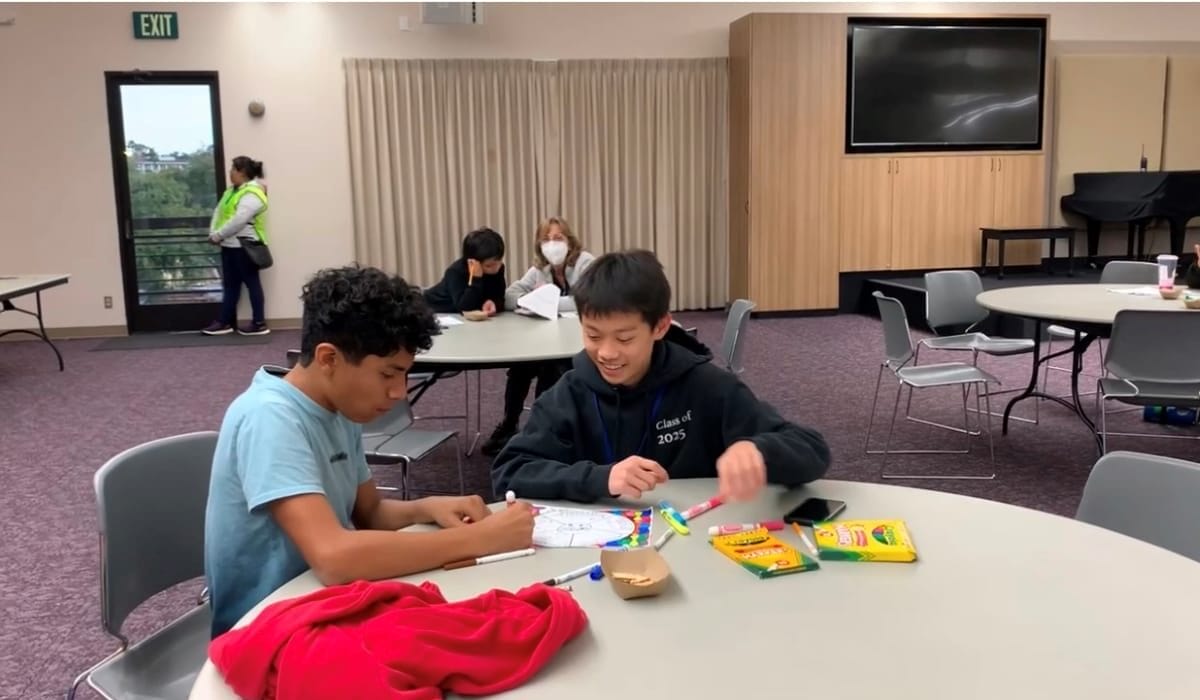
At Casa de Amistad, Ethan helps a student with homework at his weekly tutoring session./Courtesy Ethan Sun
What have you learned through your experiences as a volunteer?
The main takeaway is that there are so many people out there who pursue the same passions that I or my peers do, but they don’t have the same opportunities, and that hinders their ability to pursue these passions to the extent that they want to. That part of it makes it important for volunteers to help give more opportunities and support to students who want to go down a similar path.
Tell us about future partnerships, programs or events that you are excited about.
I’ll definitely be at the lab tours this summer. We haven’t really started planning yet, but I hope to try something new. Off the top of my head, maybe it’s working with other departments at UCSD or maybe even moving away from STEM a little bit.
Any advice for people who want to start volunteering?
Talk with friends at school. Try to join more clubs and take on more opportunities. Our school has a service club fair where all the service club leaders make a board and introduce their missions. Anybody in high school or even middle school can come and try to find opportunities. If the club you’re already in offers opportunities to help with service events, take advantage and gain more experience.
What do you want people to learn from your story?
Don’t be afraid to volunteer and to help others. Get out there and get involved in your community.
Meet Daily Point of Light Award honoree Emma Chang. Read her story, and nominate an outstanding volunteer or family as a Daily Point of Light.
Emma Chang is a true visionary.
After losing a family member to leukemia, Emma attended a Leukemia & Lymphoma Society event and learned about the organization’s work to fund research and support blood cancer patients. When the opportunity to join their Student Visionary Program came up, the 17-year-old high school student was ready to take on a challenge.
Initially, Emma found herself struggling to succeed in the program, which invites high school students to develop their philanthropic leadership skills. While she recruited a bunch of friends to volunteer alongside her, she ultimately had to reassess their efforts and request a greater sense of dedication to the cause. The group established clear goals and deadlines, and hosted several community initiatives ranging from silent auctions to a donut fundraiser with Krispy Kreme. Educational seminars raised awareness about leukemia and lymphoma, and provided survivors the opportunities to share their stories and explain the vital need for continued research. Ultimately, Emma’s time in the Student Visionary Program was a tremendous success: The team helped to raise over $252,000 for blood cancer research in the Golden Gate area.
While Emma’s efforts to create awareness and raise funds for the Leukemia & Lymphoma Society were a triumph, the personal journey she navigated through her volunteer work was also a major achievement. She learned important leadership and time management skills, and gained confidence that will carry her into adulthood. While Emma’s time in the Student Visionary Program has come to a close, she has big plans on the horizon. When she heads to college next year, she’ll study biomedical engineering or bioengineering with a focus on gene therapies. She hopes to use her education to help solve blood cancer. Emma’s story is a strong example of how volunteering gives us the skills to truly make a difference in the community and ultimately see a difference in ourselves.
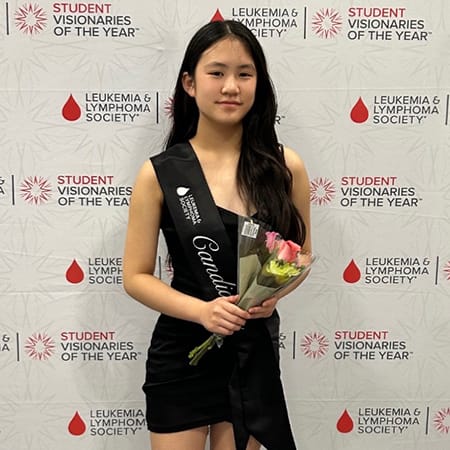
LEUKEMIA & LYMPHOMA SOCIETY STUDENT VISIONARY EMMA CHANG IS HONORED FOR HER VOLUNTEER WORK WITH THE ORGANIZATION. /COURTESY EMMA CHANG
Tell us about your volunteer role with the Leukemia & Lymphoma Society.
I was chosen as a student visionary. In that role, I recruited my team to help fundraising efforts within a period of six to eight months, although I did continue this afterward. As one of the team leaders I recruited a bunch of my friends, posted on social media and gathered people from our community to help. We had community seminars based on blood cancers and the work that LLS are doing.
Some events we hosted included silent auctions and reaching out to community stores, asking them to donate products or experiences. We would sell those online at auction, and people would bid on them, and we would collect those bids as donations. Besides community seminars, I increased outreach to my school, teaching about blood cancers and chemotherapy to my classmates. By the end of the year, all the student visionaries combined for the Golden Gate area were able to raise around $250,000 for blood cancer research and patient support.
What inspired you to get started with this initiative?
After a family member passed away from leukemia, I first came to know of the Leukemia & Lymphoma Society through their Light the Night event, when you buy a lantern based on your relationship with someone who had blood cancer. From there, I learned about their Student Visionary Program. I thought it was really interesting that I didn’t know about it, since the LLS community, from my knowledge, was a really big organization. I thought if I could bring them support and raise awareness about all the amazing research and patient support they’re doing for my community, that would be so beneficial.
What are your long-term plans or goals for the organization?
I would love to increase awareness about lymphoma. I feel like we hear about blood cancer as a big general term, but we don’t understand specifics. It’d be nice to increase awareness in areas that maybe don’t have the resources to access this information. I still hope to continue raising awareness about what they do, because LLS has helped countless families with counseling and getting treatment. It would also be great to increase support for the cause.
What’s been the most rewarding part of your work?
The most rewarding part has been meeting survivors of leukemia and lymphoma. Every year, the Leukemia and Lymphoma Society’s Student Visionary Program honors a survivor. At the time, one of our survivors had leukemia through high school, and that ended up delaying her to go to college. As a high school senior right now, I can’t imagine the stress and other challenging emotions that she could have been having. I think seeing someone so close in age to me have to go through this was impactful. It not only pulled me closer to it, but it made me realize that what we’re doing has a tangible impact.
What have you learned through your experiences as a volunteer?
I learned that organization and strong leadership, in general, are just incredibly necessary to make an impact. I think it’s really important to have clear goals about what we want to do. As a high schooler with limited resources in this program, we weren’t going to raise a million dollars. That was impossible. However, having reasonable expectations and a timeline to keep organized was important. There were definitely occasions where we members got off track in meetings and on our timeline. I think leadership is necessary not only to keep the growth team, but also to help grow it.
Why is it important for others to get involved with causes they care about?
We want to support our communities and each other. The way I do this is by educating others on important topics like blood cancer. Not only will we be more informed, but more people can support a good cause. The best thing you can probably do is increase support for a cause that you care about.
Any advice for people who want to start volunteering?
When I was starting high school and beginning to volunteer, I didn’t know anybody doing similar volunteer efforts. The one piece of advice I would give is to not be afraid to start new efforts because no one’s going to hold you back. The worst thing people can say is no. We sent so many different emails to local companies and placed calls to them. The worst thing that happened was they wouldn’t reply to our emails or said they couldn’t support us. You don’t know how many people are going to support you until you ask. My parents, for example, were so incredibly supportive. They went above and beyond and posted on their social media about this. They helped spread the word in their offices, and we got a lot of love, and it helped our fundraising efforts.
What do you want people to learn from your story?
I think it would be great if people could have a deeper understanding of chemotherapy and blood cancer. On a greater level, just go for something if you want it. For me, I didn’t expect our fundraising efforts to have a big as big an impact as we ended up having. I think it was really interesting how that played out. I think one important thing I learned is to put all your effort into something while balancing all the different things in your life. If you want to do something, have the passion.
How One Student-Led Nonprofit Advances Educational Equity Worldwide
Meet Daily Point of Light Award honoree Ella Townsend. Read her story, and nominate an outstanding volunteer or family as a Daily Point of Light.
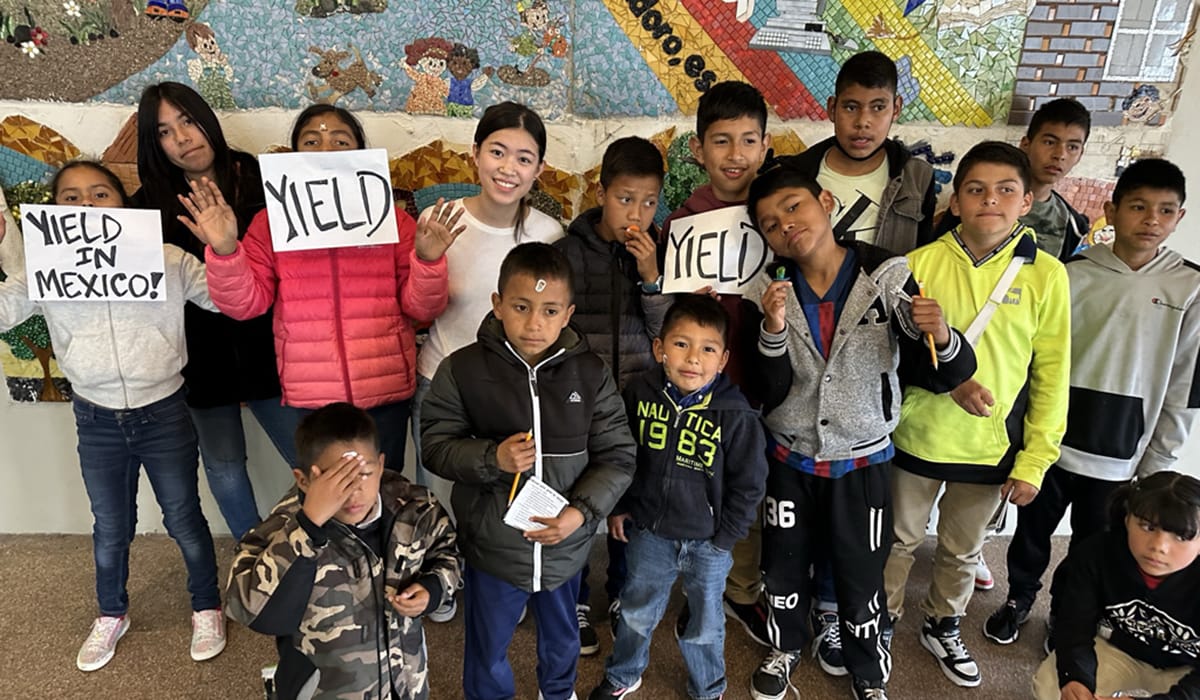
Education is a fundamental right, yet access to quality learning resources remains a challenge for many marginalized communities. Recognizing this issue, Ella Townsend founded YIELD (Youth Initiative Embracing Lasting Development), a student-run 501(c)(3) nonprofit dedicated to bridging educational gaps worldwide. Under Ella’s leadership, YIELD has become a transformative force in advancing resource access and educational equity. The organization was even recognized as California Nonprofit of the Year in 2024—a testament to its impact.
Through strategic partnerships with social service organizations, YIELD provides mentorship programs, essential school supplies and custom curricula tailored to meet the specific needs of underserved communities. Ella and her team have reached six orphanages across the U.S., Mexico, South Korea, Vietnam and Cambodia, offering support to children living with disabilities or socio-economic challenges. The organization has also been instrumental in empowering underserved students through initiatives like the Brookhurst Jr. High School Prep Club, which equips students with academic skills, career readiness training and personal development tools.
Beyond mentorship and education, Ella has spearheaded large-scale charitable projects abroad, working directly with government officials, social workers and NGOs. Her dedication to providing sustainable support rather than one-time aid has ensured that YIELD’s initiatives continue to thrive long-term. Notably, the nonprofit has raised over $38,000 in aid and secured a $10,000 grant from the John H. Grace Foundation, allowing for further expansion of its global efforts.
One of YIELD’s most meaningful contributions is its commitment to cultural inclusivity. Ella and her team delivered personalized cards written in the native languages of the children, including Khmer and Vietnamese braille, to foster a sense of belonging and connection. Additionally, they have donated over 2,000 articles of clothing, 1,300 books and essential hygiene products, ensuring that children not only receive educational support but also the basic necessities for a dignified life.
With 30 to 40 hours dedicated to YIELD each month, Ella’s passion for equity in education is creating lasting change. Read on to find out more about her work.
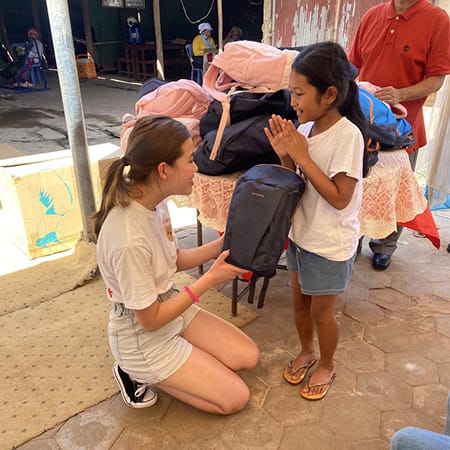
During the Southeast Asia Survival Supplies Project, Ella’s team partnered with former Cambodian Secretary of State at the Foreign Affairs Ministry, Honorable Pou Sothirak to deliver aid to the Heart and Love Association Orphanage. Here, a young girl receives a backpack full of hygiene essentials and school supplies.
Tell us about your volunteer role.
I am founder and president of the Youth Initiative Embracing Lasting Development (YIELD), a student-run 501(c)(3) nonprofit organization that serves to extend educational resources locally and abroad. Recognized as a former California Nonprofit of the Year, YIELD has spearheaded large-scale campaigns, raising almost $40,000 to fund charitable ventures and was awarded a grant from the John H. Grace Foundation.
Our work spans across five countries: Mexico, Korea, Vietnam, Cambodia and the U.S. We assist HIV-diagnosed, blind and otherwise disadvantaged orphans. I have connected YIELD to numerous NGOs as liaisons to other countries, including Sharing Love in Korea, Abandoned Little Angels and Love 2 Yêu, and also consulted with government officials and social workers to supply computers, educational and hygiene necessities.
Our goal is to establish an ongoing commitment and build enduring relationships with these orphanages and special needs services. On a local level, YIELD has donated almost 1,300 books by collaborating with schools and even police agencies to support underserved communities, and also led drives garnering 2,000 articles of apparel. I am currently leading an initiative targeting displaced Californian fire survivors by creating 1,000 children’s hygiene kits containing essentials like toothbrushes, soap and lip balm, but also coping mechanism resources and stimulating wobbler toys.
Why is this issue so important to you?
As a direct descendent of interned Japanese Americans during World War II, I was deeply influenced by the letters exchanged between my great grandparents. They revealed that Grandmother Ruth, an internee at a relocation center, and Grandfather Frank, a soldier in the 442nd Infantry Regiment, experienced fates which cut short any hopes for higher education. Drawing from this difficult chapter in our past family history and from my present multiracial heritage—American, Korean, Japanese, German and English—I learned to look beyond national borders to create a more equitable world in the future.
After speaking with other nonprofit leaders, I focused on addressing the needs of orphaned children in difficult circumstances, such as those with disabilities and students in extreme poverty. Inspired by my great grandparents’ letter exchange, every time we visit an orphanage, YIELD delivers cards in the native language of the orphans, ranging from Khmer to Vietnamese braille.
What’s been the most rewarding part of your work?
To personally witness our project’s impact has been extremely rewarding. Visiting a poverty-stricken orphanage in Cambodia that was home to autistic and HIV-diagnosed children, with our limited language skills, revealed a universal language I could understand: facial expressions. Their emotional displays of shock, elation and excitement made me swell with pride and triumph. No matter what YIELD does, or where we serve, happiness is contagious.
Ella Townsend traveled to Tijuana, Mexico to support students living at an orphanage through clothing, grocery aid and study technique guides.
What have you learned through your experiences as a volunteer?
While lived experiences, cultures and homes may differ, everyone likes to have a good time! Hands down, the best part about YIELD is playing games with the children. In Mexico, we stuck animal decals on coats. In Korea, we bantered during the “to-ma-to” contest. In Cambodia, we created the “names” competition. In Vietnam, we danced conga-line style with blind students. Games, no matter where they’re played, foster warmth and connection.
Why is it important for others to get involved with causes they care about?
Whether it is climate change, child hunger or gender inequality, my hope is to inspire people in my generation to be active participants in issues affecting our communities, because we all have the power to be changemakers. Even interacting with children in difficult circumstances, I have experienced incomparable positivity in their hands and through their eyes. I strongly believe the world is worthy of optimism, and that united, we can pave the way for a brighter future.
Any advice for people who want to start volunteering?
I’d tell anyone to identify their passion and discover reputable organizations to start volunteering. For example, by becoming a Girl Scout and volunteering with Fullerton’s Love of Orange County Kids, I learned invaluable lessons on how to lead and to network with community leaders, who in turn, later supported my work with YIELD.
Volunteering at the Intersection of Art and Medicine
Meet Daily Point of Light Award honoree David Guo. Read his story, and nominate an outstanding volunteer or family as a Daily Point of Light.
David Guo, a senior in high school and oldest of three kids, has the privilege of not only living with his immediate family and lovable German Shepherd, but with his grandfather. The two often enjoy their time together painting and drawing. It’s this relationship, along with his interest in medicine, that inspired David to volunteer at a local hospice where he was moved to do more to bring joy to their lives.
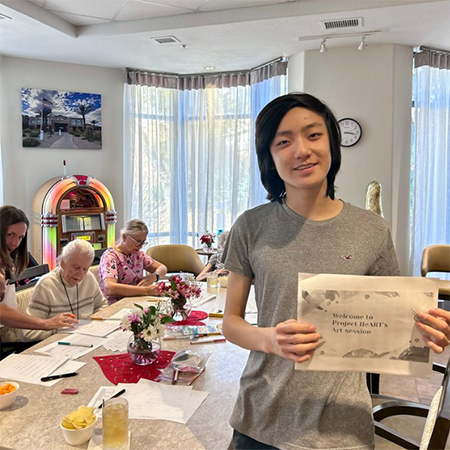
In 2022, David created Project HeART to provide art therapy classes in hospice and senior living communities that promote emotional well-being. Today, the organization has 54 volunteers, including those in a recently-established chapter in Virginia, and has impacted over 850 participating seniors. Together, the organization has also done multiple art supply drives and created more than 3,000 cards for kids undergoing medical treatment—750 of them to those in hospice.
His work highlights the stress and loneliness often found amongst seniors in care centers and inspires others to get involved. Next year, David will begin his bachelor’s degree in biology, continuing on the path to becoming a doctor. He continues to be a hospice volunteer.
David Guo, founder of Project HeART, leads an art therapy class for seniors.
What inspires you to volunteer?
Ever since I was a kid, I’ve enjoyed helping out with food banks and other things. In ninth grade, I began volunteering in a hospice where many senior individuals struggled with stress and loneliness. I was instantly reminded of my grandfather and decided to take the art activities I did with my grandfather and bring them to the individuals living in the hospice facilities and assisted living communities.
Tell us about your volunteer role with Project HeART.
I’m currently leading classes at three different locations in my town of Fountain Hills and in other cities. I create the curriculum and exercises. Recently, I’ve been training other volunteers to do this, so we’re able to expand our impact.
I worked with one volunteer to design and collect surveys from participants to gauge how they felt before and after a class. The resulting data allowed us to create a research project.
In 2021, I led our volunteers in creating art cards with positive messages and drawings. We worked with Phoenix Children’s Hospital to donate them to patients. In 2023 and 2024, I partnered with Hospice of the Valley, an Arizona-based nonprofit hospice organization who funded the project that let us bring cards to hospices, too.
As a lifelong artist, I believe art is a crucial part of children’s development, creativity and fine motor skills. Many Title I schools lack art supplies, which can be very expensive for classes of 30 kids. So, I worked with the City of Scottsdale’s libraries to launch two art supply donation drives in 2023. We also partnered with nonprofits for a winter clothing drive for the unhoused. Over time, Project HeART has evolved to focus on art and medicine combined.
Walk us through an art therapy class.
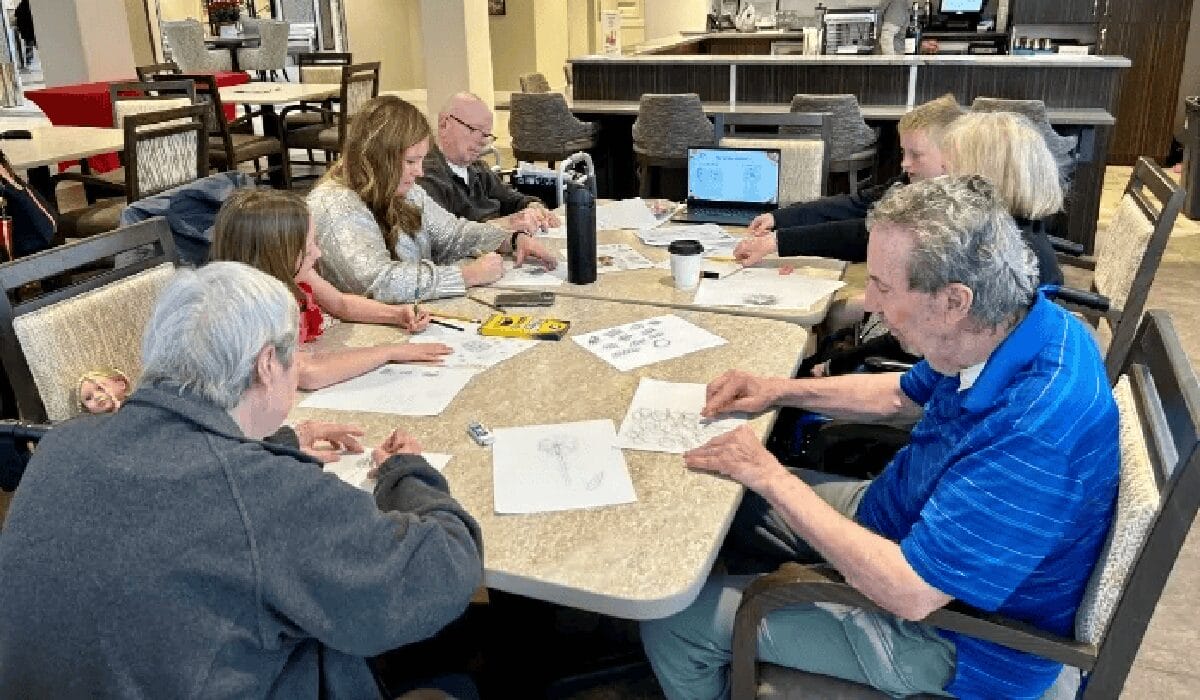
We introduce each other, and then I introduce some art techniques to help people without an art background complete the exercises and hopefully spark a passion to use them outside of class. The exercises that we use are from licensed art therapists. I’ll combine and adapt them to find what works best, through a trial-and-error process.
Do classes help you de-stress, too?
Definitely. Just interacting with participants is really fulfilling. If I weren’t doing this on the weekends, I would either be playing games or doing something on my phone, and that isn’t as fun. I’m also serving as a teacher, which is really fulfilling, because I’m trying to help people grow. And, whenever I get to participate in the activities by demonstrating, it’s always enjoyable.
What kind of feedback have you gotten?
Originally, these classes were art classes with a small therapy component. But over time, because of surveys, I started increasing the latter. One participant mentioned how the class helped him reduce stress after his wife passed away. That really catapulted me into focusing on the therapy component.
What are your long-term plans or goals for the organization?
I would like to bring the organization to college. It will be an exciting time but also stressful, and it will give us the ability to use art therapy for younger individuals, too.
I also want to bring the organization to an international level. I think it could really benefit developing nations, as art therapy usually doesn’t cost much. It’s an accessible resource that can also create a holistic view of medicine. That’s something I really want to focus on as an aspiring physician.
Senior participants work on projects for one of David’s art therapy classes.
What’s been the most rewarding part of your work?
Numbers are important, but what’s been really rewarding is seeing the individual impact. Once, a participant brought his granddaughter to class. He told me that he struggled to connect with her, but after the class, they developed a mutual passion for art that has helped them overcome that.
What have you learned through your experiences as a volunteer?
Because I work with a lot of seniors, slowing down and being empathetic is something that I really value. I might plan a class to be an hour, but participants might be faster or slower. Understanding that not everyone is able to do the exercise at the pace I’d planned is important.
Tell us about future partnerships, programs or events that you are excited about.
I was recently awarded a grant from The Institute for Citizens and Scholars that I plan to use to develop a youth program that uses art to promote civics. I presented the idea at the National Conference on Citizenship in Washington, D.C. When you listen to an hour-long civics lecture, you’re passively learning. Painting requires focus and forces people to actively receive information to put their ideas on the page. Art is a powerful tool that allows us to create active engagement.
What do you want people to learn from your story?
Be innovative. In my state, there aren’t any other nonprofits doing free art therapy classes focused on senior individuals. Try new ideas, because many times they can be very successful.
A Family Legacy: Longtime Donor Spends Retirement Supporting Local Blood Bank
Meet Daily Point of Light Award honoree David Myers. Read his story, and nominate an outstanding volunteer or family as a Daily Point of Light.
Army veteran and retired Amtrak painter and auto mechanic David Myers, 72, grew up seeing his parents volunteer. Service is something that he’s modeled throughout his life, increasing his volunteerism in retirement in 2012. He helps with Volunteer Delaware events as well as PAWS for People, a pet therapy organization. Even David’s 13-year-old rescue dachshund tried—and didn’t quite make it—to be a service dog.
David has inherited two particular interests from his parents that have informed much of his life. One is his dad’s passion for magic. David would tag along when he and his uncle would go to the magic club and decided he wanted to be a magic clown.
He also joined in when his dad volunteered, even as an adult, to do a bit of magic.
“My father did a lot of volunteer work in the church and nursing homes. He had a lot of different acts that he did, but he and his two brothers and sister were musicians. My parents would take the band and go play in senior centers and nursing homes and the VA Hospital,” he recalls, noting his mom’s part in handling the behind-the-scenes tasks of the performances.
Professionally, David became “Clicker the Clown” for birthday parties and school events, but these days, he does most of his clowning as a volunteer. He visits Nemours Children’s Hospital as caring clown Dr. D. Doofus and loves making kids smile.
David Myers visits Nemours Children’s Hospital as caring clown Dr. D. Doofus and loves making kids smile.
The second inherited interest is his mom’s dedication to the Blood Bank of Delmarva (BBD). His mom’s work there began when it opened in 1954 upon its opening. David’s sister was born blue and needed blood, an experience that led his mom to organize the first donor group for the blood bank. She personally donated until she was 80 years old.
“The first time I gave blood, I was in basic training,” David laughs. “They said if we gave blood that day, we didn’t have to go out in the field. It was raining, so I decided to donate.”
After the service, he followed his mom’s example and started giving blood regularly. Later, he helped Amtrak with their donor recruiting work as a blood bank ambassador. Aside from blood, David donates platelets–used to help blood clot–twice a month. He’s now up to around 340 donations.
“The procedure to give whole blood takes about an hour, and you only have a needle in your arm for about 10 minutes. Platelets take two to three hours,” he adds, noting the challenges of finding donors with the time and willingness to give the latter.
His efforts have earned him a place in the Fresenius Kabi National Blood Donation Hall of Fame, an honor reserved for around 12 donors and volunteers across the country each year. His regular appearances at the blood bank lift the spirits of everyone around him, both staff and donors.
“He’s just affable. He’s so friendly and doesn’t know a stranger,” says Angela Williamson, volunteer community relations specialist.
When he’s not donating, David helps in various roles, one of which is in the canteen. There, he cleans tables, serves donors snacks and monitors them for 15-20 minutes.
“Most of the time, if you’re going to have a reaction, it’ll happen within those 15 minutes. Of the people who have a reaction, many have it before they even get out of the chair,” David says of the uncommon occasions.
Every aspect he and fellow volunteers cover gives staff the time to focus on giving donors the best experience possible. He also signs people up for their next donation.
One of David’s most regulated roles is as a mobile processor helping the team that collects donations on a bus. It required training and approval.
“This is the only role where a volunteer can touch blood. He’s packing the blood bags on mobile drives,” Angela describes. “They have to be put in there in a very specific way. They have to be written and documented on a piece of paper that goes with it.”
Angela especially appreciates David’s enthusiasm for the job not everyone is cut out for: Delmar the Bloodhound, the blood bank’s mascot. But with a background in clowning and magic, he is the perfect fit.
“We did the Christmas parade this past Saturday,” he smiles. “I love walking down the side and seeing all the kids.”
His friendly demeanor serves him well in training new volunteers, too.
The Blood Bank of Delmarva supplies 19 hospitals on the Delmarva Peninsula, and maintaining a steady reserve is crucial. Platelets only last five to seven days in storage, so regular donors like David are literally lifesavers.
“We never have enough blood donors. Many of the eligibility criteria that used to stop people from donating has changed, and the time frame has shortened that you might have to wait,” Angela explains.
A bad trauma, like a car accident, can require up to 100 units to stabilize a patient. Sometimes, it’s necessary for someone with a bleeding disorder. For David, the rewarding part about donating is knowing who he’s helping.
“A lot of it goes to the Children’s Hospital, and they need platelets in the burn centers or the trauma centers,” he explains. “Also, my brother has been pretty sick for a long time, and just recently, he had to get two units of blood.”
After logging over 5,000 hours with the blood bank, David works beyond any job description.
“He’d do anything for anybody,” Angela says, citing that in his spare time he’s often helping others build or fix a house or car.
In the past, he’s even volunteered his trailer to haul the blood bank’s old electronics to get recycled and has offered to drop off the canteen’s collection of aluminum soda can tabs to the local Ronald McDonald House. But his dedication to giving blood is an even rarer gift to his community.
“He gives his life blood so other people can live. It’s pretty awesome,” Angela declares.
At the end of the day, it’s David’s no-nonsense mindset that keeps him coming back.
“The way I look at it, as long as I’m giving, that means I don’t have to get. You never know when something is going to happen, and you’re going to need that blood and hope it’s there for you.”
Meet Daily Point of Light Award honoree Betania Adane. Read her story, and nominate an outstanding volunteer or family as a Daily Point of Light.
When it comes to education, it’s not an even playing field. Betania Adane, 17, is quick to point out advantages that put some students ahead of the game—money for private tutors, parents or family members familiar with the college application process, the ability to speak English and other circumstances. Over the years, she observed and experienced many roadblocks to education that peaked as she started preparing for the SAT. With effort, she not only excelled but helped others do the same.
Betania founded Thinkpros and Minority Prep last year to increase access to standardized test prep and English as a Second Language (ESL) materials for minority, first-generation and low-income students. Thinkpros is a TikTok account with 3.2 million views where she highlights question types, study guides, personal advice for exam success, etc. Fifteen thousand students in 70 countries use her resources.
Minority Prep enlists 75 volunteer tutors—with 40 more waiting to be matched—to work with students around the world preparing for tests or learning English. Betania herself has tutored more than 270 people and has developed free SAT bootcamps, group classes and review sessions. One beneficiary of Betania’s resources earned a 790 on the math portion of the SAT, a proud moment for Betania, and has recently returned to volunteer.
Betania plans to major in computer science next year and has a particular passion for machine learning after a summer program with the Harvard Open Bio Lab, in which she identified ovarian cancer biomarkers using the technology.
What inspires you to volunteer?
I used to tutor a lot. I was in my school’s National Honor Society, and I created my school’s African Association in ninth grade. We put on dances and did community service like making cards for people in hospitals. That experience showed how much of an impact I could make on people’s lives, even as a ninth grader starting a club and prepared me for Minority Prep.
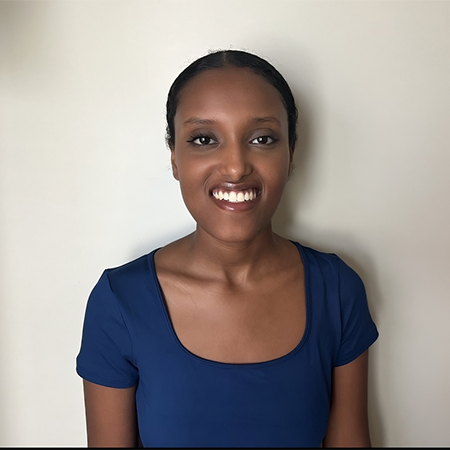
Betania Adane, founder and lead curriculum developer of Minority Prep and ThinkPros, is passionate about reducing educational inequity.
Tell us about your volunteer role with Thinkpros and Minority Prep.
I try to post on Thinkpros twice a week with things that I wish I’d known before taking the SAT or what English-learners need. I also include the type of resources that are best for exam success: cheat sheets, notes, vocab guides and grammar guides. I’ll make videos offering grammar tips. I’ll guide them to the best free SAT resources that we have available on our page as well as the link for help with Minority Prep.
Every Saturday, I have a group class. After people use our resources and take the SAT, I ask if they want to help as a tutor. They can tutor ESL or the SAT. There are many people in different countries who benefit from personal tutors due to time zone conflicts. In January, I also collaborated with another student on a student app for SAT and ACT tutoring called crackd.
What inspired you to get started with this initiative?
For most of my life, I’ve lived in Silver Spring, Maryland, which is a diverse area that also has a lot of underserved people. Because I grew up in Germany and immigrated to the U.S., that’s shown me a lot of different stories as well. I saw—and experienced—a lot of existing problems, especially with the educational system. In high school, there are AP classes, the SAT, etc. and I didn’t have a family to get me through all of that.
That’s the main reason why I created Minority Prep and Thinkpros. The latter is how I advertise Minority Prep. The SAT turned into a digital format, which meant there were virtually no free resources besides the College Board. I had to spend a lot of time to find resources, and I didn’t have access to expensive tutoring and things that other people did.
What are your long-term plans or goals for the organization?
It’s all online right now, but in the future, I’d love to do in person activities as well. I want to expand to AP testing and high school content like calculus, and I’d love to add a computer science component.
What’s been the most rewarding part of your work?
Societal issues have made many minorities feel like education is not attainable, so giving students that light and showing them that they deserve it and can succeed in high school and standardized testing is most rewarding. Their stories don’t have to end because they don’t have access to these resources.
What have you learned through your experiences as a volunteer?
You’re never too young to start. I was thinking about creating this organization for a long time. It didn’t hit me to actually start doing it until I struggled with the SAT, and I saw my peers and family members struggling with standardized testing and with education in general. Age doesn’t really matter as long as you have good intentions and drive, and you know the audience that you want to help. You can do anything that you pay heart to.
Tell us about future partnerships, programs or events that you are excited about.
The March SAT is historically one of the hardest, so I want help my students relax and feel confident with our review. I’m also excited for our bootcamps. It’s hard material, but I love making topics more digestible for students and sharing tips they may not see anywhere else, especially with grammar.
Why is it important for others to get involved with causes they care about?
A lot of us think our voices don’t matter, or that we should just focus on going to school every day and doing what’s expected. But all of your concerns and everything that you’ve been through can be channeled into something greater for the world. I struggled a lot with learning and with, for example, the SAT and assimilating to the American education system, but I was able to channel that into something that helped a lot of other people just like me.
Meet Daily Point of Light Award honoree Jessica Rabin. Read her story, and nominate an outstanding volunteer or family as a Daily Point of Light.
By day, Jessica Rabin is an English professor. But the work doesn’t stop when she heads home after a long day of teaching.
As a hearing-impaired person, Jessica knows how beneficial a service dog can be. Currently paired with her third hearing dog, Caleb, she sees daily how his assistance improves her life significantly. When Jessica was looking to get involved with a service dog organization as a volunteer years ago, she instantly aligned with the Warrior Canine Connection’s mission when they visited a psychology class on her campus.
While she wasn’t quite sure how much work she could take on, Jessica signed on as a volunteer puppy sitter.
Jessica now provides a safe and loving home for the military service dogs when their raisers are out of town or just need a short break. Her home is lovingly referred to as “Camp Caleb,” and she sends the puppy parents daily photos and updates to keep them posted on how their dogs are doing.
While Jessica never boasts about her dedication, her work has been significant for the WCC community. Since 2022, Jessica has devoted over 1,800 hours to serving as a puppy sitter for the animals as they prepare for life as service dogs for disabled combat veterans. Ranging in age from three months to almost two years old, the dogs also have the potential to take on roles as facility dogs and military family support dogs. If the dogs aren’t meant for a life of service, they still go to military veteran families, where their days consist of belly rubs and emotional support.
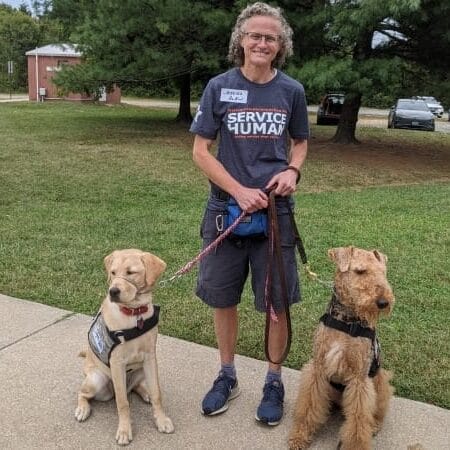
Warrior Canine Connection volunteer Jessica Rabin enjoys a stroll with two WCC dogs. /Courtesy Jessica Rabin
Whether she’s shuttling dogs from their raiser to her home or assisting with editorial work for the organization, Jessica’s willingness to go the extra mile is a powerful endorsement of the power of volunteering.
Tell us about your volunteer role with Warrior Canine Connection.
I’m a puppy sitter. I take care of the puppies when the raisers go out of town or if they just need a break. In our organization, the raisers do the heavy lifting. They’re the ones who take the puppies into their homes for 18 months, and we need to support them by providing that backup. It’s also really good for the puppies because they need to learn, early and often, that lots of different people can meet their needs and that’s going to ease their transition to their veteran. Different households have different types of experiences. One household might have children, another might have senior family members, and some people have cats, vacuum cleaners and hardwood floors. It’s all good for the puppies on their journey.
What inspired you to get started with this initiative?
I had been looking for the right volunteer fit for about 15 years. I’m hard of hearing, and I’m currently partnered with my third service dog, so I know firsthand the life-changing difference that a service dog makes in terms of independence, confidence and safety. My current hearing dog, Caleb, improves my quality of life immeasurably.
I had always been interested in working with a service dog organization and Warrior Canine Connection came to my campus and did a demo. I was impressed with their accreditation, their philosophy, the way they serve veterans with both visible and invisible wounds, and the way that they honor what’s right for the dogs. If being a service dog isn’t the right path for these dogs, they find the right fit for them. I knew I wanted to get involved. I went through the interview and training process and didn’t look back.
What are your long-term plans or goals for the organization?
I’m certainly keeping an open mind. My sitting has evolved, and I’ve taken on some additional roles based on what they need and what I can provide. I’m an English professor, so I edit or proofread anything they send me. But this organization is growing in exciting ways and I’m just very glad to be a part of it. I hope to grow and evolve with them. I almost always have at least one puppy here, so this role is keeping me very busy.
What’s been the most rewarding part of your work?
One of our sayings is that you come for the puppies and stay for the mission. That is true. For me, it’s also been the people. The other volunteers I’ve met and the staff are supportive, kind people. We live in very divisive times, and it’s hard to find a situation where you’re working productively with people who might have different backgrounds and beliefs. Here you’re working together with respect and appreciation on something you both believe in, and that has been very rewarding.
What have you learned through your experiences as a volunteer?
There’s been so much, both personally and with the dogs. I would go back to the people. It is possible to build something meaningful with people with whom you would disagree in other ways. That has been powerful for me. There’s a Jewish concept called “tikkun olam,” which means repairing the world. To me, that’s what we’re doing here. It’s a way of putting good back into the universe. It’s very meaningful to feel like I’m doing something.
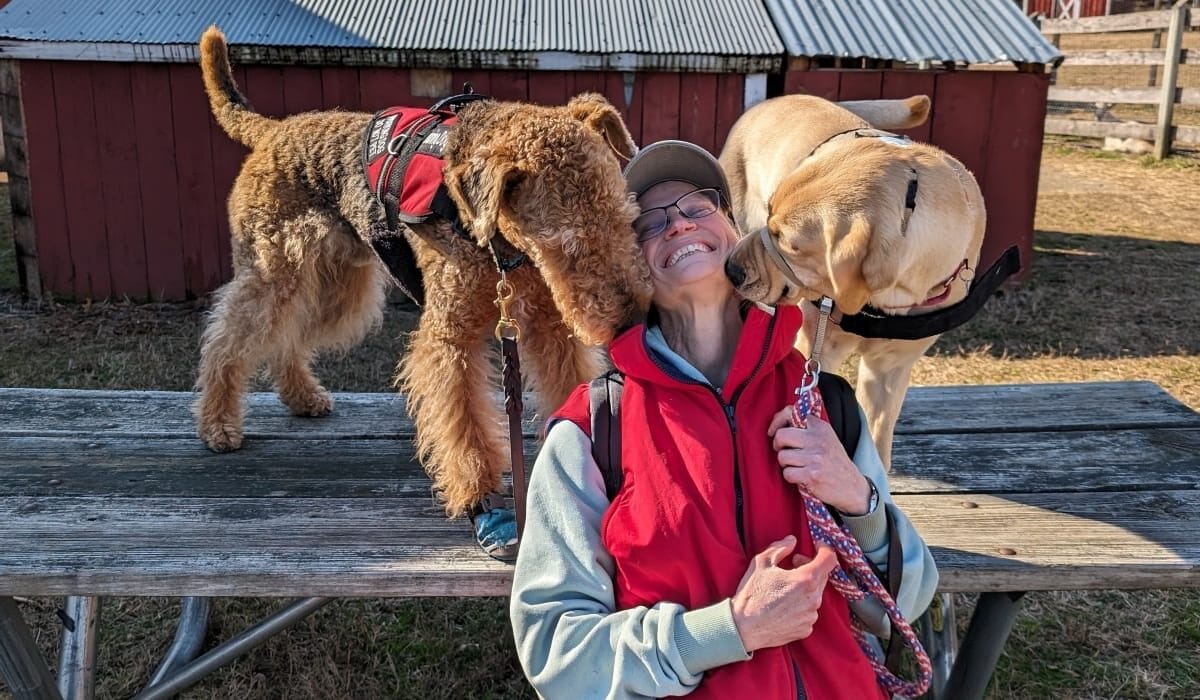
Jessica Rabin gets kisses from WCC hearing dogs Caleb (left) and Nancy (right). /Courtesy Jessica Rabin
Why is it important for others to get involved with causes they care about?
It’s the connection. It is the only thing that’s going to save us as human beings, not to mention to save our society. It’s that possibility of connection, that feeling of contributing to something you couldn’t do on your own, and yet you’re making a valuable contribution. It’s meaningful. This is how we create meaning. It’s what it means to be human.
Any advice for people who want to start volunteering?
Don’t assume you can’t do it. You just get started, and you end up doing more than you thought possible. Speak to a human being and say, “Look, I might not be able to do this, but I can do that.” Then it turns out there is a place for you. Don’t cut off the possibilities without trying.
What do you want people to learn from your story?
Even if you think you might not be able to do something, give it a shot and see what happens. When I filled out that form, they asked, “Would you be willing to take a dog to training class once a week?” I was like, “No, I can’t do that. I don’t have enough time. I have a schedule.” Now, I’m like, “Sure, how many dogs do you want me to take?” Open yourself up to the possibilities.