Youth Volunteer Supports Californians Displaced by Fires with a Focus on Footwear
Meet Daily Point of Light Award honoree Jacob Chow. Read his story, and nominate an outstanding volunteer or family as a Daily Point of Light.
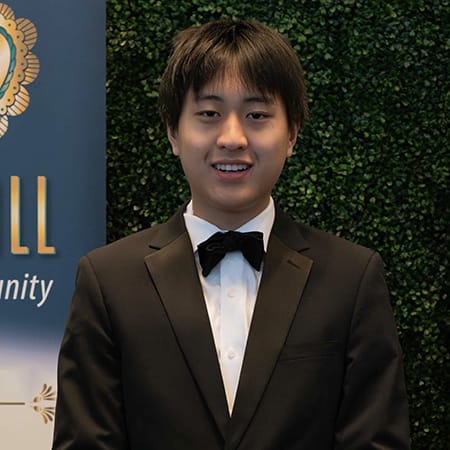
Jacob Chow may be a world record holder, but the California teen’s primary focus is what he can do to help others.
Growing up in a family he calls “volunteering-oriented,” Jacob saw his older siblings take time out of their schedules to help others. About a year and a half ago, he was presented with the opportunity to join the Youth Philanthropy Council, California’s largest kid-run nonprofit that’s dedicated to alleviating poverty through impactful initiatives in healthcare, education and community support. Jacob jumped at the chance and has made significant waves in his mission to make the world a better place.
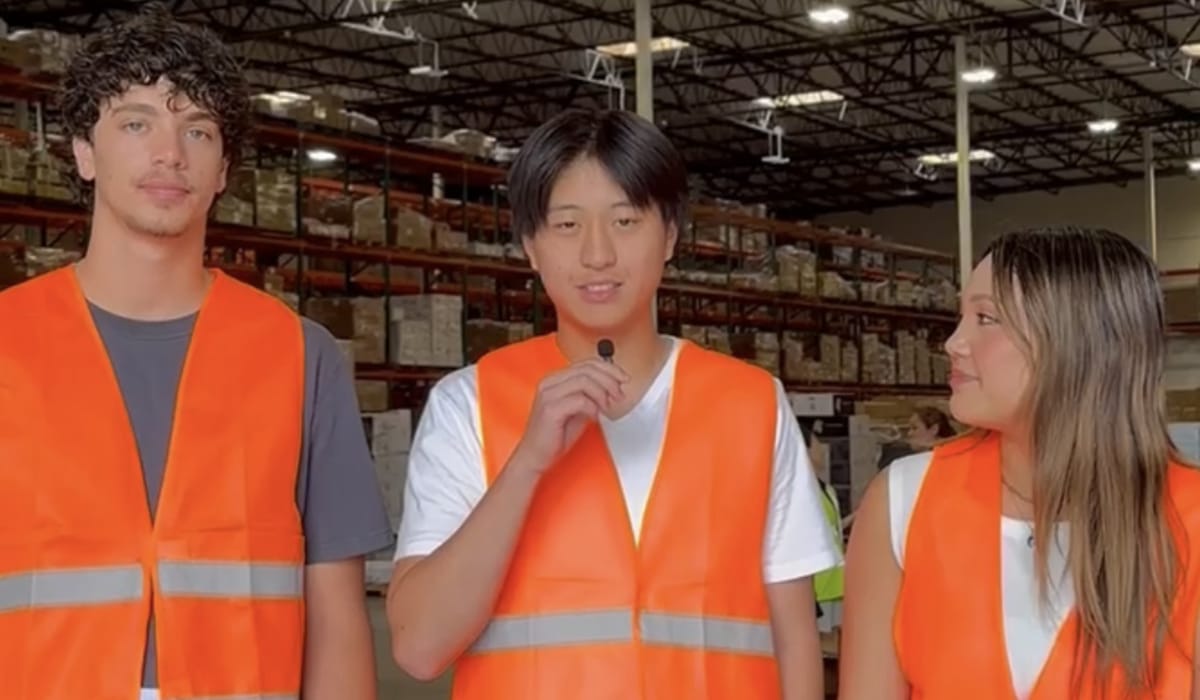
Now the Los Angeles chapter leader of the YPC, Jacob works to give community members the items they need to get by. Whether it’s clothing, baby items or other daily necessities, Jacob and his team of 10 other students heed the call. Jacob works his magic by reaching out to companies and asking them to donate unused inventory. Since footwear is his family’s business, Jacob knew he could parlay his experience in the shoe industry to provide footwear for people. Last year, he spearheaded a shoe drive that raised over $1.1 million worth of footwear, amounting to nearly 22,000 pairs.
JACOB CHOW WORKS WITH THE LOS ANGELES CHAPTER OF THE YOUTH PHILANTHROPY COUNCIL. /Courtesy Jacob Chow
That endeavor, which took half the year to plan, not only affected over 20,000 people, but it earned Jacob a place in the record book: Youth Philanthropy Council and the Pasadena-based footwear company Evolution Design Lab,
“We were aiming to hit that goal. We thought that was attainable. We ran the numbers and knew that sometimes thousands of families would come out to those donations,” Jacob explains. “So if we had the inventory to distribute enough, we thought that the previous record was attainable. We were aiming to hit that. It wasn’t by accident.”
One of his greatest assets is his ability to mobilize quickly. After the recent Eaton Fire in Los Angeles, Jacob sprung into action, collecting shoes, cribs, clothing and other essentials for people who were affected. He ultimately gathered 6,000 pairs of shoes for residents who were displaced by the fires. The YPC’s current endeavor, called the Pasadena Relief Boutique, is dedicated to providing free footwear and clothing items to families who are dealing with the aftermath of the horrific fires.
When it comes to the most rewarding aspect of his volunteer work, Jacob says it’s seeding the smiles on the faces of the families he’s helping.
JACOB CHOW COORDINATES STUDENT VOLUNTEERS TO MANAGE DONATIONS AT THE FOOTWEAR DISTRIBUTION CENTER. /Courtesy Jacob Chow
“Seeing the families happy, since we donate to a lot of families in need. They’re very thankful,” says Jacob. “We’ve had some families bring their entire families back to thank us just for giving them one pair of shoes. It’s just really seeing how happy they can be just by us being involved in helping the community.”
Jacob’s ability to think on his toes, gather resources and utilize his extensive network of classmates and business contacts shows just how quickly the mission to volunteer can spread throughout a community.
SHE’S BUILDING COMMUNITY THROUGH MOVEMENT, ONE STEP AT A TIME
Meet Daily Point of Light Award honoree Uchenna Jones. Read her story, and nominate an outstanding volunteer or family as a Daily Point of Light.
Uchenna Jones follows three F’s: Faith, fellowship and fitness.
As a nurse, Uchenna was trained to care for others. However, she realized she needed to take that same level of care of herself. After losing 110 pounds in ten months by focusing on her own nutrition and exercise program, Uchenna was inspired to spread her passion for wellness to other members of Madison’s BIPOC community. In 2019, she founded the Madison Gospel 5K Foundation, an organization that focuses on the health and wellness of people of color. She started planning walks and races and recruited the community to join her in improving their health, one step at a time. However, the endeavor turned into so much more than she ever expected.
In addition to lively races that are filled with participants expressing their joy through movement, the MG5K Foundation also works to educate families. Once a month, they host wellness talks that focus on different aspects of health, including mental health struggles. MG5K events are joined by a variety of health vendors ranging from physicians and dentists to local gyms and health clinics, each focused on providing resources that keep families healthy. While the MG5K Foundation has a focus on BIPOC individuals, Uchenna is steadfast in her mission to serve the entire community. Nobody is turned away from participating in MG5K events because Uchenna devoutly believes that unity fosters community.
As for Uchenna’s plans for the future, she’s hoping to pass the organization on to her son someday. He may only be 11 years old, but he’s already eager to take on the responsibility of inspiring his community to find joy through movement. Luckily, his mother’s belief in serving and empowering her community through health and wellness is a mission that stands the test of time.
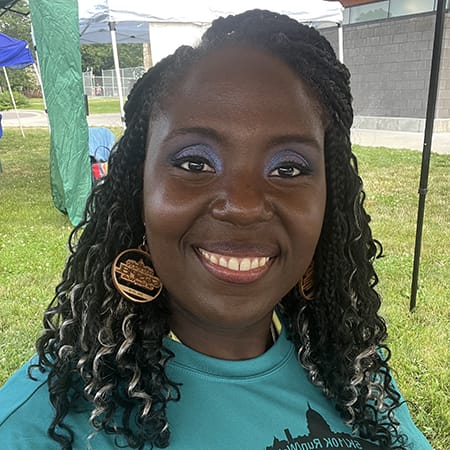
UCHENNA JONES, FOUNDER AND EXECUTIVE DIRECTOR OF THE MADISON GOSPEL 5K FOUNDATION, SNAGS A QUICK SELFIE WHILE SETTING UP A BOOTH AT THE MADISON GOSPEL 5K FOUNDATION RACE. /COURTESY UCHENNA JONES
Tell us about your volunteer role with the Madison Gospel 5K Foundation.
We’re actually entering the organization’s seventh year. I do the marketing, I put together the committee, I keep in touch with the board and I reach out to get sponsorship because the race takes a whole year to put together. When we plan the race, we reach out to businesses to help us with the big financial responsibilities and then we try to keep the entry price point as low as possible. We host healthcare as well. We have area clinics, our local gym and nonprofit organizations that come out.
We also have other grassroots organizations that are focused on mental health.
What inspired you to get started with this initiative?
By profession, I’m a nurse and I was working at one of the local hospitals. I got to a point where I was providing care for people, but I felt like I wanted to do more. So I said, well if you don’t find it where you are, there’s always that rule or that option to build with what you want. So that’s where the journey started. However, the process was also part of my health and wellness journey. At the time, I was newly married with two littles. I started to work out, watch what I was eating and move more. I got into running. In Madison, we’re known for running, but for white individuals. I’m originally from New York, so I’m used to seeing different bodies. But living in a majority-white area it’s just very interesting. I just kept doing what I was doing, and people kept inquiring and thought it was cool when I would post all the stuff I was doing. I had this idea that I wanted to have a race, but I wanted it to be where BIPOC individuals were visible.
What are your long-term plans or goals for the organization?
To continue to create spaces where families can grow and thrive through movement and mental health conversations. Families are going through things, right? Sometimes you can’t solve it, but one of the things we don’t do enough is listen. One thing I’ve learned over the years is that somebody can hear another person’s problem, and you give somebody in that space an opportunity to help and solve it.
What’s been the most rewarding part of your work?
What I love is to hear the growth of a person. They say they were afraid to do this, but you opened this world to me. Now they have completed their third, their fourth, their fifth race. They realize you’re not competing against somebody else: it’s you. You’re competing against the part of you that wants to be 100 percent successful, and the other part that just wants to be a couch potato or just wants the world to take you over. We are all overcomers. We just have to be put under the right circumstances.
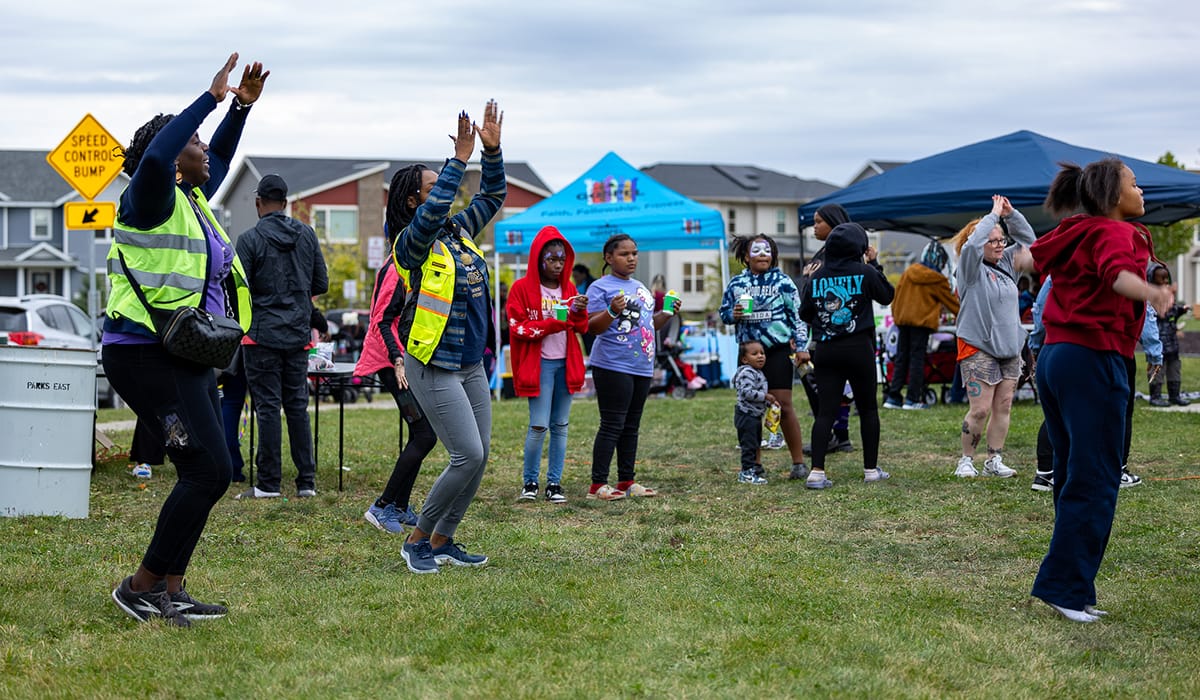
UCHENNA JONES (LEFT) ENCOURAGES MOVEMENT THROUGH DANCING WITH THE HARMONY APARTMENT RESIDENTS AT THE MG5K FALL FESTIVAL IN OCTOBER OF 2024. /COURTESY UCHENNA JONES
What have you learned through your experiences as a volunteer?
I’m going to reference the great book again. There’s a verse that says, ‘If any one of you want to be great, you have to serve.’
Why is it important for others to get involved with causes they care about?
I think it reinforces why they care. They’re doing something about it. They’re improving the circumstances. I know the need is great, and I think that’s where a lot of people are paralyzed. They think they’re one person, so what can they do? But one person can mobilize a lot of people. It’s the power of telling your story. It’s the power of connection.
Any advice for people who want to start volunteering?
You know you can start small. You can start at a food pantry. You could start by staying after school and volunteering your time and tutoring. There are so many different ways you can give, but work with your talents and treasures. Work with the things about you as a person that you know can be beneficial. A lot of people think they don’t have anything to offer, but they can take an inventory of the things they can do well and what they’re willing to do. That’s where I started. Nurses are taught to educate so it’s so easy to provide information. But what I didn’t realize was the information was transforming lives.
What do you want people to learn from your story?
That they can do it too. It’s not hard, and it doesn’t take much. I started my organization, with zero dollars and zero cents. I just had the faith. We have raised over $300,000 and moved 90% of it into the community. It’s just beautiful what I’ve been able to see and bear witness to, and it allows me to believe that communities can thrive. The solutions to the problems are in the community. It’s just that we have to connect.
The Student Turning Data into Action and Revolutionizing Sustainability in Schools
Meet Daily Point of Light Award honoree Carolyn He. Read her story, and nominate an outstanding volunteer or family as a Daily Point of Light.
Carolyn He is leading a new wave of environmental activism, combining data-driven advocacy with community leadership to address sustainability challenges at the grassroots level. As the founder of A Sustainable Future (ASF), she has spearheaded a national movement to reduce excessive printing in schools – an often-overlooked environmental issue.
Post-pandemic, Carolyn was alarmed by rampant paper waste in schools and launched the first nationwide printing study, gathering over 3.3 million data points from 54 high schools. What began as a research initiative quickly evolved into an organization dedicated to both reducing paper consumption and empowering students to become sustainability advocates. Through ASF’s Paper Consumption Model (PCM), Carolyn has helped 75 U.S. school districts reduce waste, saving 1.7 million sheets of paper (equivalent to 170 trees) and influencing the eco-literacy of over 98,000 students worldwide.
Beyond print reduction, Carolyn’s mission has expanded to fostering youth-led climate activism. Through ASF’s Paper Consumption Program, she has mentored over 200 students across nine countries, equipping them with tools to track and reduce their school’s printing habits. By focusing on behavioral change rather than just technical solutions, ASF enables students to lead impactful sustainability initiatives in their own communities. Carolyn also collaborates with major environmental organizations like Tree-Plenish, Green Schools Alliance and Sustainable Jersey for Schools, ensuring ASF’s work integrates into broader sustainability efforts.
Carolyn’s leadership extends beyond ASF, with her involvement in NASA research on wildfire impacts, discussions with New Jersey legislators on heavy metal exposure and organizing five-day Climate Conventions to educate and mobilize communities. She has spoken at major environmental conferences, including COP28, SXSW EDU and Climate Week, bringing attention to the power of student-led sustainability initiatives. Under her direction, ASF has secured over $8,000 in grants to continue expanding its programs, ensuring that schools worldwide have the tools and motivation to reduce their environmental impact.
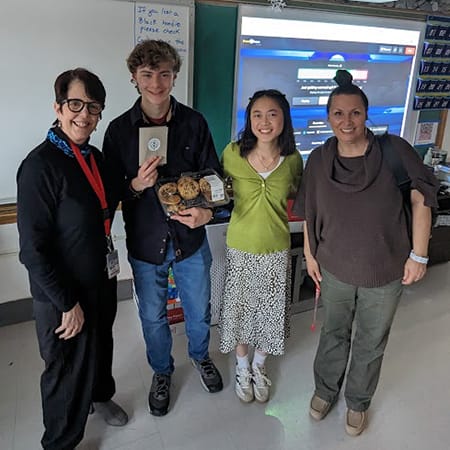
Carolyn He, alongside the winner of the student sustainability presentation competition from ASF’s Climate Convention and the Convention sponsors.
Despite juggling weekly leadership meetings, school outreach and event planning, Carolyn remains deeply committed to personal engagement. She regularly cold-emails schools requesting print data, provides one-on-one mentorship to ASF’s growing network of student activists and personally oversees ASF’s third annual Climate Convention, which spans five days of workshops and discussions. Her ability to transform raw data into real-world change sets her apart, proving that students don’t have to wait for policymakers to take action – they can lead the way themselves.
With ASF’s rapid growth, Carolyn’s impact continues to expand, setting a new standard for student-led environmental advocacy. Her story is not just one of individual passion but of collective empowerment, inspiring thousands of young people to step up, take action and drive real, measurable change in their schools and communities.
Tell us about your volunteer role.
I lead an organization called A Sustainable Future (ASF), which is a tech-enabled, data-driven and student-centered approach to academic print reduction. Upon realizing how rampant excessive printing was after COVID-19, I initiated the first nationwide printing study with 54 high schools (directly) and 29 high schools (indirectly through other students), aggregating 3,378,139 data points into an accessible print-tracking and reduction data analysis tool called the Paper Consumption Model (PCM).
With 54 schools’ worth of data and 2.5 years of research later, the PCM has helped schools save more than 2 million sheets of paper. Unlike traditional report-focused models, the PCM facilitates direct collaboration with administrative stakeholders to implement holistic, actionable reduction. As ASF grew, so did its purpose. Beyond print-reduction, I felt equally passionate about helping students recognize their agency for change. Accordingly, ASF evolved to teach students to develop PCMs for their schools through a Paper Consumption Program and thus become eco-activists communities desperately need.
Why is this issue so important to you?
As a student, I’m no stranger to paper use. It’s everywhere: classrooms, restrooms, cafeterias. However, it wasn’t until after COVID-19 that I realized just how much paper we were using and didn’t need to be. Frustrated by my school’s indifference, what began as an investigation into my school’s excessive printing quickly evolved into a nationwide study spanning 54 schools, finding that schools used around 2.5 million sheets – 250 trees worth – of paper annually. While the environmental impact was important, I soon realized that many schools weren’t lacking the technical resources to reduce their printing, but the mindset. To exacerbate this already-nuanced environmental issue, students – the most promising combatants of excessive printing – often face “activism anxiety.”
While 250 trees a year is reason enough to tackle the overlooked issue of excessive printing, I knew it was equally important that students recognize their agency for change. Simply put, change starts with our students.
What are your long-term plans or goals for the organization?
Any nonprofit or grassroots organization’s ultimate goal is to no longer be needed, because that means the problem we’ve sought to address has been solved. So when I imagine the greatest impact ASF can have long-term, I don’t just see modeling and reducing print forever. Rather, what I want is to do is give schools and students the resources, tools and knowledge they need to become effective, sustainable consumers of resources.
There’s a saying, “If you give a man a fish, you’ll feed him for a day, whereas if you teach a man to fish, you’ll feed him for a lifetime.” I feel this is particularly apt and what I want ASF’s work to embody. By establishing a network of sustainable eco-advocates nationwide, I hope students will be empowered to actively recognize and advocate for environmental issues, while also teaching each other to address such issues.
In regard to printing, that could entail developing additional programs such as hosting composting programs, creating Climate Convention workshops and more. ASF’s alumni often go on to start incredible environmental initiatives of their own, and I hope ASF can provide a communal platform where ideas can be shared and knowledge exchanged! I want to carry on ASF’s work for as long as possible, but even if the mission changes, I find comfort in knowing the purpose will remain the same: to empower students to recognize their agency for change and become the eco-advocates their schools desperately need. In short, this mindset of sustainability is the most sustainable outcome I hope ASF can accomplish long-term.
A little less long term, I’m excited to launch ASF’s 2-in-1 Paper Consumption app and work with additional educators to bolster ASF’s environmental curricula and eventually start implementing it in schools.
What’s been the most rewarding part of your work?
Witnessing over 200 diverse, incredible students find their voices for change. Then, having those same students and alumni stay on ASF’s team, even after completing the Paper Consumption Program, shaping our programming for the next wave of student eco-advocates.
Helping schools make small changes (setting double-sided defaults, enhancing teacher digital literacy) with big impacts (like saving 1.2 million sheets of paper in one school in just one year!) And hosting ASF’s Climate Convention: a five-day dual conference and workshop event that equipped over 80 attendees with practical, hands-on sustainability experience.
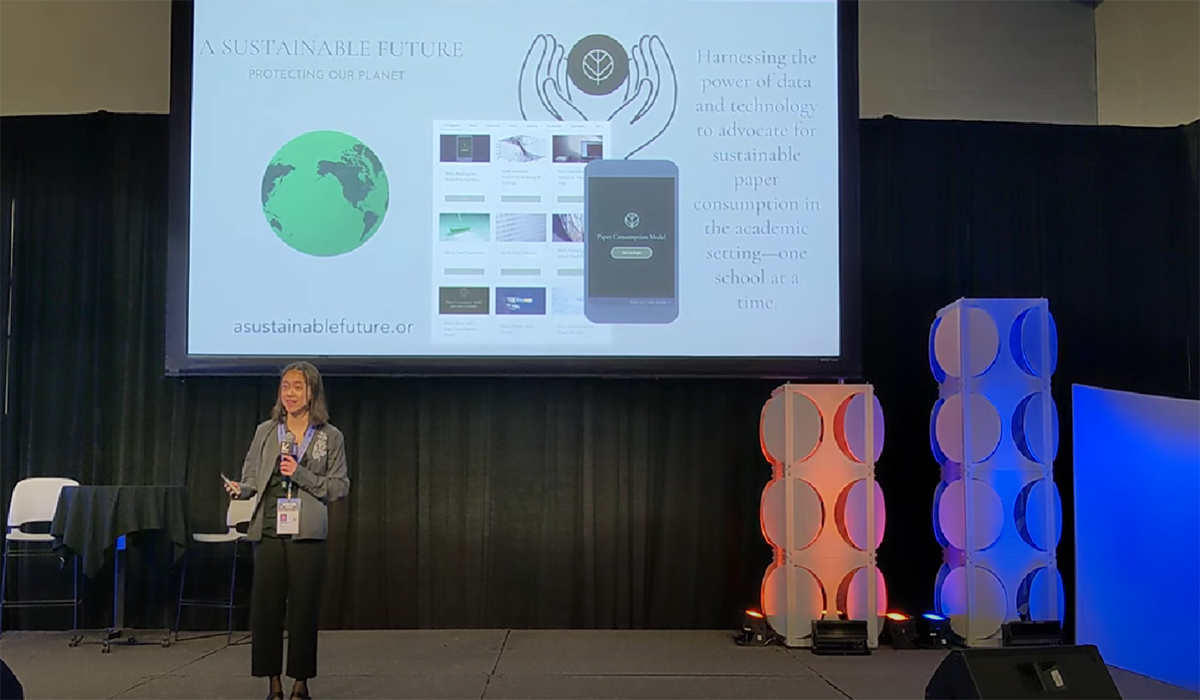
Carolyn presenting ASF at the SXSW EDU conference as one of six Student Impact Challenge finalists.
Tell us about future partnerships, programs or events that you are excited about.
The more students and more schools that join, the better! Currently, ASF is working with several partners (Project Green Schools, Green Schools Alliance) on a national social media campaign. I am also currently co-planning three in-person ASF Climate Conventions in the tri-state area for spring!
Any advice for people who want to start volunteering?
Don’t hesitate to ask for help! It’s completely normal to feel uncertain about where to begin, especially if the cause feels overwhelming. There are always resources and people ready to guide you along the way. Even then, there’s no need to have it all figured out from the start. Every contribution counts, and you’ll learn and grow with each experience. For me, I never expected ASF to grow beyond that little printing project I was conducting at my school. Adapting to its growth has been an exciting lesson in progress.
Especially for students, your voice matters, and adults do want to hear it! Don’t be afraid to send that email to administration about the one campaign you’d like to host; don’t be afraid to speak up at meetings – to share that idea that might just be the catalyst for something amazing.
What do you want people to learn from your story?
Little changes make a world of difference! Oftentimes, when helping schools reduce print, I’ve noticed that the mindset matters just as much as the environmental impact. The most reduction occurs not when schools are “shamed” for excessive printing, but rather when they are given accessible tools to take actionable adjustments. More broadly, actions don’t need to be grand or bombastic to save the environment; true change occurs when everyone is motivated to do their part.
Meet Daily Point of Light Award honoree Sheri Mathis. Sheri was recognized as a 2024 Women of Worth honoree by L’Oréal Paris. These nonprofit leaders each receive $25,000 to support their cause, mentorship from the L’Oréal Paris network and a national platform to tell their stories. Nominations for 2025 are now open through March 8, 2025. Nominate an inspirational leader today!
As a two-time breast cancer survivor, Sheri Mathis knows how scary the diagnosis can be. That’s why the Mammogram Poster Girls founder keeps her personal phone number on the organization’s website for other women to call when they receive the same terrifying diagnosis that she did.
Shortly after receiving her own diagnosis in 2007, Sheri started to raise money to help other women. Wanting to take her mission a step further, she founded the Mammogram Poster Girls, an organization that raises money and awareness for women of limited means to benefit from early screening for breast cancer. The group’s first fundraiser, a “Sweetheart Supper,” was planned in just six weeks, but the response from the public was overwhelming. The event served as a turning point for Sheri, empowering her to establish the MPG as an official organization.
In their first year of existence, the MPG funded around 100 mammograms. Sheri’s goal was to double that number the following year. In 2024 they funded about 500 screening and diagnostic mammograms. To date, MPG has provided 2,000 screening and diagnostic mammograms free of charge. Mammograms saved Sheri’s life, and now she’s making sure they’ll do the same for other women.
This past year, Sheri was celebrated as a L’Oreal Women of Worth honoree for her tremendous work uplifting her community through service. Her devotion to the cause and willingness to help others navigate a journey that at times feels insurmountable is an incredible example of the power of volunteering.
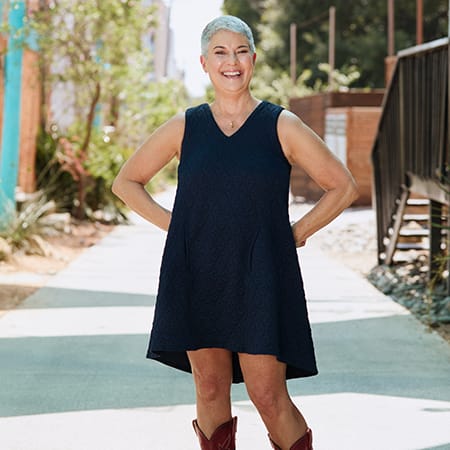
MAMMOGRAM POSTER GIRLS FOUNDER AND PRESIDENT SHERI MATHIS, A TWO-TIME BREAST CANCER SURVIVOR, SMILES. /COURTESY L’OREAL WOMEN OF WORTH
What inspired you to get started with this initiative?
I am a two-time breast cancer survivor, and all of my sisters have had breast cancer. Mammograms were how we all found it. I looked around in the room while I was in treatment, and half of the women were uninsured and had not gotten their mammograms until it was very late in the game, and it just broke me. In 2018 I took our seed of an idea for the Mammogram Poster Girls and began the 501(c)(3) process with a small group of co-founders, my husband and three good friends who supported the idea. We hit the ground running.
Tell us about your volunteer role with the Mammogram Poster Girls.
Our focus has always been the early detection of breast cancer. We raise money for mammograms and provide programs to fund mammograms for under and uninsured women throughout the North Texas area. I am the founder and president of the board, and we’re an all-volunteer organization. Everything we do, we are ‘all hands on deck.’ We have our monthly program called Two-Fer Tuesday, where you can get a mammogram and a free meal. I go and meet the bus or pick up meals from our partnering restaurant. I drive them to the bus where we take it, which is in a southern sector that’s underserved in Dallas, and I get it all set up. I do everything from that monthly program to helping with our events to being the face of the organization to being the one who asks people for their support.
What are your long-term plans or goals for the organization?
We have always grown somewhat organically. We started in the southern sector of Dallas, which is more likely to have women of color who are more likely to be diagnosed at a late stage and die of breast cancer. Slowly we have grown so that now we cover most of the Dallas-Fort Worth area, and then down to Waco. We’re in talks with imaging centers in Texas and other states to try and work out something so that we can grow the program to cover even more mammograms for under- and uninsured women.
What’s been the most rewarding part of your work?
About a year and a half ago, I was at a style show for survivors, with maybe a dozen others who were in the show. At the end of the show, they handed us the microphone and asked us to tell our stories. I said ‘I’m Sheri Mathis. I’m a two-time breast cancer survivor, and I founded the Mammogram Poster Girls,’ and the woman beside me gasped. When I was done, I handed her the microphone, and she turned to me and said, ‘You are the reason I am here.’ She had insurance, but if she needed a follow-up, she couldn’t afford the copay. We had covered her for three years, and she was diagnosed in the fourth year, so we had provided her mammograms and her diagnostic stuff for all that time. She was diagnosed, and she is still here and thriving because of what we do. She now serves on my advisory board. I got to see our mission in action with a successful result. That’s what keeps me going.
What have you learned through your experiences as a volunteer?
What I have learned is that everyone, bar none, has someone in their family and their friend group who has had breast cancer. Everyone has a story and a tie-in to what we do. I don’t want to use the word sale, but it makes our work an easy ‘sale’ because it’s so relatable to everyone.
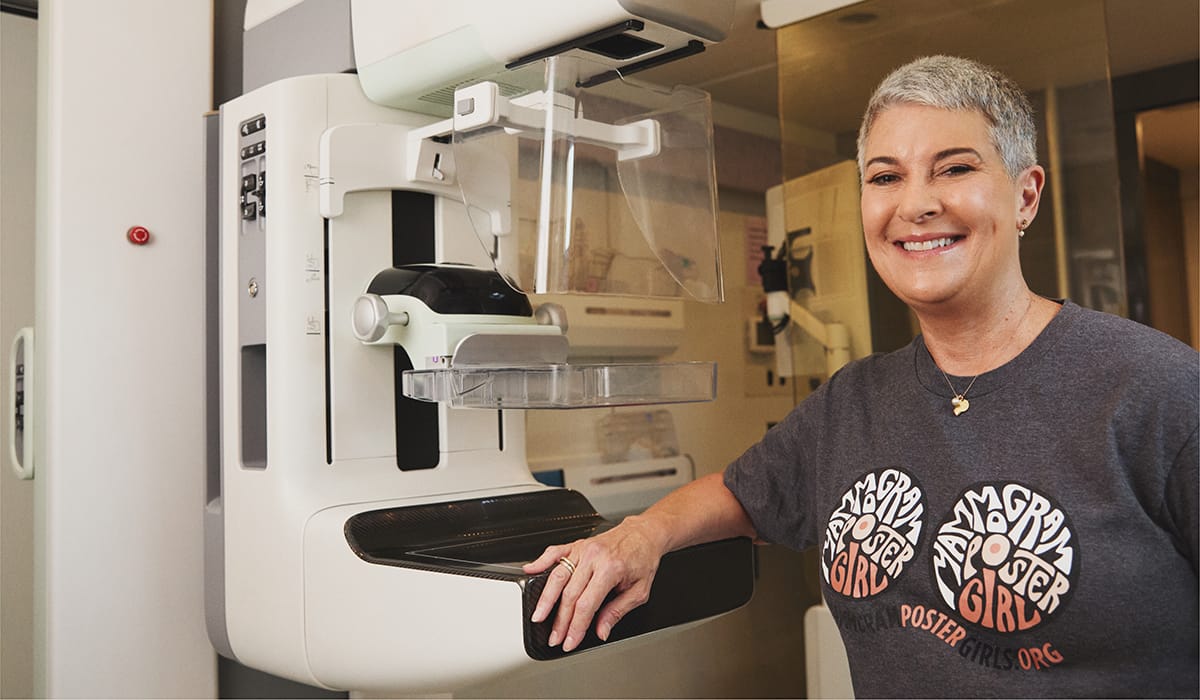
MAMMOGRAM POSTER GIRLS FOUNDER AND PRESIDENT SHERI MATHIS SMILES NEXT TO A MAMMOGRAPHY SYSTEM. /COURTESY L’OREAL WOMEN OF WORTH
Why is it important for others to get involved with causes they care about?
A friend of mine who runs a different kind of nonprofit said, ‘If you see a problem, get off your bum and do something. We’re the only ones who can.’ I use that all the time, because you can look over your shoulder or to your left or right, but if you don’t do it, who else is going to do it?
Any advice for people who want to start volunteering?
I think to look at what drives you. In my case, it’s breast cancer and eradicating and making sure that people survive it. It might be that you have an interest in children. You look at what you’re interested in, and then you go from there. It’s easy to find avenues to volunteer because we’re everywhere and doing all kinds of different things. In schools, in your churches, in your community, in your neighborhood, you can even go through your city council person. There’s always an opportunity to help.
What do you want people to learn from your story?
If you see a problem and see something that you’re passionate about, do something about it. It doesn’t have to be forming a full-on organization. It could be joining someone else’s or volunteering at your kids’ school, for that matter. Do something for someone else, because the gift gives back to you as well as to them.
Thriving in the New “Normal”: Connecticut Teen Helps Kids Move Past Diagnosis
Meet Daily Point of Light Award honoree Saige. Read his story, and nominate an outstanding volunteer or family as a Daily Point of Light.
No one hopes their 17-month-old child will run into health issues, but the unfortunate reality is that many do. Thousands of kids under the age of 20 are diagnosed with type 1 diabetes (T1D)—once known as juvenile or insulin-dependent diabetes—every year. Saige Merwin, now 18, is one of them.
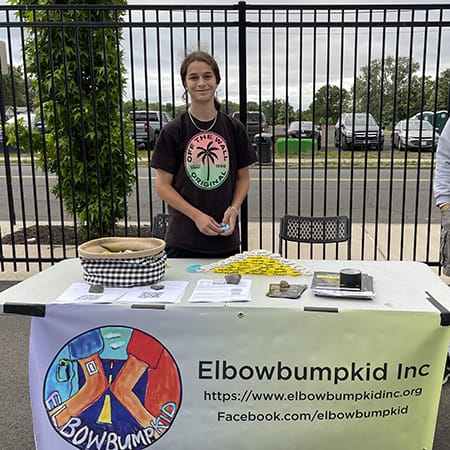
Determined to contribute to the T1D community, Saige’s family has been fundraising and raising awareness about the disease. Since 2008, they’ve raised over $100,000 for different nonprofits. And in 2019, inspired by her son, Saige’s mom founded Elbowbumpkid, named after the way Saige greeted people in an effort to avoid the spread of particles that would set off his severe food allergies. As he said, “It’s not like you can get food on your elbows.”
Saige was a volunteer from the very beginning but was elected to the five-person board of directors when he turned 16. The organization offers support groups for parents, educational events, family game nights, pottery classes and outings like Red Sox games or a lake day. They also put on a variety of fundraisers.
Despite dealing with health anomalies not every kid has to face, he is an active teen, a skier and tennis player with a positive attitude and an inclination to help others. He is a role model and mentor for others learning to live with their diagnosis. And as high school graduation nears, he is making plans to study meteorology and engineering at college next year and is currently rebuilding his dream car, a Datsun 280ZX, in his free time.
At local community events, Saige distributes educational information for people with or family of people with T1D.
What inspired you to volunteer with Elbowbumpkid?
We’ve always had a passion for helping out type 1 families in our community, because they’ve helped me out since before we started this. I ‘d been volunteering for Breakthrough T1D (formerly JDRF). I went to all their events, and we just decided it might be nice to run some of our own. I officially joined the board almost two years ago, but I’ve been helping out since it was founded.
Tell us about your volunteer role with Elbowbumpkid.
We put on everything from Bingo as a fundraiser all the way to an adventure course. The latter is like a ropes course. Kids can come out and have fun, and parents don’t have to worry about them because of the type one, because we have people out here who have it too. Parents can take a little break. We have a lot of stuff like that. I volunteer at those events.
I also run the Diaversary Card program. People submit the date they got diagnosed, and I send out cards to those who have their “diaversaries” each month. There are about 450 people all over the U.S. This month, we sent one up to Palmer, Alaska, which is just north of Anchorage.
What’s been the most rewarding part of your work?
Every once in a while, in our Facebook group, you’ll see posts of people excitedly opening the Diaversary cards and thanking us. That’s what I like to strive for. We don’t request that. It just comes up every once in a while, and it’s always nice to see.
What have you learned through your experiences as a volunteer?
The number of people who come to these events is a lot more than you would think. The last event we did, we met kids my age we didn’t even know existed who lived 10 minutes from me. Normally, through these events, you cross paths with people through things like the JDRF events.
One of the main appeals is meeting other people who have type 1 diabetes. I can speak from personal experience. For a good number of years, I was the only person in my school district who had T1D, and if I didn’t have those events, I would have assumed no one else has it. I was a kid and didn’t know. It’s nice for people to have a space where it’s like, “Hey, you have to deal with this disease too?”
Tell us about future partnerships, programs or events that you are excited about.
I’m looking forward to our event taking a bunch of people to see the Peter Pan musical at Bushnell Theater in Hartford. This is our first time doing it, and we have about 20 people going. It’s not a fundraiser event. This is just a fun event for everyone with type 1.
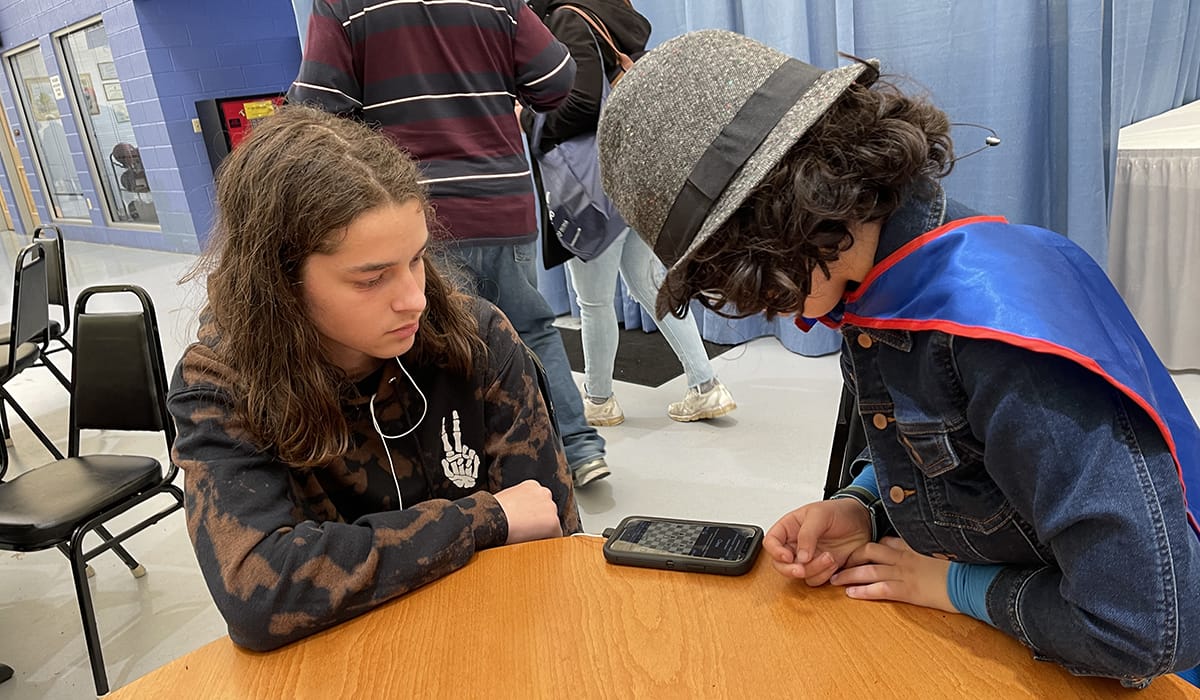
A young person with T1D meets with Saige as part of a mentoring opportunity.
Why is it important for others to get involved with causes they care about?
It’s really nice to make a difference and to meet the people in your community. There are some friends that I’ve made that I don’t think I would have met had I not been volunteering.
Any advice for people who want to start volunteering?
Don’t be afraid to reach out. Most of the time these organizations need help. And if you say, “Hey, Elbowbumpkid, I would like to start volunteering,” chances are they aren’t going to say no. Chances are they’ll say, “Hey! That’s amazing. What are you interested in? What would you like to help out with?” There’s a solid chance that the organization that you want to help out with needs volunteers, because you don’t come across them often.
What do you want people to learn from your story?
Don’t let type 1 control your life. The trick is balance. You have to take care of yourself, but there’s no reason that it should prevent you from doing things, no matter how many oddities you have to overcome. Even with celiac, asthma, type 1 and a host of other things like food allergies, I’ve never let that stop me.
Meet the Changemaker Harnessing Technology for Social Good
Meet Daily Point of Light Award honoree Sajeev Magesh. Read their story, and nominate an outstanding volunteer or family as a Daily Point of Light.
In an era where technology has the power to create lasting change, Sajeev Magesh is proving just how impactful innovation can be. As the founder of Social Fulcrum, this changemaker has built a platform that connects tens of thousands of volunteers with thousands of nonprofit organizations, addressing critical issues like poverty, environmental conservation and healthcare. Recognized by Google, Microsoft, Kroger and the United Nations Environment Programme (UNEP), SocialFulcrum provides essential support to nonprofits that often struggle with limited resources, ensuring that their efforts reach a broader audience. By bridging the gap between passionate volunteers and organizations in need, Sajeev is transforming how communities engage in service work.
Beyond Social Fulcrum, Sajeev is also the creator of GreenGambit, an innovative educational card game designed to teach students about sustainability. In partnership with CalRecycle, the Sierra Club and the National Environmental Education Foundation (NEEF), GreenGambit has already reached over 850,000 students across California, inspiring young minds to think critically about environmental protection. By turning sustainability education into an interactive experience, Sajeev is equipping the next generation with the knowledge and tools to make a real difference in their communities.
Through Social Fulcrum, Sajeev has not only created opportunities for thousands of volunteers to engage with meaningful causes but has also helped the platform secure $41,000 in corporate grants. These funds ensure that the initiative continues to grow, reaching more organizations and making it easier for volunteers to find service opportunities that align with their passions. Sajeev’s dedication to community engagement has amplified the effectiveness of nonprofits while empowering individuals to contribute to causes that matter.
With 30–35 hours dedicated each month to developing partnerships, coordinating events and managing both Social Fulcrum and GreenGambit, Sajeev has shown how one person’s vision can catalyze widespread change. Read on to find out more about these initiatives.
Sajeev volunteering at a sustainable community farm to improve soil health through Social Fulcrum.
Tell us about your volunteer role.
As the founder of Social Fulcrum, I oversee a platform that connects over 35,000 volunteers with more than 4,200 organizations, enabling impactful collaborations. I manage daily operations, develop partnerships and organize community events. To support the initiative, I’ve raised $41,000 in corporate grants from companies such as Microsoft, Adobe, Box, Canva, GitLab and others. I also focus on building a community of changemakers who inspire one another through their volunteer work.
What inspired you to get started with this initiative?
I was inspired by the disconnect I observed between people eager to volunteer and nonprofits struggling to find support. I wanted to bridge this gap by creating a platform that makes volunteering accessible, impactful and meaningful. My passion for empowering communities and the belief that small actions can lead to significant change drove me to establish Social Fulcrum.
What’s been the most rewarding part of your work?
The most rewarding part has been witnessing the collective impact of Social Fulcrum. From fostering thousands of successful volunteer connections to receiving recognition from organizations like Microsoft, Google, Kroger, Humanity Rising, Hershey’s, Canva, YSA, UNA-USA, Azure, the U.N. Environmental Programme, U.S. PVSA and Innerview, these milestones affirm the value of the work we’re doing. Seeing the gratitude from volunteers and nonprofits fuels my motivation to continue growing the initiative.
What have you learned through your experiences as a volunteer?
Volunteering has taught me that change starts with one step, no matter how small. I’ve gained insight into the challenges nonprofits face and the incredible power of collaboration in overcoming these hurdles. I’ve also learned the importance of perseverance and how even the smallest contributions can have a ripple effect in creating lasting change.
Tell us about future partnerships, programs or events that you are excited about.
We’re planning to expand our partnerships with major organizations and launch new initiatives, including a “Volunteer Challenge” program to encourage individuals to lead local projects like cleanups, donation drives or mentoring programs. We’re also working on integrating advanced tools into our platform to streamline volunteer matching. Partnerships with companies like Microsoft and Canva will help us provide resources and amplify our impact.
Why is it important for people to get involved with causes they care about?
Getting involved creates a profound sense of purpose and belonging. It allows people to contribute to meaningful change while gaining skills, building relationships and understanding their communities better. When people act on their passions, they inspire others to do the same, creating a cycle of positive change.
Any advice for people who want to start volunteering?
Start with causes you genuinely care about and research organizations that align with your values. Even small commitments make a difference, so don’t feel pressured to take on too much at once. Focus on consistency and don’t hesitate to ask for guidance. The key is to start somewhere—every effort counts.
What do you want people to learn from your story?
I hope people see that anyone can make a difference, regardless of their age or background. Social Fulcrum started as a small idea, and through dedication and collaboration, it has expanded its reach to all 50 states across the nation. This journey has shown me the value of taking initiative and the incredible impact of working together. I simply hope my story encourages others to follow their passions and contribute to their communities in meaningful ways.
Pennsylvania Volunteer Supports Those Navigating The Complexities of Cancer
Meet Daily Point of Light Award honoree Josette Gephart. Read her story, and nominate an outstanding volunteer or family as a Daily Point of Light.
Josette Gephart has volunteered for many years. It’s something that’s deeply integrated into her life. In fact, she met her husband at an event for the Cystic Fibrosis Foundation called Pittsburgh’s 50 Finest. Both were previous honorees who had come back for the occasion. Today, they have two sons, 14 and 12, and a Bernese Mountain dog named Reese.
In Josette’s 30-year career in oncology sales for different pharmaceutical companies, her work and nonprofit efforts began to be entwined. Though her business cards have changed, her focus has not, and she is deeply involved in the cancer treatment network.
Inspired to do more for patients, she found her way Cancer Bridges—originally founded as The Cancer Caring Center—through one of her customer oncologists-turned-friend who founded it to address the unmet needs of cancer patients and their families. Now, Josette is a board member and co-chair of the organization’s largest fundraiser event, a gala that recently raised over $250,000. Funds support free programs and services like support groups, educational lectures, counselling and social and creative activities to an increasing number of members each year.
Josette Gephart, Cancer Bridges board member and gala co-chair, her husband Brent, and their two sons (left to right) Graeme and Beckett attend the Light Up the Night gala.
What inspires you to volunteer?
30 years ago, after a promotion to the oncology division, the gravity of what I was doing really hit me. I needed to find a way to give back to those offices—the doctors and their staff, the nurses treating these patients—and these very ill patients who were anxious and worried.
I originally paired up with The Leukemia and Lymphoma Society (LLS) to deliver brochures when I called on my offices. They were advertising their financial assistance program that helped patients with co-pays and drug costs. From there, it snowballed. I started getting asked by all of the different cancer charities to drop off brochures. Then, it was, Can you help us fundraise? And, We’re looking for a caterer to provide a meal for this support group. Do you know someone who might donate to us?
I started doing fundraising and educational programs for the community, and as I started to appear in the newspaper at different charity functions, my oncologists started taking note. Then, my nurses started asking me about getting involved.
Tell us about your volunteer role with Cancer Bridges.
At board meetings, we help staff meet their determined needs. For example, they might need interns as social workers because they have a backlog of patients waiting to be matched. So, we’re looking for colleges with graduating seniors who can help. We might find instructors for programs. I play different roles where needed. We also have to approve finances and the budget.
The annual Light Up the Night Gala for Cancer Bridges started five years ago, and I was asked to co-chair three years ago. It’s like hosting a wedding for over 300 people every November. My husband and children get pulled into it, too. It’s finding entertainment, securing sponsors, hiring the DJ or the band, buying centerpieces, choosing an emcee or a host. It’s running the silent auction and getting donations and recruiting volunteers to our committee.
My company, Regeneron, gives us a day off to volunteer, which I use to set up the gala. Last year, we had 75 items in the silent auction and made over $25,000 just on that.
I continue to work with The American Cancer Society (ACS) and LLS, too. A lot of the people in our networks are the same. The latter has asked me to mentor new candidates for what used to be the Woman of the Year campaign, and I’m helping with ACS regional fundraisers.
What are some overlooked or unmet needs that cancer patients may have?
Some things aren’t completely covered by insurance. There are also emotional and psychological side effects. There are so many unknowns, and sometimes people just need somebody to speak to. Sometimes, it’s participating in programs with others going through the same thing, like a breast cancer group or a brain tumor survivor group. When they go into a cancer center, they don’t know what the people next to them have. A lot of them are masked, and they don’t talk anymore because of COVID and norovirus.
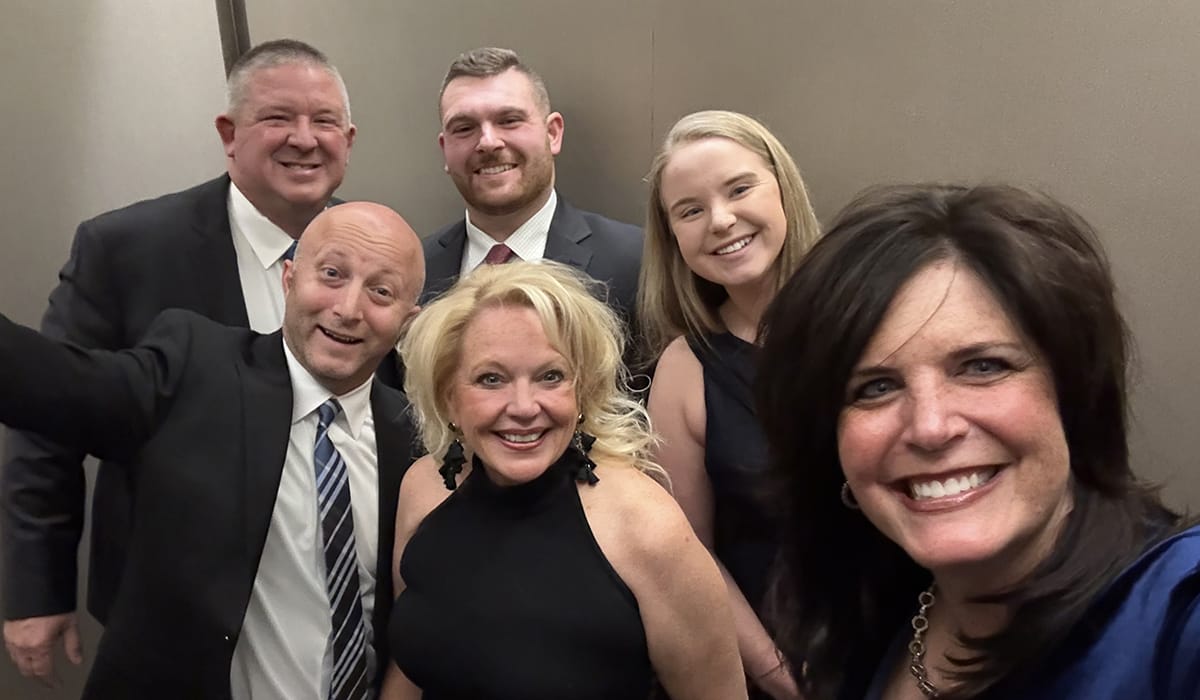
(Clockwise) Josette, Brent, Jodi’s husband Steve, Jodi’s daughter’s boyfriend Ryan DeLuca, Jodi’s daughter Johni Sue and Jodi celebrate on the way to the gala.
What’s been the most rewarding part of your work?
My mother was diagnosed with a form of uterine cancer, my father-in-law with kidney cancer. My father died from lung cancer. When If I took my dad in for his treatments the doctors or nurses would take time to stop and talk with him. They knew who I was, and they knew he was my dad. It meant so much to us. I think about what it would have been like if I didn’t have those relationships.
A friend of mine was diagnosed for the second time with breast cancer. This time, she had to have a double mastectomy and is going through chemotherapy for the first time, so she lost all of her hair. A real wig was $1,600. Her insurance didn’t cover the full cost, so I was able to pair her up with a Cancer Bridges social worker who has her own foundation, and she gave her $400. Then, a radio DJ named Bonny Diver, who has her own charity, was able to give her another $400. The insurance paid the rest.
I help connect people to the right people. I fundraise an enormous amount. I try to get involved in meeting the needs of the cancer center. To be diagnosed with cancer is so overwhelming to patients and their families that it’s very difficult to navigate that. The relationships that I’ve formed, the knowledge and empathy that I’ve gained are invaluable to me.
What do you want people to learn from your story?
I encourage people to find something that they feel passionate about and find a way to give back. If everyone carved out their own path and gave back just a little bit more, the world could be a much better place.
Fighting For Gender Equity in the World of Artificial Intelligence
Meet Daily Point of Light Award honoree Anika Dugal. Read her story, and nominate an outstanding volunteer or family as a Daily Point of Light.
When ChatGPT debuted during her high school years, Anika Dugal knew the world was changing.
While it could achieve great things, Anika recognized the alarming gender disparities embedded in artificial intelligence. That includes everything from the spread of harmful deepfakes to the way algorithms can discriminate.
“As I started to look more into artificial intelligence and its implications, I was stunned to learn about the gender and racial disparities inside artificial intelligence systems,” Anika explains. “I was learning about how these algorithms can have a lot of ingrained biases, especially toward women of color. Also, in terms of who’s designing these programs, we don’t have very representative groups of developers working on these.”
Anika realized that the best way to combat these inequities would be to amplify the voices of young people and teach them to address the potential ways AI can cause harm. Already very involved with policy advocacy during high school, Anika chose to take her work to the next level. During her junior year, she founded Girls for Algorithmic Justice to advance gender equity in artificial intelligence policy.
ANIKA DUGAL ATTENDS THE 4TH U.N. SUSTAINABLE DEVELOPMENT GOALS SUMMIT AT THE UNITED NATIONS HEADQUARTERS. /COURTESY ANIKA DUGAL
Now a first-year student at Duke University studying computer science and public policy, Anika continues her mission to change the system. Anika manages volunteers and facilitates weekly meetings with the executive board, ensuring all participants have the support they need. She is developing another branch called Women for Algorithmic Justice, which is more oriented towards mobilizing college students. She’s even looking into working with professional corporations to try to bring that service aspect into the private sector. Clearly, her mission is successful: Girls for Algorithmic Justice now has over 200 volunteers in 32 states, 18 countries and 12 global chapters.
No matter how big GFAJ grows, Anika’s desire to change the system will always stem from the grassroots level. It’s there she finds the power of young people to mobilize and create a better world.
“I’ve learned that there is a lot of power in youth volunteer work,” says Anika.
Stephanie Choi, chief brand officer for GFAJ and a junior at Canyon Crest Academy, was encouraged by Anika to get involved with the organization. Upon joining, she found a sense of community that was unparalleled.
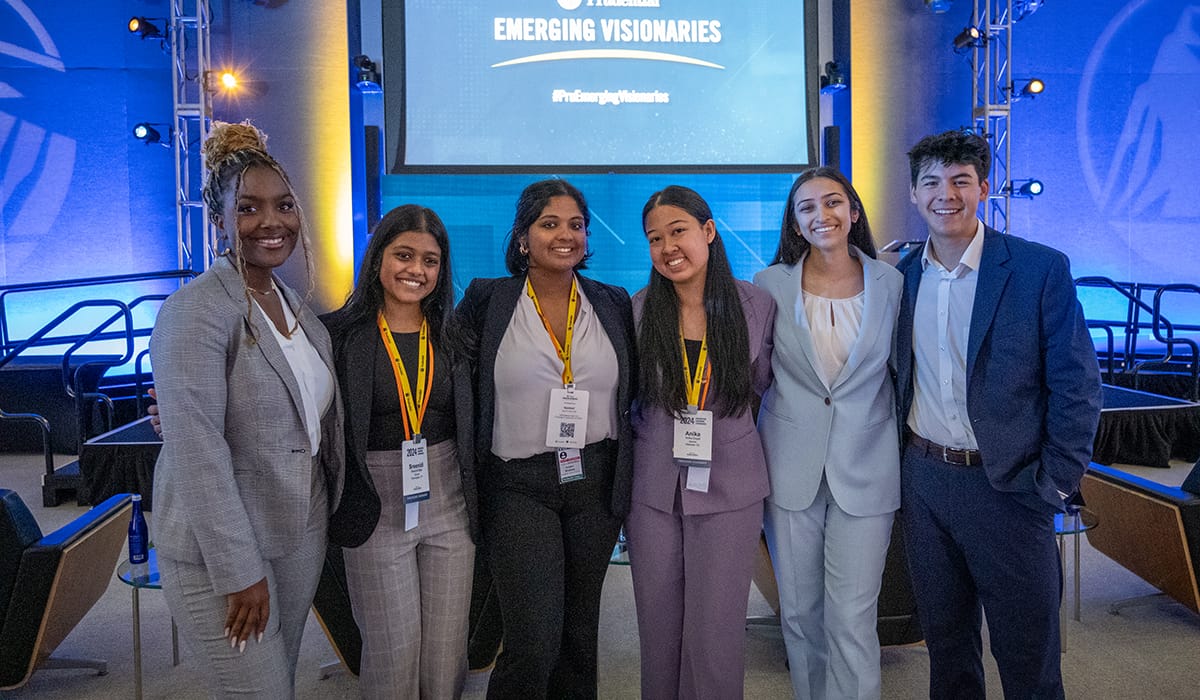
ANIKA DUGAL ATTENDS A SUMMIT IN NEW JERSEY CITY, WHERE SHE WAS NAMED ONE OF THE 25 2024 PRUDENTIAL EMERGING VISIONARIES. /COURTESY ANIKA DUGAL
“I think Anika is a very empowering visionary in this field,” says Choi. “Apart from the day-to-day stuff, we also have discussions where we talk about our mission and how we’re doing personally in challenging circumstances. I think that’s what makes her such a great leader.”
One of Anika’s greatest goals is to educate people about the racial and gender biases in technology and to emphasize the huge risks it can pose. This is particularly important since there aren’t a lot of regulations and policies in place.
As people like Anika work to change these policies, she’ll continue to work with young people to create change. In fact, Anika says the most rewarding part of her work is watching students step up into leadership roles, take a strong stance on artificial intelligence policy, and become very powerful advocates. Her ability to see the capabilities that young people possess is a testament to the fact that any person can make the world a better place, no matter their situation.
BEING OF SERVICE IS THIS FORMER MARINE’S WAY OF LIFE
Meet Daily Point of Light Award honoree Ben Peterson. Read his story, and nominate an outstanding volunteer or family as a Daily Point of Light.
Ben Peterson may no longer be an active service member, but he’s still dedicated to serving others.
A former marine, Ben is currently the communications chair for RTXVETS, Raytheon’s employee resource group that serves as a forum for the armed services community. Inside and outside the Raytheon community, Ben is widely known for his dedication to public service, particularly as an advocate for veterans and veteran-related causes. Whether he’s organizing unique gatherings like 2023’s 2nd Annual Wargaming and Simulation Event or helming RTX’s Memorial Day and Veterans Day ceremonies, Ben has recruited hundreds of people to dedicate time to bettering the lives of veterans.
Ben has already dedicated countless hours to helping others, and he’s got no intention of slowing down. He regularly clocks about five hours of volunteering each week and is eager to create even more change as the years go on. With so much need for volunteers out there, he hopes to strengthen the relationship between volunteers and the companies that seek to connect with them. As he breaks that divide and brings people together, Ben is an inspiration to anyone who hopes to make the world a little bit better than how they found it.
BEN PETERSON IS THE COMMUNICATIONS CHAIR FOR RTXVETS, RAYTHEON’S EMPLOYEE RESOURCE GROUP FOR THE ARMED SERVICES COMMUNITY. /COURTESY BEN PETERSON
What inspires you to volunteer?
I don’t even know how to begin to answer that. I feel fulfilled in ways I wouldn’t if I were just trying to enrich myself. The selfless act of volunteering is selfish for me because, for one reason or another, it makes me feel good to know that I am helping to ameliorate whatever the condition happens to be. This is just my instinct. It’s how I was programmed and how I was raised.
Tell us about your volunteer role with RTXVETS.
I’m currently the communications chair for RTXVETS. My role is primarily raising money for these organizations. I did Tough Ruck two years ago, and we raised $40,000 for veterans suffering from post-traumatic stress disorder. I am volunteering every other Friday at Ironstone Farm, an equine therapy organization, under the direction of Brendan Hamm, a prior service Marine. They provide all of these services for vets to try to help them with their PTSD. I’m volunteering heavily there.
What inspired you to get started with this initiative?
I have a pretty extensive volunteer history. I’ve been volunteering with organizations my entire life. My mother recruited me at a very early age to work for AFCEA International, the Armed Forces Communications and Electronics Association. I did that all through elementary, middle and high school. I went away to college, ended up serving in the military and then I got hired by Raytheon. They needed somebody to handle veteran and veteran-related outreach coordination for the company in this employee resource group called RTXVETS. Through that, all of these great volunteer opportunities began to emerge. I started doing Stairs4RTroops, Run to Home Base, the Derek Hines Flag Day 5k and many others. There are so many to mention.
What’s been the most rewarding part of your work?
The most rewarding part is knowing that someone stands to derive some benefit from the time that we share. If that means a vet who is struggling with PTSD has the opportunity through a few therapeutic sessions at Ironstone Farm to just make a marginal, slight improvement, that’s all that matters.
What have you learned through your experiences as a volunteer?
I’ve learned that there are a lot of people out there at every level of an organization just wanting to help. They just want in some way to improve the condition of people who are going through some tough stuff. There are allies everywhere. They come out of the woodwork; they’re in the eaves. And what I learned is that just getting out there and putting out a call for volunteers means they’re going to come. It’s incremental at first.
For example, we volunteered through the Collings Foundation at the American Heritage Museum in Hudson. The first time I started we had about two volunteers, and now that’s since exploded. We had more than we could manage at the last summer season of events.
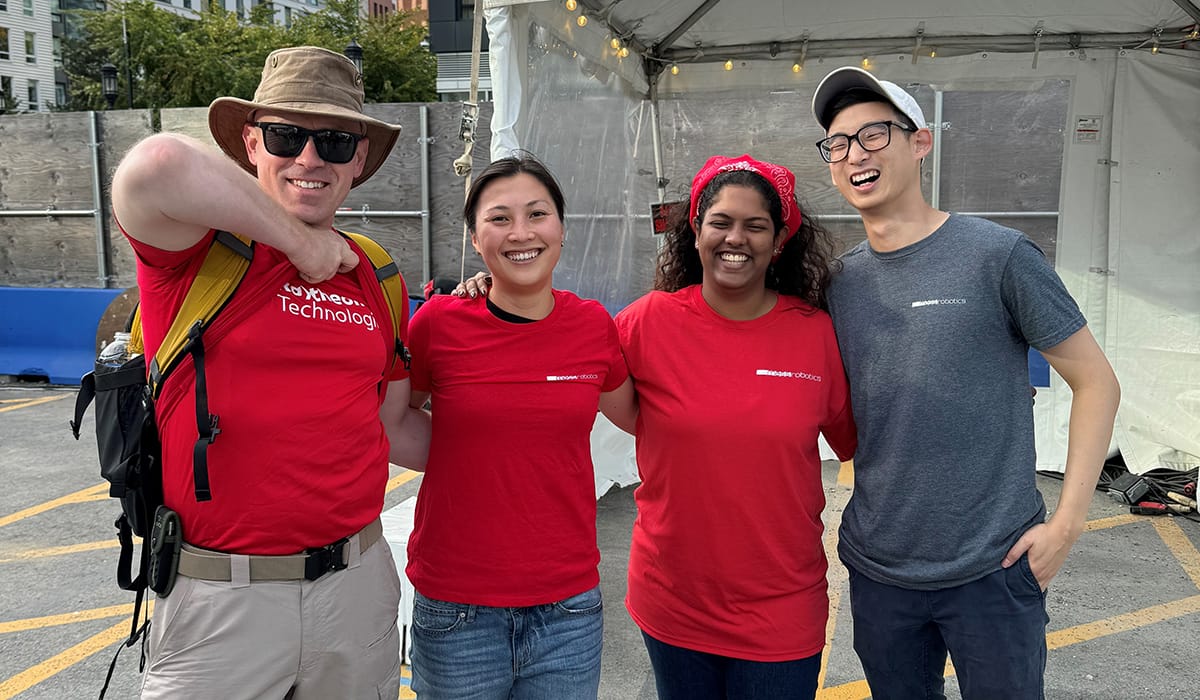
BEN PETERSON (LEFT) VOLUNTEERS ALONGSIDE FELLOW RTXERS AT THE MASSROBOTICS ROBO BOSTON 2024. /COURTESY BEN PETERSON
Why is it important for others to get involved with causes they care about?
People underestimate what their actions are going to do. Don’t be scared. Don’t be reticent, because you don’t know. You have no idea what someone is going through. The hour that you donate of your time on and off Friday to go and help out at Ironstone Farm, you might think that is not very significant. But actually, that hour might be what is needed to ensure somebody benefits significantly. We have no clue. People have no idea of their strength.
Any advice for people who want to start volunteering?
Just do it. I would say to reach out to your communities and find out where there is a need, fulfilled or unfulfilled, and do your research. There already might be efforts underway. There are organizations out there. They’re out there, and they’re volunteering all the time. Also, I would recommend that people who are hoping to get involved look online.
What do you want people to learn from your story?
Dedicating your time in some way, shape or form to help someone else is value-added. It’s not a waste of your time to donate some of it to help someone else.
Meet Daily Point of Light Award honoree Aliyah Majeed-Hall. Read her story, and nominate an outstanding volunteer or family as a Daily Point of Light.
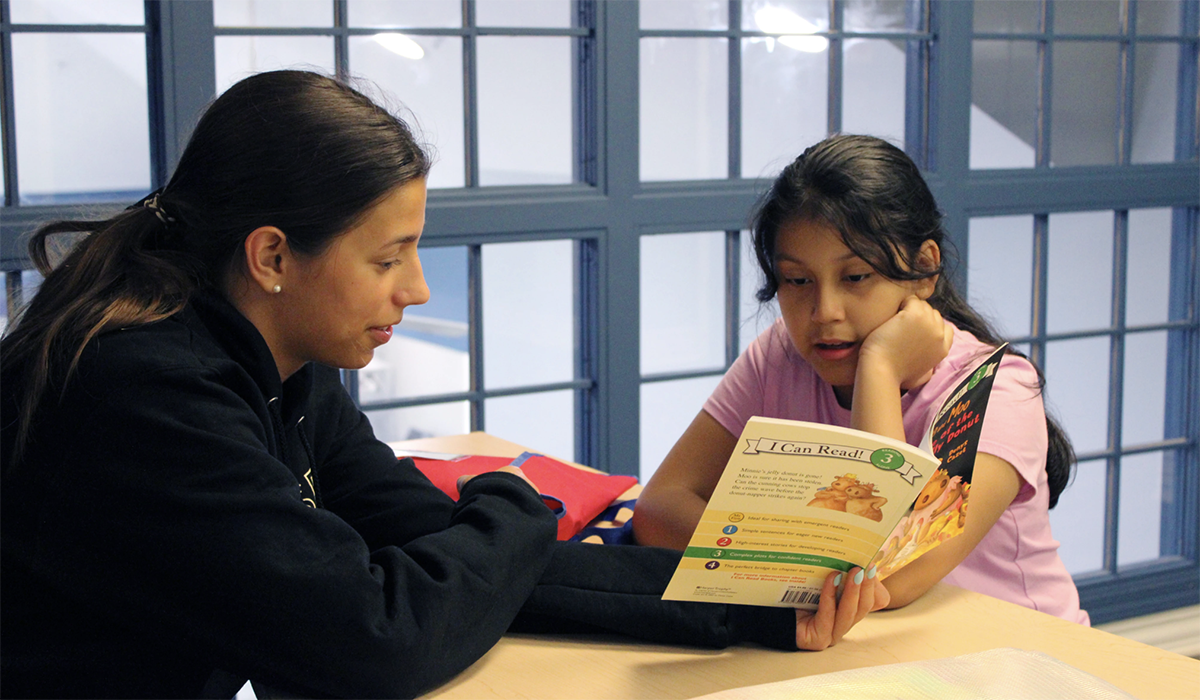
Aliyah Majeed-Hall has always loved to read. Growing up, she maintained a home library and stayed up past her bedtime reading into the wee hours of the morning. Now 16 years old, Aliyah is working to bring that love of reading to children across her community. As a volunteer with Affordable Homes & Communities, an organization that creates affordable housing opportunities and provides residents with life-changing programs, Aliyah works in their after-school program.
After learning that many children in the program don’t have books at home, Aliyah created a service project called the One Word Reading Initiative to provide children in vulnerable communities with high-quality, culturally relevant books. What started as a process of gathering books from friends, family and other AHC volunteers has sprouted into a significant endeavor that has provided 330 families with over 800 books since December 2023.
Since starting the initiative, Aliyah has worked hard to expand the program’s reach. She has raised funds to purchase books through local library book sales and even negotiated a 30% discount from Barnes & Noble to buy new Spanish-language kids’ books. With over 13 book giveaways under her belt, Aliyah shares her love of reading while making literacy education more accessible.
Never one to toot her own horn, Aliyah says her favorite part of the One Word Reading Initiative is the interactions with the children. In fact, she credits the children’s curiosity as a vital component of the program’s success. Wise beyond her years and always eager to send children home with smiles on their faces, Aliyah’s dedication is a testament to the impact that volunteering has on one’s community.
What inspires you to volunteer?
What inspires me is knowing that even though I may only be a high school student, I can make a difference. Even if I can touch one child’s life, bring one book into their home and make reading seem less challenging or daunting, or inspire them to pick up a book, then I will have made a difference. That is really important to me. Trying to help children develop a love of reading is important to me.
What inspired you to get started with this initiative?
I started volunteering with the organization because it was something that my mom and I could do together every week. It was often the highlight of our weeks to go and work with the children. I started the One Word Reading Initiative because I noticed that many of the children I worked with didn’t have that many books at home.
There’s so much research that shows that having books in the home makes learning to read easier because you can turn to your books again and again. It helps promote long-term literacy and makes success easier in school. We wanted to bring books to the homes of children who may not have many in their houses.
What are your long-term plans or goals for the organization?
Our long-term goals are to keep building our initiatives and have many more children with quality books in their homes or wherever they are living. We’re currently planning some more book events in the spring, and we’re also planning to reach out to some middle and high school student-learning groups in the region to encourage them to follow the same approach I did, which is just to find an organization or two in your area that serves children and gather high-quality books. Go to where the children are, host a pop-up book fair and let the children choose. Just talk to the children about the books, and you can get friends, neighbors and local businesses to support you. It’s easy and it makes a big difference.
What’s been the most rewarding part of your work?
The day-to-day interactions that I have with all of the students. I have a fourth-grade student I work with who loves rocks and minerals. He collects them, categorizes them and talks about them endlessly. One week, I brought a few science books for him and I thought it would take a while for him to get involved. But the next week, I came back to AHC and he told me that he had read all of the books and brought up all his new facts and knowledge. I was so impressed. I just know that he has the potential to help save the world or make a tremendous scientific discovery and I’m so glad that I could just be a small part of his journey.
Do you think organizations are hesitant to team up with teenagers like yourself?
I have received nothing but support on this. We email them and tell them what we do, and that we want to send books or host a public book fair. A lot of organizations see that there is a need to read and that there is a lack of high-quality books for children. That’s incredibly important and has allowed us to reach a lot of communities and areas.
ALIYAH MAJEED-HALL (LEFT) READS WITH A CHILD AS PART OF THE AFFORDABLE HOMES & COMMUNITIES AFTER-SCHOOL PROGRAM. /COURTESY ALIYAH MAJEED-HALL
Why is it important for others to get involved with causes they care about?
When you care about a cause, you’re more motivated to do something about it. Sometimes people get daunted and don’t realize that they can make even a small impact. For me, I was just volunteering with children on their reading, which was an area that I was interested in. I noticed that some of the kids didn’t have books in their home, and that’s how it all got started. I encourage both high school students and adults to go out, find something they’re passionate about and come up with one little way they can make a difference.
Any advice for people who want to start volunteering?
I think the first step is to pick an issue that speaks to you and that you care about. Maybe your passion is science and you want to bring science to the elderly people in your community. Well, then you could find a center that has seniors, go in, speak to the people who run the center and see how you can bring science and fun activities to them. You have to go into it with a passion. Once you have a passion, that’s what kicks it all off.
What do you want people to learn from your story?
I may just be a high school student, but I identified an issue that I cared about that I could do something about on a small scale. I just thought, how can I impact one person today? How can I change one day of their life? I think that’s important. It’s easy to get overwhelmed by all of the tremendous work that many organizations are doing, and you’re only one person. Just realize how a small impact can make all the difference for someone.