An Angel of Service and Stability in the Lowcountry
Meet Daily Point of Light Award honoree Katrina Carpenter. Read her story, and nominate an outstanding volunteer or family as a Daily Point of Light.
Katrina Carpenter, founder and executive director of Jean’s Angels, is a force of nature in the Tri-County area of South Carolina, providing a critical safety net for families facing hardship. Motivated by a selfless spirit and deep dedication, Katrina’s organization tackles the devastating impacts of homelessness, food insecurity, poverty, trauma and illness in Berkeley, Dorchester and Charleston counties. Katrina herself volunteers an astounding 70 hours per week (about 280 hours per month), overseeing everything from food pantry operations and emergency housing support to managing their mobile shower and laundry trailer. Her vision is clear: to build a stronger, more resilient community where no one is left hungry, unsheltered or unheard.
The impact of Katrina’s work is immeasurable. In the past year alone, the organization has distributed 1,800 winter coats and over 15,000 toys, served 5,611 hot meals and provided crucial hygiene and shelter, including 1,785 showers and 96 hotel stays for those in crisis. Beyond these immediate needs, Jean’s Angels offers specialized support, operating a resource center for cancer patients and their families that provides counseling and essential household items. The numbers speak volumes about the need and Katrina’s ability to meet it: in 2024, Jean’s Angels served a total of 32,651 individuals, including 16,011 children, through direct service and outreach.
Katrina’s extraordinary leadership shines through her ability to maximize every resource, stretching every donation to serve as many people as possible. Her efforts extend to coordinating emergency shelter, leading community outreach events and ensuring all programs meet the complex needs of vulnerable individuals. The organization has specifically made strides in helping children and youth, having served 1,200 unhoused children with clothing and school supplies and provided 75 weighted blankets for children with medical needs. Additionally, their mobile unit for individuals experiencing homelessness provided 811 showers and 1,811 loads of laundry, restoring dignity along with hygiene.
The incredible work of Jean’s Angels hasn’t gone unnoticed. Last year, the organization was honored as a recipient of a Lowe’s Hometowns grant, a program administered in partnership with Points of Light that supports community improvement projects. This recognition spotlighted the national significance of the grassroots efforts Katrina has championed, which restore dignity and stability for thousands in the Lowcountry.
Tell us about your volunteer role.
I am the founder of Jean’s Angels. It’s my full-time job, and all of us are volunteers, because no one receives payment. I founded it in 2015. I’d lost my mom to ovarian cancer, so I started pouring into our youth who have lost a parent due to a terminal illness, or maybe dealing with a terminal illness, or domestic violence or gun violence. We also started by working with our senior citizens, because a lot of times I would take my mom to her appointment, I noticed a lot of seniors who were there by themselves. I wanted to pour into them.
Every year, we take a group of kids who are dealing with a parent with a terminal illness, and we mentor them, giving them emotional support during school or just different things that they need. Then we end the year with a trip to Disney World, where we take 25 kids for seven days. Every year. We cover everything, so then that way they’re rewarded, but then also they get to spend time with other children who are fighting the same battle or going through the same emotions that they’re going through. We also do an annual back-to-school giveaway. It started off with us selecting 50 kids and providing book bags and school clothes. Now, that has grown to where we are providing for over 7,000 individuals. Our back-to-school giveaway includes household appliances, clothing, shoes, book bags. We give it away, and it’s absolutely free. We have an after-school tutoring program. We do summer reading and math programs.
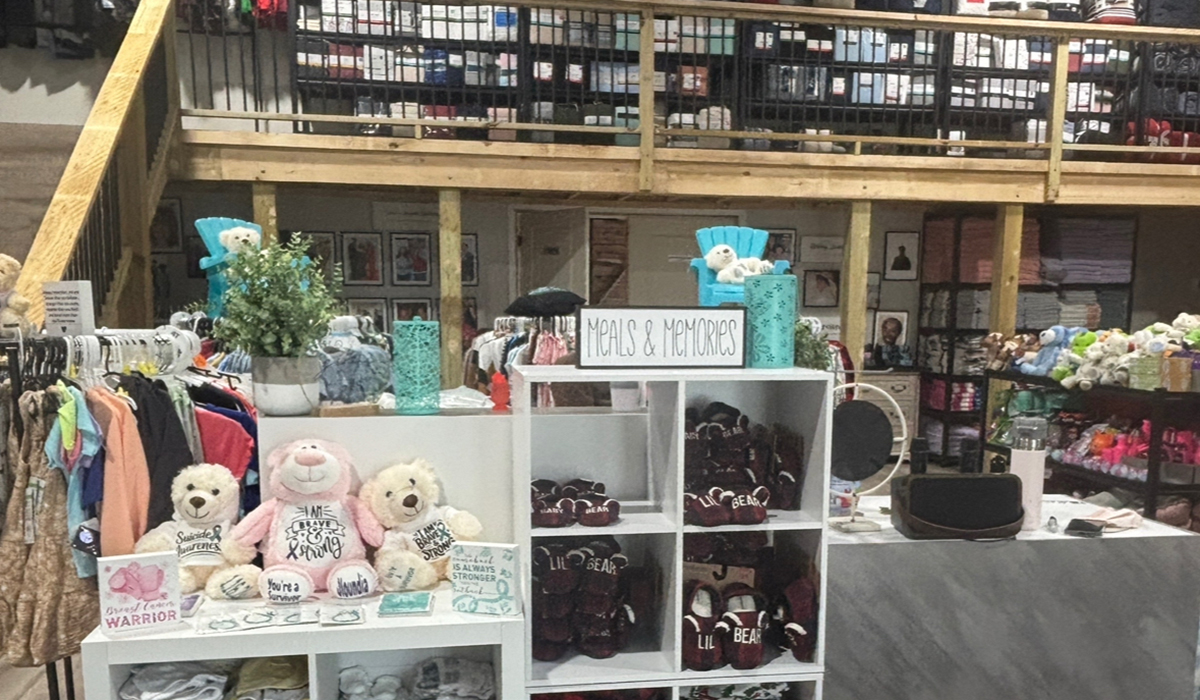
Jean’s Angels Resource Center for Cancer Patients, which helps people living with cancer, as well as those affected by it.
We also have mobile shower trailers, which have three showers. We have a barber shop, kitchen and laundry, too. The laundry trailer that we provide is for our unhoused population. In 2020, I lost two brothers a month apart, and one wanted to work with unhoused populations, so we built those trailers and started providing those services. We also opened a facility that has showers and beds, so if anyone is in need, they’re able to come to that facility, get a hot meal, take a shower, rest and get clothing.
With the money that we received from Lowe’s Hometowns, we built a resource center for cancer patients. They and their families can come in and get brand new clothing, shoes and household appliances. We have comforters, beds, mattresses – you name it. We have a food bank too, and they’re able to come through and shop. So today, for instance, we had all breast cancer survivors and patients come through, and they were able to shop absolutely free. Last year, we also gave away 15,000 toys and over 450 bikes.
What inspires you to volunteer?
What inspires me to keep going is what I went through when I lost my mom and dad. I was still devastated, but then I was also dealing with three kids while going through a divorce. It was just a lot. So just imagine, you know, the 6-year-olds, the 8-year-olds who are going through this, who do not know how to channel their hurt or their anger. They have questions. Why my parents? Why? I’ve been there.
No matter how hard it gets, or if we don’t have funding to do anything, my husband and I will make sure things are taken care of because I don’t want the children to not have a place that they can come and get that help. Come and meet other kids who are going through similar challenges. While going through my divorce and losing my mom, I made a vow to God that I will make sure I’m able to be a resource for anyone that’s in need.
What are your long-term plans or goals with the organization?
In the next few years, I’d like to see an overnight shelter actually built. Currently we have a day shelter, but I want an overnight shelter that would house individuals. I also want to have transitional homes, so that we don’t become a crutch for anyone. I want to be able to be that leg up that you need to get you moving forward, standing on your own two feet.
What’s the most rewarding part of your work?
The most rewarding thing for me is being able to see the transformation. A lot of times, when people come in and they take their showers, they come in kind of rough, but when they come out, they’re rejuvenated, they’re happy. They’re smiling. They have their dignity. It makes me happy knowing that when they walk down the street, people are going to respect them. Everyone deserves respect, but at the end of the day, people look at you and judge you. So being able to smell fresh, have a fresh haircut… you just feel like yourself. It makes you want to do more. It makes you want to be around people. That’s a good thing.
Last Sunday, I was feeling a little down, and I walked into Walmart, and this young woman stopped me. She asked if I was the lady with Jean’s Angels. She had her three little children with her, and she just kept crying. She said, “You don’t even know us, but the things that you were able to provide us meant the world to our family.” She and I just cried and cried. In the middle of Walmart, just balls of tears. Those things reassure me and let me know that what I’m doing matters to people. It’s all actually helping. It’s spreading God’s love, and that’s my mission.
Jean’s Angels Resource Center for Cancer Patients, which helps people living with cancer, as well as those affected by it.
What have you learned through your experiences volunteering?
The lesson is to listen. I think it’s very important to provide people with the services that they actually need, and not what we think they need. I’ve had people tell me that they’ve observed differences in their toiletry bags, and I’ve made adjustments based on what they need. When we built the shower trailer, I saw a need for a hydraulic lift for special needs people. It’s so important to listen and respond to the actual needs. It makes the impact greater.
Why is it important for others to get involved with causes they care about?
It’s one thing to say, “I donate my money,” but it’s another thing to interact with people. A lot of times, issues are out of sight, out of mind. It does something to you. Providing these services in a hands-on way changes you. You don’t say, “I gave money and it looks good.” You actually become familiar with the issues as well as the impact you’re creating in the community. Seeing it firsthand will make you want to work harder for people.
Any advice for people who want to start volunteering?
I would tell them to just start. Know your passion first, and make sure it matches with who you are. Find an organization and get involved. It opens you up to see how you’re helping provide services. It changes your life. My encouragement is to wake up every day and be that difference.
The Architects of Hope Building Sanctuaries for Vulnerable Families
Meet Daily Point of Light Award honoree Yvette Williby. Read her story, and nominate an outstanding volunteer or family as a Daily Point of Light.
Yvette Williby embodies exceptional community leadership through her tireless dedication to underserved, abused and special needs children. As founder and chief executive officer of Mosaic Movement, Yvette dedicates a minimum of 60-80 hours per month to leading community-building initiatives that have raised thousands of dollars for critical care services. Her strategic leadership has built crucial community partnerships that multiply available resources, transforming the organization into a trusted establishment of empowerment, healing and unity. Yvette meticulously develops programs like the “Los Niños Center” for child development and prevention, “DanScilla” for trauma healing through therapy and “LUMRA” for survivors of sexual assault, creating a multilayered network of support.
Yvette’s proactively creates healing sanctuaries for vulnerable families, coordinating essential therapy and educational support, and connecting families with vital housing, medical care and mental health services. Her dedication to direct service and advocacy is remarkable; she coordinates essential goods deliveries for families in need, mentors youth in the “Agents of Change” leadership program and ensures families facing deportation replace fear with knowledge through “Know Your Rights” immigration workshops. Through collaborative, grassroots partnerships with local schools, faith-based organizations and businesses, Yvette has exponentially increased the support networks for those in greatest need.
The impact of this sustained effort is felt throughout the community. Her crisis response work has been a lifeline for families, and her youth programs equip the next generation with the skills to become confident, self-aware leaders. Yvette ensures every dollar and every minute of her time create this lasting change, not just a short-term band-aid. This is a foundational investment in the future, designed to create lasting transformation rather than temporary fixes to urgent issues.
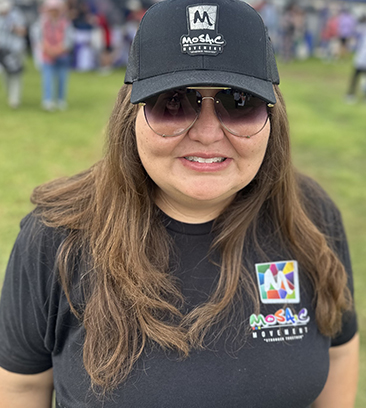
Yvette celebrating local culture by sponsoring a senior Folklórico group at a city community event.
Tell us about your volunteer role.
My volunteer role is the heart and hands behind Mosaic Movement—I’m the founder and CEO, but first and foremost, I’m a hands-on leader. For over 15 years, my life has revolved around two passions: teaching communication in the classroom and building community in neighborhoods from Fullerton to Santa Ana. What I was teaching in college—about interpersonal connection, conflict management and finding your voice—was exactly what was missing in the communities I was working in. I saw this gap firsthand, not from a distance, but sitting in living rooms, hearing families’ stories.
So, Mosaic Movement was born from that need. My master’s in communication isn’t just a degree on my wall; it’s the foundation of everything we do. It’s why our approach is trauma-informed and centered on the power of a person’s own voice.
And I don’t lead from an office. I’m in the trenches with our team and our community—personally leading workshops, hugging a crying parent and sitting on the floor with a child who’s finally starting to open up. I lead by example because I believe that’s how you build trust and show people they matter. Every backpack we hand out, every workshop we lead, every young mind we encourage—I’m there, because this isn’t just an organization to me. It’s my life’s work.
Why is this issue so important to you?
You know, this work is deeply personal for me. In my classroom, I taught communication theory and empowerment, and I spent over a decade researching community building and development. But I also saw the real-life cost when those things were missing. I reached a point where I had to become a neighbor who helped build change.
I made a conscious choice to get out of the stands and get into the game. I moved from the lecture hall to the living room, from analyzing problems to co-creating solutions. That’s when a group of fellow professors and I began our work in Fullerton, and I co-created the curriculum for an after-school program we implemented in two elementary schools. And what I’ve learned is that change isn’t a lightning bolt; it’s a slow, steady current. It’s in the “aha” moment when a child finds their voice, or when a parent, for the first time, feels equipped to advocate for their family.
That spark in one person’s eyes—that’s what fuels me. Because that one spark can light a fire in a family, and that fire can warm an entire community. This isn’t just what I do; it’s who I am. It’s the thread that connects my academic life to my purpose.
What inspired you to get started with this initiative?
What inspired Mosaic Movement was the powerful moment my two worlds collided: my life in academia and my life in the community. For over a decade in the classroom, my students entrusted me with their stories. Time and again, I’d hear a version of the same heartbreaking refrain: “If only someone had taught me how to handle this…” or “If only I’d had a safe space to process what I was going through… my life would look completely different today.”
That “if only” haunted me. And then, through my research and work, I wasn’t just collecting data; I was collecting stories that had never been heard. I saw brilliant, resilient kids, but I also saw the gangs waiting for them on the corner and the systems failing them. So, I moved from theory to action. We started testing solutions, working with teenagers on conflict management. And we saw it work. We saw kids transform right in front of us when they finally felt heard and equipped. But that success revealed a deeper truth: we couldn’t create lasting change for children without the support of their parents. We realized we had to coach the whole family.
We built upon that early work by intentionally weaving in parent coaching and mental health support. After all those years of listening, it became crystal clear: the community wasn’t asking for a savior; they were asking for a partner. They had the strength and the resilience. They just needed the tools. That’s when I knew I had to invest my whole self. Mosaic was born from that listening, from the courage of my students’ stories and from the unwavering belief that the community itself holds the blueprint for its own healing.
What are your long-term plans or goals for the organization?
My long-term vision is to see our Agents of Change and Los Ninos Center Child Development and Prevention programs woven directly into the fabric of our public school systems. I want this support to be a natural, accessible part of every child’s school day, not an extra service they have to seek out. Ultimately, we’re working toward a future where our three-pillar approach—awareness through education, supportive services for healing and resources for stability—is accessible to every family in our service areas, ensuring that no one is denied support because of their income, background or zip code. A big part of that is creating culturally safe spaces where immigrant families feel comfortable dismantling the taboos around mental wellness, an issue my research has shown is critical.
In practice, that means Mosaic Movement becomes a steadfast bridge in the community. We won’t just be a program; we’ll be the reliable connection point, guiding families to the right services, resources and educational pathways, and ensuring every single child gets the specific support they need.
What’s been the most rewarding part of your work?
Without a doubt, it’s the moment of trust. When a family lets you in. When they feel safe enough to share their struggles and their hopes with you. That’s a sacred space. In those moments, I’m not just a founder or a CEO; I’m a witness to their courage. The most powerful reward is seeing the transformation firsthand. It’s also in the quiet, steady victories: the look in a parent’s eyes after a Los Niños Center coaching session when they say, “I finally understand how to support my child,” or the text from an Agents of Change graduate who used our communication skills to navigate a conflict in school. And it’s in the collective joy at our community events, like seeing a child’s face light up when they receive a toy in December or a skateboard through our foster youth program. These moments are the living proof of our impact, and they fuel my belief in a better world.
What have you learned through your experiences volunteering?
This work has taught me one of the most humbling and important lessons of my life: we can’t fix everything, and there isn’t always a happy ending. There are stories and faces that stay with you, where you couldn’t reach the outcome you desperately hoped for. But my training in communication taught me a different way to see that. It showed me that our role isn’t to be the hero who swoops in with all the answers. This is why we have community liaisons embedded in cities from Anaheim to Costa Mesa. They ensure we are led by local voices. Our role is to be a steady, trustworthy partner in the struggle. This is why our philosophy is to meet families exactly where they are, without judgment. It’s never too early to offer support, and it’s certainly never too late to try.
And the most beautiful part is what you receive in return. When you stop seeing a community as “broken” and start seeing them as partners in healing, everything changes. They share their strength and their resilience with you. You carry a piece of their story with you, and it becomes a part of your own. That exchange, that human connection, is what fuels you. It’s what forever changes you and solidifies why you continue to do this work, even on the hardest days.
Yvette Williby is a passionate nonprofit founder serving a multitude of populations and communities.
Why is it important for others to get involved with causes they care about?
I believe getting involved is what transforms us from witnesses into participants in shaping our world. It’s the critical leap from caring about a problem to taking care of it. It unlocks a sense of purpose that daily life often can’t provide. For me, this isn’t abstract. My research was in deeply difficult areas like sexual assault, where the statistics are chilling. We know that over 90% of the time, the perpetrator is someone known and trusted by the victim. Yet, these crimes are so often silenced, pushed under the rug by shame and fear.
Reading that research was one thing. But at Mosaic, when I sit with a survivor and see that statistic embodied in a person, the data becomes a story. The outrage becomes a responsibility. That’s why involvement is so vital. A volunteer might help us distribute groceries to a vulnerable family too afraid to leave their home, and in that act, they don’t just provide food—they deliver dignity and connection. Getting involved completes the circuit. It turns your knowledge and compassion into tangible action that tells someone, “You are not alone.” This is how we build what we call “collective self-sufficiency,” where everyone has a role to play.
It’s the engine that turns our academic understanding, our personal outrage and our innate compassion into tangible action that literally changes the course of someone’s life. We stop being bystanders to injustice and become agents of change.
Any advice for people who want to start volunteering?
My advice always starts with looking inward. Connect your actions to what you truly care about. Ask yourself not just what you’re passionate about, but why. What injustice stirs you? What story fuels you? That “why” will be your anchor on the tough days. And my biggest piece of advice is simple: get comfortable with being uncomfortable. Growth never happens inside your comfort zone. If you’re waiting for life to be less busy to start, you’ll be waiting forever. Serving can become your sanctuary within the chaos.
And please, start small. You don’t need to launch a nonprofit. Find your version of our work—If you love kids, go coach a Little League team. Maybe your “Agents of Change” is mentoring one teen, or your “Community Resource Fair” is helping at a local food drive. The key is to start. Be present, listen deeply and be consistent. And remember, the most powerful tool you have is your authentic self.
What do you want people to learn from your story?
Above all, be you. Every person and every group is different. If you’re not yourself, they will feel it. Just be you. You are enough. Sometimes, the most powerful thing you can do is simply show up, listen and make someone feel seen. This world wouldn’t be the same without your unique contribution, and your presence alone might be exactly what someone needs.
Meet Daily Point of Light Award honoree Mihika Joshi. Read her story, and nominate an outstanding volunteer or family as a Daily Point of Light.
Even as a kid, Mihika Joshi understood the sacrifice of military service, so when the 75th anniversary of the end of World War II arrived in 2020, she used it as an opportunity to honor those involved by founding Home of the Brave Connecticut. She was just 12 years old.
What has become an annual display honors local veterans and their families by hanging banners throughout her town with their photos, roles and wars they served in. She also hopes to inspire youth-led civic action and gratitude with their stories. Now a senior in high school, Mihika has displayed personalized banners for 275 veterans in four Connecticut towns and raised nearly $30,000 through community donations and local partnerships.
Mihika consistently looks for ways to help others. During her nine years—and counting—as a Girl Scout, she earned her Gold Award from her work addressing occupational sorting and the gender wage gap. And as part of her school’s Future Business Leaders of America club and Model UN, her tendency to note and address shortfalls in the status quo no doubt continues. In short, Mihika is bending the world’s arc of kindness and equality in the right direction with the empathetic leadership the world needs.
What inspired you to get started with this initiative?
My school has always done a really good job explaining why veterans are so critical. In Kindergarten, several came in to talk to us. Because of that, I’ve always wanted to do something for them, and in 2020, I came up with this idea.
With the support of my local Patriotic Commission, it became a reality. Because it was new during COVID, we honored eight World War II veterans that year for the 75th anniversary of the end of that war. This year was 250 years of American independence, and we reached our 250th veteran.
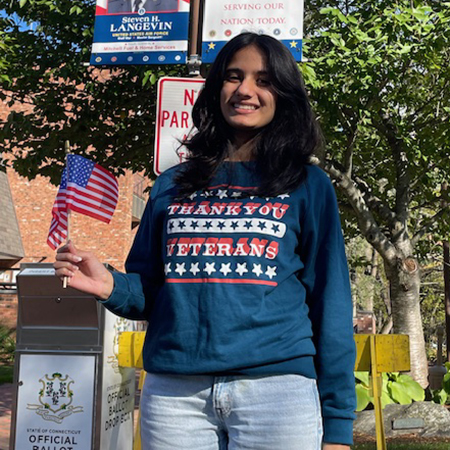
As the founder of Home of the Brave, Mihika Joshi celebrates veterans in her local and nearby communities by hanging banners highlighting their service.
Tell us about your volunteer role with the Veterans Banner Program.
I oversee and facilitate all aspects of the program—collecting honoree nominations, securing sponsorships, coordinating with community partners and leading outreach initiatives.
Every year, we identify and honor veterans by printing banners with their name and photo on them and hanging them in the local library, recreation center and in other areas. We find our nominees with support from organizations like the Patriotic Commission and the American Legion; sometimes they’re nominated by other veterans.
Initially, I had to make calls to find sponsors, because it was the middle of COVID. Some thought it was a teen prank, because I was a 12-year-old calling to ask for money. They didn’t know about the program yet. Since then, we’ve expanded to four towns. There are banners everywhere, so many people know what we’re doing. It’s become easier.
Banners go up on Memorial Day with a different set of veterans every year. The unveiling ceremony is typically the Friday before, and we bring them down on Veterans Day. Once they’re no longer being displayed, they go to the community sponsor for one year, and after that, they’re given to the families.
Do you have other volunteers?
In addition to myself, the South Windsor Patriotic Commission has two volunteers who have helped me immensely, Daria Plummer and Herb Asplund. At our yearly banner unveiling, we also have lots of youth volunteers from South Windsor High School.
What are your long-term plans or goals for the organization?
My original plan was to honor every veteran in South Windsor. We’ve already expanded to four towns. Now, my goal is to continue until every veteran in the state of Connecticut—and potentially beyond—is feeling seen and appreciated.
What’s been the most rewarding part of your work?
The unveiling event is always special, because I have the opportunity to actually meet and talk to veterans and their families. Hearing their stories firsthand reminds me of why I got involved in this initiative to begin with. Their humility, strength and stories of valor inspire me.
In our first year, I met Navy veteran Marie Walsh, and she told me about being a nurse in the Navy. It was so exciting, especially because she’s a woman, and most of our honorees are male.
What have you learned through your experiences as a volunteer?
I remember talking to one of the Vietnam veterans who told me that when they returned from the war, the community wasn’t very welcoming. That was upsetting, because they gave up everything to protect our freedoms; they should be respected and honored. I’m grateful that we get to be part of their journeys. This initiative, more than anything, has shown me how strong our community is and how much support there is when we come together to celebrate the people who allow us to live the way that we do.
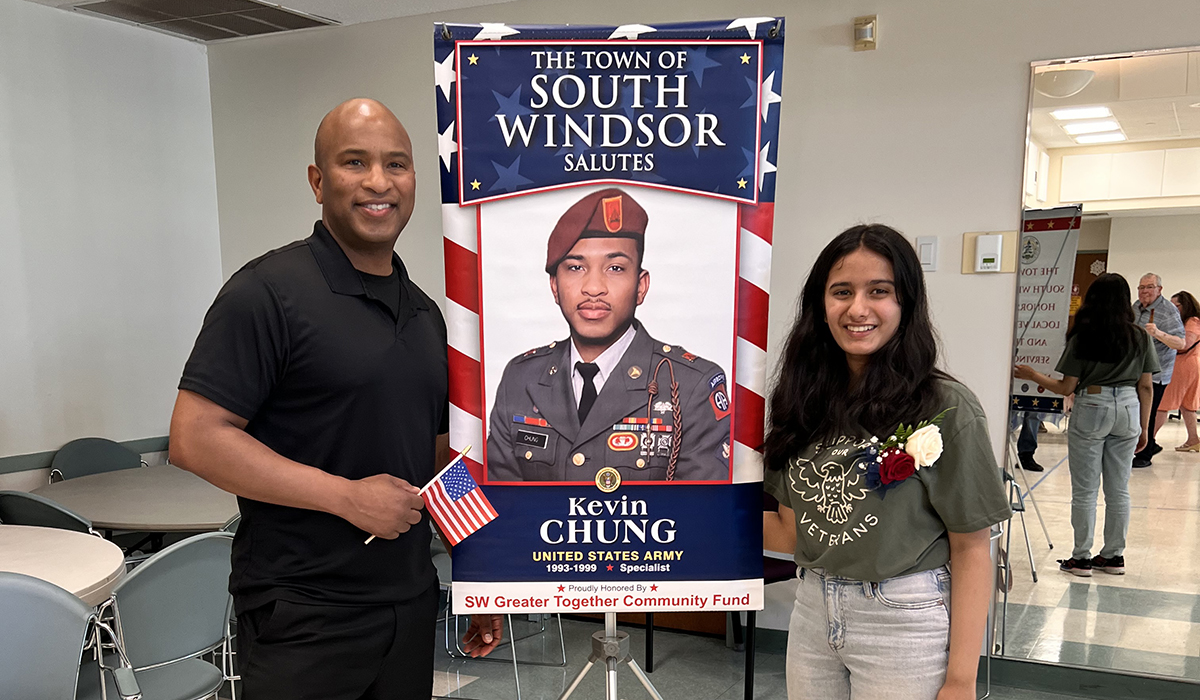
Mihika (right) meets with Army veteran Kevin Chung, whose banner is on display.
Why is it important for others to get involved with causes they care about?
Going through this process has shown me that I have the power to work with like-minded people to initiate positive change in my own community. If you’re passionate about something, there are many different ways to speak out. People are the keystone of community.
Any advice for people who want to start volunteering?
Find allies who are as passionate as you are. For me, that’s been the Patriotic Commission, our community sponsors and the people who really stand up and advocate for this. My biggest advice is to find a team of people who you think are going to put their full effort forward to make it happen.
What do you want people to learn from your story?
I started this program when I was 12. I had the idea when I was 10. As long as you’re able to advocate for yourself and your ideas, you can never be too young to create change. At first, people might not take you seriously, but you’ll eventually be able to show them through your impact that you are capable of making change.
Meet Daily Point of Light Award honoree Laura Barker. Read her story, and nominate an outstanding volunteer or family as a Daily Point of Light.
Laura Barker didn’t know how to run a nonprofit back in 2016. But that didn’t stop her from creating one. When Laura’s son returned from serving in the United States Marine Corps in Afghanistan, he had significant physical and mental issues to deal with. While he was in the military hospital, Laura was introduced to the therapy dogs that came in to see the veterans. Blown away by their positive impact, Laura knew she wanted to fuse her background of training dogs with her passion for helping veterans and first responders. Already an avid volunteer, Laura owned several successful businesses at the time. However, she says she realized when she sold her last business that she could keep making money or she could make a difference. She founded Hero Pups, an organization that provides support dogs to veterans and first responders in New England diagnosed with service-related psychological challenges. She never looked back.
In nearly ten years of running Hero Pups, Laura has been responsible for every aspect of the organization’s livelihood. She believes every dog is going to be as different as the person they’re helping, which is why it’s essential to ensure the organization pairs the right dog and human. That means extensive profiling and training, as well as less glamorous work, like making sure each puppy goes to the bathroom. She serves in a variety of important roles, ranging from the logistical manager and executive director to the general contractor, and covers any other tasks that need to be done. Laura is also responsible for organizing about 80 to 120 volunteers per month and contributes 50 hours a week herself.
It’s a massive endeavor, but she’s up to the challenge.
As Hero Pups gears up for its tenth anniversary next year, the organization is getting ready to celebrate with its 10th motorcycle ride. Every year, a group from the American Legion runs the event, which raises funds for the organization and serves as a great day to gather and celebrate all their accomplishments. But this year’s event will also be a tremendous moment of accomplishment for Laura and the Hero Pups team. She says every year the event gets bigger, since more faces come in and bring new friends and other motorcycle groups to rally and do good together. Set for June of 2026, Laura is already excited and says she cries out of joy every time.
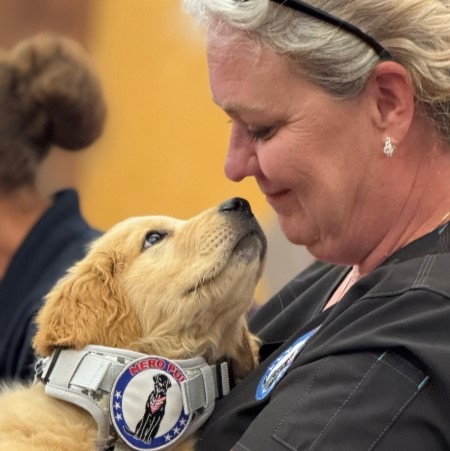
LAURA BARKER, FOUNDER OF HERO PUPS, SNUGGLES WHILE WAITING FOR A PRESS CONFERENCE WITH A PUPPY WHO WILL BE TRAINED AS A HUMAN TRAFFICKING TASK FORCE COMFORT DOG. /COURTESY OF LAURA BARKER
Right now, 262 support dogs are working with a veteran or first responder thanks to Hero Pups. Another 200 pets have been rescued from shelters and placed as companions with veterans. But at the heart of the movement is Laura’s mission to volunteer and create change for veterans and first responders. Her passion for helping others is an inspiration to us all.
What inspires you to volunteer?
I know that I’m changing lives and in some cases, saving lives. Not only the dogs that we’re rescuing, but also the heroes that we’re helping.
What inspired you to get started with this initiative?
My son was injured in Afghanistan when he was in the Marine Corps, and when he got out and was going through surgery, somebody brought therapy dogs into the military hospital. I saw the impact that it had on the other wounded service members. I realized that I had a background in training working dogs, and I did a lot of rescue, so when my son got done with his surgeries, I started training service dogs for Marines. Then I placed a high-profile dog with a firefighter who was also a veteran, and I found out how big the need was.
Tell us about your volunteer role with Hero Pups.
I’ve always been a volunteer. I’ve worked with a lot of great charities, but I never knew I was going to start one. I do almost everything. I spend a lot of time doing intake of the puppies that are coming to us from shelters and rescues, as well as the intake of the veterans or first responders who will receive the dog. There’s so much that wraps around our day-to-day activities. Right now, I’m literally sitting outside because all the puppies are outside going potty. Pretty glamorous stuff for sure!
It’s whatever needs to be done. Making sure the veterinary care is done, making sure our veterans and first responders have clearance from their doctors or their mental health provider to receive a dog and all the other things that go along with that. We get the puppies in and profile them, making sure they have the right temperament and that they’re smart enough to complete service dog training. We get to know the dogs. Then we pair the dog with an individual.
What are your long-term plans or goals for the organization?
I never wanted this to be the biggest organization. I did want it to be the best for the people that we’re serving. I’ve been able to surround myself with people smarter than me. And while it’s great that I’m doing this interview, I have to give kudos to all the people who keep us moving forward. We have almost 1,800 volunteer hours every single month.
What’s been the most rewarding part of your work?
Having the recipient come back, or having their family members come back and tell us how much the dog has changed their life for the better. They’re doing activities that they didn’t do before. Sometimes it’s literally saving a life, and they need a reason to wake up in the morning and a reason to keep putting in the fight, because most of our dogs are psychiatric service dogs. We’re dealing with mental health, and sometimes a dog can go further than a therapist can.
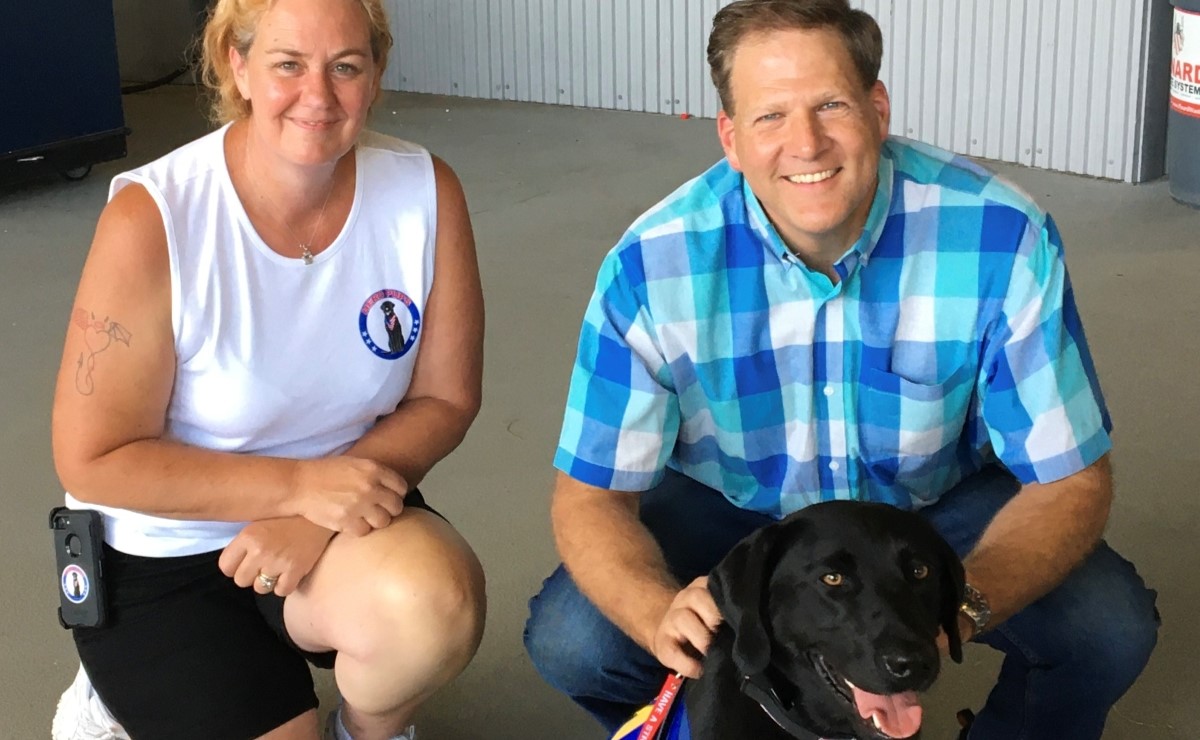
LAURA BARKER, FOUNDER OF HERO PUPS (LEFT) SMILES ALONGSIDE JOHN E. SUNUNU. /COURTESY OF LAURA BARKER
What have you learned through your experiences as a volunteer?
Patience. I have to be patient. I want everything right now. That’s just how I am. I keep things moving, but not everybody moves at the same pace. I’ve learned that there’s still so much to learn. Sometimes people get stuck in a rut and they think that they’re experts in their field, and they may be, but there’s always more to learn. When you say you know all about something, I promise you don’t. You don’t know all about it. You may know a lot about it, but you don’t know all about it.
Why is it important for others to get involved with causes they care about?
Everybody can do something, even if you can’t write a check. It’s not always about a check. You can share your time, you can share your talent or you can share your money. Whichever one fits best for you. There is a reward that comes that you cannot buy. It is so impactful to see the outcome. If you’re volunteering at a soup kitchen, you may not see the person that you’re serving, but you made a difference in that person’s life for that day. Volunteering will always make you a better person.
What do you want people to learn from your story?
If you see something that needs changing, or you find people that need help, or maybe it’s animals or the environment, whatever your passion is, find a way to use that passion.
From Soldier to Strategist: Veteran Expands Red Cross Reach Internationally
Meet Daily Point of Light Award honoree Nickolas Nevius. Read his story, and nominate an outstanding volunteer or family as a Daily Point of Light.
For 29-year-old Nickolas Nevius, service has always been a through-line—first as an Army officer, and now as a dedicated volunteer leader with the American Red Cross. Based in South Korea, Nickolas devotes his time to strengthening Red Cross programs that support military communities across the Asia-Pacific region.
After leaving the Army last year, Nickolas joined the Red Cross, first helping spearhead the Red Cross-Department of Defense (DoD) SkillBridge Program, a national initiative that connects service members transitioning out of the military with civilian career opportunities. Today, as a leadership partner for the Red Cross Asia-Pacific Division, he works strategically to expand resources for U.S. forces stationed from Australia to Singapore. His work helps ensure that American personnel and their families have access to Red Cross services wherever they serve.
A veteran, military spouse and graduate student in health policy and management at the University of California, Berkeley, Nickolas balances his studies in health policy and management with 15–20 hours of volunteer service each month. His blend of lived experience and strategic vision continues to shape how the Red Cross supports those who serve.
What inspires you to volunteer?
I think it’s really rooted in my educational experiences growing up. I went to Catholic school for quite some time, and service was built into the curriculum. While I’m no longer in that faith tradition, that desire to improve your community through service still carries through to today.
Volunteer leader Nickolas Nevius supports the American Red Cross mission across the Asia-Pacific region./ Courtesy Nickolas Nevius
Tell us about your volunteer role with the Red Cross.
I’m a leadership partner for the Red Cross Asia-Pacific Division director. The Red Cross runs on volunteers. There’s a very small full-time staff, so volunteers play a huge part in how the organization operates.
My role functions like a strategic operations associate. We’ve been focused on two major initiatives. The first is developing a Western Pacific strategy—analyzing where U.S. forces are stationed and making sure Red Cross resources are aligned to support those locations. The second is drafting a memorandum of agreement between the Red Cross and U.S. Army Pacific that outlines how both organizations would work together during a natural disaster or potential conflict, ensuring everyone affiliated with the U.S. military and allied powers can be evacuated safely off the peninsula if a crisis ever breaks out.
You also helped launch the Red Cross-DoD SkillBridge Program. Why was that important to you?
I went through SkillBridge myself when I was transitioning out of the Army. My experience was positive, but I saw room for improvement—mainly in making sure participants actually had full-time opportunities afterward.
So when I had the chance to work at Red Cross National Headquarters, I wanted to shape the program to ensure meaningful employment outcomes for transitioning service members. Although changes to the Department of Defense’s legal framework eventually paused the program, my intent was always to improve the process and outcomes for those making that transition.
Is there a moment that stands out as particularly rewarding?
Yes. There was an Army officer at Fort Sill who was transitioning out and wanted to work with the Red Cross. We helped him navigate several moving parts—relocation, career goals—and ultimately placed him in a full-time role in disaster cycle services.
He’d spent over 20 years deploying around the world, ensuring others’ safety and this position let him focus on helping people here at home. Seeing that come together was really gratifying.
How has your military experience influenced your approach to volunteering?
Service to the Armed Forces is laser-focused on giving back to military communities. Having been an Army officer myself, I understand the landscape—the needs, the gaps and where the Red Cross can step in to help. That background has been essential to doing this work effectively.
What motivated you to keep volunteering, even while pursuing graduate studies?
I think it’s really important to get involved in your community, especially when you have the capacity to do so. I’m very blessed to be in a position where I can volunteer at the strategic level and have an outsized impact. The Red Cross gives me flexibility to balance my coursework with this work, and I find it incredibly meaningful.
Why do you think volunteering is important?
If you’re fortunate enough to be able to dedicate time, talent or treasure to an organization, you should. Time, especially, is such a precious resource, but it’s absolutely worthwhile to spend it on a cause you’re passionate about.
The world would probably be a better place if everyone devoted even a little time to something they cared about.
What advice would you give to someone who wants to start volunteering?
Just get out there and do it. It’s really wonderful for community building. Volunteering connects you with people you might never meet otherwise, and that’s an important part of what makes it fulfilling.
What do you hope people take away from your story?
I hope they realize that even with busy lives, you can make time to do meaningful work. There are so many opportunities out there. You just have to apply and see what happens. You might find a wonderful community waiting for you.
Meet Daily Point of Light Award honoree Koa Lowe. Read his story, and nominate an outstanding volunteer or family as a Daily Point of Light.
Sixteen-year-old high school athlete Koa Lowe knows a lot about cancer. While he’s never been a patient, his mom is a childhood cancer survivor, and his dad is an oncologist. Together, he and his mom started Luna Peak Foundation to support those directly affected by cancer, as well as their loved ones and those experiencing grief.
Koa has been working with Luna Peak Links, the student-led branch of the foundation, for multiple years in various roles—secretary, volunteer lead and fundraising chair. Now, as president, he brings together his peers to provide comfort to newly diagnosed children and their families through care packages and to raise funds in creative ways.
With three brothers, two dogs and an Italian exchange student, the Lowe house understands how to prop each other up when life’s low points cause a change in plans. Encouragement and assistance can make all the difference, and they are committed to being that for others.
What inspired you to get started with this initiative?
My mom was a cancer survivor, and my dad’s an oncologist, so I’ve been around it my whole life. My mom is currently working at Cancer Support Community. Everything that surrounds me is mostly about cancer, and I really want to support the cause. At our nonprofit, all the money that comes in, we put back into making care packages, sending them out to hospitals and children’s hospitals and making books for people who are grieving to help them and teach them how to deal with their grief.
Koa Lowe, president of Luna Peak Links,
Tell us about your volunteer role with the Luna Peak Foundation.
I create agendas for team meetings, recruit volunteers, reach out to donors for care package items and help at fundraising events. We haven’t finalized all of our events yet, but next week, we’re going to my mom’s 42nd year of remission party with her and her survivor friends and family.
She had it when she was very young, and my grandma also had it. So, it’s been part of my life since I was young. We’re just celebrating her. We have raffle tickets. Some of us go up and speak. My mom and I will speak about our experiences.
Many of our events are fundraisers with partners like Cancer Support Community. My favorite annual project is creating care packages that we deliver to hospitals all over Southern California. Our last meeting was about what to put in those–teddy bears, games, puzzles, blankets. Things that would cheer up kids in their time of need. The Luna Peak Links usually focuses on young people and the umbrella organization, Luna Peak, helps older patients.
You mentioned some of the physical things that patients or their loved ones might need. What other kinds of support can people give?
My mom has found that sharing her experience with others helps them talk about their own experiences. And that’s what the club at high school is about. At our first meeting, we share how we’ve been affected. My mom feels that it’s therapeutic. She also creates books–including children’s books–about her experiences and shares those with other cancer survivors. Her goal is to make them feel seen.
What is Cubing for Cancer?
The idea was inspired by my little brother’s interest in Rubik’s cube and something called “speed cubing,” which basically involves solving it as fast as possible. He started going to events and competitions, and my mom came up with the idea to use that to support those affected by cancer.
So, we set up a big cubing event where I went to preschool that brought out more than 100 speed cubers. We raised money for Luna Peak through ticket and food sales, sponsorships and a raffle that ended the event. It made the school news and was very productive. We’re planning to do it again this year.
What’s been the most rewarding part of your work?
The most rewarding thing is making these care packages, hopefully making people feel seen, and seeing the joy in my mom’s face when she writes these books. I hope everyone who gets one of these packages has a smile on their face. The hospital has us drop them off, and caretakers and doctors deliver them. We probably make about 100 at a time. Last year, we made around 500.
At a fundraiser, Koa (fourth from left) sells raffle tickets with fellow volunteers to raise money for various initiatives that support the cancer community.
What have you learned through your experiences as a volunteer?
I’ve learned a lot of social skills through talking to all my mom’s friends and have learned about how cancer affects the community. It doesn’t just affect the people who have cancer. It can affect friends and family. That’s also why my mom creates grief books, to help those surrounding a patient’s family and friends, because it can be very hard on them. It’s taught me a lot of humility about the cause.
Why is it important for others to get involved with causes they care about?
It’s nice to be a part of what you’re passionate about. When something is negatively affecting others, especially those that you really care about, you should support them in any way that you can.
Any advice for people who want to start volunteering?
Just get out there. Have fun with what you’re doing. Talk to others. If you’re doing the work that I’m doing, talk to others. Learn as much as you can about the cause. Talk to survivors and grievers. Include yourself in every part, in every way you can.
What do you want people to learn from your story?
We want to teach cancer survivors and those affected by it that they’re never alone; there’s always someone they can come to. You can always come to our events.
Meet Daily Point of Light Award honoree Arjun Patel. Read his story, and nominate an outstanding volunteer or family as a Daily Point of Light.
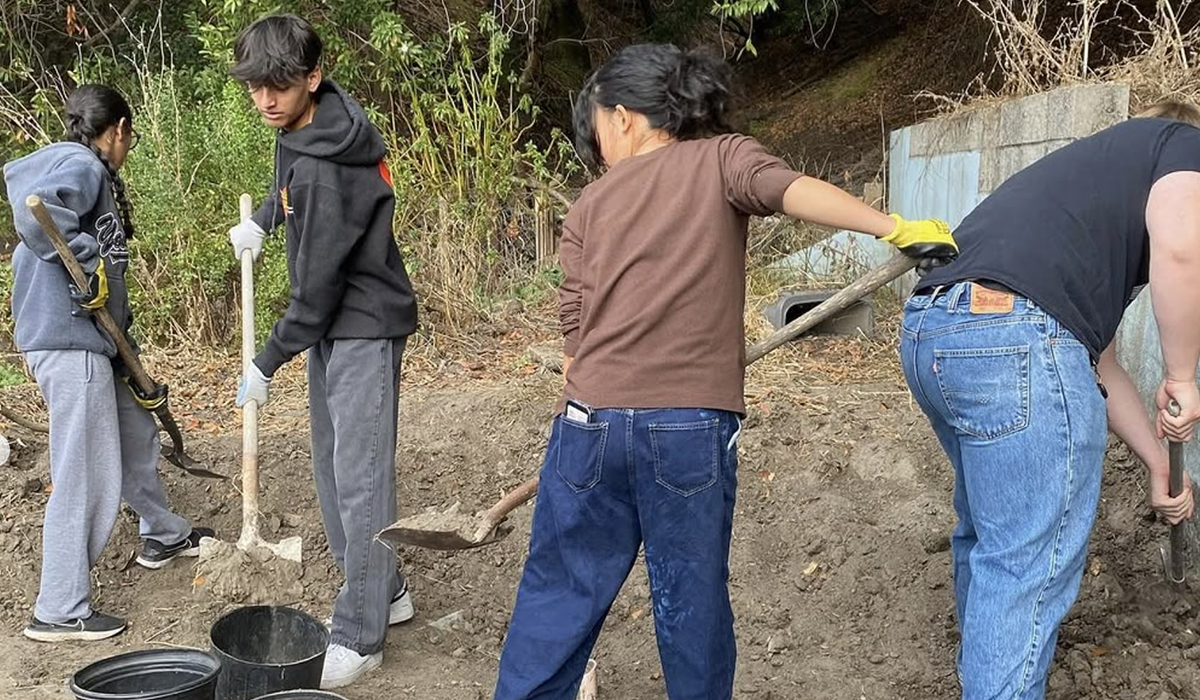
In the heart of the East Bay Area, Arjun Patel, lead and president of the California High School Tap Initiative chapter, isn’t just a high schooler—he’s a dynamic community leader dedicated to tearing down barriers to education. Since 2023, Arjun has been channeling the energy of over 250 members and a team of four officers into meaningful change. Through monthly volunteer trips, he coordinates logistics, manages sign-ups and oversees hands-on renovation activities for local institutional partners. His dedicated efforts have included everything from clearing grass for future building sites to moving and distributing much-needed donated classroom furniture. This has resulted in the chapter organizing over 1,000 volunteer hours, creating improvements in learning environments for local students.
The scope of Arjun’s impact is impressive, reaching over 3,000 students through the chapter’s various initiatives. As the executive director of Tap notes, his leadership extends beyond local boundaries. Arjun facilitates crucial discussions with international education organizations, actively encouraging members to confront the vast and varying circumstances of global academic life. These conversations aren’t just academic exercises; they are dialogues that illuminate the academic inequalities woven into educational systems worldwide. By exposing his fellow students in the San Ramon community to these global realities, Arjun is cultivating a generation of informed, globally conscious advocates.
Arjun devotes approximately 12 to 15 hours per month to his role, and the impact of those hours is exponential. He exemplifies the importance of service by not only carrying out tasks but by actively acquiring and sharing the skills and findings he gains, offering this knowledge to the wider community. He and the California High School Tap Initiative chapter are building more than just improved physical spaces; they are fostering a culture of action, empathy and hope for the global mission of achieving educational equity.
Tell us about your volunteer role.
I serve as the lead and president for the California High School chapter of The Tap Initiative (Tap), a 501(c)(3) education nonprofit focused on addressing global educational inequity. Tap connects student volunteers with partner institutions, locally and internationally, to assist with infrastructural and academic needs. As chapter lead, I coordinate our 250+ members, organize local volunteer trips and work closely with the Tap Directors’ Team to identify areas where our efforts can have the greatest impact.
Our chapter has hosted service trips to institutions like the Fa Yun Chan Academic Center and the Tri-Valley Native American Center, where we’ve renovated classrooms, organized libraries and supported cultural education programs. My role also includes overseeing communications between chapters and managing volunteer outreach, ensuring our projects remain sustainable and student-driven.
Arjun (second from left) leads dirt collection and transportation efforts for a garden in the process of being constructed.
Why is this issue so important to you?
To me, education is the foundation of every other kind of progress. Yet, so many students around the world lack access to safe, functional learning environments or even basic supplies. Seeing that imbalance makes it impossible to stand still. This issue matters to me because it’s not only about academics but also empathy, shared humanity and understanding how deeply interconnected our futures are. Every cultural institution we assist represents students whose potential deserves the same opportunities I’ve been fortunate to have.
What inspired you to get started with this initiative?
I first joined Tap because I was drawn to the idea of hands-on, student-led impact. It’s one thing to care about educational inequality in theory, but Tap offered a way to contribute directly: to roll up my sleeves and help build something that matters. After my first volunteer trip, seeing how grateful and motivated our partner institutions were, I knew this was something I wanted to commit to long-term.
Tap also inspired me because it’s entirely youth-driven. The fact that high school students across chapters can organize international partnerships and raise funds for institutions in Cambodia or Nepal shows what young people can accomplish when they’re given the chance to lead.
What are your long-term plans or goals with the organization?
My goal is to help Tap continue expanding both its reach and its depth of impact. In the short term, that means growing our Cal High chapter and increasing participation on monthly service trips. In the long term, I’d like to see Tap develop even more international partnerships, helping more communities, like those from the Cambodian Community Dream Organization and Vajrayogini Meditation Centre, access the resources they need to thrive.
Beyond growth, I’m focused on sustainability, ensuring that each Tap chapter can function independently while still collaborating globally. I hope that years from now, Tap remains a model for how student-led initiatives can create real, lasting change.
What’s the most rewarding part of your work?
Witnessing the direct impact of our efforts: walking through a newly renovated classroom, seeing pictures of the children using the books we helped organize in Cambodia or hearing that a water filter we funded is providing clean water for students in Nepal. Those moments make planning every Tap Trip and fundraiser worth it.
But there’s also a personal reward: the friendships and purpose cultivated among volunteers. Watching students from different schools work side-by-side, all driven by the same mission, reminds me that empathy isn’t limited by borders. It’s incredibly fulfilling to know that our work not only helps others but also strengthens our own sense of connection.
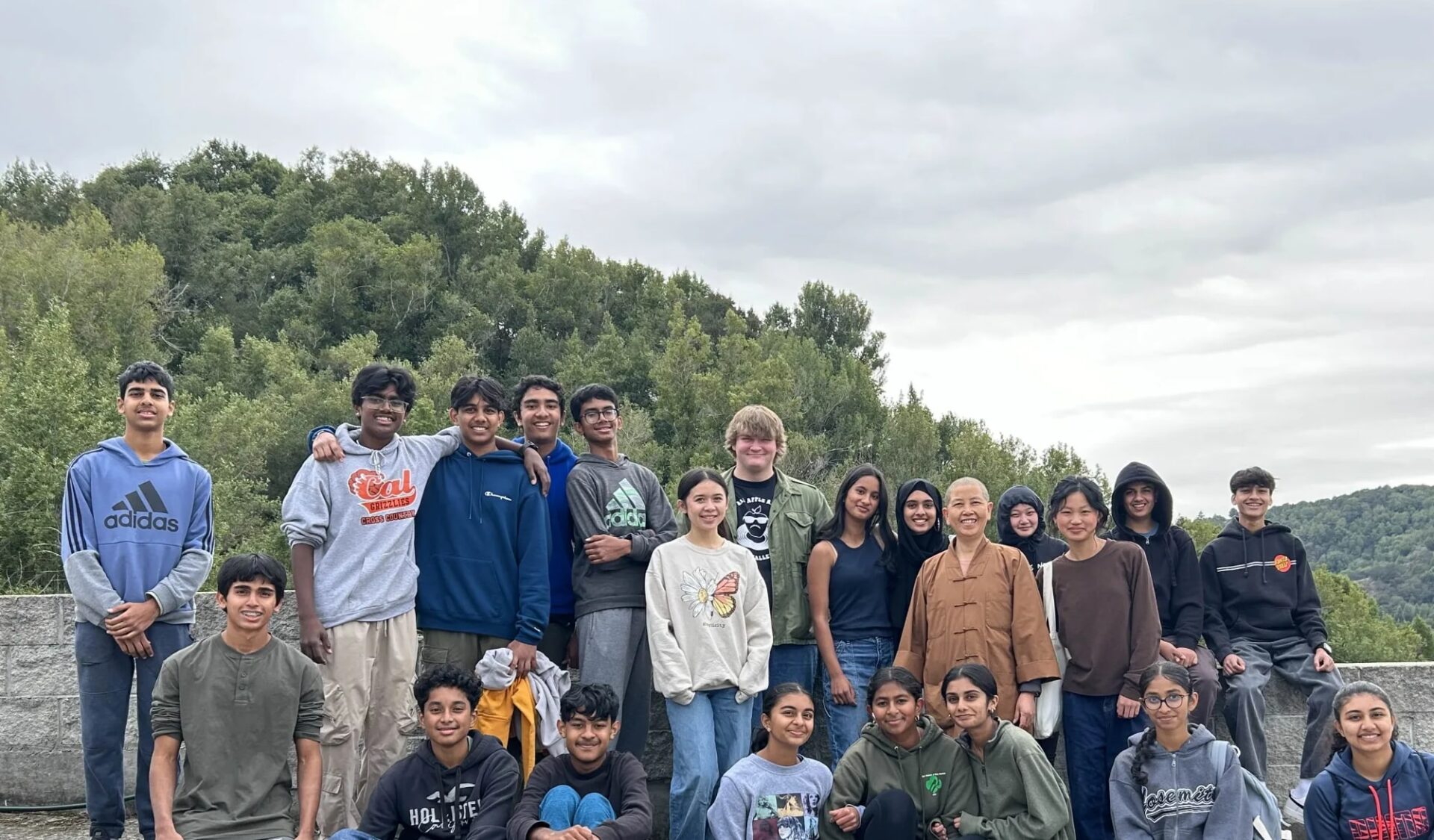
East Bay Area Tap Initiative members join Arjun (very right) at the November 2024 Tap Trip.
What have you learned through your experiences volunteering?
I’ve learned that meaningful change requires patience, persistence and collaboration. Projects like clearing land for new classrooms or organizing educational materials may seem small individually, but collectively, they create real transformation. I’ve also learned to value cultural humility. Every institution we work with has its own story, and listening to those stories is just as important as helping out.
Leading such a large chapter has also taught me about responsibility and communication. Coordinating hundreds of volunteers and aligning with Tap’s international goals has shown me how powerful organized youth action can be when everyone shares the same vision.
Why is it important for others to get involved with causes they care about?
Getting involved is the most powerful way to understand the world beyond yourself. When you volunteer, you begin to see how interconnected communities are: how an act of service in one place can ripple outward. Causes like educational equity need sustained passion, and that can only happen when people take that first step to get involved. Volunteering also transforms you. It teaches empathy and perspective in ways no classroom can. The world improves when people decide to act on the issues that move them.
Any advice for people who want to start volunteering?
Start with something that feels meaningful to you, even if it’s small. You don’t need to travel halfway across the world to make a difference. Local impact is just as powerful. Look for organizations like Tap that give you the chance to get hands-on and connect directly with the communities you’re helping. And don’t be afraid to step up. Some of the best initiatives come from students who simply saw a need and decided to address it, like how Tiantian Yang saw an academic disparity in her community and founded the Tap Initiative. Volunteering isn’t about having all the answers but about showing up and finding purpose through action.
Meet Daily Point of Light Award honoree Aya Okimoto. Read her story, and nominate an outstanding volunteer or family as a Daily Point of Light.
Aya Okimoto believes music is for everyone. An outstanding pianist and violinist, Aya has come of age in the world of music education. Whether she’s toting sheets of music or rehearsing for a performance, the 16-year-old high school student in Hawaii is dedicated to sharing her talents with the world. But her immense amount of time in the world of music has also exposed her to the inequalities that exist there, and that’s why Aya’s dedicated to making the point of entry to music education more welcoming to everybody. Aya wants all students hoping to pursue their craft to have the opportunity, and that’s what pushes her to take her volunteer work to the next level.
Aya knows how discouraging it can feel when music opportunities feel limited, especially due to financial barriers. Particularly concerned about the future of arts opportunities due to uncertainty around funding for the National Endowment for the Arts, Aya believes it’s more important than ever to support young musicians. With this in mind, Aya founded the World Wave Music Festival, an inclusive, cost-free platform where all students, regardless of background, can perform, share their art and grow as musicians. The annual event empowers young artists around the world with an accessible platform to showcase their musical talent, while also addressing inequity in the arts. As a result, the musical community is a more diverse place.
The 2025 World Wave Music Festival will kick off November 29, and there are already thousands of student submissions from 167 countries across the world. The event will be even better this year, with student speakers, lectures, podcasts and other resources that will foster creative experiences of participants. Aya and her fellow board members have raised $73,400 in grants, and 27,400 learners have been taught by the group’s free education articles. Aya is even creating a musical picture book for all participants to remember their journey by. But she’s not stopping there: Aya is already plotting future partnerships, planning to work with Spotify and reach out to other businesses to plan festivals for years to come.
Aya’s journey from music student to nonprofit founder is an inspiring one. What started as a mission to create a forum for music education that welcomes all young people, regardless of background, has blossomed into an international phenomenon. The platform’s success is a testament to how successful volunteerism can be when we set our sights on something.
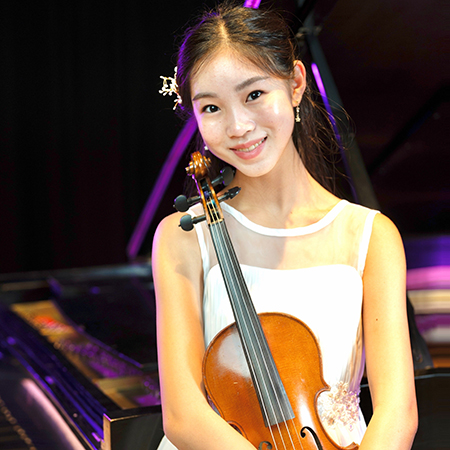
AYA OKIMOTO IS THE FOUNDER OF THE WORLD WAVE MUSIC FESTIVAL. /COURTESY AYA OKIMOTO
What inspires you to volunteer?
Volunteering has always been a passion of mine, because I know that through my work, I can make a positive difference in my community. That’s why I make it a priority to participate in any service events I come across. Through volunteering, I also get to meet others with similar interests. Many of the friendships I have formed stem from my volunteer experiences and initiatives.
What inspired you to get started with this initiative?
The inspiration behind the festival comes from my own experiences as a pianist and violinist. As I grew to a more advanced level of playing, I wanted to participate in music competitions to receive feedback from experienced judges. However, especially since I play two instruments, competition entrance fees typically range from $180 to $300, and that prevented me from participating. At times, the cost even made me doubt my own ability and whether it was worth submitting a video at all. I didn’t want other students to face that same barrier. I believe every young musician deserves access to the support and opportunities they need. Also, with music often being undervalued in education, and Hawaii having less than 5% of public schools with comprehensive music programs, I felt that I needed to start an initiative that presented an accessible platform for aspiring musicians.
Tell us about your volunteer role with the World Wave Music Festival.
I’m the founder and executive director. We host a free online music competition for students around the world each year. I work together with the festival directors to coordinate events, contact established judges and help our participants with the submission process. I also lead a team of 38 festival ambassadors who have taken leadership roles in their own schools to promote WWMF. As the founder, my main job is to make sure we’re opening doors for young musicians and helping them share their talent with a global audience.
What are your long-term plans or goals for the organization?
My long-term plans and goals center around expanding impact and strengthening the support we offer participants. First, we aim to reach more student musicians across the world, especially those limited by the high costs of traditional competitions. To accomplish this, we are building partnerships with local organizations to increase outreach in underrepresented communities.
Second, we are developing educational programs in music theory and history to widen our participants’ knowledge beyond performance. We’re also developing more virtual and in-person events, like showcases and collaborative projects, to create spaces for young artists to connect. To ensure our efforts are sustainable, we’re securing long-term funding to keep our programs free for all artists. We’re also gathering feedback and data to ensure we are meeting the needs of our community. This will allow our organization to support future generations of young musicians.
What’s been the most rewarding part of your work?
It would have to be talking to several of my student participants during our Festival Breakout Sessions. I still remember when an 8-year-old girl told me she had never attended a music recital before and that she enjoyed watching students like her perform for the first time. From an administrative view, I was able to collect data on our impact from the number of music submissions we received to the countries we reached.
However, hearing these comments directly from the students and seeing how the festival impacted them made me believe in myself more. I realized that the World Wave Music Festival is providing young musicians with a space to grow.
What have you learned through your experiences as a volunteer?
I’ve learned essential leadership qualities like organization, patience and adaptability. Organization and clear communication are crucial, and I coordinated with judges, ambassadors and hundreds of participants across various time zones, languages and age groups. Adaptability was equally important. Unexpected challenges, from managing submissions to running festival activities, taught me how to think fast on my feet and problem-solve. Most importantly, I’ve learned that you don’t need a lot of financial resources or volunteers to make an impact. As long as you are committed and are willing to listen and address your community’s needs, you are making a difference already.
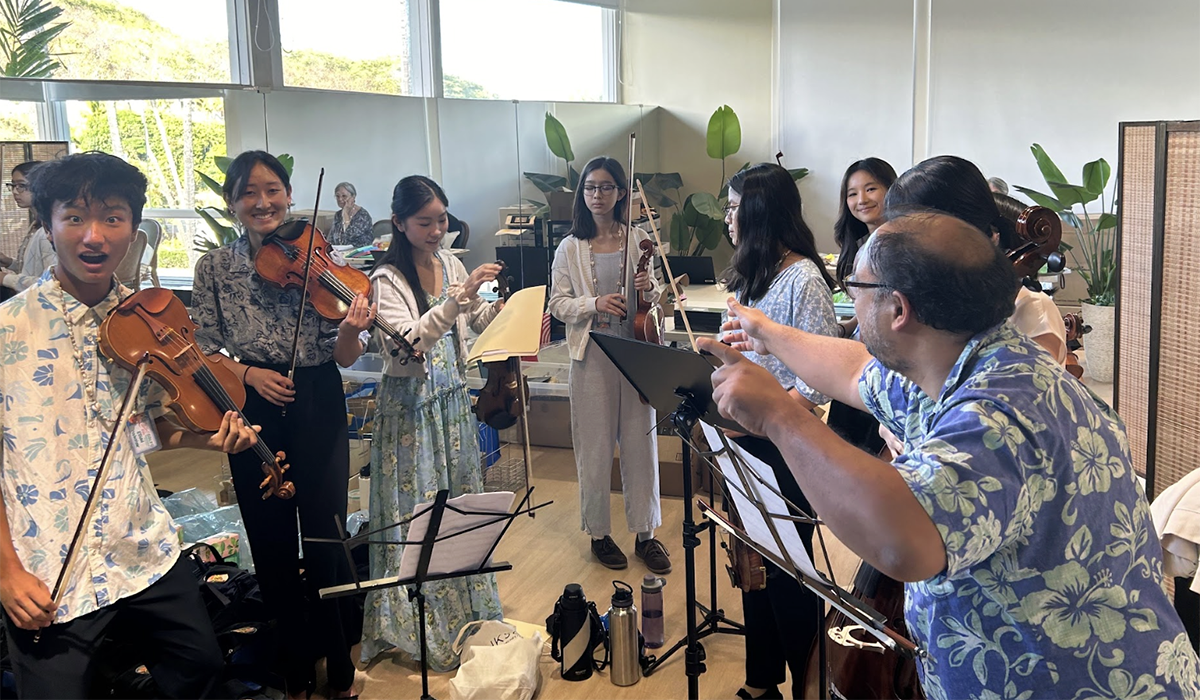
AYA OKIMOTO (THIRD TO THE LEFT) JOINS FELLOW STUDENT MUSICIANS TO PERFORM HAWAIIAN MUSIC AT THE 2024 CELEBRATION OF ALOHA, RAISING FUNDS TO SUPPORT THE CARE OF NICU BABIES IN HAWAII. /COURTESY AYA OKIMOTO
Why is it important for others to get involved with causes they care about?
I love networking, and there’s no better way to network than with others who care about the same things as you. Getting involved in service activities you enjoy helps you form friendships and can even spark future collaborations to address community needs together.
Any advice for people who want to start volunteering?
I’d advise people to start by identifying a cause they genuinely care about. Then, they can research and get involved with a local nonprofit that supports that mission. This first step would help them feel what the work is like and connect with others who share similar values. From there, they may choose to develop their own initiative that can address unmet needs they’ve observed through their work.
What do you want people to learn from your story?
I want people to feel inspired to take hands-on action. If you have an idea that can address a community need, why should you wait? Starting an initiative always comes with hurdles. I had to learn how to build an accessible website and reach out for partnerships. But once you overcome those hurdles, you can focus on solving the issue at hand and making a real difference. I also encourage people to ask for help. No one can solve a large issue on their own. In my case, I contacted professors to weigh in and peers to help promote the festival. The 2024 and 2025 festivals would not have been possible without all of their help.
Meet Daily Point of Light Award honoree Emily Gorodetskiy. Read her story, and nominate an outstanding volunteer or family as a Daily Point of Light.
Seventeen-year-old Emily Gorodetskiy grew up in a house deeply familiar with community service. Having immigrated to the U.S., her mom enjoyed volunteering, in part, as a way to meet people, and it became a family tradition. Emily has been a weekly library volunteer for five years. As a lifelong dancer, she gives lessons to a cohort of kindergarteners and preschoolers—now in grade school–and takes pride in their growth. She, herself, often performs for community events at places like farmers’ markets and senior care centers, finding joy in contributing to a positive environment.
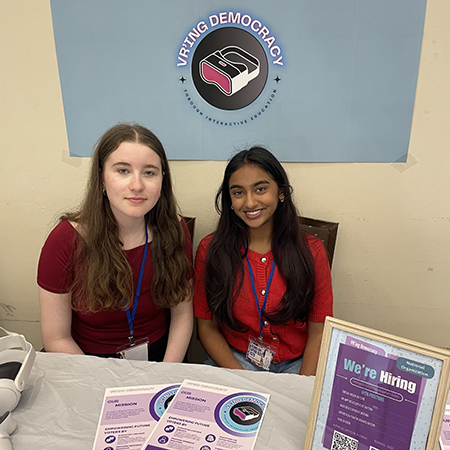
She also co-founded VRing Democracy, an initiative that uses San Francisco’s first multilingual VR polling place simulation to educate voters—particularly immigrants and other first-time voters–and promote civic engagement. Today, the organization has several hubs deploying their own VR headsets at events in partnership with local civic organizations at town halls, community centers and civic forums. The work Emily has done with VRing Democracy has sparked her interest in political systems and her lifelong dedication to the initiative.
What inspires you to volunteer?
I grew up in a household where it was the norm to get involved. My mom was always a big inspiration. She was always really involved in the community. My family immigrated here from Ukraine, and my mom sometimes felt like an outsider, so she found a way to make friends through community service. I started volunteering in elementary school, designing and hanging posters for a food drive.
Emily and her cofounder share information about VRing Democracy at an advocacy conference at University of California – Davis.
Tell us about your volunteer role with VRing Democracy.
As the executive director, I work with other youth hub leaders to get them their own headsets so they can run demonstrations in their areas in Massachusetts, Texas, New Jersey and New York. In the beginning, I worked a lot with the League of Women Voters to expand our reach. Now, I have similar partnerships throughout the nation for other hub leaders to connect with, so they can have the same support.
We currently have nine hub leaders, three social media people and a new development team who updates the website and adjusts the experiences for each location. Voting looks different, and the laws are different in each state and even county.
I’ve been representing us at events and leading headset demonstrations. I also write blog posts.
How did you get the initial investment to buy these headsets and develop the simulation?
I entered into a contest called Innovation and Democracy through a civic innovation fellowship I was a part of. We won around $2,250 to buy Meta Quest 3 headsets.
I worked with a few other students on the coding, so they could help with anything I didn’t understand. We also got connected with a professional to ensure that what we were doing was correct, and if we had a bug none of us could solve, we could ask.
Can you walk us through that simulation?
When you open the application, there’s a menu bar that asks if you want to switch languages. We originally had English, Mandarin and Spanish but have since expanded. Then, you pick an interaction, based on your state, that guides you through what the requirements are to vote. After the document page, there are other experiences, like what happens if you cast a vote for a person that you didn’t mean to, or what to do if you’re voting on a machine and it breaks down. The second part guides you through Ballotpedia where you can research candidates and bills.
We’re working on a new experience on what it’s like to canvas for a candidate. We want it to be beginner-friendly, so anybody can understand. Recently, we had a demo for 9- and 10-year-old students, and they had a lot of fun.
What inspired you to get started with this initiative?
In April 2024, my peers seemed to be following the presidential election closely, but when I asked those who were 18 if they planned to vote, they were unsure. They knew it was important but felt like their vote wouldn’t make an impact. As a result, they didn’t want to go out of their way to do so. It was a problem.
When immigrants become able to vote, it can also feel foreign. For the first few years here, my parents didn’t feel compelled to vote; it felt pointless, that their perspectives weren’t going to be heard. Many people are disengaged, sometimes because of language barriers, but often because they just don’t understand the process.
Eighteen- to 24-year-olds represent the lowest percentage of people who cast ballots. Gen Z grew up with phones and tech, so I thought that the best way to raise civic engagement was by connecting storytelling and technology with a VR experience. I had some coding experience, so I had the skills that I needed. And the rest is history.
What are your other long-term plans and goals for the organization?
We’re hoping to build new experiences. The ACLU reached out to do a Know Your Rights VR experience, and that’s the kind of impact and collaboration that we hope to foster.
What’s been the most rewarding part of your work?
Our media reach has been amazing. A local newspaper I grew up reading did a story on us, and when it came out, the bookstore and cafe across from my house had stacks of them with my face on the front page. I never thought we’d be able to have this kind of impact, but it gives people hope for democracy, which is something we really need.
What do you want people to learn from your story?
Never give up. I’ve tried to highlight the positive things that have grown out of this experience, but there were definitely hard days. There were days when I thought this wasn’t going to work. It’s okay to take a day off, go to sleep and come back to it. It took many hours and long Zoom calls to create our simulation, but it was worth it in the end.
Meet Daily Point of Light Award honoree Magalena Mercado. Read her story, and nominate an outstanding volunteer or family as a Daily Point of Light.
Magdalena Mercado didn’t see her culture’s history reflected in her school’s curriculum. That’s when she knew it was time to take action.
As a Filipino-American, Magdalena knew that high schools in her native California were working to boost their history curriculum to include teachings on Asian American, Hawaiian and Pacific Islander (AANHPI) history. But at her boarding school in Massachusetts, Magdalena didn’t see those topics covered. In her freshman year, she gathered a small group of fellow students at her school who felt similarly and started plotting how they could change the curriculum. Magdalena founded Taking a Deeper Dive, a youth-led organization dedicated to creating student-made resources and educational toolkits for AANHPI cultural education and history. With the help of the faculty at her boarding school, Magdalena made it clear that all facets of history should be covered and became a powerful advocate for equity and cultural education.
Now a senior in high school, Taking a Deeper Dive has grown exponentially. Magdalena has mobilized 20 schools nationwide and raised $10,000 to fight for AANHPI cultural education and systemic change. When asked how she’s managed to balance running any organization with her heavy workload throughout her entire high school experience, Magdalena credits the fellow students that she leans on to help run Taking a Deeper Dive in assisting her to create a sense of balance. As a result, she’s hoping to take her AANHPI education to the next level. When Magdalena starts college next year, she’s hoping to study political science and potentially attend law school. She’s also eyeing Asian-American Studies as a major, taking the experience of what she’s currently doing with Taking a Deeper Dive and using it as a guidebook for her future. No matter where she goes, Magdalena will never stop advocating to make sure AANHPI history cannot be erased.
What inspires you to volunteer?
I’ve always felt like helping the people around me. It was something instilled within me when I was young. I’m an older sister to two younger sisters. Helping others was something that I was taught growing up within my family. Being able to grow up in places that foster service and foster community has been almost unavoidable when you were taught to do those things growing up. I think it’s something that was also instilled within me through the different spaces I’ve been in through my community. Being able to volunteer, especially in a place where I’m independent, like a boarding school, is really nice, because it has allowed me to help my community through this initiative.
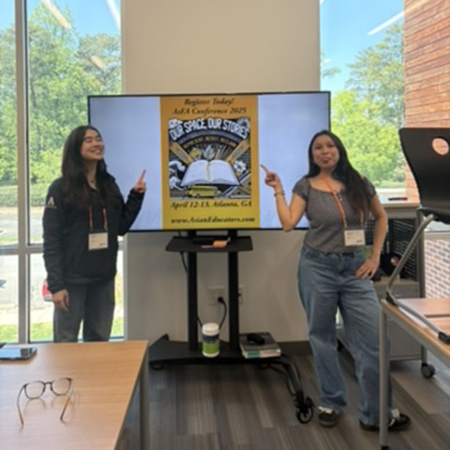
TAKING A DEEPER DIVE FOUNDER MAGDALENA MERCADO (RIGHT) PRESENTS AT THE ASIAN AMERICAN EDUCATORS ALLIANCE CONFERENCE IN ATLANTA, GEORGIA. /COURTESY MAGDALENA SAMBAJON MERCADO
What inspired you to get started with this initiative?
In my freshman year, I founded my initiative, Taking a Deep Dive. It had to do with the history curriculum at my school. I think what made it so hard was that I didn’t see AANHPI teachings in the classrooms. Even though I’ve gone to school in California, where schools are enacting policies to implement ethnic or Asian American Studies in the classrooms, that wasn’t necessarily happening at my school. I brought together a bunch of students who felt passionate about the same issue and wanted to propose the same sort of idea of creating a student-led curriculum, where we could create student educational toolkits and resources for AANHPI history to be taught in classrooms. It was a small group of students just started at my school, starting with a group of 10 students. Now we’ve grown within our school, but we’ve also expanded across boarding schools in the northeast and to schools all over the place. We’ve grown over the last couple of years, but it definitely was a small start.
Tell us about your volunteer role with Taking a Deep Dive.
I founded this project, but I also do a lot of executive directing in this case. The process was bringing students together and coming up with the proposed idea, working with students and faculty at my school, and making sure that there were adults who wanted to listen. I came forward with the idea and got a lot of students on board. Now that we’re a couple of years in, I’m directing the organization. Examples are delegating tasks and making sure that everyone has a voice in this process. It’s being able to work with students, as a student myself. It’s very much a shared leadership process, being both a founder and also being able to direct the organization.
What are your long-term plans or goals for the organization?
We recently received a grant recognizing us for our social entrepreneurship and nonprofit work. Right now, we use digital resources that we share with our students, and we give them lesson plans and student-made curriculum that we make together so they can use them in their spaces, at their schools and within the classroom. But something we want to do with that grant money is make a printed guidebook. We’re in the process right now of making and curating all of the different digital resources that we might have for creating this book that we could print and distribute across schools. We really just want to be able to try to keep things local to Massachusetts right now, because this is our founding state.
What’s been the most rewarding part of your work?
Being able to grow so much in this process as a person, but also being able to grow alongside other student leaders and be able to help people feel like they can have a voice in this process. I feel like this is an issue that I feel might seem very small to some people, but especially in my community, I think it does just feel like there is a lot of weight that comes with being able to address this issue and making sure that we’re able to provide resources that are created by students. I stepped into this with 10 students, and now we’ve been able to grow across so many schools and across so many states and meet so many people at these conferences. I think that’s been the most rewarding– just being able to see how far this has come.
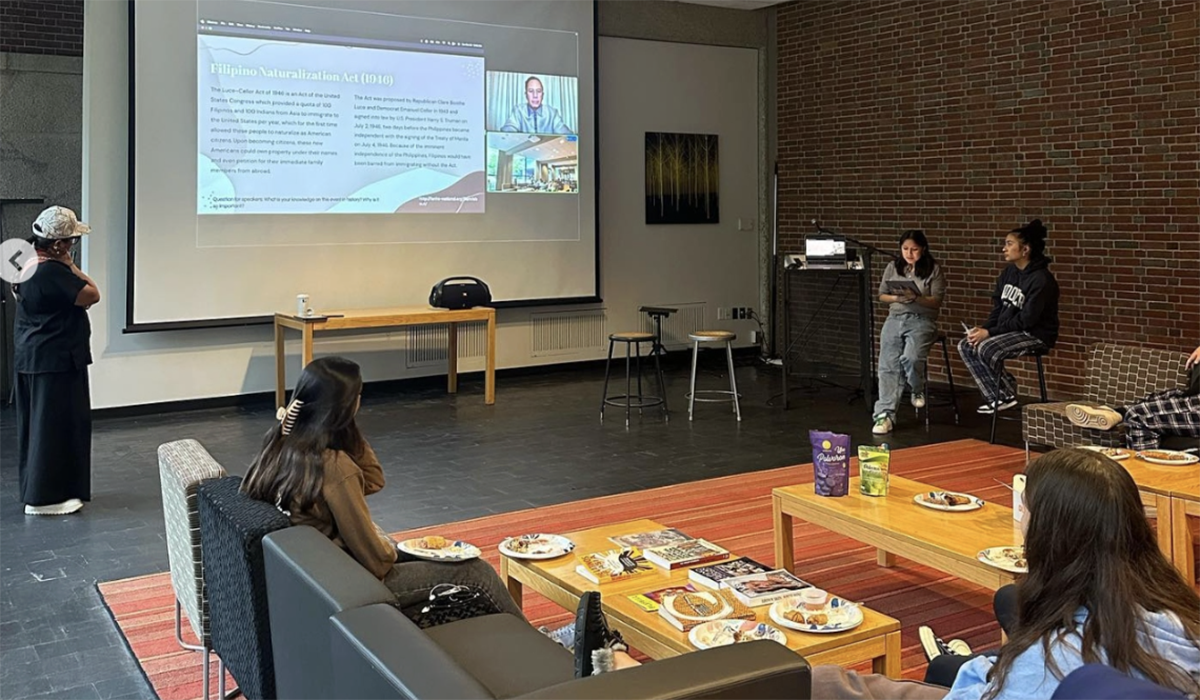
MAGDALENA MERCADO, THE FOUNDER OF TAKING A DEEPER DIVE, PRESENTS AT AN EVENT IN CELEBRATION OF FILIPINO AMERICAN HERITAGE MONTH AND FIL-AM HISTORY. /COURTESY MAGDALENA SAMBAJON MERCADO
What have you learned through your experiences as a volunteer?
The biggest thing that I learned was how to organize and be able to work alongside so many people. Even in school, you don’t get that same sort of hands-on experience where you’re working with so many people at once. I learned how to work with other people in this process, especially so many people at once. I had never done volunteering to this extent, where I was working with so many people. That’s my favorite part about volunteering, just being able to meet so many people who are all working and pushing for the same thing. In the long run, they become people you can turn back to. Being able to work with so many people in a really fun environment.
Any advice for people who want to start volunteering?
If you feel like there is a cause that you want to fight for, then just start reaching out to the people around you and reach out to your direct community first. You are going to find somebody who will be able to help you and wants to help you engage in community service or volunteering. To be a founder, I brought together students and faculty to help create this initiative and kick-start the volunteering and service program. It’s a matter of reaching out to those people and reaching out to your direct community first, to see where they can point you. Reaching out to your community to be able to understand how to engage in it and help it, and also making sure that you’re doing a certain level of research to understand what kind of volunteering you want to do, but also maybe understand what kind of project you might want to establish.
What do you want people to learn from your story?
I hope they can take away the understanding of the importance of an AANHPI education in schools. But I also hope other students feel inspired to engage in their community, especially from the founder side. I think it’s the most interesting way to get involved in volunteering and community engagement because you’re not stepping into an already creative volunteering program. It’s totally original. It shows that helping your community is just a very fluid thing. If you’re creating your own project, you’re just identifying a cause that you specifically care about. And it shows that in creating a project, whether it be on a small or large scale, that you’re still making the active decision to help your community.