Meet Daily Point of Light Award honoree Jan Rice. Read her story, and nominate an outstanding volunteer or family as a Daily Point of Light.
Jan Rice, 75, jokes that she spent more time inside Fairfax County Public Schools than out of it. Since her first day of kindergarten in 1956 to her last day as a librarian in 2005, with a short break for college, she was a valued part of the community. Moving away for the first time was overwhelming, but she soon found her place as a Virginia Cooperative Extension Master Gardener and has been volunteering ever since.
There are Master Gardener programs in every state run by a university and taught by professors. Earning the title requires work. Those accepted into the program take several months of classes covering things like turf, native plants, trees and more. Jan now even teaches a class on houseplants. Following coursework, students complete an internship with 50 hours of experience in a variety of initiatives. To retain the title, they must volunteer a minimum of 20 hours each year.
Jan has spent more than 4,500 hours helping people address garden issues, take their yards chemical-free, learn about gardening and much more. Her flexibility and knowledge have made her an irreplaceable volunteer whom staff often depend on. She’s even done the occasional special project like creating seed packets for a free seed program. At home, Jan maintains what she calls a “chaos garden” with lots of cover for birds and places for skinks to hide, and cares for a house full of plants.
What inspires you to volunteer in general, and how did you get started with Master Gardeners?
I volunteered throughout my children’s lives as a parent–Girl Scouts, band and chorus programs, as trip chaperone and more. When I moved here in 2012, my mother-in-law needed care, and I was helping with my grandchildren. I saw an advertisement for a Master Gardeners’ class and thought I’d give it a try. It sounded like a fun outlet. I love nature. I’ve always been a gardener and a plant person, so it felt like a natural fit to help people who don’t have as much knowledge. I also learned a lot through the program. The people were absolutely marvelous and are now some of my best friends. It made a world of difference in my life.
Tell us about your volunteer role with the Virginia Cooperative Extension – Master Gardeners.
I will be assigned two of our interns to mentor in the upcoming class. It’s a steep learning curve, even if you know quite a bit about plants. It’s something new all the time. As a mentor, I’ll monitor their progress and encourage them.
I spend four to six hours a week on the Help Desk answering the public’s horticultural questions. It’s a phone number and an email through which people all over the county can contact us. Recently, a client sent in a photo of an issue with their poplar, and I had no idea what was wrong. I see my library training as important, because it’s a lot of research.
Twenty-five years ago, nuns from a local Benedictine monastery became Master Gardeners and proposed we create a public demonstration garden, known as the Teaching Garden, on their grounds. I work on the Bee-Butterfly Bed. There are beds that grow herbs, vegetables, native plants and more. Each one has a theme. I’m a bed helper, so I weed, prune and water. I also give tours when large groups visit.
Best Lawns is an educational program for homeowners who want to learn how to maintain their turf using fewer chemicals and protect the watershed. People sign up, and one of us comes to their house to give them advice. We send soil samples to Virginia Tech, and they send back the results with advice. Having a perfect lawn takes lots of chemicals, and those go into our water and air. I try to help people recognize that they can have a lovely lawn with some variation in color.
For the last 12 years, I’ve answered questions at our farmers’ market booth about once a month and give out information on local pests. We also help, for example, nonprofits start community gardens with funds and Master Gardener support.
I monitor a bluebird trail and have done water quality monitoring for local lakes. And I help with our plant sale to raise money for scholarships for people to become Master Gardeners.
What’s been the most rewarding part of your work?
I like helping people learn and grow. Meeting people is part of it, but making a difference in their life is what is gratifying. I think people are very grateful. They want to understand, for example, why their boxwood is dying and what they could have done differently.
Do you have any advice for people new to gardening?
Do your research. Find somebody who has a garden that you like, and talk to them. People in my neighborhood stop to talk to me when I’m in my garden out front. Gardeners tend to be happy to share, because it’s our passion.
Share your own knowledge, too. You also have something to share, even if you’re a beginner. It helps with all the negativity that seems to be flowing around us. If we can share something positive that will bring somebody joy, we should.
What do you want people to learn from your story?
Be kind. Do something for somebody that takes you out of yourself. An older woman once called the Help Desk because some branches had fallen across her driveway, blocking her in, and she wasn’t capable of moving them. We were an odd choice to call, but I set her up with somebody who would take care of it for her.
That’s not our primary mission, but every so often you get somebody like her. Sometimes, we get people who just need to talk to somebody. They’re not calling because they have a problem but because they know you’re there. It’s not about whether your grass is all the same color of green. It’s about whether, as a community, we want to help each other.
Literacy Is Lit: Teen Founder Expands Kids’ Access to Books
Meet Daily Point of Light Award honoree Lizzie Shacklett. Read her story, and nominate an outstanding volunteer or family as a Daily Point of Light.
When the world shut down in 2020, 17-year-old Lizzie Shacklett turned to her bookshelf. Reading became her refuge during the long, uncertain months of the pandemic—her comfort novels keeping her grounded when everything else felt unstable.
At the same time, she noticed something happening in her own neighborhood in Wayne, Pennsylvania. Families were cleaning out closets and shelves, but donation centers had stopped accepting items. Piles of books sat with nowhere to go. Lizzie realized those very books could instead be placed in the hands of children who lacked access to them.
That small spark lit something larger. What began as one small drive of 50 books for children in underserved Philadelphia neighborhoods has blossomed into Literacy Is Lit, a nonprofit that has distributed more than 65,500 books across the Mid-Atlantic. Along the way, Lizzie has launched youth leadership programs, authored a children’s book of her own, and inspired peers across the country to believe in the power of reading.
What inspired you to start Literacy Is Lit?
In 2020, I spent a lot of time reading to manage the struggles of the pandemic. Around the same time, neighbors were cleaning out closets, but many donation centers weren’t accepting items—including books. I had my own children’s book collection that I’d outgrown, and I wanted to find those books a new home.
As I researched, I was alarmed to discover that one in four children in America grows up without learning how to read. Illiteracy can perpetuate cycles of intergenerational poverty, but studies also show that children who grow up in a household with books are more likely to succeed in literacy. That was my “aha” moment.
I organized a small drive of 50 books benefiting children at Step-by-Step Learning Centers in under-resourced Philadelphia areas. That experience grew into the multifaceted nonprofit Literacy Is Lit.
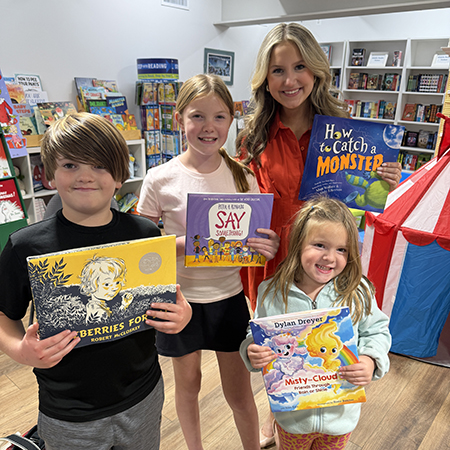
Lizzie collects donated books from young supporters at Main Point Books, a local bookstore partner of Literacy Is Lit./ Courtesy Lizzie Shacklett
How do you organize your book drives and get the books into children’s hands?
Since founding Literacy Is Lit in seventh grade, I’ve hosted book drives in schools and partnered with local businesses like Main Point Books here in Wayne. My garage actually serves as a year-round drop-off site. It currently holds thousands of books at any given time. I quality-check and sort everything before distribution.
I also lead the Literacy Leaders program, where other youth host drives in their own communities. Together, we’ve built a network of young advocates who extend our reach far beyond Pennsylvania. Through these efforts, we’ve now distributed more than 65,500 books.
What were some of your favorite books growing up?
“The Giver” really shaped how I think about what matters most in life—making meaningful connections with people around you. “Esperanza Rising” was another important one, taught by my fifth-grade English teacher. It gave me perspective on hard work and appreciating what you have.
And “Fahrenheit 451” has had a big influence. It highlights what a world without books would look like and the power they hold in society. I’ve even quoted it in some of my advocacy work, because it underscores how vital literacy is for progress.
What kind of feedback have you received from the community?
One of our partners, Book Smiles in New Jersey, runs a “teacher take library.” Teachers can come in, select brand-new books in sets and bring them to their classrooms or give them to students to build home libraries. Interacting with these teachers—hearing how important this work is for their students—continues to fuel my passion and shows me the tangible difference Literacy Is Lit is making.
Tell us more about the Literacy Leaders program.
I launched Literacy Leaders to expand my impact by supporting other students in civic leadership efforts. Right now, I work with eight students, helping them kickstart their own book drives and projects. I provide mentorship and guidance through one-on-one and group meetings, and I also organize volunteer opportunities where they can bond, bounce ideas off each other and build on each other’s strengths.
We brainstorm together, plan drives and think about new ways to reach communities in need. Recently, we were awarded a micro-grant from the Karma for Kara Foundation to purchase shelving units and high-quality books for food pantries. Food insecurity and illiteracy are often intertwined—both rooted in systemic inequality—so this initiative addresses both. By placing shelves of books in food pantries, we meet families where they are and help children start building their own libraries at home.
You also wrote your own children’s book, “I Read Before Bed.” What’s that about?
It features six different children and the lessons they learn from reading before bed—everything from kindness and honesty to caring for the planet and nutrition. It’s geared toward elementary students, though anyone can enjoy it.
I’ve shared the book at schools, libraries and community centers across Pennsylvania as part of my Learning with Lizzie presentations. We talk about favorite books, why reading is fun, and how today’s readers truly become tomorrow’s leaders. An English-Chinese bilingual edition is also on the way.
What has been the most rewarding part of your journey?
Seeing the direct impact—whether it’s kids proudly taking home books, teachers stocking their classrooms or students I connect with during presentations—is incredible. Books build literacy skills, but they also provide confidence and empowerment that carries into every aspect of life. Watching that transformation happen is the most rewarding part for me.
What upcoming initiatives are you most excited about?
Definitely our food pantry initiative. We’ve already distributed about 500 books through local pantries, and with the new grant, we’ll expand to more sites and families.
I’m also excited about growing our network of Literacy Leaders. Right now, most are in Pennsylvania, but we also have members in New York and Texas. Expanding nationwide will multiply our impact. One of my big goals is to reach the distribution of 100,000 books.
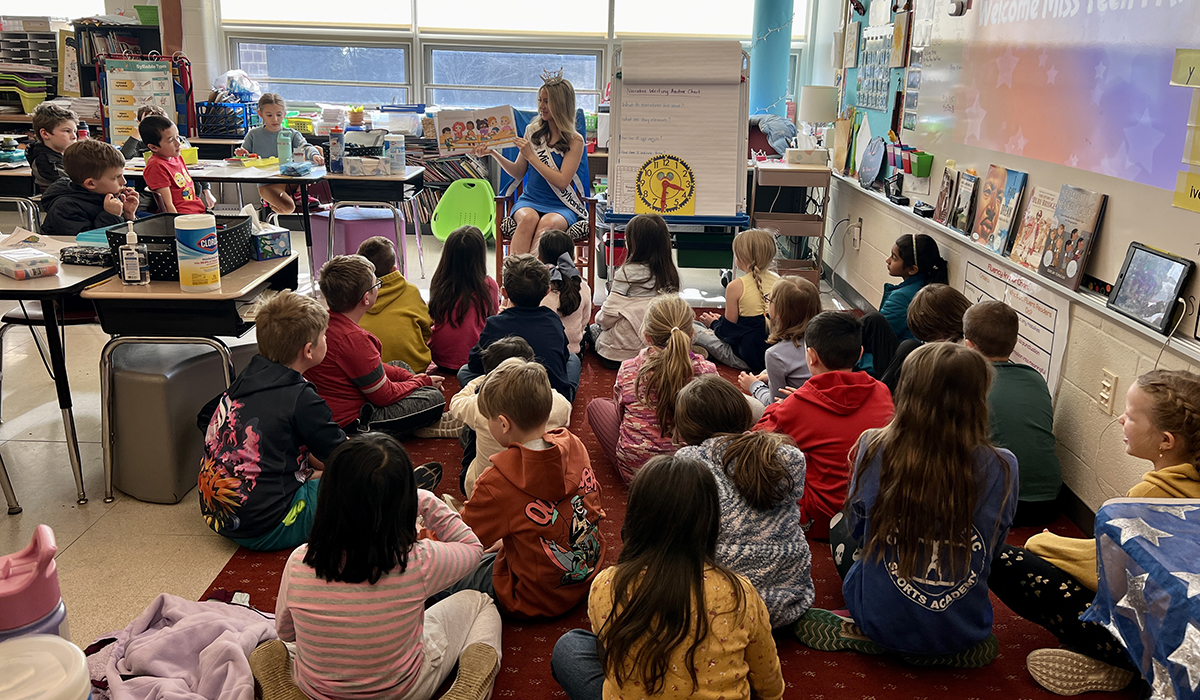
Lizzie Shacklett reads her children’s book I Read Before Bed to elementary students in the Downingtown Area School District./ Courtesy Lizzie Shacklett
You’re about to start your senior year of high school. Do you plan to continue Literacy Is Lit in college?
Yes! I’ll continue some of the administrative work remotely, and I’ll rely on experienced Literacy Leaders here in Pennsylvania to take on more hands-on responsibilities. The network we’ve built ensures the mission can keep growing, even as I move into the next chapter of my life.
Why do you think it’s important for people to get involved in causes they care about?
Because giving your time, talent and treasure fills others’ buckets—and your own. Knowing you’re contributing to something bigger than yourself is the best feeling. By helping create better lives for others, we not only strengthen our communities but also build a better world.
What do you hope people will take away from your story?
That if you see something you want to change, you can change it. One person can make a difference, but collaboration multiplies impact. Earlier this year, I met U.S. Ambassador Moose, who told me, “When we believe in the changes we seek, it is easy to commit to doing all we can.” That really resonated with me. I hope others take that to heart and feel inspired to pursue their passions for change.
Defying Odds to Champion Disability Awareness and Inclusion
Meet Daily Point of Light Award honoree Peri R. Finkelstein. Read her story and nominate an outstanding volunteer or family as a Daily Point of Light.
When doctors told Peri R. Finkelstein she wouldn’t live past the age of 7, she quietly defied the odds. When they said she would never walk, she crossed the finish line of Miami Marathon. Again and again, Peri has heard what wasn’t possible—and answered with resilience, grit and determination.
Today, at just 25 years old, Peri, who was born with a rare form of muscular dystrophy, is the founder and CEO of the Team Peri Foundation, a nonprofit dedicated to disability awareness, advocacy and inclusion. “I’ve always believed that when life doesn’t make room for you, you have to create your own space,” she said. “Founding the organization wasn’t just about starting a nonprofit—it was about reclaiming control over my story, transforming limitation into legacy and creating a platform that will continue to make an impact long after me.”
Her advocacy began as a family effort. For more than a decade, she and her family ran the Miami Marathon with Team Lifeline, raising over $1 million for Chai Lifeline, an organization supporting children with serious illnesses. That experience taught her how powerful storytelling and community could be. In 2023, after completing her bachelors and MBA in marketing at Adelphi University, Peri officially launched the Team Peri Foundation.
As CEO, Peri volunteers about 20 hours each month telling her story through speaking engagements and overseeing strategic planning, community outreach, fundraising and marketing. While her mother Lori, Team Peri’s COO, helps shoulder day-to-day operations, Peri herself runs every social media post, newsletter, “Step Out of Line” podcast episode, and fundraising campaign.
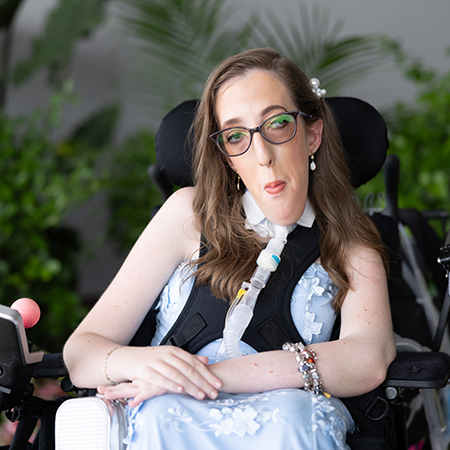
Peri Finkelstein is the founder of the Team Peri Foundation, a nonprofit dedicated to disability awareness, advocacy and inclusion./ Courtesy Peri Finkelstein
“I’m the voice behind it all,” she said. “The content and storytelling—that’s me.” Recently, she delivered a TEDx talk at Texas Woman’s University, a turning point for Peri where she spoke about transforming her medical challenges into the fire behind her advocacy and leadership.
“Unfortunately, society often underestimates people with disabilities,” Peri explained. “I’ve spent my career so far proving otherwise. I’m living proof that a disabled entrepreneur is still just that—an entrepreneur.”
Among the foundation’s most meaningful projects is the Julie Hait Adler Scholarship at Adelphi University. Julie, a beloved family friend, supported the Finkelsteins through years of hospital stays and Team Peri events. In April 2024, the foundation raised $25,000 in her honor, which the university matched to establish a $50,000 endowed scholarship for students in the Levermore Global Scholars program—Peri’s own alma mater. “[Creating the scholarship] was my way of paying it forward to the university that molded me, while honoring someone who shaped my life in ways I’ll never forget,” she said.
Barbara Quagliardi, a volunteer board consultant for the Team Peri Foundation and a longtime friend of Peri’s, said she’s proud to see Peri giving back to the same program that shaped her.
“She’s such a powerful person, and she always notices the things other people miss—whether it’s how to make a building more accessible or how to turn her own challenges into something meaningful,” Barbara said. “Every room she walks into, she makes people want to do better. That’s what makes this scholarship and everything she does with the foundation so impactful.”
In 2025, Peri launched The Peri Project, a pilot initiative that provides self-care kits and resources for Pediatric ICU caregivers. For Peri, who has spent countless nights in hospital rooms, this effort is especially close to her heart. “Patients like me are often the focus of attention, but it’s the caregivers behind the scenes who carry a heavy emotional and physical burden that most never witness,” she explained. “This project is my thank-you to them—especially to my parents. I wouldn’t have survived those endless hospital stays without them.”
Beyond that, the Team Peri Foundation partners with organizations that share its mission of inclusion, from Runway of Dreams, where Peri modeled adaptive fashion in their 2024 New York Fashion Week showcase—to The SD Project, Be Like Josh Foundation, Moments to Memories and Canine Companions.
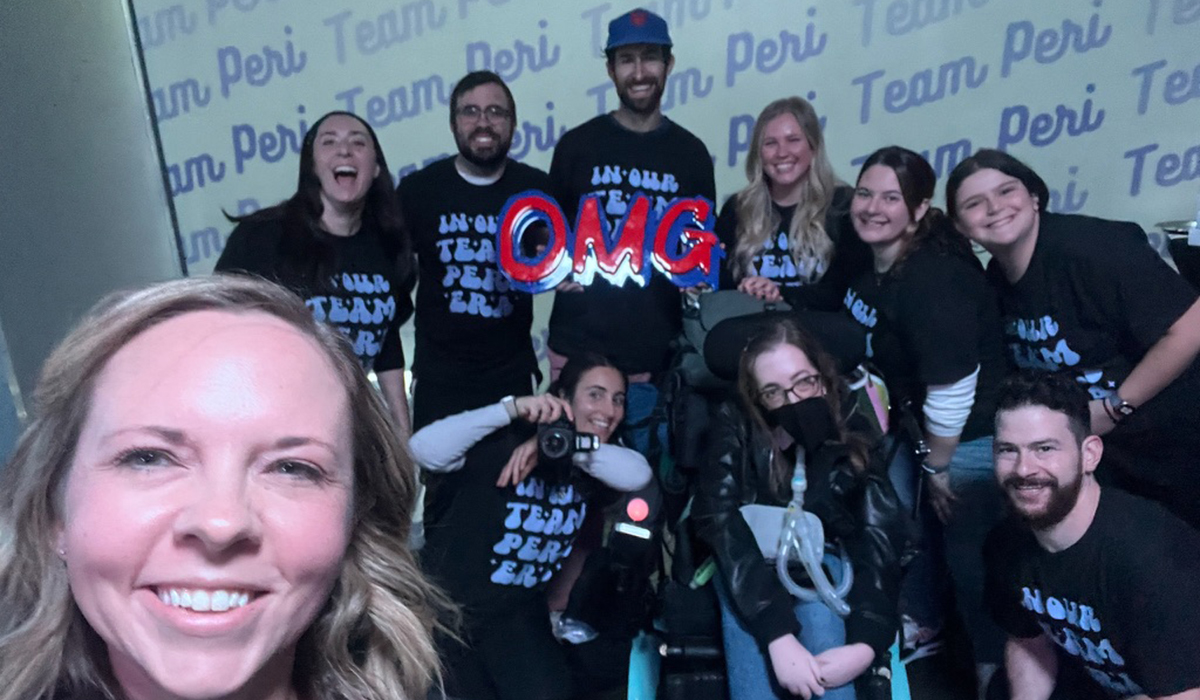
Team Peri Foundation members gather at the 2024 Bowl-A-Thon fundraiser./ Courtesy Peri Finkelstein
While the numbers are more than impressive—over $1 million raised for Chai Lifeline, tens of thousands of dollars in scholarships endowed—Peri measures her success in moments of connection.
“The most rewarding part is witnessing connection happen in real time, when someone tells me that my story made them feel less alone, or when our partners share how our donation affected their community or patients,” Peri said. “It’s in the quiet moments: a message in my inbox, a conversation after a speaking engagement or someone asking a thoughtful question during the Q&A session.”
Peri hopes her story challenges assumptions. “I’m not some delicate flower or porcelain doll,” she said. “I’m not an inspiration just for existing. I’m funny, sarcastic, unapologetically me—and if you mess with me, you might end up in my memoir.”
She wants others to know that fulfillment comes from giving back, whether through donations, volunteering, or simply amplifying a cause. “We only get one life,” she said. “Show up. However you can. It matters more than you think.”
BUILDING RAMPS LIFTS HOMEBOUND RESIDENTS TO FREEDOM
Meet Daily Point of Light Award honoree Katie Simpson. Read her story, and nominate an outstanding volunteer or family as a Daily Point of Light.
Katie Simpson is building a better future… literally.
As one of seven children, she was taught to lend a hand when needed. By the time she became an adult, Katie put that knowledge into action regularly. Her volunteering career took off while her husband worked as a fighter pilot in the United States Air Force. While Katie had been working for the Pentagon, the couple was sent to live in Germany, and Katie decided to go on leave. It was then that she realized how good she was at helping some of the other families in the community. Realizing how much of a difference Katie could make, she got involved with several volunteer organizations.
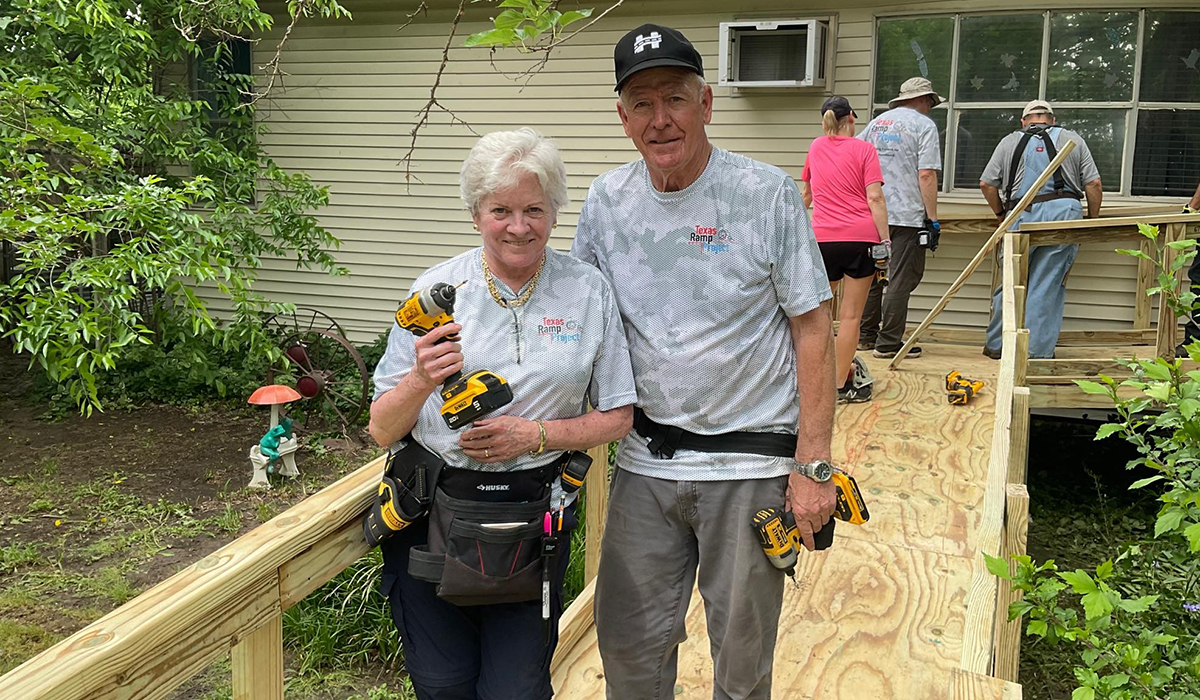
Through her former church, Katie was introduced to the Texas Ramp Project, an organization that provides wheelchair ramps to low-income older adults and people with disabilities. Often isolated to their homes due to their disabilities, these people benefit from Katie and her team constructing a pathway to freedom. They measure each home’s entrance and exit, and order the lumber. A team of volunteers from TRP descends upon the home and builds a sturdy ramp that allows each resident to finally experience the outside. Thus far, her volunteer crew has built 35 wheelchair ramps.
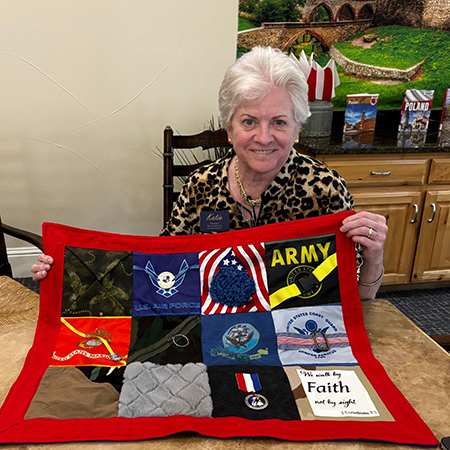
While Katie is proud of her work with the Texas Ramp Project, it isn’t her only endeavor. She’s also a volunteer with Metroport Meals on Wheels, which provides home-delivered meals, senior center luncheons and other support services for seniors and those in need. Every Monday, Katie and her husband deliver meals to homebound individuals. They also frequently participate in fundraisers and deliveries of other items, like Christmas presents. Katie even leads three different textile ministries. She crochets prayer shawls and gifts them to cancer patients going through infusions at Texas Oncology. She sews blankets and hats for formerly unhoused veterans, and she has created and gifted 150 fidget quilts and blankets for special needs children and memory care individuals. Wherever she goes, Katie is looking for people to help.
In addition to all her volunteer work, Katie is adamant that her greatest role as a volunteer is not just getting the work done, but recruiting other people to start volunteering as well. While she may be helping others consistently, her mission to spread the word of volunteerism’s power is equally significant.
KATIE SIMPSON HOLDS UP A FIDGET QUILT MADE FOR A VETERAN IN MEMORY CARE. / COURTESY KATIE SIMPSON
What inspired you to get started with this initiative?
It was a church we used to belong to, and I enjoy running things. I volunteered, and I thought it was really great. It’s literally freeing them. They cannot get out of their home without people carrying them. I did a couple of builds and realized they really weren’t very well organized. I’m very good at organizing, and so I suggested I take it over. Everyone said okay, so I just started recruiting volunteers. We left that church several years ago, but I said I could still do it.
Tell us about your volunteer role with the Texas Ramp Project.
I reach out to the client and find out exactly what they need. They send me pictures of the house, what they currently have, the steps, and I go out and take measurements. I design the ramp and develop the lumber list. Then I have Texas Ramp buy all the lumber and have it delivered. In the meantime, I send a note out to all my volunteers, setting a date. They show up around 8:30 on a Saturday morning and they don’t have to do anything but show up and work. It’s just really rewarding for them. I do the surveying of the site, ramp design and lumber ordering. I really enjoy doing it.
What are your long-term plans or goals for the organization?
Just continue to make a difference as long as I can. I’m still perfectly healthy and I stay in shape. I think I can keep doing this for quite a while. I just want to keep bringing more people in.
What’s been the most rewarding part of your work?
That I’m making a difference. I literally wake up and say that I hope I can help somebody today. What’s most rewarding is the smiles. Sometimes it’s something life-changing, like a ramp. Other times, it’s just helping somebody who’s just really having a hard time and maybe they just need you to visit them in hospice. It probably sounds corny, but making a difference, making people smile and just helping is the reward.
What have you learned through your experiences as a volunteer?
Good volunteer management. Bad volunteer management literally turns off people and they will never volunteer again. That’s just a shame, and you see too many of them go that way. I dabble around with different organizations to see if it’s something that I would recommend. I went to one recently, and there was nobody to greet the volunteers. I know enough to know that was just a bad experience, but other people probably think the whole endeavor is a waste of their time.
KATIE SIMPSON (LEFT) AND HER HUSBAND (RIGHT) BUILD A 58-FOOT RAMP IN FOUR AND A HALF HOURS WITH THE TEXAS RAMP PROJECT. / COURTESY KATIE SIMPSON
Why is it important for others to get involved with causes they care about?
Because it’s better for them. Every time you get involved and you give something to somebody else, you will feel better about yourself. It gets you out of selfishly thinking all about yourself. No matter where you are, there’s somebody worse off than you are. Just look around to see where you can make a difference. There’s always something somebody can do. Some people can crochet hats for the unhoused, and some people can build ramps. It’s finding that thing that really makes you smile and realizing you just did this and you want to do it again.
Any advice for people who want to start volunteering?
Check with people you know, and see if they have any references on good places to volunteer. Don’t be afraid. Give yourself at least three shots at volunteering. Go someplace. Maybe it wasn’t good. Try three times at least. Force yourself to volunteer at least three times. Maybe it’s a build, maybe it’s something at church or maybe it’s delivering meals. Try at least three things. Most likely, you’re going to like at least one of those, and you’re going to learn something.
What do you want people to learn from your story?
Everybody can make a difference. That’s what it comes down to. Everybody can make a difference.
CARING FOR ANIMALS TEACHES THIS VOLUNTEER VALUABLE LIFE SKILLS
Meet Daily Point of Light Award honoree Gavin Gauss. Read his story, and nominate an outstanding volunteer or family as a Daily Point of Light.
Gavin Gauss grew up in a family that loved animals. But when the California teen saw a domoic acid outbreak threaten the livelihood of the sea lions and seals in his community, he couldn’t wait to get involved to help them.
When Gavin turned 16, the minimum age requirement, he signed up to be a teen greeter at the Marine Mammal Care Center, which inspires ocean conservation through marine mammal rescue and rehabilitation, education and research. There, he helped with check-in, shared the organization’s mission and enhanced the visitor experience. Gavin was so successful, he was able to advance his role quickly. After taking a test, he became an educational docent, teaching the public about marine mammal conservation.
Gavin has also risen in the ranks to team captain, a role that requires him to mentor new volunteers. That’s a significant responsibility, particularly considering that Gavin is one of the youngest volunteers in the group. Still, colleagues say his warmth and enthusiasm shine through, while his dedication, curiosity and professionalism are a testament to his dedication to the importance of ocean health and our role in protecting marine life. In just one year, Gavin has contributed over 124 hours of service to the Marine Mammal Care Center.
Currently a senior in high school, Gavin is exploring his plans for next year. He’s looking to attend college and is interested in the ROTC so he can become a commissioned officer after college. He knows they are attracted to candidates who participate in volunteer work and feels his experience as a docent has helped him improve his ability to speak publicly and connect with people on a stronger level. Ultimately, Gavin says volunteering reminds him that he’s not just working for himself. Instead, he’s doing it for the greater good of the organization. And when he shows up at the Marine Mammal Care Center every Sunday morning, Gavin is ready to give his all.
What inspires you to volunteer?
I think the biggest thing is just that I want to help my community. I’ve been very fortunate to have a wonderful support group of parents, friends and teachers. I feel like I owe a little bit to my city to help out.
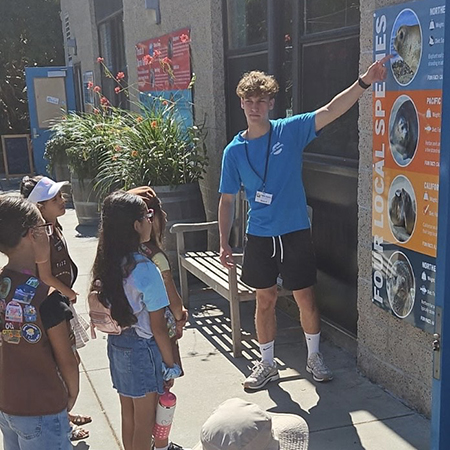
MARINE MAMMAL CARE CENTER VOLUNTEER GAVIN GAUSS (TOP) TEACHES A GROUP OF GIRL SCOUTS THE FOUR TYPES OF SPECIES THE CARE CENTER DEALS WITH. /COURTESY GAVIN GAUSS
Tell us about your volunteer role with the Marine Mammal Care Center.
I volunteer on Sunday mornings. I started as a team greeter, serving as the person who helps check guests in. Over time, I’ve been given more responsibilities. Right now, I’m an educational docent, which means I’m usually the one who gives tours and provides a brief oversight of what we do at the Marine Animal Care Center.
What inspired you to get started with this initiative?
I always loved animals. They have always been a big part of my life. My parents are huge animal lovers too. But I think what really inspired me was reading about them in the news. There was this huge domoic acid outbreak that happened. Tons of sea lions were sick and placed in hospitals. I was too young at the time to volunteer, but I could see them making a difference and saving the lives of the marine mammals. I wanted to help out, and so when I was finally 16, I reached out to volunteer.
What’s been the most rewarding part of your work?
One thing that’s definitely been rewarding is that, since I’ve always been more of a shy kid growing up, I think it’s really helped me kind of come out of my shell and interact with people more. What really helps me is when people show up; it’s because they care about the animals. They want to learn more. Because of that, it kind of gives me a little more confidence to want to talk to them and interact with them.
What have you learned through your experiences as a volunteer?
I’ve learned a ton of facts about animals and species and all that stuff, but on a personal basis, I’ve learned a lot about what I like to do and how I like to spend my time. There have been times when it’s like my parents will ask me why I like volunteering so much. I think it’s because the community there is just so phenomenal. Also, I feel like there’s definitely a tangible result. When you give a tour or something, and everyone’s super happy and grateful, it makes you feel special. I feel like I helped out in some way.
Why is it important for others to get involved with causes they care about?
I think it’s important because firsthand experiences will really always show you why it matters. If you’re thinking about getting involved in something, I always recommend trying it out, because you can kind of see if it’s something you can see yourself doing more. You really can see the impact you’re making. It reinforces the idea that you should do it more often.
Any advice for people who want to start volunteering?
I think the biggest piece of advice is to try to volunteer somewhere with a good community. For me, I was fortunate the first day I volunteered because another person was starting the first day, so we instantly clicked. If you’re a little nervous about that, I think a great thing is to volunteer with a friend. That can really motivate you. If your friend is there, they’re relying on you to also show up to volunteer. It will get your foot in the door so you can interact with more people.
What do you want people to learn from your story?
One thing I want people to take away is that no matter how big or small your volunteering job is, it always goes a long way. More people should strive to volunteer, because at the end of the day, it’s only a couple of hours a week. However, the rewards are so great. I feel like I’m part of something bigger than myself. I feel like when I volunteer, I’ve done something good for the day, and it puts me in a better mood for the rest of the week.
Helping Balboa Park and Its Visitor Experience Bloom
Meet Daily Point of Light Award honoree April Savage. Read her story, and nominate an outstanding volunteer or family as a Daily Point of Light.
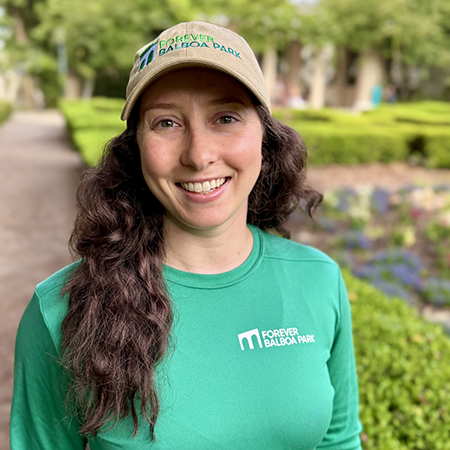
Balboa Park is one of San Diego’s most iconic green spaces, and thanks to volunteers like April Savage, it continues to thrive as a beautiful, welcoming destination for all. April began her journey as a garden steward with Forever Balboa Park at just 25 years old and has since become an indispensable part of the team. Now serving as a garden steward lead, she plays a key role in preparing tools, welcoming volunteers and guiding them through tasks that keep the park’s gardens flourishing.
Even after working a demanding full-time job, April dedicates her weekends to the park with unwavering commitment. Twice a month, she arrives early to prepare wagons of tools, rally the volunteer team and head out to one of the park’s many gardens. From weeding and planting to trash pickup and habitat restoration, April ensures every volunteer is supported, safe, and equipped to make a difference.
Her leadership goes beyond logistics. April’s deep connection to nature and strong sense of community shine through every interaction. Whether she’s answering questions from curious visitors or ensuring every team member feels welcome, she brings warmth, knowledge and heart to her role. Her creativity even shows in unexpected ways—like making anti-inflammatory teas from the weeds pulled during volunteer shifts.
April’s efforts help maintain a vital public space that serves thousands of residents and visitors. In an increasingly urban world, free and accessible natural areas like Balboa Park play a critical role in community health and wellness. April’s work ensures the park remains a sanctuary where families can relax, children can learn and everyone can reconnect with nature.
With over three years of dedicated service, April Savage is more than a volunteer—she’s a community steward, a team builder and a quiet force of transformation. Her selfless commitment to keeping Balboa Park vibrant makes her a true local hero whose efforts deserve to be celebrated.
April Savage volunteering in the Alcazar garden.
Tell us about your volunteer role.
I have been volunteering as a garden steward through Forever Balboa Park for four years and have been a garden steward lead for two years. I help maintain the gardens of Balboa Park to keep this world-class public space beautiful and welcoming to all. As a garden steward lead, I arrive early to prepare wagons full of tools and welcome the volunteer team.
I then lead the team out to one of many gardens where we take care of weeding, deadheading, raking, planting, trash pickup and general cleanup. I ensure the needs of all volunteers are addressed and that everyone stays safe during our shift. We often direct visitors and answer their questions about the park. We occasionally take on special projects, such as tree planting, habitat restoration of natural spaces and assistance with community cleanups.
What inspired you to get started with this initiative?
Like many folks, I began gardening in 2020 during the beginning of COVID. Gardening gave me something calming to focus on when the world was increasingly stressful. My teeny-tiny side yard container garden brought me so much joy, and when the world started opening up again, I wanted to garden on a larger scale in a way that others could enjoy. I found the Balboa Park garden stewards, signed up right away and have been loving it ever since.
Why is this issue so important to you?
This work is important to me because free and accessible natural spaces are increasingly critical for community health. It takes an immense effort to maintain these spaces, and I am proud to be part of the team that works diligently so that people from all walks of life can enjoy one of the best urban parks in the country.
What are your long-term plans or goals with the organization?
I plan to continue in my role as a garden steward lead, to continue recruiting new garden stewards and to assist park staff in whatever future initiatives they dream up.
What’s been the most rewarding part of your work?
It brings me joy to connect with the earth through gardening and watch the park community come to life throughout our shift. I treasure the connections I make with the team of volunteers and staff who tirelessly work alongside me. It is immensely rewarding to contribute to this beautiful, educational and rich cultural community resource.
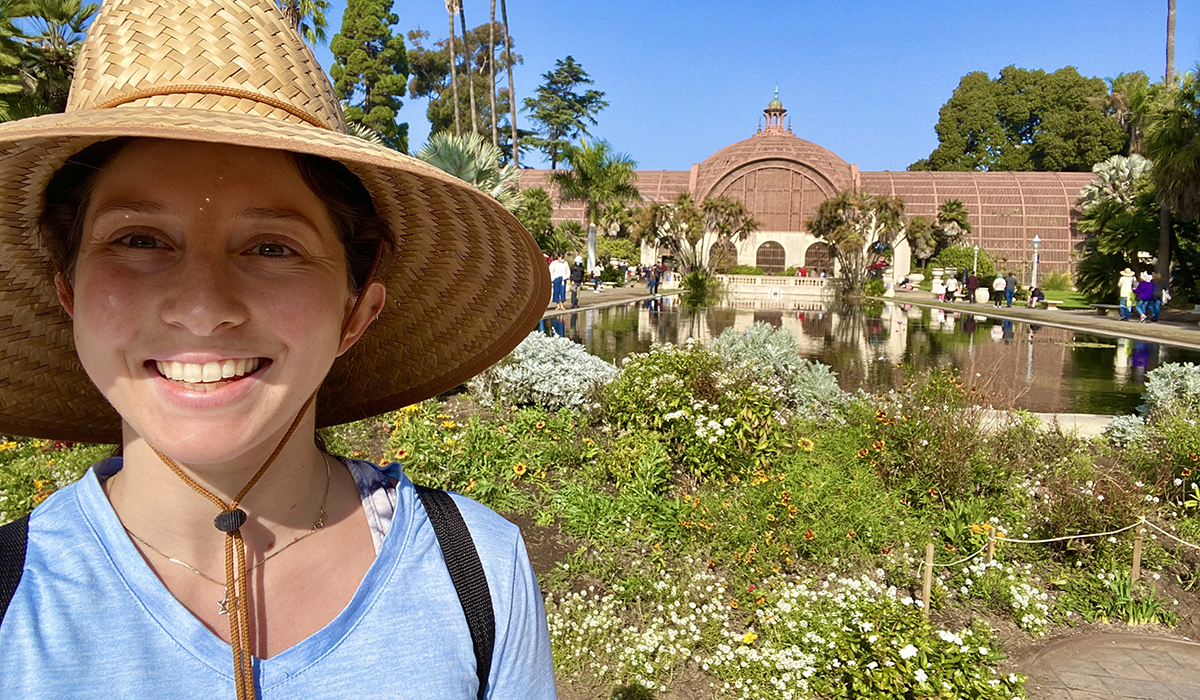
April enjoying a walk through the park after volunteering, taking in the beautiful lily pond and botanical building.
What have you learned through your experiences volunteering?
I’ve gained such a wealth of knowledge about native plants, gardening techniques and landscape maintenance. Besides practical skills, I’ve learned time and time again that when a group of dedicated people set to work on something, great things can be accomplished.
Why is it important for others to get involved with causes they care about?
Community involvement is such an important and rewarding aspect of life. You learn new things, meet new people, are exposed to different perspectives and make a difference in countless lives.
Any advice for people who want to start volunteering?
Think of something you enjoy or feel passionate about and find a local organization that needs volunteers in that capacity. Sign up and just do the dang thing!
Meet Daily Point of Light Award honoree David Bliss. Read his story, and nominate an outstanding volunteer or family as a Daily Point of Light.
The COVID-19 pandemic led many to make big changes and reevaluate their lives. After a fruitful career as a UI designer and software developer, including working in Amazon’s Devices and Design group and leading his own design studio, 54-year-old David Bliss did the same. Looking to make a more direct impact on people’s lives, he started volunteering and retired early to invest more time in community involvement. Simultaneously, he began curating a little free yard library with science fiction and reestablishing his childhood hobby, sailing.
His first foray into volunteering was with the Exploratorium a museum that lets visitors explore the world through science, art and technology. Four years later, he averages 65 hours a month serving a combined estimate of 650,000 yearly visitors of all ages. Shortly after starting there, David also joined Code Nation for five months of mentoring high school students in computer science. And as a long-time baking enthusiast, he found a great fit in Community Loaves, an organization that brings together volunteer bakers to make bread and energy cookies for those facing food insecurity.
David is early in his volunteer journey but is already making future plans. His story is a reminder that change can be good. He’s accomplishing his goal of building meaningful connections in roles he wouldn’t have even dreamed of before taking the leap.
In preparation for the Pi Day celebration of 2025, David prepares for pie service.
What inspires you to volunteer?
At Amazon, I did a lot of prototyping next-generation products, spending time working on things that were hard to imagine improving people’s lives. Only a few became real products.
In mid-2021, shortly after my dad passed away and my mom came to live with us, I decided to step back from that career and reevaluate. There were a lot of life changes for me during that time that caused me to examine how I was spending my time. I was looking for something that put me more directly in touch with the end consumer of whatever I was working on.
I thought I might go into STEM education and was figuring out what that might look like when I found the Exploratorium. I started volunteering and realized that I could just slot in there to meet a lot of my goals.
When I was in high school, we didn’t have a volunteering requirement, so I wasn’t exposed to the benefits. I launched my own business after graduating which kept me hyper-focused for 25 years. The Exploratorium is my first serious volunteer effort. I also started baking about seven years ago and got more into it during the pandemic. So, when I came across Community Loaves last year, I signed up.
Tell us about your volunteer role with Exploratorium and Community Loaves.
At the Exploratorium, I support a variety of events, predominantly San Francisco Sunday Streets run by Living Cities. They set up a booth with five or six activities for people to engage in and learn about the museum. The goal is to reach people who might not otherwise come into the museum, speaking to them about challenges faced in the community. There might be something about climate change or animal life in San Francisco, sometimes something specific to the neighborhood. We spark curiosity. Our annual Pi Day is full of events at the museum. I serve pie, organize people in the parade and help with anything from set up to clean up.
A lot of the exhibits have a digital component, so I also work with the new media exhibit development group. I update ones that have been taken off the floor because either they’ve stopped working or need to be updated. I work on their underlying code base and rehabilitate them. Last year, I started working on two new exhibits with exhibit developers that are in the summer program right now, called Adventures in AI.
I’ve baked 237 loaves of sandwich bread for Community Loaves so far. I’m the Berkeley hub leader. Once a loaf cools, you package it and either take it to a freezer bank or freeze it at home. Approximately every two weeks, you bring donations to the hub and then they’re taken to the food bank.
Last year, a team of people developed two new recipes. As a test baker, I gave feedback throughout the process as they were revised. Now, those are available to 920+ bakers in the Community Loaves network across multiple states.
What are your long-term plans or goals within the context of this work?
My goal at Exploratorium is to continue developing activities for street fair visitors. The Exploratorium has had a table at Sunday Streets since I started. Previous kits were for things like automatas and zoetropes. I also want to find new venues to use them either within the museum or at other public events.
My goal with Community Loaves is to bake more loaves in the time that I have. And I’m always looking to recruit more willing bakers.
David examines an older digital exhibit removed from the Exploratorium floor for updating.
What’s been the most rewarding part of your work?
I like developing activity kits and sitting down with one or two kids at a time to talk about them. They pick one to build, take it home and show their friends and family what they learned. That’s the most personally rewarding, because it’s what I wanted to do when I started thinking about a change, to be able to work with people more directly and see the interest firsthand.
What have you learned through your experiences as a volunteer?
There are a lot of great organizations that have done a lot of work behind the scenes to make it easy for someone like me to just show up, give my time and make a difference. One thing I wish I would have learned earlier is how easy and rewarding it can be to participate. You don’t have to wait until you have a lot of time. You can put in as little or as much time as you want. And it’s never too early or too late to be more generous with your knowledge and talents.
New York Volunteer CREATES A BRIGHTER FUTURE THROUGH MENTORSHIP
Meet Daily Point of Light Award honoree Kaniel Cassady. Read his story, and nominate an outstanding volunteer or family as a Daily Point of Light.
A mentor changed Kaniel Cassady’s life, and now he’s returning the favor.
When Kaniel was in graduate school, a mentor helped him navigate the ups and downs of life. From personal issues to preparing for his career, Kaniel found his mentor to be an extremely valuable resource for his own development. At the time, his mentor spoke about his involvement with Big Brothers Big Sisters. Kaniel knew that when he had the time to devote to the organization, he wanted to get involved.
Six years ago after moving to New York from California to pursue a career in science, Kaniel became a volunteer mentor with Big Brothers Big Sisters of Westchester & Putnam, the local chapter of the national organization that helps all youth achieve their full potential in school and in life by providing young people who face adversity with professionally supported one-to-one mentoring relationships. Seeing the economic disparities in several Westchester communities, Kaniel was struck by their proximity to neighboring areas with significant wealth. Kaniel recognized pockets of poverty, insufficient housing situations, and educational lapses that didn’t provide the support that many young people need.
KANIEL CASSADY IS A VOLUNTEER WITH BIG BROTHERS BIG SISTERS OF WESTCHESTER & PUTNAM. /COURTESY KANIEL CASSADY
“What I noticed when I first moved here was that there are a lot of organizations that throw money and financial services at these pockets within the community,” Kaniel recalls. “But my philosophy is that you can’t always fix things with money. Some things require individuals’ time.”
When Kaniel started, he was paired with his “little,” a 13-year-old boy. They started hanging out together twice a month for activities ranging from eating pizza to rock climbing. He served as a sounding board for the young man’s life, discussing everything from school and sports to relationships and work.
In addition to his one-to-one mentoring, Kaniel also serves on the organization’s board to help influence how the program grows in his community. There, he met Ann Ellsworth, the CEO of Big Brothers Big Sisters of Westchester & Putnam, with whom he has worked extensively to expand the organization’s recognition. But outside of the boardroom, Ann has seen he way Kaniel helps the children blossom.
“He sees kids for exactly who they are, and meets them there without any expectation of who they’re supposed to become,” says Ellsworth. “Just by being with them, he changes their lives.”
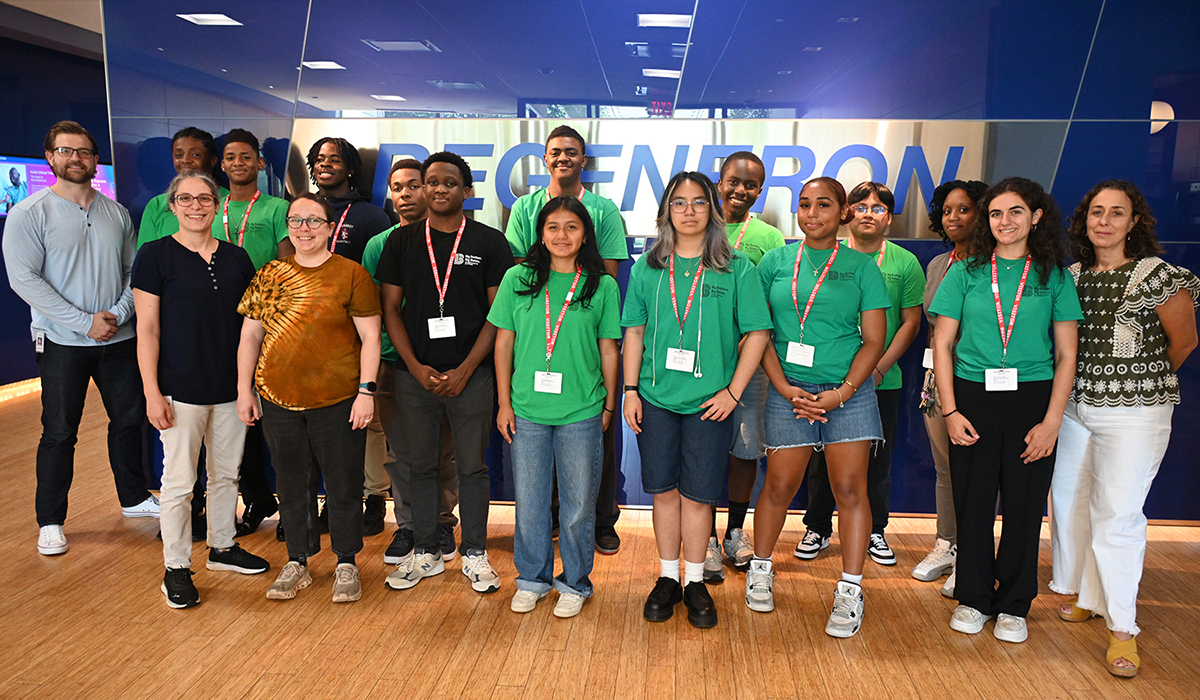
Ellsworth was particularly impressed with one of Kaniel’s recent endeavors, when he brought a cohort of 15 high school students from BBBS’s Big Futures Program to his place of work, where he’s employed as a scientist. The group was able to tour the genetic centers and see the robots and microscopes, and they heard about what it takes to develop a medicine for patients who have hearing loss.
KANIEL CASSADY (LEFT) ACCOMPANIES HIGH SCHOOL STUDENTS PARTICIPATING IN THE BIG FUTURES PROGRAM ON A VISIT TO REGENERON PHARMACEUTICALS. /COURTESY KANIEL CASSADY
“One of the kids who has not been very clear about what he wants to do or if he wants to go to college said, ‘I want to be a biologist,’” Ellsworth recalls. “ He goes, ‘After meeting Kaniel and seeing what he does and what they do, I want to do that. ’”
Kaniel calls the experience the most rewarding encounter he’s had in the last few years.
Being from the other side of the country, Kaniel has also managed to establish a circle of trusted individuals through his volunteer work with BBBS. Unfamiliar with the area when he first arrived, his experience dedicating time to the organization helped him become acclimated to a new coast and allowed him to build a sense of community locally.
With almost 70 children on the wait list to be paired with mentors, the need for mentors like Kaniel is greater than ever. However, so is their influence. With the help of Kaniel, his “Little Brother” is learning how to drive and applying to college.
Meet Daily Point of Light Award honoree Edward Lee. Read his story, and nominate an outstanding volunteer or family as a Daily Point of Light.
Edward Lee is using the power of music not just to perform, but to connect, heal and uplift communities. Through his work with El Sistema and his own organization, Clexical, he brings contemporary classical music to those who may otherwise never experience it—young musicians from underserved backgrounds, seniors in community centers and curious park-goers alike. Edward’s passion for accessibility in the arts fuels a mission that reaches beyond the concert hall.
As a teacher with El Sistema, Edward dedicates his time to guiding young musicians, many of whom come from under-resourced communities. He sees music not only as an art form but as a vehicle for empowerment and self-expression. His mentorship provides students with technical training, but more importantly, it opens doors to confidence, discipline and a lifelong love of the arts.
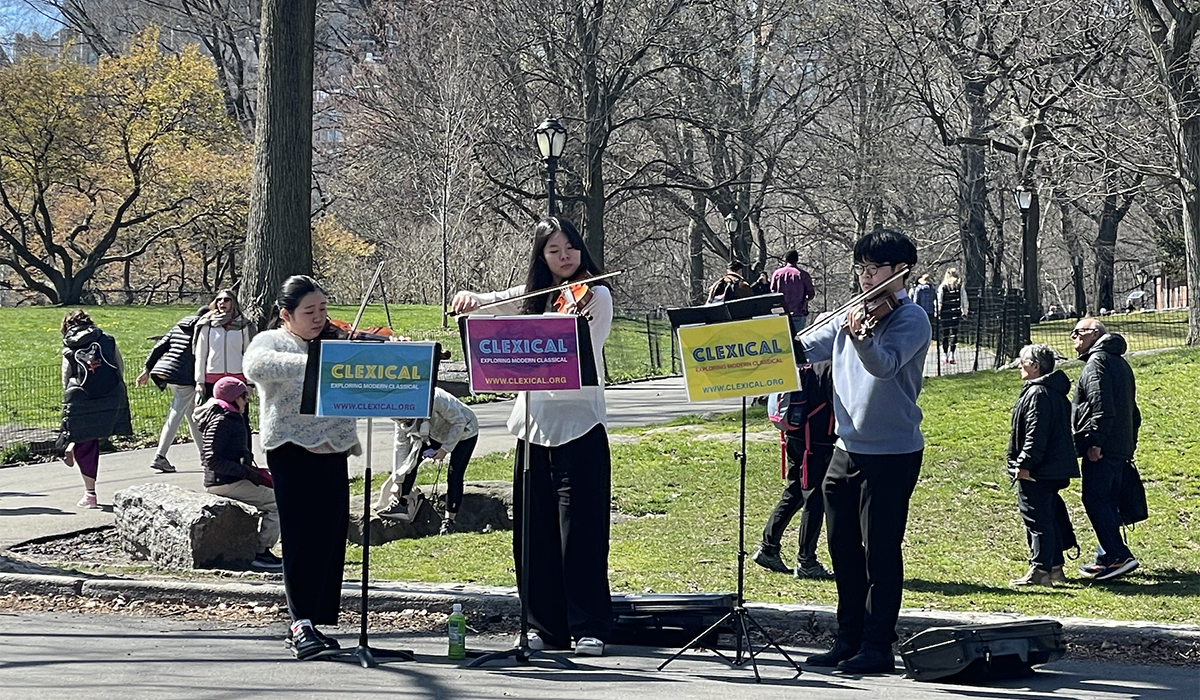
In his role as co-founder and director of outreach at Clexical, Edward has created a student-led platform that brings contemporary classical works into unexpected spaces. From public parks to senior centers, these concerts feature living composers and diverse cultural voices. By taking music out of elite institutions and into everyday spaces, Edward is fostering a sense of belonging and inclusion in classical music, an art form that has often felt out of reach for many.
Beyond performance, Edward’s commitment includes deep community engagement. He leads interviews with composers, curates inclusive concert programs and coordinates outreach that encourages multigenerational dialogue. His events invite audiences to not only listen but to reflect and connect, making the experience of music both personal and communal. His approach transforms concerts into conversations. Edward’s efforts are helping to redefine what classical music can be—and who it’s for. By championing innovation, access and education, he is building a more inclusive future for the arts.
Tell us about your volunteer role.
As a co-founder and volunteer with Clexical, I work on projects that try to make contemporary classical music feel more approachable for young people and communities who might not run into it otherwise. I coordinate and do interviews with composers from all over, focusing on their creative processes and the personal stories behind what they write. I also help put together workshops and concerts specifically for kids who don’t usually get access to new music, so they can listen, ask questions and even try their hand at composing.
Beyond the events, I spend time gathering and sharing resources like lesson materials, recordings and articles that can help people explore today’s contemporary classical scene, whether they’re musicians or not. Really, it’s all about trying to build a community around new music where people actually feel welcome and excited to be there.
Why is this issue so important to you?
This topic is particularly important to me because I grew up watching gifted musicians I knew just close themselves off from a whole world of music. It was literally somewhat heartbreaking to watch people I knew were so musical write off modern classical as too strange or intellectual before they’d even really given it a shot.
What really struck me was that this music is speaking for our generation, including our experiences and struggles; yet many people my age don’t seem to make the connection. They are ignoring composers who are grappling with the same issues, just expressing these feelings in sound instead of words. Also, I think there is something deeper about our connection with art that challenges us. When people reject new classical music, they are often dismissing anything that isn’t instantly appealing to them. Yet, some of the most meaningful experiences I have had have come from sitting with something I didn’t know until it finally struck a chord.
This is what makes this issue personal for me. I don’t want people to miss the feeling of discovery, the awareness that something one might have assumed was “not for them” is actually intensely applicable to their life. Contemporary classical music deserves to be part of the conversation about what young people are listening to and connecting with.
Edward and his team performing contemporary music at Central Park.
What inspired you to get started with this initiative?
My interest in starting Clexical began with the realization that many people, even extremely gifted young musicians, felt completely alienated from modern classical music. In rehearsals and casual conversations, I often heard my colleagues refer to this music as strange or inaccessible, or claim that it was written only for “serious” professionals who could properly appreciate it. But from my own experiences of playing new works and hearing composers speak about their creative processes, I knew the energy and humanity that existed in this music.
But the actual turning point was when this composer visited my orchestra to present a piece we were rehearsing. They discussed the memories and feelings and personal experience that they had put into composing it, and all of a sudden, everything fell into place for me. What had been abstract suddenly was so real and personal. I could tell some of the other musicians were having similar experiences, but for me, it was like this total change in the way I perceived the music.
It struck me that when people do get the backstories of modern works, the music no longer seems so distant and becomes something truly personal. That’s how Clexical was born. I was hoping to create a means of getting these voices and stories to more individuals and make modern classical music seem close and relevant rather than scary.
What have you learned through your experiences volunteering?
Through my work with Clexical and other volunteer experiences, I’ve learned that service really works when it’s about building actual relationships with people, not just giving them resources. With music outreach, I’ve seen how when you tailor performances to what different communities actually want, it completely changes how they see the arts. Instead of feeling like something that’s not for them, it becomes personal and relevant. When I’ve done education-focused volunteering, I’ve had to learn to listen first. You really have to understand what people need before you jump in with your ideas about how to help. I’ve definitely learned that the hard way because sometimes what I thought would be helpful wasn’t what they were looking for at all.
What I’ve realized across all my volunteer work is that meaningful change usually starts small. It’s things like having a conversation with someone in their first language, or sharing stories about where we come from, or just being there when someone needs a bit of encouragement. Those moments often end up meaning more than all the big, organized efforts. Volunteering has taught me to approach things with empathy first and to stay humble when I need to change my approach. I’ve also learned that you can’t just measure success by how many people you reach. The real measure is the connections you actually make with people.
What are your long-term plans or goals for the organization?
I’m really excited about where Clexical can go in the next few years. Right now we’re planning these concerts with our ensemble; it’s made up of several of our members who perform new music by both student composers and established living composers. Those performances are going to be huge for showing people that contemporary classical music isn’t just something you study, it’s something you can actually experience live and connect with.
We’re also expanding our workshops for kids, which I’m passionate about. The goal is to reach more communities that don’t usually get exposure to contemporary music. I also think there’s real potential to partner with schools and community centers to make this kind of programming more regular, not just one-off events. The dream would be for contemporary classical music to feel as accessible and exciting to young people as any other genre they’re discovering. I want people to walk away from our events thinking, “I had no idea this music could speak to me like that.”
What’s been the most rewarding part of your work?
One of the most rewarding parts of my work with Clexical has been getting to interview composers from all these different backgrounds and musical styles. Each conversation really gives you this window into how they create, what challenges they’ve had to deal with and what actually drives their work. I’ve talked with artists who are mixing classical music with electronic sounds, composers who pull from their cultural background to create these totally new musical languages and people who are completely redefining what contemporary music can even be.
Hearing their stories directly has really opened my eyes to how diverse this field actually is. It’s also given me new ways to think about making music more accessible to people. When I share these interviews with audiences and watch them connect to the actual human stories behind the music, it’s honestly both inspiring and affirming. You realize that people really do want to understand the person behind the work, not just hear the final product.
Why is it important for others to get involved with causes they care about?
Getting involved with causes you care about is really what turns passion into actual action. It’s one thing to believe in an issue from a distance, but it’s totally different when you roll up your sleeves and work to address it directly. Through my experience with Clexical, I’ve seen how even small efforts can create these ripple effects, like helping one person who really needs it or getting others motivated to jump in too.
What I’ve realized is that volunteering gives you this perspective you just can’t get from watching on the sidelines. It really builds your empathy and helps you actually understand what other people are going through. You also see what happens when a community comes together. When people commit their time to something they genuinely care about, they’re doing way more than just solving a problem. They end up building these real connections and growing as people. Plus, they’re proving to others that change is actually possible.
Any advice for people who want to start volunteering?
Honestly, my advice would be to start by exploring what’s already happening around you. Look at your school, your neighborhood, local nonprofits. Sometimes the best opportunities are right under your nose and you just haven’t noticed them yet. Don’t overthink it either. A lot of people get stuck trying to find the “perfect” volunteer opportunity, but you can learn just as much from something that ends up not being a great fit. That’s valuable information too.
One thing I’d suggest is talking to people who are already volunteering. Ask them about their experiences, what they like, and what’s challenging. You’ll get a much better sense of what different types of volunteer work involve beyond what you see on websites. Also, consider your schedule realistically. It’s better to commit to something small that you can actually stick with than to overcommit and burn out after a month. Consistency matters way more than the number of hours you put in initially.
And if you’re feeling nervous about jumping in, see if you can bring a friend. Having someone you know there can make the whole experience less intimidating, plus you’ll have someone to process the experience with afterward. The biggest thing is just accepting that you won’t know if something’s right for you until you actually try it. You can research all you want, but volunteering is one of those things where you really learn by doing.
With Art and Heart, Volunteer Mentors Underserved Students
Meet Daily Point of Light Award honoree Connie Jeung-Mills. Read her story, and nominate an outstanding volunteer or family as a Daily Point of Light.
Growing up as a mixed-race student in predominantly white schools, Connie Jeung-Mills faced discrimination but also discovered the transformative power of mentors who believed in her. Those experiences stayed with her, shaping both her identity and her conviction that young people deserve adults in their lives who will listen without judgment.
Now, 70, retired from a career at California College of the Arts where she co-founded the Creative Citizens in Action initiative, Connie brings that same passion for art and authenticity to her volunteer work with the San Francisco Education Fund as a mentor for the San Francisco Unified School District’s Mentoring for Success program. Since starting last year, Connie has been mentoring three students at three different Title I schools, going above and beyond by continuing to meet with them even as they enter high school. With art supplies in hand, she creates a safe space where her mentees can express themselves through collages and other projects, building trust, boosting confidence and encouraging them to stay in school.
What inspired you to start volunteering?
I had just retired from California College of the Arts, where I co-founded the Creative Citizens in Action program. That work focused on channeling students’ creativity into civic engagement and direct action, and it made me realize how much I loved working with young people.
When I retired, I wanted to continue in that spirit—getting involved in the community and connecting with youth in a meaningful way. I started researching volunteer opportunities in San Francisco and found the San Francisco Education Fund. They had several programs, but I was drawn to the mentoring initiative with San Francisco Unified School District. It sounded like exactly what I was looking for.
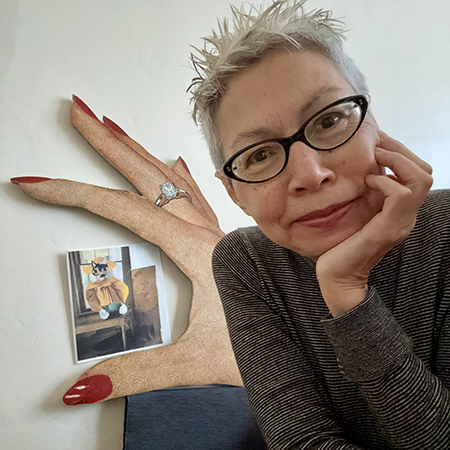
Connie smiles next to a cat collage created by one of her mentees./Courtesy Connie Jeung-Mills
Can you describe what mentoring looks like for you?
I just finished my second year with the program, and this year I mentored three students, grades seven through nine, at three different schools. I meet with each of them once a week for about 45 minutes to an hour. Sometimes we just talk about what’s on their minds, and sometimes we work on creative projects.
I discovered early on that art is the best way for me to connect with them. When we’re sitting side by side cutting and pasting magazine images or folding origami, they start to relax. The conversation flows more naturally, and it doesn’t feel like an interrogation. Art gives them a safe outlet and builds their personal confidence.
What kind of art projects do you do together?
Collage-making is our favorite. It’s simple—just magazine images, scissors, and glue—but it’s powerful. Students can choose images that speak to them on a subconscious level. When a student makes a collage about their dream home or picks pictures of nature, it often opens the door to conversations about their hopes, struggles, or family life.
We’ve also done origami and small paper banners. But collages are especially impactful because they give students a sense of accomplishment, even if they’ve never considered themselves “artistic.”
What challenges do your mentees face?
All of my mentees come from immigrant families and attend Title I schools. Many struggle with attendance. They often act as translators for their parents during medical appointments or with community paperwork, which is a big responsibility for a teenager. They also feel the tension of wanting independence while still needing to support their families.
Middle school is already a confusing time. Layer in those extra burdens, and you can see why having a consistent adult mentor outside of their family can make such a difference. My role is to be honest, to listen without judgment, and to show up every week. That presence alone can build trust and stability.
You’ve continued mentoring some students even after they moved schools. Why was that important to you?
Normally, the program ends at the close of the school year, and mentors are assigned to new students. But I couldn’t just walk away. I had a mentee who graduated from middle school to high school, and I arranged to keep mentoring her to make sure her transition went smoothly. Now, I’ve done the same with another student.
I know it’s unusual, but I’m fortunate to be retired and have the time. I’ve become extremely attached to the students I’m mentoring, and I am now good friends with them on some level. So that’s why I’ve made these special arrangements.
What changes have you seen in your mentees?
Progress isn’t always linear—it’s two steps forward, one step back—but over time I’ve seen real growth. One of my mentees was very shy about speaking English. We made a pact to always speak in English during our sessions, and she practiced with me each week. By the end of the year, she not only improved her conversational skills but also delivered a graduation speech—in English—at her junior high ceremony. Sitting in the audience and watching her on stage was one of the proudest moments of my life.
In general, I see them opening up more, talking more freely, and setting personal goals. Even small changes like improved attendance or sharing a little more of what they’re feeling are signs of progress.
What do you personally gain from volunteering?
It feeds my soul. Honestly, that’s the best way I can put it. Connecting with students through creativity taps into my strengths as an artist, and it reminds me why human connection matters so much.
It’s also an extension of my activism. I’ve always been involved in community protests and advocacy, and mentoring feels like another way of fighting for a better future—by supporting the next generation who will carry that forward.
Why do you think volunteering is important for the community?
I think we live in a time where politics and technology often isolate us from each other. Volunteering brings us back to face-to-face connection.
Community depends on people showing up for each other. Volunteer work really is the backbone of what holds a community together. And it doesn’t have to be something huge. You can start small.
What advice do you have for people who want to volunteer?
Start with something you’re passionate about. Passion will keep you motivated. If mentoring feels intimidating, there are many other ways to support schools and young people, whether that’s helping with a field trip, cleaning up a classroom, or even doing a one-time event.
I was hesitant myself, worried about taking on too much responsibility. But I took the leap, and it has changed my life. My advice is to try something small and see how it feels. You may be surprised by how rewarding it is.