CREATING A BRIGHTER FUTURE FOR FLORIDA’S YOUTH WITH LITERACY
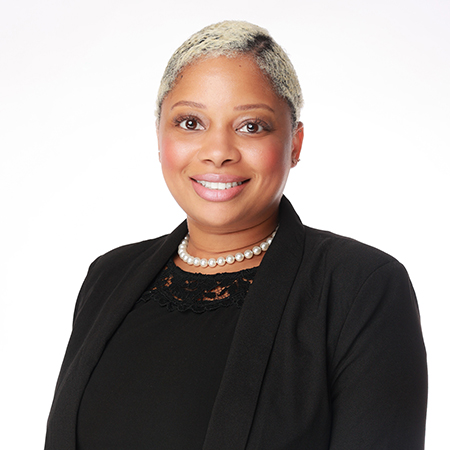
Meet Daily Point of Light Award honoree Malika Harrison. Read her story, and nominate an outstanding volunteer or family as a Daily Point of Light.
A love of reading is deeply rooted in Malika Harrison’s upbringing.
Growing up in a household of educators, Malika always knew how important it was to read. But it also inspired her to pour that knowledge into the youth who are coming up today. Malika is a volunteer with the Orange County Public Schools as a tutor with Read2Succeed, a program for elementary school students who need extra assistance to develop their literacy skills.
For the last five years, Malika has dedicated weekly sessions to working with her “littles.” That’s what she calls the first and second-grade students she works with outside their normal classroom time to receive extra help when it comes to reading and vocabulary comprehension.
Malika reads aloud to the children, allowing them to chime in and read or share the meaning of certain words. She also catches up with the kids, asking them how their day has been, therefore fostering a strong connection. At the end of the session, children can take home a book. This allows them to build a home library so they can practice reading outside of the classroom and even share with siblings.
Malika’s positive influence on the students is clear. Tested before and after the school year, students have shown a 10 to 20% improvement in vocabulary and reading fluency. Teachers have even noticed an increased improvement in reading aptitude, as well as social and personal development. When they move on to higher grades, graduate and pursue a career, the littles will always have the gift of reading bestowed upon them by Malika.
As the school year kicks off yet again, Malika is ready to get back into action as a tutor. That means meeting a whole new group of littles to help improve their reading skills this year. The willingness of people like Malika to dedicate their time to volunteerism is one of the greatest gifts to put out into the world. Her work is an inspiration to everyone who aspires to create change in their community.
MALIKA HARRISON IS A VOLUNTEER WITH READ2SUCCEED. /COURTESY MALIKA HARRISON
What inspired you to get started with this initiative?
Orange County is one of the largest school districts in the nation. When you think about the class sizes and the number of students that are in this school district and their various backgrounds, research has shown there is a gap in literacy. Having the opportunity to help a few young people develop their love for reading while also looking at what that produces later on down the line for our society, in terms of the workforce, the economy and for that person’s household, showed me how important it was to lend some volunteer time to tutor the students since their normal classroom time wouldn’t allow for that extra help when it comes to reading and vocabulary comprehension.
What inspires you to volunteer?
I’m inspired by not just the reward of giving my time and my energy, but also the beneficiaries. In this case, with the Read2Succeed program, the students love to read, and they love to have that extra help, because they are pronouncing words, looking at the pictures and studying their vocabulary. What really inspires me is the change and the optimism that I have, and that these young people also have when they pronounce the word correctly. It’s that opportunity to see change and evoke change, and also the long-term result of them loving reading now and learning at their grade level. That’s going to further help them develop as they go into middle school and high school. The future outcome is also what inspires me.
Tell us about your volunteer role with Read2Succeed.
It’s reading, but it’s also checking in with little ones to ask how school is going in general. I think that development from the classroom to extracurricular activities is really important. It starts by just checking in and seeing how they’re doing, and then we delve into some sight words, which are the prescribed vocabulary words from the Orange County Public School District. Then we have a selection of books that have already been pre-identified for the school year. I usually pull two or three books and ask the littles which one they want to read. I read aloud to the students, and they follow along. Then I may ask them questions so that I know they’re comprehending what I’m reading aloud to them.
Then there are some fun activities we might do. Once we finish reading the book, we have a journal where they’ll pick a vocabulary word and write a sentence or draw a picture with that word. The role that I play is enhancing and complementing what the teachers do in the classroom, but giving that extra level of fun.
What are your long-term plans or goals for the organization?
The school year just started, and I’m going to be volunteering again. My long-term goal is to continue to see reading levels elevated, and that literacy joy and spark more relevant and visible throughout the classroom. Long term, my goal is to continue to be a part of the joy of reading and learning, and I hope that over time, as they rise in their grade level and have younger siblings, they’re able to turn the tide and be able to read to the younger students in their class or their families.
What’s been the most rewarding part of your work?
I would say it takes me out of my day-to-day work, and it gives me that hour each week to pour back into the students. When we see a little who needs some extra help, whether it’s reading or math or what have you, or even behavioral, it’s rewarding for me to be able to pour into that and know that I’m making a change in one student. I do believe that students are sponges, and the other students in the class will be able to learn from that, and the joy of reading continues to spread. That is what illuminates the light in me in a good way. It’s a contagious effort when we spread the love and the joy of reading, and then the students can read to each other and help each other out within their classrooms.
What have you learned through your experiences as a volunteer?
I’ve learned patience. What I mean by that is it comes in different forms. It’s not just me giving the answers. It’s saying try again, or pronounce that word, or take your time and sound it out. While I’m not an educator myself, I’ve learned a lot of the techniques through mentoring and my family background, around having patience. You know these little they know the answer. They have a lot of potential, but it’s giving them that chance to dig deep, and together with me, for them to fulfill that potential that they already have within them.
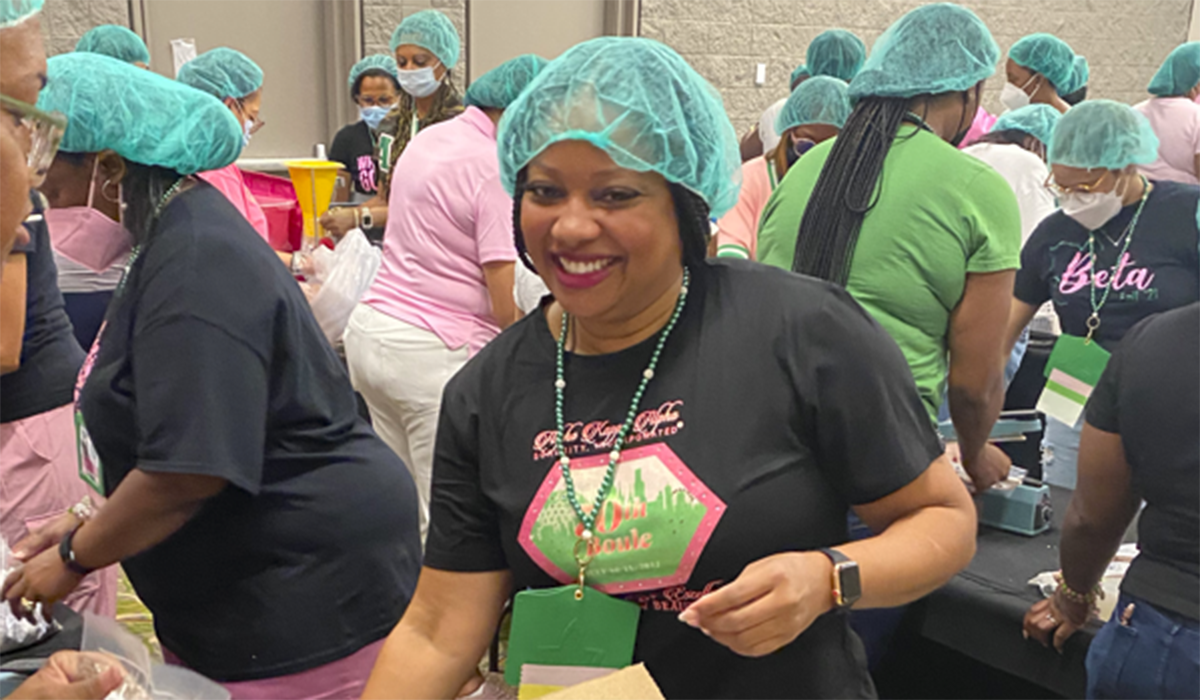
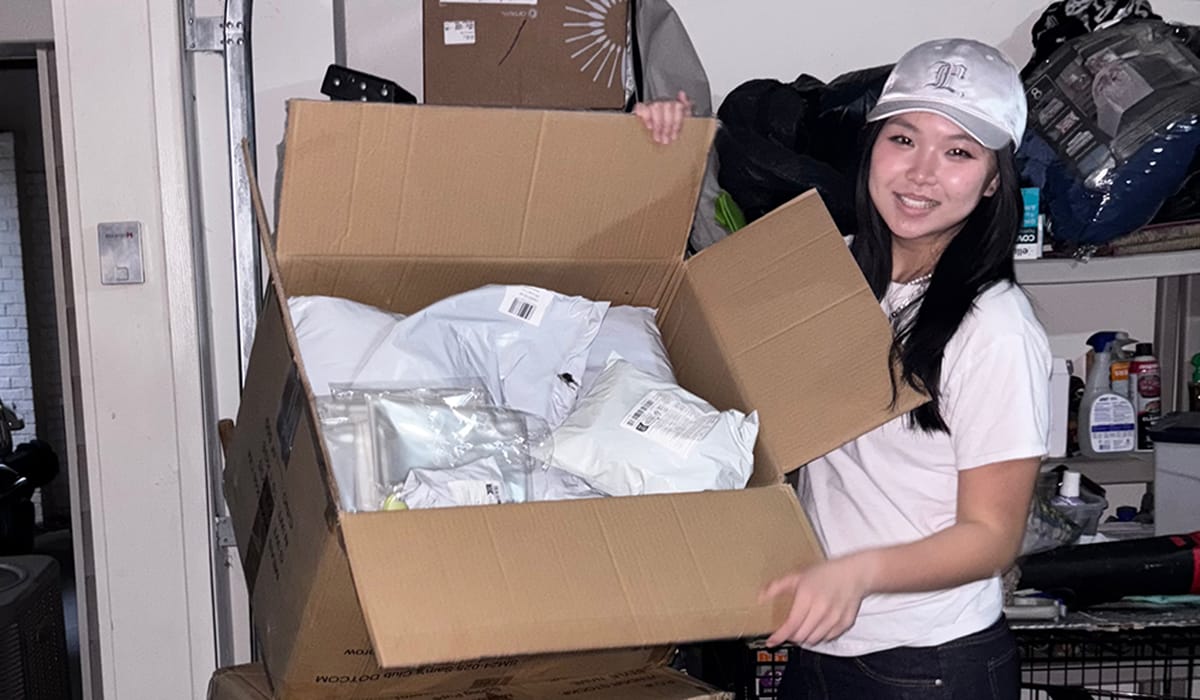
MALIKA HARRISON, A VOLUNTEER WITH READ2SUCCEED, VOLUNTEERED WITH ALPHA KAPPA ALPHA SORORITY AND U.S. HUNGER FOR A MEAL PACKAGING PROJECT. /COURTESY MALIKA HARRISON
Why is it important for others to get involved with causes they care about?
We live in a large world, but when we think about our community, that tends to be small. What I would say in encouraging others is that we can’t think about the world in the sense of doing everything and trying to change so much. But if we think about our communities, and what that looks like as it feeds into the world that we live in, it does make a difference. The littles I tutor in Orlando are going to go on to live in New York City or California, or somewhere outside the US. You never know where that one little change, or that day of service, or that hour of your time is going to take someone, and how it’s going to change the world on a larger scale, just from what you would consider a small piece of that puzzle.
What do you want people to learn from your story?
I have a very soft spot for youth, and so I think what I would say is that there are so many important causes within our communities. But I would want people to learn that while we want to do everything, we can’t. Find that cause or a few causes that you know you could commit to, because volunteering is something that we want to enjoy. It’s something that we do, where our purpose and passion meet in the middle, and find that opportunity. Your community needs change, and you see a way to be a part of that change, and then you just go forward. By the time you look back, you realize you’ve been volunteering with this organization for almost a year, and then three years and five years.
Meet the Youth Volunteer Helping with Essential Distributions
Meet Daily Point of Light Award honoree Hanan Mohammed. Read her story, and nominate an outstanding volunteer or family as a Daily Point of Light.
When it comes to access to basic needs, not everyone is on a level playing field. Rising high school junior Hanan Mohammed is aware of the inequities and started volunteering with Charity Crossing three years ago to address the issue. With locations across Delaware, Pennsylvania, New Jersey and Maryland, the organization ensures people in underserved communities receive essential donations. In 2023, Hanan was awarded Charity Crossing’s prestigious “Volunteer of the Year” award and has earned the Presidential Volunteer Service Gold Award for both 2022 with 120 dedicated volunteer hours, and 2023 with 261. Her work at the Rosehill Community Center location supports an average of 80 adults and 60 minors each week.
Even as a cross country and track athlete, Hanan finds time to get involved at school as well. She participates in several school clubs including the Aspiring Math Educators Club and Leading Ladies, the latter of which empowers and supports women through trips and volunteering initiatives. On top of all of that, she excels in academics at a technical high school preparing her for future study and a career in biotechnology.
It’s her commitment to science and technology that connected her with Fame, a school group for minority students in STEM, in 2022. Volunteering is a vital part of that group as well, and Hanan has given her time at places like The Salvation Army’s Angel Tree Program, the Ronald McDonald Foundation and the New Castle County Police Department. Community engagement is a part of Hanan’s daily life, and because of that, she is definitely a Point of Light.
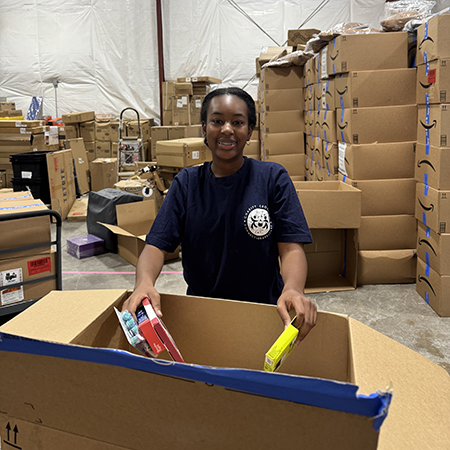
Hanan unloads sorted donations from the U-Haul truck at Glasgow Park.
What inspires you to volunteer?
I feel a sense of pride knowing that I’m helping people and making a difference in my community. I also like to develop new skills.
Tell us about your volunteer role with Charity Crossing.
I have many different roles to fulfill, whether it’s at the warehouse or at one of the locations. On an unloading day at the warehouse, my job is to help unload Amazon donations out of the truck. I help organize them in their designated area.
During sorting days, I help put the donations in each category for the locations, so when we get to each stop, we know which donations we have. From there, my role is to help unload and organize everything on tables.
One of the locations where I volunteer the most is Glasgow Park. I give wristbands to people and show them where to go during distribution event activities. Wristbands help us track the number of attendees, but we also use them to designate people who “win” bigger or “special” items. Sometimes, we allow seniors or veterans to bypass the game and just take the special items.
I’ve also represented Charity Crossing at the Delaware Coastal Cleanup, the India Festival and the Pakistani Independence Day celebration, where I talked about our mission and impact while recruiting new volunteers.
What inspired you to get started with this initiative?
I started volunteering with Charity Crossing in April of 2022, at the age of 12, and I liked what I was doing for the community. I made new friends. My first event was at the Rose Hill Community Center location, and I started to really enjoy volunteering.
What are your long-term plans or goals for the organization?
I just want to help more people and get new volunteers to join us. We need more people to help out.
What’s been the most rewarding part of your work?
The most rewarding part is seeing how thankful people are for what they receive, and it makes me happy knowing that I’m helping them. People are going through a tough time, and when I see them at these events and they tell me about it, it’s touching to know that we’re doing something to help them.
What have you learned through your experiences as a volunteer?
I’ve learned that you can make new connections with people, and you can never take things for granted. I’ve also learned to be grateful for everything I receive.
Tell us about future partnerships, programs or events that you are excited about.
Our next event is our monthly distribution event in Glasgow Park.
Why is it important for others to get involved with causes they care about?
It feels great knowing that what you’re doing is making a difference. There are hundreds of people who need assistance, so we should help them. By doing so, we can also develop new skills.
Any advice for people who want to start volunteering?
I want people to know that no matter who they are, they can make a difference in their community. Small acts of kindness can lead to bigger and better changes. And helping the community can lead to many different opportunities, because you meet new people and make lifelong connections.
Answering the Call: The Voice Bringing Calm to Crisis
Meet Daily Point of Light Award honoree Veronica Mayes. Read her story, and nominate an outstanding volunteer or family as a Daily Point of Light.
When the phone rings late on a Friday night, most people are asleep. But for Veronica Mayes, it’s a call to action—one she answers with quiet strength and compassion. An administrative assistant at Entergy by day and a crisis hotline volunteer by night, Veronica’s service goes far beyond her job description. Every weekend, she dedicates two full overnight shifts to supporting individuals in their darkest hours.
Volunteering for the national 988 Suicide and Crisis Lifeline, the Mississippi Contact the Crisis Hotline and the Mississippi Department of Mental Health’s after-hours line, Veronica provides steady, empathetic support for people struggling with suicidal thoughts, emotional distress or mental health emergencies. She volunteers every Friday and Saturday from 10:00 p.m. to 7:00 a.m., totaling around 72 volunteer hours each month—hours filled with listening, guiding and quite literally saving lives.
“I always wanted to volunteer with a crisis hotline because of my own battles with mental health,” Veronica says. “When I found out about Contact the Crisis hotline, I immediately knew it was something I wanted to do, to help others going through similar situations. Along with being a crisis hotline we also take warm-calls, calls from those who just need an understanding person to talk to, and we assist with the 988 calls, previously known as NSPL (National Suicide Prevention Line).”
In these moments, Veronica is more than just a voice on the line—she is a lifeline. Many of the people she supports are calling in moments of deep fear, loneliness or desperation. Her calm demeanor, patient listening and sincere empathy offer callers a critical sense of connection and safety when they need it most. For many, the calls are a turning point and an intervention that provide just enough hope to carry on.
“As someone who has been through a mental health crisis and has friends and family members who have gone through similar crises, it is sometimes hard to open up about our mental health to those we know in fear of being labeled,” Veronica shares. “Knowing that there are services out there with real people willing and ready to help at any time of the day or night is a blessing.”
Her work requires incredible emotional resilience. Every shift comes with unpredictable challenges and intense emotional demands. Yet Veronica continues to show up, week after week, bringing care to strangers with no expectation of recognition or reward. Her selfless consistency reflects her belief in the power of human connection and the importance of mental health support.
“I’ve learned the importance of listening, really listening to others,” Veronica says. “When someone tells you they are in a crisis, when people are actually trying to reach out for help, it is up to us to listen and hear them, without judgement.”
Beyond her individual impact, Veronica is a reflection of Entergy’s broader commitment to community service and well-being. Her role on the frontlines of mental health support exemplifies how corporate citizens can be powerful changemakers—not only through business but through acts of compassion that ripple across lives and communities.
“The most rewarding part of my work is the other counselors I work with at the hotline,” Veronica reflects. “I have never met any group of people more willing to give of themselves and their time. Having a group of people who support me in my efforts to give support to others is amazing.”
Veronica’s dedication reminds us that volunteerism isn’t always about grand gestures—it’s about being present. Being the person someone can turn to at 3 a.m. when everything feels like it’s falling apart. It’s about empathy, patience and showing up when it’s most difficult and most needed. As awareness grows around mental health and emotional wellness, so does the demand for empathetic, trained responders. Veronica hopes her example inspires others to step forward, to listen and to make a difference… one call at a time.
In a world where so many feel unheard, where loneliness and isolation are permeating communities, Veronica is a quiet hero answering back. Her service is a reminder that even a voice on the other end of the line can be a literal beacon of hope—and that compassion, especially in the darkest hours, can save lives.
Bridging Care and Compassion in Many Corners of the Hospital
Meet Daily Point of Light Award honoree Sunny Tian. Read her story, and nominate an outstanding volunteer or family as a Daily Point of Light.
Sunny Tian has been making a meaningful impact as a volunteer in the Emergency Department at Johns Hopkins Howard County Medical Hospital since 2024. In a fast-paced, high-pressure environment, she plays a vital role in facilitating communication between patients and healthcare staff. Her commitment to supporting patient needs has helped ensure that urgent concerns are addressed efficiently while also providing much-needed comfort to individuals navigating medical uncertainty.
In addition to her communication role, Sunny assists with essential operational tasks that keep the Emergency Department running smoothly. From helping nurses during triage to restocking medical supply carts, she contributes behind the scenes in ways that directly support patient care. Her attention to detail and reliability have made her a valuable asset to the hospital team, especially during moments when quick thinking and calm execution are key.
Sunny’s service goes beyond the ER, as she also volunteers in the Medical Care Unit (MCU), where she helps staff with non-clinical tasks aimed at enhancing patient comfort. Her presence in both departments shows versatility and dedication, as she balances logistical support with empathy-driven care. By reducing the daily workload of medical professionals, she not only improves workflow but also helps create a more compassionate environment for patients.
Volunteering roughly 12 to 15 hours each month, Sunny has found an impactful way to blend her interest in healthcare with her growing skills in communication and problem-solving. Read on to hear more about why she volunteers.
Tell us about your volunteer roles.
I’ve been a volunteer in the emergency department at Johns Hopkins Howard County Medical Center for over a year, accumulating 350 hours of service. First, I play a role in maintaining an organized and efficient environment by restocking essential supplies for the medical staff. This includes ensuring that the carts are fully stocked with everything from tourniquets to IV injection. This behind-the-scenes work is crucial for allowing nurses and doctors to focus on patient care without interruption.
Additionally, I contribute to employee wellness by providing support to the medical staff. I regularly check on and tidy up the recharge rooms, which includes maintaining massage chairs in perfect working order, as well as keeping the space organized and clean. My goal is to help create an environment where our dedicated healthcare professionals can find a moment of calm and recharge before returning to their critical work. This not only allows the staff to manage their demanding schedules but also helps create a positive and supportive atmosphere.
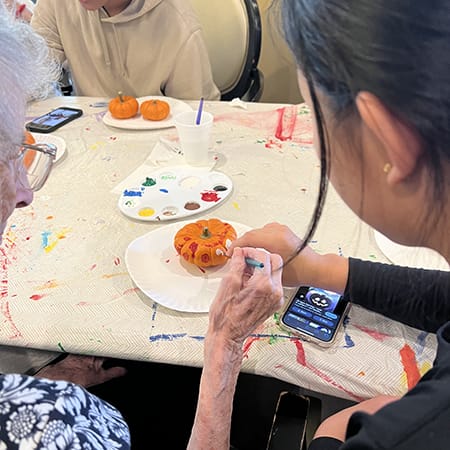
Sunny painting pumpkins on Halloween with senior home residents who suffer from Alzheimer’s to assist in psychological well-being.
Why is this issue so important to you?
Working in the emergency department has given me a deep appreciation for the dedication of healthcare professionals and the strength of patients. The hospital environment, especially the ED, can often feel overwhelming and impersonal. I’m passionate about this issue because I believe that kindness and empathy are fundamental to healing, and even small acts of service can have a powerful impact on someone’s well-being. This experience has solidified my long-term goal of working in the healthcare field, where I hope to continue contributing to a compassionate and patient-centered environment.
What inspired you to get started with this initiative?
I was inspired to start volunteering in the emergency department because I wanted to be a part of a community that prioritizes helping others. I have always loved helping people, and I was looking for a way to contribute that felt meaningful and direct. My own experiences with family members in the hospital showed me how much comfort a small act of kindness can provide during a difficult time. This personal connection motivated me to seek out a role where I could offer that same support to others.
What’s been the most rewarding part of your work?
The most rewarding part of my work has been witnessing the impact of small gestures. Often, it’s not a grand action but something simple like fetching a warm blanket for a shivering patient, getting a cup of water for an anxious family member or restocking the medical carts in the background to help the nurses. There have been many times when a patient or nurse has simply thanked me for being there to help. This makes me feel grateful for the chance to provide such gratitude to those around me.
What are your long-term plans or goals for the organization?
My long-term goal is to see the volunteer program more deeply integrated with other departments in the hospital. While my focus has been on the emergency department, I’ve seen firsthand how valuable volunteer support is. By working with leadership, I hope to help create a model where our volunteers can be a resource for other areas, such as the MCU. This would not only provide a broader support network for the hospital but also offer volunteers a wider range of experiences, ultimately strengthening the organization as a whole.
What have you learned through your experiences volunteering?
Volunteering in the emergency department has taught me a great deal about empathy, patience and perspective. It has given me a profound appreciation for the tireless work of doctors, nurses and other hospital staff. My experiences have shown me the importance of teamwork and how every role, no matter how small, contributes to the well-being of the patient. Ultimately, this work has reminded me to be grateful and to always offer kindness to others.
Sunny Tian holds an art therapy session at local senior home for St. Patrick’s Day.
Why is it important for others to get involved with causes they care about?
I believe it’s incredibly important for others to get involved with causes they care about because it connects you to your community and allows you to make a tangible difference. Volunteering provides an opportunity to step outside of your own daily life and contribute to something larger than yourself. It can open your eyes to new perspectives, build new skills and introduce you to people who share your values. Whether you’re passionate about helping people, animals or the environment, there’s a need for your time and energy. Getting involved isn’t just about helping others; it’s also a powerful way to enrich your own life and find a deeper sense of purpose.
Any advice for people who want to start volunteering?
If your intention is good and you are kind and loving toward people, you can work toward community welfare. You can join a team, you can find an opportunity that fits you, but it involves first coming forward to help people.
What do you want people to learn from your story?
My advice for anyone who wants to start volunteering is to simply take the first step. Start by identifying a cause or organization that genuinely interests you. Think about what you’re passionate about and what skills you have, but also be open to trying something new. Once you find an opportunity, don’t be afraid to ask questions and be open to learning. Remember that every small act of kindness counts, and the most important thing you can bring to any volunteer role is a willing heart and a desire to help.
Meet Daily Point of Light Award honoree Vidhya Shivakumar. Read her story, and nominate an outstanding volunteer or family as a Daily Point of Light.
Vidhya Shivakumar is so passionate about the power of community that she has dedicated her life’s purpose to volunteering as much as she can to meet the needs she sees. A core volunteer with Nourish America, a nonprofit her daughter founded, she plays a key role in advancing the organization’s mission to provide organic, allergy-friendly food to families in need. Whether it’s purchasing bulk organic goods, helping deliver donations to food banks or supervising teen volunteers at events, Vidhya brings personal conviction and commitment to every aspect of her work.
Beyond her work with Nourish America, Vidhya also takes time twice a month to cook meals for a local shelter that supports unhoused individuals. She personally purchases the groceries, prepares nutritious meals and helps serve them with warmth and humility. This consistent act of kindness reflects her deep belief that everyone deserves nourishment, of both the physical and emotional varieties.
Vidhya’s dedication to service is also rooted in her spiritual life. For more than a decade, she has volunteered at Sai Datta Peetham, a Hindu temple and community center in Edison, New Jersey. There, she contributes approximately 40 hours each month making flower garlands, cooking meals for temple visitors and organizing donation drives for school supplies and groceries. Her long-standing commitment earned her the President’s Lifetime Achievement Award for surpassing 4,000 hours of service.
Whether she’s feeding families, mentoring volunteers or beautifying sacred spaces, Vidhya Shivakumar continues to uplift her community with grace and generosity. Through her work, she reminds us all that service—when done with heart—can nourish not just bodies, but hearts and minds too.
Vidhya Shivakumar is passionate about helping her community with food, clothing and whatever their needs are.
Tell us about your volunteer roles.
I’m from a small town in Southern India. I grew up in community, around grandparents and cousins, and knew about the power of sharing and providing for others from a very early age. My husband and I came here with my oldest daughter when she was a baby, and we lived in New York for a time, uptown, in Flushing, in Queens. We knew no one here. Then, we moved to New Jersey. I don’t have any family members here in America, so I feel like my community is my family here. And I want to help provide for them in any way I can.
But as a stay-at-home mom, I can’t always help financially, so I like providing for others by sharing my time. I can make their day a little brighter by providing them a warm meal. I like giving my time to the community. When my daughter was in high school, she started Nourish America to help people with food insecurity. I help buy the food with donations and carry the food to the food pantries. I help set up for fundraisers, like an Art Café fundraiser. I also help organize the youth volunteers.
Additionally, I volunteer with a homeless shelter nearby. Once or twice a month I cook a meal for unhoused people. I learned how to cook the types of food they want by researching on the internet. I make rice, pasta, fruit salad. They really like my vegetarian chili. I like to see them leaving happy, with good food.
Our Hindu community center is here as well, and they do a lot of charitable work. I want to be a part of whatever service they’re doing. I’m always in for that; I love to help. I cook for people coming into the community center, clean the shared spaces, make flower garlands, help with clothing drives. I’m happy to spend my time helping people. It’s always my goal.
Why is food insecurity, in particular, important to you?
When we are hungry, we look for whatever food is there. When I came to this new country, it was a new place. We struggled, at times, with food insecurity. I thought, if I could help people facing this problem, I’d be very happy to do that. But I couldn’t do it myself, so I joined a team that could. I wanted to do my part in this type of service and contribution to the community.
What’s been the most rewarding part of your work?
I love to see people happy. I love to see them smiling. I love to see people getting the food they need, or the jackets and other clothing from the drives we do.
What have you learned through your experiences volunteering?
I learned to cook new types of cuisine! Beyond that, service is my way of showing gratitude toward this country and fulfilling my duty as a citizen. With my family’s support, including my husband Shivakumar, and my daughters Shreya and Shruti, I would love to do this for the remainder of my life. They uplift me, and I’m grateful that doing this is a real possibility for me.
Why is it important for others to get involved with causes they care about?
I think everybody should spend some of their time in service and volunteering. Our society needs people who want to contribute. Our society needs time, money, other types of contributions. That’s how our communities benefit.
Additionally, kids are getting inspired when they see us volunteer. I believe that as parents, we should teach them these good values. When we pass these values on, generation after generation, we can form teams of people who join arm-in-arm to help each other. We keep these values of generosity and service at the forefront as we raise the next generation.
Any advice for people who want to start volunteering.
If your intention is good and you are kind and loving toward people, you can work toward community welfare. You can join a team, you can find an opportunity that fits you, but it involves first coming forward to help people.
What do you want people to learn from your story?
Be kind to others. Prioritize others’ needs. If we think about others’ needs, if we gather together and work toward meeting those needs, then we can make a meaningful impact on the community as a whole.
Teen Ally Mobilizes Youth to Champion Indigenous Recognition
Meet Daily Point of Light Award honoree Aaron He. Read his story, and nominate an outstanding volunteer or family as a Daily Point of Light.
At just 17 years old, Aaron He is building a national movement to support Indigenous rights—specifically, the Muwekma Ohlone Tribe’s fight for federal recognition. As founder and president of the Indigenous Justice Coalition, Aaron leads more than 85 student interns and 22 chapters across the country, working alongside youth to become allies and advocates.
Through grant writing, political outreach and education, the Los Gatos, California, teen has helped raise over $510,000 in environmental and land funding for the tribe and mobilized support from more than 100 elected officials. Though not Indigenous himself, Aaron sees it as a moral obligation to speak up and he’s showing others how small steps can grow into real impact.
What inspired you to start the Indigenous Justice Coalition, and what does the organization do?
I first learned about the Muwekma Ohlone Tribe through policy debate in high school. We cover a lot of different social issues, and this one really stuck with me. I ended up interning for the tribe’s chairwoman during her congressional campaign.
When the campaign ended, we shifted our focus to political outreach. At the same time, a lot of students I talked to expressed interest in helping. That’s how the Indigenous Justice Coalition was born in 2023.
Now, we have multiple teams working on different aspects of advocacy—political outreach, grant writing, education and more. We’ve reached out to over 100 local, state and federal elected officials to ask for their support. We’ve helped secure over $510,000 in environmental and land grants for the Muwekma Ohlone Tribe. We’ve also launched 22 student chapters in seven states and organized dozens of events—from school assemblies to city council testimonies.
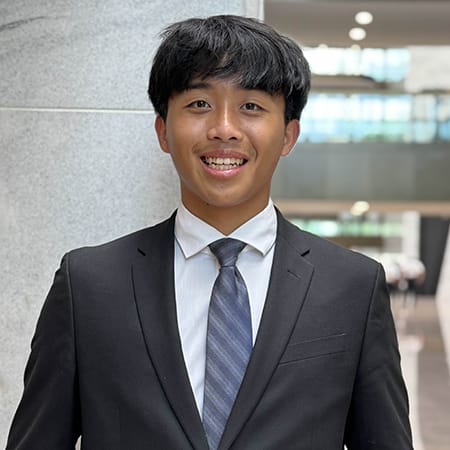
Aaron stands inside the Dirksen Senate Office Building in Washington, D.C., where he advocates for the federal recognition of the Muwekma Ohlone Tribe. /Courtesy Aaron He
What are the main challenges the Muwekma Ohlone Tribe faces, and why is federal recognition so important?
The Muwekma Ohlone Tribe is not federally recognized, and that has major consequences. They’re denied benefits like free tuition at University of California schools, economic aid, repatriation of their ancestors from burial sites and cultural protections like access to the National Eagle Repository, where you’re able to get eagle feathers that are really important to their culture. During COVID, for example, $31 billion in federal relief went to recognized tribes, but the Muwekma Ohlone didn’t get any of it.
It’s a huge injustice that all stems from a clerical error in 1927. The Bureau of Indian Affairs actually acknowledged that the tribe was mistakenly removed from the list of recognized tribes.
You’re not Indigenous yourself. Why do you believe it’s important to support this work?
My parents immigrated from China, and I was born here, so I’m not Indigenous. I’m Chinese American. But I believe we all have a responsibility to support communities that are being marginalized. The Muwekma Ohlone Tribe needs allies, especially youth allies, to show decision-makers that there’s broad public support for their recognition. If it’s only the tribe advocating, it can look self-interested. But when others stand with them, it sends a stronger message.
Morally, I think that once you know about injustice, choosing to ignore it is still a decision. That’s the same kind of indifference that’s allowed their erasure to continue for over a century.
How did you grow the organization from an idea to something with national reach?
It started with a few friends who agreed to help with political outreach. Then I talked to more classmates, attended school volunteer fairs and got the word out. As we built out initiatives—like grant applications and speaking events—people saw it was a real organization, not just a club. From there, we reached out to students at other schools and formed chapters across the Bay Area and then in other states.
We now have over 85 student interns, and they’ve really embraced the mission. Some, like Caleb, who started as a regular intern, got so invested that he became our vice president.
What are some of your proudest accomplishments so far?
The $500,000 grant is a big one. It came from our finance team’s amazing work applying for environmental and land grants. We’ve also made political progress. This June, we organized a week-long advocacy trip to Washington, D.C., and met with congressional offices.
What would it take for the tribe to receive federal recognition?
There are three main paths. One is through the Bureau of Indian Affairs, which re-recognize the tribe. The second is through Congress passing a bill. The third is through the courts—if a judge determines the tribe has sovereign immunity, the BIA would be required to recognize them.
Our outreach is mostly focused on Congress right now, which is why we’re organizing more trips to D.C. and gathering local support from city councils.
How do you get students to care about an issue they may not feel personally connected to?
That was a challenge at first. Some students thought, “I’m not Indigenous, so this doesn’t involve me.” But we host in-person volunteer events where students can meet tribal members and hear their stories. That personal connection changes everything. Once they see the humanity behind the issue, the divide kind of disappears.
We also show them how this work can help them grow, whether they’re interested in politics, grant writing or research. There’s something for everyone to contribute, and I think students find a sense of purpose in that.
What are your long-term goals for the coalition?
We want to keep expanding our chapters so more students can get involved, especially in areas with other unrecognized tribes. Our Southern California chapter, for example, is now working with the Fernandeño Tataviam Band of Mission Indians. We want to do more of that—equip youth to support tribes in their own communities.
Of course, the ultimate goal is federal recognition for the Muwekma Ohlone. That’s a long-term battle, but we’re committed to it.
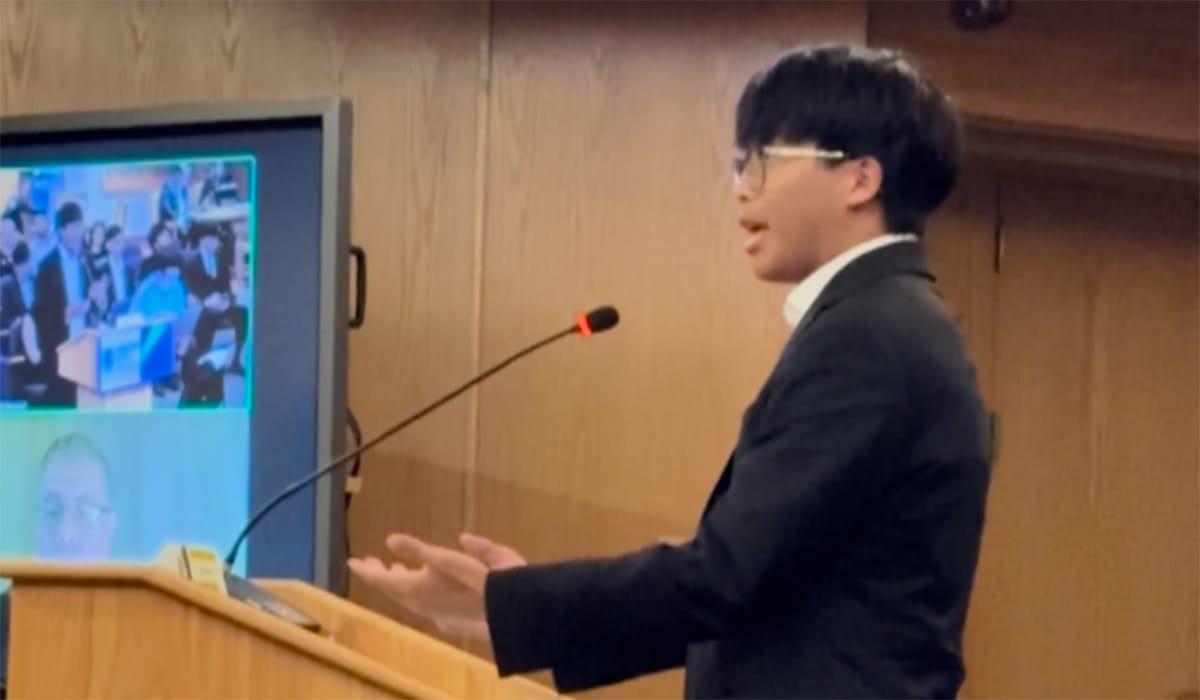
Aaron addresses the Union City Council in support of a resolution recognizing the Muwekma Ohlone Tribe’s right to federal recognition. /Courtesy Aaron He
What has been the most rewarding part of this experience?
Hearing directly from tribal members that our work matters. The chairwoman always thanks us when we see her. That kind of gratitude, combined with seeing real impact, like the grants and political support, makes it all worth it.
What advice do you have for other young people who want to get involved?
Start small. My first step was canvassing. That led to something much bigger. Even if you face doubts or resistance, keep going. The cause is bigger than any one person, and change takes time. But it starts with one action.
What do you hope people take away from your story?
That you don’t have to be directly affected by an issue to care about it or act on it. Advocacy can be tough. I’ve faced pushback from friends, politicians, even people who questioned why I was involved. But if you believe in the cause, you push through. Small steps can lead to real impact.
Meet Daily Point of Light Award honoree Lauren Contreras. Read her story, and nominate an outstanding volunteer or family as a Daily Point of Light.
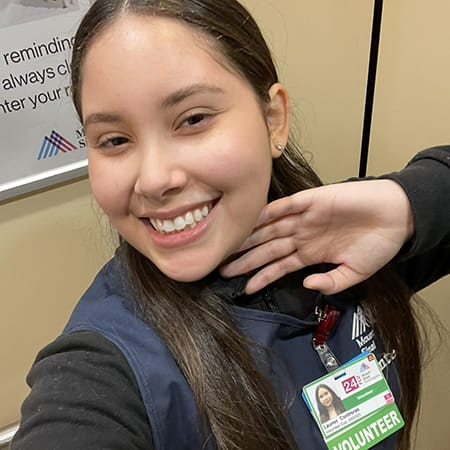
For many, going to the hospital is a terrifying and stressful event. But when a loved one is struggling with their health, 21-year-old Lauren Contreras is the kind of person one hopes to see there, calmly bringing relief and fighting for patients’ wellbeing. Lauren came to Mount Sinai Morningside as an intern and stayed as a volunteer. Over the last two years, she’s spent over 250 hours supporting patients, families and staff with kindness and compassion. The experience in the fast-paced emergency room and other units have also led her to nursing school.
This year, Lauren is transferring to a school outside the city but plans to continue her volunteer work on breaks and intends to apply for a nurse extern position in the ER. Drawing on lessons she has learned as a volunteer, she hopes to start her career there, the ICU or telemetry. Read on to learn more about her volunteer service.
What inspired you to get started with this initiative?
I became involved in volunteer services through the Manhattan-Staten Island Area Health Education Center’s Summer Health Internship Program (MSI AHEC-SHIP). It helps young people step into the healthcare field. In the summer of 2023, I was placed at Mount Sinai Morningside to volunteer for two months. I asked the director if I could continue, because I wanted to explore other positions, to shadow and connect with staff. I wanted to see if I was really able to handle what really goes on in the field. For example, am I able to handle blood and wound care? Do I feel comfortable in that environment? Volunteering helped me see that I was.
Lauren prepares for another fun day of volunteering at Mount Sinai Morningside.
Is that what led you to the nursing profession?
After working in the Department of Emergency and units like ICU, geriatric and telemetry, I saw how involved with direct patient care nurses are. They’re the front lines, along with CNAs and patient care technicians. I wanted to do something that was hands on, where I could connect with people and advocate for them.
Tell us about your volunteer role with Mount Sinai Morningside.
It depends on the department, but being on units or in the emergency department is similar in advocating for patients. If they want to see social services, if they want snacks, if they want updates, if they want their doctor or nurse, or if they just want to talk… I help. That’s mostly what I do. I provide comfort and emotional support while assisting with communication, escort services and coordination with medical staff. Sometimes, a department needs help with programs or special events.
I’ve done the Fall Risk Program for volunteers, which brings awareness to how we can help minimize risk when we’re on the units, especially for senior patients or surgery patients feeling drowsy. I’ve also helped with the Take 10 Program, which involves bringing a cart of snacks, tea, essential oils, calming music, candle lights and other items around to staff. We’d try to do 10 minutes of staff wellness, making sure everybody’s okay and grounded. Sometimes it was a stop in the break room.
Sometimes, I’d walk around asking if they wanted a snack. There are so many things that can happen in a hospital, and we just want to ensure a safe and comfortable environment to do their best work.
What are your long-term plans or goals for the organization?
My goal for the department overall is to recruit more high schoolers and college freshmen and sophomores. When I started as a freshman in college, I thought I was too late in the game of figuring out what I wanted to do in life. I was discouraged that everybody already knew. I would love to talk to students about that and contribute, whether helping again in administration fields or with more health programs.
What’s been the most rewarding part of your work?
The appreciation and the smiles have been rewarding. People will thank me or say I made their day. They’re grateful that I checked up on them or got what they needed. It makes me happy that people are being supported and seen.
Besides your career trajectory, what have you learned through your experiences as a volunteer?
It’s shown me how many roles contribute to patient care and overall wellness. I’ve learned about communication, maintaining welcoming environments, adapting, multitasking and showing compassion in challenging moments, even when I don’t understand a situation. I’ve also learned to be open, and to educate myself when I don’t know an answer. For example, if a patient says, “I have this issue, so I’m not able to…” I would respond, “I’m not sure what that is. Do you mind explaining it more?” Letting them explain their experiences has made me better as a person and advanced my skills.
The fast pace of the ER has been good for me, too. It’s where I learned time management in balancing multiple people coming up to me or helping multiple people at once.
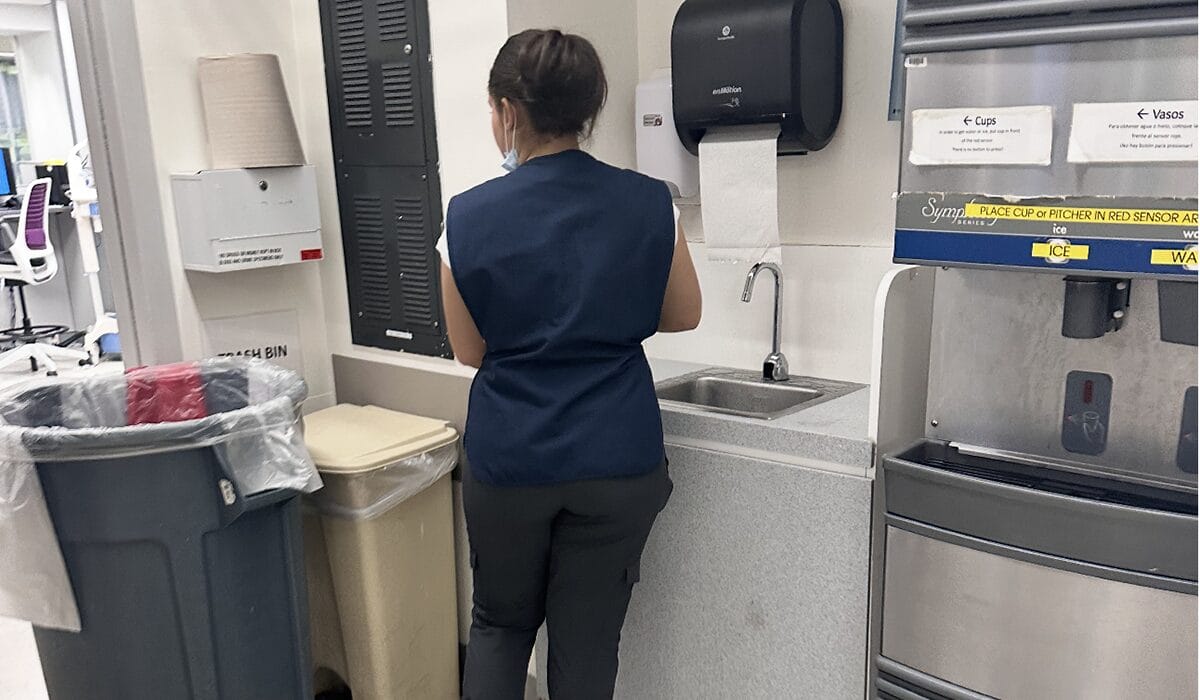
As part of her volunteer role, Lauren gets snacks and water for patients in the ER.
Tell us about future partnerships, programs or events that you are excited about.
We’re getting ready to do an emergency blood drive. New York, specifically, New York City, is running low, so I’m happy to attend and give.
Why is it important for others to get involved with causes they care about?
It teaches humility and emotional intelligence. We need more humanity in the world, and being involved in a small way might not seem a lot, but it makes a difference. There are so many things going on, so many tough situations; everyone has struggles. I want the world to be united so that we can tackle these problems together.
What do you want people to learn from your story?
Every individual is able to work on restoring humanity. It will take everyone doing something kind, even if just for a few minutes. At the end of the day, it makes a difference, and it makes you happy and proud.
I love telling people on social media or my friends about the work I do. Volunteering can be so many different things. Sharing that with your loved ones gets the word out and gets more people involved.
Meet Daily Point of Light Award honoree Saniya Yamin. Read her story, and nominate an outstanding volunteer or family as a Daily Point of Light.
Public policy affects everyone’s daily life. But what happens when you don’t have a seat at the proverbial table where decisions are made? This was a question 17-year-old Saniya Yamin, founder of PIVOT, a youth-led think tank and advocacy organization, didn’t like the answer to.
Growing up just outside Washington, D.C., Saniya has long had an interest in politics. Her passion for travel—she’s been to nearly 50 countries—has also informed her worldview.
“We go to a lot of countries that are still developing, and I’ve spent a lot of time seeing how education systems affect youth in those countries and how they often aren’t given an active part in their country. Coming home, I’ve seen many of the same experiences in my own life,” she says.
Her policy experience grew through internships with multiple campaigns and, last year, as an elected youth representative to her county’s Board of Supervisors. The latter made a lasting impression, prompting her to wonder why more youth weren’t included in the conversations about policies directly affecting them. When you can’t vote, your voice is often lost in the fray.
Saniya Yamin, founder and fellowship director of PIVOT, runs the youth-led think tank and advocacy organization that that equips young people with the skills and opportunities to participate in civic engagement and policy work.
Saniya noted legislators’ reluctance to meet with young people, even when they reach out. And, talking with friends, she realized it was universal. After soliciting stories online, she spoke with nearly 60 youth about issues in their communities, and in January 2025, along with co-founders Caleb Kurlantzick and Arthur Hu, she started PIVOT.
“Young people have really innovative ideas about policy and how we can attack the modern world in the future, and we bring fresh eyes to problems we face,” Caleb, now leading outreach, emphasizes.
Their goal is to teach youth to take a leading role in advocating for policies that touch their lives.
“It’s building policy understanding, so you can go into your community and figure out where the gaps are and what bills, laws or regulations can be put in place to fix that problem,” he says, calling it the idea to impact pipeline.
And it can all be done without a ballot. Now, there are 200 members across 30 US states and 15 countries, 100 of whom are part of their international fellowship. Saniya spends 40-50 hours a month directing the program.
“My work involves designing the structure, recruiting and mentoring fellows and ensuring that they have the resources, training and support to research and write high-quality policy briefs,” Saniya explains.
She leads the editorial process and connects fellows with policymakers to put their research into action. She also manages partnerships with over 15 civic and advocacy organizations while running PIVOT’s website and social media.
“She inspires the fellows and department heads by coming every day. She always makes sure to be there for everyone,” Caleb says. “She brings a very calming presence.”
One Rwandan fellow’s family was denying her access to higher education because of her gender and cultural norms. Saniya and PIVOT lent their support.
“We worked with her to use her journalism skills to publish articles and write emails to people local to her, and we supported her in starting an advocacy campaign to challenge gender discrimination within her community,” Saniya recalls, crediting funds won through the national MyImpact Challenge with providing fellows with seed money and grants to start independent initiatives.
Working with differing cultures, personalities and ideas, occasional conflict is inevitable, but it doesn’t have to be a roadblock. The bridges that have been built and friendships made have been rewarding results of her work.
Recently, Saniya spearheaded NextGen Civic Academy, a two-week global summit with top policymakers and advocacy organizations talking about their roles and strategies. 100 students from 30 countries learned about policy writing, media strategy and civic action while doing issue research for a pitch competition.
“We gave out $1,000 to our first prize winners, two women from Gaza working on an in-person program,” Caleb adds.
Saniya has taken on an independent initiative as well, working with her local legislator to write a bill and find funding for all high school juniors in Virginia to take the SAT for free during school hours. Currently, students spend $60 and take it on the weekend. Her proposal comes from successful models being used in more than 10 other states.
“Small wins compound over time. Things like having one meeting or giving a student a micro grant can really shift their trajectory, not only in PIVOT, but in life,” she stresses. “The SAT and other tests are often the first barrier to higher education, and that’s something I’m passionate about solving,”
She has also published policy briefs on the issue through PIVOT.
In the long term, Saniya is focused on building partnerships and increasing outreach for completed policy briefs
“We hope to get every one of our writers into meetings with policymakers and partner organizations,” she stresses. “We hope to provide them with the materials to communicate their ideas effectively and to speak publicly about the issues they’ve been working on.”
When it comes to volunteering, Saniya suggests people start with an issue that bothers or inspires them. Then, she recommends learning more before joining people who are already working on it and setting achievable goals, like setting up a meeting or writing a short piece for a local paper.
“Don’t wait to feel ready to step into advocacy. You may never feel ready,” she says. “You just have to put yourself out there.”
For her own future, Saniya imagines a career as a policymaker or with a government job. She wants to be in a position of power to give youth and marginalized groups a voice in the decisions she makes.
“If you notice a voice missing from the table, it’s your job to make a space for it,” she emphasizes. “Youth aren’t just the leaders of tomorrow; we are the leaders today. We have the capacity to research, advocate and create solutions, but we need the access, the mentorship and the belief from adults that our voices matter, too.”
Youth Volunteer’s Compassionate Service for Cancer Patients
Meet Daily Point of Light Award honoree Elizabeth Hong. Read her story, and nominate an outstanding volunteer or family as a Daily Point of Light.
Elizabeth Hong is a junior in high school, but is already living her life prioritizing empathy in action. With over 200 hours of service at her local Northside Hospital, she has earned admiration for her maturity, thoughtfulness and ability to connect deeply with patients. From preparing for complex medical procedures to ensuring patients receive the little comforts—like water at the right temperature—Elizabeth approaches every task with care. As a bonus, her fluency in multiple languages, including French, Mandarin and Spanish, has made her an invaluable bridge between patients and providers, ensuring that every voice is heard and understood.
One moment that defined her impact occurred when she stepped in to translate for a French-speaking Parkinson’s patient, whose voice was too weak to be understood by a remote interpreter. Elizabeth’s calm presence and clear communication ensured the session continued smoothly, bringing dignity and reassurance to the patient. This attention to human connection is central to everything she does, whether assisting during Modified Barium Swallow Studies or simply asking the right questions to make patients more comfortable.
Outside the hospital, Elizabeth extends her compassion to the broader community through a local food bank that serves immigrant families. She helps non-English-speaking clients navigate complex systems, from food distribution processes to essential services. Her presence transforms what could be a confusing and intimidating experience into one marked by kindness and clarity. In both settings, Elizabeth’s work reflects a rare combination of cultural competency, emotional intelligence and service-minded leadership.
Through Project Grace, Elizabeth has additionally supported more than 500 cancer patients through donations, and continues to champion accessibility and inclusion. Her efforts are not only improving outcomes for individuals but also inspiring those around her to serve with more heart and intentionality. Read on to hear more about how this youth volunteer is changing lives in powerful ways.
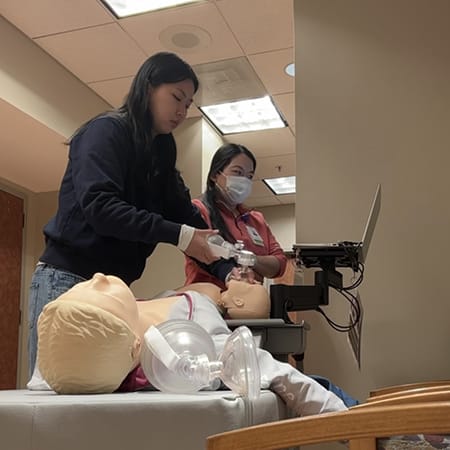
Elizabeth practicing CPR and first aid at a Red Cross session.
Tell us about your volunteer roles.
I volunteer regularly at local hospitals, Red Cross blood centers and food banks. I first started as a follower, simply tagging along with my dad who introduced me to the world of volunteering. Over time, I’ve come to feel genuinely grateful and happy when helping others and it has grown into an important part of my life.
This year, I was honored to receive the Congressional Award for community service. I found Project Grace, a volunteer initiative providing care packages and support to cancer patients at a local Hospital. I organize donations, assemble packages with comforting items and help with patient needs such as translation and transportation, aiming to bring care and encouragement during difficult times.
Why are these issues so important to you?
Cancer has deeply affected my family. My grandmother passed away from lymphoma, and my father was treated for lymphoma on his eyelid. Seeing the physical and emotional struggles they faced showed me how vital emotional support and small acts of kindness can be for patients. It’s important to me to pay it forward and help others going through similar battles by providing a sense of warmth and community.
What inspired you to get started with this initiative?
I wanted to create a way to support cancer patients beyond traditional volunteering roles. After seeing firsthand the challenges patients face during treatment, I realized that small comforts can make a big difference. Inspired by my family’s experiences and my ongoing internship and volunteer work at the local hospital, I launched Project Grace to bring personalized care packages and encouragement to patients.
What are your long-term plans or goals for Project Grace?
I hope to expand Project Grace to include more hospitals and reach a wider range of patients. My goal is to build a sustainable volunteer network that can regularly deliver these care packages while raising awareness about the importance of emotional support in cancer treatment. I also want to partner with local schools and community groups to involve more people in this cause.
What’s been the most rewarding part of your work?
The most rewarding part has been hearing how much the care packages brighten patients’ days. Knowing that something as simple as a pair of cozy socks or a handwritten note can bring comfort and remind someone they are not alone is incredibly meaningful. It’s humbling to see the direct impact of this work and to connect with patients on a personal level.
Elizabeth sorting goodies for care packages for cancer patients.
What have you learned through your experiences volunteering?
Volunteering has taught me patience, empathy and the power of small gestures. I’ve learned that sometimes listening and being present can be as important as any physical help. It has also shown me how teamwork and community involvement amplify the impact of any initiative.
Why is it important for others to get involved with causes they care about?
Getting involved creates real change, no matter how small your role seems. It connects you with others who share your passion and helps build a stronger, more compassionate community. When people contribute their time and talents, they can make a lasting difference not just for those they serve, but for themselves as well.
Any advice for people who want to start volunteering?
Start small and find something you genuinely care about. Volunteering doesn’t have to be overwhelming. Even little actions add up. Listen to the needs of your community and don’t be afraid to take initiative. Remember, your passion and commitment matter most, and your efforts will inspire others too.
Meet Daily Point of Light Award honoree Gregory Sachan. Read his story, and nominate an outstanding volunteer or family as a Daily Point of Light.
By the time Gregory Sachan joins Duke University’s Class of 2029 this fall, he will already have achieved tremendous things.
Currently participating in the Duke Gap Year Program, the 19-year-old volunteer is on a mission to make healthy living a possibility for everyone across the state of North Carolina. As a high school freshman stuck at home during the onslaught of the COVID-19 pandemic, Gregory saw the need for assistance in his community. Looking to make a difference, he joined his high school’s American Red Cross Club and eventually went on to become its president.
Fast forward to his post-high school days, and Gregory’s role with the American Red Cross North Carolina Region has skyrocketed to great heights. As the development chair of the NC Youth Leadership Council and Youth Chapter Advisor for the East Region, he helps lead events and virtual initiatives. As a blood donor ambassador, he has contributed over 200 hours of volunteering and was named the 2024 Youth Volunteer of the Year by the Greater Triangle Area Chapter. Gregory has worked tirelessly this summer to promote blood drives through social media and phone calls with previous donors to encourage them to come out and donate. He’s even working to create an information database for elected officials within ten counties where the Red Cross can coordinate various community efforts, and expects to complete that in August.
In addition to his work with the Red Cross, Gregory is also an active volunteer with the University of North Carolina Rex Hospital, where he assists with cancer rehab exercises, records vital signs and supports post-operative care in the PACU, or post-anesthesia care unit.
No matter where Gregory is volunteering, he is dedicated to spreading healthcare to the masses. When asked what he wants people to learn from his story, Gregory shared his desire for people to give any type of volunteering that interests them a try, even if they aren’t sure it will work out. That willingness to try new things and help others with no questions asked is a powerful reminder of the heart of volunteerism.
What inspires you to volunteer?
The demonstrated community need. I would see on the news, especially during the pandemic, how there were a lot of different community efforts that needed volunteers, or different things going on that people were needed for. For example, one that stood out to me was the blood shortages throughout the country.
GREGORY SACHAN, VOLUNTEER AT THE NORTH CAROLINA RED CROSS, HELPS SUPPORT YOUTH COMMUNITY ENGAGEMENT THROUGH ADVISING THE NC RED CROSS EAST REGION YOUTH CLUB. /COURTESY GREGORY SACHAN
What inspired you to get started with this initiative?
For my work with UNC Rex Hospital, I got my EMT license when I was a senior in high school. Being able to do my ambulance clinical shifts and interact with my local community, and see the different resources that people might need in my community, inspired me to start volunteering at Rex. With the Red Cross, I was part of my high school’s American Red Cross Club. However, my freshman year of high school was online due to the pandemic, so it was kind of hard to do anything during the lockdown. But the different online opportunities piqued my interest, because it was a really good way to get involved in my community. That ultimately led me to find opportunities like being the volunteer coordinator of my school’s club, and then serving as the president for two years.
Tell us about your volunteer role with the NC American Red Cross and the University of North Carolina Rex Hospital.
Until around June, I volunteered at the surgical services department of UNC Rex, where I was able to interact with patients after they had surgery and provided them with any resources they might need. Currently, I’m volunteering at the cancer center, where I teach different workouts that help people gain the motivation and encouragement to work out at local gyms.
Before I started my gap year, I helped advise the North Carolina Red Cross East Regional Youth chapter. Any youth volunteer in that part of the state can participate in our club meetings or anything that we share, and they can have an impact on their community in a variety of different ways.
What are your long-term plans or goals for the organization?
A long-term goal with my volunteering is to find a way to help everyone in North Carolina find different ways they can get involved in their community. For example, one big thing with the Eastern Regional club that I advise was the collection that we held for veterans and their families by providing resources, thank you cards and recognizing their service overall. I think those opportunities, helping everyone out the best we could through raising awareness, are some of my long-term goals – finding ways that make it easier for anyone to get involved.
What’s been the most rewarding part of your work?
Onboarding new volunteers. Before they get started with their club, I hear their stories about how they want to support their community. It shows that a lot of people are interested in being a part of a massive effort to support their local communities. At one point in our club, we had around 70 or 80 members. So there are a lot of people in the eastern region who want to get involved. Seeing the incoming support of new teenagers who want to help support their community has also been among the most rewarding parts.
Also, in terms of my volunteering at UNC Rex, a reward is seeing the progression of how people gain more confidence and strength doing different exercises and being able to go out in their community and talk about how a lot of the exercises that we’ve taught them have helped them in their daily lives.
What have you learned through your experiences as a volunteer?
The importance of teamwork and collaboration. Without teamwork, it’s hard to organize large group efforts throughout a community. You also have the opportunity to explore different perspectives or ideas. If you lead a volunteer effort by yourself, you may overlook certain possibilities. Those different perspectives might change how you view things. Also, collaboration. Being able to work with others helps you understand their perspectives. Hearing other people’s perspectives can also help you find other opportunities or community efforts you may want to be a part of.
Tell us about future partnerships, programs or events that you are excited about.
One thing I’m excited about is that I joined the founding board for creating a young adult volunteer network. It’s similar to how I advise the Eastern Regional Club for North Carolina, but that’s mainly for teenage volunteers. With the young adult network, our main intention is to help find opportunities for young adults, regardless of whether they are in college, trade school or currently have a job. It’s more like an overall approach to getting virtual or in-person opportunities for young adults. That’s exciting, because there are a lot of people who might be interested in volunteering in the 18-to-24 age range, but aren’t able to participate in things they did in high school. This group gives opportunities similar to those clubs, along with different resources that can help them get involved in the community in different ways they may not have considered before.
Any advice for people who want to start volunteering?
My advice for people who want to start volunteering would be to try anything out. When I was in high school, I didn’t know what kind of volunteering I wanted to do. I signed up for six different clubs my freshman year, but being able to try everything out and see all the different opportunities helped me realize what interested me the most. Being able to understand what I enjoy doing and understanding the different ways I can help my community helps broaden my perspective of what my community might need. You may not know what you want to do until you try it.