Meet Daily Point of Light Award honoree Kim Malone. Read his story, and nominate an outstanding volunteer or family as a Daily Point of Light.
A lifelong advocate for service, Kim Malone contributes more than 110 hours annually to causes in Texas, where he lives. That already impressive impact is amplified by his employer, RTX, where Kim coordinates volunteer events that other employees can take part in, encouraging the spirit of volunteerism in his workplace. In 2025, his commitment was also backed by a significant personal financial contribution.
The roots of Kim’s dedication run deep. Growing up, the local Boys and Girls Club was a sanctuary that provided him with the guidance and stability he needed to succeed. Today, he honors that legacy by partnering with the organization to host STEM-focused events. By introducing young minds to the wonders of science and technology, Kim is providing the next generation with the same spark of inspiration he received decades ago. Beyond mentorship, Kim is a constant presence at various local food pantries, and he works closely with a local church to organize monthly efforts providing meals for neighbors experiencing homelessness.
Ultimately, Kim views his work as a way to foster the type of unity that transcends individual effort. He carries with him the early memories of volunteering alongside his brothers, a formative experience that taught him that service is most powerful when shared. Read on to hear more about what inspires Kim to volunteer.
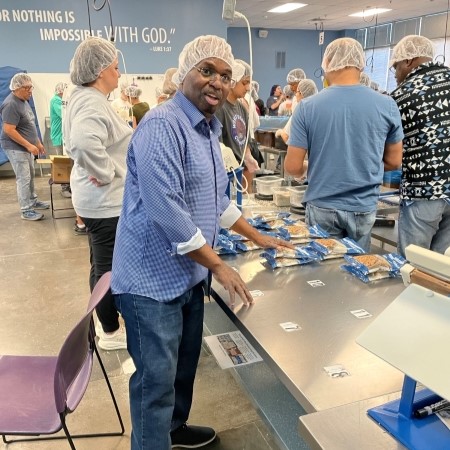
Kim Malone helping make food baskets to be distributed to families in the area during a volunteer event at Minnie’s Food Pantry in Plano, Texas./Courtesy Kim Malone
Tell us about your volunteer role.
At Raytheon Technologies, now RTX, in McKinney, Texas, I set up multiple volunteer events that all of the organization’s employees and their families can attend. Setting up these volunteer opportunities is something that I do on a voluntary basis, in addition to my primary roles and responsibilities at the company. Additionally, I volunteer at several events of the local chapter of my fraternity, Omega Psi Phi Fraternity, Incorporated.
Why is getting involved so important to you?
Two reasons. One, my passion for helping the community is personal. Growing up, the Boys and Girls Club provided me with mentorship and a place to learn, which is why I make it a point to set up volunteer events with the Boys and Girls Clubs of Collin County. Second, my early experiences volunteering at church with my brothers sparked a lifelong dedication to service in me.
Community service through volunteering is a key part of who I am as an individual. I have found that creating and sharing opportunities for others to volunteer as well multiplies the impact and effectiveness of those volunteering opportunities.
What are your long-term plans or goals?
To continue creating opportunities for myself, and others, to do community service through volunteering whenever possible. I also plan to lead by example when it comes to participating in those events.
What’s been the most rewarding part of your work?
The most rewarding part has been literally seeing the results and the impact that volunteering my time has had on strengthening our community. It’s been meaningful to help people who are in need, and encouraging others to make a difference through volunteering as well.
What have you learned through your experiences volunteering?
Volunteering has given me a sense of fulfillment in so many ways. It has also helped me realize just how truly blessed I am. I’m encouraged to continue volunteering because the need is so great in our communities. When I hear the stories of some of the people who we serve through community service, it becomes apparent that any of us could very easily be in similar circumstances.
Something else that I’ve learned is that volunteering is one way that I can pay it forward. I truly believe in karma, and that what goes around comes around! That said, I want to sow blessings to others with the hope that one day blessings may come back to me or to my family.
Why is it important for others to get involved with causes they care about?
It’s simple. The more people who get involved through volunteering, the bigger the impact on the community.
Any advice for people who want to start volunteering?
It doesn’t matter how big or small your efforts are, it all has an impact. You may not realize it, but your efforts could have a life-changing effect on someone’s life. When it comes to volunteering, I tell everyone to follow the Nike slogan: “Just Do It.”
Meet Daily Point of Light Award honoree Tasha Sport. Read her story, and nominate an outstanding volunteer or family as a Daily Point of Light.
Every week, in a Midland, Texas animal shelter, Tasha Sport arrives to create hope and opportunity for animals waiting to be adopted. Midland Animal Services is an open-intake system legally required to accept every animal regardless of health or history, and that can make things feel overwhelming at times. But as a volunteer photographer, Tasha transforms 10 to 15 dogs each week into stars, with their own themed photo shoots aimed at showing off their disposition and finding a forever home. With backdrops, props and tiny outfits she funds herself, she captures each dog’s personality. These images provide a “beautiful first impression” that serve as a lifeline for the pups.
During her weekly sessions, which require 12 to 15 hours of shooting and up to 30 hours of monthly editing and labeling, she meticulously observes how each animal handles a leash, reacts to being touched or follows basic commands. This data is crucial for networking animals to local adopters and rescue partners. Her dedication became especially critical during the 2024 canine distemper outbreak. When adoptions were suspended and the shelter faced chronic overcapacity, Tasha’s photography became the primary medium for facilitating foster and rescue placements, allowing the community to see the dogs when the shelter doors were physically closed.
Beyond the camera, Tasha is the founder and coordinator of the Rescue Runners program, an initiative designed to break the cycle of kennel stress. Held on the first and third Saturday of every month, the program pairs volunteers with shelter dogs for structured off-site runs and walks. These outings are a breath of fresh air that improves social behavior and provides a glimpse into how these animals behave in home-like environments.
Tasha pours nearly 55 hours a month into the welfare of Midland’s animals. Read on to learn more about her mission.
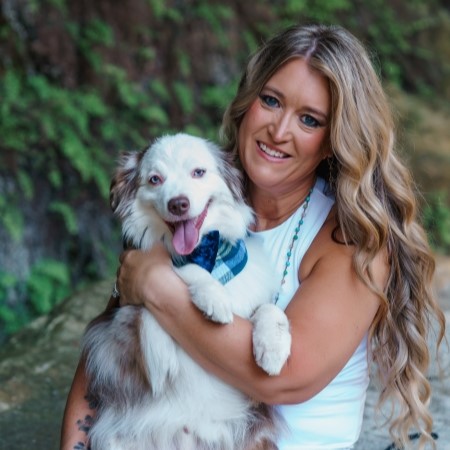
Kade and Tasha during annual family photos.
Tell us about your volunteer role.
I’ve been involved in animal rescue for about 10 years, and it all started when there was a dog spotted out in a field that was my breed of dog, which is a Heeler, or herding breed. I actually worked for nine months to catch this dog. After that, I got really involved in rescue, but I didn’t like the drama that came with it. I was already dabbling in photography, so I decided the way I could help was taking pictures of those rescue animals. It grew significantly from there. I photograph for a majority of our local rescues, and then on a weekly basis, I go to my local municipal animal shelter every Friday and take photos of 10 to 15 animals.
At capacity, we can house 110 dogs. I take photos of 10 to 15 animals on Friday, and then those are publicized on Monday. It is a very quick turnaround time, and unfortunately, that’s due to our high euthanasia rate. I’ve been doing this for five years on a weekly basis for them. I’m often asked, “Do you feel like it’s making a difference?” and yes, I do. Some people have their heartstrings pulled when they see those animals behind the kennels, behind the bars. What my photos do is show them dressed up. It shows them sitting on a couch. It shows them that they’re able to sit. People relate with those as they see how the dogs could interact with their own family. We’ve never really taken any stats on how much the photos are helping, but I’ve had people say to me, “I came in to adopt this dog because he was wearing a hat.”
Usually, photographing takes us about four hours to set up and tear down, because each week at Midland Animal Shelter is a different theme. For example, this Friday, we’re doing “April Showers Bring May Flowers.” It’ll be a sky background and props of little ducks, an umbrella, rain boots and bandanas for the dogs. So, about four hours spent at the shelter photographing, and then my editing and getting them labeled and sent out takes about eight hours. Each animal I’m given has their name, age, suggested breed and sex, and their animal ID number. I label all those images with that information before they roll out to the city.
Why is animal welfare so important to you?
I was an only child. I was raised with animals. My mom passed away when I was young, and animals became my comfort. I had horses, dogs, cats, rabbits. They truly were my best friends, and that’s continued into my adult life. I currently have five dogs and five cats, and one child.
Why should people consider adopting a pet?
Animals within the rescues and within the shelters, I have learned through all this, are truly some of the best pets. Four of my five are rescues. They actually know you have saved their life. It’s just a different relationship you have with them. I have nothing against breeders; I have one breeder dog currently. My other one passed away, and she’s an amazing dog too, and she came from a very reputable breeder. But in this day and age, especially in the South, we are having to euthanize animals because there’s not room for them. There are not enough homes for them. There are purebred animals at the shelter every day, amazing animals. That’s why I advocate for the shelter animals. They’re not broken. They were just failed by people, by humans.
What inspired you to get started with animal photography?
A lot of it was driven by the industry. There are tons and tons of regular photographers for family and kids throughout. I saw a hole where there wasn’t someone for animals, and that’s what I gravitated to. I prefer to be around animals than little children or families. I’m more comfortable with them. I’ll photograph the most unruly dog any day over having little kids. I don’t have patience with young children, but I have tons of patience with an animal. That’s just a difference in personality. I saw the need for good images of these animals to portray them and help them find their family.
What are your long-term plans or goals for the organization?
I’ll continue as long as the shelter will have me.
What have you learned through your experiences volunteering?
Going into this, I had really only been around herding breeds. Going into the shelter, I’d never been around pit bulls, and I have truly learned they are some of the sweetest dogs ever. They get a bad rap, but truly, a dog from any breed has the ability to be vicious. This work has really taught me differences in breeds. I would say the biggest thing is the pit bulls, just how lovable and goofy they can be. They are great family pets if raised and socialized properly.
Then also, on a sad note, is the number of animals surrendered to the shelter on a daily basis. It’s horrific. People don’t realize – and I understand things come up – but animals are a lifetime commitment. You’re looking at 12 to 16 years for a lot of them. Where I live in Midland, Texas, which is the heart of oil and gas country, there are a lot of transient people coming in for work. They’ll get a pet because they’re lonely. Often, it’s the men here by themselves. They’ll get a pet when oil is great, and then when they lose their job, they end up dumping them or taking them to the shelter. They don’t take them with them. They move here for work and don’t realize how expensive it is to find an apartment that will take a pet or the breed restrictions. That’s something that we see quite a bit here.
What’s been the most rewarding part of your work?
When I get the update that an animal photographed has been adopted. I’ve always said it’s a lot of time and a lot of money that I’ve spent on this, because I pay for all my props and backdrops. My deal is: if one animal gets adopted out of this, it makes every bit of it worth it. My photos are shared on the city’s social media and also one of our big local rescues. A lot of times, the owners will message me letting me know that they’ve adopted a certain animal. It’s very rewarding. During the photos, part of that four hours is we don’t just pull them out of their kennel and dress them; they get to run around the play yard for a few minutes. In that time, we learn a lot about them and the shelter uses that information to further market and help find them homes as well.
Why is it important for others to get involved with causes they care about?
To help support your community.
Any advice for people who want to start volunteering?
Jump in. It is the most rewarding thing ever. I have a well-established business I started in 2018, and I have paying customers, but honestly, my volunteer work is what I enjoy the most and would prefer to do. Fridays at the shelter are the best. Getting to spend time with the animals, photograph them and get to know them better. Going to the shelter is truly the best day for me.
VOLUNTEERING COUPLE DELIVERS MEALS WITH A SIDE OF SMILES
Meet Daily Point of Light Award honorees Jeff and Paddie Trick. Read their story, and nominate an outstanding volunteer or family as a Daily Point of Light.
Jeff and Paddie Trick are delivering meals, but they’re really bringing so much more to their clients. The dynamic duo wanted to make the most of their retirement and decided that helping others in their Texas community was the best way to pay it forward. When Jeff retired from his career, Paddie encouraged him to pursue volunteer work to stay busy. When she retired from her job a few years later, she was ready to join in as well. Together, the couple is active volunteers with IM Houston’s Meals on Wheels program, which delivers warm, nutritious meals and friendly visits to senior neighbors, ensuring they remain healthy, happy and independent in their own homes.
On Tuesday mornings, Jeff and Paddie arrive at their local church, which is about a mile or two from their home. They’re given boxes of frozen food that will accommodate each client for five days, but larger amounts are sometimes given in the case that an emergency is expected, like a hurricane. Together, Jeff and Paddie follow a strategic route, visiting their clients’ houses from house to house. At each stop, they drop off the food, but they also serve as an important point of connection to the outside world for people who often don’t have the ability to get out of their homes. Whether it’s just introducing Jeff and Paddie to their pets or chatting about their families, Jeff and Paddie serve as a vital lifeline and source of companionship for people who often severely need one. That conversation is a touchstone for each client, providing not only the nutrition and health benefits of a solid diet, but the emotional connection of true friendship.
Jeff and Paddie’s story of pursuing an active volunteer life is a great example of how being of service is a wonderful pursuit for anyone looking to stay active during retirement. Not only are the couple keeping their bodies and minds active, but they’re also helping others, and that’s something that fills them both with a lot of satisfaction. It’s an important lesson for anyone looking to help others, no matter one’s age.
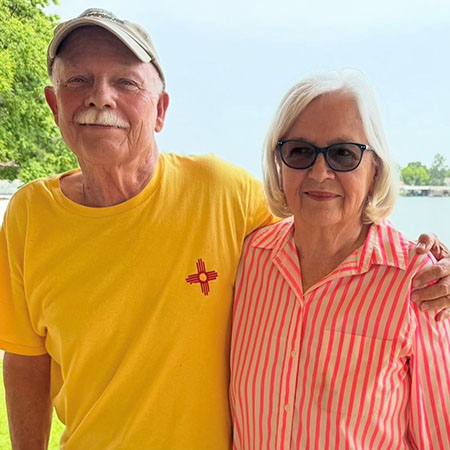
JEFF TRICK (LEFT) AND PADDIE TRICK (RIGHT) DELIVER MEALS WITH IM MINISTRIES’ MEALS ON WHEELS PROGRAM. /COURTESY JEFF AND PADDIE TRICK
What inspired you to get started with this initiative?
Paddie: Jeff had retired, and then, according to me, he didn’t have enough to do. I knew about working with Meals on Wheels, and so I suggested that he maybe look into that. I was working part-time, and my days were different. So Jeff checked into that.
Jeff: I trained and did a winter class, and then I started doing it in 2014.
Paddie: Then I retired at the end of 2016, so I took a class, and we did it together.
What inspires you to volunteer?
Paddie: I just knew that we had the time to do it, and it would be good for someone else, and it would be good for us.
Jeff: A lot of those people really need that. They need the food, but they also need the people talking to them.
Tell us about your volunteer role with Meals on Wheels of IM Houston.
Paddie: The people we volunteer with are all very nice. We meet up at a church, and we make a big, long line. And then Todd Rosen from Interfaith Ministries comes in a van, and he’s got all of his boxes of food. We enjoy getting the boxes and talking to everyone, and Todd. Then we have to hop in the car and take off. The instructions just come on our phone. We figure out what order we should be going in. The clients put in an order. It’s nice to talk to people.
Jeff: All the people are very friendly. They’re glad to see us and glad to have the food delivered. That’s rewarding. It makes you feel good because you’re helping other people.
What are your long-term plans or goals for volunteering?
Paddie: Well, I plan to keep doing it. The people are all very nice.
Jeff: As long as we keep doing it, it gives us something to do, and it’s an incentive to get yourself out and get going and get things done that need to be getting done. The people are all very appreciative, because a lot of those people really need the food, and that’s really important. It makes your heart feel good because you’re helping them, and that’s important.
What’s been the most rewarding part of your work?
Paddie: Talking to the people. They’re just so thankful and nice about it.
Jeff: Talking to them, and they’re glad to see you, and they’re happy to get the food. And that really makes you feel good when you’re trying to help someone else. They need the food, and they need people talking to them.
What have you learned through your experiences as a volunteer?
Jeff: To be patient and be kind to people. Because sometimes, maybe they don’t have many people around them and they need people to talk to, so to be patient with them, listen to them, and be encouraging to them is showing that we care. We’re here to help them.
Paddie: Jeff’s a big talker. I’m not. So I’ve appreciated the people who are talkers, so we don’t try to rush or anything. They’re all appreciative, and they’re all glad we’re there, and that works out fine.
Why do you think it’s important for others to get involved with causes that they care about?
Paddie: People need help at different times. We have a big arboretum here in Houston, and when we volunteered there for about a year, helping to build trails, they were very appreciative. Our son was a Boy Scout, and he asked them if they needed anything done, and he made bird houses. It’s something that we know is needed for some people, and we can do it.
Jeff: It’s a way to help other people out who really need it, and you feel good about it. Paddie feels good about it. I feel good about it. And the people that we deliver to, they’re friendly, and they are very appreciative of what we’re doing by delivering meals for them, which is important.
What do you want people to learn from your story?
Paddie: Some things are needed all over, and surely you can find one that you can connect with and like to do. Just know that there are many opportunities out there, especially in larger areas. There are different places you can surely find something that appeals to you.
Meet Daily Point of Light Award honoree Bekah Aisenbrey. Read her story, and nominate an outstanding volunteer or family as a Daily Point of Light.
As a dedicated volunteer social media manager on the marketing committee for the Association of Leaders in Volunteer Engagement (AL!VE), Bekah Aisenbrey has turned the organization’s online platforms into a thriving hub of activity. Her work has been building a type of virtual porch – where professionals can gather, share and grow. By dedicating roughly 15 hours per month to crafting content and strategy, she has ensured that those who lead volunteers never feel they are leading alone.
Bekah supports the 1,055 organization members who serve as volunteer engagement managers. These professionals are part of the backbone of the nonprofit sector, overseeing thousands of volunteers across the globe. And when she empowers one manager through information and community, Bekah indirectly touches the lives of the countless volunteers they lead.
In fact, she became the narrative voice of the recent 2026 National Summit on Volunteer Engagement. Stepping into the role of marketing co-lead for the steering committee, she helped capture the energy of the event, creating and distributing real-time content that brought the summit’s mission to life for both those attending and those watching from afar.
Through Bekah’s lens, marketing is an act of advocacy – something she is passionate about instilling in her two-year-old daughter. Read on to hear more of her inspiring story.
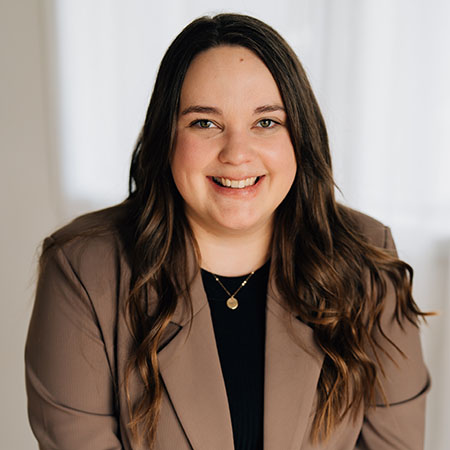
Bekah Aisenbrey, social media manager at AL!VE.
Tell us about your volunteer role.
I volunteer as a member of the AL!VE marketing committee, specifically as their social media manager. I started about three years ago, and in the last year and a half, I’ve become the social media manager, and it’s just fun. I get to tell the story of the work that AL!VE does. Lately, for instance, we did the 2026 National Summit on Volunteer Engagement, and I was part of the steering committee for that. We worked behind the scenes to share highlights or promote it. It was fun to see how we were able to have that event and share the great work that volunteer engagement professionals do, and just having a network and a place for them.
I think most of my volunteer position is really about working with the other committee members throughout AL!VE to promote the benefits of being an AL!VE member, networking for volunteer engagement professionals and trying to move that profession forward. As an organization that tries to strive to move the profession forward for volunteer engagement professionals, we have great resources for communities of practice within different areas, like healthcare, AmeriCorps, local associations and more. We have events, we have trainings for volunteer engagement professionals or those in the nonprofit world, we have different committees to be involved in. We have a lot of volunteers within the organization too.
What inspired you to get started with this initiative?
I learned about AL!VE through my full-time position. We are members of AL!VE and so I knew they had volunteer opportunities. In my full-time position, I was given some marketing tasks to do just because we needed to get some things done, and so I found a love for doing more creative tasks in that sense, and I wanted to really build on those. I found that their marketing committee was looking for volunteer opportunities, and so I signed up and got involved that way. I just found it really fun to learn from others, but also network with volunteer engagement professionals from all around the country and learn from them and be able to implement some of the things that I’ve learned through volunteering into my work as well.
Why is this issue so important to you?
I think sometimes volunteer engagement professionals might, especially within their organization, feel kind of alone, or like no one else is doing the work that they’re doing. And AL!VE really does provide that networking opportunity to learn from, connect with and ultimately see that you’re not alone. I think that’s a really big reason that I wanted to get involved, is showcasing the importance of volunteer engagement professionals and volunteers. The impact they make and how important it is to organizations to have volunteers and dedicated staff for them. Being involved with AL!VE just ties into the full-time work that I do. Being able to volunteer with something that I really enjoy was what enticed me to first get involved with them.
What are your long-term plans or goals for the organization?
I’ve loved my volunteer role and I continue to enjoy growing in it, so I think just continuing to find new ways to tell the story of the work that AL!VE is doing and building on that creativity is my goal. Bekah working on AL!VE marketing tasks while her two-year-old daughter works on her own “marketing” project.
What’s been the most rewarding part of your work?
For me, it’s been really seeing the summit come to life. I saw it behind the scenes – I wasn’t able to attend – but being able to see everyone share our posts and use them to promote that they were attending. That was really cool, to see our work being used to really get attendees there and share the story when they were there.
On a more personal level, I’d say it’s doing some of the work with my daughter, who’s two. She gets to sit there with me while I’m doing some of the work, and she gets to see that. Having her grow up seeing her mom volunteer – not only be a volunteer coordinator, but be a volunteer myself – it’s rewarding. She’s sat with me before and done her own little marketing project! She’s coloring a page while she watches me work on social media posts or create different graphics. It’s been fun to watch her see all of it and get involved in her own way.
What have you learned through your experiences volunteering?
Step outside your comfort zone. I don’t think that this is a volunteer position I thought I would ever do. Marketing was never my go-to – it was kind of thrown at me – and it was something I was really excited to do, but have learned to be more confident in over time. I’ve built confidence knowing that the ideas I have can be accepted or that they will work. I’ve learned to build my confidence in my creativity, and enjoy just knowing that not everything has to be perfect, but can still be helpful, useful and effective.
Why is it important for others to get involved with causes they care about?
Individuals who are really passionate and love the cause they’re volunteering with bring that energy and purpose to the work. And so it really is all about the passion for the cause. Someone who’s passionate is really going to put their all into it. I think if you have passionate people, then they’ll be more committed, and they’ll be there to really build the program that you’re looking to build.
Any advice for people who want to start volunteering?
Find something you’re passionate about. Just commit to making the time for it. Any time is great. Following through with that commitment and believing in the work that you’re doing is important. When you’re volunteering, you’re making an impact on the organization that you’re volunteering with, but you’re also ideally finding joy in it. It has the potential to be really meaningful and rewarding for both the volunteer and the organization itself.
Meet Daily Point of Light Award honoree Doug and Nancy Payne. Read their story, and nominate an outstanding volunteer or family as a Daily Point of Light.
Doug and Nancy Payne, 84 and 83 respectively, have been volunteering together at The Carter Center for more than 20 years, but they have spent their lives helping others. They met as students at Florida State and married right after graduation, Nancy in nursing and Doug in accounting. Doug served in the Air Force before venturing into software and, ultimately, banking. Nancy stayed home with their two daughters before spending her career in public health.
Both are lifelong learners and have spent decades volunteering with multiple educational initiatives for young children. But their service doesn’t end there. After observing a friend’s experience, the couple decided to host a Haitian teenager for 10 months through Childspring (recently merged with World Pediatric Project) while she sought medical treatment in the U.S. And they make a dish each month for a dinner with residents in a women’s in-house addiction recovery program at The Extension.
With their hands in so many initiatives over so much time, Doug and Nancy have become central figures in their community, lending their support to those working towards their potential and to an organization known for its dedication to making the world a safer, healthier place. They are undoubtedly points of light.
What inspired you to get started with this initiative?
Nancy: We were impressed with what the Carters had done after the presidency and in creating the Carter Center, which helps people around the world, and addresses voting and neglected diseases. So, we called. When we started volunteering, I had just retired and Doug did soon after.
Tell us about your volunteer role with The Carter Center and beyond.
Nancy: There was a wait list, but you could start gardening right away. So, we did. I still garden once a month. Sometimes it’s planting tulips. Sometimes it’s pulling up annuals or picking up sticks. We’re in charge of weeding the Pollinator Garden and working in the Rose Garden. There’s also a Japanese garden with a couple of small lakes and ponds.
We started doing events soon after. They send out a list every month of what’s going on, and we sign up for what we’re able to do. We welcome people, sign them in, answer questions, direct them from one area to another, etc. Just before the pandemic, Doug stopped gardening due to a medical issue, but he’s recovered fully and continues to help with events.
We helped with the funeral proceedings of both the First Lady and, later, the President. We were there getting it set up, during the ceremonies and throughout the whole process. It wasn’t as elaborate for Mrs. Carter, but her remains were there for a period of time. When President Carter passed away, volunteers stayed there all night, because many people came through to pay their respects. Two of our grandchildren helped as well.
Outside of our work at the Carter Center, we hosted a 17-year-old girl with an open cleft lip palette through Childspring. It’s a local organization that brings children over from developing countries who need medical care and finds a volunteer hospital and doctor who will help. They told us she would be with us four to six weeks for the surgery, but when she got here, they found an orthodontist who would put braces on her. So, she was with us for almost a year, and even gardened at the Center.
Doug: We taught her as much English as we could. And we’ve since visited her and stay in touch. Nancy: She’s in her late 30s now and getting married. We’re just delighted for her. Doug: We’ve also been volunteering at an afterschool program for kids K through 3 at First Presbyterian Church in Marietta for around eight years. Nancy: We help the younger kids with their homework once a week for an hour and a half during the school year. Doug: Everyone is also assigned a child for whom you might buy a birthday gift or give a Valentine’s Day card. Stuff like that. We were with one little girl for six years who is now a junior in high school, doing really well. We’re very proud of her.
Nancy: Now, we have a fourth grader who I babysat as an infant back when her mother was taking English classes. Doug: I’ve also been volunteering with Wonderful Days Preschool since 2004 as treasurer, secretary and chairman of the board. Raising money is the biggest function along with ensuring we abide by the rules for a 501(c)3. And I read to classes several times a month.
The school was originally one day a week but eventually expanded to five with bilingual teachers when the demographics shifted to children from Spanish-speaking families. We help them learn English and prepare for kindergarten. Nancy: At one time, Doug and some other instructors were teaching the mothers while the kids were in class. And there were three babysitters, including myself, for the toddlers and babies who weren’t old enough yet.
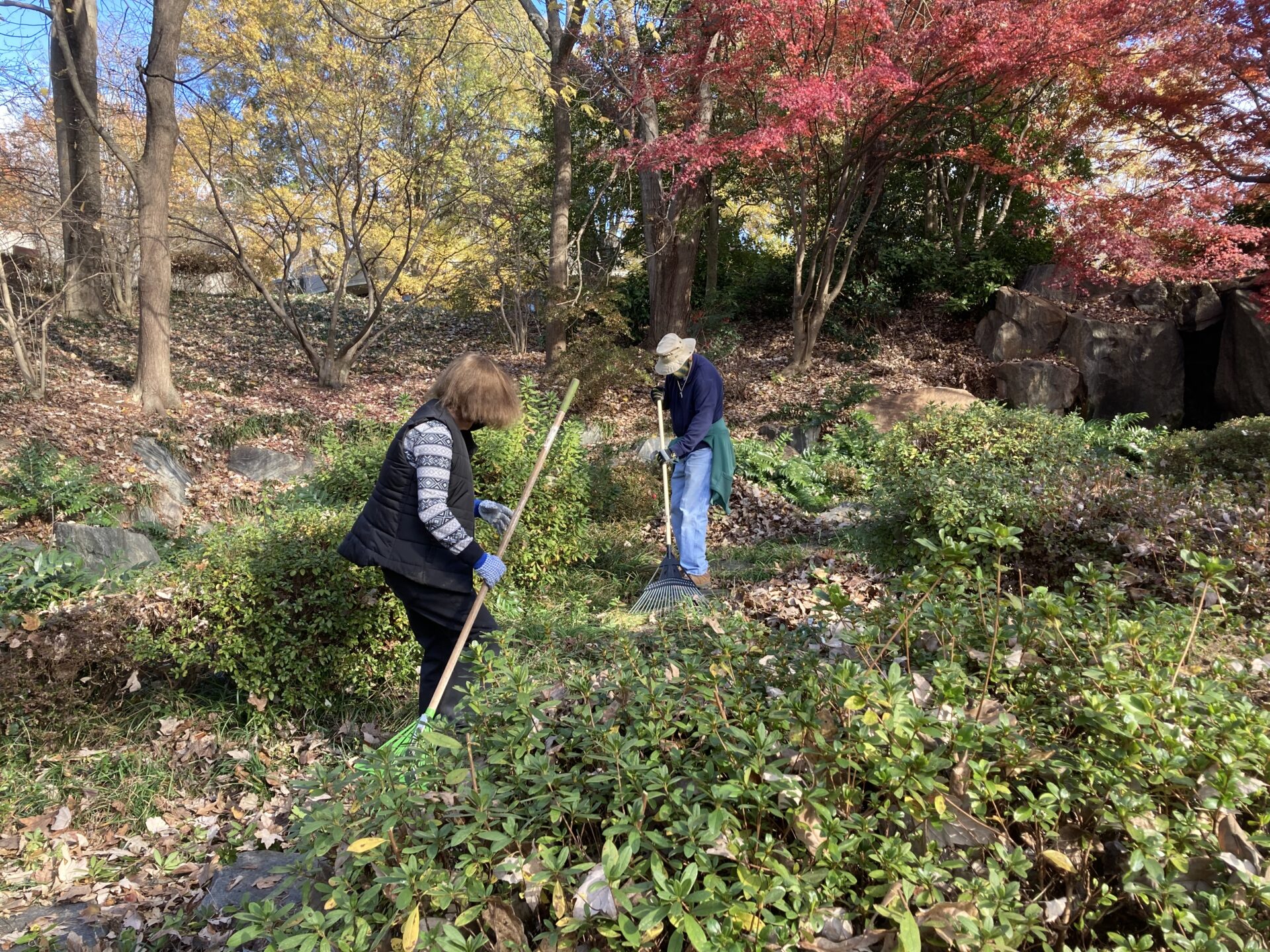
Doug (right) and Nancy rake, pull weeds and do general maintenance work in The Carter Center’s Japanese Garden.
What’s been the most rewarding part of your work?
Nancy: The Carter Center is so nice to the volunteers, and they have a yearly volunteer lunch and teas. We had a trip down to Plains to visit the Carter farm. The volunteers are also really nice. That’s been a pleasure for us. It’s been helpful to stay active. Doug: It’s also rewarding to see the kids we work with do well as they progress through their education.
Why is it important for others to get involved with causes they care about?
Doug: I feel good about what I’ve done at The Carter Center, the preschool and the afterschool program. We can see results, and that makes me feel good.
Any advice for people who want to start volunteering?
Nancy: Go for it!
What do you want people to learn from your story?
Doug: Just jump in. Start volunteering. I hope they can see that we’ve made a difference.
Meet Daily Point of Light Award honoree Vanessa Li. Read her story, and nominate an outstanding volunteer or family as a Daily Point of Light.
Vanessa Li found her confidence while empowering other young people to get the vote. At 16, she saw there was a severe lack of youth representation in the local government and decided to do something about it. During her sophomore year of high school, Vanessa’s local county board of commissioners faced the issue of whether or not they wanted to raise taxes to increase funding for the school system. But as a student, Vanessa realized she had no capacity to vote on the issue. Watching community members with the right to vote speak in favor of lowering their taxes was troubling, particularly because they weren’t even members of the school system. It was then that Vanessa realized that she needed to participate from within the system in order to make systemic change. She established Vote16MD, a youth-led, non-partisan campaign advocating to lower the voting age to 16 and 17 in local Maryland elections.
While establishing the organization was a success, it didn’t mean Vanessa wouldn’t face an uphill battle. It was then that Vanessa learned that creating change requires persistence and resilience. She was frequently told by adult leaders that her ideas were almost childish, and the group wasn’t taken seriously because of their age. Defeating the skepticism around lowering the voting age and youth suffrage is a frequent battle, and it’s something people are apprehensive about. Still, Vanessa and her team fight on. In under two years, they have led voting reform in College Park and Berwyn Heights, enfranchising over 3,000 youth. They’ve authored state legislation, hosted statewide conferences and have even been featured in the New York Times.
Vanessa commits over 50 hours per month to Vote16MD, all while preparing to graduate from high school this spring. When she graduates and attends college in the fall, she intends to major in public policy and education with a specialization in civic engagement. She hopes to work in policy upon graduation and eventually become a lawyer. While her journey with Vote16MD has already laid the groundwork to empower young people for the future, it’s likely we’ll hear lots more from Vanessa as she continues to change the world in the future. Her dedication to volunteer work is a powerful example of how people can change the world through volunteerism, no matter their age.
What inspires you to volunteer?
My parents are public servants, so I’ve always been a person who’s civically engaged and sees the value in civic involvement and advocacy. This issue matters a lot to me because it’s all about representation and impact. Policies about our schools, funding and local governance matter so much to us, because it directly impacts us. In general, being of help to youth, specifically on the advocacy and legislative sides, is where I really put in my volunteer efforts, and that’s where I find the most meaning in my life.
Tell us about your volunteer role with Vote16MD.
I currently serve as the director and co-founder of Vote 16 Maryland. As director, I lead the legislative and grassroots efforts across the state of Maryland. I help testify before boards and collaborate with our municipal youth leaders to pass policies. I also manage regional chapters in 16 counties with over 160 youth organizers. I’ve been able to oversee federal and state advocacy days, work on civic podcasts with notable leaders, including Mary Beth Tinker. I’ve also been able to work on county-specific campaigns, so it’s been really exciting. My work overall focuses on establishing lifelong voting habits by empowering 16- and 17-year-olds to have a say in things that affect them.
What inspired you to get started with this initiative?
When I was a sophomore in high school, our county board of commissioners faced the issue of whether or not they wanted to raise taxes to increase funding for our school system. Being a student with no tangible impact or voice, it was really difficult to watch community members go up and advocate for lower taxes because they were not in the school system. It was easier for them to advocate for their own interests. But being a student myself, and just like my peers, it was really difficult to sit there and just watch. There’s nothing you can really do besides lobby and testify. That’s the extent that a student or a teenager can go to. I realized that if the problem was systemic, then the solution must be systemic as well. In 2013, Maryland and Takoma Park lowered their voting age, and I wanted to reinvigorate that movement.
What are your long-term plans or goals for the organization?
Our long-term vision is to expand youth enfranchisement across all of Maryland and strengthen our civic engagement broadly. We’re also working toward lowering the voting age in two municipalities by 2026 by the end of this year, and four by 2028, so we’re trying to double our impact over the next couple of years. Right now, we’re working on lowering the voting age in Howard County Board of Education elections. There is a piece of legislation that’s going through the Maryland General Assembly at this moment, so we’re really excited. But at the same time, we’re also working to build a leadership apparatus that allows us to continue our project.
What’s been the most rewarding part of your work?
The most rewarding part has been seeing the direct impact on other young people. When other school directors come up to me and thank me for giving them the opportunity to meet this coalition, it’s inspired me to be more confident in my public speaking skills when I’m testifying. It’s inspired me to start my own coalition. Seeing when College Park lowered the voting age and implemented it back in September of last year, and seeing local teens going to the polls and watching it on the news, was so rewarding. I could actually make a difference. Seeing the tangible effects of everything coming together was really rewarding. That sense of empowerment for others has been really cool to see.
Why is it important for others to get involved with causes they care about?
Getting involved creates change in a field of representation where it doesn’t exist. My co-founder and I started as two young advocates from different points in the state because we felt unrepresented where we were. Through our action, emailing, cold calls, countless meetings, countless written testimonies sent in and recruiting students all across the state, we realized that it’s possible to create representation for ourselves, and that was really empowering. Taking the initiative can open doors for others. Not only are we able to empower others, but we were also able to show people that youth are so much more capable than they think they are.
Any advice for people who want to start volunteering?
When I first wrote about Vote16, I thought it was so far-fetched. But it can actually happen. Pushing through and being so passionate about what matters to you will take you far. Having a lot of confidence and being so open about what you care about will take you far. People who are actually passionate will take action to the farthest it can go. I’m really grateful that through this coalition, I’ve been able to build that confidence in myself.
What do you want people to learn from your story?
I want people to learn that no matter where you come from, you can still create an impact. I’m from a small part of southern Maryland, and we lowered the age in College Park, which is hours away. We lowered the voting age in Berlin Heights, as well. Seeing that ripple effect was really cool. You don’t have to come from a lot and you don’t have to have a lot in the first place to make a change in other people. You can just start with an idea, and you can just start with a hustle and that can take you a long way.
Meet Daily Point of Light Award honoree Manya Mohan. Read her story, and nominate an outstanding volunteer or family as a Daily Point of Light.
When she was a child, Manya Mohan volunteered to pack meals for distribution to those facing food insecurity, but the gravity of what she was doing didn’t fully sink in until much later. It was only after seeing hunger firsthand on a trip abroad that she understood the difference a meal could make. But that’s not all. She also realized that being unable to access food isn’t just a foreign problem. It affects people in her own town.
A year and a half ago, Manya founded Bites Beyond Borders to address it. Now, she provides funding and volunteer power to initiatives focused on food insecurity year-round, engaging more than 200 people from across the county to help. For example, the organization has supported a local ROTC group in distributing 1,000 warm meals to unhoused veterans.
Manya is a member of the Youth Commission for her city government where she listens to community members talk about issues and focuses on solutions for young residents. She also listens for problems she might not be able to solve on the commission, but for which Bites Beyond Borders can step in.
Now a 17-year-old college freshman, Manya is working towards a career in international relations, in which she can use her empathy and understanding of the world to build bridges and enhance cooperation across borders.
What inspires you to volunteer?
I’ve been volunteering since elementary school with a local meal packing organization. At the end of ninth grade, I got to travel throughout India before my family moved. I saw firsthand how many people are affected by lack of access to food. Until then, when I’d packed meals, I didn’t think too much about it; it was just this thing that we did.
When I came back, I realized that it wasn’t something that just happens across the world. It happens in my own neighborhood, and it’s something many of us have been ignorant of. That’s what inspired me to start the organization.
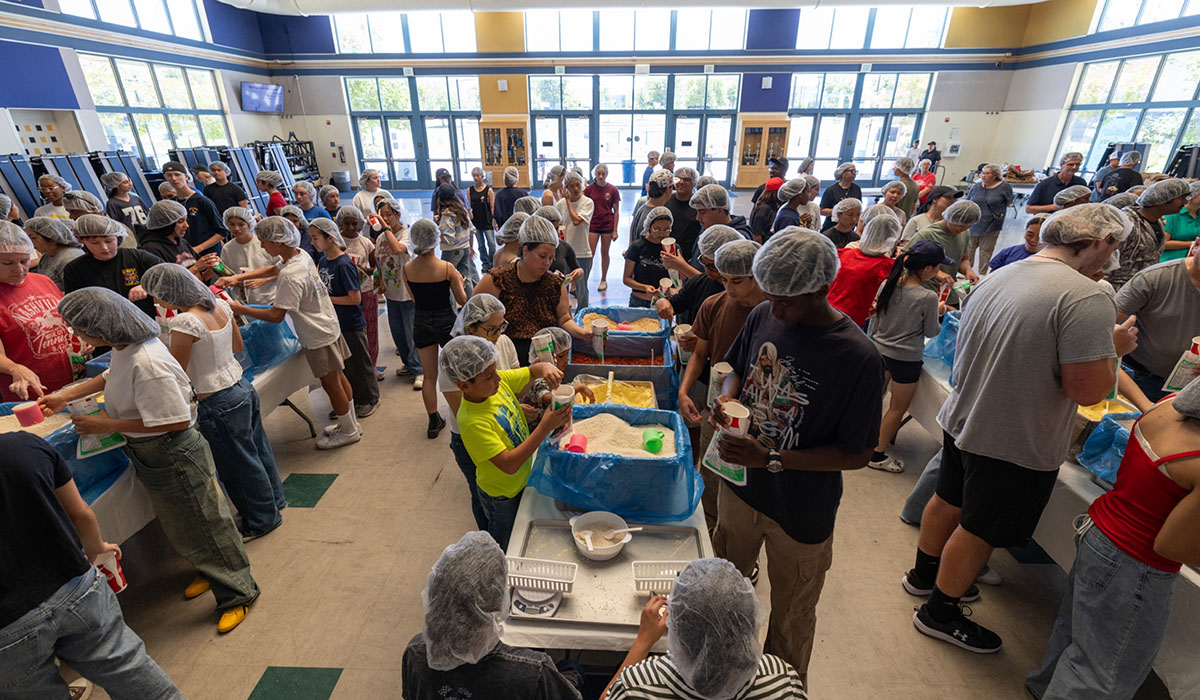
Bites Beyond Borders volunteers pack meals for people facing food insecurity.
Tell us about your volunteer role with Bites Beyond Borders.
Right now, we’re working to open up mini food pantries in places like our local community colleges that we’ll help keep stocked. After government cuts in SNAP funding, a lot of pantries around us shut down permanently. With low local funding and not being a priority, many had few other options. I’m also on the Youth Commission, so I hear about issues through that, too, like how it was affecting families that relied on these facilities.
My day-to-day involves planning that, reaching out to people, attending local events and trying to find opportunities for funding. We’ve received some great grants, but most of our funding is from going to the farmers market, setting up stands and talking to people. I also identify people in our community who need support and figure out how we can help them. We’ve even partnered with the organization I’ve volunteered for since elementary school and have packed meals for more than 18,000 people in the Caribbean.
What are your long-term plans or goals for the organization?
My priority is getting those food pantries off the ground. We’d also love to have more members and to expand nationally and even internationally. This is something I want to do for many years to come.
What’s been the most rewarding part of your work?
We’re in a time where hope can be lost. Seeing how many people are willing to help, how many people have donated or spread the word has been so rewarding. Everyday people really do care, and everyone wants to make an impact.
What have you learned through your experiences as a volunteer?
Don’t be put off by rejection. I started this organization as a school project, and for that, you need an advisor. I was new to the school, so I didn’t know anybody. Every lunch break, instead of going out to eat, I’d pick a school building and knock on every door to pitch them my idea. I thought someone would say yes immediately, but I probably got over 50 nos. Many teachers just didn’t have the capacity. Some thought it wasn’t realistic. Knowing in my heart that I wanted to do this and why it meant so much gave me the power to persevere.
Tell us about future partnerships, programs or events that you are excited about.
We’re planning to do some things at the annual Day of Service, which was a great event for us last year. It’s a local event, where a bunch of organizations can come out and meet people. Last year, I met a lady who told me about it on the last day to sign up, so I was able to get in. We raised quite a lot of money there and met people who later gave us grants that changed the trajectory of our organization. I want to host more meal-packing events, too.
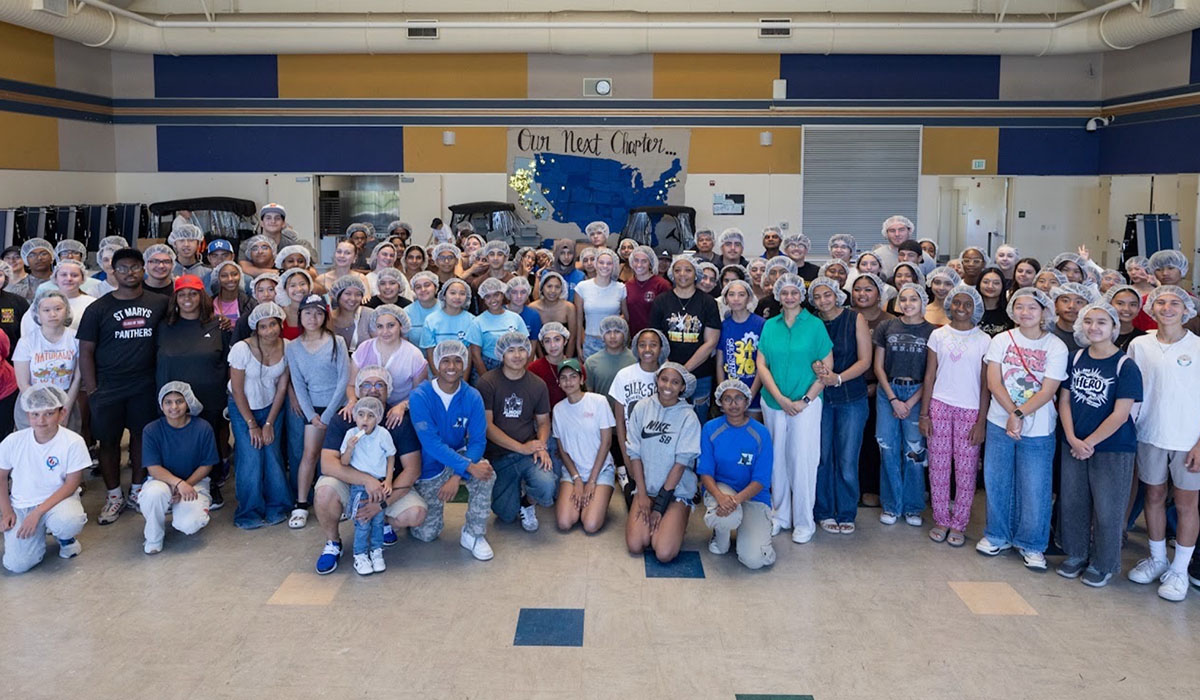
Bites Beyond Borders volunteers come together for a meal packing event.
Why is it important for others to get involved with causes they care about?
We all live on this planet. It’s our duty to help each other. We’re so divided by everything right now; the only way we can find unity is by helping each other and showing up for people in need.
Any advice for people who want to start volunteering?
Just go do it. Whatever you’re worried about, you’re only going to get over it with practice. As with most things, when you start off, you’re not going to know everything about it. You’re going to learn in the process of doing it. Start by reaching out to an organization near you, and tell them you’re interested. Ask how you can help.
What do you want people to learn from your story?
I hope people are inspired to not only initiate change but also have empathy for one another. Hunger happens in our own neighborhoods, to people we walk past every day, to our friends. You never know what someone’s going through. Make sure you’re always empathetic and willing to help. Lead with a kind heart.
Blending Sustenance, Shelter and Support for His Community
Meet Daily Point of Light Award honoree Mike Heath. Read his story, and nominate an outstanding volunteer or family as a Daily Point of Light.
While most would treat a 40-year tenure at Salt River Project (SRP) as a reason to slow down, Mike Heath uses his company’s supportive PTO and volunteer policies to fuel what he calls his “altruistic side hustle.” To the people of Wickenburg, he isn’t just a veteran utility employee, but a neighbor who treats community service as a full-time calling. Logging approximately 600 volunteer hours a year, Mike’s hands are rarely still. He hauls tires out of Box Canyon, orchestrates land purchases for those in search of a stable place to call home, hands out backpacks to schoolchildren and promotes clean energy.
As the president of the Wickenburg Area Habitat for Humanity board of directors, Mike supports the organization’s blueprint for local stability. Last year alone, he dedicated 166 hours to the affiliate, overseeing everything from the operations of the ReStore to the intricate scheduling of home builds. Under his leadership, the organization is celebrating its 33rd anniversary with a legacy of 26 completed homes and countless safety repairs. His recent efforts also secured new land for future builds, ensuring that more families can access zero-interest loans.
When he isn’t planning a construction site, Mike is often found at Project SALT (Serving And Loving Together), a food bank and clothing closet he co-founded in 2020. In 2025, Mike devoted over 212 hours to the organization, serving 1,171 households. With Mike as a member of the board of directors, Project SALT distributed 3,150 food boxes and 3,405 sack lunches, while facilitating over 7,300 clothing visits. Additionally, he is the secretary for the Place Church board, a chairman for the Valley of the Sun Clean Cities Coalition and even an honorary commander at Luke Air Force Base. Receiving the SRP Presidents’ Volunteer Service Award in both 2018 and 2024, he remains committed to the act of consistently showing up.
What inspired you to get started with Habitat for Humanity?
I had a friend who was on the board, and I went to some of the meetings and just had coffee with other people. Pretty soon, I was on the board. Then I moved up through the ranks to president for eight years. I termed out, and then they changed the bylaws so there are no term limits. They did me a favor! It’s really cool; we are able to hand over homes to families, and we provide zero-interest loans.
The Wickenburg area Habitat for Humanity isn’t as large as several of the other affiliates in Arizona where they build dozens and dozens of homes in a year. We build one every two to three years. I think we’re on our 26th home in 30 years. And we just finished purchasing a lot. For a while, buying property in Wickenburg was tough, and the house hunt and affordable housing just didn’t pan out. But we were able to buy property that needs a little work. When you hand a family the keys to a home that they’ve never had—they’ve rented and lived with other people and struggled—that’s the most rewarding part of it.
Why are you passionate about providing affordable housing?
It’s just part of basic life: shelter, food and safety. With a home comes safety, and it’s just one less thing these families have to worry about. We normally open our houses up with some food to put in their pantry, so they don’t start out empty. We try to meet their needs.
We do have the homeowners qualify for those homes because the last thing we want to do is have a foreclosure on a house! The families still make mortgage payments. Habitat for Humanity can extend their mortgage to make it easier for them. We try to make them as successful as possible. We provide financial training. We’ve worked with people ahead of time to get their credit rating in line. We have a woman who is very well-versed in finance. She works for a mortgage company, and she goes above and beyond to make sure the families are living within their budget. She’s worked with several people before to get their credit rating in line just so they can qualify. She does an excellent job with that.
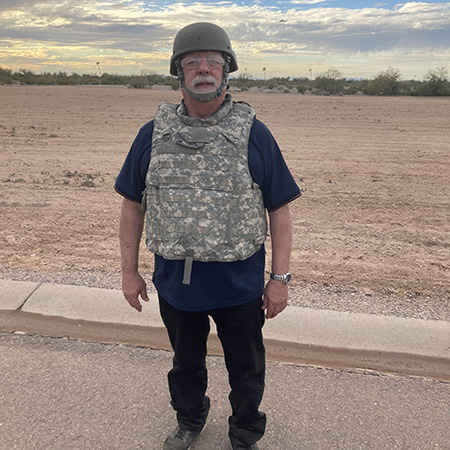
An overnight exercise with Air Force at Gila Bend and Goldwater Range.
Tell us about your volunteer role with Project SALT.
Well, we started out in the corner of the foyer of the church, and we quickly outgrew that. This initiative was originally just to bring in food and clothes to give to those in need. We started renting a place that was for a nonprofit, supposed to be used for families and youth in Wickenburg. There was a board of trustees, and all of them had passed except one guy. He was wanting to retire, so they ended up gifting us that building. Revamping it was a whole bunch of work, but we raised money and rebuilt it. Now, the downstairs is our “showroom” with the clothing and the food. Upstairs is a three-bedroom house that we rent out to help pay our expenses.
In 2025, we gave away 3,150 food boxes. A food box can be valued between $35 and $45. We gave away 3,405 sack lunches. A person can get a sack lunch five days a week. There were 7,319 clothing visits in 2025. A clothing visit can be one garment or a bag of garments, and normally they go out in bags. We’ve also helped fix people’s cars. That is a total of 1,171 households we helped. For the small building footprint we have, those are some major numbers.
With Project SALT, I help out with promoting and fundraising. We always say that Wickenburg should be a better place because we’re here, and we don’t want anybody to go without clothing or food.
What’s been the most rewarding part of your work?
It’s when we give something to someone who needs it. The people who run the ReStore here in Wickenburg are great—I try to stay out of their business, but there’ve been times where I get a call and refer them to Habitat. One lady needed a new washer; hers was beyond repair and she didn’t have very much money. The store manager and the volunteer at the front counter took excellent care of her. We can’t give everything away, but they did work with her, and she was thrilled.
Sometimes we get stuff at Project SALT—we don’t take furniture and appliances—so it’s given to us and we give it to Habitat. At Habitat, we’ve had some medical equipment, walkers and strollers that Project SALT has had a need for, and we give that to them so they can make a difference. I’m in the sweet seat because I get to see both sides of these collaborations.
The church started Project SALT, and we give them a substantial check to help further their mission because they’re always helping people in need of paying rent. I personally have helped people paying electric bills that are struggling or out of work. It was cool to see when Habitat donated back to the church. I see all the good stuff on each side. I’m very blessed.
What have you learned through your experiences as a volunteer?
Not to judge. I didn’t ever feel I judged people anyway, but one incident taught me a lot. When a volunteer told us they went to carry a food box out to a car trunk, and the woman already had one from two other food pantries in the area. I thought, “Oh, they’re double-dipping.” But the volunteer was right on me: “Mike, a family of four cannot live on one food box for two weeks.”
The other incident happened when some ladies from another local community came over and got clothing to take back for their yard sale. I thought, “We’re giving away clothing for somebody else to sell?” And another volunteer said, “Well, that offsets their income for rent and paying their utilities.” It goes full circle. There may be some people abusing the system, but generally, they’re not. So if we have it, we give it away. If we don’t, we find a way to meet that need.
What are your long-term plans or goals you have with volunteering?
I work for Salt River Project. June will be 41 years. My coworkers are retiring, but I don’t have any plans to retire. I like having a job to go to because sometimes I could work 12 hours a day volunteering. It’s not like work—it’s a hobby—but it’s sometimes nice to go get a paycheck!
For a while, we didn’t have an executive director at Habitat, and I was there a lot. I still sign all the checks and pick up the mail. I love what I’m doing for SRP. I grew up on a farm and I knew how important SRP was for irrigation, so I’ve been really blessed. SRP is very much into getting involved in the community.
Why is it important for others to get involved with causes they care about?
I hope I never need it, but if I only got a little bit of help in a time of need, I know how thankful I would be. Because I’m blessed, I don’t have any problem giving to others and blessing someone else. My dad had a gas station when I was in kindergarten. I followed his footsteps into diesel repair and fleet administration. He always volunteered for organizations even after a 12-hour day at work. It was relaxing for him and he enjoyed it. He was a people person. I know how that made him feel, and it makes me feel that good too.
Any advice for people who want to start volunteering?
There are so many nonprofits in need right now. If there’s something you have a passion for, just go and see what need you can fill. I served food at Andre House, a soup kitchen. I never worked so hard in a kitchen environment, but when I left, I was so blessed. To see the people come through the line and how grateful they were—nobody took it for granted.
I also volunteered at a school for unhoused children. If they had a permanent address, they couldn’t go to that school. The hard part was you could never get really close to the kid because you didn’t know when he was going to be there. You’d show up to spend time with the kid and he wasn’t there. No forwarding address, the parents just moved on. It can be very sad, but you only hope they went on to do better.
The biggest thing is finding a passion somewhere. You don’t have to have big pockets or a big wallet. You just have a big heart. Or, through volunteering, you will get a big heart by meeting the needs of a nonprofit you connect with.
A Student Leader’s Mission to End Resource Scarcity
Meet Daily Point of Light Award honoree Shruthi Senthil. Read her story, and nominate an outstanding volunteer or family as a Daily Point of Light.
As the national service director for PURE (People for Urban and Rural Education), Missouri 17-year-old Shruthi Senthil has transformed her passion for health equity into a nationwide movement. Balancing the rigors of school and sports, she still manages to carve out 20 to 25 hours every month to orchestrate service projects that range from her home state to chapters across the country. One of her most profound contributions all began with a sobering statistic: 64% of low-income women in the St. Louis area lack consistent access to essential period products. Refusing to let this need go unmet, she launched a local pad bank initiative.
Shruthi’s monthly drop-off program creates a streamlined supply chain of tampons and pads, funneled directly to one of the largest pantries in the city. By identifying this specific gap, she has provided critical hygiene products and restored reliability for hundreds of women in her own backyard. This local momentum eventually fueled the ambitious PUREathon initiative in the fall of 2025. Shruthi meticulously coached each national chapter, helping them secure locations and rally participants to shine a light on period poverty. The results were staggering. In St. Louis alone, she mobilized nearly 200 people to walk and run for the cause, resulting in the collection of almost 75 pounds of period products.
This year, Shruthi also spearheaded a 9/11 tribute where chapters nationwide assembled comfort bags and handwritten cards for local firehouses and first responders. Additionally, she is currently mentoring a new generation of directors-in-training to ensure the mission of empowerment continues in her community long after her own tenure. By spending her time volunteering for the causes that matter most to her, Shruthi is helping neighbors see that their community is standing right behind them.
Tell us about your volunteer role and organization.
I volunteer with PURE, or People for Urban and Rural Education. I’m a national student director. I’m one of five students selected this year, and I’m actually the only girl and the only junior. The organization itself does a lot. They were founded to help support children who couldn’t quite get an education by helping construct schools in rural areas, as the name itself suggests. At this point, we just celebrated our 10th anniversary March 17. We’re starting to get a little bit older, and by now we have achieved so much. We’ve expanded across so many other issues, my favorite one being PUREFemme, where we try to support initiatives to get rid of period poverty and bring awareness about what a period is, and just make it a societally acceptable issue, as there’s so much stigma behind it.
We do other things; we have an initiative where we try to help schools set up their own garden so they can grow their own food. Those are our larger-scale initiatives outside the country too, but then here within the United States, we have 35+ chapters that I help manage on the day-to-day. I help them work through any issues they might have in regards to what kind of local projects they want to do, who they should reach out to, what businesses they should reach out to and how to properly contact people and ask for things that you might need, ask for support or try to bring attention to events. We operate on a big international scale, but then we also try to contribute a lot to our local communities.
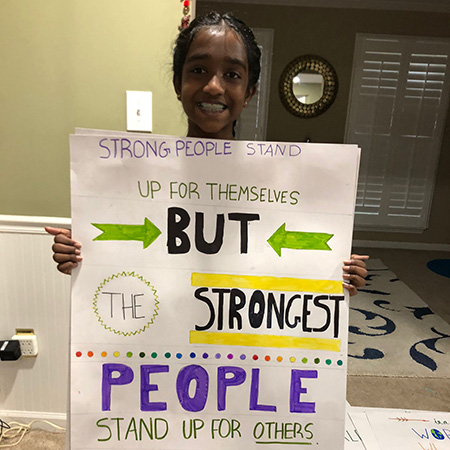
One of many signs Shruthi Senthil made in middle school to promote school values of kindness and consideration.
Why is period equity so important to you?
I love this question because I’m all about empowering girls and women. When I was younger, in middle school, I was talking to my mom. My mom and I have always talked about a lot of things, and she was telling me about what a period is. Whenever it first happened for me, I was in a well-enough circle and I had a good enough relationship with my mom to know what it was and have the resources to still be able to go to school.
But when I joined PURE, one thing that I learned was that in a lot of indigenous or rural areas, girls don’t have pads or tampons or any sort of feminine hygiene products. Whenever they get their period every month, they can’t even go to school, and usually that would mean they’re missing at least four or five days every month. It’s not like they can control when they miss. There was that logistical issue that made me frustrated because I have the comfort of being able to go about my daily life even when I’m on my period. Also, there’s a social stigma behind it that I think is really unfair, because I don’t think a normal biological process should be something that holds anyone back.
Additionally, my work in St. Louis was really catalyzed when I was reading up about period poverty. That was initially why I became really interested in it. I was like, “Wow, this is really hindering so many girls around the world who deserve the same right to education as I do,” because this organization is all about providing education. But I learned that in St. Louis, 64% of low-income women don’t have access to period products and are under conditions of period poverty. To me, that was such an alarming statistic because I live in St. Louis. Here I am thinking about how to affect someone’s life that I’ll probably never see because I want to do good in the world, but I can do good right in my own community. That’s really what catalyzed our local pad bank and the PUREathon that we held back in October. I realized that I could shed so much light in our local community and support women here as well, because there is that need here and it never gets addressed.
Tell us a little bit more about the PUREthon.
The PUREathon was something I wanted to do as national student director. I had been a chapter director prior to that, and while I got to have the responsibilities of operating these huge scale fundraising events, as national student director, I could do that within the entire country. Really, the entire country just became my oyster. I was like, “What’s the coolest thing I could do right now?” and it all came back to period poverty. We needed to organize something to bring awareness to this issue because so many people don’t realize it even exists.
I’m a big believer in that when people know an issue exists, they’re more compelled to try to address it or solve it. Just doing events where we say the fact that period poverty does exist in our country and our cities can draw more attention to it and bring more support. I was able to work with all our chapters; we made sure all of them were able to reach out to parks or set up some sort of walk. St. Louis had the most participation; we had nearly 200 people show up to the run, and lots of people donated and brought pads and tampons. At every PUREathon across the nation, I’d written a speech that everyone gave. I think it was just a moment where in my head I saw us all coming together as a country right now. While it’s currently just PURE doing this, I hope that in future years, it becomes something that I take forward to wherever I go to study and wherever I work. If I open my own clinic or anything I do, I know that this message will still stand strong. I hope that PUREathon continues to happen every year and the message gets sent out, because that’s the most important aspect of it.
What are your long-term plans or goals with volunteer work?
I think about this almost every day. Volunteering has become such an instrumental part of my life and I definitely will continue to volunteer even as I get older. For the near future, next year, I hope to still work at the national level because it truly allows me to carry out these impactful projects throughout the country. I hope to take more charge in PURE Femme in the coming year.
As I get older, something that I’m a big believer in is that healthcare should be for everyone. I hope to, at some point in my life, be able to set up free healthcare clinics and help people who really need it, or travel to rural countries where they might not have the same medical resources as we do here. I want to provide them with resources and my medical expertise, hopefully at that point, and also just advocate for people and reiterate the importance of the necessity for healthcare and why women’s health should be taken seriously.
What’s been the most rewarding part of your work?
I’m such a people person and I love interacting with people. I think that’s a huge reason I got into volunteering and to this day, that’s what I enjoy out of it the most. In St. Louis, we do a lot of smaller initiatives. I’ve volunteered at foster care closets and helped at school as well. There are a lot of other volunteer opportunities where I can help at local middle school or elementary school dances. One of my favorite ones was when I was helping out at this food pantry kitchen.
In all these experiences, I got to talk to people and help them find clothes that they needed for their kids, or saw little girls enjoying a night and feeling like princesses. That just melts my heart. I know that they might not remember me, but I did a little something just to brighten their day. Regardless of whether we do a huge fundraiser and we raise a ton of money, all the interactions I have with the people and telling them about our cause is always the most rewarding part, because I know they’ll depart with that message and a little ting of happiness.
What have you learned through your experiences as a volunteer?
Doing anything positive in your life, whether that be volunteering or service, can really let you see how many other people there are who have the same vision for the world that we live in. Especially during times like right now, where there’s so much discourse and divide, volunteering has enabled me to see that at the end of the day, when there is an issue that everyone sees and can acknowledge, we as a society can put aside our differing views on other things and work to resolve whatever that issue is. That’s the most beautiful thing I’ve ever seen.
Why is it important for others to get involved with causes they care about?
Overall – with volunteering or anything people are passionate about – whenever you have that passion, you’re able to pour so much more into it. If everyone were able to pursue just their passions, the world would operate on joy and people would be happy doing what they want to do. It would just be such an overall positive environment, instead of people trying to struggle for money and other things that we see in society right now.
Specifically for youth, it’s so important because we’re tomorrow’s leaders. The people I go to school with are all going to do something amazing one day, and it’s so important that we learn how to advocate for ourselves and speak up for the things that we care about and build communities now instead of waiting for when we’re older. We are preparing for the future, and those skills take time to learn. When I started off in fifth grade, I was a little bit more timid and shy, but just being in this volunteering atmosphere has allowed me to break out of that shell and engage with so many people, which is such an important skill to have.
Any advice for people who want to start volunteering?
Just do it. Often, you spend so much time thinking about whether this is exactly what you want to do, or if this is worth your time or what you will get out of it. But once you get started, and once you see the people you interact with and the change you create, you’ll feel so rewarded and it can really offset anything else that might be troubling you in life. I would say just go for it if you’re even slightly thinking about doing it because there’s such a nice community there too. You’re not going to ever end up regretting it.
Meet Daily Point of Light Award honoree Agam Grewal. Read his story, and nominate an outstanding volunteer or family as a Daily Point of Light.
When his brother went off to college, Agam Grewal didn’t just inherit a family tradition; he stepped into the driver’s seat of a mission fueled by the Sikh principle of seva, or selfless service. As the leader of SEVA Truck RVA, Agam recognized that the high eviction rates across Virginia were leaving far too many neighbors in the shadows of budget motels. Rather than letting these families fade into the background, he forged a partnership with the Hanover County School System to ensure that housing instability doesn’t mean a hunger for basic needs.
Agam’s leadership is completely hands-on. Each month, he dedicates approximately 10 hours to organizing meal preparations, community clean-ups and supply drives. On any given day, you might find him setting up materials for an event or managing fellow volunteers to ensure the operation runs like a well-oiled machine. His work isn’t just about the “what,” but the “how.” He approaches every task with a focus on strengthening community connections and inviting others to join the cause.
The impact of this consistent outreach is deeply felt in the local motels where families in crisis are often forced to stay. Through routine distributions, Agam and his team serve about 150 families, offering a sense of stability in an otherwise turbulent time. Beyond the 400 to 500 meals regularly provided, Agam ensures that the emotional needs of children are met, handing out coloring books and warm blankets to offer comfort within the cramped walls of temporary housing. It is a holistic form of care that addresses the physical pangs of hunger alongside the psychological weight of displacement.
By bridging the gap between local schools and vulnerable households, this young leader and volunteer has created a model of empathy-driven service that resonates throughout the Richmond area. Read on to hear more of his story.
Tell us about your volunteer role.
I’m the co-founder of SevaRVA, a nonprofit organization focused on addressing food insecurity in the Richmond community. Almost every weekend, I work with a team of volunteers to prepare and distribute fresh, nutritious meals to unhoused individuals. Beyond food service, I help organize volunteers, secure funding through grants and partnerships, and coordinate with local farms to source ingredients grown within the Richmond community.
My role has grown from simply serving meals to helping lead and expand the organization. I’ve worked on outreach, fundraising and long-term initiatives like developing community gardens in food deserts. Through this, I’ve been able to take an active role in both direct service and building sustainable solutions. I feel as if the limits to my impact in this volunteer role are unimaginable.
Why is fighting food insecurity so important to you?
Food insecurity is something I’ve seen up close in my own city. When you’re handing meals to the same people week after week, you start to understand that this isn’t a distant issue: it’s personal and ongoing. In Richmond alone, a significant number of families and children don’t have consistent access to nutritious food, and that reality is hard to ignore.
For me, it goes beyond just hunger. Access to food affects health, education and opportunity. Everyone deserves basic dignity, and something as simple as a warm meal can restore a sense of humanity and connection. Additionally, the word “seva” is rooted in my faith, Sikhism. It means selfless service, and is one of the reasons I found inspiration to travel down this journey. That’s why this work matters so much to me.
What inspired you to get started with this initiative?
I grew up doing community service with my family, especially through our local gurdwara (Sikh temple), where seva, selfless service, was always emphasized. From a young age, I saw the importance of giving time and effort to help others, not just when it’s convenient, but consistently. SevaRVA started as a way to take that value and make a direct impact in our own community. My brother and I first introduced the idea to my parents, and they figured out the logistics. From then on, the reins have been in our hands. What began as a small effort with a single food truck quickly grew once we saw the real need. That experience motivated me to keep building and expanding the initiative.
What are your long-term plans or goals for the organization?
Long-term, I want SevaRVA to move beyond just food distribution and focus on sustainable solutions to food insecurity. One of our main goals is to develop community gardens in food desert areas, where we can grow fresh, certified naturally grown produce and provide consistent access to healthy food. Although this is logistically complex, I believe once we get a few more up and running, it will expand vastly.
I also hope to expand our reach by building stronger partnerships and involving more youth in service. The goal is to create something that lasts, an organization that not only meets immediate needs but also helps change the lack of volunteerism and community sense.
What have you learned through your experiences volunteering?
I’ve learned that service is about giving your time and effort, even when it’s not easy. Volunteering has taught me consistency, responsibility and how to work with others toward a shared goal. It’s also changed the way I see my role in the community. I’ve realized that making a difference doesn’t require something huge. Small, steady actions can add up and create real change over time.
What’s been the most rewarding part of your work?
The most rewarding part has been the relationships we’ve built. It’s not just about handing out food. It’s about the conversations, the names you learn and the small moments of connection. Seeing someone recognize you, smile or joke with you week after week makes the experience meaningful in a way that’s hard to describe. In one of our main food distribution points in downtown Richmond, the regulars we always see there when distributing food have now started calling us “The Burrito Boys.” Honestly, I could not be happier with the impact this experience has had on me and those directly affected. Those moments remind me that even small acts of service can have a lasting impact. Giving is easy, but constantly maintaining that bond and showing up for others is more important.
Why is it important for others to get involved with causes they care about?
When people get involved in causes they care about, they become part of something bigger than themselves. It creates a sense of responsibility and connection to the community that you don’t get otherwise. As I said earlier, real change is not stimulated through grand gestures, but always first through small actions. If more people took that step, whether it’s volunteering time or supporting an issue, the collective impact in our society would be significant.
Any advice for people who want to start volunteering?
Start small and stay consistent. You don’t need a big plan or organization to begin, just find something you care about. What matters most is showing up. I always used to think volunteering was glorified, and I never really gave it a chance until I realized that it was what I had always been doing. Volunteering is not always labeled, and it starts through the small actions that illustrate our integrity.
Also, don’t be afraid to take initiative. If you see a need that isn’t being met, try to do something about it. Even a small effort can grow into something much bigger over time.




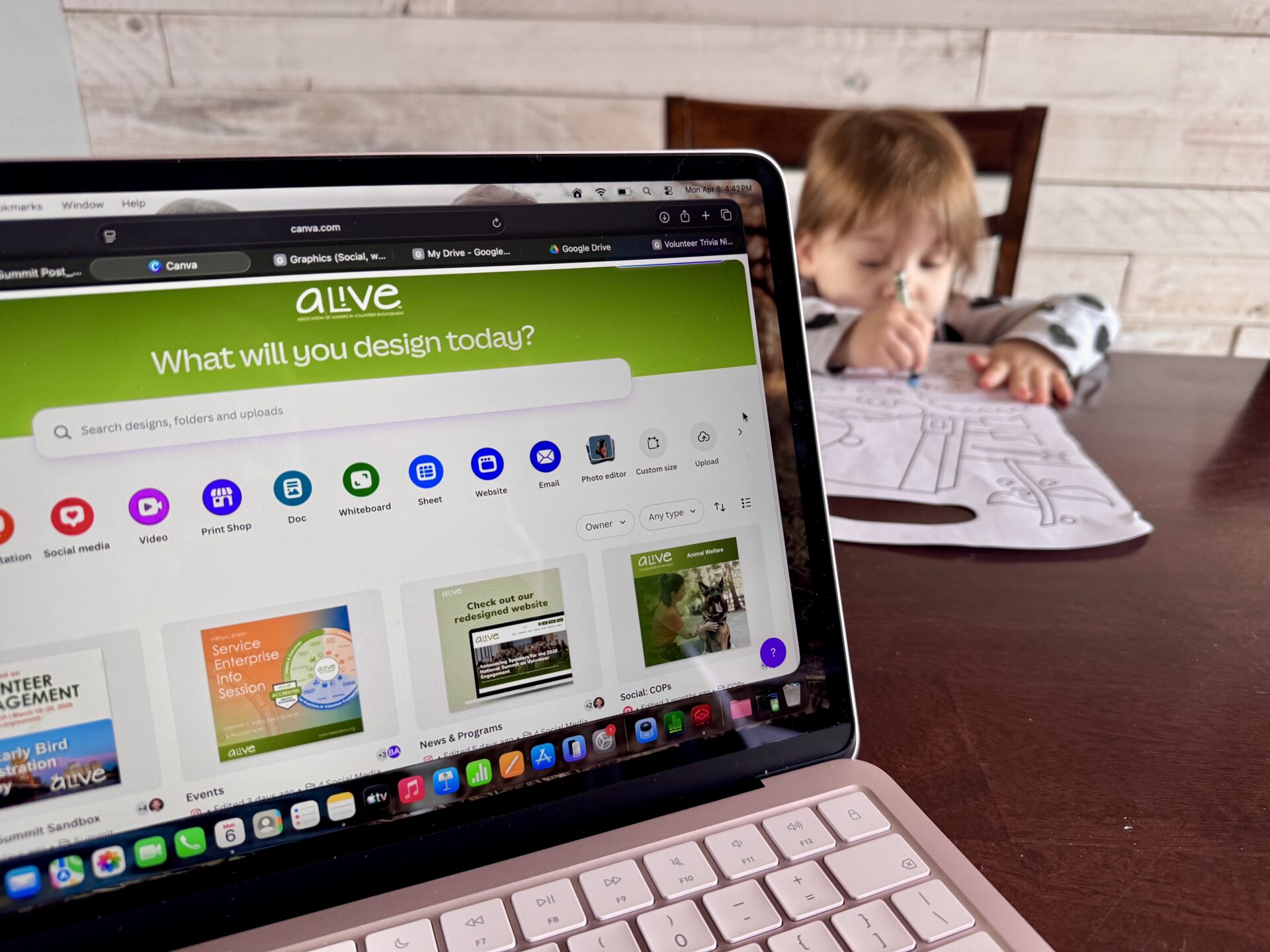 Bekah working on AL!VE marketing tasks while her two-year-old daughter works on her own “marketing” project.