Hana Tsai started playing the violin at age four after hearing a recording of one of her now favorite musicians playing Tchaikovsky’s Violin Concerto. She was moved. She was also delighted when her dad used to play for her as a child.
Now 17, Hana attends Juilliard Pre-College on Saturdays where she has violin lessons as well as music theory and ear-training instruction that helps her understand the technical side of music. She plays in an orchestra there and participates in chamber music coaching through the New York Youth Symphony. Playing a lot of music with many different people is her passion.
That passion has been key to the success of Clexical, an organization Hana co-founded in 2023 that works to make contemporary classical music—particularly by female composers—accessible. They started with a podcast, inviting composers to talk about their work. Hana developed the guidelines, and she continues to coordinate interviews. Together, she and other volunteers have spoken to more than 60 guests. Dedicating 25-30 hours each month to her role, Hana has helped Clexical reach thousands of listeners engaged hundreds of local community members through in-person outreach events.
What inspired you to start Clexical?
My interest in starting Clexical began with the realization that the traditional classical music canon presents a narrow view of who is recognized and valued as a composer. I took a class at Juilliard Pre-College about women composers. The most widely recognized figures in classical music are traditional, male, Western composers, such as Mozart and Beethoven. They’re amazing, but throughout the hundreds of years classical music has been alive, the narrative of who’s making the “best compositions” has totally ignored women and composers of color. Many students seemed uninterested in learning modern classical music, and I felt a kind of injustice when hearing people talk badly about composers I knew they’d love if they gave them a chance.
At an orchestra rehearsal, composer Reena Esmail was talking about the inspiration for one of her pieces, and I had an epiphany. With so many of the other pieces I play on violin, I’d never be able to have a conversation face-to-face with their composers, unlike modern classical composers who are alive at the same time as me.
Tell us about your volunteer role.
I design educational outreach programs tailored to different audiences. Today, I was coordinating meetings with other Clexical members who brainstorm engaging ways to make younger musicians or a wider audience more interested in modern classical music. Four other members and I are going to be performing for really young kids soon and talking about some cool composers that are living right now. We’ll ask them questions, and I might even bring some hand puppets. Kids love it and are eager to learn more. Of course, they love pop music, but we remind them that classical music production also never ends.
As the director of outreach, I coordinate partnerships. I work with the rehabilitation center near me, preschools and community organizations.
What are your long-term plans or goals for the organization?
I want to perform a program of modern classical music at Juilliard someday. And I want to continue learning how I can integrate more women’s composing into classical music curriculum. Many music teachers have a traditional repertoire they believe kids need to learn before they can move on to pieces that they’re interested in or that need more representation. I hope I can be part of changing classical music education. I’m working on convincing my chamber group to play a female composer’s modern classical piece, so hopefully we’ll be able to perform that before the school year ends.
What’s been the most rewarding part of your work?
It’s when I see somebody’s hesitation about modern classical music shift into interest. I love seeing people become more open-minded with music and being a small part of that.
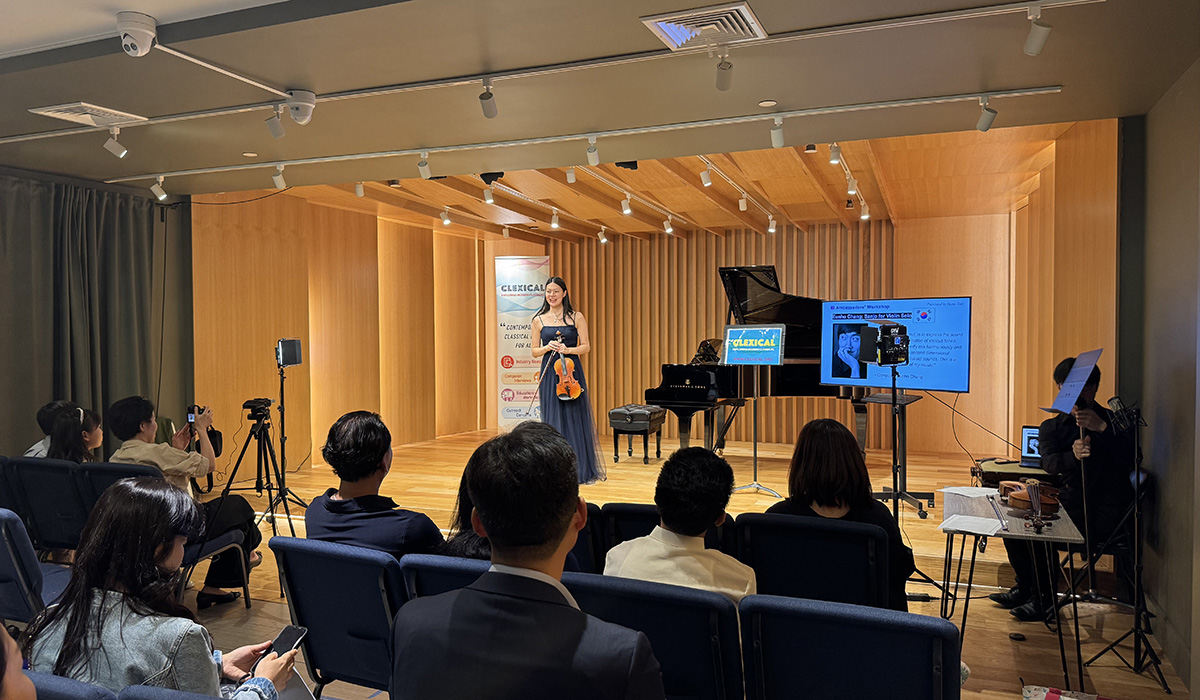
Hana Tsai, co-founder of Clexical, performs and presents Eunho Chang’s Sanjo for Violin Solo (2008) at a Clexical workshop.
What have you learned through your experiences as a volunteer?
Interviewing composers has given me perspective on the composition process, how new technologies and more current ideas join together to make their pieces. I’ve learned how to adapt information I want to convey to my audience, making it fun and engaging for them. That’s helped me with school presentations and in day-to-day life. And I’ve learned how to work with people better. There are a lot of logistics behind the workshops, performances, rehearsals and more. It can get chaotic, especially because everybody is so busy, and I want to respect their time.
I’ve also learned to be more flexible with getting my message across when it doesn’t seem like it’s clicking. I’m more comfortable branching out from my original plan.
Why is it important for others to get involved with causes they care about?
It allows the community to grow. Nothing will happen if they keep hoping it will. They have to take the initiative. Engage people in a conversation or presentation by showing that you’re passionate. People are instinctually interested in what other people are interested in.
How can people take steps to highlight this type of music where they live?
There are many modern composers trying to get their work out, but there’s this stigma that it’s difficult to listen to, or it’s difficult to attend their concerts. A simple YouTube search is a step towards learning more about modern classical music.
I won a competition using a piece I found on YouTube. I cold emailed the composer, and he was happy to provide me with the music and suggestions about how to phrase certain parts. These composers want to share their music with the world. They want to help you out, especially if you’re a musician. Never be afraid of a cold email.
What do you want people to learn from your story?
I want them to be more curious. Before a few years ago, I’d never played any pieces by female composers. I’m female. How did I not notice that? I’m passionate about Clexical, because I feel like I’m part of redefining the canon of classical music.
Meet Daily Point of Light Award honoree Gavin Reddy. Read his story, and nominate an outstanding volunteer or family as a Daily Point of Light.
When Gavin Reddy saw his grandfather struggle with his health, he knew he wanted to help others pursue a healthy lifestyle. A 17-year-old high school student, Gavin has always been very passionate about how culture and identity play an important role in our health. His grandfather, who comes from an East Indian background, had a cough and was initially diagnosed with tuberculosis, because the disease has a higher rate in the East Indian population. However, it turned out to be an aggressive form of cancer that was caught too late.
Inspired to start volunteering with Native communities, Gavin saw the disparities in his community. So he created EMPWR Arizona, an organization that works to fight childhood obesity through Indigenous foodways. The organization empowers Native youth with healthy habits, raises awareness about changing food traditions and builds strong communities rooted in culture, resilience and wellness. The foundation of EMPWR’s mission is its hands-on cooking classes for students and caregivers, taught by a Native American chef. In each session, attendees receive nutrition and sustainability education, as well as guidance on traditional food practices and preparation. Each family departs with a fresh bag of produce and ingredients they can take home to put what they learned in class to practice, simultaneously minimizing food insecurity and reinforcing long-term healthy habits.
Since its origin in 2024, EMPWR has served more than 40 families, distributed over 100 bags of fresh produce and ingredients and has helped raise more than $30,000 to support and expand programming. But Gavin has also seen many of his students thrive, whether they’re developing a love of cooking or learning healthy practices and taking them home to pass them on to their families. Gavin’s dedication to EMPWR’s mission is visible in the 12 to 15 hours per month that he volunteers to run the organization, on top of his very busy high school schedule. But his devotion to the cause is just another example of how age doesn’t have to be a barrier to changing the world. In fact, with a passion to help others, anyone can make a significant change in their community.
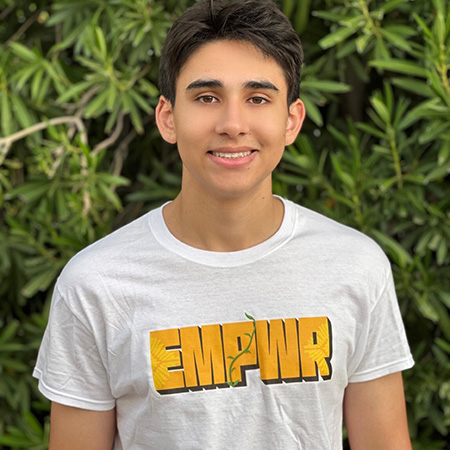
GAVIN REDDY IS THE FOUNDER AND PRESIDENT OF EMPWR ARIZONA, AN ORGANIZATION THAT WORKS TO FIGHT CHILDHOOD OBESITY THROUGH INDIGENOUS FOODWAYS. /COURTESY GAVIN REDDY
What inspired you to get started with this initiative?
Over the summer of my sophomore year, I volunteered at a health facility for Native American people. I saw they had this program called Read It and Eat, where they would have a librarian come in and tell a story or a folk tale, and then they would have a couple of these children cook. A lot of the people who were coming in were disproportionately affected by obesity. This led me to do some research, and I found out that in Arizona, it’s Native American children who have the highest rates of obesity. That started me down this path of seeing what I could do to change things.
I began looking for other nonprofits that were involved with Native American communities, and I found that there weren’t any. I decided to found EMPWR in my sophomore summer. Initially, I reached out to indigenous chefs from around the valley to gain some of their knowledge, ask them about the obesity crisis and ask what we can do to bring back health and culture to these communities. From there, I developed a model of cooking classes that are parent-child in participation, in which a chef leads them through the class. I help students cook and feel comfortable. We provide access to healthy foods so that all students go home with bags of food and produce for the next two weeks that can be used to cook at home, and we’re giving them the education and tangible skills to overcome that barrier.
What inspires you to volunteer?
It’s seeing a need and trying to fill in. I believe that if you’re not actively helping, you’re no better than the issue itself. I noticed that the obesity epidemic is something that affects all Americans. However, in my own community, it’s affecting a specific population the most, which is Native American communities. I’m very passionate about health because of what happened with my grandfather. I thought, if I’m not actually helping, what is my role in this crisis? That’s what led me down the path to creating EMPWR and trying to engage other Native American community members to help fight back against this crisis.
Tell us about your volunteer role with EMPWR Arizona.
I’m the founder and president of EMPWR. Outside of the cooking classes, I go shopping for groceries, plan the next meal and create health tips, because something that EMPWR is working on is not just the culinary aspect, but also the healthy eating aspect. Some of the programs we’ve done are on the importance of pea proteins and other plant-based proteins, because not only do they have a smaller ecological impact, but they’re better for our health. A second one we developed was a challenge called the rainbow plate. It was the idea that we would bring in some pictures of healthy foods in a rainbow format, seeing how many colors and different foods they could get on their plate. We challenged the students to go home and send us pictures of all the meals they’ve created using natural ingredients and colors. Inside the cooking classes, I help plan the meals with Chef Mario, and he leads the whole class, but I work with each student.
What are your long-term plans or goals for the organization?
Currently, we’re based in the Madison district. We have two classes with two sets of students. However, something we’ve been working towards is making EMPWR self-sustaining, so right now we’re working on getting a community garden at the Madison Elementary School District, so we don’t have to keep going out and shopping for vegetables every week or trying to buy new ingredients. We hope that it becomes something that manifests outside of our classes, in which students can engage with this community garden. They can learn about seed banking and other culinary practices that are related to both indigenous wisdom and healthy eating. That way, they’re engaging power outside of our culinary classes.
Our hope is also that it affects other students whom we don’t have the time to incorporate into our classes, because the Madison district has a large Native American population. Our goal with the garden is to engage students who may not be directly involved with EMPWR, because our goal is to platform the whole community. Our second piece is expanding into other schools within the Madison district and then creating chapters outside of Arizona.
What’s been the most rewarding part of your work?
The most rewarding part has been seeing the culinary love that all of our students are developing. For example, one of our students who came in had an aptitude for cooking, and we platformed him by giving him extra ingredients when he went home. This developed into a real love of cooking, and now he has actually started his own chef’s blog where he documents what he’s doing. He’s entered some cooking competitions, all because of the love we nurtured at EMPWR.
Essentially, we’ve seen this love grow within all of our students.
What have you learned through your experiences as a volunteer?
Because we work with a delicate community, there are a lot of trust issues and other barriers. It’s taught me that leadership requires a lot of listening and feedback. Specifically, as a volunteer and as the president of EMPWR, it’s been a process of engaging these communities productively, because our goal within power is not to transpose a model of what we want onto these communities. It’s a mutual negotiation between the communities and us: seeing what they want and what they need, and then being a helpful resource. I’ve reached out to countless chefs and other Native American figures to see if what we’re doing is appropriation or cultural learning, because we don’t want to infringe upon anything in these communities. For me, leadership may seem at face value like taking initiative, but to me, what I’ve learned is that it’s about listening and engaging with community members.
Any advice for people who want to start volunteering?
I would say the biggest piece is to get active, because a lot of people are afraid of the setting, or they’re uncomfortable engaging with these communities in the first place. They don’t really know if what they’re doing is useful, or they feel out of place. That’s something that initially happened with EMPWR. We were trying to see if the community wanted it or how they were going to be involved. For me specifically, it was just the act of actually getting into the volunteering, meeting the students and talking to them, because once you develop a personal relationship with them, you move beyond those issues and feelings of discomfort that may have prevented people from volunteering in the first place. Once you build a connection, it creates a lifelong bond where you want to keep going back to help the community.
What do you want people to learn from your story?
You should always be listening to the needs of others, because sometimes we have preconceived notions of what communities want or what we think people need. But when you actually listen and engage with the community, you find out what is actually necessary, and then it becomes your role to help nurture and develop their skills, help fight off any barriers and help platform what they need. A lot of people get caught up in logging hours, or they’re a little bit nervous to even try. I think that the idea of listening and engaging helps to mitigate those effects.
Meet Daily Point of Light Award honoree Sriyan Daggubati. Read his story, and nominate an outstanding volunteer or family as a Daily Point of Light.
Sriyan Daggubati, 17, is a mythology enthusiast who enjoys a game of basketball and has been in a Bollywood dance troupe since second grade. At first glance, he seems like a typical high schooler, affable and well-rounded, but his dedication to volunteering is anything but ordinary.
Driven to learn about neurodivergence to help a friend, Sriyan’s extracurricular research has become so much more. NeuroGuidance became a central part of his life in eighth grade, garnering sponsorships from companies like Meta a year later. His mission is straightforward: improve educational access—particularly in STEM—and inclusion of neurodivergent youth around the world.
Now a senior in high school, Sriyan has formal partnerships with Stanford Neurodiversity Project, Harvard Public Health, Duke Neurodiversity, Michigan’s Center for Disability and UCSF Autism Center. He regularly speaks at schools to help teachers connect with their students and guide their teaching approach. NeuroGuidance has trained more than 50 teachers in the San Ramon Valley Unified School District in inclusive instructional practices. Sriyan presents his work at conferences across the country and manages a global leadership team of 250 officers.
For 10+ hours a week, Sriyan focuses on supporting neurodivergent youth… with no plans of slowing down. He’s even planning to major in neuroscience as he starts college next year.
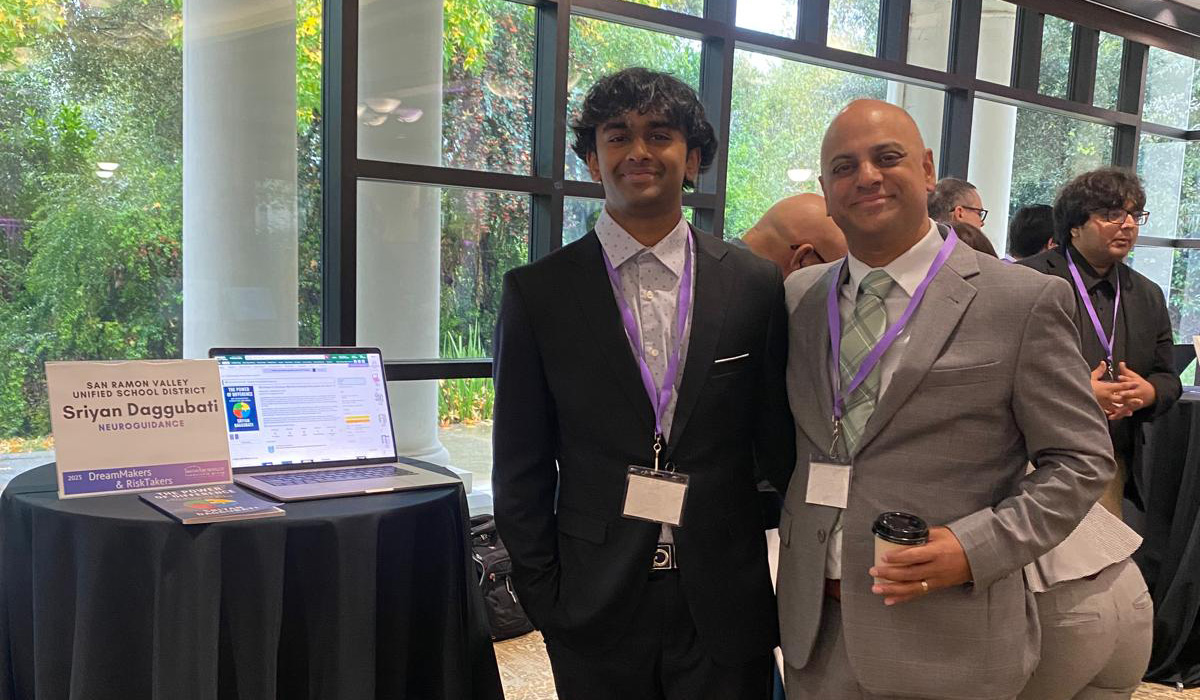
Sriyan Daggubati (left), founder, presents NeuroGuidance’s global initiatives to Mino Sastry, CEO of Stanford Health Care Tri-Valley, whose organization partners with NeuroGuidance to distribute neurodiversity handbooks across healthcare settings.
What inspires you to volunteer?
I started Boy Scouts around fifth grade, and a lot of my volunteering was through that. NeuroGuidance began with an elementary school friend with ADHD and autism. I used to see him struggle a lot in school, and we didn’t have classrooms specifically for neurodivergent students, or so-called Rainbow Classrooms, until middle school.
At that age, I didn’t notice the barriers or stigmas that I do now. I would see teachers treat him differently, and his parents would ask me why he wasn’t doing well. I didn’t know how to answer.
In middle school, I started researching neurodiversity, and in seventh grade, I started creating and distributing handbooks with Rainbow Classroom teachers on what that is. The summer before eighth grade, I attended a program called Stanford Neurodiversity Project REACH (Research Education Advocacy Camp).
There, I found one of my mentors and the director of the project, Dr. Lawrence Fung. I learned that neurodivergent students lack spatial reasoning, which is the ability to visualize and understand 3D concepts, a vital skill in STEM.
We worked in small groups to create a slide deck aimed at solving a problem we saw in the neurodiversity scene. I presented an early version of NeuroGuidance as a way for neurodivergent students to build spatial reasoning, and Dr. Fung encouraged me to move forward with the idea.
Later that year, I started hosting workshops using what I learned from his program about how neurodivergent students actually acquire knowledge. I started connecting with teachers, creating flyers and posting them on my district website.
Now, in addition to workshops, we build augmented reality tools, which are like VR headsets and advanced apps that involve 4D visualization to help students learn concepts and use spatial reasoning via low-sensory simulations. We also host fundraisers, because they’re expensive.
By ninth grade, I’d established it in multiple schools in my district, and by the end of my sophomore year, it was statewide. In 11th grade, I qualified for the Regeneron International Science and Engineering Fair where the top 1,500 finalists worldwide competed in Ohio. Using the connections I made there, I’ve been able to open NeuroGuidance chapters in over 70 countries.
Tell us about your volunteer role with NeuroGuidance.
Initially, I prepped, hosted and taught a lot of the workshops myself. Now, I oversee multiple teams. The tech team creates the tools and apps we use in workshops. I help brainstorm ideas, and they bring them to life. Our social media team manages our socials and runs ads.
My main role is leading organizational strategy and getting more people involved. Since our expansion, I’ve been focusing on sponsors to help fund the shipment of tools across the world. I’ve also been recruiting people to manage our different chapters.
In September 2025, Dr. Fung, made me a keynote speaker at the Stanford Neurodiversity Summit, where I shared my work—and a book I published—with clinicians, psychiatrists and nonprofit CEOs doing similar things. Many of them later reached out about partnerships, funding and collaborations.
I have 10 to 15 meetings a day after school, to make sure everything is running smoothly. And I host a podcast that amplifies the voices of neuroscientists, educators, policy leaders and CEOs. We’ve hit 100,000+ global listens.
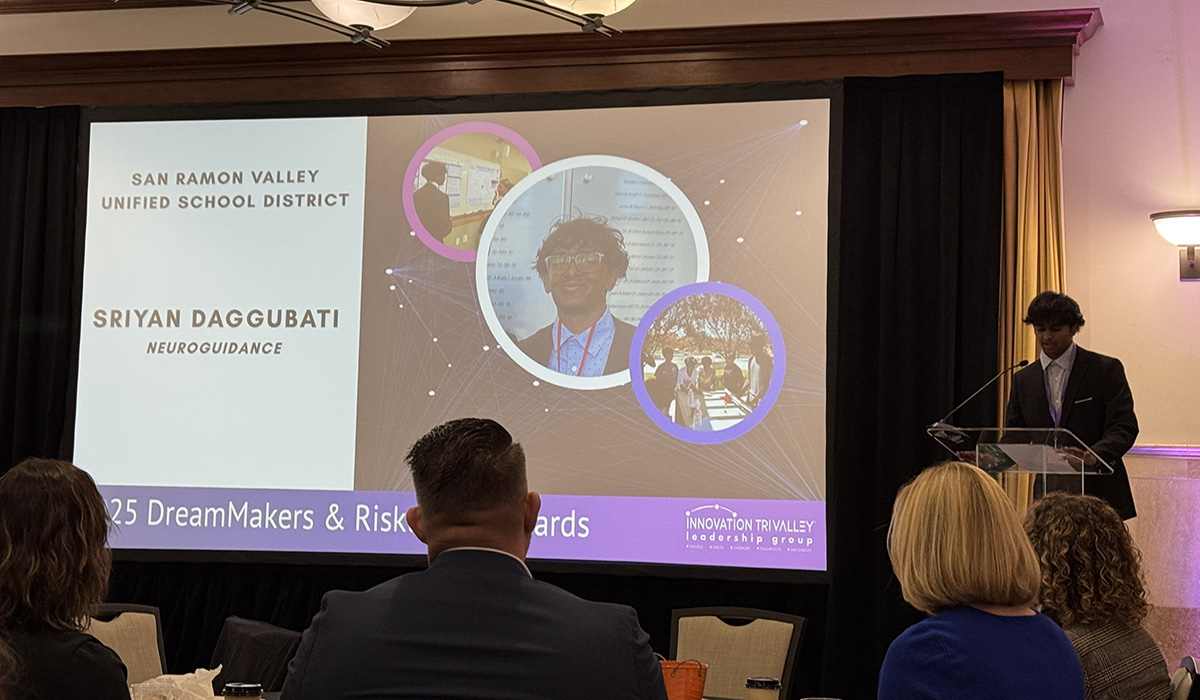
Sriyan presents NeuroGuidance at the Tri-Valley Innovation Leadership Group DreamMakers and RiskTakers Awards to city mayors and leaders from Stanford Health Care Tri-Valley, Kaiser Permanente, UC Merced, Berkley Lab and regional education and entrepreneurship communities.
What changes would you like to see in policy or the classroom environment?
Science labs or STEM classrooms can be really cluttered with all the hands-on work that you do. I’d love to see them become more sensory-friendly. If you design something for a neurodivergent person, it can work for anyone. It’s the universal design principles for learning.
I’ve also been trying to eliminate masking, a term describing how neurodivergent people hide their struggles and feelings, which makes it harder to help. We need to create an environment where people are more comfortable expressing what they’re thinking, feeling or struggling with.
What’s been the most rewarding part of your work?
It’s been great seeing students’ confidence increase. We have a sub-series of workshops that help them get into research and science fair. Last year, when I was competing in my regional science fair, many of the students I mentor were there. They had some incredible projects and were winning prizes. I love seeing people succeed and overcome their fears.
How can people reading this take steps to push for change?
To push for any type of change, find someone you can ask a lot of questions and get started. For me, that’s Dr. Fung. Seek mentorship and guidance. Learn everything you can about the problem you want to solve.
What do you want people to learn from your story?
The amount of work I’ve done in a limited time may seem really hectic, but it doesn’t feel that way because of how connected I am to the problem. It all started with one of my best friends. Always do work that you love, and the sky is the limit.
Meet Daily Point of Light Award honoree Aurora Pfeiffer. Read her story, and nominate an outstanding volunteer or family as a Daily Point of Light.
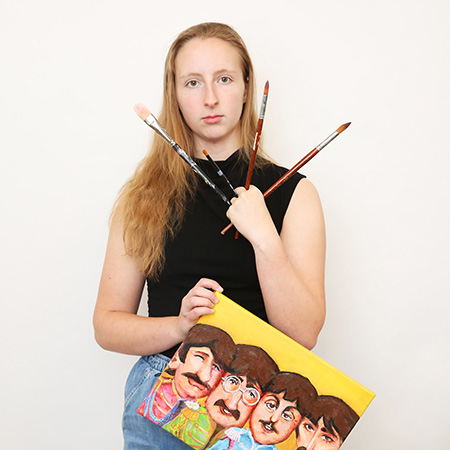
Seventeen-year-old Aurora Pfeiffer’s athleticism is matched only by her artistry. A competitive figure skater who emphasizes that it’s just for fun, when not on the ice she keeps busy rock climbing and weightlifting. She’s also teaching her dog to skateboard. And even after her band broke up, she plays piano and bass, occasionally writing songs. Making art, especially drawing, has been a longtime passion.
It shouldn’t come as a surprise that Aurora’s creativity is also what she channels into Color & Cause, the nonprofit she founded last July. Her inspiration grew from the impact of a successful fundraiser she initiated earlier in the year that has grossed over $16,000 for the Flight #5342 Victims’ Family Support Fund, the crash that took the lives of 28 members of the U.S. figure skating community.
She has also raised over $25,000 for Scott Hamilton’s Sk8 to Eliminate Cancer program over the years, offering her artwork to incentivize donations of $50 or more. Hamilton is a figure skating legend, a fellow Nashvillian and a cancer survivor himself, whose foundation funds research for treatment research.
Aurora was moved not only by the impact her art had on building and healing a community but by the idea of a collective of artists exponentially expanding their impact. Today, she spends much of her time creating art fundraisers for communities in need and building her artist network. As she nears high school graduation, she is looking forward to a gap year to make art, work, skate and grow Color & Cause before heading to college.
Aurora Pfieffer, founder and CEO of Color & Cause, uses art to create a positive impact and empowers other artists to do the same.
What inspires you to volunteer?
I like volunteering because helping people is important to me. I know what it’s like to need help and support. There are a lot of people who have a lot of challenges and difficult circumstances. I enjoy lifting people up and building more equity.
Tell us about your volunteer role with Color & CAuse.
As the CEO and founder, I do community outreach and run our social media. We’re currently rebranding, and when that is done, my goal is to post two or three times a week highlighting our work. We have a board, and my mom does a lot of the administrative stuff.
We recently partnered with a nonprofit called Art2Hearts, and they have a network of children’s hospitals whose bleak walls they want to brighten up with art. We’ve donated 30 prints so far with a commitment for another 220 this year. I’m working on developing a network of artists across the US to expand our gallery of art that nonprofit hospitals, shelters, hospices, clinics andother organizations can choose from.
What inspired you to get started with this initiative?
Last January, there was a plane crash in D.C. in which many of my friends lost friends. I drew some of the victims, posted them on Instagram and received a lot of grateful comments. Then, I had the image printed on t-shirts so people could keep an image with them. Over 250 shirts have been sold, and profits have been donated to victims’ families.
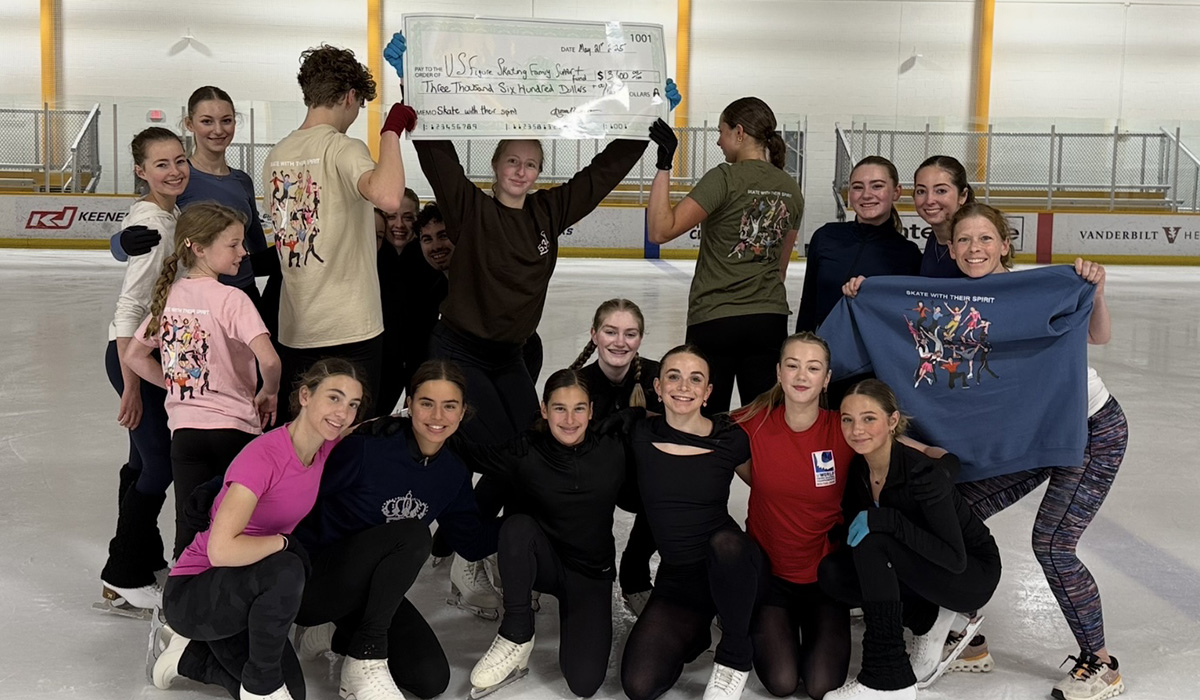
The slogan on the shirts, “Skate with their spirit,” is something my mom suggested, channeling my original idea in a way that I love. Amber Glenn, a three-time national skating champion, held hers up at the World Championships in Boston, highlighting it on international television.
I saw how my art had impacted people and wanted to continue. My organization aims to allow artists making art for, say, disaster relief, to fundraise through us without being taxed. Last January, we didn’t have the nonprofit, so all the t-shirt money we raised was taxed.
Why is art so important to you, and what mediums do you like to work in?
I’ve been doing art since I could hold a crayon. I love to express myself and create other worlds and characters that I can insert myself into and feel something–happy, sad, curious, intrigued, confused. Art is a catalyst for emotion, both as an outlet for your own and as a way to consume other people as an observer.
I mostly like to draw. With the rise of AI, I’m trying to move away from digital art, which is why I started painting with acrylics. The process is challenging, but that’s probably because I have no formal training. I’m just vibing.
What are your long-term plans or goals for the organization?
I’d like to organize monthly community art classes with a team of local artists and work with underserved communities, senior homes or any community that needs a bit of fun in their life. When I go to college, I want to start a chapter there and get others to do the same at their own universities. And I’d love to paint murals and brighten up walls around the city.
Standing with teammates and coaches, Aurora holds the first check she sent to the U.S. Figure Skating Flight #5342 Victims’ Families Support Fund for $3,600.
What have you learned through your experiences as a volunteer?
People are more grateful than they may seem or express. A lot of people are really appreciative for the work that we do, even if they don’t tell us. Realizing that has led me to express my gratitude more and not take things for granted.
Why is it important for others to get involved with causes they care about?
It helps other people, and it helps yourself. If you work on something you care about, it’ll make you feel productive and happy. And, obviously it makes other people happy. It’s a positive feedback loop.
Do you have any advice for others who want to use their art in a positive way?
You can join my organization, of course. Other than that, try to make connections. If you want to paint a mural, find out who on city council to contact to let you do that. If you want to donate art to hospitals, find someone who can connect you to hospitals.
What do you want people to learn from your story?
If you want to do something, just do it. Even if you’re scared. It’s always hard to talk to strangers, but you haven’t got much to lose.
Meet Daily Point of Light Award honoree Jordan Sucato. Read her story, and nominate an outstanding volunteer or family as a Daily Point of Light.
The Arizona sun can be unforgiving, but 17-year-old Jordan Sucato is providing a safety net for vulnerable, voiceless animals when desert heat meets the city pavement. Through her 501(c)(3), Laws for Paws – and in the past two summers alone – she has raised upwards of $21,000. These funds have been transformed into close to 12,000 pairs of protective dog boots to shield the paws of pets living on the streets, animal companions for the 3,500 unhoused individuals she has personally supported with essential care packages.
In addition to her boots-on-the-ground volunteer work, Jordan is also a fierce advocate in the Arizona Legislature. She has independently researched modern alternatives to cosmetic animal testing, such as mRNA quantification and RT-qPCR, to provide a factual backbone for her legislative pursuits. As a national legislative chair, she has spent three years collaborating with the Arizona Senate Majority Leader to draft and promote bills banning animal-tested cosmetics. Her influence crystallized in a monumental effort with the Arizona Supreme Court, where she successfully coordinated 184 courts into a centralized reporting system for a proposed state-wide animal abuser database.
Jordan’s work is vast and varied. She works as a dog trapper for the Community Rescue Project. She monitors remote cameras in the Sonoran Desert. She sets up feeding stations, manages the intake of thousands of donated items and ensures that the 10,000-strong volunteer network across the state remains fueled. Combining science and advocacy, she has created a blueprint for modern activism that treats community support and animal welfare as two halves of a whole. And while some of her bills await their final victory in the House and Senate, the thousands of lives she has touched so far – both human and animal – are living proof of her impact.
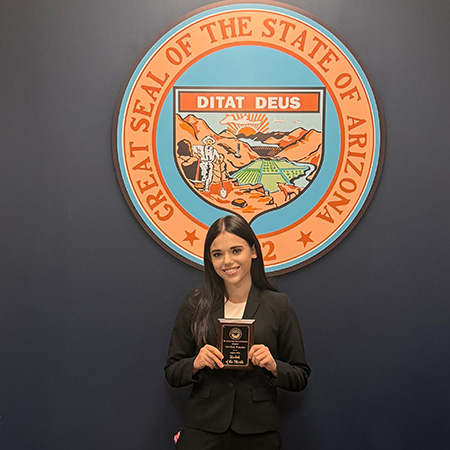
Jordan received recognition from the State of Arizona for her work.
Tell us about your volunteer role.
The organization is called Laws for Paws. I like to say that I’m an advocate for those who cannot speak for themselves. I focus a lot on legislative animal welfare initiatives. I did a cosmetic animal testing bill; I’ve done that the past three years, and I’ll be running that again next year. I also did an animal abuser database, and these are both specific to Arizona, but I will be expanding these bills nationally next year.
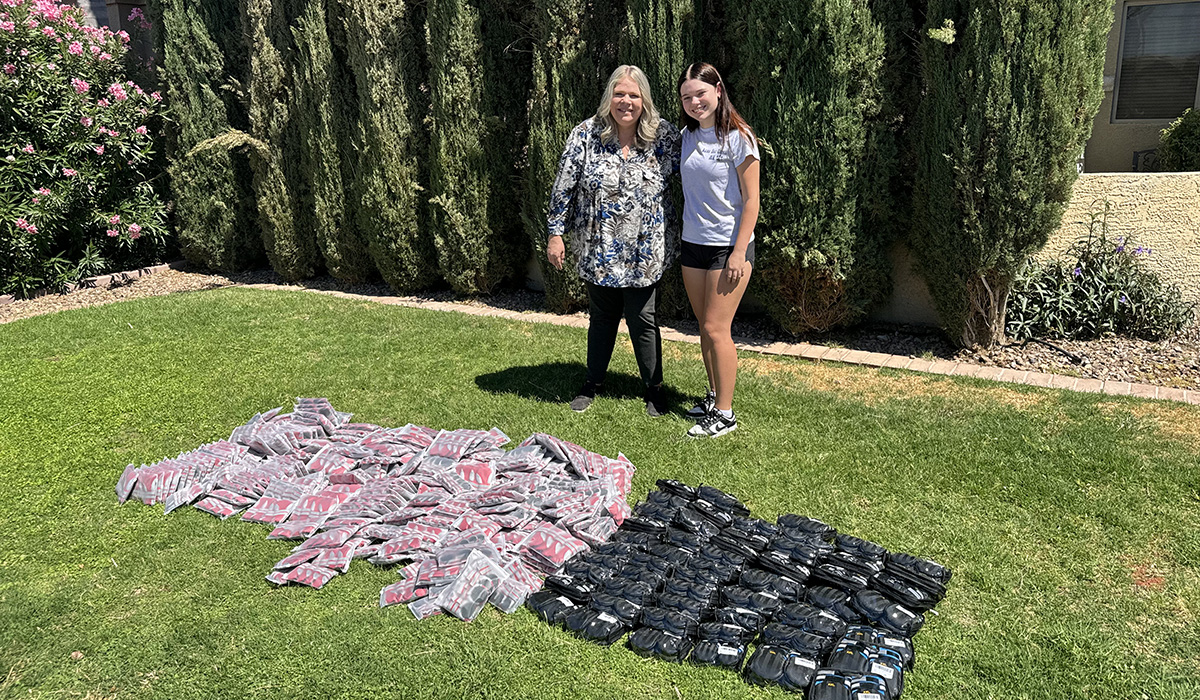
Additionally, I do direct aid, so I do a lot of work with unhoused populations. I’ve been able to aid over 3,000 unhoused individuals and their pets because I raised $22,000 for dog boots, just because it gets so hot in Arizona. I distribute those during the summers, and I’ve been able to distribute 12,000, which is about 3,000 sets. I just love everything I do.
I established my own board, and my board and I go down there pretty frequently. We go to the same spot, or my mom and I will distribute. We’ve distributed all across Arizona, even two hours away from where I live. And my outreaches with Dog’s Day Out happen once a month.
Why is animal welfare so important to you?
I think I’m biased in this because I grew up with every species of animal, so I’ve always been surrounded by them, which is a huge blessing. I think that’s where I developed a lot of my compassion for them, but when it really struck me is when my mom volunteered with a local organization here in Scottsdale, called Love of Dogs Fund. When I was 8, after begging her for years, she finally let me come with her. The owners liked to describe me as the “dog tester” to see if the dog is friendly with kids. Thankfully, they always were! But I saw dogs come from situations like hoarding and dog fighting, and we also fostered emaciated dogs. When I saw that, it just struck something in me. Those experiences developed my compassion and empathy for these animals.
Then in sixth grade, I was assigned an argumentative essay against cosmetic animal testing, and that’s where I learned about the actual procedures. It’s not just painting a monkey’s nails; it’s chemical compounds being applied on the skin. I came home that day and I told my mom, “I’m going to get cosmetic animal testing banned.” She was – you know, I was 12 at the time – so she’s like, “Sure you are.” But I did. I developed my own LLC because of that, and it’s just been history since then.
What are your long-term plans or goals for the organization?
My biggest thing – I’m actually about to announce this – is that we’re doing a national expansion. I’ve been able to work so far with kids in New York and Texas to introduce similar legislation in their states. It’s been very successful in Texas so far. I’ve decided that I’m not going to continue to target only one or two more states; I’m going to be expanding my legislative initiatives to over 15 states.
I’m also going to be expanding the dog boot fundraiser, and hopefully get that up and running whether it’s a hot environment or a cold environment, because everybody needs dog boots, whether it’s snowing or whether it’s 110 degrees out.
What’s been the most rewarding part of your work?
I never expected to do direct aid, but that definitely has been the most rewarding part of my work. I always wanted to focus on legislation, but I was referred to Monique Hebert, who’s the founder of Dog’s Day Out AZ, the partner organization I work with for the dog boots. I’ve honestly fallen into believing stereotypes about unhoused people before, as I’m sure everybody has, but Monique humbled me very quickly. She goes, “Okay, you know what? Come down to one of our outreaches and distribute dog boots,” because I had been donating them, but I had never actually seen it in action.
I went down there and I met so many incredible people that just had specific circumstances that led to them being where they are. I saw how much love they have for their pets and hearing all their stories and realizing these are people, too. Who am I to judge someone else? That is easily my favorite part of the work. Of course, seeing the animals, but I love meeting the people and the owners and hearing their stories.
Jordan Sucato (with founder Monique Hebert) at a donation drop off to her partner organization, Dogs Day Out AZ.
What have you learned through your experiences volunteering?
On the academic side, I did a lot of research about cosmetic animal testing and substitutes. I learned a lot about organs-on-chips and using science such as mRNA quantification to be able to assess inflammation in the chip.
But what I’ve really learned through volunteering, big picture, is empathy. I think that I was previously able to experience sympathy for people and animals, but working with all of this hands-on taught me empathy. My favorite book is To Kill a Mockingbird, and I always loved Atticus Finch’s way of saying to put yourself in other people’s shoes. This concept has literally come into my life so frequently. Empathy has been the biggest thing I’ve learned.
Why is it important for others to get involved with causes they care about?
I think it’s important because there’s so much hate in this world. Even with things like AI, people are losing their creativity and passions. If there’s something you stand for, if it’s something you believe in, you should do everything in your power to try to make that happen. If you have something that’s going to change the world for the better, regardless of age, regardless of whether you think you can do it or not, it’s so important to at least try.
Any advice for people who want to start volunteering?
I have pretty bad social anxiety. I struggle with fear, too. There’s a tool called the five-second rule, where you count to five and then you just do something. That’s how I think about volunteering. I’m like, “Okay, I’m just going to go for it.” If I hate it, I don’t ever have to go back again. But there’s never been a time where I’ve hated it. I say, just throw yourself into it and see if it works out for you.
How Small Gestures Have Rehumanized a Hospital Hallway
Meet Daily Point of Light Award honoree Brooks Tang. Read his story, andnominate an outstanding volunteer or family as a Daily Point of Light.
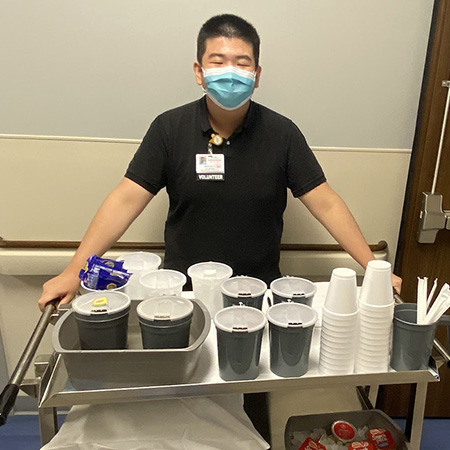
In the rooms and hallways of Henderson and West Henderson Hospitals, which can often be high-pressure environments, teenager Yizhang (Brooks) Tang dedicated over 700 hours of service to patient care and comfort. Brooks, an aspiring physician, recognized that while medicine treats the body, the spirit often requires a different kind of intervention. This realization led to “Daily Dignity-Care Rounds,” a program he pioneered to address the often-overlooked details of patient life. By delivering simple items like warm towels, lip balm and glasses-cleaning kits, Brooks restored a sense of self to those confined to hospital beds.
Brooks served as a social and emotional bridge between the bedside and the nursing station. On average, he committed 12 hours every week to checking in on patients, offering a listening ear that helped dissolve the fog of loneliness and stress. From grabbing a cool beverage for a patient to facilitating clearer communication between families and their medical doctors, Brooks ensured that patient concerns were heard and addressed with urgency. This non-clinical support allowed registered nurses to focus their expertise on critical medical tasks.
Additionally, during his time at the hospital, Brooks tackled the logistical backbone of the facility by assisting with transport and supply management. With his effort and warm attitude, he helped improve the overall responsiveness of the medical staff. His work evolved from a solo effort into a leadership mission, as he eventually trained other volunteers in the art of service. Ultimately, Brooks has reminded an entire healthcare community that healing is a holistic endeavor. He’s helped transform the hospital environment into a more human-centered space – where patients are seen as individuals rather than just room numbers.
Brooks posing in front of a service cart of part of his many hospital services to patients.
Tell us about your volunteer role.
I’m a former volunteer at Henderson Hospital in Henderson, Nevada, where I focused on supporting patients, helping them feel more comfortable and at ease. Much of my time was spent sitting with patients to offer conversation, helping those with limited mobility contact family members, addressing small concerns that affected their comfort and being present for patients during their stay.
When I first started, my role mainly involved providing conversation and helping facilitate communication between patients and nurses. Over time, I took on additional responsibilities that supported patients’ day-to-day comfort, such as distributing snacks and beverages, offering hot towels and helping clean or adjust glasses. I also worked on improving my ASL skills to better communicate with deaf patients, and explored simple ways to make communication more accessible, such as using a stethoscope to help amplify sound for a hard-of-hearing patient or adding tactile markers to controls for patients with visual impairments.
Through this experience, I came to better understand how important small details can be in a patient’s overall experience. While clinical care is the most essential part of a patient’s stay, patients are often also dealing with fear, uncertainty or discomfort. I tried to contribute in small ways to make the environment feel more supportive and responsive to their needs and their personal needs. For example, I once helped a patient with limited dexterity reorder a meal that was easier for him to eat.
I also assisted with relaying patient concerns to nurses, when appropriate, and helped with nonclinical tasks, which consisted of answering phones, stocking areas, transporting patients when they were discharged, and bringing food and water. These small contributions helped support both patients and staff, and showed me how teamwork plays a role in patient care. Over time, I became a team lead and assisted with training new volunteers.
What inspired you to get started with this initiative?
I started this work because I realized how difficult a hospital stay can be. Specifically, I saw that a hospital stay can remove parts of a person’s dignity. If you are hospitalized, you often don’t get to wear your own clothes, don’t control the course of the day and you are far from family. Through our work, I help provide dignity by caring for small needs, provide conversation and help connect patients to their families.
What are your long-term plans or goals with medicine?
Volunteering at Henderson Hospital has been a wonderful experience that has made me grow into a more thoughtful and emotionally present person. I believe this supports my long-term goal of becoming a physician that advocates, supports and affirms my patients’ needs beyond clinical care. I actually hope to work at this hospital a decade down the line. Not only would that be an epic story – volunteer to physician at the same hospital – but I truly believe this hospital provides amazing care from amazing people.
What’s been the most rewarding part of your work?
The most rewarding part has been the influence on the families and patients I interact with. For example, I’ve sat at the bedside of patients undergoing chemotherapy, waiting for organ transplants or simply just frustrated with everything that’s going on in their health. Through conversing and affirming these patient’s circumstances, they often report feeling more understood and being seen.
In one specific example, we had coloring books with crayons for the patients. I talked to this patient struggling with breast cancer. We discussed how although her condition was improving, she had spent so much time in and out of hospitals she felt she had lost autonomy in her life. Later, my small team of volunteers and I drew a rainbow in a field with the phrase “everything will be sunshine and rainbows” for her. She told us how much hope she held, yet how difficult the present was. Before leaving for the day, we saw her embrace and tear up over our drawing and carefully stowing it away in her purse.
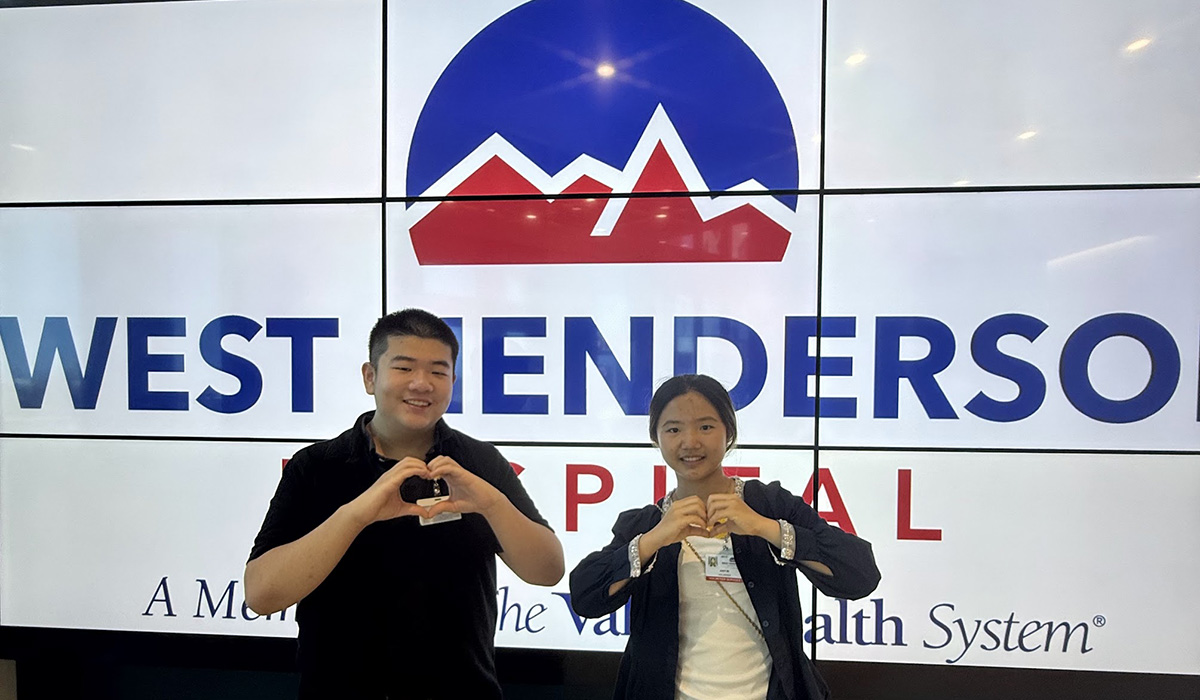
Yizhang (Brooks) Tang (left) posing in front of hospital logo with partner Judy Wang (right).
What have you learned through your experiences volunteering?
Volunteering has made me grow into a more thoughtful and emotionally responsive person. Before volunteering at Henderson Hospital, it was hard sometimes to know what to say to someone struggling. Comforting anyone, as I learned, is about unconditionally reflecting the person’s feelings, their circumstances and the impact a disease or event has had. This doesn’t mean following a script or saying the “perfect” thing, it’s about taking a walk in their shoes to understand where they come from.
Volunteering has also helped me develop a deeper sense of empathy and understanding for all people. You truly don’t know what someone might be going through, but even so, people don’t need to be going through anything to deserve grace.
Why is it important for others to get involved with causes they care about?
Because it helps form you into a better person and supports the good in your community. The day I started volunteering is vastly different from the person I am today, and it’s simply because these experiences have challenged me to grow. Not only does volunteering directly impact your community, you encourage other people in your community to do good when they see good. For example, I’ve seen multiple patients inquire about volunteering or ask for information because they spotted the work we do. It really can be transformative for you and your community.
Any advice for people who want to start volunteering?
Realize that any anxiety or hesitation you may have to start something, tackle a challenge or join an organization is very likely a definitive sign you are stepping into something that’s both real, and likely to challenge and curate personal growth for you. Go do!
Meet Daily Point of Light Award honoree Arya Abbasian Kashi. Read his story, and nominate an outstanding volunteer or family as a Daily Point of Light.
Arya Abbasian Kashi may not be able to cure cancer, but he’s going to do whatever he can to help people get through the experience. A 17-year-old high school junior, Arya saw how his own grandmother’s journey with lung cancer devastated his family. Arya began volunteering at Cancer Support Community South Bay, an organization that works to uplift and strengthen people impacted by cancer by providing support, fostering compassionate communities and breaking down barriers to care. Hoping to utilize his close ties within the community to engage fellow young people, Arya founded the organization’s Youth Leadership Council (YLC), bringing together fellow teens who have personal experiences with cancer.
Starting at his high school, Arya organized a group of young people into a Cancer Support Community Club, of which he serves as president. The chapter soon grew, establishing a second chapter at another school and hosting student volunteer teams for CSC fundraising events and workshops. You can find the group engaging with the community, helping at volunteer events throughout the year. Arya cites one of the responsibilities he’s most proud of as promoting CSC South Bay’s free counseling and support programs for teens whose families are affected by cancer. By channeling his own grief into something positive, Arya can help others navigate the gut-wrenching experience of watching a loved one navigate the cancer journey.
Despite having a heavy course workload as a high school junior preparing to apply to colleges, Arya dedicates ten hours per week to CSC South Bay. That’s a significant time commitment, but Arya doesn’t see his volunteer work as an obligation. Instead, he believes he shifted his mindset to see it as something he gets to work on. While his volunteer work was born out of feeling helpless about his grandmother’s situation, Arya has turned his journey into an empowering one that has helped countless others.
What inspires you to volunteer?
I learned on my own that cancer affects way more than just the patient. It affects entire families, especially the kids and the teenagers who often don’t have that many spaces to talk about what they’re going through. Being able to help bring awareness to those resources and make sure families know that they’re not alone is something that really matters to me.
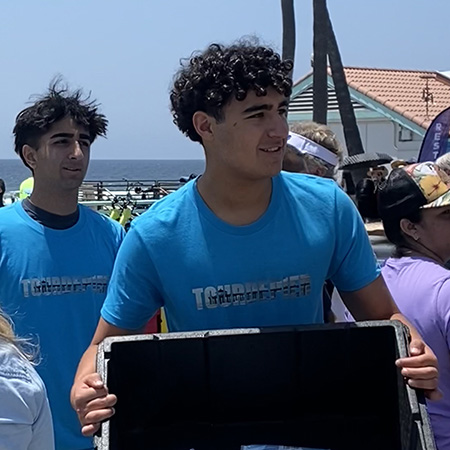
ARYA ABBASIAN KASHI, PRESIDENT OF CANCER SUPPORT COMMUNITY SOUTH BAY’S YOUTH LEADERSHIP COUNCIL, HANDS OUT REFRESHMENTS AT THE ANNUAL TOUR DE PIER EVENT. /COURTESY ARYA ABBASIAN KASHI
Tell us about your volunteer role with Cancer Support Community South Bay.
I’m the president of Cancer Support Community South Bay’s Youth Leadership Council, an organization dedicated to supporting those affected by cancer, as well as their families. I brought this program to my school, and now I help lead two school chapters. My personal role is organizing meetings, coordinating volunteers for fundraising events and workshops, and running our social media to spread awareness about cancer support communities, like free counseling and support services. Overall, I spend about 10 hours a month fulfilling these tasks.
What inspired you to get started with this initiative?
It really started when my grandma passed away from lung cancer in 2021. It really devastated our family, and I felt helpless because there truly was nothing I could do. I wasn’t even able to go see her because she was in Iran. If I’m not able to cure cancer, I want to at least do something to make this kind of experience slightly less scary for families who are affected by cancer, and combine this with the youth aspects of our organization. Awareness among teens is generally pretty low, so starting this youth leadership group kind of felt like a way to get more students involved in something really meaningful.
What are your long-term plans or goals for the organization?
My main goal is to keep growing the youth involvement side of the organization. Right now, we do have two school chapters, but I would really love to expand that and get even more students involved across other schools in the area and the state and, of course, hopefully across the country eventually. The more students know about what we do and our parent company, and volunteer with our organization, the more families we can reach out to and end up supporting.
What’s been the most rewarding part of your work?
I would say the most rewarding part is seeing the real, direct impact that we have, whether that is volunteering at fundraising events, helping out at workshops, or just spreading awareness about our services. It’s really just meaningful to know that the work that we’re doing actually goes somewhere, and that helps families who are going through something super difficult.
What have you learned through your experiences as a volunteer?
I’d say the community part of it. Seeing how powerful our community support can be. When people are dealing with something as challenging as cancer, even small acts of support, such as providing a space to talk or connecting someone with resources, can really make a huge difference. On top of that, I’ve also learned a lot about leadership and organizing like-minded people.
Why is it important for others to get involved with causes they care about?
I think that when someone is involved in something that they truly care about, that is really how the most change is made. I think that you could compare that to when someone really likes their job, they get a lot more done and are a lot more productive. Even small contributions add up. Volunteering in general also connects people to their communities and helps build an understanding of the challenges that other people in their own community are facing.
Any advice for people who want to start volunteering?
I think my best advice that I can give is just to start anywhere. If you have a passion that you want to get involved in, then that’s great. You should start there. But if not, then people should try to get involved in something that helps other people who are going through something that really requires support. A lot of people really wait until they feel fully prepared to start, but most organizations are honestly just happy to have volunteers who are there and willing to help and learn.
Meet Daily Point of Light Award honoree Ryan Tonkovich. Read his story, and nominate an outstanding volunteer or family as a Daily Point of Light.
When COVID-19 hit, the world shut down and people disappeared into their homes. But Ryan Tonkovich, now 18, was using the time to reach outward. He and his older sister founded Read Aloud Buddies to mitigate some of the fallout from children being pulled from their educational routines. Together, they ensured preschoolers through sixth graders were practicing literacy skills amidst library closures and remote schooling.
For the last six years, children enrolled in their program have met weekly with a high school- or college-aged volunteer reader to read and discuss books over Zoom, building vital skills throughout the school year. The movement has been wildly popular. Since its inception, 150 volunteers have read to over 400 children. And it’s not just in Ryan’s community.
Volunteer readers and kids have signed up from all over the country. Two enthusiastic volunteers have even started their own chapters in Florida and Massachusetts with the help of a manual Ryan wrote to help get them off the ground. This fall, Ryan plans to add a fourth chapter of Read Aloud Buddies wherever he decides to attend college, paving the way for even more kids to fall in love with reading.
What inspired you to get started with this initiative?
I started Read Aloud Buddies during COVID. It was the spring of 2020. I emailed the principal of an elementary school and proposed this idea of reading to the children.
It initially started with reading to classrooms of kids, and then parents began asking if we could do one-on-one sessions. That’s when the idea of Read Aloud Buddies came about. I started it with my sister, who is now a sophomore in college, and we run it together.
I’m starting to get the younger siblings of initial kids in the program. It’s really nice to see whole families go through, and to look back at how much of an impact we’ve had. We started out with just one school, one classroom. Now, we have kids and volunteers from all over the U.S.
I’ve done some baking and other volunteering on the side, but this has always been my main focus.
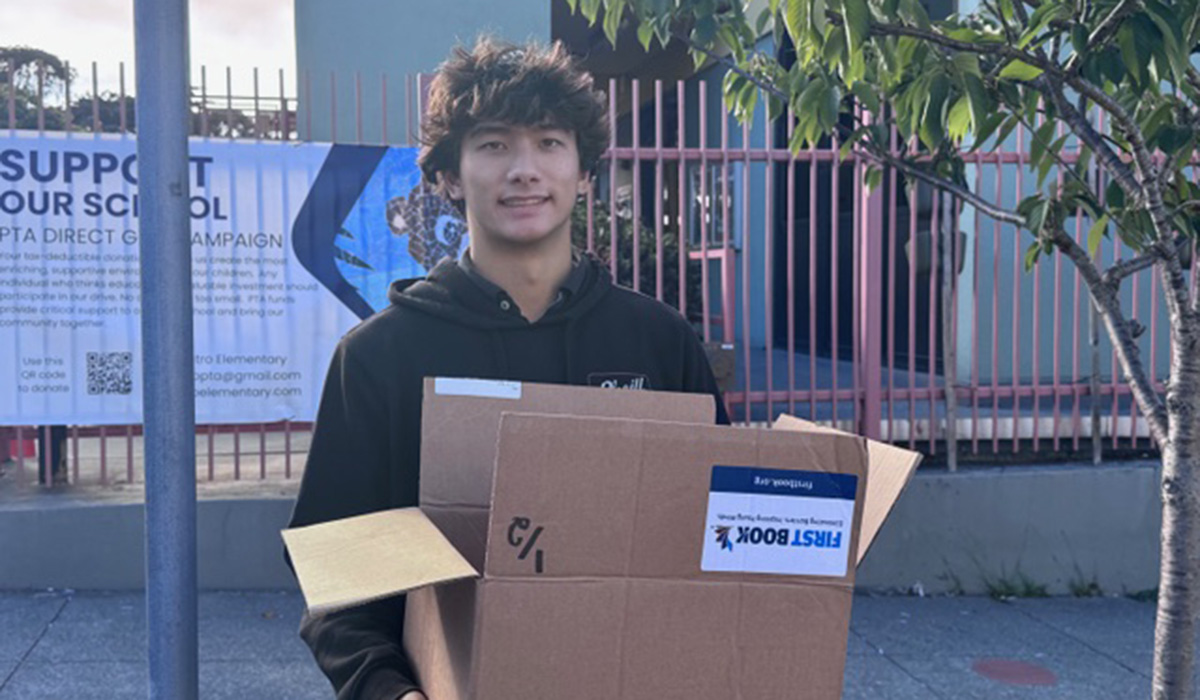
Ryan Tonkovich, co-founder of Read Aloud Buddies, carries a box of books to give away to children attending an in-person session at a school.
Tell us about your volunteer role with Read Aloud Buddies.
I manage people. If I get readers, I recruit volunteers for them. We serve 50 children every week in our online sessions, many of whom are from Title I schools and Head Start programs.
I also train new volunteer readers on how to read in order to keep kids engaged. They generally read to the same person each week throughout the school year, providing opportunities to interact and talk, developing their vocabulary—particularly important for those who don’t speak English at home—and building listening and reading comprehension skills. Books are shown on the screen as they go.
Once a month, I check in with both readers and families to make sure things are going well. And I write grants to secure funding to purchase books. As of now, we’ve secured $1,050. We’ve received books through our donation bins and our Amazon Wishlist, as well. Altogether, we’ve gifted around 1,200 of them.
Last summer, I started doing in-person sessions at local public libraries, community centers and elementary schools. We went to a family shelter last month, too. Those typically have a group of 10 to 30 children, and I let them each choose a book to take home. Our online students receive books that match their reading level and interests twice a year.
What’s been the most rewarding part of your work?
The most rewarding thing has been seeing how big it’s grown. We have people contacting us, asking to join, and we have teachers recommending children. We have siblings coming back, and we have readers and children from all over the U.S. That’s really rewarding. And also, when you do the in-person sessions, a lot of the kids will ask to be read to more or for us to reread a book, which is always really nice. The parents are happy. The kids are happy. We’ve spent over 9,000 hours reading. I just think it’s a great program.
Ryan reads to a child on Zoom during an online reading session.
What have you learned through your experiences as a volunteer?
The little things add up. Something as simple as reading can have a really big impact, particularly because a lot of the kids that we read to don’t speak English at home. English isn’t their first language, so it helps them get on par with their classmates. And I’ve learned the power of teamwork. Our volunteers and I work really hard to make this happen and to keep these sessions running smoothly each week. There’s a lot of collaboration between teachers, readers, schools, parents and kids.
Why is it important for others to get involved with causes they care about?
If there’s something you’re passionate about or really enjoy, there’s always a service opportunity revolving around that or that uses those skills. Service, overall, is usually about helping those who don’t have as many resources, and that’s a good thing in general.
Any advice for people who want to start volunteering?
When you initially start, you might think you’re going to have very little impact, that you’re just going to be spending a lot of time on something that’s not really going to change anything. In reality, every little thing matters. If a bunch of people are doing a bunch of little things, it’s going to add up. Over these last six years, we’ve seen how much Read Aloud Buddies has grown, and that’s a very important lesson for people getting into service.
What do you want people to learn from your story?
Do what you can for your community, because in the end, however small it is, you’re helping someone who needs it. Follow your passion. With patience and time, small acts can really make a big impact.
How This Teen Is Scaling Compassion Through Innovation
Meet Daily Point of Light Award honoree Karissa Tang. Read her story, and nominate an outstanding volunteer or family as a Daily Point of Light.
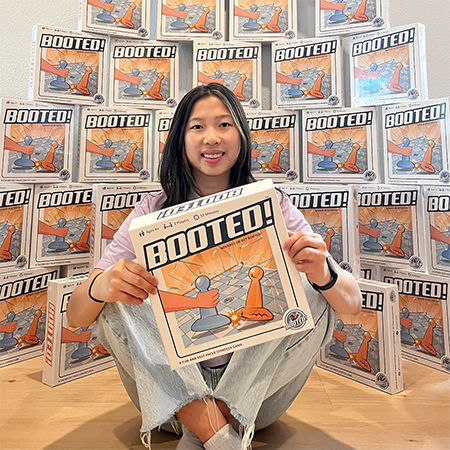
Karissa Tang, a 2026 Coca-Cola scholar, has turned her creative sparks into wildfire-like impact, most notably through Booted!, a board game she co-created with her brother, Skyden. What began as a tool to teach kids strategic thinking blossomed into a nationwide movement. Through their “one game bought, one game donated” initiative, Karissa has donated over $15,000 worth of games to children in 120 schools and 70 nonprofits. Today, her trademarked game has reached every single one of the 50 states, giving over 10,000 kids a seat at the table of educational play – an achievement that earned her recognition from California Secretary of State Shirley N. Weber.
Karissa also serves as a vital voice for the next generation. Appointed as a Youth Task Force commissioner for Santa Clara County, she is one of only 16 individuals representing the interests of 400,000 young people to the board of supervisors. Her research paper on AI’s impact on teen employment – which predicted a 27% decline in teen jobs over the next five years – captured the attention of major outlets like CNN, NPR and Forbes.
For years, Karissa has also dedicated five to 10 hours each week as a church youth group leader and worship leader, authoring over 150 newsletters and leading music sets. Her reach is as diverse as her talents, extending from the classroom as a National Honor Society president to the basketball court as a coach. Even her hobbies are tools for connection; as a magician and Guinness World Record holder, she has performed for over 1,000 people, including Afghan refugees and senior citizens, using sleight of hand to bring a sense of wonder to those who need it most.
Karissa’s story is a tapestry of high-level achievement and grassroots empathy. Between building eight mobile apps with 15,000 users and winning 25 international awards as a music composer, she still remains humbly focused on her core purpose: to love and impact others. Read on to hear more of her inspiring story.
Karissa with Booted! boxes to donate.
Tell us about your volunteer roles.
I’m the co-founder and creator of Booted!, an educational strategy board game for ages 4+. I also started the Booted! Educational Initiative, which leverages the funds from Booted!’s Amazon sales to donate Booted! to schools and nonprofits. When I first started Booted!, my day-to-day involved game-testing, designing, creating the promo video, running the Kickstarter campaign, reaching out to people to donate to our Kickstarter campaign and launching Booted! on Amazon.
Now that Booted! is up and running, I’m working on marketing: fine-tuning the Google search and Amazon keyword strategy, collaborating with popular board game reviewers, landing store retail distributors and hosting Booted! tournaments. I also focus on the initiative side of Booted! by reaching out to schools (mainly elementary schools) in all areas as well as nonprofits serving low-income communities in need of academic resources. I’ve reached out to over 1,000 institutions in total the past two years. I would then donate and ship copies, either individual boxes or in bulk, as needed for the organization.
Beyond Booted!, I also volunteer as a church youth group leader, worship leader, National Honor Society president, Youth Entrepreneurship Association executive board member, Santa Clara County Youth Task Force commissioner and nonprofit magician. Looking forward, I’m eager to further dive into my passions in entrepreneurship and leadership to drive meaningful impact.
Why are these issues so important to you?
Accessible and engaging education is important to me because students are the next generation of the world. There are so many students who come into school uninspired and unengaged, or who don’t even have access to a school system at all. I often wonder: what if we truly tapped into every single kid’s natural curiosity and creativity? Through accessible and engaging education, fueled by passionate teachers and interactive learning, students come alive. Meaningful education taps into and empowers the next generation of leaders, scientists and changemakers.
What inspired you to get started with these initiatives?
I’ve always loved to create. When I was in elementary school, I loved building Lego structures, creating origami magic balls and making up games during recess. I rekindled that love for creation after my brother and I got COVID, where we quarantined at home. During this time of boredom, we (as one would expect!) played many board games, and then decided to create our own. After weeks of game-testing with friends and our younger cousins, we prototyped Booted!. Throughout the experience, I saw younger kids improve in their game play and abstract thinking skills. Witnessing this firsthand, learning about the lack of critical-thinking education in elementary schools, and wanting to expand Booted!’s reach inspired me to launch the Booted! Educational Initiative.
What are your long-term plans or goals with volunteering?
My long-term goal is to continue integrating Booted! into schools and nonprofit initiatives across the country. I’d also love to grow the Booted! Educational Initiative into a broader ecosystem with workshops, tournaments and a ranking system. Lastly, through the Booted! Educational Initiative platform, I’d also love to share more of my entrepreneurial background and story with younger students. Ultimately, my goal is to build the next generation of students who both think critically and dream with entrepreneurial vision.
What’s been the most rewarding part of your work?
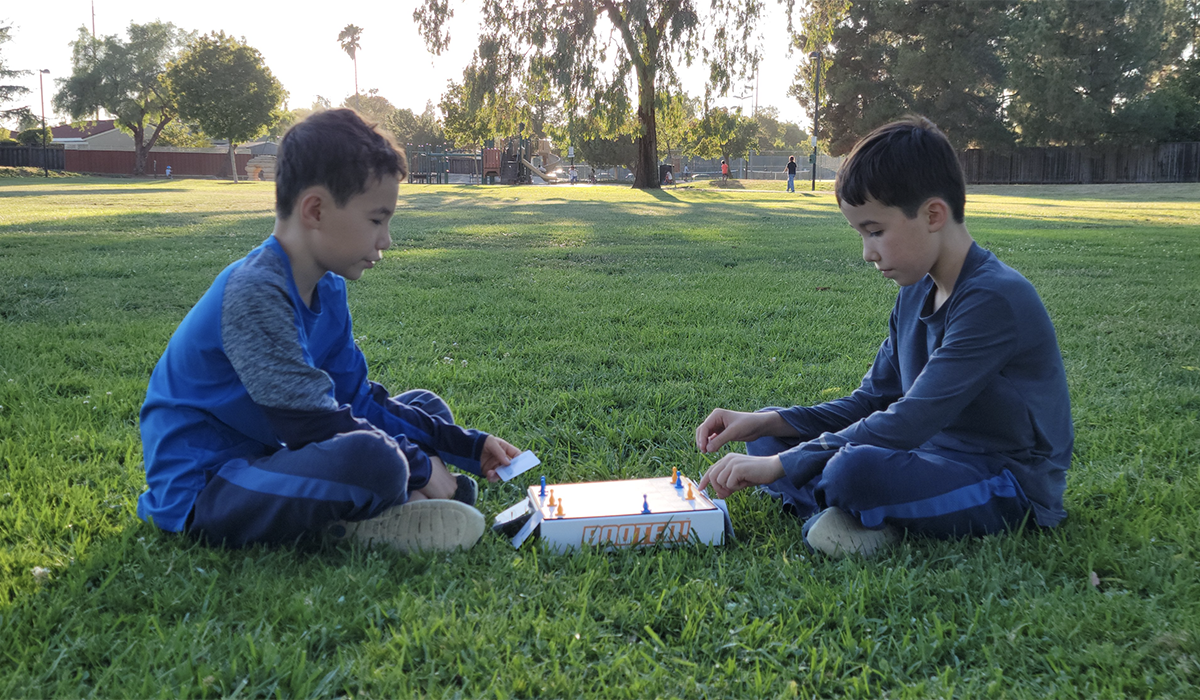
The most rewarding parts of my work are the emails I receive from teachers, school principals and community leaders on a random Tuesday at 2:00 p.m. They’ll share feedback on the game and photos of their students playing Booted! in class or after school. I know how difficult it is to feel engaged with coursework and enjoy learning, so it’s a joy to see kids laughing together and building friendship while strengthening their critical-thinking muscles.
Kids playing Karissa’s board game, Booted!
What have you learned through your experiences volunteering?
I’ve learned that everybody has the incredible power to impact others. For me, volunteering and starting initiatives were daunting at first. I never expected Booted! to grow the way that it has, and I’m grateful that both Booted! and my other volunteering work have scaled the way they have. Throughout this entrepreneurial journey, I’ve learned to better balance dreaming big while taking it day-by-day. Small and consistent effort when volunteering compounds real change, so don’t feel intimidated when you first start out! You have the power to make an impact.
Why is it important for others to get involved with causes they care about?
I believe we all have a part of us – whether big or small – that cares for other people. Getting involved in causes and volunteering is one of the most powerful ways to express that care. When we begin to care for others intentionally, we begin to grow both ourselves and others.
First, volunteering helps us grow ourselves. From personal experience, when engaging with causes I feel passionate about, I feel like I’m actively involved in the world, not just passively letting the world’s problems slide. That sense of agency is incredibly empowering. Second and more importantly, getting involved transforms others. When showing up for others whether through mentorship or service, you affirm their worth and create spaces where people’s needs are met.
Any advice for people who want to start volunteering?
My biggest piece of advice is to know your “why?” What motivates you to help others? For me, when I volunteer, my mission is to utilize my skills and time to help others. That desire stems from my faith, which calls me to love others intentionally and wholeheartedly. By understanding your why, a simple task becomes a grounded calling, your reason behind volunteering.
Accidental Bandleader Turns Ukuleles into Community Care
Meet Daily Point of Light Award honoree Cynthia Miller. Read her story, and nominate an outstanding volunteer or family as a Daily Point of Light.
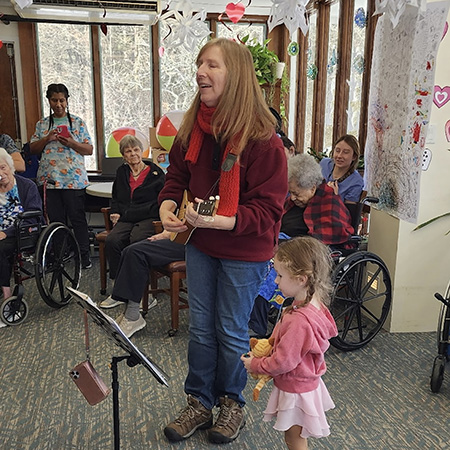
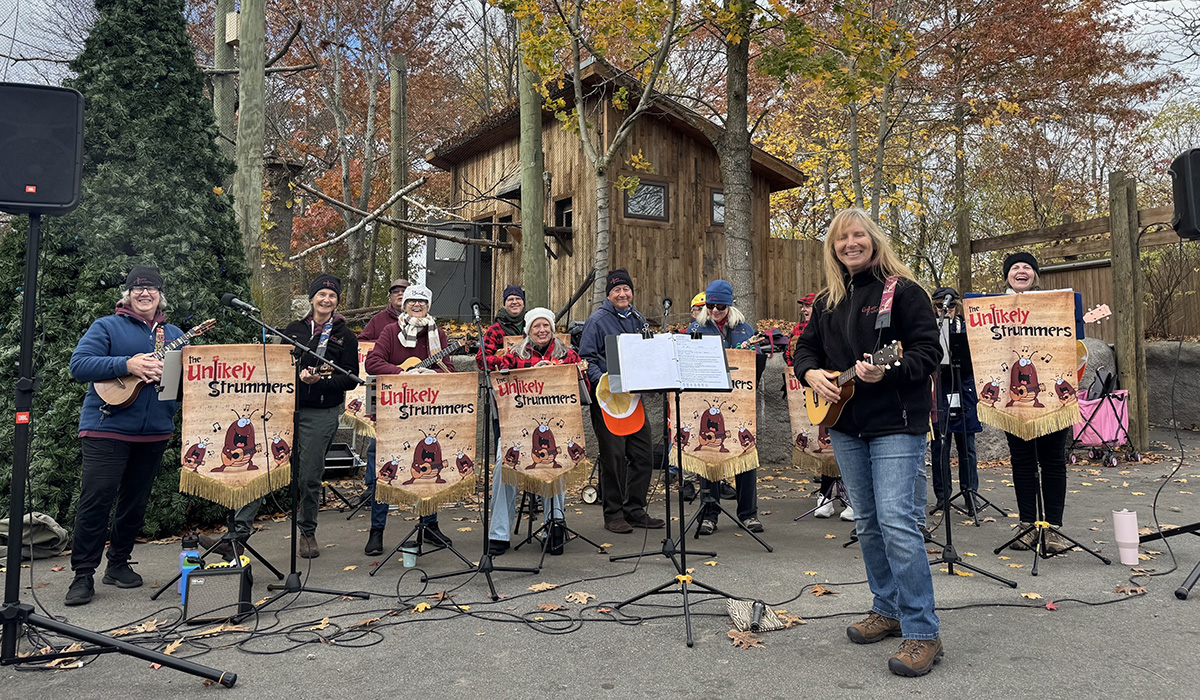
What started as a casual gathering of ukulele students after class ended up becoming something much bigger. Nine years ago, Cynthia “Cindy” Miller answered a call from a local farmers market asking for music, gathered every ukulele player she knew and unknowingly laid the foundation for the Unlikely Strummers – a group of ukulele players from across southern Massachusetts and northern Rhode Island that performs 85 to 90 free concerts a year.
Cindy, who also works as an anthropology professor and animal control officer, serves as the group’s music director, arranger, teacher and community liaison. Most of the group’s members are over 65 — many of them first-time musicians who hadn’t picked up an instrument since grade school. Under her leadership, the Unlikely Strummers bring live music to senior centers, children’s hospitals, animal rescues, sporting events, school assemblies and community festivals. The group also actively fundraises for the Ukulele Kids Club, a nonprofit that donates ukuleles to children’s hospitals for music therapy programs, raising over $20,000 in a single year.
How did the Unlikely Strummers come to be?
It actually started by accident. I was co-teaching ukulele classes at a local bookstore, and classes had just ended. We were all still getting together to play so that the students would have somewhere to go after that. Then we got a call from a local farmers market asking if we’d be willing to play there. So I called every ukulele player I knew and said, “Hey, let’s all do this.” That ended up being the beginning of this nine-plus year journey.
Cindy plays the ukulele at a senior center./ Courtesy Cynthia Miller
Why the ukulele?
I actually grew up playing the flute — not exactly a party instrument. I came to the ukulele as an adult, as an over-50-year-old. It just stuck. It’s this happy little instrument. When I teach the very first class, people go home being able to play a few songs. There is no other instrument you can do that with, really. People who maybe have not-great memories of grade school music classes take a big deep breath to try music again as adults — and the ukulele makes them feel successful and musical. It just brings such joy to everybody. There is nowhere that people aren’t grinning from ear to ear.
How has the group grown since those early days?
In the beginning, there were maybe eight of us. Now there are 30, which is a huge herd of ukulele players. But beyond sheer numbers, the group has become this fabulous community. People genuinely care about each other — they pitch in and help each other out, check on each other when something’s not going right. Everybody’s there for everybody else. And then as a group, they’re all there for the community. Whenever an animal rescue or a theater asks, “Hey, could you provide some music?” everybody is really happy to use what they’ve learned to contribute to the community.
What are some of your most memorable performances?
So many are special in their own way. We played the teen prom for Hasbro Children’s Hospital, and it was just the most fabulous thing — watching these young people all dressed up and having the time of their lives. We all went home feeling amazing. On the entire other end of things, we’ve opened for Jake Shimabukuro, who is pretty much everybody’s ukulele hero. We’ve also played with Peter Asher and recently shared a stage with an Irish band on their North American tour. In April, we’re actually opening for Jake again, and in May and June we’re doing a series of joint concerts with the Warwick, Rhode Island Symphony Orchestra. But the things we go home feeling really good about are the ones where you really feel like you’re touching people — playing at Hasbro, or at Roger Williams Zoo or at community fairs.
Tell us about your fundraising work with the Ukulele Kids Club.
We strongly believe that music heals, and the Ukulele Kids Club is a wonderful nonprofit that donates ukuleles to children’s hospitals for music therapy programs. The first year we started fundraising for them, we raised over $12,000, and then a little more the second year. Now we’re co-organizers of the New England Ukulele Festival, which is a whole-day fundraiser for them, and last year we raised over $20,000.
We do all kinds of creative fundraising — surprise serenades, waddling a benefit 5K in pink inflatable flamingo costumes while playing and singing the entire way. The whole idea is that music heals. These kids are in hospitals with chronic conditions, and all of a sudden, they get this gift of music in their lives. It makes such a difference not only in their outlook, but in their physical well-being — and then they get to take the ukes home and keep learning.
Cindy and her group, the Unlikely Strummers, smile for the camera as they perform at Roger Williams Zoo in Providence, Rhode Island./ Courtesy Cynthia Miller
What has been the most rewarding part of your work?
Music does so much to bring people together. And especially in a world where there are so many things to get bogged down about, music always lifts people up. We see people smile. People come up to us and tell us how much we’ve brightened their day, how things weren’t going that great and then they stopped and they listened and they feel so much better. And we all feel so good giving back. This is a huge way to use what we have to give back to the community, which is so important to everybody. I don’t think anybody would be in the group if that didn’t matter.
Why is it important for people to get involved with the causes they care about?
First, the causes need them. But beyond that, getting involved in something you’re passionate about does so much for everyone as individuals — it benefits the cause and brings all your talents and energy to it, but it also does great things for your self-esteem and your sense of yourself in the world.
What advice would you give to someone who wants to start volunteering?
Find the thing that you would never mind how much time you put in. It’s great to say you want to spend an hour a week somewhere, but if you can find something that it doesn’t matter how much of your time it takes — because you love it, it’s important, it makes a difference and it creates a sense of community for you — that’s the thing. And then just jump in. I know a lot of people who think that at some point there will be this great moment when they’re finally ready to volunteer. Don’t wait. Just do it.