Meet Daily Point of Light Award honoree Alex Cox. Read her story, and nominate an outstanding volunteer or family as a Daily Point of Light.
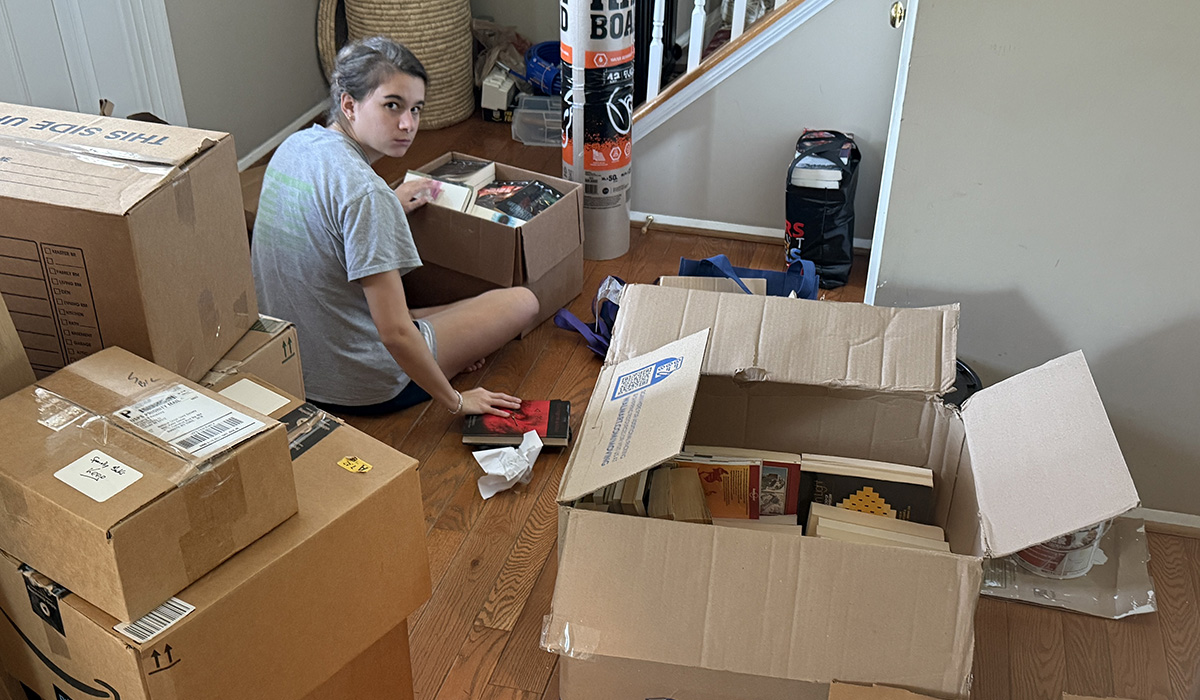
Alex Cox has always been a voracious reader. Now, the 18-year-old high school student is helping others get the same opportunity. From an early age, Alex has read almost anything she could get her hands on. When she was assigned a capstone project in eighth grade that asked her to focus on a social issue, she had already begun delving into the complex challenges of the justice system. She decided to focus her project on the struggles incarcerated people face attempting to find books to read due to severely lacking prison library systems. Hoping to take her work a step further, she held a book drive at her school and decided to donate the books to her local correctional facility. However, Alex didn’t stop there. Inspired by another Daily Point of Light honoree, Lucia Noto, who was a year ahead of her in school, Alex founded Books Behind Bars, an organization that holds book drives at local schools and donates those books to correctional facilities.
On top of her heavy academic workload, which includes preparing for college in the fall, Alex spends approximately 15 hours a month organizing drives, collecting books and contacting prisons, in addition to working toward advocacy for her cause. Since starting Books Behind Bars in 2022, Alex has donated over 3,500 books to 2,800 inmates in prisons across 3 states. She has built partnerships with five prisons and is expecting to grow that number by five more in an effort to continue the massive impact of her work. While Alex isn’t sure what career path she wants to follow, she knows she wants to lead a life that advocates for change in any unjust system.
Because Alex’s inspiration to volunteer was sparked by an older student at her school, she credits that as one of the most influential reasons she decided to stand up and make a difference. The chain reaction that’s sparked when one person sees how powerful helping others can be is a strong example of just how contagious volunteering can be.
What inspired you to get started with this initiative?
In eighth grade, we had a capstone project where we chose a social issue and designed an innovative way of tackling it. I’ve always been an avid reader, and at that time, I had just discovered a pretty deep interest in the justice system. I decided to focus on access to books for incarcerated people. I learned more about that issue, which centers around the idea that prison libraries are underfunded and understocked.
The stigma around incarceration prevents a lot of people from giving charitable donations to these libraries.
Incarcerated people often have very limited access to books. Considering all of that, I developed a plan to hold a book drive at my school and donate the books to my county’s correctional facility. At the end of the year, I decided to not only present my solution but also actually implement it. I ended up holding a book drive at my school, and the initiative grew from there.
Tell us about your volunteer role with Books Behind Bars.
I start by coordinating book drives in my area at local high schools. After I do that, I hold a book drive where students and teachers can donate everything from self-help books to dictionaries to fiction books. Then I coordinate with local prisons to donate books directly to their shelves. So far, I’ve donated over 4,000 books with the help of high school students across D.C., Maryland and Virginia. I’ve also been involved more recently in advocacy for the incarcerated community. I’ve also been involved in lobbying for correctional education-related legislation in my state’s general assembly, and I recently hosted a virtual speaker panel to further bring attention to the experiences of incarcerated individuals and those who work with them.
What are your long-term plans or goals for the organization?
I definitely want to continue Books Behind Bars in college. Currently, I plan to start a chapter at the school I’m going to and perhaps even lean more deeply into the legislative advocacy aspect by putting together a group of undergrads to lobby for incarcerated people’s rights on the state and national level. Aside from continuing my own work, I want to make sure that the legacy kind of work that I’ve behind in Maryland and the DMV area continues, so I’m hoping to be able to hand off my organization to a younger student at my school or a member of my community who’s interested in keeping Books Behind Bars alive in Maryland.
What’s been the most rewarding part of your work?
The ability to work with the prison officials whom I’ve met. These are librarians, education coordinators and various administrators. They were all very open to working with me, and they really care about expanding educational equity for the incarcerated people under their care. They have been able to work with the young people who have helped me get involved in book drives in different schools, and who’ve helped grow my organization. It’s been so inspiring to know that there are kids like me who want to make a difference in this issue.
What have you learned through your experiences as a volunteer?
I’ve learned a lot about the justice system, obviously, especially as it relates to incarceration. I’ve done a lot of research on Maryland-specific correctional education policies, because Maryland does have some really excellent prison college partnership programs. More broadly, I’ve learned some different ways to combat society’s assumptions about incarcerated people, which are obviously so deeply ingrained in our society. It can be really difficult, but it’s rewarding when it’s done, and when you’re able to recruit people to understand a deeper understanding and appreciation of how important this issue really is.
Why is it important for others to get involved with causes they care about?
I started this when I was 14, and as a young person, I remember not seeing a lot of resources and ways for me to get directly into the world of volunteering. As young people, we’re told that we don’t really have the platform to make a difference until we’re at least in college. But as I said before, my work has introduced me to a lot of really motivated young people who refuse to wait until we’re older to fight for a cause they care about, and I think that it’s so important. No matter your age, background or experience level, you know you do have the power to make a change if you’re dedicated and passionate enough. And you just have to find that power within you, and really set out to serve the community so you can make the difference that you care about.
Any advice for people who want to start volunteering?
Take advantage of the presence of older mentors. I mentioned Lucia before, but she was really instrumental in helping me start my organization. If you are in a state or situation where you have older mentors at your school or in your community who have experience starting volunteer organizations or just volunteering in them, and they know what steps to take, I really recommend taking advantage of that resource.
But if you aren’t in a position where you can find these mentors, then really research which issues you care about the most. Then find what organizations near you are taking steps to address these injustices. Maybe go to a food bank or volunteer at a hospital. It’s so easy to get involved in your community, as long as you know where to start.
What do you want people to learn from your story?
The stigma around incarceration is really unjust. Even though it might seem counterintuitive to focus our resources on incarcerated people who are supposedly being punished for their wrongdoing, it actually is really beneficial to society, and it’s something that we can’t ignore. We have to face it headfirst, and we have to make sure that we’re doing all that we can to support this community that doesn’t get the support that it needs.
Secondly, I hope that my story can inspire other young people to get involved in their communities and start an initiative about something that matters to them, and know that they don’t have to wait until they are in college or the workforce to get involved in an issue that is really important to them.
VOLUNTEERING IS PAVING THE WAY FOR A FUTURE IN MEDICINE
Meet Daily Point of Light Award honoree Amy Young. Read her story, and nominate an outstanding volunteer or family as a Daily Point of Light.
Amy Young may only be 17, but she’s already forging a path into a career in medicine. Interested in science at a young age, Amy had a passion to help others and wanted to contribute to her community. Always rather shy, Amy hoped to explore her interest in a future career in medicine, but wasn’t sure if she had the interpersonal skills to go about doing so. Looking to challenge herself and gain the real-world experience to prepare her for the challenges of a medical career, she reached out to Lahai Clinic and Cornerstone Medical Clinic, free clinics for patients unable to afford healthcare. The University of Washington junior knew getting hands-on experience would be an essential building block to her future career path, and she immediately jumped in. What she didn’t know was the mentorship and guidance that volunteering would provide her along the way.
As the first person patients see when they enter the clinics, Amy provides a friendly face to everyone who walks through the door. She helps them schedule appointments and understand complex intake paperwork, which is often not in their native language. She also helps both clinics operate behind the scenes, completing the administrative work that improves clinic efficiency and the overall patient experience. Amy also gets that hands-on medical experience she always craved, and recently had the opportunity to shadow an oncologist and a dentist at the clinics — two fields she finds particularly intriguing. She credits the helpful instructors and mentors at the clinics who allow her to shadow their work as vital inspirations for her future career path.
Amy dedicates over 50 hours each month to her volunteer work at clinics, and admits that the workload can sometimes get rather overwhelming. She has learned to say no when certain tasks would be too much, especially on top of her heavy academic coursework. But it’s safe to say that Amy has no regrets about putting herself out there and volunteering as she works toward her goals of pursuing a career in medicine. Her work is a strong example of how volunteering can serve as the groundwork for an incredibly bright future.
What inspired you to get started with this initiative?
Ever since I was young, I’ve always really been interested in science. I looked up websites to find clinics around me, and that’s where I found Lahai Clinic and the Cornerstone Medical Clinic. I just started volunteering, and I really found a passion for it, and that’s also what led me to pursue med school. Additionally, I’ve recently been practicing as a certified nursing assistant (CNA), which has really helped me immerse myself more in the medical field, because I can actually get that patient interaction.
Tell us about your volunteer role with Lahai Medical and Cornerstone Medical Clinic.
At Cornerstone Clinic, I’m mainly responsible for serving as the co-manager for the two clinics. It’s mainly aimed at underserved Korean-American or Korean patients, but recently we’ve had Ukrainian immigrants and generally struggling individuals from the area. I manage the grants that we get, the volunteers and make sure that everything is flowing properly. I also make sure that labs and blood tests are being sent. At Lahai, I’m working more behind the scenes on the documentation process, which means sorting out the financial situation and things like that.
What are your long-term plans or goals for the organization?
In the next couple of years, I hope to continue to stay in Washington so that I can keep volunteering here. I’m planning on potentially getting my physician assistant license, so that I can get more interaction with the patients, and also help out a lot, because a lot of the doctors, especially at Cornerstone, are planning on retiring soon. I think it’s really important to step up and practice more in those areas.
What’s been the most rewarding part of your work?
I think there have been various instances where I’ve interacted with patients and seen the gratitude in their faces after their visit. All of us, including the doctors and assistants, took the time out of the day, because a lot of the receptionists and doctors come from Bellevue or Seattle, and they’re traveling all the way for a couple of hours. I think that’s what really makes volunteering there rewarding. Even though it might be just a simple task for the doctors, it really makes such a huge difference in their patients’ lives.
What have you learned through your experiences as a volunteer?
I feel like I’ve grown a lot. When I first started, I didn’t know much about the medical field. I just knew that I wanted to become a doctor. But now, I’ve seen the different parts of medicine and the different areas where patients are struggling. Some patients come in for tooth extractions, while others come in for diabetes. Being able to shadow these doctors helped me realize which area of specialty I want to go into in the future, which I feel is really important. When I first started, I didn’t really know what I wanted to do, and didn’t have a vision of where to go.
Why is it important for others to get involved with causes they care about?
Nowadays, with a lot of resources, I feel like having authentic experiences and sharing them with other people can really inspire them. I know a lot of receptionists at Cornerstone Clinic. They’re high school students, but over time, they have definitely become a lot more interested and more proactive in helping out the clinic. I really like to see that, because I know it’s difficult, and it’s also very competitive in college, so it’s just really nice to see that passion coming through in real time.
Any advice for people who want to start volunteering?
I train the volunteers, and something that I always tell everybody who is just first starting is try to do as much as you can at the clinic. I always encourage them to shadow doctors. If you do put in an effort, some doctors are willing to let you shadow them. I think that really helps you see what this day-to-day life would be if you were a physician. Also, shadowing multiple specialties can really help you. It might seem kind of daunting, but at the end of the day, they really just want to help you. Just putting your foot in the door is what really makes such a huge difference.
What do you want people to learn from your story?
When I first started, I was very shy. I only went to the clinic because my brother was going there. I didn’t really feel like this experience was going to help me that much. Over time, my perspective changed so much. At the time, I wasn’t thinking of going to med school. I was looking through other career paths, like research, but I was still generally interested in science. I just wasn’t sure if it was going to be healthcare. I feel like this experience solidified it. I know there’s a long pathway to go ahead, but I feel like without the experiences that I’ve had, I definitely wouldn’t have the passion and the grit to be able to follow through. That’s why I feel very confident that I’m able to go through with it.
A Mission to Mobilize Youth Against Food Insecurity
Meet Daily Point of Light Award honoree Bruce Matos. Read his story, and nominate an outstanding volunteer or family as a Daily Point of Light.
On any given week, Bruce Matos can be found coaching Kung Fu students as a first-degree black belt, training with his high school track team as co-captain, diving into neuroscience research or teaching himself piano and music production. As a rising senior balancing academics, athletics and hobbies, his schedule is packed. And yet, somehow, he still finds time to volunteer.
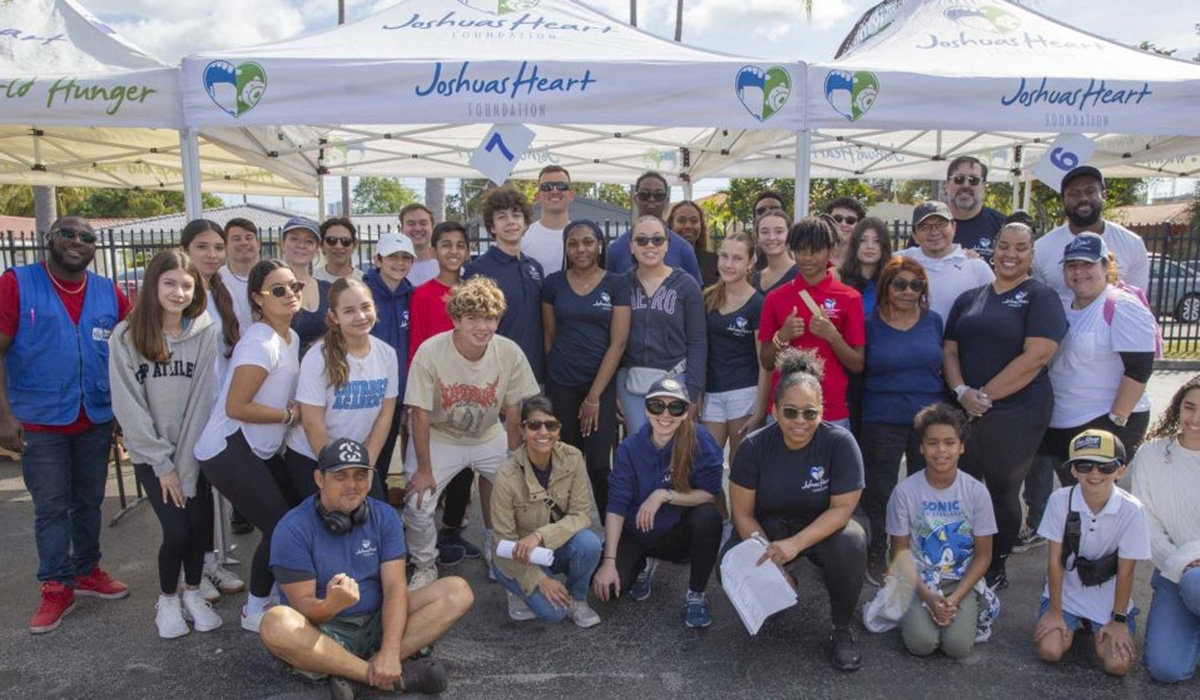
In eighth grade, Bruce discovered Joshua’s Heart Foundation (JHF), a youth-led nonprofit dedicated to fighting food insecurity. What stood out to him wasn’t just the mission to address hunger, but the structure. Students weren’t simply volunteering at events; they were leading meetings, brainstorming solutions and being entrusted with real responsibility.
Soon after getting involved, Bruce co-founded JHF’s Connecticut Junior Advisory Board, helping expand the organization’s reach beyond South Florida and mobilize youth volunteers in his home state. Over time, he stepped into the role of Head of Partners & Sponsors, where he presents to corporate donors, builds long-term partnerships and mentors fellow student leaders.
Through it all, Bruce has shown that leadership doesn’t require waiting for adulthood, and that meaningful change can start at any age.
What inspires you to volunteer?
I’ve seen how much a single missing piece can impact someone’s future. If a family is worried about their next meal, it can be hard for their student to focus in school, and if there’s no support system in place, even small obstacles can feel overwhelming.
This is really what pushes me to volunteer. It’s not about checking a box to say “I contributed.” It’s about stepping in when something basic is missing and doing what I can to help. To me, service isn’t extra. It’s part of being responsible for the community I’m lucky to be part of. It’s a mindset I learned on my journey to becoming an Eagle Scout.
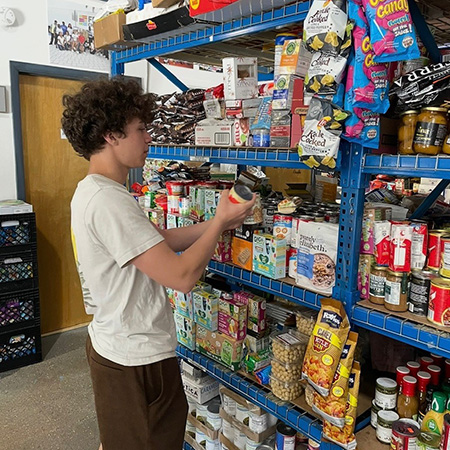
Bruce stocks shelves with canned goods at a local food pantry./ Courtesy Bruce Matos
Tell us about your volunteer role with Joshua’s Heart Foundation.
I started volunteering with Joshua’s Heart Foundation (JHF) in eighth grade. At first, I just wanted to help along with my older brother. But pretty quickly, I realized I wanted to get involved more and create something bigger. That’s when I co-founded the Connecticut Junior Advisory Board. We organized food drives and collected books and school supplies for under-resourced schools. It was hands-on and it felt very meaningful to me.
Eventually, I found my voice within JHF. I stepped into the role of head of the Partners and Sponsors team, and with the support of my mentors, it pushed me outside my comfort zone. I started learning to present to corporate sponsors and learning how to engage with leaders of major organizations. I had to figure out how to tell our story clearly and build real, lasting relationships.
But what really made it special was that we were all students. These were my peers and we were learning together, how to run food distributions, hopefully smoothly, how to organize outreach, how to lead with confidence even when we were still figuring things out. I think I can credit JHF for how much my confidence grew during this time. I learned how to coordinate teams, communicate with different audiences and turn ideas into something tangible that helps families facing food insecurity.
What inspired you to get started with this initiative?
What first caught my attention was that it wasn’t just adults organizing everything behind the scenes. It was, and still is, the students who are actually leading the conversations. They were coming up with ideas, solving problems and being trusted to make real decisions. That mattered to me!
Food insecurity isn’t some distant issue you read about in a headline; It’s visible and urgent. I didn’t want to join something where I’d just show up and take instructions. I wanted to be in a place where young people had a real voice and real responsibility.
Joshua’s Heart gave me that opportunity. It gave me the chance not just to volunteer, but to grow as a leader while making a tangible impact.
What was your most impactful project?
One project that really shaped me took about a year to pull together. It started out as a simple idea to organize a food drive, but then it slowly grew into something much bigger than I anticipated. In that year, my P&S team and I built partnerships, reached out to sponsors and rallied peer volunteers. I was able to raise $12,000, which allowed us to purchase and collect more than 12,000 pounds of food. Through all the planning, I learned quickly that big goals require patience and collaborative effort.
But the day we distributed the food in South Florida made all of it worth it. We were able to serve more than 1,300 people that weekend. Seeing families walk away with full bags and a little less stress on their faces really impacted me. It reminded me that leadership isn’t about the numbers you report, and you see quickly that food insecurity isn’t abstract. It’s very personal.
What are your long-term plans or goals for this organization?
In the long term, I hope to help expand youth leadership pipelines within the organization. I hope to become part of the National Advisory Board where I can help raise awareness and hopefully expand JHF to my college campus and town.
I hope to study global public health in college and I’m also interested in integrating education into food distribution efforts, such as nutritional literacy workshops for younger students. I think that sustainable impact requires meeting immediate needs and investing in future opportunities.
What’s been the most rewarding part of your work?
Honestly, the best part has been watching younger volunteers grow. I’ve seen my peers show up on their first day quiet and unsure of where to stand, and I’ve seen them evolve, much in the same way that I did, into confident youth leaders. It’s the hidden superpower that we all have within and that JHF helps us discover.
What have you learned through your experiences as a volunteer?
One of the biggest things I’ve learned is that you have to listen before you try to fix anything. Every community is different. What works in one place might not work in another. If you aren’t flexible and learn to adapt, then you will usually miss what people are actually saying.
I’ve also learned that service depends on the small things most people don’t see. There’s a lot of work behind the scenes that most people don’t see, like being organized, communicating clearly and staying humble. Leadership in this space isn’t about standing in front of a crowd. It’s about being the person others can count on. Most of all, it’s really listening because people don’t need assumptions. They need respect.
Tell us about future partnerships, programs or events that you are excited about.
I’m really excited about building stronger connections with schools and youth organizations. There’s so much potential when students come together across different communities, sharing ideas and taking action. I’m also looking at ways to combine service with learning — whether that’s through health, neuroscience, or STEM programs. Recently, I was honored with the Hispanic Heritage Foundation Youth Award Gold Medal for community service (red region) and named a Hormel Foods 10 Under 20 Food Hero. These experiences have opened doors to amazing organizations and leaders. I’m looking forward to deepening those relationships, learning from their approaches and exploring ways to collaborate to fight food insecurity in even bigger, creative ways and more sustainable ways.
Why is it important for others to get involved with causes they care about?
Because change doesn’t happen by accident. When you care about something and actually do something about it, you start to see the world differently. You grow more empathetic, patient and aware. Even small actions make a difference. And when lots of people step up, those small actions add up into real change.
Change happens when people, especially young people, are encouraged, trained and supported to take action. We’re the next generation, and giving us the tools and guidance to lead means a stronger, more caring future for everyone.
Any advice for people who want to start volunteering?
Don’t wait to feel ready, just do it. You don’t need a fancy title or tons of experience. Show up, pay attention, get involved, ask questions and stick with it. Being reliable opens doors, and that’s often where real leadership starts.
What do you want people to learn from your story?
I hope people realize that leadership and service go hand in hand. You don’t have to put your academics, sports or research on hold to make a difference, and you certainly don’t have to wait until you’re an adult to start. Taking initiative now, as a student, not only helps your community, it also shapes you into a better person: more thoughtful, resilient and capable. Leadership isn’t a position. It’s a habit.
Meet Daily Point of Light Award honoree Mary Jess Holt. Read her story, and nominate an outstanding volunteer or family as a Daily Point of Light.
“Farm-to-table” is often marketed as a luxury – something you see printed across the menus of high-end restaurants, signaling freshness, sustainability and care. But in Nashville, that same concept is feeding people experiencing poverty, homelessness and food insecurity – and volunteer Mary Jess “MJ” Holt is making it happen.
At The Nashville Food Project, farm-to-table isn’t a trend. It’s a commitment rooted in the belief that all people should have access to the food they want and need. In a city where one in seven residents lack consistent access to enough food, while more than 40% of food goes to waste, the organization works to bridge that gap by growing organic produce, cooking made-from-scratch meals and sharing them in partnership with local community groups.
Since May 2025, MJ, a 20-year-old college sophomore, has logged more than 235 volunteer hours across the organization’s gardens and kitchens, often spending her summer break and class-free days volunteering. She might start the morning planting or harvesting crops in the garden, then head into the kitchen to chop vegetables, portion ingredients and assemble thousands of meals. Those meals are distributed to schools, homeless shelters and community centers across Middle Tennessee, and carefully prepared to accommodate a range of dietary needs, including low-sodium, gluten-free and vegetarian options.
Mary Jess Holt has been volunteering with The Nashville Food Project since last May, helping make farm-to-table meals accessible for those facing food insecurity./ Courtesy Mary Jess Holt
Tell us about your volunteer role at The Nashville Food Project.
I first started in the garden at South End United Methodist. We were planting, weeding, harvesting, maintaining crops like cucumbers, okra, heirloom tomatoes. It was a great time. From the garden, the food is taken into The Nashville Food Project’s kitchens. There we serve about 6,000 to 7,000 meals weekly to probably 40-plus distributors in food-insecure communities.
When I walk into the kitchen, there are stations set up where you can cut vegetables, wash vegetables, portion food, assemble sandwiches — really anything you want. It’s kind of self-serve.
I actually became such a frequent volunteer that normally you sign up for shifts, but since I’m there so much, they’re like, “You can just come in.” I usually stay longer. When the regular volunteers leave, they’ll just tell me what to do — help with ovens, meal prep, maybe organize a refrigerator. Stuff like that.
What inspired you to get started with The Nashville Food Project?
I was really interested because of my interest in economics at school. As an economics major, we study inflation and we study supply chains. And something I was really curious about was how to fix rising grocery prices. I didn’t really understand how to tackle that issue.
I thought, what’s something I can get involved with to understand it better? We don’t really think about the farmers or where this food comes from. I felt like in order to connect these two realms — school and in-person contact — it would be through this work: harvesting, planting, tending, growing actual food… and not just learning about it.
What’s an example of a meal you’ve helped prepare?
I remember this one time we were cooking ratatouille. All of our produce is coming from the gardens or from supermarkets that donate food — places like Costco or Publix — and we really don’t know what we’re going to get.
One time we had so much eggplant, and we were like, “Oh my gosh, what are we going to do with this?” Our kitchen manager, Julia, said, “Let’s make ratatouille.” So, we chopped up all the eggplant, and we also had a lot of donated Parmesan cheese and tomato sauce.
We layered it in those silver containers — eggplant, zucchini, sauce, cheese — baked it, did another layer and baked it again. It was a really fun process. Very colorful — yellow and purple.
We also make sure meals are balanced. If someone needs vegetarian, low sodium, gluten-free — we have different meals directed toward those groups.
Do you have a favorite crop or task?
My favorite plant would be the heirloom tomatoes we grew — they’re called Purple Cherokee. They don’t look bruised, but they are very purple, and they smell great. And they’re delicious.
In the kitchen, I really enjoy organizing meals, like making salads. First the lettuce, then cucumbers, then tomatoes, then meat or cheese, then dressing — just this orderly fashion. And it’s very colorful at the end.
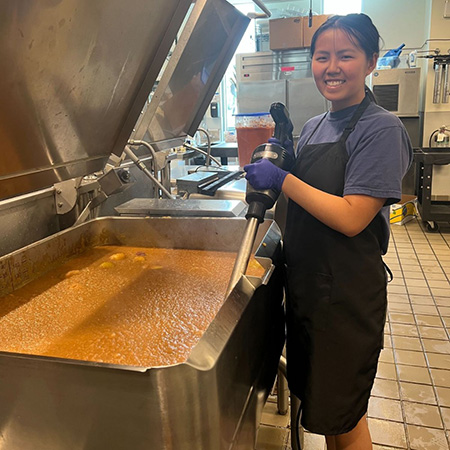
Mary Jess Holt tackles a 30-gallon batch of applesauce with an immersion blender, turning a mountain of apples into a community-sized pot of homemade goodness.
What has been the most rewarding part of your work?
Seeing how little acts accumulate into something much bigger than I would think.
For example, the first day in the garden, I planted okra. I had never grown okra before. Two months later, the plants were 10 feet tall — twice my height. Seeing something you planted grow that tall — it really shows how small acts grow over time.
What have you learned through your experiences as a volunteer?
Definitely patience. In the garden, things don’t grow overnight. It’s a practical skill — you show up every day, you take care of the plants, you watch them grow until they’re really big. This type of consistency teaches you that it’s not something you can do overnight.
Why is it important for others to get involved with causes they care about?
I believe when you volunteer, that’s when real change happens. You go from being an observer to actually participating.
When you take ownership and dedicate time and energy, it teaches you to be a better human being. Volunteering deepens your empathy. Even if you’re working locally on something like food insecurity, it helps you understand it as a bigger issue in society, too — and how to tackle that.
What advice would you give to someone who wants to start volunteering?
I would say just jump in. Be curious. What is something you want to solve? Is there anything that really strikes you in your community?
Then go volunteer. Find a place that matches your interests. Find more people like you. You’ll start something really great, and you’ll be part of something much larger than yourself.
What do you hope people learn from your story?
I would say putting in the effort and showing up consistently is what makes the largest impact.
When you care for something — when you tend and harvest and water — you see how it grows day by day. That’s a reflection of anything in life: studying, working out, building friendships. It all depends on how much effort you put into it.
Meet Daily Point of Light Award honoree Vihaan Kamath. Read his story, and nominate an outstanding volunteer or family as a Daily Point of Light.
Vihaan Kamath started baking as a 6-year-old, enjoying the time with his mom and grandparents that always ended in delicious food. What’s not to like? Now 16, Vihaan still finds it a relaxing hobby and has used the resulting goods to raise money for the kids who need it most.
In April 2025, Vihaan founded Cookie for a Cause to distribute profits from cookie sales directly to children facing serious illness and other hardships. He has raised more than $28,000 for kids undergoing cancer treatment, kids who need artificial limbs, schools who feed hungry students and more. Partnering with St. Jude Children’s Research Hospital, he has expanded beyond his local community and into the Tri-State area.
For 40 to 60 hours each month, Vihaan steadfastly makes cookies and manages day-to-day operations in addition to doing schoolwork, varsity track and field and jazz band. He continues to serve as the main baker but now benefits from several eager volunteers finding sales opportunities, manning stalls and recruiting.
What inspires you to volunteer?
I started volunteering in eighth grade, because my school required a certain number of hours of service work. I kept doing it, because I really enjoyed helping out in the community.
What inspired you to get started with this initiative?
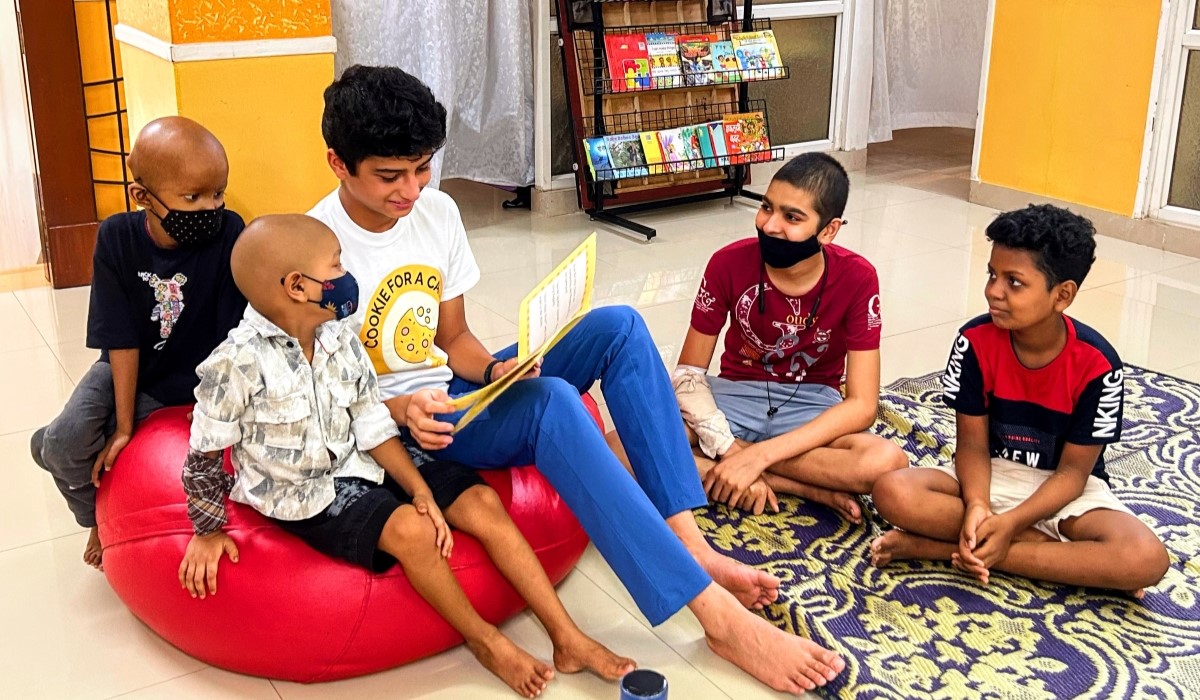
Every summer, my parents and I visit my grandmother in Mumbai. She’s part of a small nonprofit and goes to rural schools—some for the blind—and pediatric cancer hospitals to spend time with the kids and hand out school resources she buys with her own money. I started going with her when I was 13, and seeing all those kids stuck with me.
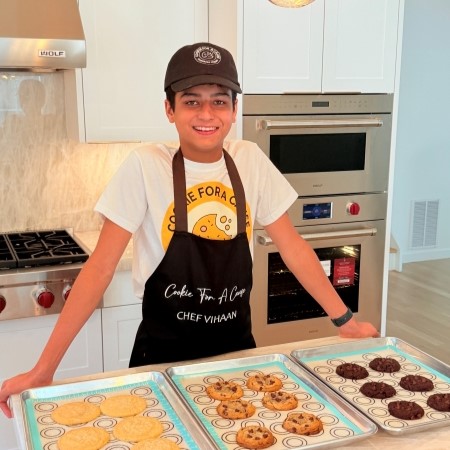
Vihaan Kamath, founder of Cookie for a Cause, bakes fresh cookies the sale of which will fund food, education and medical care for children./Courtesy Vihaan Kamath
One family I met had to move across the country, and the father had to quit his job for the kid to get the correct medical attention. That made me realize how much I take for granted. I started Cookie for a Cause with a bake sale, and one thing went to another. I eventually registered as a 501(c)3, and it started growing.
Tell us about your volunteer role with Cookie for a Cause.
I started right after sophomore year finals. Early on, I ran a couple of local stalls, held bake sales around the community and reached out to neighbors and acquaintances. My parents drove me on deliveries until I got my license. After I covered my whole network, which was small at the time, I started reaching out to local businesses.
I ended up partnering with a local bakery and continued reaching out to more and more corporations, from Connecticut to New York, where there are more parties and events to order for. I raised around $10,000 in a month. When I went back to visit my grandmother, I donated to all the places we volunteered together.
I still do most of the baking, and I manage orders, deliveries and communications. I also coordinate with hospitals, local businesses, volunteers and our adult board members.
What are your long-term plans or goals for the organization?
I want to raise over $50,000 by 2027 and help more than 1,000 children, which is about double what we’ve done so far. There’s always going to be a need for more funding and more volunteers, but these are goals we can reach.
Recently, I started a student board, which I hope to use to inspire more kids my age and younger to help in their own communities in whatever they’re passionate about. It’s one of my primary goals.
What’s been the most rewarding part of your work?
The most rewarding part is seeing the faces of these children when I visit. The trip I took last summer, after I raised $10,000, was one of the best experiences I’ve had. I loved seeing the kids and handing out stuff to make their lives easier.
It’s also great inspiring more people to join us. I didn’t think a lot of kids would want to volunteer for this type of thing, but I was wrong.
What have you learned through your experiences as a volunteer?
When I started, I was 15. I learned that there’s a lot more generosity in the world than I thought. I assumed it was going to be a real battle to even get $1,000. It’s not easy, but there are a lot more people who are willing to donate, and a lot more people my age willing to help out than I realized.
There’s one quote I like that says, “Every small action, when done consistently, will always lead to meaningful change.” And that’s true. I took my passion for baking and I use it to help children around the world.
Tell us about future partnerships, programs or events that you are excited about.
Recently, I got accepted into St. Jude’s Youth Leadership Society. Essentially, a lot of teenagers have a friendly competition to see who can fundraise the most.
I also partnered with Mattel to donate around 100 Brave Barbie and Brave Ken dolls–made specifically for children battling cancer–to St. Jude’s and Yale New Haven Children’s Hospital. If I get a chance, I’ll go down to St. Jude’s main hospital in Memphis when they arrive and see the impact we’ve made with the kids.
Any advice for people who want to start volunteering?
It doesn’t have to be big, and one person can’t solve every problem. But as I said, every small action, when done consistently, will always lead to meaningful change, even if it’s volunteering one hour a week. Maybe it’s going to visit kids at a local hospital or donating some stuff you have lying around your house. It’ll have a bigger impact than you might think.
What do you want people to learn from your story?
Any normal person can make a big change. I started off as a small bake sale, and everything kept rolling on until it became what I consider a big business. Doing anything you enjoy that helps people will go a long way.
Content Warning: Points of Light is proud to share the following uplifting and inspiring story. However, we acknowledge that a small portion may be difficult for some readers. We encourage you to please care for your own well-being above all.
Diya Mankotia, now 17, was in eighth grade when she was diagnosed with an eating disorder. On her long road to recovery, she quickly learned that there were limits to the support around her. The experience could have left her distraught, but instead, it drove her to be there for others and advocate for change.
In August 2024, Diya founded Project EDSA as a school club, later expanding to 90 student-led chapters across 13 countries. Her focus is on eating disorder prevention, support and awareness.
Recently, Project EDSA was awarded a $10,000 grant that will fund campaigns and events as well as volunteer training. Today, the organization has more than 400 volunteers supporting the mission.
Diya goes above and beyond developing volunteers and running campaigns. Last year, she distributed over 150 mental health kits at her school during National Eating Disorders Week. They contained things like cards of encouragement, fidget toys and a 12-page self-designed mental health recovery book with hotline numbers and educational games. She’s even leveraged her research at Harvard STRIPED to fight for legislation banning the sale of diet pills to minors in three states.
After partnering with the National Association of Anorexia Nervosa and Associated Disorders (ANAD), America’s oldest eating disorder nonprofit, EDSA will become their official youth program in March. Together, they will continue to advance eating disorder advocacy and prevention among youth.
What inspired you to get started with this initiative?
I was diagnosed with anorexia in eighth grade. I’m from a South Asian family, and my parents are very traditional. For them, mental health–especially eating disorders–was all very new, because food is a largely-celebrated aspect of our culture.
It was difficult to have conversations, and it felt like I couldn’t properly communicate what I was experiencing. And even though I had supportive friends, I would sometimes notice them getting tired of my behavior. One day, I went to my school’s mental health website, and there were no resources for eating disorders. That was my first realization that there might be systemic absences in support.
That summer, I emailed relevant nonprofits to see how I could fundraise. ANAD responded by asking me to help develop their school ambassador program. I eventually became an ambassador myself, but after a year of piloting it at my school, I noticed the impact was due largely to the in-person chapter I’d formed, not virtual events. Project EDSA developed as an extension of that program to focus on mentoring students to lead their own prevention-based chapters.
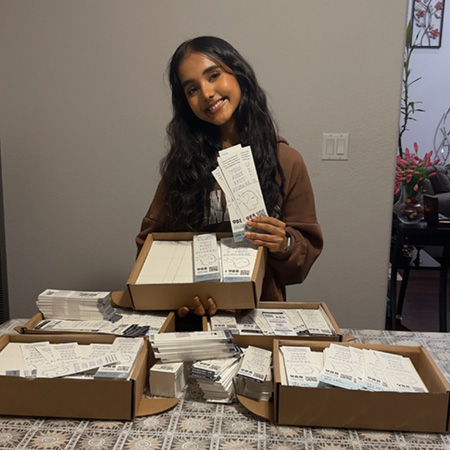
Diya Mankotia, founder and executive director of Project EDSA, packages 988 crisis resource bookmarks for distribution to schools and community organizations.
Tell us about your volunteer role with Project EDSA.
As co-executive director, I mentor and guide our chapter leaders. Before onboarding, we train leaders on a module that we developed with ANAD to build their knowledge, skills and advocacy. Then, we provide them with ready-made tools and campaign kits to lead their own events.
We’ve also partnered with Stanford’s Stice Research Lab, where I’m a research intern. They’ve developed a prevention program called “The Body Project,” which effectively prevents over 63% of eating disorders with a two- to four-year follow up. It’s peer-led, and I’m trained to facilitate. We’re currently setting up training for our chapters, so I can teach them to become facilitators. When peers deliver intervention, it’s been shown to be more effective than when clinicians do.
We also meet with our volunteers weekly and run an internship program. Research interns do original research on eating disorders that we translate into youth-led guides.
Over the summer, I worked on a suicide prevention campaign where I distributed over 10,000 bookmarks with the 988 Suicide & Crisis Lifeline. And this is my first year on the RRISD School Health Advisory Council made up of parents, district members and three students. We draft mental health policies based on gaps we see in our 56 schools then pitch them to the Board of Trustees.
What are the goals of your advocacy?
I’m interested in preventative science, which is tied to policy. Insurance policies associated with eating disorder treatment discriminate admission to inpatient programs through weight-based criteria. Eating disorders are mental health conditions. Weight changes are only symptoms. Many diagnosed individuals never get proper treatment because of that.
With prevention work, we can impact many people at once, rather than treating individual patients. And it ensures people don’t fall into a position where they have to depend on unfair treatment practices.
What’s been the most rewarding part of your work?
I’ve been in recovery for over two years now. The most rewarding part has been realizing that I’m not alone in my struggles. It’s inspiring to see students apply to start a chapter, because I know how much courage it takes. Talking about eating disorders in high school is difficult. I’m happy to be alongside them, giving them resources I wish I’d had when I started.
How can people reading this support people who might be at risk or have an eating disorder?
Educate yourself on what eating disorders actually are, the symptoms and how it affects someone. When a person is struggling with an eating disorder, their thoughts become disoriented. Be mindful of your words, and try to empathize. Just be there for them. These conditions take a long time to recover from, and it can be demotivating to see people give up on you because you don’t seem to be making progress. Be patient.
What do you want people to learn from your story?
I used to hide my eating disorder from my parents and even myself. Even after I was hospitalized, I would have never admitted that I was struggling. It wasn’t until I got my test results back that I was able to be honest with myself and the people around me.
Sometimes, I still have thoughts like that, but now I have a supportive community I can talk to. Sharing your story not only helps free yourself of these burdens, but it also makes other people feel like it’s okay to share their struggles, too. It creates community.
Meet Daily Point of Light Award honoree Jamie Cheng. Read her story, and nominate an outstanding volunteer or family as a Daily Point of Light.
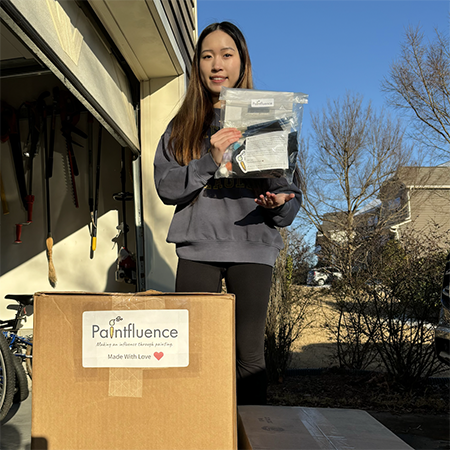
Creating art can be a relaxing experience or a chance to reflect. It can inspire creativity or spark a memory. Fifteen-year-old Jamie Cheng loves losing herself in any medium, even if it’s simple latte art. Three years ago, Jamie and a friend founded Paintfluence, an organization that offers free art classes in shelters for the unhoused and underserved communities.
With 16 chapters across the US and more than 20 volunteers in her chapter alone, Jamie’s mission is spreading. As she works her way through high school, Jamie is empowering people with creativity. In the future, she hopes to pursue a career in social entrepreneurship. Aside from her artistic pursuits, she’s a fan of using STEM for humanity and has a particular interest in biomedical engineering and research.
What inspires you to volunteer?
My first time was around third grade with a program in my school called Jump Rope for Heart. Every year, my older brother and I would go to the mall or the local college and create a poster asking people to donate to the American Heart Association.
On a mission to empower people with creative outlets, Jamie prepares to ship Paintfluence art kits to underserved regions around the world.
Tell us about your volunteer role with Paintfluence.
I serve as the executive lead. I mainly design and lead art workshops for my chapter. I also coordinate these classes for our chapter leaders. Basically, we have resources and guides for them as to how they should structure their classes as well as a few inspo pictures for painting ideas. I design the curriculum.
I also organize public exhibitions in my area and, once, in front of The Met while I was visiting New York. I lead team meetings every two weeks, recruit volunteers and chapter leaders and oversee the shipment of our art kits.
I often hear negative stereotypes about unhoused people, like suggesting they’re lazy. From what I’ve seen, their circumstances are reflected by systematic inequalities rather than their work ethic. And I want to challenge those stereotypes with my organization.
What inspired you to get started with this initiative?
When I was younger, financial barriers made it hard to afford art programs and supplies, so I found myself creating on my driveway. I became really passionate about it. When I was 10 or 11, volunteering at a homeless shelter, I noticed that many of the residents were struggling with finding a purpose in life. I thought it’d be meaningful to provide a creative outlet that could potentially help them rediscover a passion for art.
Paintfluence provides free art programs for people experiencing homelessness and underserved communities. There are two components. The first: we teach art classes at shelters and display and sell paintings at public art exhibitions. The artists have a choice to keep them, of course, but they can also let us sell them to raise funds for the shelters. We’ve raised over $12,000 in this way.
The other component is packing and distributing custom art kits to underserved areas around the world, including refugee camps and community centers. We’ve distributed more than 550 so far. Each kit contains a canvas, a palette of paint and a packet of brushes. We add an inspirational note as well. Sometimes, we pre-sketch the canvases for younger children, so they can just color it.
Why is art important to you, and what does it bring to the unhoused population?
Access to creative expression is often overlooked, especially in communities facing economic hardship. They focus on more vocational opportunities, but it’s important to allow people to explore other outlets. Art gives people space to process, reflect and heal. It gives people a sense of agency. I found it to be a helpful creative outlet when I was younger. I think this is especially important in underserved areas where they might feel defined by their circumstances and struggles. The ability to create something meaningful can shift how they see themselves.
What’s been the most rewarding part of your work?
It’s cool to see participants excited to paint or to hear that they haven’t created something in a while as we’re giving them that opportunity.
Once, we were doing a painting of a bike with a basket of flowers. One of the residents told us it reminded her of the last memory she has of her brother. She said painting was like therapy, and that warmed my heart. Conversations with the residents are really rewarding.
What have you learned through your experiences as a volunteer?
To make an impact, you have to be consistent. You have to actually be passionate about it and find ways to keep showing up, even if you’re busy. It’s also really important to listen. For example, ask shelters what they need, rather than assume.
Why is it important for others to get involved with causes they care about?
When people invest their time in something they care about, they strengthen their communities in a way that creates a ripple outward. It makes more people want to volunteer and build empathy and connection with each other.
How can people reading this take steps to help the unhoused or promote art education?
You don’t need a perfect plan. What you really need is the willingness to show up and learn and collaborate with others. My general advice is to find something that genuinely matters to you, because that passion will sustain you long after that initial excitement fades.
What do you want people to learn from your story?
Everyone deserves a chance to create and have meaningful opportunities. We should recognize and address social and economic inequities and work to fill the gaps in things like access to art.
GIVING A HAND UP TO THE ENTREPRENEURS OF THE FUTURE
Meet Daily Point of Light Award honoree Philip Meng. Read his story, and nominate an outstanding volunteer or family as a Daily Point of Light.
Philip Meng knows what it’s like to be an aspiring entrepreneur. That’s why he wants to make it easier for other young people to become one. A 19-year-old high school senior, Philip saw just how passionate his classmates were about taking action to make changes in their communities.
But without the support system they needed to take them to the next level, the students were often left without a pathway to success. Philip realized that if he could create the framework to give each student a hand up, they could potentially become the type of entrepreneur who changes the world.
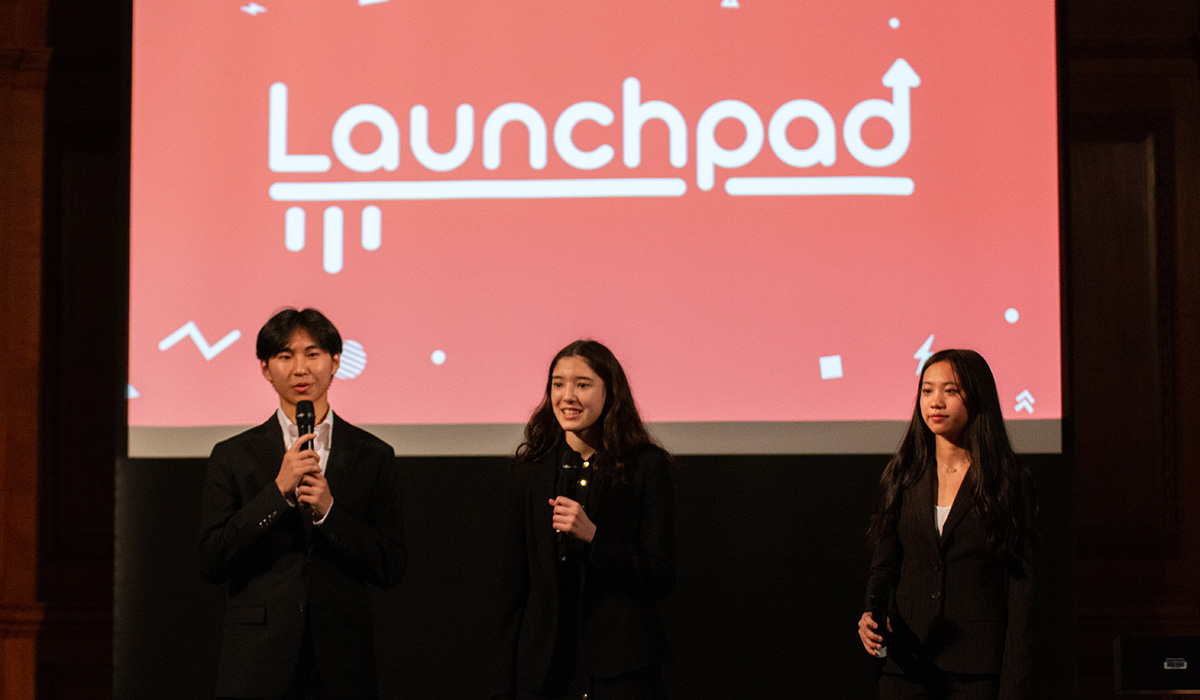
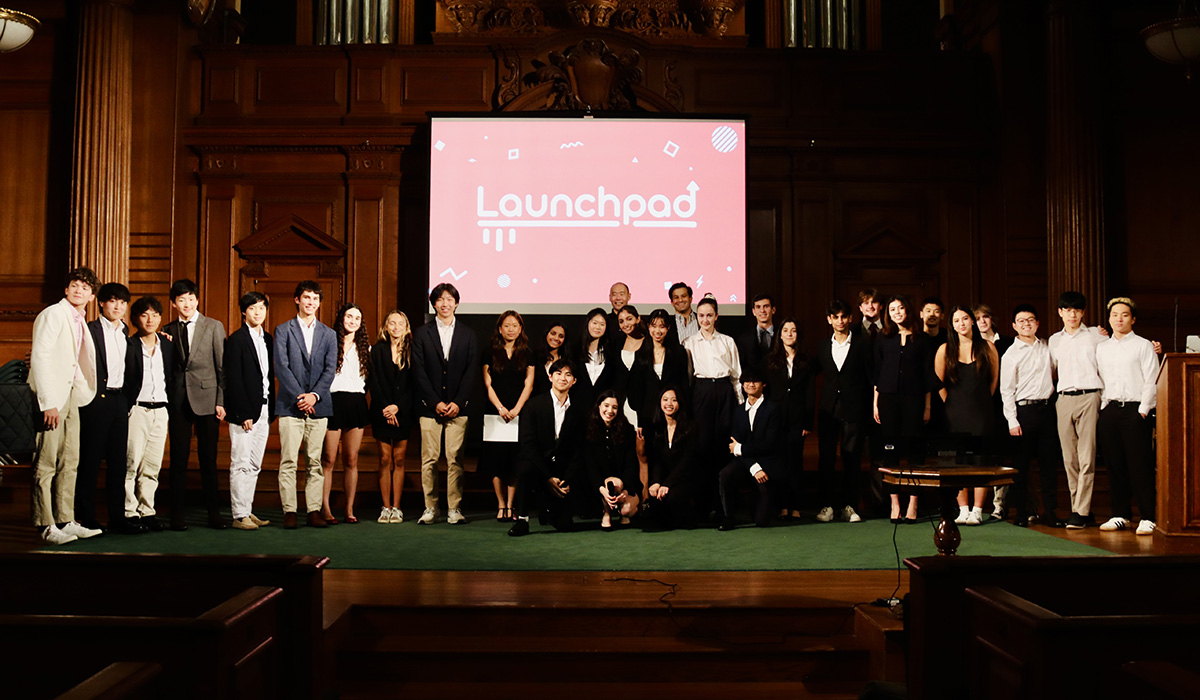
Philip started Launchpad, a global incubator for high schoolers that guides students through a six-month curriculum to build their own startup or nonprofit. Alongside venture capitalists and nonprofit leaders, Philip built an advisory board pairing them with experienced mentors from the entrepreneurial world. They present their idea in a “Shark Tank”-style pitch day, with many founders receiving seed investment and mentorship from renowned leaders. In addition to Launchpad, Philip is also the founder of The Early Founder podcast, where he interviews CEOs and other professionals to share success stories to inspire teens to change their worlds.
Launchpad has grown to 35 chapters across eight countries and nine U.S. states, and has over 30 mentors and partnerships with venture capital firms, nonprofits and other organizations. Philip is also a rising entrepreneur himself: he co-developed EnDive, a benchmark that exposes significant bias in AI models like ChatGPT for underrepresented English dialects and offers a path for more equitable systems.
As Philip prepares to head off to college and navigate the world of entrepreneurship himself, he wisely understands that by lifting others through volunteerism, he’s also creating a better future for himself. His decision to be that rising tide that lifts all boats is a strong example of how helping others ultimately creates a greater world for us all.
What inspired you to get started with this initiative?
I started Launchpad with my co-founder, Sophia, in ninth grade, after we kept seeing peers around us who were genuinely so passionate about solving problems in their communities, but had no real support system to act on it. We felt like there was just so much energy going to waste.
We had tried on our own some online programs and summer camps, but they were either too short or too theoretical. Nothing was focused on building something real or lasting. So we decided to create the infrastructure that we wish had existed, which is a program that takes young people seriously, gives them mentorship and helps them build something tangible, focusing on real revenue and impact.
Tell us about your volunteer role with Launchpad.
I founded these organizations four years ago, and I currently operate as the CEO or the manager. Every week, we meet at my school and I run the Launchpad Club, which is going through the curriculum and supporting students in creating startups and nonprofits, and communicating with the various chapters that we have around the world. On a typical weekly basis, we’ll end up checking in with the different chapters to make sure they’re all on track.
What are your long-term plans or goals for the organization?
The core goal for these organizations has always been to increase access to entrepreneurship. Something that I’ve learned is that there are brilliant young people everywhere, not just at well-resourced schools, so I want Launchpad to reach as many of them as possible. As I graduate from high school and head to college next year, I’m hoping on scaling the organization to more schools and countries, but just as importantly, building like the leadership pipeline so the organization can thrive beyond my co-founder and me.
What’s been the most rewarding part of your work?
I think the moments that have stuck with me the most are when I can see a tangible impact coming from my work. For example, last year, there was a student who had started in our program who was very unsure of herself. She was full of ideas, but quite anxious to talk about and share them outwardly. Six months later, after she had completed Launchpad, she was standing on stage at pitch day confidently pitching her startup idea that she’d been working on for months to a panel of entrepreneurs and investors. I think it’s that character arc from experiencing doubt to ownership that’s something that I will never get tired of seeing.
What have you learned through your experiences as a volunteer?
I think one of the core things that I’ve learned is that building something meaningful or impactful really requires patience and a willingness to figure things out as you go. Nobody handed me a playbook for running or starting this organization as a high schooler, so I had to learn how to recruit, manage chapters across time zones, and ask successful people for their time, and make sure that it was worth it. One thing that I found is that people genuinely want to help you when they see that you’re passionate and giving your all, but that also means that you have to proactively step outside of what seems comfortable, reach out to people you admire, ask for help, and put yourselves in rooms you might not feel ready for. The opportunities are certainly there, but you have to go after them.
Why is it important for others to get involved with causes they care about?
It is so important to get involved with these causes because no one is going to solve the problems that you see better than you. When you care about something, you bring an energy and a persistence and determination that’s very hard to replicate. Getting involved doesn’t have to mean starting an organization. It can start with volunteering at a nearby service center, having a conversation or starting a project. But I think the key point is actually going out there and getting something done and executing your ideas, and not just standing idly by and watching.
Any advice for people who want to start volunteering?
You should start before you feel ready. I started Launchpad four years ago with no guarantee that it would work. A lot of excitement and a lot of ideas, but no real idea of what it could become. The thing that had made it real was just starting it. I started by running it at my own school, learning what had worked, and then growing it from there to other schools. The key piece of advice is, don’t wait for perfection. Don’t wait for other people’s permission. Just find the problems or the gap that you see in the world, start small and let the work speak for itself.
What do you want people to learn from your story?
The key point would just be that young people are incredibly capable when they’re given even just a small amount of support and encouragement. I don’t think that the barrier for young people is actually talent or passion. It’s actually access. I also believe deeply that entrepreneurship is one of the most powerful ways young people can create genuine, real impact. I hope that in the future, I can make a small dent in making that path accessible to as many students as possible.
Balancing Classes and 911 Calls: College EMT Finds Purpose
Meet Daily Point of Light Award honoree Jonas Anderson-Joyner. Read his story, and nominate an outstanding volunteer or family as a Daily Point of Light.
Content Warning: Points of Light is proud to share the following uplifting and inspiring story. However, we acknowledge that a small portion may be difficult for some readers. We encourage you to please care for your own well-being above all.
By day, Jonas Anderson-Joyner is a college student juggling 18 credits, homework and exams. By night, the 21-year-old is responding to 911 calls – treating cardiac arrests, responding to mental health crises and transporting patients as a volunteer EMT.
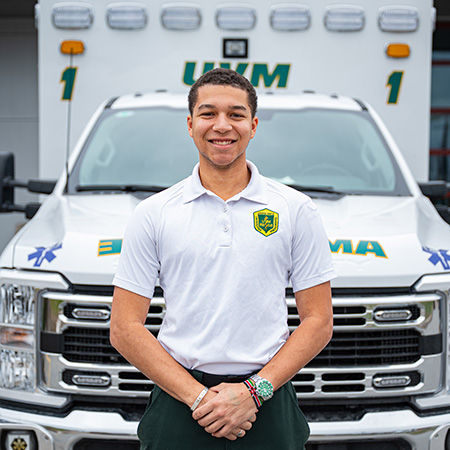
Jonas, a junior at the University of Vermont, has spent the last three years serving with UVM Rescue, a 100% student-led emergency response team. Dedicating between eight and 20 hours each week, he and other volunteers respond to medical emergencies on campus and the wider Burlington community.
What began as a curiosity during freshman orientation quickly became a defining part of his college experience and changed his vision for the future.
What inspired you to start volunteering with UVM Rescue?
I saw a flyer during freshman orientation, and it caught my eye. There were a lot of people walking by, so I was too nervous to stop and scan it. But later, someone told me more about the program, and I decided to check it out.
I came to UVM not knowing anything about CPR or emergency medicine. But after doing observation hours and seeing the station, meeting the people and watching how close-knit the team was, I immediately felt like I needed to be part of it.
We operate advanced life support level, 24/7, 365. We’re the only collegiate ambulance in the nation that is 100% student operated, so we don’t have any paid positions at all. Everyone is here because they genuinely want to be. That was what really drew me in—the idea that every person is here out of the goodness of their heart.
Jonas Anderson-Joyner poses in front of a UVM Rescue ambulance./ Courtesy Jonas Anderson-Joyner
What kinds of calls do you typically respond to?
A lot of people assume ambulances are nonstop life-or-death rescues. That’s not always the case. We do see cardiac arrests and serious trauma, but a large portion of our calls involve patient transports, mental health crises, overdoses, breathing issues or intoxicated students.
Because we serve a college campus, there’s a powerful peer-to-peer aspect. I’ve responded to suicide attempts involving students my age—people who could easily be sitting next to me in a lecture hall. Being able to look someone in the eye as a peer, not just a provider, makes a difference.
Sometimes it’s also the small things—giving someone a bandage at a sports game or simply being present so people know help is nearby.
Is there a call that stands out as especially meaningful?
One call over the summer involved a serious car accident just outside the medical center. The driver had suffered major injuries, including a broken leg with exposed bone. There were multiple emergency units on scene.
Amid the chaos—sirens, firefighters cutting open the vehicle, radios going off—I realized the patient wasn’t just in pain. He was scared.
I grabbed his hands, called him by name and focused on helping him breathe. We’re trained in psychological first aid, and in that moment, I saw it working. Even with everything happening around us, we were able to connect.
Later, after transporting him, we returned to the hospital to bring back a watch we had removed during the trauma assessment. When he saw me again, his eyes just opened up. I’d never seen anything like that. He started tearing up a bit, saying, “Oh my God. You’re the one who brought me to the hospital.” He reached out for my hands, squeezed them really tight and thanked me. That moment made me realize that this job is a very beautiful way to connect with people.
What keeps you going, especially while balancing school and night shifts?
Sometimes I look at my schedule—18 credits, teaching CPR, instructing EMT classes, volunteering dozens of hours—and think, “What am I doing?”
But it’s the little moments that keep me going. A simple “thank you.” A student feeling safe enough to call for help. Knowing we’re there when something goes wrong.
There’s something special about volunteering without a paycheck attached. When someone expresses gratitude, it feels pure. It reminds you why you’re there.
And the people in the department—the friendships, the guys at the Burlington Fire Department who feel like uncles or older brothers—they make it worth it too.
How has volunteering shaped your future plans?
I originally came to school to study forestry. Through this experience, I changed my major to Health and Society with a minor in Emergency Medical Services.
Now, I’m considering medical school. Three years ago, I never would have imagined saying that. But I’ve seen firsthand how healthcare can change someone’s life in a single moment. Why not aim to make that kind of impact long term?
What is the biggest lesson you’ve learned through volunteering?
This work has taught me that tomorrow isn’t promised. When you respond to emergencies, that becomes very real. So if tomorrow isn’t guaranteed, I want to make today count by showing up and connecting with someone, even if they’re a complete stranger. No matter our differences—age, race, background—there’s always something human that connects us. Volunteering has taught me to look for that connection and to value it.
What advice would you give to someone considering volunteering?
Just try it. There’s less pressure than people think. You don’t have to commit forever—just give it a shot. And if you do volunteer, give it your all—but also take care of yourself. Service is powerful, but balance matters too.
Also, get CPR certified. You never know when you might need it.
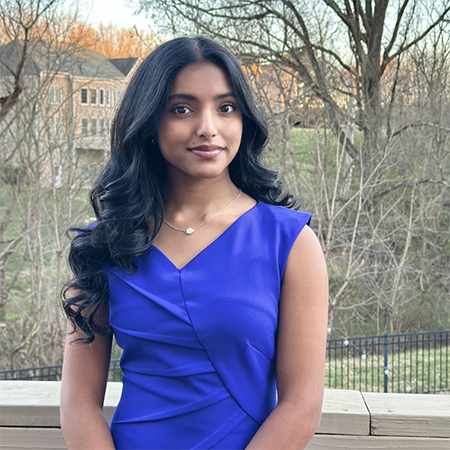
Meet Daily Point of Light Award honoree Inchara Gopinath. Read her story, and nominate an outstanding volunteer or family as a Daily Point of Light.
Inchara Gopinath, a 16-year-old competitive golfer, cares deeply about the wellbeing of others. It shows in the way she represents the voices of 140,000 of her fellow students at school board meetings as the Charlotte Mecklenburg School District student advisor. It shows in the way she helped fundraise for cancer research with the Blood Cancer United Society without any type of personal connection or experience with the disease. She was simply honored to be nominated for the role by a teacher and felt strongly about the importance of the task.
Once a week for nearly seven months, it has also shown in her work with Angels and Sparrows (A&S). Inchara joined the organization as a Reading Buddy to young children with special needs and disabilities and has been helping them improve their literacy skills. She has also been named an official ambassador, imbued with the task of raising awareness about the program and reaching out to potential volunteers. A&S as a whole provides food, education and community resources to underserved communities and works with 23,000+ volunteers nationally.
As she approaches the end of her junior year in high school, she has already become a pillar of her community. Inspired, in part, by her work with A&S, Inchara hopes to pursue a career in the medical field to continue helping the people around her. as literacy development.
What inspires you to volunteer?
I really like seeing the impact that volunteering can make in society overall, especially with children. I think that they’re essential to our growth as society. Witnessing their progress really motivates me to volunteer with learning organizations, specifically. Even small moments, like a child becoming excited to read aloud or opening up about their day are meaningful indicators of progress and show how consistent encouragement can make a difference.
Inchara raises money to fund research for Blood Cancer United, a nonprofit dedicated to curing leukemia, lymphoma, myeloma and other blood cancers. As a “candidate,” she forms and leads a fundraising team.
Tell us about your volunteer role with Angels & Sparrows.
Once a week, for one hour, I read to 6- or 7-year-olds. Sessions consist of around 10 children and three volunteers, so I’ll be grouped with about three to four kids. I play learning-based games and talk with them about their day. The children I work with have disabilities, so their growth and learning are slower, which has also helped me with patience. It has allowed me to learn about their overall well-being and help them improve that. I create a supportive and encouraging environment that makes them comfortable learning and expressing themselves through literacy activities, reading to them or simply talking to them.
On weekends, as an ambassador, I go to events to raise awareness of A&S and the needs of kids with disabilities. We go to fairs and meet kids’ families. Being an ambassador is really just taking on the role of representing these kids. I talk to people who are interested in volunteering and encourage them to get involved. We encourage younger volunteers in particular, because it’s nice for the kids to work with somebody a little closer to their age, but currently, the other volunteers I work with are adults.
What are your long-term plans or goals for the organization?
Mainly, I want to see that the children I work with gain tangible learning skills, whether it be reading or speaking skills. I want to see them able to apply those in their day-to-day lives.
What are some ways that you’ve seen your work impact these students?
I’ve seen them grow more confident in their abilities and more engaged during learning activities. When I first evaluated my kids’ literacy skills, I saw a wide range. We’ve come very far. We started with simple games like spelling and rhyming words. Now, they write their own stories. It’s been a fast progression.
What’s been the most rewarding part of your work?
The most rewarding part has been building trust with the children. When I first met them, they were hesitant to see a new face. Volunteers also rotate a lot, so they’re not always with the same students. Meeting me was a new experience for them, and seeing them become comfortable enough to try new things, express themselves and take pride in their progress reinforces how important patience and presence are in this field.
Inchara, reading buddy and ambassador for Angels and Sparrows, works with children with disabilities to improve their literacy while bringing awareness to the organization’s mission at outreach events.
What have you learned through your experiences as a volunteer?
Advocacy starts with listening. Every student’s needs are different, and progress doesn’t always look the same. Volunteering has shown me that patience, empathy and consistency are just as important as academic instruction. My work with A&S has provided me a deeper insight into the fundamentals of learning and given me ideas for ways we can improve that I’m able to share in my role as CMS student advisor.
Why is it important for others to get involved with causes they care about?
Volunteering allows people to directly connect with their community and understand different lived experiences. We often overlook the lives of other individuals until we actually experience them or work with those people. Volunteering is a meaningful way to support others while learning and growing personally.
Any advice for people who want to start volunteering?
Start with a cause you genuinely care about. Volunteering doesn’t have to be overwhelming or perfectly planned. You don’t have to do everything at once. Small, consistent efforts can make a meaningful difference, especially when you show up with an open mind and a willingness to learn.
What do you want people to learn from your story?
Service is about connection and care. When children feel supported and valued, it creates opportunities for growth that extend far beyond the classroom or reading sessions.




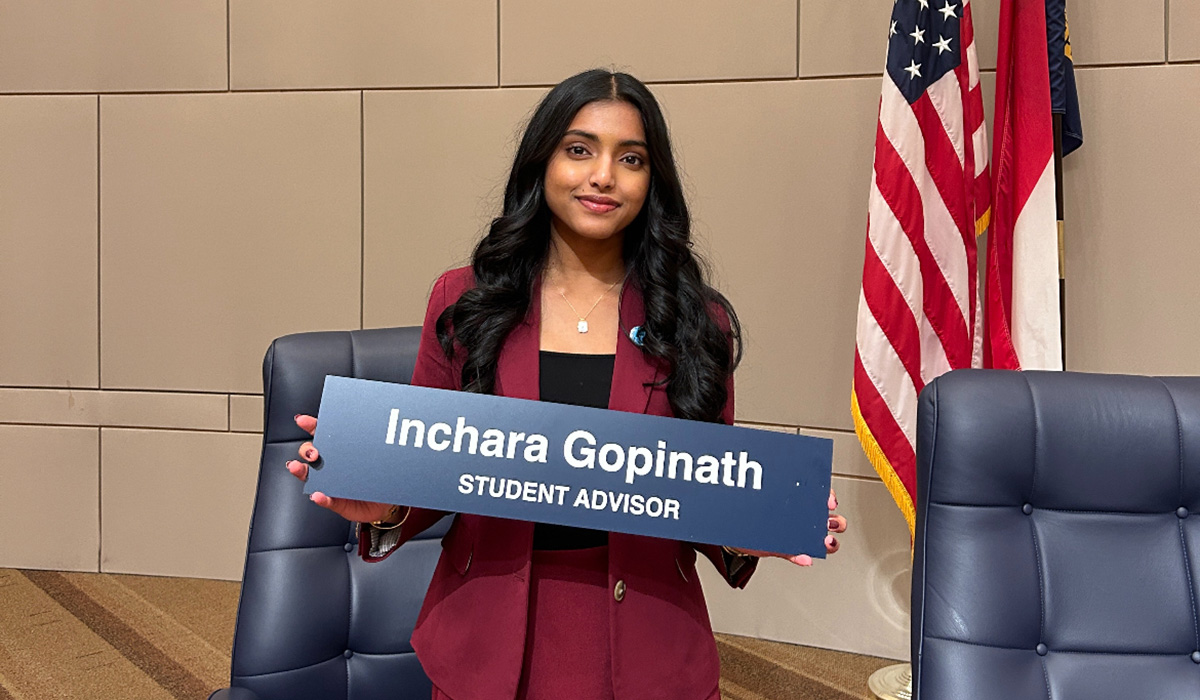 Inchara, reading buddy and ambassador for Angels and Sparrows, works with children with disabilities to improve their literacy while bringing awareness to the organization’s mission at outreach events.