MeetDaily Point of Light AwardhonoreeEleanor Shell. Readherstory, and nominatean outstanding volunteer or family as a Daily Point of Light.
Eleanor Shell, a 49-year-old ordained Presbyterian minister and mother of three, is intimately familiar with having a moment that changes everything. For two years, Eleanor has been recovering from a life-altering traumatic brain injury after being struck by a car. She’s in the midst of what she calls “the long middle,” the period of time after a crisis where things are still difficult without the expectation of improvement in the near future when life has moved on around you. It could be months. Or years. You’re often left overwhelmed and isolated.
This year, despite her own challenges and leaning on her instinct to help others, Eleanor founded the Borrowed Hope Foundation to support other families facing prolonged hardship after a life-changing medical, financial, or personal emergency. She creates experiences to lift their spirits and give them hope, reminding people that their community hasn’t left them behind. And, of course, she provides practical support.
To date, 35 families have been on the receiving end of Summer Fun Baskets and, if all goes as planned, 100 will be part of her Hope for the Holidays effort that will bring together local businesses, volunteers, artists, and donors to build moments of joy and connection.
Today, Eleanor estimates she’s functioning at about 60-70% of what she once was–she needs naps and time in a dark, quiet room–but she remains hopeful she will continue to improve in the years to come.
What inspires you to volunteer?
When you’re part of a community, it’s your responsibility to help make it better. I’ve always been involved; it fuels me. And serving others is a big part of my faith. I love people, and I’ve been lucky to always feel love and know love. I want others to have that.
What inspired you to get started with this initiative?
As a society, we’re pretty good in a crisis. What we’re not great at is later on. A couple from a church I’ve preached in is an exception. They continue to show up in big and small ways. Whether it’s a greeting card saying, “We still see you. You still matter,” or a grocery gift card, they’ve had hope for me when I haven’t had it myself.
Near the second anniversary of my accident, I was hitting a wall in my recovery. I’ve always believed that helping is healing, so a friend suggested we do something for other families in the long middle. We put together Summer Fun Baskets, and when a local with a newsletter wrote a story about us, the community showed up in big ways. What I thought was going to be a little project with friends ended up raising $18,000 in a week.
Nominated families have ranged from a family with two kids whose mom died unexpectedly, to someone coming out of a battle with cancer, processing the consequences. We focus on providing moments of joy and respite, because when you hit a crisis, your world slows or stops, but your children keep growing. There’s only one seventh birthday and only so many Christmases they still believe in Santa. If you’re not able to capitalize on those moments, they’re gone. I want people to have those memories instead of just remembering things that have been taken from them.
We provide everything from a gas card to get to the experience to snacks over Christmas break. We can’t make their problems go away, but we can give them moments to remember who they are.
Tell us about your volunteer role.
I do outreach to educate the community about the long middle and how to support people in it. I identify and connect with families, coordinate volunteers and community partners, fundraise and seek sponsors.
We recently launched our Hope for the Holiday campaign to provide things like a night at the movies or a visit to the Polar Express. We’re also working with summer day camps to make one or two spots available to our families in May, because planning ahead isn’t always practical when you’re in the middle of a crisis.
In February and March, we’re providing respite nights for grown-ups. For couples, that might be a date night. And we’re sending the gentleman whose wife passed away to Top Golf with a friend and providing childcare.
I also organize pop-up community art projects. In May, we’ll auction the art for Mental Health Awareness Month to show the role community and art can play in mental health.
What’s been the most rewarding part of your work?
It’s hearing how these simple things impact people’s ability to take the next step forward. One of the most surprising and meaningful things is when I send someone a gift card for ice cream or dinner with a letter that says, “We had a day that changed everything, and we’re still in the thick of it. We want you to know that someone in your community knows you are, too.” The response is often greater than when we give away bigger things.
Everyone needs love and compassion. We delivered one Summer Fun Basket to a high-income neighborhood, and the woman broke down in tears. Did she need snacks for her kids? Maybe not. But she needed to know she wasn’t forgotten because she isn’t able to participate in life as she had a year ago.
What have you learned through your experiences as a volunteer?
Community matters. And nothing will replace in-person connection and how that makes people feel. It just takes one person being vulnerable for others to do the same. Sharing stories helps people know they’re not alone.
What do you want people to learn from your story?
No matter how hopeless things are, there’s somebody who cares about you. And there’s something you can give. If we all do what we can on any given day, the growth of kindness, joy, and community will be exponential.
Life will never be the same for me, but I’m going to use whatever I have to continue to be what I was called to be.
Meet Daily Point of Light Award honoree Albert Luo. Read his story, andnominate an outstanding volunteer or family as a Daily Point of Light.
Albert Luo still remembers sitting in the New Amsterdam Theatre, waiting for the curtain to rise on the Broadway show Aladdin. When the lights came up and the set was revealed, he was hooked. His chance to join theater came in middle school, designing sets for a Zoom play during COVID. That experience showed him how every piece of a production comes together through collaboration. By high school, he realized not every young person gets that opportunity.
So in ninth grade, Albert founded Shown and Scene, a California nonprofit breaking down barriers to theater for youth. It started with small improv, set design, and media design workshops for elementary and middle schoolers. It has since reached more than 3,500 young people across three school districts. Albert also serves as the organization’s volunteer CFO, leading grant writing, fundraising, and donor relations. He has secured more than $120,000 in grants and in-kind support.
For Albert, the most rewarding moments are the small ones, like watching a shy student at a family arts night join a game of charades and open up. He’s learned that impact isn’t about how many people you meet once. It’s about how many keep coming back, and their personal growth as a result.
This Volunteer is Helping Break the Cycle of Period Poverty
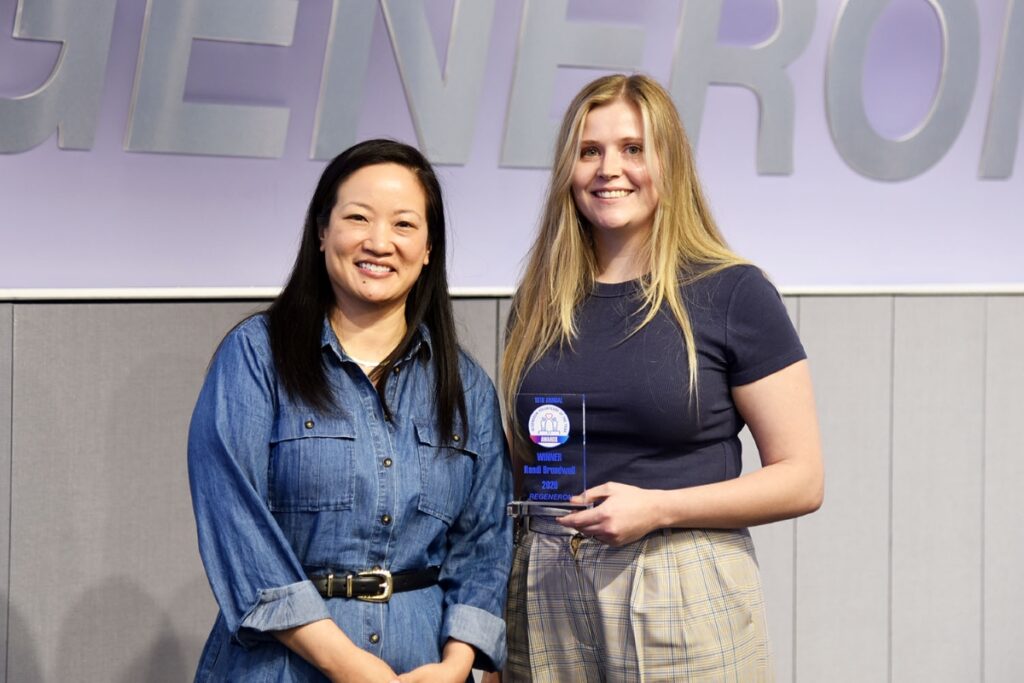
Randi (right) receives the Regeneron Volunteer of the Year Award in 2026 for her work with the MoonCatcher Project./ Courtesy Randi Broadwell
MeetDaily Point of Light Awardhonoree Randi Broadwell. Read her story, and nominatean outstanding volunteer or family as a Daily Point of Light.
Around the world, girls without access to period products often have to make do with whatever is on hand whether that be old rags, sponges or leaves. For many, that means staying home from school during their periods, and for some, it means dropping out altogether, closing the door on dreams of becoming a doctor, a teacher, or building any future they’d imagined for themselves. The MoonCatcher Project was founded to break that cycle, providing reusable menstrual kits, paired with health education, to girls in Kenya, Malawi and Uganda, alongside free period pantries across New York’s Capital Region.
Since joining MoonCatcher in 2024, Randi Broadwell has put her public health expertise and passion for volunteering to work for the cause, helping the organization track its impact and expand its reach. Her commitment carried her up through the board, from co-vice president to now co-president. Between governance, managing pantries, and coordinating fundraisers and volunteer events, she now dedicates around 400 hours a year, grounded in the knowledge that a single $7 kit can keep a girl in school for years.
What first inspired you to get involved with The MoonCatcher Project?
I did a public health volunteering fellowship in South Africa after I graduated from college, which inspired me to get my master’s degree in community-based primary health care. After that, I was looking for a place to use what I’d learned. Regeneron, where I work, has a volunteer week called Day for Doing Good, and I signed up for a MoonCatcher event in 2023. I’d already learned about period poverty in my master’s program, so it really resonated with me and it’s an organization local to me, so I felt like I could make an impact both abroad and in my own backyard.
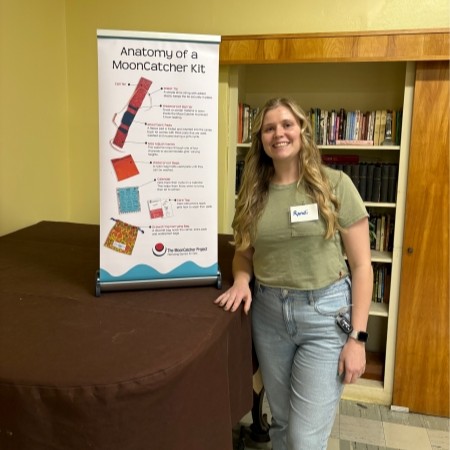
Randi stands in front of a poster that shows what is included in a MoonCatcher Kit./ Courtesy Randi Broadwell
Can you explain what period poverty is and what MoonCatcher’s mission is?
In simple terms, it costs money to safely take care of your period. If you’re already living below the poverty line, that’s another expense on top of everything else. In New York state, the average amount women spend on period products per month is about $15. Girls around the world often drop out of school because they don’t have a way to safely and cleanly handle their periods, and that keeps a cycle going. That’s why we give reusable kits to our global communities. The reusable kits are fitted to size, so girls can use them for five, six years or longer. In the U.S., people tend to prefer disposable products, so we stock free, 24/7 period pantries outside businesses.
What does your role involve day to day?
We’re a smaller organization, so as board leadership, I work with our bookkeeper to make sure the board understands our financials and can make informed decisions about funding. That connects to sending money to our sewing guilds in Kenya, Malawi and Uganda, looking at fundraising logistics, and community outreach and period product drives with local businesses.
Of all your responsibilities, which is your favorite?
I love events and talking to people, but my strength is really the data. Whether I’m pulling spreadsheets from the period pantries for a grant application or an end-of-year report, I love being able to show people the good we’re doing with the numbers we have. That’s my favorite part — showing people the impact and why it matters.
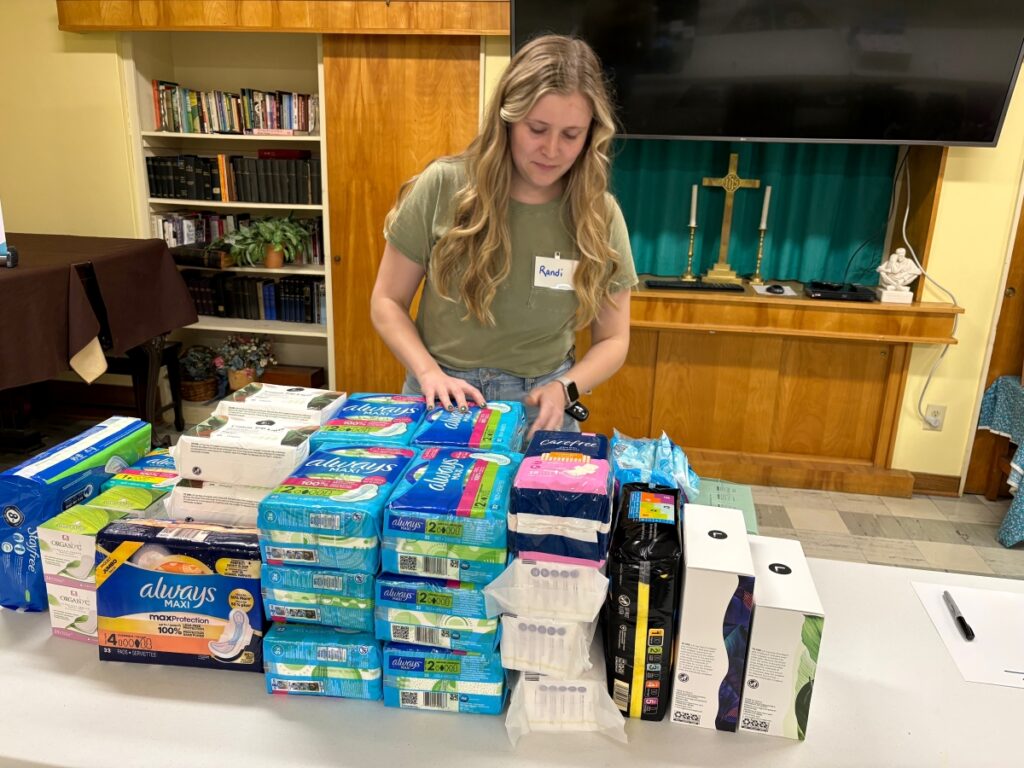
Randi counts disposable menstrual product donations at the birthday party of Ellie Von Wellsheim, founder of the MoonCatcher Project./ Courtesy Randi Broadwell
What kind of impact has MoonCatcher made?
Last quarter alone, we gave out more than 17,000 period products across our pantries in the Capital Region. Since I joined, we’ve added pantries in Troy and will soon open one in Saratoga. Abroad, I hear the stories from our executive directors who’ve seen the kits firsthand. Girls who no longer have to worry about missing school, who are dreaming about becoming doctors, going into hospitality, going into sales. Seeing that impact is what stays with me.
Why are you so passionate about equal access to period products?
It’s something so small that can make the biggest difference. We’re not just handing girls a kit, we’re creating jobs for the women in Kenya who sew them, and we’re pairing every kit with a health curriculum, so girls understand what’s happening with their bodies. A $7 kit is barely the cost of a cup of coffee here, but it can keep a girl in school instead of getting married off or going straight to work because she can’t manage her period. It’s about giving girls the chance to choose what they want to do with their lives.
What are your long-term goals for MoonCatcher?
I’d love for more people to recognize the organization and the issue of period poverty. So many people I talk to are hearing about this for the first time. In the next five years, I want more people to know this problem exists and to know MoonCatcher is the organization helping solve it.
What do you hope people take away from your story?
I hope people look more into period poverty. It’s one of the UN’s Sustainable Development Goals, and it hasn’t gotten much attention until recently, even though half the population bleeds. I also want people to know it doesn’t take a lot of money or time to change somebody’s life.
MeetDaily Point of Light Awardhonoree Linda Wise. Read her story, and nominatean outstanding volunteer or family as a Daily Point of Light.
VOLUNTEERS FROM MINUTEMAN DISASTER RESPONSE OUT IN THE FIELD.
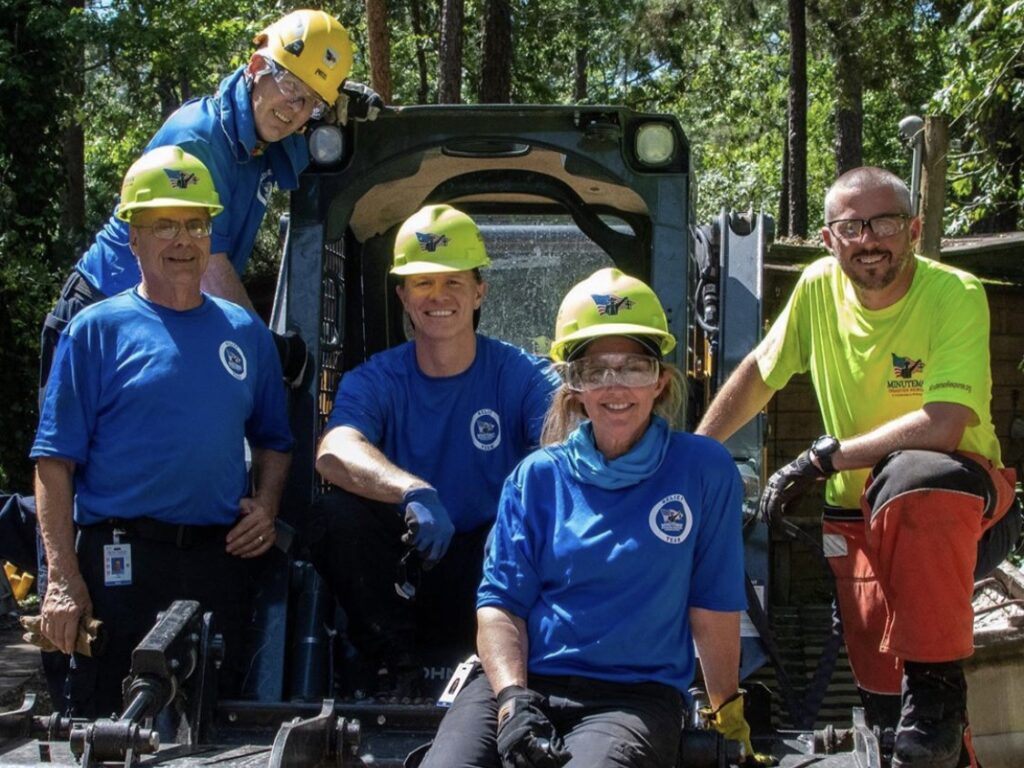
Linda Wise has volunteered for 40 years, whether it was at her daughters’ schools or at her church. But monitoring the weather has always been her passion, and she’s found a way to merge the two. Linda’s husband got involved with Minuteman Disaster Response, an organization that brings hope in the immediate aftermath of disasters by deploying self-sufficient volunteer teams who are equipped, trained, and ready to serve at no cost to those who need it most. When she joined him at the organization’s gala in 2018, one of its founders mentioned they would be forming a team to track the weather. Knowing this was something she was knowledgeable about, Linda realized she had to get involved. She had no idea how much her role would continue to evolve and grow.
Linda’s primary responsibilities are to watch storms online in real time, review and summarize the damage afterwards, and provide damage videos and photos. If a tornado, hurricane, or flooding disaster hits and a deployment is scheduled, she provides logistical information for the MDR team who will be working in the field. This could include contact information for local authorities and the location of fuel, medical services, and other supplies that may be needed during the deployment. In the beginning, she monitored Texas, Oklahoma, Arkansas, and Louisiana. But as MDR has grown, the team now has the resources to respond to disasters nationwide.
One of Linda’s favorite aspects of her volunteer work is being able to get involved with people who are so passionate about the cause. From the dedicated leadership to the staff and volunteers, she’s proud that the team brings hope to disaster victims who may feel hopeless about their situations. She’s particularly proud that her work frees up the team’s leadership to run the business instead of watching radar and weather developments, which she specializes in. Since monitoring the weather can be a nonstop endeavor that’s constantly evolving, knowing that she’s about to contribute to the mission of helping people is particularly satisfying. Linda’s story is an inspiring one about taking one’s special skills and putting them to use to serve others.
What inspired you to get started with this initiative?
I’ve enjoyed studying weather for years. It’s a fascinating hobby. It’s my passion and something I’m very interested in. Minuteman has an annual fundraiser, and my husband had gone to clean up Hurricane Harvey the year before, so I went with them to the gala in March of 2018. It was one of those moments. I was introduced to one of the founders, and he said they would be starting an operations team of people who do pre-event things, like monitoring radar. A light bulb went off. I remember looking at my husband and saying, “I’m the weather fanatic.” It just clicked, and I joined that night. It was just a meant-to-be situation. From that moment on, I’ve been involved in it.
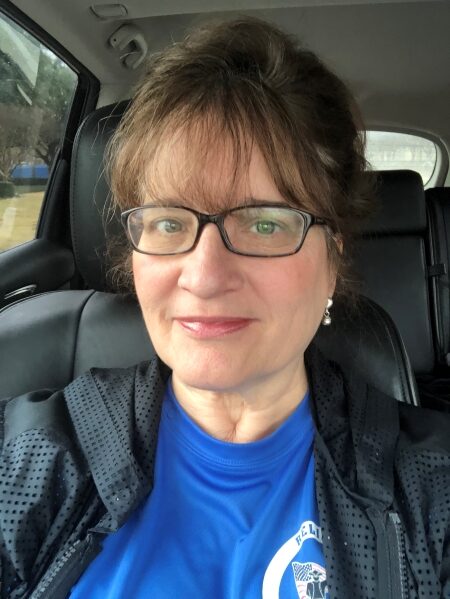
LINDA WISE IS A VOLUNTEER WITH MINUTEMAN DISASTER RESPONSE, WHERE SHE TRACKS WEATHER. /COURTESY LINDA WISE
Tell us about your volunteer role with Minuteman Disaster Response.
I’m a researcher. A lot of our team goes out in the field, but I do pre-event work. I’m part of the ops team. Our main goal is to provide storm damage information to management so they will know where to deploy. Watching the weather, as you can imagine, is very time-consuming. I monitor a lot of social media. Then, when a disaster does hit, one of my responsibilities is to create a document to help those who will be in the field know where to get groceries, medical help, and gas, because sometimes those sources are damaged or non-existent. Trying to find where the grocery store is when a tornado or hurricane goes through can be very time-consuming if you’re in the field. I also provide damage photos and videos, so they’ll know where to go.
What are your long-term plans or goals for the organization?
I’d like to keep learning and stay with this as long as possible. I try to study, and there are so many kind and dear people in this organization. It’s humbling to be selected. I try to study every day. I try to study every storm, and there’s always something new to learn; there’s always something to give, learn, and improve. I want to improve weekly, daily. One other aspect is this isn’t a job. This is who I am.
What’s been the most rewarding part of your work?
Knowing that our mission’s fulfilled. We strive to bring hope to people, and being a small part of that is very rewarding. Also, I try to save my boss time. They’re trying to run a nonprofit, and trying to watch the weather and do that would be very difficult. But knowing that ultimately I had a small part in helping people who are hurting is very rewarding.
What have you learned through your experiences as a volunteer?
I’ve learned a lot about weather. I’ve also learned a lot about how nonprofits operate and what they need. I studied FEMA courses. If you learn the chain of command, you learn how to communicate effectively and be precise in your communication, especially in a crisis. You can’t have haphazard communication.
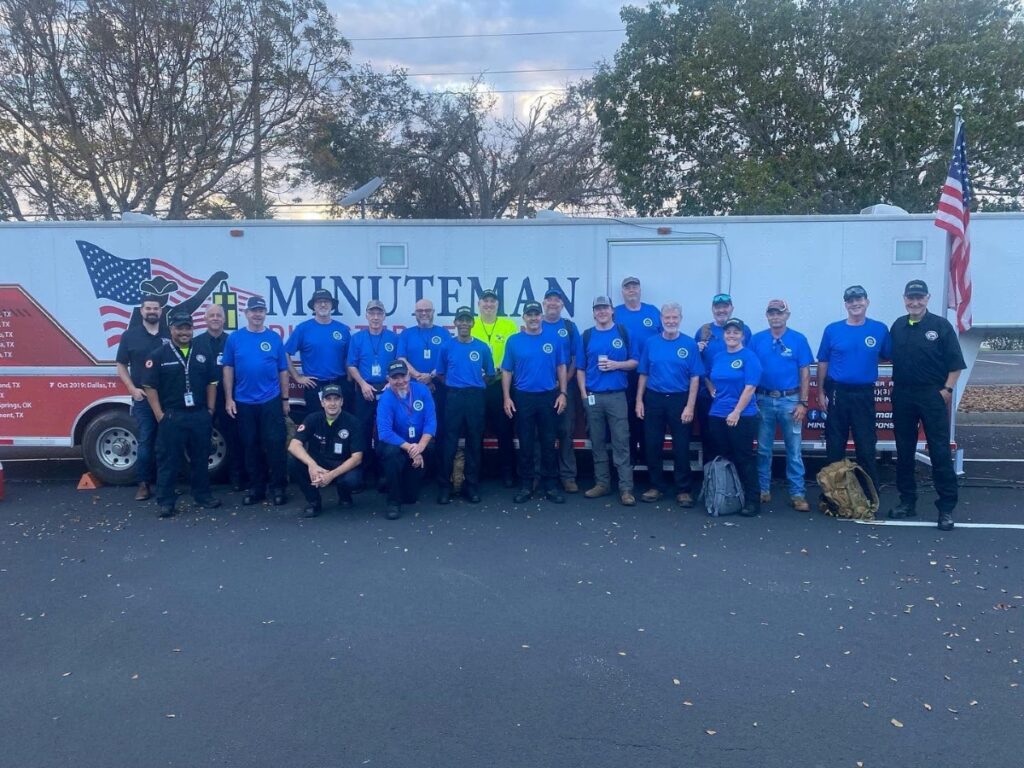
A TEAM OF VOLUNTEERS FROM MINUTEMAN DISASTER RESPONSE. /COURTESY LINDA WISE
Why is it important for others to get involved with causes they care about?
I think everybody can do something for somebody else. Even a small act of kindness can make a big difference to somebody who’s hurting. I think time is our most precious gift to give away. This sounds maybe kind of hokey, but there are so many people out there who are trying to find themselves. You find yourself when you lose yourself by doing something for somebody else.
Any advice for people who want to start volunteering?
Just jump in. Just do it. Just do something and learn as you go. Follow your passion. I’m very passionate about what I do. This is not work to me. Hours can go by, and I don’t even notice. Just follow what’s important to you, and do something for somebody else.
What do you want people to learn from your story?
My faith is really very important to me. This is my ministry, and it relates to my Christian faith and disaster response. We don’t always understand why tragedies and suffering happen. Our organization is filled with a lot of kind people who are very tough, and it’s just a great organization. I just like trying to help them make a difference. I have a blast doing it. I’ve tweaked it through the years and tried to improve, but I was always the one in the middle of the night who would get up and turn on the TV if a storm was coming. Weather affects everybody.
In Honor of His Brother, Teen Volunteers for Cancer Families
MeetDaily Point of Light Awardhonoree Joshua Bie. Read his story, and nominatean outstanding volunteer or family as a Daily Point of Light.
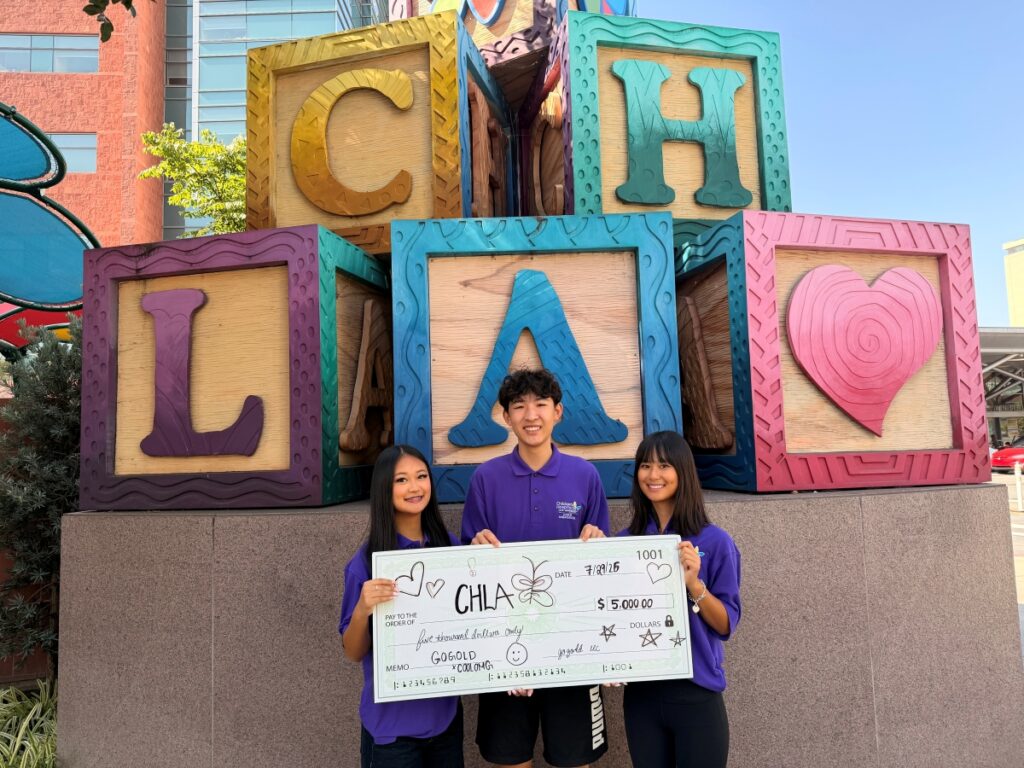
Joshua (center) poses with a check for $5,000 to donate to Children’s Hospital Los Angeles for childhood cancer research./ Courtesy Joshua Bie
Joshua Bie was 6 years old when his younger brother, Joey, died of childhood cancer at age 4. Soon after, the family began volunteering at the Los Angeles Ronald McDonald House, which had supported them during Joey’s hospital stays. Joshua spent his time playing with the children there, and they reminded him of his brother, he said. Seeing them smile made him smile too.
Now 16, Joshua has carried that spirit into a decade of service. When he was in seventh grade, he founded the first Go Gold Club to raise awareness of childhood cancer at his school. Now the clubs operate at 10 high schools, and their volunteers have helped provide more than 1,000 free meals to families at Ronald McDonald Houses. On top of that, Joshua and his teammates have raised $15,000 for Children’s Hospital Los Angeles.
What inspired you to get started with the Ronald McDonald House?
I’ve volunteered at the Ronald McDonald House since I was 6. My younger brother, Joey, died of childhood cancer when he was 4, and the House helped our family a lot while we were in the hospital. It’s a home away from home, with free lodging and food for families of patients. I want other families going through this to know they’re not alone.
In seventh grade, I surveyed my classmates about childhood cancer. More than 90% didn’t know the gold ribbon stands for childhood cancer, and many didn’t realize children can get cancer. That showed me there’s a huge awareness gap on campus. That October, I founded the first Go Gold Club to build connections between my school and families affected by childhood cancer.
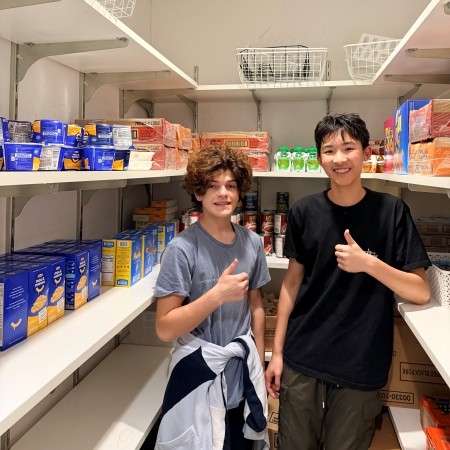
Joshua (right) and a volunteer pose for a picture inside a pantry filled with food donations./ Courtesy Joshua Bie
Tell us about your Go Gold Clubs and how it has grown.
When I started the club, we volunteered at the House about every three months. Now we go at least once a month. I’ve also helped start Go Gold Clubs at other schools, including one in Tennessee and one in Northern California. I encourage each club to volunteer at least monthly, and we stagger the visits so the House has volunteers every week or every other week. For my Go Gold Club, we partner with a restaurant and they’re very kind to donate meals that we serve those to the families. We also donate pantry items.
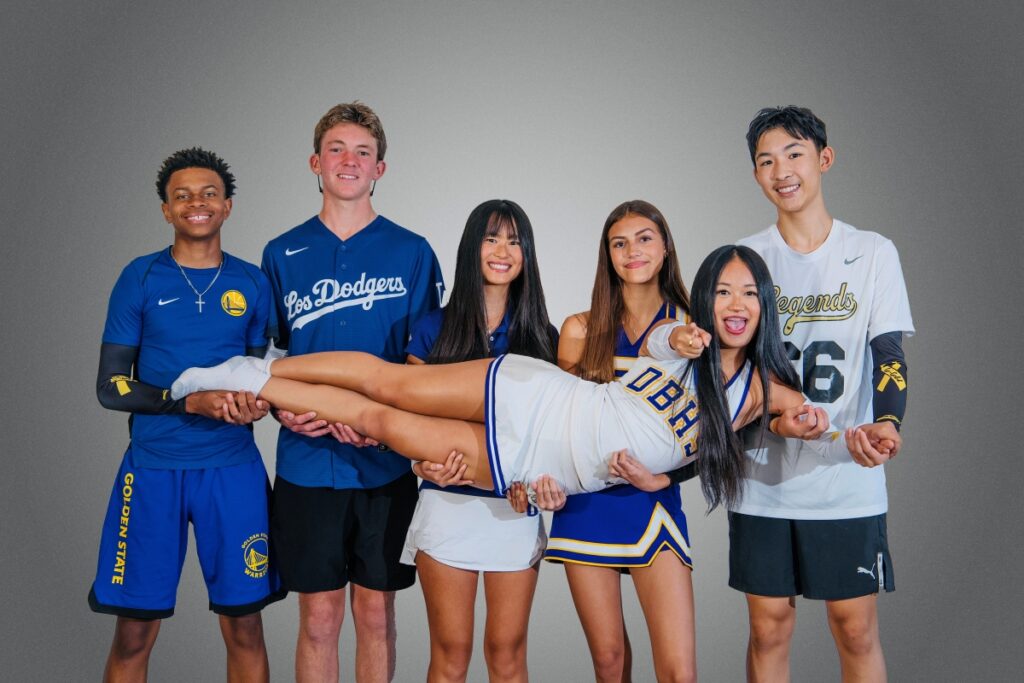
We’ve added more fundraising over the years, too. Last year, we sold Go Gold arm sleeves with golden ribbons on them to promote childhood cancer awareness. And annually, we hold a donut sale where all the money raised is donated to the Ronald McDonald House. During the holidays, we write cards for families and patients and put together gift bags with candy and toys. We’re still growing, and we may add a new club at Troy High School this year.
What’s been the most rewarding part of your work?
Seeing the smiles on the children’s faces. One day, we were playing live music at the House, and I was at the piano. A young girl in a wheelchair loved it and wanted to dance, so her mom turned the wheelchair and they danced together. Her joy taught me a powerful lesson about courage. Even in the middle of tremendous challenges, there’s room to laugh, dance, and find joy.
Moments like that are why I keep going. They show me my work makes a difference, even when the kindness is small.
What are your long-term goals for Go Gold Club?
I want to make Go Gold a national youth program, as familiar as Boys & Girls Clubs, with chapters across the country. I’d like the golden ribbon to be as recognizable on high school campuses as the pink ribbon. Ultimately, our vision is to empower a generation of students to support scientific research and the search for a cure, and maybe to lobby for more childhood cancer funding, so no family ever has to lose a child to cancer again.
[Gold Ribbon] Joshua (far right) and fellow volunteers wear Go Gold arm sleeves with golden ribbons on them to promote childhood cancer awareness./ Courtesy Joshua Bie
Tell us about future programs or events you’re excited about.
Go Gold Club will soon receive a House Hero Award from the Ronald McDonald House, which recognizes charities that have supported the House for a long time. I’m excited because it shows our dedication and how our volunteer work has made a difference over time.
Why is it important for others to get involved with causes they care about?
Purpose inspires compassion, builds community, and sustains commitment. When you take action for something bigger than yourself, empathy turns into compassion. It connects you with like-minded peers working toward the same goal, and that shared vision gives you the drive to stay committed for a long time. Getting involved is how we stop waiting for change and start creating it ourselves.
Any advice for people who want to start volunteering?
It’s never too early or too late to start. I began volunteering at 6, but I know people who have made a tremendous impact starting in their junior or senior year. No act of service is too small. If you’re not sure where to begin, start small with a local organization and work your way up to larger and larger kindness.
Meet the Founder Bringing Free Libraries to Clinics and Classrooms
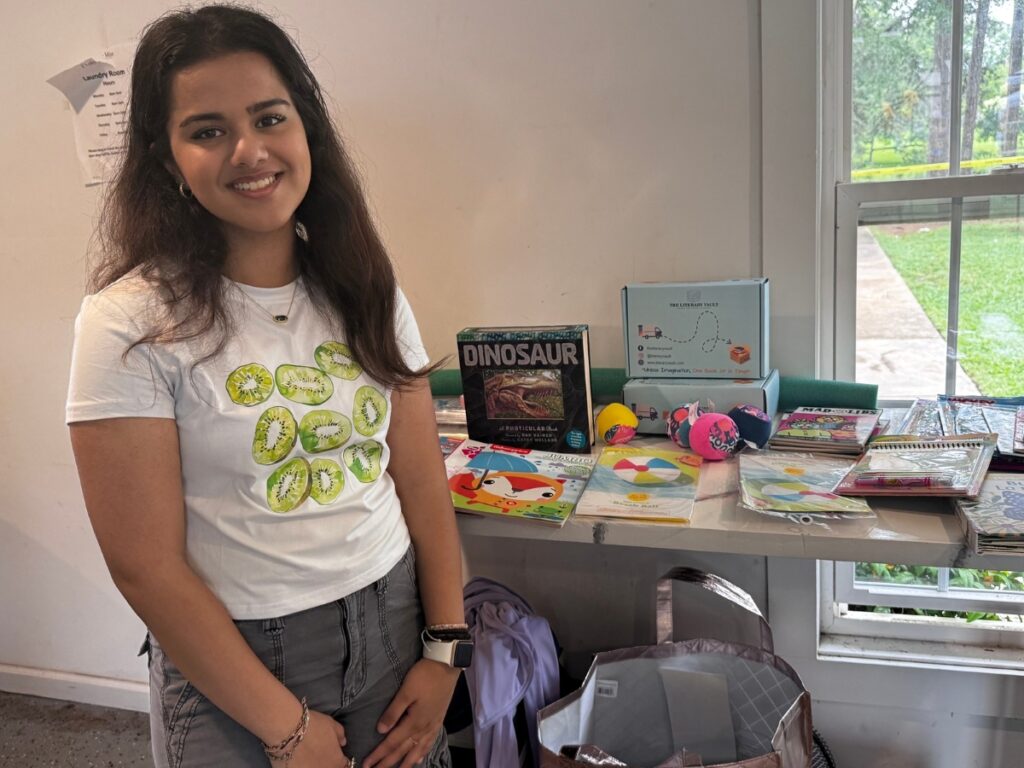
Cyra at A Promising Pages’ Bookseed event at Lake Mist Apartment Homes in Charlotte, North Carolina, where Literary Vault Book Boxes and other literacy resources were distributed to local families to make reading more accessible and exciting.
MeetDaily Point of Light Awardhonoree Cyra Aggarwal. Read her story, and nominatean outstanding volunteer or family as a Daily Point of Light.
Cyra Aggarwal believes every young person deserves to see themselves as a reader, a writer, and a storyteller whose voice matters. That conviction became READefining Futures, the registered 501(c)(3) global youth literacy and storytelling nonprofit she founded and continues to lead. What began as one student’s mission has grown into an organization spanning more than six chapters worldwide, powered by 30+ youth ambassadors and reaching more than 1,000 students nationally and internationally through books, mentorship, and storytelling programs designed to build both skills and confidence.
At the heart of Cyra’s work is access. She has forged partnerships with 25+ organizations—low-income schools, shelters, youth community centers, and free medical clinics—to deliver literacy resources directly to the children who need them most. Dedicating roughly four hours each week to the cause, she organizes and distributes books, leads literacy workshops, and mentors students through writing and storytelling activities. During the summer she hosts literacy-focused workshops, and throughout the school year she runs monthly sessions in schools, steadily strengthening reading and writing skills while nurturing a genuine love of literature.
READefining Futures has grown into myriad initiatives, each one led personally by Cyra. The Literary Vault, the organization’s book blog for young adult audiences, features over 100 book reviews, reading recommendations, and author interviews that spotlight diverse authors around the world. Its Monthly Book Subscription Box Service donates proceeds and curated book boxes to underserved communities in partnership with organizations like Read Charlotte and Promising Pages. Most recently, Care & Pages has begun placing free mini-libraries in clinics and community spaces—meeting families where they already spend time—with an active push to expand to seven locations across North Carolina, building on the 300+ books already collected.
Cyra’s impact has not gone unnoticed: she was named a Read Charlotte Hero in 2024 for her contributions to literacy in the Charlotte community. Yet recognition is not the point for her; expanding opportunity is. Year after year, she personally drives READefining Futures’ growth, opening new chapters, mentoring the next wave of ambassadors, and widening the circle of children who can reach for a book that might otherwise never have reached them.
Tell us about your volunteer role.
I’m the founder of READefining Futures, a 501(c)(3) youth-led literacy initiative built around three ideas: Read, Write, and Rise. What began with my own love of books has grown into a network of young people using literacy to create change in their communities.
Through Read, I organize book drives and lead Care & Pages, our free mini-library initiative. We have established libraries across North Carolina in community spaces where families can freely reach for books, puzzles, games, and activities. I wanted reading to be available not only in traditional libraries, but in the everyday places where people already are.
Through Write, I host interactive creative-writing workshops where young people experiment with storytelling, respond to imaginative prompts, develop characters and ideas, and share their work in an encouraging environment. I want students to experience writing as something playful and personal—not simply another assignment with a grade attached. The goal is not to create a “perfect” piece, but to help students realize that they already have stories worth telling.
And through Rise, I help other students become leaders themselves. Our ambassadors and chapters organize book drives, workshops, and literacy projects based on the needs they see in their own communities.
My role moves between dreaming up programs and doing the small work that makes them possible: contacting community partners, coordinating volunteers, designing workshop activities, sorting donations, stocking bookshelves, and supporting student leaders. I love that no matter what I am doing that day, it ultimately comes back to putting stories—and opportunities—within a young person’s reach.
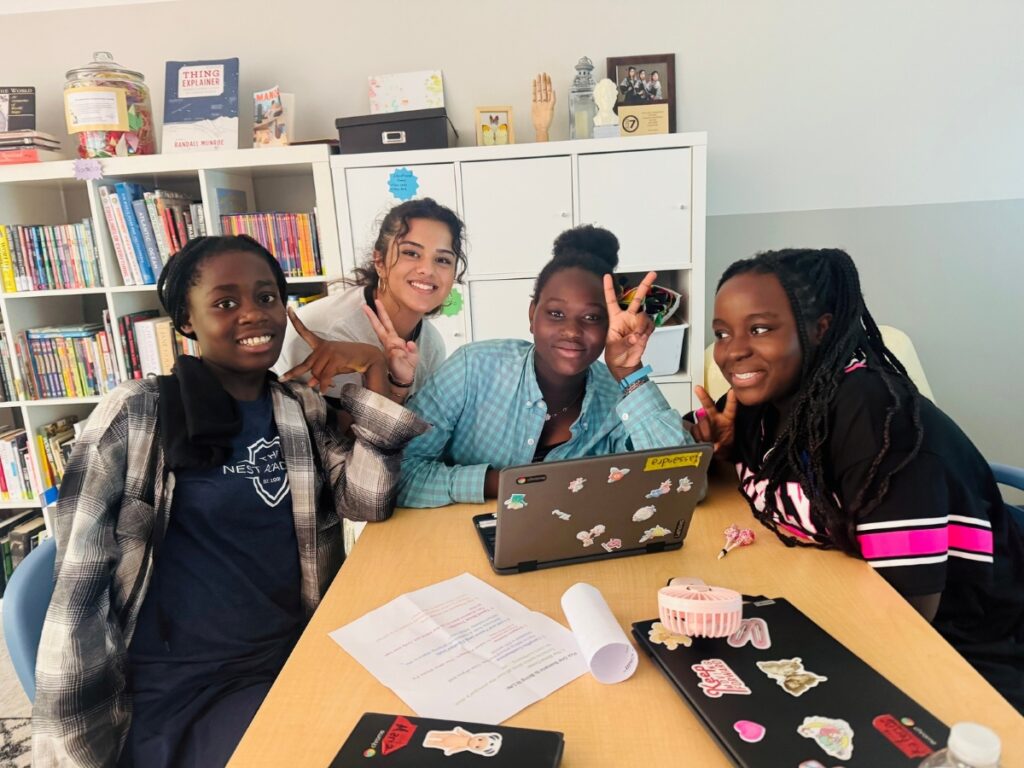
Cyra with students during a week-long READefining Futures literacy and creative writing workshop at The Nest Academy, where they used reading, discussion, and storytelling activities to encourage creativity and self-expression.
What inspired you to get started with this initiative?
READefining Futures grew out of a question I could not stop thinking about: “What if stories could do more than inspire people online? What if storytelling could become action?” I started The Literary Vault in 2023 because I loved reading and wanted a space to talk about books. I reviewed novels, interviewed authors, and built a community around literature. But eventually, I began wondering what it would look like to take that enthusiasm beyond a screen.
In 2024, I created The Literary Vault Book Box, a book-subscription project designed to make reading feel exciting and personal. I curated themed boxes filled with books and reading-related items so young readers could experience some of the same anticipation I felt whenever I discovered a new story. Putting those boxes together changed the way I thought about my work. I no longer wanted only to celebrate literature online; I wanted to create tangible experiences that made books more accessible and gave young people a reason to feel excited about reading.
From there, the idea kept expanding. I began thinking about children who might not have books waiting for them at home, young people who had few opportunities to explore writing creatively, and students with ideas for improving their communities who simply needed someone to tell them, “You can start.” Those realizations became the foundation for READefining Futures.
What I love most is that the organization has never felt finished. Each program has grown from something I encountered, a conversation I had, or a need I began noticing. It has taught me that service does not always begin with having a perfect solution. Sometimes it begins by paying attention closely enough to ask a better question.
Why is this issue so important to you?
Books have been constants in a life that often was not. I moved frequently growing up and attended many different schools, so I became very familiar with being the new person walking into an unfamiliar classroom. Even when my surroundings changed, stories were something I could return to. Reading gave me an escape when I needed one, but it also gave me perspective. I could enter lives, cultures, and experiences completely different from my own.
Later, I began understanding how much of a privilege that easy access had been.
A book can seem ordinary when you have always had shelves of them nearby. But access to reading materials is not equally distributed, and neither are the opportunities young people receive to explore their creativity. Through volunteering, I began seeing that gap much more clearly.
That’s why literacy means more to me than whether someone can technically read. It’s also about curiosity, confidence, empathy, imagination, and belonging. A child who finds a character who looks like them may feel less alone. A student who discovers that writing can be creative rather than simply academic may begin trusting their own ideas. A teenager who leads a book drive may realize they do not have to wait until adulthood to create change. That is what READefining Futures is ultimately trying to build: not simply more readers, but young people who feel seen, heard, and capable of shaping the world around them.
Any future partnerships, programs, or events that you are excited about?
One of the programs I’m most excited to expand is Voices of the Vault, a platform I created where young people can submit original poetry, essays, short stories, and reflections for the opportunity to have their work published and celebrated. Right now, it’s still in its early stages, and my goal is to grow it into a genuine home for youth voices. During our creative-writing workshops, I have watched students take a simple prompt and turn it into characters, poems, memories, and ideas entirely their own. I want Voices of the Vault to give that creativity somewhere to go after the workshop ends.
My hope is that a student could begin with an idea scribbled during an activity, keep developing it afterward, and eventually decide, I want someone else to read this. I would especially love to introduce the platform to the schools, shelters, and community organizations we already work with. Many young people may never think of submitting their writing to a traditional literary publication, so I want to make that process feel approachable. Eventually, I hope students can move from experimenting with an idea in one of our workshops to polishing a piece, submitting it, and seeing their name and words published. Through our planned Literary Luminary feature, I also hope to spotlight exceptional submissions and give young writers an additional moment of recognition.
Beyond Voices of the Vault, I’m excited to continue growing Care & Pages and deepening partnerships with schools, free clinics, shelters, and other youth-serving organizations. We have already established Care & Pages libraries across North Carolina, and I hope to bring them into even more spaces while building lasting relationships with the communities that host them.
What are your long-term plans or goals for the organization?
Long term, I want READefining Futures to become something that can continue growing without depending on me. That means building strong chapters where young leaders have the freedom to respond to their own communities. A student in one city might see a need for children’s books in a shelter, while another chapter might realize students at a nearby school would benefit more from creative-writing workshops. I do not want to hand every chapter an identical checklist. I want to give young people the structure, resources, and confidence to ask, “What does my community actually need?”
I also want Care & Pages to be sustainable. Installing a library is only the beginning. The harder and more important work is making sure it remains stocked, welcoming, and genuinely useful months and years later. Ultimately, I would love READefining Futures to bridge all parts of literacy: access to books, opportunities to create, and pathways for young people to lead. I hope we eventually reach thousands more students, but I do not want scale to become the only definition of success.
I would rather know that a child found the book that made them love reading, that a student wrote something they were finally brave enough to share, or that a teenager realized they were capable of creating change in their own neighborhood. Those individual moments are what I want the organization to keep multiplying.
What’s been the most rewarding part of your work?
Some of the moments that have stayed with me most have happened away from spreadsheets, donation counts, and program plans. Through volunteering in shelters, visiting lower-income schools, and leading literacy and creative-writing activities, I have had the opportunity to see disparities in access up close. What’s struck me most is not a lack of interest—it is the opposite. I have watched children eagerly sort through books, volunteer answers during activities, ask questions about stories, and light up when they are given the freedom to invent something of their own.
Writing has been that kind of outlet for me personally. I spent nearly three years writing and revising my first novel, The Architect of the Minds, before publishing it. The process taught me resilience, but more importantly, it gave me a space to explore ideas and express my own voice. Through READefining Futures, I wanted to offer that same outlet to young people who may not have had the chance to see writing as an opportunity to express themselves.
It’s easy to discuss literacy disparities as statistics. It feels completely different when you are sitting across from a child who is excitedly flipping through a book, asking whether they can take one home, or proudly sharing an idea they came up with during a writing activity. In those moments, the issue stops being abstract. You begin thinking about all the curiosity that already exists and how often the missing piece is simply having the resources and opportunities close enough to reach.
What have you learned through your experiences as a volunteer?
Volunteering has taught me to become much more comfortable asking, “What would actually be helpful?” instead of assuming I already know the answer. I have walked into schools, shelters, and community spaces with an idea of what I thought a program should look like, only to realize that the people there understood their needs far better than I ever could from the outside. Sometimes that has meant changing an activity for a different age group, rethinking which books would actually be useful, or reshaping an idea after a conversation with a community partner. I have learned that caring deeply about a cause does not automatically mean I know the best way to serve it.
I have also learned how much of volunteering happens after the exciting part. It’s following up with a partner, adapting a workshop that did not land the way I expected, sorting another box of donations, or returning to restock a space I had already spent hours setting up. Those moments have taught me that consistency can matter more than one big gesture.
Most of all, volunteering has made me a better listener. The more communities I have worked with, the less interested I have become in arriving with all the answers. I would rather show up curious, ask questions, and build something with people instead of assuming I should build it for them.
Why is it important for others to get involved with causes they care about?
I think caring about something and acting on it are two very different things. Most of us encounter issues that frustrate us, move us, or make us think, “Someone should do something about that.” Volunteering gives us the opportunity to become part of that “someone.”
Getting involved also changes the way you understand an issue. When you spend time with people whose experiences differ from your own, statistics become people, assumptions become conversations, and problems that once seemed distant become personal. That kind of perspective is difficult to gain from simply reading about an issue.
I also think communities become stronger when people stop seeing problems as belonging only to someone else. We all have different interests, skills, and amounts of time to give, but those contributions add up. You do not have to solve an entire problem yourself to become part of its solution.
For me, that’s one of the most powerful parts of volunteering: it turns caring from a feeling into a choice.
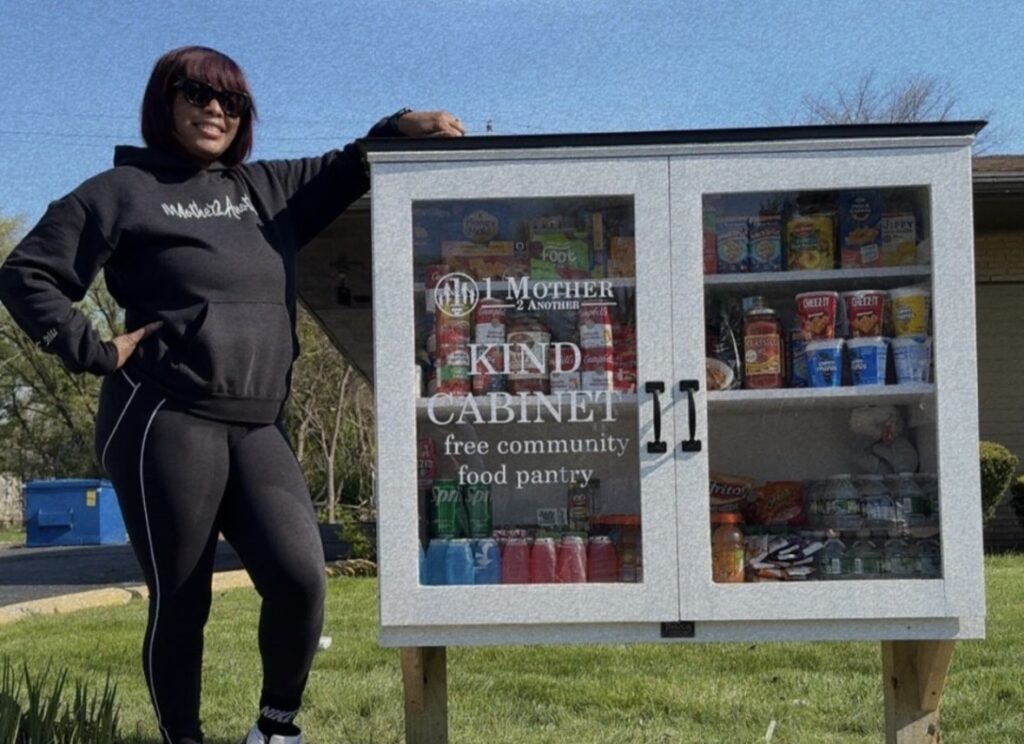
For more than 10 years, Ericka Woods has served Detroit through 1Mother2Another, organizing service projects, mobilizing volunteers, and connecting families with essential resources.
Meet Daily Point of Light Award honoree Ericka Woods. Read her story, andnominate an outstanding volunteer or family as a Daily Point of Light.
For more than a decade, Ericka Woods has shown up for Detroit through meals served, socks collected, and conversations that remind people they matter. As the founder of 1Mother2Another, she has built a network of thousands of women and dedicates 30 to 40 hours each month to organizing service projects, coordinating volunteers, and connecting families with the resources they need most.
Her work meets people where they are. She oversees the Kind Cabinet, a free, 24-hour community food pantry she restocks weekly to reach families facing transportation barriers. She leads monthly initiatives supporting shelters, schools, children, and individuals experiencing homelessness. And through Sip Sunday, she gathers mothers each week for a space to connect, decompress, and talk openly about real-life challenges, including mental health.
“Meaningful support begins with respecting people’s choices.”
Ericka Woods
Ericka’s approach is rooted in dignity. Having grown up in a family that sometimes relied on community assistance, she understands what it means to need support, and she offers it without judgment. What keeps her going is seeing the relief and happiness on someone’s face… a beautiful reminder of why the work matters.
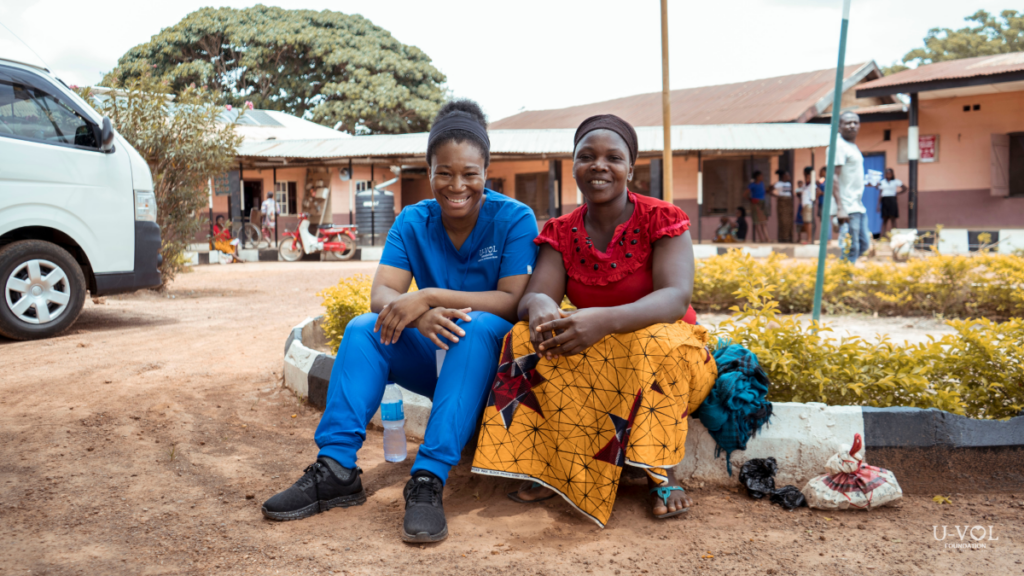
Faith Adole has led U-VOL Foundation without pay for more than 10 years, volunteering some 200 hours a month to bring free healthcare to the communities that need it most.
Meet Daily Point of Light Award honoree Faith Adole. Read her story, andnominate an outstanding volunteer or family as a Daily Point of Light.
Faith Adole founded U-VOL Foundation with the conviction to use what you have, start where you are, and bring others alongside you. More than a decade later, that set of core beliefs has grown into an entirely volunteer-led healthcare relief organization serving underserved communities across the United States and Africa.
As founder, board president, and a practicing nurse practitioner, Faith volunteers roughly 200 hours a month leading free medical outreach, health screenings, clean water initiatives, maternal and newborn health education, food distribution, and humanitarian medical missions. Under her leadership, which has all been free of monetary compensation, U-VOL has now mobilized more than 1,000 volunteers and raised nearly half a million dollars in funds and medical supplies. The organization reaches thousands of people while training local clinicians to strengthen care long after volunteers leave.
Faith believes that the work is less about single events than about relationships built over years – relationships built on listening first and working alongside people, rather than assuming you have the answers. What moves her most is the ripple effect of patients returning to school, clinicians gaining confidence, and volunteers growing into leaders who serve their own communities.
MeetDaily Point of Light AwardhonoreeDalia Karni. Readherstory, and nominatean outstanding volunteer or family as a Daily Point of Light.
Seventeen-year-old Dalia Karni loves to read, so when she recognized that kids in her community lack access to books at home and school, she was concerned. As the daughter of two doctors eyeing a future in the field, it didn’t take long for her to combine her interests to address the issue with The Book Bridge, a literacy initiative centered around a partnership with federally-qualified Legacy Health Clinic’s “Little Readers” program.
Legacy Health provides primary care and support services regardless of a patient’s ability to pay, immigration status, or insurance coverage. These types of clinics are central to the country’s strategy to reduce barriers to health care for underserved communities. Legacy works with Reach Out and Read (ROAR), the nonprofit who started “prescribing” books to children at their yearly checkup.
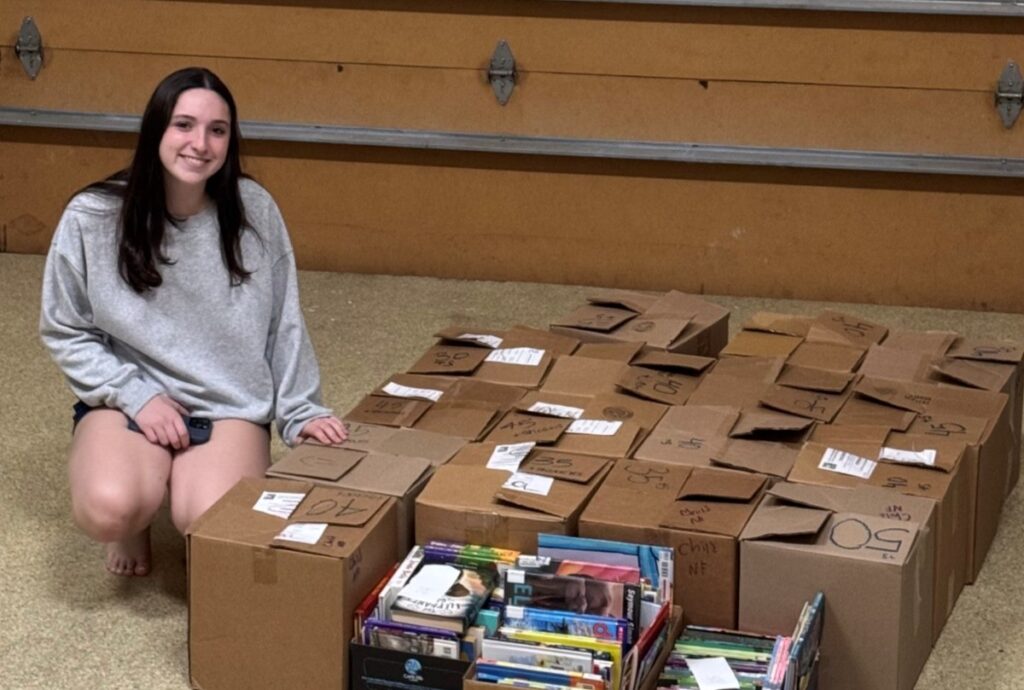
Dalia solicits and collects books for the program, strengthening children’s literacy and inspiring a love of reading with each of the more than 17,000 books she has acquired since 2024. She’s on track to hit 20,000 by graduation. Bringing her strong Spanish skills from the classroom to the community, Dalia also volunteers at local food distributions with Spanish National Honor Society. She hopes to continue studying the language in college along with public health.
What inspires you to volunteer?
Volunteering makes me feel most like myself. I always feel like I’ve gained more than what I’ve given. And it really makes it fun when I invite friends or family.
What inspired you to get started with this initiative?
My love of reading was key. In 2024, we made my mom a Little Free Library for our yard for her birthday. We quickly realized that the books weren’t getting switched out as much as we’d like them to be.
While we were cleaning one day, I saw the children’s books my younger sister had outgrown that filled our house. I assumed my neighbors had a lot, too.
I did some research and found Legacy Health Clinic, where they offer free books to patients at their yearly checkup. They also have events where they distribute books, because they’re very big on social determinants of health and are trying to solve those, especially in Houston, where the poverty divide is significant.
I reached out to donate, and I really enjoyed it. So, I went to one of their health fairs to give more away. That really made an impression on me, and I learned a lot from the people I was giving them to. That’s when I started collecting books from friends, family members, and neighbors.
Tell us about your volunteer role with the Book Bridge.
I started by reaching out to friends to donate books and solicit donations at their own schools. Three of my volunteers do their own drives, and one even talked her teacher into giving extra credit to students who brought in five or more books. Last year, I partnered with the Houston Public Library Foundation, who donated nearly 300 books.
I work with people and spreadsheets. I oversee book drives and partnerships with schools, nonprofits and libraries. I help host drives at several schools. And I coordinate donations and hand out books at health fairs and school events.
We donate books for ages up to 18 in almost every language, the most common being Spanish and English. People drop them off, or we pick them up. I once took 20 trips to a neighbor’s house to get their donations back to my garage.
We add a Legacy Health sticker to each and put them in cardboard boxes for a volunteer coordinator to take to their warehouse. I’ve also occasionally taken them myself.
Last year, I did a capstone project for a feminist fellowship. My mentor helped me come up with the idea of expanding my initiative using bookmarks, and the program funded printing 400-500 of them.
On the back, there’s information about the literacy crisis with a QR code that leads to an overview of our program and how to get help. It also details how to donate. I distributed them through the Houston Public Library and Little Free Libraries.
What’s been the most rewarding part of your work?
The feeling I get when I get a new book is indescribable. I love knowing each book I give someone gives them the same experience. I’ve reached a lot of people with the books I’ve donated, and that feels really good. I also really enjoy sharing my favorites with kids at events and getting them excited about reading.
What have you learned through your experiences as a volunteer?
I’ve learned about the issues people are facing and get to be a bridge that brings Houston together. It’s hard to believe that a 25-minute drive from my home, people are living in poverty. The facts keep me motivated. For example, one in three 3rd graders in Houston can’t read at their level. It makes me want to educate the community about the problem and how they can help.
Tell us about future partnerships, programs or events that you are excited about.
I’m part of the Mayor’s Youth Council this year. Last year, they asked if I could connect them with Legacy Health, but the partnership ended up not working out due to time constraints. We plan on hosting a book fair together in May.
Why is it important for others to get involved with causes they care about?
Community involvement is an important part of growing up. Regardless of your income, helping others is a rewarding experience. You meet new people. You learn new things. It’s a great way to spend your time.
What do you want people to learn from your story?
You can use something that you enjoy to make a difference in your community. I’m just a teenager, but with the help of friends and my mom’s car–I couldn’t drive in 2024–I’ve done more than I thought I could. Start small. It can make a bigger impact than you’ll ever know.
MeetDaily Point of Light AwardhonoreeSophia Fan. Readherstory, and nominatean outstanding volunteer or family as a Daily Point of Light.
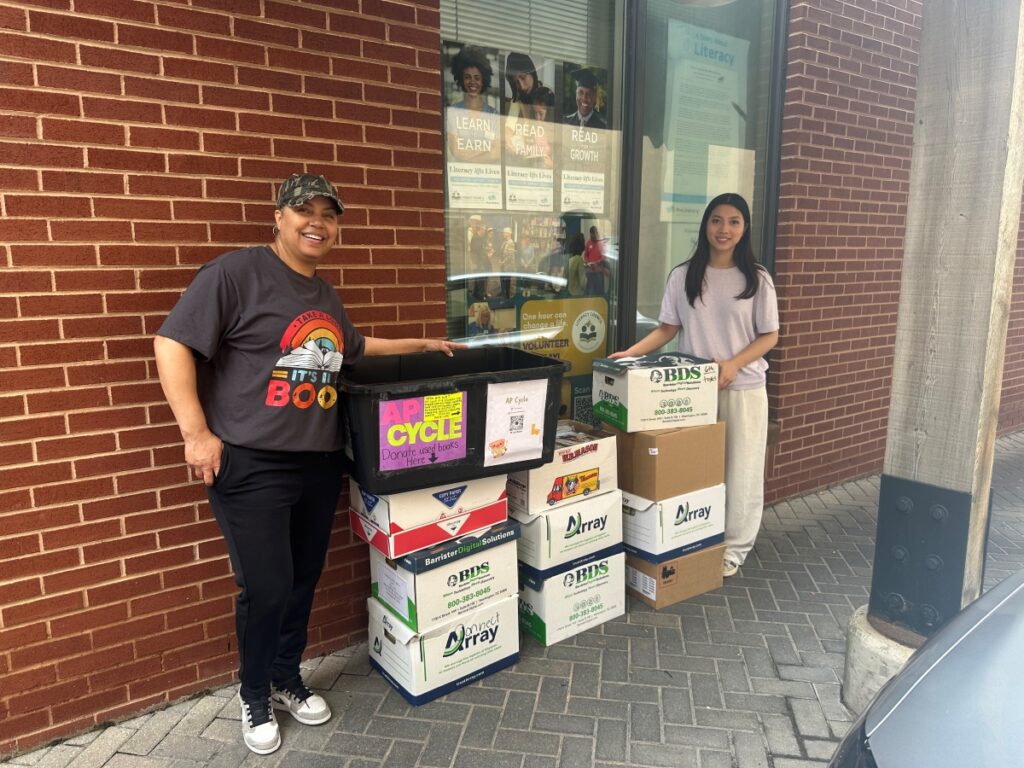
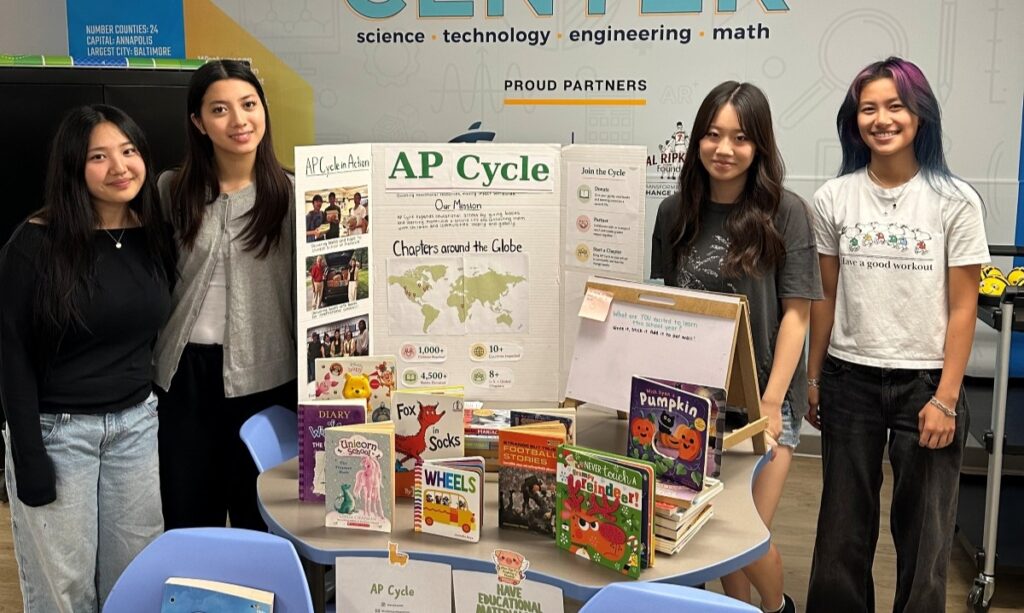
For some, there is relief in finishing the final test of an Advanced Placement class. For 17-year-old Sophia Fan, it’s an opportunity. As a newly minted teenager in her first year of high school, Sophia started Literacy Cycle, formerly known as AP Cycle, to facilitate the donation of AP books to people who needed them, and it grew from there. What started as a way to share textbooks has turned into a literacy initiative that covers children’s books all the way to college standardized test prep.
Since 2022, the organization has donated over 5,200 books across 10 countries. It has chapters in six states and just launched the first international chapter in Rwanda. Each chapter focuses on reducing educational gaps in its own community. Sophia has built partnerships with six other organizations like Books for International Goodwill, which assists in international distribution.
In between classwork, travelling for club volleyball games, and spending quality time with her dog Willow, Sophia dedicates around 40 hours each month to finding new life for used books, connecting people who lack access with opportunity. She is also applying to college, where she hopes to study for a career in public or global health
What inspired you to get started with this initiative?
I grew up in China, and I saw how children can have very different access to educational resources depending on where they live and what their families and schools can provide. That stayed with me after I moved to the U.S., because books had always been a normal part of my life. I could go to the library or have another book waiting for me without much thought.
One day, I was cleaning out books that I’d outgrown, and it felt strange that they were just sitting there when they could be useful to someone else. So, I started looking for places to donate them. I reached out to a variety of different organizations, and that idea eventually grew into Literacy Cycle.
Tell us about your volunteer role with Literacy Cycle.
As the Founder and President, I do a lot of behind-the-scenes work. I coordinate book drives and distributions, reach out to community organizations to organize events or collaborations. I recruit volunteers and build partnerships. Throughout the week, I also respond to emails and coordinate meetings, and transport and sort books. A big part of my role now is helping other students start this initiative and run their own chapters.
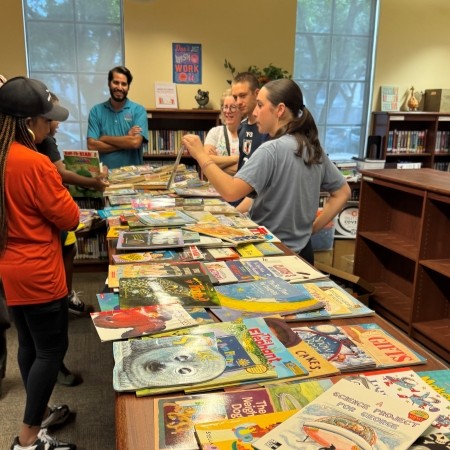
We try to do monthly events, which typically start with collecting books from different organizations around the county. For example, the Literacy Council just recently donated 10 boxes. We have a donation box there now that I’ve promoted on Facebook. We also hang posters at school asking for donations. One student brought in a whole suitcase full of AP books!
Then, for example, we will contact Books for International Goodwill, which gets them overseas, particularly to literacy organizations in West African countries. We donate locally as well. A drive last year was for the Chinese school in our community, many of whose students were preparing for high school. They wanted to see what subjects they were interested in, so we brought in a bunch of AP books to reuse after seniors finished their exams.
What have you learned through your experiences as a volunteer?
In the beginning, I would email general contacts at organizations, to no response. After researching and CCing people more directly relevant to what we want to accomplish, I’ve seen a lot more replies. For example, if I had spoken with someone from International Rotary and I wanted to email them, I would CC someone specifically for the transportation of books overseas. That helped secure our partnership.
There has been a learning curve, but the process has taught me the perseverance required. It’s so important that you keep trying and not take no for an answer.
Tell us about future partnerships, programs or events that you are excited about.
We’re planning an event called The Book Swap, where families can exchange books that they’ve finished for new ones. We’re also hoping to incorporate a fundraiser to help pay for some of the costs like driving to places and buying posters. Student volunteers will read to little kids and their families, and teach them how to make satellites with Lift Off, a partner organization that runs STEM-related activities.
People have said they’ve dropped off a lot of books at our box at the Literacy Council, so we’re excited to collect that, too.
Why is it important for others to get involved with causes they care about?
When you really care about a cause, you notice a need that other people might overlook. For me, that was literacy. A book can seem like a small thing, but it can give someone a way to learn, explore an interest, or simply enjoy reading.
What has been the most rewarding part of this work?
I love seeing kids get excited when they find a book about something they love. We had an event to donate books to children impacted by parental incarceration, and one child was intrigued by Roblox books. Some of them really loved softball. It reminds me why access matters so much. When you care so deeply about a cause, you’re more willing to keep showing up and ensuring what you’re doing is actually useful.
Any advice for people who want to start volunteering?
You don’t have to wait until you feel completely prepared to start something meaningful. A lot of volunteering is learning as you go. When I started, I didn’t know how to build partnerships or organize a book drive. I just cared enough to try.
One email led to a conversation, and one small collection led to something bigger. You don’t have to see the whole path before you begin. You just have to care enough and take the first step.