Meet The High School Student Mobilizing Diaper Drives
Meet Daily Point of Light Award honoree Francesca Gambale. Read her story, and nominate an outstanding volunteer or family as a Daily Point of Light.
For Francesca Gambale, the path to becoming a neonatal nurse didn’t start in a classroom—it started in the warehouse of the Monmouth County Diaper Bank. Over the past three years, this dedicated volunteer has turned a personal passion into a lifeline for thousands of families. Driven by the sobering reality that government programs like WIC and SNAP do not cover the cost of diapers, Francesca has made it her mission to ensure that every child has the basic dignity of staying clean and dry. To her, a diaper is a foundation for a healthy start in life.
Having already logged 352 hours of service, Francesca is well on her way to her goal of 500 hours by graduation. Her work is a blend of physical labor and strategic mobilization: she has personally facilitated the wrapping and packaging of over 200,000 diapers for distribution. She spends 10 to 12 hours a month sorting through inventory or hosting drives that have, so far, collected 25,000 diapers.
Francesca has also proven to be a formidable fundraiser and leader. She has raised more than $20,000 through her various initiatives, including over $11,400 specifically dedicated to purchasing new diapers. She even contributed $1,000 of her own hard-earned money from summer jobs to the cause. This fall, she leveled up her efforts by forming a dedicated team to expand the diaper bank’s reach, proving that her ability to inspire others is just as strong as her own work ethic.
While Francesca’s roots are in Monmouth County, the organization has extended its reach to support those in the wake of national disasters, shipping essential supplies to flood victims in Texas and wildfire survivors in California. As she prepares to take her passion for service with her to college, Francesca leaves behind a legacy of “endless reach.” Read on to hear more of her story.
Francesca collects diapers for the Monmouth County Diaper Bank.
What inspired you to get started with this initiative?
In the summer of seventh grade, my parents came to me and we talked about how middle school was the next step in my education as well as me becoming a young adult. My parents are involved in a few volunteer opportunities. However, my brother and I were never forced to have their passions become ours. My parents shared with me a few volunteer opportunities available in my community and allowed me to pick one that would align with what would make me happy to become a part of. There were the traditional food banks for unhoused people… blessing bags… and then I read about a diaper drive.
When I read that diapers are in need for mothers and children in many communities, including my own, I immediately knew that that was the passion project for me. After doing some research and getting some help from Deacon Matt from our church, I realized that although many consider diapers necessary and accessible items as part of a child’s health and well-being, that is not always the case. Many low-income families can’t afford diapers. In addition, government assistance programs such as WIC and SNAP do not cover the cost of diapers.
Tell us about your organization and volunteer role.
With a passion for children and my hopes of going into pediatrics, I knew that joining the Monmouth County Diaper Bank was the perfect way for me to volunteer and get involved in my community. I’m currently a junior in high school and have been a constant advocate for the diaper bank for almost five years. I work with an amazing Deacon in my community, Deacon Matt. He is an inspiration to so many and has become a role model for me, supporting my journey since seventh grade and pushing me to be the best person I can be.
As part of the Monmouth County Diaper Bank, I have collected over 12,000 diaper donations and raised over $8,000 to purchase over 30,000 diapers to give to my community. In addition to that I have worked with the diaper bank to package and distribute diapers to those in shelters and communities both within Monmouth County and beyond. I have packaged over 100,000 diapers for distribution. I currently have over 360 volunteer hours with the Monmouth County Diaper Bank. And I do not plan to stop anytime soon! During the Texas floods this amazing organization also sent diapers down to Texas to fulfill the needs of others.
This year I have started to recruit others in my community to work with me to host diaper drives and package diapers. I am excited for this new opportunity to work with middle schoolers to inspire them to find their passion. It has truly been a rewarding experience being able to work hands-on with an amazing organization, and one of my mentors.
Why is this issue so important to you?
The best part about being a part of the Monmouth County Diaper Bank was not being forced to do this by my parents. I was able to pick a cause that was important to me. As the oldest of five cousins, I have seen the importance of diapers on a daily basis. Babies can go through anywhere from 6 to 10 diapers a day. The fact that mothers can possibly not have enough money to purchase diapers to keep their baby clean and dry is unimaginable. Every baby deserves the dignity and ability to be clean and dry. A soiled diaper can lead to extreme health concerns such as rashes, viruses and urinary tract infections.
Being part of this organization has shown me that parents become stressed with anxiety when they are unable to provide for their child. Being able to ease this financial burden, diaper banks help parents focus on work, education and family stability, and use their resources for food and shelter. Access to clean diapers isn’t just about hygiene, it’s about dignity. Diaper banks help families feel supported, not judged, during financially difficult times. Over the last five years this organization and my volunteer opportunities within it have helped me to discover a deeper passion, which is to go into pediatrics within the medical field. My goal is to continue this volunteer passion of mine throughout college and well into my career. I’m hopeful that this story will help others realize that every baby deserves to be clean and dry and that a little heart goes a long way.
What have you learned through your experiences volunteering?
Throughout volunteering, I’ve learned that some of life‘s most basic needs are not always obtainable by everyone. I also learned how many people right here in the Monmouth County community are struggling. My volunteer opportunity has taught me how important it is to be involved in your community. It has taught me empathy and has given me a sense of purpose. I have learned that my passion, time and patience can truly impact others. I have gained confidence and leadership skills that have helped me in high school.
Why is it important for others, especially youth, to get involved with causes they care about?
Because it will help them grow as a person. Throughout my volunteer work, I have learned more about myself, and my involvement within this organization has led me to a passion for medicine, specifically working with children. Volunteering also directly impacts your community. Volunteers can truly create a positive impact and a positive change within their community. When people show commitment to a cause, they inspire their family, friends and younger generations.
Any advice for people who want to start volunteering?
The best advice I could give people who want to start volunteering would be to ask yourself why you want to volunteer. If it’s because your parents are making you do it or you need community service hours for religious education or National Honor Society, you’re doing it for the wrong reasons. Find a cause that is meaningful to you and something you’re passionate about. Once you do that, your time spent will be rewarding, and you’ll realize how important your acts of kindness, your time and your dedication are to those not only close to you, but in your community and beyond. My hope for this is that other teens will be inspired to get involved with their community in a way that means more to them than the people receiving the acts of kindness.
Meet Daily Point of Light Award honoree Tessa Shane. Read her story, and nominate an outstanding volunteer or family as a Daily Point of Light.
When Tessa Shane talks to people, they often tell her they don’t know where to donate their clothes. However, she has the perfect answer. A 17-year-old high school student, Tessa used to be really into sports. After a bad back injury sidelined her, Tessa found herself with a lot more time on her hands. Looking to get involved with volunteer work, she wanted to use her independent spirit and love of fashion to create something of her own. She got involved with Hoodies for the Homeless, a sweatshirt-collection organization that offered her the opportunity to spearhead their initiative in her home state of Michigan.
Soon, Tessa realized that maybe the potential to establish her own organization wasn’t so unrealistic. She formed The Donation Closet, an organization that collects new and gently used clothing for men, women and kids. Tessa uses her parents’ basement as a drop-off location for used clothing, where neighbors and local residents can bring items they no longer want to wear and feel good knowing they can go to someone who will wear it proudly. Tessa sorts through each of the items and organizes them on clothing racks to create a makeshift store of her own.
Each month, she partners with one to two local organizations that need clothing, pulling the appropriate sizes, bagging and delivering the items. Thus far, Tessa has collected over 9,000 items of clothing via donations, partnering with everyone from social media influencers and Girl Scout troops to public school community service officers and her own family members. Whoever Tessa comes into contact with, she shares her message of generosity and encourages others to volunteer, too.
While Tessa has a busy school workload and is preparing to go to college next year, she dedicates 30 to 40 hours per month to The Donation Closet. But her time helping others find comfortable clothing to wear is hardly coming to an end. No matter where she ends up studying next year, Tessa hopes to establish a new branch of the Donation Closet, encouraging sustainability and helping others find the resources they need. Her willingness to help others wherever she goes is a beautiful example of volunteerism.
TESSA SHANE PULLS CLOTHING FROM HER RACKS FOR A FAMILY THAT LOST THEIR HOME AND BELONGINGS IN THE LOS ANGELES WILDFIRES. /COURTESY TESSA SHANE
What inspired you to get started with this initiative?
I was looking to get involved. I wanted to do something, but I wanted to do something on my own. I’ve always been interested in fashion, and I’ve been interested in helping out in any way that I can. I found this organization, based in New Jersey, called Hoodies for the Homeless. I reached out to them because I noticed that they didn’t have a Michigan chapter, and they offered for me to launch it. I ended up doing a few big donation collections, and they ended up being really successful. As a result, people were dropping off clothing at my house. We were getting inundated with stuff, and we didn’t really know where to put it.
I asked my parents if I could move some of the furniture around in our basement. I got on Facebook Marketplace, and would find places closing and ask for free racks to set up a store in my basement. I was getting stuff for summer and kids, and I thought I could do something bigger. I came up with the idea for The Donation Closet, and I put out there that I was going to partner with different local nonprofits every month. I started building really good relationships with local nonprofits. A lot of them were foster care places, so they would tell me what clothing they needed for each season. At the same time, people were dropping off clothing at my house. Each month, I would go into my basement and curate and pull exactly what they needed.
Tell us about your volunteer role with The Donation Closet.
I take the work out of it for people. I do the legwork of figuring out what local organizations need. They can just drop clothing off and know that it will find a home. In the summer, I have an Instagram page. I figure out who I’m going to partner with for the coming month, and then I post something and announce it. I even have a really cute elementary school that I went to that had a Girl Scout troop that wanted to do something for the holidays, so they collected over 700 pieces of clothing for us to go towards this.
What are your long-term plans or goals for the organization?
I’m going off to college at the end of the summer. I anticipate that I’m going to have inventory left over, so I want to have a high school student carry it on locally here. Wherever I end up in college, I’d like to try to do something similar, whether it’s a space that I can find that’s sponsored, or it’s the same idea, where we can work with local organizations and do The Donation Closet in that particular college town.
What’s been the most rewarding part of your work?
Probably meeting the families that we’ve helped. We had some families that we helped when the L.A. wildfires happened who had some sort of connection to Michigan, and we pulled a bunch of clothes for them. I think it’s hearing from them and them thanking me, and just acknowledging that we were able to help. I think the most rewarding thing is knowing that I helped somebody.
What have you learned through your experiences as a volunteer?
Two things. One is that I’ve learned a lot about the nonprofit world, whether it’s starting one or working with them. As a volunteer, I’ve seen how much the people who work for these different organizations care about the work they’re doing. I feel like everything started with a really simple idea, and I wanted to do something to help somebody. I saw different opportunities as they presented themselves. I feel like with volunteering, things can take different terms, in the best way possible, where you just meet different people on your path. I ended up learning through volunteering that I actually liked a lot of the inner workings of how to build a nonprofit.
THE DONATION CLOSET FOUNDER TESSA SHANE SMILES ALONGSIDE A LARGE CLOTHING DONATION THAT’S PACKED AND READY TO GO TO ITS RECIPIENT ORGANIZATION, THE CHILDREN’S CENTER OF DETROIT. /COURTESY TESSA SHANE
Why is it important for others to get involved with causes they care about?
Especially as a teenager and being in high school, we spend a lot of time in classes. When you volunteer and do something outside of a school, you’re exposing yourself to so much more in the world. I’ve learned so much just by volunteering and doing what I’m doing. I think it’s important for people to step out of their comfort zone and just explore things. I feel like my time is more focused on important stuff, and it just feels more meaningful.
Any advice for people who want to start volunteering?
Do your own research in your local community. Some people might find that they’re more drawn to working with the elderly, or somebody wants to do something to help with gardening. It’s really as easy as Googling and asking what organizations are nearby. If you go on their website, there are so many of them that are looking for help. Every time I’ve reached out to somebody, they’ve been so happy and excited that a young person wants to help. I think it’s just taking that first step.
What do you want people to learn from your story?
I think that you can do a lot in high school. A lot of people think that you have to do things one way, like you have to join a club that’s just at your school, or you have to join a sports team. But there are so many other different ways that you can learn and grow and feel like you know you’re making a difference. I think a lot of it, at least for me, was just getting creative and trusting myself. So I think people just have to trust that there are other things to do outside. With high school students, that’s outside of their school walls. Trust yourself and take the steps and reach out to people.
The Quiet Dedication of a Leader Ready for the Storm
Meet Daily Point of Light Award honoree Bill Sommers. Read his story, and nominate an outstanding volunteer or family as a Daily Point of Light.
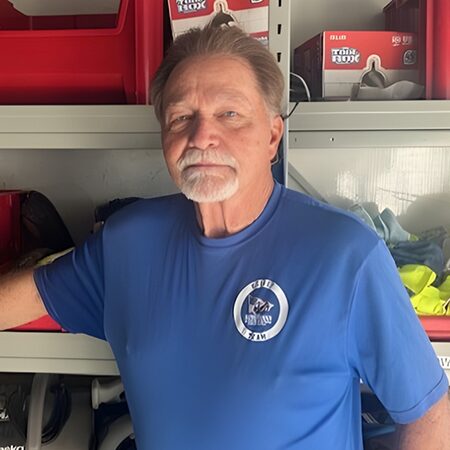
While many disaster relief volunteers are recognized for their work in the immediate aftermath of a storm, Bill Sommers’ vital contribution begins long before the clouds gather. Since joining Minuteman Disaster Response in 2017 as part of the relief team, he has transitioned into the role of maintenance coordinator, a position that serves as the backbone of the organization’s operational readiness. For Bill, the mission is simple but high-stakes: if the equipment fails, the mission to serve those in crisis fails along with it.
The scale of Bill’s responsibility is staggering, yet he approaches it with the disciplined focus of a master craftsman. He and his dedicated team manage a fleet of over 30 rolling pieces of equipment, many of which are outfitted with complex onboard generators. His leadership shines brightest during their monthly maintenance days, where he rallies a team of volunteers to turn wrenches and run diagnostics regardless of the blistering heat or freezing rain. Beyond these scheduled sessions, Bill spends countless unscheduled days in the shop during the peak of storm season, ensuring that every vehicle is a reliable sanctuary for those who have lost everything.
Bill’s ingenuity has directly expanded the organization’s reach and capability through remarkable feats of engineering. He spearheaded the effort to convert six former U-Haul trucks into fully functional mobile relief vehicles, transforming standard moving vans into sophisticated tools for disaster recovery. This fleet expansion allows the organization to deploy to multiple locations simultaneously, bringing hope to more communities in the wake of hurricanes, tornadoes and floods. His work is not confined to the garage, either; Bill himself has deployed over 17 times, occasionally traveling directly to disaster sites to service equipment in the field under the most demanding conditions.
Bill’s commitment provides a sense of security to his fellow volunteers and a lifeline to survivors. Read on to learn more about his work.
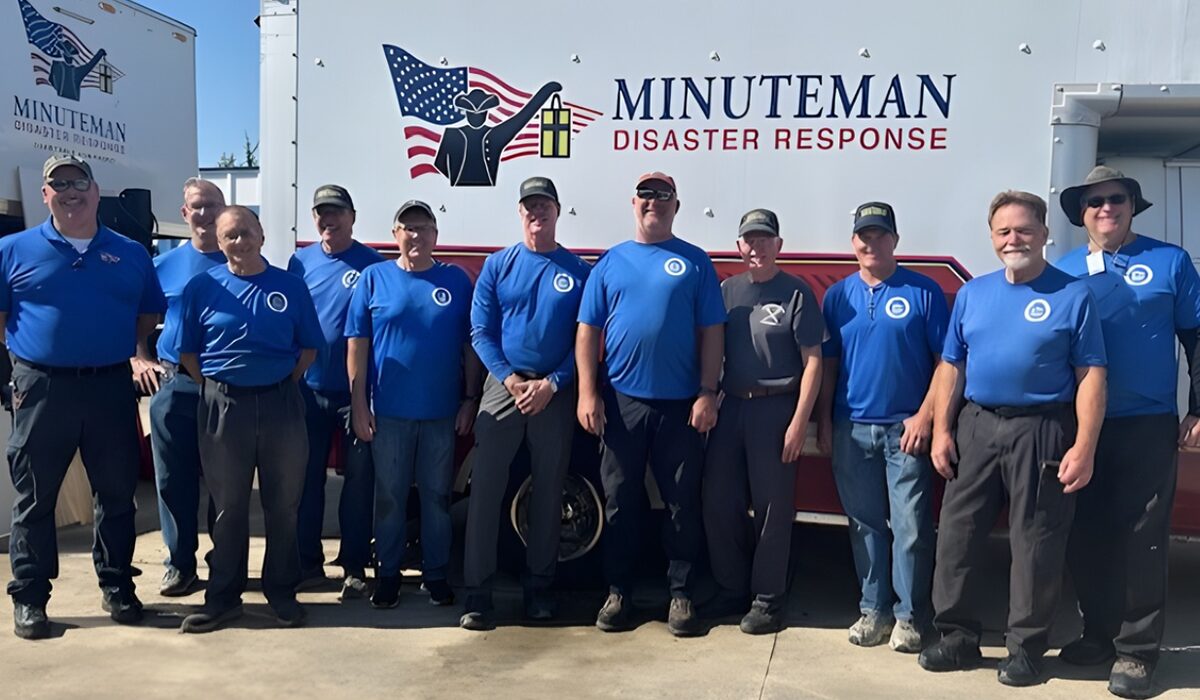
As maintenance coordinator for Minuteman Disaster Response, Bill Sommers leads volunteers who meet monthly to ensure all equipment is in top working order and ready to deploy at a moment’s notice.
Tell us about your volunteer role.
Minuteman Disaster Response started in 2011. Our mission is to provide assistance in the immediate aftermath of a disaster through the deployment of highly trained and equipped volunteers. We have hooked up with all the emergency response systems because if you go to a disaster, you have to have access to get in; if you aren’t vetted, they will just turn you away. And that’s actually what happened the first time the founders went out in 2011. They went to Arkansas—just four guys in a long trailer with water and supplies—and they got turned away because they didn’t have the proper credentials. On the way back, they stopped for lunch and said, “Boys, we’ve gotta do better than this.” They developed Minuteman Disaster Response from that moment, and it has grown tremendously. This is our 15th year now.
I became the coordinator for the maintenance team, and I have 22 people under me. Usually, the same 10 or 12 regular volunteers show up each month to do the heavy work. Since I live only four miles from where the equipment is stored, I’ll go in two or three times a week to handle the little things, like battery changes, so I don’t have to call my guys in from out of town. When we come back from a deployment, there is always something broken—volunteers can be hard on equipment! I’ve deployed 17 times myself, often doing chainsaw work, and I even taught the chainsaw class for a while. I just turned 75, so I don’t deploy to the field as much anymore. I let the young guys go out and run the chainsaws all day while I stay at the home base. I have plenty of work to do here keeping everything running so that we are always ready to respond.
What inspired you to get started with this initiative?
I didn’t join until 2017. I retired in 2014 after spending 31 years in the U.S. Post Office, then worked for the county for another eight years and retired from there. Prior to that, I served as a Vietnam veteran and a Bronze Star recipient. While that isn’t volunteer work, it is serving. And then I was looking for something to do. I was retired and didn’t want to just sit around and grow old. In 2017, I saw an advertisement for Minuteman in a local weekly newspaper. They were organizing their first relief team, so I went to the meeting and joined immediately. My first deployment was in April 2017 to Canton, Texas, after a tornado went through. We jumped right into the cleanup work.
As we grew, we obtained a lot more equipment. We realized we had to maintain it because if everything is broken, we aren’t helping anybody. Currently, we have about 30 rolling pieces of equipment. This includes a 53-foot, 28-man bunk house and a 53-foot Incident Command Post filled with computers and big screens. We also have two shower trailers and our own skid steers. Most of these trailers have onboard generators that require oil changes every 250 hours, so you have to stay on top of them. We also have two larger generators that can power our entire base camp.
Why is disaster response so important to you?
When we go out there, we see a wide range of needs. I remember a tornado that went through Dallas, which isn’t far from us. We were down there clearing the streets, and we saw that some of the residents had the means to hire landscaping crews to clean up their yards immediately. But the people we typically help can’t afford any of that. They’re stuck.
Our response team used to go in and work for about three days, but as they were leaving, the homeowners would just be returning. Our guys would be pulling out while the residents were standing there, looking at where their house used to be or where their trees once stood. We realized we couldn’t just leave them high and dry; they were helpless. That’s why we got the relief team started. It’s a vital service because you can’t just walk away when the immediate danger has passed.
A lot of people have the capability of paying to have debris removed, but we try to take care of everyone else—the ones who can’t afford to hire the work out. We talk to the homeowners and explain that we can cut the trees down and stack them at the edge of the road for the county to pick up. Inevitably, they ask, “What is this going to cost? I can’t afford that.” When we tell them it doesn’t cost anything, that it’s free, they usually start crying. They are just so thrilled that we are there to help because they don’t have a clue where to even start. We help get them back on their feet.
What’s been the most rewarding part of your work?
It is just so rewarding. When we arrive, people are often feeling helpless and unsure of where to even start. We come in with a game plan because we’ve done this so many times before. To see them get that little glimmer of hope back is incredibly rewarding. You walk away knowing you’ve helped someone who was basically helpless before you arrived. It’s a really, really good feeling.
Bill Sommers and his MDR maintenance team ensure equipment is mission-ready.
What are your long-term plans or goals for the organization?
We’ve expanded significantly. We used to operate within a 400-mile radius, but we’ve gone way beyond that now. Some of our supporters have even offered flights for volunteers. For example, when hurricanes hit Florida or North Carolina, we were able to get our equipment there. One of our sponsors told us that if a volunteer commits to three days of work on the ground, they will fly them there and back for free. That opened up all kinds of possibilities; we can basically go nationwide now.
We’ve established branches in Birmingham, Alabama, San Antonio, Texas and Tulsa, Oklahoma. To support this, we bought used U-Haul trucks and built them out ourselves. We installed shelving, organized equipment on the walls and equipped them with generators and all the power tools we need. These smaller trucks can get into areas where our big trailers can’t fit.
This past year, we were deployed in Kerrville for floods and in West Texas at the same time. Because we are deploying to multiple spots simultaneously, we’re building another bunk house. We have to ensure our people have a place to stay, food to eat and restroom facilities. Our goal is to continue branching out nationwide. We’ve noticed that tornado activity seems to be shifting a bit to the East, which is why we chose Birmingham as a branch location. They have their own equipment guy and a shower trailer there now.
What have you learned through your experiences as a volunteer?
I’ve learned that you can do a lot more than you thought you could, when you really put your mind to it. I’ve also learned that if you lead by example, your team will do anything you ask. I don’t ask my maintenance guys to do anything that I wouldn’t do myself. If you lead by example, provide the right training and give them a little bit of guidance, it’s unbelievable what people can accomplish. Those guys are just great.
Why is it important for others to get involved with causes they care about?
You truly understand the mission when you deploy and help someone clean up what used to be their home. When people are that hopeless and you step in to help, you learn more about yourself. It is a very worthwhile experience. When you walk away from a site, you’ll know exactly why you signed up because the work is just so rewarding.
Any advice for people who want to start volunteering?
In our organization, there’s a place for everyone. I remember we were down in Refugio, Texas, cleaning up a park. I was the only certified chainsaw operator that day, and we had a skid steer running. One of my team members came up and told me he had hurt his back and couldn’t lift any lumber or branches. Now, there was a sign in that park that said, “Beware of Alligators.” I told him, “I’ve got a job for you. Stay here, rake a little brush if you can, but mostly, just watch our backs for snakes and alligators.”
There is a job for everybody. Some people are comfortable learning heavy equipment like the skid steer (I tried it, but it wasn’t my cup of tea) while others prefer chainsaws. You may think you aren’t doing much, but when you put the whole team together, it pays off. There is something for everyone to do.
Anything else you want people to learn from your story?
Minuteman is a great organization with strong leadership. When people join, they are treated with respect and receive the training they need to go as far as they want to go. We understand that life happens; if someone can’t show up because of work or personal commitments, that’s fine. There will be a time when they can. This culture is what has kept me volunteering all these years. I don’t plan on quitting anytime soon—as long as I’m healthy, I’ll be here.
Meet Daily Point of Light Award honoree Kelly Lange. Read her story, and nominate an outstanding volunteer or family as a Daily Point of Light.
Kelly Lange has metastatic breast cancer, but that isn’t stopping her from changing the world. After previously being diagnosed with stage one breast cancer in 1995, Kelly was diagnosed with metastatic breast cancer in 2002. She has undergone endless treatments, seven surgeries and two rounds of radiation. Despite this onslaught of treatment and therapies, she still sees her situation as one of good fortune, and that can largely be attributed to the support system that surrounds her.
Four members of Kelly’s original support group founded an organization called METAvivor, a patient-led, grassroots organization that raises funds toward metastatic breast cancer research. Since 2013, Kelly has served as the leader of the Annapolis regional METAvivor group, a community supporting people with metastatic breast cancer. While doctors are essential components in the course of cancer treatment, Kelly understands that the peer support factor is also necessary. While oncologists are often overworked, the peer-to-peer relationships in support groups can not only serve as an emotional lifeline but also as a drawing board that helps patients identify and communicate their priorities when making treatment decisions. As a result, they can communicate more productively when they do get that coveted one-on-one time with their physicians.
Kelly meets weekly with her support group and arrives with a variety of curated information that members can review on topics ranging from new drug approvals to clinical trials. She also serves as a branch that connects members to people outside the group, facilitating new relationships that might help members navigate their cancer journey more easily. Kelly has seen how essential a role the support group plays, citing evidence that participation reduces anxiety and improves survival and quality of life outcomes for those who are living with MBC. It’s no surprise that more than one member has told her that the group has helped them live longer and better because of the weekly meetings.
Kelly’s willingness to dedicate her time to volunteering for the cause of metastatic breast cancer has changed not only her life, but the lives of countless others. Her dedication shows just how powerful the mission of volunteerism can be.
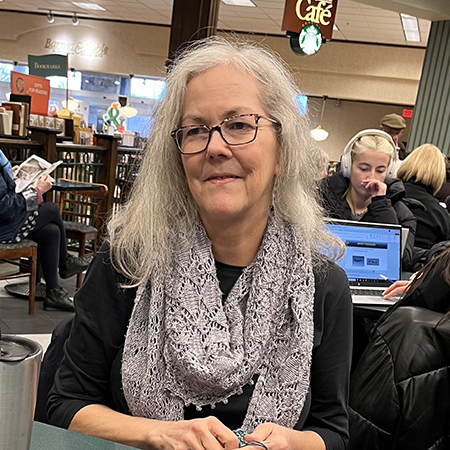
KELLY LANGE IS THE LEADER OF A SUPPORT GROUP FOR PEOPLE EXPERIENCING METASTATIC BREAST CANCER. /COURTESY KELLY LANGE
What inspires you to volunteer?
I have been fortunate enough to be very successfully treated for metastatic breast cancer. I’ve been metastatic for over 23 years, which is highly unusual. A lot of women and men only get a couple of years. In some cases, it’s less than a year, because it can be very aggressive. I’ve been extremely fortunate that the drug I’m still on has been working so well for so long. I’m so stable that I just feel like I need to help everybody else with all the experience that I have. It’s very satisfying.
What inspired you to get started with this initiative?
Over the years, I’ve amassed a lot of knowledge, and collectively as a group, we have a lot of information, experience and knowledge. It’s extremely helpful, especially when you’re newly diagnosed, to talk to other people who’ve been living with it successfully, and it’s just very satisfying to help other people. It’s just comforting to talk to somebody who’s done the thing you’re about to do.
Tell us about your volunteer role with METAvivor.
I organize the meetings, which means on the day before each meeting, I inform participants of the meeting location, whether it will be held on Zoom or in person. I ensure I’m present for the meeting itself, and then during the meeting, we make sure everyone has a chance to discuss their care, health and the group’s progress. If you’re at a decision point in your treatment, which happens a lot, we talk it through as a group, and we help the member make a list of questions to ask the oncologist. Between meetings, I’ll often get emails from the various members asking to be put in touch with somebody who’s had something done, like a liver biopsy. I’ll connect them, making sure that the person who has the information is okay with me giving out her phone number.
I also serve as the State Captain for METAvivor advocacy efforts in Washington, D.C. I served on the METAvivor board of directors for 15 years and served as president of METAvivor for two years.
What are your long-term plans or goals for the organization?
To continue the support group meetings for as long as I can, which seems like it’s going to be a while yet, which is great. This support group was originally founded in Annapolis, Maryland, and four members of the original support group founded METAvivor, intending to raise money to specifically fund metastatic breast cancer research and provide support and advocacy for people living with MBC. I’m not volunteering for the nonprofit anymore, but they have training to teach people how to start support groups in their own neighborhoods. It’s about enabling other people to do the same thing. They continue to fund research and have funded more than $30 million of research since our founding in 2007.
The nonprofit continues to grow, and we continue to have new support groups start in various areas all over the country. I just want to keep mine going.
What’s been the most rewarding part of your work?
Helping other people. I really believe that our support group has extended the lives of some people. I think, and there is evidence that membership in a support group extends life when you have metastatic breast cancer. Part of that might be that the kind of people who seek out a support group are the kind of people who are seeking out knowledge, potentially second opinions, reading about it online… that sort of thing. So they’re very informed consumers and self-advocates for their disease. That might be part of it, but it’s definitely true that if you’re in a support group, you can live longer.
What have you learned through your experiences as a volunteer?
I learned from my members all the time. We’ve had a lot of amazing women in the group, and I benefit from their experience, especially the practical tips. For example, when I finally got a port installed for IV therapy, one of the members in my group advised me not to let my doctor put it under my bra strap. That was a really good tip. More profoundly, I found that I can connect with anybody over metastatic breast cancer. It could be somebody that I would not normally have anything in common with, but we can always connect over the issue of metastatic breast cancer in dealing with the disease.
Why is it important for others to get involved with causes they care about?
I think if you care about an issue or a cause, you can feel helpless if you feel like nothing’s changing. If you volunteer and do a little bit to help that cause, it can really help, especially if you’re anxious about whatever your cause is. You do your part, and you feel better about it.
What do you want people to learn from your story?
We haven’t solved the breast cancer problem. People think that if you make it five years, you’re good, and that’s simply not true. We have women in the group who metastasized 20 or 30 years after their initial diagnosis. People think that stage zero doesn’t metastasize, but it does. We’ve had women in the group who had a stage zero cancer who died of metastatic disease. Our average life expectancy is maybe creeping up a little bit for certain breast cancer subtypes. But in general, we’ve spent a fortune on prevention and early detection, but we haven’t changed the metastasis rate. One in three early-stage breast cancer survivors will develop metastatic disease, and when you do, your average life expectancy is around three years, and that hasn’t changed in decades. We continue to lose more than 40,000 people every year in the US. Worldwide, it’s one every 15 seconds, and that hasn’t changed for many, many, many years. So we have not solved the breast cancer problem. We continue to metastasize, and metastatic cancer kills.
FILLING BELLIES AND WARMING HEARTS AT THE LOCAL FOOD PANTRY
Meet Daily Point of Light Award honoree Sophia May. Read her story, and nominate an outstanding volunteer or family as a Daily Point of Light.
Sophia May was only 7 years old when she started working at the food pantry. Now, she’s spearheading a movement. While attending church with her grandparents, the family answered the call to help create a food bank for neighbors in need. In that church’s basement, Sophia got her first taste of volunteering when she was asked to sort canned foods. She found that she enjoyed the endeavor and kept at it. The food pantry initiative soon blossomed, and they went on to move to a larger space that could accommodate the needs of more clients. Fast forward a decade, and Sophia is now 17 years old and volunteering as the assistant manager of the same food pantry, now known as the Share Food Share Love Food Pantry, a community food pantry that provides food assistance to residents of 15 villages in the western suburbs of Chicago.
The pantry owes a large part of its success to Sophia, who contributed some vital ideas to its efficiency. With her assistance, the pantry was able to increase the number of people they serve by 25% without increasing hours of operation. Not only does she sort food, manage intake and help neighbors navigate the food pantry with dignity, but she also trains other volunteers to manage tasks so the flow of work can continue more efficiently. Sophia dedicates 12 to 18 hours per month to the pantry, which is quite significant, considering her heavy workload as a high school student.
Because Sophia started volunteering at such a young age, her message to all aspiring volunteers is the reminder that anyone can volunteer, no matter their age. While there may be limitations on what they can do, there’s never a limit on whether or not one can help. Sophia says one of her favorite moments is seeing young people come in with their Scout troops or families to volunteer together. Her message is an important reminder that volunteerism doesn’t have to be limited to adults. Instead, it’s a powerful experience that can be shared by anyone.
What inspired you to get started with this initiative?
When I was younger, my grandparents and I went to a church in Brookfield, Illinois, and in 2015, there was an initiative in that church to start a food bank for our neighbors in need. We started in the basement 10 years ago. I was 7, so I couldn’t help much, but I could help sort cans. It was work that I really enjoyed doing, and work that I think is really important. So as the food pantry has continued to develop, I’ve continued to be involved in it.
What inspires you to volunteer?
I would say that there’s a lot of injustice in the world. Not just in poverty, but in other areas too. On things like hunger, it’s a very fixable problem where there is enough food produced in the world to ensure that people aren’t going hungry. However, it’s the distribution that’s often the issue, and it’s the monetary barrier. The ability that we have to help our neighbors get those resources, whether it be food or access to opportunities like job training, is really important, because if we can do something about it, why wouldn’t we?
SOPHIA MAY (TOP) CARRIES BINS DOWN THE STAIRS OF THE SHARE FOOD SHARE LOVE FOOD PANTRY’S OLD BUILDING. /COURTESY SOPHIA MAY
Tell us about your volunteer role with Share Food Share Love.
I’m an assistant manager, so I help train other volunteers. I make sure things are running smoothly. If there’s an issue that needs clarification or if someone needs help in the office, I can help with that. I’ve done almost every job at the food pantry. Every day, we see somewhere between 40 to 80 neighbors and their families, so we need to make sure all of our shelves are stocked. We have people navigate around with shopping carts and we help them make sure they’re getting all the food they need. We keep track of who’s coming, how many people and the possible demand we have in the future. Then we help them load their things into their cars. That’s more of our neighbor-facing side. We have people sorting food from food drives, making sure nothing is expired or damaged, and people who come in and help clean and organize. My grandma and grandpa do a lot of the administrative work and financial stuff.
What are your long-term plans or goals for the organization?
Our long-term goal is to keep helping as many people as possible. It’s a shame that there is such a demand, but we want to be able to meet it. We have some new programs in place. We have our Families First program, which focuses on helping young women and children. We have diapers and feminine care products. We’re growing in terms of the things that we offer. We also have a resource center where we’ve slowly been training people to help our neighbors locate things like assistance with jobs, housing and medical information. We’re really just cementing ourselves as people who our neighbors can turn to in times of need when they need a little bit of support.
What’s been the most rewarding part of your work?
Honestly, the people that I meet. I’ve been volunteering with a lot of the same people for many years, and it’s been really nice to meet that group of people who all come from different experiences and have different perspectives on the world. We all come together to try and help. Also, meeting the neighbors, because it’s nice to see a change in our community. I get to see certain people who come back every month.
What have you learned through your experiences as a volunteer?
I’ve learned a lot about communication. I think it’s much more rewarding to go around and make sure that they’re getting what they want and what they can use for their family. Whether it’s recommending recipes that they can use for things we have an abundance of, or just making sure that the food that they’re getting is the food that they actually want. I think that’s really important, because it’s very easy to just phone it in, but actually putting effort into it makes everyone’s experience better.
Why is it important for others to get involved with causes they care about?
As I mentioned earlier, hunger is a very approachable problem. Changing the way in which we distribute food is difficult, but not impossible. I think it’s important for people to get involved because it’s very easy to get sad or worried about the state of global issues, but it’s also very easy to volunteer a few hours every weekend and help out where you can.
Any advice for people who want to start volunteering?
Find a cause that you care about, whether that be an animal shelter, a food bank or a clothing drive. Find something that you really care about and look for places in the area. You just have to start. There’s no way to easily prepare yourself from afar. You just have to go in not knowing what to expect and try it out. Maybe you’ll like it, and maybe you won’t, but you won’t know until you try. And it’s not a terribly difficult thing to volunteer most time. It’s only a small amount of time and effort out of your day, but it can make someone else’s life a lot easier.
Meet Daily Point of Light Award honoree Olivia Nguyen. Read her story, and nominate an outstanding volunteer or family as a Daily Point of Light.
In 2018, following a major heart surgery, Olivia Nguyen found herself recovering at a Ronald McDonald House (RMH). The comfort and community she found there left a lasting impression, transforming a difficult medical recovery into a source of lifelong inspiration. Determined to contribute to the organization that supported her, Olivia started small by launching a soda tab drive at her school. What began as a student-led initiative quickly expanded into a hands-on commitment across her area, where she now works alongside her mother to prepare balanced, home-cooked meals and desserts from scratch for families whose children are currently receiving critical medical care.
Olivia’s volunteer work is as much about the heart as it is about the hustle. Each shift involves preparing recipes from scratch, packaging and labeling individual servings… all while maintaining a sterile, professional-grade kitchen environment. However, the most vital part of her service is the connection she makes with the families. By sharing her own history as a former RMH resident, she provides a sense of familiarity and hope to those currently in the thick of their own medical struggles.
Olivia’s dedication has created a domino effect within her community. She regularly recruits friends and family to join her in the kitchen. Through Olivia, these volunteers learn that RMH is about far more than just salty treats—though she’ll be the first to admit McDonald’s fries are still her favorite snack. Her efforts have turned a personal recovery story into a recruitment tool, inspiring those around her to see RMH as a vital pillar of support for families in need and motivating them to sign up for regular service shifts.
Looking toward the future, Olivia is transitioning from a volunteer in the kitchen to a lead ambassador for the RMH mission. She recently hosted a major donor, guiding them through the meal preparation process while demonstrating the tangible, real-world impact of their financial contributions. By collaborating with the RMH fundraising director, Olivia is exploring new ways to engage with donors and share her story on a larger stage. Read on to hear more of her inspiring story.
Olivia in a Chicago hospital for her heart surgery in 2019.
Tell us about your volunteer role.
I started by hosting a bottle cap drive in exchange for a pizza party at my old elementary school, because RMH collects those in exchange for funds too. I love helping with their facilities. As I got older and was able to volunteer more, I started contributing to the “Feed the House” program, where I would cook food for people and their families staying here. I would also connect with the families to offer support, empathy or just someone to talk to. I always make sure to bring in friends and family to volunteer with me to widen the circle and invite people to contribute to the Ronald McDonald cause.
What inspired you to get started with this initiative?
It originated from staying at RMH during the recovery from my heart surgery in Chicago. I learned about all the different programs they offered, and I knew that they really supported me during my stay. So I wanted to make sure that I could contribute to the community that helped me so much and provide other people who are now going through similar things with some support too. During my stay, they did everything, from providing food for us through their feeding programs, and they even offered me a toy drone that I could play with. They had a whole toy closet to help entertain the families.
Why is this issue so important to you?
I know from my experience staying a long time at a hospital, it really takes a toll on not only your physical but also your mental health. So by cooking for the families or just volunteering in any way, I hope that I can provide at least some relief and take something off their plate. I know how stressful those times can be, and I really want the families to just focus on their recovery.
What are your long-term plans or goals with volunteering?
Recently, I hosted a donor family to show them in-person where their donations were going. We worked alongside each other, and while doing so, I was able to share my story with them so that they could see firsthand the impact of their donations. Afterwards, I had a discussion with the director of fundraising at RMHC, where we talked about how we can further expand this work on a broader scale. And that led me to propose an ambassador-style program that could potentially increase donations.
Aside from that, I also want to help spread RMH’s mission to not only donors, but also friends, families and classmates, to increase the support they get and raise awareness for both their cause and the children struggling with their health.
What’s been the most rewarding part of your work?
It’s so rewarding getting to connect with the families and kids staying there and hearing their stories and, in turn, sharing mine. Because sharing those lived experiences heals me, and I hope it helps them to know that they’re also not alone.
Olivia cooking with her older sister at the Fairfax Hospital Ronald McDonald House.
What have you learned through your experiences volunteering?
Besides learning how to make interesting recipes, I’ve learned that although no one has the exact same experiences, there’s always a shoulder to lean on when you share your experience with others. Through learning about others and just listening and connecting, it provides both sides with so much insight and benefits that you can apply to your daily life even further.
Why is it important for others to get involved with causes they care about?
By volunteering and directly interacting with a person-supported cause, you not only help others, but you also learn about a diverse range of people’s experiences. You learn important, real-world lessons that you couldn’t learn by yourself.
Any advice for people who want to start volunteering?
I would just say to just do it, because it’s not only beneficial to the people you’re volunteering for, but also to you. And it can be as little or as big as you want it to be, from cooking meals at RMH to spreading awareness with close friends—so don’t let your hesitation hold you back.
Anything else want people to learn from your story?
I hope that they learn the importance of building and maintaining a good community, and that service is a two-way street. It’s important to find something you actually care about, rather than thinking of it as a chore. This mindset will help you to be more active, do better service and learn more. Which, in turn, has a more lasting impact on the community.
Meet Daily Point of Light Award honoree Tracy Wilson. Read her story, and nominate an outstanding volunteer or family as a Daily Point of Light.
Tracy Wilson has lived in many places and is an avid traveler. She’s brought her lifelong dedication to volunteering to each community she’s been a part of and has put in more than 5,600 hours over the last 20 years. So, when she and her family put down roots in Lodi, California, it was only a matter of time before she started leveraging her knowledge and experience to help others.
As a big sister and with a background in education, she’s always been drawn to work with youth. Over two years ago, Tracy joined the Greater Lodi Area Youth Commission as an adult advisor to guide high school students in implementing youth-focused programs that promote community engagement, personal development and volunteerism. The Commission creates pathways for their voices in city government while enabling them to address real community needs affecting their peers.
What inspires you to volunteer?
My faith has always been what drives me to help others. I grew up in Memphis and watched my grandmother feed and give to our community selflessly. My parents were always the first to help others in need. They instilled in me that we have a responsibility to lift others up wherever we are.
Tracy Wilson, adult advisor to the Greater Lodi Area Youth Commission, helps build and guide student leaders as they host events and service projects for their peers.
Tell us about your volunteer role with Greater Lodi Area Youth Commission.
The Commission brings together nine high school student commissioners from across the school district and six adult advisors to create safe, fun and meaningful opportunities for our youth. We guide them and give them the skillset to bring their vision to life.
Together, with local businesses and nonprofits, we fundraise for scholarships and various programs. We host the annual `Pigskin Fall Dance that brings over 800 young people together each year. And we participate in Love Lodi Day, a city-wide movement to champion volunteerism and doing good throughout our community with additional service projects throughout the year. For example, last year, our commission organized free swim lessons for teens, and this year we’re sponsoring a free CPR/AED/First Aid certification day.
I help young people understand budgeting, goal setting and stewardship, principles they can carry into their everyday lives that help build foundations for their future. My duties also include attending monthly meetings, facilitating discussions on youth issues and coordinating with city staff and community partners.
What inspired you to get started with this initiative?
When my family and I moved to Lodi, I knew I wanted to continue volunteering. I’ve always been passionate about empowering youth and helping communities build financial literacy. So, when I learned about the Greater Lodi Area Youth Commission, it felt like the perfect fit.
Serving on this commission also allows me to honor the legacy my grandmother and my parents gave me while helping shape the next generation of leaders. When young people have access to safe spaces, strong mentors and practical skills, they become the leaders their communities need.
When people at any age understand how to manage money, build businesses and create generational wealth, they gain the power to change their own circumstances and lift others up in the process. We’re not just changing individual lives; we’re reshaping the future of entire communities.
What’s been the most rewarding part of your work?
I love seeing their ideas come to fruition. They inspire other youth to get involved, and they start building bridges with organizations across our community. Watching them discover that they have the ability to create tangible impact is everything. We get to see our commissioners’ confidence and leadership skills improve over time and know we’re a part of that.
What have you learned through your experiences as a volunteer?
Young people are far more capable and insightful than we often give them credit for. When given the space and support, they bring fresh perspectives and innovative ideas that move our community forward.
I’ve learned how valuable it is when young people are exposed to different perspectives and ways of thinking and how important it is to listen to those we serve. Real change happens when we create opportunities for them to lead, not just participate. When they see themselves as change-makers, they rise to the occasion every single time. They inspire me.
Why is it important for others to get involved with causes they care about?
When we step up for causes we care about, we don’t just fill in the gaps in our community; we build connections. We inspire others to join us, and we create a culture where everyone can contribute, support and empower one another.
Any advice for people who want to start volunteering?
Start by thinking about what you’re passionate about and what skills or talents you can bring to the table. Look into local organizations that align with your values. Attend city council or town hall meetings to discover community needs or start something small in your own neighborhood. Don’t wait for the perfect opportunity. Start where you are with what you have.
The most important thing is to listen to those that you’re helping. Listen to what their needs are, what they care about and what their problems are. The world doesn’t need more spectators. It needs people willing to roll up their sleeves and do the work. And when you give your time and heart to a cause you care about, you will find that you receive far more than you ever give.
What do you want people to learn from your story?
Impact isn’t built overnight. It’s the cumulative power of showing up again and again over time. My hope is that my story reminds others to contribute, no matter how small it may seem. Your unique experiences and skills are all valuable gifts that can impact someone else’s life.
MATH IS AN IMPORTANT FACTOR IN THIS COLLEGE STUDENT’S VOLUNTEERISM
Meet Daily Point of Light Award honoree Skyler Perez. Read his story, and nominate an outstanding volunteer or family as a Daily Point of Light.
Skyler Perez didn’t always love mathematics, but the power of volunteering got him there. Growing up in New York, Skyler wasn’t a huge fan of learning math in school and found the subject “annoying.” Around the age of 8 or 9, he was introduced to the National Museum of Mathematics, an award-winning museum that highlights the role of mathematics in illuminating the patterns and structures all around us. Suddenly, his perspective on the subject of math changed. He began to see it from a different perspective and came to love the subject.
By the time he was a high school senior, Skyler saw that the museum was accepting applications for volunteers. He applied and got in, and for the last two years, he has dedicated over 1,000 total hours to helping hundreds of visitors each day. Skyler’s tasks can range from hosting interactive exhibits and supporting educational programming to helping facilitate special events and ensuring the museum provides a welcoming environment for the diverse families and school groups that walk through the museum’s doors on a daily basis.
Now a college student studying criminology, which has some mathematical components, Skyler’s goal is to hit 4,000 volunteer hours. While he’s at 1,100 hours right now, it’s safe to say that he won’t have any trouble hitting that mark. But that’s not the real reason Skyler volunteers his time with the museum. When asked what inspires him to take 70 hours a month out of his busy schedule as a college student to perform volunteer work, Skyler shared that he hopes to make the world a better place, one hour at a time. He also noted that the volunteer work has vastly helped his skills in public speaking and community engagement, two things he struggled with beforehand. Skyler’s experience is a powerful example of how volunteerism can not only transform a community but also transform each of us, as well.
SKYLER PEREZ, A VOLUNTEER AT THE NATIONAL MUSEUM OF MATHEMATICS, SPORTS HIS MUSEUM UNIFORM TO GUIDE GUESTS THROUGH THE POPULAR NEW YORK MUSEUM. /COURTESY SKYLER PEREZ
What inspired you to get started with this initiative?
I love the field of mathematics, and I wanted to channel it into something that could help the community. What better way to do that than to volunteer my time where I used to go when I was younger? I saw they have volunteer applications open during my senior year of high school, so I decided to apply because I love math.
Tell us about your volunteer role with the National Museum of Mathematics?
Usually, I greet visitors and show them how to use the interactive exhibits. For example, when it comes to large exhibits like the Square-Wheeled Tricycle, I’ll usually stand next to it and wait for visitors to come and take a look. I’ll ask if they want to try it, and I’ll guide them to use it safely. If I’m in front of the museum, I will greet them and tell them what’s there at the museum and where everything is.
What’s been the most rewarding part of your work?
I think the most rewarding thing is probably watching all the kids have a good time, knowing that I played a role in it. Most people think math is just a time-consuming subject with a bunch of numbers, but the exhibit is meant to show them a different perspective.
What have you learned through your experiences as a volunteer?
Public speaking and community engagement were the two most important things I didn’t have before I started volunteering. I’m sometimes at late-night events where I give everyone specific instructions on what to do. When it comes to school groups, I give the kids specific instructions on what to do and what not to do in the museum.
How important is it for you to share your love of mathematics with the kids?
I think it’s very important because I grew up thinking math was an annoying subject. But when I went to the museum when I was younger, around age 8 or 9, I realized a different perspective. That’s not true, and I hope that will happen to other kids as well.
Why is it important for others to get involved with causes they care about?
It contributes to your self-esteem. It contributes to your identity when you know you’re making an impact on a mission that you’re passionate about. That’s the main reason. Another one is helping the community.
Any advice for people who want to start volunteering?
It might be scary at first, but once you start, it’s easier in the long run. Today, you can even use artificial intelligence sites to automatically generate a list of nonprofit organizations that offer potential volunteer opportunities.
What do you want people to learn from your story?
Whenever you can, make the world a better place, even if it’s only a small amount.
The Dedicated Young Leader Bringing Kindness to Crisis
Meet Daily Point of Light Award honoree Brody Landes. Read his story, and nominate an outstanding volunteer or family as a Daily Point of Light.
Brody Landes has seen firsthand how deep empathy and focused action can transform lives and communities. As the leader of the Take Care Initiative, a youth-led project powered by SaLT (Service and Learning Together), Brody has channeled his passion into a powerful force for comfort and support. The initiative is designed to reach those facing the toughest times—whether from natural disasters, economic hardship or local tragedies—with intentional acts of kindness. Brody’s role involves everything from collecting essential donations to organizing the assembly and distribution of care packages and support items, a commitment that sees him devoting around 30 hours a month to service.
Under Brody’s guidance, the Take Care Initiative has sent over 2,000 care packages to Los Angeles firefighters, a gesture of gratitude and support for those on the front lines. Beyond first responders, Brody has also focused on those facing personal battles, delivering hundreds of birthday cards to children through Make-A-Wish, bringing a moment of joy into difficult health journeys. And, after devastating floods, he mobilized the initiative to send more than 400 cards and support bracelets to girls and families at Camp Mystic in the Texas Hill Country, offering encouragement and a reminder that they were not forgotten.
Brody’s hands-on leadership style ensures that these initiatives are more than just distribution services—they’re community-building efforts. He not only encourages volunteers to get involved but also actively leads during events, organizing, coordinating and making sure everyone feels included and has a meaningful role. This approach has created a sense of collective purpose toward providing tangible relief, hope and human connection. This young leader is not simply overseeing a project; he is actively weaving a stronger, kinder safety net for his community, and showing others how they, too, can step up and make a difference.
Brody carrying bags filled with food for a Shop N’ Drop event powered by SaLT.
Tell us about your volunteer role.
I work with SaLT, which stands for Service and Learning Together. We’re a local community-based organization, right here in Highland Park, which is where I go to school. At Highland Park High School, we have about 20 interns, and there is also a student board; I’m on that board.
With SaLT, we have different branches. There’s Shop and Drop, which helps local families fight food insecurity. We have Love to Learn, which is a local tutoring program at the library nearby. And then we have Take Care Packages, which helps communities in crisis. We started with migrants coming through the area and then shifted when we saw other communities in crisis. For example, when the L.A. wildfires were going on, we made care packages for the firefighters in L.A. During the New Orleans shooting, we sent care packages to students and teachers in the New Orleans area. And with the floods at Camp Mystic this past summer, we sent care packages and notes to the girl campers.
My role is a lot of getting other younger students involved. I’m a senior at my high school. We have students from nearby schools, like Lake Forest, which is a neighboring town, as well as Highland Park High School students, who come in and volunteer with us. I’m a very social person, so I’m really able to get everyone connected when we’re doing our service work. We meet twice a month for Shop and Drop, and I feel like I’m a very big advocate of making the culture of SaLT a big impact. I try to connect people who maybe don’t know each other—they’re from different high schools—and I find that that makes the service a lot more fun and more meaningful.
It’s just a really great community that I’m able to help cultivate at SaLT because of that social aspect. I’m also a hard worker, and I really understand what the goal is and why service work is so important. Especially with what we do, so many families locally are facing food insecurity or so many communities are in need of help. We’re sending these care packages, and I really feel like I have a deep understanding of what’s needed and why. Little by little, what we do is so helpful to these communities.
Which part of the program are you most passionate about?
Definitely Take Care Packages. I was one of the founders of that initiative. As a Highland Park student in 2021, we had a Fourth of July shooting during a parade, and we were given so much support during that time. It really helped me see and feel what these other communities are going through. Even if it’s not directly the same thing, just knowing there are other towns and other people out there supporting you is what makes me want to keep going with all the service that I give to my community, and to other communities around me. I think that’s why Take Care is such a big part of my life and why I love doing it so much.
What inspired you to get started with this initiative?
My science teacher from eighth grade is one of the sponsors of SaLT, as well as my uncle. That’s what really got me into it, but I don’t think I would have come back if I didn’t enjoy it. I remember in eighth grade, I wasn’t as into volunteering, but as high school came, and especially after the tragedy we had locally on the Fourth of July in 2021, I saw how much my community had done, and what other communities gave to us. I saw how that impacted me and how I wanted to impact others.
The people I referenced earlier are kind of what got me started, and then I keep coming back just because all the people around me make it what it is. It’s such a great community, and I love being able to foster that for upcoming young students younger than me. I feel like I’m able to shift it—make it more like a happy, welcoming place—and that’s what I want to do for the SaLT community now.
Tell us about future partnerships, programs or events that you are excited about.
Well, as one of our sponsors for Shop and Drop calls it, we just had our “Super Bowl” this past weekend, which is Day of Giving. We supported 200 local families. That was really what we work toward every year, and it just ended on Saturday. Upcoming, there’s a lot of community work, and we reach out whenever we see those communities in crisis.
What’s been the most rewarding part of your work?
I think it’s the experiences I have and the people I’ve met. With the experiences, I’ve become so much more of a social person because of it; I’ve come out of my shell. I was a little shyer before I got into all my service work. And now, I just have so many stories to tell. I’ve been to places that I wouldn’t have imagined and done things I wouldn’t have imagined. For example, with SaLT, I did a service learning trip to Orlando in February of 2025. We went to Give Kids The World, and I got to work with kids facing illnesses at their facility. It was just an experience I could have never imagined.
The feeling in my heart—that’s what I keep coming back for. That way, I was able to make connections with the students I went on the trip with, but also people from all across the world who just wanted to find happiness at Give Kids The World. I felt like I was able to give that to them, and that was such a great feeling for me.
What have you learned through your experiences volunteering?
SaLT has nine guiding principles that we work by, and I think a lot of those principles are how I approach my service work now. A few examples are “Little by Little,” which means every little thing that you do really makes a difference. No matter what, if you do something little by little, you’re going to be able to get to the goal you’re working towards. I see that with our service work; when we’re filling bags full of food, for instance, little by little, donations and all these small things build up to something way bigger that we’re able to do for our community.
We also have “Respect First, Then Serve.” We always want to make sure we understand what we’re doing before we actually serve. On my SaLT trip, especially, we journaled to make sure we were getting the best experience out of our service work. We didn’t want to just do it because we were there; we wanted to understand what the families were going through, what these kids were going through and make sure we were able to give the best service possible to these groups.
Brody filling bags with socks and hats during Day of Giving.
Why is it important for others, especially youth, to get involved with causes they care about?
I think it’s so important for youth to get involved because it fosters such a different mindset than you normally experience in high school or other things. In high school, you’re working so much for yourself—you want to get your best grades, you want to be the most popular. But when I go to my service work, I’m working with a bunch of other students toward a common goal. We’re fostering this amazing community together. Just working toward this common goal is something that you don’t really see in other aspects of your life, especially as a high school student where you’re all trying to be the smartest or trying to get into the best colleges. It’s a completely different way of looking at things.
Any advice for people who want to start volunteering?
Just reach out. If you know anyone that’s involved, really talk to them and they’ll give you a lot of insight. I think everyone who volunteers has a great time doing it, especially around me with SaLT, but I know other people, too, around the country who have the same experiences. It’s just such an amazing group of people. You really don’t find a community that gives as much as volunteer people do. They’re always trying to help and look out for more. And I think it’s just so great to see, especially with youth volunteers, how much time and effort they’re willing to give. It’s truly a step away from the normal life you live.
What do you want people to learn from your story?
Service has kind of been what’s gotten me through high school. I’ve made probably half of my friends through service, which going into high school I would have never expected. It’s become my biggest extracurricular. I was such a big athlete before high school. And I loved sports, but it didn’t feel like that was what I wanted to continue doing. Once I got into SaLT, I realized how much of it really is a part of me now, and it’s become truly what I feel makes me the best version of myself. That’s why I keep coming back, because I see all these friends I’ve made, and I see all these experiences I’ve had, and those things have made me who I am now.
Volunteer Uplifts Her Community Through Service and Advocacy
Meet Daily Point of Light Award honoree Karla Valentin. Read her story, and nominate an outstanding volunteer or family as a Daily Point of Light.
When the call goes out for help in Boston, Karla Valentin is often the first to answer. A long-time volunteer with Embrace Boston since 2024, Karla has become a cornerstone of the organization’s efforts through her proactive, agile spirit. Whether it’s a last-minute request or a high-stakes event, she arrives with an eagerness that transforms the energy of the room. Karla is a natural community builder who has recruited a network of friends and neighbors into the fold, ensuring that the spirit of service grows exponentially through the people she inspires.
Having been present at the city’s most significant cultural milestones, Karla’s been a tireless force within the 2024-2025 Signature Series, contributing hours and hours of service to both the 5e Freedom Rally and the annual Juneteenth celebrations. To her volunteer manager, who began leading the team in April 2025, Karla represents the ideal volunteer, showing up not just when it’s convenient, but when the community needs her most. Her reliability in time-sensitive situations has made her an indispensable asset to the city.
However, Karla’s heart for service is felt in many other corners of the community, stretching back nearly a decade. For over eight years, she has dedicated herself to the protection of the vulnerable, serving as a board member and monthly volunteer for Enough Abuse. In this role, she works to raise awareness around the critical issues of child sexual abuse and trafficking, proving that she is as comfortable in a leadership boardroom as she is on the front lines of a rally. Even with such heavy responsibilities, Karla remains grounded in the basic needs of her neighbors. On the third Saturday of every month, she can be found at the Hyde Park Food Pantry, personally distributing food to families. Her outreach continues through Greater Love Health Ministries, where she spends every other month advocating for community health awareness.
Karla helps paint one of the Boston Public Schools.
Read on to hear more of Karla’s inspirational story: how it all started, and why she does what she does.
What inspired you to get started with this initiative?
I got involved with Embrace Boston through Michael Curry, who used to be the NAACP president. I’d volunteered around Boston, and I realized it was something I love and cherish. I got involved with volunteerism in the first place through my father’s activism work that he did in Boston. I saw something so powerful in Embrace. The organization talks about how we are all one. And it’s the truth. At the end of the day, we are all one, and we all want the same things to move forward. That’s how I became so involved. I did the rallies, and as I kept volunteering, I realized I wanted to do more and more of it.
Tell us about your volunteer role.
A lot of times I’m ushering. Making sure people know where they’re going, just spreading awareness. Like, “Here’s the brochure, we’re talking about this,” and just making sure people are guided the right way. I follow my leader’s plan. Embrace is always keeping us involved in things. They always keep you updated with emails and things like that when it comes to different actions. For the whole MLK weekend, there’s always something to do, every day. And even through Juneteenth, I’m involved with that. I volunteer at the receptions, the marches, the parades. It’s pretty dope
Why is this issue so important to you?
I think for me personally, it’s being a Black woman. As far as Martin Luther King Jr. and his wife and what they stood for—what he stood for was equality, being a part of something, having your voice raised. And I think Embrace is so important, even for now and even for our future. They hold a standard. And they truly involve and embrace everybody of all cultures and backgrounds, and I think that’s so important especially right now.
Of course, the City of Boston is more liberal, but you still have certain people who don’t believe equality. I really believe that Martin Luther King was about that. I’m originally from Memphis, Tennessee. My father was involved in that activism in Memphis, and then he moved to Boston. I think activism is just so important, and that’s why I love what I do with Embrace. Like I said, they always keep you up to date with different information.
What have you learned through your experiences volunteering?
For me, learning is listening to different people speak about the different statistics that are going on in the world—not just in Boston, but everywhere. Things related to equality, regarding race, how to deal with these different things. I’ve learned a lot of history too, even with Juneteenth. You know, it’s so funny, because I’ve been in Boston all my life, since I was three years old, and even when I started with Embrace, I didn’t realize how many Black people were doing so many things around the Boston area until Embrace came about.
Of course, I’m part of the NAACP, but Embrace really breaks it down and they invite everybody to the party. When they have different things, they’re not asking you for tickets or anything like that; it’s free. It’s information about rallies, about freedom, about history. They get everybody involved, and it’s just something that people should embrace. That’s what I feel.
What’s been the most rewarding part of your work?
Meeting people. You know, you live in Boston all this time, you just don’t know who these people are. And you get to have these conversations, and I think that’s really important. I know a lot of people; my father was a bishop here in Boston and had over eight churches under him, and also my family, we have a beauty salon in Boston. So I know a lot of people. But when you go to some of the Embrace events, you meet so many powerful people—Black, White, Latino—and you get to meet these people and learn their journey. They just didn’t pop up overnight; they’ve been doing this in the background for a long time. They’ve been fighting the fight, and they continue to fight.
I tell people a lot about Embrace. Even my friends. I’m like, “You need to get involved in Embrace.” One of my friends—she’s so funny because I went to an all-white school. Three of my friends actually signed up for Embrace because they wanted to know more. I think that’s so interesting, because when I was going to school, they didn’t talk about Black history like they do now. I learned Black history from home and the NAACP. Like I said, I learn a lot from just meeting new people. I think volunteering is just the best, because you learn so much.
Why is it important for others to get involved with causes they care about?
I think it’s so important to volunteer because you get to you get to meet people and, you know, rub your elbows with people. You’re like, “Oh my god, I see you on TV. I didn’t think you’d ever talk to me, have a conversation.” But you have these conversations and you find out “Oh, you’re just like me.” We’re all the same people, regardless of color or status or whatnot. We’re all learning from each other, and I think that’s so important. I love volunteering. I know some people are like, “Why do you do that?” and “Isn’t it a lot of work?” It is. But you know what? It’s all for a good cause, and that’s why I love doing it.
Any advice for people who want to start volunteering?
I say take that time out and do it. You know, people are always on this kick about self-care. Well, this is self-care, too. When you’re volunteering, because you know you’re doing some good for somebody else, you’re reaching out and you’re finding out what the organization is all about. Then you can be aware, and then you talk about it, and then you share it with other people. It’s self-care. It makes you feel good.
I say take that one step. It’s one step at a time. And it’s so funny, because when I became a volunteer with Embrace, I was never scared about doing it. Even though I remember one of the rallies it was raining and I’m like, “Oh Lord, I just got my hair done, I don’t want to get my hair wet!” But you know what? That day was so powerful because I learned so much. Take that chance and go for it. Take a leap. Just take a leap.
What do you want people to learn from your story?
I think that Embrace is powerful, and it’s for the future. Embrace is peaceful, and it’s protection. You feel protected, and you feel like you know what’s going on. I think there is something powerful in this organization, for everybody around the country, especially with what’s going on in the world. You know the saying, “Keep on keeping on.”