Meet Daily Point of Light Award honoree Jiya Patel. Read her story, and nominate an outstanding volunteer or family as a Daily Point of Light.
Jiya Patel, a 17-year-old rising senior, is deeply invested in her high school. She plays on the school golf team and serves on the Honor Council. She plans events like prom and pep rallies with the Student Live Committee. But her care for the people around her extends far beyond her fellow students.
Jiya initially delved into volunteering through her local temple, serving food to guests and helping out with gardening, cleaning, and other tasks. It was a visit to her parents’ homeland, however, that inspired her biggest initiative yet. In 2023, Jiya co-founded Thrive2Gethr to reduce food waste while fighting food insecurity. By redistributing excess food from restaurants and bakeries to shelters and food banks, clients can access delicious meals that would otherwise be thrown out.
Quickly expanding, the organization now has around 1,200 members in 40 student-led chapters across the country. Together, they’ve facilitated the donation of over $100,000 worth of food. Jiya is not only changing the culture around food waste. She’s creating the framework for other student leaders to do the same in their own communities. And when she soon joins her brother as the first generation of her family to go to college, her out-of-the-box thinking will make her an excellent fit for the business or economics career she plans to pursue.
What inspired you to get started with this initiative?
A couple of years ago, I went to India with my parents and saw a lot of families without food and necessary resources. It stuck with me, and I started thinking a lot about hunger. It’s a big problem in the U.S., too. As is food waste.
I saw videos online about dumpsters of perfectly good food being thrown away. Then, I realized that food waste and people facing food insecurity could be connected to address both problems. The food already existed; it just wasn’t getting to people who needed it. That inspired me to start my own organization.
Tell us about your volunteer role with Thrive2Gethr.
In the beginning, I was reaching out to all the local restaurants myself, building the program in my community. I would make a list of 100 businesses and struggle to find any partners. Many would just say no, right off the bat. But I’d keep following up with the ones that were leaning towards maybe. I was also organizing volunteers to pick and deliver food to shelters.
As it’s grown, I’ve focused more on helping other people get started. I recruit and mentor student chapter leaders, helping them connect with restaurants. I create guides and materials to guide them through the process. And I support them with any questions they have. Overall, I spend about 30 hours a month volunteering.
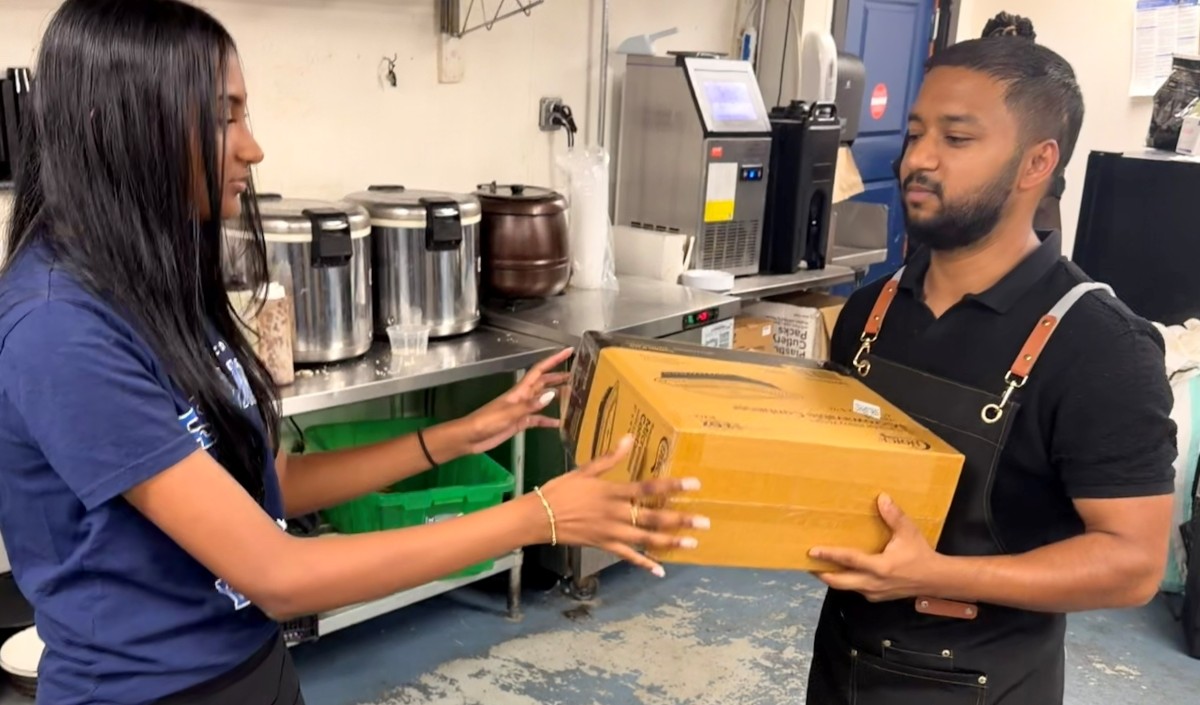
Jiya picks up donations from a local restaurant partner.
What are your long-term plans or goals for the organization?
I want to keep expanding, but I want to ensure each of our chapters is still getting the support they need. We need a balance between building and maintaining what we already have.
I also want to normalize restaurants donating food. I think a big part of why they’re hesitant is because they don’t want to be held liable if someone gets sick. But there’s a national law called the Bill Emerson Good Samaritan Food Donation Act of 1996, which protects people donating food in good faith.
We give all the restaurants we ask to donate a guide, and that information is included. We speak about it as well, but I think there’s still a lack of understanding. I’d like to build awareness, so people are more willing to donate.
What’s been the most rewarding part of your work?
Giving so much food to people who need it has been rewarding to see. Depending on the location, we either donate to a facility for them to distribute to people, or we go in and give it directly to people. I’ve also enjoyed watching students help people in their communities and be invested in it the same way I am.
What have you learned through your experiences as a volunteer?
It’s a lot easier to make change when you work together. When I partner with people from my school, restaurants, and shelters, everyone’s working together towards the same goal. And everyone’s benefiting. I’ve learned a lot about teamwork.
I’ve also learned about persistence, because you have to keep going, even though many people are saying no. You have to push forward and hope that someone will end up saying yes. I don’t let things stop me when it gets hard.
Why is it important for others to get involved with causes they care about?
Everyone has to do their part to help. If you’re able to, you should at least try. It doesn’t have to be big. A lot of people feel like they need to have a lot of experience or do something large-scale for it to matter, but everything starts with one person making a decision to act.
If you care about something and you work at it, even something small can create a big ripple effect. You never know who you’ll inspire. If someone sees you doing good, that might make them want to do something good as well.
How can people take steps to address food insecurity and food waste in their own areas?
They can always start a chapter or reach out on any of our social media. They can also reach out to local restaurants. Many will say no, but one or at least one will say yes if you persist. You’ll find someone who’s willing to help. Just start small and build.
What do you want people to learn from your story?
You don’t have to be a full-grown adult to start making change. If you care about something, just start, and everything will work itself out. You can’t wait for everything to align. Nothing’s ever going to be perfect; you just have to try. The hardest part is taking that first step.
A Backpack, a Community and a Mission to Help Children
Meet Daily Point of Light Award honoree Bill Vaughan. Read his story, and nominate an outstanding volunteer or family as a Daily Point of Light.
In 2022, UPS Capt. William “Bill” Vaughan was on a routine layover in Cologne, Germany, when he encountered thousands of Ukrainian families fleeing war. Among them were children arriving with little more than what they could carry. Witnessing their uncertainty and loss, Bill saw an immediate need and chose to act.
Drawing on the community he knew best, Bill turned to his UPS network and launched Operation BackPack4Kids, a volunteer-led effort focused on bringing comfort and practical support to children displaced by crisis. In just 30 days, he raised $100,000 and mobilized more than 400 UPS employees to pack and distribute backpacks filled with essentials and small comforts, including warm blankets, water bottles, hygiene kits and toys. What began as a response to families escaping the war in Ukraine has since grown into an ongoing effort serving children affected by war, natural disasters and humanitarian emergencies around the world. The result is practical care delivered with dignity, humanity and connection.
Bill’s service reflects the power of volunteering to move people from concern to action and to connect communities around a shared purpose. By pairing compassion with the relationships and resources already available to him, he created a way for hundreds of others to contribute, expanding the reach of one person’s decision to help. His work also demonstrates how volunteer leadership can build momentum: identifying a need, inviting others in and creating a structure that allows service to continue beyond a single moment.
In recognition of his sustained commitment to helping children and families in crisis, UPS named Bill the 2025 recipient of the Jim Casey Community Service Award, the company’s highest honor for volunteerism. Through Operation BackPack4Kids, Bill continues to show how purposeful service can turn empathy into tangible support and give others a meaningful way to make a difference.
Meet Daily Point of Light Award honoree Oleg Smirnov. Read his story, and nominate an outstanding volunteer or family as a Daily Point of Light.
Oleg Smirnov, a 27-year-old Tesla Project Manager, embraces volunteering as a way to explore potential careers while helping out his adopted country. Born in Russia, Oleg moved to Florida with his family when he was 14 and started dedicating his time to helping out in a hospital when he started considering life as a doctor. In college, he started volunteering with the American Red Cross. While often associated with mobile blood drives, the Red Cross has a wide variety of programs designed to help people in difficult situations.
Since 2019, Oleg has served as a Casework Coordinator, a Blood Drive Ambassador, and a Responder on the Disaster Action team. He has volunteered nearly 1,200 hours with the Red Cross across multiple states. His biggest role today is Disaster Services Duty Officer in which he answers emergency calls and coordinates response teams. As a veteran of the U.S. Army, Oleg also works closely with the military as a Red Cross volunteer for Service to the Armed Forces Officer, MEPS (Military Entrance Processing Station) Volunteer Lead and a Miami-Dade Military Affairs board member.
What inspires you to volunteer?
I didn’t know what profession I wanted to go into, so I started to try everything as a volunteer. My first opportunity was working at the JV Ruby Memorial Hospital ER. I was there when COVID happened, so we set up a task force, and I was the analyst for that.
(2nd from left) Oleg joins fellow South Florida Red Cross volunteers in welcoming The Miami Foundation team for a presentation on local disaster services, Restoring Family Links, and Service to the Armed Forces.
In college, I was the fundraising chair for my fraternity, a Title IX coordinator, and a finance officer for my student government. I’ve also been a crisis counselor for a crisis text line and a volunteer for the Miami-Dade Sheriff’s Office. The underlying driving force of my life is avoiding boredom.
Tell us about your volunteer role with the American Red Cross.
As a Disaster Services Duty Officer, I get emergency calls from 9-1-1 dispatch, the fire department, or anybody else who has witnessed an emergency. I verify it’s a real call and learn about the situation. Then, I dispatch volunteers to help. Help can be financial, psychological, providing supplies, and more. For the bigger disasters, we may open a shelter. Simply put, I ensure affected families receive immediate assistance, recovery resources, and follow-up.
My supporting role is with Service to the Armed Forces where we work primarily with the military members, their spouses, and their dependents. Our mission is to ensure dependents know they have resources available to them while their loved one is deployed.
I’m also the Volunteer Lead for their MEPS program. When young people go to enlist, they take an exam and do background checks, fingerprints, interviews, and medical evaluation. Then, they take the enlistment oath. It can feel pretty long and tedious. We send somebody to ease the pressure and uncertainty by providing support, guidance, and therapy, if needed. And we coordinate communication cards, which is essential if something happens while you are deployed or on orders. In the case of a family emergency, the birth of a child, or other important news, the family would reach out to us so we could work with commanding officers to pass that message along.
Lastly, I represent the Red Cross on the Military Affairs Board where I attend meetings related to any events, memorials, or assistance veterans may need from us. A few days ago, we helped a veteran who was being deported. We’re there to make sure we get the information on time from partner government agencies and assist if we can.
What inspired you to get started with this initiative?
The Red Cross has a vast number of roles in different departments that you can try out. It’s been part of my everyday life since I was 20 and was my first introduction to people who were really suffering. It stuck with me, and I’ve been with the Red Cross for over seven years now, because I’m empowered to make them feel a little better and perhaps make a difference in their lives.
What are your long-term plans or goals for your volunteer work?
My main goal is to show everyone the resources that the Red Cross has. We always respond. If we can’t help, we’ll refer you to somebody that can. No issue is too big or too small.
As a Red Cross Service to the Armed Forces volunteer, Oleg briefs the 482nd Fighter Wing Spouses Group at Homestead Air Reserve Base.
What’s been the most rewarding part of your work?
As a naturalized citizen, I spent over a decade building this life for myself. Out of all the countries in the world, I’ve chosen this one, and I’ve never felt unwelcome. Throughout my journey, I’ve been supported by the people around me, by my now-fellow Americans.
The most rewarding part of this volunteer job is that I can do that for others. As a citizen and community member, we all have a certain moral obligation to help out, to make sure our society keeps functioning.
What have you learned through your experiences as a volunteer?
I think society–and each of us individually–is much more good than bad, unlike what the media might tell us. I’ve witnessed firsthand that in every disaster, regardless of size or location, people come together to support each other.
Any advice for people who want to start volunteering?
I tell my younger siblings the best way to figure out what they want to do is to try it out. You can spend 10 years studying and going to med school, but you won’t have knowledge of the hospital environment. How you feel when you’re at your workplace is important. Volunteering gives you the time and space to try new things out without sacrificing too much of your career or your time.
What do you want people to learn from your story?
Take a chance. There’s always going to be a reason not to do something. There’s always going to be something in between you and the goal. And for most of us, the goal may not be so evident. If you’re interested in volunteering, try it. The biggest benefit is that you won’t wonder what would have happened if you had.
Tech Executive Leads Nonprofit Feeding Thousands in India
Meet Daily Point of Light Award honoree Alwyn Joseph. Read his story, and nominate an outstanding volunteer or family as a Daily Point of Light.
By day, Alwyn Joseph is a senior executive in the technology industry, living with his family in Suwanee, Georgia — a life made possible, he’ll tell you, by the opportunities the United States provided to him as a first-generation immigrant from India. But his evenings, weekends and a significant portion of his own money belong to something else entirely.
In 2020, when COVID-19 lockdowns stripped daily wage workers in India’s slums of their livelihoods overnight, Alwyn rallied friends across the U.S. and abroad to send monthly grocery packages to affected families. What started as an emergency response evolved into Abundance Kitchen, a volunteer-led nonprofit he formally co-founded in 2023 that now operates across 45 slums and villages in Tamil Nadu, India.
Built on three pillars — food, clothing and education — the organization delivers nutritious weekend meals to children whose government schools only feed them on weekdays, distributes clothing and school supply kits, and works to pull the most vulnerable students away from cycles of poverty before they’re lost to them. With 95% or more of every rupee going directly to beneficiaries — and Alwyn personally covering overhead costs — Abundance Kitchen’s reach already runs into the thousands. Its sights are set on a million lives by 2035.
What inspired you to start Abundance Kitchen?
I’ve been engaged in community service in different forms since my engineering school days in India, back in 2004, 2005. Even before I graduated, I started an organization focused on anti-corruption and social activism. After I moved to the States, that work continued more informally — helping people with school fees, college fees, finding jobs.
First-gen immigrant and tech exec Alwyn Joseph leads Abundance Kitchen, a nonprofit delivering meals, clothing and education across 45 slums in India.
Then COVID hit in 2020. In India’s slums, most people are daily wage workers. When the government deployed stay-at-home orders, they lost their livelihoods overnight. These families have to work every single day just to feed themselves and their kids. So, I started rallying friends here in the States and around the world, and we supplied monthly grocery packages to close to 3,000 families. That’s when we really saw the depth of the need and decided to formalize it.
Can you walk us through what Abundance Kitchen does?
It started with food. Government schools in India typically feed kids breakfast and lunch on weekdays. But on weekends, those children are left to go hungry unless their parents can manage. So, we set out to fill that gap with consistent weekend meals.
From there we moved into clothing and school supplies. We collect gently used clothes and toys, clean and sanitize them, sort by age group and size, and distribute. Last year we reached 1,000 kids with full kits of clothing and school supplies. This year we’re targeting 2,000.
The third pillar we’re trying to venture into is education. There are plenty of organizations that support kids who are already doing well in school. But the pattern that we see in the slums is by the time a girl reaches ninth or tenth grade, family circumstances often pull her into household work and she gets stuck there. For boys, the pull is often toward the patterns of a parent who is in prison or involved in crime. We want to catch those kids before that happens and give them vocational skills like tailoring, electrical work, plumbing, something they can actually build a livelihood from.
Your co-founder, Clement Barnabas, actually lives among the communities you serve. Can you tell us about him?
He’s been doing community service for 15 years, and a few years ago he made the decision to move his entire life into the slums — gave up his home, lives among the people we serve. His wife has a good job, they could live very differently, but that’s the commitment he made. I’ve known him since our engineering school days, more than 20 years now. He’s much more intense than I am. These communities are not easy to navigate. There are people who try to take advantage, nonprofits that get lost trying to help. His being there gives us the confidence that we’re reaching the actual beneficiary and not getting fooled around.
You immigrated from India yourself. Why does this cause hit so close to home for you?
Childhood hunger is hard. I haven’t experienced a lot of it myself, but I’ve experienced some of it, and I had friends who experienced it deeply. I saw those hardships up close. Whenever I see a child go hungry or in dire need, I relate it back to my own two kids. That breaks my heart every time.
And logically, somebody has to break the cycle. It’s a vicious cycle that goes on generation to generation. By the grace of God, I’m in a position of power on the corporate side, I’m doing well. So I think it’s only right to channel those blessings into something like this. If you are blessed, it’s not just for you — it is for you to be a channel of blessing to others.
What do you hope for the children Abundance Kitchen is serving?
I’ll be very glad if even 10 or 15 percent of them break the cycle of poverty and go on to have extraordinary lives. Over a period of time, I believe the kids we’re helping today will become our volunteers in five or 10 years. There will be a pay-it-forward model. We’re building a critical mass right now, and in a decade, I think we’ll have thousands of people who are willing to pay it forward— and that network effect is what will make the mission grow faster than anything else.
What do you want people to understand about the communities you work in?
It’s very easy to judge from the outside. When you actually get close and see people’s lives, it’s a very different story. The struggles are real. The perspectives are different from what you imagine. Yes, there is crime, there is poverty — all of that is true. But these kids are innocent. They have the same potential as any of our children. What they lack is opportunity. If you want to be fair to them, give them an opportunity and see how they thrive.
What advice would you give to someone who wants to start their own nonprofit?
Just go do it. I know a lot of people have great intentions and then run a lot of worst-case scenarios in their minds before they ever start. The best way to learn — and to get truly hooked on this kind of work — is to just get hands on and do it. You’ll make mistakes. Every time, you’ll get better. You’ll learn how to serve more effectively, use money more wisely, identify the right beneficiaries. But none of that happens if you never begin. If you have the intention, go do it.
Meet Daily Point of Light Award honoree Austin Koziarski. Read his story, andnominate an outstanding volunteer or family as a Daily Point of Light.
When Austin Koziarski walked into JaxTHRIVE as a high school freshman, he was looking for a place to put his energy toward something that mattered. And he found it. Tutoring newly arrived refugee children, many from Afghanistan, Austin has helped this Jacksonville program grow into a vibrant community outreach.
Now co-president, Austin leads more than 200 volunteers from 18 area high schools, coordinates twice-monthly “Super Saturday” tutoring sessions, and organizes drives for school supplies and holiday baskets. He rebuilt the organization’s website, streamlined volunteer training, and partnered with groups like VyStar Credit Union to host a financial literacy Reality Fair, helping to teach refugee students about budgeting, taxes, and insurance that will shape their futures.
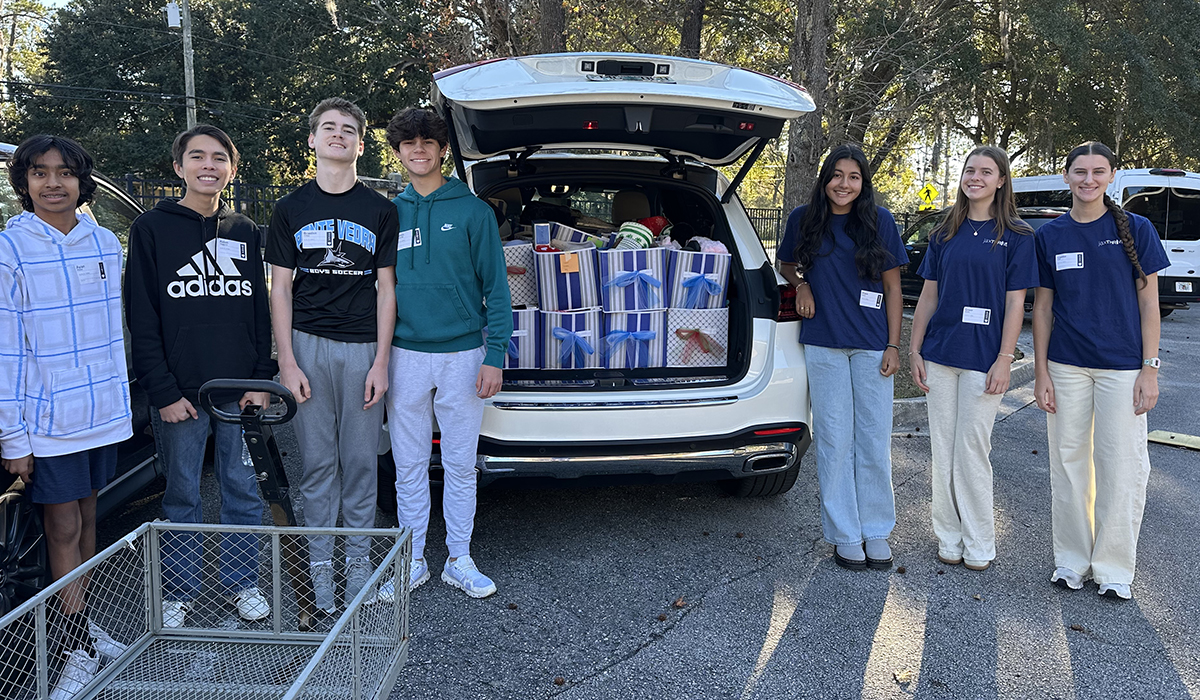
As co-president of JaxTHRIVE, Austin leads more than 200 volunteers in tutoring refugee children across Jacksonville.
For Austin, the reward is personal. He remembers helping Mehran, a 10-year-old who quietly confided his dream of becoming an engineer as they built a paper-towel-roll bridge together. Austin told him that with hard work, any dream was possible… and watched the boy break into a confident smile.
“Even though I’m young, I can still have a big impact on someone who needs my help,” Austin says. His work is a reminder that connection crosses every border, and that deep down, we’re all more alike than we are different.
Teen’s Nonprofit Brings Music to Kids with Disabilities
Meet Daily Point of Light Award honoree Ryan Qi. Read his story, and nominate an outstanding volunteer or family as a Daily Point of Light.
When Ryan Qi’s younger brother was diagnosed with a developmental delay at 2 years old, the family faced an uncertain road. Then, one afternoon as Ryan practiced on the piano, his brother — who usually kept to himself — wandered over and joined in, tinkering with the keys and dancing alongside him. That moment of connection inspired Ryan to found Bright Beats, a youth-led nonprofit that brings free, adaptive music sessions to children with disabilities.
Today, the 17-year-old from Virginia leads a team of more than 100 volunteers who bring sing-alongs, rhythm games and instrument play to families across several states and countries such as China, Vietnam, and Uganda.
What inspired you to start Bright Beats?
About three years ago, my brother was diagnosed with a developmental delay when he was about 2 years old, and that was a really hard moment for our family. We had to start caring for him a lot, and his future was uncertain in terms of his educational goals and things like that. One day I was playing piano, and my brother, who usually just keeps to himself, came over and started playing the piano with me. He started tinkering with it and dancing, and it was really amazing to see him interacting with us in a way he hadn’t before. That’s the point where I really started to see how powerful music was for fostering that kind of connection, and that’s what prompted me to start Bright Beats: to bring music to more families who are facing a similar situation as mine was.
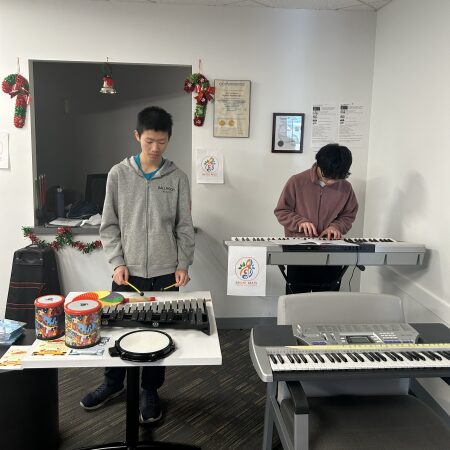
Ryan (left) plays the glockenspiel at a holiday event in partnership with another nonprofit organization./ Courtesy Ryan Qi
How has Bright Beats grown since you started it?
It started out really small, within our community. My first programs and sessions were at my brother’s school, which is specifically a school for special education. During their summer session, my sister and I would go to the school, go to all the classrooms, and provide music sessions for them. We have sing-alongs, rhythm games, and music games like musical chairs. We also have a lot of percussion instruments for the kids to free-play with, like bells and drums, so they can express themselves however they please. For our sing-alongs, we choose songs a lot of the kids probably already know, like “Twinkle Twinkle Little Star” and “The Wheels on the Bus.”
The sessions last about 45 minutes to an hour before we switch classrooms, and we’ve basically carried that structure over into our current sessions. I spent a lot of time at that small scale really designing the core session well, and then, about a year and a half later, I started to expand Bright Beats to other locations in our community. We established a library session that happens about monthly at our local library, so more kids and families can join. They don’t have to be part of a school; they can just come to the library and experience the music sessions. We also expanded to virtual sessions for families who don’t live in Virginia or near where I live, so we can connect with families one-on-one or in small groups over Zoom and provide adaptive Bright Beats sessions. And we established some new partnerships, like with an organization called The African Child, which is located in Uganda. We send them pre-recorded sessions to help the kids they engage with, who also have disabilities.
What’s been the most rewarding part of this work?
I think my favorite part of Bright Beats is sharing the music with the children. It really makes me happy to see them learn and have fun in a safe community where they can interact with their peers.
Is there a specific moment or memory that sticks out to you?
At one of our library sessions, there was a kid who at first was really nervous and shy, and didn’t really want to play with the volunteers or the instruments or talk to the other kids. But as the session went on and we sang some familiar songs, that child soon felt more comfortable and welcome, and by the end of the session, the child was playing with the instruments and having a lot of fun. I think that really shows that Bright Beats sessions can help kids feel welcome and comfortable.
What have you learned from running your own nonprofit?
I think the most important thing about running a nonprofit is having a core purpose. I know a lot of youth nowadays create nonprofits just to get into college, but I think making a nonprofit is really about helping people in your community. It’s important to understand what your purpose is in creating a nonprofit, because that itself will really guide the founder and the leaders to figure out how they’re actually going to help their community. That’ll help them design their events, their branding, and whatever else they need.
What are your long-term plans for Bright Beats?
As for the chapter in Virginia, when I graduate from high school — and we’re actually already facing this in some of our other chapters, where leaders are graduating and going to college next year — we have a big leadership team, so Vice Presidents and Directors will move up and fill in the roles the President or Vice Presidents have left behind. That’ll really help the chapter stay sustainable. As for the graduating leaders and volunteers, they join an alumni network, or a mentor network, that continues to guide the leaders who are actively involved in the chapter. So we can kind of keep all the chapters sustainable. And graduates can also take Bright Beats to where their college is and start new initiatives there.
Why do you think it’s important for people to get involved with causes they care about?
I think it’s important because it really allows you to pay it forward in your community, and for all the skills you gain along the way, you’ll have a way to show the world what you really care about and make a better impact on the world.
What do you hope people take away from your story?
I hope people can take away that there’s always help out there. Even though there’s a lot of stress and anxiety in the world, there are always people who are volunteering and willing to help you, no matter how bad your situation is.
Meet Daily Point of Light Award honoree Laura Gibbons. Read her story, and nominate an outstanding volunteer or family as a Daily Point of Light.
With as much volunteering 50-year-old Laura Gibbons does, people may be surprised to learn that she’s also a full-time recruiter for CompHealth. This married mother of two was adopted from South Korea when she was just 1 ½ years old and grew up in a family of 11 before eventually moving to Utah. She points to a culture of helping others and kind adult figures in her life as motivators for her hundreds of hours of volunteering – and that’s just since she started keeping track in 2025 – particularly with kids.
Her own kids have picked up the culture that has been so important to Laura, and both are active volunteers. Once, at the request of her daughter, Laura and her family stopped to assist at an animal shelter while vacationing in Thailand.
If the goal was to raise the next generation of kind humans, Laura has undoubtedly succeeded. Not only has she inspired those she has helped but those she has volunteered with. Even today, younger siblings of her kids’ friends ask to join in her work.
What inspires you to volunteer?
My parents instilled the idea of helping others from a young age. We’d volunteer in our community every year starting when I was around 9 years old. People have also always helped me throughout my life, so I continued to do it when I came to Utah. I love it.
We’re given so much, and there are many people who have less than we do. I try to teach my children that. It’s important. That’s probably why I volunteer with kids a lot.
Tell us about your volunteer roles and what inspired you to get started with each initiative.
I was never in Girl Scouts, but I knew it was a great program. There were some really hard times in my life growing up. I had really good youth leaders in my life who made a huge impact on me, and I felt like I should be the same for others. I wanted to teach my daughter that. So, I decided to be the troop leader when she was in second grade.
22 girls joined my troop, and every year, along with building outdoor skills and confidence, we’d volunteer. We’d clean up beaches, help at shelters, donate food, etc. They’re all adults now, but they stay in touch, and many have gone on to create their own initiatives.
I also volunteer at Roots Charter High School with underserved students that also has a farm where students work during the week. They have classes on topics like cooking and finances, so that when they graduate, they’re more prepared to be self-sufficient adults. They also grow and sell plants.
Six years ago, I went to a Thanksgiving lunch my friend was catering and decided to volunteer. I started bringing my kids and their friends to help in fourth or fifth grade, and I’ve become one of their main volunteers.
I organize an annual Easter egg hunt when all the animal babies are born. Girl Scout troops started asking if I’d do a farm day to educate kids, so I’ve been doing that as well as introducing prospective families to the school. I also organize youth service and secure funding.
As a Project Hope for Kids board member, I help put on events–like bowling or a trip to a pumpkin patch–for refugee and immigrant students to let them know they’re not alone. And we work with other local refugee programs to address basic needs.
It can be scary when you don’t speak English and you’re adjusting to something new, especially if your family doesn’t have money and support. My daughter’s two best friends in high school were refugees. One was the first to graduate from high school, got a full-ride scholarship to the University of Utah, and is now applying to law school. When she and my daughter played basketball together, I’d bring her dinner along with my daughter’s, because there were days she hadn’t eaten. I think about others like her who can get the support they need with this organization.
I’ve been the President of the Football Booster Club for the past two years at Judge Memorial Catholic High School. More than 70% of students there are on some form of scholarship. We raise funds to help people participate in sports who can’t afford it. We also offer student-athletes free tutoring and a food pantry for those facing food insecurity.
What’s been the most rewarding part of your work?
Some of these kids have been around since grade school, and it’s been so rewarding to see how my volunteering has impacted them and to see that they’re thriving as adults.
What have you learned through your experiences as a volunteer?
At Roots’ first annual fundraiser, a farm-to-table meal using everything the students grew and raised, students spoke about the school. I didn’t know how much this school impacted their self-esteem. This isn’t just a high school; it’s a safe haven.
I’ve also learned balance. You have to pick and choose what you want to be passionate about. I used to volunteer for everything, and I’d spread myself too thin.
What do you want people to learn from your story?
Adults have the power, whether they’re a teacher or a coach, to set the tone for children’s self-esteem and who they can be. You never know what a child’s going through. And you can teach more than just your kids how to volunteer. Just be an example of being good to others.
Meet Daily Point of Light Award honoree Ava Zhang. Read her story, and nominate an outstanding volunteer or family as a Daily Point of Light.
Ava Zhang used to cut her dolls’ hair as a child. Over a decade later, she’s leading an organization that helps those who are struggling to find confidence and strength, through haircuts. During the COVID-19 pandemic, salons and barbershops were closed for safety regulations. Ava had already developed a hobby of cutting hair for family and friends and found plenty of people eager for a fresh haircut while everything was closed. But she also wanted to take her skills and combine them with her passion for helping others through volunteerism. She started giving haircuts in the parking lot of her local grocery store for strangers, and discovered that the relationship formed with a client in her chair was one of tremendous confidence. But when Ava reached out to shelters and asked if she could provide haircuts to their clients, she was informed that she needed a cosmetology license to cut hair.
Instead of feeling defeated, Ava went on to enroll in cosmetology school. She trained for as many as 1,500 hours and passed two state board exams to get her cosmetology license. Now, she spearheads Cuts for a Cause, a youth-led nonprofit providing free, professional hair-cutting and styling services to marginalized communities. Ava is responsible for coordinating with shelter partners, recruiting and managing volunteers, planning service events, and providing the haircuts. But she has also expanded the organization’s scope, hosting self-care health education workshops for over 800 individuals. By providing personal care and beauty services for underserved communities, Ava is giving each client the respect and dignity they deserve.
Now a rising high school senior, Ava is looking toward the future. When she heads to college, she would like to expand the organization beyond her own involvement. While she has a supportive team of volunteers, she’s still the only one providing haircuts and is hoping to find another young person with the proper qualifications to cut hair. Ava may be the youngest licensed barber in Virginia, but she’s also a volunteer powerhouse. She dedicates 45 hours per month to her work with Cuts for a Cause and has no intention of slowing down. With every snip of her scissors, Ava is giving her time to build someone’s confidence. Her willingness to combine her talents with a passion for helping others is an incredible example of the power of volunteerism.
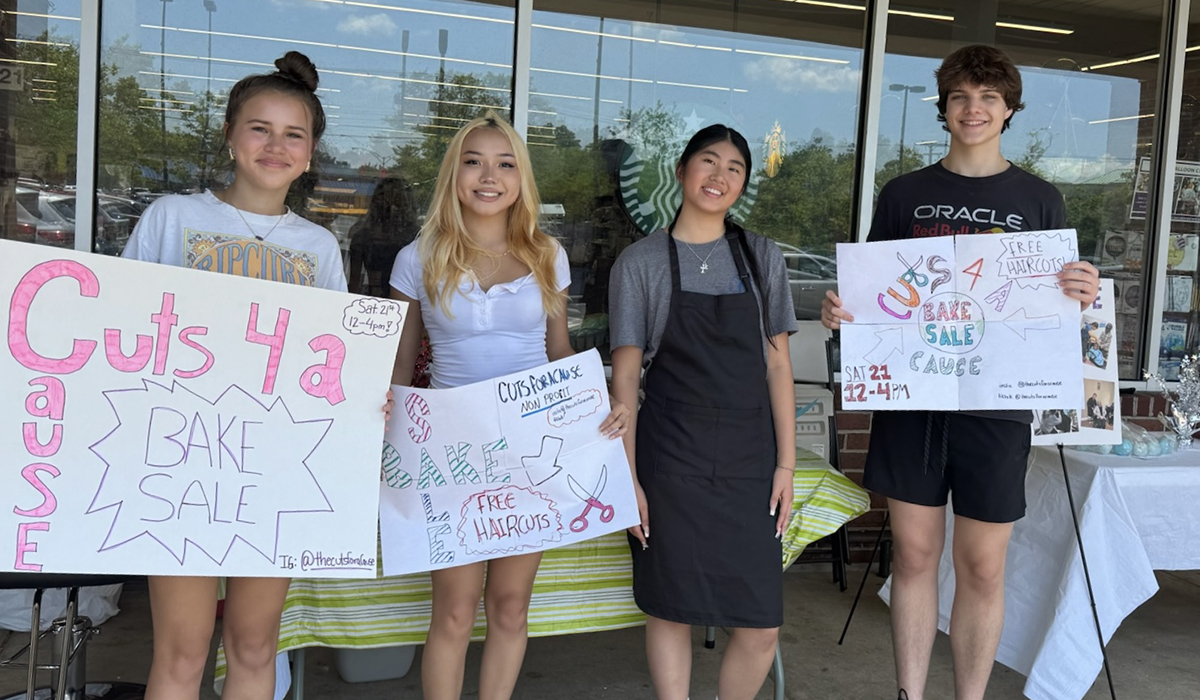
AVA ZHANG (SECOND FROM RIGHT) STANDS WITH FELLOW VOLUNTEERS AT A CUTS FOR A CAUSE BAKE SALE FUNDRAISING OUTSIDE HER LOCAL GROCERY STORE TO RAISE FUNDS FOR CUTS FOR A CAUSE. /COURTESY AVA ZHANG
What inspired you to get started with this initiative?
Haircutting has always been one of my favorite hobbies. When I was a little kid, I would cut the hair on my dolls, and I began cutting hair for my family and neighbors. During COVID, a lot of salons were closed, so I wanted to practice my haircutting skills more. I went to Giant, the grocery store, and provided haircuts for people. One man came up to me, and when he sat down in the chair and I gave him his haircut, we talked about his life. He didn’t just thank me for the haircut, but he thanked me for the time that I took to really listen to him.
That’s when I noticed how much a haircut can really mean. It’s not just the haircut that improves someone’s confidence, but the time it takes to build that trust and relationship in the chair. That made me want to start cutting hair for people who don’t have that access and could really benefit from being listened to. I began reaching out to local shelters in Northern Virginia, and now we have around five partnerships.
Tell us about your volunteer role with Cuts for a Cause.
I have a team with a Fundraising Director, an Outreach Director, and a Secretary, and I’ll assign them certain tasks, whether it’s reaching out to more shelters or reaching out to restaurants or other places we can partner with for fundraisers. I also coordinate with student volunteers who can help out at the haircutting events. I do the designing for Instagram posts, but I generally oversee what my team does.
What inspires you to volunteer?
Volunteering to me is such an amazing thing because I’m not just doing what I love, but I’m also helping the community and restoring dignity and confidence to these people who cannot access services like health education and grooming.
What’s been the most rewarding part of your work?
The most rewarding part is that haircuts allowed me to sit down with someone and hear about their lives and their experiences. Some people are excited to tell me what haircut they want, or just want someone to listen to them. I love working with children too because they’re always very excited and talkative, and seeing someone look at them afterward, smile, and see that confidence is really rewarding. It’s really more than just changing someone’s appearance.
What have you learned through your experiences as a volunteer?
Helping someone starts with listening to them instead of just assuming what they need. Every person who sits in my chair has different experiences and ways of communicating, and I’ve definitely learned how to adapt. Whether that means communicating with someone who doesn’t speak much English or working with a nervous child, I’ve learned a lot about leadership because running an organization means communicating with shelters, coordinating with volunteers, and figuring out what to do if things don’t go as planned.
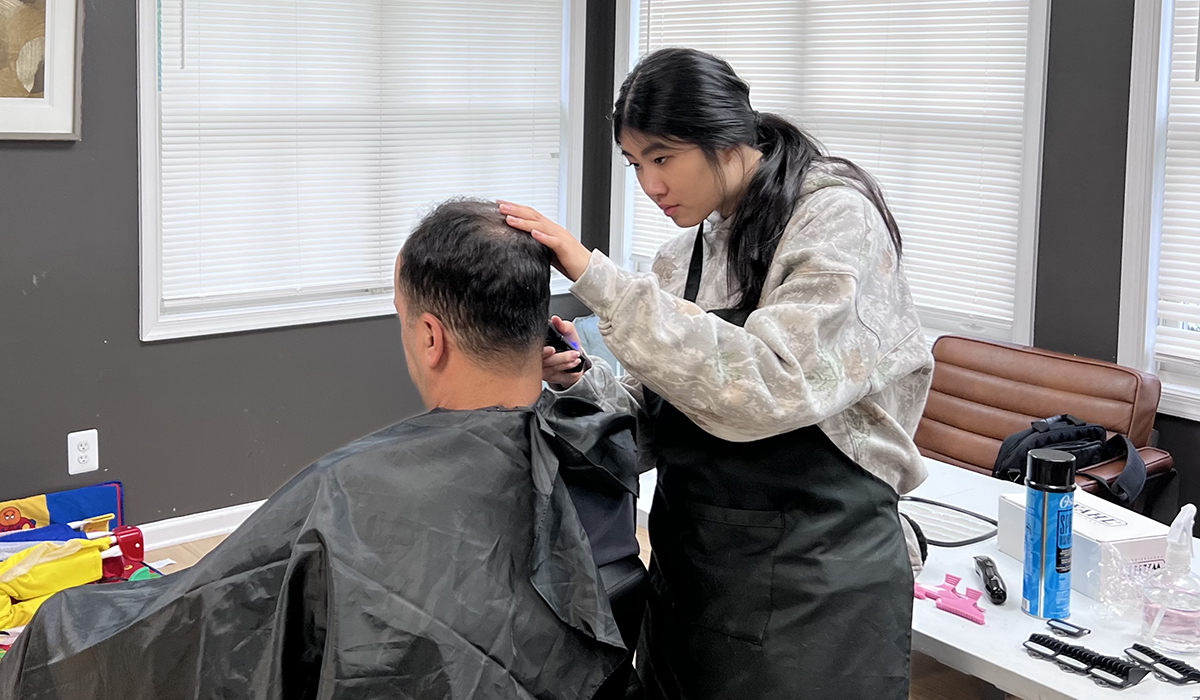
AVA ZHANG WEARS A BLACK APRON AS SHE PROVIDES A FREE HAIRCUT AT THE FAUQUIER FAMILY SHELTER THROUGH CUTS FOR A CAUSE. /COURTESY AVA ZHANG ● [Good Shep]: AVA ZHANG (LEFT) PRESENTS AT THE PODIUM DURING A SELF-CARE WORKSHOP FOR RESIDENTS AT GOOD SHEPHERD HOUSING. /COURTESY AVA ZHANG
Why is it important for others to get involved with causes they care about?
Getting involved with something you genuinely care about makes volunteering feel much less like an obligation or a job, and more like being who you are. I loved cosmetology before starting Cuts for a Cause, but volunteering showed me that a personal interest could also meet a need in a community and serve other people. You don’t need to start a nonprofit or have a service-oriented skill to make an impact. When people find what they care about and what their community needs, service becomes much more personal and sustainable.
Any advice for people who want to start volunteering?
Find something you love and start with something you know how to do. Don’t wait until you feel completely prepared, because when you’re a young person and you have a passion, you really need to get out there. You can’t keep waiting. When I started, I didn’t have a large organization or hundreds of volunteers. I just had a skill that I knew could help someone. To this day, it’s still just me doing the haircutting.
Check out organizations in your community and ask what they actually need. Be willing to start small, because your first effort doesn’t have to impact a bunch of people to really make an impact. One meaningful interaction can show where you can go next, and as you gain more experience, listen to people you serve and let what you learn from them shape how you continue helping.
What do you want people to learn from your story?
Doing what you love and helping other people can make such a bigger impact than you think. My organization isn’t expanded throughout the country or the world, but these one-on-one interactions with the people are much deeper than giving a simple haircut, because you’re building trust and community. I want people to learn that you don’t have to be a huge organization to feel like you did something.
Helping Golden Retrievers Find Their Forever Homes
Meet Daily Point of Light Award honoree Jane Krom. Read her story and nominate an outstanding volunteer or family as a Daily Point of Light.
Jane Krom always loved animals, but it took a dire situation for her to realize she wanted to take action. Back in 2010, Jane was reading the newspaper when she discovered that 70 golden retrievers had been rescued from an overbreeding situation where she and her husband had gotten their beloved pup, Casey. Realizing that the dogs in danger could be Casey’s parents, Jane was horrified. Inspired to make a difference, Jane started volunteering at Southeastern Virginia Golden Retriever Rescue, Education, and Training, Inc., a volunteer rescue group that takes in golden retrievers from shelters, animal control facilities, or owners who can no longer care for their dog. At that time, Jane never could have expected how much her role would grow.
In the last 15 years with SEVA GRREAT, Jane has tackled almost every role in the book, from President and Fundraising Lead to her current role as Foster Coordinator. In this role, Jane approaches the complex task of matching dogs to the right homes, ensuring they end up in places where they’ll thrive. While her role is one with many responsibilities, it also requires tremendous multitasking ability, as the organization cares for 50 animals at a time. From transporting the dogs out of dangerous situations to their foster homes and eventually to their forever homes, Jane is the reliable face that each pup can lean on when they’re facing instability.
Jane has also bolstered the organization as a whole, doubling the number of foster homes that are available for needy pups. Whether she’s removing dogs from a hoarding situation in South Carolina or from Turkey after the 2023 earthquake, her ability to handle difficult situations is an asset to the group. As a mentor to other volunteers, she serves as a guiding light for anyone hoping to serve as a champion for animal rights. Giving 80 hours per month to SEVA GRREAT, Jane has helped the organization welcome more than 1,410 dogs, including 81 so far this year. Her volunteer work in the field of animal rights and rescue can serve as a template for anyone inspired to make a difference, no matter the cause.
What inspired you to get started with this initiative?
It started after something I read in the newspaper. Back in 2010, the rescue group Southeastern Virginia Golden Retriever Rescue was involved in rescuing 70 golden retrievers at once from an overbreeding situation, and that got me. I think partially because I’ve just always loved golden retrievers, but I had actually gotten the golden retriever from that place six years prior. Everything seemed fine. I never suspected that there would be any issue. When I saw that, it just got me going.
JANE KROM, THE FOSTER COORDINATOR FOR SEVA GRREAT, TRANSPORTS A NEW DOG TO FOSTER CARE. /COURTESY JANE KROM
What inspires you to volunteer?
I’m a nurse by background, so I think I’m naturally an empathetic and caring person. My husband and I didn’t have kids, so the dogs are basically our children who have been in our lives over the years. It’s something that I enjoy, and it keeps me busy.
Tell us about your volunteer role with Southeastern Virginia Golden Retriever Rescue, Education, and Training, Inc.
I’m what’s called the Foster Coordinator. I’m responsible for when we get a request to bring in a new dog and find it a foster home, and then oversee their veterinary care while they’re in the rescue and getting ready for adoption. Right now, we have over 50 in our care, so it’s a lot to keep track of. I’m very involved in helping physically bring them in once they’re coming to a foster home. They need to be picked up and transported to that home, and oftentimes I’m one of the ones who actually picks up the dog and gets them to their foster home. It helps me get to know them a little bit and establish a relationship with the foster homes.
What are your long-term plans or goals for the organization?
Continuing to move us forward and keeping us able to provide care for the dogs. I feel like it’s getting harder and harder to find volunteers, particularly ones who will be on the board and take on the major roles. There are a lot of people that want to help in many ways, but actually taking on a board responsibility is a bigger ask because there’s much more day-to-day involvement. Recruiting and making sure we keep building our team. We’re proud of the fact that we’ve been in existence for 35 years, which is a long time for a volunteer organization.
What’s been the most rewarding part of your work?
That has to be just the dogs. Seeing them get better and get the care they need, and then making families really happy. The people that adopt the dogs are usually just so unbelievably happy to have a family member, and seeing them get to that point is great.
Why is it important for others to get involved with causes they care about?
Because there’s such a great need there, and always will be. People seem to be very passionate about things, and they want something to be done, but it doesn’t happen by assuming others will do it. Everybody has to do at least a small part. If we had more people doing a small part, it would make it a lot easier.
Any advice for people who want to start volunteering?
Think about a cause that they feel strongly about or that they think they would enjoy and that has some relevance to them. Just reach out and ask what the needs are, because there’s usually going to be something. If they’re underage, it’s getting the parent on board too to be able tohelp with their volunteer time. But for other adults, it’s just reaching out.
What do you want people to learn from your story?
You can make a difference, and no matter what, devoting some time to a cause that’s important to you definitely helps. My role within the organization has grown, and I feel very much appreciated. I’m constantly getting a lot of good feedback for it, which is not what I’m looking for, but people notice. You will definitely make a difference. You don’t necessarily have to be in the spotlight. It’s just doing your part of it.
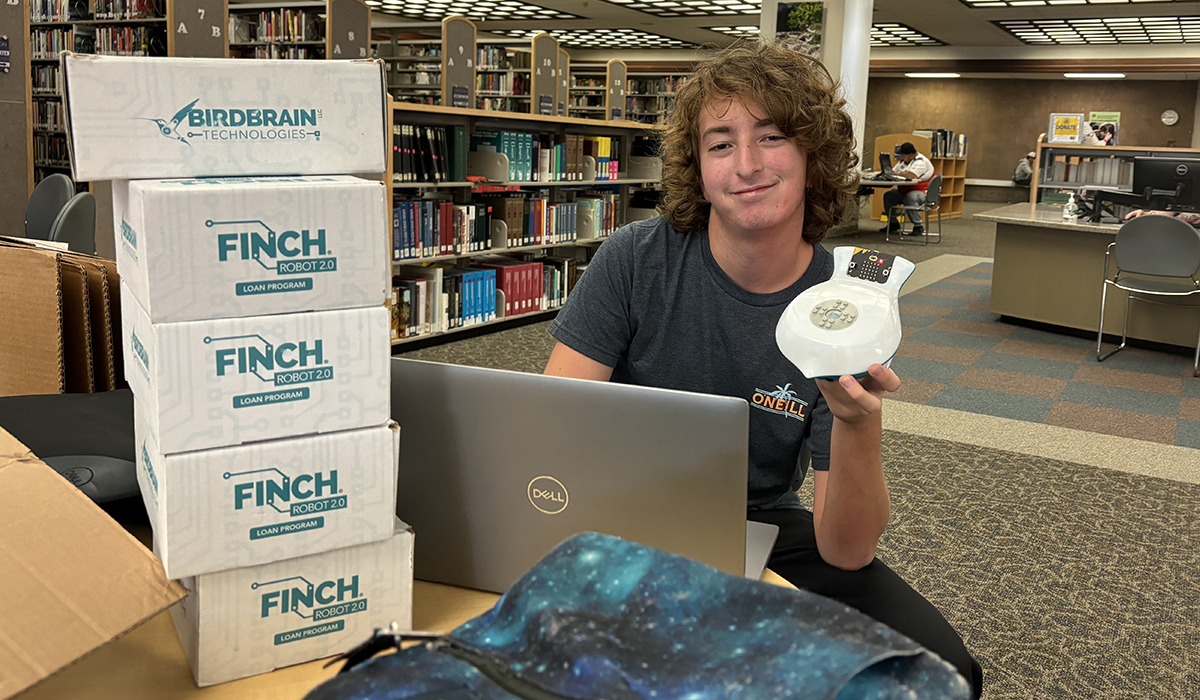
Meet Daily Point of Light Award honoree Cameron Murray. Read his story, andnominate an outstanding volunteer or family as a Daily Point of Light.
Cameron Murray was in first grade when a dual-immersion teacher rolled small robots into the classroom and taught the students to code. That spark never faded. Entering high school, Cameron turned it into CodAmigos, a nonprofit delivering free, bilingual computer science education to elementary and middle school students in underserved communities — many of whom have never had a computer of their own.
The approach is hands-on and joyful. Using grant-funded robots and donated laptops, students write simple block code and instantly watch their commands come to life as a robot spins or flashes a light. Since the first session in 2024, Cameron and a growing team of recruited high school instructors have reached over 100 students, running weekly sessions through the Torrance Unified School District.
• Cameron Murray founded CodAmigos to bring free, bilingual computer science education to elementary and middle schoolers.
What Cameron watches for is the moment confidence takes hold, like the once-reluctant student who quietly started following lessons on her own and became one of the most engaged coders in the room. To keep the program growing, Cameron built training protocols and a manual so other students can launch programs of their own. “I’ve learned that students work at different levels, and it’s important to meet students where they are,” Cameron says.