Meet Daily Point of Light Award honoree Claire Kim. Read her story, andnominate an outstanding volunteer or family as a Daily Point of Light.
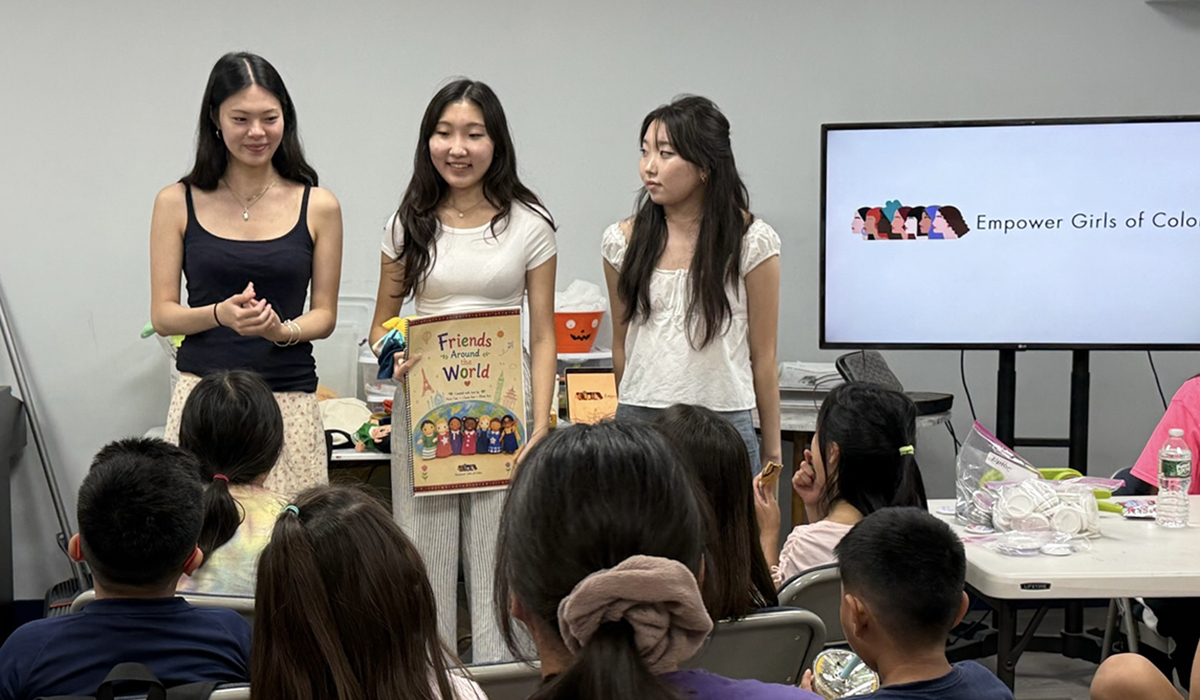
For Claire Kim, volunteering is an act of love. As Vice President and Civics Project Director of Empower Girls of Color (EGC), she builds educational projects that help girls of color see the power of their own voices. Her signature initiative, V.I.V.A. (Voices Inspiring Voter Awareness), connects the overlooked stories of women-of-color suffragists to today’s activists, making civic history feel personal and possible. Claire and her team have distributed more than 500 illustrated booklets through libraries and community centers and built a workshop series that has reached over 2,000 children and families.
Beyond civics, Claire conducts EGC’s Empowerment Interviews with women leaders, helped publish the anthology Our Mothers’ Colorful Stories, and created Friends Around the World, a puppet storybook celebrating diverse cultures. Through EGC’s Tutoring Project, she worked one-on-one with a student from a single-mother household, watching hesitation turn into pride as the girl began sharing solved math problems and favorite books.
Across partnerships with Oasis NJ, YMCA Paterson, Give Chances NJ, and the Korean Community Center, Claire has learned that change comes from trust and connection. “I’ve come to recognize an inner spark in each person,” she says. Her mission is now to help young people find their own.
Through EGC’s V.I.V.A. initiative, Claire Kim has helped distribute 500+ educational booklets and reached over 2,000 children and families across New Jersey.
Do you want to make a difference in your community like Claire? Find local volunteer opportunities.
This Volunteer Provides Comfort During Cancer
Meet Daily Point of Light Award honoree Anshika Goyal. Read her story, and nominate an outstanding volunteer or family as a Daily Point of Light.
In the United States, one in eight women will be diagnosed with breast cancer in her lifetime. 16-year-old Anshika Goyal’s mom was one of them. The experience, though ending with a positive outcome, wasn’t without its stress and fears. Empathizing with others going through it and touched by the thoughtfulness of volunteers when her mom was in the hospital, Anshika now dedicates over 50 hours each month to supporting breast cancer patients, survivors, caregivers, and their families through Stronger Than Cancer.
Her organization has delivered 1,200 comfort care kits, mobilized student and community volunteers who have put in a collective 6,000 hours of work, and distributed more than $60,000 of donated products and resources since 2025. They organize awareness events and educational resources to help people dealing with the disease.
Thanks to a routine mammogram, Anshika’s mom caught her cancer early. After surgery, she is now cancer-free. For this reason, Anshika is working hard to make such screenings—and other resources—more accessible with her new Resource Hub.
What inspires you to volunteer?
The first organization I ever volunteered with was Vibha, an organization that funds education for kids in India without access, when a neighbor got the kids on our street involved. I was 8 or 9 years old and didn’t really grasp what it was for. I was just excited to have a plant sale or a bake sale with friends. Then, my mom talked to me about it. In 2024, I accumulated over 100 volunteer hours with them and received the President’s Volunteer Service Award.
I realized that what I was doing was making an impact. It felt like a good community to be a part of and made me feel good about myself. Helping others uplifts you as well.
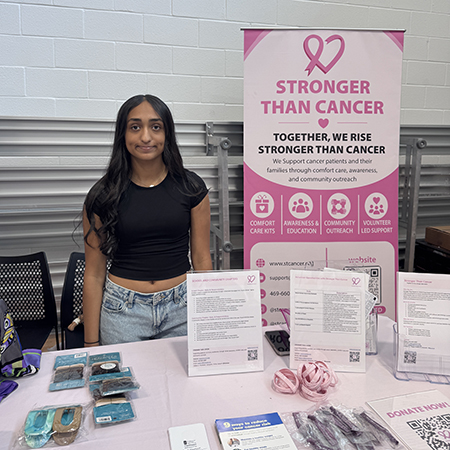
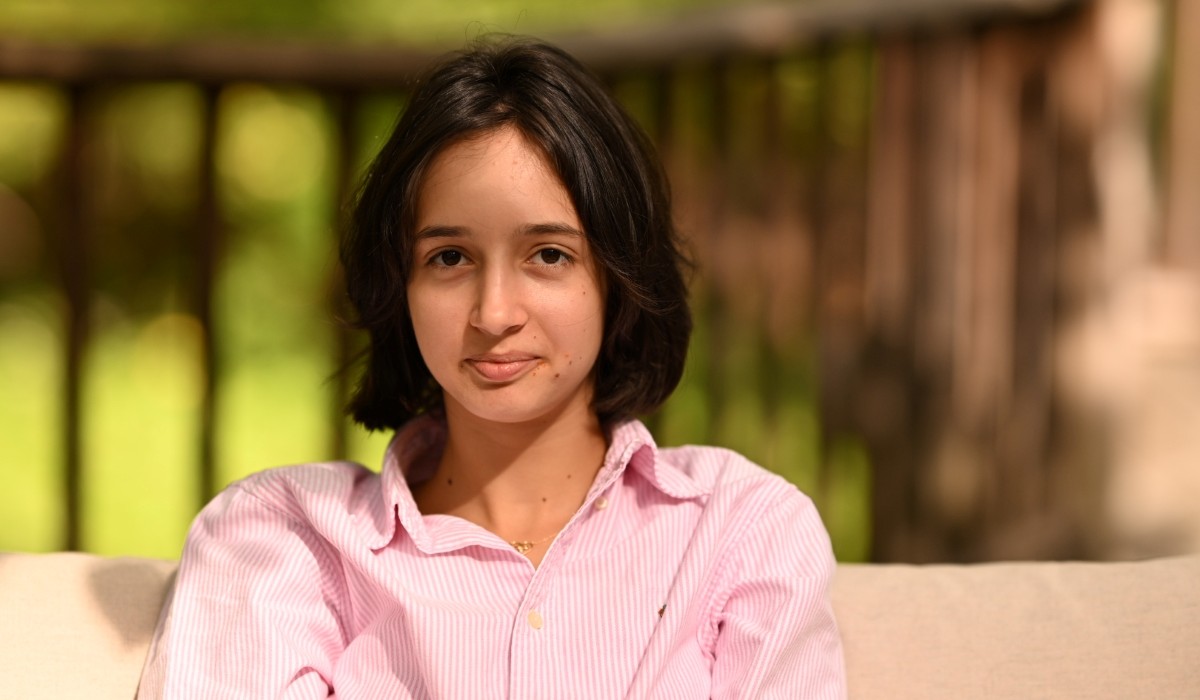
Representing her organization at a community event, Anshika raises awareness about breast cancer and shares volunteer and patient support opportunities.
What inspired you to get started with Stronger Than Cancer?
My mom was diagnosed with breast cancer in October 2024, and her surgery was in January 2025. When she was in the hospital, her nurse navigator gave her a heart-shaped mastectomy pillow someone had donated, and I thought that was really cool.
I wanted to help other people going through cancer and support them in a way that made them feel as happy as she did. So, I started volunteering with the National Breast Cancer Foundation to see how they did it, get some ideas, make some connections, and help people. It was a really good community, and it was fun. That experience helped me develop my own nonprofit, which is what I focus on today.
Tell us about your role.
I’m the founder. I focus on getting everything set up. My mom helps me reach out to hospitals, cancer centers, and organizations to set up meetings. We partner with a lot of businesses who send donations for our kits. We include things like blankets, volunteer-made bracelets and cards and self-care items, and donate to hospitals, aiming for 100 each month. I coordinate drop-offs.
Sometimes, I recruit my friends. We also sew and stuff heart-shaped pillows, and a couple friends have organized fundraisers like bake sales and a lemonade stand. We set up a table at events like health fairs and talk about what we do. There’s lots of organizing and managing different parts. I support our other school and community chapters nationwide as well.
What is the Resource Hub?
The goal of the Resource Hub is to create an accessible one stop resource where patients, survivors, caregivers, and families can quickly find relevant support. It started because, at health fairs, we’ve come across underserved communities and people who didn’t have the financial resources to go for regular mammograms, which are vital for early detection. Through our work, we’ve discovered many free services that people aren’t aware of, because the information is fragmented across different websites.
So, we decided to put resources all in one place–financial assistance, legal support, mammogram and screening services, hospital information, transportation, counseling, support groups, and other patient services. You can sort by what you need, location, or stage of treatment. It’s just local options right now, but we’re hoping to expand.
What’s been the most rewarding part of your work?
Sometimes, when we talk about what we do, people open up about having had cancer or having a family member who currently has it. When we offer them a care kit or to ship one to a loved one, the look on their face is unforgettable. It makes me feel good knowing that they don’t feel as alone.
What have you learned through your experiences as a volunteer?
Volunteering may seem like a lot of work, and it can be. But even if you don’t have a lot of time, you can do something small, like making a couple cards to send off.
What is the best way to support a friend or family member dealing with cancer?
Talk to them and treat them like a normal person. A lot of times people may not want to talk about exactly what they’re going through. They may not want to be seen as just a cancer patient. Cancer can take not only a physical toll but a mental and emotional one. Having someone to talk to can make a big difference.
Tell us about future partnerships, programs, or events that you are excited about.
October is Breast Cancer Awareness Month. One of our chapter leads connected us with the American Cancer Society, and we’re trying to partner with them to do a 5K for breast cancer. We’ve only hosted one other 5K so far, for National Cancer Survivors’ Day in partnership with the YMCA. We might also host a health fair.
What do you want people to learn from your story?
There are many good people in the world trying to help. Find them. It’s important to help others and be kind. Even if you just compliment someone or ask them how their day was, it can go a long way to making someone feel better about themselves, feel heard, or feel cared about.
Style and Service Go Hand in Hand for One Volunteer
Meet Daily Point of Light Award honoree Talia Tsipras. Read her story, and nominate an outstanding volunteer or family as a Daily Point of Light.
Talia Tsipras always knew her best style inspiration was close to home. For many years, her beloved grandmother worked as a clothing designer. When she retired, she was left with a warehouse filled with unused pieces. This was during the COVID-19 pandemic, when students like Talia were struggling to engage in an increasingly disconnected world. Looking to do something good for others in her community, Talia partnered with Catholic Guardian Services and donated a few hundred dresses to the organization. But Talia knew she could go bigger, and that catapulted her story into a fashion revolution.
Wanting to do more to combine her knowledge of the fashion business with her passion for helping people, Talia established Good Threads, an organization that makes new clothing gifts to children, teens, and women in crisis. While Talia knew used clothing had great value, she felt there was something special in treating people with something new. The organization buys new clothing by the pallet at the end of the season from large discount retailers like Ross and Marshalls, therefore securing substantial discounts. Good Threads then partners with organizations around the country that are already serving communities, allowing them to distribute the clothing quickly to communities in need. From a public school system in Texas to groups like Suited for Change in Washington, D.C., Good Threads has provided more than 1000 teens with brand new prom dresses and around 800 children with clothing gifts. Their contributions exceed a retail value of $300,000.
In her role as Good Threads’ Founder and Executive Director, Talia spends around 40 hours per month on duties ranging from fundraising and sourcing new clothing to filling program orders and packing and shipping clothes to their partner organizations. That’s no small feat, considering she’s a rising high school senior with a rigorous academic schedule on her hands. Talia also feels her ADHD has transformed from a struggle to a superpower in this situation. Instead of limiting her ability to focus on the task at hand, Talia believes she utilizes the common neurodevelopmental condition to her advantage.
Talia’s commitment to volunteerism is a powerful example of taking one’s specialized knowledge and using it to help others. Talia already saw her grandmother’s success in the fashion industry, and knew she could channel that expertise into a life of service. Her vision is a triumph that can inspire anyone hoping to serve others.
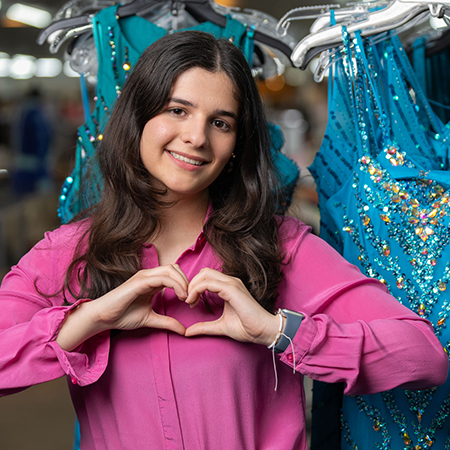
TALIA TSIPRAS IS THE FOUNDER AND EXECUTIVE DIRECTOR OF GOOD THREADS. /COURTESY TALIA TSIPRAS
What inspired you to get started with this initiative?
My grandmother inspired me. She used to be a fashion designer, and she designed so many beautiful dresses. When she retired, we had these big warehouses full of unused dresses that were so beautiful, but weren’t being used at all. It was during COVID, and it was a really hard time for everyone, especially kids in high school. I just thought this was an easy way for me to make a difference in the community. We partnered with Catholic Guardian Services and grew organically from there. We distributed about 100 dresses to girls throughout New York so we could give a special experience for prom.
What inspires you to volunteer?
It gives me a feeling of joy. Whenever I get a lot of photos back after we distribute clothing gifts, I can see the smile on people’s faces and the reactions to me doing a small thing to help them. It makes me feel really warm and fuzzy inside. I also struggle with ADHD, and taking action helps with the ADHD the most.
Tell us about your volunteer role with Good Threads.
We have people reach out to us. For example, we just did our usual prom dress donations. They tell us sizes they need. Then we head to the warehouse and gather the different dresses based on a variety of colors and sizes. We collect them and put them together. We collect the items that they ask for and then ship them ourselves. The nonprofit gives it to the end user.
What are your long-term plans or goals for the organization?
I want to keep expanding the program. We currently serve nonprofits in eight different states, but I want to expand to more, especially since I’m going into my senior year. I’m going to go into college, but I still want to keep this going, even if I’ll be away from home. I’d love to see this become a national organization and maybe build some brand partnerships and get grants.
What’s been the most rewarding part of your work?
I’ve had a lot of people tell me they have great ideas for nonprofits but never go out there and create them. I’m very proud of myself for actually starting it. I just like helping people, and I love seeing how much a gift can help a person, how much dignity they can get from a gift, and how much we can uplift people.
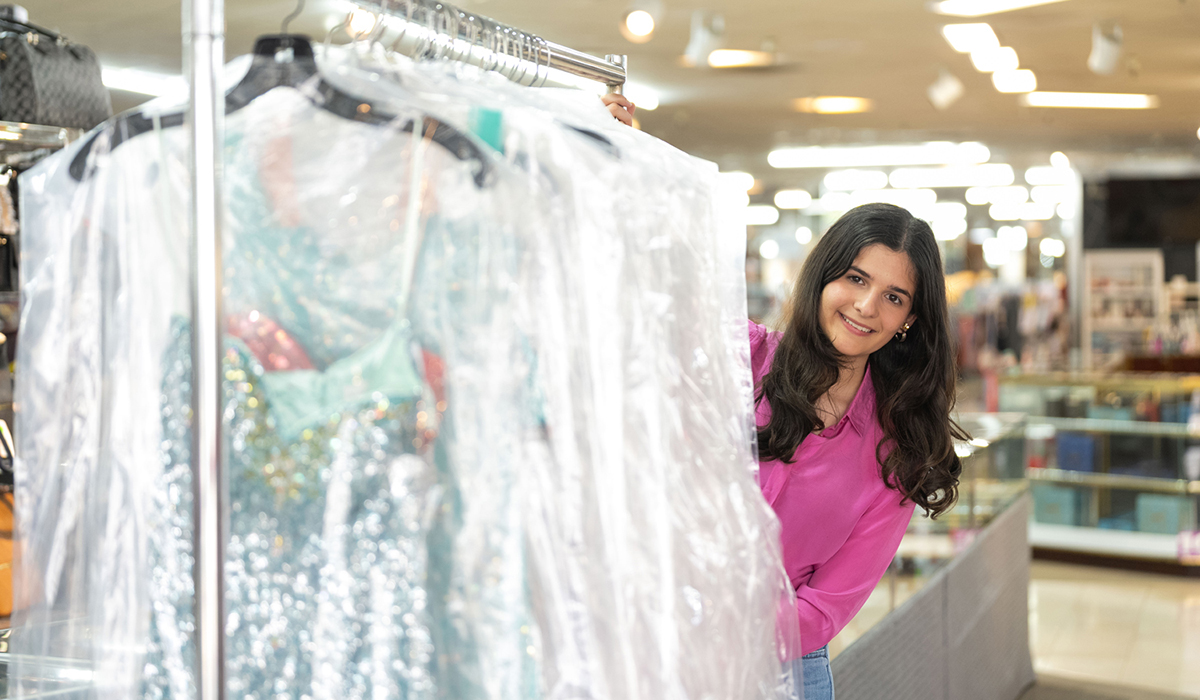
GOOD THREADS FOUNDER TALIA TSIPRAS SMILES FOR THE CAMERA BEHIND GARMENT BAGS. /COURTESY TALIA TSIPRAS
Why is it important for others to get involved with causes they care about?
It’s the little things. If we each got involved with things we care about, then as a greater good, we will all transform things together. Humans are social creatures. We need community, and by needing community, you need to help your community.
Any advice for people who want to start volunteering?
Just do it! Just take action and figure it out along the way, especially for young people. Don’t overthink it. It’s one foot in front of the other. Just get it going, and then it will grow. You’ll see it grow and get easier in the process. That’s what happened to me. Also, be completely open to everything. Be open to different opportunities, and eventually you will evolve.
What do you want people to learn from your story?
Take action and figure it out along the way. I want other people to be inspired by what I do, and hopefully, more things like this will rise. We started small, and small things can make such a big impact. Another big thing is how gifts can equal dignity. It’s a big difference between giving someone something used versus giving a new clothing gift. It helps people to be seen, and with a new gift, it grants people dignity.
Meet Daily Point of Light Award honoree Peter Crawford. Read his story, and nominate an outstanding volunteer or family as a Daily Point of Light.
Peter Crawford, a 78-year-old set designer, is innately curious about people. He’s someone whose friendliness puts others at ease and whose openness makes him well-suited to working with people.
Nearly three years ago, Peter began the unique experience of volunteering at CarePartners Health Services – Solace Hospice supporting patients, their families, and friends as they navigate through their end-of-life journeys. Leading with empathy and respect, he introduces them to the facility and draws on training and natural interpersonal skills to be there for practical and emotional support. Staff praises his comfort level in challenging situations and his ability to pause, reflect, and evaluate before responding. In short, he respects each patient and honors the life they’ve lived.
Peter’s dedication is unquestionable both in the way he cares for patients and his commitment to stay as long as a situation requires. He is unconcerned with going beyond the two-hour ask the facility requests and averages over three times that, prioritizing patients and their remaining time.
What inspires you to volunteer?
I like helping people. I was a volunteer orderly when I was a teenager where my mother was a candy striper. Now, my wife and I work for Food Connection handing out meals created from restaurants with an excess of food. On one shift, we were handing out 450 meals in an hour. When Hurricane Helene happened, I volunteered with World Central Kitchen for five weeks, and they turned out 35,000 meals in one day.
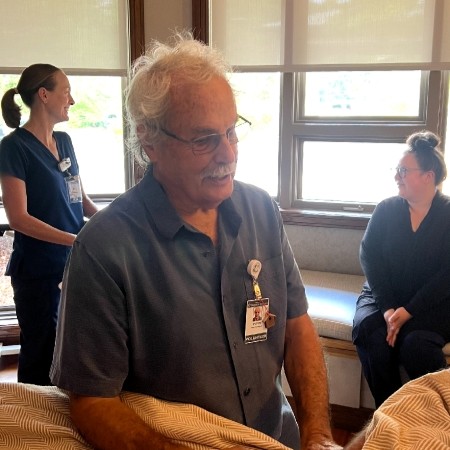
Peter visits with a patient and their family with Registered Nurse Adrianne Corner (left) and Charge Nurse Sabrina Fehr (right).
Tell us about your volunteer role with Solace Hospice.
I introduce myself and assess whether the patient or family member needs time alone or if they’re craving company. I might offer to get them something to drink or a hot blanket. If they’re new, I introduce them to Solace and show them around.
My parents died at different times, but I’ve felt them visit me. That’s an experience I can share. I often open a dialog about what they might hear or see–a particular song, bird, or flower–that would connect them to their loved one after they pass. My cousin lost her son at 19. He was a Pittsburgh Steelers fan, and yellow is one of the team colors. Every time she planted these blue flowers she liked, a yellow flower would pop up.
I’m not there to fix anything. I’m just there to be present. I help people feel more comfortable being with a dying loved one and encourage discussion of issues around dying, death, and loss that help celebrate a family’s life together. I help patients spend time outside. Sometimes, there’s family who can’t be there, and it’s nice for them to know somebody is sitting with their loved one for a while.
The privilege of hospice is taking a situation where people are sad, and we provide them with a comfortable, non-judgmental environment where caregivers can release their responsibilities, sit and share stories, and just be a parent, daughter, brother, etc.
There was once a granddaughter whose grandmother, the patient, had bought her a wedding dress, but she wasn’t going to make the wedding. We decided to put one on, so we gathered flowers and called catering, etc. Two hours later, we wheeled the patient into our chapel and had a wedding. To me, it’s an indication of how special we think our responsibility is. It’s an opportunity that is so important to the family that, if we can make something like that happen, we do. There are magical things that happen all the time.
During my time with patients, I learn things that can help staff like a family dynamic that’s causing issues they don’t understand or if a patient is exhibiting some symptoms. If a patient’s family member is concerned about something, I take that to a nurse, too.
I often respond to call bells in patient rooms, because many times, they have a simple request I can take care of. Anytime I can take something off the staff’s hands to free them up for something more pressing is helpful: collecting laundry, serving meals, helping a patient eat. I’ve even fixed a couple of things like a hole punch and refilled printer paper.
What inspired you to get started with this initiative?
My daughter was preparing for gallbladder surgery and being interviewed by a trauma surgeon named Elaine Chan. It turned out she knew a neighbor of mine. I later got to know her, and she recommended I volunteer at Solace, where she provides hospice services outside of her role as a surgeon. It wasn’t something I’d considered, though my mom was sick from when I was 11 to age 21, when she finally died, so I had experience with death early on. I trusted Elaine’s understanding of me, so I met with Director of Volunteer Services Danny Johnson and never looked back.
What’s been the most rewarding part of your work?
It’s the trust that somebody I’ve never met gives me. It’s a gift to be invited or allowed into this precious period that a family is going through. I’ve seen reconciliations that have been years in the making. I’ve seen the reverse of that. I’ve seen people who wanted to talk about things that they’d never had anyone else to talk to about.
Every time I go, there’s a powerful moment of some kind. Every single person here is committed to creating this environment for you to make the transition we all eventually make. The goal is to find some part that’s joyful and loving.
What makes a good volunteer in the hospice environment?
Don’t shy away from emotional challenges. There’s a bit of reality that makes you in touch with your emotions, but I’m not afraid of that. Being interested in people, wanting to spend time with them, listening and being present are also good traits.
What do you want people to learn from your story?
I may be a point of light, but I’m just one in a galaxy. I love the message that it doesn’t matter how small a positive contribution you can make, just that you make it. Care Partners is doing so much good in this setting. I hope people feel more comfortable talking about death and understand what good hospice brings to your last days. It doesn’t take the pain of passing, but it also allows a beautiful story to happen.
How One Dallas Volunteer Is Equipping Her City to Be Good Neighbors
Meet Daily Point of Light Award honoree Sarah Steinmann. Read her story, and nominate an outstanding volunteer or family as a Daily Point of Light.
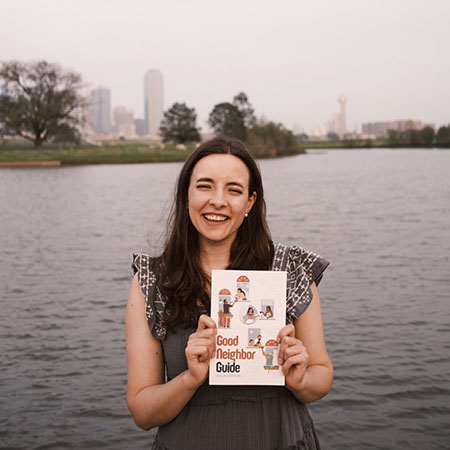
Sarah Steinmann wants to empower others to be good neighbors. As a college student, she became involved with an organization called Mercy Street, which mentors at-risk youth. It was there that Sarah learned to view volunteerism through the lens of being a good neighbor to those in her Dallas community. Years later, Sarah understood that many residents in Dallas want the best for their communities, but don’t know how to go about it. If there was no guidebook written to empower Dallas residents to be the best neighbors they could be, Sarah would have to write one herself.
In 2024, Sarah launched the Dallas Good Neighbor Guide, a booklet packed with over 50 practical and community-forward tips that range from checking in on seniors and supporting local businesses to hosting a block party or simply introducing yourself to a stranger. Each accessible suggestion is tagged with time and cost commitments, ranging from minutes to hours. The options allow engagement for everyone, including busy professionals.
Sarah’s volunteer work doesn’t end with the Dallas Good Neighbor Guide, however. She’s a volunteer with OnRamp, an organization that provides cars to individuals in need, and actively gives her time to work with organizations supporting immigrants, asylum seekers, and refugees. And 11 years later, she’s also still active with Mercy Street, the organization that laid the groundwork for her understanding of being a good neighbor.
Looking toward the future, Sarah has big goals for the Dallas Good Neighbor Guide. She aims to reach 13,000 Dallas residents, or roughly 1% of the city. It’s all rooted in her belief that small, widespread acts of neighborliness can make a difference in the world. Her goals should serve as inspiration to the rest of us.
SARAH STEINMANN PUBLISHES THE DALLAS GOOD NEIGHBOR GUIDE. /COURTESY SARAH STEINMANN
What inspired you to get started with this initiative?
When I was in college, I had the chance to intern at a nonprofit, Mercy Street. Everyone who is on staff lives in the community where they’re focused on serving the community members, and the purpose of that is to really approach the work and service from a position of neighboring. It’s from the perspective that we are here as your neighbors; you are our community. That philosophy really shaped my perspective of neighboring because I was just so blessed and loved and cared for by the people in the community of West Dallas. A few years ago, I started gathering ideas of what it could look like to be intentional about the actions you can take to understand more of the history of our city, or building skills to connect to people who are different than you, and being really intentional about that. I was able to turn that into a booklet related to Dallas.
What inspires you to volunteer?
A huge aspect for me is my faith. The words of Jesus, and the biggest commandments being to love God and love people. I really believe that this is where flourishing happens. We were made to be in relationship with other people. There’s a framework from a book that’s called When Helping Hurts. And it’s kind of about what not to do in serving people, but a lot of it is focused around how human flourishing really happens when we are in right relationship with ourselves, with our neighbors, with God, and with our environment, with the world. And if any of those things aren’t in alignment, there’s not going to be flourishing. I think that kind of has really shaped my view. Whenever I think of people who have inspired me in my life, I think everyone who has really lived a rich life on Earth has been involved in a significant cultural moment and chosen sacrificial generosity. Those are the type of people that I find inspiring and a lot of why I want to know and be known by other people.
Tell us about your volunteer role with the Dallas Good Neighbor Guide.
The work of the Dallas Good Neighbor Guide is designed to help other people be equipped to be good neighbors. It is volunteering, but it’s more than volunteering to encourage other people to volunteer. I work for Southwest Airlines, and one of the things that a friend and I developed was a map of every location that Southwest Airlines flies to, and a social impact restaurant or cafe that you can visit in all of those cities. If you’re traveling, you could go and eat anywhere. What would it look like for you to be intentional with how you’re getting to know the community where you’re spending your money, and supporting a cafe that employs youth aging out of foster care, or single moms, or people coming out of prison? It’s really a lot of education. We have a section related to the history of Dallas and how it impacts the way the city operates today, specifically in terms of some of the injustices that abound.
What are your long-term plans or goals for the organization?
I made the Dallas Good Neighbor Guide for Dallas specifically. Last year we published a version in Spanish since it’s such a primary language in Dallas. I’m working to publish a generic version of the Good Neighbor Guide that’s not Dallas-specific. As I’ve mentioned, there’s a section for the history of Dallas, but we could have workshops in other cities. That’s definitely a goal that I have. So far, the workshops that I’ve hosted have been through churches in Dallas, and I’ve found that to be a really good avenue to bring together a community of people who can focus and carry out the idea with a lot more education and awareness. I’d love to keep partnering with other groups to serve in that way with the workshop.
What’s been the most rewarding part of your work?
Getting to be with people through their journey of life and have people alongside me has been extremely rewarding. As a single woman, it can be a temptation to be like, ‘oh, my life hasn’t started yet.’ Being in relationships with so many other wonderful people has allowed me to experience so many significant life moments in a way that has felt so fulfilling and meaningful. That has been a big blessing of the whole experience.
What have you learned through your experiences as a volunteer?
If we look at the pages of history, the richest, fullest lives are the lives of people who have chosen to love deeply, or have chosen to sacrifice for important causes. I think we’re at our best when we’re living for things that are bigger than us. In an age and time when there’s a lot of loneliness and isolation, volunteering and serving others can really put you in a position to be in community and be connected to other people.
What do you want people to learn from your story?
To not be afraid to take a small step towards volunteering or caring for someone or seeing someone or letting yourself be seen.15 minutes a day can totally change your rhythms of life. Don’t let feeling like you have to do some big crazy thing stop you from doing something small that matters.
Meet Daily Point of Light Award honoree Ingrid Fellah. Read her story, and nominate an outstanding volunteer or family as a Daily Point of Light.
When Ingrid Fellah’s parents dropped her off at violin club, they had no idea their 6-year-old was about to discover a talent and lifelong passion. It was simply one of a handful of activity-based programs that would engage their daughter until they got off work. The club was facilitated by a nonprofit, the teacher a kind volunteer. Even after changing schools and leaving the program, Ingrid’s interest grew. Two years later, she got her first private instructor, a college student, and decided to dedicate herself to learning.
In appreciation of her violin club’s role in her journey, Ingrid founded The Orfeo Project late last year to expand access to high-quality, live classical music through community-based performances, particularly for preschoolers and their caregivers. She and her team put on at least two free concerts a month at local libraries. They offer healthy snacks and educational workshops, often attracting repeat attendees and their families with a program that builds community, encourages curiosity, and strengthens familial bonds.
Often, audience members are from a variety of language backgrounds, with music acting as a bridge for those whose participation might otherwise have been lost in translation. Ingrid, whose dad is French Tunisian and whose mom is Turkish American, appreciates the universality of her medium. Growing up visiting Turkey has left her with a particular affinity for songs from the country.
As a rising senior at a music-focused high school, her summer has been spent attending a camp exclusively for advanced string players. She looks forward to furthering her music studies in college while eyeing a career in the field.
Ingrid Fellah, cofounder of The Orfeo Project, uses her skills as a classical violinist to bring live classical music to young kids and their caregivers through free concerts at local libraries.
What inspired you to get started with The Orfeo Project?
Growing up, my mom often spoke about how isolating being a stay-at-home parent could be. She dropped her job to be with me more, so she really wanted to take me somewhere every day, like the playground or the science museum or the library. She was always looking for ways to keep me curious and learning while staying within a budget.
Her stories made me realize how important community spaces are for families. I wanted to create something for parents to look forward to, a place where they could spend quality time with their kids, meet other families, and enjoy music. The Orfeo Project would bring people together and give children opportunities to grow.
I also teach two kids to play, providing the same mentorship and encouragement that I was fortunate to receive as a child. They’re 11 and 12 years old respectively.
Tell us about your volunteer role.
I devote about 10 hours each month to teaching, organizing programs, and coordinating volunteers and food deliveries. I also focus on building partnerships with libraries and community organizations, fundraising and expanding our outreach.
My team, Edward and Alex Chen, also does outreach. And Alex performs. Right now, we have strings and piano, but I’d like to have more. I have new performers coming from their school. It’s harder to get people from my mine, because it’s further from the library.
At events, we first set up the snack table. I practice before the concert and then we each play our bits. Afterwards, the kids learn how the instruments work and even play them.
The kids—most of whom are 6 and under—snack and play with toys while we perform, because in normal concert spaces, kids aren’t allowed to do anything. They just sit there, and if they cry, they’re stared at. We offer a space where kids can relax, and parents and caregivers can also enjoy the music. When we’re done, we give them a free children’s book to take home.
Why do you feel like it’s important for young people to have access to music?
I’ve always had an unconditional love for music and I feel that a good experience with classical music helps children understand the world around them better. Music can reveal emotions that words could never convey. Music is also universal–no matter where you go, there will be music. It ties people together. And, in exposing kids to new things, you help them grow.
What are your long-term plans or goals for the organization?
If we get more interest from young performers, Orfeo will be able to host events after I leave for college. And we can expand to other libraries and other communities. I’d love to work with the New York Public Library.
Ingrid Fellah, cofounder of The Orfeo Project, uses her skills as a classical violinist to bring live classical music to young kids and their caregivers through free concerts at local libraries.
What’s been the most rewarding part of your work?
It’s seeing the kids smiling, moved by the performances. I even see the adults really enjoying themselves. Many of them face a language barrier, but you can tell they’re moved.
Sometimes, parents sacrifice their own enjoyment for their kids. They bring them to a playground and just sit on the benches, scrolling on their phones. So, it’s good for them, too.
What have you learned through your experiences as a volunteer?
I’ve learned a lot about myself, like how I interact with the audience. I’ve gotten much more confident. It’s helped my performance anxiety, too. As a violinist, it’s good to practice performing. I’ve learned about business, how marketing really pushes the organization, and even how to write an email. I’ve also learned that I really like kids and seeing them grow.
Any advice for people who want to start volunteering?
Be observational. If you see something that bothers you, and you can fix it or make it better, do it. If you think something is missing in your community, see how you can help. Then, you can grow your vision to benefit a larger population and other communities in the process.
What do you want people to learn from your story?
Those volunteers at the violin club introduced me not only to music but to mentorship, confidence, friendship, and opportunities I wouldn’t otherwise have experienced. Looking back, I doubt they ever imagined their encouragement would one day inspire another community program. Their example taught me that even a small act of volunteering can have an impact far beyond what we ever see.
Meet Daily Point of Light Award honoree Annie Smith. Read her story, and nominate an outstanding volunteer or family as a Daily Point of Light.
Annie Smith is the bridge that connects virtual employees with the power of volunteerism. As a senior business associate at Pacific Life, a life insurance company, Annie saw how challenging it was to build successful connections with her colleagues when all volunteering had to cease for safety reasons during the COVID-19 pandemic. When the world opened up again, nobody else was stepping up to spearhead the volunteer initiatives at her company’s branch. Already a seasoned volunteer, Annie understood that she would have to be the force to create momentum. She started slowly, organizing occasional volunteer events for herself and her coworkers. Her motivation lit the torch that started a movement of service.
Flash forward to 2026, and Annie is the community champion for Pacific Life’s Lynchburg site. Known for her tremendous ability to mobilize others for good, Annie organizes approximately two volunteer activities each month, dedicating an average of eight to twelve hours to planning, communication, coordination, and participation. Always one to ensure that she’s reaching a wide variety of needs, Annie has mobilized efforts for groups working toward causes ranging from food insecurity and animal welfare to environmental protection and health initiatives. While the company works virtually, Annie brings her teammates together in person in the spirit of service. She believes these experiences foster teamwork, relationship-building, and a stronger sense of community, bettering the team both professionally and personally. Her efforts have certainly paid off: in 2025, Annie logged almost 150 volunteer hours and played a critical role in coordinating 36 volunteer events. But it goes beyond Annie, too. She’s brought her neighbors, her children, her family, and their friends to events the Pacific Life team has volunteered for. With each person Annie encourages to participate in service, she’s creating a chain of volunteerism that has exponential potential.
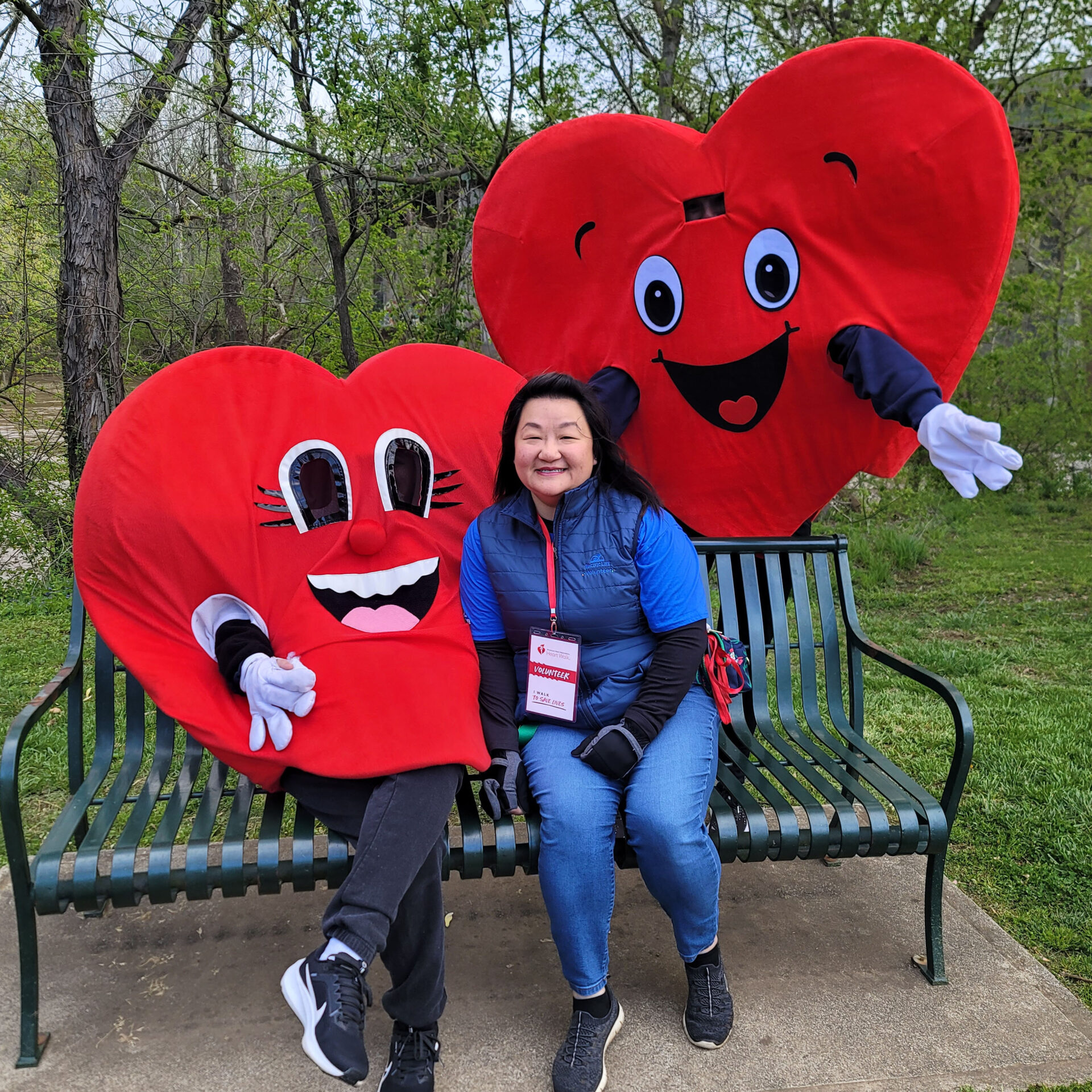
ANNIE SMITH (CENTER) PROVIDES EVENT SUPPORT AT THE AMERICAN HEART ASSOCIATION HEART WALK. (COURTESY ANNIE SMITH)
What inspired you to get started with this initiative?
Pacific Life encourages employees to volunteer and to bring friends and family along to volunteer, and I’m the community champion for the Lynchburg site. During COVID, all of the group volunteering had to cease. In 2022, we opened back up to have team events again, and employees were encouraged to volunteer. At the same time, I didn’t see anybody stepping up to organize an event for volunteers to join and volunteer in the community. I started with just trying to get one or two events out there, reaching out to nonprofit organizations around our area.
What inspires you to volunteer?
It gives me a sense of purpose. I keep saying that the organizations are already doing the hard part. I’m just lending a hand. At some point in life, we all need a hand. This is something that I can do. It could be 30 minutes or an hour to see how much of a difference it makes. It’s just so heartwarming. Even though I organize all these events, I’m at pretty much all of them too, because I believe in leading by example.
Tell us about your volunteer role with Pacific Life.
I try to have events organized and set up at least two months in advance. This allows employees to look at their schedules and see if that’s something that they can commit to or not. I reach out to the organizations, see what types of events or needs they may have, and how we can contribute. We can help with pretty much anything. It could be an event like a 5K. We could serve at a local soup kitchen or pack meals and serve the community. It could be for the American Cancer Society. We are open and ready to help where we can.
What are your long-term plans or goals for the organization?
As part of setting up the opportunities, I try to make it as inclusive as possible and to appeal to as many people as possible. My goal is to continue doing this as long as I can, because not only are we supporting our own community, you directly see the need and how you’re impacting and helping each other. It’s connecting with other people in the community who want to lend a hand. Yes, it starts as Pacific Life, but I’ve brought along my neighbors, my kids, my family, and their friends.
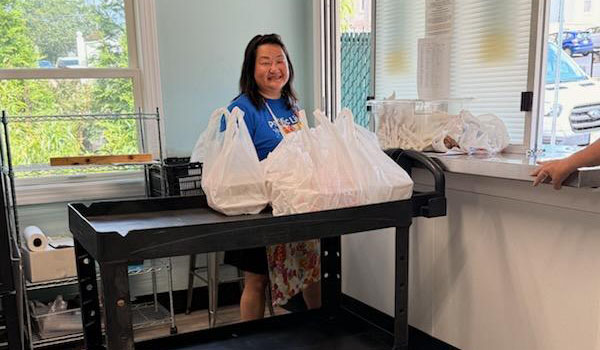
ANNIE SMITH SERVES HOT MEALS TO THE LOCAL COMMUNITY AT LYNCHBURG DAILY BREAD. (COURTESY ANNIE SMITH)
What’s been the most rewarding part of your work?
I think the most rewarding thing is to see how such a small act can have a huge impact on the people we’re helping in our community, and that impact of connection with those who want to help. Especially in this world we’re living in today, which is very virtual. Pacific Life is virtual, but we do still have a large pool of employees here. I encourage these volunteer events as a way to connect in person with your teammates or other folks that are in this office that you may not even know.
What have you learned through your experiences as a volunteer?
I’ve learned so much about empathy, patience, adaptability, and teamwork. But it’s also the deeper understanding of the challenges that others face and the power of our community support.
Any advice for people who want to start volunteering?
I always tell people to reach out to me anytime. Folks may not even know what it is they want to volunteer for yet, but they just need to start small and start where they can. I think the hardest part is just committing to an activity. After that, it’s fun. I think most people don’t realize that volunteering can actually be fun.
What do you want people to learn from your story?
As people, we need connection. I know I’ve said this before, but we are living in such a virtual world. We still need that connection, and our connection to our community where we live. If we support our community, it only makes it stronger. Connecting with those who need our help, or connecting with others who can help, allows you to provide that help to our community.
How a Game Community Rallied to Raise Millions for Children’s Hospitals
Meet Daily Point of Light Award honoree Mike Turian. Read his story, and nominate an outstanding volunteer or family as a Daily Point of Light.
Mike Turian got his start with a straightforward idea: you become what you do, and most of us could stand to do more. He’d been mulling it over after reading an essay called “Magic Saved My Life” by Jacob Van Lunen, which left him with a feeling he couldn’t quite shake. So he gave a presentation about the chance each of us has to make a difference, and the pull he felt to act on that rather than just think about it. Not long after, the opportunity showed up in a concrete form, and Mike took it.
Over a decade ago, Mike heard that a colleague was leaving Wizards of the Coast, a division of Hasbro. With the departure of his colleague, Mike saw the reins of the company’s Extra Life fundraising for children’s hospitals switching as well. Mike didn’t want the support for Seattle Children’s to lapse, so he stepped in alongside a few teammates and took over the Magic: The Gathering effort. What began small grew into something his team hadn’t pictured at the outset. In the early days they hoped to maybe someday make a single promo card; this year they produced a full game crossover, along with digital events on MTG Arena and Magic Online, plus merchandise from partners. His team’s annual total climbed from $47,000 in that first year to more than $650,000 this year — part of over $10 million raised across the span of his involvement.
Alongside the fundraising related to his career, Mike has additionally served on the board of the Safe Crossings Foundation since 2019, moving through roles as Treasurer, Vice-President, and President and chairing several committees along the way. The organization supports children working through the loss of a parent, a sibling, or someone else they love, and helps widen access to grief support services. Mike promotes the cause wherever he can, guided by a plain conviction: that no child should have to grieve alone. It’s the same instinct behind his Extra Life work — finding the people who are hurting and making sure help reaches them.
What keeps Mike at it is where the money goes once it leaves his hands. Seattle Children’s spent over $300 million last year on uncompensated care for kids and their families, and the funds his team raises go to people he doesn’t know and will most likely never meet, to ease their lives, and sometimes to save them. He tends to describe the whole thing without much fanfare. He saw a chance to do more, he took it, and year after year he keeps finding new ways to bring his coworkers and a global community of players along with him.
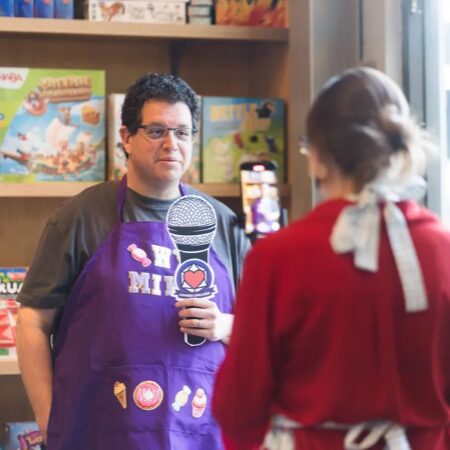
Mike being interviewed during a fundraiser for Gamers Engaged, an organization he fundraises for every year./Courtesy Mike Turian
Tell us about your volunteer role with Extra Life.
There are a few different organizations I’ve become involved with. I’m going to start with Extra Life, because for me that was the origin of me getting involved. Wizards of the Coast makes both Magic: The Gathering and Dungeons & Dragons, and I’m the Senior Executive Producer for Magic. About 15 years ago, saw the Dungeons & Dragons team doing a lot of philanthropy work. They were involved with Extra Life. And I realized that Magic as a game was too big in the social space, too important, too much a part of the zeitgeist, to not also have a philanthropic contribution, a vision. I very much believe that you become what you do, and I just saw a lot of opportunity for Magic to do more with charity. Magic is a community-driven game, and this was an important aspect of community.
I got involved with Extra Life, which raises money for the Children’s Miracle Network. Because we’re in Seattle, our contributions mostly go to Seattle Children’s. The person leading that effort from the D&D team was leaving Wizards, and I thought, “Oh no, who is going to pick up this baton and carry on this awesome work?” And if you’ve ever had that thought in your life, the answer is, “You.” You are the answer, because nobody else is having that thought.
So I did. I created a small team. Our goal the first year was just to go live for Extra Life’s 24-hour game day stream and stay live for the 24 hours. If we did that, big win. We did that, and we did so much more. That first year I think we raised about $25,000, which is incredible. We made T-shirts, and those T-shirts really helped change the community. We sold them and gave them out internally. The next year we did the stream and raised $35,000, then $45,000, then it jumped to $55,000 or $75,000.
A huge breakthrough for Extra Life was when we started doing philanthropic products, which we call the Secret Lair products. Every year we do one, like the crossover Ponies: The Galloping. We work with our Secret Lair brand and sell it, and 50% of every sale goes to Seattle Children’s and the Wizards of the Coast Development Fund. Now we’ve announced that we’ve raised over $10 million for Seattle Children’s and the Children’s Miracle Network. So it’s really working. We also run employee streams, and our Wizards Play Network retailers can join in as part of the Wizards Super Team.
What inspired you to get started with this initiative?
Going back to that origin story: before I gave the talk at the Magic Studio offsite about how we make the rules and we need to pay it forward in our community, what caused me to give that speech was an article Jacob Van Lunen wrote called “Magic Saved My Life.” He talks about how Magic literally saved his life. I was reading it on a beautiful day on my back porch in Seattle, and I found myself crying because of the impact of it. This game that we make, that I love, is so meaningful. That was really powerful, and it started me on this journey.
There are other connections too. Seattle Children’s has the Autism Center, and we helped open the Magnuson Center. My mom is retired now but worked as a social worker at DT Watson Rehabilitation Center, working with kids with autism and all sorts of other issues in that space. She ran a sibling group, because it’s not just the kid who has autism and their parent who are impacted, but their siblings too. Wizards is located in Seattle, and with Seattle Children’s in the area, they’re a huge philanthropic organization. All the time, new people join and say, “When I was a kid…” or “My kid got services from Seattle Children’s…” So there’s a huge amount of connection there, in all the ways.
Tell us the Safe Crossings story.
Through my work at Wizards with philanthropy, I got the opportunity to join the board of the Safe Crossings Foundation. That was 2019, and I became board President last year, in 2025. Safe Crossings raises money, and the mission is making sure that no child grieves alone. In general, about one in 12 people under the age of 18 will have lost a parent by the time they become an adult. Grief in our society is something that’s not really talked about or embraced. There’s more of a “move on” mentality. So Safe Crossings is there to recognize this need, and hopefully have a lasting impact.
Wizards, through Sharon Cook, the VP of HR, always contributed to Safe Crossings, and she had become a board member. The board seat had been handed off a couple of times, and the person who had been on it, Ken Troop, is a good friend of mine. He recognized what I had done through Extra Life and said he’d love for me to take it on. Through the luncheon and my familiarity with the organization, I said, “Sure, this sounds like an awesome organization and a new challenge.” Wizards won their Bridge to Healing Award in 2020, after I’d joined the board, and it was amazing to be part of that. I’ve been part of that board and organization since 2019. I became Treasurer pretty early on and led the marketing and development committee, then became Vice President, and the other year became board President.
What are your long-term plans or goals for the organization?
With healthcare, the well is infinite. It’s not like you say, “We raised $10 million, that’s fantastic,” and you’re done. When you hear Seattle Children’s does a quarter billion dollars of philanthropic giving every year, you’re just floored. The need is tremendous, and the only way you ever meet it is through inspirational, large-scale change. To me, that’s about individual action and inspiration. It’s getting people to believe, “Yeah, I can make a difference, I will make a difference.” That’s a lot of why I was excited to be nominated for this: you need to put these stories into the world so other people read them and feel them, because when there’s an infinite need, you need an infinite response.
For Safe Crossings in particular, it’s about awareness and changing how the community responds to grief. If you look at hospice work, it’s being more privatized than ever. To me it’s about how people care, how they talk about loss and grief, and recognizing that it’s okay and good and healthy to talk about and respond to. Even after being involved for going on seven years, it’s still so difficult. We just had a board member lose one of their teenagers in a tragic accident, and even being steeped in a community that’s all about this, it’s so tragic and hard. Words just don’t suffice.
What’s been the most rewarding part of your work?
The thing I love about doing philanthropic work is how many people say yes. So often in life and business, you run into bureaucracy, challenges, hurdles. But when working on charity initiatives and volunteering, all of a sudden it’s, “Oh, it’s for the kids? Sure.” All of that melts away, because people really do want to help and make a difference. That’s refreshing, to get those immediate yeses and find that everybody’s on board and wanting to make a difference. Sometimes they just need to be asked.
What have you learned through your experiences as a volunteer?
So much. In my professional life, I have my job and my role, and this gives me a chance to expand beyond that and challenge myself in spaces I otherwise wouldn’t have access to. Working with charity organizations, you get to see behind the scenes and have conversations you just don’t have in your day-to-day. It really opens up a whole other aspect of opportunity to learn and grow, and I’ve really enjoyed tapping into that.
Tell us about future partnerships, programs or events that you are excited about.
For Magic, we’re continuing to support Extra Life. Every fall we do a stream. It’s not 24 hours anymore, but we bring in the community, play Magic, and fundraise with the employee stream. Magic Arena, our online game, runs events and promotions for it. We’re going to do another Secret Lair product that we haven’t announced yet, but it’s super cool.
One thing I’m really emphasizing this year is getting more of our retailers involved. Magic as a company doesn’t own the game stores — they’re independently run — but I want to set up more structure for stores that feel that same desire to get involved, so they can raise their hand and get their own communities tapped into Extra Life. I think there are 170-plus Children’s Miracle Network hospitals, so there’s one in almost every area that needs support.
Why is it important for others to get involved with causes they care about?
You impact your space. If what you can do is contribute in that way, great, do that. You don’t need to become President or a Senator first. People often have this view that they’re not important, so their actions aren’t important, and that what they need to do is become important in order for their actions to matter. But that’s backwards. You are important, and your actions do matter. So go do the thing, and then people will recognize you’re important, because you’re doing important things.
One of the great reasons to get involved is that you will make a difference, whether or not you see it or feel it in the immediate. It snowballs. That’s why I love to start with, “The first year we raised $25,000, and now we’ve raised over $10 million.” I didn’t think we’d raise $10 million when we raised $25,000, and I also didn’t care. I was just glad we accomplished something that year, and we’d accomplish more the next. That’s very much the attitude I’ve always embraced.
Any advice for people who want to start volunteering?
I would find the things in my life that I love and go explore that space. Figure out what you’re passionate about. You probably already know, whether it’s animals or people or the environment. Proximity is powerful, so go there. If it’s animals, go to your animal shelter. If it’s the environment, go to the National Park. And say, “I’m interested in doing this, here’s who I am as a person. Do you have a suggestion?” Then follow that suggestion.
There are tons of good excuses not to do volunteer work. Just ignore them.
Meet Daily Point of Light Award honoree Evan Johnson. Read his story, and nominate an outstanding volunteer or family as a Daily Point of Light.
Evan Johnson is the founder and executive director of Ivan the Angelfish, a nonprofit that brings custom aquariums to senior living communities to support mental well-being and reduce isolation. Inspired by the calming effect an aquarium had on his grandfather, a Soviet-Afghan War veteran living with PTSD, Evan set out to replicate that experience for older adults everywhere. In just a year and a half, he has led more than 50 volunteers, installed over 30 aquariums in senior care facilities around the world and built lasting partnerships by returning every two weeks to maintain the tanks and spend time with residents. For Evan, creating impact means showing up consistently, not just once.
Evan believes meaningful service starts with a passion that is simple, sustainable and rooted in a real community need. He encourages others to begin with what they love, stay open to learning and commit to showing up over time. While aquariums may seem like an unexpected tool for connection, he has seen them become gathering places where residents build relationships and find joy. Through Ivan the Angelfish, Evan is demonstrating that small, consistent acts of care can spark lasting change.
Learn about Evan’s volunteer journey in his own words:
Teen Volunteer is Changing How Communities Think About Skin Cancer
Meet Daily Point of Light Award honoree Medha Kollepara. Read herstory, andnominate an outstanding volunteer or family as a Daily Point of Light.
Medha Kollepara is the co-founder of Project Prevent UV, a nonprofit dedicated to advancing sun safety and skin cancer awareness across the United States. Inspired by watching family members and friends battle skin cancer in her home state of Florida, Medha transformed personal concern into national action. She developed educational lessons for elementary and middle school students, organized community outreach, built a nationwide network of ambassadors, and forged corporate partnerships to expand the organization’s reach. Today, Project Prevent UV is also advocating for stronger sun safety policies, increased funding for melanoma research, and greater protections for outdoor workers, helping communities take a more proactive approach to preventing skin cancer.
Every voice holds immense value, and I hope my advocacy inspires others to speak up for what they truly believe in
For Medha, meaningful change begins with taking the first step. She encourages others to pursue the causes they care about before they feel completely prepared, knowing that small actions can grow into lasting impact. From cold-calling melanoma survivors to meeting with local officials, she built her organization one conversation at a time. Through her leadership, Medha is proving that advocacy starts with a single voice—and that persistence can turn “baby steps” into meaningful change.
Watch the video below to hear more about Medha’s volunteer journey in her own words.