INSPIRING YOUNG GIRLS IN SERVICE, CONNECTION, AND COMMUNITY
Meet Daily Point of Light Award honoree Bo Griffiths. Read her story, and nominate an outstanding volunteer or family as a Daily Point of Light.
Bo Griffiths may only be 13 years old, but she’s already making huge changes in her community. Back in 2021, during the COVID-19 pandemic, Bo told her mother she wanted to start an organization focused on kindness and good deeds. Hoping to connect with others and minimize isolation, Bo sat around the dining room table with four other girls. That became the first meeting of G.I.R.L.S., an acronym for Great Independent Reliable Lovable Souls. The organization creates community service opportunities for young girls, empowers them, and allows them to learn from others as they serve.
Now a rising ninth grader, Bo made the organization an official 501(c)(3) last year and is moving forward full speed ahead. Ranging in age from first grade to eighth grade, the young women meet independently once a month to complete a service project, which could range from volunteering at the local soup kitchen and writing letters to soldiers to visiting a nursing home or helping with hurricane relief. One of the group’s recent projects included working on a chief care closet at North Myrtle Beach High School, so students can “shop” for items they need in a boutique-style environment. They also have big plans in the works for the future: During the upcoming school year, G.I.R.L.S. will partner with an organization called You Are Loved on a backpack drive. What started as just a handful of girls has blossomed into multiple chapters that now total over 80 members.
Creating G.I.R.L.S. has led Bo to endless new opportunities, from attending leadership groups to serving as a South Carolina student ambassador. She’s met endless new people who help her bolster the organization and is learning how to make it even better in the future. Whenever someone asks Bo what she wants to do as a career, she shares that while she’s not exactly sure what she wants to pursue, she knows she wants it to somehow help others through a nonprofit. Through her own volunteer work as a teen, Bo is already informing her future.
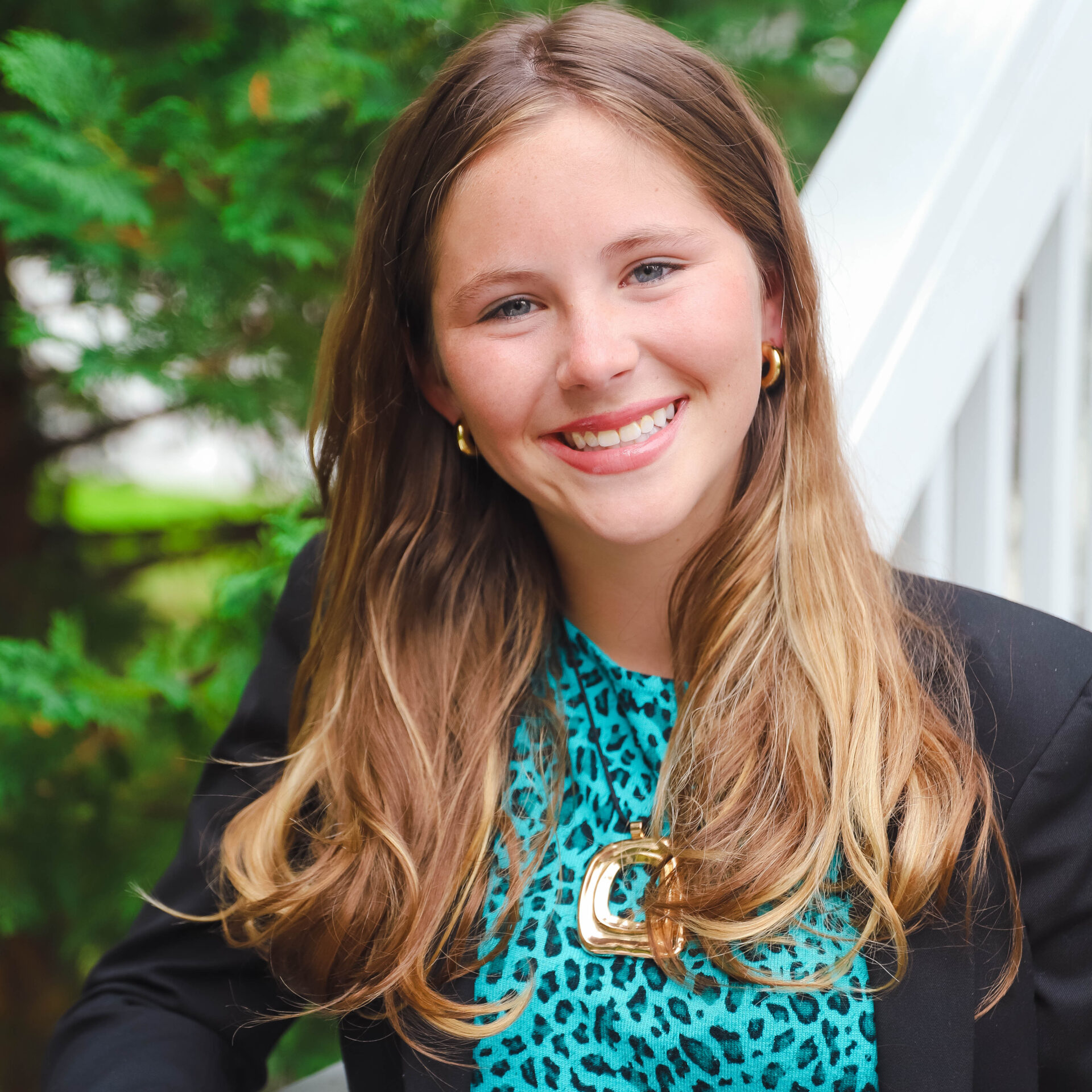
BO GRIFFITHS IS THE FOUNDER OF G.I.R.L.S., AN ORGANIZATION THAT CREATES COMMUNITY SERVICE OPPORTUNITIES FOR YOUNG GIRLS AND ALLOWS THEM TO LEARN FROM OTHERS. /COURTESY BO GRIFFITHS
What inspires you to volunteer?
I think the need to connect with people inspires me to do volunteer work. I learn so many amazing lessons through volunteering with so many different types of people.
What inspired you to get started with this initiative?
I started this initiative the summer after COVID, during a time when I felt we needed more community after being stuck isolated in our homes. Getting a few girls together to better the community felt really refreshing.
Tell us about your volunteer role with G.I.R.L.S.
I’m the founder of G.I.R.L.S, so I coordinate all of our chapters. I find the volunteer work for each chapter and I run my chapter. There are six chapters. I came up with the name one day when my friend and I thought up the acronym. I didn’t even know the title was going to be used for this, but then I thought back to it, and I realized that it’s such a fun, unique title. We thought it was perfect. Along with a board of several other girls, we manage the finances, coordinate chapter events, and host fundraisers.
What are your long-term plans or goals for the organization?
I’m not sure what the future exactly will hold for G.I.R.L.S. I know that it will continue encouraging girls of all ages to get involved with their community and to serve others. I hope the group continues to grow new chapters with new faces that are ready to serve.
What’s been the most rewarding part of your work?
I would say the most rewarding part of my work is seeing girls as young as five years old do such important things in our communities. No matter how young they are, they’re making a big change. Not only that, but I’m also rewarded by the amazing lessons I learned from seniors, people with special needs, and so many other amazing people.
What have you learned through your experiences as a volunteer?
Through my experiences, I have learned that people need people. Usually, when volunteering, we feel like we’re helping others, but I have learned that volunteer work can lead to feeling more empowered as a volunteer yourself.
Why is it important for others to get involved with causes they care about?
I think spending a few hours doing something you care about can leave others feeling inspired and encouraged. You, yourself, feel more fulfilled.
What do you want people to learn from your story?
I want people to learn that no matter their age, they can make a difference. Girls should always support girls through anything: through sports, through their community, and through school. There are always ways to support each other.
Meet the Volunteer Painting a Brighter Future for All
Meet Daily Point of Light Award honoree Dani McTague. Read her story, and nominate an outstanding volunteer or family as a Daily Point of Light.
For Dani McTague, a 16-year-old from Oklahoma, a blank canvas is a tool for profound transformation. Since joining 4-H at just 8 years old, Dani has looked at her community through a lens of service, ultimately channeling her love for creative expression into founding Dani’s Dream – Sharing the Love of Art, a lifeline of comfort for thousands of underserved youth.
Dani balances her duties as an Oklahoma 4-H State Ambassador and State Leadership Council member, pouring roughly 30 to 40 hours each month into community service and youth leadership. Her signature initiative is the Dani’s Dream art cart at OU Children’s Hospital, a mobile treasure trove of creativity that rolls directly into pediatric patients’ rooms. Funded by two Hershey Heartwarming Young Heroes Grants and a National 4-H Lead to Change Grant, the cart brings a sense of normal life, as well as the healing power of art, to children facing severe medical hurdles.
Behind this gentle mission lies an impressive logistical operation that Dani runs top to bottom. Over the course of her nine-year 4-H journey, she has logged more than 8,000 hours of community service and raised $33,000 from supporters across 24 states, pairing those funds with over $4,150 in grant awards. She has managed everything from donation drives to volunteer recruitment, successfully distributing 4,495 custom-curated art bags to schools, shelters, and families in need. Her wider outreach efforts—including holiday card deliveries to veterans and nursing home residents—have touched an astonishing 1.7 million people.
Dani has turned her personal love for art into a structured, community-wide resource. She has mobilized dozens of volunteers and taught an entire generation of peers that they possess the power to get involved. Through every bag delivered and every hospital room visited, Dani’s Dream continues to show that creativity and compassion are the ultimate tools for healing.
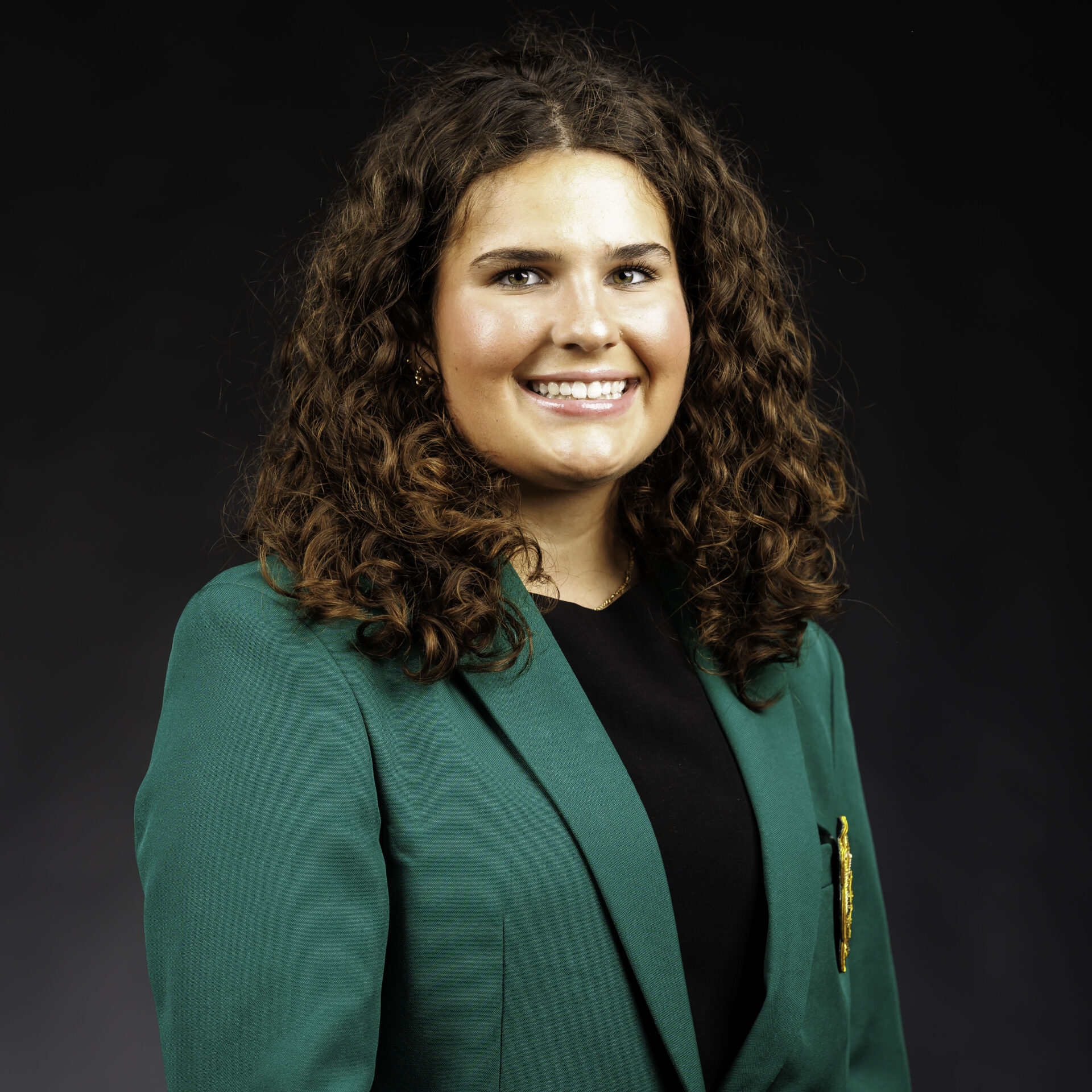
Dani McTague, creator of Dani’s Dream: Sharing the Love of Art and Oklahoma 4-H member, who serves as a State Ambassador and on the State Leadership Council.
Tell us about your volunteer role.
I’ve been involved in 4-H for as long as I can remember. Through the organization, I’ve been able to dive into a bunch of different service activities, and bringing those experiences into other people’s lives has had a major impact.
I started Dani’s Dream when I was only 10 years old during the pandemic. I was doing art every day at home when it was brought to my attention that not everyone had access to art supplies because schools were closed. I decided to create a Facebook page, and soon enough, I was getting product donations in the mail from all across the country. Today, I’ve received donations from over 24 states, and it has been a deeply rewarding experience. I donate the supplies to children’s hospitals, hospice centers, and homeless shelters—places where a creative outlet is truly needed. To date, I’ve donated 4,495 art bags across three states.
Why are these volunteer activities so important to you?
4-H has been a pillar in my life for as long as I can remember. Through it, I’ve made so many new friends and learned vital life skills that I know I will use in my future. Art is incredibly important to me. I don’t just use it as a way to give to others; it’s also a tool for their own self-expression. It’s a wonderful source for processing and sharing your feelings.
Tell us about future partnerships, programs or events that you are excited about.
I have recently gotten a National 4-H Lead to Change Grant. I was actually one of only six recipients in the nation. This allowed me to partner with OU Children’s Hospital. I had previously donated art bags to them, but I thought it would be a wonderful idea to provide them with their own mobile art cart and 1,100 art bags to go with it. Being able to pull that off was such a cool opportunity.
I also had the opportunity to receive the Hershey’s Heartwarming Young Heroes Grant for the third year in a row. I’m using that to create another 760 art bags to restock the cart, which helps serve over 44,000 patients each year.
What are your long-term plans or goals for the organization?
I’ll be running for 4-H State Vice President this year, which is a massive goal of mine. I’ve been serving as a Community Service Representative and working toward this leadership role since the seventh grade, so I’m very excited for the opportunity to step up.
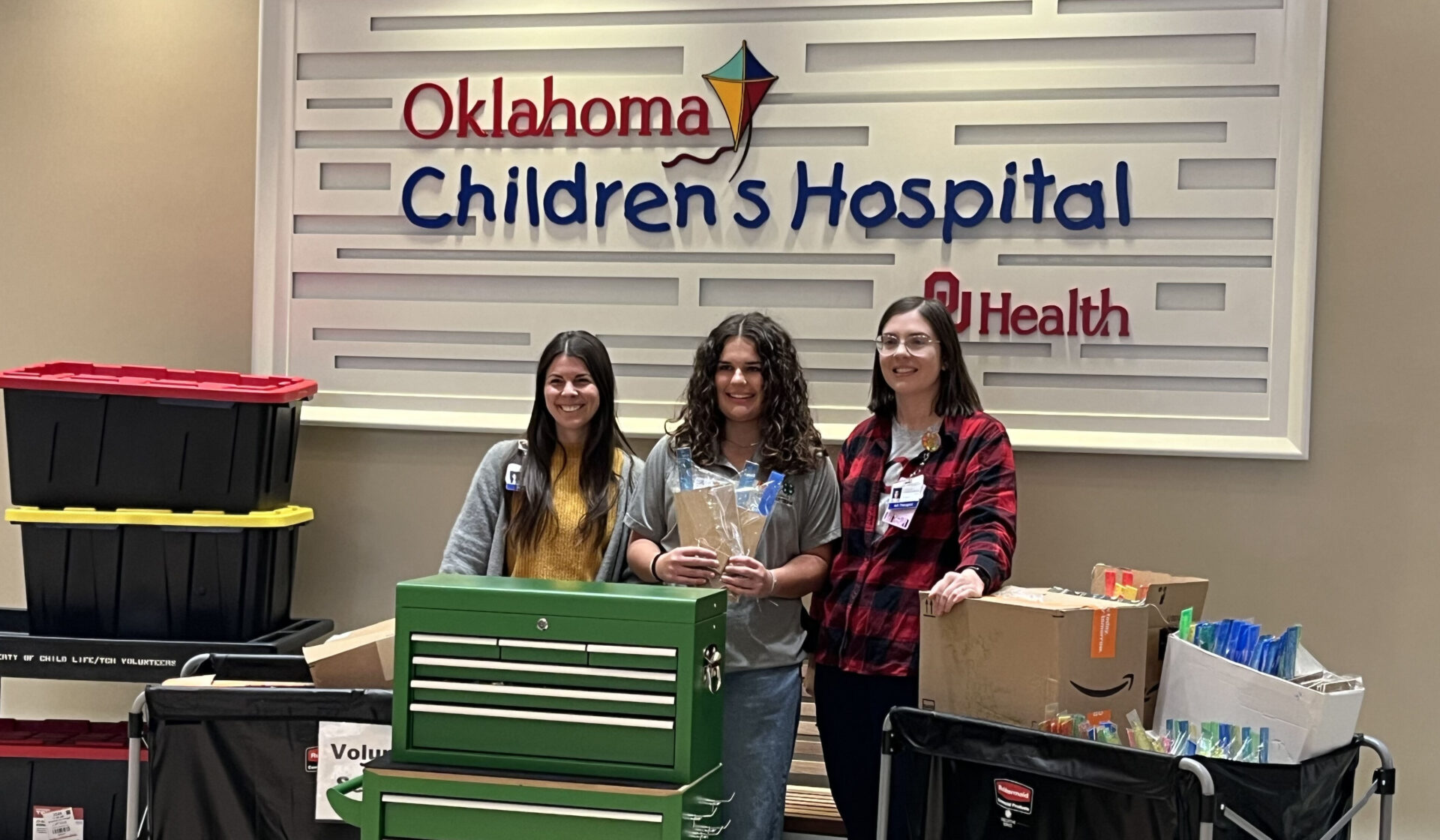
Dani McTague, a recipient of the 4-H CWF Lead to Change Grant, donated a bright green mobile art cart stocked with supplies to OU Children’s Hospital, along with more than 1,100 art BAGS (Bringing Art to Generations).
What’s been the most rewarding part of your work?
Rather than the accolades, the most meaningful part of this journey has been connecting with my community and changing lives. Seeing how even the smallest act of kindness can make a permanent, positive impact means way more to me than any award I will ever receive.
I’ll always remember one Christmas when I delivered art bags to a shelter. The kids were incredibly excited because it was the only Christmas gift many of them received that year. It’s moments like that that have truly shaped who I am today.
Why is it important for others to get involved with causes they care about?
I think it’s important because it allows people to see the power of passion. For me, being able to help others through my service project helps spread awareness about how art can genuinely transform a person’s life. Being able to share your personal passions through service is an incredible experience.
Any advice for people who want to start volunteering?
I would just tell them to go for it. It might feel a little scary at first, but it is so important to step outside of your comfort zone. Taking that leap will completely change your life for the better.
Meet Daily Point of Light Award honoree Elton Cho. Read his story, and nominate an outstanding volunteer or family as a Daily Point of Light.
Growing up in Los Angeles, Elton Cho walked the busy streets of Koreatown and attended classes at Wilton Place Elementary School, never realizing how deeply those same blocks would shape his future purpose. Years later, having built a successful career in finance, Elton felt a powerful pull to return to his roots. He found his gateway back through the Koreatown Youth Community Center (KYCC), an organization located just down the street from where his own educational journey began. His service quickly bloomed into a deeply personal mission to uplift the next generation of his childhood neighborhood.
As a Managing Director at Ares, Elton recognized that his most valuable contribution wasn’t just his time, but his specialized professional expertise. Spotting a critical gap in early financial education, he took the initiative to design, build, and lead a custom Investing and Finance club for local students. Transitioning seamlessly from high-level corporate finance to the classroom, Elton developed an engaging curriculum tailored to demystify complex economic concepts for students of all ages, ranging from elementary workshops to middle and high school cohorts. Under his guidance, young students are empowered to take notes, research stocks, and confidently discuss foundational market principles like “Market Cap,” “tariffs,” and the “S&P 500.”
Elton’s innovative program has even earned college credit recognition for KYCC students, opening doors to higher education and future careers long before they even graduate high school. His unique framework perfectly mirrors the core philosophy of the Ares In Motion (“AIM”) initiative, proving that when professional talent meets community passion, it creates a sustainable blueprint for lasting societal change.
Elton was recently celebrated as a community hero on center court during the Los Angeles Clippers’ Korean Heritage Night, a massive honor that brought his journey full circle in front of the city he loves. Furthermore, his efforts helped secure KYCC’s selection as this year’s Elevating API Voices ERG Charitable Giving Winner. Read on to hear more of his inspiring story.
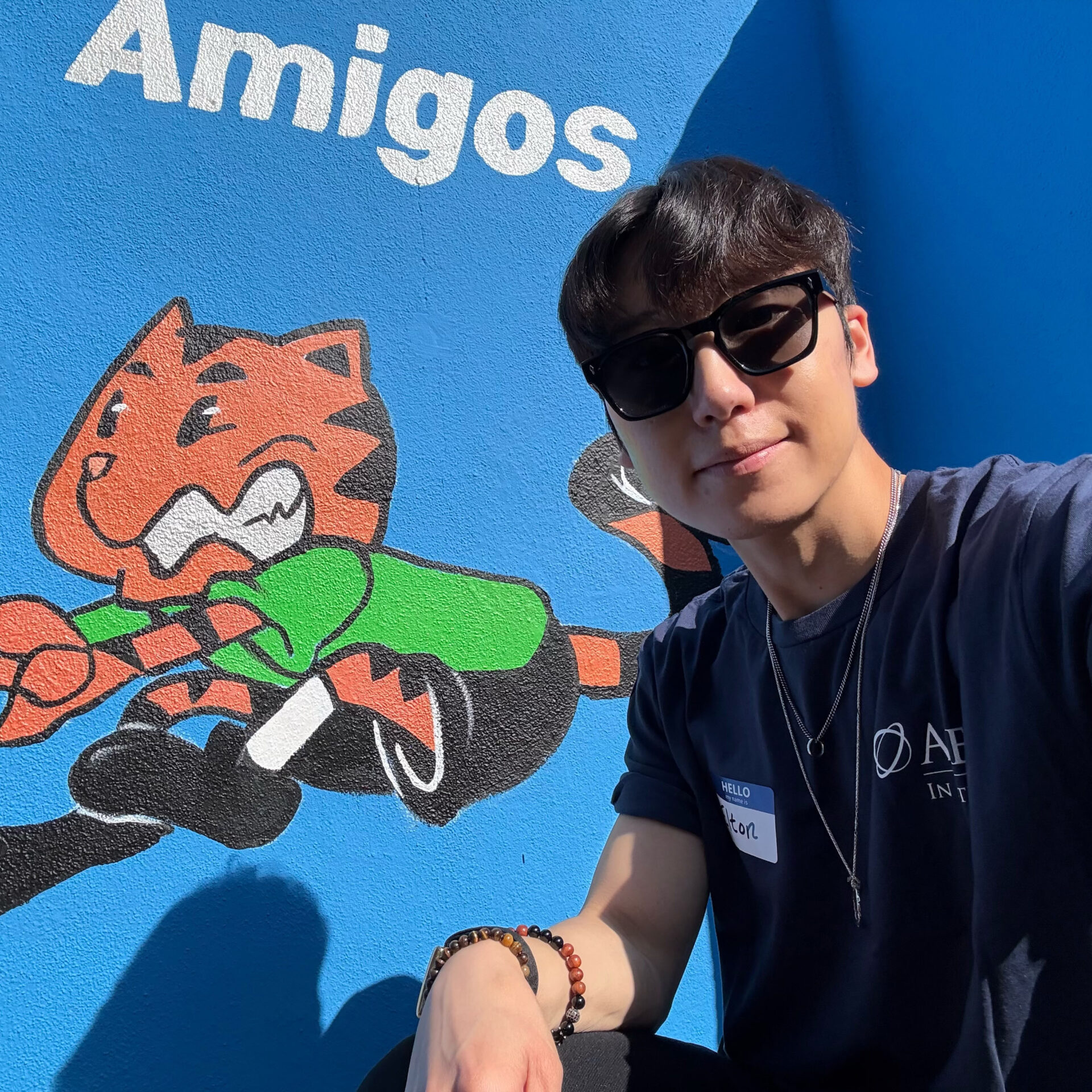
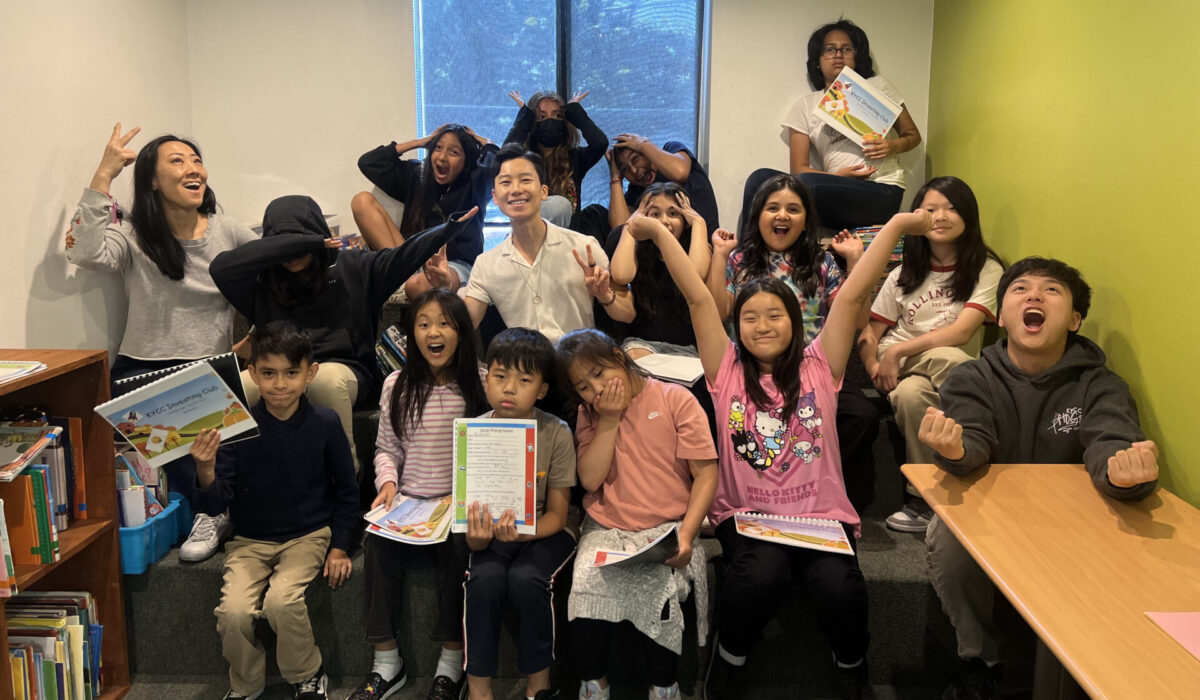
Elton and students learning that a paintbrush is much more difficult to use than an Excel spreadsheet.
Tell us about your volunteer role and organization.
I lead an “Investing & Finance Club” for Koreatown Youth Community Center (KYCC), a nonprofit in Los Angeles that provides various resources for recently immigrated or economically disadvantaged families, including after-school programs, mental health counseling, and small business development aid. My work began in 2024 with a series of workshops for its after-school students. Since then, we’ve had Spring and Fall sessions spanning elementary, middle, and high school, each with weekly guided lessons and a hands-on game, in which students pick a favorite company or stock to track over the coming weeks, competing for prizes. The goal of the program is to introduce foundational economics, business, and investing topics to the students in a fun and immersive way, including how to measure the health of a company, defining revenues, cost, and profits, how to think of an economic value for a company, what a stock is and what it represents for a company, and how to think of a portfolio, diversification, and the power of compounding.
This was a personal passion project that began casually and with some trial-and-error – I would just come by KYCC on Friday afternoons and chat to the students about what was happening in the markets. Along the way, we figured out a more formalized curriculum structure and expanded the partnership with KYCC to cover various community service events, such as Koreatown beautification and cleanup events, volunteering for its annual Holiday carnival, and painting a mural for its pre-school campus. This also wouldn’t have been possible without the support and time of some of my amazing colleagues at Ares Management. Big thanks to everyone who showed up for the community!
Why is this issue so important to you?
First, I’m a huge finance and stocks nerd. Second, I was born and raised in Koreatown, Los Angeles, just down the street from KYCC and my elementary school, and I can’t thank the community enough for all it’s given me and my family. This is a way to pay it forward, in the limited ways that I know how. My parents immigrated from Korea when they were teenagers, knowing very little English and with a very unclear path for their future here. But they acclimated and, through various jobs at convenience stores, local advertising agencies, and kimbap snack shops, were able to support me and my sister. I’m deeply grateful to them for taking the risk to set up a new life here, instilling in me my love for this community, and for constantly reminding me of my roots.
Their experiences did instill a somewhat risk averse mentality when it came to personal finance, however, a completely natural outcome after grinding for every dollar of cash earned. There was some anxiety or discomfort of the unfamiliar financial system here, compounded further by general market volatility, which I felt was a common sentiment amongst friends who were also from immigrant families.
Also, prior to college, our school curriculum included almost zero exposure to finance and investing, aside from some tangential lessons from courses like AP Economics. I think this is unfortunate and still significantly disadvantages immigrant, lower-income families today. It might be the case that, even with knowledge of the markets and personal finance, they decide for themselves that they’ll still err on the side of risk aversion and have less of an appetite for equity markets. However, it’s important that they’re at least given the option and ability to participate, and I believe any early exposure can help. The power of compounding applies much greater to a dollar invested as a child than a dollar invested as an adult.
What inspired you to get started with this initiative?
My love and pride for Koreatown runs deep, but I always felt like I wasn’t doing my part. One day, I was catching up with an elementary school friend over some soju and reminiscing about the taekwondo classes, Korea’s epic 2002 World Cup run, and trading “Yu-Gi-Oh” cards at the playground. KYCC also came to mind, particularly because I had recently been involved in coaching a very close friend through the interview process for finance jobs. It was a bit of a rollercoaster given a tough job market, but thankfully it ended with success and became an incredibly rewarding experience that made me realize I may have a knack for teaching. So this program seemed like a perfect way to bring everything full circle and I brought up the idea with KYCC. They loved it… and the rest is history!
Any future partnerships, programs or events that you are excited about?
I’m excited to continue evolving this program with future sessions – we’ve now worked with every grade level KYCC supports, tweaking the complexity of the curriculum accordingly, but there’s always something new to add, a new market event that’s topical, or a new stock in vogue. Markets never stand still!
Hopefully, we can also ramp up the scale of the program. I can only be in one place at one time, and I also still have a fulltime day job! So sheer time and bandwidth have been the biggest limiters, but we’ve been thinking of ways to get other organizations involved or have others run with the curriculum in other locations. We’re also working on some more programming with KYCC this year, including an office visit “career day” and Korean Heritage Nights for some sporting events.
What are your long-term plans or goals for the organization?
KYCC has an incredible history in the community already, now over 50 years old, and I’m very bullish on where it can go from here. I admire all the staff members and volunteers I’ve met there, and it’s clear that they are not only good at what they do, but inherently amazing human beings who can empathize with a wide array of backgrounds. I hope I can just be one part of that and help it impact more families, carry over into future generations, and continue being a safe haven for the community.
Specifically for my program, the goal isn’t necessarily to have every third grader understand discounted cash flow models years from now. Rather, I just hope some of the curiosity for personal finance, economics, and the markets sticks. Someday many years from now, we can also look back at their stock picks, hopefully see how much they compounded, and maybe they’ll even be inspired to pursue careers in business or finance.
What’s been the most rewarding part of your work?
I was worried that the students might find the topics boring or difficult to relate to, so I was incredibly grateful that their reaction was the exact opposite. Their attention and enthusiasm motivated me to keep this program going, and it’s been the highlight of the week for every week we’ve had the program. They would jump from their seats when I come into the classroom and immediately ask which stock had won, how theirs did, and what the key reasons were – seeing the intellectual curiosity was truly heartwarming. I also felt so proud that at such a young age and after just a few lessons, they could recall concepts like diversification, enterprise value, and stagflation. I was nowhere near that precocious – personally, I learned the definition of EBITDA at a way later age than any of them!
The first KYCC Investing and Stocks Club. Participants went to the moon!
What have you learned through your experiences volunteering?
There was a ton of nostalgia for me with this program and it reminded me of my own roots and upbringing in Koreatown. I went to public school through high school and never managed to go to paid private after-school or tutoring programs, so I know the value that institutions like KYCC brings to the community. The importance of keeping in mind where I came from really struck me and it was great to connect with students and families of such diverse backgrounds – we can always improve on our ability to empathize. We also always hear the phrase, “Explain like I’m 5” and I do think this experience has helped me practice putting myself in the shoes of the audience and calibrating a lesson so it resonates as effectively as possible, which I’m now more conscious of in my everyday job. Whether you’re in an investment committee meeting in an alternative asset management firm or an elementary school workshop, communication is key.
The students also undoubtedly taught me some finance lessons themselves. For the record, I was also picking stocks during these games, and I got absolutely trounced every season – whether by an under-the-radar shipping ETF, an Asian toy company, or a play on the AI semiconductor supply chain. Although, as a team, our picks did outperform the S&P 500 and Nasdaq 100 fairly consistently, so I’d like to think there was some wisdom of the crowd here!
Why is it important for others to get involved with causes they care about?
My students taught me the importance of “touching grass.” They’re much more in touch with current slang and colloquialisms, but this essentially means stepping away from the daily bubble of corporate work hustle.
I think we can all get insular in our thinking when working and socializing with the same crowd in our everyday lives. This experience felt very humanizing and reminded me that there’s a lot more that can be learned when detaching from an Excel spreadsheet or Bloomberg terminal for a bit. A broader perspective goes a long way, and if a community has played such an integral role as Koreatown did for me, it’s only right that I give something back, as small as the effort may be in the grand scheme of things.
Any advice for people who want to start volunteering?
If there’s a community or opportunity you’re interested in, don’t be afraid to take the leap. My issue when starting out was “’analysis paralysis.” I wanted to make sure to optimize for time and resources, while I didn’t come across volunteer roles that hit all the notes of what I was looking for. Even when I had the initial inspiration for the KYCC project, I had some reservations because I didn’t have a fully baked curriculum and I worried the kids wouldn’t find it engaging.
But I’m very glad I got the ball rolling, iterated and took feedback along the way, and embraced some spontaneity. For example, as a starting point, if there’s an organization whose mission resonates with you, don’t be afraid to make a cold outreach, have an introductory conversation, and brainstorm together on what exact role you might be able to play. Simply put, just go for it!
Showing Up is Half the Battle, Says This Volunteer
Meet Daily Point of Light Award honoree Craig Dubishar. Read his story, and nominate an outstanding volunteer or family as a Daily Point of Light.
All his life, Craig Dubishar has been saying that everyone should get out there and volunteer. With a lifelong commitment to serving others, Craig is a testament to this idea. Twenty-six years ago, Craig was working as an attorney at the law firm Venable, Baetjer and Howard. A dear friend was on the board of directors at Volunteer Fairfax, an organization that engages people and organizations to amplify their community impact. Craig had already graduated from Leadership Fairfax, a community leadership service organization, and saw an opportunity when his friend was stepping off the board after eight years. In that moment, Craig jumped in and offered to be on the board. Throughout the next 26 years, he has served as Secretary, Vice President and President of the Board for two consecutive years of the Board. Nearly three decades later, Craig is the longest-standing board member for that organization.
In addition to his work with Volunteer Fairfax, Craig has a variety of additional volunteer avenues he frequently travels. A part of the Boy Scouts of America since 1968, Craig has been a registered Scouter with the National Capital Area Council (NCAC) since 1998, in addition to several other roles associated with the Scouts. He regularly teaches the “Land Navigation” hands-on unit to up-and-coming high adventure participants and is a leader of High Adventure Council’s Adult Advisor annual shakedown, preparing them for backpacking expeditions. Whether he’s leading treks on the Appalachian Trail or serving in Eagle Board of Reviews to learn what rising Eagles are doing to serve others, Craig carries that mission of service and adventure with him.
After 26 years at Volunteer Fairfax, Craig just resigned from the board. He’s getting toward retirement age and no longer lives in Fairfax County. But that doesn’t mean his time of volunteerism has come to a close. Ultimately, Craig believes his greatest skill is just showing up, and there’s no doubt that he’ll keep on doing so. His shining example to be a force for good can inspire us all to do the same.
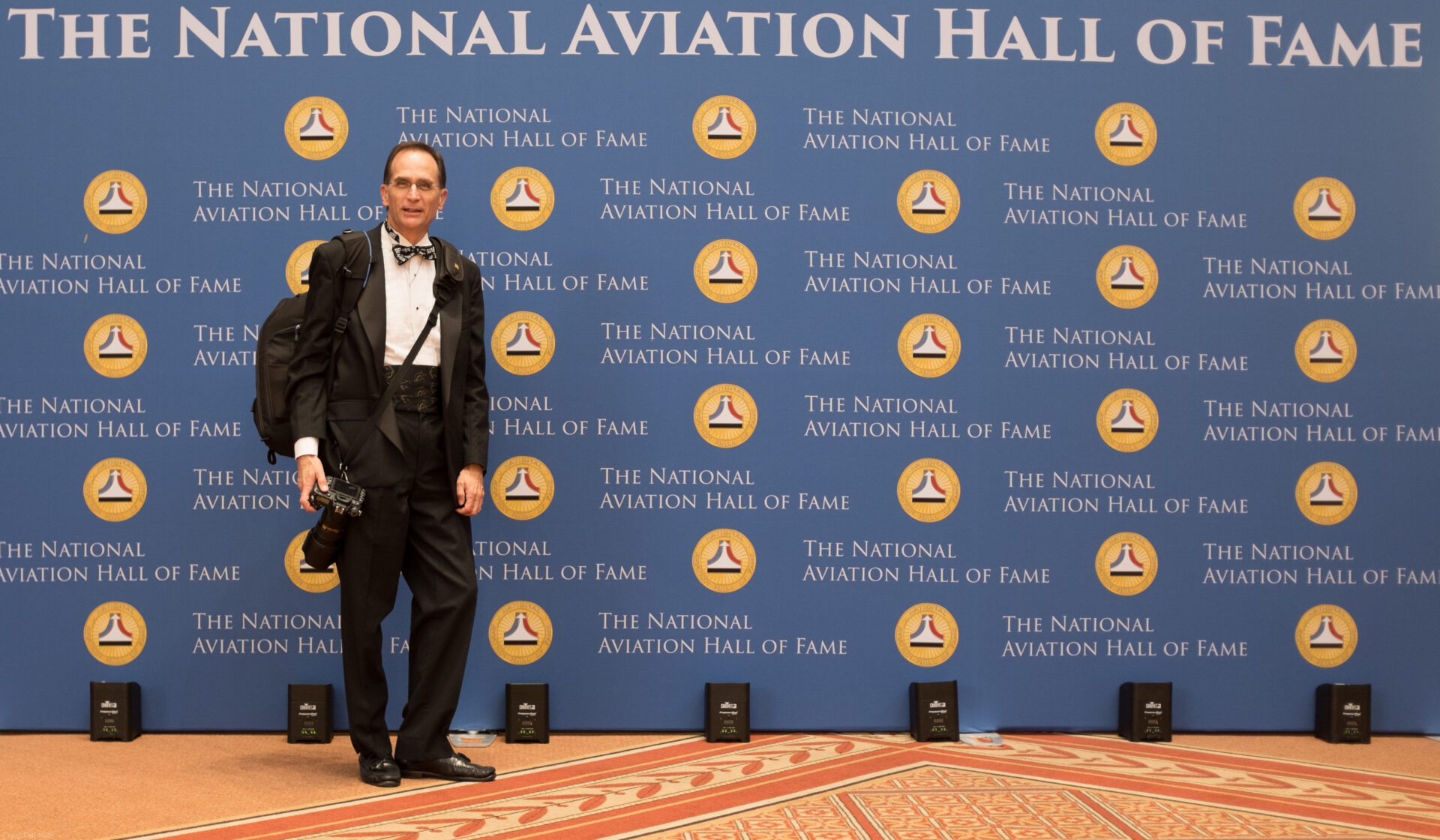
CRAIG DUBISHAR SERVES AS THE VOLUNTEER PHOTOGRAPHER FOR A NATIONAL AVIATION HALL OF FAME EVENT. /COURTESY OF CRAIG DUBISHAR
What inspired you to get started with this initiative?
Twenty-six years ago, I was at the law firm Venable, Baetjer and Howard, and one of my good buddies was on the board of directors at Volunteer Fairfax. Venable was a sponsor of Volunteer Fairfax, and still is all these years later. In 2000, I was already a graduate of Leadership Fairfax, a community leadership service organization. When my friend was departing from the board after eight years, I jumped in and offered to be on the board. I’m the longest-standing board member for that organization, so I’ve been on the board for 26 years. This was one of those opportunities where I had the time and the energy to actually give time to it.
What inspires you to volunteer?
Citizens of the United States are fortunate. I grew up in middle-class America with a stay-at-home mom. My dad just finished high school, but was a career force officer, and we still had more than most people throughout the world. Helping the community and volunteering are just something we should do. Looking for volunteer opportunities is something I think we all should do, and I try to do.
Tell us about your volunteer role with Volunteer Fairfax.
I’ve been volunteering all my life. At Volunteer Fairfax, I’m on the board of directors to help provide leadership and guidance. Throughout the year, there might be a Volunteer Fest, a day that the organization would coordinate with nonprofits throughout Fairfax County, get volunteers and coordinate that interaction and connection so that they can get those projects done. As board members, we were encouraged to get out on Volunteer Fest days to do whatever it might be. Back in the day, I took the emergency management training for the volunteer center. Volunteer Fairfax has a seat at the Fairfax County Emergency Center, so whenever that’s activated, whether it’s Hurricane Isabel or a presidential election, the board could help with that. I trained for that role.
What’s been the most rewarding part of your work?
Volunteering is critical. Being with a regional nonprofit where their focus is to coordinate and find volunteers and have meaningful volunteer activities is super important. I’ve also been on the National Capital Area Council High Adventure Committee for 26 years as well, and our goal is to make sure those adventure activities, which include canoeing, backpacking, scuba diving and sailing, are available and taught to the Scouts. I focus on backpacking. It’s very rewarding to see Scouts get out and have a life-changing experience backpacking for two weeks, and then see how that grows into a lifelong passion for that kind of sport, being healthy and leadership.
The Haiti mission trips that I’ve either led or been on eight times are amazingly rewarding because you see that the relationships you build with people are meaningful. They absolutely need clean water, they absolutely need shelter, but listening to them and helping to find money to build their own shelter was extraordinarily meaningful.
What have you learned through your experiences as a volunteer?
Hugely humbling experiences. I sometimes think to myself that I’m not doing enough, because you see and hear and meet the people who are doing volunteer stuff throughout the county, and they’re doing amazing things. It just motivates you to want to do more and be so thankful for volunteers. That’s a huge motivation: just knowing that there really is an impact. Volunteers make a huge impact. Without volunteers, many things would not happen in our country, not just in Fairfax County. Volunteering is critical to supporting your community.
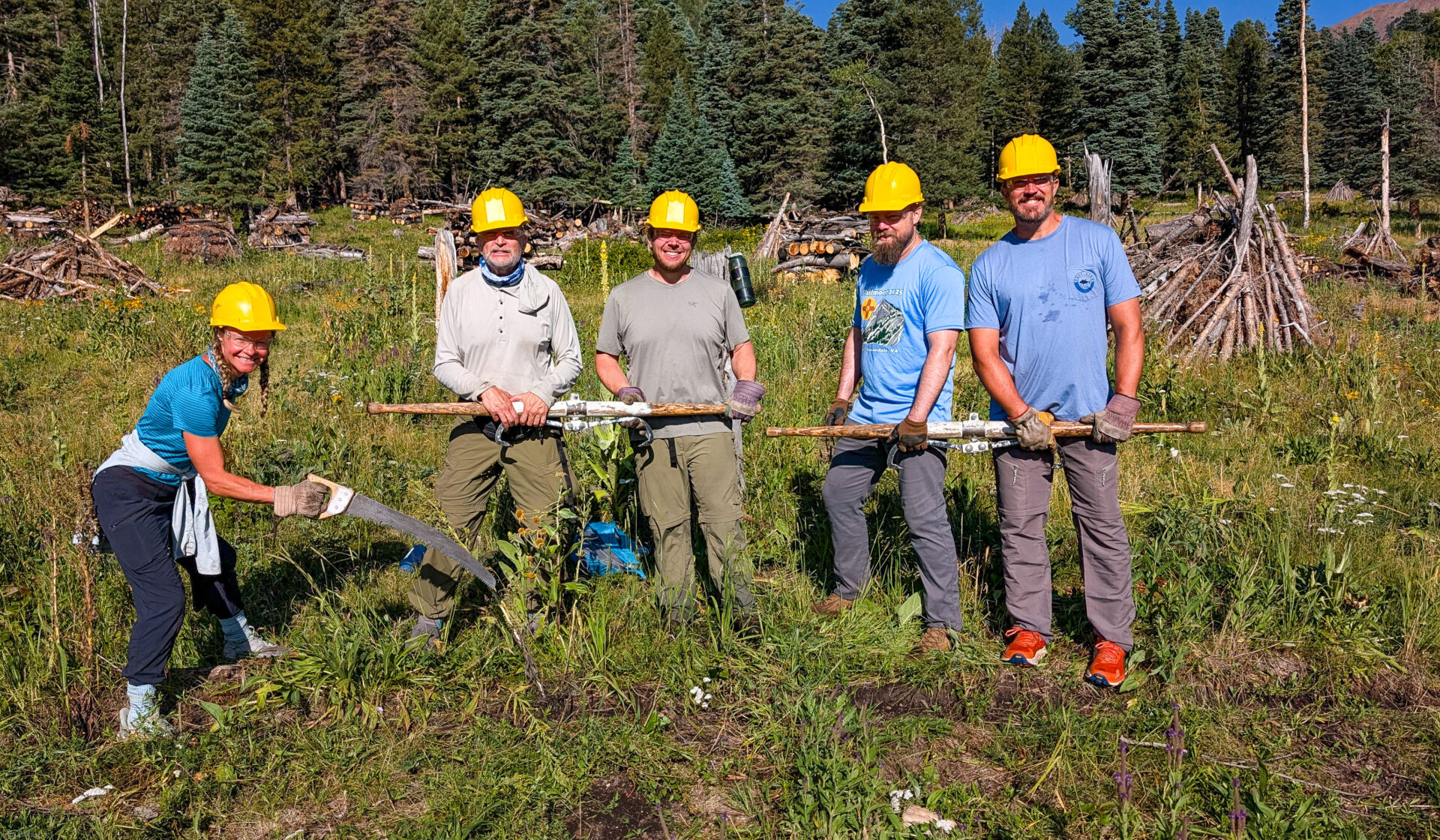
CRAIG DUBISHAR AND ADULT ADVISORS STAND AT THE MEADOW CLEARING CONSERVATION PROJECT AT PHILMONT SCOUT RANCH. /COURTESY OF CRAIG DUBISHAR
Why is it important for others to get involved with causes they care about?
You’re probably not going to have people volunteer for things that they don’t care about, or that they’re neutral about. You’ve got to go and introduce people to things that they might care about and have a passion for, or help them connect with those organizations that need that passion.
That’s really what motivates me. I’m not going to go volunteer for an organization that I have no clue about, or any idea what they do. I’m looking for organizations that I feel either my skill set or my passions can connect with. It’s critical to help make that connection.
Any advice for people who want to start volunteering?
You’ve got to fish or cut bait, so to speak. If you’re thinking about volunteering, but you’re not really sure, that’s step number one. You’re at least thinking in a community-minded mode. Number two: just go find something. Go to your library, go to your local web search. Mr. Google probably will find something for you. I think the third thing is to be patient and understanding, so that if you have that first volunteer experience and it didn’t really hit home for you, do it again. Don’t give up after one or two times. Do it again, because there are so many opportunities out there.
What do you want people to learn from your story?
All I’ve done all my life is show up. I show up and then I help. I do things, and I take photographs and spread the word. Showing up is the first step. That’s what we do. We show up, and once we show up and keep showing up, you gain that passion for volunteering because you’re getting something out of it, which is making an impact on somebody else’s life. But you’re clearly also impacting that life and impacting their community. I think the message I want people to hear is just to show up.
Turning 9/11 History into Shared, Remembered Humanity
Meet Daily Point of Light Award honoree Maria Jaffe. Read her story, and nominate an outstanding volunteer or family as a Daily Point of Light.
At the 9/11 Memorial & Museum in New York City, Maria Jaffe connects a historic tragedy with the millions who come to understand it. Her journey of service began in the exhausting days immediately following September 11, 2001, when she volunteered with the Red Cross during the intense Rescue and Recovery effort. Deeply inspired by her own experiences on the ground and the lifelong dedication of her father, a retired FDNY firefighter, Maria found her calling, and in 2014, she transitioned into a permanent role, joining the museum as a dedicated Volunteer Docent.
For over a decade, Maria has infused the museum’s solemn galleries with a warm, welcoming presence that instinctively draws visitors in. She has intimate knowledge of the artifacts and the complexity of that fateful day and, through thoughtful, evocative storytelling, helps bring history alive. Maria teaches lessons on human resilience, compassion and the enduring strength of the human spirit. Throughout her remarkable tenure, she has contributed over 1,715 hours of service, welcoming and educating a global community that includes over 96 million Memorial visitors and more than 27 million Museum visitors. Within the tight-knit volunteer cohort and the broader 9/11 community, Maria has also built lifelong bonds.
Maria played a hands-on role in organizing the donation of a piece of World Trade Center steel to Gander, Newfoundland. This symbolic gesture honored the small Canadian town that famously opened its hearts and homes to thousands of stranded airline travelers on 9/11. Maria continues to demonstrate that the ultimate legacy of remembrance is not just looking back at the past, but actively moving forward with kindness, connection and hope. Read on to hear more of why she does what she does.
Maria Jaffee has been volunteering with the 9/11 Memorial & Museum since 2014.
Tell us about your volunteer role and organization.
As a volunteer docent at the 9/11 National Memorial and Museum, I have the opportunity to speak with visitors from across America and all over the world. I help them to better understand the significance behind the many artifacts and exhibits throughout the museum by sharing the history, facts and personal stories connected to that day in a meaningful and respectful way. Every interaction is different. It is incredibly meaningful to see people reflect, ask questions and connect with the stories of resilience, loss, courage and unity that continue to resonate so deeply today.
What inspired you to get started with this initiative?
My volunteer work with the American Red Cross in the days following 9/11. I helped to prepare and organize meals for the first responders. We ensured that they had something to eat and a place where they could sit down and rest during an incredibly exhausting, overwhelming and emotional time. Years later, when the 9/11 Museum opened, I returned to become a docent. It was my way of paying it forward to New York City by honoring the thousands of victims and the many first responders. I was and still am honored to be a part of the city’s hope and resiliency.
Why is this issue so important to you?
This issue is so important to me because it is personal. My father was a New York City firefighter, and I grew up with a profound respect and appreciation for first responders and all service members. The events of September 11 were horrific and heartbreaking, and like so many New Yorkers, I carry the memory of that day with me. Volunteering at the 9/11 Museum gives me the opportunity of helping to ensure that people never forget what happened. It is my way of honoring each and every victim that was killed during that unimaginable and evil tragedy.
What are your long-term plans or goals for the organization?
My long-term goal is to continue growing as a docent and finding more ways to contribute to the Museum’s mission. I’m eager to learn more about the history and deepen my understanding of the personal stories that have evolved from September 11, so that I may become better at engaging with the visitors in a meaningful and thoughtful way.
What have you learned through your experiences as a volunteer?
Being a docent has taught me how powerful storytelling can be. When visitors come into the museum, many of them are very emotional. I am always amazed by the empathy and respect that they have for the victims. I listen to the feelings that they themselves experienced that day and answer any questions they may have with accuracy and sensitivity.
What’s been the most rewarding part of your work?
Becoming a docent at the 9/11 Museum has been extremely rewarding. My life is much richer and more meaningful because of it. It has connected me to a larger community and has inspired me to become involved with other organizations throughout New York City. One of the most rewarding parts of my work is the friendships I have made. I am surrounded by the most empathetic, kind and compassionate people. They have become some of my closest and dearest friends and I am very grateful for that.
Why is it important for others to get involved with causes they care about?
It gives you an opportunity to do for others, with your heart. It gives you a sense of unity, compassion and goodness by coming together with like-minded people who genuinely care.
Any advice for people who want to start volunteering?
Find a cause that genuinely means something to you. You don’t have to have special experience or know exactly what you’re doing right away. Showing up with an open heart and a willingness to help… that’s all it takes to get started! It can feel a bit intimidating at first, but once you begin, you’ll see that you’re surrounded by people who care about making a difference also.
Reliable Transportation Opens the Door to Better Health
Meet Daily Point of Light Award honoree Shayan Siddiqui. Read his story, and nominate an outstanding volunteer or family as a Daily Point of Light.
Shayan Siddiqui is cofounder and president of MiCaringHeart, a youth-led nonprofit working to improve the lives of children with sickle cell disease. After seeing firsthand through his physician parents—particularly his mother, a sickle cell specialist—that patients at Children’s Hospital of Michigan were missing essential medical appointments because they lacked reliable transportation, Shayan knew something as simple as getting to the hospital could have life-altering consequences. Since helping launch MiCaringHeart in 2021, he has led fundraising campaigns, secured grants, raised awareness through social media and partnered closely with the hospital’s sickle cell social worker to support a transportation program that helps patients and families reach critical appointments. By removing one of the biggest barriers to care, Shayan and MiCaringHeart are helping children receive the treatment they need while easing the burden on families already navigating a complex medical condition. His work demonstrates how identifying a practical community need can lead to meaningful, lasting impact.
The issues that exist today will not simply disappear tomorrow. No progress has ever been made by those who do not actively seek to create it. We must work today to give ourselves and future generations a better tomorrow.
For Shayan, volunteering has never been about acting alone. He credits his parents, hospital staff and the many supporters who have contributed to MiCaringHeart’s mission with making its success possible. That spirit of collaboration shapes the advice he shares with other young people: seek help, learn from those already doing the work and don’t be afraid to ask others to join your efforts. He also believes young people have a responsibility to help solve today’s challenges because they will inherit the consequences of the decisions made now. Looking ahead, Shayan hopes to continue growing MiCaringHeart so it can serve even more people living with sickle cell disease while inspiring other young leaders to take action on the causes that matter most to them. By combining compassion with practical solutions, he is helping build a healthier future for patients and demonstrating that meaningful change begins when someone decides to act.
Meet Daily Point of Light Award honoree Ovee Dharwadkar. Read her story, and nominate an outstanding volunteer or family as a Daily Point of Light.
Ovee Dharwadkar is breaking the digital divide, one senior at a time. During the COVID-19 pandemic, Ovee saw her grandmother struggling to stay connected with others without sufficient technology skills. While Ovee and her sister were at home with their grandmother, they were busy during the day with online classes. When their grandma would ask questions about things like sending a picture to a friend, Ovee realized that actions that were second nature to a digital-first teen were entirely foreign to seniors. It was then that she decided to channel her personal challenge into global impact.
Ovee founded Tech Me Kid, a student-led organization empowering seniors to become confident digital citizens. By organizing and leading in-person and online sessions to teach seniors how to use basic technology, Ovee and the TMK team are directly connecting seniors with young people for whom technology skills are second nature. Whether it’s learning how to send a text message or how to log onto Zoom for a virtual event, the Tech Me Kid team’s 8 to 12 monthly events are helping seniors feel less disconnected in an increasingly digital society.
So far, Tech Me Kid has taught more than 10,000 people. The organization also partnered with more than 20 organizations, as well as a team of more than 200 volunteers in 15 cities across the world. They also help seniors stay safe online in an environment that often preys on them. Tech Me Kid launched the #1MSecureTogether campaign to educate one million people on online safety. In just four months, it reached more than 300,000 people through education sessions and scam alerts.
While Tech Me Kid is a huge success already, Ovee isn’t stopping just yet. Currently a rising senior in high school, Ovee is preparing to head out into the world, where she’s interested in pursuing a career in technology. In addition to helping thousands of seniors connect with others, her robust volunteer experience has served as a launchpad for her future career. Her story is a testament to how much influence young people can have when they choose to help others.
What inspired you to get started with this initiative?
During COVID, all of us were quarantined at home. I saw my grandma being affected and struggling with this the most because she lacked basic technology skills and was struggling to use her phone to stay connected with friends and family. Luckily, I was there at home, and my sister and I could help her. However, I realized that all of her friends and other seniors across the world didn’t have someone to go to when they needed help. That was the main reason that prompted me to start this initiative.
What inspires you to volunteer?
Seeing the impact that it’s made in my local community, and that feeling of wanting to bring that to more people across the country and the world. After I hosted my very first technology class in my local community center, it was just so amazing to see these seniors. They were so happy that they learned a new skill, and I really just wanted to take this love and grow the connection outside of my own community and on a broader scale, which is what I’m so grateful that we have achieved here at Tech Me Kid.
Tell us about your volunteer role with Tech Me Kid.
We have private one-on-one sessions, but our main focus is going to be on group events. We host four to eight in-person sessions across the world. Usually, this time is spent doing presentations on a basic technology concept. For example, how to use Google or how to send an image in messages. We also have personalized, almost one-on-one support. After we finish our presentations, we have all of our volunteers sit down with each senior so that they can answer any questions. They go over the instructions again and make sure to take it nice and slow, so that they completely understand the concept and can answer any other technology questions.
What are your long-term plans or goals for the organization?
I’ve set up the organization so there’s a structure, and there are also promotions after every year, so the organization will definitely continue beyond me. I have a lot of people who are younger than me who will take on my role in the future as I graduate. That’s how I’m keeping this organization running, while making sure there are people ready to fill in positions to continue that cycle.
What’s been the most rewarding part of your work?
Seeing the smiles on all of the seniors’ faces after they finally understand how to send a message, or learn how to use their phones, is so rewarding. Seeing them be so satisfied is what really has been pushing me. I have seniors that come to me after classes, and they are just so grateful and appreciative that they are finally able to learn new things after being scared and apprehensive about using their phones. Because all of our volunteers are younger, like students in middle or high school, a lot of these seniors tell me it’s like talking to their grandchild. That’s that next level of intergenerational connection.
What have you learned through your experiences as a volunteer?
The main thing that I’ve learned is how to try to get other people to believe in this message. On the surface, teaching seniors technology isn’t a very prevalent issue in comparison to a lot of other issues, so the main thing that I’ve learned is really trying to get people to understand the message. The way that I’ve done that is I get real seniors to come and share their frustrations, and we show the impact on a local scale. We show how it’s possible to teach all these seniors nationwide by connecting them with these younger individuals. What I’ve learned is getting people to understand the goal that was really driving me throughout this entire period, and how exactly they can see that and scale it to a national level.
Why is it important for others to get involved with causes they care about?
Volunteering and helping out your community is such an amazing cause. Not only because it helps the community and the people, but personally I get a lot of self-satisfaction from it. I feel like I’m taking part in helping people. I feel good knowing that I helped someone and they feel happy about it. That little act of teaching someone or just getting involved in volunteering for like an hour can pile up and compound.
What do you want people to learn from your story?
If I have to pick one thing from my story, it would be never stop trying. As cliché as it sounds, that is really the message that’s been driving me. No matter the obstacles that I’ve faced throughout this entire period, helping my grandma and scaling it to a national level was the main thing that was keeping me pushing. I always knew that it was something that had to be addressed, so no matter how much pushback I faced, I always kept that in mind. That was the main thing that really pushed me to grow it as big as it is.
Do you want to make a difference in your community like Ovee? Find local volunteer opportunities.
SWIMMING TOWARD A CURE FOR ALS
Meet Daily Point of Light Award honoree Doug McConnell. Read his story, and nominate an outstanding volunteer or family as a Daily Point of Light.
Doug McConnell knows just how devastating it is when a family receives an ALS diagnosis. That’s why he’s working toward finding a cure for the disease. When his father was first diagnosed, Doug’s family was relatively unfamiliar with ALS. But when his sister, Ellen, was diagnosed several years later, the family had already navigated the disease’s devastating path once. Determined to channel their experience into making a difference, Doug drew from his and his sister’s love of swimming to co-found A Long Swim, an organization that uses open-water swimming to bring awareness and funding to collaborative ALS research. Because the sport requires that you use all your muscles all the time, it provides a sharp contrast to the plight of an ALS patient, who gradually loses their ability to use their muscles and to breathe deeply. In establishing A Long Swim, Doug and his family knew they were forging a pathway toward finding a cure.
The organization started with swims that Doug completed, ranging from the length of Tampa Bay and the English Channel to the loop around Manhattan and Nantucket Sound. They then branched into hosting exciting open-water swimming events for the public to participate in, encouraging people from everywhere to compete and change the future of ALS treatment. In the organization’s home state of Illinois, Doug spearheaded A Long Swim’s most ambitious volunteer effort, the Chicago River Swim. The event, which served as the first permitted open-water swim in the Chicago River in almost a century, welcomed hundreds of swimmers and raised $100,000 for ALS research.
Another exciting initiative A Long Swim started is promoting water safety for children. Because A Long Swim utilizes Chicago’s waterfront, it was pointed out that many children in the city don’t have the training to be safe on the water. As a result, A Long Swim funds swimming lessons that teach thousands of children how to enjoy the water safely. The Chicago River Swim specifically raised $50,000 annually for swim safety lessons for children in underserved communities.
Since its founding, A Long Swim has raised more than $3 million for ALS research and patient care, primarily benefiting Northwestern University Feinberg School of Medicine. And when the next Chicago River Swim takes place this September, the organization will continue its mission to change the future of ALS. Doug and the team’s determination to take their experience and turn it into a force for good shows just how influential volunteerism can be.
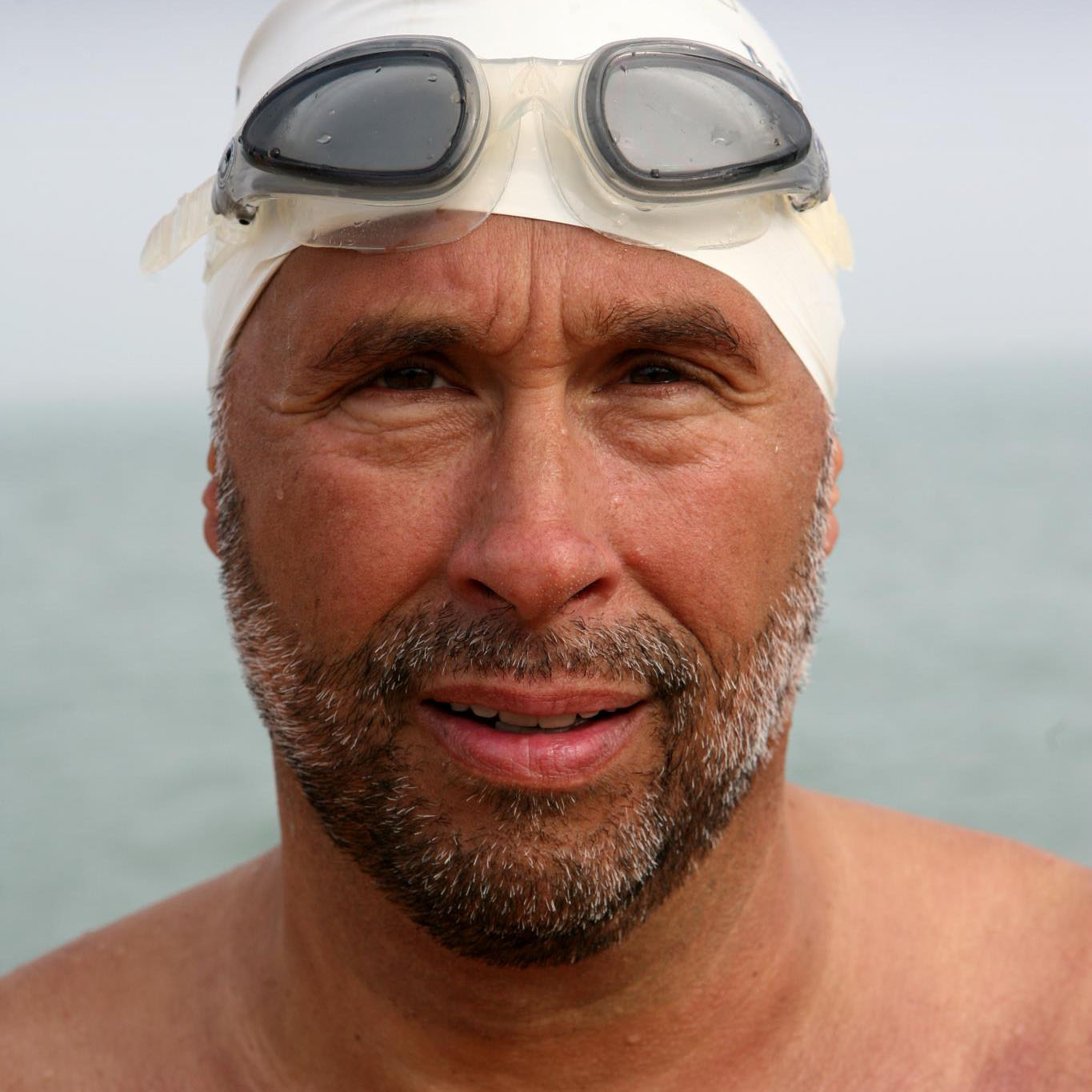
DOUG MCCONNELL, A TRIPLE-CROWN OPEN WATER SWIMMER, IS THE CO-FOUNDER OF A LONG SWIM. /COURTESY DOUG MCCONNELL
What inspired you to get started with this initiative?
My family was jolted, like every other family is, with a diagnosis of ALS. My dad was diagnosed with ALS in the mid-1990s, and other than knowing about the baseball player, none of us knew anything about it. He passed away in 2006, and it was just a few months after he died that one of my sisters was diagnosed. It was after Ellen was diagnosed that we wanted to do something. It is so disarming, and it makes you feel so powerless when somebody you love is diagnosed with this thing, because you feel like there’s just nothing you can do. We started brainstorming creative ways to raise money for research, and we came up with swimming because that was something she and I had shared when we were little biddies. In recent years, I have really discovered open-water swimming. I started doing these open water events, and it was Ellen’s idea to call it A Long Swim. We borrowed the acronym from ALS, and we would use marathon ocean swimming as a way to raise money.
What inspires you to volunteer?
It makes you feel less powerless. This specific disease is so bleak and so grim that it makes you feel like you’re doing something. By the way, over the course of the 15 years that we’ve been raising money, the researchers have been absolutely knocking it out of the park. They’re doing fabulous things. They are to the point where they are discovering compounds that are now at the FDA and are going through the drug approval process, so it’s really helping.
Tell us about your volunteer role with A Long Swim.
A lot of it is event planning. I’m just the luckiest guy in the world because I get to sit on top of the heap and help direct and manage some of that stuff. One of the other things that we got into along the way was hosting swims for other people. Lake Michigan is right here, but then there are lakes out in the suburbs and whatnot. Last September, we were able to, after 13 years of work, host the first organized swim in the Chicago River in 100 years. That was a big deal, and it’s going to continue to be a big deal as we’ve got this year’s event planned.
What are your long-term plans or goals for the organization?
To continue to fund research and make some headway on this horrible disease. One of the things we’ve learned so well from those researchers is the importance of collaborating with other like-minded folks. One thing that we are getting better at is collaboration with other ALS support charities and organizations. It’s a small disease, but that leads to the fact that funding is hard to come by, and it’s really scattered. The more we can collaborate, the more collective leverage we can get.
What’s been the most rewarding part of your work?
Seeing amazing work being done by these researchers based on our work, and the fact that there is hope that it will lead to a cure for this disease. That’s a game-changer. ALS is a neurodegenerative disease, which, to you and me, means very little. At the same time, what we’re discovering is that one drug that’s now in the FDA approval process treats ALS, but it also treats other neurodegenerative diseases. If you start looking at some of these other disease mechanisms, all of a sudden you’ve got a bullseye on Parkinson’s and another one on MS and another one on Alzheimer’s. Those populations are gargantuan, and so, almost by accident, we trip across this compound and look at the impact it could have.
What have you learned through your experiences as a volunteer?
How gracious and generous people are. I’ve been involved in volunteer work for 30 or 40 years, but when you talk to somebody and they understand your message and your motivation, and they dish out that support, it just kind of knocks your head off. It’s really something.
Why is it important for others to get involved with causes they care about?
Ultimately, to make a difference. Even if the difference or the progress is slow or frustrating, at least it’s progress. It’s just so gratifying to be able to build the links in the chain between an individual’s effort and an organization. All of a sudden, you can feel it and witness the impact of your contribution and effort. If you’re volunteering, that’s a special feeling.
What do you want people to learn from your story?
There are a lot of different paths to the cure, the goal and the outcome. We picked one that is a little obscure, probably, but there are 100 roads to lead there. If you want to see something materialize, whether it’s curing ALS or a reduction in the number of Chicago children who drown, you can put the pieces in place and make that happen. It just does your heart so much good.
Meet Daily Point of Light Award honoree Sailee Charlu. Read her story, and nominate an outstanding volunteer or family as a Daily Point of Light.
At El Sol Academy in Santa Ana, California, a little bit of transformation takes root every week. For many Hispanic ESL and multilingual students, the academic landscape can feel exclusionary, filled with racialized stigma and a shortage of bilingual educators. That’s where Sailee Charlu stepped in, founding Habla Arte in 2022. This bilingual Spanish-English visual arts and public speaking program is designed to dismantle these cultural barriers. Through a curriculum woven around cultural themes and holidays, introverted and hesitant children find the confidence to raise their hands. Here, their home language of Spanish is not something to hide, but is affirmed as a powerful source of identity, intellect and pride.
Dedicating 20 to 30 hours each month, Sailee has expanded Habla Arte to serve over 2,000 students across 12 Title I schools, mobilized more than 40 volunteers and launched the Speak Art digital app to guide hundreds of users through online programming. Her impact deepened further when she created The Lit League, one of the first multilingual spoken poetry programs for middle schoolers in the United States. Pairing classic poems with student-written response pieces, The Lit League teaches youth to dissect complex literary devices and reclaim standard texts through verse rooted in their own lived experiences, culminating in the largest middle school poetry slam in Orange County.
Sailee’s grassroots leadership is deliberately built for long-term sustainability and systemic change. Rather than creating a temporary intervention, she trains classroom teachers to run the curriculum independently, distributing 40-page self-study workbooks to every school in Orange County. She has also established a robust leadership succession pipeline so that local youth and community partners can carry the work forward. Her innovative approach has caught the attention of national foundations and local leaders alike. By authoring and illustrating the bilingual children’s book Curiosity & Me, alongside foundation grants, she has raised nearly $10,000 to keep the programming free and accessible, while gaining key endorsements from local officials like Santa Ana Mayor Amezcua and Councilwoman Jessie Lopez.
Sailee’s studies on multilingual education have been published in the Educational Role of Learning Journal and presented at major conferences in Mexico City and Sri Lanka. She has also collaborated with the Orange County Board of Education to draft and pass a landmark resolution recognizing the vital importance of bilingual education. Now, as she works alongside California Assembly Members to strengthen the state’s bilingual teacher pipeline, Sailee is looking toward an ambitious future. With dozens of events lined up across 39 Title I schools, her ultimate goal is to expand this life-changing curriculum to 378 schools within the next two years. Sailee wants to ensure that every multilingual child has the stage on which to center their own narrative.
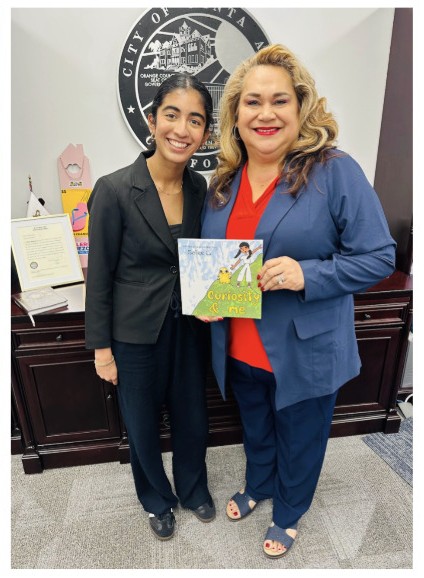
Sailee (left) poses with Santa Ana Mayor Valerie Amezcua, sharing her bilingual children’s book Curiosity and Me.
Tell us about your volunteer role and organization.
Attending school in Santa Ana, I often walked past La Chiquita Grocery to grab a quick snack, and I would watch how my Hispanic community was raised in the music of the Spanish language, vibrant and alive. Yet, I witnessed how the Hispanic students in the local Title I schools around me were pushed into English-only classrooms, forced into a linguistic vacuum where non-English fluency was treated as ignorance rather than an asset. Language functions as the gatekeeper to belonging. And that institutionalized belief that bilingual education is impractical and un-American, not only stifles academic and literacy growth in either language, but reinforces racialized shame, shakes a child’s underlying confidence to communicate and perpetuates the cycle of economic survival rather than closing the socioeconomic gap that has always yawned widest beneath Hispanic families.
At 13, I sat down at a dimly lit table at El Sol Academy with three children, a box of art supplies and my love for the Spanish language. That table transformed into Habla Arte, a bilingual visual arts and public speaking program, built around four pillars: art, language, storytelling and public speaking. Over four years, it has expanded into 15 Title I schools across Orange County, Sacramento and Dallas-Fort Worth, with curriculum distributed digitally to teachers in Mexico City, Argentina, Columbia, El Salvador and Spain.
We also built the Speak Art digital app, impacting more than 800 students through 600+ hours of in-class instruction, art exhibitions, summer camps and weekly workshops. To fund this program, I also wrote and illustrated my own bilingual children’s book, “Curiosity and Me,” not only exploring my own personal experience with the language barrier as an immigrant, but reaching families beyond the classroom.
Watching my elementary students grow, I turned to the middle scholars sitting quietly in auditoriums, carrying grief and untold stories without a tool to express them. Then, two years ago, The Lit League was created, one of the first multilingual spoken poetry programs for middle schools in the United States, reaching 5000+ youth in-person and producing the largest middle school poetry slam in Orange County history. Yet teaching alone could not fix what our policies have broken. So I turned to legislation and research, growing into the Habla Futures Initiative, a movement towards enhancing bilingual spaces as we disarm the weaponization of linguistic barriers in education.
What inspired you to get started with this initiative?
Walking through El Sol Academy, I spotted clothing donations, medical aid and free meals. I witnessed these small, fierce acts of kindness a community offers its most vulnerable. After speaking with the school principal on how I could get involved, she told me that every enrichment program was in English only. No one honored the native language of the majority of the school’s own children. I began to research why, finding that despite there being 4.9 million ESL learners in the US, and comprising nearly 20% of California’s public-school students, there’s almost no structural support in the schools serving them. As a bilingual- Spanish-English speaker myself, I wanted to build a space where their native culture was truly accepted and part of what it means to be American.
But after speaking before the Santa Ana Board of Education every Tuesday for the past two years, presenting my programs and my students’ stories, I watched board members nod politely in understanding, yet nothing changed. I realized that to move institutions, I needed to speak in the language institutions responded to.
I started attending the Orange County Board of Education meetings, making the case for bilingual education through data and testimony. Councilwoman Jessie Lopez was among the first officials to publicly endorse the effort, recognizing The Lit League at Santa Ana City Council and amplifying the momentum. OC Board Trustee Jorge Valdes, whose two children were in my first Habla Arte, agreed to formally co-author the resolution alongside me. And Mayor Valerie Amezcua sat with me over months of conversation, reading every clause and editing the language with me, before writing a formal letter of support to the Orange County Board of Education. On February 2, 2026, Resolution 03-26 passed unanimously, 5-0, formally urging greater bilingual and dual-language instruction across Orange County schools.
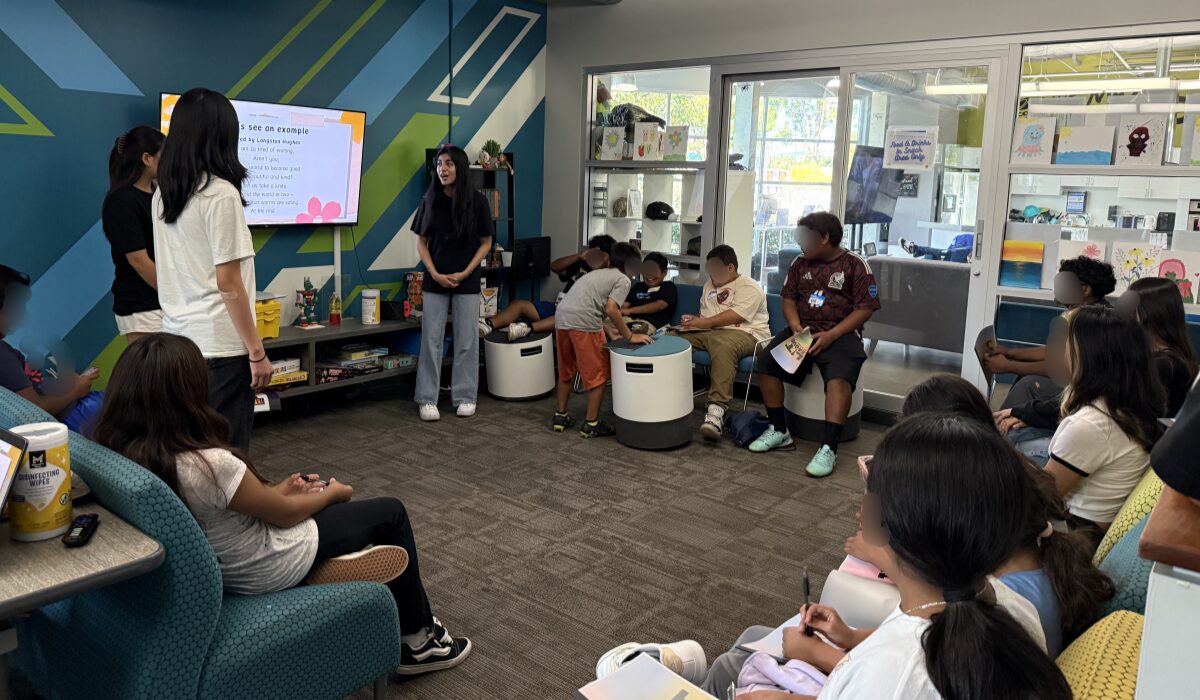
Sailee leads a multilingual spoken word poetry workshop for middle and high school students.
Why is this issue so important to you?
We were told we got smarter by forgetting our culture. I want to change that perception in any way I can. Following Proposition 227, which dismantled most bilingual programs and mandated English-only instruction for the next two decades, students were expected to learn complex subjects in a language they were still acquiring. It takes five to seven years to train English fluency, yet our schools demand it overnight. While 20.3% of California’s students are English Language Learners, only 8 to 9% of schools statewide offer dual-immersion programs.
After watching the transformations in my students over the years that I could only put into words, I realized that testimony without evidence is too easy to dismiss. So I conducted a research study over four years in partnership with Dr. Elizabeth Pena and co-researcher Reinaldo Cabrera Perez as UC Irvine’s School of Education Bilingualism Matters Initiative, conducting surveys across Orange County Title I schools, analyzing quantitative and qualitative data on student artistic and public speaking growth under the Habla Arte curriculum, and speaking with teachers and administrators on their perception of the growth across the county. That research will be published in the Education Role of Language International Journal, now proceeding my findings at the 2026 California Association of Bilingual Education (CABE) Graduate Research Symposium in Sacramento, at the cross-institutional 2026 Reframing Our Language Experience (ROLE) Symposium in Mexico City and at the 2026 International Conference on Sustainable Development Goals in Sri Lanka. That evidence towards greater communicative confidence, academic and artistic excellence, and Spanish legitimacy became the spin of everything that followed.
Two weeks before I published my Voice of OC column on this crisis, a 10-year-old student told me his aunt and closest friend had been deported by ICE. His family had stopped leaving the house and he still showed up to class. His determination took root in my chest, reminding me that this issue is a living creature alive in my community.
What are your long-term plans or goals for the organization?
I’ve realized that lasting reform requires both community ownership and structural governance. For Habla Arte, our immediate horizon includes expanding to 378 California Title I schools within four years, deepening our reach across three states, and growing our six-country international partnership. For The Lit League, we have 26 events planned for 2026–2027, ranging from workshops and summer camps to virtual and in-person slams, all supported by a sustainable leadership pipeline and the continued distribution of our 40-page workbook to our partner secondary school in South America.
This July, we are launching the Habla Futures Bilingual Research Conference in partnership with the UCI School of Education, UCI Bilingual Matters, the California Department of Education, the UCI Tertulias Initiative and Dr. Elizabeth Pena. This convening of scholars and advocates across the US and South America aims to disarm the weaponization of language that propagates academic inequity. At the policy level, I am continuing to advocate for our state bill while simultaneously advising the CDE on formally recognizing translanguaging as an instructional method under Education Code 306. Ultimately, bilingualism is not a niche accommodation, but a bridge to cultural empowerment. This is how we keep the schoolhouse doors open for everyone.
What’s been the most rewarding part of your work?
At the end of my second Habla Arte class, a quiet boy wrapped his arms around me in a hug. That moment proved what I’ve always believed: emotional safety is the foundation of all learning. Over the years, I’ve watched that safety transform introverted children into eager participants, and self-conscious students into free artists. Through The Lit League, I’ve seen impacts no metric can capture, like a student processing experiences of addiction through an abecedarian poem, or a young woman sharing her survival of sexual assault with unshaken clarity before a crowd of hundreds.
What have you learned through your experiences volunteering?
I used to believe that making a difference belongs only to adults with long-established organization and enormous funds. I have learned that meaningful change is always possible if you are willing to persevere no matter the odds.
Why is it important for others to get involved with causes they care about?
I believe that the most pressing needs are hiding in plain sight in the community around you. Democracy thrives on voices being heard and injustices being challenged. Any moment when a person decides what they have witnessed is not something they are willing to walk past is a democratic act. The question is not whether ordinary people have the power to shape systems. It is whether they are willing to stay long enough to find out.
I think about the first time my students received their certificates from Jessie Lopez at the Santa Ana City Council, their bravery to speak their raw, visceral truth took shape. That moment cost nothing in terms of legislative capital, but for those students, it was the first time our government said, “We see you.” Every person who gets involved opens a door for someone else, making sure that their voice belongs in the room too.
Any advice for people who want to start volunteering?
Start with what you already love. I arrived at bilingual education because I was in love with the beauty of the Spanish language. Visual art and slam poetry already lived inside me. When you begin with genuine love, you can sustain the work long after the novelty wear off. A bill rejected by a legislator’s office does not end you. The fourteenth consecutive Tuesday at a board meeting where nothing moves doesn’t end you, if you believe in what you are building.
Transforming Her Own Passion Into Widespread Collective Action
Meet Daily Point of Light Award honoree Morgan Sommerville. Read her story, and nominate an outstanding volunteer or family as a Daily Point of Light. Morgan Sommerville found her passion with a hammer in her hand and a blueprint in her mind. For more than 15 years, her commitment to volunteerism has taken her across the country with SBP, performing intense, hands-on disaster-recovery work to rebuild homes and restore hope for families struck by catastrophe. Her ability to organize chaos into community also led her to co-found Mission: I’m Home, creating a university alternative break program that has since engaged more than 700 people in disaster rebuilding while raising $40,000 annually. And she serves as a founding board member for FROM: Baltimore, where she leads a civic engagement accelerator empowering local youth.
Morgan’s belief in service perhaps shines brightest in her leadership as a board member for Business Volunteers Maryland, a Points of Light global network affiliate. In this role, she helps forge sustainable partnerships through skills-based volunteerism. She is currently helping to steer the organization through an exciting expansion, using the results of a long-term research project to articulate the profound economic and social value of corporate-nonprofit alliances.
While her nights and weekends are dedicated to grassroots boards and coordination, Morgan has also aligned her professional life with her personal mission. She is the supervisor of all volunteer mobilization for CareFirst BlueCross BlueShield, leading large-scale activations, team events and board matchmaking across Maryland, Washington, D.C. and Northern Virginia. Morgan believes that personal service is magnified when you inspire others to stand beside you. As an alum of the GIVE Fellowship who has supported civic engagement among Baltimore professionals for 15 years, leading by example is her only way forward. Read on to hear more about Morgan’s work and what keeps her inspired to volunteer so widely and frequently.
Tell us a little bit about your volunteer work. As a board member with Business Volunteers Maryland, I help to support the connection of companies across our region with nonprofits building sustainable partnerships through service and skills-based volunteerism. We are excited to expand our work beyond the greater Maryland region through committed relationship building, as well as sharing the results of a long-term research project articulating the importance of this work. I strongly believe in the impact we can collectively have in our communities and appreciate the ability to support the corporate and nonprofit partners coming together for common goals.
I also currently oversee all volunteerism for CareFirst BlueCross BlueShield creating hundreds of opportunities for my colleagues to serve the communities across Maryland, D.C. and Northern Virginia. Last year 58% of my colleagues, 3,446 individuals, logged 110,716 volunteer hours resulting in a $9.1 million economic impact across our region. I support large scale volunteer activations and team volunteer events, as well as matching individuals to nonprofit boards and everything in between.
What inspired you to get started with this initiative? My family members will tell you serving and getting involves has always been part of my personality. I was fortunate to be raised by a family of givers and went to schools where service wasn’t just a mandatory requirement; it was embedded in the culture. I found my true calling for serving the community when I was younger, but how I act on this calling has shown up in a variety of ways over the course of my life.
One of the most impactful volunteer opportunities of my life happened just outside of New Orleans after Hurricane Katrina. I was completely shocked by how much devastation occurred and the immense amount of loss. I was equally struck by the strength of the families and their commitment to rebuild not only their homes, but their community. This volunteer trip resulted in me creating an Alternative Break Program at Stevenson University where I was working at the time. Over the next 10 years, over 700 students, faculty, staff and alumni participated in rebuilding trips to five communities devastated by natural disasters.
After I left Stevenson and began my career at CareFirst, I continued to volunteer personally with SBP, formerly St. Bernard Project, and Rebuilding Together NOLA. I have served as a leader for corporate and university trips throughout Louisiana to not only personally help homeowners move back home, but to guide and lead teams of volunteers to align with this important work.
Why is volunteering so important to you? Being an active member in the community has been a lifelong theme and how I approach my work professionally and personally. I’m committed to not only serving my community as an individual, but how can I help inspire, motivate and connect those around me to serve the community in ways that are meaningful to them. In order for our communities to truly thrive, we need everyone to do their part in making their corner of the world a bit brighter. What are your long-term plans or goals for the organization? I plan to continue to serve in the communities where I live and work! I’m privileged to align my personal passion with my professional career and to create opportunities for folks to serve the mission and programs they are passionate about.
What’s been the most rewarding part of your work? It’s truly difficult to pinpoint the most rewarding part, since there are so many incredible ripple effects to volunteering. But I think being witness to the “ah ha” moment of individuals when they unharness their personal potential of making an impact and understanding the power of their two hands on a project. Collectively, it’s extremely rewarding to see the surge of energy when a team deploys on a volunteer project and makes a huge difference for a nonprofit in a matter of moments. Whether that is removing invasive species from a park, packaging thousands of medically tailored meals to be distributed to critically ill neighbors or hanging drywall in a home devastated by a natural disaster. When volunteers can walk away from an event realizing they made a difference either as an individual or as part of a team and are inspired to volunteer further… that is the best reward! What have you learned through your experiences volunteering? That truly everyone can make a difference. It might sound cliche, but everyone has the power to do good in their community. It may look different from one individual to the next, but we all have light within us that can help brighten our community. Why is it important for others to get involved with causes they care about? I believe firmly in the power of the community, and that at one point or another, we will all need help and will need to rely on one another. The impact of volunteering might not be seen right away, but it should be known that the actions you take today will impact those around you tomorrow. Small actions build upon one another to make large differences.
Any advice for people who want to start volunteering? As my 103-year-old Grandmother would say, “Just keep going!” If there was an organization that inspired you, check out their website to get involved. See what’s happening within your own neighborhood association, school network or house of worship.
The easiest way to support your community is to simply walk outside and see what your two hands are capable of improving. It could be as simple as picking up trash, planting a community garden or driving a neighbor to doctor’s appointments. There’s no shortage of need in the community, but there is also no shortage of ways to get involved!
Do you want to make a difference in your community like Morgan? Find local volunteer opportunities.