Meet Daily Point of Light Award honoree Ben Kurian. Read his story, and nominate an outstanding volunteer or family as a Daily Point of Light.
Ben Kurian is co-founder and executive director of Students for Patient Advocacy Nationwide (SPAN), a youth-led organization empowering students to shape the future of health care policy. Since launching SPAN in 2025, Ben has helped build a network of nearly 50 high school, college and medical students across 16 states who organize advocacy campaigns, engage lawmakers and testify on legislation affecting patients and the future health care workforce. His leadership helped mobilize more than 100 medical students to oppose a Texas bill that would have eliminated pass/fail grading in medical schools, contributing to its defeat. To date, SPAN has engaged more than 1,500 elected officials and helped influence more than 50 pieces of health care legislation, proving that students can make a meaningful impact on public policy.
For Ben, advocacy begins with recognizing that the people who will inherit today’s policies deserve a voice in shaping them. He believes students bring fresh perspectives, a willingness to challenge assumptions and a deep understanding of the communities most affected by policy decisions. Through SPAN, he hopes to inspire more young people to move beyond observing problems and start solving them, showing that meaningful leadership comes from being willing to do the work, earn trust and speak up for others long before holding an official title.
THE TEAM SUPPLYING THE MOST FREQUENTLY FORGOTTEN ITEMS
Meet Daily Point of Light Award honoree Bella Carson, Reese Carson and Leila Murena. Read their story, and nominate an outstanding volunteer or family as a Daily Point of Light.
Bella Carson, Reese Carson and Leila Murena may only be in the ninth grade, but they’ve already started a service revolution. The trio first hosted a Thanksgiving food drive in the sixth grade, and they see that experience as a life-changing turning point in their mission to serve others. While at the local food bank, they discovered that new undergarments and feminine hygiene products were some of the most needed items. In that moment, the young women knew their mission was clear. They founded Wundie Undies, a youth-led nonprofit providing clean underwear, feminine hygiene products and diapers.
Three years later, the Wundie Undies team has distributed 10,000 pairs of underwear, 35,000 diapers and 30,000 feminine hygiene products, in addition to raising nearly $10,000. The organization has been so successful that the group created a student ambassador program that allows students at various schools to host drives, expanding their circle to bring in the items that are so desperately needed. Whether they’re coordinating collection drives with partner schools, hosting events or reaching out to potential corporate sponsors, the Wundie Undies team is making a difference in their community, and they’re doing it together.
At just 14 years old, the Wundie Undies team collectively volunteers approximately 75 hours per month, which is no simple task considering their busy high school workloads and extracurricular activities. However, they consider the fact that they work together as a team to be a real asset to the organization’s livelihood, allowing them to share responsibilities and tackle each task as they need to. They consider being able to experience the success of Wundie Undies alongside their best friends to be one of the most unforgettable aspects of their volunteer journey. Through it all, they’ve been able to grow together, support each other, and help their community as a team. What started as a small idea three years ago has blossomed into a testament to the power of just how far service and friendship can go when it’s deeply intertwined.
What inspired you to get started with this initiative?
Leila: There were a lot of moments that inspired us, but one of the biggest was a Thanksgiving food drive we hosted in sixth grade. It was very successful, and it made us realize how important it is to support your community. Seeing all these donations being placed on the shelves at a local food bank was life-changing for us, and it made us want to do even more. We found out from the food bank that they really needed hygiene products. After that, we did some research and were surprised to learn that feminine hygiene products, underwear and diapers are some of the most needed, but least donated items. We realized that these things we thought were necessities are not available to everyone, and that pushed us to take action and make a difference.
Bella: After some consideration on what we could do, we got in contact with a shelter coordinator that we had worked with before for our Thanksgiving food drive. Reese: That was our first interaction with community service, and we became very passionate about it. We just wanted to do more, and we found that this was unique. It was very necessary, so we said, why not?
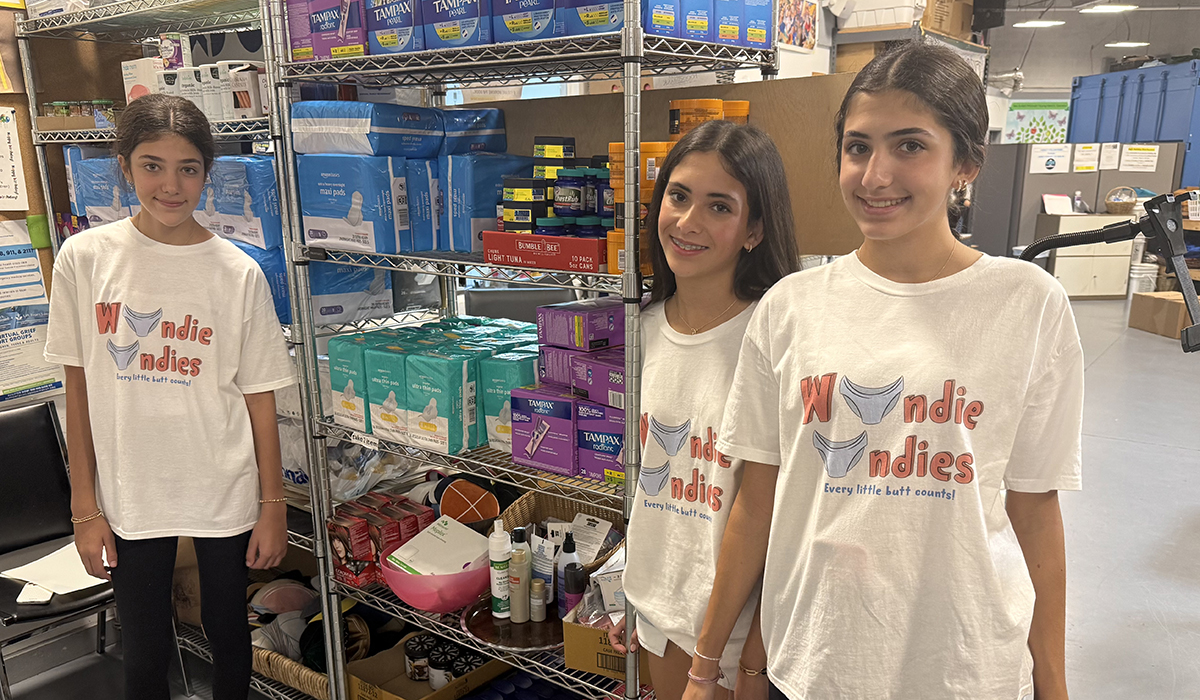
WUNDIE UNDIES FOUNDERS REESE CARSON, LEILA MURENA AND BELLA CARSON (LEFT TO RIGHT) STOCK SHELVES AT A LOCAL FOOD BANK. /COURTESY OF BELLA AND REESE CARSON AND LEILA MURENA
What inspires you to volunteer?
Reese: This issue became very personal to us when we realized that girls our age were missing school because they didn’t have access to feminine hygiene products or clean underwear, and parents were having to make a decision between diapers for their child or dinner on the table. We realized that these items we saw as an expectation were a privilege to many people. It is so important to have them, because they’re not just hygiene products; they are facilitators of confidence, of dignity and of care. Knowing that giving a package of underwear to a family could make a difference in their life really motivates and inspires us.
Tell us about your volunteer role with Wundie Undies.
Bella: Our role involves much more than just collecting donations. We create flyers, organize fundraisers and organize community events. We build our Amazon wish list, and we also communicate with local food bank coordinators to find out who needs these items.
What are your long-term plans or goals for the organization?
Leila: Our biggest goal is to build an organization that lasts even after we graduate high school and go into college. We want to build strong relationships with future ambassadors and volunteers, so Wundie Undies can continue helping people in our community for years to come. We are also very focused on fundraising now and learning how to raise money from different places. For example, we are applying for grants from different companies and other charities to increase our funding. We are working on our application to participate in Give Miami Day. We also hope to grow our impact by reaching more communities, hosting bigger drives and continuing to spread awareness about hygiene insecurity.
What’s been the most rewarding part of your work?
Reese: We’ve done so much and we’re so proud of ourselves. In the past three years, we have collected over 80,000 items, and we’ve had the opportunity to distribute them from here in Miami all the way to Los Angeles, where we supported fire relief. We really wish to expand and get better at what we’re doing. However, what I would say, and I hope my partners can agree with me, is that the most rewarding part of this is the fact that we got to do it together, and we always have a team by our sides. There aren’t very many people who get to say they’re making a difference with their best friends by their side.
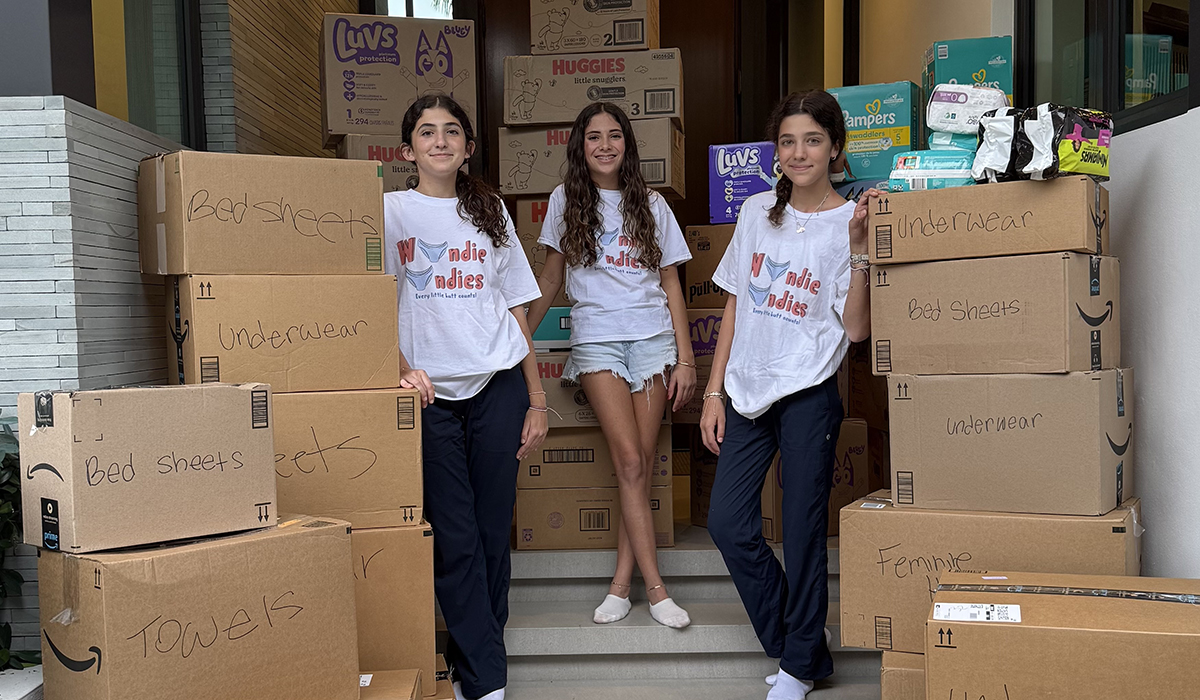
BELLA CARSON, LEILA MURENA AND REESE CARSON STAND (LEFT TO RIGHT) WITH DONATIONS THEY RECEIVED FOR LOS ANGELES FIRE RELIEF, WHICH THEY SORTED, REPACKED AND DELIVERED TO LOS ANGELES. /COURTESY OF BELLA AND REESE CARSON AND LEILA MURENA
What have you learned through your experiences as a volunteer?
Bella: I think we’ve learned the importance of helping our community, of course, but also teamwork. It taught us gratitude, and I feel like we’ve gained a deeper appreciation for these everyday necessities that people take for granted. This experience has made us view service in such a different way and inspires us to continue giving as much as we can.
Any advice for people who want to start volunteering?
Reese: There are so many opportunities out there. We started a charity, but that doesn’t have to be what you do. You can volunteer at your local food bank, or you can do a beach cleanup. There are so many ways that you can help your community. Take one of your hobbies and turn it into something meaningful. As long as you have the passion and the drive to make a difference, you can really do anything.
What do you want people to learn from your story?
Bella: I think we just want people to learn how these items that we collect and donate often go overlooked. With food banks, you think of canned goods, but people don’t really take into account the fact that feminine hygiene products, underwear and diapers are also very needed items. We want to get through to people to raise awareness about these items and the need.
Meet Daily Point of Light Award honoree Aarush Avula. Read his story, and nominate an outstanding volunteer or family as a Daily Point of Light.
Aarush Avula started volunteering in the seventh grade, and he hasn’t looked back. He was initially introduced to the local food pantry and was exposed to the diverse populations that rely on the pantry to feed their families. Interacting with new people was a rewarding endeavor for Aarush, and he came to realize that everyone has a story that they might not be sharing. Inspired to help more, Aarush has accelerated his volunteer work over the last couple of years.
Soon to be in the 10th grade, Aarush is an active volunteer who works with Pebble Tossers, a youth development organization with a mission to empower and equip youth to lead through service. Through Pebble Tossers, Aarush finds easy ways to get connected to volunteer roles, whether it’s at local food pantries or at a hospice organization. His most prominent volunteering role is as the co-leader of the bread team with Meals by Grace, an organization that works to feed hungry families.
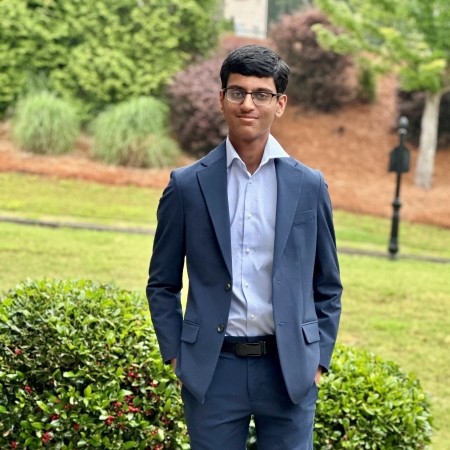
AARUSH AVULA IS A VOLUNTEER WITH PEBBLE TOSSERS AND MEALS BY GRACE. /COURTESY AARUSH AVULA
Aarush and his friends create a space for general volunteers to work more efficiently. Whether he’s setting up the kitchen so bread can be distributed or cleaning up and sanitizing the space after it’s done, Aarush has a vital role in the fight against food insecurity. He also trains new volunteers, so more than 50 families per day can put food on the table. He dedicates anywhere from eight to 16 hours per month to Meals by Grace, and is right around the corner from completing 200 hours with the organization.
Aarush has seen firsthand how much of a role volunteers have in the fight against hunger. But he’s also seen just how much his volunteer work has benefitted his own well-being. As a result of the time he’s dedicated to volunteering, Aarush has developed stronger leadership and communication skills. With a compassionate heart and a willingness to see the struggles that people face every day, Aarush is bettering both himself and the community. That’s an opportunity that’s available to anyone who is willing to volunteer.
What inspired you to get started with this initiative?
In seventh grade, I found this food pantry nearby. Initially, I started as a general volunteer and I found it really fun and satisfying. I met a lot of really cool people there who would come and pick up food from the food pantry. I actually talked with them and got to know a few of them. They showed me that everyday people you might not expect might be going through things you don’t even know about. I saw this, and after talking with all these people, I was more interested. I wanted to help more, so I pursued a team lead position.
What inspires you to volunteer?
It’s that feeling of helping others. It just feels good. I like helping people a lot; it just feels nice. I think everybody should try to help the community whenever they can. If we do that, then the world would be a much better place. I’m going to try to do whatever I can to make it the best it can be.
Tell us about your volunteer role with Pebble Tossers.
Pebble Tossers has helped me log and track my hours and get more opportunities that I might not have without them. They have a bunch of unique opportunities, like creating postcards and encouragement notes for younger kids who are reading. Pebble Tossers helps you a lot if you don’t know what you want to do, but do know that you want to volunteer. They give you a lot of different, unique ways you can help. It’s a great place to start.
With Meals by Grace, I co-lead the bread team with a few of my other friends, and we help the general volunteers. First, we set up the workspace for them. We give them instructions on what to do, and then we answer any questions while they’re doing it. We’re the facilitators. We make sure everything goes smoothly when they’re doing stuff. After they’re done, we have to clean up the workspace and make sure everything’s sanitized. We prepare for the next week.
What are your long-term plans or goals for the organization?
I got a club role in my school with the healthcare volunteering club, so I want to provide these opportunities with Meals by Grace and Pebble Tossers, and spread my knowledge of those opportunities in those clubs. I would like to organize days when we could all go to a place and give them contact info if they want to get involved individually. I want to help more kids just like me who might not have known about volunteering, but who want to get involved. I want to help them get to volunteer just like I do.
What’s been the most rewarding part of your work?
Seeing the people that you serve. Whenever I would go into this food pantry, I would see some people picking up food, and they were smiling and grateful. Sometimes, especially with Meals by Grace, you don’t always get to see who’s on the other side of what you’re doing. Mainly, we just package up the food, so we don’t see who’s actually receiving it. But when we do see the reactions and how grateful they are when they receive it, I think that’s definitely one of the more rewarding parts.
What have you learned through your experiences as a volunteer?
One of the things I learned is that you can’t tell what’s going on with someone’s life just by looking at them or just by talking with them. Everybody has their own struggles, and a lot of times they don’t put it out there. You don’t even know what’s going on with a lot of people in your life. I think you should just help when you can. If you’re in a position to help others, you definitely should, because we’re all a team. That’s how I think you’ll be happy, and you’ll make other people happy too.
Why is it important for others to get involved with causes they care about?
I think you should always try to help. Wherever you are passionate, you should try to help, whether it be teaching kids, volunteering at a food pantry, or wherever it may be. You should always try to improve the community around you, because the community is what serves you as well. It’s kind of like a mutual relationship. You have to help the community if you want it to help you. I think if you’re passionate about something and you want to help, you can just combine the two, so it doesn’t seem like a chore, but it seems like it’s just a hobby. I think it’s a win-win.
What do you want people to learn from your story?
Anyone can do it. I’m just a kid, so if I can do it, you can do it too. You just need to talk to people and get out there. It might not look the same as what I’m doing. Whatever you want to do, it’s not going to look the exact same, but I think you just have to put yourself out there and try. It might be a little hard at the beginning, but finding the place to volunteer is probably the hardest part. Just going there and getting started is probably the hardest part.
The Growing Impact of an End-of-Month Food Program
Meet Daily Point of Light Award honoree John Das. Read his story, and nominate an outstanding volunteer or family as a Daily Point of Light.
Every third Saturday of the month, Cleveland resident Dr. John Das gathers with volunteers in the parking lot and hall at St. John’s Church. There, they transform the scene into a hub of nourishment and care for their neighbors. John, a local physician spends roughly three hours each session immersing himself in the hands-on logistics of Soup’s On, a staple community feeding program in Cuyahoga Falls, Ohio. From the initial setup to the final sweep of cleanup, he lifts boxes, sets up and tears down directional signage, and loads surplus donations to ensure nothing goes to waste.
Established in 1986, Soup’s On was created to fill a specific, critical gap: those lean days toward the end of the month when tight household budgets might run dry. What began 40 years ago as a modest effort serving just 25 individuals has blossomed. Today, utilizing a hybrid drive-through and walk-in model, the program serves between 150 and 230 hot meals during a single session. Thanks to enduring partnerships with local grocery stores, churches, and charities, community members leave not just with a warm dinner, but with essential groceries, meat, and household supplies worth thousands of dollars.
John helps create a vibrant environment of hospitality, dignity, and mutual respect where vulnerable neighbors feel seen rather than marginalized. Any remaining food is carefully packed into his vehicle and delivered to nearby shelters, extending the program’s reach even further into the community. Through this selfless, recurring dedication, John truly exemplifies a willingness to serve. Read on to hear more of his inspiring story.
Tell us about your volunteer role and organization.
The organization is called Soup’s On. It provides warm meals, food products, and other supplies to local families. They have a drive-through where people can come in and request the number of hot meals they want. They can also request a bag of additional food products, like donuts and other things like that. I might help bring bags or hot meals out to the cars, or cart the meals to wherever they’re ready to distribute. I may help ask the people if they want chips or pretzels and help load those items up. There’s a drive-through where different volunteers move in and hand items to the people who are coming in that way.
What inspired you to get started with this initiative?
I got started because I wanted to volunteer, get involved and help underserved people in my area. I looked up opportunities to get involved, and this was a way I found that could help.
Why is food security so important?
It’s important for people to have reliable access to nutritious food to live healthy lives. In addition to helping with health, it helps people to be more economically productive, it helps children with academic performance, and it helps with human dignity and the quality of life. Access to food is a basic human need, and it allows people not to be able to worry about their next meal. Instead, they can focus on education, work, family, and community.
What have you learned through your experiences as a volunteer?
Teamwork can help accomplish major issues, like food security. At Soup’s On, each individual volunteering has an important part, but with everyone showing up — some people cooking the meals, some taking the meals to the car, some talking to the people — everyone coming together helps the ministry function as a whole.
There are some people who arrive and they like when people talk to them and listen to them. I’ve learned that sometimes the way to make someone have a smile on their face is just to talk and listen to them. A lot of the people that come through, I’ll spend some time talking to. The power of the human connection and a respectful interaction can be just as meaningful as the meal itself.
What’s been the most rewarding part of your work?
The most rewarding part is to see people go home and have a nutritious meal for themselves and their family. As someone who likes food myself, it makes me happy! It’s nice to be able to provide a meal for someone else, and I know that it makes a difference.
Why is it important for others to get involved with causes they care about?
It allows people to turn their values into action. Caring about a problem is important, but volunteering gives people an opportunity to make a tangible difference in the lives of others while strengthening their communities. It’s nice to be able to read up on an issue and be aware of it, but actually volunteering helps you be the change.
Any advice for people who want to start volunteering?
I would say to start with a cause that genuinely matters to you, and be willing to start small. You don’t need special skills or experience; sometimes you just need to show up, and you can play a small part to make a big difference. You shouldn’t underestimate the impact — a meal served, a box packed, or a conversation shared can be incredibly meaningful to someone else. You don’t need special qualifications, endless free time, or a perfect plan. If you find a cause that speaks to you, show up and be willing to help. You can make a difference.
What do you want people to learn from your story?
Some of the most important contributions are made slowly and faithfully over time. This ministry started years ago, and decades of people showing up, building relationships, and organizing led to continued success and service. Volunteers continue the work started by those before them.
And remember that food insecurity can affect working families, seniors on fixed incomes, people with disabilities, college students, and individuals who are facing unexpected medical bills or financial hardships. It can happen to anyone. Hunger is often linked to rising costs of living, limited access to affordable food, and transportation barriers, so community support is needed, and programs like Soup’s On can really help with that.
Meet Daily Point of Light Award honoree Anirudh. Read his story, and nominate an outstanding volunteer or family as a Daily Point of Light.
Anirudh Rao drew his first design, a sensor that would alert people of wind and dust, when he was just 5 years old. He presented it to his Kindergarten class. Now 13, he has many innovations under his belt. His interests lie at the intersection of science and history, and he uses both to solve problems worsening due to climate change. He has, for example, created a wound management solution he calls Semmelweis, inspired by ancient Greek and Egyptian civilizations’ treatment of war wounds. It detects excess moisture, helps prevent infection and ensures timely dressing changes while reducing waste. It’s particularly useful in disaster-affected regions.
While working on his ideas over the years, Anirudh developed a workshop series that connects history, mythology, climate science and modern technology. For nearly four years, he has led programs at schools, museums, science festivals and more across the U.S. and abroad. He connects with difficult-to-reach places like refugee camps online.
His sessions build curiosity, cultural awareness and interest in STEM. But he hasn’t stopped there. Anirudh believes that artificial intelligence will affect everyone and, therefore, everyone should be able to learn about it. One of his missions is providing this education to underserved communities. He’s planning to launch the beginner AI videos he’s developing for students in the Kakuma Refugee Camp in Kenya this summer. Such communities have also benefited from the over $10,000 he raised for their support. And even amidst his other important work, he still finds time to draw.
What inspires you to volunteer?
Volunteering started from my passion for mitigating climate change. I used to live in Nashville, TN, and my friend’s home was destroyed by a tornado. That sparked my curiosity. I wanted to do something about it, so I started innovating things like an early tornado warning system.
Another impactful event was when I conducted a session on ancient Egypt and how they used scientific techniques in mummification and building their pyramids. That really resonated with me.
Tell us about your volunteerism.
I conduct in-person and virtual education programs that have reached over 6,500 people, toddlers to college-aged. I design interactive presentations and hands-on demonstrations, coordinate with partner organizations and mentor younger students. Topics include things like history and culture of different countries, 3D printing, beginner AI and the flora and fauna of Colorado. I really enjoy nature, and being a climate advocate has transformed my view on conservation.
I’ve also created various solutions for issues that I’ve then shared with people who could implement them. My early tornado warning system is based on a principle of infrasound, which is the low frequency sound that tornadoes produce in their early stages. With a network of autonomous drones, infrasound and other environmental sensors, I can detect a tornado 27 minutes earlier than the process currently used, warning people 40 minutes before it hits.
I partner with Denver Water on testing for an alternative for electrochemical batteries. And with the Colorado Department of Transportation, I’ve used adaptations in nature–i.e., mint leaves, cicada wings and Namib beetles–that manage moisture efficiently to analyze how resurfacing roads with specific patterns can reduce ice formation and speed up melting, potentially saving lives.
And I conduct sessions on beginner AI for those in underserved communities and create videos on, for example, how to be safe on the internet. AI is the future and everyone deserves to learn about it. That’s why I also created a device called NeuroWeave, which helps students with learning disabilities interact with the technology.
You emphasize the importance of teaching science with history. How does that help solve future problems?
We always need to look at the past to solve something in the future. An example of this is the Archimedes screw, where water was basically taken from low-lying bodies of water uphill to irrigation ditches. The Mesopotamians started civil engineering with canals, and we still use these innovations daily. National parks still use controlled burning practices that originated with indigenous people many generations ago. Progress is made by building on previous knowledge.
What are your long-term plans or goals for your volunteer work?
One of them is to create a global network of students who can conduct AI sessions in their own areas, because we need to make sure that no one is left behind.
What’s been the most rewarding part of your work?
It’s seeing people having empathy towards different cultures, advocating on climate change, forming their own opinions and having the curiosity to innovate. Once, during a beginner AI session, we were working on a facial recognition app. Unprompted, a 7-year-old student drew a picture of an animal and showed it to the AI. He said that if it’s able to understand human faces, it can understand animal faces. That was really rewarding to see him thinking critically and building on the information he learned from our sessions.
What have you learned through your experiences as a volunteer?
If you have an idea and you’re able to help someone, go for it. You can always go back and rethink something. I believe everyone should do things that inspire them. My dad always says that whatever blessings you have, you should give to others as well.
Why is it important for others to get involved with causes they care about?
You might think that someone else is going to do it, but what if that someone else never comes?
What do you want people to learn from your story?
Empathize with different cultures and traditions, because we want a kinder future. Climate change isn’t just a technical problem but also a social and cultural one. Communities are affected differently, and solutions must be developed specifically for them. Help make our world a better, safer place.
Meet Daily Point of Light Award honoree Shaurya Pydisetti. Read their story, and nominate an outstanding volunteer or family as a Daily Point of Light.
Shaurya Pydisetti is the founder of Project Querencia, a youth-led nonprofit that mobilizes young people to address community needs through service. What began during the COVID-19 pandemic as a small effort to support families facing isolation has grown into an organization with more than 200 members across seven chapters. Through food and supply drives, soup kitchen volunteering and free tutoring programs, Shaurya and his team have connected volunteers with opportunities to serve families experiencing food insecurity, students needing academic support and communities seeking stronger connections. By coordinating outreach and empowering fellow students to lead, he has helped transform individual acts of service into a growing movement for community impact.
For Shaurya, volunteering starts with initiative. After seeing people wait for others to solve urgent problems, he decided to act rather than stand on the sidelines. He believes young people do not need to wait for age, experience or authority to create meaningful change. Instead, leadership is built through consistency, accountability and a willingness to learn by doing. Through Project Querencia, Shaurya hopes to show other students that small actions, repeated over time, can create lasting impact and inspire a new generation of civic-minded leaders.
Volunteer Duo Makes a Difference Through Videography
Meet Daily Point of Light Award honoree Bob and Mary Ellen Dawley. Read their story, and nominate an outstanding volunteer or family as a Daily Point of Light.
Bob Kovacs, a veteran of the technical side of television, decided to delve into the creative side upon his retirement. Mary Ellen Dawley had a varied career that finished with photography. Putting their artistic skills and imagination together, they started a YouTube channel. Today, they have almost 500 videos of wildlife and tutorials on things like car repair, maintenance and around-the-house explainers. Many are inspired by moments in their own lives they wish had come with instructions.
In November 2023, the couple joined Volunteer Fairfax’s Retired and Senior Volunteer Program-Northern Virginia (RSVP) as another way to enjoy creative pursuits while helping others. Not only do they lend a hand as regular volunteers—the organization matches older adults who want to volunteer with partner organizations with available roles—but they offer free video creation services to help RSVP and other nonprofits highlight their work and mission, raise money, attract volunteers, capture events, etc. Their service would otherwise be beyond many organizations’ budgets. With a passion for the art, Bob and Mary Ellen enjoy the work as much as recipients love the results.
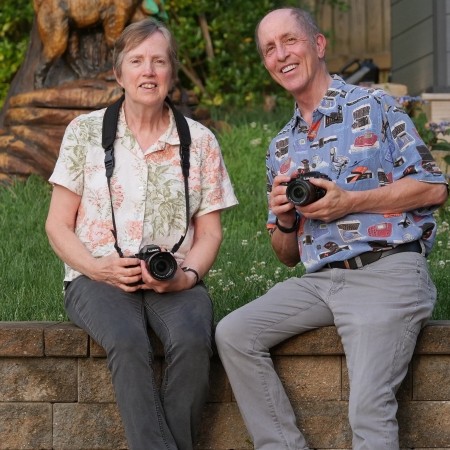
Mary Ellen Dawley and Bob Kovacs, volunteers for Volunteer Fairfax’s Retired and Senior Volunteer Program-Northern Virginia, use their film and photography skill to help recruit volunteers, fundraise, and increase participation.
What inspired you to get started with this initiative?
Bob: I always hoped I could do something in video as a volunteer. I’m in good health, and I still think I can contribute. I have a skill society can use.
Mary Ellen: Typically, a video requires more than one person, so I started helping out. When he retired, he wanted to do more, so I suggested we find a place to volunteer. We went to an event with 30 or 40 charitable organizations for seniors to volunteer with, and we offered to make videos. RSVP took us up on it and has connected us with other organizations.
People are so appreciative, we always come away with a big smile. Sometimes the audience at an event will watch our video and applaud. Knowing we did that makes us feel good.
Tell us about your volunteer role with Volunteer Fairfax’s Retired and Senior Volunteer Program-Northern Virginia.
Bob: I start by working with organizations to create scripts and refine the message.
Mary Ellen: I help him shoot, but editing is up to him. He’ll sometimes say, “Look at what I’ve done so far,” and I’ll give feedback.
Also, a couple years ago, I got a Cricut machine. Using software, you put in a pattern and it cuts it. I love paper art. RSVP does annual volunteer recognition events, and two years ago it was M&M-themed, so I made hundreds of paper ornaments. This year, I made paper flowers.
We have monthly, two-hour Welcome Wednesday events where we have one or two projects we work on. We’ve made decorations, written Christmas cards, made sandwiches for distribution, etc. I help set things up, get other people in, coordinate…whatever they need.
Bob: We go with 40 to 50 other people our age. That’s part of the reason for having them, to get people out of the house and in social situations.
Mary Ellen: The past few times, they’ve set aside 45 minutes or so for a member learning experience. We did tai chi last time.
Bob: We also like to go out and walk around the neighborhood, and we noticed a lot of litter on the streets. We figured we’d pick it up while we were out, and since then, we’ve made a career out of it. We’ve collected more than 1,100 grocery store-sized bags of trash in 5+ years.
What are some other ways that your films have been used?
Bob: We made a video for the Shepherd Center they use to recruit volunteers. The Shepherd Center provides rides for older adults who can’t otherwise easily get to doctors’ appointments or go grocery shopping. They always need drivers. That video shows why and what happens during a trip. Another way people might use a video is to get donations.
Mary Ellen: We’re working with a food bank right now to make online videos that show what each volunteer position entails. We did another video in Spanish for an organization with Spanish-speaking clientele. As a result of seeing it, another organization invited them to their event for the first time. They were very excited.
What’s been the most rewarding part of your work?
Bob: First, I get to do a video that I’m proud of and that I think will make an impact. But the fact that people are so happy to have the product of what we do is a big reward.
Why is it important to get involved with causes you care about?
Bob: It needs to be done. It’s about being able to contribute to a better society.
Mary Ellen: In many cases, if the volunteers weren’t doing it, it wouldn’t get done.
Representing Volunteer Fairfax, Bob (left) acts in a video for Fairfax County Cable TV with fellow actor Shelly.
Any advice for people who want to start volunteering?
Bob: Just get started. It doesn’t take any skill to pick up your neighborhood trash. If you see a need, address it, or go to an organization, tell them about your skills and ask how you can help.
Mary Ellen: RSVP is part of Volunteer Fairfax. Volunteer Fairfax has connections to places open to volunteers of all ages. You can look through a list of who needs what, any age restrictions, time commitment, etc. There’s probably something like that in most places, where they can point to what’s available. And just try it. For most people, when you see the smile at the other end, it makes it worthwhile.
Bob: There are so many things that need to be done. Keep trying until you find what you like the most. That’s what volunteering is all about. People are so happy you’re donating your time. They’re grateful in a way I almost never experienced as an employee. That was such a motivator for me.
What do you want people to learn from your story?
Bob: Whatever skill you enjoy, you can probably find a charity that would be delighted to put it to the best use.
Meet Daily Point of Light Award honoree Cait Leavey. Read her story and nominate an outstanding volunteer or family as a Daily Point of Light.
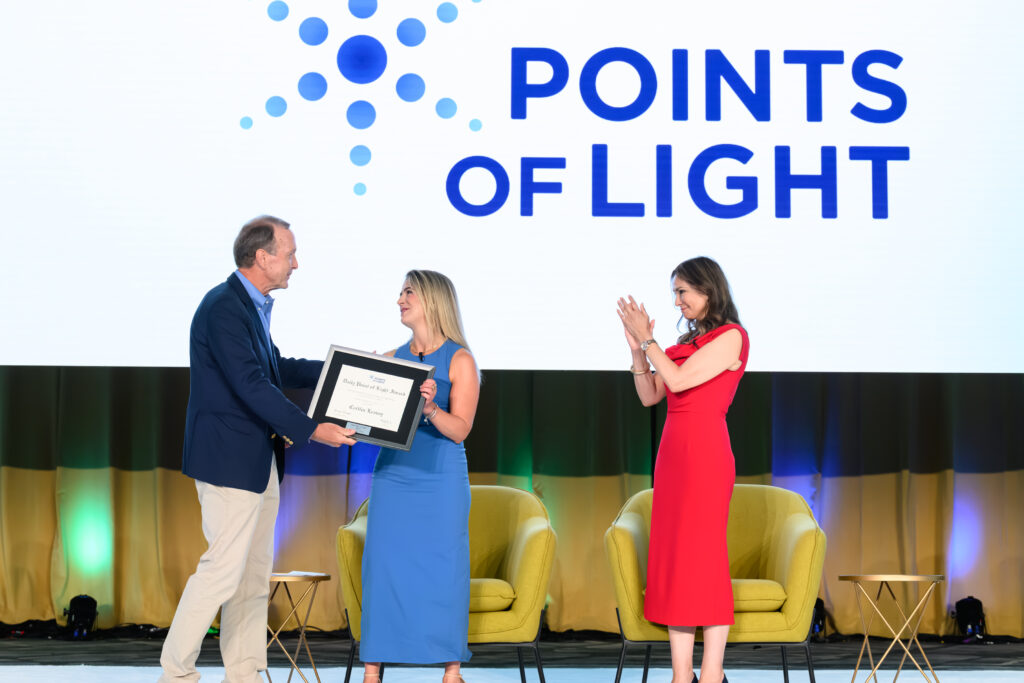
Caitlin receiving her award at the 2026 Points of Light Conference.
Cait Leavey’s devastating loss of her father, FDNY Lieutenant Joseph Leavey, on September 11, 2001, became the catalyst for a life dedicated to healing others. Growing up in the shadow of tragedy, she experienced both profound grief and the extraordinary wave of human compassion that emerged in the days following the attacks. This dual reality shaped her path, steering her first toward education as a Teach For America corps member and later into a career as a licensed mental health counselor. Today, Cait uses her lived experience and professional expertise to support first responders, military families and individuals navigating collective trauma.
Cait founded The Spirit of 9/12, an annual service initiative inspired by the 9/11 National Day of Service movement. The project gathers youth, families, survivors and volunteers to transform remembrance into tangible action. Engaging younger generations who never knew a pre-9/11 world, Cait teaches young people that even the smallest acts of kindness carry immense weight. As a 9/11 Day Ambassador and a co-founder of the 9/11 Memorial & Museum Visionary Network, she dedicates 25 to 40 hours each month to ensuring that the legacy of that historic day is defined not just by what was lost, but by the collective care that followed.
Cait’s mission took an innovative leap forward this past September 12, with the co-founding of The Holding Frames, a 501(c)(3) nonprofit and healing-centered community art initiative. Developed alongside her annual service event, the organization uses expressive arts and community dialogue to help individuals process grief and collective adversity. Participants utilize the proprietary FRAME method to channel personal and shared pain into tangible expressions of hope. The reach of The Holding Frames has quickly expanded from a single project into an ongoing movement, bringing its workshops into schools, corporate boardrooms, museums and conferences, including ongoing collaborations with the National September 11 Memorial & Museum.
Cait continues to show the world how to move gently from trauma toward purpose, proving that we can always choose to be a light for someone else. Read on to hear more of her inspiring story.
Tell us about your volunteer role and organization.
I am the founder of the Spirit of 9/12, which is an annual event that I started about five years ago, the day after 9/11, in honor of the National Day of Service on 9/11. I also happened to be a 9/11 Day Ambassador, and the whole premise of 9/12 is to really embody that spirit of 9/12 that followed after 9/11 and wanting to do a service project that served children and families, while also educating the next generation. I think part of that is having a felt sense of what really 9/12 felt like after 9/11. For me personally, part of my story is I lost my dad on September 11. I was 10 at the time, so I remember 9/11 was a dark day, but there was a lot of light that came out of it. That has really been my journey, and my healing journey specifically is how to spread that light, how to be an example of that light and how service, specifically, not only spreads light to others, but also ignites a light within ourselves.
What inspired you to get started with this initiative?
This day started at this park down the street from the Trade Center. Before becoming a licensed mental health counselor, I was a teacher, and a lot of my students actually lived in the neighborhood of Tribeca, and so it just kind of took place. On the picnic tables in Washington Market Park, I led an art project, and all the art pieces that we created would go to other individuals who are going through a hard time. I would really scaffold it to the kids that I was working with. We started doing an art-space initiative for the first four years, and it grew. Every year kids would come and be like, “I remember you,” and the space in itself is just so inviting with One World Trade Center in the back. It started being about having these conversations and what it really means to have people at a table, in a circle, around a table, being able to create art with one another and build community, which is what really embodied what 9/12 was. Having their nannies and their parents join them and then meeting another kid. It really grew every year.
This past year my good friend Josh Garcia, who survived the Pulse shooting, joined forces with me and we created The Holding Frames, an art-based initiative. The premise of The Holding Frames is that individuals are given a frame, they decorate the outside of the frame and then the middle of the frame is: how are you holding space for someone else? What is something that you would want to send to someone else—a message, a picture—to inspire them and provide your own sense of compassion, spreading your own light, your own kindness to another individual?
This is about really understanding how healing happens in community. A lot of times after disaster and tragedy, when the GoFundMes stop, all the community, all the memorials, all these different things—there’s a support gap there. So, how do we really instill this long-term healing? We have a method with The Holding Frames called the FRAME method: Finding Resilience After Major Events.
Why is this work so important to you?
We have made impact in many, many different areas, and so it’s not just areas of disaster. We work in schools, we work internationally. We both come from this world before this, and so then kind of putting our heads together, The Holding Frames has just been buzzing. It was really special to launch it on 9/12 this year. Specifically, for the Spirit of 9/12 this year, we got a grant from 9/11 Day, so we’re trying to make it a really big, all-day thing, because usually it’s an after school event.
We like to give a lot of agency to the kids and the adults and the families that come. There is also something that’s really beautiful too about bringing the piece of why we’re doing this, relating to being able to tell my story. I think that storytelling is such a pillar of healing, but also of service. I think so much about how we get our next generations involved in service, and I think a lot of that is having them feel a sense of purpose and connection. That’s what’s really important. I always said that my calling to service comes from witnessing how acts of compassion can ignite a light in ourselves and others, especially in those moments of darkness.
Tell us what you’re excited about for the event this year.
It’s going to be an all-day event, it’s going to be on a Saturday, and so we’re really hoping to engage not only kids, but more families and adults as well. It’s going to be a larger movement this year. I think there’s something about the 25th anniversary that’s really important, and also I think that there’s really something special about the movement of 9/12. We hear all these incredible stories, not just with 9/11 but often after a tragedy. For myself and others who were alive on 9/11—we want to share what 9/12 felt like. What it really felt like: individuals being able to ignite small acts of kindness, and that community feeling.
There’s a service aspect to it, and there’s that education piece of it as well. We are really fortunate that 9/11 Day is supporting us, and it’s not just about being able to do our service project on 9/12, but also inspiring others, next year, to do their own service project. We’re going to probably have close to 400 frames that we’re going to be giving out and having individuals paint. The community partnership piece of it is going to be so beautiful.
Last year I had an organization that I’m very close with called Answer the Call. They did a table, and they were giving out their tattoos. They provide financial support for any line-of-duty death in New York City, so any fallen FDNY, NYPD, Port Authority. It was just really beautiful that they were there. First of all, the fact that they came out to support me and us was just incredible, but that is the spirit of 9/12. We’re hoping to have live music too. So it’s an event for kids and adults alike.
What have you learned through your experiences as a volunteer?
I think there’s just something that’s so cool about how you don’t have to be an artist to be creative. Everyone has a creative side of them. It’s really cool to see how people are like, “Man, I haven’t picked up a paintbrush in so long,” and people are getting into their artwork and enjoying it. In years past, we’ve displayed the artwork up on the fence outside of the park—a little bit tricky last year with the frames—but we’re getting there. We’ve always found a way. Then, when kids are walking to school throughout the week, they’re passing and they’re like, “That’s my artwork!” It’s really, really awesome to see them be able to have a sense of power and purpose.
What’s been the most rewarding part of your work?
The thing that’s really beautiful to me is that the kids not only come back, but the kids who come over are engaged. When I’m there at the park, there’s a playground there, and I have rarely had to recruit kids to come over. People see the excitement, people all sitting together. It’s so natural how the movement and the event itself attracts community and light.
Being able to tell my own story, and the why behind it is rewarding too. For many people, 9/11 is history, but there’s this idea that compassion, service and community doesn’t have to be history. The Spirit of 9/12 helps young people actively participate in carrying those values forward.
Why is it important for others to get involved with causes they care about?
We’re in an era right now where service is a way of helping individuals feel less alone. I think that there’s something about engaging youth to volunteer for a cause they care about for them to be able to be part of something bigger than their own, feel connected and feel a sense of agency—that’s really important. There’s so much of a buzz around servicing people, but I think really the reality is that we have to be thinking about service as a way for our youth to feel connected, to feel part of something bigger and to have the agency to be able to find their connection to something that is meaningful to them. That is something I think really helps with character building and leadership development.
It’s also important that we continue the storytelling piece. And that we continue exposing our youth to different causes and then giving them the agency to pick what resonates with them and what is really meaningful to them.
When we think about how to address the sense of loneliness and the isolation that exists right now among our youth, I think service is a way to help with that.
Any advice for people who want to start volunteering?
Try something new, start somewhere, reach out, hear someone’s story. Often I think people get really drawn in when they hear someone else’s story, and then it ignites something within themselves. Maybe they have a similar experience. On that note, empowering youth to tell their own story can really help inspire others, and maybe that means that just a small group of them can start their own project. No service project is too small.
Volunteer Brings the Love of Service to the Next Generation
Meet Daily Point of Light Award honoree Lucinda Robb. Read her story, and nominate an outstanding volunteer or family as a Daily Point of Light.
Five years after founding KidsGiving, Lucinda Robb’s previously unnoticed Pez dispenser collection became a conversation-starter when the basement office they’re displayed in became her default pandemic Zoom background. With previous roles in guest relations and education recruitment, an unexpected hobby might be a surprise, but when you run an organization designed to teach elementary school students about philanthropy, it’s a novelty worth telling your kids about.
The pandemic was a hurdle to KidsGiving’s expansion but in what Lucinda considers one of the most rewarding periods of her work, enthusiastic PTA leaders figured out how to keep things running. Today, there are chapters in three different schools and a newly-launched pilot program for high school students. The latter teaches participants the ins and outs of nonprofits as businesses and sets them up to volunteer with local organizations.
Lucinda also serves on multiple boards of directors supporting a range of organizations that help people reach their full potential as well as the National Archives at the Center for Legislative Archives where she used to work. Above all, she aims to inspire young people to give time and money to initiatives they care about and is proud to see her own kids–ages 17, 18 and 20–follow in her footsteps.
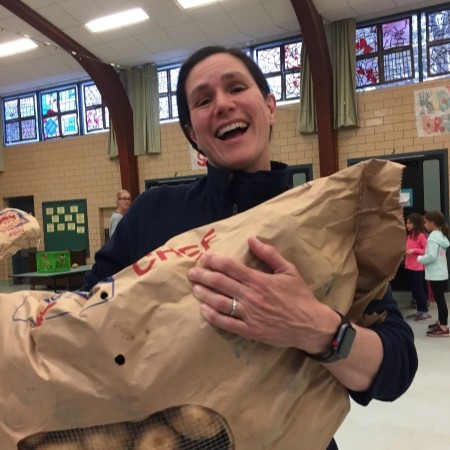
In 2018, Lucinda bags potatoes in the Taylor Elementary Cafeteri
What inspires you to volunteer?
My mother used to be on the board for Points of Light. I learned about volunteering and civic engagement from her.
In college, I had a Girl Scout troop for three years. Initially, I assumed I’d be the third special helper or something doing paper mache, but on my first day, I discovered that I was the only leader. I’d only been a Girl Scout for two years. Aside from my thesis, it wound up being what I most organized my senior year around, and I loved it.
I joined my first board a few years after I graduated from college, the Fairfax Public Library Foundation. I’ve been a very enthusiastic reader all of my life. My mother was one of the people who helped start Reading is Fundamental.
What inspired you to get started with these initiatives?
I’m currently on the National Archives Foundation board. I’m a huge enthusiast and booster. Of my current boards, that’s the one I’ve been on the longest.
I’m on the board of Scholarship America, the country’s largest private administrator of scholarships, and Network2Work, which helps people who are unemployed or underemployed find meaningful jobs. I got involved with both because I was asked.
I’m also on the board of Running Start, which is a nonpartisan group that trains and helps young women run for office. In college, I wrote my thesis on women congressional candidates and campaign financing, so I was interested. I was also impressed. Additionally, I’ve worked with the Arlington Food Assistance Center (AFAC), which remains one of the best run nonprofits I’ve encountered.
After I had my third child, I didn’t want to travel and work so much, so I stayed home. I still wanted to be involved in my community, so I joined a variety of different causes, eventually starting Kidsgiving to get kids involved in philanthropy.
Most of us learn how to behave and interact with people, but we don’t get more explicit instruction on how to be charitable or get involved with our community. I’ve had examples in my life. You pick up a lot of that by osmosis, so I wanted to get used to the idea of helping out their neighbors.
Tell us about your roles.
I’m the behind-the-scenes cheerleader and co-leader to two different groups at KidsGiving, including a middle school club and the high school pilot program we launched this year, KidsGiving Pro. The latter teaches kids about how organizations run and gives them more exposure and experience.
Once we restart in the fall, I’m hoping to do training and fundraise, and again, help them understand how to evaluate nonprofits, how to give an elevator speech, how to be an advocate for a cause, etc. We work with 15 nonprofits who talk to the kids. Ideally, kids who have done the high school program for a year will have an opportunity to volunteer in a leadership role, like a junior board member.
I usually end up being on governance or nominating committees on the different boards I’m a part of. With any organization, sometimes you just need somebody to be the enthusiastic glue, someone who makes sure people get to know each other and talk about more than the budget. When you like the people, you make the extra effort. Being on multiple boards, I also have the advantage of seeing what works and what doesn’t.
Why is it important for others to get involved with causes they care about?
Having a good civic infrastructure correlates strongly with how well your government runs and how well people feel their government functions. I think that’s a sign of where we are right now. People don’t connect with each other in non-political ways. Being involved and having social connections are good for your health, and it’s good for society.
What do you want people to learn from your story?
When I was younger, I always thought I had to be invited to do something. The real change for me was when I did Leadership Arlington. I suddenly understood that I could just have an idea and follow up on it. I don’t have to ask for permission.
I’m particularly grateful to my mom and my aunt for giving me examples of getting involved and doing good things in the community. The Washington Post has a section where they talk about people who are doing good things as well. If you’re going to do something good, make sure that the next generation can see it, not for show, but to inspire them to do the same.
Meet Daily Point of Light Award honoree Elizabeth Murphy. Read her story, and nominate an outstanding volunteer or family as a Daily Point of Light.
Elizabeth Murphy, 65, has lived all over the U.S., but fell in love with Washington, D.C. several years after starting her career in IT—namely software sales—and never left. She married and raised two kids there. Her cat Mango joined the family during the pandemic. The roots she has laid down run deep, and the care she feels for her adopted home runs beyond family ties. It extends to the community that has made it a great place to live.
In 2016, she started volunteering for Volunteer Alexandria (VolALX), a community volunteerism resource that links individuals and groups with nonprofits and City agencies who need support. After retiring, she shifted even more of her time and energy to VolALX and became a volunteer leader, managing multiple large, annual initiatives.
With just two full-time staff, one part-timer, the executive director and summer interns, volunteers are cherished. Elizabeth’s efforts have generated more than $30,000 across events and, according to staff, has expanded the organization’s impact tenfold.
What inspires you to volunteer?
My first volunteering experience was as a 10-year-old, helping my mother go door to door in our neighborhood to raise money for the March of Dimes. It’s a vivid memory.
She was always an inspiration for me. I didn’t do a whole lot of volunteering during my career and raising my kids, but I wanted to inspire them too. So, I tutored at their elementary school almost every year they were there, and I volunteered for the PTA and many other things through their school. My son was a Boy Scout, so we did food drives and projects for the boys who came up through the Eagle Scout ranks. My son is an Eagle Scout and had a big project we all worked on.
That’s where Volunteer Alexandria came in. They’ve been around for 40 years and have a database of opportunities, so it’s easy. You just go to their website and search.
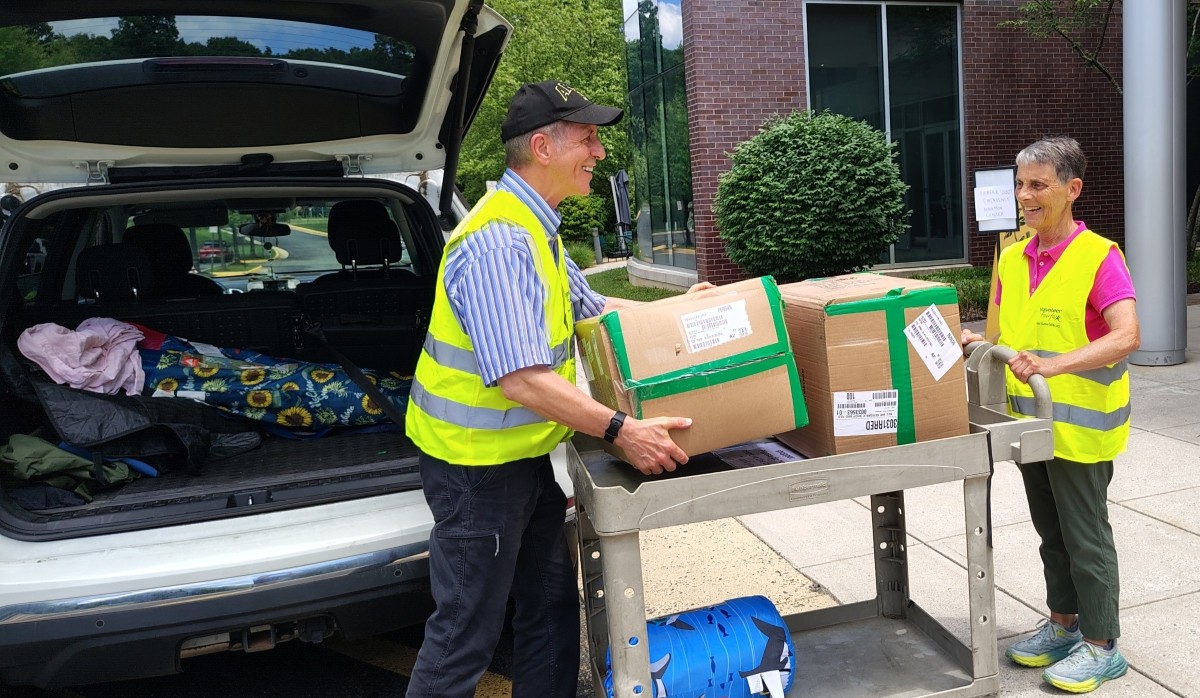
Elizabeth Murphy, longtime volunteer for Volunteer Alexandria, manages multiple annual events for the organization including two drives and a fundraiser.
Tell us about your volunteer role with Volunteer Alexandria.
I’ve been doing the toy drive, called Toys4ALX, for about 11 years in different roles. When I retired in 2021, I took some time off but knew I wanted to get back into volunteering in a more meaningful way. The first thing I volunteered for was food distribution at a church. Then, I saw they needed somebody in the VolALX offices to help with administrative work for projects.
After a while, executive director Marion Brunken asked me to lead Toys4ALX in what is essentially a project management role. It involves recruiting donation sites and sponsors, collecting and sorting toys, working with the Department of Family Services to register families, recruiting and organizing volunteers, etc. We pick up toys from 30 to 40 collection sites and sort them by age for a day of “shopping” for our registered families. Last year, we collected enough toys for 700 children and had around 100 volunteers.
After that, I started filling the same role on their larger annual fundraiser, an arts and crafts fair. There are as many as 90 vendors. I recruit them and keep communications open, and arrange the site and permits. I create applications and maintain mailing lists for events as well.
And lastly, this will be our fourth year doing Food4ALX, an annual food drive with our local food bank. I’m project manager on that, too. We collect 35,000 pounds of food each year. I coordinate everything from the VolALX offices and onsite, when needed, to make sure things run smoothly. I also personally collect and drop off food during the drive.
What are your long-term plans or goals for the organization?
We always try to grow the toy and food drives. Our goal for the latter is 40,000 pounds of food in one month. I’d also like to raise more money through the arts and crafts fair. This year we’re doing three fairs. They’re smaller, but there’s more planning.
What’s been the most rewarding part of your work?
The families who benefit from the food and toy drives are struggling. There’s a lot of financial and food insecurity, so it’s rewarding to see our work lessen the burden.
I didn’t expect how much I’m helping Volunteer Alexandria by offloading this work and allowing staff to spend more time on other initiatives. It’s wonderful to see them grow and succeed, too.
What have you learned through your experiences as a volunteer?
I’m an introvert, and I knew when I retired I was going to be at risk of being isolated. By volunteering, I’m expanding my network. I’m staying busy and experiencing the satisfaction of helping the community. It was more impactful on my well-being than I expected.
Why is it important for others to get involved with causes they care about?
Many nonprofits are struggling, especially smaller ones. They struggle for funds, resources and even hands-on assistance. Many wouldn’t survive without the help of volunteers.
Any advice for people who want to start volunteering?
Start with your local volunteer bureau, if you have one. If you don’t, find a nonprofit that provides a service you can get behind and see if they need help.
I also recommend looking at your employer. At IBM, we had a volunteer office, and we got credits when we volunteered. As a retiree, I still get credits up to $1,000 a year that I can direct to a nonprofit.
The only other thing I would say is that it’s more fun when you’re doing it with somebody you know. Find somebody and make it a party,
What do you want people to learn from your story?
Volunteering can be fun and rewarding, and it can benefit not only your community but your own well-being. If you’re retired, it can be an extension of your career. There are so many people who can benefit from your skills. If you don’t take away anything else, take away that you have value.