To Thrive, Your Company Needs a Soul – Find It in Volunteer Service
This month we’re celebrating the 10th anniversary of Points of Light’s Corporate Service Council, an elite platform for mobilizing, equipping and inspiring high-impact volunteering. Every week leading to our Conference on Volunteering and Service in Houston, Oct. 19-21, we will add a video to our YouTube channel or a post to this blog. Today Stewart Whitney, president of Timberland, a Corporate Service Council member, explains how his company inspires its employees to become “agents of service.”
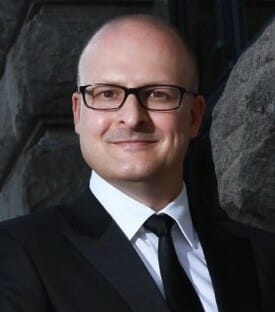
Stewart Whitney
In my 25-plus-year career, one thing has become abundantly clear to me. Companies with an engaged employee base are the companies that tend to thrive. Of course, you need a sound business model and products that consumers demand, but that’s not enough.
Your company needs a soul.
Here at Timberland, where I’ve had the pleasure of working for 15 years, we have a deep heritage focused on environmental and social justice. We’re also fortunate to have a truly impassioned and engaged employee community. To better serve this community, we launched the Path of Service program in 1992 to engage employees, business partners and consumers in service to others.
We started by offering employees up to 16 paid hours each year to serve in their communities; a few years later, given the overwhelming response, we increased that number to 40 hours.
We have one simple goal when it comes to service: equip employees with direct experiences to make a difference and hope that, in turn, they become proactive agents of service beyond their years with our organization.
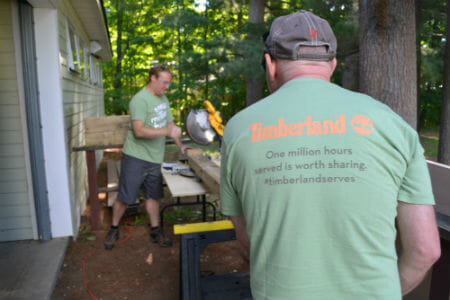
Timberland volunteers help make improvements a New Hampshire park, as part of the company’s Serv-a-palooza.
I am proud to say that in 2014, 78 percent of Timberland employees served more than 72,000 hours in some 100 locations in 19 countries, reflecting a 10.3 percent increase in hours served from 2013. This growth contributed to a major milestone: reaching 1 million hours served, largely through our two companywide service days – Earth Day in the spring and Serv-a-palooza in the fall.
Both events were organized by employees worldwide through Timberland’s Global Stewards program. Launched 10 years ago, Global Stewards solved a common problem – how to scale corporate social responsibility (CSR) efforts nationally or globally when your CSR team is based in in the U.S. (Ours is in New Hampshire.)
Through this program, a network of passionate employees volunteer, above and beyond their regular job responsibilities, for a two-year term to drive engagement agendas in their locations. Timberland relies upon and supports the Stewards to plan events and initiatives that translate and bring to life CSR programs and messages in their countries’ languages and cultural traditions.
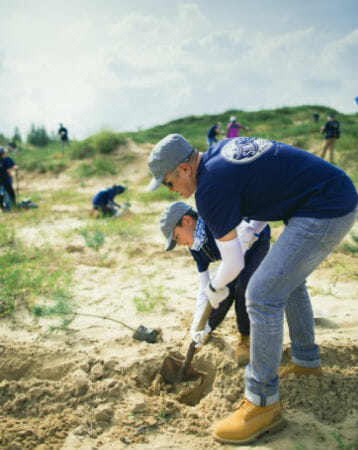
Timberland’s reforestation project in China’s Horqin Desert has planted enough trees to fill the equivalent of 1,200 football fields.
And they often come up with creative solutions, like Stewards at our factory in the Dominican Republic riding the morning buses with factory workers – who don’t have access to email – to get them engaged in service.
For a program to succeed, it’s critical to have this level of involvement. We are constantly gathering feedback from employees and consulting our Global Stewards to shape future initiatives and activities. Employees regularly suggest community partners and service locations, volunteer to lead projects and collaborate on ideas for how the business can be more environmentally responsible.
Just recently, we planted our 2 millionth tree in the Horqin Desert in China. This major initiative, today a key piece of Timberland’s global commitment to tree planting, started back in 2001 with an idea from a single employee who was concerned about deforestation in her region.
At Timberland, we take good ideas seriously and by listening to and harnessing the passion of our employees around the globe we are able to work toward making a lasting difference.
Through years of research and experience, we have found that service is a key factor in employee job satisfaction, leadership development and also an integral part of drawing great talent to the company. Employees really value the opportunity to become leaders in the workplace, gain new skills and receive visibility in their community while doing important work.
Because of our own experience in employee engagement, we welcome the opportunity to support other businesses and organizations looking to engage in their communities for the greater good. We recently relaunched our Service Toolkit, which provides information and tools for developing and executing meaningful service events for 25 to 1,000-plus volunteers.
In our view, there is no room for competition when it comes to giving back.
Top Six Resources for Nonprofits
From managing volunteers to making your organization more hospitable, these key resources will give you effective strategies for addressing challenges that face nonprofits today. For more resources, check out the searchable resource library managed by Points of Light’s HandsOn Network.
Bringing on Highly Skilled Volunteers
There are likely skilled professionals – specialists in accounting, information technology, human resources and more – in your community ready to volunteer at your nonprofit, but are you ready to receive them? The Skills-Based Service Engagement Tool, which takes about 10 minutes to use, can help your nonprofit determine how prepared it is to engage skills-based volunteers.
Through thought-provoking questions and instant feedback, the tool provides tangible recommendations for nonprofits looking to boost their ability to meet their missions by attracting talented professionals as volunteers.
Managing Volunteers
For many nonprofit organizations, volunteer help is vital. However, recruiting and engaging volunteers in an organized way can be tough. This HandsOn Volunteer Management Guidebook can help.
The guide outlines various strategies for organizing a strong volunteer structure, from recruiting and scheduling volunteers to retaining and recognizing their efforts. Paired with questions to consider and activities to help map out goals, the Volunteer Management Guidebook provides resources you can adapt to meet your local program needs.
Calculating Economic Impact of Volunteers
There are many ways to recognize the value of volunteer work. For nonprofits, this often means calculating the monetary worth of volunteer duties, which varies. To make it easier, Points of Light has created the Economic Impact of Volunteers Calculator.
By providing a complete list of volunteer jobs, the calculator can help give your nonprofit a better idea of your volunteers’ economic impact. The calculator lists standard hourly rates and hourly benefits of specific positions. After you input the number of hours, the calculator does the rest of the work.
Nurturing Volunteer Leaders
A solid corps of volunteer leaders can make a big difference in helping your nonprofit achieve its mission. Points of Light’s Volunteers as Leaders guidebook is designed to help your organization establish the processes needed to develop a strong volunteer leader program.
This guide outlines various stages of program evolution, from development to volunteer leader recruitment, training and support. Equipped with user-friendly questions, tools for brainstorming and suggestions, Volunteers as Leaders provides pointers and resources you can adjust to meet the needs of your nonprofit.
Assessing Volunteer Leaders
Volunteer and staff feedback on organizational management is your nonprofit’s key to growth and success. The Organizational Assessment for Volunteer Leaders, created by Points of Light, provides a thorough questionnaire to help extract important responses about how your project is running, from a volunteer perspective.
This resource includes activities that help staff or the volunteer coordinator assess organization readiness, recruitment, retention and recognition.
Making Hospitality Part of Your Organization’s Culture
Hospitality is crucial in any company culture, and the same is true for nonprofit organizations. Created by Hilton Worldwide, Points of Light and Taproot Foundation, the Hospitality + Service curriculum is designed to help you serve your clients better by improving communication and connections with clients, creating warm and welcoming environments and effectively managing challenging situations.
Hospitality + Service’s leadership toolkit, Hospitality by Design, shows how to build hospitality into your organizational culture from the ground up, deliver more to your clients, strengthen your team and build your reputation and impact in the community.
How Volunteers Are Helping Refugees – And What You Can Do
In central Rome, a former cultural center has found new life as a temporary home for hundreds of refugees. Without formal leadership or organizational structure, citizens have transformed the Baobab center into a safe haven where refugees can arrive at any hour and find food, shelter and someone who is willing to help.
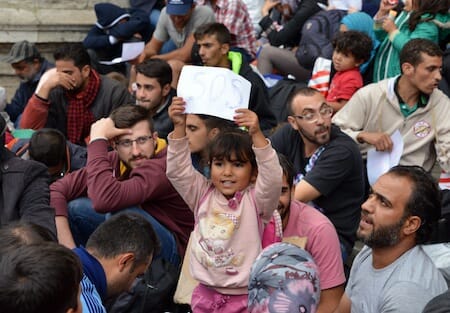
Refugees gather at Budapest Keleti railway station in Hungary.
Volunteers provide meals, hand out clothes and work a small first aid station, all made possible by donations and cash contributions from the people of Rome – including the Pope, who recently donated medical supplies to the center. As migrants prepare to move north, volunteers provide travel packs containing bottled water, a sandwich, a basic dictionary, a map of Europe and often a train ticket.
“Baobab represents a symbol of hope, of ordinary citizens not closing their eyes in front of need. It is a real example of people realizing their potential to make a difference,” says Mauro Cipparone, president of
.
RomAltruista, inspired by the actions of these “ordinary citizens,” has joined the effort, too. In addition to lending a hand at the center, the organization is promoting volunteer opportunities to help fill additional needs.
The Baobab center is not alone. The outpouring of volunteers is a common theme in places where refugee numbers are the highest, where citizens are desperate to help and official direction is lagging or non-responsive. And the refugee crisis has only accelerated in recent months.
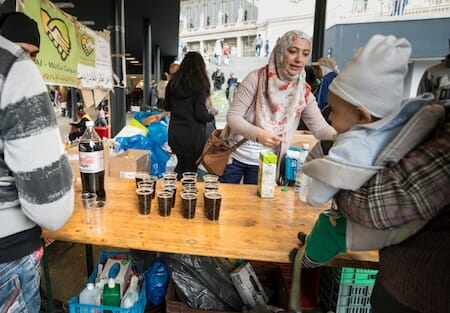
A volunteer serves beverages to refugees near Budapest Keleti train station in Hungary.
Following a spike in refugee populations in 2014, the number of migrants arriving in Europe has already doubled in 2015. The unprecedented movement of people around the world has created the highest number of displaced persons – many fleeing civil war in Syria – since World War II.
More than half of the nearly 400,000 registered refugees are children and youth. Upon arrival, refugees must stay in detention camps or reception centers until they either begin to travel to another country or find a way to stay in the nation in which they arrive.
However, many nations lack the infrastructure to respond, given the current influx of refugees. Volunteers are playing a key role in helping solve this problem.
Like the volunteers at the Baobab center, many Hungarians are helping refugees however they can. Points of Light partner
sees citizens donating their time at nearby railway stations to pass out food and water, collect trash and help refugees bridge language barriers.
One group set up a projector to entertain kids with their favorite cartoons, right in the middle of Budapest’s central train station. Corporations have also stepped up. Telekom, the country’s leading telecommunications company, is providing free wi-fi at rail stations – which not only allows refugees to connect with loved ones, but supports volunteer groups that are organizing via social media.
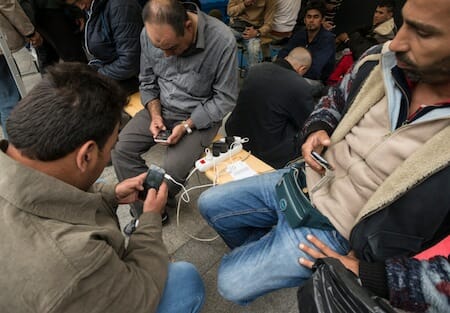
Refugees use donated mobile phones to keep in touch with their families near Budapest Keleti train station in Hungary.
is working with nongovernmental organizations (NGOs) to help coordinate the volunteer response. The group’s website has become a virtual corkboard where organizations can post requests for specific volunteering services, as well as a repository for educational materials and tools for NGOs – a precursor to an upcoming seminar on the best practices of volunteer management during times of crisis.
And, while Greek citizens are eager to help, the country’s geography makes an effort like the one at the Baobab center more challenging. Most refugees passing through Greece end up on one of its many islands, where volunteers are doing their best to keep up with limited resources.
Costs for volunteer travel and the shipment of donated goods can be prohibitive. Volunteer4Greece is working to connect NGOs with private companies willing to support these efforts.
Farther north, in countries that are more removed from the crisis than their Mediterranean neighbors, volunteer efforts are just beginning to take shape. However, Points of Light network members such as
are taking steps to respond. The group will donate warm clothing collected at its annual Wrap Up London coat drive in November.
The outpouring of volunteers across Europe is inspiring, and we will surely see more stories like these emerge as volunteer centers are able to develop sustainable plans to support these efforts. Points of Light provides programmatic support to our global affiliates and encourages our domestic affiliates to host donation drives to support local response entities.
What can you do?
Many organizations have been overwhelmed with donated goods that have created logistical challenges in storage and transportation. Cash donations are the fastest and most efficient way to reach vulnerable populations.
Such donations allow relief organizations to respond to changing needs throughout the region’s response and long-term recovery. You can also host a fundraising event to increase your community’s collective impact.
Volunteer domestically with the International Rescue Committee to mentor refugee families, develop job skills and maintain a
. Consider volunteering with your local HandsOn Network volunteer center, and keep up to date on our response by following the HandsOn Network Facebook page.
For more about how to help, check out this article from The Guardian and this notice from the UK government.
A Life-Changing Chance to Get Out of Debt
This post is by a woman named Karen, who shares how the Financial Opportunity Corpsand a volunteer financial coach helped her dig out of crushing debt. (We are withholding her last name to protect her privacy.)
On Black Friday last year, I gave myself a gift. I walked into the office of the Philadelphia-based nonprofit Clarifi and I paid off my debt early. And then I cried.
I cried because just a few years earlier I faced a mountain of credit card bills I didn’t think I would ever pay off. I was scared, ashamed and secretive about my financial situation.
And now, just a few years later, I can attest that Clarifi changes lives. They put me on the path that helped turn mine around. I can’t say it was easy, even when I was set up on a debt management plan. I was scared.
I wasn’t sure I could pay off this chunk of money every month for five years. Nearly the same amount as my rent. Money was tight; I could no longer rely on credit cards as free money. I had to face reality, but I never missed a payment.
It couldn’t have come at a better time, because I had recently launched my own consulting business, so I needed to keep my budget in check more than ever.
My coach, my mentor, Jerry Block, is a big deal at U.S. Trust Bank of America Private Wealth Management. But he never spoke down to me – actually, completely the opposite. He genuinely believed that I could be successful.
Plus, I learned lots of practical tips from him. For instance, I learned that I could save $50 a month from switching to my mother’s family phone plan. So today, thanks to Clarifi, Jerry, the support of loved ones, and yes, my own hard work, life is very different.
I have great credit, I just bought a car and I have a business that continues to grow. And without the fear and crushing weight that comes with crushing debt, the future feels open and full of possibility.
For more about the Financial Opportunity Corps, visit www.pointsoflight.org/financial-coaching.
The Power of ‘No More Hurting People, Peace’
This post is by Bill and Denise Richard, parents of Martin Richard, the 8-year-old who was tragically killed when the second of two bombs exploded near the finish line of the Boston Marathon on April 15, 2013.
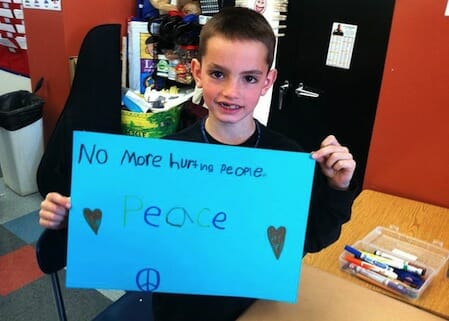
Martin Richard holds up a sign he made that reads, “No more hurting people. Peace.”
“No more hurting people. Peace.”
We hope our son’s life is able to live on in those words.
Each day, we are all faced with a series of choices that define who we are and who we will ultimately become. You can choose to live in the past or look forward to the future. You can choose to be apathetic or you can be someone who embraces peace and kindness. At a very young age, our son Martin was able to recognize the importance of kindness, togetherness and inclusion and that he could make a difference through these qualities.
Like most 8-year-old kids, Martin had a strong love for things like sports and friendships and cared very much about making others feel included and being kind to everyone, whether it was his friends, classmates or even strangers. He would make sure we carried extra snacks whenever we went downtown, just in case we came across people who might be in need of food.
We lost Martin on April 15, 2013, when the second of two bombs exploded near the finish line of the Boston Marathon. In the days after the bombings, a photo circulated of Martin holding a poster he made that said “No more hurting people. Peace,” and an amazing thing happened. We heard stories from children of all ages who were inspired by Martin to act in ways that helped others… some friends, some classmates and some strangers. No more hurting people, peace.
Martin was known as a peacemaker, he brought people together and helped to show his peers that you don’t have to be a grown up to make a difference. Kids are natural bridge builders – on the playground, at the lunch table, in the classroom – and all of their simple acts of kindness can add up to make a big difference.
Our family founded The Martin Richard Foundation to amplify those small actions, to honor our son’s message of peace, and to make the world a better place. But we can’t do it alone. That is why we have joined with generationOn, the youth division of Points of Light, and Hasbro, Inc. to create the Martin Richard Bridge Builder campaign to empower youth to make positive change through service. Our goal is to give kids a chance to learn about ways they can make a difference and share their stories to inspire others to do the same.
Whether it’s doing a volunteer project like planting a peace garden at a local school, creating a peace poster or simply inviting someone new to sit at your school lunch table, there are many easy ways to get involved and help change the world.
We invite all kids, teens and families to join us in our movement to magnify this message by sharing your own acts of kindness using #NoMoreHurtingPeople or by visiting generationOn.org/peace.
The story of the future is yet to be written, and we have the opportunity to choose the words and actions that will tell that story. We hope our son’s life is able to live on in those words. We hope you choose kindness.
Points of Light Brings the Volunteering Experts to You
Do you wish you could hear from the experts as you manage and scale your employee engagement and citizenship programs? Now you can! The latest trends in corporate volunteering are now at your fingertips and on video with Points of Light’s Corporate Video Lecture Series.
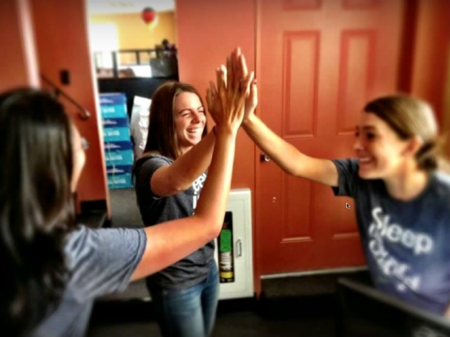
Marketing professionals celebrate after completing a CreateAthon, a pro bono marathon event to strengthen the marketing capacity of nonprofit organizations.
Watch and learn as corporate social responsibility experts from the Points of Light Leadership Faculty explore virtual volunteering, job purposing, organizing CreateAthons and hackathons, managing pro bono service, global volunteering and more.
Bea Boccalandro, president of VeraWorks, on job purposing. Job purposing, a new management practice of broadening the social mission of corporate jobs, can help drive up employee engagement at your company.
Erin Dieterich, director of corporate citizenship at NetSuite, on hackathons. Hackathons are events during which technology professionals collaborate to produce software projects for social good. Learn how you can organize a pro bono hackathon to engage key stakeholders and deliver social impact.
Jared Chung, founder of CareerVillage.org, on virtual volunteering. Find out what virtual volunteering is, how the Internet is a powerful enabler of volunteering and how you can get involved.
Teresa Coles, founder of CreateAthon on pro bono CreateAthons. Learn how you can engage your marketing professionals to support the social sector through CreateAthons, or pro bono marathons, and how you can get involved in this movement.
Cheryl Naja, director of pro bono and community service at Alton & Bird, on how to manage pro bono projects for success. You’ll find out how to manage effective pro bono projects and how you can successfully match corporate talent to nonprofit needs.
Greg Cotton, president of Cotton 7 Global Enterprises, on how to manage international corporate volunteer projects. Hear how a midsize security and clean technology company has managed and navigated global volunteer projects for impact.
Interested in learning more? Join hundreds of corporate social responsibility professionals and industry leaders at the Business Track at Points of Light’s Conference on Volunteering and Service in Houston on Oct 19-21.
On 9/11 Day, Inspiring Children to Serve
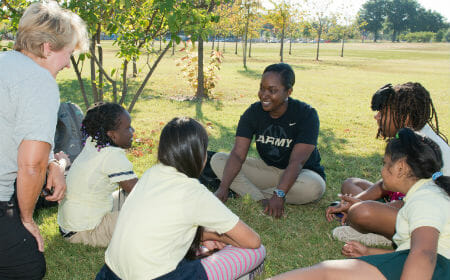
Sitting in the grass, against the backdrop of the Washington Monument, Army veteran Mary Tobin had a bunch of 9-year-olds’ full attention. In ways they could understand, she talked about the heroes of 9/11, such as the airline passengers who diverted one of the planes set to be part of the attack.
Veteran Mary Tobin, center, tells her story of service to Washington, D.C., students, as Wendy Spencer, left, CEO of the Corporation for National and Community Service, listens.
“They were just ordinary Americans, living their lives, like you live your life – going to recess, going to lunch,” she said, as the children giggled. “They heard some bad stuff had happened and they decided to stop the bad guys to keep more people from getting hurt.”
Tobin, who was injured while on patrol in Iraq, shared her story of service with the children today as part Points of Light’s national 9/11 Day of Service and Remembrance event in Washington, D.C., which brought together veterans and school children to benefit children of military families.
“It’s important that we pledge never to forget those who lost their lives,” Spencer told the group of 8- and 9-year-olds from Harriet Tubman Elementary School in Washington, D.C., adding that it’s also important to remember the family members left behind. “It’s an important part of history that you’re learning now.”
Esther, a 9-year-old student at Harriet Tubman Elementary School in Washington, D.C., writes in a book she is making for a child in a military family.
The children split into groups, which each paired with one of the veterans on hand to share their stories of service. Sacrifice and heroism were predominant themes.
“Do you have someone special in your life who is a hero to you?” asked Army veteran Marten D. Wallace Sr. of his group. “My heroes are those in the military who defend and serve our country. Heroes come in many forms.”
“And sizes!” added 9-year-old Esther, excitedly raising her hand.
The veterans talked about what brought them to the military and why it’s important to serve others, especially those in their communities. The kids asked about military training, marveled over world travel and even proposed an unorthodox style of combat in Iraq. “You could fight like ninjas,” 8-year-old Ginika told Tobin, who smiled at the suggestion.
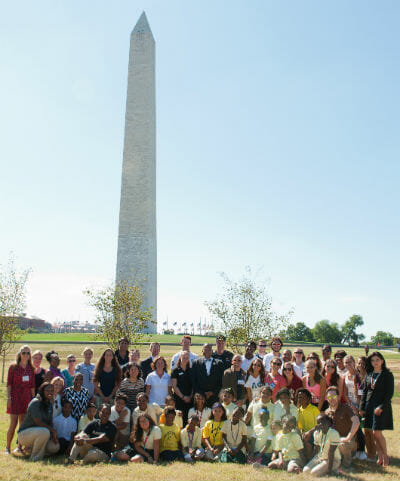
Veterans, students and volunteers gather after the 9/11 Day service project in front of the Washington Monument.
“One time there was a woman who was in a war and who could not see her family,” wrote a student named Ariona, about Marine veteran Maggie Sexton. “But she still worked very hard.”
The books Ariona and her schoolmates made will be given as gifts to the children of military families – young people who often face particular struggles as a result of having parents deployed overseas.
Janaia DeShields, vice president for military initiatives at Points of Light, said the project brought different generations together to not only commemorate 9/11 but to teach the next generation about what it means to serve.
“We hope to inspire a legacy of service in the next generation of leaders,” she said. “Sept. 11 will always be part of our history – how we recognize it is up to them.”
It’s not too late to serve in honor of 9/11 Day. Events are happening over the weekend. Go to AllforGood.org to find an event near you.
For 9/11 Day, a Message from a Marine About What it Means to Serve
Today we share the story of Marine Staff Sgt. Maggie Sexton, who will be joining us in Washington, D.C., for the 9/11 Day of Service and Remembrance. On the grounds of the Washington Monument, she will be talking to local schoolchildren about what it means to serve. Find ways to serve on 9/11 Day and through the weekend at AllforGood.org.
Maggie Sexton
I signed up to join the Marine Corps not long after the events of 9/11, right after I finished high school.
I joined for reasons similar to other young Marines at that time: I wanted to serve my country and join the response following the 9/11 attacks, and I wanted to challenge myself and find out what I was made of.
For my first four-year enlistment I was a nuclear, biological and chemical defense specialist. Then I spent another enlistment guarding American embassies in Beijing and Berlin and teaching new embassy Marine security guards. I ended up serving eight and a half years, in locations from Japan and China, to Iraq and Germany, and here in the U.S. from California to Virginia.
Have you noticed that the word “serve” is used a lot when people are talking about being in the military? We’re service members; we serve our country; I served for eight and a half years…
What does it mean to serve and why do we consider that such an important aspect of our military? To serve is to elevate the needs of others over your own – to sacrifice your own desires and goals and needs to something greater. And sacrifice takes a lot of forms in the military.
It means not having the option of quitting, no matter how much you want to. It meant living on the military base with other Marines instead of having my own house. It meant not being able to go home and see my parents and brothers for Thanksgiving or Christmas – though I did get to visit them at other times. It meant going to war.
When I deployed to Iraq there were a lot of military moms and dads. Sacrifice meant that they had to leave their children for six months to a year at a time, and I saw just how heartbreaking and difficult that was for them.
Many service members’ sacrifice included being injured or killed in the line of duty.
All of that hardship and loss is also a huge sacrifice for our families – our parents, siblings, partners and children – even though they weren’t the ones who joined the military or signed up for that sacrifice.
I said that I joined the Marines to serve, but also to challenge myself and see what I was made of. From boot camp, to my three combat deployments in Iraq, to my experience guarding American embassies around the world, I did learn what I was made of: pretty tough stuff.
In addition to learning to run and march and do pull ups and shoot a rifle, I learned assertiveness; I learned how to keep a cool head in stressful or dangerous situations, I learned how to lead and take responsibility for the Marines around me, and I learned to always give my best effort and never think of quitting as an option. Most importantly – I learned what it means to serve.
The skills and perspectives I learned as a Marine served me well during my Marine Corps career and they continue to serve me as a veteran and civilian. I now live in Washington, D.C., where I finished college after I left the Marine Corps, and where I now work to improve the health, well-being, rights and opportunities of women in other parts of the world.
And I know a lot of other Marines who have left military service but are continuing to serve their world, and country and communities in many different ways.
I hope that my story expands your perception of Marines, soldiers, sailors and “airmen” (P.S. – they aren’t just men, either!) and will help you to think about the diverse roles that service members and veterans play within your community.
Enhancing Corporate Volunteerism to Strengthen Communities
We are excited to kick off our 10th anniversary celebration of Points of Light’s Corporate Service Council, an elite platform for mobilizing, equipping and inspiring high-impact volunteering. Every week in the run-up to our Conference on Volunteering and Service in October, we will add a video to our YouTube channel or a post to this blog. We invite you to join in the celebration and read this post by Kerry Sullivan, president of Bank of America’s Charitable Foundation and chair of the Corporate Service Council.
Kerry Sullivan
It’s hard to believe that Points of Light is already celebrating its 25th anniversary and, with it, 25 years of mobilizing volunteerism across the globe.
That commitment to creating social action that brings change to communities has resonated with countless volunteers, nonprofits and companies. As the chair of Points of Light’s Corporate Service Council, the organization’s impact is something I’ve been delighted to be a part of.
For many years, volunteerism has been a key component of Bank of America’s efforts to strengthen and support local communities. Our employees bring a huge passion for making a difference to the people and communities we serve, and are the ones who make it possible for us to deliver on our mission to make financial lives better.
This passion is something I’ve seen up close through our employee volunteer work, and from lines of business leaders, with 2 million volunteer hours recorded last year alone among Bank of America employees.
The Corporate Service Council has enabled us to grow our efforts and empower our employees to do more, especially in economically disadvantaged communities. In particular, the Council’s regional meetings and expert hotlines have sparked new thinking on how to inspire our volunteers and work with our partners in a way that delivers lasting value.
Kerry Sullivan, left, chair of the Corporate Service Council, volunteers at a service event at Points of Light’s Conference on Volunteering and Service.
We’ve changed the dialogue with our nonprofit partners and have really looked to marry the passion of our employees with their needs. This has really enhanced the volunteer experience and the value to the community.
On a personal level, the executive networking and learning seminars have offered me a chance to work with corporate citizenship executives from dozens of the world’s leading companies, sharing best practices and working with a wide network full of fresh ideas and experience.
To me, the most gratifying part of the Corporate Service Council is that the conversations are elevated beyond the nuts and bolts of employee volunteerism and really focus on the collective impact we can have in communities, whether engaged in financial coaching or mentoring, working at a food pantry, volunteering for park cleanups or helping with a home build. The results of our collective work are part of the solution.
The Council underscores the idea that pairing the right resources with the right people can have a substantial impact. Through this platform and other initiatives, Points of Light has helped make huge inroads over the past 25 years to encourage the very type of partnership and collaboration that makes a real difference to the challenges our communities face.
As the importance of corporate volunteerism continues to grow in the next 25 years, I’m excited to see what Points of Light will achieve.
The Points of Light Corporate Service Council is the premier global platform for advancing corporate volunteerism. Since its inception in 2005, the Council has convened an elite group of companies to leverage the power of corporate volunteerism to create change in communities. Council members include more than 75 of the world’s largest and most successful companies. To learn more, click here or contact [email protected]. Many thanks to Edelman for pro bono support of the Council’s 10-year anniversary campaign.
Reclaim the Legacy of 9/11 Through Volunteer Service
Across the country on Sept. 11, millions of Americans will perform good deeds to help others and reclaim the legacy of what happened on that day 14 years ago.
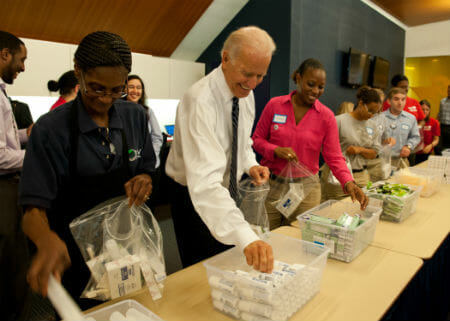
Vice President Joe Biden joins volunteers at George Washington University to assemble hygiene kits during 9/11 Day last year.
Will you join them?
You can find volunteer projects near you by visiting AllforGood.org and searching the term “9/11.” Projects are happening on Sept. 11 and through the weekend.
“In powerful and heartfelt ways – through volunteer service – Americans are rekindling the spirit of unity that arose just after 9/11,” says Delores Morton, president of programs at Points of Light. “Service draws us closer to each other as we honor the victims and heroes of that day.”
If you’re in the Washington, D.C., area, join us for our national 9/11 Day of Service and Remembrance event, from 8:30 to 11:30 a.m., on the grounds of the Washington Monument.
During that event, war veterans will tell their stories of service to public school students. Working with volunteers, the students will document the veterans’ stories to create books that will be given as gifts to the children of military families – young people who often face particular struggles as a result of having parents deployed overseas. The handmade books will serve as reminders of the strength and resilience of the men and women in the armed forces.
Sept. 11 was designated a National Day of Service and Remembrance by the 2009 Kennedy Serve America Act. The Corporation for National and Community Service leads the annual event, working with MyGoodDeed and hundreds of nonprofit groups, faith-based organizations, and schools and businesses nationwide.
How are you serving on 9/11 Day? Share your story with us on Twitter or Facebook, or by sending us an email at [email protected].