Turning Complacency Into Action When it Comes to Disasters
Read about how folks in Savannah, Ga., are preparing for disaster. To help your family take action, visit Good & Ready, where you’ll learn how to create a disaster plan, build a preparedness kit and more.
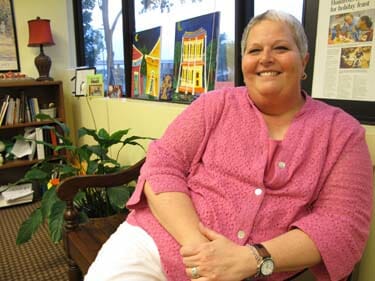
Barbara Moss-Hogan of Savannah, Ga., who moved from New Orleans after Hurricane Katrina, is prepared in case she experiences another hurricane.
Barbara Moss-Hogan hears a familiar complacency among friends and coworkers living in Savannah, Ga., a coastal city that’s been spared by major hurricanes for more than a century.
Their talk brings back memories of the bizarre items she and her friends took while evacuating New Orleans ahead of Hurricane Katrina.
A string of pearls and a bathing suit were all one friend brought. Others grabbed a sewing machine, a set of golf clubs, a ball gown.
“People don’t realize what you’re supposed to bring,” said Moss-Hogan, a social worker who moved to Savannah shortly after fleeing New Orleans in 2005. (Click here to hear her advice.)
Volunteers from Savannah-area Allstate insurance agencies and United Way Hands on Savannah last week paired up to help inform residents as part of a 14-city disaster preparedness tour, brought to town by the Allstate Foundation and Points of Light. Volunteers set up tables on May 31 outside a Savannah Sand Gnats minor league baseball game to help hundreds of Savannah residents build free disaster kits.
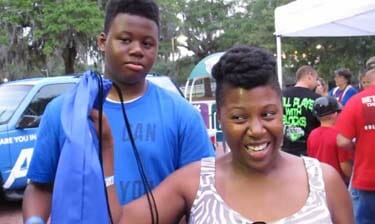
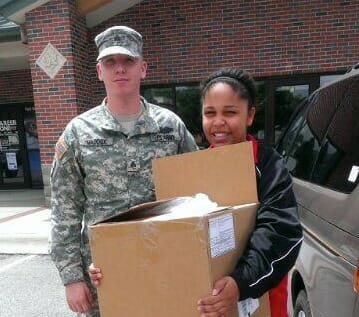
An event attendee, showing her new disaster preparedness kit, talks about getting ready for disaster before it happens. (Click image to watch video.)
They helped participants assemble close to 450 kits containing flashlights, first aid kits, cleaning supplies, checklists for emergency planning and other items proven to keep people safe and prepared.
Many locals receiving kits said they had done little to prepare.
“I’m not as prepared as I should be,” said James Ricks, whose home has flooded three times during tropical storms.
Girl Scout troop leaders Tara Trappio and Evelyn Ragland confessed they, too, weren’t ready for a weather emergency.
“Some of this stuff I have – the flashlight, the first aid kit and the water bottles – but that’s about it,” said Trappio. Ragland recalled evacuating the city because of an approaching storm in 1999. “I wasn’t prepared at all. Everything went too fast,” she said.
Coastal Georgia has enjoyed decades with rarely a tropical storm. Despite 100 miles of coastline, Georgia hasn’t taken a direct hit from a hurricane of Category 3 or greater strength (winds of 111 to 129 miles an hour) since the late 1890s.
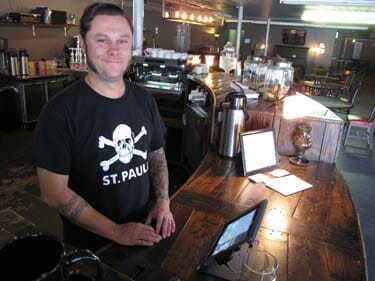
The Rev. Kevin Veitinger of Savannah, Ga., moved his family to higher ground not long after helping to pushing cars out of waste-high waters near their rental home.
A hurricane evacuation study commissioned in 2012 by the Federal Emergency Management Agency and the U.S. Army Corps of Engineers found that many coastal Georgia residents underestimate the vulnerability of their homes to storm surge. Some said they plan to ignore evacuation orders.
Preparing for a hurricane starts with deciding whether to evacuate and where to go should evacuation be recommended. Basic supplies to have on hand include a three-day supply of water – one gallon per person – and non-perishable, easy-to-prepare food. Some families may also need to stock up on medications, baby supplies, pet supplies and copies of personal documents.
“I think the threat isn’t taken as seriously as it should be,” said Marianne Fischer, a Savannah native and Allstate insurance agent who volunteered at the ballpark event to build disaster preparedness kits.
Savannah residents who the recall the area’s only evacuations in recent history – for Hurricane David in 1979 and Hurricane Floyd in 1999 – usually talk of the hours of stalled traffic on the interstates. David hit the city but caused minor damage, while Floyd bypassed Georgia.
Though hurricanes are rare, more Savannah residents are familiar with flooding after heavy rains and high tides have overwhelmed parts of the city’s extensive canal system.
The Rev. Kevin Veitinger moved his family to higher ground not long after spending a rainy afternoon pushing cars out of waste-high waters near their rental home. A United Methodist minister from south Florida, Veitinger takes the hurricane threat in Savannah seriously. (To hear his advice, click here.)
He and his family experienced Hurricane Wilma in 2005, back when they lived near Fort Lauderdale, Fla. The storm took off the roof of his church and left his neighborhood without power for a month.
He doesn’t want to relive that experience in Savannah.
“The city is almost 300 years old,” he said. “If a Category 3 was predicted for Savannah, I’d be out of here.”
Why AmeriCorps Alums Should Matter to Colleges and Employers
This post is by Mary Bruce and Ben Duda, co-executive directors of AmeriCorps Alums, the only national network that connects the nearly 1 million alumni of all AmeriCorps programs to the people, ideas, and resources that support their commitment to a lifetime of service.
This past year, through AmeriCorps service, Maya was a mentor, teacher, coach, adviser and inspiration to Oakland middle schoolers. She’s an emerging leader in the neighborhood where she grew up and where she served. Through national service, she gained critical skills in teamwork, project management, facilitation and communication. As her one-year term of service ends, will a potential employer or a college admissions officer actively recruit her because of her service – or will they wonder, “What’s AmeriCorps?” and, “How come Maya only lasted a year in her last role?”
Maya is not alone. Since 1994, nearly 1 million Americans have raised their hands through service with AmeriCorps. This spring, more than 5,200 alumni of AmeriCorps, from all 50 states, raised their voices. In a “Life after AmeriCorps” survey administered by AmeriCorps Alums, alumni told us that their civilian national service solidified their commitment to strengthening America.
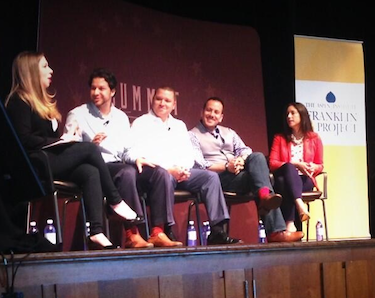
From left, Chelsea Clinton, vice chair, Clinton Foundation; Zach Maurin, executive director, ServiceNation; Fagan Harris, CEO, Baltimore Corps; Rodrigo Garcia, board chair, Student Veterans of America; and Mary Bruce, co-executive director, AmeriCorps Alums
Nearly all alums (88 percent) believed their AmeriCorps service was among the most significant professional experiences of their life. They were confident that through national service they developed skills to be better students, employees and citizens. They shared with us that as young alums, they wanted careers that mattered.
Alumni of national service, like a veteran coming home or a returned Peace Corps volunteer arriving stateside, had challenges continuing their educations and moving from their service experiences into their next professional jobs. Only a third of alums strongly agreed they knew how to navigate “life after AmeriCorps” (for example, find a new job or get into a school of their choice).
Engaged citizens and civic leaders like Maya aren’t just nice to have. They’re critical to our country’s future. We are a nation where one in five children lives in poverty, high school dropout rates persist, and the rungs of the ladder to economic mobility are shaky at best. America’s challenges are real. Now more than ever, we need all Americans – and especially those who have proven themselves to be citizen leaders – to be asked to be part of the solution, and to be given opportunities to do so.
Too frequently, and for too long, the potential of AmeriCorps alumni has gone unrecognized, unrewarded and underleveraged. With the future of our country at stake, why would we leave this talent on the sidelines? Three steps we can take to fix this:
College and universities should be fast-tracking AmeriCorps national service alumni into their programs by giving preference to and providing additional scholarships for their domestic service experience. Around 120 schools already match the scholarship that AmeriCorps members receive for their service – we should expand these efforts.
Employers, both private and nonprofit, should recognize that the skills built in AmeriCorps are incredibly valuable in today’s work force and they should update hiring applications and HR screening protocols to seek out AmeriCorps service experience. Many partners, ranging from Comcast to Deloitte, and the Urban Teacher Center, already actively recruit alums. Their efforts should be applauded and others should follow their lead.
The federal government should extend noncompetitive eligibility to all AmeriCorps alumni, and government leaders at state and local levels should adjust their hiring practices so alumni from Reading Partners to Conservation Corps have clear on-ramps to meet the civil service needs they’re facing. Returned Peace Corps Volunteers get noncompetitive eligibility, as do members of the Public Lands Corps. We should expand these benefits to all civilian service veterans.
Maya, along with the nearly 1 million alumni of AmeriCorps who have served since 1994 have proven to be civic leaders, team builders and problem solvers with a “get-things-done” attitude. For the good of America, let’s work to ensure that all Americans have the common opportunity of being able to serve like Maya – and then let’s tap the potential of alums to grow as civic leaders, for life.
Let’s thank these alums, support them and count on them to keep getting things done for America. To help spread this message, today we joined more than 300 leaders at the Aspen Institute’s Summit at Gettysburg.
There, in a discussion with Chelsea Clinton (see photo above), we proudly shared that national service and the impact of our alumni network is necessary, not just nice. Maya wants to change the world – and America needs her. We’re asking you to join us in supporting her and her nearly 1 million alumni peers.
Collaboration. It’s one of the most frequently used words in the philanthropic space, but is it being done successfully? Clearly, there are some great examples of collaboration, but what you typically find is that many collaborations start off with the best of intentions, but don’t accomplish what they set out to do.
Collaborations are a lot like families. There can be a number of competing opinions and priorities and often times each family member thinks he or she knows how best to get something done. But at the end of the day, you’re passionate about what you’re doing so you try to make it work. Does this sound familiar?
Several years ago I was having breakfast with a colleague. We were talking about the need for regional businesses to work together to solve the challenges that are bigger than what we can tackle individually. My colleague told me she had this same conversation with another one of our peers and encouraged me to reach out to connect.
Shortly after that call, I became part of a group representing 10 major St. Louis-based companies focused on STEM (Science, Technology, Engineering and Math) education and a leading higher learning institution. We came together to talk about how to address the shortfall of STEM-based education in the region, which was affecting the talent pipeline.
As a group, we spent two years gaining an understanding of the ecosystem. We talked to teachers, school administrators, state officials, the region’s higher education leaders, our own talent acquisition teams and conducted countless studies on best STEM education practices around the world.
While two years without any tangible outcome might seem like a waste, it was one of the smartest things we could have done. We had an intimate knowledge of the subject. We spoke a common language and agreed to a common vision.
Instead of funding enrichment activities outside of the classroom, we saw an opportunity to partner with school districts and invest in their greatest assets – their teachers – who are the constant in the education equation. Without having this foundational agreement in place there is no way we could be where we are today.
For several years our group went without a name. We now have one, STEMpact, a play on the word “impact” and our belief that STEM-capable learners are a big part of solving the challenges we face. We didn’t realize the importance of our work or the interest from the St. Louis region until we received reports back from people who had heard that this “clandestine group” had gotten together to talk about STEM.
We’re not a formal organization. We all have to dig deep and pitch in. We’re doing the dirty work, with the help of several brilliant individuals who are leveraging their experience to make sure we stay on the right track. This July, we’ll host our third two-week, intensive STEM Teacher Quality Professional Development Institute. Initial results are positive. We’ve seen test score improvements in math and science in our evaluation results from year one and are eagerly awaiting the follow-up results from our 2013-2014 school year investment.
We’ve been successful because we’ve been deliberate about communicating our expectations, we’ve been forthright in our disagreements and we’ve worked collaboratively to find solutions to the problems we face. Through collaboration, we are charting a new course for the fast-changing world in which we live.
What Can You Learn About Entrepreneurship in Three Days? Plenty.
When you bring entrepreneurs together, ideas fly, networks grow and partnerships emerge. We got to see all three happen recently in New York during a three-day gathering of the spring 2014 class
of the Points of Light Civic Accelerator.
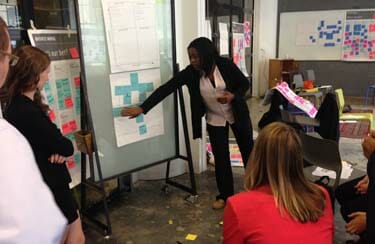
De Nichols of Catalysts By Design brainstorms solutions to gaps in her nonprofit’s operations model with peer entrepreneurs in the Civic Accelerator.
Through the accelerator – a 12-week boot camp for entrepreneurs of startup ventures that aim to serve the greater good – 14 fledgling enterprises are learning from experienced leaders in various fields, and each other. Here’s a taste of what happened in New York May 19 – 21.
Day 1: The Value of Collaboration
Have you ever seen Jeep drivers flash a peace sign to each other or motorcycle riders acknowledging each other with a head nod? If you don’t live in their world, you probably wouldn’t understand the rituals. The same is true of people who lead startups.
Obvious challenges, such as the development of company culture or the brand, are sometimes overshadowed by questions like, “Who’s taking out the garbage this week?” or, “Can you expense that Uber ride?”
On this day we saw ventures working together, not only in offering their feedback and constructive criticism (which isn’t always easy) but actually partnering on projects. Take
. Accountability Lab was looking for a way to generate a small amount of funding, while increasing digital awareness. Coincidentally that is what tinyGive does, so the two decided to launch a collaborative campaign.
Day 2: The Growth of a Network
The next day, the teams prepared for that evening’s Investor Cafe at The Blackstone Charitable Foundation – one of the Civic Accelerator’s significant partners. There, the ventures worked on their pitches and receive feedback from investors and industry connectors.
During a session with Alex Neckles of
, participants learned about managing funder relationships. It’s one thing to be able to comfortably talk about your passion with your supporters, but entirely different when it comes to investors and potential partners on the 40th floor of a Park Ave. high-rise.
It started off a bit awkward, almost like speed dating, but by the time it was over, the entrepreneurs all walked away with new, valuable connections and great, candid advice. Some were able set up a few meetings.
Day 3: Telling the Right Stories
Most of the workshops and breakout sessions revolved around the art of storytelling. On this day, the Civic Accelerator hosted an intimate talk with Michael Haberman, managing director, northeast region, global philanthropy, at
. The idea of doing the right thing, and finding the sweet spot between good business and good community investment, brought everything full circle.
Most of the ventures participating in the Civic Accelerator were started because committed entrepreneurs wanted to make a difference. Large or small, these startups began with an idea to make their communities and the world better, and that’s a story worth telling.
What’s Next
The Civic Accelerator now shifts its attention toward the conclusion of the 12-week program, during the
in Atlanta June 16 – 18. On June 17, the startups will show what they learned – and you can learn about what makes them special.
We invite you to join the country’s most innovative civic startups and network with celebrity judges, local and national entrepreneurs, investors, and business and community leaders. For more information and to purchase tickets to this exclusive event,
Civic Accelerator was launched in 2012, in partnership with Village Capital, and receives generous support from PwC Charitable Foundation and Starbucks Foundation, both founding partners, and from the Blackstone Charitable Foundation, SAP and the accelerator’s official hotel sponsor, Hilton Worldwide.
What Do You Get a President on His Birthday?
This post is by Tracy Hoover, president of Points of Light.
President George H. W. Bush started Points of Light with a single, disruptive idea: that every single person can change lives.
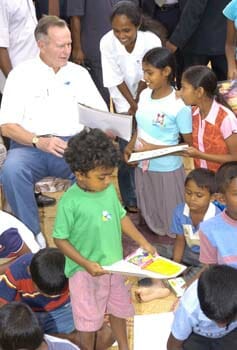
President George H. W. Bush reads to children during a visit to Sri Lanka. (Photo by Joe Reilly)
President Bush “didn’t call for one blinding light shining from Washington,” as President Obama said at Points of Light’s 20th anniversary celebration a few years ago. “He didn’t just call for a few bright lights from the biggest nonprofits. He called for a ‘vast galaxy of people and institutions working together to solve problems in their own backyard.’”
President Bush inspired millions to serve, who in turn inspired millions more. “Think of all the people they touched and the lives they changed – and all those who were helped who went on to help others,” Obama continued. “That’s the extraordinary ripple effect that one life, lived humbly, with love for one’s country, and in service to one’s fellow citizens, can have.”
Whenever I see President Bush, he asks me about points of light. And I know he’s not asking about the organization. He’s asking about the volunteers who are tackling tough community problems and finding lives of purpose and meaning through serving others.
On June 12, President Bush will celebrate his 90th birthday. Starting today, you can give him the one present he’s sure to love: your pledge to serve.
Go to
and make a pledge to volunteer in honor of President Bush’s lifetime of service. Let us know that you’ll tutor a child, plant a community garden, serve at your local food bank – whatever you feel passionately about. When you pledge, a point of light will appear on a national map.
Please make your service
today and join this very special happy birthday chorus.
Click here to read about The Joy of Sox – an organization that will receive a Daily Point of Light Award on President Bush’s birthday. President Bush, who founded the award during his presidency, made a special contribution to help The Joy of Sox provide socks to the homeless in Philadelphia.
The True Value of Employee Volunteerism
This post is by Jackie Norris, executive director of the Points of Light Corporate Institute, the go-to resource for community-minded companies looking to build and expand effective employee volunteer programs, and Raquel Karls, chief human resources officer at Outerwall, the company behind brands including Redbox, Coinstar and ecoATM.
Jackie Norris
In recent years we’ve seen a steady rise in the quantity and scale of corporate volunteer programs in the U.S. After gaining considerable momentum during the global recession as a fiscally responsible way for companies to supplement and expand upon their existing community giving initiatives, employee volunteerism has become a mainstream business practice. According to the Committee Encouraging Corporate Philanthropy, in 2012
enabled employees to volunteer with nonprofit organizations during paid working hours. This represents a 17 percent jump since 2007, prior to the recession.
As the economy recovers, we might expect companies to revert back to conventional giving strategies that are easier to coordinate and execute. But in fact the opposite is happening: employee volunteerism is becoming more prevalent. Why? Because it’s a mutually beneficial and sustainable option for companies, nonprofit organizations, individual employees and most importantly, those in need.
Raquel Karls
Employee volunteerism is an effective way for companies to get involved in local communities, build relationships, support recruitment and retention, and strengthen their internal culture. Deloitte’s volunteerism survey found that most HR executives believe volunteerism has a positive impact on an organization’s reputation, and that it’s both valued by and benefits employees. According to a study from Net Impact and Rutgers University, employees who say they have an opportunity to make a direct social and environmental impact at work report higher satisfaction levels than those who don’t, by a
.
Skills-based volunteerism can provide additional value by functioning as a professional development mechanism, giving employees learning and leadership opportunities that may not be immediately available in the workplace. Working for nonprofits with new teams – under new constraints and with limited resources – gives employees a fresh perspective and stimulates their creativity.
According to True Impact, skills-based volunteers are
in comparison with for-profit companies, the value of skilled support in general operations, technology and professional services roles can be 500 percent greater than the value of traditional volunteering.
Companies that are considering launching skills-based volunteerism programs should consider a few
: support multiple causes that align with the company’s business objectives and employee interests to broaden the scope of impact; keep projects going year-round with the same nonprofit partners to build strong alliances; and
to support communication with internal and external stakeholders.
At Outerwall, volunteerism has become an important component of the company’s community-building and employee engagement efforts. In 2010, Outerwall began to put the infrastructure in place to formally launch an employee volunteerism initiative that included skills-based opportunities. During this period, employee participation
and employee perception of Outerwall as a good corporate citizen also rose from 58 percent to 87 percent.
In relation to community giving, Outerwall has recently refined its grantee selection criteria to support the availability of meaningful employee volunteerism opportunities. This level of integration can significantly increase the value of corporate contributions.
Outerwall is working to build an organization that not only attracts talented employees, but motivates them to stay and grow with the company. Employee engagement is central to this effort, and there’s also
that corporate volunteerism programs can benefit employees on a personal level. According to a United Health Group study, three-quarters of people who reported volunteering in the past 12 months said that doing so made them feel physically healthier. And there’s an even stronger connection between volunteering and mental/emotional health. Volunteers score higher than non-volunteers on nine established measures of emotional wellbeing including personal independence, capacity for rich interpersonal relationships and overall satisfaction with their lives.
For companies such as Outerwall that have large, dispersed field operations, it can be especially challenging to engage employees in volunteer service. To overcome this hurdle, the company provides paid time off for volunteer activities and has cultivated a strong network of executive champions – some of whom have built volunteerism into their team commitments.
Combined with routine internal communications that celebrate progress and positive impacts, these efforts have resulted in a marked cultural shift at Outerwall – a shift that benefits employees and the communities where they live and work while supporting the company’s long-term goals. This model can be adapted for companies of all sizes, in various industries.
Could your company be next?
Get the Skinny on Employee Volunteerism From the People Who Know
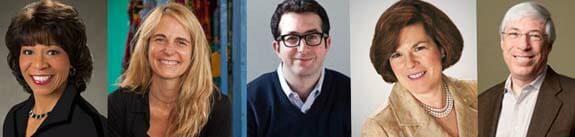
From left, Deb Elam, Jean Oelwang, Jeffrey Raider, Kerry Sullivan and Mark Kramer
Are you an employee volunteer manager, corporate social responsibility professional, corporate foundation leader or a nonprofit leader who wants to help your corporate sponsors take your volunteer service programs to the next level? Come hear from a range of voices in the field – including Jean Oelwang, CEO of Virgin Unite; Super Bowl MVP Drew Brees; and Kweku Mandela, the grandson of Nelson Mandela – at the Points of Light Conference on Volunteering and Service in Atlanta June 16 – 18.
Oelwang, who leads the entrepreneurial foundation of the Virgin Group, will address in a keynote speech the role of service in corporate innovation and social impact. She’ll then join a panel discussion about corporate volunteer programs that build employee creativity and problem-solving skills and how such programs redefine the way companies think about business.
Mark Kramer, founder and managing director of FSG, will examine how companies and their employees from different sectors can come together to solve a specific social problem using a common agenda – aligning their efforts and using common measures of success – at the Business Track Luncheon.
National Football League Super Bowl MVP Drew Brees of the New Orleans Saints will join
A Billion + Change at a reception following the opening plenary. Brees will honor companies involved with A Billion + Change, a campaign that encourages companies to do more skills-based and pro bono service. He will also encourage participating companies to inspire others by sharing their stories through the Super Service Challenge, a nationwide program that galvanizes co-workers to volunteer together.
“We are thrilled to have so many dynamic speakers this year,” said Jackie Norris, executive director of Points of Light Corporate Institute. “We want attendees to walk away from each session with the tools and knowledge to improve or begin a service program at their companies.”
The Points of Light Conference on Volunteering and Service is the largest convening of service leaders from all walks of life, sectors, races, religions and political persuasions, united to lead the dynamic, ever-expanding, international volunteer service movement. Conference workshops are organized by both impact areas and tracks, allowing you to select sessions based on both the issue (impact area) and the type of audience or organization that is most relevant (track).
Attendees find value in the variety and diversity of sessions, speakers and opportunities to meet others in their fields. “I found the Business Track sessions at last year’s conference to be very worthwhile and relevant to the work I do on a daily basis,” said conference attendee Rebecca Wang, manager of corporate affairs at HP. “I love the incredible opportunities to network with colleagues and gain new perspectives about our field from them.”
The Business Track at this year’s conference has 19 sessions, which include speakers such as Philip Weinberg, president and CEO, STRIVE International; Melissa Long, morning anchor and reporter, WXIA-TV; Chris Waits, regional vice president, The Home Depot; and many more!
Sessions include (click session names to learn more):
One- and two-day rates are now available. To register or learn more about the Points of Light Conference on Volunteering and Service, visit www.volunteeringandservice.org.
In the Air, on the Ground and Getting Things Done for Communities in Need
This post is by Jackie Norris, executive director, and
Yvonne Siu Turner, senior manager, corporate resources and programs,
. The Civic 50 identifies the top 50 community-minded S&P 500 corporations that best use their time, talent and resources to improve the quality of life in the communities where they do business.
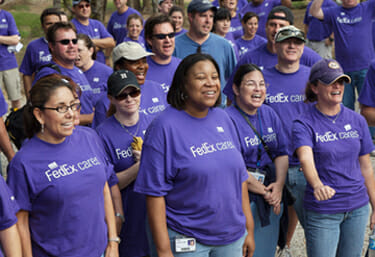
FedEx employees get revved up for FedEx Cares Week.
When Hurricane Sandy pulverized parts of the East Coast in 2012, Bill Bonneau found himself in a unique position. As manager of station operations for
, he could help deliver relief supplies throughout New York.
“FedEx’s logistical expertise and extensive network made us a key player,” said Bonneau. “Despite the logistical challenges associated with route access after a natural disaster, we found a way to answer the call.”
Together with thousands of FedEx volunteers, Bonneau directed an effort to deliver almost four million pounds of relief aid for agencies such as the
. They delivered everything from meals and clothing to water and medical supplies. They provided logistical expertise to deliver more than 85 generators to LaGuardia Airport, police stations and even polling stations to help residents vote during the 2012 presidential elections.
Thanks to volunteers like Bonneau, agencies like Direct Relief quickly met community needs. “The residents of the area were really hit hard after Hurricane Sandy,” said Kerri Murray, vice president of communications for Direct Relief. “Thousands lost power, heat, hot water, so we distributed personal care packs, nutritional supplements and food supplies, all delivered by FedEx.”
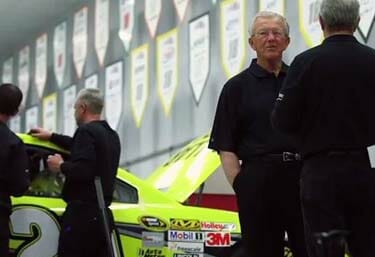
FedEx enlisted NASCAR team owner and former NFL coach Joe Gibbs, second from right, to promote disaster readiness as part of an American Red Cross campaign.
In total, FedEx provided $1.5 million in monetary aid, moved nearly four million pounds of disaster aid supplies and shipped 23,000 meals and 17 polling stations in the aftermath of Hurricane Sandy.
For Bonneau and his colleagues, volunteerism is part of the FedEx culture. The company has managed to connect the dots between corporate citizenship and employee satisfaction, skill development and strengthening the FedEx brand by integrating community engagement into its business – earning it the No. 1 spot in the “Business Integration” category of the Civic 50.
Here are a few examples of how this integration works at FedEx.
Volunteering During FedEx Cares Week Boosts Employee Loyalty and Satisfaction
From building solar-powered playhouses in the San Francisco Bay Area to helping prepare meals in Atlanta, almost 10,000 FedEx volunteers around the globe stepped up to contribute more than 46,000 hours during the company’s annual week of service in 2013.
What did they like about FedEx Cares Week? Reasons ranged from pride from working for a company that gives back to meeting other FedEx employees with the same passion to support the community.
“During FedEx Cares Week, I had the opportunity to help make a difference in the lives of others. I felt proud to see the team spirit from all the team members who attended,” said Giulia Fontana, a FedEx volunteer.
Training Future Leaders Through International Corporate Volunteerism
FedEx also launched a Global Leadership Program that began in 2012, which has included a total of 24 participants to strengthen the leadership skills of high performers. Groups of volunteers are sent in teams to emerging markets like Brazil and India to work with governments and nongovernmental organizations on skills-based volunteer projects.
Returning volunteers report acquiring critical leadership skills such as recognizing cultural differences; encouraging teamwork; demonstrating resilience, flexibility, resourcefulness and creativity; mentoring; communication and even conducting research.
“Outstanding program – learning to manage in a different culture displays your effectiveness in communication and lets you know your strengths and weaknesses,” said Paul Davis, Global Leadership FedEx participant.
From the U.S. Chamber to NASCAR: Building a Good Corporate Citizen
Building on its disaster relief support, FedEx sponsored a monthlong campaign in 2012 to help the American Red Cross promote its Ready Rating program, which helps small businesses prepare for disasters.
While the company could have written a check and walked away, FedEx chose to engage by using its wide array of relationships and corporate assets to support Ready Rating. The result?
NASCAR team owner Joe Gibbs and driver Denny Hamlin spoke on a satellite media tour to promote disaster readiness; America’s Small Business Summit featured a panel discussion addressing the need for small business preparedness with the U.S. Chamber of Commerce, the Red Cross and FedEx; and a Red Cross Ready Rating ad ran in Inc
.
magazine featuring FedEx as a Ready Rating sponsor.
The campaign gave FedEx an incredible boost to its corporate brand: 32 small businesses signed up for Ready Rating and the ad reached more than 700,000 print subscribers and nearly one million unique visitors online. As part of the satellite media tour, Hamlin also gave three national broadcast TV interviews and three local television interviews about the program, which generated more than 50 news stories reaching potentially more than 20 million people.
“FedEx built a commitment to (corporate social responsibility) into the business from the very beginning – dedicating itself not just to moving packages, but also to connecting people and businesses to the global marketplace, improving living standards and building social capital across the world,” said Raj Subramaniam, FedEx executive vice president, marketing and communications. “It’s credibility you can’t generate by simply making a donation, rather it needs to radiate from the heart of your company and your employees to believe in it.”
Would You Know What to Do if a Fire, Tornado or Other Disaster Was Headed for You?
Read about how folks in Colorado Springs, Colo., are preparing for disaster. To help your family take action, visit Good & Ready, where you’ll learn how to create a disaster plan, build a preparedness kit and more.
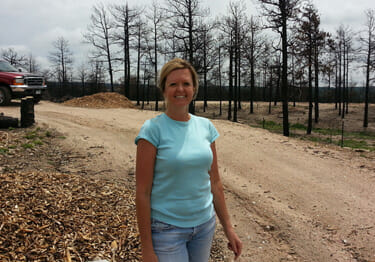
Deanne Ladefoged stands on the Colorado property where her house, destroyed by fire, used to be. Her family is rebuilding.
On a sunny day last June while having lunch with friends, Deanne Ladefoged got word through a cell phone text that she needed to return home – immediately. The fire that had erupted that day in Black Forest, a heavily wooded rural community northeast of Colorado Springs, Colo., was headed for her home.
“Luckily we had learned a lot from Waldo,” a 2012 canyon fire, she said. “We already had all of our important papers, titles, birth certificates in a fire-proof box. We also had the photos all in one place set aside.”
Ladefoged’s family had 30 minutes to evacuate. “By the time I got home,” Ladefoged said, “I was able to grab the videos of the kids, a handful of clothing, a little bit of jewelry, medications, the dogs and dog food. Then we left.” Her son grabbed the photos and box with the documents. The fire destroyed their home – along with about 500 others – but the family made it to safety.
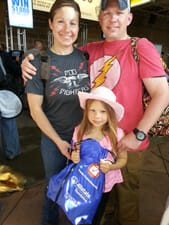
The Lasley family – Marissa, Jeff and 6-year-old daughter Skyler – put a disaster kit together at the Colorado event.
The lesson: Be prepared.
To help people across the country do just that, The Allstate Foundation and Points of Light last week launched a 14-city disaster preparation tour. Participants put together their own disaster preparedness kits with materials provided – including flashlights that don’t require batteries, first aid kits and other essentials – and learn strategies they can use. The campaign’s first stop was in Colorado Springs on May 21, at a minor league baseball game. Other stops include Savannah, Ga., Baton Rouge, La., and Los Angeles.
“Nobody ever thinks it’s going to happen to them,” said Tamie Farris, an Allstate agent Colorado Springs. “Even with fires happening here two summers in a row, people have short memories.”
In fact, according to Jan Epstein, senior manager at The Allstate Foundation, a sponsor of the Good & Ready preparedness campaign, 85 percent of Americans are unprepared to deal with a disaster. And that number has not changed from 2012 or 2013.
Epstein said of the Colorado Springs gathering, “This is much more than a kit-building event, it’s an educational opportunity. We have to take action before disaster strikes. If we don’t, where will we be?”
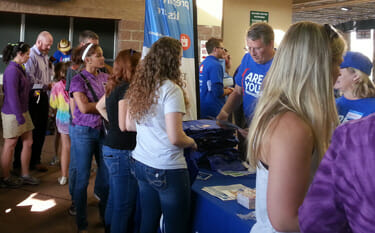
Event participants line up to create their disaster preparedness kits with the help of Allstate agent volunteers at Security Service Field in Colorado Springs, Colo.
Several Colorado Springs-area Allstate agents volunteered at the event by explaining to the participants the significance of each item in the kits. Ashley Simpson, with the Cally O’Donnell Allstate Agency, handed out water bottles. She explained the importance of having an ample supply of water and being aware of expiration dates.
Many participating in the event at Security Service Field, home of the Sky Sox, admitted they would not be ready if disaster struck. Chris Vrana, a 19-year resident of Colorado Springs, said, “I do have a family and I do want to be aware. I think we think it won’t happen to us, but it does happen to people, so I think I need this. The fire in Black Forest was scary. … At the time it made me think I should start doing something, but of course I didn’t. I’m glad this (event) is getting me thinking about it again.”
Farris, the Allstate agent, said she’s made disaster preparedness kits for her family for 20 years. She calls them 72-hour kits, because they contain items that would provide aid in the first 72 hours following a disaster.
A few creating kits said they are comfortable with the plans their families have put together should fire strike again. But they said they still learned something new.
Jonneen Kistler, a 21-year resident of Colorado Springs, said her family has a disaster plan and has set aside water, batteries, extra food and more. Nonetheless, she was putting together a bag with her children because she said it was important to keep thinking about being prepared. She added, “We didn’t have a whistle or filtration masks. Now we do. I didn’t think about those before.”
As for Deanne Ladefoged and her family, they’re breaking ground on their new home in the same location. They have already planted 110 seedlings and spread grass seed around their once forested property. They spend as much time as possible clearing debris and dead timber from the land.
“The experience made me realize I could become a bitter or a better person. I want to be a better person,” Ladefoged said, adding that while you can never prepare for every contingency when it comes to disaster, “you can do some things that help make a difference.”
Consider This on Memorial Day and Every Day
When My’Kah Knowlin was 10 back in 2011, she heard about the devastation in Joplin, Mo., after a tornado tore through the town, killing more than 150 people and leaving thousands of families with nothing.
My’Kah Knowlin makes a care package delivery.
She persuaded her parents to help her bring care packages to people rebuilding their lives in Joplin, thinking it would be “a one-time service event.” Since then, through the organization she created,
, My’Kah has also put together packages and other donations for Marines in Afghanistan, families of the children killed at Sandy Hook Elementary School and students whose schools were destroyed by tornadoes in Moore, Okla.
Today My’Kah, now 13, is challenging you to fill a box with items you would want if you were away from home. “You can take the box to a military base near you and ask that it be given to a family that may be struggling or a veterans’ hospital,” she says. “If we all fill just one box we could be the difference in many military lives. After all, they have all worked hard to make a difference in our lives.”
On Memorial Day, as the nation faces controversies over the care of veterans, Points of Light is proud to laud those like My’Kah, who strive to be part of the solution. And year-round at Points of Light, we mobilize volunteers to improve the lives of veterans, those still serving and their families.
The Points of Light Community Blueprint provides tools and resources that help communities coordinate services for veterans and their families, with the help of volunteers and veterans themselves. The Community Blueprint has engaged roughly 300 organizations across more than 600 communities.
Our
members to support the needs of veterans who have recently left the military. The program focuses on helping veterans prepare for and find jobs and reconnect with their communities. (Organizations interested in becoming a Veteran Leader Corps host site can
.)
And our VetSuccess AmeriCorps Program is designed to help student veterans on college campuses across the country feel more welcome and connected to their campus and peers. The program guides student veterans toward the services and resources available to them.
On Memorial Day, we join the nation in saluting those who have served. For more on the Community Blueprint and other Points of Light programs serving veterans and their families with the help of volunteers, go to