comes to a close, and as our world remains forever changed (and still changing) in the wake of the coronavirus pandemic, we can’t help but get reflective.
We know that the need for service is greater now than ever. We know that helping others, like so many facets of life, is going to look different going forward – and likely (hopefully) for the better. We also know that the people most impacted by the crisis are the people depending on the communities that surround them to encircle them with kindness and love.
Even as we put distance between ourselves, so many stories have emerged of our community circles growing wider. Italians taking to their balconies to sing in unison, lifting spirits. New Yorkers cheering for health care workers every night during their shift change. People dusting off their sewing machines to make (and give away) masks out of quilting fabric.
In the darkness, we’ve seen light.
Global Volunteer Month Activation Partner
, which connects people with opportunities for social impact action, does incredible work promoting both nonprofit jobs as well as service opportunities. Around and amid this crisis, their work has been even more critical.
We spoke with them about three important thing they’re seeing as it relates to the future of service. Taken together, these three things leave us hopeful and inspired.
First, during the crisis, people were (and still are) at home wanting to help. Idealist saw people offering to do grocery runs or trips to the pharmacy for their elderly neighbors. Young people were walking dogs or mowing lawns for neighbors. People were doing whatever they could to help those in their immediate proximity. Sometimes they found those opportunities through a flier in a mailbox, or a sign posted in an apartment lobby.
Idealist created a
, where people can find these small (but so meaningful!) ways to help someone, person-to-person, right where they live. These directories give people a way to find purpose amid so much uncertainty. Ideally, that sense of purpose will translate to continued service once the immediate crisis is over. The world is forever changed, so are we as citizens of it.
Second, Idealist also saw that organizations like foodbanks or soup kitchens that require in-person volunteers were hit especially hard by the crisis. The need for what they do was greater than ever, but the availability of volunteers was at an incongruent low point – whether that was due to stay-at-home orders or the vulnerability of their volunteers themselves (often older retirees, for example). At Points of Light, we regularly connect individuals and families with
promote and encourage that activity going forward.
Finally, Idealist rightly observed that the global pandemic also brought about a wave of what you could call “
.” By that they mean that people used their devices and online platforms to connect with others well outside the traditional definition of a community. During the crisis college students tutored school children on opposite sides of the country – or even the planet. People on social media shared the addresses of nursing homes so that others could send greeting cards to residents who were separated from their families. Idealist, on its
, saw a woman in Arizona donate and mail elastic to a woman in Alaska who was sewing masks for healthcare workers. The stories we know about represent hundreds, maybe even thousands that we don’t.
The problems we faced before the crisis were complex. The crisis made them even more so. As we come out the other side of this pandemic, we will be judged as a society by how we rose to the challenge. Did we go insular and circle our wagons; or did we open our communities and our hearts for the betterment of everyone within them?
The pandemic changed so much. It’s our hope that it also changed our sense of connectedness to our neighbors. Our honorable and dutiful obligation to one another. The purpose and power we have when we serve others.
Global Volunteer Month was intended to be a moment to pause and to celebrate service. More than that, it’s a moment to recognize and reinvest in it. A phrase we’ve heard so often over the last several weeks is:
We’re all in this together.
We’ve been in this together. Let’s be better in it together; for a better “this” and a better tomorrow.
To learn more about any of these initiatives or to learn more about Points of Light and Global Volunteer Month, please visit:
The stories we’ve heard about our Points of Light corporate partners and their response to the COVID-19 crisis continue to inspire and amaze us. One such partner is Starbucks. With a long track record of taking care of our environment, we’d intended to highlight
blog series. However, given the current situation, a more fitting way to recognize the company’s commitment to the planet is to talk about the things the company is doing as our world – together – confronts the coronavirus pandemic.
As the crisis in the U.S. continues to unfold, Starbucks is serving communities in ways that demonstrate the very best of its company and its people.
They are caring for each other. Starbucks partners (employees) are the foundation of Starbucks fundamental Mission to inspire and nurture the human spirit. They have led through this crisis by caring for each other, including providing emergency benefits such as catastrophe pay for those who are not working, introducing Starbucks Service Pay for those who are, providing mental health benefits and offering backup childcare through Care@Work.
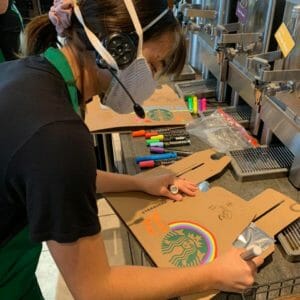
Credit: Starbucks
They are nurturing first-responders and nurturing spirits. Daily, first-responders and other front-line personnel can receive a free hot or iced coffee in Starbucks stores through May 31. It’s a small gesture on a grand scale; and it’s kindness and warmth when we need it most. Over 1M cups have already been given to those serving our communities! The Starbucks Foundation has also provided a grant toOperation Gratitude to deliver 50,000 care packages and handwritten letters to first responders and health care workers. You can join in to write letters at https://www.operationgratitude.com/starbucks/. On its Good Things are Happening blog, the company has chronicled ways its partners (employees) are doing incredible things to spark joy and help others. In Cleveland, Ohio partners threw a “prom” for a colleague whose prom was cancelled. In Barboursville, West Virginia a Starbucks partner took in a regular customer’s dog when her owner got sick. In Beverly, Massachusetts, partners converted empty café space into a mask-sewing station. And there are countless stories like this from across the company.
They are supporting their neighborhoods. For example, in Philadelphia, The Starbucks Foundation is doing some important work to help slow the spread of COVID-19. We all know that handwashing is the most effective way to prevent becoming sick. But for homeless men and women, that’s not as easy as walking down the hall to the washroom. So, together with Broad Street Ministries, the foundation has set-up 12 handwashing stations throughout the city. The stations are stocked with 40 gallons of water, soap and paper towels and are operated with a foot pump. They’re refilled once or twice per week. It’s estimated that the stations are being used by more than 2,000 people every day and are having an impact on slowing the spread of the virus in the city. In addition, The Starbucks Foundation has donated $500,000 to support U.S. front-line responders with equal donations to Direct Relief to support the delivery of personal protective equipment and essential medical items
They are mobilizing resources and supplies. In total, The Starbucks Foundation has donated more than $5.5 million dollars to nonprofit partners who are providing critical aid to vulnerable communities and supporting front-line responders. These funds address everything from the initial and immediate response to the crisis, to hunger relief efforts – including a partnership with Feeding America to support local foodbanks. Since closing its cafes in mid-March, Starbucks donated more than 700,000 meals, 62,000 gallons of milk, and 1 million cans of Teavana Craft Iced Teas throughout the U.S. and Canada. And counting.
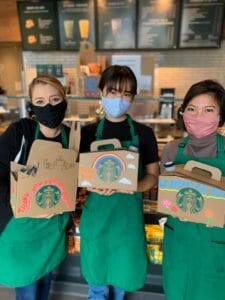
Credit: Starbucks
They are living out its social impact priorities. Even amid the pandemic, Starbucks continues important work to support veterans, access to higher education, equity and inclusion, and the environment. Like Points of Light and so many other organizations, Starbucks recognizes that while our collective attention is on the current crisis, needs in other areas continue. Just this week, in celebration of Earth Day, the company reiterated its commitment to sustainable coffee by highlighting the men and women who produce it.
During the crisis and our planet’s continued response to it, Cameron Melcher, a Starbucks partner since 2008 and a manager for the last two years, put things into perfect perspective. He runs a high-volume, 24-hour store in Manassas, Virginia that often caters to customers working overnight or in critical roles – people like doctors, policemen, firemen or delivery drivers. He said
“With all the quarantines and social distancing, humanity is feeling some serious disconnect right now. I think it’s important that we can be there for our community and maybe even look at our role a little differently – as essential personnel – because of what we are doing and who we are serving.”
He’s right. What Cameron and his co-workers are doing isn’t “service” or volunteering in the way we typically think about them – his story and each of these stories are absolutely about serving communities and one another.
And we think that’s pretty awesome.
To learn more about Global Volunteer Month, and to find information on how you can make a difference and be a #LocalLight in your community, please visit:
on record to strike the Bahamas, 2019 was a year of devastating natural disasters.
Scientists say that natural disasters are becoming more frequent and intense because of climate change. With increasing global surface temperatures, more water vapor is evaporated into the atmosphere, which becomes fuel for more powerful storms to develop,
. Hotter air and warmer ocean temperatures can lead to stronger winds in tropical storms.
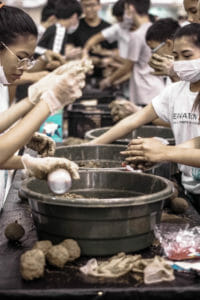
Volunteers make Mabuhay Balls, which preserve the vitality of fish and rehabilitate polluted water when thrown into lakes, streams and other bodies of water.
The Philippines got to experience the effects of climate change first hand when a tropical depression triggered deadly landslides and floods last January. More than 100 lives were lost,
Knowing that if the world continues on this trajectory, there won’t be a habitable world for future generations, Points of Light’s Global Network affiliate
, to make volunteering easily accessible for different corporate companies and organizations around the Philippines.
“In our country and other parts of the world, there are many things that the government is unable to do,” said Gianna Montinola, co-founder and president of Hands On Manila. “There’s just too much that has to be done, so we mobilize the private sector to try to fill in the gaps and do service projects in different areas.”
With the theme of “Hands on, Hearts out for the Environment,” last year’s SERVATHON brought together 1,018 volunteers on September 28 to produce $2.4 million worth of goods and services.
(ASI), Hands On Manila was able to ensure that the three volunteer projects were innovative and help create a sustainable environment.
In one corner, volunteers worked on putting together soil booster mixes that would be used for the enrichment soil and for composting. Volunteers filled over 2,000 bottles with the soil booster mix that would later be distributed to gardeners and farmers of ASI.
In another section, volunteers created educational kits that included interactive books and other teaching materials focused on the environment. The materials were placed inside a canvas string bag that was painted by the volunteers. In the end, 210 of these kits were made to be distributed by WWF to teachers and students at local schools.
A group of corporate volunteers make environmental information kits to be distributed to teachers and students at local schools.
Lastly, volunteers also worked on making Mabuhay Balls. Derived from Japan’s Bokashi Ball technology, these balls of mud are packed with effective microorganisms. When thrown into polluted lakes, rivers or streams, Mabuhay Balls help rehabilitate the water by preserving the vitality of fish, promoting the breakdown of organic and inorganic compounds, and preventing any foul odors. The volunteers produced 13,260 of these balls.
As people reflect on what they can do to help the environment this Global Volunteer Month, it’s easy to become discouraged that one’s actions won’t make a lasting difference. But from simple acts like recycling to bigger volunteer projects like SERVATHON, these efforts add up and will spark even more positive acts to save the environment.
“If we continue to do what we’re doing and are not conscious of the shape the environment is in at the moment, we only have ourselves to blame,” Montinola said. “It’s our responsibility to leave the Earth in a better place for our children and our grandchildren.”
In light of COVID-19, nonprofits, companies and individuals are adapting the ways in which they serve their communities. Visit
to find creative ways to make a difference and be a #LocalLight in your community during Global Volunteer Month.
Through Kindness Walks, Community and Trust is Built for Hong Kong’s Homeless Population
Colette Aw is no ordinary assistant teacher. After hearing about the weekly Kindness Walks that ImpactHK hosts, Colette experienced her first walk, and was committed to fulfilling the needs of her community. She has become a monumental volunteer in building trust and friendship with those in need, and continues to create opportunities of change each week for more than 500 homeless individuals.
Kindness Walks provide support for people experiencing homelessness throughout Hong Kong, and are a large part of
mission of addressing the issues that homeless populations face across the country. Colette reflects the organization’s belief that kindness is always important, and that one act of kindness has the power to grow far beyond one could imagine. With a partnership alongside
, a Points of Light Global Network affiliate that empowers Hong Kong residents to serve and mobilize together, Colette has access to numerous willing volunteers who are ready to meet the needs of their neighborhoods.
Colette often leads the Tai Kok Tsui and Fortress Hill
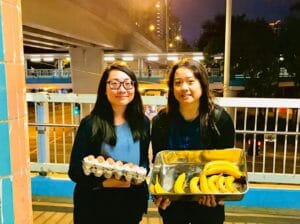
by mobilizing groups of volunteers to spread kindness and generosity as they distribute daily necessities – including food, water, toiletries, clothing and free laundry supplies – to homeless individuals and those in need. To date, Colette has played a role in serving more than 2200 meals, housing 62 homeless individuals and helping 42 people experiencing homelessness find employment. It’s one of her favorite ways to make a difference, and these walks allow her and other volunteers to show people how much they care.
According to Colette, there are others in need who also deserve assistance from Kindness Walks, like street cleaners, the elderly and the poor. She also believes that volunteers aren’t a part of Kindness Walks to force conversation and interventions, but are a resource to counter loneliness, fear and isolation. If an individual in need is open to receiving help, volunteers can then direct them to the resources that ImpactHK has prepared to assist them in leaving the streets.
“One of my favorite things about the Kindness Walks is that you get to physically be there and reach out to the less fortunate. It’s very hands on, and I always feel connected to the individuals that we serve,” said Colette.
“It’s important to remind each other to help the less fortunate,” she continues. “Yet, it’s hard to convince someone that they should be doing volunteer work. It needs to come from the heart.”
Colette Aw (right) prepares food and supplies to be handed out during a weekly Kindness Walk with ImpactHK.
Colette has personally experienced seeing volunteers improve the lives of communities across Hong Kong. She has seen previous individuals experiencing homelessness eventually join committees that help organize Kindness Walks, and knows many parents who bring their children along during weekend walks. To Colette, this helps the younger generations understand the value of helping others and understand the needs of people experiencing homelessness. She also values the leadership of ImpactHK, where the founder continues to organize speeches at schools around Hong Kong to remind teens and teachers the importance of helping others.
One meaningful moment that Colette has experienced as a Kindness Walk volunteer was during the protests in Hong Kong in the summer of 2019. Volunteers continued weekly Kindness Walks, but to Colette’s surprise, the homeless population began to worry about the volunteers’ safety more than themselves. One of the homeless individuals even offered his umbrella to Colette while it started raining heavily on a walk.
According to Colette, volunteers are just ordinary and local people who keep the greater good in their hearts and minds. “To me, its people from all over the world celebrating and raising awareness at the same time of the importance of helping each other through volunteering,” Colette said. When volunteers from around the world share a passion for empowering their community, there is always a reason to celebrate.
Colette wants others to feel encouraged to seek out ways to make a difference. To her, “everyone is busy with their lives, but we all have a daily invitation to show gratitude and care for others.”
In light of COVID-19, nonprofits, companies and individuals are adapting the ways in which they serve their communities. Visit
to find creative ways to make a difference and be a #LocalLight in your community during Global Volunteer Month.
Fidelity: Building Bigger Tables, Better Communities
It’s been said that “when you have more than you need, build a bigger table, not a higher fence.” Indeed. Points of Light corporate partners consistently and admirably demonstrate that thinking – all the time.
This
we’re pleased to recognize a few that have gone above and beyond, especially in the wake of the global coronavirus pandemic. One partner that comes to mind is financial services firm
.
The pandemic is a health crisis. What follows is an economic one. This is where Fidelity’s contributions to communities stand to make a critical difference. The company is mobilizing in two important ways.
First, it is encouraging its people and its partner businesses to contribute their time, talent and dollars to those most impacted by the crisis. Over the years, the company has made massive contributions toward improving financial literacy – engaging its team members to help students and young adults learn about their finances and about how to build stable futures. The same model is in place around its response to the pandemic: organizing teams of skills-based volunteers to help communities.
This ranges from helping to ensure nonprofits can survive the crisis operationally, to ensuring the programs in place prior to it, can continue.
Second, Fidelity is supporting community and employee giving through Fidelity Charitable, and its Donor-Advised Funds, that focus on
(triage, stabilization, rebuilding and risk management) and that for the next several months, much of the world will be in the “triage” phase, Fidelity has also put a sharp focus on the immediate needs of communities through various established channels and relationships.
For example, Fidelity partnered with collaborative online learning provider
partners to ensure students at its “adopted schools,” youth organizations and other financial literacy partners to ensure students have meals while they are unable to access them at school. Fidelity also donated 120 reclaimed iPads to K-12 students in two school districts in Rhode Island so they could participate in their schools’ distance learning programs. When schools re-open, both districts plan to use the iPads school-wide to support technology proficiency goals.
Incredible.
In addition to being Global Volunteer Month, April is also
– an entire month focused on bringing attention to an issue very important to Fidelity. Though the company cannot host its planned in-person teacher trainings, it is now working with the North Carolina Council on Economic Education (NCCEE) to host a virtual financial literacy teacher training for North Carolina educators – ensuring that the pandemic doesn’t pause this important initiative for teachers and students alike.
Fidelity is living the “building a bigger table” philosophy by, first, giving back as company and, second, by encouraging their employees to get involved too – around COVID-19 and as part of its overall approach to service. This Global Volunteer Month, this is
exactly
the type of corporate citizenship we’re celebrating – and we’re working to see more of it in communities around the world!
To learn more about any of these initiatives or to learn more about Points of Light and Global Volunteer Month, please visit:
HandsOn London Fights Against Poverty and Inequality by Warming Hearts of Those in Need One Coat at a Time
During the holiday season in London, carols and twinkling lights will light up the streets, bringing a sense of cheer to both the locals and tourists. They say Christmas is the most wonderful time of the year, but for those who are homeless or struggling to make ends meet, the holidays can just amplify their hardships.
Knowing how harsh the winters in London can be, Points of Light Global Network affiliate
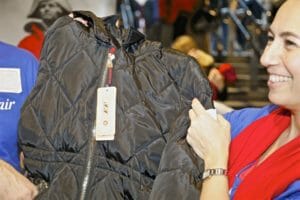
campaign. The program started off small, with 2,700 coats being collected by about a dozen volunteers.
But now, about 1,400 volunteers lead the effort to collect about 30,000 coats each year. The coats are then donated to over 100 charities that help refugees, victims of domestic violence, those who are at risk of poverty, and especially, those who are homeless, according to CEO of HandsOn London Jon Meech.
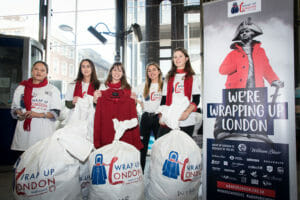
Volunteers with Wrap Up London collect coats at a subway station./ Courtesy HandsOn London
“Clothing doesn’t last very long when you’re on the street,” Meech said. “It gets worn; it gets damaged really quickly. So over the course of one winter, a homeless person may need more than one coat. What we hope to do is ensure that the homeless charities have enough coats to hand out and have enough in stock to give somebody a replacement when they need it.”
The main coat collections are held at London’s six major subway stations for three days in the beginning of November. Before the morning rush hour hits, volunteers will set up donations sites to collect coats from the millions of commuters passing through the stations.
Collections are also held at offices, shops and churches around the city so a person wanting to donate their coat wouldn’t have to travel far.
While Meech expressed his gratitude to the thousands of Londoners who have donated their coats, he said that Wrap Up London wouldn’t be where it is today without the dedication of the volunteers who collect, sort and arrange distribution of the coats.
One volunteer even travels 400 miles to London to drive around in the city’s rush hour traffic to help pick up the bags of coats other volunteers have collected, according to Meech.
“I asked him, ‘Why are you doing this?’” Meech recalled. “And he said, ‘I just love the atmosphere. It’s like you’re a part of something.’ And he lives on the other end of the country!”
A volunteer holds up a coat that has been donated at one of Wrap Up London’s coat drives./ Courtesy HandsOn London
After seeing the impact Wrap Up London was having on the city, HandsOn London decided to expand the campaign to other cities across the United Kingdom. Now, from Glasgow to Birmingham, a total of 24 towns and cities are joining in the fight against poverty and inequality by collecting warm coats for those in need.
In a world where no less than 150 million people are homeless,
, donating a single coat might not seem like a grand enough gesture to impact change.
But as people around the world reflect on what they can do help better society this Global Volunteer Month, Meech said the first thing people should remember is this:
“No act of kindness is too small. Every act of kindness is important.”
In light of COVID-19, nonprofits, companies and individuals are adapting the ways in which they serve their communities. Visit
to find creative ways to make a difference and be a #LocalLight in your community during Global Volunteer Month.
After Overcoming a Difficult Past, Asylum Seeker Advocates for Human and Civil Rights for Refugees
Once Owodunni “Ola” Mustapha arrived in Ireland after seeking asylum from an abusive environment in Nigeria, she became a force of inspiration for her community. She is currently a resident of five years at the Direct Provision Centre in Ballyhaunis, County Mayo, and is committed to building herself and her community up to ensure human and civil rights to all. Ola quickly became a leading volunteer at her local asylum seeker centre, and continues to help others rise in her community and throughout Ireland.
Direct provision centres make up a system of asylum seeker accommodations in Ireland that aim to meet basic needs, such as providing food and shelter to individuals as they wait for their claims of refugee status to be completed. The intent of the direct provision centres is to shelter asylum seekers for a period of six months, but according to Ola, some individuals stay for eight to nine years.
In the midst of uncertainty and vulnerability in these shelters, Ola chose to volunteer. Her commitment to empowering others to claim their basic human and civil rights is relentless; after several attempts to mobilize women with similar backgrounds and adversities in her shelter, Ola succeeded. She brings together groups of women who live in the Ballyhaunis centre to plan inclusion and integration projects within their centre and to build bridges between asylum seekers and the local community.
, which has grown to empower the lives of women beyond Ola’s personal centre. “People find relief in coming together as one group,” said Ola. “We face one struggle, the same situations, and we can discuss our issues as an empowered, solidified family-like unit.”
One of her goals is to give people the flexibility to live the lives that they want instead of living in the mindset of being a prisoner. According to Ola, you don’t have to live in the Ballyhaunis centre to volunteer. People from the community have opportunities to get involved, like coming to the shelter to give asylum seekers free English classes.
Ola Mustapha begins her day at the Ballyhaunis shelter by spending time with her children before meeting with her center community.
When asked how she found her voice and passion for inclusion, Ola reflects on the strength she found while overcoming domestic violence. When she arrived in Ireland, she uncovered a breath of fresh air that was inspired by the new life she wanted to create for herself and for her children. In fact, one of Ola’s first experiences with a volunteer involved her children. Ola’s two-year-old son has special needs, but she had never heard of autism prior to arriving in Ireland. She met a volunteer who helped her understand autism, and they changed her perception of volunteering. Ola realized that such interactions create a sense of belonging, appreciation and value.
In addition to spearheading volunteer efforts at the Ballyhaunis centre, Ola volunteers with
, an organization dedicated to promoting the positive effects of interculturalism in Irish Society. Here, she works towards creating a society where human rights and cultural differences are respected and valued. Ola is also a major link between asylum seekers at her shelter and valuable refugee policy information that Mayo Intercultural Action provides. She keeps individuals updated on the evolving policy that refugees must know once they arrive in Ireland.
Ola’s mission-oriented heart has not gone unnoticed. A fellow volunteer at Mayo Intercultural Action introduced her to
affiliate helping individuals contribute to building resilient communities, where she was nominated for multiple awards that honored her dedication to social inclusion. Due to her prominent voice in her community, Ola was named the
, an award that celebrates her resilience and tremendous compassion.
One of Ola’s favorite experiences as a volunteer has been the simple, yet immensely significant, role of spreading the news. “So many women and individuals don’t know what the system is about. It’s easy to assume that initially being housed and funded will last, but there’s so much more that we need to know,” Ola said. She continues to advocate that seeking asylum is a foundational human right, and that asylum seekers are not responsible for the institutional systems that may not operate efficiently.
She believes that it’s important for people around the world to give back because if knowledge and skills are kept hidden, there is a missed opportunity to pass valuable wisdom to other people in need. Ola acknowledges that there are many stereotypes and prejudices around people going through the asylum seeker process, but she knows that life should not be lived in such a way.
“Do not follow the stereotypes people create for you just because you are a person of color or a migrant,” said Ola. “Do not kill your passion just because someone told you that this job is the only thing you can do after arriving in the country.” Because of advocates like Ola, perceptions of refugees are slowly improving across her community.
When asked what she has learned as a volunteer, Ola reflects on her personal journey at becoming self-sufficient. People cannot always stand alone and sit behind closed doors, Ola highlights. Becoming stagnant is never a solution to creating a positive change.
Ola’s future is nothing but radiant. “Do not give up on yourself,” said Ola. “Be an example, and constantly rediscover your capabilities as a difference maker.”
In light of COVID-19, nonprofits, companies and individuals are adapting the ways in which they serve their communities. Visit
to find creative ways to make a difference and be a #LocalLight in your community during Global Volunteer Month.
Seattle Works and United Way of King County Work to Dismantle Racism and Promote Diversity by Starting Within their Own Organizations
America has long been referred to as a “melting pot” of ethnicities, cultures, beliefs and values. But we can see from recent events – from the 2017 “Unite the Right” rally in Charlottesville, Virginia to attacks on Asian-Americans since the coronavirus pandemic – that a lot more needs to be done – even in the nonprofit sector.
in the U.S., the boards of nonprofits are still extremely white. A 2017 survey of nearly 1,800 foundation and public charity CEOs and board chairs found that 90% of CEOs and board chairs and 84% of board members were white,
Of course, dismantling racism and promoting diversity in leadership positions doesn’t happen overnight. But Points of Light Global Network affiliates Seattle Works and United Way of King County have dedicated themselves to the fight, by starting within their own organizations.
As a cisgender, white male, Ben Reuler, executive director of
, understands his privilege. So he took the challenge of evolving a historically and predominantly white organization into one that is actively anti-racist as his responsibility.
Ben Reuler (right) is executive director of Seattle Works and he penned a letter to the community that outlines how the organization has worked to incorporate diversity in its philosophy./ Courtesy Seattle Works
“I’ve learned that when white people are silent on issues of race, we are complicit in perpetuating very harmful norms that are rooted in whiteness and white supremacy,” Reuler said. “That’s why we’re using language like ‘dismantle racism’ to really speak to the action associated with beyond just good intention and taking stances, and really dismantling racism by changing policies, practices, cultural norms at our organization.”
In 2016, Seattle Works was able to receive a grant that helped them put their words into action. The organization hired three consultants, who are all women of color, to lead the conversation surrounding race with Seattle Works’ board of directors.
The three consultants – Caprice Hollins, Toi Sing Woo and Kirsten Harris-Talley – guided the staff to launch an equity team and implement race-based caucusing, led the board and staff to align on the priority of disrupting white silence, and pushed the organization to align on and document its cultural norms,
Other initiatives that Seattle Works has implemented include a mandatory antiracism workshop for staff, improving the hiring process with an equitable lens, improving compensation, and only voting on new board members if at least one third of the candidates are people of color.
“Diversity is important because we need to ask, ‘Who sees themselves in our organization?’” Reuler said. “Representation is important because of the perspectives that diverse experiences bring to decision making and advancing racial equity as an organization.”
Meanwhile, Liahann Bannerman, director of volunteer engagement at
, knows all too well about the lack of diversity in the nonprofit world. She’s lived through it.
For over 25 years, United Way of King County has empowered people of color to claim leadership roles through its Project LEAD program./ Courtesy United Way of King County
As an African-American woman who has been with UWKC for 23 years, Bannerman is making sure the organization is doing everything it can to incorporate diversity and inclusion into not only their internal work, but also their programs and projects with external partners.
The organization works to help the homeless, help students graduate and break the cycle of poverty for those living in King County, Washington. But without addressing the difficult conversation around race, none of their work would be effective, according to Bannerman.
“We cannot end homelessness unless we address racial inequities,” Bannerman said. “We cannot get all kids ready for school unless we break racism and those disparities. Basically, for us to be successful in our work, beyond just volunteering, we’ve got to do that.”
To ensure that people of color are sitting at the table when those conversations take place, UWKC has led a program for more than 25 years that trains highly qualified minorities to become leaders for nonprofit boards.
Called Project LEAD, the program has produced more than 1,000 graduates, many of whom have gone on to serve successfully on the board of nonprofits. But just because you have one black person serving on a board, doesn’t mean that solves everything, Bannerman said.
“We’re really having racial equity be an ongoing component to the program because it’s ingrained all throughout the [Project LEAD] curriculum,” Nadia Gandara, UWKC’s volunteer initiatives manager said. “We’re allowing folks to engage in conversation around ‘How does this show up? What is their role? What are best practices that we can do in order to mitigate harm?’”
Bannerman echoed Gandara’s thoughts.
“As a black person serving on a board, you need to be thinking about what is the impact for other communities of color as you’re making decisions for that board… One of the things we try and really emphasize is giving thought to who’s not in the room.”
As nonprofit organizations around the world recognizeGlobal Volunteer Month, Gandara said there is one thing they should remember:
“I hope the organizations really find out what their ‘why’ is and how [racial equity] fits into that.”
In light of COVID-19, nonprofits, companies and individuals are adapting the ways in which they serve their communities. Visit
, we did not imagine the world as it is today. We could not have foreseen the way in which our world would change or the ways in which
service,
or
communities
, or
neighbors
would take on whole new meanings.
Throughout Global Volunteer Month, we’d planned to recognize volunteers around the world and the positive impact they’re having in their communities and beyond. Today, as the coronavirus pandemic continues around the world, that mission seems even more important than ever.
Of course, we have some tremendous corporate partners at Points of Light who help communities as well. These organizations are using their enterprises, their resources and their employees to do good, and we’ll be shining a light on them as well this month.
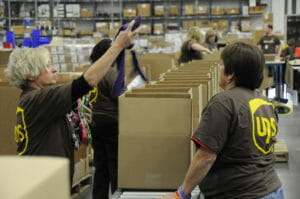
One such company that immediately comes to mind is UPS, our Global Volunteer Month Supporting Partner. This massive, global organization is using its size and scale – every day – to make a real difference in local communities.
This week’s Global Volunteer Month theme is Human and Civil Rights, and UPS has been a consistent and compelling leader in this area.
For example, we often think of humanitarian aid in the context of political conflicts or famine, but it also encompasses disaster relief. In these situations, the ability to move desperately needed supplies into an area quickly and efficiently – often with little notice – is key. It’s all about logistics. For UPS, logistics happens every day, all day. As the world winds its way through the uncharted waters of a global pandemic, UPS’s role has become even more clear: the company is delivering life and hope.
UPSers believe that in order to have strong, productive communities, we must first have safe communities. (We agree!) That’s why – for disaster preparedness as well as relief and recovery efforts – UPS and The UPS Foundation provide significant financial and in-kind contributions to help support organizations such as the American Red Cross, Salvation Army, World Food Program, UNICEF, CARE and United Nations High Commissioner for Refugees. As the coronavirus pandemic continues, UPS is delivering urgently needed materials through its global relief network and using its logistics expertise to help customers who are pivoting their businesses to join the fight.
Credit: UPS
Incredible.
But what about when there’s not a crisis? The company’s commitment to human rights is just as strong and steadfast. Consider this: Every day the company delivers more than just packages; they deliver solutions that help facilitate commerce, build businesses and strengthen communities. Just by doing what it does millions of times in millions of places every day, UPS supports trade and innovation, which helps businesses thrive and helps working men and women gain access to economic opportunity. This type of free, fair and open trade creates an environment where human rights can be protected and advanced. This commitment also extends to UPS’s philanthropy, which is based on the knowledge that our differences make us stronger. To bring this to life, The UPS Foundation supports human and civil rights-centered programs to empower individuals and help safeguard communities of all kinds. UPS’s respect for and work in support of these rights makes them a proud supporter of the United Nations Guiding Principles on Business and Human Rights and a leader on these issues within corporate America.
We have so many great examples of corporations doing wonderful things in their communities. We look forward to highlighting even more of these organizations throughout Global Volunteer Month!
To learn more about Global Volunteer Month, and to find information on how you can make a difference and be a #LocalLight in your community, please visit:
Fulfilling a Childhood Dream, Volunteer Uses His Life Savings to Transform a Community
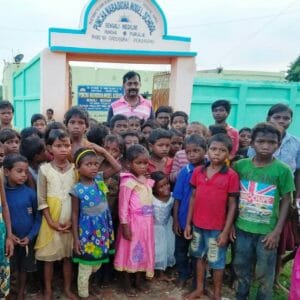
There are few people in the world who would willingly use their entire savings to help those in need, but Arup Kumar did so eagerly. In 2011, the Purulia, West Bengal, India native used all of his financial resources to create Puncha Nabadisha Model School for children of the Sabari tribe. Over the course of a few years, the school has grown tremendously, providing educational resources to more than 120 tribal children. What started off as a group of 20 has transformed into a source of hope and opportunity for an entire community.
Arup not only created the Puncha Nabadisha Model School for fostering education, but to also offer children clothes, toiletries, decent meals and contribute to a reduction in crime rates in his neighborhood. Through his generous investment, Arup gives children a chance at a life full of stability, hope and encouragement.
When Arup was a child, his grandfather told him that the Sabar tribe was blamed for local theft crimes. When he asked his grandfather why this was a reality, Arup was told that many people were poor, uneducated and unemployed.
“I told my grandfather that we would make a school for them and work for the livelihood of their generations to come,” said Arup. When he started his first job, he immediately began saving his money. After ten years of work, and the generosity of friends and family, he had enough to apply for a loan.
Finally, Arup’s childhood dream and promise to his grandfather came true, and he purchased a school building. He eagerly began to enroll the children of parents who were i
Arup Kumar spends his day at the Puncha Nabadisha Model School, a community-oriented educational resource he created for children in 2011.
nvolved in theft and crime in their community. “The Sabar tribes now call me ‘Police baba’ and ‘Sabar’s father,’” Arup said. “The Sabar tribes of the Purulia districts love me, and I want to help them in any possible way I can.”
According to Arup, all communities deserve quality education. Additionally, he believes that people should have food and shelter, but “education makes us better humans and helps the livelihoods of generations to come.” Education has the power to encourage others to do more for society. He wants to inspire everyone to stand with the motive needed to make positive changes and show the world that anyone can do what they set their mind to, even if you originally believe you are alone.
Arup never imagined winning awards for his service, but he has received more than 60 awards and honors from various organizations, including Points of Light Global Network affiliate
, which recognizes individuals who celebrate, reward and promote volunteering across India. Arup continues to embody the excellence in individuals that are transforming the lives of communities across his nation.
Arup wants others to learn that instead of solely focusing on wanting your children to become doctors or engineers, families can teach them to be humans first. He believes that if we teach our youth to be genuine human beings with emotions and motivation to help others, more tribes similar to Sabar will find support.
“Helping others is beyond an experience,” said Arup. “I want to do this as long as I’m alive.”
In light of COVID-19, nonprofits, companies and individuals are adapting the ways in which they serve their communities. Visit