I’m a Small Town Girl with Big City Dreams to Change the World
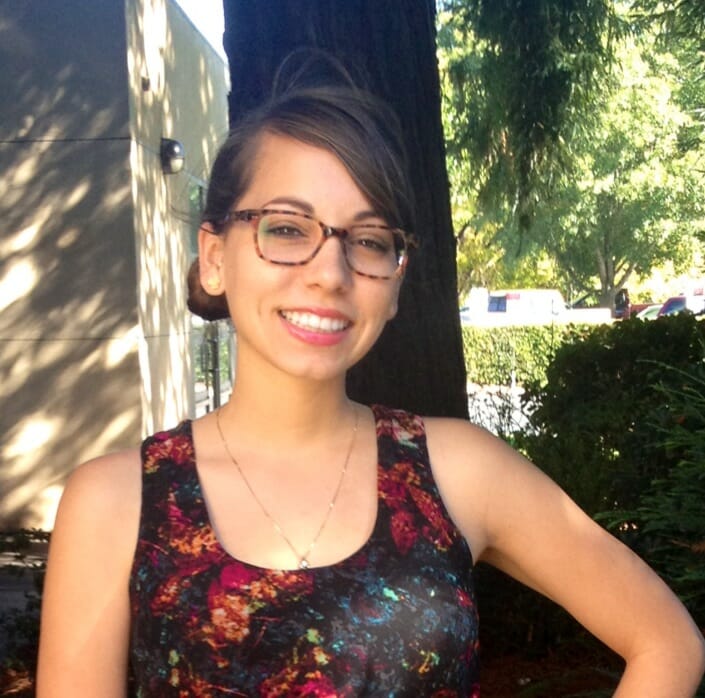
Today’s post is written by Rachele Tanner. Rachele is the Program Coordinator for Year Up, Bay Area. Rachele’s passion for working with young adults stems from her experience in Tanzania, Africa and her local community work in San Francisco. She plans on working for Year Up fulltime next year in their new Silicon Valley expansion that will open its doors in March, 2013.
I grew up in the rural valley of California. People think surf and Hollywood when they think California, but they forget about the huge middle of it filled with agriculture, farms and heat. My town, Clovis, is where people grow up and become firefighters, teachers, farmers, bank tellers and full-time mothers. I knew this type of life was not for me. As much as I love my hometown, I knew that I was supposed to be doing something much bigger with my life. I didn’t know what that meant, but I knew I had to start early.
It was no surprise that at 18, I wanted to move to Africa and teach English. I remember my dad looking at me asking, why Africa? Well, when you’re 18 you make radical choices, and frankly, Big Brothers Big Sisters was just too small for this dreamer. After spending a summer in Tanzania, I knew at 19 years old that I wanted to make big things happen. I wanted to help people for the rest of my life. Eight years, two corporate jobs and a college degreelater, I find myself in nonprofit.
Never did I see myself as an AmeriCorps VISTA, but it’s given me the opportunity to work with a company that I absolutely love. How many people can say that they wake up every morning excited to get to work? Year Up has given me the opportunity as a program coordinator to love what I do. I am so blessed to say so. I work closely with students to ensure student success. That can mean quite a few different tasks: managing the tutoring program, assisting college registration, financial aid, matching students with mentors and any other college advising students may need. Most of my students have never had anyone help them with these resources; some have never been given the chance. There are more than 6.5 million young people in the U.S. looking for opportunities to succeed in professional careers and higher education, Year Up caters to 1,500 of those students a year nationwide. That’s barely a sliver.
I’m constantly reminding myself that every student is one student less falling in that huge opportunity gap. I get to know the students on a level that is extraordinary and am able to better build opportunities and provide the support they need in the classroom and beyond. I recruit volunteers to come and meet with them weekly and assist with homework and other areas of support vital to a successful outcome. Our volunteers come from businesses in the area – some of which have become our corporate sponsors. The interactions between business professionals and the talented young adults we have here at Year Up are essential. I also am the liaison between Year Up and our city college affiliate, City College of San Francisco. Our students earn a total of 13 credits once they have completed our program, as well as a certificate in computer networking and information technology. These opportunities are rare and few for young adults between the ages of 18-24, but at Year Up these rare opportunities become achievable.
Above all, my job is more than just tutoring and college assistance. It’s really about a movement: a space where students feel like they are a part of something more, a place where staff treat students as professionals, and a place where everyone feels supported and applauded. Year Up is a place where a small town girl like me can be a part of something much bigger than she ever imagined.
Public Transportation and Poverty Awareness
Todays’ post is written by Alex Green, a recent graduate from the University of Minnesota with a degree in psychology, who is serving with HandsOn Tech in Seattle. He has a solid background in technology as well, having been a projectionist for three years and a sound engineer for two.
My morning commute from Tukwila to Seattle was nothing unusual. I walked down the street from my apartment to the bus stop, still sleepy. It was rainy, blustery and dark. Starting the day with a somber mood, it was all too easy to forget the positives around me. For example, there is a perfect view of Mt. Rainer right from the sidewalk to the bus stop. I guess I missed it that morning.
Since starting my AmeriCorps VISTA year in Seattle, I have had the “opportunity” to go without a car, opting for public transportation instead. Not only has it been cheaper, but personally constructive as well. I can say with confidence that after only two months, I already find myself more knowledgeable about this city than Minneapolis. Considering I grew up around Minneapolis the first 23 years of my life, I think that’s saying something.
My attitude was less favorable at the beginning. Rain, grumpy bus drivers, crying babies and cigarette smoke were all on the list of cons of bussing it, and they still are. However, I ran into a bit of a hiccup that morning: a hiccup that didn’t change my external circumstances, but rather, my attitude.
For whatever reason, that morning my bus pass didn’t work. It just beeped and said, “Try Again.” I just stood there in disbelief since this was completely new to me. After asking if I had cash (which I did not), the bus driver promptly told me I had to get off the bus. “Wow, really?” I thought. These bus drivers don’t mess around. So I’m off the bus, walking up the hill to my apartment, angry, when something occurred to me. My bus pass was something that I have this whole time I relied on, and just like that, it was gone.
It’s amazing how quickly something that you don’t even think about can fall through. By the time I got up the hill, the sun was out and the morning fog was quickly dissipating. I would definitely be late to work.
Although this occurrence was only a bump in the road with an easy fix (I had cash at home), it gave me some insight into a truth that I had not previously realized. Just getting off the bus in Seattle, you will inevitably walk past many homeless individuals, each with their own personal circumstances. New questions came to mind: how many of these people are lacking something so basic that I have not even considered it as “something” to begin with? What is perpetuating itself in a system of poverty that is not allowing individuals to obtain their basic needs, both internal and external?
What has amazed me from this experience, and my accumulated experience as a VISTA, is that the line between everything working out and everything going wrong can be extremely thin.
All it took was my card malfunctioning and I immediately had no way of getting to work. This gave really quick insight into how quickly the system can keep you on the outside looking in, if you don’t initially have what is necessary to succeed to begin with.
I think that as a VISTA, this situation was an invitation to think more critically about not just poverty as a static condition, but how social momentum can perpetuate poverty. Thankfully, I had the personal resilience to bounce back from this obstacle because of personal support that I have access to in my life. This is support that is often overlooked, but not necessarily granted to everyone. This means being able to pay for a bus pass, but more importantly, to actually believe that I can overcome an obstacle that has stopped me where I’m standing. It also means having the resources to get help if I can’t overcome the obstacle myself. Unfortunately, not everyone has this capacity because of their own personal circumstances. That is why serving as a VISTA is more important than ever. This is something extremely important to understand if we want to seriously reduce poverty.
We have had the opportunity to discuss how poverty is something that someone can quickly be pulled into and difficult to overcome if one is not prepared. This has helped us develop empathy and an appreciation for what we have. We hope to translate this understanding into our service for the rest of our year.
HandsOn Tech is a national program focused on increasing the nonprofit sector’s effective use of technology—ultimately increasing community resources and improving outcomes for low-income communities and families. Offering free nonprofit training and pro-bono technology consulting, the HandsOn Tech project serves eight cities across the country.
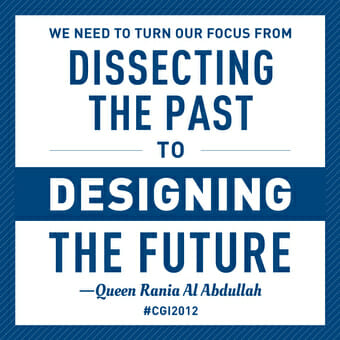
News and Recaps From the Clinton Global Initiative
The Clinton Global Initiative annually convenes a community of global leaders to forge solutions to the world’s most pressing challenges. The mission of the Clinton Global Initiative (CGI) is to turn ideas into action.
I am convinced that cooperation, not conflict, will define this century
— President Clinton, 2012
Here are the highlights from the conference last week:
The Social Good Summit was this past week; such a great conference bringing together change agents and leaders all over the globe to share new initiatives and ideas. Here is a compilation of highlights from mashable, bloggers, YouTube and Pinterest we found over the internet.
Philanthropy is about using the resources you have at your fingertips to improve the world.
–@MelindaGates
The Internet is allowing for us to really experience people in some of the most distant places in the world — as other people just like us. So get to know people, seek out bloggers from a country you’re kind of curious about. It’s about building empathy and breaking through to the point of recognizing people as people.
Social media is just the tool. We–the connected people of the world–are the agents of change.
–@gatesfoundation
Have other blogs, news, videos, or photos you want to add to our list? Share in comments!
On The 11th Anniversary of 9/11 Day Answer the Call To Serve
Today’s guest post is written by Matt Segneri, who leads civic and social innovation projects at Bennett Midland in New York City. He previously served as a senior advisor to Mayor Thomas Menino, whose office he joined as a Harvard Business School Leadership Fellow.
My alarm sounded well before dawn, as it did for dozens of citizens all over Massachusetts. We each found our own way to the Boston Public Garden, driven by a common desire to help, to heal, to honor.
Few of us knew each other but we gathered that day – the
– to build something together. With help from above and a few flashlights, we planted nearly 3,000 flags in the Garden of Remembrance to commemorate the victims of the 9/11 terror attacks.
It was a powerful shared experience on a sorrowful but inspiring day. And it provided the spark that would change the next year of my life.
I used to keep a handwritten sign above my desk. On one side, I wrote, “Make big plans.” On the other, “Elevate the everyday.”
I haven’t had that sign up for years, but those adages stick with me. I constantly strive to follow them and, even more so, to reconcile them. How can one do both?
In service, I found my answer.
We all yearn to be part of something bigger than ourselves while still being ourselves. That yearning was answered alongside my fellow volunteers that morning. It was answered throughout the day, as we readied books for school libraries and assembled care packages for our troops. I was fully part of a community and a country committed to giving back and doing good. I felt fulfilled, because I find the greatest happiness in serving others.
I knew if I could continue that service and incorporate it into my daily life, my everyday would be elevated. And, more importantly, I’d elevate the lives of others.
So, I made a big plan for 2012: to do one hour of service every day.
I’ve found great meaning, purpose and adventure in this pursuit. And I’ve found so many different ways to give back – everything from physical service to board membership to mentoring to
. Through service, I experience the world as a citizen of one big community. I’ve worked with neighbors nearby, across the country and all over the globe.
My experiences have been diverse and those with whom I work dynamic. I’ve created fun quizzes for classrooms and pushed my mentee to chart a new career path. I’ve created blankets for families in need and advised executive directors on organizational strategy. Heeding the wisdom of E.B. White, I’ve gotten up every morning “determined to both change the world and have one hell of a good time.”
And, for the last eight-plus months, I’ve lived up to my goal. With the demands of the day, it’s not always easy. But sacrifice is part of the point. One night, I couldn’t complete my service until 4 a.m. That was the night after we welcomed our beautiful daughter Riley into the world.
This project – which I’ve taken to calling “Every Day I Serve” – has been a deeply personal one. Until now, I’ve kept it to myself and those close to me. But, today is a day to pause and reflect – not just on what we lost but on how we came together and how we can continue to unite through service.
Next to the work of our true servant leaders – great Americans like police, firefighters, EMS, educators, AmeriCorps members and, above all, our men and women in uniform – my sacrifice is a small one. I give an hour. They build and defend the best of our country and never rest.
Still, the beauty of service is that ordinary people, in ordinary pursuits, can make an extraordinary difference. I am often reminded of Dr. Martin Luther King Jr.’s words: “Everyone can be great because anybody can serve.”
So, on this 11th anniversary, be great and answer the call to serve. It doesn’t matter if it’s day 255 or day one. Renew a proud tradition – perhaps the purest source of American exceptionalism – and devote yourself to your neighbors and your nation.
Each year, volunteers come together to rekindle the spirit of unity that existed immediately after the Sept. 11, 2001 attacks. This day brings together cultures, bridges differences and unites citizens of goodwill around the world.
–Michelle Nunn
Last year My Good Deed launched The I Will campaign for the 10-year anniversary of 9/11. The result was extraordinary. A remarkable 33 million Americans, from all 50 states, engaged in good deeds and charitable service as a constructive way of observing 9/11 last year, according to independent research conducted in 2011 by Horizon Consumer Science for 9/11 Day.
Join the movement this year and pay tribute through positive action. Write your “I will” pledge or view other pledges on the 9/11 Day quilt.
Today, six of our HandsOn Network affiliates will collectively mobilize 15,000 people in disaster preparedness training and building the capacity of nonprofit organizations to equip and mobilize volunteers in times of disaster. Read the our full 9/11 day press release here.
Please join us in observing 9/11 as a day of good deeds, a day to pay tribute together by promoting worldwide unity, compassion and peace.
My NCVS Thoughts – from the New CEO at CNCS to the 500+ Alumni Attendees
Today’s blog is written by Ben Duda, executive director of AmeriCorps Alums. This blog is republished from the AmeriCorps Alums blog on June 27, 2012.
The 2012 National Conference on Volunteering and Service in Chicago was a memorable one for AmeriCorps Alums. We held our first ever Pre Conference and Town Hall sessions where Alums from all over the country and across multiple programs convened to share their service stories and meet with their fellow Alums committed to serving in their life after AmeriCorps. The tagline of “A Lifetime of Service” was apparent everywhere, modeled by the alumni who attended our conference. It’s clear that AmeriCorps alumni are a community of ‘DO-ers’. I met Alums working in diverse careers, each still wearing their AmeriCorps service on their sleeves; this time not on their shirts. Like the Alum heading CSR at Redbox who told me she hired an alum to join her team because of her AmeriCorps service on her resume. Or our 10+ chapter leaders in attendance, each working professionally in varied career paths but sharing a passion and commitment to their AmeriCorps year and building communities of alumni in their cities. My time and conversations with individual Alums made this a conference to remember.
My top 5 highlights from NCVS:
1) New CEO of CNCS, Wendy Spencer
Wendy Spencer was confirmed as the new CEO of CNCS in March, but the energy and leadership she displayed made NCVS her coming out party. (I’m glad to say she got a standing “O” at our luncheon). From her speeches at plenary sessions to her special guest welcome speech at our Town Hall, she advocated for more dollars devoted to National Service and made her commitment to our work at AmeriCorps Alums very clear. When asked what she would tell a member who was finishing their service, she enthusiastically stated: “Join AmeriCorps Alums!”
Her passion for service and knowledge of the importance of national service is infectious and one that I find refreshing and energizing as we move forward as leaders in the service movement.
2) NCVS Pre Conference
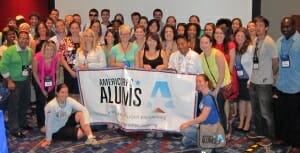
As recapped here, our first Pre conference for Alums was a great kick off to conference for us. Local Chicago Alums and conference attendees spent time in small groups talking their mission and passions in service and brainstorm ways to transform their lessons learned into action steps in their local communities. Seeing thought leaders come together and share their service stories was very exciting for me and the connections made are ones that will go beyond the three days of conference.
Points of Light CEO Michelle Nun also visited our Pre Con and gave our attendees an inspiring welcome, including the story behind the beginnings of AmeriCorps Alums as a Point of Light (then HandsOn Network) enterprise in 2005.
You can watch Michelle Nunn’s welcome to our Alums below:
3) NCVS Town Hall
Like our Pre Conference, it was our first ever Town Hall session at NCVS and the energy shared in the room was infectious, as you can read from all the tweets that were sent. Over 100+ Alums joined us on Tuesday for our lunchtime session, where we were welcomed by Wendy Spencer, heard from the 2012 Eli J. Segal Entrepreneurship Award recipient Anita Yip, shared stories from our local chapters and chapter leaders in attendance, announced our newest member benefit partnership with Motel 6, got an advocacy update from partner ServeNext, and focused on the work we’ve done in the last year and our commitment to more offerings in the year to come.
It was a high energy, high inspiration affair and my only wish would be that the room could have been 1,000 or 100,000 instead of 100. We were proud to share the stage with so many great partners and feel like great successes are ahead for our organization, and our community.
4) Connecting with Peace Corps
The spirit of service shared between AmeriCorps Alums and Returned Peace Corps Volunteers is one that’s hard to find in any other community and we really wanted our alumni networks to connect and collaborate on future opportunities to serve domestically. Thanks to Ally Snell, an AmeriCorps Alum herself who is managing partnerships and recruiting on-staff with the Peace Corps, we had multiple instances to make the connection of a continuum of service. I look forward to seeing the potential impact our two alumni communities will have in leading in service – and think Chicago will help lead the way, where the Alums Chapter and RPCVs have committed to an upcoming service project together this fall.
5) Making Connections with Alums
Last but not least, it was great to meet many Alums in person. Having been in touch with many via email, phone, Skype, or Adobe Connect, it was truly an honor and pleasure to meet so many Alums in person and get a chance to hear your service stories. Listening to your commitments to service and why you still give back after your AmeriCorps term is inspiring and reinforce the work that I do as the Executive Director of AmeriCorps Alums. Whether our chapter leaders, who have made a significant commitment to AmeriCorps Alums and continue to push us with new ideas that are born in the field, to the alumni who attended NCVS and got introduced to AmeriCorps Alums for the first time.
The People are what power AmeriCorps Alums, and are the reasons why I know we’ve got amazing days ahead of us.
The potential of AmeriCorps Alums as an idea and as a network reveals itself in new ways nearly everyday, but when you have the opportunity to see over 500 DO-ers in action, in one place, it can be really special. Thanks for the powerful work you all continue to do in your communities everyday, and thanks for living out the spirit of service as an AmeriCorps Alums. NCVS was a powerful moment in time, and the incredible energy cultivated is only an indicator for the incredible successes and impact to come.
Using Your Social Networks To Find Fundraising Partners
Today’s guest post is written by Joseph Baker. He enjoys volunteering in his community, writing, and baking. Read his work at professionalintern.com.
Need materializes with little regard for resources. When a serious medical condition first manifests, the uncertainty of knowing where and to whom you turn increases an already daunting emotional weight. For these solemn times, harnessing the potential of social media can be key to identifying the human resources needed, especially when it comes to meeting financial challenges of a family dealing with a serious health situation. Locating partners who can leverage their own resources and notoriety is one very practical need that can be met through online networking sites.
Knowing someone who knows someone
From relevant expertise to serious influencers, networking is all about getting through degrees of separation; it’s all about knowing someone who knows someone. In the case of diagnosing a less-than-common cause for a medical condition, the sum diversity of experience matters much more than the individual knowledge of even the most trusted physician. For doctors and families of patients, tapping into a web of skill not only hastens the right diagnosis, but relieves the terrible burden caused by uncertainty.
Adding to the support needs of a family beyond those posed by health matters is the cost of treatment, and the ancillary costs of travel, child care, housing and other unexpected financial expenses. Knowing both a diagnosis and treatment plan provides more definitive dollar amounts that can help when seeking fundraising partners with experience in raising cash for specific medical causes. Examples of this are in no short supply.
Holden’s Story
When the family of Anderson, Ind., toddler Holden Harless (then 2 years old) became concerned about recurring back pain, local doctors were unable to accurately diagnose the real source of little Holden’s suffering – a spine tumor. After months of inconclusive test results, Holden’s mother, Wendy, contacted Riley Hospital for Children at Indiana University Health for a second opinion. Through that connection, doctors at Riley brought to bear their own considerable experience in treating serious diseases to correctly pinpoint the exact cause of Holden’s pain. Following a successful surgery, Holden had to undergo extensive physical therapy to regain his ability to walk again.
Holden (now 8 years old) was recently the beneficiary of a partnership begun more than two decades ago, years before social media was even a term. Taken by limousine to a Indianapolis Colts home game early in the current NFL season, the young survivor helped start the game by performing the opening coin toss. The event, Riley Coin Toss Kids, a collaboration between Riley and the Colts, has helped raise awareness for the work done at Riley Hospital for Children by putting a human face to what might otherwise be an abstraction for those not directly involved in a person’s illness.
Make it personal with social media
The key elements in Holden’s story recommend using social networking sites for fundraising. The most obvious of these is how networking, in this case through securing a second opinion, overcomes limitations posed by basic geography. Tying into a networker with a carefully cultivated list of industry-specific contacts can be a multiplier for fundraising potential. The point here is not that these contacts will have fundraising resources, per se, but that they can propagate awareness among a community already invested in a common theme. LinkedIn is the site of choice for connecting with business relationships, yet other sites can help overcome another aspect of successful fundraising – again, putting a human face with a cause.
The very name Facebook speaks to the issue of personalizing need. From symbols, such as the universally recognized pink ribbon for breast cancer, to the actual images of medical condition sufferers, 800 million overcomes a lot of geography when it comes to appealing for help.
Just as Riley Hospital for Children teamed with the former Super Bowl champs to combine the humanity of a child survivor with the awareness of a regional medical resource, networking through technology can multiply the most crucial elements of fundraising efforts.
Friday Volunteer News Round Up For AmeriCorps Week!
AmeriCorps Works Here! Alums Jill (2010-2011), Francine 1997-1998, 1999-2000), Bryn (2008-2010), and Amanda (2007-2009) working for the greater good at Community Action Partnership of San Luis Obispo County.
Happy Friday! This week was AmeriCorps Week, and we have themed our news wrap-up this week to reflect all the good that AmeriCorps does, and show how AmeriCorps Works throughout the country. If you are an AmeriCorps member and have not taken part in the photo project– follow the link to find out what that’s all about!
Check out what our enterprise, AmeriCorps Alums, has been doing for the week. Thanks to all the AmeriCorps current and past members who have made meaningful changes to communities- your work is appreciated! See below for inspiring stories of the week-
Read more about the exciting new FEMACorps and how you can apply to be in the disaster recovery corps!
News Flash: Buy a Tumbler, Help HandsOn Network
When you pick up your morning coffee this week, keep an eye out for a flashy Starbucks tumbler that does more than just keep your favorite beverage hot. This specially designed, limited edition tumbler provides a unique connection to community involvement.
For every tumbler purchased, Starbucks is donating $5 to HandsOn Network, an enterprise of Points of Light, to support those working to create positive change in neighborhoods across the country.
This new dimension of the Starbucks-Points of Light partnership was announced last Thursday in Seattle at a meeting of Points of Light’s Corporate Service Council, the premier national platform for advancing corporate volunteerism. Cliff Burrows, president, U.S. & Americas for Starbucks Coffee Company and chairman of the Council, presented the tumbler to Points of Light CEO Michelle Nunn.
Nunn said the promotion creates new awareness of how people can connect to volunteer opportunities in their neighborhoods and is an innovative example of Starbucks’s commitment to inspiring change, making a difference in people’s lives and using their size to bring about positive change.
Get one while supplies last and help us inspire, equip and mobile people to take action that changes the world.





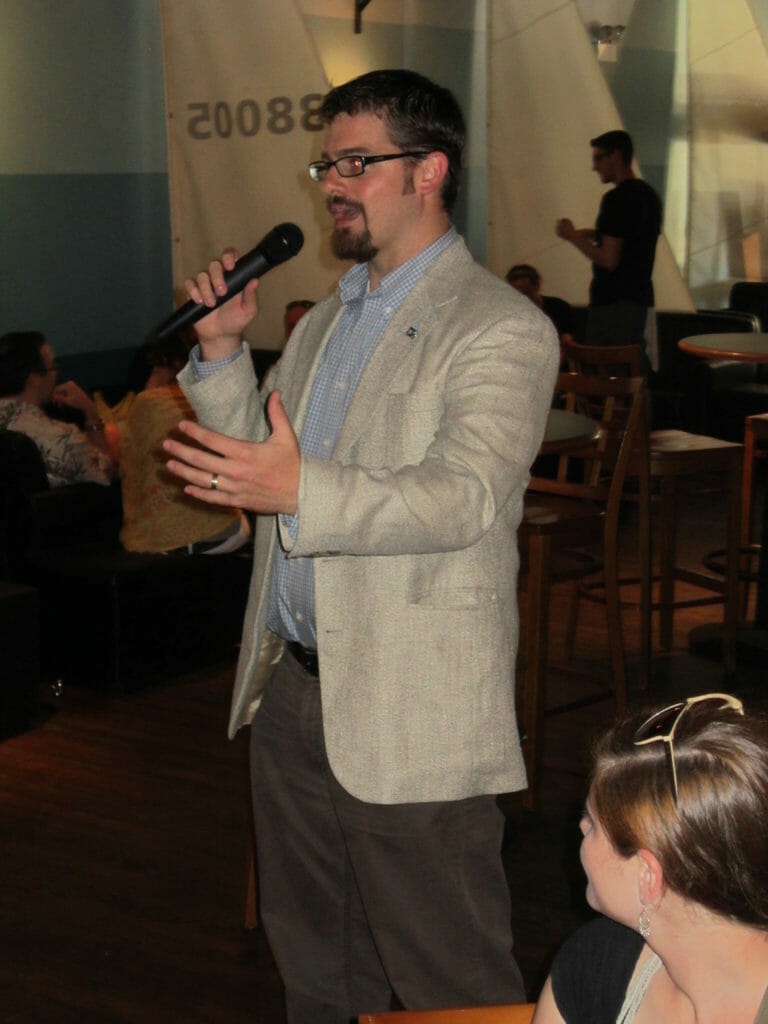 Today’s blog is written by Ben Duda, executive director of
 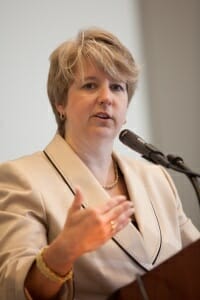 Wendy Spencer was confirmed as the new CEO of CNCS in March, but the energy and leadership she displayed made NCVS her coming out party. (I’m glad to say she got a standing “O” at our luncheon). From her speeches at plenary sessions to her special guest welcome speech at our Town Hall, she advocated for more dollars devoted to National Service and made her commitment to our work at AmeriCorps Alums very clear. When asked what she would tell a member who was finishing their service, she enthusiastically stated: “Join AmeriCorps Alums!”
 As recapped
 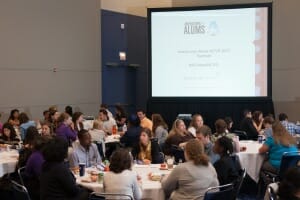 Like our Pre Conference, it was our first ever Town Hall session at NCVS and the energy shared in the room was infectious, as you can read from all the
 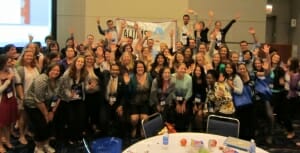 Last but not least, it was great to meet many Alums in person. Having been in touch with many via email, phone, Skype, or Adobe Connect, it was truly an honor and pleasure to meet so many Alums in person and get a chance to hear your service stories. Listening to your commitments to service and why you still give back after your AmeriCorps term is inspiring and reinforce the work that I do as the Executive Director of AmeriCorps Alums. Whether our chapter leaders, who have made a significant commitment to AmeriCorps Alums and continue to push us with new ideas that are born in the field, to the alumni who attended NCVS and got introduced to AmeriCorps Alums for the first time.
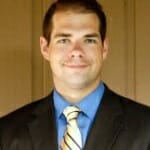 Today’s guest post is written by Joseph Baker. He enjoys volunteering in his community, writing, and baking. Read his work at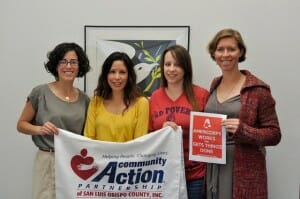

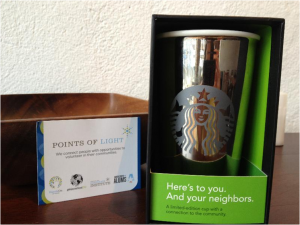 For every tumbler purchased, Starbucks is donating $5 to