8 Tips to Create a Good Deeds Day Project with Your Office
Good Deeds Day is a global day of service that unites people from more than 89 countries to do good deeds for the benefit of others and the planet. Now in its 11th year, Good Deeds Day was created in 2007 by Points of Light global affiliate Ruach Tova. As an event partner, Points of Light encourages our community of changemakers across the globe to participate in Good Deeds Day on April 2, 2017.
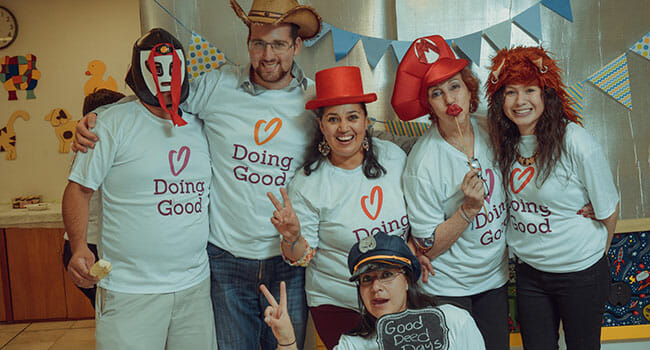
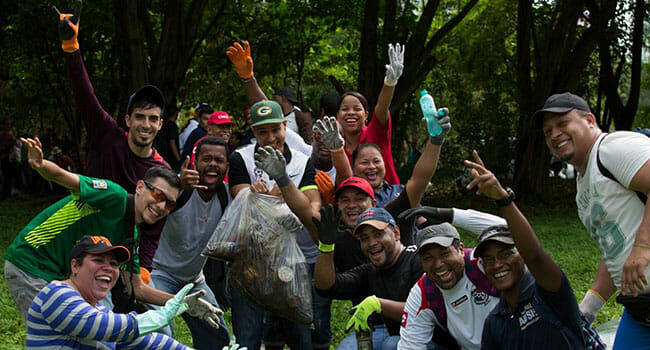
Courtesy: Good Deeds Day BHI Mexico celebrating Good Deeds Day.
Good Deeds Day 2017 can happen in any office, anywhere – all it needs is you! This year we are celebrating our 11th year doing good, and we’ve more than got you covered with ideas, tools, guides and resources to make your Good Deeds Day a golden one.
1. Have the desire to do good. We have a feeling you’re reading this right now because you’re a good person who aspires to be even better. Having the drive to do good is all that it takes to join in the largest celebration of the year devoted to good deeds.
2. Save the date. And this one is a special one as we are celebrating our 11 years doing good deeds worldwide. Last year, more than 1.5 million people took part, and hopefully many more will join this year. You, along with at least 1,499,999 other awesome humans, will unite as one philanthropic force on April 2, 2017, to do good and create large scale positive impact. Go you!
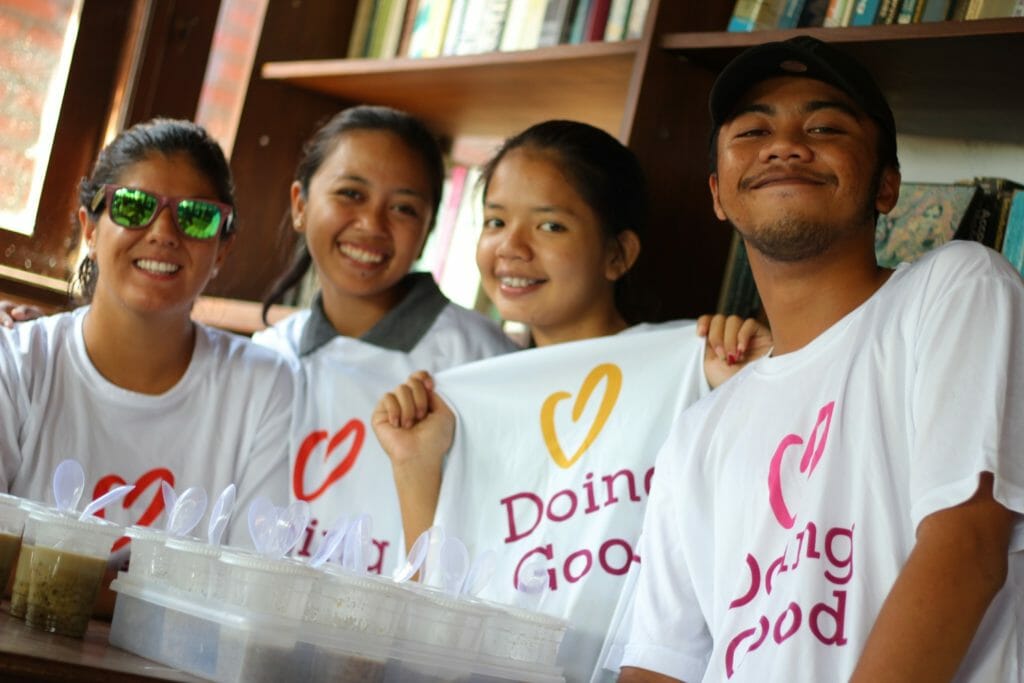
Courtesy: Good Deeds Day Yayasan Slukat Learning Center volunteers handing out food for Good Deeds Day.
3. Get approval from above. It should be pretty easy if you share all the benefits you get, personally and professionally, from volunteering. From health benefits for employees to increased job satisfaction and productivity at work, this opportunity is a win-win-win for all parties involved. And just in case, send your HR head or manager this kit for companies to explain it all.
4. Decide how you can help. There are countless ways in which you could be of service in your community, especially if you’re bringing the whole office along! Browse our how to guides to doing good, brimming with various ideas and activities to suit everyone in your office. Reach out to your coworkers to vote, or see if someone has a special cause to rally around to build office rapport.
We’re also happy to work with you to brainstorm a volunteer program for your community, so get in touch!
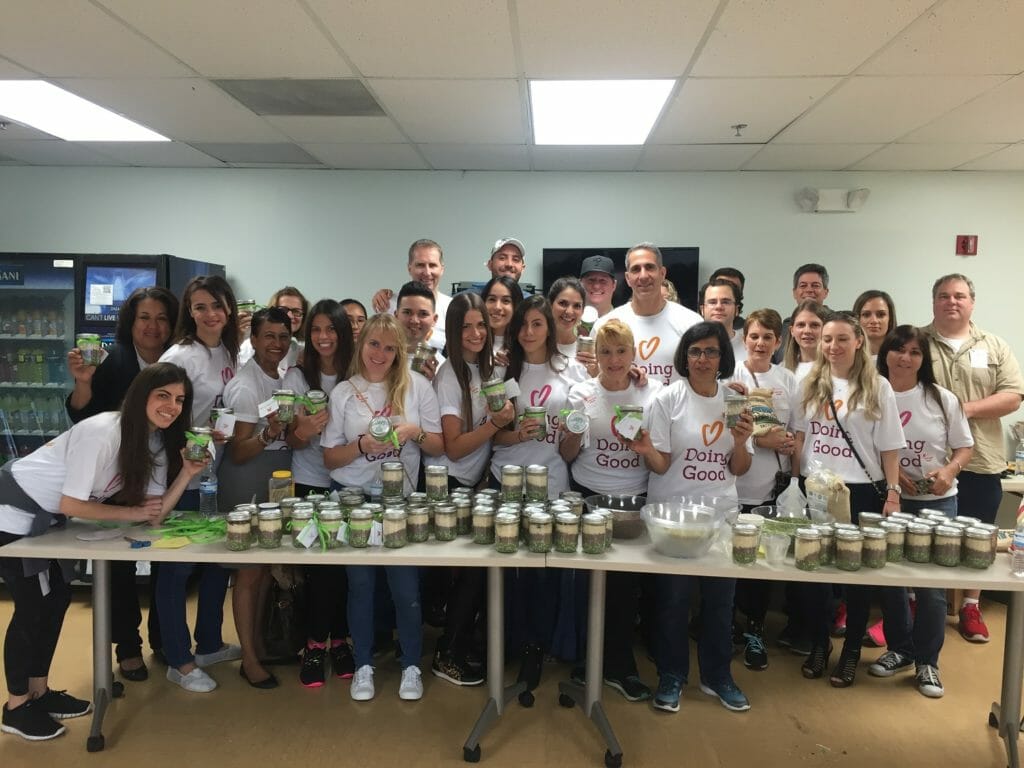
Courtesy: Good Deeds Day Northern Trust collects food and makes goodie jars for Good Deeds Day.
5. Rally the team. This is the perfect opportunity to connect with your co-workers, do something fun, and create better bonds with the people you may not get the chance to chat with in your office. Get everyone on board by emailing them this fact sheet, sharing all the added value benefits for doing good.
6. Register your group. Fill in a short form and join close to two million people in over 75 countries in sharing your Good Deeds Day tales. Tell us about your project and ideas by registering. Want to match? Make sure to mention you want to order t-shirts with your logo!
7. Promote your event. Now that we know you’re doing good, you should share it with the rest of the world! Not only will this benefit your team, but it’s also good business. Use our ready-to-go media kit to handle any communications you need, and update your social media channels with our cover photo and sweet social media graphics.
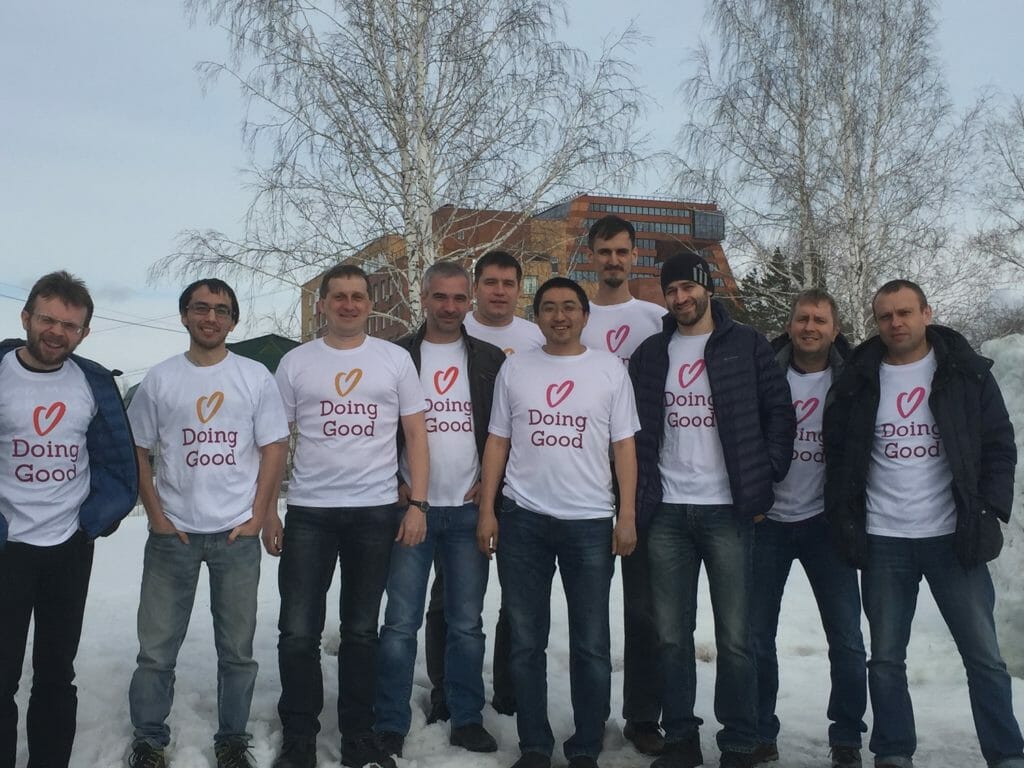
Courtesy: Good Deeds Day PeerApp Russia give assistance to a local animal shelter on Good Deeds Day.
8. Get excited! You should be proud of yourself, friend. You and your office are contributing to a global celebration of goodness! Good Deeds Day 2017 is a dedicated day which proves that millions of small changes can do a world of good. Thank you for joining in our efforts, for believing in good, and for helping to change the world – one good deed at a time!
Building a Volunteer Nation in Panamá with Partnerships, Strategic Engagement
Imagine creating a nationwide volunteer coordination program from scratch, with no formal statistics on how many people in the country volunteer and no existing network of nonprofits towards which to direct volunteers. This was the challenge faced by Voluntarios de Panamá, a Points of Light global affiliate.
Now, just four years later, they have successfully engaged more than 5,000 volunteers in 1,500 volunteer opportunities with 185 nonprofits through their online database,
. The survey found that 75 percent of the country’s volunteers began volunteering in their youth – leading the organization to focus their engagement efforts on youth to help build a sustainable base of volunteers.
Voluntarios de Panamá assembled a group of 15 community members to be volunteer leaders. This group is responsible for engaging nonprofit partners and creating a calendar of volunteer opportunities. Through these opportunities, the organization has been able to build a diverse community of volunteers nationwide from which they are able to recruit participants for various national days of service.
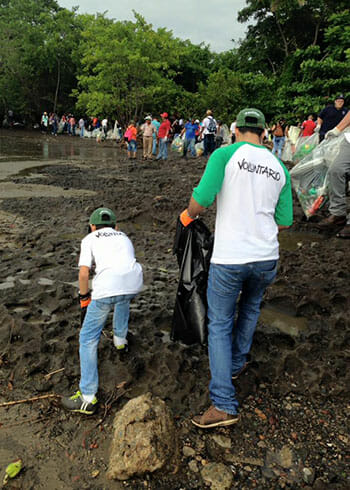
On National Beach Cleanup Day – a national day of service during which volunteers participate in environmental cleanup projects across the country – Voluntarios de Panamá worked with
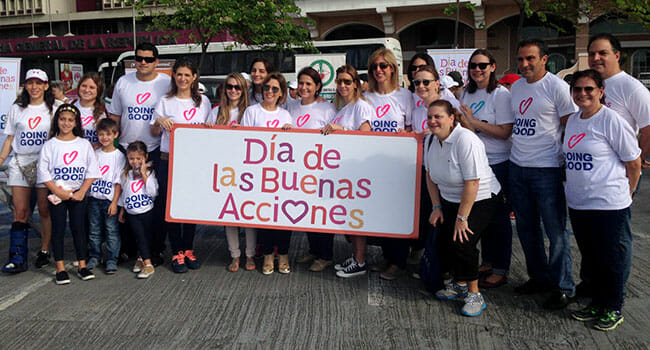
, Jewish organizations in Panamá, Voluntarios de Panamá has helped organize Good Deeds Day celebrations in Panamá each year since 2015.
“We have found that Good Deeds Day is a great platform for people who want to volunteer, but have never done so, to get started,” said Ana Cristina Pérez, program manager for Voluntarios de Panamá. Last year, the event drew more than 16,000 volunteers.
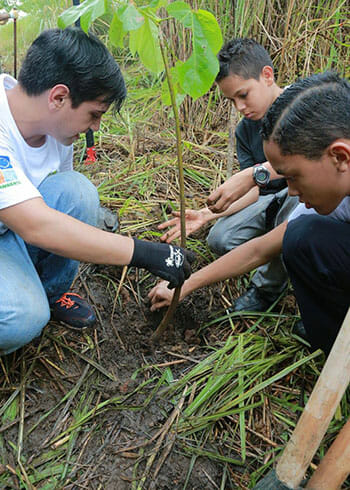
After seeing how successful the organization’s Good Deeds Day efforts had been, The Ministry of Environment reached out to Voluntarios de Panamá and asked them to help organize the first National Reforestation Day in Panamá in 2015. Following a collaboration with the Ministry of Environment and other public entities, Voluntarios de Panamá designed a volunteer program for the government.
Through the program, the president, public ministers and civil servants participate in monthly nationwide service projects, corresponding to a monthly theme. In 8 months, these projects have rallied more than 17,000 government volunteers.
For example, during Cancer Awareness Month in October, the Ministry of Health set up health fairs in parks across the entire country, while volunteers from the Ministry of Environment visited the Children’s Hospital to make crafts with the children, using recycled materials.
Some of the organization’s most important work, however, has been in nonprofit development. More than 70 local nonprofits have been through the organization’s volunteer management course, which they developed with help from
.
In 2017, Voluntarios de Panamá will conduct another survey to determine how volunteer service has grown in the country, but for now the staff look towards the upcoming
on April 2. This year they are playing a large role in marketing the event and in coordinating partnerships between nonprofits and schools, businesses and other institutions – a major benefit to organizations that want to participate in the day of service but don’t have the capacity. They aim to mobilize more than 20,000 volunteers, further enabling people across the country to create change in their communities.
New App Connects Houston Volunteers to Organizations with Immediate Needs
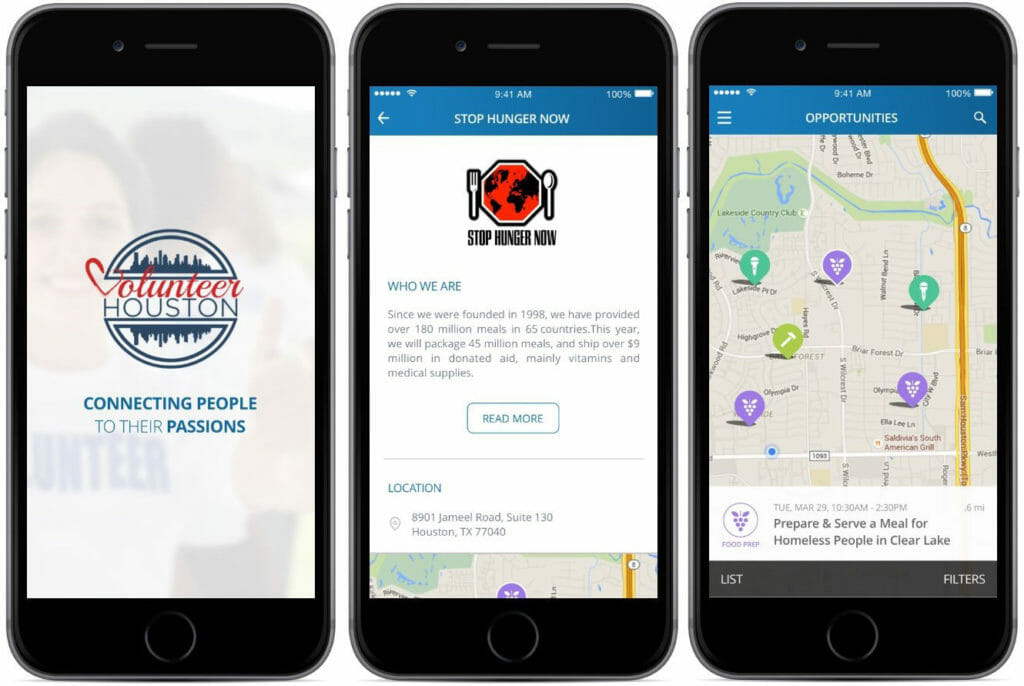
In the smartphone era, we are constantly searching for innovative ways to automate our lives and creating technological solutions to the world’s most pressing issues. Volunteer Houston, a Points of Light Affiliate, is one of many organizations joining this trend.
In spring 2016, Volunteer Houston became one of the first volunteer centers in the United States to develop a mobile application designed to engage volunteers by connecting them to nonprofit volunteer opportunities. Now, with more than 544 downloads, the app has already impacted more than 1,200 organizations in the Houston area.
Built in collaboration with Headspring, a Houston-based software development company, the app allows volunteers in Houston and the surrounding areas to search local nonprofit agencies, find volunteer opportunities based on their interest areas, and easily track volunteer hours. Volunteer Houston also leveraged the skills-based service of an AmeriCorps VISTA, Rafay Munir.
Though he was gainfully employed as a project manager for NAXION in Philadelphia, Rafay wanted to get involved in national service, while his lifestyle still permitted him to do so. His workflow management and consultant skills would be ideal for helping the technical development team turn the idea of the app into a reality.
“[Rafay] moved to Houston to actualize on that – something very powerful, something very cool when you look at the impact he had on our organization, as well as all of the other organizations that are benefitting from the app itself,” said Cameron.
The Houston Independent School District is one such organization, which Volunteer Houston expects will benefit from the app’s hour-tracking feature, beginning in the 2017-2018 school year.
Prior to this app, all hour tracking had to be done with pen and paper, creating greater room for error if students lost their hour sheets or forgot to log their service. The app is designed to provide automatic checks and balances to the process. For example, Cameron said, if a student “volunteered on the 28th of February with the food bank for 6 hours, [the app] sends it to the food bank administrator and they look at it and say, no it’s really 5.5 hours.” This reduces strain on the volunteers for tracking their own hours and provides more reliable data for Volunteer Houston to report.
With the app providing immediate access to hundreds of volunteer opportunities, there have been a number of positive effects on the volunteer process. By allowing volunteers to easily post their volunteer experiences to social media directly from the app, it has helped foster community awareness of nonprofit agencies and the opportunities they have available. It has also enabled a quicker response time for those in need – which could be particularly valuable for disaster response.
“You look at Houston and in the last several years, we had a Memorial Day flood in 2015, we had a Tax Day flood in 2016, and then we the had a Memorial Day flood in 2016 as well,” said Cameron, who expects that the app will be very beneficial in coordinating volunteer responses to natural disasters.
Coordinating with several local emergency management offices in the Houston area, Volunteer Houston will begin marketing the app during times of disaster as a better way to make volunteers aware of where help is needed and which organizations are leading response efforts.
Looking toward the future, Volunteer Houston has already begun working on plans to implement a geolocation function that will help the app track volunteer hours automatically by recording when the volunteer arrives at the physical location of the service project and when they leave. They are also working on plans to create sponsored incentives for volunteers. For example, once a volunteer reaches a certain number of hours, they might get a free cup of coffee or some other reward through email.
“It’s going to work, I think, to [create] a much larger gain than we’ve ever had in the past of connecting people with immediate need.”
The 4-Step Guide to Taking Part in Good Deeds Day 2017
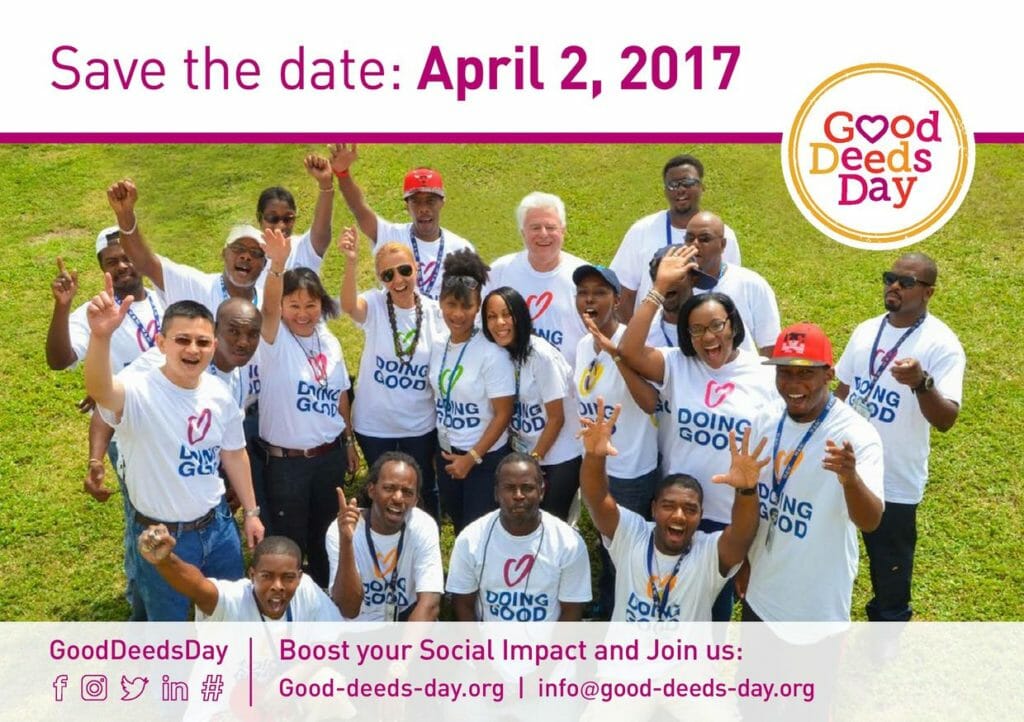
Good Deeds Day is a global day of service that unites people from more than 89 countries to do good deeds for the benefit of others and the planet. Now in its 11th year, Good Deeds Day was created in 2007 by Points of Light global affiliate Ruach Tova. As an event partner, Points of Light encourages our community of changemakers across the globe to participate in Good Deeds Day on April 2, 2017.
Courtesy: Good Deeds Day Kids performing in a flash mob on Good Deeds Day in San Jose, Costa Rica.
International Good Deeds Day is a day solely dedicated to making a positive impact on the people around us and thereby the world as a whole. There is an almost endless supply of opportunities for everyone to spread the goodness in their own way, it can almost be overwhelming.
Millions of people from more than 75 countries around the globe will take part in Good Deeds Day 2017. If you want to be a part of the global movement of doing good and are still looking for ways to get it all started, we got you covered with our little guide on how you can get involved.
1. Save the date
International Good Deeds Day is already celebrating its 11th year, and over 1.5 million people will join hands to do good on April 2, 2017. Mark the day in your calendar and clear your schedule – it’s gonna be a great day.
Once you’ve decided on the impact you’re gonna make, share it to your Facebook friends and motivate them to join you in making a difference. Afterall, happiness is so much better when it’s shared.
Courtesy: Good Deeds Day Share your awesome ideas with the world to inspire others to do good as well.
Once your inspiration has grown into an idea, simply fill out this form and the International Good Deeds Day team will be in touch to help your plans off the ground.
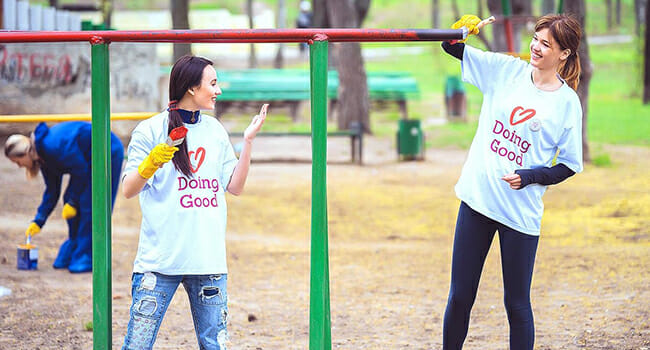
Courtesy: Good Deeds Day You project could be as simple as giving a children’s playground a fresh coat of paint.
4. Get the word out
Congratulations, you are now officially a part of the global movement of doing good and you should be proud of it. Talk to others about Good Deeds Day, spread your own ideas, and find like-minded people who will join you on April 2.
The Good Deeds Day team prepared lots of cool material in eight different languages that will help you to inform, inspire, and spread the goodness. Print some stickers, get a GDD shirt, or just change your email signature. The more people that join you in doing good, the greater your positive impact on the world will be.
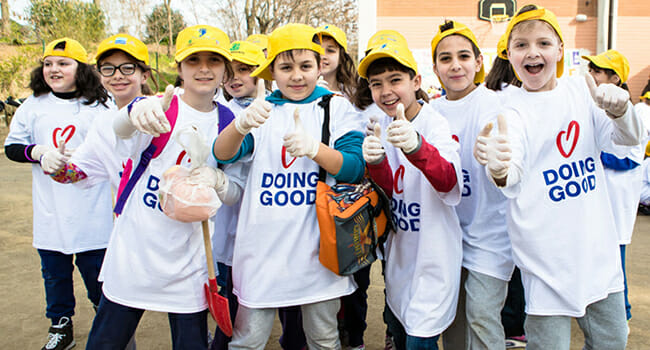
Courtesy: Good Deeds Day The more the merrier – get your friends and family involved in doing good and share the happiness.
This article was originally published on Goodnetand appears here with permission.
Innovative Volunteer Engagement Program Helps Address Refugee Crisis in Brazil
In difficult times, we often look to humanitarian groups to support those in need. Since the onset of the refugee crisis, this has certainly been the case in Brazil. To supplement governmental support, which can be quickly overwhelmed by an influx of immigrants, Atados used a project model that revolutionizes the way volunteers become involved in solving social crises.
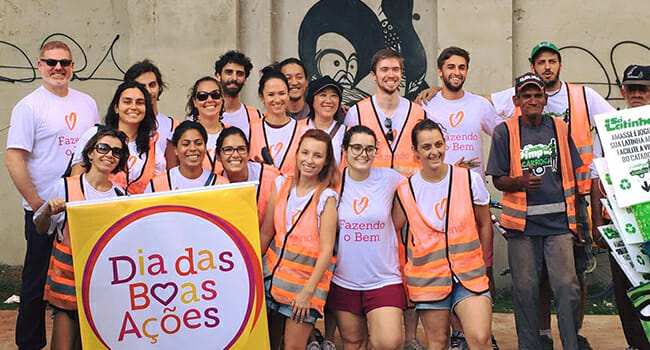
Atados’ three-pillar model works to 1) awaken people’s interest in social causes, 2) connect them to nonprofits and, 3) develop projects with high potential. They have used this program to support a variety of quick-action campaigns and engage a large number of volunteers, especially in traditionally non-engaged communities. One of these campaigns was Feminicidade, which promoted gender equality and women’s empowerment, and engaged more than 500 volunteers in 2016. Atados also organized the first Good Deeds Day celebration in Brazil, which activated more than 10,000 volunteers across 40 Brazilian cities last year.
With its successful track record in volunteer engagement, Atados readily adapted its model to respond to the global refugee crisis and provide aid to the people who had already taken refuge in Brazil.
Since 2011, the number of refugees in Brazil has doubled each year. In 2013, Atados began connecting with these refugees through Adus, a nonprofit that offers free Portuguese lessons and helps resolve legal, medical and work issues, playing a critical role in helping refugees integrate into Brazilian culture.
“The number of refugees was increasing a lot in Brazil, but many people had prejudices on the matter,” said André Cervi, cofounder of Atados. “Therefore, we decided to focus on the first pillar [awakening people to social causes].”
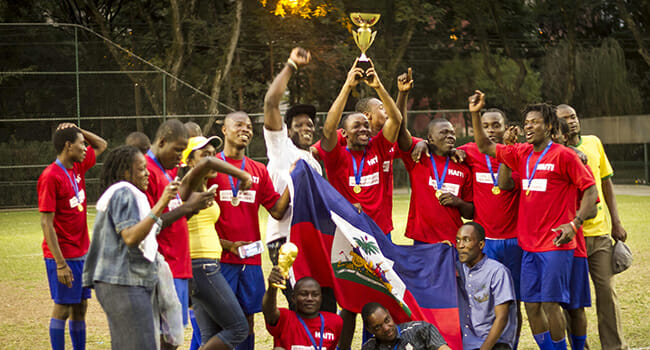
In 2014, Adus and Atados collaborated to organize the first World Cup of Refugees, scheduled to take place around the same time as the official World Cup in Brazil. In addition to uniting 150 volunteers, 150 refugees and an audience of more than 200 people, the event was also broadcast by several outlets, which helped bring attention to the struggles of refugees in Brazil.
After shedding light on the cause, Atados moved on to the second pillar of its program – connecting people to nonprofits. From teaching Portuguese to organizing volunteer events, Atados has connected nearly 300 volunteers with service opportunities at Adus.
All of this culminated in the development of a project with a high potential for impact. Focusing on one of the most overwhelming difficulties that refugees face – finding a job – Atados and Adus looked to refugees’ cultural and language diversity. Together, the organizations opened Abraço Cultural, which translates to “cultural hug.”
This school, which employs refugees to teach about the culture and language of their native countries, hired 15 refugees to teach 120 paying students in its first year. Abraço also engaged more than 80 volunteers to help get the school off the ground through communications support, teacher training, administrative functions and cultural activity implementation.
Using these three interconnected pillars, Atados is able to support a wide range of causes, engaging volunteers at a high capacity to accomplish major projects that achieve sustainable results.
“Abraço Cultural has already reached it ́s break-even point,” André said. “Once it ́s profitable, [it will] donate the surplus to Adus.”
With their eyes on creating future projects, Atados plans to build a new program called Creator of Acts. This program will help nonprofits identify and scope innovative volunteering opportunities that will continue to engage previously non-engaged citizens in inventive solutions to the problems that their communities face.
Boston Cares and Hands On Atlanta Face Off in Points of Light’s 2nd Annual “Super Bowl of Service”
This post is by Alison Doerfler, executive director of Points of Light’s HandsOn Network.
Update: Congratulations to Hands On Atlanta, the winners of the 2017 “Super Bowl of Service” with 3,649 hours of service!
It has been a great year for my sports teams this year, with the Chicago Cubs winning the World Series and the Northwestern Wildcats winning the Pinstripe Bowl. As we head into Super Bowl LI, I find myself pretty excited that the Atlanta Falcons are going to Houston to face the New England Patriots. Since Points of Light is headquartered in Atlanta, I may watch more than the commercials this year. Although I may be a bit biased, I take my job as “Commissioner” of Points of Light’s HandsOn Network seriously – and it’s time for the 2
. Fans of the Patriots and Falcons can do more than cheer on their teams next weekend: They can volunteer this week.
The terms are simple – each affiliate will track the hours served by their local volunteers from Monday, Jan. 30 through Sunday, Feb. 5, and we will combine that number with their team’s Super Bowl score, multiplied by 5. The winning affiliate will take the title of 2017 Super Bowl of Service Champions and win a $500 grant. The leadership team of the losing affiliate will volunteer at a nonprofit of the winner’s choice (in the losing team’s home city) sometime during the month of February.
Anyone can participate by participating in volunteer projects taking place this week in
.
May the best team and community of local changemakers win!
Bonus:
Hear from last year’s competitors, Metro Volunteers and HandsOn Charlotte:
Waste Management Crisis Meets the Full Power of Employee Volunteerism
The 2016 GE Global Month of Service connects employees worldwide around a commitment to serve, with thousands of GE employees volunteering their time and talent to build stronger communities where they live and work. This month of service, in partnership with Points of Light, demonstrates the power that individuals have to impact their communities.
Nigeria is one of the fastest growing countries in the world. According to recent UN predictions, its population will reach 397 million in 2050, making it the fourth most populous nation in the world. Even now its cities are feeling the pressure – Lagos, the most populous city in the country, is home to 20 million people and is expected to double in population over the next 35 years.
As with all rapidly growing and industrializing areas, Nigerian cities are now challenged to bolster their infrastructure to support the needs of their expanding populace. In addition to concerns about education and health care, Nigerian communities are facing serious waste management concerns.
A city as big as Lagos can produce 10,000 metric tons of waste in a day, only 40 percent of which is collected by the strained municipal government. In addition, only 13 percent of recyclable material avoids the landfill, making the trash problem even worse. Over the coming years, Nigeria’s growing pains will only get worse as it looks for ways to support its rapidly growing populace.
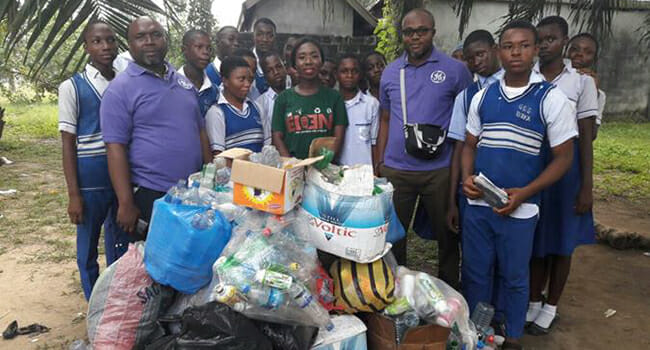
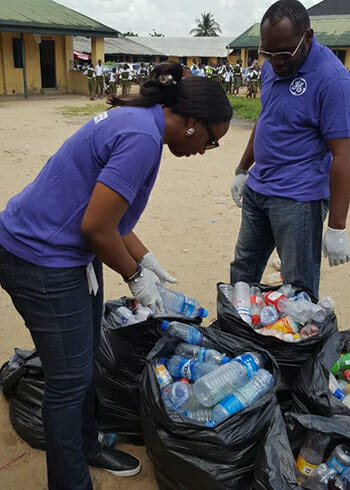
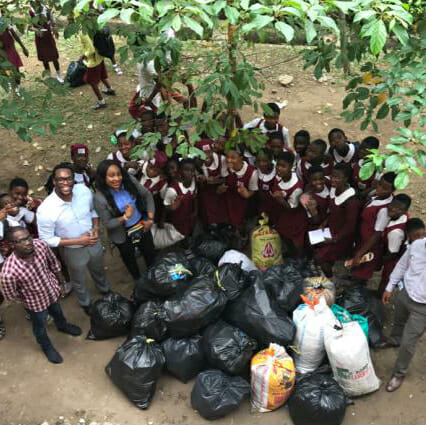
GE is demonstrating how service can be a powerful solution to this problem. On Dec. 2, GE volunteers in two Nigerian cities, Lagos and Rivers, teamed up with more than 5,400 students in 10 secondary schools on a community recycling project. The volunteers worked with students, explaining the importance of recycling and helping them develop plans for a Recycle and Win game.
The children collected recyclable items that could be donated to Recycle Points, a Nigeria-based nonprofit that awards points to people who collect and turn in recyclable material. The children earned points determined by the number and type of recyclables they collected; the points can be redeemed for prizes ranging from basic school supplies to laptop computers. As an added incentive, GE awarded 20 laptops to the school that collected the most recyclables.
In putting together a service project to address urban sanitation, GE volunteers are leveraging the full potential employee volunteerism and using it to address the most pressing needs where they live – teaching children the value of sustainable practices. As a result of this program, these students will return to their neighborhoods and encourage their friends and family to recycle, creating a trend that will hopefully have a marked impact on Nigeria’s waste management crisis.
Spreading Holiday Joy to Veterans and Active-Duty Military Through Service
The 2016GEGlobal Month of Service connects employees worldwide around a commitment to serve, with thousands of GE employees volunteering their time and talent to build stronger communities where they live and work. This month of service, in partnership with Points of Light, demonstrates the power that individuals have to impact their communities.
With the holidays fast approaching, individuals and organizations alike are looking for ways to give back and support those in need. This year, to bring holiday cheer to hospitalized veterans, GE volunteers in Milwaukee came together for the second year in a row to decorate the Clement J. Zablocki Veterans Medical Center.
Veterans receiving treatment at the Zablocki Medical Center, a regional VA hospital, come from as far away as Hawaii. For many families with loved ones in long-term care, it’s difficult to stay in Milwaukee due to the costs associated with travel and housing. As a result, many of these veterans will be alone during the holiday season.
On Dec. 2, more than 100 GE volunteers decorated the entire hospital for the holidays, visited with patients and distributed more than 500 stockings stuffed with healthy snacks. While the decorations brought holiday cheer to the hospital, the volunteers’ primary purpose was to offer hope and let the veterans know they are not alone.
“Veterans hold a very special place [at] GE. Over 10,000 veterans work across [GE] and over 2,000 within our GE Healthcare business. This event is one of many that GE volunteers lead to celebrate our veterans during the holidays and recognize their devotion and commitment to our country,” said Rob Reilly, vice president and general manager of U.S. and Canada services for GE, who co-sponsored the event with Laura O’Donnell, vice president and general counsel for GE Healthcare.
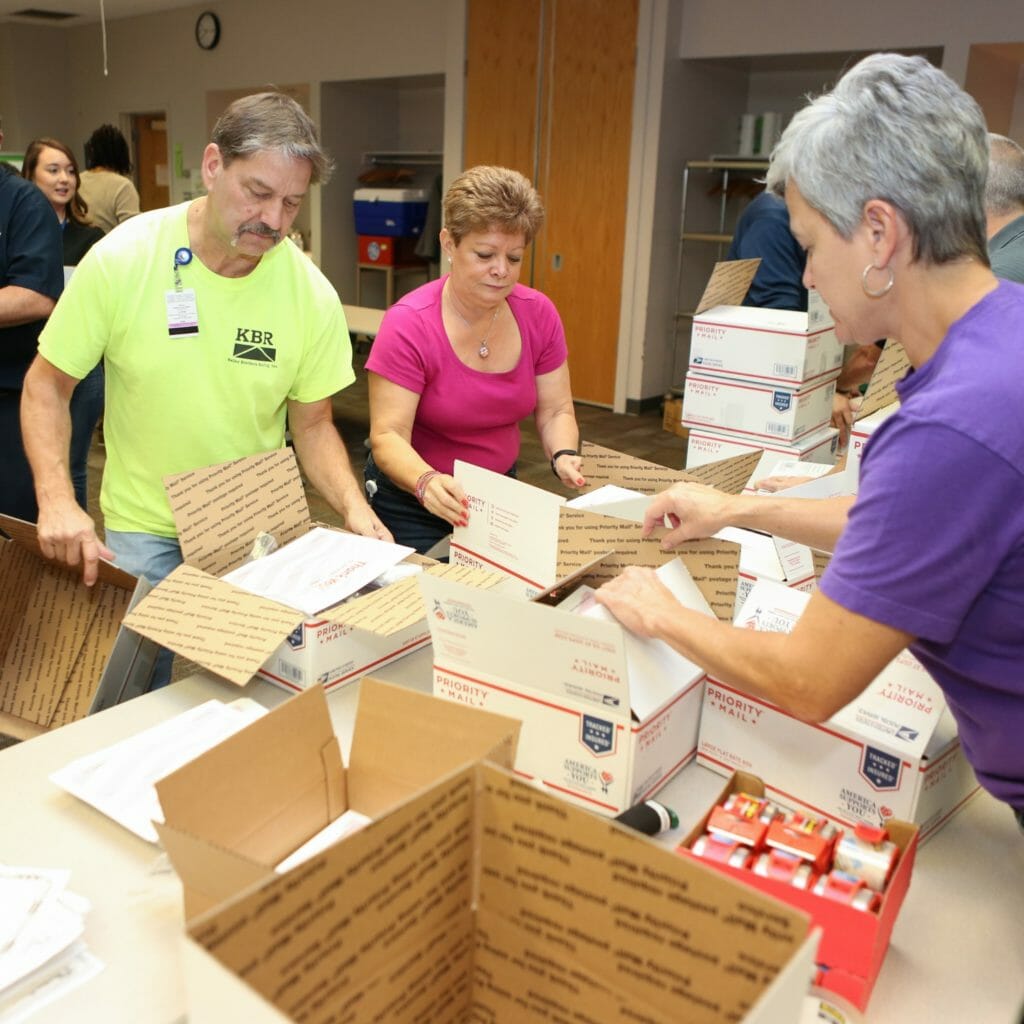
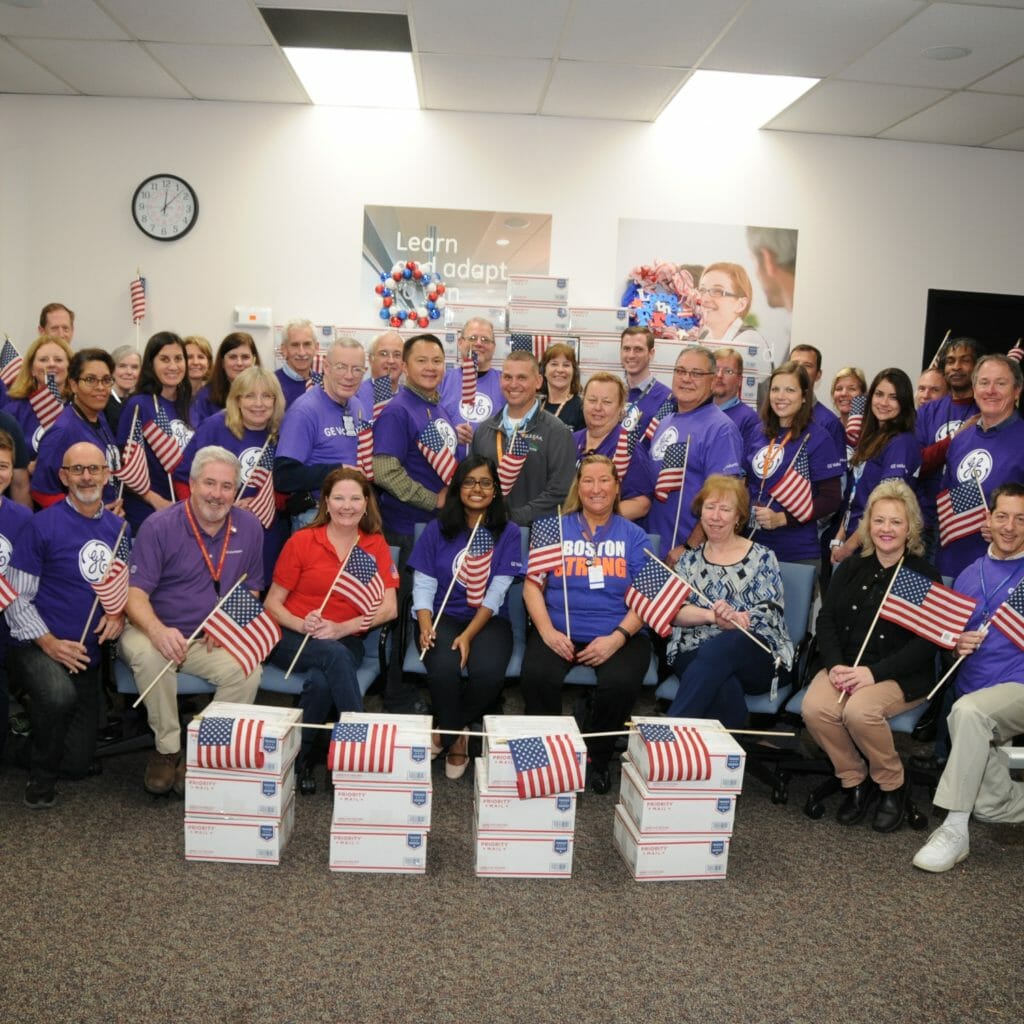
In addition to the Zablocki Medical Center project, GE hosted several military care packaging projects throughout its Global Month of Service to benefit deployed service members. Five projects in Lynn, Massachusetts; Peebles, Ohio; Evandale, Ohio; Dayton, Ohio; and Milwaukee engaged 142 volunteers in 496 hours of service, packing more than 720 care packages.
“These care packages mean so much to the military [members] that receive them! For some it means a chance to brush their teeth or take a shower — some of the little things that we may take for granted each day,” said Penny Louf, the project lead with GE Aviation in Lynn.
Each care package contained nearly 30 items, including socks, toiletries, cookies and padded shoe inserts. Some of the items were included by special request from GE volunteer leads who had served — items that the leads themselves had missed while deployed.
GE sends the care packages directly to the troops using a running list of APO addresses – the GE veterans’ network sites maintain lists of deployed GE employees, friends and family of employees, and others through word of mouth. This enables some GE locations, like Lynn, to host care package events throughout the year, with employees donating most of the goods.
These projects are just some of the ways that GE volunteers are giving back to communities around the world during the company’s Global Month of Service. Through this work, GE employees are demonstrating the true impact that individuals can make when they volunteer their time and talent to improve their communities.
Power of Pro Bono Collaboration Helps NGOs in Hungary Unlock Full Potential
Global Month of Service connects employees worldwide around a commitment to serve, with thousands of GE employees volunteering their time and talent to build stronger communities where they live and work. This month of service, in partnership with Points of Light, demonstrates the power that individuals have to impact their communities.
For several years, NGOs in Hungary have been working to make a greater impact in the communities they serve. András F. Tóth, executive director of
, has been a champion of this cause.
Volunteering Hungary helps local volunteers find opportunities and supports the partner organizations that engage them with information, advice and training, to make the best use of volunteers’ effort. Four years ago, F. Tóth started to think on a broader scale and discovered a way for partner corporations to better leverage their volunteers – through pro bono service.
F. Tóth said there were various factors that influenced this discovery, one being a workshop at the
. It was through them that he discovered the power that corporate volunteers possess, which can result in deep impact when working with NGOs.
The largest American employer in Hungary, with more than 10,000 associates, GE Hungary has been able to carry on the company’s legacy of service. Joerg Bauer, president of GE Hungary, attended the European Pro Bono Summit and was inspired to get more GE employees involved in pro bono volunteerism.
“Pro bono for us means that we contribute with those professional skills that we have been trained for, said Bauer. “Think about a finance or IT person who can give advice in this field, or someone who is doing marketing, communication or customs. We strongly believe in knowledge transfer creating the most impact for the common good, allowing the NGO or charity to concentrate on their core activities.”
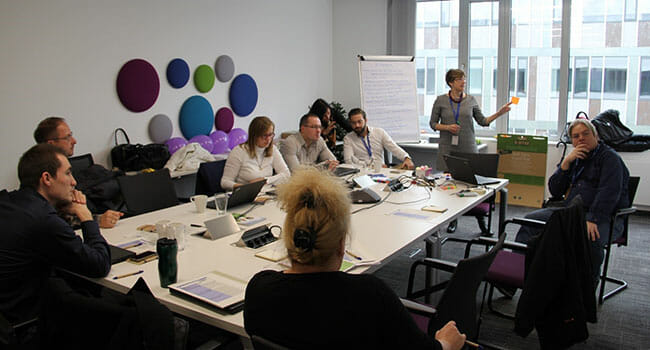
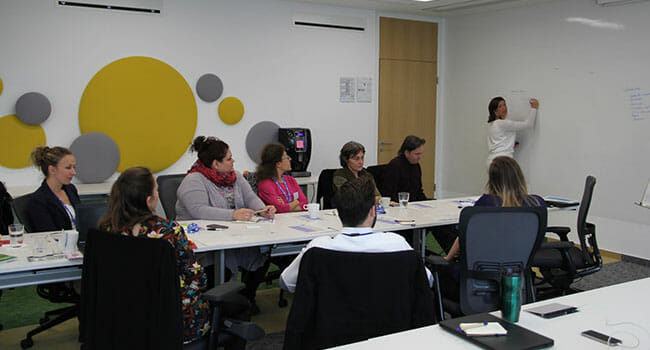
This year, GE Hungary and Volunteering Hungary held their second annual Pro Bono Marathon at the company’s Váci Green campus in Budapest, where GE volunteers provided strategic guidance and skills-based support to help four NGOs generate solutions for problems they are facing. The NGOs left the event with fully formed implementation strategies to achieve their goals.
, which provides services for mentally and physically disabled community members, presented a need for marketing advice – how to better spread awareness on the integration of disabled citizens. Volunteering Hungary participated, too, seeking GE’s advice on how to build guidelines to help NGOs and corporations prepare for pro bono collaborations.
“GE is in a special position because they have so many people with so many skillsets,” said F. Tóth. “They have the potential to go into detail and offer an overview of projects that the NGOs might not have been able to do on their own.”
, whose mission is to protect and restore the current condition of Nógrád caste and the tourist area surrounding it, worked with volunteers to develop a plan to implement more technology and tech knowledge to their town. This pilot example will serve as a case study for how other villages in Hungary that are behind in technological and business advances can get up to speed with the rest of the country.
F. Tóth reflected that the “the added value is the systematic and business mindset that allows GE to help NGOs grow.”
GE follows-up with participating organizations to see how they’ve used the knowledge gained during the workshop. And, participants from the first Pro Bono Marathon have reported tangible results: GE volunteers defined an exact action plan for the implementation of an
project for Autisták Országos Szövetsége, which was recently successfully realized. In the future, GE plans to extend the scope of this collaboration and establish a long-term mentorship with NGO partners.
When major corporations like GE encourage employee volunteers to use their skills for social good, NGOs are able to maximize their potential and truly focus on their areas of impact. But even beyond the impact they will make is the lasting message of the power in cross-sector collaborations to improve communities around the world.
Argentina’s Youth Create Tech Solutions to Community Needs
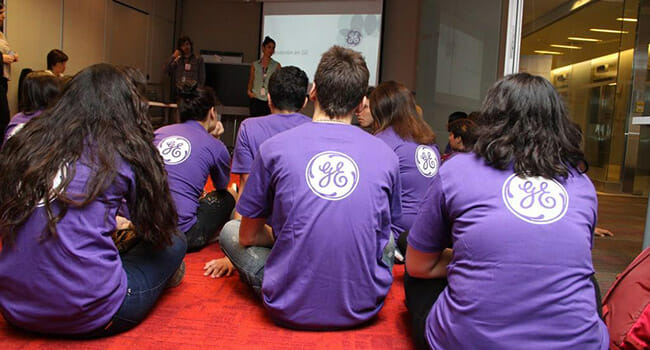
The 2016 GE Global Month of Service connects employees worldwide around a commitment to serve, with thousands of GE employees volunteering their time and talent to build stronger communities where they live and work. This month of service, in partnership with Points of Light, demonstrates the power of individuals to create change in their communities.
After several years of political and economic unrest, including a recession beginning in mid-2015 that pushed the unemployment rate to 9.3 percent, Argentina’s new president, Mauricio Macri recently declared the country “open for business” as part of a campaign to restore economic viability.
Entrepreneurship and innovation are key to being successful in the new Argentinian workplace. Low wages and a convenient time zone make Argentina an attractive international partner for businesses in the United States – in fact, Globant, an Argentinian software development firm, recently became the first Latin American company to go public on the NYSE.
As Argentina seeks to re-enter the global marketplace, GE volunteers are making sure that the next generation has the skills they need to contribute to this new growing economy.
In collaboration with Junior Achievement, GE hosted a Youth Innovation Camp at their Argentina headquarters in Buenos Aires that challenged 40 students from four local schools to find innovative solutions to problems faced by the modern city.
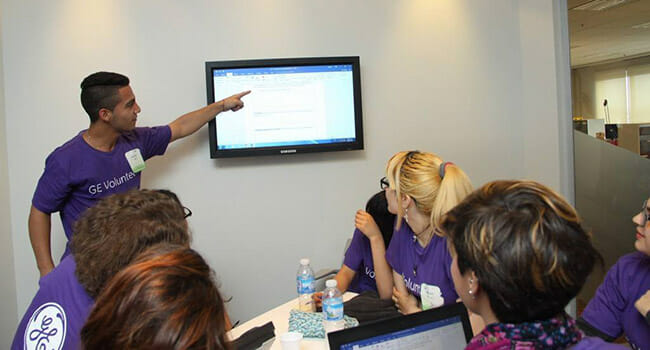
GE volunteers first gave the students, ages 16 to 18, examples of real-life solutions GE has developed in response to community issues in the areas of healthcare, energy and technology. The students were then broken into teams and, using GE innovation as a model, challenged to brainstorm ideas for smartphone applications that address challenges facing the city. Finally, the students presented their app solutions to a panel of GE employees.
The goal of this program is to help students “understand that they can promote an idea to solve problems in the city,” said Florencia Montoreros, manager of GE global parts and repair solutions for the Caribbean and Latin America, who helped organize the event. The students also gained valuable presentation experience as they explained their ideas to the panel, Florencia added.
Some ideas that the students came up with included an application called Basurin, which would alert citizens when their trash truck was arriving so that they could bring their trash directly to the truck and help cut down on the amount of litter in the city streets.
Another app, called Quisque, would help resolve parking problems in Buenos Aires by sending users real-time updates about parking availability on city streets and even allow users to pay through the app.
The winning proposal, an application called Techno Save, would send users a notification if they left a light on in their house and allow them to turn it off from the app’s interface.
By encouraging students to develop innovative solutions to everyday problems, GE is helping Argentinian youth build valuable research and critical problem-solving skills they can apply to future careers in business and technology. This will not only have a positive effect on the students’ lives but also on the ability of Brazilian communities to meet the needs of their citizens and compete in the global economy.