Houston Woman Makes Big Impact on Her “Little” via Big Brother Big Sister Program
Meet Daily Point of Light Award honoree Shelby Edmoundson. Read her story and nominate an outstanding volunteer or family as a Daily Point of Light.
Shelby Edmoundson’s volunteerism is all about quality time, but it doesn’t have to be extravagant, the 30-year-old Houston, Texas resident says. “Sometimes we’re going to the car wash or church together, other times we go to the skating rink.”
It’s in those moments, spending quality time with her Big Brother Big Sister(BBBS) mentee, that Shelby is building upon the bond the two have formed over nearly seven years of service. As the nation’s largest donor- and volunteer-supported mentoring network, BBBS makes meaningful, monitored matches between adult volunteers (“Bigs”) and children (“Littles”) ages 5 through young adult in communities across the country. Through volunteerism, Shelby is contributing to the critical social and emotional development needed to help build resilience and promote the mental health and wellbeing of thousands of children served across America.
What inspires you to volunteer?
Service was modeled for me growing up. Volunteering was always very important in my community. Government and social services are essential and can make a difference, but for my volunteering role specifically, one-on-one mentorship to youth in our cities is the community’s job.
Describe your volunteerism with BBBS.
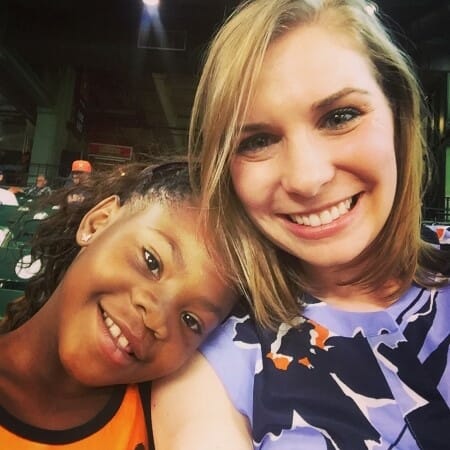
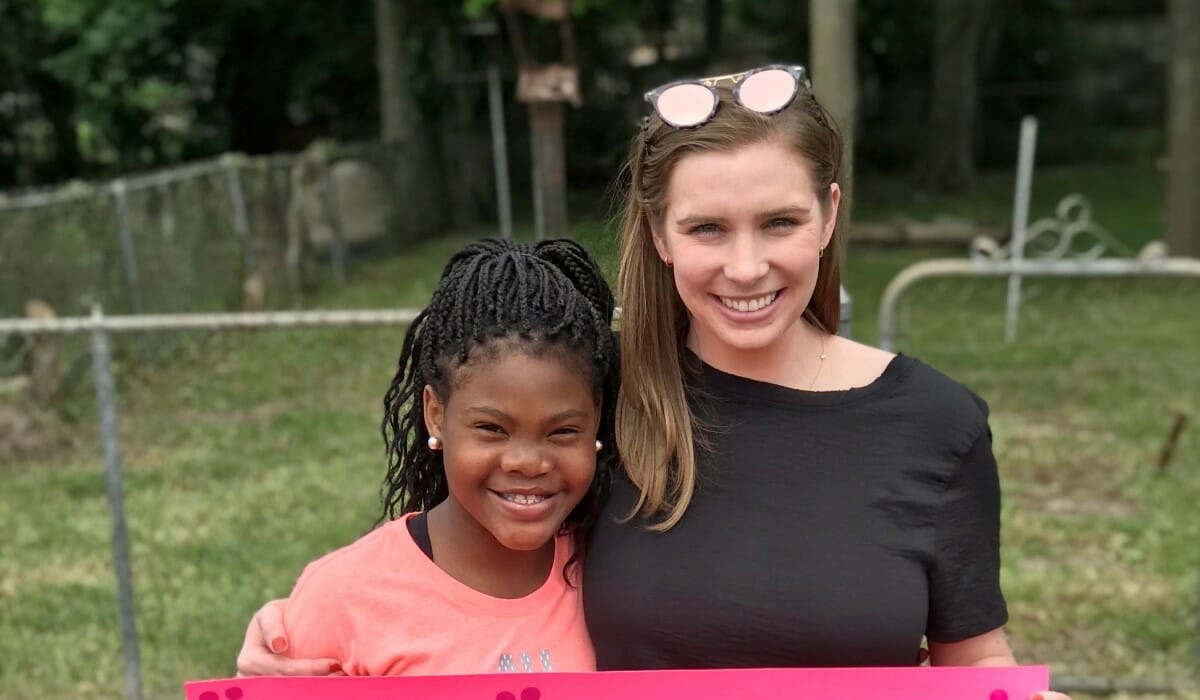
As a volunteer, I connect with my Little, Re’Nah, a couple times a month, ideally in person. We connect on a regular basis, I stay in tune with her and her family, take her for outings or to hang out. You’re also partnering with the guardian or parent, as a lot of families are single family homes, adding an additional adult presence and support for the child and (for the parent.) Over our almost seven year match, I have watched Re’Nah grow from a timid 8-year-old into a spunky 15-year-old. We have celebrated academic achievements and dreamed about what the future might hold as she transitions into adulthood in a few years.
Through volunteerism, Shelby is contributing to the critical social and emotional development needed to help build resilience and promote the mental health and wellbeing of thousands of children served by BBBS across America./Courtesy Shelby Edmoundson
Share one personal story with me from your volunteerism.
Re’Nah was struggling with reading a few years back. I really encouraged her and we made our own reading project over the summer. After that summer, she asked if I could attend an awards ceremony honoring her progress and achievement in reading. That was really cool and tangible. I wasn’t doing the work, but empowering her to know she is capable and seeing her potential blossom was really special.
Why do you think it’s important for others to get involved?
Everybody feels better when they’re helping other people, whether it’s giving people directions or something like (my service) impacting someone over a span of years. We’re a part of this global community and helping each other only helps us thrive. We’re all built into different circumstances, some more difficult than others. It’s important to recognize and help others facing more challenges succeed.
What’s been the most rewarding part of your service?
Most volunteers have the same thought: I’m getting way more out of it than I’m putting in. I’ve gotten to know their family well and they’re an extension of my family now. That’s extremely rewarding, an extension of family that is frankly from a different community than I am from. For me, it’s critical in my faith to love others and take care of those around us. (I’m) giving a lot of time and effort into a young person’s life because there were a lot of people in my life who did that for me, to make me feel empowered and capable.
As a Big Brother Big Sister (BBBS) volunteer, Shelby Edmoundson has watched Re’Nah, her “Little,” grow from a timid 8-year-old into a spunky 15-year-old./Courtesy Shelby Edmoundson
How have you continued to volunteer throughout the COVID-19 pandemic?
We talked pretty often during the pandemic, there were some tearful conversations from both of us. The time was confusing and difficult for adults, but I think we undervalue how difficult and hard it was for children. There were difficult but also sweet times, us recognizing the bond and friendship we have. In addition to communicating on the phone, I sent her packages with coloring books and art supplies to keep her busy and have things to do rather than just sitting home and watching TV because of school closures.
What do you want people to learn from your story?
Don’t be afraid to step out and commit to something. Some people’s lives only allow them to commit to the occasional volunteer opportunity. I was looking for something relational in nature that would be deeply impactful.
In one word, what does volunteering mean to you?
Community.
How can readers help?
If readers know a youth in their community who could benefit from BBBS mentorship, please nominate them to be Littles. For more information, please visit the Big Brother Big Sisterwebsite.
A Child’s Hobby Turns into a Source of Warmth and Hope for Animals
Meet Daily Point of Light Award honoree Peyton Daley. Read her story and nominate an outstanding volunteer or family as a Daily Point of Light.
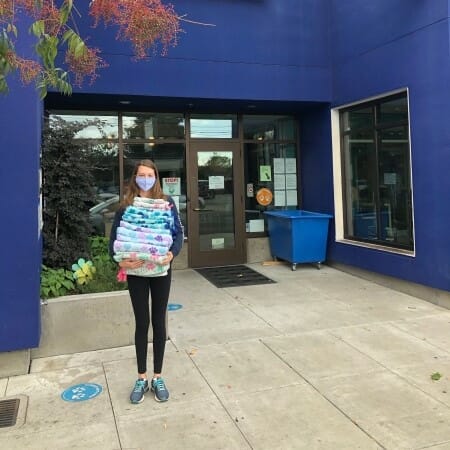
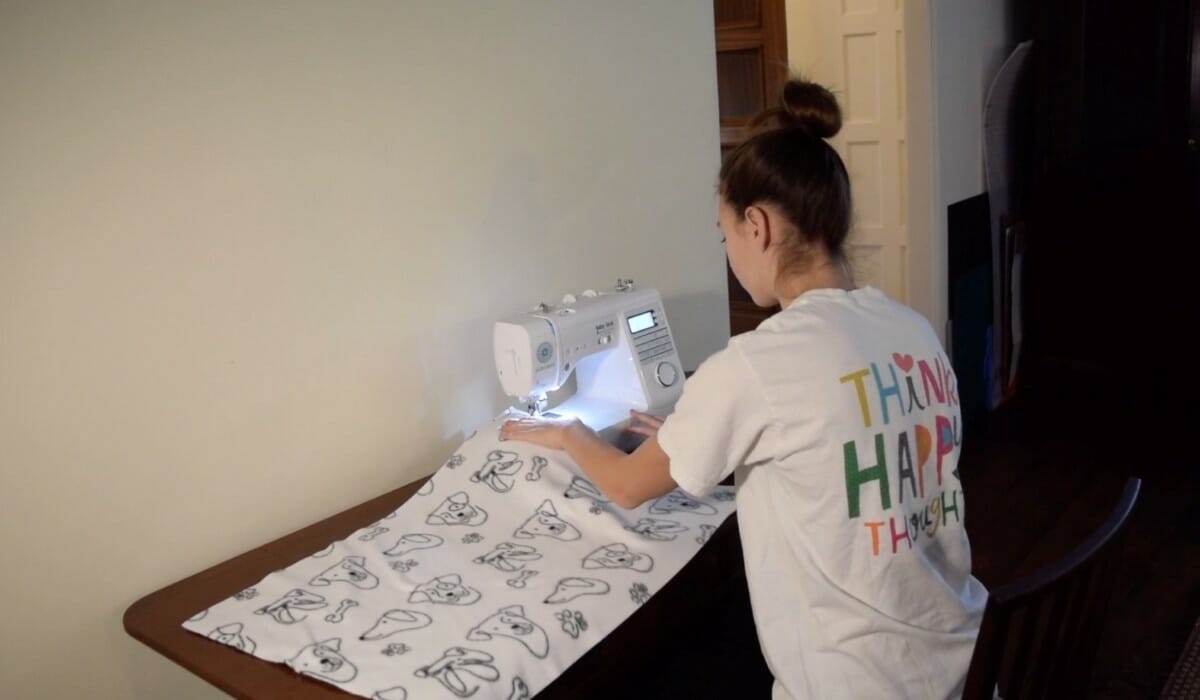
When Peyton Daley was only 9 years old, she already had a heart for helping animals in need. The now 17-year-old from San Mateo, California, took her former hobby of making and donating blankets to animal shelters and turned it into a nonprofit business.
When Peyton found herself with more free time during the pandemic, she started selling PawPrint Blankets, and for each blanket sold, she donates one to a shelter or disaster relief organization in order to provide their animals with comfort, the proceeds from the blankets covering the cost of materials. Now, she’s even hoping to help pets across the world who had to evacuate Ukraine.
Describe your volunteer role within PawPrint Blankets.
PawPrints is a nonprofit business, and for every blanket that I sell, I donate one to a local animal shelter. When I was nine years old, I went to an animal shelter and I noticed that a lot of the animals there didn’t have bedding. They didn’t have enough funding to have beds for all of the pets and blankets.
So that’s when I started making donations. I wasn’t able to make that many blankets at first because I had to buy all of the fleece material myself and my parents were helping me, but in the beginning of the COVID-19 pandemic, I had more time during quarantine. I decided to kind of step it up because over the years I haven’t really been able to donate as many as I wanted. I decided to move more towards a nonprofit business so that I could make more blankets and donate more to different animal shelters.
Why are PawPrint Blankets needed at animal shelters?
A lot of shelters don’t have blankets for all the animals, they just have them in crates. I’ve done a bit of research over the years, and I’ve learned that when there’s blankets, animals are more likely to be adopted because they’re usually more comfortable around the people that are coming to visit. It’s also easier for visitors to picture them in a home setting. So that’s why it really helps them get adopted quicker. Blankets also provide them with comfort and warmth.
Peyton Daley found herself with more free time during the COVID-19 pandemic, so she founded PawPrint Blankets. For each blanket sold, she donates one to a shelter or disaster relief organization./Courtesy Peyton Daley
How has PawPrint Blankets grown and what’s your hope for its future?
In the beginning of the pandemic after I made my website, I reached out to a lot of different shelters via email and told them about what I was doing. They were all very happy to accept the donations. I also went around to a lot of my neighbors, spoke to my local community members and emailed a lot of pet boutiques and shops. I was able to get my blankets in some of the pet stores around time. I also posted in a couple of shelter’s newsletters. It’s also grown to reach an animal rescue group, especially when there are wildfires here in California. A lot of pets can get displaced from their owners.
I’m hoping for the organization to grow by sending even more blankets to areas with natural disasters that need relief. A lot of times like pets are kind of not considered in terms of relief for natural disasters. I’ve also started donating to a couple of shelters in different areas of the country. When Joe Biden was elected as president, and [presidential pet Major] was the first adopted dog in the White House, I sent some blankets to the shelter that they were adopted from as well, which was kind of fun for me to do. That’s why I really, really would like to expand to more shelters around the country like that.
What inspires you to volunteer?
Receiving pictures from the shelters of all the animals with their blankets and receiving appreciative notes really inspires me to continue and shows me that my work is doing good for the animals because that’s definitely always been my goal. It’s really great to get to see shelters use the blankets and see new animals using them. I love just seeing the animals all be really comfortable in their temporary home.
Peyton Daley took her former childhood hobby of making and donating blankets to animal shelters and turned it into PawPrint Blankets./Courtesy Peyton Daley
What have you learned through your experience as a volunteer?
The business has really helped me develop much better speaking skills and how to interact with customers and store managers at the pet stores. I’ve definitely gotten a lot more exposure that way and I’ve gotten the chance to be more professional and build relationships with stores and other organizations. It’s also instilled a lot of passion for community service in me. I’m hoping to continue with this project, and also continue volunteering in other ways as well.
Why is it important for others to get civically engaged, especially young people and students?
I think that for high school students, I’ve noticed that even though we have required service hours for school, a lot of people do them, but don’t really find something they’re super passionate about. They’re kind of just doing volunteer work that isn’t necessarily meaningful to them. I think it’s really important to find something that’s meaningful to you because when you get to see the results of your service, it’s very rewarding. It also inspires me to continue donating and to continue my work.
So I think it’s important that everybody finds what they’re passionate about in service and what they can relate to. Then they’ll want to continue beyond just the bare minimum.
Are there any partnerships, programs or events that you are excited about?
I’ve been thinking about trying to donate to some of the disaster relief organizations, especially in Poland dealing with the Ukraine crisis because I know a lot of pets have lost everything. People don’t really have the means to take care of their pets anymore, especially coming over the border. So I’m trying to put together donations, and I’m hoping to get other people to help me donate to pay for shipping to ship blankets over there as well.
First Generation, Low-Income Medical Student Paves the Way for Others Through Her Mentorship
Meet Daily Point of Light Award honoree Lisa Young. Read her story and nominate an outstanding volunteer or family as a Daily Point of Light.
It all started during the onset of the COVID-19 pandemic in 2020. Lisa Young, the daughter of Chinese immigrants, had been accepted to Johns Hopkins University School of Medicine. Her dream of becoming a doctor was coming true.
She had about six months before classes would start so she decided to look for a way to contribute to the community and help other young people like herself, who were from minority or disadvantaged backgrounds, and were coping with the complex and intimidating process of applying for college. A recent graduate of the University of Washington, Lisa remembered how challenging it had been for her to tackle college applications, seek financial aid and obtain good advice, such as considering attending a less expensive community college for the first few semesters to obtain credits that would transfer to a four-year university.
Take On College is a nonprofit based in the Seattle, Washington area, that was founded during the 2019-2020 school year. It provides volunteer mentors who offer free counseling to high school students who aspire to attend college – and according to Hong Ta, executive director and co-founder of Take On College, Lisa quickly proved to be one of the organization’s best mentors.
“In our mentorship and workshop programs combined, we’ve reached over 400 students from the classes of 2020, 2021 and 2022, and Lisa is actually one of the mentors who has helped the highest number of students from those years,” said Hong.
Lisa explains: “Serving the first-generation, low-income community is very near and dear to my heart. I grew up low-income, in a big family. I have six younger siblings and one older sibling, so growing up in that kind of household made me aware of how much it costs to obtain anything like college counseling.”
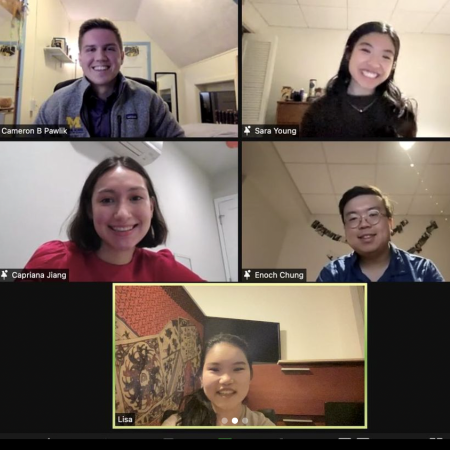
Lisa Young (bottom) meets via Zoom with attendees and panelists at a Take on College Pre-Medical Program event. Virtual sessions have enabled students from all across the nation to receive services through Take On College. /Courtesy Lisa Young
Lisa’s mother, who was trained as a chemist in Singapore, valued education so much that she homeschooled her children in math, chemistry, reading, English and other subjects, in addition to enrolling them in public school.
“I’ve never been someone who’s like, ‘I’m getting tired of school’ or taken it for granted,” says Lisa. “It’s something that’s not accessible to everybody.”
Soon, Lisa also began helping Take On College apply for grants, and her grant-writing skills managed to secure $11,000 in grants from universities and corporations.
But Lisa wasn’t done. She proposed an additional service for Take On College: helping students who aspired to attend medical school to navigate the myriad aspects of that ambition, from taking the right prerequisites in high school and undergraduate college to preparing to take the Medical College Admission Test (MCAT) to completing essays that would effectively convey a student’s passion and maturity.
“I think it’s great that medical schools are beginning to recruit students from underrepresented backgrounds — it’s an issue because some patients are not seeing doctors who look like them,” says Lisa. “At the same, I hope I’m helping to contribute to the idea that medicine is not only for people who come from money or who have physicians in their family,” she added. “I didn’t have any, and it was hard to not have anyone who could give me that real-world experience. In medicine, just as in any industry, connections are everything. So, I’m definitely trying to help people get those connections.”
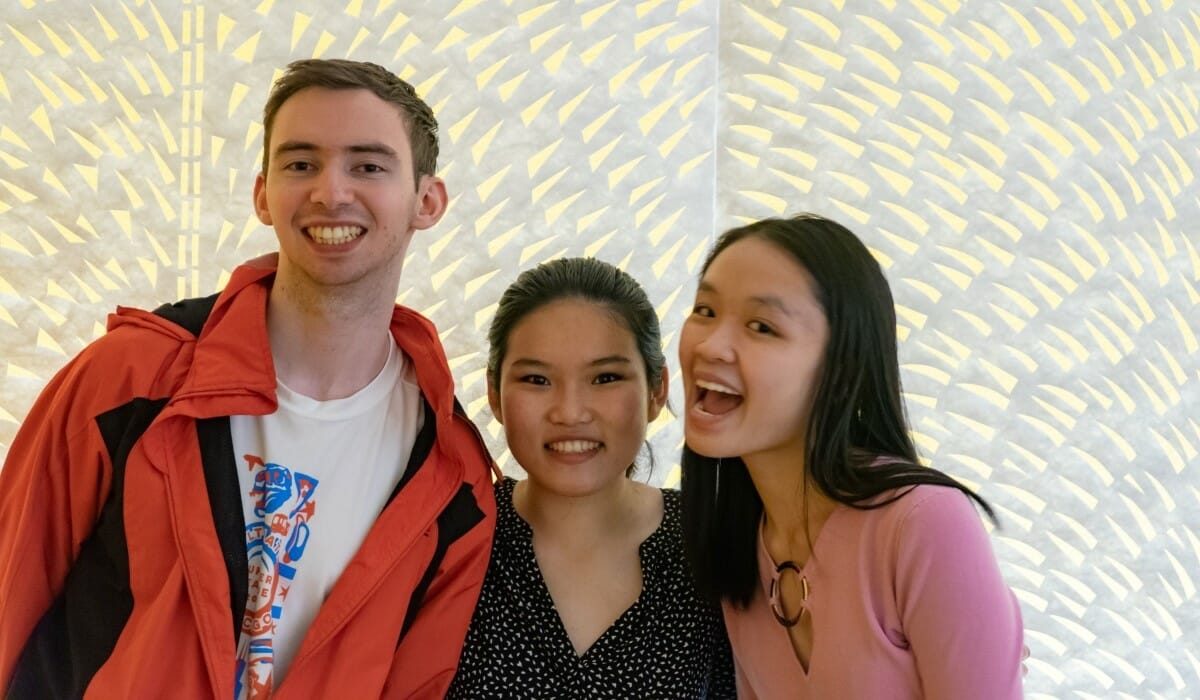
Lisa (center) and her teammates Jeremy Boyle and Hong Ta offer free college preparation services for first-generation and underserved students through Seattle-based Take On College./Courtesy Lisa Young
One of Lisa’s young mentees says she’s grateful for the advice and counseling she received from Lisa, even though she is not a pre-medical student.
“I really needed help with my applications,” said Essey Paulos, who is now a business major at the University of Washington. “I’m a first-generation student – my parents didn’t go to college – and I was in an unknown area.”
Essey says she was one of only a handful of Black students at her high school, and she had a lot of questions about how to best complete her college applications and interviews, especially when asked to “tell her personal story,” Explaining how she had overcome hardships in her life. Lisa, she says, patiently helped her edit draft essays and address her nervousness.
“It was so comforting to know that not only did Lisa have a similar background, but despite being in the medical field and not the business field, she still managed to connect with me in a way that made me comfortable to write my story. Because of her, I can confidently say that’s why I got into U-Dub,” added Essey, using a nickname for the University of Washington.
“Lisa takes initiative,” said Hong. “The pre-medicine program was her proposal. She’s been heading workshops and panels for it. She knows what’s needed and how to take care of it.”
Volunteer Turns Medical Emergency Into Positive Service With “Aortic Hope”
Meet Daily Point of Light Award honoree Carin Andersen. Read her story and nominate an outstanding volunteer or family as a Daily Point of Light.
After surviving an acute aortic dissection and finding little existing support for survivors after leaving the hospital, Carin Andersen says she was struggling. “Doctors and nurses are amazing,” says Carin, “but unless they’ve had emergency open heart surgery, they’ll never truly know what patients and caregivers feel inside.”
Carin began speaking with survivors online, and alongside two other women she’d met on Facebook, the 52-year-old Bel Air, Maryland resident co-founded Aortic Hope in 2016. The organization, made up of a community of aortic disease patients, survivors and caregivers spreads hope, creates awareness and provides support throughout recovery and management of aortic disease. Now offering hope to countless others as a survivor herself, Carin is connecting with patients and caregivers all around the world through volunteerism.
What inspires you to volunteer?
Helping others helps myself. Service comes across sometimes as being a little selfish but sometimes I think we need to be. When I can help someone else, no matter what kind of day I’m having, I feel better. If we can touch one person, if just one person can come away not feeling so scared to breathe, to walk and to feel emotions, then we feel successful and we feel the same way.
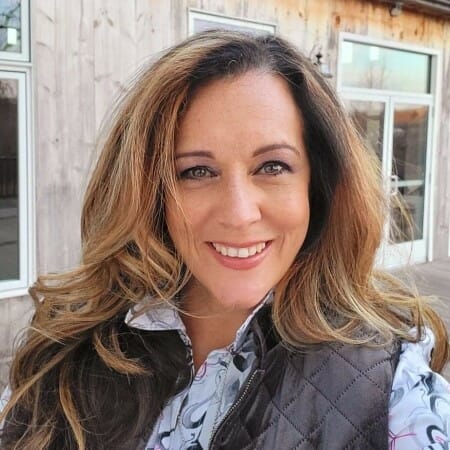
After surviving an acute aortic dissection, Carin Andersen co-founded Aortic Hope to provide support and hope to the aortic disease community./Courtesy Carin Andersen
Describe your volunteerism with Aortic Hope.
As the president and member of the board of directors, I coordinate support group efforts — our support reminds survivors and their caregivers that there’s a community rallying around them. I send out our Hope Mail Care packages to mark survivors’ “Aortaversary” month. I also manage our website communications and content including our Survivor Series, promotion and interviews for our Youtube and online pages. The interviews are conducted with physicians, attorneys, therapists and more, and help to provide accurate information to the community. There’s a lot of misinformation on the internet, so we pride ourselves on partnering with the medical community to provide accurate information.
In addition to my volunteerism with Aortic Hope, I serve as president of Think Aorta US.
Share one personal story with me from your volunteerism.
I was put on a heart lung machine and I’m still standing. When someone who is struggling, emotional and crying, speaks to me and sees that I had the same exact surgery, they have that glimmer of hope they can live that same life themselves. Then they’re not scared to have a test, or ask questions and receive referrals. Sharing stories validates a person’s experience. What I’ve received from helping (people), you can’t put a price on that. There’s no price for making someone feel hopeful.
Why do you think it’s important for others to give back?
Volunteering comes down to giving back and helping others. I’ve come to realize that our life is extremely short. We were not meant to just be selfish and self-serving. There is something to ‘help thy neighbor.’
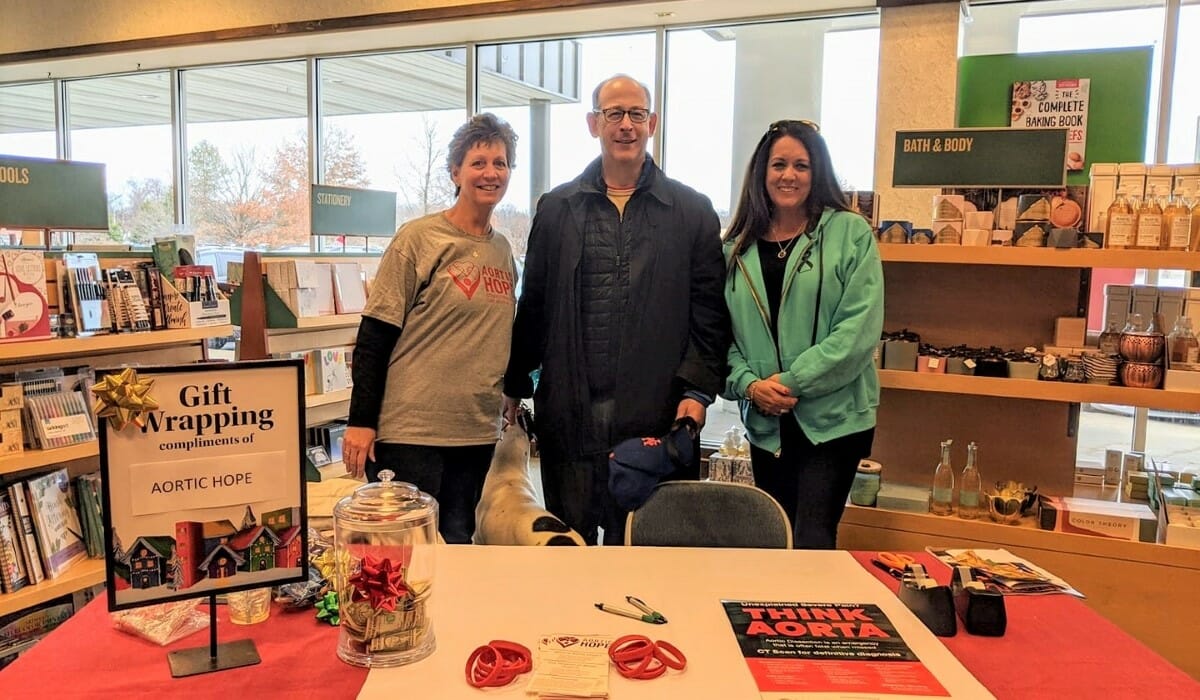
Carin Andersen, right, pictured alongside Dr. Ben Youdelman and Aortic Hope director of community relations/secretary Tammy Warner./Courtesy Carin Andersen
How have you continued to volunteer throughout the COVID-19 pandemic?
We provided virtual support group meetings for patients and caregivers all over the world before COVID. During the pandemic, our biggest fear was that patients wouldn’t go to the hospital if they felt something physically wrong. (In response) we spent a lot of time offering education, with the help of medical professionals. We volunteered more during the pandemic and increased our online presence to try to reach more people.
What do you want people to learn from your story?
I tell people that I just want them to share their story. Share your experiences both physically and emotionally, it’s therapeutic and you’ll have no idea who you may touch. Aortic disease is much more common than people think. In sharing (your) experience, you bring support and knowledge to a greater community.
In one word, what does volunteering mean to you?
Life. Volunteering gave me my life back.
How can readers help?
Our organization is 100% donation-based, and 100% of the funds received go back into the community to support our Hope Mail Care packages and patient information cards. Please visit our website for more information about how you can help.
Marine Corps Veteran Serves to Honor Community Veterans and their Families
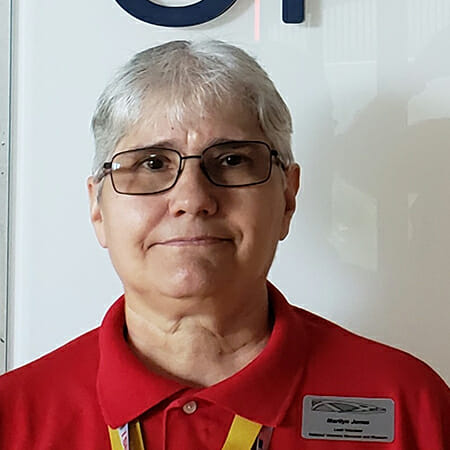
Meet Daily Point of Light Award honoree Marilyn Jones. Read her story and nominate an outstanding volunteer or family as a Daily Point of Light.
As a Marine Corps veteran who counts more veterans in her family, Marilyn Jones is volunteering to honor and remember veterans, helping her community understand their stories to make sure veterans aren’t forgotten, their service and lives valued.
As a volunteer with the National Veterans Memorial and Museum (NVMM) in Columbus, Ohio, Marilyn, a 64-year-old Columbus, Ohio resident, had volunteered more than 1,500 hours of her time over four years. Marilyn is recognized as an expert on museum content and is positively impacting her community, veterans and civilians alike, through service.
What inspires your volunteerism?
There’s a lot of family members who come in, especially family to now-deceased WWII veterans, who didn’t have a chance to talk about their service and lives, and the family is now seeking ways to connect with that person. A lot of us do that. We neglect the time while we’re living to share experiences with each other. You can see how important it is to share stories with another person who appreciates it. Helping to keep someone’s memory alive so that their loved one isn’t forgotten is critical.
As a volunteer with the National Veterans Memorial and Museum, Marilyn Jones is helping her community connect with the stories of veterans. /Courtesy Marilyn Jones
Describe your volunteerism with National Veterans Memorial and Museum (NVMM).
As a lead volunteer, I coordinate with other volunteers and staff. I greet guests, help them navigate the museum and answer questions about exhibits. Sometimes, I even help people find information on their veteran family members. I’ll offer ideas on how to search, or suggest different organizations that may be able to help depending upon where, what branch and what time frame their veteran served.
Share one personal story with me from your volunteerism.
Sometimes, someone will have memories of a loved one that may bring them to tears. Whether they were a veteran or not, it’s really important to share that moment with someone who has lost someone. I love anytime someone finds a personal connection within the museum. It makes me feel happy to be there when people are enjoying the museum, (laughs) and it puts a smile on my face to see people looking at the exhibits and sharing stories. That’s what it’s all about.
Why do you think it’s important for others to give back?
We all need to share to help support others or to help make their lives better. Whether you get paid or not, you want to do your best, but if you’re able to serve for free it is better because it doesn’t put a burden on others.
What have you learned through your experiences as a volunteer?
Doing things that are important to others helps you feel better about yourself. You don’t volunteer to make yourself feel better, but that’s just a fringe benefit of helping others.
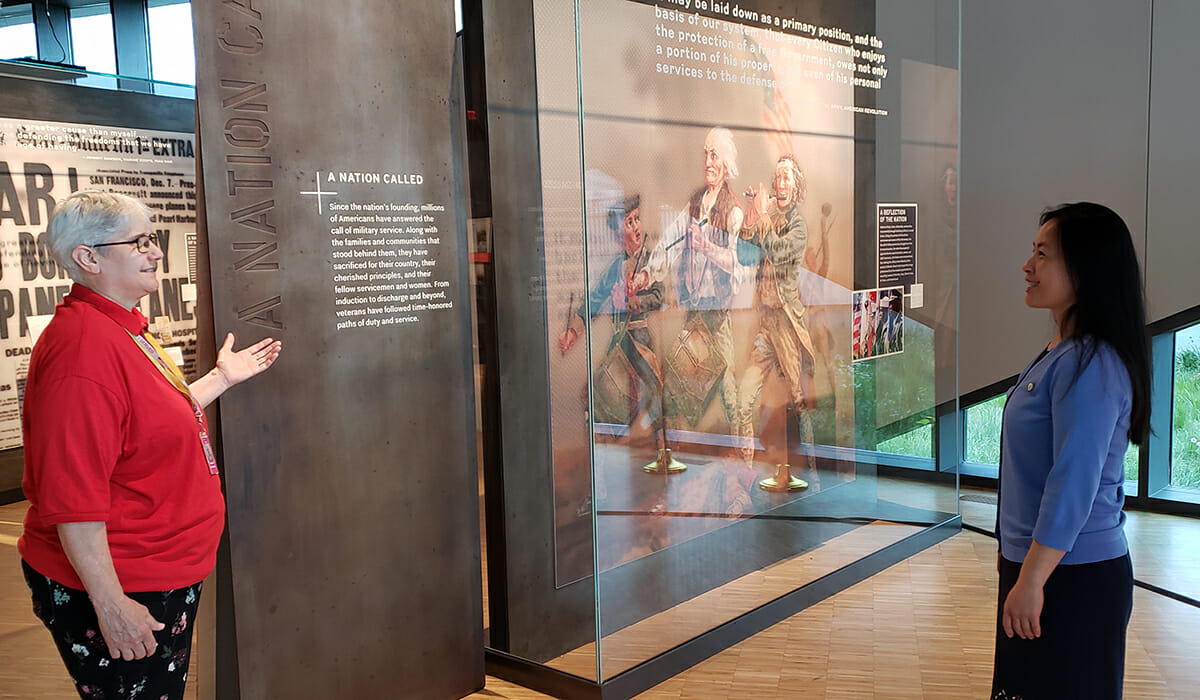
Marilyn, pictured introducing a museum guest to the main exhibit, a historical timeline of the United States at war, from the American Revolution to modern day. /Courtesy Marilyn Jones
What does Memorial Day mean to you?
We have two more recent exhibits in the museum and they help to emphasize that Memorial Day isn’t about family cookouts or ball games; it’s about remembering those who gave their lives in service to our country. This Memorial Day, I will go to the museum and put in hours to help people learn about the experience, share their stories, and then I will go to the picnic, but I’ll wear a shirt to remember that it is Memorial Day and the purpose of it.
Volunteer’s Heartfelt Service Helps Thousands of Homeless, Veterans and Seniors
Meet Daily Point of Light Award honoree Corliss Udoema. Read her story and nominate an outstanding volunteer or family as a Daily Point of Light.
“They say if you see something, say something,” says 72-year-old Corliss Udoema. The Haymarket, Virginia volunteer has built upon that motto, she says. “If I see something, I’m going to try to do something. My heart leads me to try.”
It’s that heartfelt service that has helped Corliss connect with thousands in need, eventually founding Agape Love in Action (ALIA) in March 2015, helping veterans, homeless and seniors in need. From her programs including Wisdom Meets Technology, Business Battle Buddy, Hope in a Bag and Reach 2 Feed, which started in response to Hurricane Katrina, Corliss is meeting the unmet needs of individuals in her community and beyond through service.
What inspires you to volunteer?
Volunteering is important because I can remember a time that I needed help and I made a promise to God that I would never forget to remember where he brought me from, and I would never forget to remember to reach out and help someone else. I am really committed to keeping those promises.
Describe your volunteerism with Agape Love In Action.
When I see a need, I want to do what I can. (Volunteering is) not what someone else can do, but what can I do? How can I make a difference in someone’s life? As the founder and president of ALIA, I oversee our volunteers of all ages and our programs that help veterans, homeless and seniors in need around the United States, from Virginia to North Carolina, Louisiana to California. ALIA’s food bank distributes to churches and nonprofits, and I celebrate my birthday to show my appreciation for life with our annual event, “Bless Others during June.”
Corliss Udoema: “Volunteering is important because I can remember a time that I needed help and I made a promise to God that I would never forget to remember where he brought me from, and I would never forget to remember to reach out and help someone else. I am really committed to keeping those promises.”/Courtesy Corliss Udoema
Share one personal story with me from your volunteerism.
I was honored at a luncheon as the U.S. Small Business Administration (SBA) Virginia Person of the Year. The recognition wasn’t linked to my volunteerism; however when people started to speak about me, they kept talking about my impact in the community. I am thrilled that my living is not in vain. I have arthritis in my knee, but every morning when I get up, I have to remove the “dis” from disability, and when I remove that, I’m left with “ability.”
Why do you think it’s important for others to give back?
You know I’m 72. I’ve been volunteering and helping others since I was in elementary school. The heart smiles when you do something to be a blessing to someone else. When you do something to help someone, you don’t expect anything in return. Even if they don’t say thank you, it doesn’t matter, because you know you’ve done something to help.
What’s been the most rewarding part of your service?
I paid for a woman’s groceries for a month during Christmas so she would have enough money to buy toys for her children. It wasn’t a big deal, but to her, it was. Service is rewarding because I have been blessed to be a blessing.
Agape Love in Action has connected with thousands in need in states across the United States../Courtesy Corliss Udoema
How have you continued to volunteer throughout the pandemic?
In 2020 shelters were closed, so the focus of my service changed. I prayed, simple and to the point, “I see what I cannot do but please show me what I can do.” The year before we’d raised $10,000 from the sale of our veterans calendar and I was afraid we wouldn’t be able to do it (during the pandemic,) but In 2020, we raised $20,000, double the amount. We started the Hero Love Box initiative, and involved children to decorate the boxes. We passed out over 13,000 bags to hospital personnel across five hospitals.
In one word, what does volunteering mean to you?
Joy.
How can readers help?
Read this story, take a pause and commit to care. If you care for others, you’re going to do something to help others, trust me. Please visit our website for more information about how you can help.
Teen Recruits Students, Bolsters Volunteer Work for American Red Cross Despite Pandemic
Meet Daily Point of Light Award honoree Cassandra Leo. Read her story and nominate an outstanding volunteer or a family as a Daily Point of Light.
High school junior Cassandra Leo is already a valuable and seasoned volunteer at age 16, despite a global pandemic that has limited in-person gatherings and activities since 2020.
She has been a blood donor ambassador for the American Red Cross since her freshman year and started a Red Cross Club at The Quarry Lane School in the San Francisco Bay area. She then expanded her efforts, becoming a club liaison coordinator and national field ambassador, helping more than 100 similar clubs and more than 3,000 teens at high schools throughout the Bay and Northern California coastal areas volunteer their time to a good cause.
Describe your work with the American Red Cross and how you became involved.
I first became involved as a blood donor ambassador, helping out at blood centers and local blood drives. I’d heard about the Red Cross before, but I didn’t know that there was so much more to volunteering. I really wanted to investigate further. That’s when I started a Red Cross Club at my school. A few years ago, my school had had a largely successful Red Cross Club, highlighted by enthusiastic members and a plethora of impactful service events. However, the club eventually disappeared into the abyss of what I would call the alumni network. I strived to restart its legacy.
At my home club, I implemented activities and hosted workshops. This can range from blood services to other services that people might not be familiar with, such as international services.
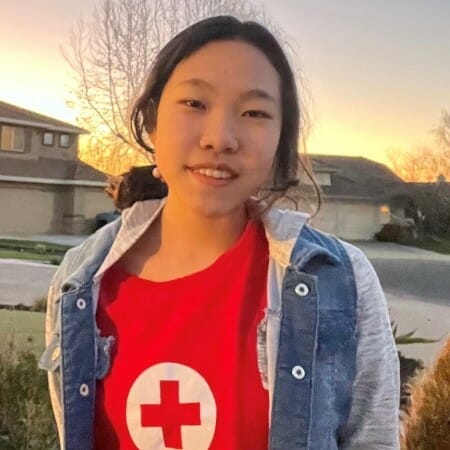
As a Red Cross club liaison coordinator volunteer, Cassandra Leo has supported over 100 Red Cross clubs at high schools throughout Northern California./Courtesy Cassandra Leo
A lot of what I do is guide youth members in respect to starting their own Red Cross Clubs. I host monthly developmental workshops pertaining to leadership skills and communication skills, like emailing and interacting with others and tips on how to do so. I’m currently onboarding as vice chair for next school year, which I’m excited about. In addition, as one of 30 national field ambassadors, I represent the Bay Area and Northern California coastal region and I’ve developed projects to help identify and further strengthen volunteer service in our region, and co-hosted an international services campaign. I have also developed a youth volunteer handbook.
It sounds as if you devote many hours each week to this service. What drives you to set aside so much time on this?
Yes, I’d definitely say I put a lot of time into this outside of school. I usually work on volunteer service for the Red Cross on a daily basis, for a few hours. It doesn’t really feel like work at all because it’s actually fun for me and I personally enjoy helping others and helping them through the process that I know I initially struggled with.
What did you struggle with?
I’d say a part that I definitely struggled with was having a connection with every individual within the Red Cross. So far, during my time on the Red Cross, a lot of our activities, events and workshops have been held virtually. Communicating online has been a little difficult in terms of getting to know everyone in my region. There are more than 100 clubs in the Bay area, probably 3,000 or 4,000 youth. I might not have met all these people in person, but the fact is that the work I do is still meaningful. The fact that I can still connect with a lot of people, even virtually, has been really inspiring to me and is the main motivation why I continue my service with the American Red Cross.
How can school clubs help the Red Cross when many teens don’t meet age and weight requirements to donate blood themselves?
Each club chooses its own activities. They often host blood drives, where students assist phlebotomists and provide snacks to blood donors, who often are staff members at their school. One club has an annual event called “Socks in the City,” where they go to San Francisco and hand out socks to homeless people. It’s very impactful for them to have one-on-one interactions with people who are under-resourced. Others do disaster preparedness or fire safety canvassing, and some schools do kit drives, where essential items are collected and delivered to those who need it the most.
Cassandra Leo at her home, assembling hygienic packs for her Red Cross Club to distributed over the summer to the underprivileged./Courtesy Cassandra Leo
What advice would you give to young people who want to volunteer but don’t know how?
You often hear that volunteering is good for your mental health and for contributing to the community, but one piece of advice I give is to delve into doing volunteering that is special to you. Volunteering just to do it for credit and volunteering because you actually feel interested in it are pretty different from each other. Reflect on your own values and why this is important to you.
What values make the American Red Cross a good fit for you?
The Red Cross’s incorporation of diversity, equity and inclusion. I am a minority (Burmese). I feel we all shine within the Red Cross and are able to present our strengths in the best light as possible while still working in a collaborative community without fear of being judged or a feeling of not being able to be part of that community.
How can other teenagers find a good place to volunteer?
Explore different areas of volunteering! Discovering what we feel particularly interested in, especially at a young age, can be so difficult at times. It’s totally normal to be unsure about what you want to exactly do. It’s key to note that volunteering doesn’t have to just be subjected to a specific role within an organization but rather the simple action of contributing to the community. Through exploration, we develop a deeper understanding of our communities around us, which may help evolve a newfound interest.
Medical Reserve Corps Phone Bank Volunteer Lives and Breathes Service Throughout the Global Pandemic
Meet Daily Point of Light Award honoree Jessika Kennedy. Read her story and nominate an outstanding volunteer or family as a Daily Point of Light.
Jessika Kennedy joined the Oklahoma Medical Reserve Corps when she was 20 years old, first through an emergency medical training course. The now 34-year-old became more and more active in the volunteer program, but in 2020, the COVID-19 pandemic shook the medical community at its core.
Jessika spent most of her pandemic time volunteering and answering OKMRC telephones to respond to the community’s public health and COVID-19 questions. Prior to the pandemic, Jessika received basic life support training and gained experience in the field of teaching and education.
“In the beginning, there was so much fear. We wanted to be the calm in the middle of our community’s storm,” Jessika said. “From usually around 7:15 a.m. in the morning to sometimes 6 p.m. in the evening, we’d be working or getting prepared for the next day.”
Jessika’s COVID-19 response group at OKMRC opened during the very beginning of March 2020. She helped lead the team’s phone bank, which was created for people to call in, ask questions, gain reassurance on vaccinations or even vent their frustrations or anger, according to Jessika.
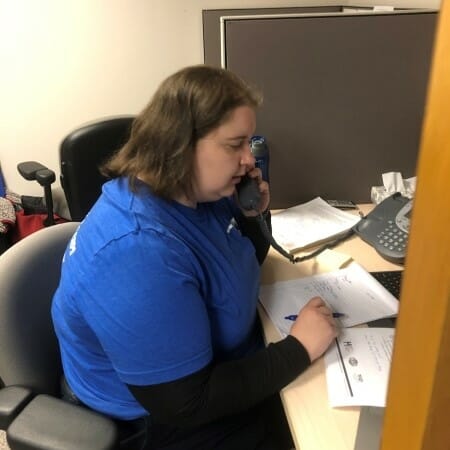
Jessika Kennedy volunteers during the COVID-19 pandemic at the Oklahoma Medical Reserve Corps, primarily by answering telephones to respond to the community’s public health and COVID-19 questions./Courtesy Jessika Kennedy
“Giving back to your community makes you feel a part of your community, and when you realize that you’re not the most important person in the world, it’s healthy to see that you’re a part of something bigger and it’s a blessing,” Jessika said.
“We all went through our own personal crises during COVID-19, but whenever you pause and say ‘wait a second, I can give back,’ then we all benefit,” she added.
The Medical Reserve Corps is a nation-wide network of more than 200,000 volunteers who are organized at the local level to improve the health and safety of their communities. Jessika is among the Oklahoma corps network in Tulsa — which traditionally helps in community emergency response, flu vaccinations and more — and she’s given more than 1,600 hours to the volunteer organization.
From the time Jessika was young, she’d always volunteered. She’d volunteer with her relatives at Toys for Tots and at local charities during the holidays. Jessika’s family was made up of public servants, military members, fire fighters, teachers and police officers, and became adamant about giving back to the community and being a driving force for good. Now, Jessika wants to continue their legacy.
“I was surprised during a time of crisis, the majority of people want to find a way to give back, so being able to help people understand how many different ways there are within our own community to help with was super important to me,” Jessika said.
Jessika not only grew her volunteerism during the COVID-19 pandemic, but also her leadership skills. Jessika became the unit leader of the phone bank because of her calm demeanor and confidence in her ability to correct COVID-19 misinformation. She also learned from the medical staff around her and grew to anticipate the needs of her team and her volunteers.
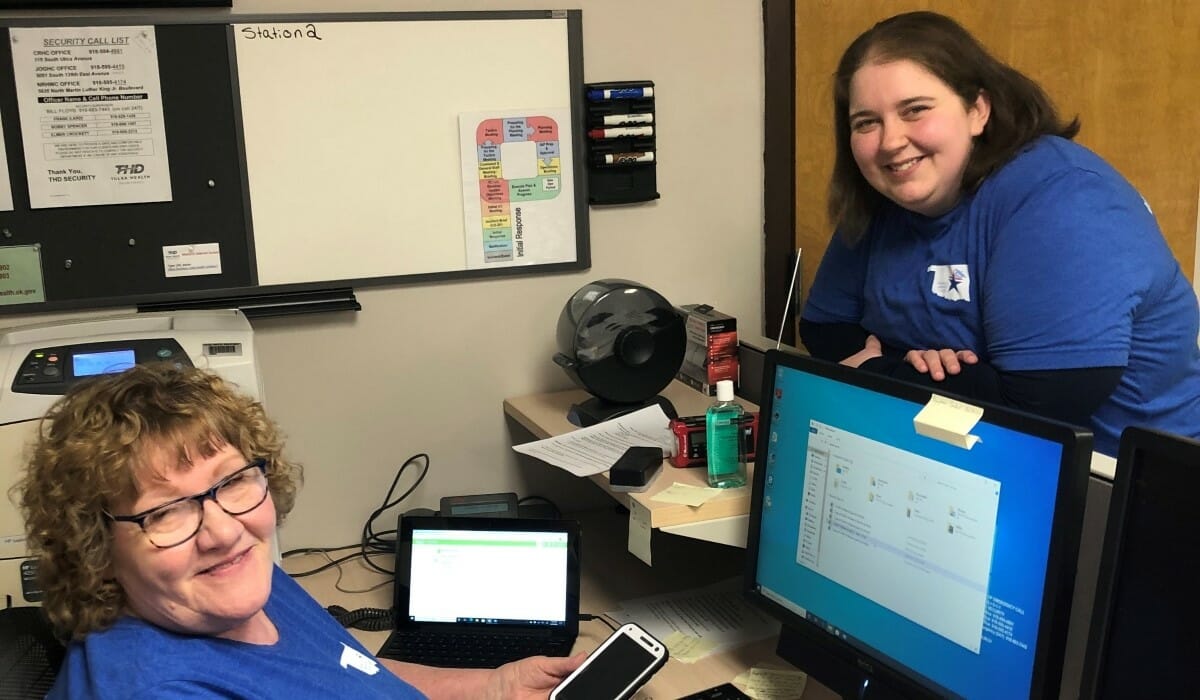
Jessika Kennedy helps the Oklahoma Medical Reserve Corps phone bank, which was created for people to call in, ask questions and gain reassurance on vaccinations and information./Courtesy Jessika Kennedy
Although she’s gotten used to service through the phones, Jessika’s favorite volunteerism opportunities are the smaller and more local events in her community. Through her volunteerism at events around the city, Jessika’s presence throughout Tulsa, Oklahoma is consistently felt and always appreciated.
“If you find little ways to give back, even every other month, those little things are what our community needs too and we can come out of the pandemic stronger than we were before,” Jessika said.
New York Volunteer Keeps her Community Warm by Running Annual Coat Drives
Meet Daily Point of Light Award honoree Mary Dynes. Read her story and nominate an outstanding volunteer or family as a Daily Point of Light.
For the past 25 years, Mary Dynes of Rhinecliff, New York, has dedicated countless hours to Dutchess Outreach, a non-profit organization providing hunger and relief programs to those in need in Dutchess County. Mary started off volunteering with the organization’s food security programs by picking up food from grocery stores and delivering them to the food pantry as well as serving hot meals to Poughkeepsie residents through the Lunch Box community meal program.
But Mary’s volunteering prowess really kicked into gear in 2008 when she became the volunteer manager for the organization’s coat drive. Every October, the 63-year-old leads a group of volunteers to collect and organize thousands of gently used coats. Then during the months of November and December, they distribute the coats at local churches, libraries and other community centers so that everybody, no matter their background or situation, has a warm coat to brave the cold New York winters.
Despite the COVID-19 pandemic throwing obstacles her way in 2020, Mary and her volunteers kept the coat drive alive by sorting coats over several weekends outdoors and by creating an order form for schools, churches and other organizations to request coats instead of holding in-person events.
Describe your volunteer role with Dutchess Outreach’s coat drive.
I’ve been the volunteer manager for the coat drive since about 2008. Prior to the pandemic, every year, we would start around August, putting the word out to people that we would be collecting coats. We’d collect coats all through the month of October and give them away all through the month of November and into December to different towns all around the county and also at a big giveaway event in an auditorium in Poughkeepsie. In the beginning, we’d collect about 3,000 coats. Just before the pandemic, we collected 7,000 coats.
Mary Dynes is the volunteer manager for Dutchess Outreach’s coat drive, helping disadvantaged members of her community stay warm during harsh winters./ Courtesy Mary Dynes
Then when the pandemic hit in 2020, everything went sideways. First of all, we had to decide that we should go ahead and do the coat drive, which we thought we should. We were sorting coats outside of a storage facility. But then we had to figure out how to distribute the coats once we collected them, which was a real challenge. We put together a form so that organizations like the Boys and Girls Club and others could order coats. You could tell me ten of this size and ten of that size and we would pack those up and deliver them.
Why are coat drives needed in your community?
I think there are two things. One thing I call the “big recycle.” By using coats again, it keeps them out of landfills, so that’s important. But also, there’s a lot of people in need in this county. There’s a lot of people struggling. When I was younger, I was somebody who benefited from these kinds of programs.
What inspires you to volunteer?
The reason I get such satisfaction from my volunteer work is because of my brother, Willy. He was one year younger than me in high school when he was seriously injured. He had many difficult years after that, including homelessness, before passing away young. So when I serve someone, I do it because it’s how I would have wanted my brother to be helped when he needed it.
Do you have a favorite volunteer experience or one that’s especially memorable to you?
I have a lot. But this past year, my twin sister volunteered for the first time with me, and she was just blown away because there were so many coats. And at the end of that particular giveaway, we had only four coats left. She was like, “I can’t believe this.”
On top of running the coat drive, Mary also volunteers at food drives./ Courtesy Mary Dynes
Are there any future partnerships, programs, or events that you are excited about?
I’m excited about the food drive this week since I haven’t been able to do it in two years. Hopefully, we’re going to get a good response and fill up the food pantry.
Why do you think it’s important for others to give back?
It’s very fulfilling and I turned on a few of my friends to volunteering. One of my friends who recently retired is now volunteering with the children’s clothes closet once a week. Every once in a while, I get somebody to come with me and serve at the Lunch Box or come with me and help me give away coats.
What do you want people to learn from your story?
That individuals can make a difference. It’s a lot of work, but I own it and I have a lot of help.
Volunteer Unites Community to Protect Neighborhoods from California Wildfires
Meet Daily Point of Light Award honoree Robin Pendoley. Read his story and nominate an outstanding volunteer or family as a Daily Point of Light.
If you’ve never cleared invasive Scotch or French Broom, 44-year-old Robin Pendoley can tell you how physically demanding the work is. “(You’re on) really steep slopes,” says Robin, “pulling on stuff that doesn’t want to come out of the ground. We’ve got 75-year-olds who come out and do this work.”
As a volunteer project leader for the San Pedro Ridge Fire Safety Project, an initiative founded through the Points of Light Global Network affiliate Center for Volunteer & Nonprofit Leadership, Robin is rallying his neighbors to come together for a common good. Sweating shoulder to shoulder with volunteers old and young, the volunteer crew has cleared a mind-boggling six acres of land since June 2021, clearing the woodland adjacent to their neighborhoods that are vulnerable to devastating wildfires.
What inspires you to volunteer?
It’s a combination of things. I really enjoy the way the community has come together to do this work . I love that sense of community building. (This volunteerism is) also very substantive. You spend an hour or two doing pretty difficult physical work, and (afterward) you see an area that looked like a wasteland suddenly coming back to life. There’s a sense of stewardship for the land that we live on and a sense that we’re helping to preserve the environment in a way that benefits everyone.
Describe your volunteerism with the San Pedro Ridge Fire Safety Project.
As project leader, I ensure that every volunteer is trained, understands the risk and understands how to keep themselves and others safe. We hold twice monthly clearing events targeting the invasive Scotch and French Broom in the area, and we are training folks to understand the basic physical labor of it, how this invasive species grows, its threat to the environment, its fire risk to the neighborhood and what it will take to eradicate that threat. I also manage communications and planning the volunteer days.
Robin Pendoley is the volunteer project leader for the San Pedro Ridge Fire Safety Project./Courtesy Robin Pendoley
Share one personal story with me from your volunteerism.
When I first started pulling (brush) I went to an area in our neighborhood that I thought was public land and spent a few afternoons pulling broom. One of my neighbors approached and asked what I was doing. He explained that I was on his land, not public land, but then immediately asked how he could help. The things that normally keep our community separated – the idea of privacy or separation by fences and all the things that keep people from really being in the community – those boundaries can fall quickly when we have a shared vision for how we can keep one another safe.
Why do you think it’s important for others to give back?
One of the driving forces for me is a belief that we need to stop saying “they” and we need to start saying “we.” We can blame a lot of challenges our communities face on a lot of other forces and we’re not always wrong, (but) if we start saying we are the solution, we open up a lot of opportunities to improve communities. This project is built around that mentality. Volunteers started working and then we started calling the government to figure out how to align rather than saying, “Why did you neglect this public land?”
What’s been the most rewarding part of your service?
It’s rewarding seeing so many of my neighbors come together and feel that sense of stewardship for the land.
How have you continued to volunteer throughout the pandemic?
By June 2021 folks were looking for a way to be together and do something that felt productive for the community. In our region, months of terrible air quality have followed some of the major fires, and during COVID, when all we wanted to do was be outside, we had to be indoors. In some ways the pandemic was helpful (because) it’s an activity that’s entirely outside. Even throughout surges of the pandemic we were able to continue gathering and doing the work.