Publicist Helps Donate Hundreds of Bloodhounds for Lost and Missing Children
Meet Daily Point of Light Award honoree Terri Lynn. Read her story, and nominate an outstanding volunteer or family as a Daily Point of Light.
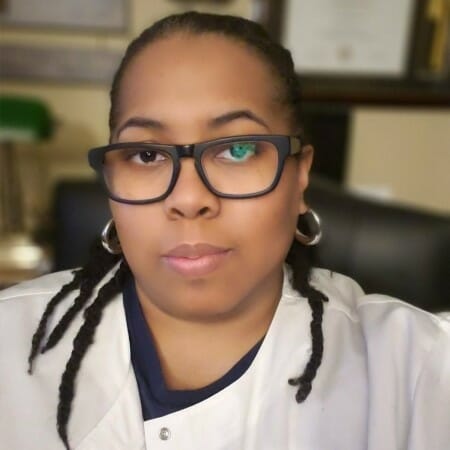
Terri Lynn has helped keep the legacy of Jimmy Ryce alive for more than 26 years. After Ryce was tragically abducted and murdered in 1995, Lynn became an honorary member of the family by helping his parents handle media and interview requests, and now bloodhound donations.
Ryce’s parents believed that he would have had a better chance of being found if their local law enforcement had a bloodhound. They created the Jimmy Ryce Center to raise money to provide AKC bloodhounds to law enforcement, free of charge, in order to find abducted and lost children. To date, the Jimmy Ryce Center has donated over 700 bloodhounds.
Describe your volunteer role with the Jimmy Ryce Center.
My whole life profession was being a publicist, which entailed representing unique businesses, people, authors, lawyers and doctors. My job was to arrange interviews, television appearances and articles in newspapers and magazines. It’s a passion of mine, and I’ve been doing it most of my life. But on September 11, 1995, a little boy by the name of Jimmy Ryce was abducted and murdered after getting off of the school bus on his way home.
His parents were constantly getting phone calls from the media while they were distraught, as anybody could be. They started asking around if anyone knew how to handle the media, someone who could help them handle calls and requests for interviews. Next thing you know, my name came up. I was very flattered. There’s no handbook for what to do when there’s a missing child. It was uncharted territory for me. I’ve been told that I was the first person in history as a publicist to ever help a family with a missing child. From the get-go, my mission and intention was to work for their family as a volunteer to help. The first call I had with Jimmy’s dad on the phone was a life changing moment for me. We had to keep Jimmy’s name in the news. Two days after that phone call it would be Jimmy’s birthday, and we let the media know that. I’ve been a part of the Jimmy Ryce Center ever since 1995.
Describe your relationship with the RyceFamily and how the center was created.
I’ve really been a pro bono volunteer from that first day. My relationship with the Ryce family grew from a working relationship to a dear friendship. We prayed that he was still alive somehow, someway. Sadly, that was not the case. I’ve been told by people in law enforcement from the FBI that, in cases such as Jimmy’s, the parents literally curled up into a ball [in grief] and were really never heard from again. Jimmy’s parents were exceptionally smart people who were both attorneys. They wanted to memorialize their son, so that his life would not be in vain.
One thing that stood out in their mind is that, when Jimmy was abducted, law enforcement agencies didn’t have a bloodhound. And that was the official start to the Jimmy Ryce Center. I’ve been with the family as the volunteer spokesperson and media coordinator setting up conferences across the US whenever they were going to present a bloodhound to law enforcement.
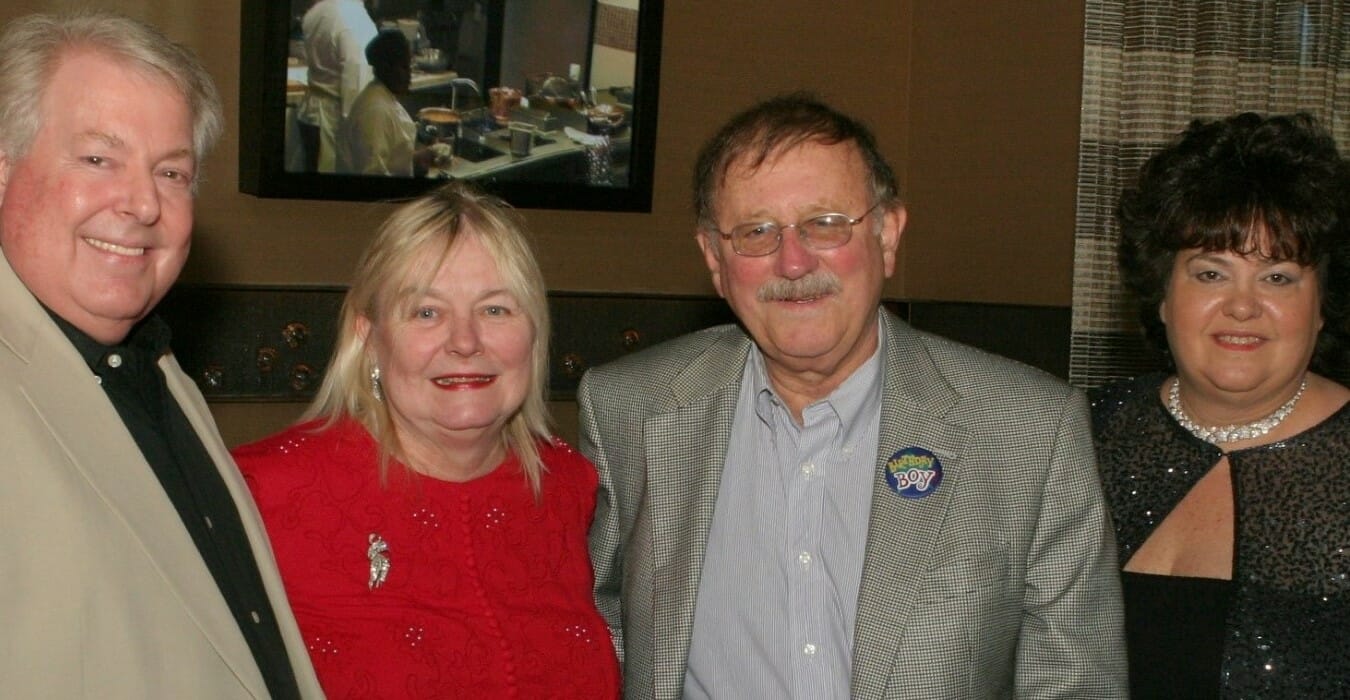
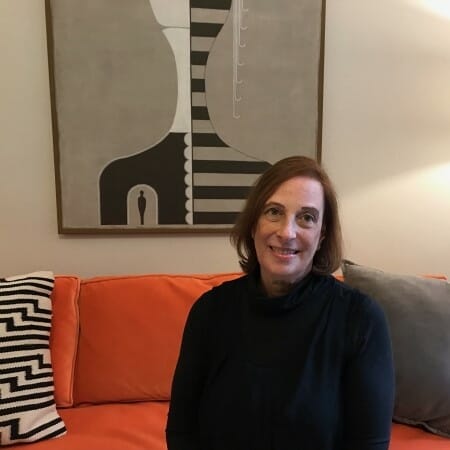
Terri Lynn, right, keeps the legacy of Jimmy Ryce alive after 26 years of helping his family donate bloodhounds to law enforcement across the nation./Courtesy Terri Lynn
What value do bloodhounds bring to law enforcement?
A bloodhound has 60 times the scent power of a German shepherd. It’s the only dog that can follow a human trail for more than a few hours. They’re the single best bet for bringing a child abducted by a predator home alive. We believe that Jimmy would be alive today if a bloodhound would have been immediately brought in to help.
To date, the Jimmy Ryce Center has donated more than 700 bloodhounds to law enforcement agencies around the world.
What inspires you to volunteer?
Jimmy’s parents have both passed away, so we try to continue building the legacy. It’s big shoes to fill. But people are still very moved by the story to this day. Awareness is key. I’m not a professional fundraiser, but we do whatever we can to help get the word out. Whenever there’s something on the news, such as a milestone regarding the anniversary of Jimmy’s passing, donations come in. We keep the legacy going.
What have you learned through your experience as a volunteer?
Managing this organization is one of the most rewarding parts of my life. Jimmy’s parents once met President Clinton when he was signing an act after Jimmy was abducted. If you had a poster of a missing child, you couldn’t post it in a federal building. President Clinton signed an executive order allowing the posting of pictures of missing children. They were also invited to the White House to meet with President George W. Bush. They met with him in the White House and said it was really a very powerful and memorable meeting. So, my mission in life, now that Jimmy’s parents are gone, is to keep this organization going in perpetuity
Why is it important for others to give back?
Because it changes lives in ways you will never even know. It’s really something that comes from within. I think everybody has something to give in some form, and its life changing. To be able to take your skills or your energy and use them toward something that can change the world. The fact that our bloodhounds help find missing children and adults — I just can’t put that into words.
North Carolina Retiree Provides Hope and Comfort for Families Battling Childhood Illness Through Her Volunteer Work
Meet Daily Point of Light Award honoree Susan Christopher. Read her story, and nominate an outstanding volunteer or family as a Daily Point of Light.
Taking care of a child with a chronic illness or serious injury is undoubtedly one of the hardest things a family can go through. For families who live far away from the best doctors and hospitals to care for their child, it can be even tougher. Susan Christopher from Chapel Hill, North Carolina, has been helping to lighten the burden of these families through her volunteer work with the Ronald McDonald House of Chapel Hill.
A home away from home, the Ronald McDonald House of Chapel Hill provides families who live in a different city, state or country a comfortable place to stay as their child undergoes treatment at North Carolina Children’s Hospital or another nearby medical facility. On top of the 53 guest rooms, the House also provides meals and emotional support through fun activities such as craft nights and visits from a therapy dog.
Susan, 62, has been one of the House’s most steadfast volunteers, dedicating over 1,000 hours to the organization over the past 10 years. During the pandemic, Susan helped the House launch a new breakfast program and also a new system to organize food donations and distribute them to local food banks.
Describe your volunteer role with Ronald McDonald House of Chapel Hill.
I’ve been volunteering there for quite a while now and in different roles. At the beginning, the House was a lot smaller, so each volunteer did everything. We answered phones, we cleaned the rooms, we cleaned the kitchen area. But then after the expansion, they gave different roles to different volunteers. And at that time, I was what they called, a “Ronald Runner.” We would take care of supplying all the closets with what was needed there. We made sure the towels were folded and put where they needed to be.
During the pandemic, the families can’t go into the kitchens as they used to, so we serve them breakfast in the morning, and we’ll make some waffles, oatmeal or breakfast sandwiches. We’ll serve that with coffee and put out other items that they might want to take with them to have later at the hospital. It’s a nice way of getting to interact with the guests that are staying at the House, so I really enjoy that.
Susan Christopher has volunteered with the Ronald McDonald House of Chapel Hill for the past 10 years, allowing thousands of families to comfortably stay at the House while their child undergoes treatment at a nearby hospital./ Courtesy Susan Christopher
Tell us about this food donation program you helped launch.
Back in 2017, my husband and I moved to London, and I didn’t know anybody there, so I started joining groups, and one of the groups I joined was to volunteer at a local food bank. That’s where I learned how to deal with food donations and put dates on them and then sort them by type of food and expiration date.
During the pandemic at the Ronald McDonald House, we were getting a lot of food donations, but because of the lockdown, families weren’t able to use them. So, I took what I learned in London and went in and sorted through what we had, looked at the expiration dates, and then distributed the donations to food banks so that people in the community will be able to use them.
What inspires you to volunteer and help these families?
Families with kids who are in the hospital — who wouldn’t want to support families like that? They live far away, so they don’t have support nearby. The House not only provides a place for them to stay, but it also provides a support system for them. In pre-pandemic days, the families could gather with each other in the dining room, and they were supportive of each other. I’m hoping we get back to that soon, but I’m sure there’s some of that going on still where you just don’t feel like you’re so alone in this.
Is there a story of a family that sticks out to you?
A few years ago, there was a mom and daughter who stayed with us for over a year. And the mom was getting kind of bored. One of the house directors approached me because she knew that I was teaching English as a second language for another organization, and so she asked me if I could work with this mom. And I said sure.
One of the things I taught her was just the numbers and letters in English. One day, I arrived at the House, and they were both so excited because the night before had been Bingo night at the House. Prior to this, she hadn’t been able to play because she didn’t know English. But this time she did play, and she won a Glinda the Good Witch Barbie Doll. Her daughter loves Barbie dolls. It was just a really neat thing to see how you can give somebody so little and they can do so much with it. They were a lovely family.
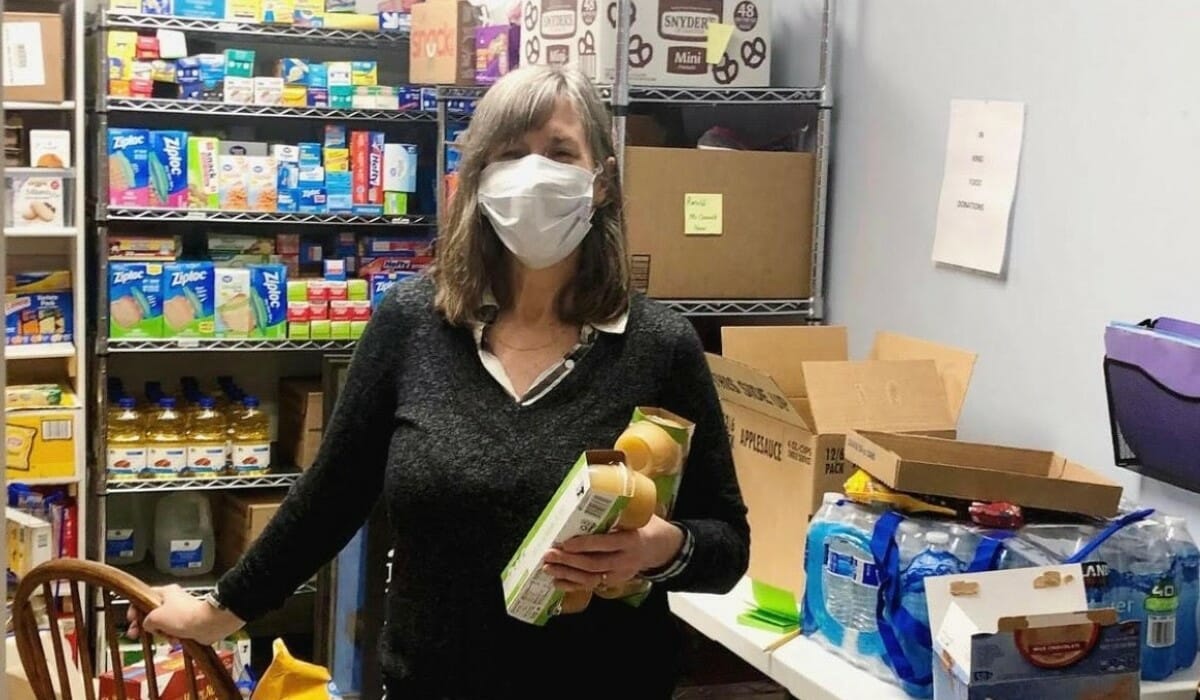
Seeing that food donations coming into the House weren’t being used during the pandemic, Susan helped create a system to organize the donations and distribute them to local food banks./ Courtesy Susan Christopher
What’s been the most rewarding part of your work?
I’d say it’s twofold. It’s gratifying to know that you’re helping support people who are in such difficult situations, and a lot of times, they have a good outcome. It’s nice just to be there and do something nice for them and serve breakfast. If I can make some oatmeal for them and make their day a little bit better in a small way, just be a friendly face. And the other is the community of volunteers I’ve met there. I’ve made some great friends, and as much as I gave the House during the pandemic, the House also gave a lot to me. It was a place where I could go when everything was locked down. I could go in and be with people, and I had something to do. So that was really helpful to have that purpose and those duties.
What do you want people to learn from your story?
I would like them to be inspired to step outside of their world and into somebody else’s and see what they can learn to expand themselves. The volunteer world is full of kind people, and it’s very flexible. It’s not like taking a job. We’ve got more flexibility to do what you want to do and given the way that you want to go.
Teen Inspires Youth Through Mentorship and Volunteer Projects in North Carolina Community
Meet Daily Point of Light Award honoree Isabella Daniel. Read her story, and nominate an outstanding volunteer or family as a Point of Light.
The first time Isabella Daniel attended a Love A Sea Turtle volunteer event, she was struck by seeing other young people leading the organization’s programs and events. The nonprofit, which focuses on promoting environmental sustainability, particularly focuses on youth leadership development by having young people lead their own projects and programs. Wanting to develop her leadership skills while also helping her Greenville, North Carolina, community, Isabella began her service journey three years ago by signing up as a volunteer.
Today, the 18-year-old volunteers eight to 12 hours of her time every week to Love A Sea Turtle, helping with projects ranging from working in community gardens to donating bikes to people in need. Isabella also serves as a mentor with the organization’s educational summer program. In addition, she volunteers with AmeriCorps and as a North Carolina LeaderCorpsrepresentative.
Describe your volunteer role with Love A Sea Turtle.
Love A Sea Turtle is a nonprofit organization that focuses on youth-led empowerment and encouraging environmental issues. I am a mentor as well as a volunteer. For mentorship, during summers, I go to camps and mentor youth from third grade to fifth grade, and I help them with STEM-related activities. I would love to further their education during summer instead of just having fun. That’s also one of the reasons why I love doing mentorship — to see the development from these children, and seeing how much they grew from the day we started to the end of the program. I volunteer every week doing garden work days, bike repairs, giving bikes away for people in need in our community, as well as doing STEM stuff with the kids.
Isabella Daniel serves as both a volunteer and mentor for the nonprofit Love A Sea Turtle./Courtesy Isabella Daniel
What drew you to Love A Sea Turtle’s mission?
Love A Sea Turtle’s goal is to engage youth, and adults as well, but specifically for young people to take action as soon as they can and make an impact in our world, whether it be local or global. It could impact and make differences in peoples’ lives in their community, and then they can take it further to a state level, a national level and even a global level. All the youth members in our organization have taken a lot to involve themselves in different organizations, such as the National Youth Council, Earth Echo, and I was a state representative for LeaderCorps. My mentoring and a lot of this volunteer work helped me get to where I am right now, so I was really glad for that. One of Love A Sea Turtle’s goals is to start young in making an impact.
Can you explain your Recycled Art initiative?
Recycled Art is an initiative I started back in 2019, where I would ask some of my Love A Sea Turtle members to help me collect recycled materials in different schools and different organizations. We would stay after school collecting them and then wash them and sanitize them. My debut, you could say, was a used art festival, which had all the water bottle [art projects] we did. There was a bunch of parents and children coming to our booth. We would help them do a water bottle spiral recycle project, and we would educate them on why you should recycle — because plastics don’t really decompose fast, so it’s better to recycle them and use them for a different use.
What aspect of Love A Sea Turtle been particularly meaningful for you?
When I started Love A Sea Turtle, everyone was very welcoming. It was more like a family, as soon as I started. There was no discrimination or anything. It was very fun and interesting to see people from different backgrounds come together to achieve one goal, and that was to make our community better, whether through education, environment or safety.
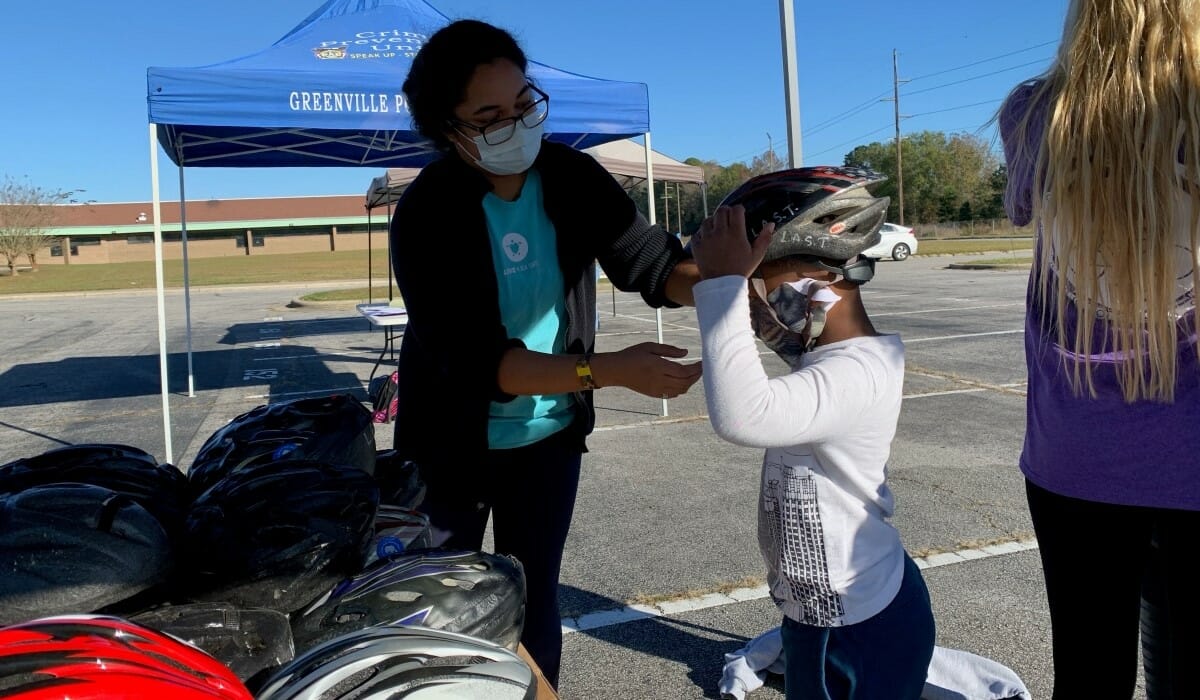
Isabella Daniel, left, helps fit a child with a bicycle helmet during a Love A Sea Turtle bike donation./Courtesy Isabella Daniel
Can you describe your AmeriCorps and LeaderCorps volunteer work?
For AmeriCorps, we go to different schools and tutor at them for after-school activities. We go there and teach them subjects that relate to their courses and make sure they’re doing great and getting A’s. [For LeaderCorps], we meet at least once a month with people from across North Carolina and discuss problems we have with our community, such as hunger or environmental issues. We find solutions during the meeting and collaborate ideas. We execute that plan during the week, take pictures of it and share it on social media for people to see that we planned this, did this and made an impact.
What’s been the most rewarding part of your work?
What I find the most rewarding about service or volunteering is the difference and impact you can make on people’s lives, whether it be small or life changing. By the end of the actions you do, you see people smiling. That’s one of the most rewarding things, that you made that impact, whether it’s giving bikes away to little children or making 200 pies for the homeless and celebrating their Thanksgiving with them.
What do you want people to learn from your story?
Whether you want to start it now or later down the line, volunteering for just a couple hours a week will help you see different perspectives in life. It may change the value of it. It will definitely open up more relationships from you meeting different people.
Volunteer Helps Keep Central Park a Sanctuary for New Yorkers
Meet Daily Point of Light Award honoree Leslie Kraus. Read her story, and nominate an outstanding volunteer or family as a Point of Light.
For over a century, Central Park has served as an iconic locale for New Yorkers and tourists alike. The sanctuary from city life wouldn’t be the beautiful landmark that it is without the help of the Central Park Conservancy, including devoted volunteer Leslie Kraus.
Inspired to start helping out after finding comfort in the park during the COVID-19 pandemic, Leslie has served the Conservancy since 2020. Three to five times a week, she enters the park to perform any needed maintenance, whether that be weeding, planting, raking, shoveling snow or whatever the season requires. Despite her initial lack of gardening experience, the native New Yorker has grown into an accomplished and integral groundskeeper for Central Park’s 840 acres.
Describe your volunteer role with the Central Park Conservancy.
As a volunteer, I assist Central Park Conservancy in preserving and celebrating Central Park as a sanctuary from the pace and pressures of city life, enhancing the enjoyment and well-being of all. We all work year round, and we help with the staff in whatever projects are needed, especially depending on the time of the year. In the summer, we’re mostly doing weeding, pruning, a little bit of planting; in the fall it’s very much raking; in the winter it’s raking, shoveling snow and chipping ice; and in the spring, we swing back into weeding, planting, pruning — whatever is happening at that point and whatever the needs are.
What inspired you to start volunteering in this way?
The park was always a place of joy and recreation for me growing up in New York City. During the pandemic, I was mesmerized by the seemingly natural beauty of the park and fascinated by all the various species of trees. I knew then that I wanted to help maintain this space and learn more about the inner workings that result in this effortless beauty.
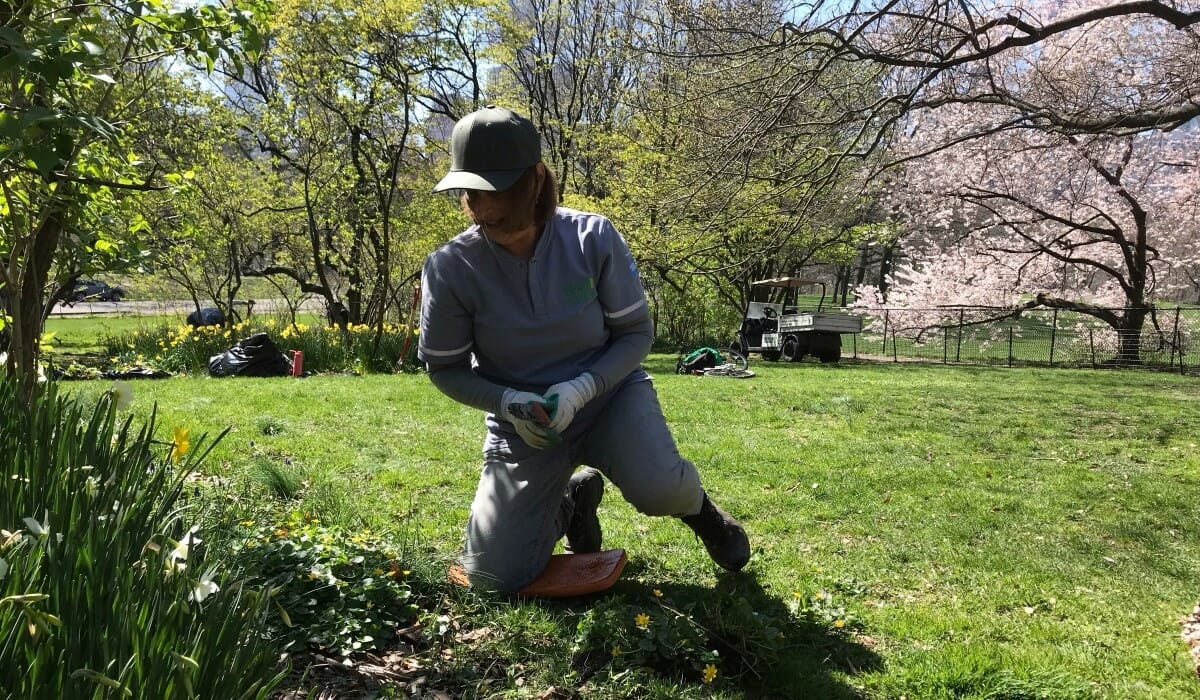
Leslie Kraus serves as a volunteer for the Central Park Conservancy, a nonprofit that helps maintain New York’s iconic park./Courtesy Leslie Kraus
What about this work brings you back each week?
I think it started very much in being a very safe space during the pandemic. It was a way to be outdoors. We were the epicenter in the beginning, so it was a little bit scary. Being in a big, populated city, it was very hard to feel safe walking around with everyone. It was a real safe space, and it was a great way to do things, be with people, be socially distant and appropriate and get out to enjoy the fresh air and the beauty of the park. The more I became trained, comfortable and confident in what I was doing, the more I discovered a huge passion for gardening and playing in the park and fixing landscapes and whatever was required. There’s something very invigorating and enhancing about being out in the fresh air with the blue skies, making a huge difference, and then enjoying it.
What do you think Central Park means to your community?
I think Central Park is a sanctuary and a beautiful safe haven to spend the day and enjoy all the different landscapes, be it walking, running, bicycling and picnicking, depending on the time of year. For tourists, there are great attractions throughout the park and natural landscapes and statues. It’s really an amazing space.
Have any memories from your time volunteering really stuck with you?
We were pruning and shaping this area of forsythia bushes. Each of us was given direction of how much to cut back the bush and how to shape it, and the overall effect we were trying to achieve.… At the end, not only was my forsythia bush exactly how I envisioned and was told to make it, but there was a whole landscape of about eight of them. They all looked similar but different depending on the size and shape of these bushes, and yet the area looked like we were all professionals. Oftentimes when different people are doing different things, it doesn’t exactly look the same, but it really did. I thought that was so amazing, to be taught that and then given the skills and ability and autonomy to really complete my own little piece and have the confidence and ability to do it.
Leslie Kraus provides maintenance to Central Park’s grounds./Courtesy Leslie Kraus
What’s been the most rewarding part of your work?
The most rewarding is really when we’re working on clearing an area, and the patrons of the park — especially the neighborhood people — will stop, admire and recognize our work, really thank us for transforming a landscape that might look a little neglected or wanting of revitalization and really appreciate that we were in there and made that difference.
What do you want people to learn from your story?
I think they can make a difference in their local park and garden. If they’re in this area, anyone can help keep Central Park beautiful. I think that it’s a great opportunity. Anyone can either volunteer in Central Park through the Central Park Conservancy’s website or do what they can do in their own neighborhood or wherever they’re at. I think there’s something about being in touch with the earth and with these magnificent vistas, especially right now with global warming — to see how the trees take in all the carbon dioxide and give back out and clean all our air, and how these ecosystems help the bees and butterflies survive. I think it’s a very positive need, especially with everything that’s going on in the world today.
Why do you think it’s important for others to give back?
I think there’s a lot of things we should be thankful and grateful for. Anytime we can take some of our valuable time and help and give back and do something, that’s very important. It anchors us to appreciate how much we have and how really rewarding it is to give back and share some of our good fortune.
Volunteer Helps Improve Philadelphia Community Through Multitude of Service Acts
Meet Daily Point of Light Award honoree Gary Shepherd. Read his story and nominate an outstanding volunteer or family as a Point of Light.
Gary Shepherd’s mantra is to strive for excellence in all that he does. It’s clear that motto has influenced him in all areas of life, including in his volunteer work. The Philadelphia-based businessman serves his community in a multitude of ways, including as a board of directors member for the African-American Chamber of Commerce and a volunteer and board member for the Philly Ad Club. He brings his media background to his roles as Salem Baptist Church of Abington’s media consultant and the Philadelphia Juneteenth Parade and Festival’s communications consultant.
Gary is also helping to beautify his neighborhood. When he noticed garbage and pet waste being left at the city-owned traffic median across the street from his business, 3rd Floor Media, they adopted the area and took it upon themselves to maintain cleanliness and install a pet sanitation station. Gary has personally designed and planted a flower bed for the area, which they renamed Triangle Park in 2016, and ensures the grass is cut. For over a decade, he has volunteered with the community garden at Old Tennis Court Farm, where he has his own plot and also helps trim and clean the common areas.
What inspired you to start volunteering?
Over my adult life, I harkened back to where I grew up. I grew up in a suburb of Detroit called Inkster, Michigan. Inkster is an African-American enclave, a suburb that’s right next to Dearborn Heights and is surrounded by other suburbs. During the time I was growing up, there weren’t too many people of color living in those other suburbs. In our area, we lived the old African proverb, “It takes a village to raise a child,” because if you were out doing something as a child and you were caught doing it wrong, then the neighbors could chastise you, as well as report it to your parents, and they could chastise you. We grew up in an area where people took care of each other’s properties, and they took care of each other. That was instilled in me by my parents right into adulthood. When I started volunteering, I noticed I have a gift, if you will, to be able to lend certain kinds of services and ideas and activities where it’s needed.
Can you describe the volunteer work you do for Salem Baptist Church of Abington?
When the pandemic hit and the church shut down, they decided they wanted to do Facebook Live. It was done with a phone at the time. I looked at it and started seeing how the lighting was off. They were in shadows. You couldn’t really see very well. That’s when I jumped in and asked the pastor, “I have a light kit, do you want me to bring it to really enhance the lighting that you’re using?” He said, “Yeah, of course, please do.” Week after week, I would set up my light kit and make sure the lighting was right. Since that time, they’ve asked me to work with them on making sure the audio is straight. We’ve got cameras now in the church and positioned in certain areas. I stopped taking [my lighting kit] because the church came up with the budget so they could buy the exact same kind of light kit that I had for my company, and put that in the church to make sure the lighting was great. In the past, I was actually operating cameras and monitoring the social media presence from those people who were watching… Now I continue to monitor what the camera angles look like, what the audio sounds like, and I’m in constant contact, even in church. Even in church this past Sunday, I’m in church but also monitoring the Facebook feed on my phone and texting with them up in the balconies, “OK, pull the piano audio back a little bit, it’s a little too hot.”
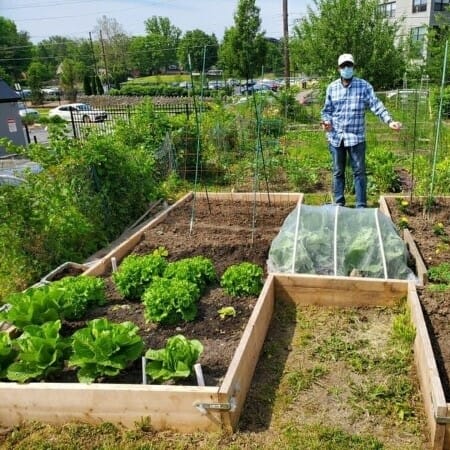
Gary Shepherd works on his plot at Old Tennis Court Farm’s community garden./Courtesy Gary Shepherd
What do you do for the Philadelphia Juneteenth Parade and Festival?
With the Juneteenth celebration, I have pulled together an advisory board of 19 people who are some of the most well-known people within the city of Philadelphia. I help to coordinate our weekly meeting we have and recruit sponsorships. I actually facilitate the monthly meetings for the advisory board, so I send out that information and I send out all the agendas to work on that. I am also involved in all of the aspects of Juneteenth. As a volunteer, I’m a co-anchor on 6abc. This will be the fifth year doing that. During the pandemic, we actually did a Zoom celebration that was broadcast on 6abc, but previous to that, we were on the air live. In 2019, our last live event, we had over 25,000 people in attendance and over 2,000 people in the parade itself. The whole goal is to make Juneteenth one of the go-to destinations for people to celebrate that. It’s to commemorate, educate and celebrate Juneteenth.
What is the most memorable project you’ve worked on through the African-American Chamber of Commerce?
I think just serving on the board and being an example that other young business owners can look to, and wherever I’m able to give some advice, I can do that.
What drew you to join Philly Ad Club?
In the past, I would go to different events they had, and I would see there weren’t too many people who look like me, not too many people of color. What drew me to it was someone reached out to me and said, “We would like to have you on the board. We would like you to participate because we want to be a little more diverse.” In this country, over the past couple of years, and especially during the pandemic, there have been several things that happened that have created and caused a racial awakening and reckoning in some areas. Some of the things that people read about in the history books, I’ve experienced firsthand myself. I said, if I can shed a little light on, first of all, all of us being in this together — that’s what it’s all about. We’re all in the same boat … I felt as though there was a great need for the education of true history. It’s not something being made up, it’s not a fairy tale, it’s not something that you wished happened, it’s not fiction — it’s something that happened. We have to recognize that, understand it, and say, “What do we do now going forward? How do we do this together?” Because that’s how it’s going to have to be done.
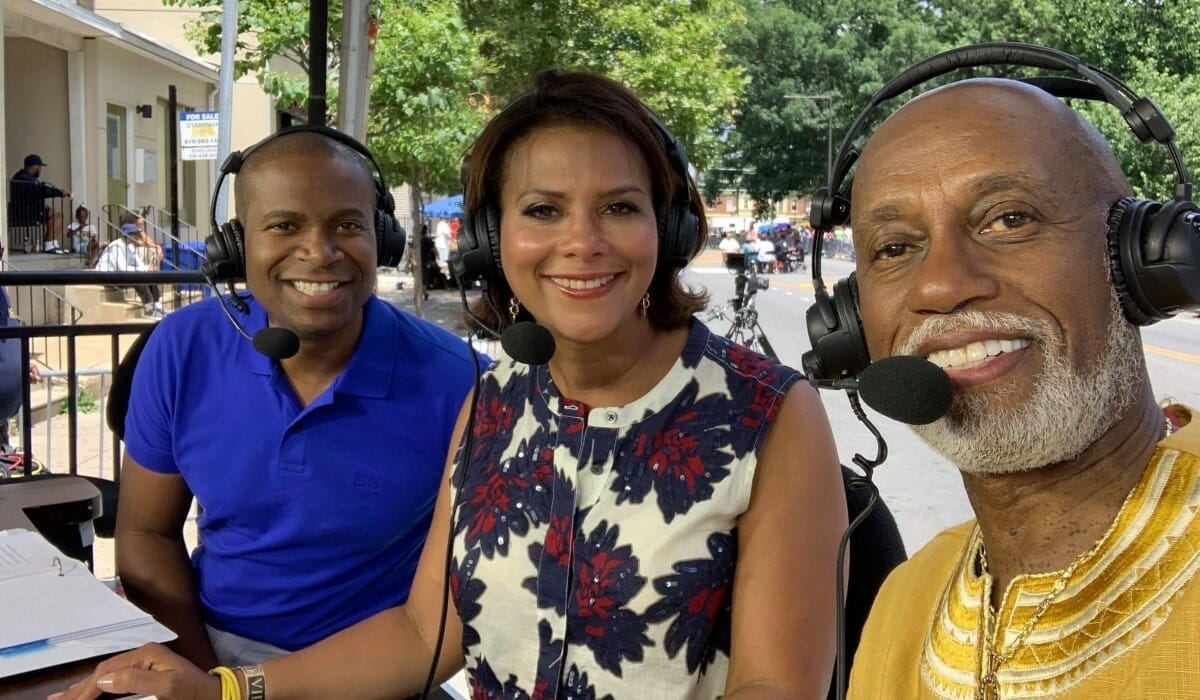
Gary Shepherd, right, co-anchors the Philadelphia Juneteenth Parade and Festival for 6abc./Courtesy Gary Shepherd
Which of your volunteer activities particularly meaningful to you?
I also volunteer on the Old Tennis Court Farm. There were tennis courts there, and a group of people got together and decided we want to form a community garden. I was one of the first people to sign up for it. I’ve always had a garden in my yard, and then my trees grew up in the backyard, and there’s so much shade there, so when I got wind of this community garden coming around, I said “Oh yeah, let me sign up.” You pay for a plot, but you’re also required to do a certain amount of hours every year to keep the common areas cut and clean. … I like being outdoors. I love to see things grow from the time you put it in, either as a seed or seedling, and care for it, and watch it grow. It’s pretty amazing.
What effect do you hope to have on your community with your volunteer work?
I hope that people will look and say, “Wow, if he can do it, I can do it.” One of the things I say is everyone can’t do everything as it relates to our social issues or whatever, but everyone can do something. If it’s the smallest thing, and you think it’s insignificant, it’s not. If it’s making sure you clean up in front of your house and maybe in front of your neighbor’s house, that’s going to contribute to the quality of life you’re living in your community. Everyone can’t do everything, but everyone can do something.
What Have You learned through your volunteer work?
People are different. You have to compromise. There is always a solution, and you always have a choice. Probably some of the areas, in terms of reaching out and teaching and educating people on certain things, can be difficult. I have also learned my limits, which is really, really important to me. You’re dealing with a lot of different people, you have to work out compromise from time to time, and it’s not always going to be your way. If everybody is willing to give a little to get a little, then I think it works out in the end.
What’s been the most rewarding part of your work?
Knowing I contributed something. That I can go away and say, although there may be a situation here that existed in the past that was negative, I know I’ve contributed something to make it better.
Content Warning: Points of Light is proud to share the following uplifting and inspiring story. However, we acknowledge that a small portion below may be difficult for some readers. We encourage you to please care for your own wellbeing above all.
The daughter of philanthropists and volunteers, Dr. Amber D. Gray has always placed an importance on service work. The Doctor of Behavioral Health has worked in violence prevention and intervention for over two decades and has found a love in helping victims of violence. It was a natural fit for Dr. Gray to continue her advocacy and violence prevention work in a volunteer capacity as well. Four years ago, she helped to co-found The Freedom Train Project, which helps victims of cultic abuse.
As the nonprofit’s Director of Violence Prevention and Victim Advocacy, Dr. Gray helps train advocates to be able to assist abuse victims. Aside from that work, Dr. Gray makes sure to volunteer an additional ten hours a month, frequently by providing free trainings for professionals and organizations who work with victims of violence. She also has served Children International for the last eight years by sponsoring four children for whom she helps provide food and medical care.
What does The Freedom Train Project do?
The Freedom Train Project helps victims of cultic abuse escape their circumstances. They do it through victim advocacy — meaning resourcing them, getting them services they need, or linking them to other agencies that have therapists or provide education for people who have been trapped in cults for a long time. They also service different populations within cultic abuse. A person being abused by a cult may have human trafficking issues, labor issues, domestic violence, child abuse and may have been a victim of pedophilia, so we also have to service them per their population as well.
Describe your role with The Freedom Train Project.
I am the Director of Violence Prevention and Victim Advocacy. My role is to help the advocates be able to assist the victims in a trauma-informed manner. I’m educating them and training them on how the business runs, how to interact with victims, how to interact with law enforcement and how to interact with other agencies.
What has inspired you to do this work for the past four years?
I’ve been working in violence prevention and intervention, mostly domestic violence, for 26 years. I started when I was 17 years old from having troubles of my own and running into some wonderful ladies at a domestic violence center who encouraged me go to college and learn the craft. From there, I started working as a victim advocate. I moved up through the ranks over the years, and it’s become my passion in life. I love working with victims of violence and helping them through their crisis.
Dr. Amber D. Gray serves as the Director of Violence Prevention and Victim Advocacy for The Freedom Train Project./Courtesy Dr. Amber D. Gray
What specifically draws you to working with victims of violence?
When I was a child, I grew up in a violent home, and I needed a lot of help and a lot of resources. There were some people who assisted, but there just wasn’t enough help back when I was younger. When I was a kid, I thought, “When I get older, I’m going to be the person who helps people.” That’s what drove me to it, but then I got distracted by my own growing-up issues and then brought right back into it through those wonderful ladies at the domestic violence shelter.
What are you most proud of related to your work with The Freedom Train Project?
We had a client recently who was in another state, and she was in a cult of one. Her husband was a cult leader, and he was practicing at home with her and doing things to her. We weren’t sure how to help that individual because they were in a home. We had to think on our toes and be creative about how to get her out of her home and into a position where other resources in her area could help extricate her from that home. It took about three months, but we were able to do that. We were really proud of that because that was difficult.
In Which other areas do you volunteer?
I do ten hours of volunteer services a month for various organizations that may need help. Recently, I worked with the Human Services Network of Colorado. The director’s name is John Dandurand. It was during the end of COVID, and he really needed his staff trained. I did an in-kind training. The training would have totaled to about $7,000 if he had to pay for services. I trained his staff on working with severe cases of individuals who were sexually violent. I did a 12-hour training for free for that. I do a lot of volunteer services for domestic violence agencies. Recently I worked with the Solano Advocates For Victims of Violence. They needed some volunteers so I did a MOU [Memorandum of Understanding] with them and told them whenever they needed to call me for any volunteers, I can provide that for them. My most recent one is a doctor named Anchal Goyal, and I have been training her to work in victim services for free. It’s what I do — I volunteer my time for individuals who need to either get into this field or can’t pay for certain trainings.
Why is it important to you to make sure people have access to these kinds of trainings?
When I was working at a shelter, a few staff members weren’t trained properly at the facility. One of the clients there didn’t understand the process she was going through, and she ended up leaving the facility and jumping in front of a train. She committed suicide. She was a good person. I got to know her really, really well. All it required was that staff understanding that because of her situation, she needed to know exactly what was going to happen to her through this process. The staff didn’t explain to her. She thought something was happening that wasn’t happening. She was actually OK, it was just part of the process. She lost her life because of that, so it was very important to me to trauma-inform staff and to make sure all providers know how to deal with victims of violence so we don’t retraumatize them. We don’t know what their life has been like, so even if we retraumatize them a little bit, it can have a fatal outcome.
Why do you think it’s important for others to give back?
The women who I encountered when I was a teenager gave back to me. All those women excelled through their career. They achieved the heights of their career, and they met this little rough kid, and they polished that kid and said, “We’re going to take a chance on you and help you through life.” I became a doctor. I think sometimes people need a hand up. If you give them a hand up, they will be able to excel. That’s what drives me. If you help people, they can help themselves. Sometimes all they need is a little bit of help.
What do you want people to learn from your story?
Things can be bad, but if you don’t give up and you trust the process, sometimes it turns out OK. It’s OK to trust the process, even when things aren’t going so great. Things might be going bad for you, and you don’t see a way out, but just hang in there for a little bit longer, and trust the people around you who are trying to help you, because there is always going to be a light at the end of that tunnel.
If you or someone you know may be considering suicide, contact the National Suicide Prevention Lifeline at 1-800-273-8255, or text HOME to 741741 to talk to a trained crisis counselor through Crisis Text Line. Both resources are anonymous, free and available 24/7.
California Teen Starts Peer Tutoring Nonprofit That Serves Refugee and Immigrant Kids
Meet Daily Point of Light Award honoree Daxton Gutekunst. During the third annual Global Volunteer Month, we celebrate the power of people, like Daxton, who tackle society’s greatest challenges, and build stronger, more vibrant communities through volunteerism and everyday actions. Read his story, and join the Global Volunteer Month celebration.
For immigrant and refugee children starting a new life with their families in the United States, there’s no doubt that school can be extremely intimidating. Learning English and studying in a completely new language is one thing, but there’s also the hurdle of fitting in and making friends. That’s why Daxton Gutekunst, a 16-year-old from San Diego, created his nonprofit, Kid By Kid.
Since 2019, Kid By Kid has been providing tutoring services to elementary and middle school-aged immigrant, refugee and ESL students, by partnering them up not with adult tutors, but older students. While Kid By Kid originally started with in-person tutoring sessions near his area, Daxton had to shift the organization to a completely virtual format due to the COVID-19 pandemic. However, since doing so, Daxton has been able to expand Kid By Kid to six different states, helping to provide over 8,700 hours of one-to-one tutoring to more than 225 students.
What inspired you to start Kid By Kid?
I changed schools back in seventh grade, and when I changed schools, I wanted to become a more active part of my community and the school. And so I decided to join a refugee tutoring organization specifically for Karen (pronounced “Kah-REN”) refugees. I was there helping adults teach kids in after-school settings. This was a fantastic program, and we had a great time, and it really helped form the basis for what Kid By Kid is today. But I saw a missed opportunity in the refugee program because it was primarily adults helping these kids. I feel that the best people to be teaching these immigrants and refugees are middle schoolers and high school students themselves.
So starting 2019, I had our first organized session at a local ministry, a Haitian Methodist Church. From there, we had around eight good months of one-to-one tutoring. And then obviously, COVID happened in 2020, so we changed [to] online.
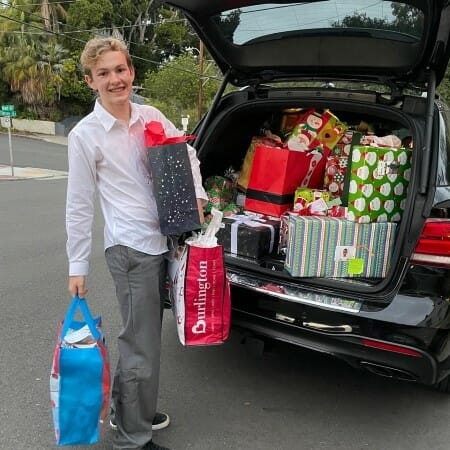
In addition to tutoring, Kid By Kid has provided dozens of students with gifts and school supplies by organizing donation drives./Courtesy Daxton Gutekunst
Why do you believe that kids make the best tutors for other kids?
I think that for a lot of these immigrant, refugee, ESL learners — where they live in a climate of instability — it’s fantastic to have a familiar face and more of a face that is around your age and is going through some of the similar experiences that you have. But another reason is simply who best to teach sixth grade math curriculum than an eighth grader who had just gone through it?
Which experience with Kid By Kid has been particularly memorable for you?
A particularly powerful memory was on Christmas Eve last year. At my school, we do something called the Giving Tree. And for the past three years, Kid by Kid has been honored to participate in this program where all the school families come together, and they choose a kid to adopt. We have been able to put a lot of our Kid By Kid Learners on that Giving Tree. This past Christmas Eve, we loaded up a “sleigh,” which was actually a van, and with Pastor Elise of the Haitian Ministry, we were able to deliver these kids presents that they wouldn’t ordinarily receive. That was really powerful because when you’re able to deposit so many gifts and put them into good hands, it just shows how much of an impact you have. It was an important milestone to see how much I can really give back to the community.
What has the feedback been from the Learners and tutors?
It’s been overwhelmingly positive. Over the Christmas season, we received a few cards from these learners. It was really heartwarming because a lot of them were written in the Learner’s handwriting, and it was clear that they were making an effort to incorporate the things that they had learned in their lessons.
For the tutors, I think they initially come in with the idea that this is just an easy way to get tutoring hours, but I think they stay because of the relationships they create. We have over 225 active tutors and this is well past the time that they would be submitting their community service hours, so they’re not just doing it for that. I think why they stay is because they realize they can make an impact on these Learners.
Daxton Gutekunst is the founder of Kid By Kid, a nonprofit that provides peer tutoring to underserved refugee and immigrant students./Courtesy Daxton Gutekunst
Are there any future partnerships, programs or events that you are excited about?
I’m talking with Uplift San Diego, which is a homeless organization, and what I’m hoping to establish is a relationship similar to the one we have with Haitian Ministry in terms of helping homeless children and providing them with the education that they wouldn’t ordinarily have from being on the street. Long term, I’m looking forward to expanding to even more states.
Why is it important to give back?
I’m privileged in many ways to have received an education. so giving back through educating others and giving back to the community that has raised me is, fundamentally, one of the best things I can do.
What do you want people to learn from your story?
A big part of what I preach is that youth can make a change. Young people come in with fresh ideas, and anything that they set their minds to, they can achieve. They are an untapped resource, and I certainly feel that with Kid By Kid and our tutors, but I’ve also seen it on the news and around the world. It goes to show that what may have previously been considered an adult job is now something that a younger generation can help solve.
Anita and Andy McDonald weren’t expecting to become volunteers with the Guide Dog Foundation, an organization that breeds and trains guide dogs for people who are blind or visually impaired. But after a family connection, they fell in love with the puppies and dogs that give so much to others.
Their 15-year long journey with the Foundation was the retirees’ new beginning. They’ve served as breeder caretakers to provide homes for breeder dogs and bring them back to the Foundation when it’s time to start the next generation of puppies.
Describe your volunteer role with the Guide Dog Foundation.
Andy: We were kind of informally introduced to the guide dog community by my sister-in-law. Anita’s sister was involved as a puppy raiser for many years and so were her children. She actually lived in close proximity to the foundation. So, we got a little exposure that way and got to see her as she raised puppies for the foundation. One of the dogs that she raised went on to work as a working guide and she maintained contact with the gentleman who took her in. The dog was nearing retirement, and they asked us if we would like to adopt her, so we did, and named her Ringer in 2012.
We agreed to adopt Ringer and were in the process of adoption when we met her original owner and sat with him for a while. We were able to really find out the impact that this animal had on his life, and it wasn’t the first guide dog that he had. Seeing the impact that this dog had on him really hit home for us. We got more involved with the foundation in 2015.
How has your volunteerism with the Guide Dog Foundation grown over time?
Andy: Well, we started out with an orientation class with the idea that we would just temporarily help by taking in some of the dogs to get time out of the kennel while they were in between training and being placed. And one thing led to another and I was informed about their breeder program. It was something that piqued our interest. I got some more details, and I came home and discussed it with Anita. It turned out it was something that we felt that we’d be able to make a contribution to.
The program itself is basically providing a home for a breeder, whether it be a female or a male, and we maintain their proper weight and their proper house values because these are dogs that are going to be utilized to produce puppies for the program.
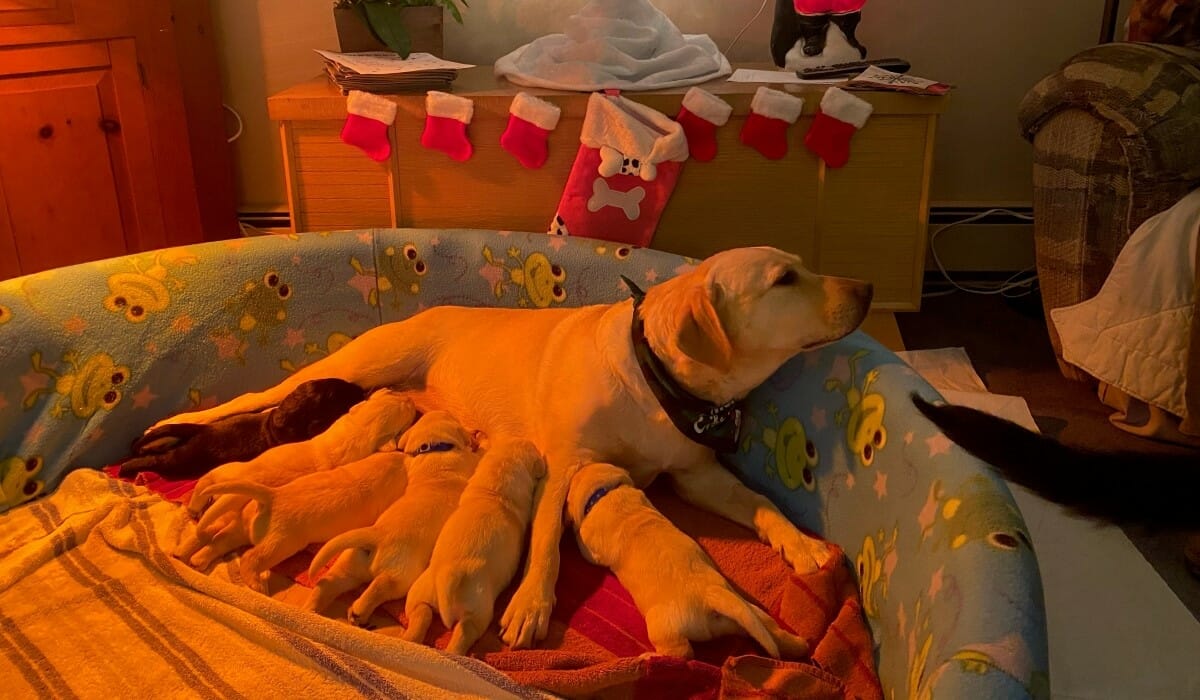
The McDonalds get to hold puppy guide dogs and wrap them in baby blankets after they’re delivered./Courtesy Anita and Andy McDonald
Describe your experience volunteering during the COVID-19 pandemic.
Andy: Our particular situation was unique. We were able to have the puppies here at home so it was actually helpful. There was a lot less interaction at home.
Anita: We’re keeping a puppy, or the mom and the puppies, for about five weeks and we have them in our home and we get to take care of them that way until they’re ready to go back to the foundation for a week or two.
What inspires you to volunteer?
Andy: We were able to see the impact that Ringer had in someone’s life who was visually impaired. We continually see dedication from the foundation to support their volunteers and help you understand how important your role is, no matter how small it is. Believe me, there are so many people that do so much more than we do, but at the same time, the breeding program is an important part of the program. These puppies have to come from somewhere. We’re encouraged that they make every single volunteer understand how important their contribution is.
Anita: When we started taking on the breeders and delivered our first litter, it was amazing. As a mom, you sit there and you’re able to support the mom dog and just comfort them. I had nights when I would just lay on the floor with my pillow and blanket with a dog that was in labor to be close to her. You can even feel the puppies moving in their belly sometimes. When they’re finally delivered and we get to hold them, we wrap them in little baby blankets and hold them. I came home from work and the puppies would just crawl over me. It would be such a relief. And then we got to see them progress during those eight weeks and develop their personalities. It really is truly amazing and heartwarming.
What have you learned through your experience as a volunteer?
Andy: I think sometimes people don’t appreciate the impact that they are able to have, even in a minor role. So many people are dissuaded from giving to whatever particular charitable organization or something that’s important to them. They think they can’t or that they don’t have the time, but there are so many small contributions that they can make that honestly make an impact. It’s a lot more rewarding than people understand.
Anita: You do so much good when you contribute something, no matter how small.
Are there any partnerships, programs, or events that you are excited about?
Andy: Well one thing that we’ve been wanting to attempt to do for a long time when we’re about to host a female that’s about to give birth is invite the family of that particular breeder to come over and see the mom and her pups. We want them to see what the whole process is about.
Medical Student Fills the Gender Gap Throughout the World of STEM
Meet Daily Point of Light Award honoree Pooja Chandrashekar, who was a 2021 L’Oréal Paris Women of Worth Awardee. Each year L’Oréal Paris and Points of Light recognize and celebrate Women of Worth who make a beautiful difference in their communities. Ten honorees each receive a $20,000 grant to support their most cherished cause, and an online vote determines one honoree who will receive an additional $25,000 grant. Nominations for 2022 are now open! If you know a woman who works to create lasting and significant change in her community, nominate her to be one of the 2022 Women of Worth.
Pooja Chandrashekar remembers walking into her computer science class on her first day of high school in 2013 and noticing that she was the only girl in a sea of 30 students. When she was just a sophomore, Pooja began her nonprofit career at the age of 15 to fill the technology gender gap.
Her ProjectCSGIRLS organization gives girls a community of like-minded peers, role models and mentors in addition to the skills and knowledge needed to step confidently into a male-dominated field. Pooja continues to debunk the negative stereotypes of the STEM field and its lack of female role models and has impacted the lives of more than 15,000 girls worldwide.
“I was encouraged because I grew up with a female role model in my mom, who was a software engineer, and I built a community of peers who were interested in computer science, too,” Pooja said. “But it was sad to see incredibly talented people leave the field who were turned off by the gender gap and didn’t have support in place.”
Pooja pitched her initial idea of ProjectCSGIRLS to a computer science professor at George Mason University who helped her refine her idea into something that became a reality. The professor became Pooja’s faculty advisor, and they were able to start serving girls in the Virginia and Maryland areas.
Pooja’s first project with ProjectCSGIRLS invited girls to submit and present computer science projects that addressed a social problem in their community. They received more than 100 submissions during the first year.
“It was clear that there was a need for groups dedicated to supporting girls in STEM and to intentionally teach girls how to harness technology for social change,” Pooja said.
Pooja, who is now a medical student, said that research shows that girls gravitate toward careers and projects where they can make a difference, so she intends to show them how to use that passion to tackle real and tangible problems that affect them and their communities.
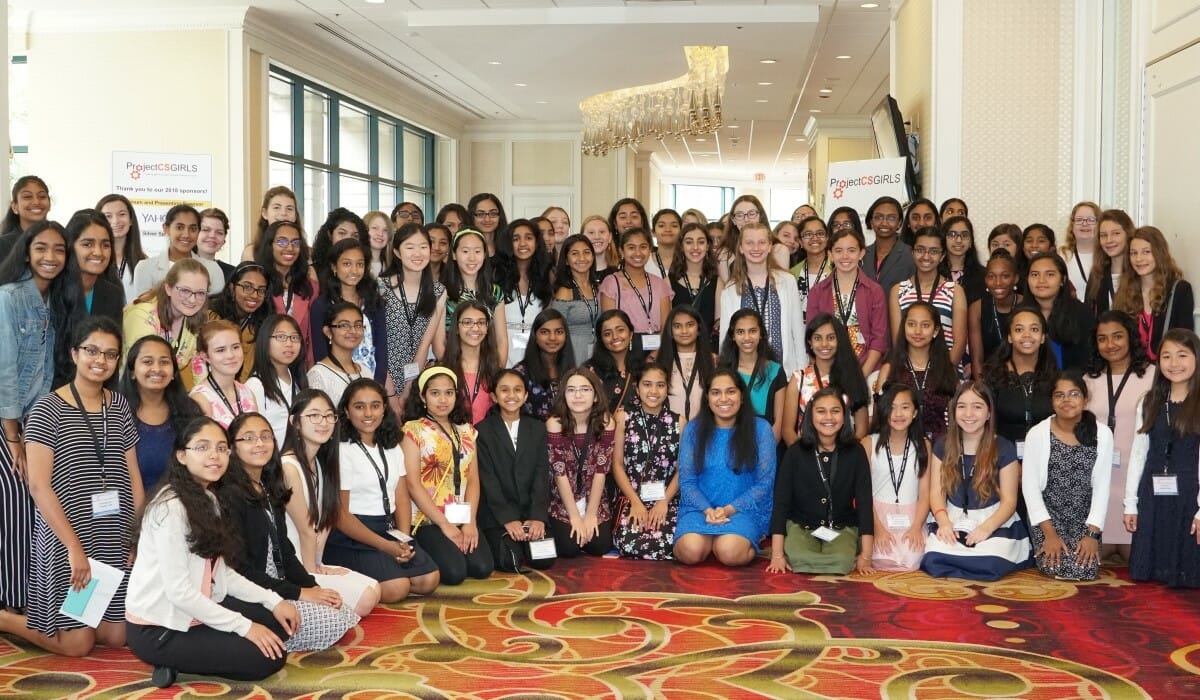
Each year, Pooja Chandrashekar, first row sixth from right, hosts the ProjectCSGIRLS annual gala to honor and celebrate its National Competition finalists, staff and community members./Courtesy Pooja Chandrashekar
The first project quickly became the organization’s flagship competition. Now, the National ProjectCSGIRLS Competition brings in 600 to 700 girls annually, and Pooja anticipates that more than 1,000 submissions will be entered this year.
In addition to the annual competition, the organization hosts workshops and mentorship programs led by high school and college women to foster youth leadership and STEM collaboration. Previously, participants learned how to develop their own mobile apps aimed at women’s health and how to use data science to track COVID-19 trends. Now, ProjectCSGIRLS has 95 active chapters across 12 countries.
It even caught the attention of former President Obama, who featured ProjectCSGIRLS in his administration’s Computer Science For All initiative.
Pooja understands the value that her team brought to the organization and how, together, they’ve been able to grow from a local organization to reaching girls and teens around the globe. She is excited about 2022 and her organization’s national gala this summer.
“It’s my favorite day of the year,” she said.
The finalists who participated in the international competitions are invited to attend the gala, in addition to other guests of their community, to celebrate the organization’s accomplishments and growth.
“What continues to inspire me today is the impact that we’ve been able to have and the stories that have blossomed as a result of these girls who participate in ProjectCSGIRLS as girls,” Pooja said.
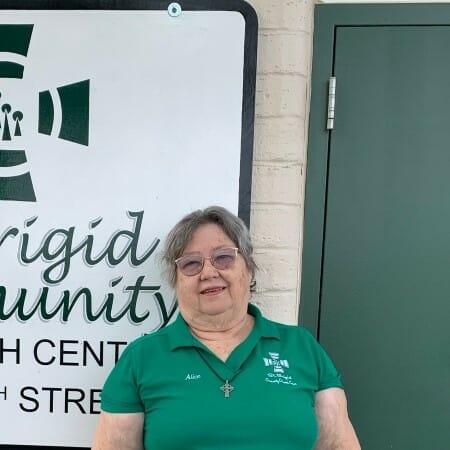
For Hanford and Armona, California, community members, St. Brigid Community Outreach Center is a pillar they can depend on in times of need. Thousands of citizens turn to them each year for food, clothing, diapers, toys during the holidays and other household needs. Helping to run the program behind the scenes is Alice Roberts, the office volunteer coordinator and a dedicated volunteer herself since 2010.
A self-described “gopher” for the nonprofit, Alice handles everything from overseeing daily operations to grant writing, technical troubleshooting and tracking the budget. She personally led an upgrade from the center’s use of a paper tracking system to a digital program. Alice can be found at St. Brigid every single day that they are open for operation, with a passion for helping her community and a readiness to serve others.
What does the St. Brigid Community Outreach Center do?
We are a ministry of St. Brigid Catholic Church with the purpose of serving needy members of the Hanford and Armona communities here in central California with emergency food, clothing, and other available resources, regardless of their religious preference or recognition. Anyone who is a member of our community is eligible to receive services no matter who they are, as long as they meet our basic criteria. We provide services every 30 days, and that includes bags of groceries. They can also shop in what we call our “store” for food, clothing, and household items for themselves and their family members.
Describe your volunteer role with St. Brigid Community Outreach Center.
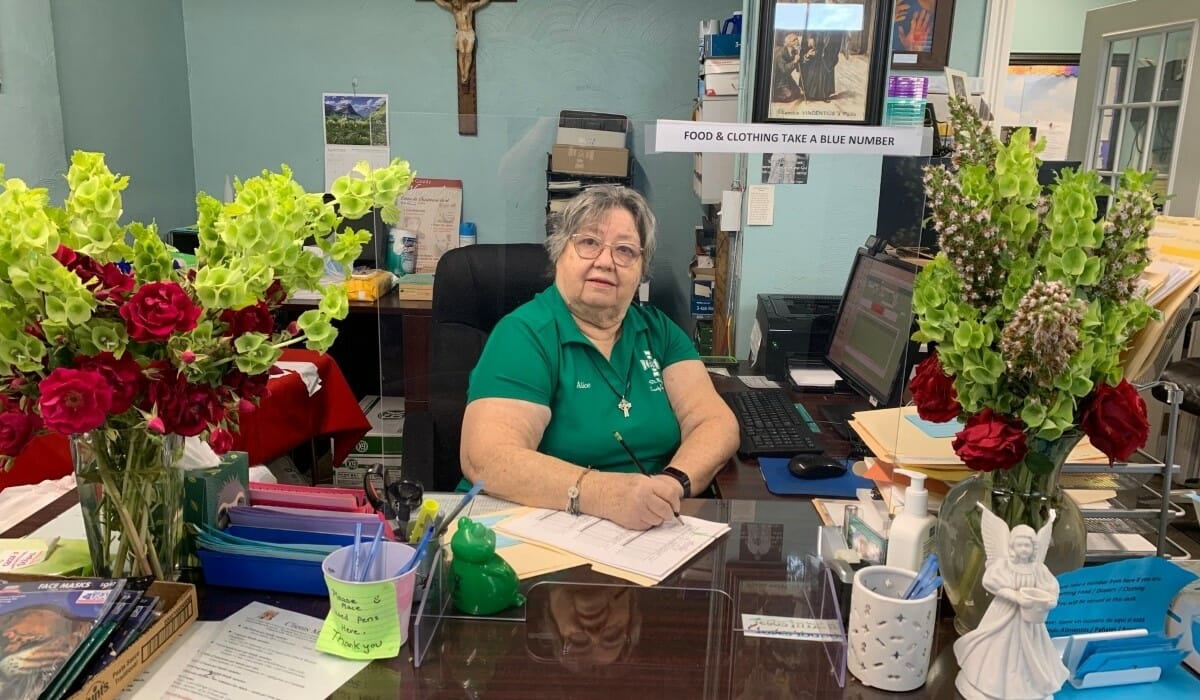
I am the office volunteer coordinator. I’m second to our director. I work directly under the director of the center, Rosie Cervantes. I’m there every day we’re open, which right now is Monday, Wednesday and Friday mornings. I oversee the operation of our reception area and also our store and the work our volunteers do with the clients. I do a lot of the paperwork, all of the reporting, troubleshoot the computers when they go down for our database collection for our clients, and sort of troubleshoot when we have a volunteer who is having difficulty in working with a particular client. I also am backup at our reception desk in processing clients into our center. I helped to get our database set up. I’ve helped our director with grant writing to help us to get some of the grants we’ve been able to obtain for our center, and with tracking our budget, our expenditures, tracking our volunteer time sheets or work time.
Alice Roberts serves as the office volunteer coordinator for St. Brigid Community Outreach Center./Courtesy Alice Roberts
What made you want to volunteer in this way?
I wound up going to one of their open houses because I’m a regular parishioner at St. Brigid’s. I never knew of the center, so I saw what they were doing there and thought, ‘This is something I could do.’ I was retired and wanted a way to give back to my church and my community, and this was an opportunity I saw that I could use some of my talents and abilities to go in and help out whatever way I could.
What about the center has made you want to keep doing this for over a decade?
Seeing the appreciation our clients have for what they are getting. There’s a lot of people in our community who have a need. I enjoy the people I work with. We have a great group of volunteer staff who work both in our pantry area, in the separate area of the center where we accept donations and process the donations that come in, as well as our volunteers in our store and office reception area. I love meeting with the clients and visiting with them when they come in to receive services, because we treat them as apart of our family. It gives me joy to do that, and at the same time I’m doing service that our Lord has asked.
Why do you think it’s important for your community to have a resource like St. Brigid’s?
There is a great need in our community. We’re only open three days a week and only for a little over two and half hours during the day, and we still process over 30 [clients]. Our largest day, just a couple months ago, we had 73 clients come through in one day. If we’re getting that many clients on a daily basis, that means there’s a lot of need out there. A lot of people need our help. That’s what we’re doing. We provide that service to all of our clients to help them meet their needs. It’s great to see them and see that they’re appreciative of what we do and the services they’re receiving. They don’t take it for granted. It’s a joy to be around the volunteers and the clients we have.
What that been the most memorable moment during your time volunteering?
The biggest one for me was the first year that we did the Toys for Tots program at Christmas in conjunction with both the United Way and the U.S. Marine Corp Reserves. I wound up getting asked by the United Way to facilitate the agencies that were going to be distributing our toys. … We used the kids from our parish to come in to the center and assist us with the Toys for Tots program. They and a couple of the parents went out to the base with us to pick up our toys. The day of distribution, we met the families at the front door. Inside we had the youngsters as the runners to take the list of what toys were needed by age and gender, and then they would go back to the center where we had bins full of the toys separated out. The kids would pick the toys to give to other kids. We had a whole group of kids, from ages six to even some of the high school kids. Seeing these kids getting involved with that idea of giving back, either by working at the front desk or also working as runners to help with the toy program — seeing that interaction with the kids helping do that was fantastic. That was awesome.
Alice Roberts helps oversee the reception area in her role as St. Brigid Community Outreach Center’s office volunteer coordinator./Courtesy Alice Roberts
What’s been the most rewarding part of your work?
The most rewarding is seeing the clients that we know need our assistance and we’ve been able to help them. Even those clients who come in and maybe there’s something missing from the paperwork we need from them, we’re able to work with them and help them and see their appreciation when we are able to assist them. It’s the clients who we serve and it’s the volunteers I work with that help me in my job.
What do you want people to learn from your story?
No matter who you are, how old you are, or what you physical capabilities are, you always have something available to give and to do that will be of benefit to others. Each person is a valuable member of our community, no matter if you’re a client, a visitor, a volunteer. If you’re a volunteer and you treat others with respect, dignity, kindness, tact, and good humor, then you’ll benefit as well. Don’t focus on yourself as much as what you can do for others, and how your talents and skills are useful. I didn’t realize a lot of my talents until I started volunteering, and I realized hey, I’m pretty good at helping to write these grants and going through them to edit them and help to make them even better. It’s been a benefit. Whatever your talents, whether they be computer skills, people skills, organizing, or just being present to someone when they want to talk — your abilities and your skills are important to somebody, so make use of them.