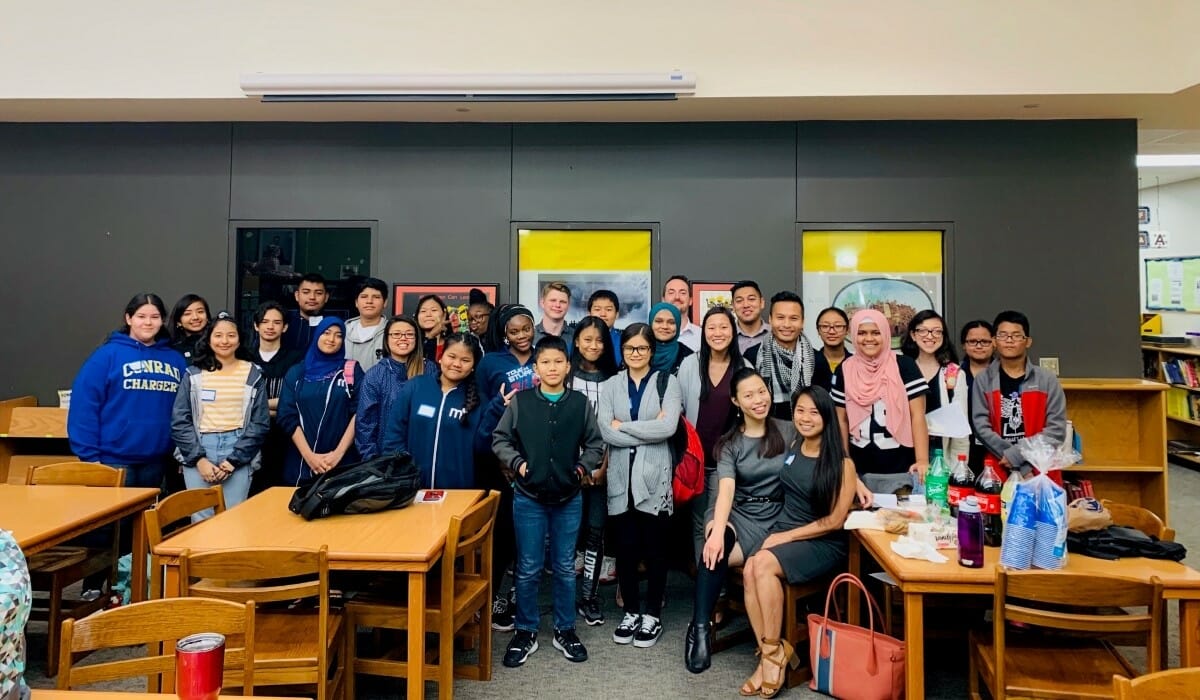
Growing up in Long Beach, California, Juan Carlos Alfaro always found art to be an escape for him but never thought he could make a career out of it. Now that he has found professional success as an artist, he is making sure that kids who are in the same position he once was know that they do have an option to turn their passion into a living. Since 2017, Juan Carlos has led Creative Flow Art, an art-based youth mentorship program within the nonprofit A Future Superhero and Friends.
Through Creative Flow Art, Juan Carlos mentors youth aged 15 to 23 who have a passion for art through a six-week program that focuses on offering project-based learning and hands-on experience. The program also provides community workshops and a mobile art station for community events. Juan’s goal is to personally help 100 students to find a career in art.
Describe your volunteer role with Creative Flow Art.
I started Creative Flow Art. It’s a program to encourage kids and let them know art is not a hobby; you can actually make a living. [Art is] how I pay all my bills and go on vacations. That’s a core part of it — going into the community and uplifting youth and letting them know from an early age that, hey, you can work for Disney, you can work for Nike, you can work for all these companies if you want to be an artist.
What inspired you to start Creative Flow Art?
I saw a need in the community for kids to be pushed in the arts as a career. Growing up in the late 80s and early 90s, I knew I was creative, but there were no outlets or programs that told me I could take that creativity and actually make a living. As an immigrant kid, I was told I had to go to school, and I had to work. As I struggled through school and struggled with what I was going to do, and also being an immigrant kid, I was like, what is there for me? Now that I have become an artist for a living, I wanted to give back to the community — specifically Long Beach, because that’s where I grew up.
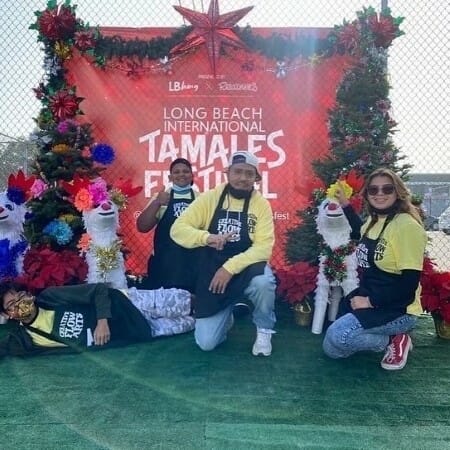
Juan Carlos Alfaro, center, and Creative Flow Arts students attend a festival./Courtesy Juan Carlos Alfaro
How important is it for kids interested in art to have an outlet like Creative Flow Art?
The importance of them having an outlet like this is the fact that a lot of these kids don’t have this guidance or support at home. They’re going to look for it somewhere else. A lot of times, they find it with their friends, and their friends are sometimes up to no good. Having a program like this — where an individual comes in, they’re really shy and they don’t want to talk, and then they find themselves with 12 or 15 other kids with the age ranges of 15 to 23, and they love art, and they’re in there for the same reason. It gives them a really good feeling that they’re going to be okay at pursuing their dreams and what they want to do in their career.
Do you have any goals for Creative Flow Art?
My goal is to open a center and possibly starting a screen print shop where we can employ some of the kids, whether they’re printing or designing. Somewhere the public can come and get their t-shirts or websites done. At the same time, continue to grow kids and have them come in, and maybe split up our classes for newer kids and our older kids. At the nonprofit where I was working, they would age out. I would say, well, what happened with all these kids? They would say, ‘We don’t know, they can’t participate anymore, so we can’t help them anymore.’ It blew my mind. These are kids you’ve worked with for maybe three years, how do you just not talk to them again? So my goal would be to get a center where I can maybe get a design studio and continue the education part of the program.
What’s been the most rewarding part of your work?
The most rewarding part was when I helped the first kid out. I see myself in him, because his family are immigrants. Him being able to better himself financially and mentally, I think that has been the biggest reward. Here you have a kid who was absolutely not going to college, regardless of how much I told him how important it was to get that piece of paper. I knew he wasn’t going to go. I always told him, you could get a job at a fast food place, or I could help you get a job where you can start off at a pretty good rate, money-wise, and have a career that is going to continue to thrive for you and take you places. Seeing him graduate from high school and, whenever he gets a chance, him just thanking me without me even asking him – I think that’s been the most rewarding part. It’s also the part that has kept me going, because I would love to have that same feeling with more kids.
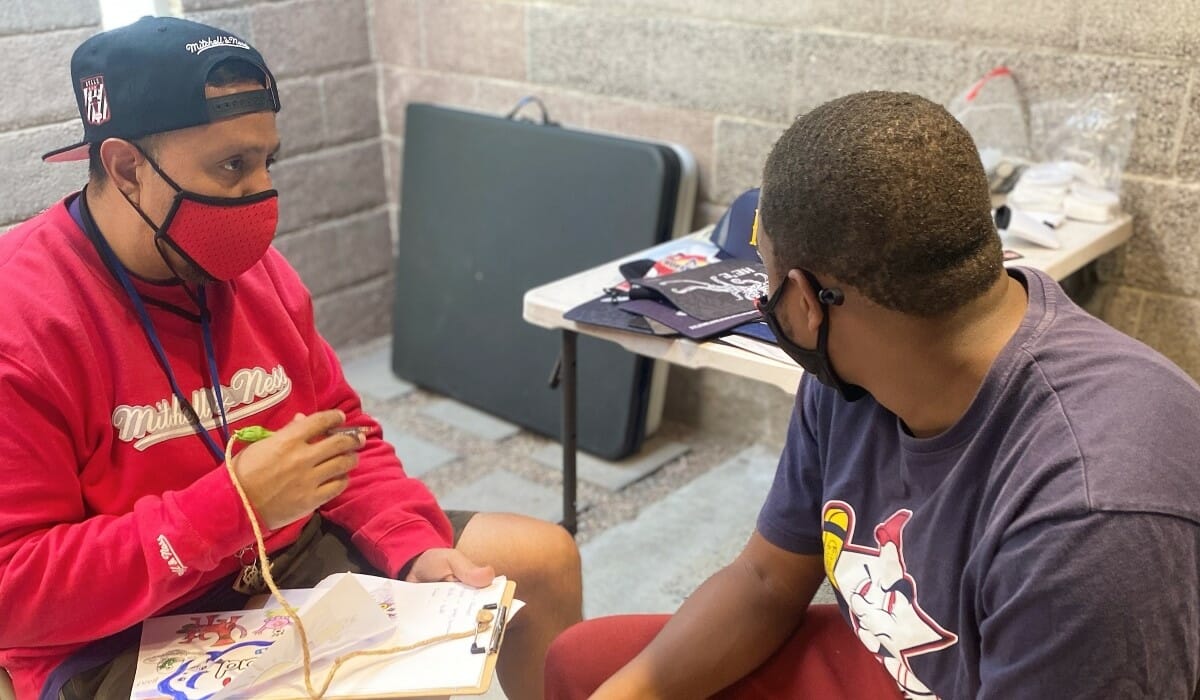
Juan Carlos Alfaro, left, mentors a student in his youth art program, Creative Flow Art./Courtesy Juan Carlos Alfaro
How can people help Creative Flow Art?
We do take volunteers. If anybody wants to volunteer, we just ask that you are working in the industry somehow – whether you’re a graphic artist, animator or anything that you feel that our youth will take. When we have a guest, I always say, ‘You guys have to be like a sponge and take it in. Later on, whatever doesn’t work for you, toss it out, but I guarantee you guys are going to learn something from our guests.’ I just ask that our guests are in the art industry somehow, because our kids will definitely take their experiences and really get inspired. Who knows, maybe if we have an architect, one of my kids will become an architect.
What do you want people to learn from your story?
What I learned myself is that there are a lot of people out there who want to do good in their community and they don’t know how. I always thought that being a police officer was how you would do it. … Once I started doing this, I realized you don’t have to be a servant to help the community. What I run across a lot is that people don’t know how, or they want to do it, but they just don’t have the energy. They just don’t do it. I think what people should learn from me is to get up and volunteer with someone and find a cause that’s deep in your heart, something that you feel you would like, and then just go from there. You’ll find your purpose once you’re in the right place. From there, it’s all good. It’s so rewarding to work with people and help people and not be so selfish. Put yourself out there.
Harry Kpoh witnessed the ravages of civil war while living in Liberia, and when he was able to immigrate to the United States as a young man, those memories of suffering stayed with him.
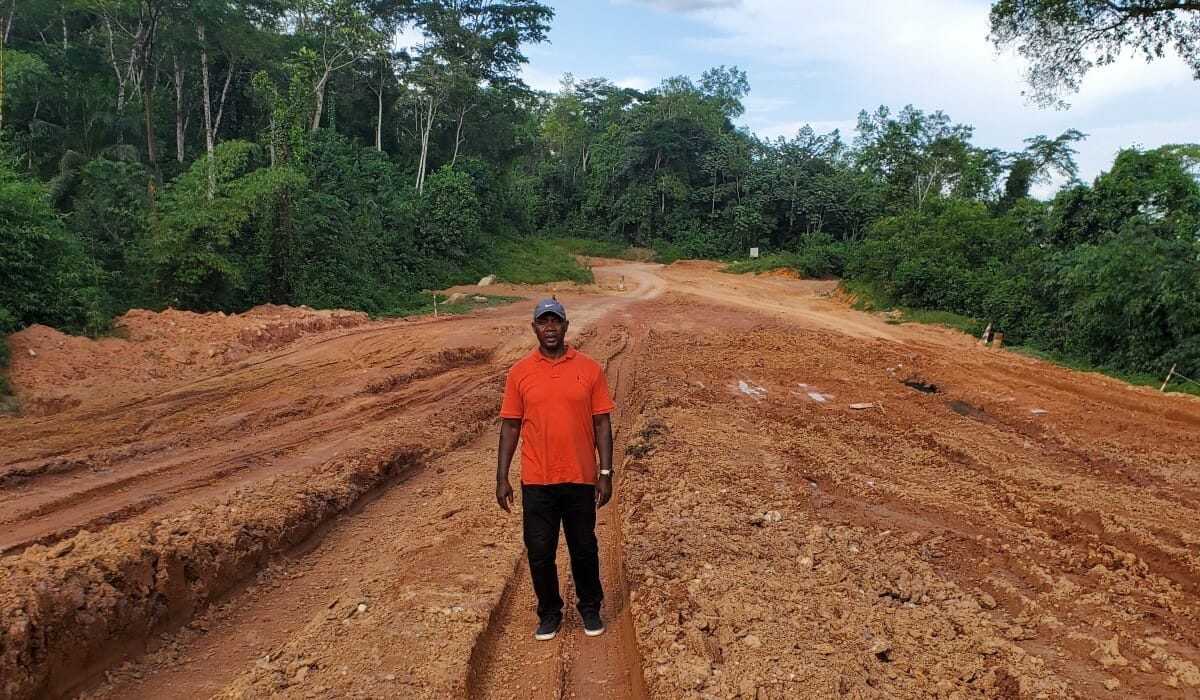
“I visited Liberia several years later,” says Harry, “and one man said he’d lost his wife and unborn baby because the nine-months-pregnant woman was taken on motorbike through trenches to get to the clinic, as there are no vehicles that travel in the area because of bad road conditions. She’d passed before she got help, and there was no medicine to provide treatment.”
Harry returned to his residence in Louisville, Kentucky, and started what is now the Trembo National Association of the Americas, Inc. (TRENAA), an organization dedicated to addressing Liberia’s critical need for life-saving medicine, medical equipment and food. After years of civil war, Harry describes a country ruined, its residents making do with the very little they have.
“If you imagine going a day without food, 80% of the country is unemployed, and one of the places that I visited, people still drink from river creeks. It was January 2022, and the village got their drinking water at the upper part of the creek and washed their clothes at the bottom of the creek — in this modern age. It’s sad. People are struggling, but interestingly, they are resilient. They are managing and making the maximum use of the little resources they have, just to survive.”
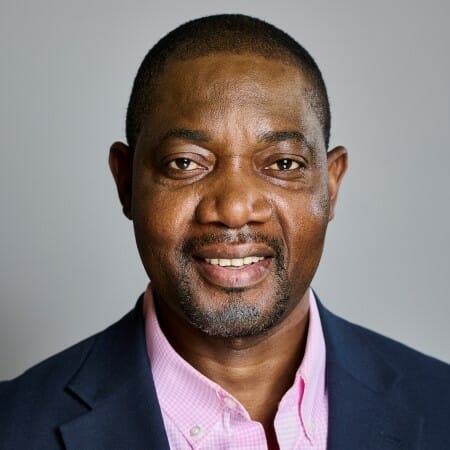
Trembo National Association of the Americas, Inc. (TRENAA) founder and CEO Harry Kpoh is supporting his fellow Liberians after years of civil war with life saving medicine, medical equipment and food./Courtesy Harry Kpoh
As founder and CEO of TRENAA, Harry is doing everything he can to provide help for Liberians. Packing shipping containers full of supplies and food, Harry travels on every container that goes to Liberia. Harry has also established key partnerships with organizations like Supplies Overseas (SOS), Catholic Medical Mission Board (CMMB) and Love The Hungry to support his efforts. He has even formed a strategic partnership with the Liberian Ministry of Health to facilitate logistics and transportation to help get supplies to rural areas. Teams of volunteers, both in the U.S. and Liberia, help with operations and distributions. The organization relies on donations to help provide assistance.
“Most of the time, it’s a three-day drive from the arrival city to the rural destination,” said Harry. “Sometimes you go without food to ensure our people get the benefits of help that our partners are providing. It’s a difficult journey. Big picture, we are providing medicine, but it doesn’t help if people are still drinking from the river and getting airborne diseases. We are addressing the issues that are sickening people. Trembo sponsors 350 students with free education and food in two different locations. It has just broken ground for a school building to bring all the students to one location. In the rural areas, where distribution is done, some walk five or ten miles barefoot to get food, so we provided 4,000 sneakers. We are currently working on a project to provide hand pumps in villages that rely on the creek for their drinking water.”
Harry says his dedication to supporting his fellow Liberians is based in the understanding of how desperate their situation is and how appreciative they are for any help.
“It’s the genuine gratitude that is shown by Liberians when you provide help. That’s the biggest motivation. People are hopeless. [In the U.S.,] you get sick and go to the hospital, knowing that you’ll be provided with medicine, but (in Liberia) you get to hospital and there’s no medicine. People become hopeless and don’t bother going to the hospital. We provide medicine, and you’ll receive a call at 3 a.m. on your home phone from Liberia, [the person on the other end] is expressing how much hope the service you provided has given to them. Those are the fighters who motivate me on a daily basis to do what I’m doing.”
Harry says in the rural areas where distribution is done, some walk 5 or 10 miles barefoot to get food, so TRENAA donated about 4,000 pairs of shoes to the needy including women, children and the elderly./Courtesy Harry Kpoh
Harry’s service is saving lives, says Solomon Qualah, a native Liberian himself who has volunteered with TRENAA and was involved in helping Harry’s family to resettle when they arrived in Louisville, Ky. According to Solomon, Harry’s determination to help others living the same struggle he once faced himself is going a long way.
“The conditions over there are overwhelming, especially in the medical area, but everything,” says Solomon. “He’s saving lives. The hospitals over there are missing certain things. To be able to fill in those goes a long, long, long way. Healthcare conditions in Liberia are deplorable, especially outside the city. [Harry] identifies clinics, fills their needs and saves many, many lives including pregnant women and little kids.”
Paying his blessings back is something Harry says he does joyfully, offering transformation for others.
“Volunteering is an incredible feeling to ensure that people can live their best,” he said. “They can tap into their potential if you provide help because we all do have potential in us, but we are limited because of the lack of the assistance that we need. You can see the transformation of somebody’s life if you provide that help for today. My immigration to the U.S. to have all the opportunities means I have a great platform to use resources to give back. Giving back through service is the best gift you can give the world.”
As a volunteer with Love A Sea Turtle (LAST), David Yoon engaged in environmental stewardship in his community and had the opportunity to impact many youth through his service, an effort that has since grown through his own initiative within LAST, Plastic Free NC.
Founding Plastic Free NC, a youth-led conservation and awareness initiative, David, a 16-year-old Greenville, North Carolina, student, is helping to reduce, remove and provide alternatives to single-use plastics and decrease the quantity of plastic waste by advocating alternatives such as metal straws, reusable water bottles and biodegradable or reusable bags. Beyond its environmental goals, David’s service is uniting his community and opening the doors to volunteerism for others.
What inspires you to volunteer?
My inspiration comes from my love for my community. Regardless of background, age or gender, everyone can inspire change. I want to be that example for people, so my peers know that anyone can do what I do.
Describe your volunteerism with Plastic Free NC.
As founder and executive director of Plastic Free NC, I mentor our volunteer student leaders from around the state and organize initiatives to make sure we’re meeting our goals and educating the public. We focus our efforts around Greenville, and then students extend that impact across the country with their own initiatives.
Plastic Free NC founder David Yoon volunteers to promote environmental conservation and unite his community through service./Courtesy David Yoon
Share one personal story with me from your volunteerism.
Two years ago we held a camp for underserved youth, and I met a kid who didn’t know how to ride a bike. While I was teaching him how to ride, he started crying saying he didn’t have a father growing up, and he’d always wanted to learn. During the week he learned how to ride and his mother learned to ride with him. We formed a bond, and we talked about how when I was a child I’d ride my bike around mountains, so we dreamed that we’d ride bikes together around mountains someday. That showed me I made an impact and was changing lives for the better.
Why do you think it’s important for others to give back?
We have so much to give back to people who don’t have much or anything at all. That is one of the main ways we can create impact in our community. Volunteers or leaders who are giving back need to utilize their talents and resources to help others progress.
How have you continued to volunteer throughout the COVID-19 pandemic?
We were a very face-to-face organization. We’d visit businesses and discuss conservation methods, including switching from single-use plastic items. Because of the pandemic, people were afraid of using recyclable and renewable utensils. That was a big obstacle but we overcame it by writing letters to local newspapers and staying engaged with the community virtually. The pandemic slowed us down, but it did not stop us.
What do you want people to learn from your story?
Don’t be afraid to be the change you want to see, or don’t be afraid to take the risk and fix a problem in your community, even if you don’t know how to solve it.
In one word, what does volunteering mean to you?
Leadership.
When you’re not busy with school or volunteering, what do you do for fun?
I love listening to music, and I love playing tennis.
How can readers help?
Please visit the Plastic Free NC website for more information about how you can help.
Florida Native Shows that Every Life has Dignity and Worth, Especially People Experiencing Homelessness
Meet Daily Point of Light Award honoree Briana Daniel, who was a 2021 L’Oréal Paris Women of Worth Awardee. Each year L’Oréal Paris and Points of Light recognize and celebrate Women of Worth who make a beautiful difference in their communities. Ten honorees each receive a $20,000 grant to support their most cherished cause, and an online vote determines one honoree who will receive an additional $25,000 grant. Nominations for 2022 are now open! If you know a woman who works to create lasting and significant change in her community, nominate her to be one of the 2022 Women of Worth.
As Briana Daniel went for her usual run in downtown Orlando around Lake Eola Park in 2013, she came across someone she’d seen before. He was experiencing homelessness at the time and sold art along the lake as a way to support himself. Briana was familiar with his story and his art but she learned something new that day — just how vast the homeless population really is in her community.
“I had an idea of who our homeless friends were in the area, but he pointed out people that were homeless even though they didn’t look like it. It was really eye-opening,” she said.
At 21 years old, Briana brought Street Team Movement Inc. to life that same year. The nonprofit has now grown into an organization that provides laundry services, haircuts and hygiene products to people experiencing homelessness.
Briana originally wanted to create a food pantry, but after some thought, she put her energy into uncovering gaps in what was needed most and ensuring she wasn’t duplicating services that were already being provided. To discover where the biggest needs were, she decided to try an idea: live alongside homeless people for a month on the streets of Orlando.
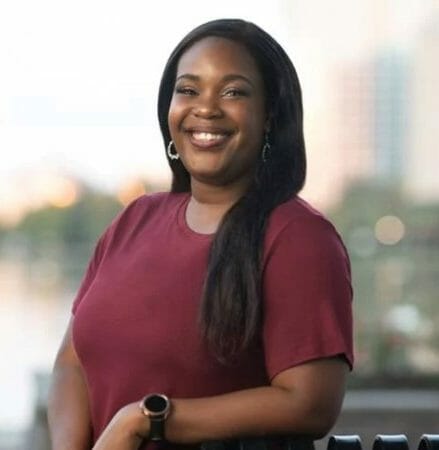
Briana Daniel brought Street Team Movement Inc. to life in order to provide laundry services, haircut services and hygiene products to people experiencing homelessness./Courtesy Edward Linsmier for L’Oréal Paris.
She learned that hygiene was the biggest need not being met, so she set out to meet it by creating Street Team Movement Inc. and partnering with other nonprofit organizations in the area. So far, Daniel has helped distribute 1 million hygiene items and run more than 50,000 loads of laundry for people without homes.
“Making those connections and really knowing that the work we’re doing is so impactful and that it’s inspiring other people to take action — it inspires me to keep going,” Briana said. “Some days it’s really hard, but this touches more people than I’m ever going to know.”
Briana’s Street Team Movement Inc. provided support services throughout the COVID-19 pandemic and 2017’s Hurricane Maria, which saw an influx of people in the Orlando area, according to Briana. Street Team Movement Inc. helped create a separate fund for those displaced by the hurricane.
The COVID-19 pandemic limited Briana and Street Team Movement Inc.’s volunteer base and interaction with people experiencing homelessness for safety reasons, but it did lead to one of their greatest innovations to date. The nonprofit created and distributed hygiene vending machines across the city in the hopes of making hygiene and laundry services more accessible and convenient to those who need it most — and it worked.
People in need can use the vending machines with “Hope cards,” which work similar to debit cards and are preloaded with a certain number of vending machine swipes per week.
As Street Team Movement Inc. grew, Briana saw firsthand that society shouldn’t judge a book by its cover.
“It’s elementary and fundamental, but still needed,” she said.
Briana and her team are looking forward to their Donate Your Voice event in June 2022, when participants are encouraged to donate their social media platforms to advocate for people experiencing homelessness.
“Our homeless friends just want to be seen right where they are. It might not be glamorous, but if you just take the time to see them, it does a world of good,” Briana said. “It helps lead to healing.”
Not many people can say they have lived a life as full of service as David and Sally McBride, a husband-and-wife duo who have dedicated their lives to others throughout their home state of Delaware. Sally, a former high school counselor, spent much of her life in education-related service, whether that be volunteering at her kids’ schools or starting a creative and performing arts magnet school in her district. David, an attorney, spent much of his career doing pro bono work, which he still does today.
Sally’s focus right now is on LGBTQ youth and their families. After their daughter, Senator Sarah McBride, came out as transgender, Sally and David took on lobbying and advocacy work related to LGBTQ issues. Sally now serves on the Delaware LGBTQ+ Housing Safeguard Committee and helps chair a support group for parents with transgender and gender nonconforming children. Along with supporting his family’s advocacy, David also serves his community in myriad other ways.
Describe your volunteer work.
Sally: Currently, I am on the Housing Safeguard Committee, whose chair is the president of PFLAG Wilmington. I’m a member of the committee. The vision mission for that committee is to find safe spaces for homeless LGBTQ youth, aged 13 to 24. … The Housing Safeguard Committee partnered with West End Neighborhood House and raised money for a three bedroom-unit townhome that prioritizes housing for homeless LGBTQ youth. In addition, we also are involved in training for providers, foster care and the Division of Family Services, through the state government who oversee foster care. We’re hoping to do training for them and nonprofit agencies who find foster parents for homeless youth.
David: I’m on the board of directors of the Delaware Symphony. … I’m on the board of the Delaware Center for Justice, which runs rehabilitation programs for people who are coming out of prison. I’m on the board of and a volunteer for the Innocence Project of Delaware, which handles appeals for people who have been convicted, but for whom exonerating evidence has been discovered. I’m on the session of Westminster Presbyterian Church. My term is about to end, but I’m on the board of directors for the Pension Fund for the National Presbyterian Church.
Tell us about the support group you helped start.
Sally: Almost six years ago, a couple of us parents of transgender kids started a support group for parents of transgender and gender nonconforming youth. The kids of our parents range in age from 5 to 40. We meet monthly. We met in person, but we met the past two years virtually. Over 300 families have come to at least one meeting. I really feel that we’ve made a difference in some of these parents’ lives and hopefully their children’s lives. It’s a safe space for parents to talk about their feelings and their children, to get information and to realize that they are not unique. There are a lot of other people in the same situation with transgender kids and gender nonconforming kids. They’re not alone.
describe the LGBTQ advocacy work you’ve done.
Sally: As a family, we lobbied the state legislature in 2013 for a gender identity nondiscrimination bill [Gender Identity Nondiscrimination Act (SB 97)]. We did it as a family — Dave, myself, and our daughter Sarah — and it passed. … We’ve been advocates and spoken in the community to various groups on our journey.
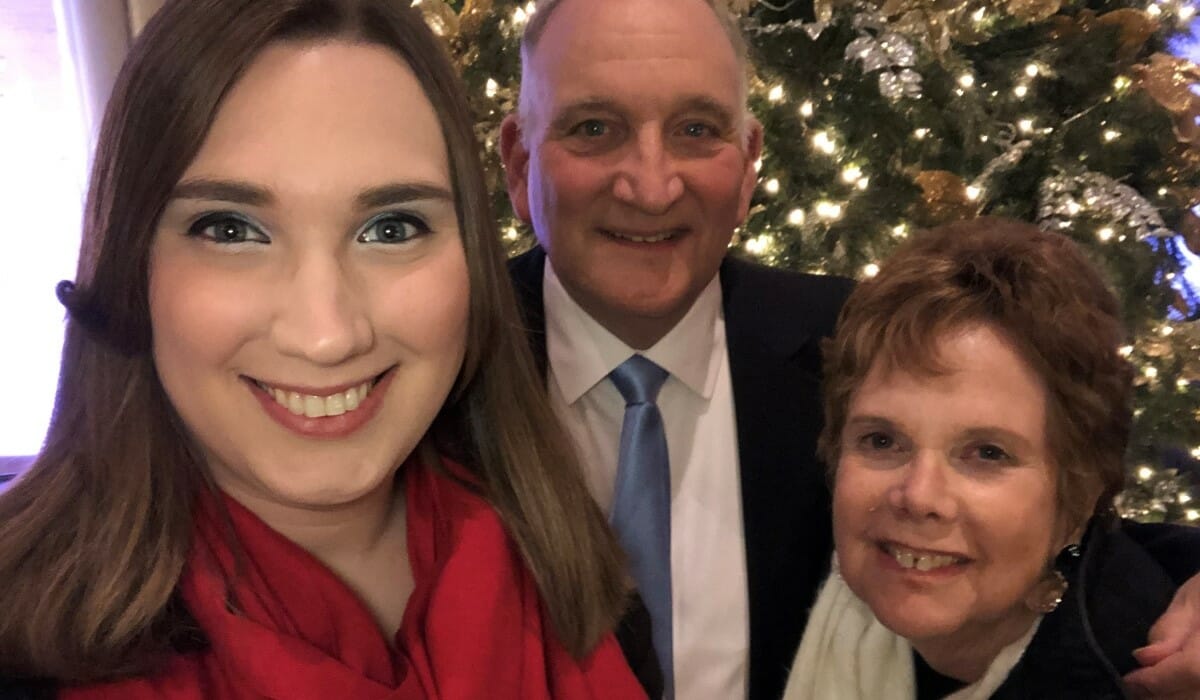
David and Sally McBride smile alongside their daughter, Senator Sarah McBride, with whom they lobbied for Delaware’s Gender Identity Nondiscrimination Act in 2013./Courtesy David & Sally McBride
What led you two to becoming advocates?
Sally: Our son is gay and our daughter is transgender. Besides lobbying for bills, we also wanted to educate people. Most people know what it means to be gay, but back when we lobbied, a lot of people did not know really what it means to be transgender, and there’s still a lot of people who don’t. I think education is one of the key things to getting rid of ignorance and fear that sometimes leads to hate and stereotypes. We thought it was important to lobby for the gender identity nondiscrimination bill. We thought it was important for the legislators to see a loving and accepting family, and our trans child who is loving and smart, with dreams and aspirations just like every child. It was important for the legislators to identify particularly with us as parents, and that all we want for our children is for them to be happy, healthy and fulfilled, like any other parents. The person who was really responsible for getting that passed was our daughter, who is now a state senator. In 2013, we followed her lead, but she lobbied for that for six months. It was her tenacity, her empathy and her intelligence that really helped to pass that bill.
How does it feel for both of you to be able to serve as a family?
David: The overall thing is we are so fortunate to be in the community that we are in. We weren’t certain when we started down this road that people would be as accepting and supportive as they have been. We’ve just been blown away by the support.
What’s been the most rewarding part of your work?
Sally: For me, frankly, it’s in my support group. To see a parent come to their first meeting, feeling totally overwhelmed, frightened and scared for their child. I’m thinking of one particular parent. The child had just come out and was frightened and scared. Seeing that parent and that child go from feeling fear and being scared for their future, and at the end of the year, to see the parent happy, accepting and loving, and their child finally their true authentic self, happy and doing well. There was a father who came in for his first meeting, and all he did was sit back and cry the whole meeting. After a year, his trans daughter was in a good place. She was not when he came in. After a year, he was smiling and in a good place. To see people progress from devastation to where they are in a really good place, that to me is most rewarding. To see that change is heartwarming and makes it all worthwhile.
David: I tell people I would have never known how many good friends we have if we had not gone through this. I was blown away by how well people treated us and Sarah.
Why do you think it’s important for others to give back?
David: I think in our several thousand years of human history, we’ve learned that the best kind of society for each of us is one that shares the burdens and helps each other. It’s also one that holds people accountable.
Sally: Giving back gives me a sense of community, and that’s important.
Growing up, Joelle Hoffman saw her mother volunteering so much that it felt like the natural thing for her to do. That mentality led her to volunteer at her sons’ schools for years. After they graduated, the animal lover decided to try her hand at a new type of service work — raising funds for rescue dogs.
Joelle serves as a community outreach volunteer for Compassion Without Borders, a Sonoma County-based nonprofit that helps dogs in the northern California area as well as in Mexico. While Joelle wears many hats when it comes to her service, from fostering puppies to helping to find lost dogs, her primary focus is coordinating Compassion Without Borders’ fundraising events. Last year, she helped the nonprofit touch the lives of over 10,500 animals.
How does Compassion Without Borders help your community?
Compassion Without Borders is a northern California nonprofit whose mission is to bring brighter futures to animals in need on both sides of the border. To do that, they have a variety of programs. One is a monthly low-cost veterinary care clinic, and that includes spaying and neutering. They perform those in underserved communities. Typically, we go out to Sonoma County, which is in our backyard, and we’ll do it once a month. People start lining up at four, five, six in the morning and we will take up to 100 animals. They will do a general well-being check, microchips, sign up for spay and neuter. We also have another arm and that’s our shelter. It’s called Muttopia and it’s also in Sonoma County. We rescue, rehabilitate, and offer the dogs for adoption. Then we have a shelter, a wellness clinic, and a new puppy orphanage down in Mexico. The dogs down in Mexico get their medical review, and then they’re brought up to northern California for adoption.
Joelle Hoffman greets a rescue dog who had recently arrived at Compassion Without Borders./Courtesy Joelle Hoffman
Describe your volunteer role with Compassion Without Borders.
My business card says ‘Volunteer: Community Outreach,’ which is where I spend most of my time. I create and coordinate fundraising events, which raise the money for the rescue’s needs. … Not only do I do the fundraising, but I also foster puppies. It’s always better to have puppies in the home, and I have a rescue dog myself. So when there’s puppies, sometimes I’ll bring some home and play with them for however long it takes to find their home. On most Sundays, I will go to the shelter and fill KONGs. KONGs are those big plastic chew toys that have a hole in them, so we put some wet food and dry food in there and fill it with peanut butter and freeze them. We give them to the dogs as an enrichment at night, because I’m sure the dogs get a little bit bored, so they’ll play around with the KONGs. What happens, unfortunately, is if the dog gets adopted in a new home, they’ll sometimes flip their harness or slip their collar and dart out the door. I’m one of a group of 10 of us that gets the SOS call, and we go help find the dog and get it back to its owner. We’re 10-for-10 on that one.
What made you want to start volunteering in this way?
I’ve always volunteered. When I was growing up, my mom volunteered, so volunteering was nothing new to me. I have two boys. They’re now out of the house and graduated, but during their school times, I would volunteer with the Halloween festival, and I would volunteer for the boosters and the snack bar and putting on events for school. When they moved out and went to college, I thought I have all this spare time, what am I going to do? I knew my love was for dogs, and Compassion Without Borders has an incredible reputation within Sonoma County.
What about Compassion Without Borders has made you want to keep volunteering in so many different ways for the past four years?
I wholeheartedly believe in their mission — what they do for not only animals, but for people, by having the low-cost wellness clinics. It really gives the owners of these animals peace of mind to make sure they are in fact taking care of their animals. I’ve never worked with or met so many people dedicated to the mission as everybody at Compassion Without Borders. You have people driving four or five hours one way to pick up a dog in need. You’ve got [cofounders Dr. Christi Camblor and Moncho Camblor]. This is their life, just saving animals. It’s really incredible to see.
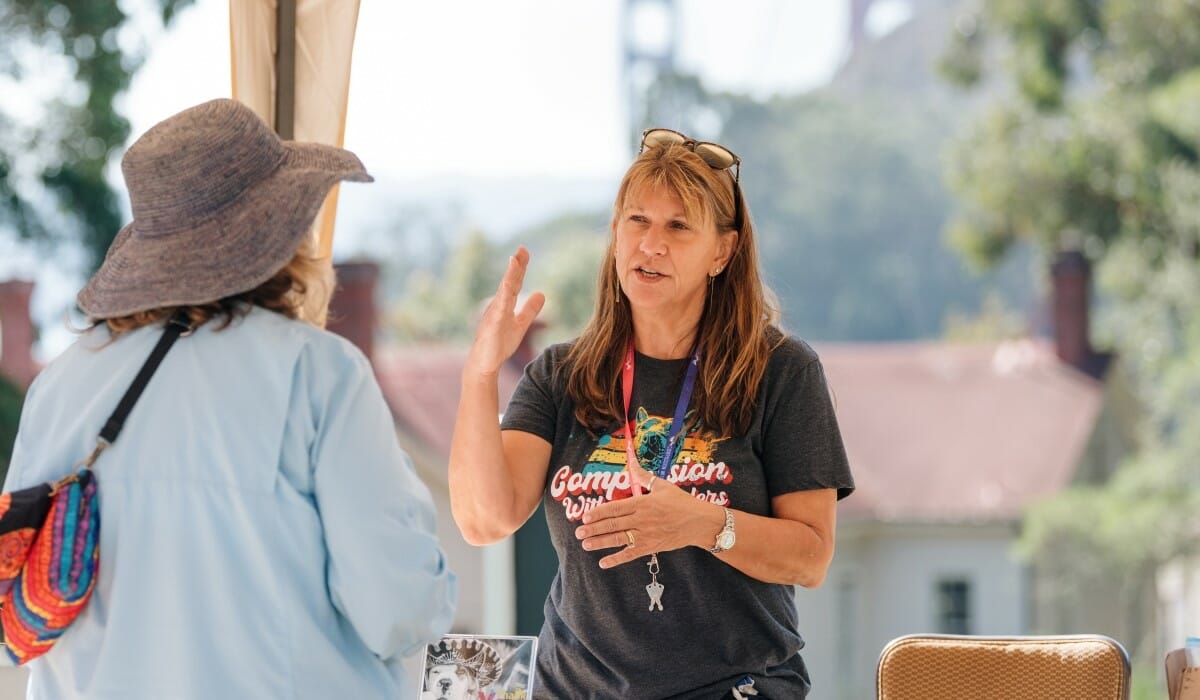
Joelle Hoffman describes Compassion Without Borders’ work with animals at an informational booth./Courtesy Joelle Hoffman
what are the goals goals that you’d would like to achieve with this organization?
My number one goal is to make as much money as we can so we can afford various things. We just got an X-ray machine at the shelter so Christi can take X-rays rather than having to outsource those types of veterinary care to other vets. We would love to be able to get a commercial dishwasher so the ACTs don’t necessarily need to run the dishwasher so often. There are little things like that for me that really drive me to do as much as I can and put on as many events as I can. Christi is a veterinarian, so we take in a lot of hard medical cases not only from Mexico, but we also partner with the Central Valley here in California. … Because we take so many medical cases, it costs a lot of money. My whole thing is to make as much money as we can and help as many animals as we can. That’s the bottom line. Unfortunately, everything costs money, whether it’s bandages, microchips, antibiotics, medicated shampoo, or what have you, not to mention spay and neuter.
Why do you think it’s important for others to give back?
My mom volunteered a lot, and I think I was sort of always under the impression that that’s what you do. I think a lot of people are scared about volunteering, because when I first was at the boys’ high school, people were like, “Don’t do it, you’re going to get sucked in.” What type of attitude is that? I went to a couple meetings and they said to just do what you can. I think there’s such a misconception about volunteering. I think some places do require minimum hours per month, but find a place that doesn’t and give what you can. Volunteering can just be one day a week, or one hour going to fill KONGs or fold laundry. Find your passion and go help whoever is joining in your mission and likeminded. I think volunteering feeds my soul. It gives me purpose, so I’m a firm believer in volunteering.
What do you want people to learn from your story?
I’ve had so many people say to me, “How can you work for a rescue? Isn’t it depressing?” What we see is sometimes pretty horrific, but the bright side is you have this incredible team surrounding you who are just wonderful, compassionate, motivated people. It makes you look at the world as a good place. We can sometimes get sucked into some of the ugliness, but there’s so much good in the world. I have to say that working with Compassion shows me everyday the wonderful people out there.
Not many 13-year-olds would feel comfortable giving a single media interview, much less having regular media appearances to represent an entire charitable organization — but not many 13-year-olds are as dedicated to service as Michael Kuhn.
For the past three years, Michael has served his Tampa, Florida, community through Kids 4 A Cause, a charitable organization started by his family in 2019. The teen serves as the foundation’s co-CEO, along with his brother, Christian, and cousins, Dominic and Sheldon Fouché. Michael also serves as the organizations spokesperson.
Each month, the foursome chooses a charitable organization to support by donating either a minimum of $1,000 or needed supplies. In three years, they’ve supported over 35 different charitable organizations in the Tampa area as well as in their home country of South Africa. Through their work, they’ve supported people experiencing homelessness, children in foster care, refugees, endangered animals and more.
“It’s been such a great experience, because we really got to connect a lot more,” Michael said. “We’ve also been able to meet a lot of new people and learn about their life stories.”
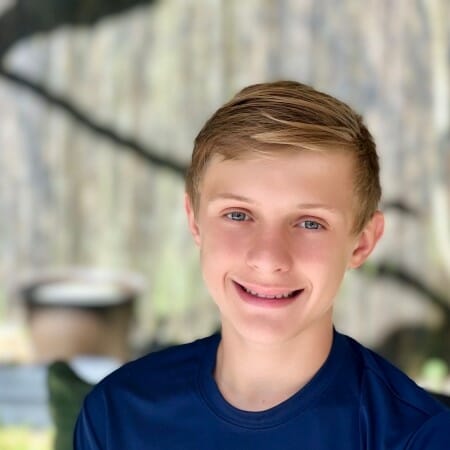
Michael Kuhn serves as the co-CEO and spokesperson for Kids 4 A Cause, a charitable organization started by his family to aid their Tampa, Fl. community./Courtesy Michael Kuhn
To raise the funds, the boys and fellow volunteers get together to create homemade items that they then sell, including chocolate bombs, bath bombs and organic homemade soaps. They’ve also fundraised through garage sales, raffles and a Christmas musical production.
As spokesperson, Michael handles the majority of interviews and public relations, a role he took on due to his love of communicating with others. A self-described people person, Michael said he enjoys talking about volunteerism and his passion for Kids 4 A Cause. One of the organization’s goals is to encourage other young people to make a positive impact on their communities.
“We believe kids can make a difference no matter what people tell them they can and can’t do,” Michael said. “Kids can do anything they put their minds to.”
Kids 4 A Cause was born in the wake of Michael’s father’s death in 2017. Blown away by the amount of support they received from their community, Michael and his family decided to give back themselves. Michael’s mother, Natalie Kuhn, said focusing on helping others, even as they were experiencing their own trauma, helped the boys to overcome a lot of sadness and give them a brighter focus in their lives.
This month, Michael and his family are making and selling prayer bracelets to support children in foster care. They are also continuing to fundraise for March’s project, which was to aid Ukrainian refugees. So far, they have managed to raise over $5,000 for refugees through selling the bracelets and are still taking orders.
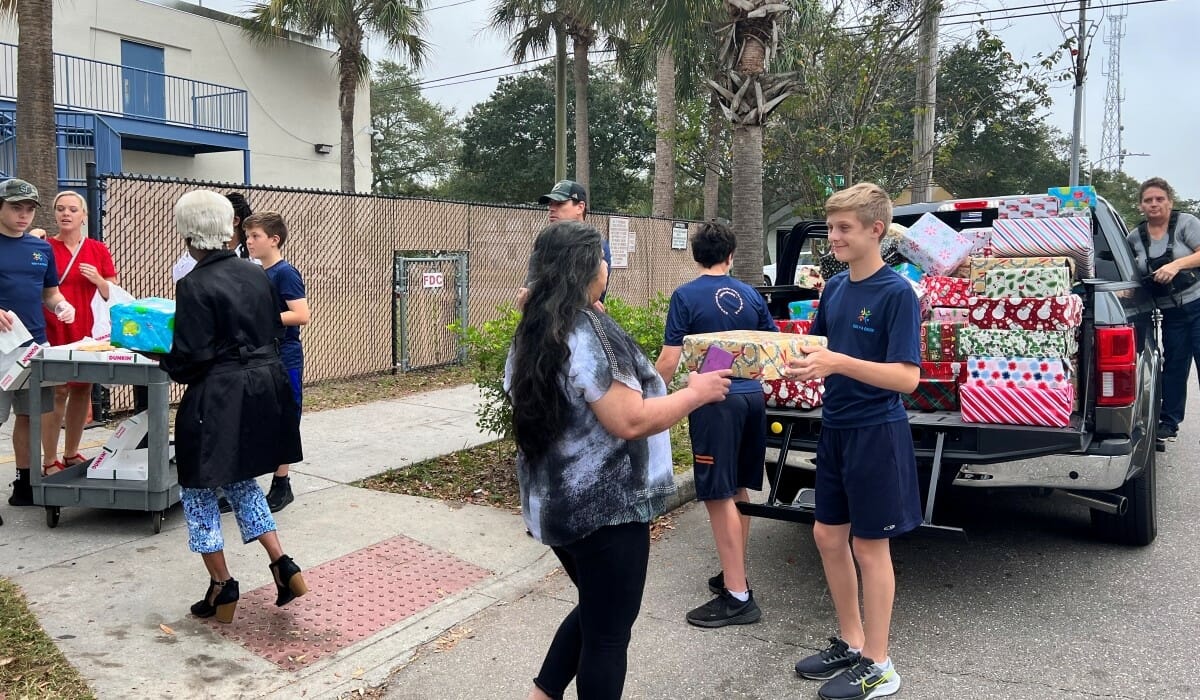
Michael Kuhn, right, helps load up trucks filled with gifts of essential items that will be donated to Tampa, Florida’s homeless population, an annual project for Kids 4 A Cause./Courtesy Michael Kuhn
A favorite project for Michael, who is very passionate about animals, has been aiding the Humane Society of Pinellas. When he was in elementary school, he rallied his class to help raise funds and donate two carloads full of supplies to the animal shelter. They were then able to go visit the animals they were helping.
Natalie said Michael has continued to spread an interest in service to his peers in middle school as well, many of whom are consistently asking to help out or have started their own volunteer projects.
“I think his legacy has been that he’s been able to inspire other children to not only think about their world, but the world around them, and open their eyes to how they can make a difference,” Natalie said.
Jessica Ong is trying to help save the environment while also bringing joy to children in need, one toy at a time. The 16-year-old serves as the founder and president of Toys2Care, a nonprofit that collects recycled toys to give to low-income, orphaned and homeless children. Since starting the organization in December 2020, Jessica has helped provide over 10,000 children with holiday gifts — all of them recycled to prevent unnecessary plastic buildup in landfills.
While the organization started in Jessica’s native San Diego, she has recruited 40 teen ambassadors across the world to help spread Toys2Care globally, starting with Thailand and Singapore. With the ambassador program, Jessica hopes to inspire other teenagers to be more active in their communities.
Describe you volunteer role with Toys2Care.
We go to different elementary schools or middle schools where there are children in which we know they can donate toys, whether it be after Christmas season or closer to the New Year’s holidays. We host drives and toy drop-offs in those areas. Then I work to gather all those toys into a singular location. With community help, we distribute them into these areas where we researched that the poverty rate is highest in San Diego. I work to make sure each kid in the high-poverty areas understands that we’re here to support them.
Jessica Ong serves as the founder and president of Toys2Care, a nonprofit that provides recycled toys to children in low-income areas./Courtesy Jessica Ong
What inspired you to start Toys2Care?
I learned that a lot of toys, especially in the United States, are trashed away in landfills instead of being recycled or given to other kids. We have children out there without the resources to have these toys that are important for mental stimulation. If we could allocate the toys that would be thrown away in landfills for these children, then we could provide them with some support and joy that is much needed for their childhoods. We decided to start gathering toys throughout our communities and going to neighborhoods where the poverty rate was over 99 percent. There we would distribute them to local families. By doing so, hopefully we can support all different regions of San Diego.
Which goals do you hope to achieve with Toys2Care?
Our singular goal is to benefit and impact as many children out there as possible. We don’t just want to impact children in San Diego and Thailand and Singapore. We want to impact children all around the world, and we want to do that by enabling this next generation.
How does it feel TO KNOW that so many young people around the world want to help?
I feel very proud to be in Generation Z. I feel like we’re using what we know how to use, like social media, to spread the word and use the resources we have to directly impact people. We’re helping people in a new way, and we’re helping people for the sake of just bringing some joy. It makes me very excited to be a part of a group that is creating a lot of impact through these very new marketing strategies.
Have any of your experiences donating toys been particularly memorable for you?
This December 2021, there was a woman who was six months pregnant but she didn’t have any supplies. Together we were able to gather for her not just toys, but a baby stroller for her child and also some new clothes. Pregnant women are my favorite people in the world because they’re not just holding one life but two, so it was nice to be able to give back in a way that was so direct to her.
Jessica Ong hands out recycled toys to a child through her nonprofit Toys2Care./Courtesy Jessica Ong
Do you have any future partnerships, programs or events you want people to know about?
This April, we’re going to an elementary school in San Diego and we’re going to be distributing directly in that area. We’re collaborating with West View High School’s National Honor Society so we can have teen volunteers go and meet young children, and create more impact throughout San Diego.
What’s been the most rewarding part of your work?
Knowing that there’s a purpose greater than you is enough to want to keep helping people. It’s almost addictive when you see the kids’ smiles and you see how a little thing can mean so much. It makes you want to keep doing more and expand your efforts. I feel so honored to be able to provide a little bit of joy for their birthdays or the holidays.
Why do you think it’s important for others to give back?
I think humans were born to interact with people and born to love other people. There’s a sense of peace that comes with giving back that is hard to find elsewhere. It brings you twice the amount of joy as it brings the children. Seeing their faces is something that is hard to put into words, but I think everybody should experience.
The epitome of humility, Mark and Nadine York are committed to serving others, even during their retirement. Their church in Equality, Illinois, was merging its four different parishes, which left the ministry with an extra building space. The pastor had an idea to use the building for good, and the Yorks took this opportunity to serve in a new way.
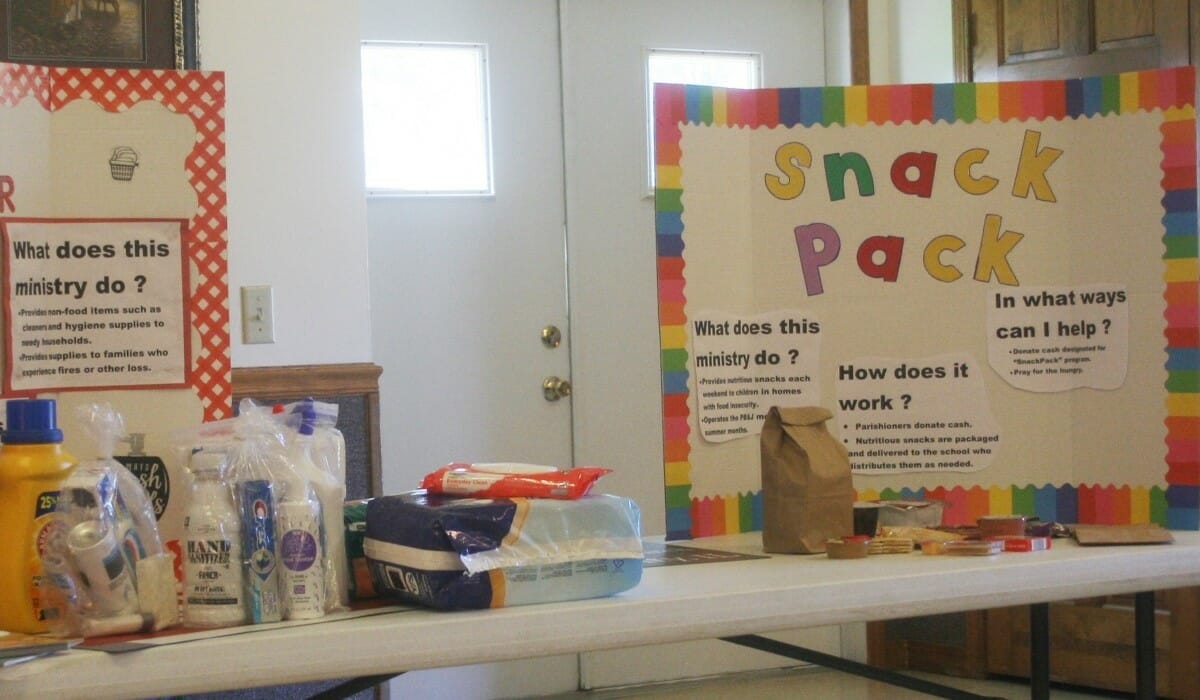
In 2019, the former public-school teachers helped turn a once-empty building into a non-food pantry that meets the non-food needs of their community. Through the Help Center, the Yorks ensure that items like diapers, soap, shampoo, deodorant and cleaning supplies are available to all through community and church donations.
The Yorks eventually purchased the building from the church to ensure that the service would always be around for those in need.
“We taught for many years, so we knew that families didn’t have toilet paper, soap, dishwashing soap and laundry detergent. There was a big gap in meeting people’s needs,” Nadine said.
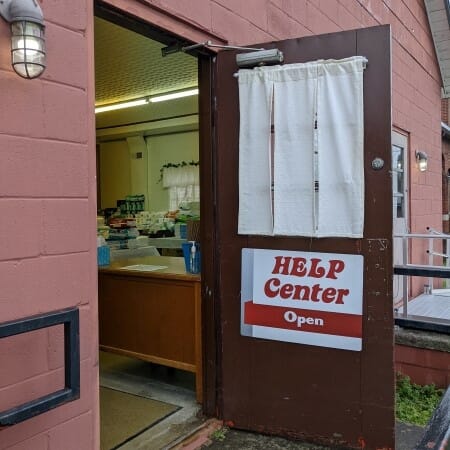
Mark and Nadine purchased the Help Center building from their church to ensure that donation services would always be around for those in need./Courtesy Nadine & Mark York
In Equality, access to grocery items isn’t always easy. The town is located in one of the most low-income areas in Illinois, according to the Yorks, and is 10 miles from the nearest grocery store.
Before the COVID-19 pandemic, the Yorks saw close to 90 families show up at the Help Center each month. They often partnered with a church-run food pantry nearby, and the two efforts combined became a great tool of service. The Yorks even helped ensure that the open Help Center days occurred on the same days as the food-pantry to make it easier for families and individuals to get all that they needed on the same day.
The two church ministries continued to partner and serve their community throughout the waves of the COVID-19 pandemic. The food pantry opened their service to families using a drive-through model. So, the Yorks and church volunteers packed up individual bags of the Help Center items and delivered them to the food pantry ministry so community members could drive through and receive everything they needed in one place.
They also ensured that those who came to the Help Center received plenty of hand sanitizer during the pandemic, according to Mark.
In addition to non-food items, the Yorks received a unique donation of three trucks full of books from a closing private school, and now the Help Center gives away a variety of books when a community member picks up non-perishable items. The Yorks also assist their church’s weekly St. Kateri Snack Pack Program for children who experience food insecurity at home, through which each participating child is welcomed and encouraged to take a pack of food and snacks each weekend.
Mark and Nadine York help pack bags for the St. Kateri Snack Pack Program that helps children who experience food insecurity at home./Courtesy Nadine & Mark York
The Yorks are also involved in promoting tourism throughout their community with Gallatin Co. Tourism to help economic growth.
“Some people live in a little cocoon, and they don’t realize the things we take for granted everyday. Baby diapers are a luxury for some people, and that’s important to remember,” Nadine said.
As a first-generation college graduate, Patricia Lu dedicates her time as a volunteer to support the future generation to reach their fullest potential. Patricia found the EAGLE Scholars program in Dallas through her job at Bank of America, and what started out as a six-week volunteer program turned into years of helping high school students grow their financial literacy skills.
The Vickery Meadow Youth Development Foundation college readiness program is made up of a diverse group of middle school and high school students, who Patricia has enjoyed taking to banks for field trips and learning sessions. Patricia was recognized as a Bank of America Global Volunteer Awardee in 2021, and her mentorship has helped scholars receive an average of $13,982 in scholarships towards their college or university of choice.
Describe your volunteer role within EAGLE Scholars and how you found mentorship volunteerism.
I heard about EAGLE scholars in 2016 through my work at Bank of America. We sort of have a volunteer calendar. There was an opportunity for us to teach financial literacy to sophomore students. It was around a six-week commitment on Thursday nights, but whenever I started getting involved with it, I actually really enjoyed my experience and I thought it would be cool to stick around. Over time, it’s evolved to not only financial literacy, but we were also able to take students to visit a bank to see what the inside of the bank is and ask any questions about opening an account or just helping them understand what it’s like when they started becoming an adult.
We work with a lot of immigrants and first-generation students also, and being a first-generation student myself, it was something that I felt like I could relate to and see myself a little through them. I thought it’d be great to be able to be involved and help them in ways that I might not have had growing up.
WHICH curriculum do you teach your students and how has it helped them
We have a curriculum called Better Money Habits that covers a variety of topics related to financial literacy. It covers opening a banking account, savings account, credit account or covers steps to finance a car or house. With the sophomores and younger students, I started to realize that it wasn’t working as effectively — they don’t really want to just listen to PowerPoint presentations all day. So, I adapted to what they wanted to do. We started having small group sessions of question-asking.
They get the opportunity to work as a team with a mentor to learn about a specific topic and they get the chance to present or teach their peers. The students said we should do a Kahoot, and I was like, what the heck is a Kahoot? It’s essentially a presentation and then a mini quiz. You can do it on your phone and a question will show up and you select an answer and then you get points based on how fast you submit and if you get the answer correct or not. It’s been cool just seeing how the students are more receptive to different activities.
The sophomore students of the EAGLE Scholars program practice professional speed networking with their mentor, Patricia Lu./Courtesy Patricia Lu
Describe the scholarship program within EAGLE Scholars.
Anyone during their sophomore year can apply to what we call a sophomore year application. It’s around a $600 scholarship. For most of the students, it’s their first time ever applying for a scholarship. When I was applying to college, I didn’t apply to a scholarship until senior year. So, it’s very early, but it gives them the opportunity to learn about the realities of a scholarship and apply with the help and support of a mentor. Over the last few years, at least one of the students has won the scholarship for $600. When they apply for college, it can be applied towards tuition and such, but it’s just really cool getting to see them work through that process. And whenever I work with the seniors, just being able to see how they’ve evolved since they were a sophomore is one of the best things.
What inspires you to volunteer?
This is going to sound so cliché, but it feels so good making a difference. It really does. Whenever you’re able to see the rewards from the students, there’s no better feeling than when the students express gratitude for helping or just thanking you for taking the time to be with them. One thing that I’ve seen that’s unique is that I’ve been able to be with them consistently. When you’re able to spend the time in developed relationships with the students, it means a lot more.
What have you learned through your experience as a volunteer?
I think I’ve learned patience volunteering with the students. I’ve also learned that adults don’t know everything. Volunteering is the most effective way to teach for me, and every time, it’s just about understanding that the students need different teaching approaches and learning environments sometimes.
Why is it important for others to give back, especially to young people and students?
It’s important to help because it helps you see the world in a different light. I always hear that children are the future or this generation, but when you think about it, it’s true. The way that you help or support kids of this generation helps them be able to do the same thing for more future generations. These students might be able to be politicians or council members — there’s just so much that they can accomplish with our support and someone believing in them.
Are there any partnerships, programs or events that you are excited about?
I’m excited about the college signing day for seniors. The seniors kind of reveal to all of the EAGLE scholars where they’re going to be going to college and talk about how much money in scholarships that they’ve been able to obtain. It was a virtual and in-person hybrid event last year, and we’re not sure what this year will look like, but it’s an awesome feeling. Whenever you do you get to be there in person and you hear 100 scholars or 75 scholars cheering for you after you share your news with them, it’s just so exciting.