STEAM Entrepreneur Spreads Education and Empowerment to Youth Around the World
Meet Daily Point of Light Award honoree Suhan Asaigoli. Read his story and nominate an outstanding volunteer or family as a Daily Point of Light.
High school student Suhan Asaigoli is taking STEAM – science, technology, engineering, and mathematics – education to a new level at his school and throughout his Morrisville, North Carolina community. The 17-year-old founded AIMCORP in 2019 to promote education, empowerment and positivity around the world, and has built a team of over 50 volunteers to help him do just that by offering anyone free educational STEAM resources, like tutoring.
Asaigoli also leads other STEAM initiatives in his community, like robotics competitions and the Science Olympiad, which he’s won multiple medals and honors in during previous years.
Describe your volunteer roles and activities for youth empowerment and education.
I founded AIMCORP – the Academic Inspiration Movement – in 2019, and I currently serve as its CEO and director. It’s a student-led 501(c)3 nonprofit with a mission to educate and empower deserving children worldwide. With AIMCORP, we make an impact by promoting quality education, literacy, good values and global positivity for youth in underserved communities. I’ve recruited 50 student volunteers so far across the United States who share my passion for AIMCORP.
I have worked to spearhead numerous charitable initiatives that address deep-seated systemic issues in the fields of education and empowerment. These programs are always administered on a cost-free basis. Our longest-standing initiative has been tutoring classes in numerous subjects in science, mathematics, arts, technology and the humanities. So far, our tutors have impacted over 400 students and raised over $4000 in donations to AIMCORP.
I’ve also been a member of InspireNC, another student-led nonprofit, since 2018. In 2020, I took on the chairman leadership role. Here, I champion the inspiration and innovation in STEAM – science, technology, engineering, and mathematics – in North Carolina. I’ve managed a team of over 100 students in programs and events like our first robotics competition, the First Tech Challenge, RoboBoat, Cyberpatriots, Zero Robotics and community outreach.
Finally, I’ll be competing in my tenth season of the Science Olympiad this year. I’ve won four national medals and numerous prestigious individual competition medals at tournaments hosted by MIT, the University of Pennsylvania, Yale, Caltech, Duke and more. Now I’m a varsity member and captain of the Enloe Science Olympiad.
What charitable causes do you fundraise for?
I help to raise support for my nonprofit organization and concurrent initiatives I work with. A lot of this goes towards helping students achieve their fullest academic potential by making enrichment services more accessible and exposing students to STEAM through outreach. I’ve also raised funds to support other organizations, predominantly underserved schools in India.
Suhan Asaigoli founded AIMCORP to educate and empower deserving children around the world./Courtesy Suhan Asaigoli
How do you emphasize diversity, equity and inclusion in your service?
For each of the organizations that I am involved with, I’ve made sure that DEI is a foundational principle. I think that perpetuating these principles just takes the communally coming together and listening and learning from one another, developing a sense of collective rationality and awareness for biases and injustices.
I make sure that the teams I work with are aware of these principles, and always make sure to remind them in meetings and outings. I want to make sure that the environments I cultivate for learning and growth are ones that can be safe spaces for anyone to feel comfortable to be intellectually vulnerable amongst students and mentors who are there to support them. I do not turn anyone away from my organization; instead, I welcome them to a place where they can become changemakers and proponents for diversity, equity and inclusion in the future.
Do you have a favorite memory from your volunteerism?
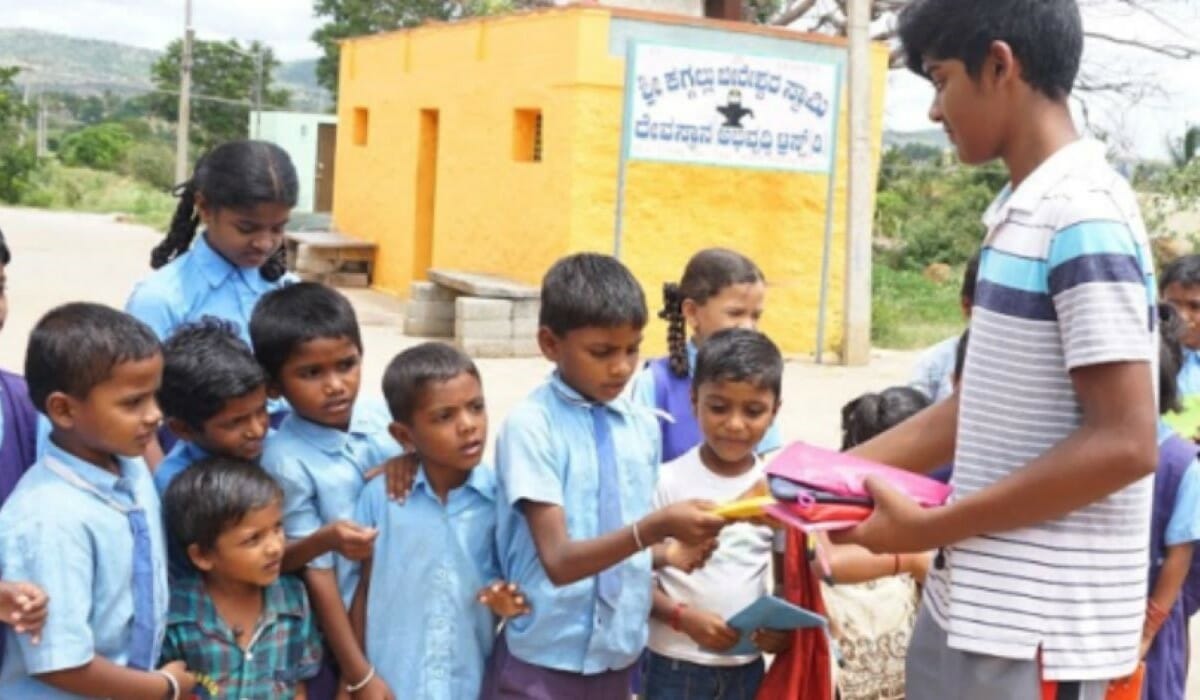
I think my favorite moment was probably my very first outreach in India. I was traveling to a small primary school in Bidadi, Karnataka, and I wasn’t sure what to expect. I had built a bottle-rocket and parachute that I would demonstrate to show the wonders of STEAM, and in the culmination of the outreach, we gave all the students school utensils that they could use for their studies.
It was pretty nerve-racking because there was a slight language gap. The language that they spoke and learned in Kannada was my third language and one that I only had a limited proficiency in. But the nerves washed away once I was greeted by smiling faces and a collective wonder about what I had brought to show the students. We found common ground in the language of science, and that brought me immense happiness. Though my time in Bidadi was brief, I think that I was able to forge lasting memories and bonds with the students, and I hope that they are able to look back and remember it fondly as they grow up to be the next generation of creatives and innovators.
What inspires you to volunteer?
I think my main inspiration comes from my own experiences and learning from my mentors and educators, who were instrumental in my own growth as an early student. I am so grateful to them for providing me with tools I could add to my utility belt to work in the capacity that I do today in leading initiatives for education and empowerment. Working with these mentors has also made me a better leader, and helped me understand the world of education a little bit better.
I’m still a student, and I still have so much I can learn about how I can improve and expand upon my initiatives. My work is merely an outlet for me to impart these tools onto eager learners, so that they can pass it on as I have, but also a way for me to learn and grow myself, which excites me.
Suhan Asaigol distributes school utensils to primary school students at a STEM outreach event in Bidadi, Karnataka, India./Courtesy Suhan Asaigoli
Why is it important for others to get involved with causes they care about?
I think that getting involved inherently gives people an opportunity to come together and work towards a common goal. Especially in a quagmire of tribalism and division, volunteering can be a healing force for the people who collaborate to create change, as well as the beneficiaries. It sensitizes people to the vast and systemic issues that take foot in their communities, and also other people who come from different backgrounds. This can manifest in small or large ways, but I don’t see either as any more profound. A simple moment can be powerful, and all it takes is coming together for the greater good.
Is there anything coming up that you’re excited about?
This year, I’m hoping to collaborate with the YMCA and a Title-I middle school in my community to develop an afterschool enrichment program with my nonprofit AIMCORP. This is something that I have persistently been trying to accomplish for years, and I am super excited to have been able to find the opportunity by working with educators at my school and in my county.
I am also excited for the upcoming year with my work at InspireNC. We are approaching new seasons for our robotics teams, and we have brought a brand new program, RoboBoat, a program typically dominated by college students and professionals, in hopes of making the program more accessible to younger learners.
California Teen Sells Homemade Cookies to Support Colombians
Meet Daily Point of Light Award honoree Mateo Molina. Read his story and nominate an outstanding volunteer or family as a Daily Point of Light.
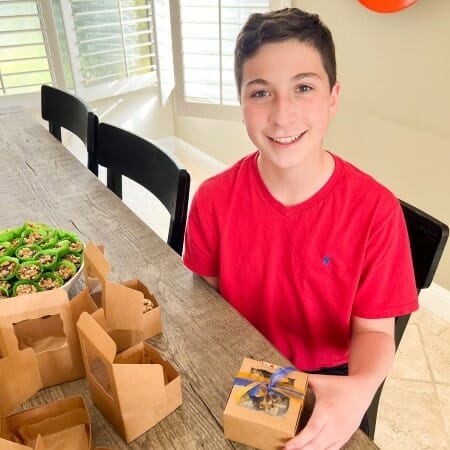
With a combination of chocolate, nuts and graham crackers, the Molina family’s cookie recipe is so special that it was reserved for birthdays only. But wanting to share the deliciousness with others and help people at the same time, 16-year-old Mateo Molina has been baking and selling the cookies to his community in Pleasanton, California, and donating the funds to help people in Colombia through his organization, HumanKIND Cookies.
Since starting in the summer of 2020, Mateo and his sister, Sara, have baked and sold around 15,000 cookies to raise $30,000, all of which has been donated to Casa San Jose, a nonprofit organization focused on helping the most vulnerable people of Cali, Colombia, including senior citizens, foster children, low-income families and people who work as recyclers (one of the city’s lowest-paid and difficult jobs.) The money has been used to buy them groceries, diapers, school supplies and shoes, and even to fund special events such as a trip to the zoo.
Along with the day-to-day cookie baking, Mateo has ramped up HumanKIND Cookies’ reach by initiating social media campaigns on Instagram to motivate others to contribute. And his efforts have been recognized by awards and grants, which have only multiplied his impact.
How did HumanKIND Cookies start?
Originally, it was a summer project that my sister and I started to just bake cookies and sell them locally to friends and family. We were going to raise all that money and send it to Casa San Jose, which is a charity in Colombia. Casa San Jose would use that money to buy food and other basic supplies. Our friends spread the word around and it turned out a lot of our community really enjoyed the cookies.
We eventually got into the Pleasanton Weekly and that spread it a lot. As of today, we’ve made around 15,000 cookies to make around $30,000. That money multiplies by almost five times when it goes into Colombian pesos, so it helps them a lot. The $5 you spend on a cookie box, it’s very helpful to them.
By selling cookies to his local community, Mateo has raised around $30,000 for families in Cali, Colombia./ Courtesy Mateo Molina
Why did you want to help people in Cali, Colombia?
Most of our family lives in Colombia so we’re pretty up to date with what’s happening over there. It was very, very hard for many during the pandemic there and it still is today. One of the most impactful moments for me was learning that this was the first time they had ever gotten protein in their groceries. They had eggs and chicken and that was a crazy experience for me because I take it for granted so much. We have chicken and meat almost every day. It was such an eye-opening experience.
How has HumanKIND Cookies grown since it first started?
As our initiative was more recognized, both in Pleasanton and in Colombia, I started including more people to multiply the impact. I use Instagram campaigns motivating others to participate in specific projects. I am also lucky to have been selected to participate in GivingTuesday’s Starling Collective in 2021, and I was awarded the Starling Excellence Award for my leadership and commitment to increase generosity. The monetary award allowed me to jump start numerous service projects involving contributions from others and maintain my goal of driving a quarterly community project, while still contributing to Casa San Jose.
Some of the projects from this past year are raising funds to donate 2,880 diapers for foster children through Fundación Chiquitines in Cali, Colombia, donating 10 duffle bags packed with treats to Agape Foster Family Agency in San Ramon, California, and donating $850 to support Ukrainian refugees.
What’s been the most rewarding part of your work?
One of the things that inspires me the most and makes me want to keep going on are the pictures, videos and letters they send showing their gratitude. In the videos, the kids will show their new backpacks and you can see how happy they are. It makes me so happy.
What are some of your favorite memories you’ve made with the people at Casa San Jose?
Last December, we went to Cali and met the kids. We invited them to the zoo. Sadly, it rained heavily so we could only do the indoor exhibits, but they were so excited to see the fish, lizards and frogs. These kids live in Colombia, which is known for its wildlife, but they had never seen fish before. They were taking pictures with them and jumping up and down in excitement.
We also helped organize this party for 50 elders and children there. The cookie sales and donations helped fund a magician, food, drinks and 50 pairs of new shoes. A local bakery in Cali baked our cookies for us and donated them to the party so the children could actually try the cookies that were helping them.
What have you learned through your experiences as a volunteer?
How things that we see as little can go such a long way. When I saw those ads on TV asking for donations of a couple dollars, I didn’t think it would help much. But now that I have been doing this for a while, I’ve realized that the $5 we make from a cookie box goes such a long way because it can supply a family with a week’s worth of food in Colombia.
A story that stuck with me was about this kid who had to walk to school barefoot. And all he had to hold his school supplies was a plastic bag. But now he has shoes and a backpack, so it’s just so crazy to see how much of a difference you can make on somebody’s life. A little difference can go a long way.
High School Senior Gets Crafty Building Intergenerational Friendships and Learning Opportunities
Meet Daily Point of Light Award honoree Maya Joshi. Read her story and nominate an outstanding volunteer or family as a Daily Point of Light.
Maya Joshi, a graduating high school senior and a twin, has a wonderful family life. They’re the kind of crew that has family board game nights and cooks dinner as a group at least once a week. Their chocolate lab even has his own Instagram page. Perhaps that’s why this Chicago native is sensitive to those around her, particularly in older generations, who aren’t as lucky to have close social connections.
“I think sometimes, as youth, we take for granted that we’re in a community setting all the time, and we’re constantly surrounded by people and opportunities to make new friends. A lot of people don’t have that,” she says.
When the pandemic-driven lockdowns went into effect in 2020, Maya took action.
“There were a lot of news articles coming out about seniors at care facilities and how COVID-19 was just brutal in those circumstances, and I remember one clip of people being isolated to 65 square feet of space and not being able to see anyone smile for days or weeks,” she recalls.
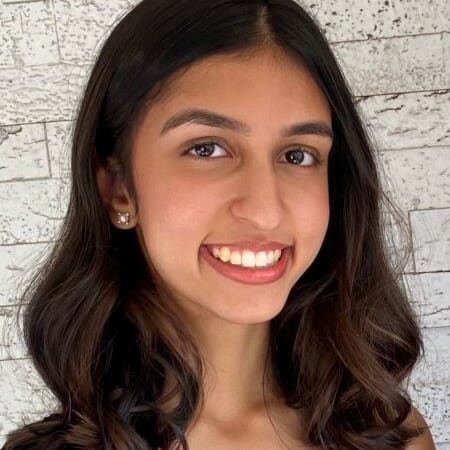
Maya Joshi, 18, founder of Lifting Hearts With the Arts. /Courtesy Maya Joshi
She thought of her grandparents and the many ways she connected with them through art over the years. She’d knit blankets with her grandma or paint with her grandpa, and everyone had a good time. With plenty of time to spare, she reached out to friends and senior care facilities with an idea: connect kids and seniors with fun activities and watch the friendships grow. And do it all online. Today, her 501(c)(3), Lifting Hearts with the Arts, has organized over 7,100 meetings with 53 care facilities in seven states.
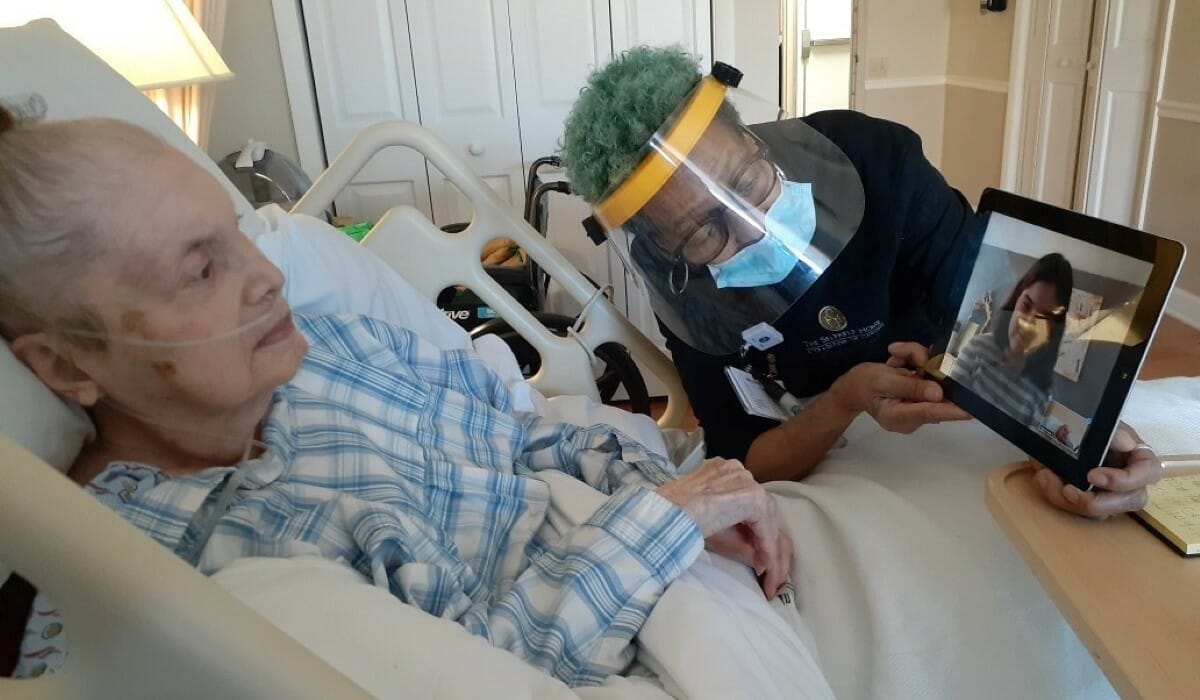
Volunteers get to know their senior counterpart through weekly or bi-weekly one-on-one meetings over Zoom, FaceTime, and as COVID restrictions are lifted, in-person. Creative group activities are also in the mix like “Never Have I Ever Bingo” or Google Earth tours. Name That Tune is also popular.
“My Spotify playlist has changed a lot over the course of meeting with seniors, definitely for the better,” Maya says.
While it may have started out as a way to relieve the negative effects of social isolation for seniors, Maya feels as close to her senior friends as she does to those in high school citing that it’s helped her learn more about herself in the process. She explains how growing up in Chicago, she had a very different childhood from one of her older friends who was raised in rural Iowa.
“Even though I can’t connect with him over Taylor Swift’s new album or pop culture, we can connect over other things,” she explains. “I love roller coasters and he loved Go Karts when he was younger. Recently, one of his favorite hobbies has been hitting the max speed [on motorized grocery store scooters] and speeding through aisles. He’ll tell me about narrow misses in his care facility when he’s trying to make a tight turn. I think stories and moments like that are amazing.”
Natalie Morro, the Illinois Chapter Leader, has been a part of the group since spring of 2020 and was also surprised at how easily the friendships developed. She’s even continued her calls with a friend who has transitioned back to independent living.
“It was really cool to see how even though we belong to completely different generations, we still had things in common,” Natalie recalls about her experience. “I really like arts and crafts, so I loved leading some painting lessons over Zoom. We also did lots of trivia, which I really liked, because I got to learn things.”
The feedback from both volunteers and seniors has been equally as enthusiastic. Natalie also notes Maya’s leadership as being integral.
Careworker holds the iPad for Elaine [left] for her first virtual meeting with the volunteer she was paired with, Ellie [on iPad]./Courtesy Maya Joshi“Maya was always a very good communicator, in my eyes. She was always reaching out, and you could tell that she was very passionate about this program and its and its mission,” she says.
Over time, the group has secured four corporate sponsorships and grants and has raised over $9,000 to donate new and gently-used devices to care facilities lacking ways to connect.
“We realized early on the technological divide in care facilities, especially in the city, because I would cold call care facilities and they’d be like, ‘We would love to participate in this program, but we only have one iPad, and like 300 residents,’” Maya recalls.
Events like the virtual fun run, designed to raise funds for devices, have also been a resounding success, but it hasn’t all gone so smoothly. When initially reaching out to care facilities, she used the “Contact Us” form on their websites. Her inquiries were met with calls asking about her medical conditions and when she’d be interested in moving in.
Even so, Maya credits her success to what she’s learned from trial and error as well as feedback. As her mother’s biggest fan, she has also been inspired by the resilience and openness that has been modeled for her from day one.
“When [my mom] hears good news, she celebrates with that person as if they’re her own family member. She’s always been this really inspiring shoulder to lean on if I’m going through a tough time. Like everyone, she has a lot going on in her life, but she always takes a moment and always has time and space to be there for other people.”
How can other people help? Maya encourages students who are middle school-aged and older as well as care facility activity directors and facility coordinators to reach out to Lifting Hearts. But for those who don’t fall into one of those categories, just be friendly and use your own strengths.
“If you’re a younger person living in a condo building and you see an older person in the elevator whom you always hold the door for, go beyond that and start a conversation. Ask them about what their job was and how fulfilling it was for them, and just start a conversation,” Maya suggests. “What’s the worst that can happen?”
Public Health Emergency Management Worker Saves Lives as a Volunteer EMS
Meet Daily Point of Light Award honoree Alyssa Antczak. Read her story and nominate an outstanding volunteer or family as a Daily Point of Light.
Alyssa Antczak saves lives. With a Master’s Degree in Emergency Management and Homeland Security, she’s spent her life preparing to be prepared. And when the COVID-19 pandemic hit, she was. It started almost immediately after she took the job in public health with the county. She was the sole person in charge of setting up mass vaccinations clinics and part of the team organizing COVID-19 testing sites, keeping accessibility at the forefront of her mind every step of the way as she sorted out the details. It was many late nights and dedication that made it a success.
In her free time, when she has it, this native New Yorker-turned-southerner volunteers with the Medical Reserve Corps and as a credentialed EMS worker. She teaches skills like First Aid and CPR with the former and puts those skills into practice as the latter.
It all started when she participated in a program as a young girl that allowed her to skip school on occasion to go on EMT and firefighter ridealongs if she kept her grades up. It was there that her interest in public service was launched. Today, she saves lives as a member of public health, a trainer of life-saving skills and a volunteer EMT.
What inspires you to volunteer?
In middle school, we had this program called the Explorer Program in New York. You basically start out as a junior EMT, a junior firefighter or a junior a police officer. You get to follow them on calls in all those first responder fields and see what it’s like. As long as you have a waiver from your parents and you get good grades, you can get a radio, and if there’s a call while you’re in school, you can leave. That was awesome for me, because of course, I got good grades, so I was allowed to do that.
When I first started, I knew I wanted to be in that realm, but not necessarily pursue EMS. As soon as I started volunteering and saw the good you can do in a small capacity, I wanted to do it on a larger scale. It really helped me see that there were other careers out there that I had no idea existed. Back in middle school, emergency management was fairly new and not well-known. When I learned more about it, I was excited to find a career path where I could actually make a career of serving my community.
Alyssa Antczak, public health emergency management worker and EMS volunteer./Courtesy Alyssa Antczak
Tell me about your EMS work.
I’ve stuck with volunteering EMS since middle school. I’ve kept my EMT credentials. I also spent a little time volunteering as a firefighter. It got harder once I had children, but I still help in ways that I can. Even as a volunteer, there are many things you can do that don’t require that physical ability component. When I was pregnant, I was still helping out at the firefighter and EMS volunteer meetings and trainings and limiting my exposure to the sick in the field. I wasn’t going on as many calls as usual, but I’m was helping on the administrative side. There’s a lot more behind the scenes than just responding to calls.
I spend 6+ hours a week with them. Back before kids it was a lot more. On the weekend, sometimes I’ll take the night shift while the kids are sleeping. My husband can stay home with them, and I can go pull some EMS calls or go to the fire station and ride along. It’s about two minutes down the road from my house.
Have you saved anyone?
There have been people who I have given CPR to that I’ve brought back. There are people who have overdosed that I’ve brought back with Narcan. I’ve literally helped them save a life by definition, so it’s rewarding. It makes up for all the times when you can’t.
Where else do you volunteer?
I also help teach the public about health-related skills like Stop the Bleed, CPR and First Aid as a unit coordinator for the Onslow Country Medical Reserve Corps. If you educate that layperson that may be the first to see the incident, then that patient has a higher chance of surviving. My son, who’s eight now, knows how to do hands-only CPR and dial 911. Start them early. We can also use this group of volunteers in emergency situations like the pandemic.
What’s been the most rewarding part of your work?
It’s the collected thank-yous. When we set up the mass vaccination sites, getting those thank-yous from those first people to receive the vaccines who were really nervous about COVID. They wanted that vaccine, and they were worried about long wait times and not even being able to receive it, and it ended up being such an efficient process. We were able to get everyone in, and even people from other counties and states were coming to us. It made me feel like I was really helping people out, and that put some pep back in my step.
What have you learned through your experiences as a volunteer?
Everyone’s definition of an emergency or disaster is completely different: businesses being shut down or not being able to receive the vaccine. Either can be devastating to one person and not that big of a deal to another.
Also, the pandemic has highlighted the need for better partnerships. When something like that happens, you need everyone. We needed the help of Emergency Management, senior services, our government center folks, library staff and school nurses.
Why do you think it’s important for others to be involved in their community?
Even if it’s something little, if you can leave your community or the world in a better place than you found it, I think it’s extremely rewarding. My son and I will take walks around our neighborhood, and if he sees trash, he’ll pick it up. He’ll be so proud of himself. He’ll say, “Look Mom, I’m cleaning!”
What do you want people to learn from your story?
You’re never too young or too old to start impacting your community. Just help make the world a better place in any way that you can.
Spreading the Love of Tech and Music to Underserved Students Globally
Julia Huang was born and raised in Michigan. As the older sibling of two, Julia grew up helping her younger brother with math concepts and challenging piano pieces. Julia remembers feeling excited that she could help out when her brother learned something or acquired a new skill.
An avid learner, Julia and her middle school friends held study group chats to help each other better understand different subjects. In eighth grade, curiosity persuaded Julia to sign up for a web design class. She had never been exposed to coding before but the experience sparked a deep fascination with technology. Julia’s school didn’t have the specific classes for web development and Artificial Intelligence, so she turned to the internet to look for learning resources.
One day, Julia joined an online hackathon where people signed formed teams and competed on coding projects. It opened Julia’s eyes to a new world where she was surrounded by other people who had embarked on this tech-learning journey and developed a passion for technology.
These experiences led Julia to realize that learning is much more fun when people learn together. Julia wanted to share the excitement of learning and creativity with others so that they could also pursue their interests with help and support. Julia advertised in school newspapers to increase school computer science club membership and taught coding to club members. After she became president of various tech clubs at school, she established an international youth organization, Bytes & Pieces, a community of students with passions for music and coding.
What inspires you to volunteer?
I have learned so much from my school teachers, piano teachers, tech mentors and friends. I am so thankful to my mentors and teachers for teaching me these things.
Julia is sharing her passion for music and technology with underrepresented students through her organization, Bytes & Pieces./Courtesy Julia Huang
As a mentor/tutor, the joy I see on people’s faces, the way they light up when they suddenly understand something, improve in a hobby or learn a new skill, brings me absolute joy. Through my own learning journey, I want to share my learning experience and help others develop their passions and skills.
Many schools do not have a tech-focused curriculum. Technology is still an underrepresented field. I wanted to share my experience and passion and give others the resources they need to learn how to code.
I am also passionate about sharing the joy of music by teaching others how to play the piano and compose music. Currently, I’m teaching code in school computer science clubs and music in the piano club.
Describe your volunteer role with Bytes & Pieces.
To make an impact on a larger community and improve the diversity and inclusiveness in technology internationally, I founded the Bytes & Pieces youth organization. We provide students from any location or background, especially from underrepresented communities, with free online music and coding workshops, coding and music articles, coding competitions and other resources.
I also developed the website, YouTube channels, social media channels and online groups for Bytes & Pieces to provide a central place for information and communication. Within 10 months, through hosting numerous online events such as Zoom workshops in tech and music, hiring mentors, directors and volunteers, and doing extensive social media outreach and advertising, I helped Bytes & Pieces grow into a global organization.
Currently, we have 40+ board members and executive directors and reached 420+ students in 20+ states and 30+ countries, including 200+ participants from our hosted competitions. Currently, 75% of students are female, 84% are a member of an ethnic minority, and 60% are international students. I also support our students by providing inspiration through speaker webinars with industry professionals, especially women computer scientists and mentors of color, to empower minorities in STEM.
What’s been the most rewarding part of your work?
Definitely meeting and making connections with others and seeing others learning, pursuing and growing their passions. Seeing the number of people we impacted since we started still shocks me till this day. Through hackathons and other tech events, I have met so many wonderful people who have became mentors, students and volunteers for Bytes & Pieces.
Through Bytes & Pieces events and workshops, I have also met so many wonderful students and mentors from around the globe who share similar passions for music and/or technology. It’s clear that no matter who you are or where you are from, you can be brought together by similar goals and passions.
I’m so happy to provide time and resources to help other people grow, give them opportunities to succeed, and congratulate them when they make progress on their learning journeys. There are many people who told me that they were able to either start their technology learning through our workshops and events or improved their skills after learning through our organization. This brings me joy every time. With opportunities offered by Bytes & Pieces, I hope to fuel more students’ passions, help them develop music and coding skills, and empower them to create spectacular projects that can build social good for communities. Through Bytes & Pieces, I hope to help more young people share passions and visions to impact the world around us.
What have you learned through your experiences as a volunteer?
I learned that perseverance can definitely be a key to success. When I first started Bytes & Pieces after 10th grade, I did not have much experience and didn’t know what resources to use to manage a youth organization as a high schooler. But eventually, through trial and error and reading stories and seeing how others started organizations, I was able to plan the necessary materials for advertising, outreach, communication and activities within my organization.
At first, I also struggled to generate interest in our organization, get people to volunteer as board members, or attend our workshops because the organization wasn’t well known. Not one to give up, I took every opportunity to advertise our organization and our mission on numerous media and social media platforms and networking at events.
One by one, day by day, we have grown into a global organization and we are still growing our student and volunteer/mentor/director bases. I’ve learned the impact that you can make on people’s lives just by utilizing two resources: a technology device and the internet.
I started Bytes & Pieces as a completely online organization that can impact people from around the world. Our workshops, speaker webinars and online contests, can be directly hosted and run through a laptop and internet connection, which lets Bytes & Pieces provide a global coding and music curriculum all across the globe.
Are there any future partnerships, programs or events that you are excited about?
Yes! We have recently established official organizational partnerships with four other youth STEM organizations who share similar missions including Codeify Canada, CS Voyager, STEMThink and YPSTEM. We are always on the lookout for other organizations that would like to partner with us on hosting events. We have also recently planned to launch new AI workshops and new music workshops in the next few months. And lastly, we look forward to running another global online hackathon (coding contest) in summer 2023.
Why do you think it’s important for others to get involved?
I think that it’s important for people to volunteer so they can change others’ lives for the better in a variety of ways, be it improving someone’s living environment, health or skill in an academic subject, a passion or a hobby. We can also help others be a part of something bigger than ourselves and give back to the communities around us. I think that even a little work we give to help someone out could potentially change the trajectory of someone’s life and make a huge difference in their futures.
What do you want people to learn from your story?
I would like people to understand that something that you might take for granted, such as your education and learning resources may not be not accessible to everyone. Don’t take that for granted. Instead, reach out and help out those who don’t have these resources.
I appreciate everyone who has taught and tutored me: my school teachers, mentors in piano and technology, and people who made internet tutorials. They are the reason I was able to acquire and refine the knowledge and skills I have today.
In order to help more people improve their skills and follow their passions, I think it would be so amazing if more people could lend a helping hand to impact people’s lives and inspire more people around the world.
High School Senior Brings Community to Seniors Both Online and In-Person
Meet Daily Point of Light Award honoree Catherine Bai. Read her story and nominate an outstanding volunteer or family as a Daily Point of Light.
Catherine Bai, a 16-year-old high school senior, started volunteering in nursing homes four years ago. Moved to help people with memory issues after seeing her grandmother battling Alzheimer’s, she started putting on flute and piano performances to bring a smile to their face. When the pandemic hit, she quickly noticed the isolation of the most vulnerable and decided to organize virtual performances until she discovered many elderly care facilities lacked the equipment necessary to connect.
That was the birth of the homemade mask drive during which Catherine and her fellow volunteers raised over $1,000 in just two months. With the funds, they were able to donate multiple Wi-Fi-enabled devices and a robotic companion pet as well as all of their unsold masks. Then, she started the Adopt a Senior program to further establish relationships between volunteers and residents of care homes. Over the last four years, her group has performed at seven nursing homes, has over 100 volunteers and, at Catherine’s initiative, moved under the umbrella of the new Pearland branch of We Care Act.
As she applies to colleges, this future engineer has her eye on a career designing spaceships and rockets with cutting-edge technology. At the same time, she reflects upon how much earlier generations sacrificed to get where we are today. In an ever-changing world, Catherine remembers the past and looks to the future while making a difference in the present.
What inspires you to volunteer?
Volunteering and serving your community is about helping others. I’m very lucky to have grown up in the circumstances I grew up in, to have had all these opportunities, and I know that many others are less fortunate. They need some extra help.
My music community service was inspired by my grandmother who lives in China. Over 10 years ago she started showing symptoms of Alzheimer’s disease and rapidly worsened. She couldn’t talk or move and couldn’t recognize her own family.
One day in eighth grade, my mom was video calling her, and I remember seeing her like that, and it broke my heart. I did some research and found that music is extremely effective in helping people with Alzheimer’s, especially older adults. I was also in band. So, I contacted a local nursing home, and they were more than happy to receive me. I started playing there on my own, which was scary for 12-year-old.
Tell me about your role.
In the beginning, I contacted senior homes, arranged music, and played on my own. Then, we started getting more people to help out. And now, since I’ve established a formal organization, it’s become a chapter of a national nonprofit student volunteer organization, We Care Act. Several younger members and underclassmen have started aiding me and organizing rehearsals and performances, recruiting members, finding in arranging specific music, etc.
My music program, Music to Cure, is now one of We Care Act’s projects. Each project is led by an officer who is personally invested. Two of us run the music program, but we all participate with each other’s projects and help out where we can.
We also started Adopt a Senior to go beyond just performing music. It includes a kind of pen pal system where we get very close with selected residents. We’re assigned a friendship role, but those labels disappear over time. We talk with them and help them out. We also help the senior home with general duties or decorating and many more activities.
What do you play?
When I got to high school and started getting more invested in this project, I invited a music therapist to train me and other friends that I essentially roped in. She gave us amazing advice on selecting songs–not only specific time periods, but also genres and moods–and how to get the audience engaged with us.
What’s been the most rewarding part of your work?
It’s seeing in person and in real time, how I affect others, even if it’s just one person in the audience. At one of the senior homes we frequently visit, there’s a resident who is slightly aggressive. Then, when we start playing, I can see him visibly relax and quiet down. That’s what keeps me doing this, even when it’s difficult.
What have you learned through your experiences as a volunteer?
I’ve learned several technical skills, such as arranging music and scheduling, but more importantly, I’ve learned how to work with and lead others.
How can people support seniors who don’t have your organization in town?
I started with music was because it was very accessible to me, and I know that it’s accessible to almost everyone. Just playing songs they recognize on your phone and singing along and getting people moving to the rhythm touches the part of the brain that hasn’t been negatively affected by Alzheimer’s or age. It’s essentially a treatment.
Why do you think it’s important for others to give back?
We can all use a little bit of loving, and whenever I am in a more fortunate position, I can help others who need it. It not only helps them but it helps me, too. I can grow from these experiences, and I get to go out there and meet new people and do new things. I’ve learned a lot of lessons I wouldn’t have otherwise gotten had I not done community service.
Giving back to my community has really shaped my perspective in a positive way. I didn’t know my grandparents well, and I wasn’t close with any older adults, so I never knew their ailments or their difficulties. Starting to volunteer to play for them, talk with them, and see them in their daily lives, really opened my eyes to what they go through every day. The older population have given a lot for us, and it’s comforting to know that I can give back to these people who have sacrificed so much.
Creating Awareness About Neurodiversity for a More Compassionate World
Meet Daily Point of Light Award honoree Meghana Gunturi. Read her story and nominate an outstanding volunteer or family as a Daily Point of Light.
Meghana Gunturi was born in North Carolina. Even though she lived in a quiet, isolated and reserved community for only five years, this early experience shaped the way she interacted with people. Meghana’s world changed completely when the family moved to southern California. There, she found, the energy is higher, and there is much greater diversity, a strong sense of community and a lot of social interaction. This change in environment helped develop Meghana’s leadership skills, as well as an understanding of the value of working with others.
A turning point in her journey was when a family member was diagnosed with autism and Meghana helped educate her family on neurodiversity, or the different ways the human brain and cognition work. Her family member received poor accommodations for her undiagnosed autism at first. However, Meghana’s pursuit to improve the child’s life and encourage the family to learn more about her condition professionally changed everything. Ever since her family member received an autism diagnosis, the family learned more about proper accommodation and care for the child. For example, autism isn’t something that should be cured, but rather understood as a unique way of thinking. Taking this a step further, Meghana made it her mission to educate people about neurodiversity and the needs of people with neurodivergent conditions.
Since then, Meghana founded a global nonprofit called Neurodiversity Horizons. The organization currently has 24 chapters in eight countries. Its mission is to increase public accommodation and awareness for neurodiverse people. Meghana launched a global podcast in 11 countries, with neurodivergent guests from top universities and corporations including Stanford and IBM. She has collaborated with the UMass Lowell Neurodiversity Center, local Boys and Girls clubs, youth shelters, NERC, Unicorn Children’s Foundation, Neurodiversity Network, and other organizations to increase awareness about neurodiversity. She has held summer workshops with over 80 global advocates to publish children’s books, teaching guides and travel guides for thousands of people worldwide.
What inspires you to volunteer?
Before my family member was diagnosed with autism, she was treated badly by people who misunderstood her. Once she was diagnosed and the family had been educated on neurodiversity, her life improved significantly. I recognized the value of educating people about various ways of cognition. There’s nothing wrong with being autistic or dyslexic, it’s just the beauty in neurodiversity. Educating oneself and others can positively affect the person and their family.
Describe your volunteer role with Neurodiversity Horizons.
I am the founder and CEO, meaning I am responsible for operations, overseeing board members, journalists, social media experts, chapters, volunteers, etc. I also run webinars and have held workshops on anti-bullying, mental health and neurodiversity. I am very involved and commit over 10 hours a week to my work.
What’s been the most rewarding part of your work?
Definitely, I’m touched by the many messages on our Instagram account. People talk about the impact we’ve had on them, whether they’re parents of autistic kids, or they themselves have autism or other neurodivergent conditions. Many have become involved in advocacy through our nonprofit, which excites me since neurodiversity is a new movement. I am continually learning something new every day!
Meghana hosting a neurodiversity anti-bullying initiative in a fun and hands-on way at the Boys and Girls Club of Irvine./Courtesy Meghana Gunturi
What have you learned through your experiences as a volunteer?
Volunteering has shown me the value of perseverance and teamwork. When people work together for a cause they care about, they collaborate and work through struggles together for the greater good. It is inspiring to see the commitment our board, volunteers, chapters and partners have had to helping the cause.
Are there any future partnerships, programs or events that you are excited about?
We have a Women and Neurodiversity webinar coming out soon. Our journalists are getting ready to release our first educational newsletters. We have always partnered with various organizations — about a dozen so far — and are always looking to collaborate with other nonprofits. In fact, we have a collaboration in the works with Neurodiversity Hub, another organization that helps with neurodiversity education.
Why do you think it’s important for others to get involved?
It makes our world a better place. So much is going on in the world that needs to be fixed. Everyone cares about a problem, but very few ever take action, whether it’s volunteering or supporting a cause financially. If people just worked towards that one cause they resonate with, our world would be a better place, and we would leave a better environment for the next generations.
What do you want people to learn from your story?
Bringing awareness about neurodiversity is helping people who were formerly stigmatized by being labeled. The medical community often labels people and tries to cure neurodivergent conditions, when in reality we should be finding ways to support people whose thinking is simply different from the “norm,” helping them thrive and express themselves in ways that enriches the world.
I plan on advocacy being a lifelong mission. There will be no day where I discontinue my work. I want to major in neuroscience or biology, continuing on a pre-med track, while advocating for not putting labels on people.
Whatever you’re passionate about, whatever resonates with you, find a local nonprofit, charity or organization, and get involved. Take one small step to help out in your community.
Equity Advocate Expands Knowledge and Skills for Women Around the World
Meet Daily Point of Light Award honoree Claudia Jones. Read her story and nominate an outstanding volunteer or family as a Daily Point of Light.
Claudia Jones’ journey to becoming a champion for gender education and equity has been a rollercoaster of highs and lows, but it’s led her to becoming a source of inspiration for women around the world. After growing up in a small town in Mexico, Jones received a scholarship to move to New York City and attend Manhattanville College. She took the skills and knowledge gained in college back home with an entrepreneurial spirit. Claudia began to create businesses, but after a rocky season, she lost them. At one of the lowest points in her life, Claudia made a choice to keep moving forward.
“I decided to take control of my life. That’s why I strongly believe that, through education and empowering women, we can achieve great things,” Claudia said.
Claudia moved to Alaska in 2015 with her husband after supporting gender equity for Latinos at Utah State University for several years. In the midst of the COVID-19 pandemic and teaching at University of Alaska Anchorage/Mat-Su College, Claudia’s newest home became the foundation of MORE — Mindfulness, Opportunities, Resilience, Equity — Latinoamérica a free and virtual education resource for Spanish speakers to help bridge the gap of gender equity and development for women, created with her co-founder Raysa Castillo.To date, Claudia has reached more than 20,000 Latinas worldwide through MORE Latinoamérica.
Claudia uses MORE to offer women a variety of programming and topics to choose from, like emotional intelligence, nutrition, homeschooling, marketing, leadership, self-esteem, business, assertive communication, social entrepreneurship, personal finance, empowerment, gender equality, recognizing gender violence and more. She says that her objective is to develop women’s potential, self-confidence, leadership and an entrepreneurial attitude that will allow them to become professionals and more capable of creating positive impacts for themselves and others.
Claudia Parker, a close friend and MORE collaborator, said, “Her way to create a net of relationships is just natural to her, and when someone is in need, she is the first one to ask: ‘If I can help you, let me know,’ standing by with more than moral support.”
Claudia Jones says that her objective of MORE is to develop women’s potential, self-confidence, leadership and an entrepreneurial attitude that will allow them to become professionals and more capable of creating positive impacts for themselves and others./Courtesy Claudia Jones
“Her experience as a digital nomad for so many years opened up her desire to promote gender equality through education, and even when some didn’t see it as clear as her, she was convinced to take the knowledge out of the classrooms and bring it out to the web for every woman, and her nonprofit was born,” Parker added. “I am more than her close friend and collaborator, I am one of many thousands of women around the world that has been blessed with free classes in a variety of subjects in the comfort of my own home. The pandemic kept us in quarantine but MORE kept us growing and learning about everything.”
Living in a small town in Alaska initially made the idea of creating a nonprofit for Latinas seem impossible, but Jones made her dream come true through grit and determination. In 2022 alone, Claudia received tremendous recognition for her dedication to help women advance their education and equality. She was an Alaskan honoree for USA TODAY’s Women of the Year, received the 2022 Alaska Mother of the Year award, and was recognized as a Points of Light Inspiration Spotlight.
“I’ve been very lucky since I was able to have a bachelor’s degree, a master’s degree and now I’m a PhD candidate,” Claudia said. “Many Spanish-speaking women living in the United States or Latin America don’t have access to quality and accessible education, which is why I decided to found MORE Latinoamérica.”
Since its creation, MORE has a virtual presence in 11 countries, including the United States, Argentina, Bolivia, Chile, Colombia, Dominican Republic, Ecuador, Honduras, Mexico, Spain and Venezuela.
Throughout the year, Claudia offers training to women on a multitude of accessible platforms so that MORE knowledge and education can be easily accessible, like online masterclasses and leadership courses, articles, motivational videos, Instagram interviews, podcasts and more. Through these platforms, Claudia has created a virtual support network of changemakers for women. MORE has more than 120 collaborators — including lawyers, entrepreneurs, doctors, teachers, psychologists, architects, engineers and at-home parents — 90% of them are women helping other women.
Claudia gains strength to keep working by the messages MORE receives daily from people who are grateful to receive free, quality education. Women who have participated in MORE testify that through the workshops and skills gained, they feel prepared to face professional challenges from a global perspective, are able to build their self-esteem and have discovered inner potential in areas they never anticipated.
With MORE, Claudia learned that there are more good people than bad people in the world and that MORE volunteers serve because they also want a better world. She’s also discovered the importance of sisterhood.
“If we all support each other, we will have a world with less inequality,” Claudia said. “If we all volunteer, that snowball will grow and will mainly benefit those around us and, later, our community.”
Kentucky Volunteer Advocates for Foster Children Both in Court and in Life
Meet Daily Point of Light Award honoree Brittney Thomas. Read her story and nominate an outstanding volunteer or family as a Daily Point of Light.
Content Warning: Points of Light is proud to share the following uplifting and inspiring story. However, we acknowledge that a small portion below may be difficult for some readers. We encourage you to please care for your own wellbeing above all.
On December 1, 1997, a student opened fire at Heath High School in Kentucky, killing three of his fellow students and injuring five others. Brittney Thomas, then 15, survived. However, one of her close friends was shot and killed next to her. As she testified against the shooter in court, Brittney was forced to relive the trauma she endured that day. But without a victim’s advocate appointed to her, as she wasn’t a physically injured survivor, she felt that her voice wasn’t being heard and that there was no one to support her through such an intimidating process.
Hoping to ensure that no other child has to experience what she went through, Brittney, now 40, has volunteered for more than eight years as a court-appointed special advocate with CASA of Lexington. She has advocated for dozens of children in the foster system by getting to know them and the situations they are in, and by being a voice for them in court so that the judge makes decisions based on the child’s best interests. On top of that, she has thrown first birthday parties for teenagers, helped youth further their education and assured many children are in safe and permanent homes, changing the trajectory of so many children’s lives for the better.
Describe your volunteer role with CASA.
CASA stands for court-appointed special advocate. The workers are assigned to some of the most complicated cases of abuse and neglect in children in our foster care system. So as a CASA worker, we will stay with that child from the moment we are appointed until the moment that permanency is achieved, meaning that they are able to find a forever home by being adopted or in some cases they actually return home if their parents are able to do their case plans. A lot of times, children in foster care may have multiple social workers, but a CASA child will only have one CASA worker, so we are that stable and constant adult in the child’s life.
As a volunteer with CASA of Lexington, Brittney Thomas advocates on behalf of neglected and abused children to ensure their voices are heard and that the legal system acts on the child’s best interests./ Courtesy Brittney Thomas
What inspires you to volunteer?
I think some of it stems from the fact that I didn’t have an advocate when I was in court and I would never want a child to have to go through the court system without having somebody by their side, a safe person for that child. I think the other part of it is that I’m not married, I don’t have my own kids. So when I take on a CASA case to advocate for kids, I treat them and advocate for them as if they were my own kids. Data shows that if just one person can intervene in the life of a child, that can completely change the trajectory of their life and where they end up. And so, my hope is that through some of my work, I can just reach one child and help them have a brighter future that may not have been possible otherwise.
What kinds of backgrounds or situations are these children coming from?
It’s a variety of different cases. I’ve had many cases of physical abuse. Some kids I’ve worked with have been sexually abused. I’ve had cases where children have been in a home where one or both parents were addicted to drugs and their drug use led to severe neglect. I’ve worked with children as young as a day old all the way up to 21.
How do you build a personal relationship with them?
As a CASA worker, we are required to see the kids at least once a month and so I try really hard to see my kids even more frequently than that. I start off with relationship building. We talk about who they are as a person, what are the things they enjoy. Many times, it’s establishing that trust by helping find something that they need in order to feel safe. For example, maybe when they left their home, they didn’t get their stuffed animal or maybe they’ve been separated from their siblings and they don’t know where they are. So, I try to connect the kids with their siblings if possible and locate their possessions and bring them to wherever they currently are.
What are some of your favorite moments you’ve had with the children?
I think some of the favorite things I’ve done are to help kids reunify with their siblings. We’ve also helped a few kids move into their own apartments and we’ve thrown birthday parties. The slogan for CASA is “Every kid needs a hero, but foster kids need a superhero.” So we have this 5K run where everybody, including the kids in the program, dresses up like a superhero. I’ve also gone to several of their adoption hearings and parties afterwards.
What have you learned through your experiences as a volunteer?
So many things, but one thing I learned is that mocha frappuccinos make a good impression on strong-willed teenagers! You want to break the ice with an angry teenager? Starbucks will often do the trick.
What do you want people to learn from your story?
I think sometimes people feel that with the busyness of their own lives that it would take too much time or be too hard to volunteer, especially with a program like CASA. But I feel that anybody can do it. These kids desperately need somebody to stand in the gap for them. It doesn’t matter what your limitations are. There is always a child who needs you and who could benefit from what you have to offer them.
Why do you think it’s important for others to get involved?
If everybody would give a little bit of themselves, they would also learn that oftentimes, it helps you with whatever you’re going through. It’s definitely helped me in some really rough times. Suffering is the common denominator we all have. It’s what makes us human. But we don’t have to do things alone. When people step up to the plate to serve others, the whole world benefits from that experience.
Meet Daily Point of Light Award honoree Hannah Yu. Read her story and nominate an outstanding volunteer or family as a Daily Point of Light.
Since middle school, Hannah Yu has been volunteering with Life of Hope Foundation, an international dog rescue nonprofit with rescue teams in Taiwan and a foster network in the United States. She serves as the Bay Area Director and helps to screen applicants, organize meet-and-greets, and organize adoption events in local city centers showcasing the rescue’s adoptable dogs. She also helps out by fostering dogs until they go to their forever homes.
Most of Hannah’s volunteer work has been through Pawse, an animal rescue nonprofit that she founded in summer of 2020 to encourage more people in her community – especially the youth – to get involved in animal rescue.
What inspires you to volunteer?
My journey with animal rescue began over eight years ago when my family adopted a dog, Professor. Adopting my first pet opened my eyes to the entire animal rescue community and introduced me to the importance of rescuing animals by giving them a second chance they deserve.
I convinced my parents to let us foster dogs for Love and Second Chances, a dog rescue in the Bay Area. My first foster dog, Ryan, was a Formosan Mountain Dog rescued from Taiwan. I took care of him for about six months before he got adopted. Saying goodbye to Ryan was extremely difficult for 10-year-old me. It’s still a bittersweet memory, even eight years later, but I knew that Ryan would thrive in his new home. Ever since then, I have continued to foster dogs for several local and international dog rescues. My longest foster so far lasted one and a half years!
Some people have told me that I can’t change the world by saving a few dogs. But I beg to differ. All of my experiences have shown me that saving dogs one at a time – just focusing on what is in front of me, rather than reaching for an abstract goal – is how I can help change the world. I believe we have an innate responsibility to use our privileges not just to help other humans in need, but all living beings. I am inspired by this thought as I continue to use empathy and compassion as a driving force for action.
Hannah and her first foster dog, Ryan, from 2015./Courtesy Hannah Yu
Describe your volunteer role with Pawse.
I founded Pawse in the summer of 2020 with a mission to advocate animal rescue and create opportunities for my community to help rescue animals find their forever homes. Since then, I have established multiple branches of Pawse across California and now lead a team of over 100 members!
Through all of the initiatives that I start, I strive to engage with my community as much as possible. Collaborating with our network of partners, including animal shelters and local businesses, I lead our Pawse team in organizing adoption events and hosting community fundraisers.
My animal rescue work is also an outlet for my creativity, because publicity is so important not only to showcase adoptable animals, but also to combat harmful misconceptions that people might have about rescue animals. Using my graphic design and marketing skills, I create flyers, educational videos and newsletters to emphasize the importance of animal rescue and pet adoption.
For the past eight years, I have also remained an active foster home for local and international dog rescues. Since my first foster dog Ryan, I have fostered over 60 more dogs with unique backgrounds and stories. From puppies to senior dogs, to blind dogs and even three-legged dogs, I have dedicated countless hours to caring for these animals and ensuring that they can thrive in their forever families.
What’s been the most rewarding part of your work?
The most rewarding part of work is seeing rescue animals thrive in their forever homes and in turn seeing the happiness that these pets bring to their new families. As a foster, I often receive photo and video updates of former foster dogs and they always bring a smile to my face. These updates remind me that no matter how difficult and tearful the goodbyes are, they are always worth it.
What have you learned through your experiences as a volunteer?
Through my animal rescue journey, I have met so many incredible, driven and passionate people dedicated to helping rescue animals find their forever homes. My volunteer experiences have truly shown me the value of collaboration and teamwork. The more that I engage with the animal rescue community, the more inspired I become to continue my work!
Are there any future partnerships, programs or events that you are excited about?
Pawse is currently working on a documentary about the importance of animal rescue and pet adoption. We’ve partnered with a local animal shelter to film some behind-the-scenes action and promote our shared mission: to save lives, one paw at a time.
Why do you think it’s important for others to get involved?
Volunteering allows us to connect with people (and animals!) from all walks of life, not only strengthening our sense of community, but also reminding us to be empathetic and compassionate to others.
What do you want people to learn from your story?
If there was one message that I wish everyone could take away from my story, it would be that all animals deserve a second chance at life, love and happiness.
Even if you are unable to adopt or foster an animal at the moment, don’t feel discouraged!
There are endless ways to get involved in the animal rescue community. Donations of all kinds are always appreciated at animal shelters and rescues. Being an advocate for pet adoption to friends and family, and helping to destigmatize adopting shelter animals is incredibly helpful in changing negative perceptions people may have about animal rescue. Together we can save lives, one paw at a time!