Chicago Family Volunteers Together Supporting the Unhoused Community
Meet Daily Point of Light Award honoree Cherneecia, Callia, and Cayen. Read their story and nominate an outstanding volunteer or family as a Daily Point of Light.
Cherneecia Muhammad, a 39-year-old cosmetologist and educator, was born and raised in Chicago, Illinois. She grew up in the church and has volunteered throughout her life. Her dad was involved in politics, so he was often lending his time to find ways to build the local community. Their family often found themselves manning food pantries around the holidays. As an adult, Cherneecia has passed on the tradition.
“I’ve done it. If I pass it on to my children. My children will pass it on. What kind of world we have everybody pitched in and taught their children,” she says. “I think we would have a different community, especially in different parts of Chicago, if we all thought the same.”
Her kids are getting an early start. Callia is a caring nine-year-old who participates in horseback riding, swimming, and singing. She loves rescuing animals and all things pink.
Cayen, 17, has already had many opportunities to follow his passion for acting on a professional level. Some of his credits include Men in Black 3, WACO, and Broadway’s “The Lion King”. As a senior in high school, he’s also a student athlete.
“My mom always believes in doing the right thing. She believes in giving back to the community. And that’s something she instilled in me and my little sister,” he says.
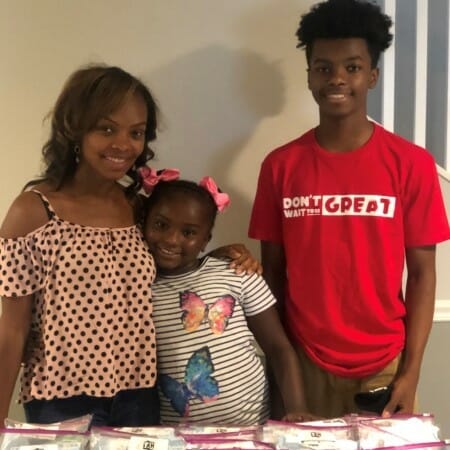
Cherneecia, Callie and Cayen have packed thousands of blessing bags over the last seven years./Courtesy Cherneecia Muhammad
When Cayen was around Callia’s age, he met Jahkil Maeem Jackson, founder of Project I Am, and his family has been helping his friend with his mission ever since. Project I Am focuses on supporting the homeless by handing out “blessing bags” designed to offer everything a person needs to maintain good hygiene while being small enough for easy transport.
“When I’m volunteering, I pack the bags with toothbrushes, towels, lotion and snacks. I do it, because it makes me feel good to help someone else,” Callia says.
Cherneecia and her kids have worked almost monthly for the last seven years packing thousands of bags and setting up and tearing down before and after packing parties. Occasionally they deliver, dropping off boxes at shelters or schools with children in need. Not even the pandemic could curb their work ethic, a time when many people lost their homes.
“A lot of homeless people were getting sick [with COVID-19]. There were a lot of people that couldn’t get to the care they needed, or they didn’t have masks or things they needed to stay clean,” Cayen adds.
During the worst of it, Jahkil would bring over boxes of supplies, and they would follow up with a Zoom call to bring volunteers together for the human connection that was often lost during lockdown. Delivery also needed to be altered to follow public heath guidelines.
Responding to the additional needs, Project I Am started including things like hand sanitizer, gloves, and of course, masks in the blessing bags in hopes of slowing the spread of the virus amongst the most vulnerable.
Proving that location is irrelevant to their mission, the organization also sends bags out of state and even did a bagging for people in Ukraine struggling with the effects of war.
“Whoever needs them, it doesn’t matter where you live. You could be in California. If they need them, they will send them there,” Cherneecia says.
Each family member gleans satisfaction from different aspects of volunteering. Cayen thinks about each bag going to a different person, a motivating factor for maximizing the number he creates. Cherneecia drives by tent cities and takes comfort knowing that she is giving them things they need but is also reminded that people in need aren’t always visible.
“[Volunteering] has definitely helped open my eyes to other people that may be in need, and they may not say anything. It may not look like they’re homeless. They may be very embarrassed by it, so you have to be very careful.”
Callia especially likes the community-building aspect of their work, citing how much she enjoys taking a break to grab a doughnut with fellow volunteers.
“The kids normally do have fun, because as they’re working, they’re racing. They’re eating snacks and listening to music. They’re dancing. They’re doing all kinds of stuff by doing blessing bags. They have fun doing it,” Cherneecia mentions.
Food is a universal unifier, and as they prepare for Thanksgiving, they will, no doubt, be grateful for the dishes on their table. How will they spend the day? Together, of course. After going to Callia’s choir concert, they’ll cook as a family.
“My mom’s going to make her famous lasagna!” Callia exclaims.
When they’re not packing blessing bags, they travel, cook, sing and their dad/stepdad/husband garden. Their joy is palpable, and they share it with their community.
“I think it’s really good to bring a community together, so you can show that you’re working as one team and people will have a support system, a support team,” Cherneecia says.
Starting with a strong familial support system, they do the same for the people who are struggling, and we’re all thankful for their service.
MST Survivor and Veteran Helps Sisters in Arms Find Healing and Purpose
Meet Daily Point of Light Award honoree Jeanine McNeill. Read her story and nominate an outstanding volunteer or family as a Daily Point of Light.
Content Warning: Points of Light is proud to share the following uplifting and inspiring story. However, we acknowledge that a small portion below may be difficult for some readers. We encourage you to please care for your own wellbeing above all.
Jeanine McNeill is a veteran and a mom of two. She is a grandmother and a peer support specialist in the Mental Health Department at the VA. She is also a survivor of military sexual trauma (MST). It is this final point that changed the direction of her life. It threw her into a dark place and left her with MST-PTSD, but it also made her into the strong, kind, empathetic person who helps other survivors get their lives back with The Pink Berets. Today, her nickname is “Sunshine.”
We spoke to her after a recent retreat during which she ran into a military friend she hadn’t seen since 1985. When it came time for survivors to carry a cinderblock as a symbol for their burdens that would be taken from them by another participant, Jeanine was planning to sit it out because she had done it before. But her friend insisted. Her friend had knocked on the door that horrific, life-altering day, not knowing until later that Jeanine was being attacked on the other side. It was a powerful moment when she took the cinderblock from Jeanine, telling her that she would help her carry her burden now, because she wasn’t there to help when it happened.
What inspires you to volunteer?
I needed to give back. I feel I have so much life experience, there was just something I needed to do with it, or else I was going to be stuck in a negative mode. Life was very hard to even have a desire to live, to be honest.
Through my processes and my healing journey, I realized that I just wanted to help others overcome and find purpose for their life, because I know what it felt like not to have that.
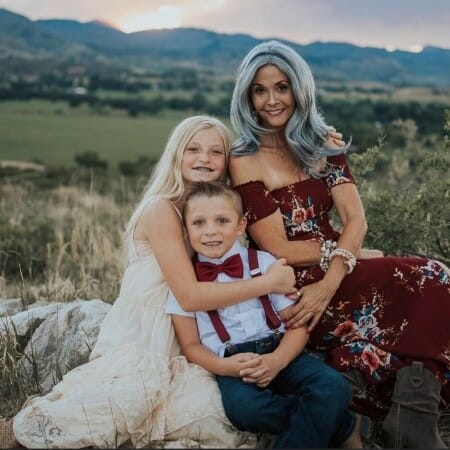
Jeanine McNeil and her grandchildren, ages 11 and 5./Courtesy Jeanine McNeill
I work with survivors of MST as the Western Regional Director and Director of Ambassadorships. I implement and assist with different programs to help expand the reach of the group. And as an ambassador, I try to reach as many female veterans and first responders as possible to inform them of how we can be of service. I also bring on other survivors who are proud to be the face of the group.
There aren’t a lot of special programs for MST survivors, but the Pink Berets specialize in getting them started on a healing journey. We also advocate for women and their families. We go to D.C. to get bills passed for change in the military.
Have you found that there are unique challenges when someone goes through this experience in the military versus civilian life?
Yes. When this happens to someone in the military, it doesn’t get reported, because the perpetrator it is often an NCO (non-commissioned officer. They’re authority, and when you’re a private, you’re afraid of them. You’re afraid to say anything.
The military still has the good-old-boys mentality. They protect them. We are not protected. There have been numerous cases where women who have reported assault have been murdered. Women have been discharged on things like mental issues, or people find ways to make it miserable for them. There is retaliation. That has to end.
What kinds of changes are you working toward?
We’ve helped fight for better ways report issues, for one. The whole department of defense now requires SHARP teams — sexual assault teams — on post now, so that if someone is victimized, they have a team they can go to instead of their commanding officer. We’re fighting for it not handled by the military at all. We have civilian lawyers now, because it’s a chargeable offense. I could actually go in and bring my perpetrator to justice, if I chose to do that.
It’s working, but it’s a very slow process. Once, when I was tired of being harassed, I went down to my first sergeant, and I put a picture on his desk that an NCO left on mine. The NCO was moved out of our battalion without consequences. They used to do that, protect their own and devalue women. They still do, even though we’re able to go to war and fly jets now. The rate of MST is still going up.
What’s been the most rewarding part of your work?
It’s knowing that I am making a difference. I’m making people believe that they can live a quality life. They have to do the work, but they know they’re never alone. It takes a team to heal. That’s how we do it; we do it as a team.
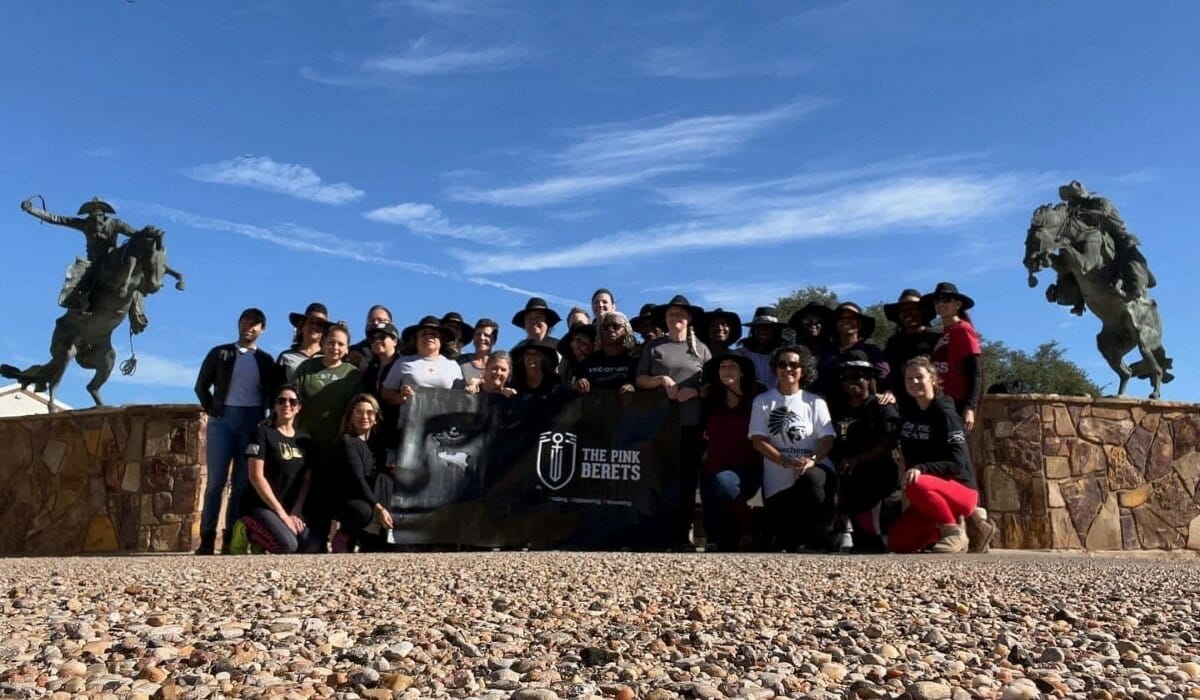
Participants and volunteer staff at the Catalyst Retreat in November 2022, the largest group ever./Courtesy Jeanine McNeill
What have you learned through your experiences as a volunteer?
I am worthy. For a while, I didn’t think I was worthy of living, because of everything that had happened and how my life had turned out. I just didn’t think I was worthy of being happy. Now, I know I do have worth and I do have purpose. This is my purpose.
I’ve learned that when you do things that come from the heart, you are going to get everything that you deserve. My life has unfolded beautifully, and in all actuality, it makes me nervous. I keep waiting for a shoe to drop. It’s hard to get out of a certain mentality when you’ve had so many things happen that it breaks you.
What do you want people to learn from your story?
I’m very proud of my story, and I’m very proud of being a veteran. And there is absolutely nothing you can’t do when you’re determined to put the past behind and redesign your life. It took a couple of years for me to get to that point, but The Pink Berets gave me tools to be able to do that. It’s a life-changing organization, and I’m very proud to be part of it.
I’m very honored and blessed to be doing something so beautiful with my life. I now know why I was given the life I was, and that’s because my purpose is to help others. So that’s what I’m doing.
If you or someone you know has experienced the trauma of sexual assault or rape, you can support them by listening, letting them know you believe them and offering to help them find medical attention or mental health support. Contact RAINN to find help near you or call 800-656-HOPE (4673) to talk to a trained crisis counselor. These services are free and confidential.
Native Floridian Uses Her Skills and Experience to Help Others Affected by Natural Disasters
Meet Daily Point of Light Award honoree Summer Faerman. Read her story and nominate an outstanding volunteer or family as a Daily Point of Light.
As an Executive Board member of Kindness Matters 365 and a role model for the community, Summer Faerman of Boca Raton, Florida, is always ready to answer the call for help. She inspires people to be the best they can be, get off the sideline and join the team to make a difference.
Disaster relief has become a skill set for Summer. A native Floridian, Summer has vast experience from many years of surviving hurricanes and tropical storms. “The reason why hurricane and disaster relief is such a passion for me is that I’ve gone through this personally. I know it, I’ve felt it, I’ve lived it, I’ve touched it,” Summer says. “I know what to do. We responded to Hurricane Ian, which hit the west coast of Florida, and they haven’t had a hurricane hit directly in over 30 years. So to not have any clue how to respond, many people just froze or gave up. My passion is to share my experience and remove my emotion from it, so I can be able to respond calmly in times of panic for others.”
Summer’s ability to engage, empower and mobilize makes all the difference in her community and beyond. This storm season started with a Fiona Response in Puerto Rico almost five years after the last storm that Summer sprang into action and responded to, coordinating collections and delivery of desperately needed food, water, hygiene items, generators and SAT phones to the region.
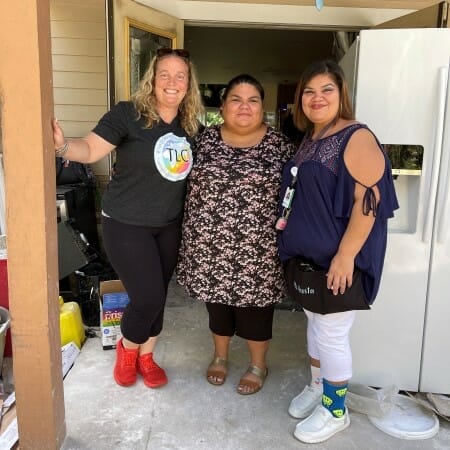
With so many affected by the devastation caused from hurricanes, Summer works directly with community members to help provide things they have lost./Courtesy Summer Faerman
Summer received communications at 3 am that Fiona hit Puerto Rico and immediately got to work. She was notified about tornadoes around 11 pm and mobilized to ensure all seniors were safe. She raised funds, leveraged purchases and immediately sent aid to all who needed it.
Next, Hurricane Ian moved in quickly, causing terror locally and beyond. This time around, Summer needed to work with emergency management to ensure all of the seniors affected by tornadoes were accounted for and safe. She then worked to re-home the displaced seniors with nowhere to go to West Palm Beach. They are all settled in new apartments provided by the Fountain View Retirement Center. Emergency Management, as well as Jewish Family Services, were brought in to link all seniors with social services that are available to them.
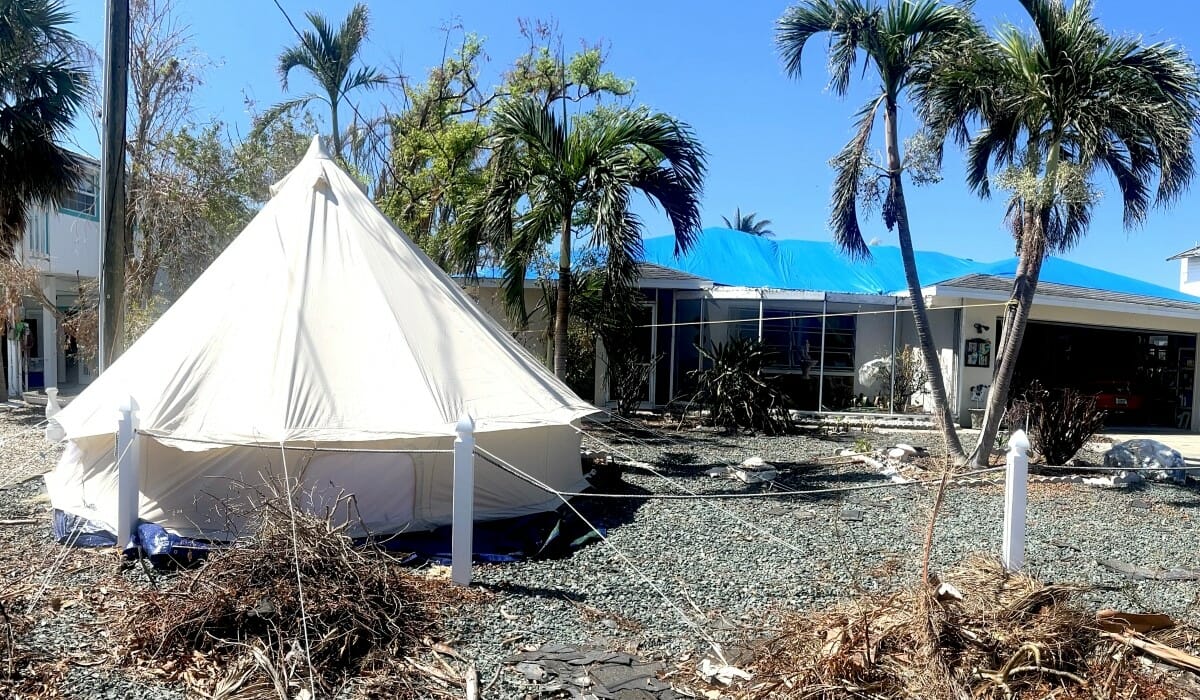
Summer ensures that all re-settled seniors have proper food, clothing, hygiene items and anything to make their life a little more comfortable during this uncomfortable situation. Sometimes, she helps put temporary structures on people’s properties to keep them safe and sheltered after they’ve lost their homes.
“One woman in particular, Sharon, lost her husband of 60 years one week prior to the hurricane. She had just celebrated her 80th birthday, then the hurricane hit,” Summer shares. “She lost her home. She stayed in it, covered in dirt and mud, refusing to leave the property she loved. She had no electricity, no indoor plumbing, nothing. I said, alright, you’re giving me something tough to deal with here. What if I put something on your property to make it safe for you? She said yes.”
Summer is currently working with multiple sites on the west coast of Florida to provide food, water, hygiene items, blankets, debris clean-up materials and volunteer teams to assist with clearing efforts. She has already worked to collect and provide 50,000 boxed meals, 10 pallets of water, 1,100 kosher meals and generators to those impacted detrimentally by Ian, and has an Amazon wish list set up so that anyone, anywhere, can contribute.
Sometimes, a temporary structure is erected on people’s properties to keep them safe and sheltered after losing their homes in natural disasters./Courtesy Summer Faerman
“It’s similar to a sports team. Anyone can join our team and everyone is a starter. Nobody is on the bench,” says Summer. “Everyone can make a difference, no matter their age or stage in life. Everyone has a talent they can share. An 89-year-old woman might sit and rock babies. She is providing something. Every single person has an ability, a special superpower, and can give of themselves. If there’s a flood, a hurricane, a fire, everyone can stake their claim to help.”
Summer encourages volunteers not to be overwhelmed by the amount of need following natural disasters. She truly believes that everything is approachable and encourages anyone, anywhere, to reach out and find a way they can help, whether through donating their time or their financial resources to assist.
Summer’s unwavering support and commitment to helping those in need are inspiring. Her generosity of spirit is a testament to the good in this world. She is always there to lend a helping hand and is never afraid to roll up her sleeves and get her hands dirty in the name of kindness.
Readers can help on an ongoing basis by checking the Kindness Matters 365 website and keeping abreast of volunteer and donation opportunities.
Air Force Veteran Changes Lives with Suicide Prevention Training
Meet Daily Point of Light Award honoree James Hodgman. Read his story and nominate an outstanding volunteer or family as a Daily Point of Light.
Content Warning: Points of Light is proud to share the following uplifting and inspiring story. However, we acknowledge that a small portion below may be difficult for some readers. We encourage you to please care for your own wellbeing above all.
When he was stationed at Travis Air Force Base in California, James Hodgman discovered LivingWorks, one of the world’s top suicide-prevention training programs. He went through the training and learned invaluable lessons regarding spotting someone in need and having difficult conversations to help them. But James didn’t stop there — he then became an instructor.
James has also helped close to 200 people who went through crisis situations as a counselor with Crisis Text Line. Growing up in a small town, James remembers always wanting to extend support to the people around him. This is exactly what he’s instilling in his own children.
Describe your volunteer role with LivingWorks SafeTalk.
I was stationed at Travis Air Force Base in California from July 2014 to March 2021. In November 2020, the base offered the LivingWorks SafeTalk Suicice Prevention training class along with the workshop called ASIST. They also offered the certification program to become a trainer who helps people dealing with mental health struggles and ultimately to help prevent suicide.
Unfortunately in the Air Force and across our military, suicide happens far too often. One is too many. There was a while when we were having triple-digit suicides every year, so I’ve been passionate about suicide prevention and doing all that I can to help my fellow military members, my fellow Airmen and just people in general to battle whatever they’re going through and push through it in a way that can help them move on. So I started the class and I became certified. I think I taught my first class and Safetalk in January the following year.
So far I’ve taught a couple of SafeTalk courses at Travis Air Force Base, and one at Patrick Space Force Base. The COVID-19 pandemic also kind of threw a wrench in things because unfortunately SafeTalk is not a class that can be taught virtually. I’m actually thankful to be able to get back after it and go into classrooms to teach. I’m also actually in the process of linking up with a local church here. I’m hoping to meet with them sometime soon to see if we can hold SafeTalk classes at their facility.
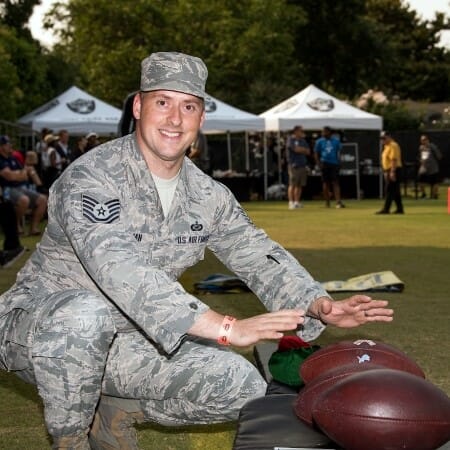
Before instructing suicide prevention courses, James Hodgman served at the Travis Air Force Base in California from July 2014 to March 2021./Photo by Louis Briscese
What curriculum do you teach your classes and how has it helped them?
LivingWorks SafeTalk stands for Suicide Prevention for Everyone: Tell, Ask, Listen, Keepsafe.The whole idea behind the class and curriculum is how much better would it would be if everybody in our community or more people in our community were more alert to the possibility of suicide and were aware of the actions that they could take to help prevent it. So the curriculum is about enhancing suicide awareness, the possibility of suicide happening or maybe somebody considering suicide.
It teaches people how to get involved, how to have those tough conversations and how to recognize that somebody is asking for help. There are a bunch of things that people considering suicide may exhibit, whether it’s body language, things that they say or things that they do that could indicate thoughts about taking their own life.
Describe your volunteer role with Crisis Text Line.
Crisis Text Line is a 24/7 operation that’s anonymous and offers free support for anybody who could be going through anything at all who needs someone to talk to. In March of 2019, I heard about Crisis Text Line and the opportunity to become a crisis counselor with them. I was very interested in it because I’ve always just been passionate about helping people. I’m also a resiliency instructor for the Air Force, and some of those things paralleled into things I do for the Crisis Text Line. I liked the idea that they were a 24/7 operation that helps people no matter where they’re at and no matter what situation.
Crisis counselors have to complete 30 hours of training with different modules and they link you up with a supervisor and a great team. I’ve been able to help over 200 people dealing with all kinds of things from anxiety and depression to suicidal thoughts. Several times I’ve been the person on the other end of the computer, trying to help people through whatever they may be going through.
Do you have a favorite memory from your volunteerism?
This memory kind of encompasses why I’m so adamant about SafeTalk. I had a friend a couple years back in Germany, we were stationed together there when I was at the Ramstein Air Base. I moved on to California in 2014 and he stayed there. He wanted to retire from the military and get a civilian job there. I saw him years later when he put a video on his Facebook page, basically talking about ending it. It looked like he was saying goodbye to the world.
I reached out to him and I used the skills that I learned through the Crisis Text Line and everything else. I spoke to him on the phone for two hours just trying to put the idea that he had more to live for and that his life wasn’t over yet in his head. There were brighter days ahead. We were able to keep him alive and got him into a medical facility. He was able to have a few more years with us. He recently passed away, but I always look back on that moment and think that through that experience he had a few more years of his family, and I think that matters.
What inspires you to volunteer?
There’s a couple of things that inspire me to volunteer. I grew up in a small town in Troy, New Hampshire. I was always brought up to help others and do what you can to help out the person coming up behind you. As a father I also think it’s incumbent upon me to teach them the value of service; what it means to give back and why it’s so important. I want to encourage them to find their own way to where they can help others in their lives.
What have you learned through your experience as a volunteer?
Through Crisis Text Line, I’ve learned that many people will almost trivialize what somebody’s going through; they might make light of somebody’s situation. I’ve learned that you can never discount what somebody is going through because you’re not in their shoes and you’re not experiencing those emotions. It’s critical that we never discount, condescend or talk down to somebody. We should meet them where they are and give them what they need at that time to help them out. That’s been pretty important.
Why is it important for others to get involved?
There’s somebody right now who’s struggling and they could be in your community or city. So there’s always a need, and whatever you can do to help is appreciated. Even a conversation with someone about their life could be instrumental in improving their condition.
Find what you’re passionate about, and pursue that. The impact that you can have on somebody else’s life can be monumental.
If you or someone you know may be considering suicide, contact the National Suicide Prevention Lifeline by dialing 988, or text HOME to 741741 to talk to a trained crisis counselor through Crisis Text Line. Both resources are anonymous, free and available 24/7.
Middle Schooler Focuses Efforts on Starting Battery Recycling Programs in His Community
Meet Daily Point of Light Award honoree Shyam. Read his story and nominate an outstanding volunteer or family as a Daily Point of Light.
12-year-old Shyam Suhas Kandala is fighting for the future of the planet, one battery at a time. This avid soccer and volleyball player is the Chair of the Sponsorships Team at Recycle My Battery, an organization that focuses solely on recycling the growing number of batteries we use each year. He delivers bins, coordinates drop offs, and spreads information throughout his community along with his board member duties.
In just the past three years, a time riddled with COVID concerns and isolation, Recycle My Battery has recycled over 200,000 batteries, educated over five million people, and placed more than 400 battery bins around the world. There are only 300 members, 60 of whom reside in Shyam’s home state of New Jersey, but they’ve accomplished a significant feat amidst growing concern over the climate crisis.
What inspires you to volunteer?
When I was younger, I would see trash everywhere. It wouldn’t be in one particular place; it’d be in every single place I’d walk into. I would wonder why nobody was doing anything about it. As I got older, I found out about Recycle My Battery, so I joined and started volunteering.
When the organization started, the founder focused on batteries, because he saw on the news that a battery had exploded. We all thought that was a horrible thing. Batteries can be very dangerous when not properly disposed of. We collect everything from iPhone batteries to computer batteries to the small button batteries. Our main goal is to make sure everybody knows that you can recycle them and that you should.
Describe your volunteer role with Recycle My Battery.
I’m part of the sponsorship team. I take care of all the sponsors that are willing to partner with us. I also make sure that we have enough donations and money to get all of our supplies.
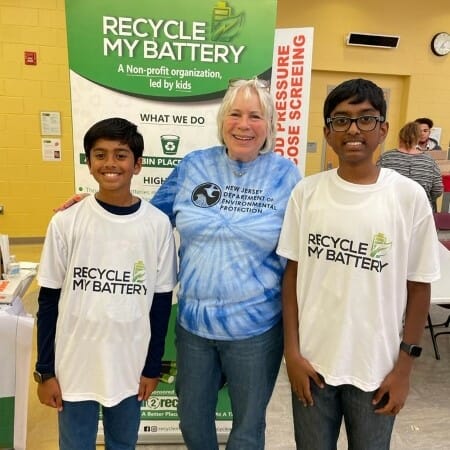
[left to right] Shyam, a representative from the New Jersey Department of Environmental Protection, and the founder of Recycle My Battery, Nihal Tammana, educate students at Monroe Middle School./Courtesy Shyam Suhas Kandala
What are some things people might be surprised to learn about recycling batteries?
Normally, with recycling, you’d throw things into the recycling bin that are on the list next to it. But batteries normally don’t appear on that list. They’re considered not to be that important. Many websites say you can just throw them in the trash, but we never think of what happens in the long term. At some point those batteries are thrown into a landfill, and at the landfill, they have a very high chance of exploding or, over time, the acid inside could leak into the soil or into our water. And we drink water.
What happens to the batteries that your team collects?
Recycle My Battery is partnered with a firm called Call2Recycle who supplies all of the recycling bins the student volunteers place in schools, libraries, and public places. They come with a return label for bins to be sent to Call2Recycle, who will collect the batteries, separate them, and send them to their recycling facilities in Canada and Mexico.
What’s been the most rewarding part of your work?
Whenever I talk to someone and they say, “This is very good work you guys are doing.” It makes me feel proud of myself and the whole team, because we’re getting a lot of those compliments. And we’re working towards saving Mother Earth.
What have you learned through your experiences as a volunteer?
Normally, I would feel shy about talking to someone about anything, especially talking to somebody I’ve never met before. My public speaking skills have gotten better through talking to others. I’ve also learned that you shouldn’t work towards something in return for anything. Sometimes, you should work just to help someone.
Are there any future partnerships, programs, or events that you are excited about?
We had a huge fundraising event a few days ago.A few other members and I went to Florida to talk to people about our organization. We were able to get a bunch of donations, because everybody was so proud of us. We talked to both the public and businesses, but we targeted mostly businesses so that they could spread awareness to others. Many of them already know about us.
Do you have any advice for people who want to be more sustainable?
Don’t think about anything other than what you’re doing in the moment. You should focus on the work at hand, and then think of other things to do. I know many people get distracted or overwhelmed.
What do you see for the future of this organization?
I see a big future ahead. I hope that we can expand throughout the world. Right now, we have chapters in Switzerland and India. Otherwise, it’s just the US. I hope we can get more members involved.
Is there anything you want people to learn from your story?
It doesn’t have to be batteries. It can be anything. Mother Earth is our home, and if we continue to pollute or litter or harm it, it’s going to affect us negatively, and that’s not good for anyone. The main point of all this is to make Mother Earth the best it can be.
Nursing Student and Veteran Honors Fellow Servicemembers by Sharing Their Stories
Meet Daily Point of Light Award honoree Mark Skibicki. Read his story and nominate an outstanding volunteer or family as a Daily Point of Light.
Nursing requires empathy, patience and care, and there is no doubt that Mark Skibicki, 30, will be an excellent nurse. As a former medic in the US Navy, he served as a hospital corpsman for the First Battalion Sixth Marines and at the SEAL teams and a clinic in North Carolina. He also worked as a tactical combat casualty care instructor at the Naval Medical Center in Portsmouth. Upon finishing eight years of service, he has moved back to his hometown in South Carolina to earn his nursing degree.
These days, Mark divides his time between being a full-time student and volunteering with Providence Care and Veterans’ Last Patrol, befriending veterans in long-term or hospice care, honoring their stories and thanking them for their service with a ceremony attended by friends and family. His presence, compassion and support remind veterans they are appreciated and will never be forgotten.
What inspires you to volunteer?
It was the right thing to do. I feel like my generation, the younger cast getting out of the military, can lose sight of what it’s worth. I believe what’s important is our history. The older gentlemen and ladies who have served, say in WWII and Vietnam, need to be recognized. Sometimes they get forgotten. It’s only appropriate that they’re remembered accordingly. The older generations do a very good job of that, but I really have yet to see anyone my age step up.
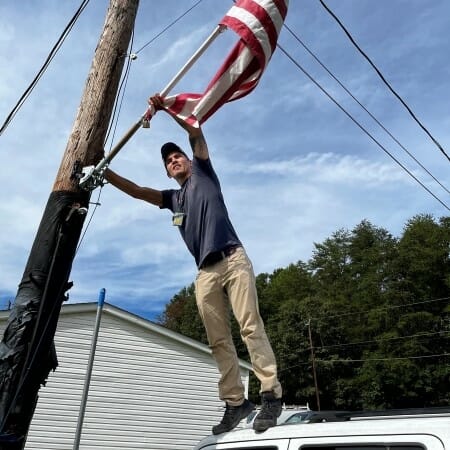
Mark fixes the flag in front of a veteran’s home after meeting with him for Veterans’ Last Patrol./Courtesy Mark Skibicki
Describe your work with Veterans’ Last Patrol.
Initially, I decided to check them out, because I heard they did ceremonies, and I attended some of them. They head to an honoree’s house and everything is set. They fall in and give their spiel, and they acknowledge the honoree’s history and service. Later, I started receiving opportunities to see veterans who are sometimes in hospice care, long term care or home care. I get the opportunity to get to know them.
I do my best to build a rapport before I start getting into the nitty gritty of their military history. Then, with their consent, I give it to Veterans’ Last Patrol. Veterans’ Last Patrol then starts doing the work to set up a ceremony. A month or so later, the ceremony will be held at the honoree’s house or place of care.
I’m pretty much at the whim of Veterans’ Last Patrol. They sometimes hit me up and say, “Hey, are you free?” They give me a name and address, and we set up a time frame to visit. I’ve never turned one down, even though I’m in school. I take time off to go and visit them.
The organization used to send civilians to get information from them, and sometimes they failed. They wouldn’t understand, or in some cases, veterans didn’t want to open up to civilians. But bringing in a person who has somewhat of an understanding of their service can help. We’ll never fully understand what a WWII or Vietnam vet went through, no matter who you are. They’ve been through hell.
Do you have any stories in particular that you found really affected you or made you see things differently?
One man started telling me about his time in Vietnam. He was a Green Beret veteran. Someone else had gone in before me and couldn’t get any information from him. So I went, and he completely opened up to me. I just remember him crying, because I was bringing back some memories for him. It may have been good or bad, but I was able to acquire what happened to use in the ceremony.
He lost some friends in the Tet Offensive in Vietnam. It really reminded me why I signed up for this. He could open up and his story could be heard, and he could be recognized.
Why do you think it’s important for others to get involved?
A lot of veterans and military members want to serve, and their service doesn’t need to stop when they leave the military. I view the military as a public service. You should embody public servitude. The moment you set foot outside of the military, you’re supposed to be a direct representation of what you expect Americans to do. This is why I believe we’re supposed to remember our history. History is bound to repeat itself, but we’re also supposed to honor it.
Honoring a WWII veteran, Mark leads a ceremony with Veterans’ Last Patrol and gives out awards at a long-term care facility./Courtesy Mark Skibicki
What do you want people to learn from your story?
A lot of people, especially younger people, look at these older individuals and view them as sick or crazy. PTSD is a silent killer. Give them a shot. You have no idea what they’ve been through. And I feel like the media and movies have really played us out to be lunatics. A lot of us do feel that. That’s one thing I want people to acknowledge.
Is there anything that your average person can do to support veterans?
This is for that vet who has his flag outside his door that no one ever talks about, the one who looks a little grumpy when he sits outside on his porch. Visit him. Say hi. Bring him a beer.
Bolstered by His Strong Faith, Retired Veteran Volunteers to Support Other Veterans
Meet Daily Point of Light Award honoree Jim MaGee. Read his story and nominate an outstanding volunteer or family as a Daily Point of Light.
Jim Magee of Lutz, Florida, didn’t stop working or serving after retirement. He was president of a local electronics company for 17 years, as well as a United States military veteran. Jim was searching for an opportunity to utilize his business experiences and, as he states, “his God given talents” to help those living with disabilities or addictions, as well as the unhoused veterans in his area.
A man of strong faith, Jim has been volunteering to pay it forward for many years now and sees serving the veterans in his area as a calling. He works with groups of veterans through a local transitional home, as well as one-on-one as a medical surrogate and point of contact. Read on to learn more about Jim’s journey, what inspires him and the advice he has for those who want to volunteer.
Describe your volunteer role.
On an ongoing basis, I’m involved very heavily with Liberty Manor for Veterans. This is a home in Tampa that houses male veterans who were unhoused at one time. It’s at capacity now, with 20 people living there. I retired 11 years ago, and my wife told me she heard about a veteran’s home nearby that needed bicycles. We had one, and when I delivered the bike I sat chatting with the men and they realized I was a veteran also. That started the journey.
The kitchen is about 10 feet square, and while there’s food there, the residents each cook for themselves. So I started asking around for people who wanted to buy and cook these meals instead. That was 10 years ago. Today we have 16 families. For November, I had 23 days of the month covered for the men to receive a variety of home-cooked meals. I organize some things, like a Secret Santa party, around the holidays too.
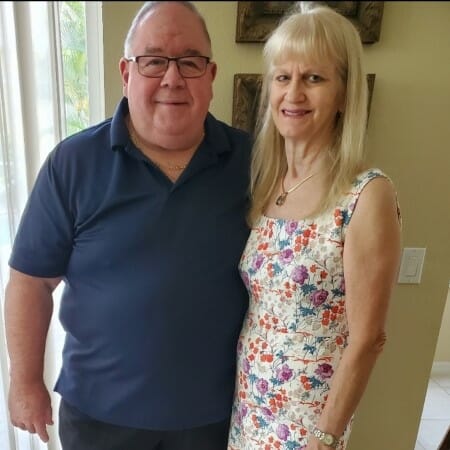
Jim MaGee and his wife are passionate about volunteering in their retirement./Courtesy Jim MaGee
Liberty Manor gets food from Feeding America, but what they weren’t getting was milk, bread and eggs. So I started what I call “the egg and milk fund.” I always have a few hundred dollars in donations, and on a weekly basis, I buy eight gallons of milk, 10 loaves of bread and six or seven dozen eggs.
Some of the guys have been at the home for six, seven, eight years. For those who have started to transition out, I started helping them find furniture and donations, pots and pans, all the thing you need to get into your own apartment.
On a weekly basis I started going to downtown Tampa, and there’s a park down there with an unhoused population of about 35 people. Probably about 20 to 30% of them are veterans. it broke my heart. I started going down there and bringing sandwiches, bringing new sneakers, taking orders for what they need. As the weather gets cooler, I have people donate brand-new sleeping bags.
Tell us about your partnership with local law enforcement to help support unhoused veterans.
I get a lot of anonymous calls asking for help. About four or five years ago, I got a call from the Hillsborough County Sheriff’s Office. She asked me to help them put together resources for the sheriffs to reach unhoused individuals downtown. So we make up these bags with toiletries, snacks and a bus pass. We do it once a quarter, spending $1,000, and we give these gallon bags to the sheriffs to keep in their cars and hand out as people need them.
What kind of skills from your years working and serving in the military have helped with your volunteerism?
I’m mostly a coordinator and a really good salesman. I learned not to be judgmental but just look at a situation for what it is, without judging how the people got into that situation.
There are talents you have that you take for granted because you’re good at them. I’m just using my natural talents as a friendly guy to get involved.
What motivates you to volunteer?
I’m Catholic, and I lost my faith about ten to twelve years ago. We have a son who was in active addiction for a long time. In all the chaos and crisis, all of a sudden, I was like, “I think I need to go back to church.” I went to mass, I’m sitting in the second row, and this lady turns around and says, “Welcome.” There are no coincidences with God.
I used to say I was a once-a-week Catholic, but I’m now a 24/7 Catholic. My son has been sober for three years. I have so many friends who have lost children to addiction, and half of the people on the streets are addicts. I can connect with them.
Veterans gather at a Secret Santa Christmas party Jim helps to organize every year./Courtesy Jim MaGee
Can you share a meaningful experience from your volunteerism?
One guy from Liberty Manor had severe leg issues. One thing we do at my church is donating wheelchairs. So I was able to get him a wheelchair. We became close. He was still unhoused, still had a drug issue, but I ended up being his medical surrogate and power of attorney. He had a severe illness about a year and a half ago and he went to the hospital and asked me to get him into hospice. He didn’t have any other friends. I was with him when he passed in hospice. Like I said, I don’t think anything is a coincidence. I’m here to help as many as I can until God takes me too.
Any advice for volunteers?
Don’t be afraid to put yourself out there. I figure if I’m doing God’s work, I’m protected, and I love using my God-given talents to support these veterans. And also, make sure you find that balance. It’s easy to take too much on, so be cautious. Don’t let the amount of need affect your family. My wife and I are both involved with the church and serving through volunteering, and we have that balance. She does her stuff and I do mine.
Why do you think it’s important for others to get involved with causes they care about?
There are way more people in need than people that help. Whether it’s a financial donation or volunteering, you can help. The hardest thing to give is your time. When you’re younger, you have a packed schedule. You go crazy with all that stuff. As you become an empty nester, especially if you’re lucky enough to retire earlier, it’s important to find purpose by getting involved. I invite people to just try it one day with me. Help when you can.
Military Veteran Continues Service Through Summer Camp for Children and Families with Life-Threatening Illness
Meet Daily Point of Light Award honoree Michael Wisecup. Read his story and nominate an outstanding volunteer or family as a Daily Point of Light.
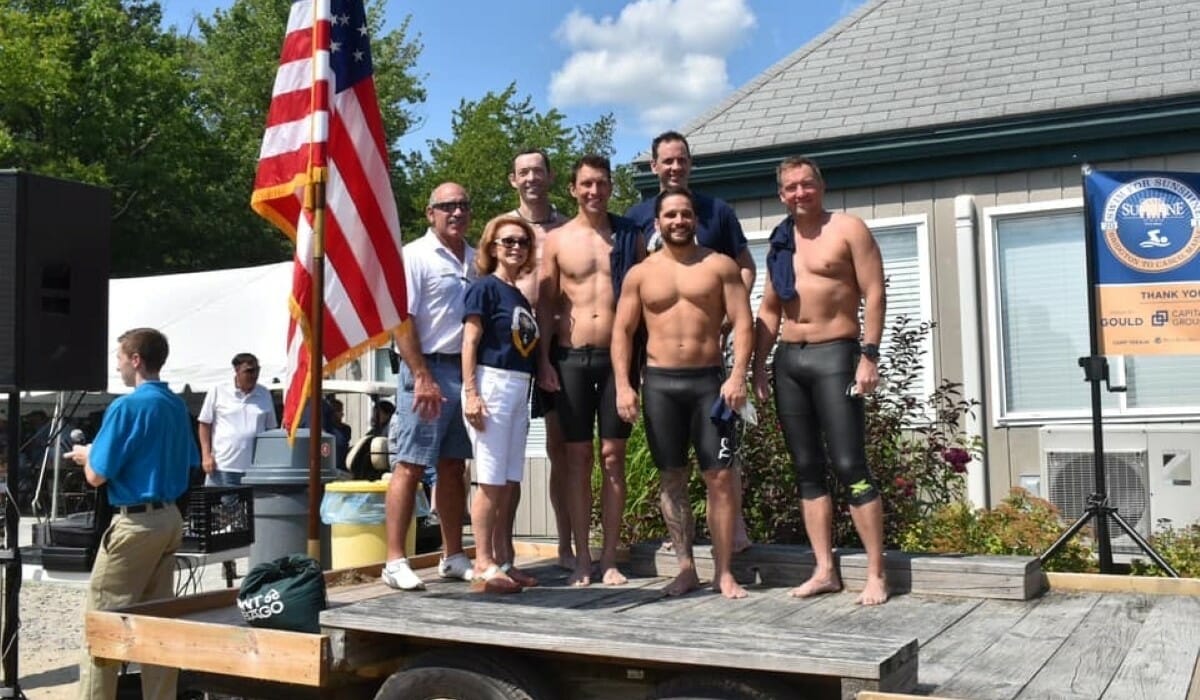
Military veteran Michael Wisecup is passionate about using his time and talents to help other military families by offering opportunities they may not otherwise be able to partake in. He currently sits on the board of Camp Sunshine, a year-round camp providing retreats combining respite, recreation and support, while enabling hope and promoting joy, for children with life-threatening illnesses and their families through the various stages of a child’s illness.
Founded in 1984, Camp Sunshine is nestled on the shores of the picturesque Sebago Lake in Casco, Maine. The camp’s programs are free of charge to families and include on-site medical support as well as bereavement sessions for families who have experienced the death of a child from a supported illness. Read on to learn more about Camp Sunshine and Michael’s impactful volunteerism.
Describe your volunteer role with Camp Sunshine.
I help in two different ways. Throughout the year I serve on Camp Sunshine’s board, helping with planning and strategic direction. I also organize an annual fundraising event called SEALs for Sunshine, which raises money and awareness for families to attend Camp Sunshine.
The SEALs for Sunshine event every year is deliberately designed to be as physically and mentally demanding as possible. We might do a reverse triathlon and start on top of a mountain, run down the mountain, then cycle for 120 miles, and then swim five or six miles across the lake. We’ve done marathon paddles around islands.
Collectively since 2014, we’ve added up all the participants and all the miles we’ve put in – we’ve roughly covered 6,000 miles of running, swimming, walking, cycling, paddling. We do it for a reason. We try to create something that might reflect what it’s like for a Camp Sunshine family to go through. The difficulty, physically and mentally, when a child is diagnosed with a life-threatening illness. The only difference is that we get to train for ours, and it only lasts one day. They don’t get any training. It just happens, and it might last a lifetime. That’s the why behind why we do events like SEALs for Sunshine.
Michael is a proud military veteran who now serves by paying it forward to other military families./Courtesy Michael Wisecup
What does Camp Sunshine do?
Camp Sunshine is a year-round retreat located in southern Maine for families with children with life-threatening illnesses. It is a camp that services the entire family. While most programs support either the child or the parents, this one approaches the entire family at the same time. So we have children who are ill or in treatment all together, plus their brothers and sisters, and parents who are all going through the same thing.
During the COVID-19 pandemic, we were doing “camp in a box” but now we’re back in person. We can service up to 40 families at a time. They arrive on a Sunday and they’ll stay throughout the next weekend.
Why are you passionate about this cause in particular?
Think about being a sergeant in the Army. You’re maybe making $30,000 or $40,000 a year and maybe you’re stationed in California. If you have three kids, one with a life-threatening illness, you probably can’t afford for five of your family members to fly to Maine. Camp Sunshine allows that opportunity.
The SEALs for Sunshine event itself is something I’m particularly passionate about. In addition to a family having a child with a life-threatening illness, and how hard that is, add in the complexity of a military life on top of that, and the family might be notified of the illness while one of the parents are deployed, which is extremely difficult. So my passion really is trying to make sure that all these military families know that this is an organization they can benefit from, and to be able to provide the funding, so there’s no out-of-pocket expenses. So whether they’re deployed to Germany or Korea, whether they’re on the East or West coasts of the United States, whether they’re junior enlisted or a senior officer, they have the same access. We provide a level of support for them, knowing that it’s that much harder for military families to deal with life-threatening illness in the family.
What are some of the activities that take place at Camp Sunshine?
We have everything. Think of your stereotypical Maine summer camp on a lake, surrounded by beautiful pine trees, that’s what it is. But it’s built to accommodate children with illnesses and families coming from a variety of different places around the world. You’re not living in a tent or a log cabin; the accommodations are made for these families. They stay in a nice hotel-like setting, with a common eating area where we serve three meals a day.
Some programs include a ropes course, which is a confidence-building course, a climbing wall, a putt-putt golf course, there’s canoeing and kayaking on the lake. One of the activities the children do is to make a boat that has their wishes written on the boat and launch it on the lake, for a pretty memorable experience. For parent groups, we have bereavement sessions for those who have lost children. They live in yurts one night so it feels like they’re camping. We curate it so there are a lot of different experiences. The children spend time with kids like them, siblings spend time together, parents spend time together, and family activities are offered too. All the medical and support staff are behind the scenes, so you don’t know who they are. It doesn’t feel like a hospital setting; for them, they’re just normal kids at camp.
The SEALs for Sunshine annual event is a physically demanding process that honors the families of those living with the effects of life-threatening illnesses./Courtesy Michael Wisecup
What’s the biggest lesson you’ve learned from living abroad?
I’ve learned a lot by living abroad and being deployed. The more I travel, the more I realize how much we have in common with each other, regardless of language, religion, or background. That’s pretty key. Ultimately, we’re all trying to achieve the same thing, to take care of our families, provide a safe environment, ensure that we can succeed and grow. I find that when you distill things down and get rid of a lot of the superficial, we have the same basic needs. We more in common than you might think. I see that at Camp Sunshine. Regardless of socioeconomic status, regardless of background or where you came from or your job title, if you have a child with a life-threatening illness, you’re going through the same thing as these other parents.
As a byproduct of traveling so much, being away so much, you potentially lose touch with the American people, your community, and perspective on what’s important day-to-day. Camp Sunshine has allowed me to have an anchor, to move around but always feel like I was attached to a local community. When I was in Afghanistan or Iraq, I could think of the kids I’d see at camp and that would help connect me.
Can you share a rewarding moment from your volunteer work?
One always comes to mind. Each of the weeks at Camp Sunshine is focused on particular illness groups. That way, the families have more in common with each other and we can focus the program around those. One week was for children who had brain tumors or cancer in the brain. That required more one-to-one volunteer support for the after-effects of treatment. So we had more safety protocols.
One young girl – she might have only been about four-years-old or so – was dressed in her Else outfit. She came running up with another girl about her age, holding hands, and said “Mike, Mike! She’s got the same scars I do!” So all of these scars from treatment around her head, now she’s beaming that she wasn’t different anymore. The things she’s had to worry about, facing truly adult problems at a young age, now she’s got a friend with the same 12-inch scars across her head. This experience puts my own issues into perspective.
Why do you think it’s important for others to volunteer?
Well, life’s a team sport. It really is. You don’t get through it by yourself. As anyone who’s played a sport knows, it’s important to be a good teammate. You get through with the help of your teammates. Volunteering, getting involved to provide help – whether it’s financial help or sweat help – whatever you can do, there’s a place for everyone to get involved and better society. We need more of that and less polarization. We’re a community, and we’re only going to get through this if we help each other.
Young Girl Recognizes and Advocates for the Military Community
Meet Daily Point of Light Award honoree Sawyer Hendrickson. Read her story and nominate an outstanding volunteer or family as a Daily Point of Light.
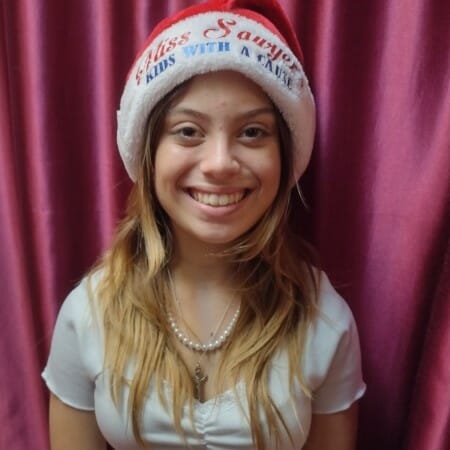
Sawyer Hendrickson, 13, is a busy girl. In between filling care packages for thousands of veterans and speaking engagements for the nonprofit she founded at age six, it’s already impressive she finds the time for her homework, though she always does. But she also makes room in her packed schedule for competitive dance, recreational tennis and cheerleading. In her words, a perfect day is “a day when we get everything done.”
Miss Sawyer’s Kids With a Cause, her nonprofit, is dedicated to honoring veterans, active duty military members and fallen soldiers. Sawyer has been an advocate for the military community for over half her life, and continues to bring attention to their service and issues they face upon returning home.
We spoke with Sawyer and her mom, Heather, as they prepare for their Christmas Stocking Project.
What inspires you to volunteer?
Our veterans and our military members were and are out there fighting for what they believe in, and it’s important to recognize them and to show our support.
Describe your volunteer role with Miss Sawyer’s Kids With a Cause.
Sawyer: It all started when I was six and a half when my older brother decided to join the Marine Corps. We started sending care packages to him and his platoon. Once they all moved to different stations, we began to make them for lots of other military members, too.
We ship about 25,000 care packages a year to different military bases around the world. The Christmas Stocking Project, or Sawyer’s Stockings, is the biggest project of the year. We send about 10,000 stockings every Christmas season. We also regularly visit Washington, D.C. and hand them out to the old guard that works at the Tomb of the Unknown Soldier and different bases in the area.
We have lots of volunteers, not just from our community but from around the country. We have several schools having candy drives for the Stocking Project right now and people at senior centers and beyond painting and stuffing stockings.
Heather: A lot of recipients send back pictures, videos or emails. When they take the time to do that or to tell their family about it, word literally spreads like wildfire in the military community.
Sawyer Hendrickson, founder of Miss Sawyer’s Kids With a Cause. Each year, the nonprofit ships almost 25,000 care packages to military bases around the world./Courtesy Sawyer Hendrickson
What is the Roses to Remember Project?
Sawyer: We lay 2,100 gold star roses on the headstones at the Tomb of the Unknown Soldier in Arlington National Cemetery for my birthday every year. And lots of people request that we put them on certain headstones, too.
Heather: Anyone from around the world with a loved one buried at Arlington can request that a rose be placed through our website or email. Several children who live on nearby military bases help find specific graves. They place a rose and take a photo that is sent to the family. There are a lot of people who can’t travel anymore or who can’t afford the time or money to get there. Even during COVID, when the cemetery was closed to everyone, they let her go in. We were the only ones there.
You attend many veteran-related events each year. What do you do there?
We go to 150+ veterans-based events a year where I do some public speaking, talking about my project and what it means to me and some other things related to the organization. We volunteer at veterans’ events and speak about the POWs, MIAs and other veterans’ issues.
What’s been the most rewarding part of your work?
A lot of times we get videos or pictures of those who we sent stockings to with the stockings. You can see the joy and happiness that stocking or care package brought them. A lot of times they don’t get to go home for Christmas or other holidays, and some of them don’t have family or don’t get any mail. It’s just special to see the effect that our project has on people.
What have you learned through your experiences as a volunteer?
It’s lots of hard work and it takes a lot of time. There’s a lot of organization with it as well, with making sure that everything’s right. All the numbers are right. You’re looking at shipping costs for the packages and making sure that volunteers are contributing to the project.
What are your plans for the future of the organization?
Sawyer: Right now, our plan is to just keep growing and keep making sure that our projects are being noticed and that they get done.
Heather: We’re in a great spot because of the willingness of people to volunteer, and we’re becoming more efficient as each year goes by. There are schools here that have even created a service class for her nonprofit that give class credit to do this stuff. And there’s a waiting list to get in.
Why do you think it’s important for others to get involved?
Like I said earlier, it’s good to help out those who are really fighting for what they believe in and who put their lives on the line to ensure we keep our freedoms and rights. It’s good to show them that they’re recognized and that someone cares about them. It’s really just about giving back to that community of people.
Founding Volunteer Still Honoring U.S. History at The George H.W. Bush Museum and Library
Meet Daily Point of Light Award honoree Ann Hays. Read her story and nominate an outstanding volunteer or family as a Daily Point of Light.
A critical part of preserving United States history is honoring the leaders who helped shape it. And for Ann Hays of College Station, Texas, a deep respect for our nation’s history and its Texas-born Presidents is what keeps her volunteering at The George H.W. Bush Presidential Library and Museum. In addition to her weekly shift, Ann has also helped staff the Annual Easter Celebration, The I Love America 4th of July Celebration, Night at the Museum Halloween event, Bush Birthday Celebration, Holidays in the Rotunda and numerous receptions. She has additionally helped in the education department and served as part of the volunteer media team.
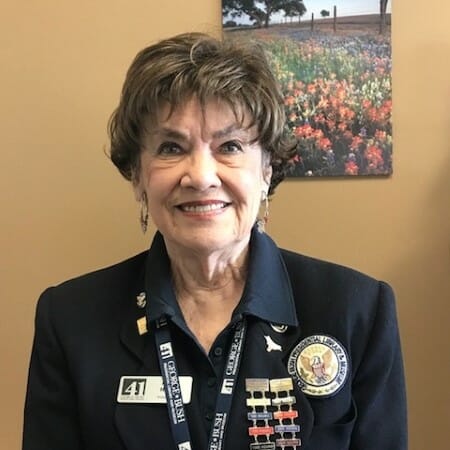
Ann Hays began volunteering at the museum in September of 1997, before the museum opened to the public, and today is one of just six original volunteers who still serve there. Since she started, she has dedicated over 7,800 hours to the museum in the form of volunteering. You can find Ann volunteering every Monday afternoon, eagerly welcoming visitors and guiding them through history. Read more about Ann’s journey and what inspires her most.
Describe your volunteer role with The George H.W. Bush PresidentialLibrary and Museum.
I’m a visitor services docent. So I greet visitors, introduce the orientation film, give out maps and take pictures in the replica Oval Office. Our museum was the very first to allow people to sit in the President’s chair in the Oval Office!
To be a docent originally, we had a lot of training. We had to read eight books. We’d have a meeting and have to step over boards when they were still building the museum. Most of us were college graduates but we didn’t know if we were smart enough to do this job! We started out with 266 volunteers but now six of us originals are still here.
Ann Hays has volunteered over 7,800 hours with The George H.W. Bush Museum and Library./Courtesy George Bush Presidential Library and Museum
Why is remembering history so important?
I think it’s very important because it teaches you about our country and how it started. It’s kind of sad that people want to get rid of history. If there’s something you didn’t like about what happened in the past, if you don’t know history, you won’t know how to avoid not repeating that very same thing in the future.
How many visitors do you get at the museum each year?
We get around 150,000 from all over the world.
Do you have any fun stories to share from your time volunteering?
When [George H.W. Bush’s] granddaughter, Jenna Bush Hagar, who went to University of Texas, they’d always call me to come in and entertain them, because I went to U.T. too. One day, Jenna came from Austin with her boyfriend, who’s now her husband. She was wearing ripped jeans, and her grandmother, First Lady Barbara Bush, just about had a fit! The girls liked to get under their grandmother’s skin once in a while.
What inspires you to volunteer?
I have been a volunteer since before we opened. When I was interviewed to be a volunteer, and I wanted to be a visitors service volunteer because this is the one place in our area where visitors from all over the world come. I’m a sixth-generation Texan, and I want everyone to know what a real Texan is all about. We’re loving, kind, friendly people who put others before ourselves. We promote love, and not hate. That’s why I’m here.
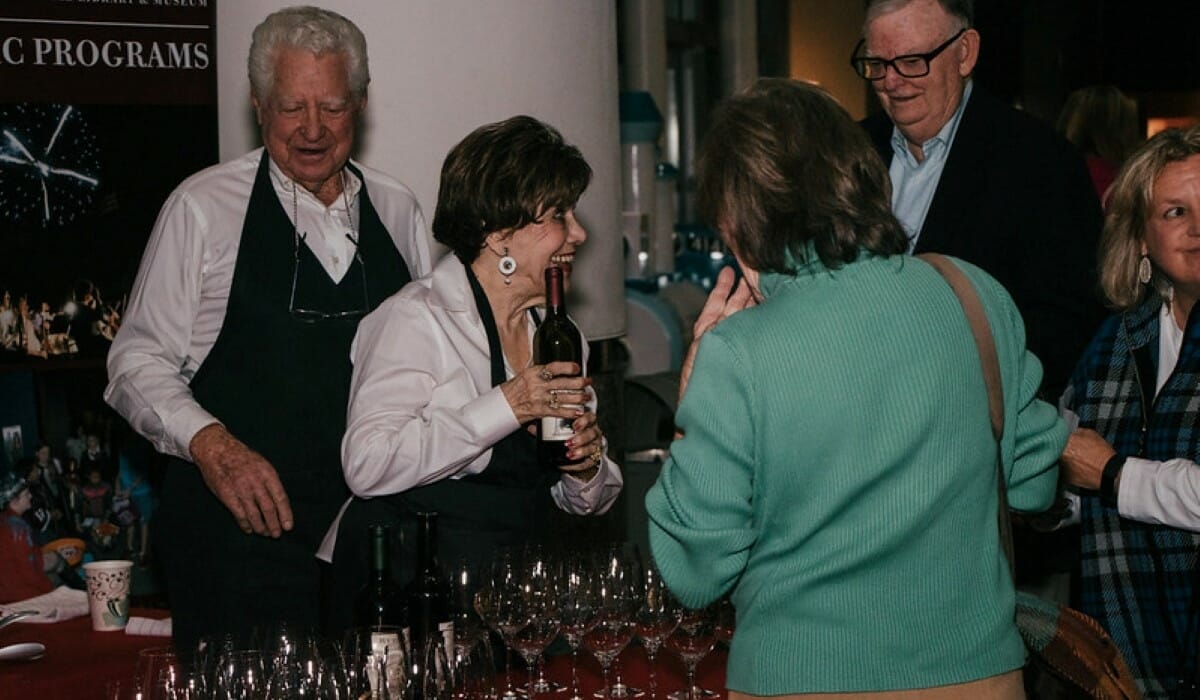
Ann serves beverages at the 2020 Presidents Day program./George Bush Presidential Library and Museum
Can you share a memorable moment from your work?
Actually, when George H.W. Bush passed away, CBS News National correspondent Chip Reid came down from New York and interviewed me. I live right by the railroad track, and I invited 100 people to come to my house so they could see the coffin as it passed on the train.
So Chip kept asking me questions as we sat out in the yard with a big Texas flag flying in the air. And he’d say, “Oh you did a great job with that answer, but a plane flew over and we need to do that over.” He’d ask me another and he’d say, “Hold that thought. A helicopter just flew over and we’re going to have to do that one over.” It’s just amazing how they can edit stuff and make us look good!
Why do you think it’s important for others to get involved with causes they care about?
For one thing, I’ve found that when you volunteer or do something for someone else, it just makes you feel good. There are people who have never tried that. I think if you would try helping someone else just one time and see how it feels, you’d keep doing it.
Are there any other touching moments from your time at the museum?
I had an interesting thing happen a while back. During the height of COVID, we had a group come with students from China getting their master’s degrees at U.T. One said he felt such love from me, he brought his girlfriend to meet me. I invited the young man to my house to join us for Thanksgiving. I showed him my oil well and my cows – like a true Texan! We took his picture, came in the house and he said his grandmother had read him the Bible and taught him about Jesus’ love. Now he’s in my Sunday School class! Like I said, we spread love and not hate.
Are there any future partnerships, programs or events you are excited about?
We have this wonderful director who’s been with the archives for 30 years, and he’s retiring so we’re celebrating him. Now can you believe that he decided, after 30 years, that during retirement, he’s going to become a volunteer docent? I tell him he’s going to have to go through training.