High School Sophomore Advocates for Financial Education and the Wellbeing of Children
Meet Daily Point of Light Award honoree Mischa Mallbris. Read her story and nominate an outstanding volunteer or family as a Daily Point of Light.
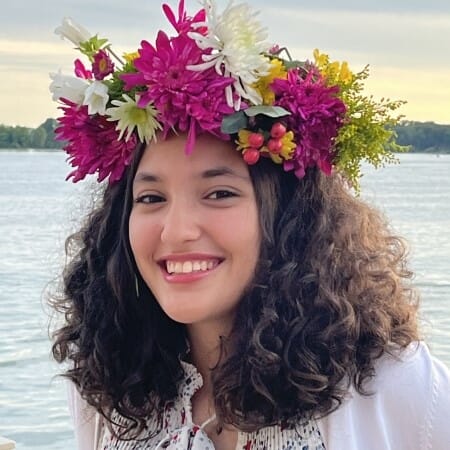
Mischa Mallbris, 15, and her family immigrated from Sweden when she was six years old and soon found a home in Indianapolis. Mischa and her sister, 13-year-old Matisa, have not only started a new life in the last few years, but in 2019, they started a nonprofit. Persevering though the pandemic and travel restrictions that prevented her from seeing extended family back home, Mischa created a financial literacy program geared toward kids ages 6 to 18. It comes with teacher guides, worksheets, explanatory sheets and certificates of completion.
Her work has impacted thousands, and she’s spoken at more than 10 events and more than 500 people. Today, she’s eyeing new areas to expand her impact.
What inspires you to volunteer?
I’ve been blessed to have resources like an education and access to health care. I feel it’s my duty to help people who don’t have those. In order to truly be a caring human being, you have to take care of and support the rights of other people, especially since a lot of people don’t have the resources that they need.
Describe your volunteer role with Clear the Path.
Clear the Path focuses on the rights of children. Currently, our biggest program is for financial literacy. It teaches students entrepreneurship and personal finance. We wrote an original curriculum to address their lack of knowledge in this area.
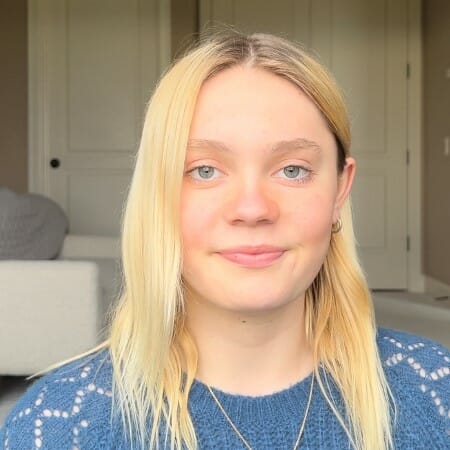
Mischa Mallbris, founder of Clear the Path./Courtesy Mischa Mallbris
We believe a complex problem needs a comprehensive solution, so our project is separated into two main parts: outreach and education. To educate, we work on writing a curriculum and lesson plans that different schools and students can use. And as part of our outreach, we raise awareness of the importance of financial literacy and investing in educating young people on the subject.
Other than addressing financial literacy, what do you do?
Recently, we partnered with an organization called Roadtrip Nation. They made a nationally broadcast documentary series, and we helped interview local business leaders about how a child would go about finding a career path and what resources are available, nationally and locally. Oftentimes, students in Indiana feel that because it’s not a very big state, there aren’t many opportunities for them. It’s important we show Native Hoosiers that’s not true. The series is available to almost 14 million students! We’ve really been able to propel our organization through partnerships.
You’ve spoken with politicians, Olympians, and CEOs and addressed crowds at events. Are you naturally a fearless public speaker, or are there things that have helped you acquire that skill?
I’ve always been naturally outgoing, but public speaking is a skill I had to learn; it didn’t come naturally to me. If I were to offer any advice, it would be to give yourself a little slack. You’re not going to be perfect the first time you try. It takes hard work to learn something new. Be patient with yourself.
What’s been the most rewarding part of your work?
For me, all of it. Just being be able to help others is rewarding. There’s a lot of fear when it comes to learning to be a young adult, especially when it comes to finances. When kids my age are starting to get their first job and their first credit card or debit card–and maybe a car–there’s a lot of anxiety. It’s really rewarding to be able to ease some of those financial fears that come with growing up.
Mischa discusses her program with community members at a speaking event./Courtesy Mischa Mallbris
What was your relationship to finances growing up? Is it something that you talked about a lot as a family, or did you notice it was knowledge kids were missing?
It was a combination of both. In school, there are a lot of jokes like, “Why does school not teach us how to do our taxes?” They joke, but it’s a serious problem when students don’t have the knowledge that they need. When they go out on their own, they feel overwhelmed without the financial skills vital to independent living.
My parents always talk to us about the importance of financial skills and knowledge. They’ve taught us a lot of practical skills, but it was easy to recognize that there was a real need for these skills amongst my peers. Not only did they need these skills, but they wanted to learn them. They just didn’t know how.
What have you learned through your experiences as a volunteer?
When I started the organization, I didn’t have a lot of knowledge about how to run it, so it really has been learning through experience. You can’t be afraid to take a risk. I’ve learned that, usually, when it comes to solving a problem, it’s a lot easier than what somebody thinks it will be. So, take a shot and do it. You can’t back down.
Are there any future partnerships, programs or events that you are excited about?
I’ve been really wanting to expand our projects to go beyond financial literacy to focus on the general wellbeing of children and teens, such as health and general education. I’d also like to translate our financial literacy curriculum into other languages so that it will be accessible to non-English speakers. I really enjoy that my sister and I get to do this together, and right now, it’s just us, but I’m looking to build a more robust team.
What are some of your personal goals and plans for the future?
I’m thinking about studying medicine in order to pursue a career in pharmacy. The pandemic really showed us how much pharma can improve the lives of the population, especially through the creation of life-saving medicine.
New York Man Volunteers Time to Help Community in Emergency Situations
Meet Daily Point of Light Award honoree Ethan Klenofsky. Read his story and nominate an outstanding volunteer or family as a Daily Point of Light.
Ethan Klenofsky has volunteered over 300 hours of community service to The Gerald J. Ryan Outreach Center in Wyandanch, New York. The organization exists to support Wyandanch and the local surrounding areas with emergency services – including food, rental, utilities, referrals, translations, immigration assistance and more – every single month.
Ethan tells us about his volunteer work and what inspired him to volunteer in the first place.
Describe your volunteer role with The Gerald J. Ryan Outreach Center.
My volunteer role included working in the food pantry by stocking cans and bottles, making up bags of food, stocking meat in the fridge and freezer, making up bags of toiletries, throwing out old toys and bringing food from the containers to the pantry.
What does The Gerald J. Ryan Outreach Center do?
Each month our outreach program provides over 1,200 services to over 1,000 men, women and children in the area. We provide food and goods, as well as assistance with things like translations and immigration services.
What inspires you to volunteer?
What inspires me to volunteer is my late grandpa, who volunteered a lot in his days and got recognized for his volunteer work through his local Jewish temple. I was very close to him and volunteering helps me to follow in his footsteps.
Can you share a rewarding moment from your work?
Any rewarding experiences would be the countless smiles I see on people’s faces and knowing that I’m bettering my community just by volunteering.
What advice do you have for people who want to get more involved?
I encourage everyone to go out there and volunteer and make their community and the world a better place.
Any lessons you’ve learned along the way?
A lesson I learned along the way is volunteering affects more people in a positive way than we might think.
Are there any future partnerships, programs or events that you are excited about?
I’m in college right now focusing on my studies, but I am thinking of partnering with someone to raise money and combat homelessness in the U.S. sometime in the near future, when college isn’t so hectic!
High School Senior Supports Shelters and Finds Forever Homes for Furry Friends
Meet Daily Point of Light Award honoree Olivia Yang. Read her story and nominate an outstanding volunteer or family as a Daily Point of Light.
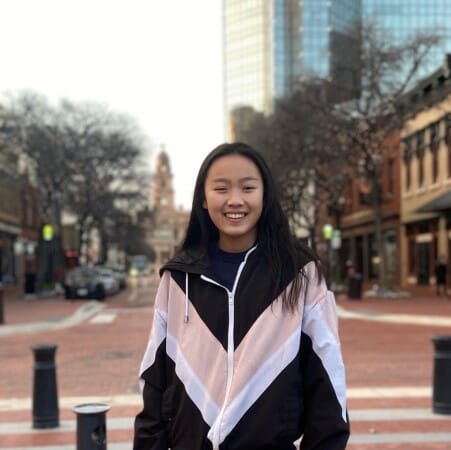
Olivia Yang, in her last year of high school, is only 16 years old. She loves debate and playing basketball, but her future goal of managing a nonprofit and making a positive impact on the world is already coming to fruition. Olivia launched The Paw Plan when the world was in the COVID-19 lockdowns in 2020.
With two rescue pets, a rescue dog named Charlie, and a recently found kitten named Cleo who adopted her dad on his walk, animal welfare is high priority for her. Today, her team donates supplies, educates people about preventing animal cruelty, and increases adoption rates at several Central Texas shelters.
What inspires you to volunteer?
When you’re part of a community, whether that be with fellow animal lovers, or a marginalized community, you begin to recognize things you think could be improved. I think volunteering is a great way to solve some of those issues. The Paw Plan helps animal welfare, but I’ve also volunteered with Masking a Difference and Dream Equal. Volunteering has been a great way to explore the things I’m passionate about and try to better the lives of others.
Describe your volunteer role with The Paw Plan.
I founded The Paw Plan to help animal shelters that had been overwhelmed during the pandemic. I adopted my own dog from a local shelter in 2019, and I realized even then, that there was overcrowding and underfunding. A lot of shelters don’t receive government funding, so they really rely on donations and volunteers. As the Director of The Paw Plan, I mainly organize and host events with my team to collect donations. We also connect youth with local volunteering opportunities and promote adoptable animals through social media. To date, we’ve donated about $6,000 worth of supplies, worked with over a dozen animal shelters and grown our member base to over 100 volunteers. We’ve really come a long way since this pandemic project.
Did you face any particular challenges starting up during lockdown?
The biggest challenge was just trying to get word out about the donation drives, and of course, hosting all of our meetings and planning sessions online. One way we overcame the former was transitioning a lot of our marketing on to social media. At events, we just did our best to make it as safe as possible. We did drive-thru drop offs where the donors could stay in their cars and we would take the donations out with gloves and masks on.
Olivia Yang, co-founder and executive director of The Paw Plan./Courtesy Olivia Yang
The pandemic really helped me appreciate the interpersonal relationships we have. It was a double-edged sword in that I got to spend more time with my family, but I also had to get creative with how I was spending time with friends, whether that be on a social distance walk or FaceTiming more. It took some adapting, but it ultimately taught me a lot of valuable lessons.
Why should someone rescue vs. go to a breeder or pet store?
There’s nothing wrong with buying a pet, because they always make our lives just a little bit more positive. But for anyone who’s thinking about adopting, I’d strongly recommend rescuing. Shelters can’t take in as many animals as they would like due to limited resources and space. Adopting — or even fostering — can really take off some strain. The animals are just as loving and deserving of good homes.
What have you learned through your experiences as a volunteer?
Impact doesn’t really need to have a huge price tag or number attached to it. Even in the initial stages, I was worried that our donation drives weren’t collecting enough supplies or we weren’t doing enough for shelters, but I’ve learned how big of an impact you can make by just getting started.
For me, it’s really about individual lives we’re improving, because when you get to meet the animals who are receiving the donated treats or toys or you get to work with some of the younger volunteers, you see that your impact is going way beyond just a few donations.
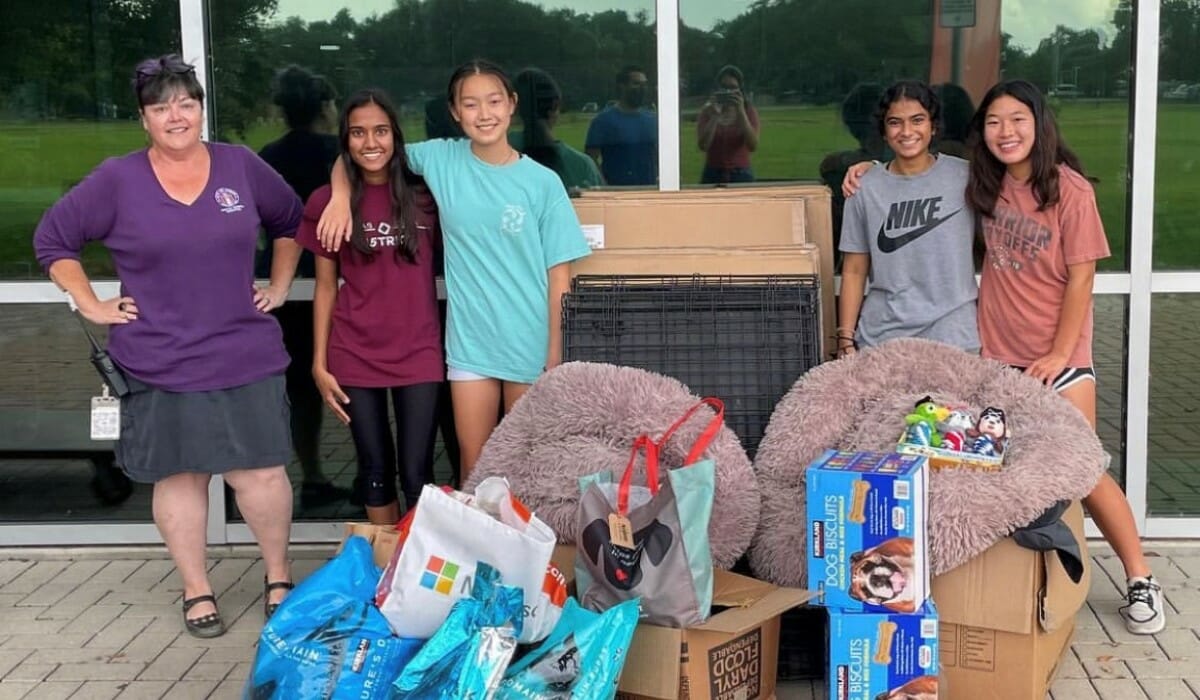
Olivia [middle] and her fellow volunteers with over $1,100 of donations for local animal shelter, Austin Animal Center./Courtesy Olivia Yang
Are there any future partnerships, programs or events that you are excited about?
We’re about to host another donation drive in October. We try to do at least one big event per month, so in November, we’re going to get some of the autistic students at our high school involved in an event to make dog rope toys. And on Sundays, we create a spotlight post on social media highlighting adoptable animals from a local shelter to get the word out. Many shelters aren’t able to dedicate much time and resources towards social media.
Why do you think it’s important to get involved in your community?
Volunteering is a two-way street in the sense that spending your time on a cause that matters to you also helps you find fulfillment. The more you get involved, the more you want to keep getting involved. Ultimately, it’s about doing your best to improve a situation and help a community that matters to you.
What do you want people to learn from your story?
It doesn’t take much to make another person’s — or animal’s — life better. Even if it’s just one can of food or one blanket, or one leash, everything adds up. With The Paw Plan, that can of food might feed a stray cat for a night, or that blanket might keep a puppy warm, or that leash might take a dog out on its very first walk.
Also, it’s never too early—or late—to become involved in volunteering. Several of our volunteers are still in elementary school! Some of our participants are parents or even grandparents. It’s inspiring and refreshing to see people from all walks of life coming together to support the same cause.
Volunteer Sees Human Connection as the Foundation for Her Advocacy Work
Meet Daily Point of Light Award honoree Suma Govindacharyula. Read her story and nominate an outstanding volunteer or family as a Daily Point of Light.
For Suma Govindacharyula, volunteerism has always been in her blood. Having immigrated from India, Suma found it heartbreaking that in an affluent community like Dallas/Fort Worth, Texas, significant portions of the population lack basic needs like food, water and shelter.
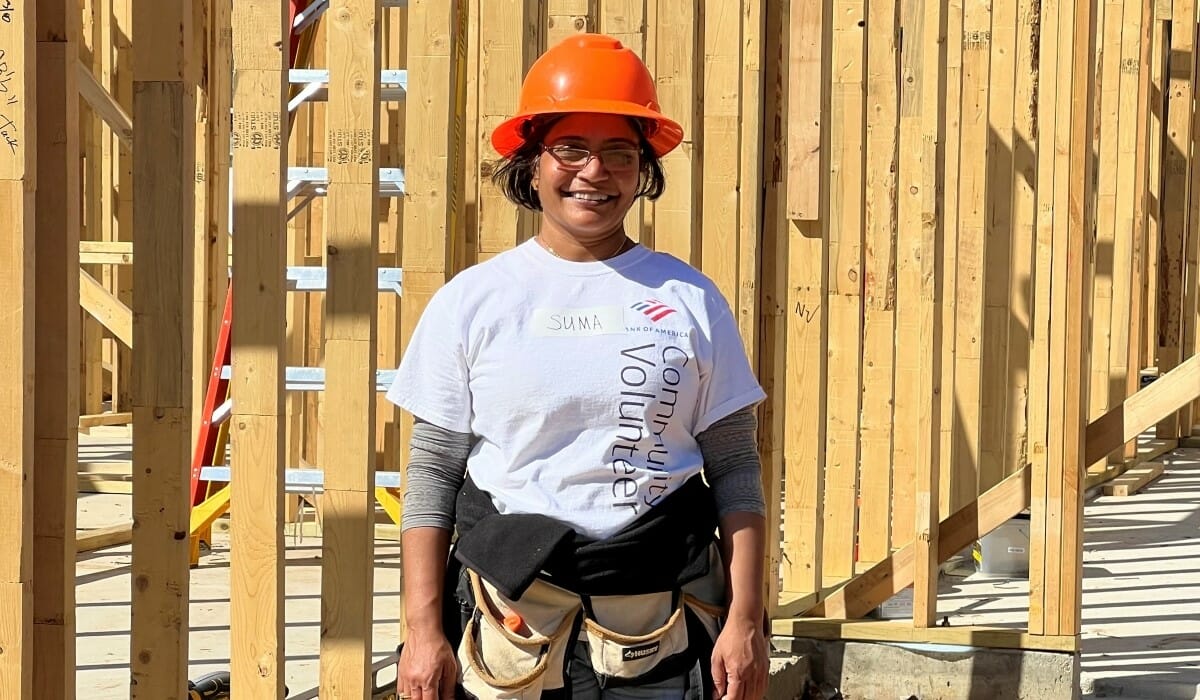
So she decided to serve as a volunteer leader with Bank of America Community Volunteers Team North Texas and with that, took the platform to pursue her passion for food and health-based drives. Suma leads teams of volunteers in a variety of initiatives, from food drives to blood drives to building houses.
Partnering with local nonprofits like Meals on Wheels, The Salvation Army, Habitat for Humanity, and more, Suma and her volunteer teams have made a sizable impact on their community. For Suma, it’s seeing the individuals impacted that drives her passion for volunteering.
“When you go and knock on the door of a 95-year-old lady who is so eager to talk, who really needs that one-on-one connection time, it’s humbling,” Suma says. “These seniors are so delighted, especially during this time of COVID, and especially within this age bracket.”
During the COVID-19 lockdowns, on behalf of Meals on Wheels, Suma and her team made phone calls to check on the seniors they were used to serving with food delivery. A 5- to 10-minute phone call could help these individuals get a little bit of human interaction and forge a new connection with a volunteer.
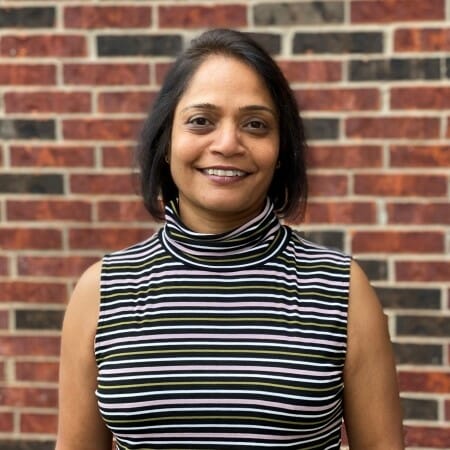
Suma Govindacharyula serves as a volunteer leader with the Bank of America Community Volunteers Team North Texas./Courtesy Suma Govindacharyula
Suma enjoys how volunteering serves multiple purposes: serving the community and team-building among volunteers. In fact, she first started volunteering in order to show her children what getting involved in the community looked like, and to instill the value of volunteering in them from a young age.
“When my kids were very young, I wanted to teach them about getting involved. But kids don’t understand what volunteering means. So I used to ‘drag them along,’ even if they were crying or throwing fits,” Suma recalls. “But slowly, they got used to the idea. At some point in time, it clicks! And once it clicks, it becomes your own. It becomes second nature to do the same.”
While her children now volunteer independently, Suma still brings her husband and her friends along on her volunteer activities, as well as her work family at Bank of America. “It’s fun to volunteer as a group!” she says.
Besides her volunteer work with Bank of America, Suma personally volunteers, has been the co-chair of BACCV Collin County since 2017 and has made significant contributions to more than 40 non-profit organizations. But she is thrilled about the culture and strong emphasis on community involvement at Bank of America, and is excited to see the new heights her volunteer team will reach in the future.
Suma at the 2022 Spring Habitat for Humanity Build in Dallas./Courtesy Suma Govindacharyula
Bank of America’s employee engagement program has allowed Suma and thousands of other employees to spread their wings in volunteerism. The organization’s employees volunteer 2 million hours annually to strengthen communities and provide generous financial donations to more than 25,000 nonprofits around the world. Other supports include things like paid time off to volunteer and grants up to $1,000 for organizations where employees volunteer their time and effort.
“The greatest blessing I have been given through working for Bank of America is the platform to organize large-scale community service projects with my peers, who share my passion,” Suma says.
She encourages anyone considering volunteering to simply reach out to local organizations. “People always need help. You’d be surprised. Look for options, because they’re always there,” she says. “You might even find your passion while you’re looking for opportunities.”
For Suma, it’s clear that her passion has been kindled and rekindled through volunteerism and connection in her community.
Student’s Service Helps Teens Prioritize Mental Health and Well-Being
Meet Daily Point of Light Award honoree Laney Brackett. Read her story and nominate an outstanding volunteer or family as a Daily Point of Light.
Content Warning: Points of Light is proud to share the following uplifting and inspiring story. However, we acknowledge that a small portion below may be difficult for some readers. We encourage you to please care for your own wellbeing above all.
Eighteen-year-old Laney Brackett lost two family members to suicide and says she’s faced her own issues with severe anxiety, calling it a struggle to find help. In response to this personal experience, Laney has dedicated her volunteerism to encouraging well-being for other teens.
Founding Caressential in 2020 during the COVID-19 pandemic, Laney, a resident of Kirkland, Washington, says her service was prompted by teen mental health hitting what seemed like an all-time low. First implementing the Caressential club at her own high school, there are now clubs across King County where hundreds of teens are able to prioritize mental health and share support and resources with others. Through Caressential, Laney has built communities where students can come together in a safe peer-to-peer space and support individual well-being.
What inspires you to volunteer?
Knowing that you might not help everyone, but even if you could potentially help someone or save someone’s life, it’s very fulfilling. As cheesy as it sounds, I really enjoy being able to help others.
Describe your volunteerism with Caressential.
I started the Caressential club at my school during sophomore year, and then decided I wanted to scale throughout the community, so I established Caressential as a nonprofit. As founder and CEO, I work with school counselors, principals and staff to implement clubs throughout our greater community. I also apply for grants and funding. I’ve designed the clubs so that other schools can easily start and run their own clubs using the Caressentials Club in-a-box.
As the founder and CEO of Caressential, Laney Brackett has helped hundreds of teens in her greater community prioritize mental health./Courtesy Laney Brackett
In addition to my volunteerism with Caressential, I serve elsewhere throughout the community and am a volunteer with Teen Link, an organization run by teenagers that answer incoming calls and chats from teens anonymously seeking help.
Share one personal story with me from your volunteerism.
I was volunteering an Easter evening shift at Teen Link with other high school students. Easter is usually when I have dinner with my family, so I was sad that I couldn’t be with them, but everyone was laughing and supporting one another during the shift. I took a call from a teen in a high acuity, stressful situation. I talked them through it and the teen thanked me, telling me they weren’t sure they were going to get through the day before our call.
I was really emotional getting off that call, and my Teen Link volunteers supported me. This is why I love volunteering so much. It’s very fulfilling for me personally to know you could have helped someone, and it also feels like I’m giving back to my family and gives me a better understanding of why my two family members did what they did.
Why do you think it’s important for others to get involved with causes they care about?
There are different reasons, but at some point in our lives, everyone has been helped or someone has helped us. Volunteering is one of the best ways you can anonymously give help to someone. You’re doing no harm while volunteering, only doing good for the community. Hopefully you can find volunteering that aligns with your passions because that makes it even more worthwhile.
What’s been the most rewarding part of your service?
It’s rewarding to see how much I’ve grown throughout my service and how I’ve been able to scale different projects. I started volunteering in 8th grade and didn’t know as much about mental health, but now I’m a senior, I’ve founded a nonprofit and feel like I could walk anyone through a stressful situation, as well as handle one myself.
How have you continued to volunteer throughout the pandemic?
I’m heading off to college next year and my goal is to continue my work in college. I ideally would love to keep the nonprofit running and scale the clubs even further, or get involved in other mental health work and continue teaching my peers the importance of self-care.
In one word, what does volunteering mean to you?
Happiness.
When you’re not busy with school or volunteering, what do you do for fun?
I’m a big swimmer, and I love any body of water. I have two cats and six chickens that I take care of. Other than that, the usual – hanging out with my friends and enjoying senior year.
How can readers help?
We rely on donations to support our programming. Please visit our website for more information about how you can get involved.
If you or someone you know may be considering suicide, contact the National Suicide Prevention Lifeline at 1-800-273-8255, or text HOME to 741741 to talk to a trained crisis counselor through Crisis Text Line. Both resources are anonymous, free and available 24/7.
Teen Volunteers for Change with On-Demand Service for Students
Meet Daily Point of Light Award honoree Pranav Rastogi. Read his story and nominate an outstanding volunteer or family as a Daily Point of Light.
After a family trip to India where he spent quality time with his grandparents, Pranav Rastogi was inspired to volunteer with senior citizens back at home in Cincinnati, Ohio. The 16-year-old high school senior now serves seniors, children and families while also providing volunteer opportunities for other students.
As the president of S.M.I.L.E., (Students Making Individuals Lives Better), Pranav’s service has helped people near home in Cincinnati, and also around the world. By offering on-demand service opportunities for students, S.M.I.L.E. focuses on small, incremental changes that will lead to global change.
What inspires you to volunteer?
I volunteered at a senior center for three months, skipped a week, and when I came back the next week, they asked me where I was the previous week. That was unexpected for me. They remembered that I come every week, and now I’m part of their experience at the senior center and that was crazy. This was the first time I felt like, ‘oh wow, I want to come back and do this.’
Describe your volunteerism with S.M.I.L.E.
S.M.I.L.E. believes that service complements academics through building character, developing empathy, compassion and diversity in thought by strengthening awareness about current situations. As president, I lead our active members, the S.M.I.L.E. app and also organize our community events, including service learning with younger children.
Pranav serves seniors, children and families while also providing volunteer opportunities for other students./Courtesy Pranav Rastogi
Since its launch in February 2022, the app has drawn more than 500 users from 16 high schools in the United States and internationally, and facilitated more than 1,300 hours of service.
Share one personal story with me from your volunteerism.
I was on the way to swim practice and saw two unhoused men reach into a trash bin and retrieve a box of donuts. They went back to a bench, one went to sleep and one cracked open the box of donuts. For him, it was like he hit the lottery. Shortly after that, we organized a local drive for donated plastic grocery bags which we made into yarn and then sewed that yarn into mats for unhoused people.
Everyone knows volunteering has an impact, but it doesn’t really hit you until you can actually see the impact. Seeing the reaction from the unhoused people when we dropped off the mats, that was when I realized how impactful volunteering can be.
Why do you think it’s important for others to get involved?
You’re always going to find disparities between different communities, across social policies or just the way you were brought up. A lot of times you can’t control what kind of situation you were born into, so if you were born into a situation of more privilege, it’s in your best interests to help those who weren’t. You don’t know what people in under-resourced communities are capable of achieving and the more people you have working towards a goal, the better.
What’s been the most rewarding part of your service?
It’s rewarding that the things I am doing are really helping communities and are really helping people. If I continue to do that, it will continue to make an impact.
By offering on-demand service opportunities for students, S.M.I.L.E. focuses on small, incremental changes that will lead to global change./Courtesy Pranav Rastogi
How have you continued to volunteer throughout the COVID-19 pandemic?
We weren’t able to carry out our normal volunteer activities, and we couldn’t go to the senior center or help refugees or visit underserved schools in Cincinnati. But we could make cards or a video and send them to the senior center. COVID showed us that if you really want to volunteer, you can, no matter what situation you are in.
In one word, what does volunteering mean to you?
Impact.
When you’re not busy with school or volunteering, what do you do for fun?
I love to draw and I like to sing. I’m very involved in the arts.
How can readers help?
Please visit the S.M.I.L.E. website for more information about how you can help.
US Airman Serves the Community While Serving the Country
Meet Daily Point of Light Award honoree Keifer Severson. Read his story and nominate an outstanding volunteer or family as a Daily Point of Light.
Thirty-one-year-old South Dakota native Keifer Severson joined the United States Air Force just a year and a half ago. While he’s volunteered in the past, his service kicked into overdrive when he landed at the Dyess Air Force Base in Abilene, Texas. From bringing dinner to a veteran who suffers from depression to taking orphans Christmas shopping and much more, Keifer finds many different ways to show he cares. He uses his off-duty time to give back to his new community with the Dyess We Care Team and beyond.
What led you to join the Air Force?
It’s something I always wanted to do, but I was doing really well in normal civilian life until the oil recession hit. Then I was forced to find a new occupation, and it just hit me that this was the time. Before that, I’d had a foot in the door with construction and did a wide variety of things with machinery tech, like building flameless heaters that required diesel engines.
Now, I work on aircrew flight equipment. We handle a lot of the gear that the pilots use on a daily basis, harnesses and stuff that assist in loading cargo onto the planes. We also handle survival equipment like parachutes, life preserver units similar to what you’d see in a commercial aircraft, helmets and gear that helps pilots fly.
What inspires you to volunteer?
I’ve really enjoyed doing it at home, but when I got here to the Dyess Air Force Base, I started doing more. The Dyess We Care Team is a huge supporter of the community in Abilene. The leader at the time happened to come into one of my initial classes and talked about what they do. It was when my family was still back to South Dakota, before they moved here. I offered up a lot of my time and got a good chunk of hours in with them beforehand and did several projects. It escalated from there.
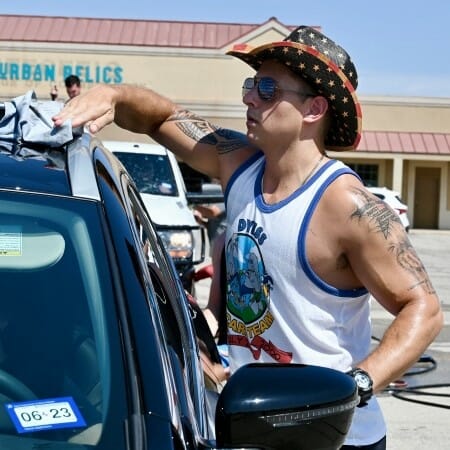
Keifer leads the Captain America Carwash, the most successful in the Dyess We Care Team’s history./Courtesy Keifer Severson
Describe your volunteerism.
The We Care Team is focused on utilizing new airmen, because it helps them get a foothold on the Air Force Base. They’re far from home. It gives them the chance to collaborate and meet new people as well as get them out of the dorms. In a way, it’s like a break from military life. They can go out into the community and help us with projects.
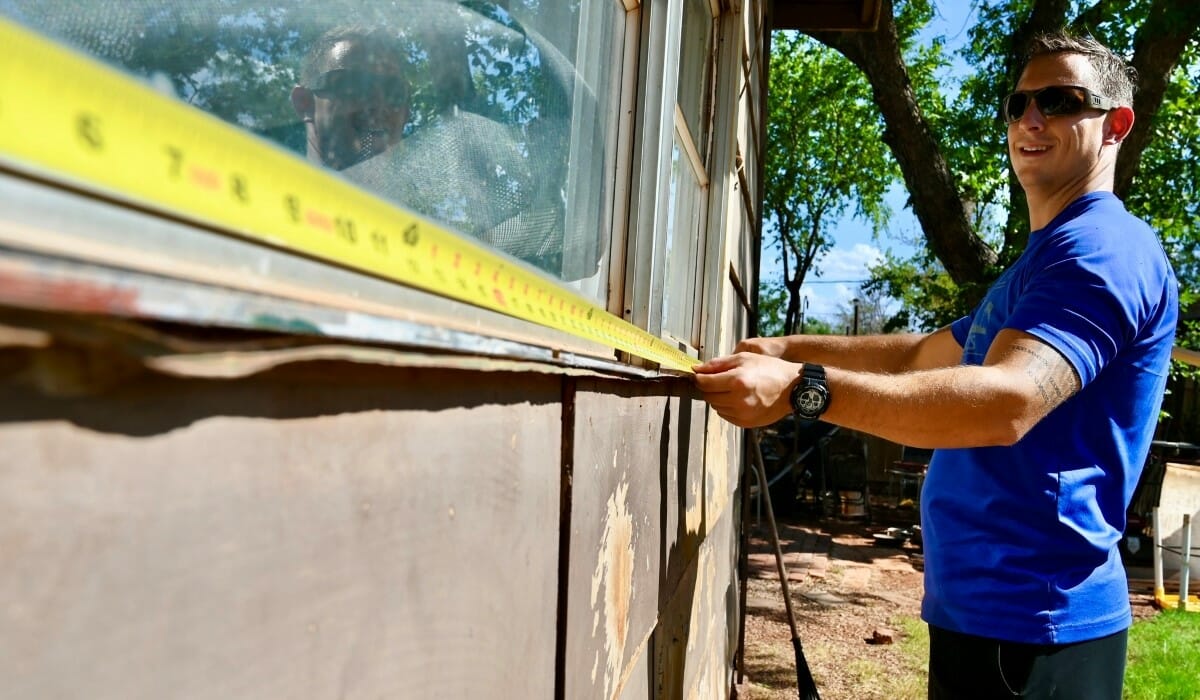
Last year, we gathered over 100 bags of donated Christmas presents for a nursing home facility through another organization called Friends for Life. This year, we did a large project where we renovated a community center that was long overdue. We did some carpentry, put in cabinets and completely renovated the building. In general, we’ll go out to build handicap ramps or clean and do minor repair work on houses. I was the lead carpenter on a house painting project for which we did some minor fabrication on the outside of the house to fix holes.
What’s been the most rewarding part of your work?
For me, it’s seeing the end product, the fruits of our labors. I also like that it gets everybody together. You don’t even know half the volunteers sometimes, but you’re able to come together as a team in the community and accomplish the goal.
As Lead Carpenter on the project, Keifer helps paint and repair the home of a disabled Army veteran./Courtesy Keifer Severson
What have you learned through your experiences as a volunteer?
I’ve learned a lot about leadership and how, when working with other people, you have to be open to different perspectives, particularly through the renovation project. There is occasionally some head butting between volunteers over how to do certain things. It was kind of eye-opening experience, because it was the first project like that with the Dyess We Care Team.
Another thing I’ve learned about are tools of the trade. I’ve learned electrical stuff. We worked on circuit boards of a pinball machine, for example. And a lot of general construction things: framework, trim work, painting. Demo is probably the most fun part. For the record, it’s so much easier to watch on TV than actually doing it!
Are there any future programs or events that you are excited about?
Unfortunately, I won’t be able to do anything for a while, because I’m on a GDI [Global Defense Initiative]. But there’s another carwash coming up. We do them a couple of times a year. Our Captain America Carwash in July raised over $5,000 for the First Sergeant’s Club here at the at the base.
We use community funds to help the community, and the military utilizes the airmen who want to get involved on the Air Force Base. The car washes are designed to support the first Sergeants who take care of the airmen with issues that arise with finances, family, emergencies away from home, etc.
High School Senior Helps Fill the Gaps in Healthcare and Accessibility
Meet Daily Point of Light Award honoree DhwaniKharidia. Read her story and nominate an outstanding volunteer or family as a Daily Point of Light.
Dhwani Kharidia is in her last year of high school and has already dealt with the reality many Americans only discover when they’re looking for their first job away from home. Healthcare in the United States is simply not accessible to everyone.
She was denied care on multiple occasions because the hospitals in her area didn’t accept her insurance. Once, they admitted that they weren’t on good terms with her insurance company.
“I was astonished to see how regular people like me were unable to get basic healthcare because two big companies weren’t getting along,” she says.
It was these experiences that led her to start a local chapter of Get a Cane, a nonprofit her brother founded in San Diego two years ago. Get a Cane connects people struggling with mobility issues with DME (durable medical equipment) like walkers, crutches and, of course, canes.
Initially, she was doing most of the work herself: getting the word out to places like libraries and senior centers, asking for donations, seeking out recipients and more. Today, after collecting over $15,000 in DME donations and 100+ devices, and with a consistent volunteer staff of six or seven, she focuses on managing inventory and scheduling pickup and delivery for her team. Her favorite part, however, remains talking to seniors and others with physical challenges about their needs.
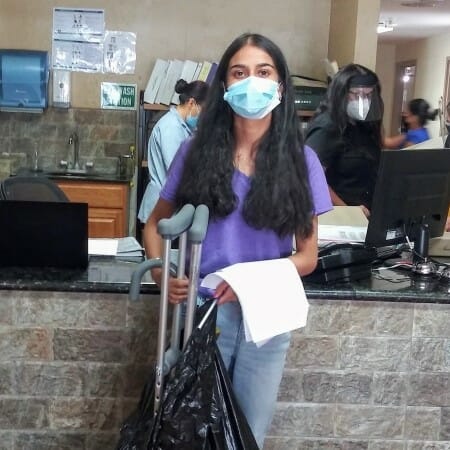
Dhwani delivers mobility equipment to a local nursing home for low-income residents in need./Courtesy Dhwani Kharidia
“I knew fixing the problem itself might have been super hard, so I tried to mitigate some of the negative effects of the problem,” she recalls. “I took the opportunity to start a new chapter to ensure that the policies did not get in the way of individuals in getting equipment and just, in general, having access to mobility. Mobility is such an essential thing.”
Discussions with a local senior center nurse showed her that while insurance sometimes funds aids for those covered, necessary features aren’t guaranteed. For example, if a senior needs a walker, they may be able to get a basic model, but it won’t necessarily have a seat for them to rest if they are walking outside.
She recalls a wheelchair delivery to a senior veteran who had lost a leg during his service. He described how much it would help him in his daily life and was happy to know that someone cared about the difficulties both he and other seniors and veterans were facing. In other words, he felt heard.
“The most important thing I’ve learned is how important it is to connect with people that you’re serving on a deeper level and to try to understand them,’ she says. “That makes your service more impactful. I’ve learned how important it is to just establish trust with the people whom you serve.”
Upon learning of her work, the community has jumped in with support in the form of donations and references for people who might need devices. Many are happy to have a place to bring DME they no longer want or need. Not only does it feel good to help someone, but it prevents a lot of unnecessary medical waste.
“It’s important to both be generous and to have a spirit of conservation in general, not for just medical items,” Dhwani mentions in reference to donations.
Friends and fellow students have also banded together behind the cause assisting in outreach, social media, and collection and delivery. Angelina Pham, a school friend who now acts as a publicist for Get a Cane, started donating her time after Dhwani convinced her of the need for the work.
“Her motivations are just really pure and genuine. She’s very on top of things. And she’s also pretty good at getting others to join the cause. She’s very persistent,” Angelina says.
Angela, too, has seen the value DME can have on people’s lives.
“I realized that just lending a small helping hand can make such a big difference in other people’s lives, and that’s kind of beautiful to see.”
Now, Dhwani and Get a Cane are working on a research project that will dive deeper into some of the problems people are facing when trying to obtain DME both with and without insurance. They hope to publish it on their website to highlight why this cause is so important and to assist people in making more informed decisions about donating.
“Oftentimes, we have simple things, and we think everyone else has them too. It’s super important to recognize that not everything that we have is available to everyone else as well. My dad has really taught me to think in that manner,” she states.
As she applies to college, Dhwani focuses on her interest in biology and public health and hopes to open another chapter of her nonprofit to help the area surrounding her future campus. In the meantime, she’s happy to provide guidance to anyone looking to follow her lead and encourages anyone looking to volunteer to give it a try. She can be reached through their website.
90-Year-Old Immigrant Volunteers to Give Other Immigrants Hope
Meet Daily Point of Light Award honoree Mikhail Vigdorov. Read his story and nominate an outstanding volunteer or family as a Daily Point of Light.
Older and alone in New York, unable to speak English and away from family and friends, Mikhail Vigdorov felt helpless and isolated. But Mikhail says he met people who were willing to connect him to resources, and is now paying that kindness forward.
When I found myself in 1993 in New York at the age of 62 without English at all, without relatives and friends, I felt completely helpless and alone. But I met a lot of wonderful people at the New York Association for New Americans who helped me take an English class, get a job, rent an apartment and so on. In 1994 I relocated to Denver, and decided that it is my duty to help other people in the same way that I had been helped.
Describe your volunteerism with Spark the Change Colorado.
This program is part of AmeriCorps Seniors, and engages individuals 55 years and older to realize the independence of older adults in their home and as a team, continue to be vibrant, contributing members of our communities. We help new immigrants who are senior citizens in their first steps in a new country — to get a job, rent an apartment, arrange children for school, visit the doctor, help the elderly with Social Service, shopping, bills and so on. Most of our work is to help the senior citizens in their everyday needs, and do everything so that they don’t feel lonely. In 1995 I was offered a job as a volunteer at Jewish Family Services, and I gladly accepted. Since then, I have volunteered at many organizations.
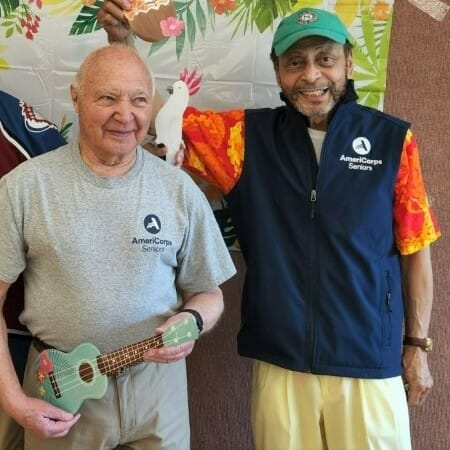
Mikhail Vigdorov, left, volunteers for AmeriCorps Seniors’ Senior Companion Program through Spark the Change Colorado./Courtesy Spark the Change Colorado
Share one personal story with me from your volunteerism.
My first clients were a family with a small baby, with another baby on the way, and we helped the husband with a job, and I took him to his work till he earned money for a car. The time flies very fast, and a few years later this family bought their first house, and I was invited to a housewarming party. They already had two kids, and when I saw that happy family, I was as happy as they were.
Why do you think it’s important for others to get involved in their community?
I am absolutely sure that it is very important that elderly feel care and attention, so that they are not alone. In our cruel time, kindness and love toward the elderly should serve as a good example for the next generations.
What’s been the most rewarding part of your service?
The best reward for volunteers is the happy faces of our clients, and their sincere gratitude.
What have you learned through your experiences as a volunteer?
I am 90 –years old, and over my long life I came to the conclusion that you can be happy at any age, if people need you, and you can help them.
Through Spark the Change Colorado’s Senior Companion Program, Mikhail’s service to older adults improves their quality of life and maintains their dignity and independence./Courtesy Spark the Change Colorado
How have you continued to volunteer throughout the COVID-19 pandemic?
Our volunteers received a lot of useful information from Spark the Change on how to protect yourself during the COVID-19, and we shared all information with our clients. We also helped our clients with delivery of food and medicines to their apartment, and every day communicated with them by phone or internet.
What do you want people to learn from your story?
I will be very happy if my humble work helps someone to start volunteering.
In one word, what does volunteering mean to you?
Let me express my feeling in a couple words: “from heart to heart.”
Deacon Driven by His Faith in Volunteerism With Unhoused Individuals and Families
Meet Daily Point of Light Award honoree Michael Cuff. Read his story and nominate an outstanding volunteer or family as a Daily Point of Light.
“Transforming the lives of families experiencing homelessness. Because every child deserves a home.” That’s the mission of Family Promise Montco PA, where Michael Cuff has volunteered his time and efforts year-round since 2015.
A deacon in the Catholic church, Michael sees the promise in each person. He’s an encourager, a connector and an organizer, acting as a beacon of hope and support for families experiencing homelessness. A resident of Ambler, Penn., Michael shares his love for the organization and the communities it serves with members of his congregation. He embodies humble vitality and enthusiasm along the way. Read more about what motivates Michael in his volunteerism as well as some of the things that Family Promise Montco PA is achieving.
Describe your volunteer role with The Interfaith Housing Alliance.
I’m a deacon in the Catholic church – that’s more of a calling. Part of that calling is to help people in need: the lonely, the sick, widows, prisoners. Take The Beatitudes and The Corporal Works of Mercy – they’re pretty basic, and I try to live those out. Through that, I became involved as a coordinator with a program called Family Promise, part of the Interfaith Housing Alliance. It’s a program working with various churches in the area to sponsor unhoused individuals.
What that means is they give them a place to stay while they’re looking for work during the day. This includes not only a place to sleep, but also meals every night, a place to bathe, access to computers to try to find work, counselors to help them with money management, social workers to help with things like childcare. In the churches, we’re asked to help stabilize these people’s lives by giving them a place to eat and rest every day, and that helps them find their way out of homelessness.
So there’s one church that’s the main place for three months. Then each week, other churches in the area provide volunteers to go to that church to greet the families, bring the meals, spend time with them, and in some situations, even provide transportation. It’s a very good program. I’ve been kind of a jack of all trades for the program. I help some of their other clients find work, provide minor financial services or a ride, and maybe even some spiritual guidance.
Michael works with many populations through his volunteering and enjoys the relationships he forms with others./Courtesy Michael Cuff
What inspires you to volunteer?
The word “deacon” has direct ties back to the Greek word “diakonia,” which means “one who serves.” In times of old, men worked and widows often got neglected. So it was the deacons’ responsibility to go and provide for these widows. So it’s all tied back to the same concept.
Our faith is built on two things: word and deed. You can go on Sunday and do all the singing and praying you want, but if you don’t go out those doors and live out what you’re singing and praying about Monday through Friday, you’re forgetting what it’s all about. Word and deed. That word “and” is important. It connects the liturgy and the service. That’s what inspires me.
Sometimes when you listen to the news, it can seem overwhelming – the violence, the homelessness, all these different things. But if everyone helped one person, we wouldn’t have some of these problems. I don’t think people realize the thin line between housing insecurity and the costs of things… the income disparities are becoming bigger and bigger.
Please share a rewarding moment from your work.
There was a young woman several years ago in the program who had two small children. She needed some extra help. She was going to some of the most unsafe places in Philadelphia, riding an unusual bus route to take her kids to a daycare there. I was able for a two-week period to provide her with morning and evening transportation. That was one less thing she had to do.
Down the road, she was progressing through the program, doing everything that was being expected, through her work she was doing very well. Eventually, she started going back to school. To make a long story short, about a month and a half ago I ran into her and she told me she just finished her associate’s degree, and now she’s working on her undergraduate degree.
This is a woman, just five or six years ago, who was in a very tough spot in her life. That, to me, proves that if people are willing to help other people, it can make a huge difference. It’s not a handout. She even told me she wants to major in social work in order to come back and help others the way she was helped.
Why do you think it’s important for others to get involved with causes they care about?
Because if you step back and think about it, our government isn’t going to fix it. Our people can’t even talk to each other, how sad is that? The primary problem is that people are attacking each other. There’s so much judgment.
There are things we can do as a community to make things better. Each one of us is here to help other people. Each one of us has different skills and different vocations, so we just have to find what we’re being called to.
One of the things we do in baptism is we pray over the ears and the mouth, a prayer to open the ears and mouth. Open our ears, and be able to speak what we hear. A lot of times, the speech part is the action, what we do in response. Actions speak louder than words, and we all need to use our gifts, talents and abilities to help others.
Are there future partnerships, programs or events that you are excited about?
There’s always a need. Always. Family Promise of Montgomery County Pennsylvania is an interfaith organization. They have different events, they have golf outings, they’re always looking for volunteers, service, donations, etcetera. They need volunteers to paint, financial assistance and more.
How can people find out more about the current needs?
Go to Family Promise Montco PA. It’s not just Christians – it’s an interfaith organization, including Jewish temples and others, banding together to help the community.