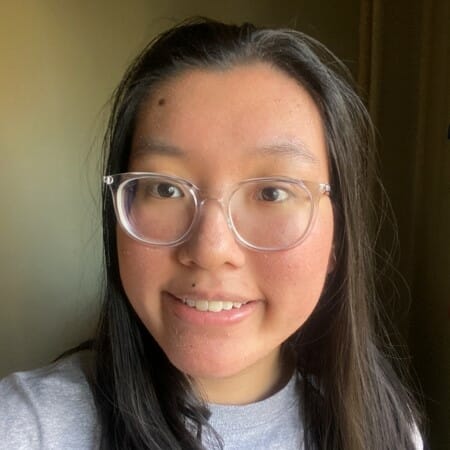
Meet Daily Point of Light Award honoree Glendaliz Garcia. Read her story and nominate an outstanding volunteer or family as a Daily Point of Light.
Glendaliz Garcia, 32, is a Mexican American from the small town of La Joya, Texas. Glendaliz’s family taught her the importance of sharing. If her grandparents made food, the whole neighborhood was invited, because everyone is basically family. As a child, she was raised to help however she could, whether cooking, cleaning or helping elderly family members.
Glendaliz loves her Mexican heritage, and the example set by her family is central to her desire to keep volunteering. As she says, “If you see someone who needs your help, and you have the way, you extend your hand. That person will pay it forward.” When the day comes that Glendaliz has kids, she plans on making sure they continue the tradition of helping everyone in need.
Glenda quickly volunteered when her employer introduced a virtual volunteering opportunity with Lemontree, a New York-based nonprofit that connects users to resources such as food pantries, soup kitchens and SNAP benefits in their area.
Read on to learn how Glendaliz is supporting food-insecure individuals and what inspires her to volunteer.
What inspires you to volunteer?
As a Mexican/American woman I grew up in a big household. I was raised on the philosophy that when you make food, you invite your whole family and the neighbors. When one family member eats, the rest eat too. My family raised me that if you have enough for yourself and you can spare some, help anyone in need because today it might be them who need help, but tomorrow it might be you.
Glendaliz is a volunteer with Lemontree, a New York-based nonprofit that connects users to resources such as food pantries, soup kitchens and SNAP benefits in their area./Courtesy Glendaliz Garcia
When I married my husband 10 years ago, I fit in with his family because they were the same way that my family brought me up. We helped several people one Thanksgiving by giving out four family dinners. My husband has always said to me, “God gives us extra so we can share with other people.” I love both my families very much and know we will always help people or animals in need.
Describe your volunteer role with Lemontree.
Lemontree’s helpline connects food-insecure families to the food pantries and soup kitchens in their communities as well as government resources including SNAP programs and even food delivery services for those unable to leave their home.
I have connected over 440 individuals to available food resources. Once I log into the Lemontree site, messages start coming in. Each message shows the person’s name and what type of help they need, whether they’re looking for a food pantry or soup kitchen. The site also gives them the option of communicating in Spanish. On my end, a map pops up where I can see where the person lives and the location of the nearest food pantries or soup kitchens along with their operating hours. I then choose up to four resources, and the system populates them to the message I send back to the person. I can also type in a personal message which I believe really makes a difference in making a person feel heard. Each chat takes less than 5 minutes and helps someone in a big way!
This is a virtual volunteer role. This means that no matter where I am, I can help someone in need, even outside of my community. You can help anyone from anywhere with just your phone! A hungry neighbor a hundred miles away is the same as the neighbor next door.
Lemontree is something we need to promote, and create more companies like this to help more people in need all over the USA.
What’s been the most rewarding part of your work?
The most important part of this for me is that even though I can’t see the person I am helping face to face, I get to help them another way, from anywhere I am in the world. I could be outside, on vacation, in my room or talking to a family member, and can still volunteer. Also it makes me feel great that just five minutes of my time will change their lives for one day or more.
What have you learned through your experiences as a volunteer?
No matter who you help, where you help, how you help, people will appreciate it in a big way. I have also seen that my family and I get blessed from above more often with helping others in any way we can.
Are there any future partnerships, programs, or events that you are excited about?
Yes! The company I work with has a Women Inspiring Success & Excellence (WISE) program. I am a team lead for the South Texas chapter to help my community out even more with anything we can do in the area. I am very excited to be able to share this with my family and friends and other community members in my area.
Why is it important for others to get involved with causes they care about?
Giving back is very important because we help our community but when we help, we do it with love and passion, and things come out better.
What do you want people to learn from your story?
If we give a little bit of time, we can help a person in a small way. To them it can be a big help even if it’s from the comfort of our own home from our phone or computers.
Teenage Environmental Activist Inspires Youth to Save the Seas and Beyond
Meet Daily Point of Light Award honoree Maanit Goel. Read his story and nominate an outstanding volunteer or family as a Daily Point of Light.
With their striking white-and-black coloring and breathtaking leaps in and out of the water, orcas – also known as killer whales – have long been a beloved icon of the Pacific Northwest. But due to vessel traffic noise and disturbance, toxic contaminants and especially the disappearance of their primary food source Chinook salmon, orcas that live in Puget Sound and the Pacific Coast have become critically endangered. The Southern Resident killer whales, once numbering around 200, have now declined to a mere 73 in the 2022 census, highlighting the urgent need for conservation efforts to protect these majestic creatures.
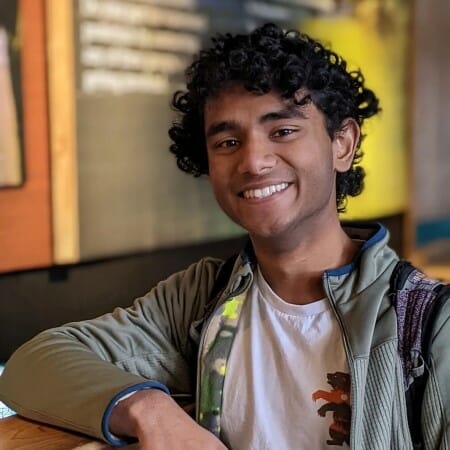
Enter Maanit Goel, a 17-year-old high school junior from Sammamish, Washington, whose curly hair and bright smile may lead one to think of him as a carefree, happy-go-lucky teen. But Maanit is anything but carefree, as his fervent passion for protecting not only orcas and salmon, but the entire planet, sets him apart.
On January 13 of this year, Maanit rallied more than 100 student and community activists to the steps of the Washington State Capitol in support of removing four dams on the lower Snake River, which experts say are impeding Chinook salmon migration to and from the ocean, thus harming the Orca population.
“Save the salmon! Save the salmon!” chanted Maanit along with his fellow youth activists, many of whom belong to the Washington Youth Ocean & River Conservation Alliance (WYORCA), an organization Maanit founded in January 2022.
Maanit Goel is the founder of the Washington Youth Ocean & River Conservation Alliance, a youth-led organization working to protect orca and salmon populations in the Pacific Northwest./Courtesy Maanit Goel
“We need [Washington governor Jay] Inslee and the political leaders of the Pacific Northwest, specifically in the state Legislature, to understand the urgency of this issue. The salmon cannot wait,” he told local press.
As the president of WYORCA, Maanit travels to schools around the state to speak to K-12 students about the Snake River dam issue and other environmental concerns. He has spoken directly to about 1,700 students to date.
“By reaching younger students, it motivates them to get involved with environmental issues starting at a very early age,” Maanit said. “Even for me, when I first got involved with this movement, being able to see other students my age who were already involved drove me to take action for the environment.”
To ensure that his activism can create lasting change, Maanit joined the Washington State Legislative Youth Advisory Council, through which he speaks to state legislators, whether that be through Zoom meetings or testifying in front of state Senate committees.
“In the past year or so, we’re seeing for the first time an openness from the legislative sphere to consider dam removal as an option,” Maanit said. “Our main message we’re trying to promote is that renewable energy at the cost of some species is not clean energy. So, if we truly want clean energy, it can’t be with these dams. That has been reflected in the statements made by policymakers in late 2022. In August 2022 specifically, Senator Murray and Governor Inslee released a commission report finding that dam removal is an economical option that will have significant impacts in conservation.”
In addition to Maanit’s dedication to protecting salmon and orca populations, he is also deeply committed to addressing the detrimental impact of palm oil-driven deforestation and the ethical implications associated with the industry. However, with no pictures of cute orca whales to captivate the interest of young students, Maanit had to think of another way to convey the complexities of the palm oil industry, deforestation and child labor. So he developed Pokok-Ed, an online game that allows players to assume the role of a plantation farmer in Indonesia or Malaysia and challenges them to keep their plantation running for as long as possible.
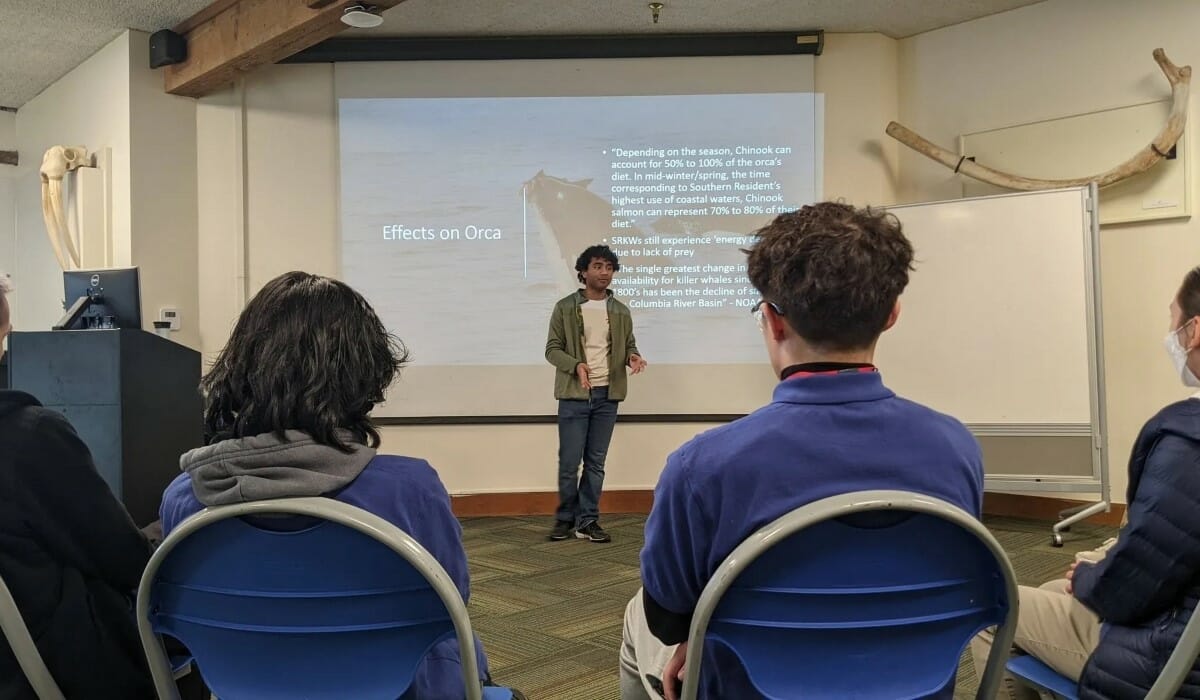
Maanit talking to a group of youth ocean advocates at the Seattle Aquarium./Courtesy Maanit Goel
“The game helps the students empathize with the farmers and think about the logical reasons behind these practices and also experiment with different approaches to equitably combat deforestation and child labor,” Maanit said.
According to Maanit, the game and its corresponding lesson plan will be implemented into eight schools this academic year.
On top of his work with WYORCA and the Legislative Youth Advisory Council, Maanit chairs the Sammamish Youth Board, serves on the Project Green Schools’ National Youth Council and is a member of EarthEcho International’s Youth Leadership Council, through which he organized the first ever youth town hall for ocean policy with high-ranking NOAA officials, among many other achievements.
“Maanit is a massive leader for the group,” said Susie Hicks, online community coordinator for Earth Echo International. “He’s helped us create videos to welcome people to our online platform. He’s spoken on behalf of EarthEcho at IMPAC5. He also went to COP15, the UN’s biodiversity conference, and just met people and built the connections that EarthEco needed so we’re really grateful to have him be a part of our organization.”
“I feel grateful to know Maanit now because I think he’s just going to skyrocket as time goes on. If he’s able to accomplish this much when he’s 16, I’m so excited to see how he’s going to change the world,” Susie added.
Texas Teen Makes Resources Accessible for Immigrants and Refugees
Meet Daily Point of Light Award honoree David Gibson. Read his story and nominate an outstanding volunteer or family as a Daily Point of Light.
At the age of 17, David Gibson has his hands full — in the best way. He’s spent years volunteering with multiple organizations in the Dallas-Fort Worth area to help make his community more welcoming, especially for immigrants and refugees. He created Juntos to be a network of resource hubs to help connect immigrants and refugees to critical information in accessible ways. Juntos houses lists of free or reduced-cost healthcare clinics, legal services, ESL classes, food pantries and more.
I wanted to start helping people because I live a very privileged life and I feel like it’s my duty to give back to people. What keeps me inspired is the feedback I’ve gotten from the people I’ve helped. For example, 50,000 people have now visited Juntos and been able to access resources through the site. It makes me very happy that I can be of use to them.
Specifically with Juntos, I was moved to start volunteering after meeting an immigrant that was having tooth pain and didn’t know how to find a doctor or a dentist because they didn’t know the language. That’s when the idea of Juntos popped into my head; I wanted it to give resources to people in need in languages they could understand in a pretty simple way.
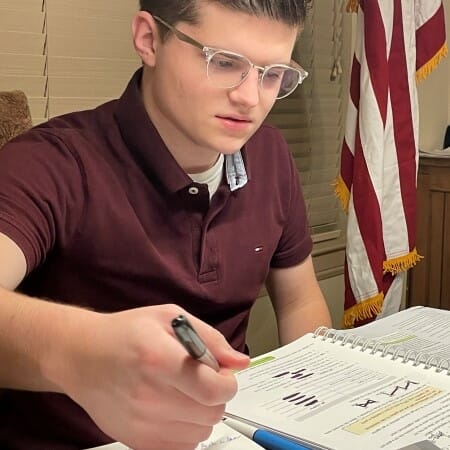
David Gibson volunteers with Gateway of Grace as an ESL tutor./Courtesy David Gibson
Describe your different volunteer roles and organizations.
I have three main ones right now. I currently run Juntos DFW which provides resources to immigrants and refugees who may face language barriers or uncomfortable technology. I’m working on organizing other students to help me spread Juntos around Texas. One of my friends is doing Juntos Austin.
I’m also the Vice President on the Junior Board and also a Docent at the Dallas Holocaust and Human Rights Museum. I get to walk around and talk to groups and people about the exhibit and also give a youth perspective to the museum as a leader on the Junior Board. I also teach English with Gateway of Grace. I meet with students one-on-one to talk to them and help them improve their level of English through conversation.
I also established a Junior Board on my local City Council where I help coordinate events with the town bureaucracy and also get local kids more involved in politics.
What’s been the most rewarding part of your work?
I would say the friendships that I’ve been able to develop. One of the people who I taught English to was an Iranian refugee who was persecuted for being a Christian and fled to Turkey. I’ve been teaching him for more than a year now virtually and we developed a close friendship. He finally got his visa and is going to be coming to the United States within the next month and we’ll finally get to meet in person.
What have you learned through your experiences as a volunteer?
I’m learning the importance of government – especially local government. With Juntos, I’ve learned a lot about running an organization, growing it, spreading the word about our website and including others in the process. I’ve had to coordinate a lot of volunteer interactions and that’s been an important learning experience for me.
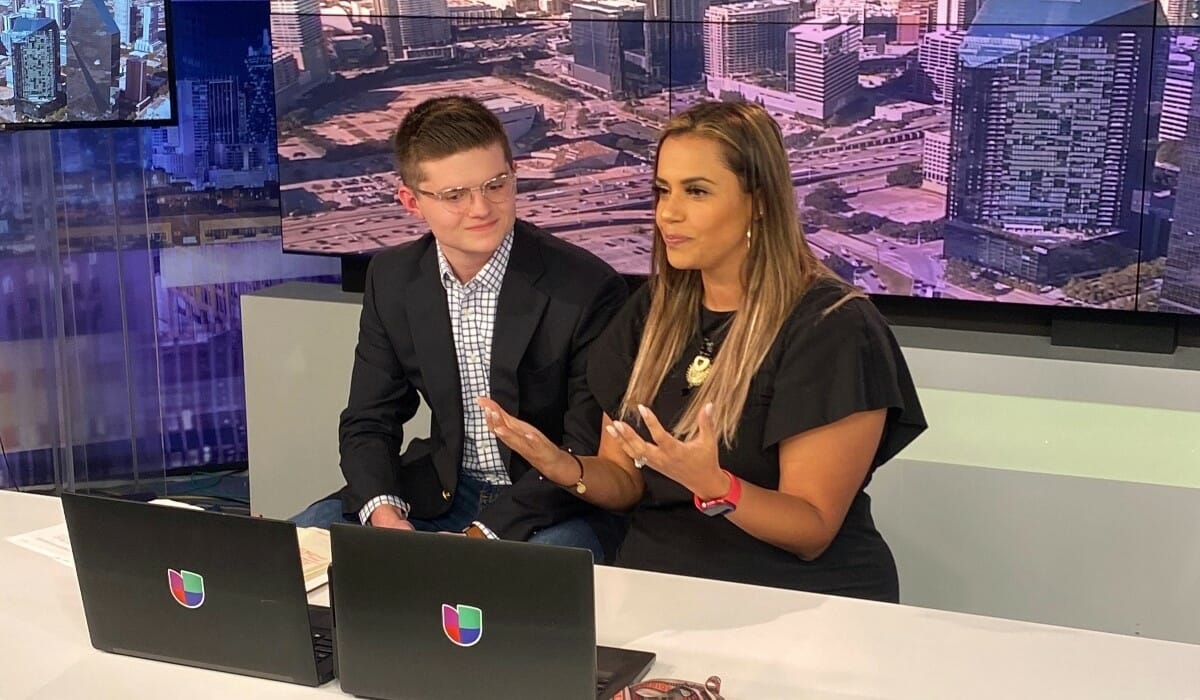
David Gibson speaks to Univision’s Karen La Croqueta about the mission of his nonprofit, Juntos./Courtesy David Gibson
Are there any future partnerships, programs, or events that you are excited about?
Juntos is expanding to other cities beyond the Dallas-Fort Worth area. We currently have three other cities that we’re building websites for. I’m also reaching out to other nonprofits in the area in our expanding cities. I was able to reach out to Catholic Charities in addition to the City of Dallas for Juntos. Both of those organizations partnered with me to help find other organizations.
Why is it important for others to get involved in causes they care about?
If you want to see something change, then you need to change it. It’s not going to happen naturally. I saw a problem with that with immigrants not being able to find resources they needed, so I developed Juntos as a solution.
What do you want people to learn from your story?
If I can make this much of an impact as a high schooler, then an adult who has access to more resources and more time would be able to do a lot more to start working on these problems that we can fix.
New York Teen Unleashes Her Entrepreneurial Spirit To Advocate For Youth Economic Literacy And Education Equity
Meet Daily Point of Light Award honoree Lina Lin. Read her story and nominate an outstanding volunteer or family as a Daily Point of Light.
Lina Lin is a first-generation college student in her family. Her parents emigrated from China, and Lina is a second-generation American. Her low-income immigrant background led to a deep connection with her community as well as a deep desire to make a difference.
In the spring of her freshman year of high school, Lina took a course in economics. She was immediately intrigued by the connections between different disciplines that one can make with economics, such as the prisoner’s dilemma from psychology and game theory from strategy and math. However, she was attending a high school that lacked economics-related resources and classes. What intrigues Lina the most is that economics is one of the most popular college majors, yet many high schools don’t offer any economics-related classes and resources.
To continue her own studies in economics and provide opportunities for fellow students in the same situation – with an interest in the subject, but few ways to learn more about it – Lina created her own organization, Global Youth Economics Forum, a nonprofit that empowers students to pursue economics and related fields through connections with professionals, professors, educators and more. Now in its third year, Global Youth Economics Forum has engaged over 1,000 students in more than 50 events and mentorship opportunities.
What inspires you to volunteer?
I’m inspired to help others who come from a similar background as I do. I started the Global Youth Economics Forum to provide opportunities for students who come from under-resourced schools that lack economics-related classes and resources.
Another motivating aspect of volunteering, to me, is the ability to foster community, give back to the community and uplift my community in order to make a meaningful difference for the next generation of future leaders, change makers and visionaries.
Lina Lin, founder and president of the Global Youth Economics Forum./Courtesy Lina Lin
Every day I seek to embody Helen Keller’s quote, “Alone we can do so little, together we can do so much.” To me, it’s truly about the spirit of volunteering along with the sparks of hope, change and camaraderie you feel as you help contribute to the greater, global good.
Describe your volunteer role with the Global Youth Economics Forum.
Currently, I serve as the founder and president of the Global Youth Economics Forum where I am in charge of spearheading our operations and events. I help host events and competitions, and oversee our different initiatives such as our college mentorship program, executive check-ins and member engagement initiatives. I also help coordinate our social media strategy, train our executive members and market new initiatives to expand our reach. So really, I help lead and oversee our cross-functional teams.
What’s been the most rewarding part of your work?
Cultivating a global community of learners and meeting students from around the world. It’s a good feeling to provide students in schools from around the world with economics-related events, competitions, a college mentorship program, resources such as weekly newsletters, internships, coffee chat templates and services such as resume review.
It’s heartwarming to see the organization grow from the ground up, especially because, when we first started, it was difficult to garner support for my cause. In fact, there were some people telling me that it wouldn’t work out. But, really, seeing people believe in our mission truly motivates and continuously sparks my sense of duty and responsibility to continue to sustain the work, uphold our mission and values, and stay true to our origins.
What have you learned through your experiences as a volunteer?
I have learned that I can do things that might seem impossible at first. I’ve also learned to be grateful for the different opportunities and privileges that I may have and to share them with others because small actions can truly have a big impact on a community.
I am also continually learning more and recognizing the importance that nonprofit organizations play in the local community, no matter their focus. I’ve also been able to develop important skills since starting my nonprofit organization including event management, publicity, team management and empathy-driven leadership.
Are there any future partnerships, programs, or events that you are excited about?
I’m excited about quite a few initiatives. We will be hosting hosting more in-person events including office tours around New York City; expanding our recently launched scholarship fund and college advocacy arm; partnering with other student organizations and firms; and hosting more lecture series featuring professionals.
Ultimately the aim is to reach more people from around the globe by expanding our marketing and publicity efforts such as our ambassador program, since many international students don’t get as many resources for learning about new things in their own time.
Why is it important for others to get involved with causes they care about?
True civic engagement involves working on the grassroots level to mobilize the youth to take action. We are the foundation of future societal change and progress.
What do you want people to learn from your story?
You can do anything that you put your mind to! Please don’t think that you can’t do it. I truly believe that anyone, anywhere can be a changemaker. It’s really rewarding and fun, and through the process you’ll meet so many new people, gain new experiences and learn so many different skills. Don’t be afraid to go out of your comfort zone, experiment, build and test things out! If you’re a student, you’re afforded so many ways to develop and apply your creativity skills and I think that’s the beauty of being a young person.
Finally, don’t be afraid to reach out for help. There’s so many people out there willing to help you. And in the future, who knows? These same people you reach out to for help might be your future coworker, classmate, mentor or networking contact for an internship!
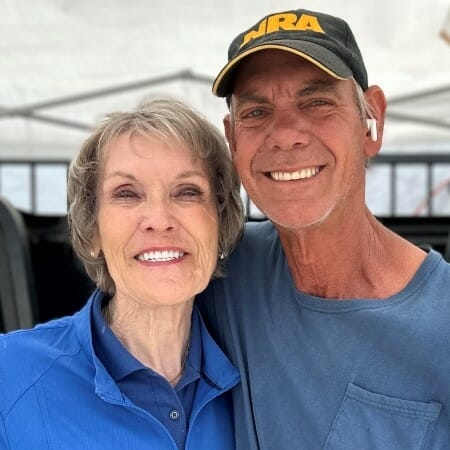
On a drizzly Christmas Eve morning in 2008, a man experiencing homelessness was found dead in a local church. He, along with several others, had been escorted into the church undercover by the janitor. The Chaplain on call that day with the Ventura County Fire Department was Kay Wilson-Bolton. As a result of this tragedy, Kay took a special interest in the issue of homelessness in her community, which happened to coincide with a period of economic struggle in California. Kay delved into the causes of homelessness and how this devastation can be exacerbated by drug and alcohol addiction. Kay took on a full-time job, without pay, to champion the cause of her community’s most underresourced people. She was instrumental in opening a year-round family shelter, food pantries, food redistribution, shower and laundry program, and she provided case management for people struggling with addiction.
What inspires you to volunteer?
In my work today, I see hopelessness and hope in the same person. I see failures turned into successes. I see healing come from sickness and addiction. We carry on because people need us to care when they don’t, or can’t.
Describe your volunteer role with SPIRIT.
I am the full-time volunteer director. The organization began in 2002 with the intent of doing something good for the community. We found our purpose on Christmas Eve morning in 2008 when we learned that an unhoused man had died in one of our churches. I grew up with the organization, I have been able to handle two full time jobs. My career job is in real estate which has given me the flexibility in time to do both.
Kay Wilson-Bolton is the volunteer director of SPIRIT, a nonprofit providing services to unhoused individuals./Courtesy Kay Wilson-Bolton
What’s been the most rewarding part of your work?
There is great reward in helping people find housing, do well in treatment, reunite with family, work off court fines, get their driver’s license back, get dentures and glasses, achieve anything they ever dreamed of, and discover they can do what they thought they couldn’t. The reward is also found in hiring people who have life experience and watching them work gently and firmly with people because of what they already know about life.
What have you learned through your experiences as a volunteer?
I’ve learned anything is possible if you believe in it and work at it. I’ve learned that miracles happen. I’ve also learned that people have the right to make whatever choice they want and live with the circumstances that follow. I’ve cried as I’ve watched people throw away their last chance at the one opportunity they longed for. I’ve lost sleep wondering where they are now and if they are still alive. I’ve learned I cannot make something happen in exchange for their substance abuse. Only they can do it,
Are there any future partnerships, programs or events that you are excited about?
“Launch” is our next phase of helping people fight their way out of homelessness. Finding the unhoused people in our community is where we start. Ending and preventing homelessness is the beginning of a whole and productive life. None of us are fulfilled until we can see and develop our dreams, experience success, realize our full potential and replicate ourselves by mentoring the next generation.
It starts with the pre-launch phase of this program to get people ready to live outside Harvard shelter. Spirit of Santa Paula would be the first in Ventura County to implement such an aggressive and comprehensive program. We are eminently qualified, having 15 years of experience serving our neighbors experiencing homelessness, plus many successful years in business and community activism.
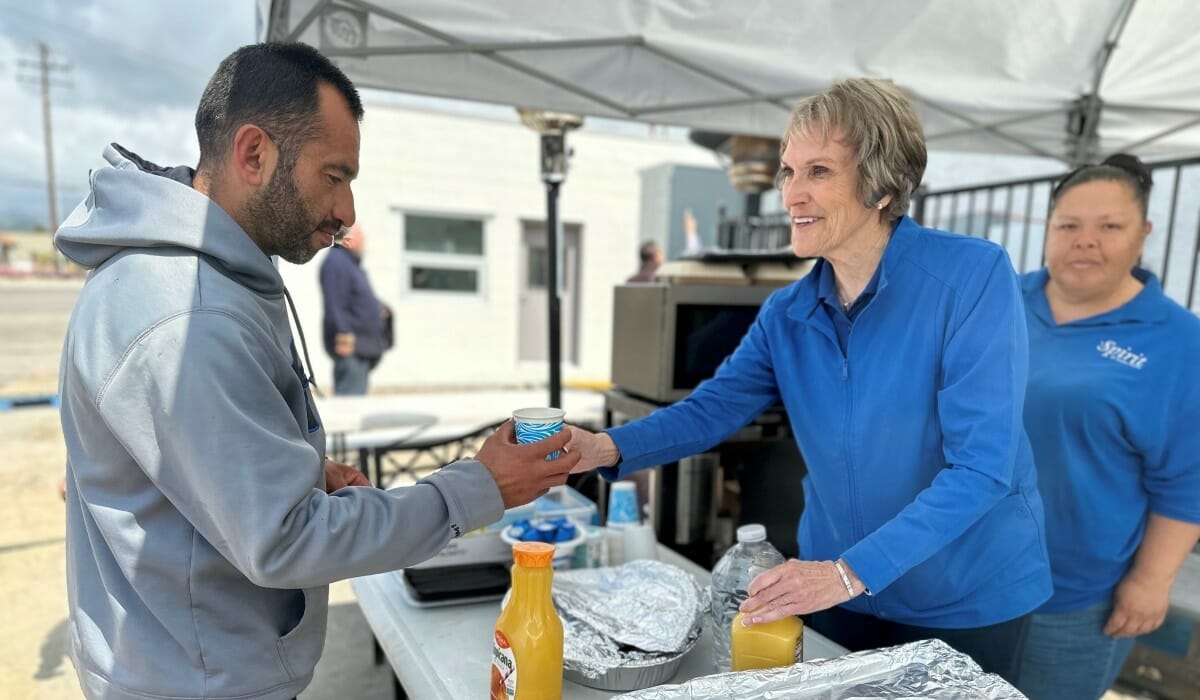
We have developed two primary programs to support our neighbors: “Harvard,” our Year-Round Homeless Family Shelter, and Street Outreach is designed to connect and care for people on the streets. We also offer weekly food pantries which serve 4,000-5,000 of our unhoused neighbors weekly with groceries so they can allocate funds to housing instead.
For years, we have known we must take our efforts to the next huge step, creating a trajectory from dependency to prosperity.
Kay with Javier, who benefits from Street Outreach, one of SPIRIT’s programs where daily food supplies, hot meals, fruits and vegetables are available for people who need them./Courtesy Kay Wilson-Bolton
Why is it important for others to get involved with causes they care about?
In my world view, getting involved is a good way to say thanks to people who came alongside us in our lives during our own times of need. It could have been a thoughtful neighbor, a teacher or friend who saw the best in us and tried to fill the gap we were in at the time. I like to suggest people go in the direction that makes their heart beat. It could be working with lost or stray animals, foster children, seniors in residential care facilities, teens in recovery homes or caring for neighborhood parks or gardens. Some like to pay in forward for some future benefit. For me, paying back is its own reward.
What do you want people to learn from your story?
Each of us has the power within us to do something great. What starts with something sorrowful can turn into something beautiful. Each of us has the power within us to inspire others to follow us, learn to lead or to create opportunities for another person. This type of work requires extreme patience and gentle encouragement. People experiencing homelessness may be economically vulnerable, but they’re extremely resilient. However, their lifespan may be shortened due to the hardships of life. Help them make the most of each day.
Join the Global Volunteer Month celebration! Download our Global Volunteer Month toolkits and access resources to encourage volunteerism and civic action, recognize volunteers, and raise awareness for your organization’s needs and funding opportunities.
Former NBA Player Aims to End Violence, Promote Education and Bring Communities Together
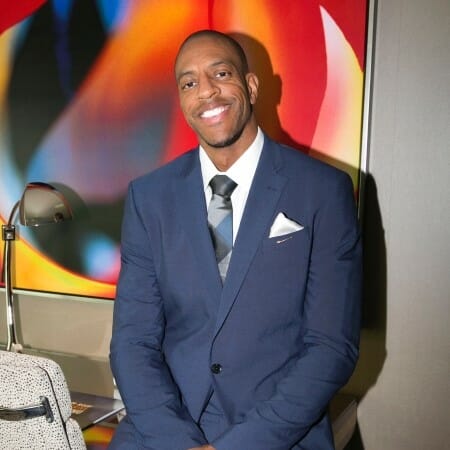
As Jerome Williams nears his 50th birthday, he has already accomplished a great deal. In the late ‘90s, after graduating from Georgetown University, he was drafted into the NBA. In nine years, he played for the Detroit Pistons, the Toronto Raptors and the Chicago Bulls before landing with the New York Knicks and retiring from the game in 2005. It was the Pistons who coined his nickname, Junk Yard Dog (JYD), for his work ethic and hustle.
Jerome began his volunteer work during that time by joining the league’s “Basketball Without Borders” program to spread the joy of the sport, along with resources, to underdeveloped nations around the world. He became a global ambassador upon his retirement. In 2016, he put together Legends Shooting for Peace, an organization that promotes helping young people channel energy into peaceful activities and education.
“Legends Shooting for Peace was actually birthed out of a group of NBA Legends wanting to give back and stop gun violence happening across the US through not only our example, but by showing support for student athletes and the community as so-called Legends of the NBA,” he says.
They wanted their support to be a sense of calm amongst communities. Jerome is the president of the Las Vegas chapter of the Retired Players Association. Chapters in New York, Chicago, Detroit, Atlanta, Miami, Orlando, Phoenix, Dallas, Houston and Los Angeles came together to support the new organization, which eventually grew into educational programs, school visits and more.
Jerome Williams, chairman and spokesperson for Legends Shooting for Peace./Courtesy Jerome Williams
“What inspires me to volunteer are all the people I received help from growing up: the teachers, the coaches, the counselors.” he states. “You just see how the Lord can work through and around a lot of people. And having seen that, I knew that when I was blessed to be who I was able to become, that I had a responsibility to give back and do the exact same thing.”
Jerome is the chairman and brand ambassador, and also serves as a spokesperson. Aside from seeking opportunities for things like student prizes and scholarships, he works with school administrators to determine student needs in order to put together and lead programs in the community. He goes out into the world as a presence for the organization striving to steer young people in the right direction. He uses his own story as well as those of other NBA players to give young people hope and to persuade them to persevere.
“The more stories that get out there, the more hope that’s found in the community where kids can say, ‘Yeah, I want to be like him.’ Not just a player in the NBA per se, but also to know that they can overcome something and can work through adversity. There’s no story that’s too small that could change a life, that could change someone’s opinion,” he reflects about the snowball effect of caring.
Today, Shooting for Peace implements sports diplomacy with Youth Camps as well as Coach Training Workshops for adults who work with at-risk kids from communities in conflict. They’ve awarded over $10 million in scholarships to over 200 students and distributed 50,000 educational workbooks to schools. More than 15,600 students have completed digital courses offered. This year, Shooting for Peace has branched out to Rwanda delivering shoes to approximately 300 kids. Plans for the upcoming months include stops in Kuwait, Abu Dhabi, Cuba and Bahrain.
“The most rewarding part is seeing the community come together,” Jerome says.
So as Jerome approaches his sixth decade, he reflects on his work with gratitude alongside his wife of 23 years, Nikkolette, and their four children. Coaching his 8-year-old son’s 13-and-under AAU team for Team Takeover 2028, the opportunity to be there to teach him valuable lessons isn’t lost on him.
“You want him to learn the right things. He trusts me the most, because I’m his dad. But it’s hard; you’ve got to teach them hard lessons too, and that’s where I’m glad it’s me,” he says.
He’s especially proud and appreciative of the like-minded people who volunteer with him in all of his pursuits citing the power found in numbers.
“[They’re] my dear friends, and I call on them to come to events and help kids, and they show up. They don’t look for a check. They don’t look for resources. They just look to help,” he reflects. “It takes an army to help the community, and I try to come with an army. I appreciate those people very much.”
So what’s Jerome’s next venture? In May, he will launch IP Famba, a company that combines his love for technology with that of service. The new company is designed to help NIL—name, image and likeness—students, young men and women navigating their way through athletics all the way through retirement.
“It’s important, because name, image and likeness is something that I was able to live and make a living off of, but wasn’t really able to capitalize on, the way the kids can today,” he says. “So, we’re building tech to help them do that, and community service and student digital education is part of it. We offer our Shooting for Peace students digital education for free.”
He points to neighborhoods where athletes have been profited off of from a young age without any benefit to themselves. He hopes those long periods where they have been unable or unknowledgeable about how to monetize their name, image and likeness will come to an end.
Further adding to his long list of accomplishments, Williams also has a book release this spring. In it, he will delve into the finer details of IP FAMBA and being a game-changer.
“Society needs us. Society needs Legends, and they need other people to come alongside Legends. We can’t do it alone. There are so many kids out here who need our support, who need that little bit of a lift. With all of us working together, we’ll be able to change the world. My motto is Building champions and changing lives,” he states. “I’ve been doing it for almost 30 years, and I enjoy it so much. I want to just keep doing it for as long as I’m here. And I thank the Lord that he’s given me a platform that is recognized, and I’m able to attract good things and good vibes.”
Join the Global Volunteer Month celebration! Download our Global Volunteer Month toolkits and access resources to encourage volunteerism and civic action, recognize volunteers, and raise awareness for your organization’s needs and funding opportunities.
One Mom’s Crusade to Raise Awareness Around the Importance of Mental Health in Student Athletes
Content Warning: Points of Light is proud to share the following uplifting and inspiring story. However, we acknowledge that a small portion mentions suicide and may be difficult for some readers. We encourage you to please care for your own well-being above all.
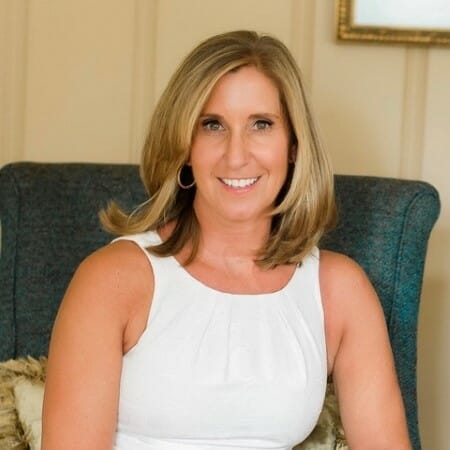
Dona Rodgers, a Connecticut native, met her husband while completing her degree at James Madison University. They decided to stay in Virginia and raise three kids—a son and twin daughters. When the kids were young, Dona was a stay-at-home mom, but as they neared college age, Dona and her sister-in-law started a local event venue they ran for many years. She was living a life she loved in more ways than one until her world changed in July of 2019.
At the age of 22, her daughter Morgan, a gifted artist and lacrosse player at Duke University, had taken her own life. A year into rehabilitation from a career-ending injury, she’d been fighting a battle no one could see. Everyone in Morgan’s life was devastated, and Dona shut down her business in the course of dealing with her grief.
The next year, Dona teamed up with her other daughter, Aberle, and some of Morgan’s lacrosse teammates from throughout her life—Meaghan Birnie, Clare Kehoe, Kat Zempolich, Elise Koehl and Maddie Roberts—to create Morgan’s Message. Their goal is to destigmatize mental health issues, provide resources and education, and facilitate peer-to-peer conversations for student athletes. Over 2,604 students on 982 high school and college campuses across 42 states, Washington D.C., Canada and the UK have joined the organization as Ambassadors. The work of one mom who lost so much has saved innumerable mothers from the same fate and is creating a legacy that has and will continue to change the way sports are played.
What inspires you to volunteer?
It wouldn’t be what it is today without all of my co-founders. And I’m so grateful. They forced me to get up and moving again. It took us all by surprise that Morgan’s mental health declined so rapidly, at least from our perspectives. There was no clear path to why it ended up the way it did, except that the stigma that surrounds mental health kept her from getting help. We thought it might help other Morgans out there to hear the stories of other people who are struggling and decided to start a podcast.
Dona Rodgers is one of the founders of Morgan’s Message, Inc., a nonprofit that addresses mental health of student athletes./Courtesy Dona Rodgers
We launched our website one year after we lost Morgan. Very quickly after, we heard from a teammate of Morgan’s from Duke who became our first Ambassador. She wanted to bring something to campus to highlight the importance of mental health. Within a week, a student athlete from Syracuse University that we’d never met said the same thing, so we decided to create a student education program.
Describe your volunteer role with Morgan’s Message.
I started by doing legal and accounting work and still do things like payables and payroll. I answer administrative emails, farm out questions to the people who need to answer them, run ambassador orientation and locate resources for people. Schools will have dedication games for which they’ll often create warm up shirts to raise awareness about mental health. If I can attend them, I absolutely do.
I also do a lot of speaking engagements. A lot of people want to hear about our mission from a parent’s perspective—what did I see raising Morgan and in last few years of her life, warning signs, etc.—and from students’ perspectives. We usually split up presentations.
Morgan’s Message has grown tremendously. Can you tell me about that process?
We don’t recruit. They hear about us from word of mouth or social media. It’s exciting to see, but it’s disheartening to think that all these chapters have grown because of the need. Is it fulfilling? Of course, but I would love to say it’s slowing down so much that no one needs us anymore.
What’s been the most rewarding part of your work?
More than I ever expected, we get a lot of people writing to thank us for saving their lives, for giving them a different perspective or for empowering them to seek help. That’s incredibly rewarding. It’s just wild to see my daughter’s name all over the place in the athletic world now.
Do you have any advice for how to support a friend going through something?
One of the most important things you can do is to recognize the signs that they might be struggling. If you do recognize signs or if your gut is saying something’s off, be a really empathetic listener. Don’t think about what your reply is going to be. It’s key to listen to what they say. Pause in between and really take in what they’re saying, because a lot of clues can be recognized.
The other thing is to treat them as if they broke their foot. How would you offer to help them if they had a physical injury? You’d offer to carry their books. You’d offer to go to the doctor with them or give them food for their apartment. It’s not any different if someone is struggling with mental health problems. They need support and to know that someone cares.
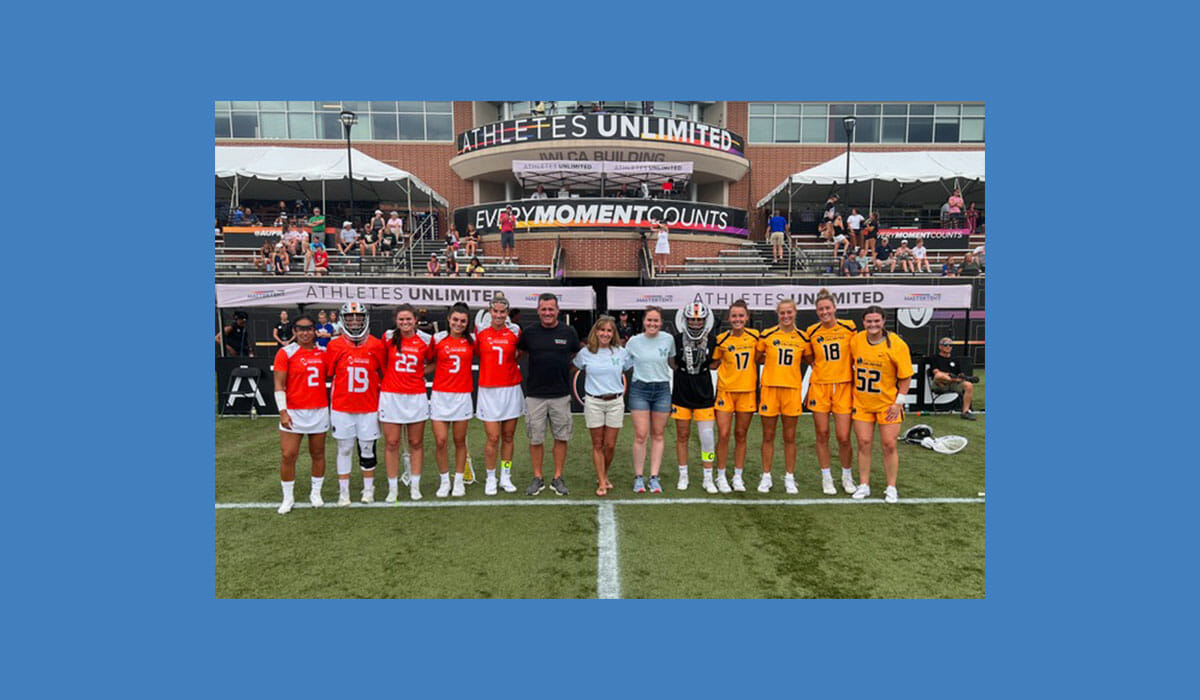
Team Johansen 2022 included Izzy McMahon, Brittany Read, Haley Warden, Lauren Gilbert, Amanda Johansen, Kurt Rodgers, Dona Rodgers, and Clare Kehoe. Team Moreno 2022 included Taylor Moreno, Mollie Stevens, Scotty Rose Growney, Taylor Van Thof and Molly Dougherty representing Morgan’s Message during their 2022 Season in Athletes Unlimited Professional Lacrosse League./Courtesy Dona Rodgers
What have you learned through your experiences as a volunteer?
I didn’t know anything about mental health before this. It was a topic that we really didn’t talk about — not because we avoided it, but because it just didn’t come up. Mental health struggles can be invisible, and they can happen to anyone. It doesn’t matter how you were raised, the food you ate or the stability in your childhood. I guess I just thought mental health struggles could be prevented like physical injuries. Some can, but sometimes they’re inevitable. The key is to get them help.
Are there any future partnerships, programs or events that you are excited about?
We had our inaugural youth lacrosse tournament here in Warrington last fall. We’re really excited about growing that. We’re trying to catch kids before high school and the stressful college recruiting process. It’s on a turf field that was built in Morgan’s honor. We’re hoping that every kid who plays on that field will pause and remember they play: because it’s fun. I think Morgan would like it.
Why is it important for others to get involved in causes they care about?
When you’re passionate about something, it’s incredible how powerful a grassroots organization can be and the effect it can have on communities. When you’re doing something in your free time, like the way my co-founders are doing it—with full-time jobs—that is exactly what I think volunteerism is all about.
What do you want people to learn from your story?
We were all knocked down pretty hard by losing Morgan. There was a time when I didn’t think I’d ever smile or laugh again. And I had a lot of things to be happy about. I have two other healthy children who are just starting their lives, a great marriage and a supportive extended family. If we can all bounce back from a devastation like this as a family, resilience is possible. Recovery is possible if you’re struggling with mental health problems. There’s a lot to learn from tragedy.
If you or someone you know may be considering suicide, contact the National Suicide Prevention Lifeline at 1-800-273-8255, or text HOME to 741741 to talk to a trained crisis counselor through Crisis Text Line. Both resources are anonymous, free and available 24/7.
Join the Global Volunteer Month celebration! Download our Global Volunteer Month toolkits and access resources to encourage volunteerism and civic action, recognize volunteers, and raise awareness for your organization’s needs and funding opportunities.
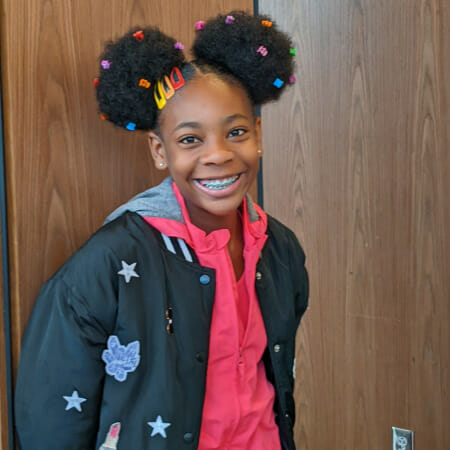
13-Year-Old Starts Nonprofit to Inspire Other Kids to Volunteer
For as long as she can remember, 13-year-old Legacy Jackson of St. Louis has been volunteering. Some of her earliest memories are of her volunteering with her parents at homeless shelters and soup kitchens.
“We have pictures of Legacy literally with a pacifier passing out food,” her mother Kynedra Ogunnaike said.
But every time Legacy went out to volunteer with her family, she noticed that most of the volunteers were adults, and she was often the only child there. So, wanting to see more kids get involved with community service, she started her own nonprofit organization called Little Legacies in 2016.
From creating a library of more than 2,000 books for a children’s home to sending 3,000 pairs of shoes to children in Africa, Little Legacies has completed a community service project every month, mobilizing around 200 volunteers, both young and old, with Legacy leading the way.
“One of my favorite projects was when we threw a princess party at the Gateway 180 shelter,” Legacy said. “The kids got to pick out a princess outfit, they got crowned, and we did some affirmations with the girls.”
“I think they were really excited because they ran up and gave me a hug,” she added. “The girls wore those dresses for like three weeks after we gave them to them.”
Other projects Legacy and her volunteers have done include cooking Thanksgiving dinner for people who are unhoused, donating diapers and other baby essentials to the St. Louis Crisis Nursery and hosting a shoe giveaway to help newly arrived migrants.
Legacy Jackson is the founder of Little Legacies, a nonprofit that inspires children to volunteer by running service projects every month./Courtesy Kynedra Ogunnaike
While many of Little Legacies’ projects have been focused on helping those who are unhoused or youth living in shelters, Legacy doesn’t discriminate in the causes she cares about. For example, she has helped protect birds by assembling and installing bird houses and she has helped people battling breast cancer by donating care packages.
“Whatever I see in the community, whatever I see in the moment, I make a little note in my head like, ‘Oh yeah, they need a library, so we’re going to give them a library.’ Or ‘They want to have a dance class, so we’re going to have a dance class,’” Legacy said. “With every project, I feel my mission that I’ve been sent down to earth for is being completed.”
In 2017, tragedy struck Legacy’s family when her older brother, Brendon Ogunnaike, passed away due to complications with type 1 diabetes. But even in that moment of hardship, she wanted to help other children learn how to cope with grieving while remembering Brendon’s life so she wrote a book titled “Bubbles for Brendon: Ways to Celebrate, Remember and Embrace the Memories of Your Loved Ones.”
With a severely high crime and murder rate, St. Louis has been ranked as one of the most dangerous US cities to live in. But seeing Legacy and other children have the heart and passion to help others makes Kynedra hopeful for the future.
“Children can actually change the world. That was Legacy’s goal and with every project that we do, I feel like that is actually happening. Seeing her inspire other people to get involved makes me really proud,” she said.
Join the Global Volunteer Month celebration! Download our Global Volunteer Month toolkits and access resources to encourage volunteerism and civic action, recognize volunteers, and raise awareness for your organization’s needs and funding opportunities.
Teen Uses Her Passion for Dance to Advocate for Food Security
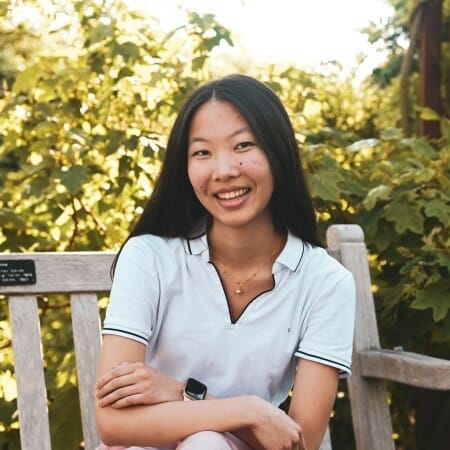
Claire Chi of State College, Pennsylvania, founded her 501(c)(3) nonprofit organization, Dancing Against Hunger (DAH), to fight food insecurity in schools by providing youth with accessible dance education and opportunities for social empowerment. Through executing organizational initiatives averaging 800 donations per event to mentoring students to serve as impactful community leaders through media production, event coordination and partnership with local organizations, this young woman is making a remarkable impact with her passion for the arts.
Claire promotes youth volunteerism and empowers young leaders to create their own service initiatives through speaking engagements and so far has engaged over 1,100 participants and over 40 community partners. DAH has worked to increase the visibility and accessibility of food assistance programs––it was the first organization to ever donate to the local school district’s pantry, a resource that had existed for years without significant donations to maintain it. DAH has grown its impact and strengthened partnerships with community organizations to mitigate food insecurity more effectively.
Claire is an outstanding leader who has demonstrated passionate engagement and altruism in the community. Read on to find out more about her story and what inspires her to keep her mission moving forward.
Describe your volunteer role.
My volunteer role is founder and executive director of Dancing Against Hunger. I currently lead the DAH executive team, which is made up completely of high school students, and as executive director, I lead event coordination, new initiative and program development, as well as provide mentorship for executive team members. As founder, I set strategic priorities for the organization to achieve in its operations.
Claire Chi founded Dancing Against Hunger to fight food insecurity in schools by providing youth with accessible dance education and opportunities for social empowerment./Courtesy Claire Chi
What inspired you to start Dancing Against Hunger?
During COVID, we had about two years of free school lunches and breakfasts. That was for K-12. Around the same time that I started the nonprofit, I was appointed as the student representative to the State Board of Education in Pennsylvania. And I was able to interact with a lot of students outside of my own school, particularly those who may come from low-income families.
I heard about the concerns these students expressed for when the free meal funding would end. That urged me to do something that would not only raise awareness about food insecurity in our own communities, but also help enhance food security. So, food security in schools is specifically the main focus of DAH.
What inspires you to volunteer?
I like to say that food insecurity and hunger are “invisible issues” and you never know that someone may be struggling with that until they tell you. It’s not something that’s visible – and it’s something that’s always happening. At DAH, we have year-long efforts and partnerships with local organizations to help mitigate student hunger.
Over the summer of 2022, we partnered with a local summer program and had over 500 participants engaged in dancing with us. We also had these participants in a friendly competition to see who could collect the most donations. We had them in teams, and by the end of the week, we had raised over 2,100 donations. We really try to bring our mission to places where youth are already involved in dance or performing arts programming, and then connect that with projects such as food drives.
Any rewarding stories from your volunteer work?
The event we had over the summer was our second event since our founding in March 2022. At that point, we had a completely student-run team. I wanted to see their leadership in the community happen. I had some of our team members step into roles that required more initiative in the event. Seeing them take charge was really inspiring to me.
I had the director of philanthropy in charge of collecting, sorting and distributing all the thousands of donations we’d received. Reflecting after the event, she said “That was probably one of the most special moments in my entire 17 years on earth. This is something I hope more students will have the opportunity to experience.”
There’s this perception out there that just because we’re kids, we can’t go out and change the world, but breaking this misconception was the biggest impact that DAH had on her, and I would say a lot of our team members have the same sentiments – our organization has helped them realize that young people can change the world.
Why is it important for people to get involved with the causes they care about?
I think sometimes we’re all in our own bubbles – whether as an individual or in a tight-knit community. When we provide opportunities for students to share social empowerment and connect with other individuals and communities working for the same cause, it gives us this perspective that our role in the cause matters. By engaging in these small actions, making these small ripples, we can work together to make waves of change.
Claire enjoys inspiring and empowering youth to get involved with causes they care about, knowing that youth have a powerful voice in advocacy./Courtesy Claire Chi
Are there any upcoming programs, partnerships or events?
We are working on summer initiatives, which haven’t been finalized yet. We have a lot of partnerships with local organizations and we hope for our next event to collaborate with local school district pantries. We were the first organization to ever donate to our own local school district pantry! We seek to bring awareness to how change can be much more accessible on the local level.
What’s your advice for people who want to start volunteering?
Volunteering is really a personal path. It does not need to grow into starting a nonprofit organization, which definitely takes a lot of time, planning and investment. There are so many like-minded people with similar passions working in the community.
For example, I’m really passionate about dance, and used this passion as a tool to raise awareness and to make real change. And everyone might have different interests. When I work with food security experts and nonprofit leaders, we’re all connected by the same cause, but the way we achieve solutions is going to be different. So it’s really rewarding to connect with other people and learn about different strategies to accomplish that change.
What do you want people to learn from your story?
I want to emphasize how important intergenerational partnership is in executing our mission at DAH. Our team is all students, but we have a board of directors that’s made up of community leaders and educators – all adults who give us advice and mentor us through our projects.
I do believe that young people can change the world, but there are also a lot of people who can provide support in doing so, and help make that change more effective and more powerful. Adults mentors help inspire and empower us on that path.
Join the Global Volunteer Month celebration! Download our Global Volunteer Month toolkits and access resources to encourage volunteerism and civic action, recognize volunteers, and raise awareness for your organization’s needs and funding opportunities.
13-Year-Old Mobilizes Volunteers Around the World to Clean Up Trash, Protecting Both Animal and Human Life
For as long as he can remember, 13-year-old Cash Daniels has loved animals, especially aquatic life.
“My favorites are the whale shark and the arapaima,” Cash said. “The whale shark is the biggest shark in the world and is actually a filter feeder. The arapaima lives in the Amazon and has to breathe air so it has to jump out of the water sometimes.”
So when Cash was 7 years old, and he learned that the Tennessee River, which flows right through his city of Chattanooga, Tennessee, is one of the most plastic-polluted rivers ever recorded in the world, he knew that he had to take matters into his own hands to save his beloved animals.
“I started cleanups with just my family once a month. We got a couple buckets and gloves, and we just went out and picked up trash,” Cash said. “We filled about 30 buckets in one hour.”
Soon enough, friends and other community members started joining in on Cash’s cleanups. He adopted the nickname ‘The Conservation Kid’ and started posting the time and location for his cleanups on Facebook and Instagram. In the five years that Cash has organized these cleanups, he and his volunteers have collected more than 14,000 pounds of trash, including plastic bottles, shopping bags and straws from the river. With nearly 5.2 million people relying on the Tennessee River and its tributaries for drinking water, Cash’s efforts are not only protecting wildlife but human life as well.
Cash Daniels, 13, co-founded The Cleanup Kids, a nonprofit encouraging other kids to pick up trash and protect the environment wherever they are./Courtesy Cash Daniels
“Without the community, we wouldn’t be able to make a difference,” Cash said. “Seeing the kids come out and actually have fun cleaning up trash makes me really happy. It’s important to educate the next generation because while kids may be a small part of the population, we are 100% of the future.”
During one cleanup, Cash found two turtles wrapped in fishing line, so he acted once again by partnering with state parks across Tennessee to place 45 monofilament recycling bins for people to throw away their used fishing line. He then sends the fishing line to Berkley Fishing, which turns the fishing line into fish habitats that can help rejuvenate fish and plant growth.
In order to spread his passion for conservation outside of Tennessee and even outside of the United States, Cash co-founded nonprofit organization The Cleanup Kids in 2019 with his best friend Ella Grace who lives in Canada. Together, they teach children around the world the importance of conservation through public speaking, media interviews and launching direct action campaigns. In 2022, The Cleanup Kids, comprising of more than 50 members across the US, Canada, Australia and Jamaica, achieved their goal of picking up one million pieces of trash.
Cash has also met with several Tennessee state representatives to ensure that government leaders are hearing his message as well.
“As an adult of 60+ years of age, it’s not often you think you have a mentor who is 13 years of age,” said Tennessee State Rep. Greg Vital, who participated in many of Cash’s cleanups.
“He has not only made a difference one creek and one stream at a time. But he’s leading thousands and thousands of people to be more conscious of their environment and become stewards of the earth,” he added.
Cash, who even authored his own book on river pollution titled “One Small Piece,” has shown time and time again that the power of children should not be underestimated.
“You don’t have to be a professional or an expert in what you’re trying to do. I’m only 13 and I’m making a difference. And if I can, so can everyone,” Cash said.
Join the Global Volunteer Month celebration! Download our Global Volunteer Month toolkits and access resources to encourage volunteerism and civic action, recognize volunteers, and raise awareness for your organization’s needs and funding opportunities.