Long Beach Volunteer Advocates for Seniors with the Gray Panthers
Meet Daily Point of Light Award honoree Karen Reside. Read her story, and nominate an outstanding volunteer or family as a Daily Point of Light.
Karen Reside can handle challenges. Becoming a mother as a teenager changed the trajectory of her life, and after being mugged on her way to her job in retail, she was too traumatized to go back to work. At a time when many might insulate themselves from the outside world, Karen continued to be adaptable and create opportunities for others in her community and beyond. Quite simply, helping others made her happy.
Over the course of her career, she directed the California state science fair with the education department of the Museum of Science and Industry, arranged volunteer training for the American Youth Soccer Organization’s national office, taught grant writing at the Boys and Girls Clubs and ran an art gallery for women and artists of color.
Eventually, her education work, relationship-building skills and managerial experience led her to the role of president of the Long Beach Gray Panthers, a multigenerational organization founded in the 1970s that focuses on addressing social and economic issues and creating systemic changes, particularly those that affect the lives of seniors. They advocate for things like nursing home reform, Medicare for all, affordable housing, technology access for low earners, etc. After her previous contribution as secretary, Karen continues to grow and revitalize the group with her dedication to bringing young people into the fold via her award-winning internship program.
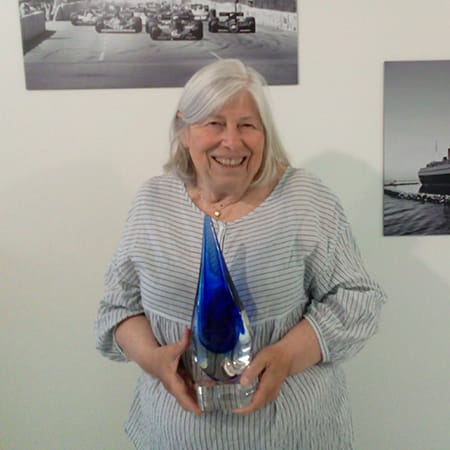
Karen Reside, president of the Long Beach Gray Panthers, accepts the Los Angeles Alliance for Community Health and Aging Innovation Award for her workforce development program for interns from California State University Long Beach.
What inspires you to volunteer?
When I was young, I babysat for a family down the street who were Holocaust survivors. They had the tattoos on their arms. They wouldn’t talk about their experience, but when the husband died, the wife wrote a book. It turned out they were Schindler’s List people. I was always very interested in how people could be so cruel to each other after that experience, because they were very nice people. They inspired me to get involved in service.
Both of my boys played soccer, so I did a lot of work in AYSO. I coached and refereed. They had so much fun, I found a women’s team to play on. And I was also active in the PTA.
Tell us about your volunteer role with the Long Beach Gray Panthers.
As president, I represent them at events and activities. I do most of the press events. We helped launch Ageism Awareness Day with my city council member, the senior center and the vice-mayor of Long Beach.
We’re starting to organize the seniors here at the senior center. They want to be active. Our city just started the budget process for 2025, so we’re talking to them about that. The US Census just changed the projections from 10,000 people turning 62 every day to, now, 12,000. Our country is totally unprepared for that growth in numbers. So, we’re doing a lot of budget lobbying right now. We also distribute food on Fridays and Mondays.
I use what I learned working for the state and lobbying with my union. That’s primarily what the Gray Panthers do. We lobby on behalf of seniors. I know all the legislators that are affiliated with our area at all the different levels, even mentored some of them. A lot of political figures came through the Boys and Girls Club.
What inspired you to get started with this initiative?
I knew about the Gray Panthers from an early age, because Maggie Kuhn, the founder, was on Johnny Carson. I aspired to be like her. When I retired, I read some books on what she was about, and it aligned with my values.
In the 70s, the Gray Panthers had almost a million members, but they had a hard time adapting. They didn’t really have students engaged. That’s one of the reasons we do the intern program. And we’re always recruiting new members.
What are some of your biggest accomplishments?
Getting the city to declare Ageism Awareness Day was huge. We were recognized by the LA Alliance on Community Healthy Aging in Los Angeles. We received an innovation award in 2023. I was personally recognized in Long Beach with a Martin Luther King Peacemaker award for our work helping people collaborate.
We’ve convinced legislators to vote for bills that are important to seniors. We work with 72 other organizations with subject matter experts on different topics. We work in 18 different areas, but our key goals are to preserve Social Security and Medicare, so when our interns get our age, they’ll have access to those benefits. And we’ve been working since our founding on universal health care.
How big Is your core team with the Gray Panthers?
We have six board members and about 100 dues-paying members. Our outreach is about 400-500 in Long Beach, and we partner with other Gray Panthers throughout California. There is a national headquarters in Michigan and there’s a steering committee that oversees the organization.
What are some of your other long-term plans or goals for the organization?
Sustainability. I just got elected for another two-year term, and I’ve identified some younger women of color who are interested. We’re doing leadership development. We’re working with the university to develop a leadership program for older adults, too.
Long Beach also has something called the Diesel Death Corridor. The air quality along the 710 freeway is among the worst in the country. Young people and older people develop asthma at a higher rate than normal, so we’re doing a lot of work to change the air quality.
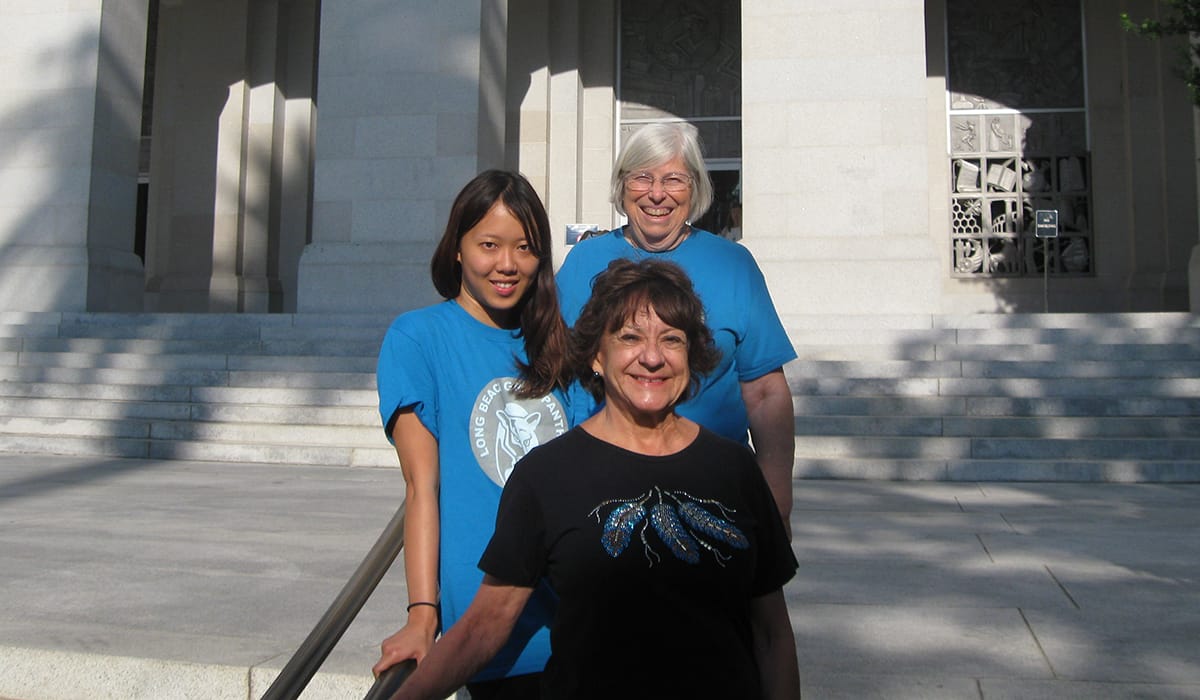
International intern Ming (left), treasurer Mary Alice (front) and Karen (back) lobby for eliminating bail with the Long Beach Gray Panthers in Sacramento by testifying at a hearing and marching with community partners.
What’s been the most rewarding part of your work?
We conduct surveys with our partners. We work primarily with low-income seniors, and we gave them grocery gift cards for taking one of them. They gave a lot of great input, and I was able to incorporate it into a plan that’s being developed to change zoning laws. Our interns interviewed 340 people between Thanksgiving and Christmas. We were able to distribute over $20,000 in grocery gift cards around the holidays, which made a big difference for people. That’s what’s most rewarding.
Why is it important for others to get involved with causes they care about?
Nothing happens unless somebody takes a step to push it forward. And it keeps you sharp. One of the reasons I started doing all of this volunteer work was because, when I retired, I started to go to the gym, but I wasn’t working out my brain. Volunteering is great, because you can say no to doing something. Alternatively, you can do a deep dive, because you have the time to do it. You can do what you want. And I think people should understand how our government works. Many people have dropped out, because they don’t understand how they can make change. Being active and engaged allows you to learn.
What do you want people to learn from your story?
They can do the same things. And they can come to a Gray Panther meeting. They can learn how to make change – we’ll teach them.
High School Artist Helps Others Through Dark Times Using Art
Meet Daily Point of Light Award honoree Chelsea Phaire. Read her story, and nominate an outstanding volunteer or family as a Daily Point of Light.
Chelsea Phaire is a 14-year-old freshman in high school. As a dedicated athlete, she’s been working on her skills to prepare for figure skating competitions, but her true passion lies with art. Her heart is set on a career in animation, and she’s not wasting any time.
“I actually have been working on something I want to turn into a webtoon. It’s a story I’ve been developing for the past two years,” she explains.
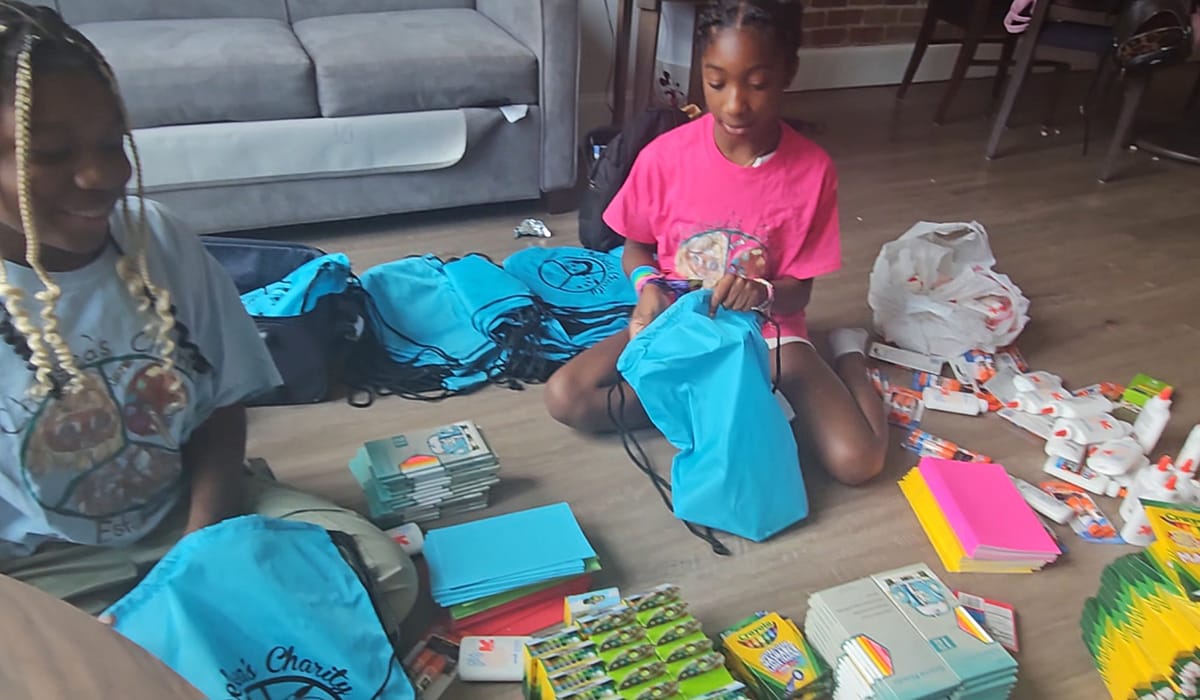
Art has always been an important part of Chelsea’s life and one she enjoys sharing with others. For her 10th birthday, she asked her friends to bring art supplies to her party instead of gifts. Two days later, she and her family donated them to a local shelter. And just like that, Chelsea’s Charity was born.
Since then, Chelsea has helped make and distribute nearly 35,000 art kits to kids in foster homes, shelters and hospitals and to veterans who have gone through traumatic experiences.
“It’s so fulfilling to see the kits reaching so many people. We almost have all 50 states. I believe we’re only missing Alaska and Hawaii. We’re extending our reach to other countries, too,” she smiles.
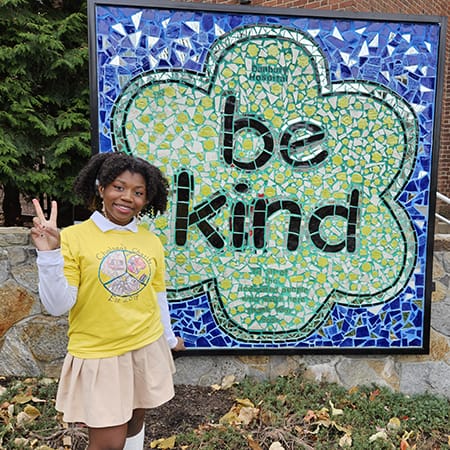
Chelsea Phaire, founder of Chelsea’s Charity, assembles and distributes art kits to kids and veterans going through challenges and talks to kids about getting involved in their community.
With recent news coverage and word-of-mouth, there has been no shortage of people wanting to help. Volunteers put kits together according to who will be receiving them. For veterans, there are adult coloring books and Sharpies. Kids are gifted with ink pens, colored pencils, markers, crayons, glitter paints, etc. and sometimes a toy, like Playdough. Each kit includes a handwritten note for a finishing touch.
Lisa Jones, a family friend, brings her experience running her own nonprofit to Chelsea’s Charity as an active board member. She and her son, a friend of Chelsea’s brother, were also at the birthday party that started it all.
“My father was a photographer. My sister-in-law is an artist. I know how, whether it’s through pen and paper, paint or any other medium, art allows a person to move through emotions and either feel what they want to feel or not feel. They use different mediums to express themselves,” she says.
In 2019, Chelsea and her family travelled to El Paso after a mass shooting at a local Walmart.
“A lot of kids in the elementary school were affected. We went down to give them art supplies and make sure they were okay,” she recalls. “I made a friend. She was at a really low moment, but she still draws to help her calm down.”
Other than being her passion, art is a positive coping mechanism with healing power for Chelsea. One way that has taken shape in her own life is in a figure she has been drawing for a long time, one that she calls her “comfort character.”
“Her name is Taraji. I just love drawing her and making her have little fun stories,” she says. “Art is also a way to escape and feel free from like the troubles of the world and let everything out on paper.”
Not long after the inception of the organization, the COVID-19 pandemic hit and sent everyone into isolation. It was a perilous time that affected everyone.
“A lot of people didn’t have the best coping mechanisms,” she emphasizes. “That’s why we really wanted to make sure that art was available to people.”
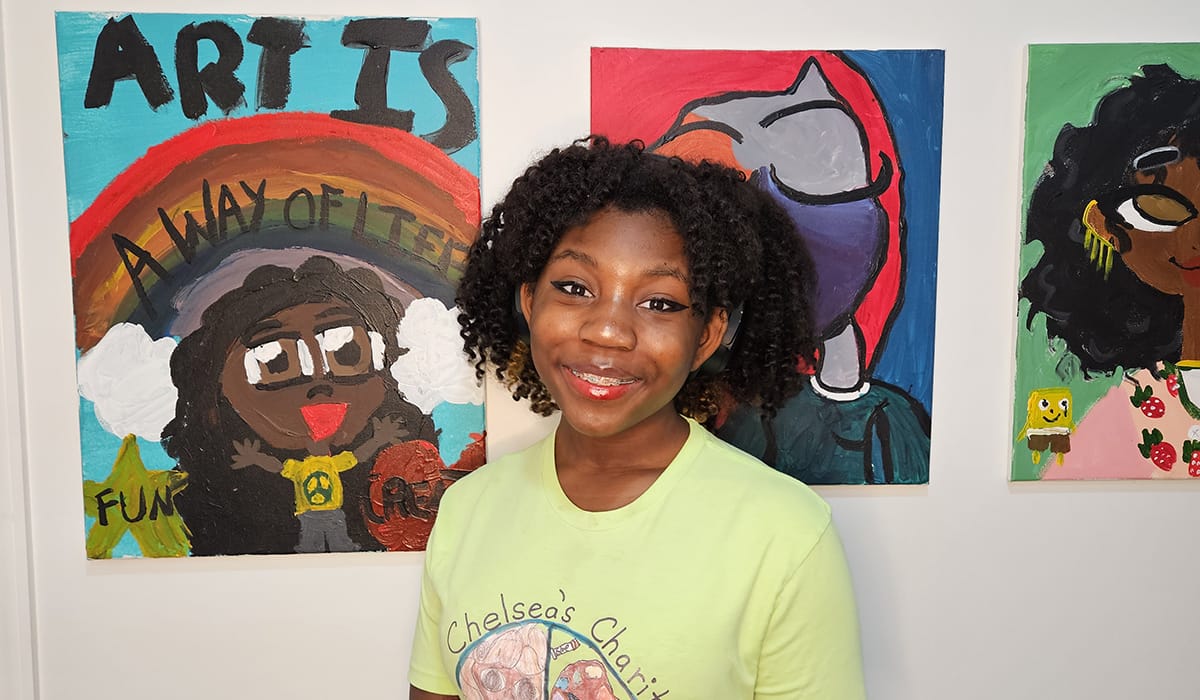
After leading an art project at a local school, Chelsea poses in front of the results.
Early on, Chelsea would travel across the state to talk to kits recipients about the power of art. Now, after explosive growth, she creates videos to share her message and works with businesses and other organizations who hold their own packing parties. One hour-long virtual packing party she hosted with 100 volunteers around the country resulted in 5,000 kits to hand out in their own communities.
“She’s a wonderful young human who I think is very inspiring, very caring and has what not everybody has, a ton of empathy. And she can use her platform to reach so many people,” Lisa emphasizes.
Chelsea speaks to schools and community groups about getting involved with helping others. She even guides school-aged kids in using their art supplies to make greeting or get-well cards for people in the hospital or residents of rehabilitation centers.
“When we work with little kids, they’re so happy. I’ve had some people come back or message me,” she states. “People are so appreciative. That’s the most rewarding part, the reactions and knowing that we’re actually changing things.”
Along with practical skills that come with running an organization, Chelsea has improved her public speaking. Whether she’s on a Zoom call with a hundred people, speaking at an assembly in front of an entire school or doing a press interview, she’s managed to tame the butterflies.
“I’ve learned to tone it down a little bit so people can understand what I’m saying, because when I get excited, I also talk fast,” she reflects.
So, what next for this dedicated volunteer?
“There are a lot of things I want to do with Chelsea’s Charity, but right now we’re focusing on children, especially in schools, because art is the first thing that gets cut with budget cuts.”
She’s always working on ideas to bring to the board to discuss how to raise funds and put them into action. One such idea is to create the art equivalent of a yard library box where people can take an art kit and leave an art kit. She’s already established three but wants to see at least one in every state. An art therapist is also on the list, an addition that would allow her to bring in professional help along with art kits for recipients dealing with especially difficult things or who need better coping skills.
Chelsea (left) and a fellow volunteer put together art kits to donate to children across the country.
“At such a young age, she is so insightful in realizing how art helps her and how it can help others. I think she is a superstar, but I’m partial,” Lisa reiterates.
Chelsea underscores that age and contribution is irrelevant when it comes to making an impact. Her friend, she notes, is an avid home cook who makes gourmet sweets for people experiencing homelessness or food insecurity. There’s room for your passions and interests. She also reminds people to be patient.
“Things really do take time. At first, the charity was really small, and in the second year, it started picking up speed. As time went on, we started getting more kit requests, and it just kept growing. Never give up,” she stresses.
Chelsea’s tenacity and dedication to helping others through difficult times has made an impression around the world. Art gives her purpose in more ways than one, and the result of her work is a brighter day for those around her. And a more beautiful space. As for the future, Lisa has a prediction.
“I think that she will be a beacon of light in a world that doesn’t always focus on good.”
One Healthcare Executive’s Story of Service as a Higher Calling
Meet Daily Point of Light Award honoree Edward Lik-Yuen Lai. Read his story, and nominate an outstanding volunteer or family as a Daily Point of Light.
Growing up in Hong Kong, Edward Lik-Yuen Lai was an unruly teenager who got in some legal trouble and was wanted by the Hong Kong police at age 15 or 16. Fortunately for him, early the next morning, his mother sent him to Malaysia to stay with his aunt, an attorney. Edward remembers his family going through the options of what steps to take with this “wild kid.” The solution was a military academy in Texas. He was accepted, and found that the structured environment suited him well.
During his years at the military academy, which was a boarding school, Ed completed his first volunteer assignment working the southern flood relief in 1999 and re-discovered God. He became a youth minister in Texas before moving to New York City to do street evangelism. By this time Ed was an ordained minister of the Evangelical Christian Church, but soon decided that serving God meant going outside of the church.
That’s when Ed became the first male case manager at the New York Asian Women’s Center (which is today called WomanKind). He was later tasked with running the shelter program. This was the beginning of his service journey; he hasn’t stopped since. Ed is a two-time Crain’s New York Business Notable Healthcare Leaders and has received the President’s Call to Service Award for 4,000 hours of volunteer services in a lifetime.
His other volunteer roles and accolades are too numerous to list in this short article; but suffice it to say, Ed goes above and beyond to enrich the lives of others.
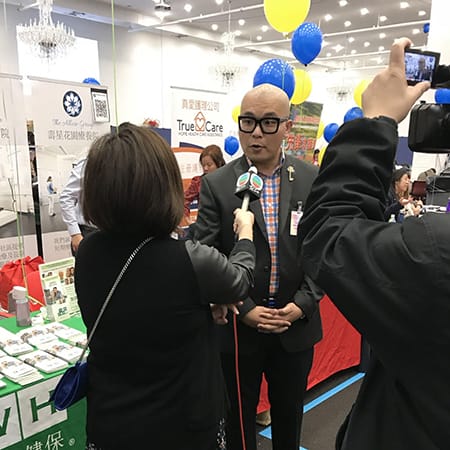
Ed Lai (center) being interviewed by TVB USA at a health fair he co-organized. /Courtesy Edward Lai
What inspires you to volunteer?
I didn’t plan on becoming a volunteer. I was called into service. Service is my higher calling.
My grandma is a devoted Christian. My sister and I grew up with her, and Grandma and I have a very tight bond. Grandma always taught us to be kind to others, to serve the Church and the people. I think my passion for service is rooted in childhood. When I was a student at San Marcos Baptist Academy, an Army ROTC boarding school in Texas, I learned to be a better citizen. I enjoy making a difference and serving God by serving others. I honestly do not have the time, but I sure have the heart. I believe that we work to provide a living, but service defines our purpose to live.
Everything I do is about service. There were years I wasn’t employed, so there was a lot of opportunity to volunteer between job searches. I found myself in healthcare where I was a home care recruiter before working my way up the ladder. Fast forward to today, I’m the senior vice president of Business Development of Bensonhurst Center for Rehabilitation, a 200-bed skilled nursing facility located in Brooklyn, NY.
Tell us about your volunteer role with the organizations you volunteer with.
I have many volunteer roles, but my primary focus is on Brooklyn Community Boards and HealthCare Choices.
For the past 10 years, I have been advocating for over 200,000 residents as part of two Brooklyn Community Boards (7 and 11). Part of my role is advising on land use and zoning. We hold public hearings and determine whether to push for the installation of bike lanes or if a developer should build luxury apartments in a moderate-income neighborhood. We discuss whether certain businesses are a good fit for the community. We are a gatekeeper of sorts, ensuring that the government makes good decisions and approves only projects that make sense and benefit the community.
I have served as treasurer and was appointed chief of health and social services. This year I am the chair of Budgets where I take full responsibility of the budget allocated to our board to ensure proper use of funds in our district. For me, this work has always been enjoyable and rewarding. Currently I’m one of the few Asian-Americans officers of the local Community Board. I lead the efforts in partnerships and collaborations with local nonprofits, houses of worship and healthcare organizations in providing the needed services to our neighborhood and relating needs and concerns to city agencies. We also conduct community health fairs and referral services.
I first joined the board of Healthcare Choices New York (HCC) as a voice for the Asian community. As a healthcare executive, I can be of service as we expand services to increase our patient encounters. Today I am still the only Asian board member. I have been serving on the board of HCC since 2017, currently as secretary/treasurer. Our mission is to help people access primary and preventive health care services. Through HCC, which consists of multi-site diagnostic and treatment centers, we’ve accommodated over 33,000 patient encounters a year in Brooklyn. As treasurer, I chair the finance committee of the board. I have complete oversight on everything budget and finance related.
What inspired you to get started with the Brooklyn Community Board?
Ironically, I wasn’t thinking about volunteering. A friend asked me to apply for the Community Board along with him, and the borough president selected me! I feel that I was put in the right place at the right time so I could help my neighbors. The more I do, the more empowered I feel to make a difference on a daily basis.
What are your long-term plans or goals for these organizations?
I’d love to serve on the Brooklyn Community Board forever but because of term limits, I will only be able to continue serving there for the next couple of years. After that, I suspect I will be guided to another role where I can continue to help my neighbors.
In the past two years, the city has lowered the age for appointment and set term limits for community boards, to attract youth to volunteer. Unfortunately, the youth’s devotion is lacking, and it shows in poor attendance. It is my hope to put in the work so future appointees are committed to the board they serve and find joy working for the community.
For HealthCare Choices, we need to continue building out quality multicultural services and growing patient encounters.
What’s been the most rewarding part of your work?
My favorite memory working at Brooklyn Community Board was working with the nonprofit organizations and elected officials on food and PPE (personal protective equipment) donations during the COVID-19 pandemic. Seeing all the smiles behind those masks was priceless.
It’s rewarding to be in a position to advocate for my neighbors. I’ve been fortunate to help improve response times and more neighborhood patrols from the police as well as faster snow plowing services. We have also promoted bike lanes, obtained more frequent sanitation pickups and have influenced the types of businesses that come into the neighborhood. I don’t think much about what I’ve accomplished; I’m just grateful to be in a position to serve.
What have you learned through your experiences as a volunteer?
Volunteering provides an opportunity to learn and grow and to network with people they might otherwise never meet. And anyone can become an inspiration to others by serving and doing what they’re called to do.
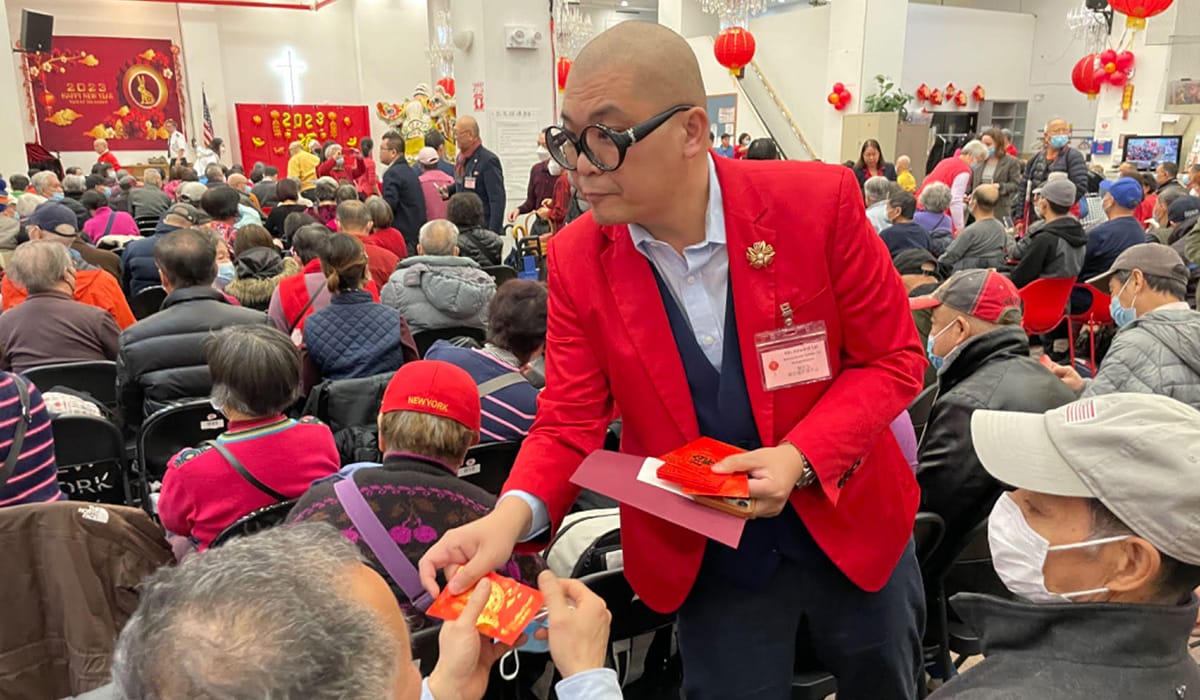
Ed Lai (center) volunteers at an older adults’ birthday event at a senior center in Brooklyn. /Courtesy Edward Lai
Why is it important for others to get involved with causes they care about?
Life can be difficult. Kindness makes life beautiful. Little things we do might have a profound impact on others.
Any advice for people who want to start volunteering?
My volunteer work isn’t heroic or exciting, but someone has to step up and do this behind-the-scenes work. Someone has to advocate so the neighborhood stays safe and vibrant.
Figure out what your passions and strengths are. Everyone has specific skills they can contribute as volunteers so don’t say yes to a volunteer role you’re not suited for. Volunteer in a capacity you’re good at. There are many opportunities that let you use your talents.
What do you want people to learn from your story?
I just want people to be kind to one another. Imagine if everyone does some act of kindness, and then everyone pays it forward. The world would be a better place for our future generations and all our hearts will be smiling because of it, guaranteed! Public service and community service is just so fun and rewarding! I also want people to know that there are hard-working immigrants who contribute to America’s greatness. The American Dream is alive and well for those who want it.
One Meal at a Time: High School Junior Takes on Food Insecurity and Food Waste
Meet Daily Point of Light Award honoree Milan Varma. Read his story, and nominate an outstanding volunteer or family as a Daily Point of Light.
Three years ago, Milan Varma moved from a suburban town in Massachusetts to the outskirts of Philadelphia and noticed that, unlike his former town, not everyone had what they needed to survive. It was a realization that Ethan, his friend and role model, also had in 2021 when the COVID-19 pandemic hit the community hard. Ethan founded Food4Philly, a student-run 501(c)(3) with a mission to reduce food waste and connect people facing food insecurity with nutritious meals in the greater Philadelphia area. Two years later, he handed the reigns to Milan and his co-president before heading to college.
In just a few short years—and with Milan at the helm — the organization has already made its mark with more than 115 members in 12 chapters donating more than 20,000 pounds of food and raising upwardsof $20,000. Milan is now a 16-year-old high school junior with a passion for writing and robotics and a soft spot for history. He practices the tabla, a traditional Indian drum, in between organizing food distribution events, recording a podcast and scheduling volunteers. His recent mock trial win will move him to the next stage, adding another competition to his tightly packed schedule, but he wouldn’t have it any other way.
What inspires you to volunteer?
From a young age, my parents, who are immigrants from India, taught me and my siblings that we can make a difference through action. We volunteered at food pantries and made food at shelters. Three years ago, I moved from Wellesley, Massachusetts, a suburban town where I’d lived most of my life, to Bryn Mawr, a more urban area outside Philadelphia. It was a completely different environment. In my area and nearby towns, I have friends with contacts or neighbors who are struggling.
That opened my eyes to the food insecurity in our local communities. One of the ways I’ve been addressing it is by getting other kids involved, because as you grow older, those experiences are really valuable.
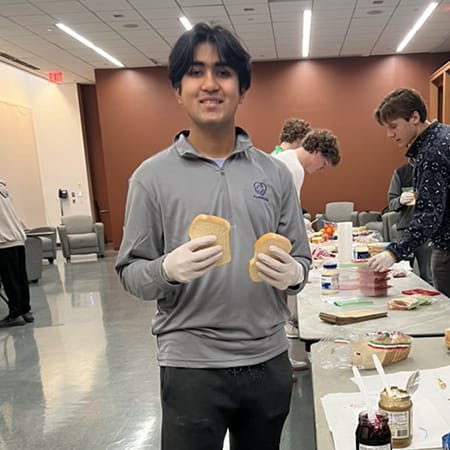
At a meal packaging event for Project HOME, Milan assembles sandwiches with fellow Food4Philly volunteers.
Tell us about your volunteer role with Food4Philly.
We run the day-to-day operations. Our co-founders are still with the organization, but they’re in college now, and that’s much busier than the high school. So, it’s mostly on me and my co-president to manage our chapters, run and plan events and oversee the team.
We also oversee what are essentially “regional managers” and run weekly meetings. We manage partnerships with other organizations and host the 4 Philly podcast to help inspire the younger generation. Recently, we spoke with Miss Pamela Rainey Lawler, founder of Philabundance, one of the biggest organizations fighting hunger in the mid-Atlantic region. In general, we plan for the future and do business stuff.
What are your long-term plans or goals for the organization?
We want to scale the organization, work with more partners, increase membership and make things more efficient. We’ve done a lot of fundraising recently and have created a long-term business plan that we also use for grants. We want to use funds to establish connections with local food banks and other student-run organizations. I’d also like to find more organizations with local and global experience in this field that we can learn from.
We’re always looking to expand. Our business plan outlines chapter responsibilities and ensures that we can make the organization sustainable. I’ll be a senior next year, and finding successors for our roles is a big part of ensuring longevity. And staying organized and being balanced is important for both myself and the organization.
What’s been the most rewarding part of your work?
This summer, I went with our co-founders to a Juneteenth event and gave away food. The organization we worked with, Sharing Access, gives perfectly good food that might otherwise go to waste to people who could use it. It’s rewarding when people are getting meals from an organization like ours. Some of them don’t know when they’ll have another one. I saw a lot of smiles at the event, and I got to talk about what we do and how I got involved. People always say they wish they’d gotten involved at a younger age.
What have you learned through your experiences as a volunteer?
Around 113 billion pounds of food goes to waste each year in the U.S. There are also statistics on how many meals go to waste, which is even more mind blowing. I’ve also learned things by running an organization that I don’t think I would have learned anywhere else. And I’ve learned to holding myself accountable. There have been events where miscommunications have happened, and the stakes are real.
Miscommunications can result in people not getting the meal they expected for the day. That’s drastic, but my actions have real consequences.
Why is it important for others to get involved with causes they care about?
I don’t want to exhaust the idea of youth civic engagement, but I believe you learn a lot from that. There are a lot of lessons in service, and it’s very rewarding. I see it as a duty, because my community—especially my family–has given me so much. Service is a way of showing gratitude.
Any advice for people who want to start volunteering?
Logistically, it’s challenging to establish yourself as a nonprofit, make your mission unique, and get other students on board. Pitch your idea as something good for the community and a learning experience. Once you have a following, you’ll learn from the people around you. All you have to do is take the first step. It gives you momentum. And mentors are some of the best resources.
What do you want people to learn from your story?
I didn’t have a passion for food insecurity when I joined. After working with Food4Philly for almost eight months, I’ve developed a passion. That’s what I hope my story gets across. You don’t have to have passion when you join. People develop it when they take that leap.
Kawasaki Disease Survivor Dedicates Time to Helping Others Facing Illness
Meet Daily Point of Light Award honoree Kate Xu. Read her story, and nominate an outstanding volunteer or family as a Daily Point of Light.
Kate Xu is a friendly, engaged 16-year-old who enjoys reading, photography, math and science. She has extraordinary piano skills that have led her to perform in Paris and at Carnegie Hall, the latter as a result of placing in the American Protégée competition. Recently, she’s been entertaining her Husky-Malamute with the ukulele and guitar. It would be easy to overlook a fact that has had a profound effect on Kate’s life: when she was just 3 years old, she was diagnosed with Kawasaki disease (KD), a rare heart condition.
While she is on the other side of it now, her experience has led her to advocacy and volunteerism. In 7th grade, Kate found the Kawasaki Disease Foundation (KDF), the largest nonprofit dedicated to the disease that focuses on education, support and research, and she became an intern the following year. As an 8th grader, Kate used her self-taught pandemic programming skills to run KD treatment data research that landed her the highest award at the bi-county research fair.
She’s also an avid baker and has run a cookie popup program with locations across the country that raise $3,750 for the foundation. Because of her excellent work, Kate was recently promoted to KDF Youth president, unanimously elected by the KDF board, where she continues to lead initiatives that impact doctors and patients and raise awareness of the disease.
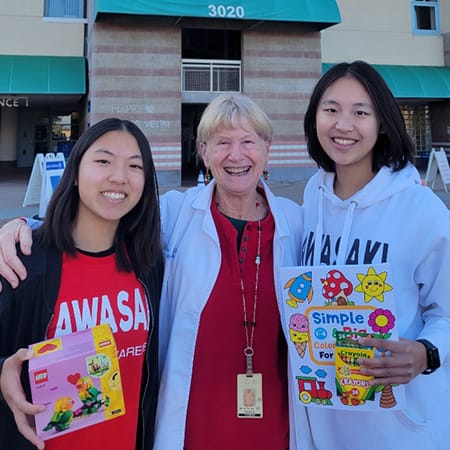
Kate Xu, 16-year-old president of KDF Youth, donates toys and coloring books to Rady Children’s Hospital, the place she was treated for Kawasaki disease as a child. She is joined by her cardiologist (middle) and her sister (right).
What inspires you to volunteer?
I had Kawasaki disease when I was three. I was initially misdiagnosed, and it was a very uncertain and scary process for my family. I know a lot of people go through the same experience both with misdiagnosis and feeling uncertain or alone. That’s one of the biggest reasons I volunteer — to help change that and make a difference in people’s stories, and also, to give back to the community that got me here today.
Since my diagnosis, I’ve had to go back for checkups on my heart and do echocardiograms just to make sure there’s no long-term complications. I had my last checkup last year, so now I’m officially recovered.
Tell us about your volunteer role with the Kawasaki Foundation and KDF Youth.
I’ve done a lot of social media campaigns. As the Director of Outreach, I did a lot of campaigns for awareness and presented for the KD board. And I’ve spearheaded fundraisers with nonprofits. I love baking, so in 9th grade, I started doing a baking campaign called Cookies for Kawasaki in partnership with Cookies for Cures, a nonprofit that raises funds for rare diseases.
Throughout the summer, I baked over 300 cookies and distributed over 100 bags of cookies in my community. I used part of the money raised to buy toys for Rady Children’s Hospital, where I was treated, and put the rest towards research for a cure. I also manage cookie pop ups across the nation, including some in Washington, D.C.
Now, I also manage KDF Youth, the international youth group of the foundation. We do things like lead awareness campaigns on social media. We’ve done an interview series with people who have had Kawasaki disease and try to spread awareness and connect the KD community.
How did you use your programming skills for KD research?
There’s a lot that’s still unknown about Kawasaki disease, including the cause. I wanted to use my programming skills to learn more about the disease, so I used statistical analysis and machine learning to analyze a lot of patient data like gene data and demographics. I found that, among other things, the type of KD that a patient had, incomplete or complete presentation, affected their responsiveness to IVIG, the typical first line treatment.
What’s been the most rewarding part of your work?
The most rewarding part of my work has been setting up the pop-up stand. Not only did I get to share my story, which was meaningful, but I got to hear stories from people about their own experiences with heart disease, rare diseases, and relatives with Kawasaki disease. A 74-year-old who has had heart disease since she was seven showed me her surgery scars. One girl folded her dollar into a heart before donating it. Some people were just taking time out of their day to donate, like frontline nurses.
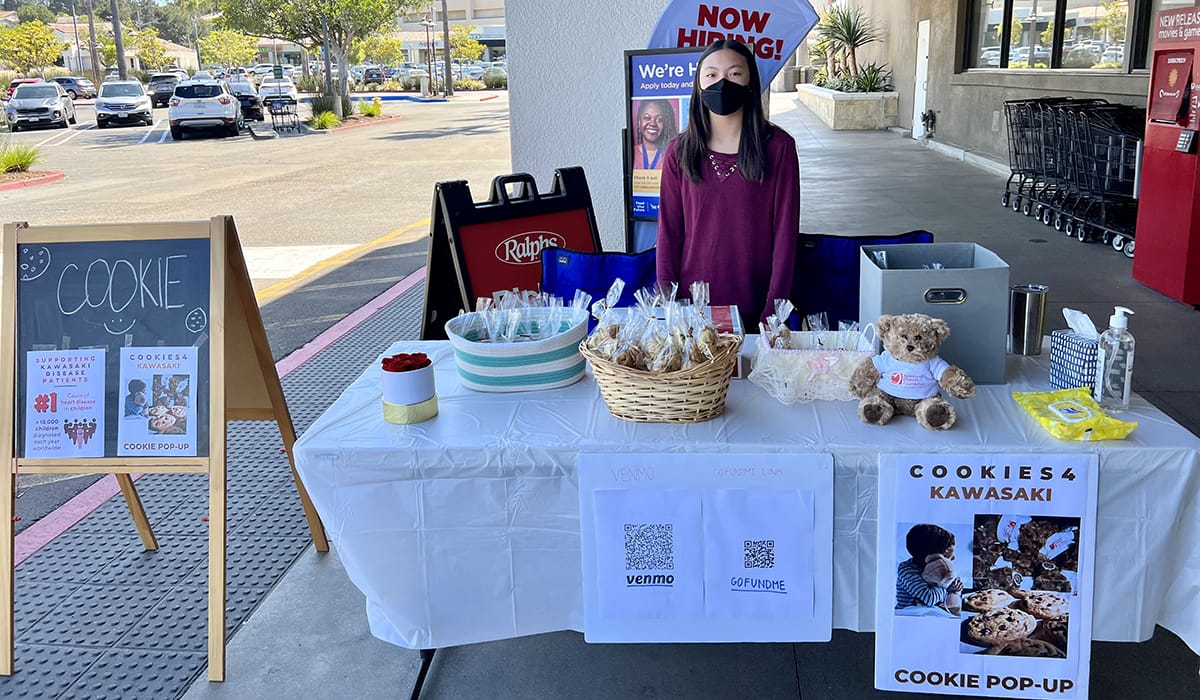
As an introvert, it was very scary to go out there, set up in front of a Ralph’s and stop people as they walked by. I was very shy, but the more I did it, the more exciting and fulfilling it was.
Set up outside a local grocery store, Kate uses her cookie pop-up to share her KD story with the community and spread awareness about the disease.
Tell us about future partnerships, programs or events that you are excited about.
I’m looking forward to the Heart Walk in San Diego for people who have had heart disease. There’s also a KD symposium this year where KD doctors, experts and people involved in the KD community come together. I’m really excited for that, because KD Foundation presents every time, and hopefully KDF Youth will get to be a part of that as well.
Do you have any advice for people who might be dealing with a scary diagnosis?
I know it feels very uncertain and scary. Illness makes you feel very alone, but know that a lot of people out there are dealing with the same thing. There are whole communities out there that have similar experiences and who care about the same thing that you’re dealing with.
What do you want people to learn from your story?
The main thing is how fulfilling it is to give back to communities you care about and how important it is to share your story. Find some way to combine your passions with giving back to your communities. Even if it feels like something small, it can make a difference. Also, don’t overlook rare diseases. Something as small as donations, reposting a story or supporting organizations like KDF or Cookies for Cures makes all the difference.
California Teen Fosters Accessible Interdisciplinary STEM Education
Meet Daily Point of Light Award honoree Nidhi Gaonkar. Read her story, and nominate an outstanding volunteer or family as a Daily Point of Light.
Nidhi has always been interested in STEM. As a kid, she built walkable popsicle stick bridges and designed contraptions daily. She still enjoys tinkering, testing her creativity to solve problems and all STEM subjects. Through robotics, her science and engineering research, and her leadership roles as President of Dougherty Math Circle and Founder of IntelliHer, she constantly strives to expand her knowledge and cause positive change. In all these endeavors, she is also driven to achieve equity in STEM. She plans to pursue engineering in college so she can continue inventing and contributing to the world around her.
What inspires you to volunteer?
One story that encapsulates why I enjoy doing this is when I hosted a speaker event workshop for IntelliHer students. To get speakers, I reached out to many Society of Women Engineers (SWE) organizations at colleges across the country. I was expecting a few replies, but I ended up having about ten speakers from multiple colleges, including UPenn, UMichigan and more. It was really amazing to be able to personally connect with these undergraduate students and learn about what pursuing STEM looked like beyond the high school setting.
I was exposed to fields like Chemical Engineering and Industrial and Operations Engineering, which I had never explored before. Volunteering is important to me because it isn’t just a way to give back but also to learn and broaden my own horizons. I have learned so much from everyone I meet, and I hope to continue doing so in my future.
Tell us about your volunteer role with Dougherty Math Circle and IntelliHer.
I am currently President of the Dougherty Math Circle (DMC), a 501c3 nonprofit organization that offers free virtual competitive math and data science classes for middle and high school students during the school year. I’ve been active with DMC for four years, and president for two. Currently, there are around 10 student volunteers who dedicate their time to teaching STEM subjects to younger students. We group students by age and teach them in one-and-a-half hour sessions. We teach a competitive math curriculum for middle school and younger students. For high schoolers, we also teach data science, including writing Python code and machine learning, which is an extremely hot topic for STEM students. We have already taught over 600 local elementary, middle and high school students.
Before I became president, DMC wasn’t focused on expanding. We served our school district, and that was about it. I wanted to make it more impactful in other areas, so I conducted an email campaign to reach out to different school districts. Through these efforts, we’ve expanded our reach to 10 times as many kids as when I took over as president.
We have also raised over $5,000 for STEM education for underserved students in California through partnerships with Wexford Way and the Basic Fund. Through fundraising workshops and donations, we also raised over $1,000 for Palestine Relief to help kids affected by the Israel-Hamas war.
I am also the founder of IntelliHer, which is where most of my time and efforts go these days. I started IntelliHer to help girls and students from marginalized groups pursue STEM fields. I do this through a bi-weekly newsletter with STEM opportunities, workshops and mentorship. I also do a lot of marketing for the organization to secure partnerships, and provide diverse opportunities like in marine biology or astronomy. So far, we’ve worked with over 800 students in 20 states and eight countries.
I’ve taken an unconventional approach to bridging the demographics gap in STEM through IntelliHer. There are so many student-led organizations that are focused on one area. With IntelliHer, we believe in interdisciplinary learning. You can be interested in biology as well as coding, for example. Recently, I met with a representative from AstraFemina, a group for women in astronomy and space sciences. I got the incredible chance to speak with a former NASA astronaut. Even without any background or solidified future plans in astronomy, I learned a lot from the speakers’ experiences. This is the kind of inspiration I hope to continue bringing to anyone with an interest in the STEM fields.
What inspired you to get started with this initiative?
During my STEM journey, I observed a significant lack of female participants in my Computer Science classes and extracurricular activities. So, I joined my high school’s Girls Who Code club in freshman year to recruit more girls into STEM/CS and to share my passion for programming. As Vice President and current President, I changed the curriculum to focus on hands-on coding rather than just learning languages, and instituted mentorship with personal projects. This doubled our membership and resulted in students completing projects ranging from machine learning to HTML websites.
After this success, I aspired to make a broader impact. I wanted to go beyond focusing on specific STEM areas, instead allowing people with multiple interests to have access to all the opportunities available. So, I started IntelliHer, an initiative focused on providing STEM opportunities to students from marginalized groups and connecting them with unique passions such as marine biology and astronomy while also forming a community of like-minded individuals. Increasing the diversity of the STEM curriculum was also a major goal of mine since I am personally interested in a variety of STEM areas, and not all of these are covered in school.
Joining Dougherty Math Circle as a mentor was a smooth transition for me because I had been a part of a similar program in middle school. The mentors who had taught me especially inspired me to help spread STEM to other students.
What are your long-term plans or goals for both organizations?
My goal is to keep expanding DMC to additional school districts. I’m also focused on raising more money, for both the programs as well as charitable giving.
I am looking to create more IntelliHer events where students can collaborate and share their love of STEM subjects. Lately, we’ve been focused on robotics and engineering. In upcoming events, we will be adding astronomy and other more diverse events. I hope to form a more global community during this process.
What’s been the most rewarding part of your work?
I am so happy to be able to meet students from all over the world. IntelliHer fosters a spirit of learning from each other. It’s rewarding to see students bonding and forming partnerships and friendships from across the globe. I have become more appreciative of the opportunities that are available to me and if those opportunities aren’t available to all students, I want to do something about it. Our students grow their confidence through creating their own research projects and apps. I love how the teams I lead take so much initiative and create their own events and workshops wherever they see a need.
What have you learned through your experiences as a volunteer?
I realized how much of an impact one individual can have. I never expected how much these organizations could grow and how many people we could help. Taking the first step might be hard, but it has so many rewards. I have also learned to manage a team. DMC is much smaller, but IntelliHer is growing fast. As a founder, I am so thankful to have connected with so many people who are passionate and dedicated to helping spread STEM. This has helped our response and our impact grow significantly. It has been amazing.
Tell us about future partnerships, programs or events that you are excited about.
Currently, IntelliHer partners with the Society of Women Engineers, SheCodes.io, the Marine Mammal Center and more. In the future, I hope to expand our reach to other organizations and sponsors to provide more events. The more people we get on board, the more students we can help. We currently have upcoming workshops in AI ethics, astronomy and entrepreneurship.
Why is it important for others to get involved with causes they care about?
Helping others is incredibly rewarding and fulfilling. I believe that all it takes is a few steps in the right direction to start a path of impact. And no matter how small, every effort is worthwhile.
Any advice for people who want to start volunteering?
Going from a DMC participant to a volunteer was a straightforward route for me. You could try the same with any club you participate in. If you are part of an organization in middle or elementary school, see if there are opportunities to give back when you are older. There are also many resources online for clubs and volunteer opportunities in your areas of interest. If there’s no existing organization, you can start one. Talking to people can also open your eyes to people who are already doing what you’re interested in. They can mentor you, point you in the right direction or connect you with the right people. Connecting with others is very useful. At almost every event and program I attend, I make sure to discuss IntelliHer and see if students are interested. I also got my other STEM opportunities through emailing and striking up a conversation. Volunteering is really about exploring and interacting.
Steering South Carolina Toward Community Enhancement Through Volunteer Leadership
Meet Daily Point of Light Award honoree Gordon Rooney. Read his story, and nominate an outstanding volunteer or family as a Daily Point of Light.
Gordon Rooney’s extensive volunteer work in his home state of South Carolina illustrates a profound commitment to public service. His dedication as an unpaid leader and policy influencer is pivotal in shaping the landscape of volunteerism and national service programs across the state.
As a member of the South Carolina Commission on National and Community Service, Gordon plays a critical role in identifying the state’s key challenges and addressing them through strategic volunteerism. His involvement in the commission’s Grant Review Committee is particularly impactful. Here, he helps award AmeriCorps funded grants to nonprofit organizations that tackle South Carolina’s pressing issues. The grants, totaling approximately $4 million for the current fiscal year, support 17 nonprofit organizations, showcasing the significant influence of the committee’s work.
“My fellow commissioners and I work together to identify critical needs of the state, with an eye toward improving the quality of life for South Carolinians,” shared Gordon. This includes helping to ensure the well-being and strategic placement of AmeriCorps members serving throughout the state.”
Gordon seeks to better communities in South Carolina, including veterans, families and others.
Gordon’s leadership extends to serving as co-chair of the Public Policy Committee, where he spearheads the Commission’s policy priorities and engages with state stakeholders. This role includes recommending policy positions for the Commission, meeting with state legislators and attending the annual Public Policy Day at the State House in Columbia. His participation in the Grant Review Committee further demonstrates his commitment to ensuring that funding is directed toward initiatives that provide tangible solutions to the state’s challenges.
“With some of the country’s most renowned beaches, historic sites and restaurants, a thriving arts scene and endless outdoor opportunities, paired with southern hospitality, we have a lot to be thankful for in South Carolina,” Gordon said. “Though just like in communities across the country, South Carolina experiences its own set of challenges – in supporting veterans, conservation efforts, expanding broadband to rural areas, healthcare access and more. Providing service opportunities is one cost-effective way to tackle these challenges.”
From a young age, Gordon has been encouraged to get involved and help better the communities he finds himself part of. “Many of my morals, values and motivations are a direct result of my upbringing,” he shared. “So, while I might be naturally inclined to seek out volunteer opportunities, my message is that anyone can serve. As I’ve heard my dad say, ‘If not you, then who?’ Citizenship is more than paying taxes and voting. It’s about looking after your neighbor and finding ways to better your community.”
Looking ahead to 2024, Gordon is leading the drafting of a new State Service Plan for South Carolina. This crucial document will highlight current challenges and propose steps to address them, guiding funding and programmatic priorities for national service programs in the state. Gordon’s expertise and understanding of the value of service are integral to developing a plan that will effectively address South Carolina’s needs.
Gordon’s volunteerism is rooted in a deep-seated commitment to serving others. As an alum of City Year AmeriCorps, he understands firsthand the impact of service on both the individual and the community. His work with the Commission is a continuation of his dedication to public service, demonstrating his belief in the power of volunteerism to enact positive change.
“From my own service year experience, I understand and appreciate the value of service,” Gordon reflected. “Over a decade ago, during my service year with City Year, I served side by side with other young people from all backgrounds and from all over the country. I completed my service year with an appreciation for the challenges that many of my fellow Americans face every day. My service year ignited my belief that every child deserves a quality education and a healthy home environment. Those serving with AmeriCorps and other programs complete their service with hard skills that’ll help them in the job market, they become more aware of the challenges facing their community and they share a common experience with others they serve with – an experience that stays with them for the rest of their lives.”
Gordon believes that we have a responsibility to get civically engaged, even advocating for a service year for all Americans. “I don’t think it’s a secret that our country finds itself in a state of political polarization, paralyzing proper discourse at dinner tables across America,” Gordon said. “President Lincoln’s words are nearly as relevant today as they were in his time, ‘A house divided against itself cannot stand.’ How can the U.S. promote our values abroad if we’re not leading by example?”
The South Carolina Commission on National and Community Service helps with identifying the state’s key challenges and addressing them through strategic volunteerism.
He continued, “The root causes for our political divisions are many. While there is no one panacea, my experiences as a volunteer gives me confidence as to what a piece of the puzzle looks like. We should provide more service year opportunities for Americans, especially for young people graduating from high school and college. Whether it’s through the military, AmeriCorps or Habitat for Humanity, those serving will share a common experience with their fellow volunteers, corps members, or service members; and it’s more than likely that those serving together will come from different walks of life.”
Gordon encourages those who want to volunteer to jump in with cause areas they’re passionate about. “Be a participant, versus a spectator,” he advised. “Get involved in your community. Think about issues that matter to you. Do you care about parks revitalization efforts? What about supporting underserved populations through the arts? Or how about taking some time each week to walk dogs at your local animal shelter? The odds are that there’s an organization in need of your support, whether part-time or full-time. Give them a call and ask about potential opportunities or visit their website for more information.”
Gordon’s work with the South Carolina Commission on National & Community Service is a testament to the impact that committed volunteers can have on their communities and states. His leadership in policy development, grant review and strategic planning is not only enhancing the effectiveness of volunteer programs across South Carolina but also inspiring others to engage in service. Gordon’s dedication to identifying and addressing the critical needs of his state sets a powerful example of how volunteer leadership can drive significant societal improvement.
“We tend to care more about something if we know its value and if we’ve been tasked with taking care of it,” Gordon shared. “If we don’t care about something, we just might lose it. The freedoms we enjoy and the institutions we take for granted are the work of those who went before us; and it’s up to every American to do his or her part. We owe that to our forebears. We owe that to ourselves.”
Transforming Tragedy Into Hope and Community for Autistic Youth
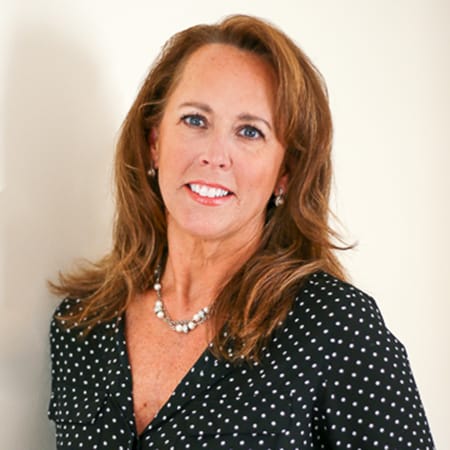
Meet Daily Point of Light Award honoree Stacy Horst. Read her story, and nominate an outstanding volunteer or family as a Daily Point of Light.
Content Warning: Points of Light is proud to share the following uplifting and inspiring story. However, we acknowledge that portions mention suicide and may be difficult for some readers. We encourage you to please care for your own wellbeing above all.
In the wake of profound, personal loss, Stacy Horst, with husband Darren at her side, has channeled her grief into a powerful force for good. The tragic loss of their daughter Erin, who was bullied and felt excluded due to her autism, led to her passing at just 17 years of age when she died by suicide. This heartbreaking event spurred Stacy to take action, ensuring that Erin’s legacy would be one of hope, understanding and community for other young people facing similar challenges.
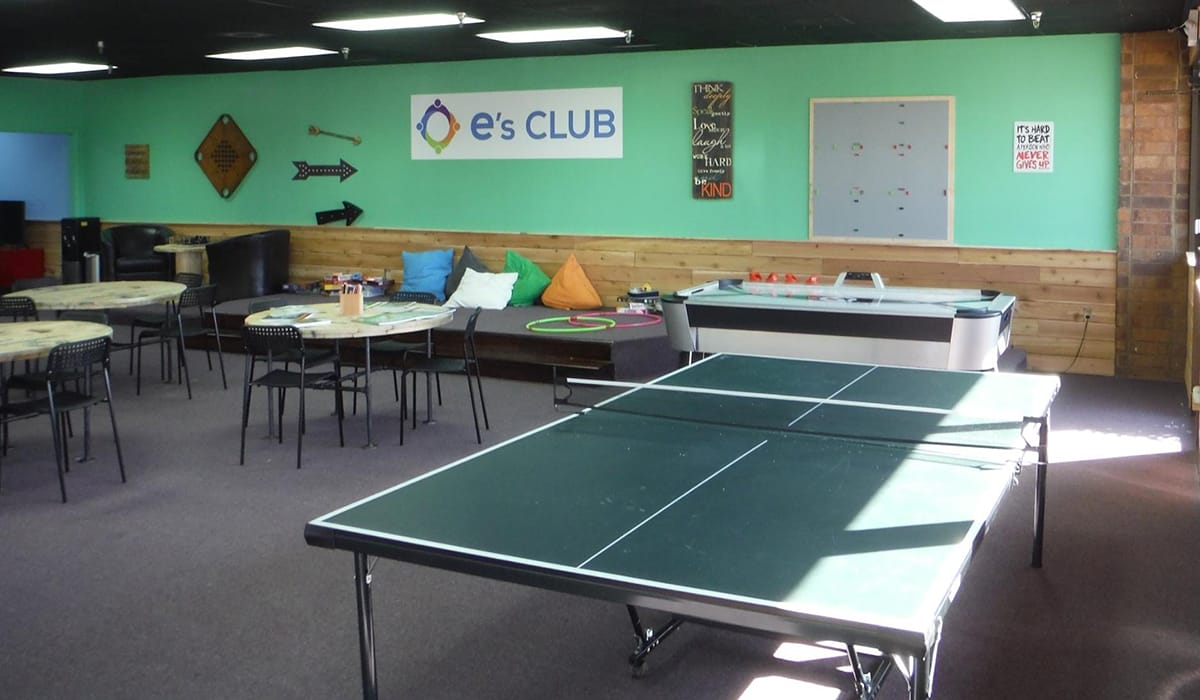
Determined to make a difference, Stacy co-founded Erin’s Hope for Friends (EHFF). This nonprofit organization, driven by the mission to prevent any other family from experiencing such a loss, led to the creation of “e’s Club.” This unique and welcoming space offers a safe haven where more than 400 teens and young adults with autism can socialize and build friendships during the weekends. The success of e’s Club in Atlanta has led to the opening of another location in Lexington, Kentucky, bringing Stacy’s vision of national expansion one step closer to reality.
Stacy’s ambition for e’s Club extends far beyond its current locations. Her dream is to see an e’s Club in every area of the country, providing a supportive and inclusive environment for autistic teens and young adults. Her tireless efforts in fundraising and awareness-raising over the past decade are steadily turning this vision into a reality, one community at a time.
Read on for more of Stacy’s story, including how she’s ensuring Erin’s legacy lives on.
Tell us about your volunteer role.
My volunteer role started as one of the co-founders of Erin’s Hope for Friends (EHFF). Currently, I’m also one of the board officers as the secretary and I work in development to help grow the organization. In the beginning, it was everything from cleaning the bathrooms to volunteering with the kids.
Stacy co-founded Erin’s Hope for Friends (EHFF) and e’s Club to provide autistic teens with spaces for connection and friendship.
How and why did you decide to create this organization?
We had a 17-year-old named Erin. She was on the autism spectrum. And unfortunately, she was bullied at church and at school, through Facebook and social media, through email. And she took her own life at 17.
So, we sat down on the floor of her bedroom four days later and knew we needed to do something. We didn’t want other kids like her to have to go through what she went through – and other families like ours – to have to go through what we were going through.
Then, there was the impetus of e’s Club, the clubs that we currently have. Unfortunately, these individuals are challenged socially, even though we’re all made for friendship and companionship. They don’t necessarily get invited to birthday parties or football games or anything you can think of on the weekends. So, we decided to open a club, which resembles a Dave & Busters, if you will. It serves as a place for these kids to come that has nothing to do with therapy; it’s a place to come hang out and make friends with other people just like themselves.
Our goal is to open clubs in every major city. Ultimately, we’d like to be the size of a Boys and Girls Club, with one in every city. So, I want to keep expanding nationally and then internationally. Whatever we can do, because saving one life and one family means all the difference.
What’s been the most rewarding part of your work?
I would say that, as parents, we try to help our children to be able to work and be social in a normal environment. All that our members ever needed were to be with each other. They accept each other. They don’t care about their quirks. It’s just been a phenomenal thing to see since we started the club.
We have volunteers who come in through National Charity League and Young Men’s Service League, who are teens. They’re coming to a club where they’re going to hang out for three hours with autistic teens, and they have absolutely no idea how that’s going to go. Most people, when they hear “autism,” may think non-verbal. They might go to the extreme.
But these teen volunteers come in and three hours later, they’re telling us they’ve had the best time of their lives. They can’t wait to come back; they’ve had so much fun. That is something that we didn’t expect – that we are also educate neurotypical individuals on what autism looks like. They’re funny, they’re smart, they’re incredibly fun. So that was kind of an adjunct prize that we didn’t think about in the beginning.
e’s Club is akin to a Dave & Busters for teens on the autism spectrum to find camaraderie and fun.
Why is it important for people to get involved with the causes they care about?
I think that volunteering cultivates empathy and compassion and a deeper understanding of challenges that others face, outside of your own. It can create a more compassionate and inclusive society as a whole – those lessons you learn when you step outside your comfort zone to volunteer or help someone else are so valuable. I think it actively shapes the world around us, for the better.
Any advice for people who want to start volunteering?
What are you passionate about? What is it that drives your innermost self? For some people it’s animals or children or affordable housing. Each person needs to find what they’re most passionate about. And there is always, always something you can do – even if it’s an hour of your time once a month. It doesn’t have to be a 10-hour-a-week commitment. It’s about finding what you’re passionate about and finding those organizations that work within your passion, and then seeking out what you can do, to your level of time or commitment. We have people who volunteer in the club or in the office or only when we have fundraisers. Maybe it’s only two hours a year. There are many different levels at which you can get involved.
What do you want people to learn from your story?
I would like people to know that one in 10 children or teens diagnosed with autism either has suicidal thoughts or acts on them. In the state of Florida, we currently have 435,600 diagnosed cases. That means, as we speak, 43,560 people are either having suicidal thoughts or trying to act on them. This isn’t because of Autism. It’s because of the isolation and lack of acceptance.
All of us were created for relationships. We need to create these clubs to have this place where they can come, be themselves and make friends. I know that we’re saving lives, because we’re being told that every day. We hear this from our attendees frequently.
The other aspect of that is that hopefully the world is going in the right direction – though we’re not there yet – and everyone needs to be included. We need to accept everyone for who they are, not who we want them to be. And that starts at home. We need more education about that, especially with parents.
If you or someone you know may be considering suicide, contact the National Suicide Prevention Lifeline by texting 988 or by calling 1-800-273-8255, or text HOME to 741741 to talk to a trained crisis counselor through . Both resources are anonymous, free and available 24/7. Crisis Text Line. All resources are anonymous, free and available 24/7.
Native Atlantan Builds Up Hometown Residents Through Fundraising, Food Distribution and Education
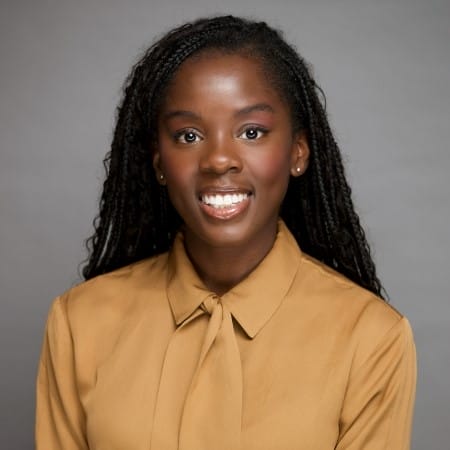
Meet Daily Point of Light Award honoree Brittany Hartman. Read her story, and nominate an outstanding volunteer or family as a Daily Point of Light.
Brittany Hartman, a 33-year-old Liberian-American, was born in raised in Atlanta. Proud of both her heritage and her hometown, she spends a lot of time with family. She’s the oldest of eight, most of whom still live in the area and get together almost weekly at her grandparents’ house to share stories and cook, something she credits, along with its similarities to chemistry, for sparking her love of all things culinary.
Brittany spends her workdays as a product manager of customer data privacy and governance at The Home Depot where she also volunteers. Being deeply invested in the community, Brittany’s desire to improve the lives of the people she cares about extends beyond those who share her last name. She works with Hands On Atlanta as a fellow in their Civic Leadership Program, leading an engaging learning program at a local elementary school. Concerned about those facing food insecurity, she helps Open Hand Atlanta fill grocery bags to give away. And there are many days she finds herself at Dekalb Brilliance Academy both as a board member of and volunteer at her nephew’s school.
What inspires you to volunteer?
I’ve been doing community service for as long as I can remember. At college, I was a member of Clemson’s chapter of Gamma Sigma Sigma, a service sorority. I was a community scholar with Civics and Service House, and as part of the requirements to livein mydorm, we did weekly community service. When I plan or participate in events, it makes me feel like I’m making the world better.I take pride in where I was born, where I live now and where I’lllive in the future with my own children. I wantto make sure that my city looks beautiful and people have access to things they need.
As a lifelong volunteer, Brittany Hartman works with multiple Atlanta-based organizations to address issues related to homelessness, improve the lives of those around her and expand learning opportunities for kids./Courtesy Brittany Hartman
What inspired you to get started with these initiatives, and what is your role within each?
We used to volunteer at Open Hand Atlanta quite a bit when I was working at Cox Enterprises. What really stuck out to me was that a large majority of the money that they raise goes directly to helping communities here in Georgia. I put together market baskets and meals for individuals afflicted with certain illnesses that require a very strict diet. They also offer healthy cooking classes. I joined the Open Hand Society, the young professionals board and do a lot of social events and volunteer. Last year, I was the auction chair for Party in the Kitchen, our biggest fundraiser.
I connected with DeKalb Brilliance Academy when my nephew became a student. They promote project-based learning and bring in professionals to expose kids to different career paths they might not have otherwise known about. I volunteer for things like chaperoning a dance, but I’m also on the board, so I help fundraise.
I was in high school the first time I did a Hands On Atlanta program, a beautification project at an elementary school. For 2023-2024, I’m a civic leader program fellow and a Discovery program captain stationed at Kindezi Gideons, an elementary school in my neighborhood in Southwest Atlanta. Some days, I lead social-emotional learning, wellness and STEAM projects. Other times, I guide the volunteers through the process of teaching lessons.
I also do different projects with The Home Depot. We went to the Atlanta Community Food Bank and put together grocery bags for people experiencing food insecurity. We have service projects every quarter, and I just stepped into a co-chair position for Women’s Link, one of our employee resource groups, so I’ll be running service for them as well.
Do you have any long-term volunteer plans or goals?
I’m passionate about driving down homelessness. It’s one of those things that keeps me up at night. I think about how to get more people more involved and how to get people access to things they need.
Also, there are a lot of things that I think I got exposed to too late, and I wonder how different my life would been have had I known about them in grade school. I love what Hands On Atlanta is doing with the Discovery program. I want to continue helping individuals who historically wouldn’t have access, give them a head start and ensure them an equitable playing field.
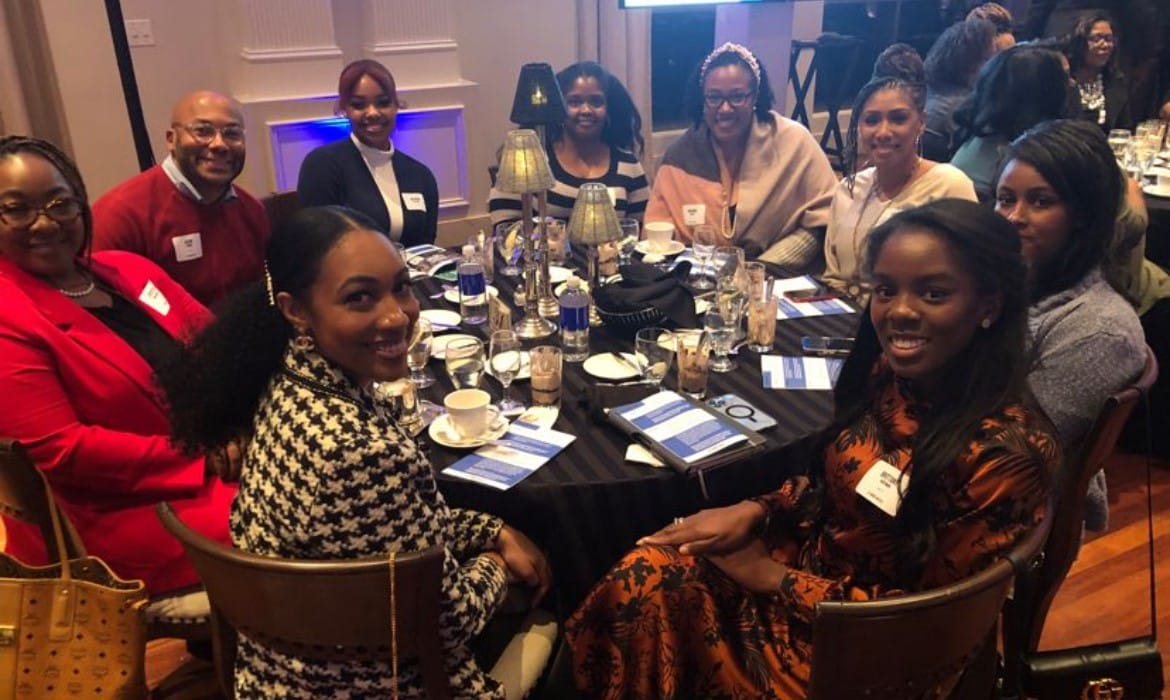
Brittany (front right) attends a Martin Luther King, Jr. Day supper with fellow Civic Leadership Program members./Courtesy Brittany Hartman
What’s been the most rewarding part of your work?
It’s easier forme to feel like I’ve done something good when I get direct feedback. Working with kids and seeing their faces has been the most rewarding thing. Building that connection has been so rewarding. Bringing other people to service is the best, too.
What have you learned through your experiences as a volunteer?
WhenI’m volunteering, it puts the world inperspective.When I’m caught up in my professional life, it’s hard to remember to appreciate things that I have access to that not everyone does.That’s what I’velearned the most. Be grateful for everything that you have, and if you have a way to help someone, offer that up.
Any advice for people who want to start volunteering?
Start small. Don’t feel obligation or anxiety when you think about trying to tackle the world’s problems. When I was in high school, cheerleading was my passion. When I could no longer cheer, I coached for 3 to 6-year-olds. There’s always an opportunity to do something.
What do you want people to learn from your story?
Sometimes, I don’t feel like I don’thave time to do everything that I do, but maybe thelessonis that you always have time. Small thingscan make a huge impact. One group, Flowing With Blessings, sets up outside of Grady Memorial Hospital where there is a large homeless population, and they take donations. I’ll collect gently used clothing from friends, family and colleagues and takeitthere. Anything you can think of might benefit somebody else. If you see an issue,try to figure out how to tackle it. Brainstorm with your friends. And be open to having conversations with people about how to better the world around you.
Busy Student/Athlete Helps Families Suffering from Food Insecurity
Meet Daily Point of Light Award honoree Riley Waxman. Read her story, and nominate an outstanding volunteer or family as a Daily Point of Light.
An avid soccer player since childhood, Riley squeezes a lot out of life. High school soccer and club soccer keep her busy, but never at the expense of the families she serves through diverse service opportunities offered by Service and Learning Together (SaLT). Riley always finds time out of her busy schedule to make a positive difference in her community.
When Riley started with SaLT three years ago, the organization served 25 families. In 2023, that number grew to 530 families. In that time, SaLT has distributed more than 30,000 shopping bags of food and supplies.
What inspires you to volunteer?
When I was a 7th grader, I was encouraged by my science teacher to join a middle school service club called Northwood Gives Back. I quickly fell in love with serving others. Then the COVID pandemic struck, which meant we had to shift gears. The teacher who started Northwood Gives Back along with three other students and Brad Swanson started a new initiative called Shop and Drop, which is now a branch of SaLT. I collected donated clothing items, washed them and distributed them to Lake County area families fighting food insecurity.
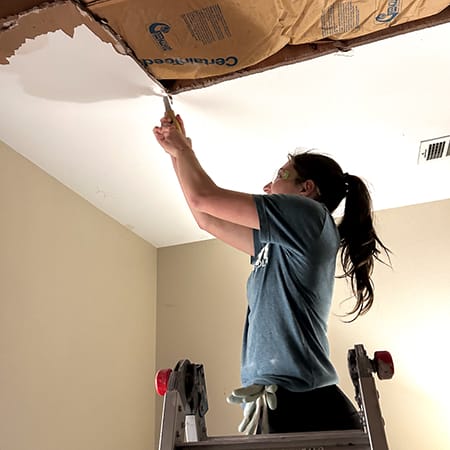
Riley Waxman, cuts drywall out of ceiling to help restore a home damaged by both Hurricane Katrina and Hurricane Ida. /Courtesy Riley Waxman
Tell us about your volunteer role with SaLT.
Service and Learning Together is a nonprofit organization based in Highland Park, Illinois. SaLT has many service branches that include service trips, Love2Learn which is tutoring for children of the families we serve, Take Care packages for migrant families that help them set up new lives in the Chicago area, and a Shop ‘n Drop program where we buy groceries and supplies for food-insecure families. We also make SaLT candles which are decorated with the seven SaLT principles, and we hold several service-learning trips every year.
I help ensure that the 530-plus families we serve receive adequate food and household necessities.
I volunteer nearly every day for SaLT, which works out to about 5-7 hours a week. We’re always involved and engaged with our families. Most of the work is done by 12 student volunteers. We are student-run and adult-supported.
Going back to a few years ago, I started a branch of SaLT called Dream Big which provided physical activity for children of our families (during covid) – basketball, art, singing. Once schools opened up again there wasn’t such a pressing need for this branch, so today, I participate in all of these but most of my time is spent helping families to provide them with what they need. I organize groceries and daily necessities, do shopping for our families through Shop ‘n Drop, and either drop these supplies off at their homes or meet them at a pick-up point.
I also work on securing donations from corporate sponsors and community members through social media and email campaigns. I do whatever is needed for our families.
What inspired you to get started with this initiative?
Seventh grade is a young age to start volunteering, but when my middle school science teacher, Ida Fiore, encouraged me to join Northwood Gives Back, I immediately started seeing the reactions of the families we were helping. It was very moving, and there was absolutely no doubt in my mind about working with SaLT as a high schooler.
What are your long-term plans for goals for the organization?
My long-term plans for SaLT are to get as many people involved as possible. One of our guiding principles is, “Bring it Home,” which means to spread our impact and get more people involved. We hope to continue to be the safety net for food-insecure families in the area. Our grand vision is to end food insecurity.
What’s been the most rewarding part of your work?
I’m a positive person. I smile a lot. It’s rewarding not only to see the grateful smiles on families’ faces, but to spread smiles. We recently made and dropped off holiday meals for our families. I stayed and played with one of the little girls and the new toys we had purchased. She was so filled with joy.
In 2020, we had a holiday event for our families where we handed out gifts. The kids were so excited to open gifts! I believe there wasn’t a single dry eye at the event. We love to receive updates from our families. For example, one dad recently got a job, and the family sent us a picture of him on his first day at his new job. I feel like I am part of 530 families.
What have you learned through your experiences as a volunteer?
I learned to be confident in myself. I do a lot of public speaking now, and a lot of reaching out of my comfort zone. Being a part of SaLT has made me the most confident version of myself. I’d like to share the SaLT guiding principles, because they have helped shape me as a person. All of those guiding principles are printed on our candles that we sell to raise funds. We hope that people take these lessons home with them.
“Unplug” says put down the phone. Live in the moment. Be fully present with people.
“Little By Little” is a guiding principle I live by every day. I can’t change everything all at once, but small steps add up to big actions.
“This is It” is another principle that also encourages you to live in the moment, look at why you are doing something and understand the impact you’re making.
“Bring it Home” means to spread the word. We use social media to build awareness. We post about SaLT, tell our stories and encourage community involvement.
“Communicate Love” talks about the power of spreading a smile, staying positive, being kind to everyone and doing everything from a place of love.
“Be Flexible” means embrace whatever’s next. Nothing is perfect, things change fast, there are ups and downs and unexpected things happen. Change may be hard, but acceptance is a real attitude adjuster. In the end it’s for a great cause.
“Respect” is the art of empathy rather than being sympathetic. Show that you can feel what they feel instead of just showing that you care.
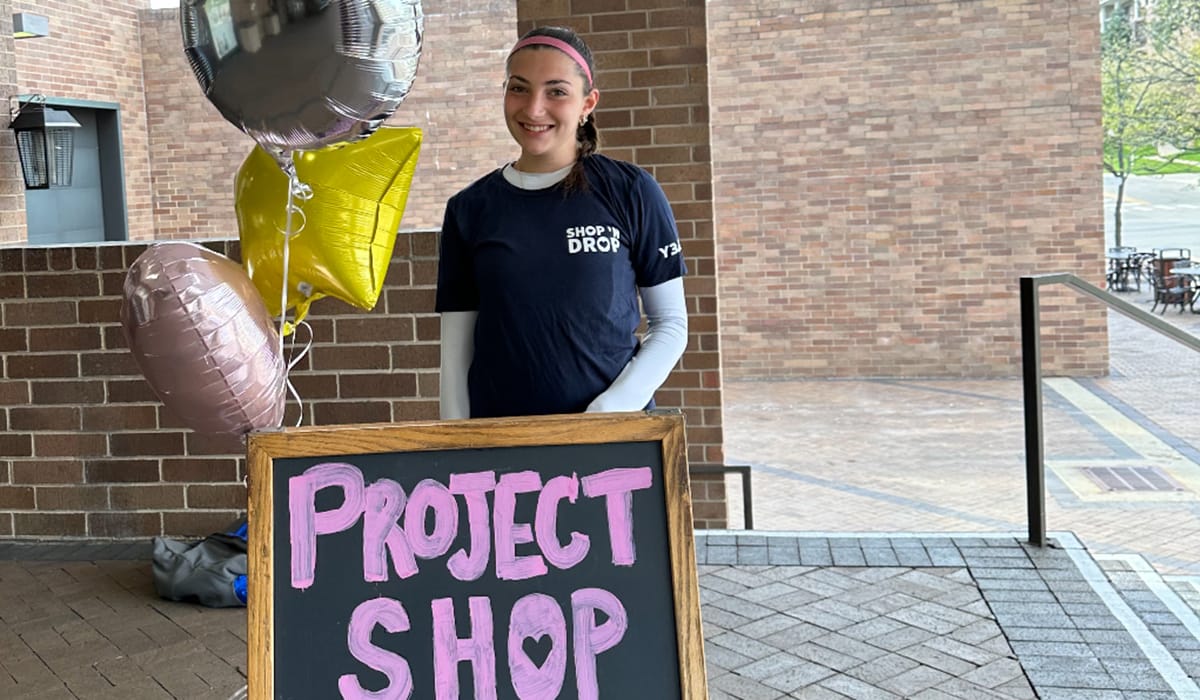
Riley Waxman, SaLT intern, in front of Project Shop N’ Drop on their 3rd anniversary of serving local families. /Courtesy Riley Waxman
Tell us about future partnerships, programs or events that you are excited about.
I’m looking forward to continuing with Take Care packages; this new venture with immigrants. There is another Shop ’n Drop date coming up soon. It’s nice to reconnect and get together with our families and other volunteers.
Why is it important for others to get involved with causes they care about?
Everyone has the power to make a difference. If you believe in something you will feel so much more committed, and your passion will inspire other people. Even if you think you only play a small part, you can make change.
Any advice for people who want to start volunteering?
Reflect on an issue that doesn’t sit right with you, something you can do to fix it. Every day people walk by some kind of injustice and there’s always something for someone to help with. Follow your passion and also explore various vol opportunities to find a hidden passion.
What do you want people to learn from your story?
Shop ‘n Drop started in a vacant space serving 25 families. Today, we serve 530 families, and we’ve distributed over 30,000 shopping bags filled with groceries and supplies. Three years ago, I would never have imagined the scope of our impact. I am blessed and humbled to be considered part of the safety net of these families.