Soaring Over Stigma by Changing the Conversation on Period Poverty
Meet Daily Point of Light Award honoree Sheona Diwakar. Read her story, and nominate an outstanding volunteer or family as a Daily Point of Light.
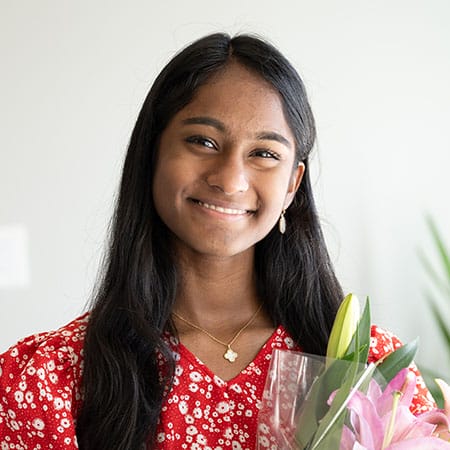
At just 13 years old, Sheona Diwakar took action on an issue many adults still hesitate to talk about. She founded Soaring Doves, a nonprofit focused on addressing period poverty—a problem that affects millions globally and often goes unspoken. In the years since, she has transformed that initial spark of passion into a powerful force for change, organizing drives, launching initiatives and mobilizing young people to challenge taboos and provide real solutions. Her work has reached communities across Georgia and beyond, with nearly 70,000 menstrual products redistributed to date.
Sheona’s leadership style is just as impactful as her results. Whether she’s giving a speech to a packed audience or leading a volunteer event, she radiates warmth and determination. She plans logistics, builds community partnerships and leads with empathy, ensuring that everyone she works with feels like a valued part of the mission. Her 3K fundraiser even brought in the largest individual donation of the year for Georgia STOMP, a statewide coalition focused on ending period poverty.
Through Soaring Doves, Sheona has led international workshops, launched a youth ambassador program and engaged schools and civic groups in meaningful dialogue. What began as a local initiative has grown into a youth-led movement advocating for dignity and health equity. Her organization’s reach has extended to communities worldwide, showing just how powerful youth-led activism can be.
Now, Sheona is setting her sights on the future. With college on the horizon, she plans to expand Soaring Doves further, including scaling its impact, building new partnerships and launching sustainability-focused initiatives that promote eco-friendly period practices. The mission remains the same: ensure access to menstrual products while sparking conversation and empowering the next generation of changemakers.
Tell us about your volunteer role.
I’m the founder and president of Soaring Doves, which started as this tiny idea in my bedroom in 2020 and has now grown into an organization that’s reached thousands of people. We’re youth-led, which means everyone involved brings so much energy and creativity to the work, and we focus on fighting period poverty from a few angles, getting products directly into the hands of people who need them, educating communities to break the stigma and pushing for policy changes so access is permanent.
My day-to-day life can look completely different depending on the week. One day I’m coordinating a drive with local businesses, another day I’m on a Zoom call with volunteers in another country and then sometimes I’m literally in my car delivering products myself. Since we started, we’ve distributed well over 10,000 products, built partnerships across the state and launched youth-led chapters internationally. It’s been this wild mix of grassroots action and big-picture dreaming.
Why is this issue so important to you?
Because once you actually see what period poverty looks like in someone’s life, it’s impossible to unsee it. It’s not just, “Oh, I don’t have a pad today.” It’s missing school or work, it’s avoiding social events, it’s feeling embarrassed about something that’s completely normal. It chips away at dignity. And the frustrating part is that it’s fixable. If we can make toilet paper freely available in public bathrooms, we can do the same for menstrual products.
What inspired you to get started with this initiative?
I’ll never forget this one day when a friend quietly left school because she didn’t have the supplies she needed. No one made a scene, no one talked about it, but it stuck with me. At first, I didn’t know what to do with that feeling, but by 2020 I realized I didn’t need to wait until I was older or had a big budget. I started small, with just a few product drives in my neighborhood and people showed up. Those first few drives snowballed into bigger partnerships, and before I knew it, we were not just running local efforts but connecting with advocates around the world.
What are your long-term plans or goals for the organization?
I want Soaring Doves to be something that keeps growing even after I’m no longer running it day-to-day. That means building leadership pipelines for other young people, making sure chapters are self-sustaining and moving from “filling the gap” to making sure the gap doesn’t exist in the first place. In the next few years, I see us doubling our impact: more chapters, more product distribution and more legislative wins. The dream is that eventually, no student in our state will ever miss school because they don’t have access to a pad or tampon.
What’s been the most rewarding part of your work?
It’s the small, quiet moments. Like someone telling me they were able to go to school that week because they had the products they needed. Or seeing a volunteer who started out shy take the lead on their own drive. Those moments make me realize this isn’t just about handing out pads; it’s about creating ripples of confidence and empowerment in people’s lives.
What have you learned through your experiences volunteering?
That big change usually comes from a lot of small, consistent actions. It’s not always flashy, but it adds up. I’ve also learned that relationships are everything—whether it’s with the people you’re serving, community partners or policymakers. And honestly, patience. Policy change moves slowly, but community change can happen right now, and both matter.
Why is it important for others to get involved with causes they care about?
Because every movement needs more than one voice. You might think you’re “just one person,” but your skills, your time, your connections… those could be exactly what an organization needs to reach the next level. And it’s not just about giving back; it’s also about what it gives you. Being part of something bigger changes the way you see the world.
Any advice for people who want to start volunteering?
Don’t overthink it. Just start. Even if it’s just one hour a month, or one small task, it matters because it would make an impact on the community around you. Ask an organization how you can help, and don’t be afraid to do the behind-the-scenes work. If you want to start your own thing, don’t wait for it to be perfect. My first drive was nowhere near polished, but it taught me everything I needed to know for the next one. Momentum comes from movement, not from waiting for the “right time.”
Meet Daily Point of Light Award honoree Olivia Kim. Read her story, and nominate an outstanding volunteer or family as a Daily Point of Light.
Olivia Kim is an inspiration to people of all ages. But for other high school students, she’s a standout example of the power of volunteerism.
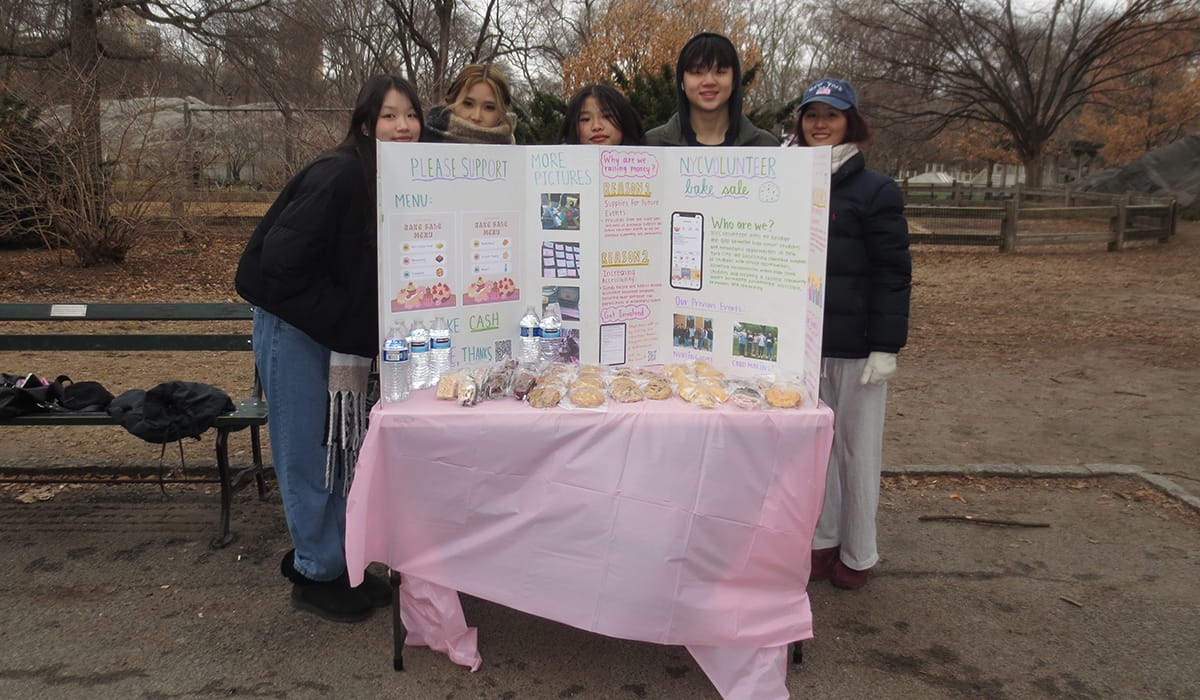
Olivia has always enjoyed helping others, so she didn’t think twice when her best friend started NYCvolunteer, a youth organization that highlights volunteer opportunities for high schoolers in New York City. Knowing that many young people are looking to get involved in their communities with volunteer work, the duo realized they could streamline the process by creating a volunteer team that could tackle everything from hosting bake sales to visiting senior centers in the New York City area.
Olivia got involved with the group in 2024 and quickly became vice president of the organization. In that role, she not only coordinates events and communicates with organization partners, but she also serves as a leader who mentors new team members and develops innovative service initiatives. Olivia’s ability to foster strong relationships with both volunteers and nonprofit partners has played an essential role in sustaining NYCvolunteer’s impact in the New York community. With Olivia’s dedication, NYCvolunteer has grown its team to over 150 active volunteers who have contributed over 500 service hours to their community.
A rising high school senior, Olivia plans to attend college and medical school. Her passion for helping others has inspired her dream of becoming a doctor. She cites getting out of her comfort zone through volunteering as one of the most helpful tools for informing her future goals. By being exposed to all sorts of populations, she’s learned the true meaning of helping others.
Her journey is the ultimate success story of volunteerism, and it’s likely to continue for many more decades.
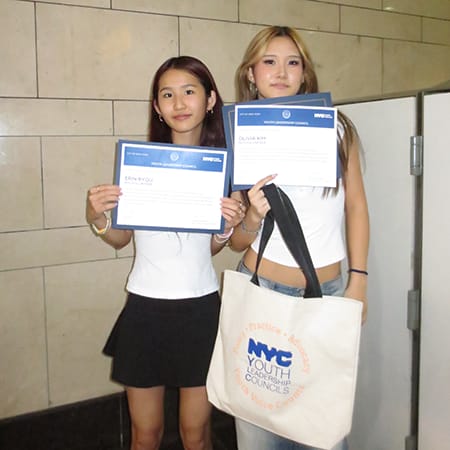
OLIVIA KIM (RIGHT) RECEIVES A MAYORAL VOLUNTEER SERVICE AWARD FOR RECOGNITION OF HER SERVICE WITH NYC VOLUNTEER. /COURTESY OLIVIA KIM
What inspires you to volunteer?
Ever since I was little, I have loved helping other people. It just makes me feel good. Doing something to help other people is just such a good way to spend my time. Also, it’s very motivational for other people to help them start volunteering. I particularly love volunteering at community centers or nursing homes, because I love talking to other people and meeting new people, and socializing. It’s such a great way to meet and talk.
Tell us about your volunteer role with NYCVolunteer.
I do a lot of work behind the scenes. We look for volunteering opportunities by emailing different places and collaborating with other organizations. One organization called Gem, which is focused on helping seniors, and we’ve collaborated with them a bunch of times. We reach out to them and establish and coordinate a perfect time that works with all of our members and the venue. We also have different teams under us, including a design team. They design posts on our Instagram for different events. They make these event posts so that people who look at our account can find different ways to get involved. We also host other events, like bake sales and card-making gatherings.
What inspired you to get started with this initiative?
My best friend started this organization. She realized that a lot of high schoolers nowadays want to add activities to their college application and build out their extracurriculars, but they don’t know how to do that, or where to find these opportunities. We aim to highlight any volunteering opportunities for high schoolers in New York City.
What are your long-term plans or goals for the organization?
We want to grow the organization as much as possible. We’re looking to expand the number of followers we have so we can reach out to more people and let them know about more volunteering opportunities. I think it’s great that we have a solid New York community that can help each other out in finding opportunities and even meeting new volunteers. I feel like that’s important. Doing things together is more impactful on the whole community. I think growth of this community is one of our biggest goals.
What have you learned through your experiences as a volunteer?
I thought it would be easier. Sometimes it’s pretty hard to get people to go attend the events. There was one nursing home we went to, where it was pretty hard to communicate with the seniors who couldn’t hear as well. Some of our volunteers may have felt uncomfortable, but I think getting out of your comfort zone and overcoming obstacles are important parts of the experience.
NYCVOLUNTEER VICE PRESIDENT OLIVIA KIM (SECOND FROM LEFT) ATTENDS A BAKE SALE IN CENTRAL PARK TO RAISE FUNDS FOR SUPPLIES. /COURTESY OLIVIA KIM
Why is it important for others to get involved with causes they care about?
You need to take action so that it spreads awareness and reaches more people, and increases impact. Keeping it to yourself isn’t going to do much. Going to these events and taking action is important. Volunteering grows us as a community as well.
Any advice for people who want to start volunteering?
I would say, if you wanted to do it, you would. There are so many opportunities that you could find online. I know we started our nonprofit to help people find things that they can do, but there are also so online sources that you can research and look up to find things that you can do. It may not be a big commitment. It could be gardening or going to a soup kitchen. You can still volunteer for a day. You can still meet a lot of people in a single day. One piece of advice that I would give is don’t be afraid, and you won’t regret it at all. It’s all for a good cause.
What do you want people to learn from your story?
Age doesn’t define anything. Just because you’re a high school student doesn’t mean that you can’t start working toward a cause. Anything is possible.If you want, you can start your own organization with a strong mindset, and you can have people join your community and grow your organization. You can gain support just by doing little things, step by step.
From Global Crises to Local Relief: A Lifeline in Emergencies
Meet Daily Point of Light Award honoree MaryStuart Hoppmann. Read her story and nominate an outstanding volunteer or family as a Daily Point of Light.
When disaster strikes — whether it’s halfway around the world or across the street — MaryStuart Hoppmann is often the voice in the chaos, calmly guiding people through crises. “You would be surprised how often someone calls from an active disaster zone saying, ‘I really need to find person X.’” she shared. “And I find that person for them!”
As the strategic development coordinator with Fill the Needs — a nonprofit coordinating disaster relief and humanitarian aid across the U.S. and internationally — MaryStuart serves as “Command Central 2.0,” bridging the gap between those in crisis and the people who can help them.
“Chef Amy is Command Central. I fill in the gaps. Amy cannot be in multiple meetings at once or talking to multiple people at the same time. So I fill those needs and anything else that I can see is needed or am asked to do by someone in our network,” MaryStuart said.
Fill the Needs founder and president Amy Sins says that MaryStuart’s presence is indispensable.
“There are days during a chaotic disaster where she is my right-hand woman. She knows enough about what I do every day with this organization that she could jump in and take over and keep it afloat for a few days,” Amy said. “Her impact is as big as her heart — gigantic — and I couldn’t do it without her.”
MaryStuart is the strategic development coordinator with Fill the Needs, a nonprofit coordinating disaster relief and humanitarian aid across the U.S. and internationally. / Courtesy MaryStuart Hoppmann
MaryStuart’s service stretches from evacuating endangered students and women from Afghanistan to supporting families in Ukraine and aiding disaster-hit communities across the U.S. “What counts most is showing up in the way people need,” MaryStuart said — whether that means unloading supplies at a distribution point, tracking road closures when cell towers are down or offering a listening ear to a fellow volunteer serving in their own impacted community.
Her connection to Fill the Needs began when her daughter befriended a young Afghan woman at a student conference. After the Taliban takeover, urgent messages poured in asking for help evacuating the woman’s family. What began as one desperate plea soon evolved into a networked effort to evacuate students and families in danger.
“I was connecting with people that were threatened because of their personal status. They were female, or they were members of minority groups in Afghanistan, and there wasn’t a road to the U.S. for them.” From there, MaryStuart began coordinating logistics, forging connections with aid partners and finding solutions in situations where no clear path existed.
Through those efforts, these Afghan refugees were able to find safety in countries including Pakistan, Spain, France, Bangladesh, Ireland and the U.S. Among them was a young named Sayed, now living in France with his sister.
In U.S. disasters, MaryStuart works the phones, maps and message boards, guiding responders through hazardous road conditions when GPS and cell towers are down. She has coordinated everything from delivering hay to farmers in North Carolina to sending trucks of firewood to communities reeling from hurricanes.
Her dedication also extends to overlooked communities in disaster planning.
“Right now, I am working on building a resource list for disabled disaster survivors. Parents with medically fragile children, people with autism, those on oxygen or ventilators, need extra support before, during and after disasters but often do not know where the help can be found,” she said. To expand the reach of these resources, she’s also researching grant opportunities and funding sources that could allow Fill the Needs to serve a wider area.
MaryStuart measures her impact less in statistics and more in personal moments, like the time she befriended a panicked U.S. veteran and helped her brother, his Ukrainian wife and their newborn baby find a doctor, get medical treatment and evacuate during the Russian invasion. Other times, the impact is less visible but equally profound — listening, consoling and advising fellow volunteers so they can continue helping their communities.
Her days can stretch long — sometimes 18 to 20 hours during a major disaster. Even when personal challenges arise, she finds a way to serve. “Right before Helene, my college daughter had an accident that required my immediate travel to her school in upstate South Carolina… In the middle of her emergency doctor visits, MRIs, etc., Hurricane Helene hit. We were in a hotel (fortunately one with a generator) as I was juggling meetings, relief supplies, and more with her emergency appointments and medical needs. It was wild and crazy.”
Her advice to others who want to serve is simple: don’t overthink it.
“Don’t make it hard,” MaryStuart said. “Volunteering sounds like such a big thing, but you just need to meet the needs that come to you.”
It’s a philosophy she sees reflected in The Starfish Story — a parable about a young child tossing stranded starfish back into the ocean, one by one. When an old man points out there are too many to save them all, the child simply replies that it matters to each one.
“You can’t save the whole world,” MaryStuart said, “but you can change the whole world of one person.”
Meet Daily Point of Light Award honoree Jacqueline Cohen. Read her story, and nominate an outstanding volunteer or family as a Daily Point of Light.
Seventeen-year-old Jacqueline Cohen loves theater and reading as ways to experience someone else’s life and build empathy, skills she uses consistently to help others. Her older brother and fellow Daily Point of Light, Maxwell Cohen, started volunteering for The Miracle Project years ago and remains dedicated to it today. When she was finally old enough—a high school freshman—Jacqueline followed suit. The Miracle Project offers theater and creative expression classes to help people on the Autism spectrum develop social skills and build community. She’s never missed a class, even after losing her home in the Palisades fire this January.
Despite the added challenges, Jacqueline continued to put her effort into helping others. Now in her second summer interning with the lead strategist at LA4LA, she’s helping complete stalled affordable housing projects and assisting with the fire recovery process. Inspired by an incident in middle school, she also founded Friendly Numbers in 2023 to encourage young girls to stay engaged in math. And, using her own math skills, Jacqueline has tutored peers for the last four years, designing games to improve understanding.
After the successful completion of the Eaves, an affordable housing project with the Treehouse Foundation and LA4LA, Jacqueline celebrates at the launch party.
What inspires you to volunteer?
Connecting with people when volunteering was what initially inspired me to do it and continues to do so. You get to grow relationships with people you probably otherwise wouldn’t meet, and you could impact their life. If an hour of my time a week leads to that, it seems like a no-brainer.
My older brother does The Miracle Project, so I always knew I was going to do it. When I started, it was over Zoom. Every week, people would be excited to see me and would ask me to perform with them. The fact that I can offer comfort for people who might see this as one of the only spaces where they can be fully themselves is special to me. I can be someone who celebrates them when, in the outside world, people like me don’t always do that.
I started Friendly Numbers because, in fourth grade, my teacher took me out of an advanced math class halfway through the year. She thought I’d be uncomfortable that all of the other students were guys, and she made that decision–without talking to me–because of my gender. She had good intentions, but it highlighted how women in the education system are continuously at a disadvantage. They aren’t encouraged or are even actively discouraged from pursuing a more advanced mathematical education. My parents have been so supportive of me, I wanted to do something for young girls who aren’t given that.
Tell us about your volunteer role with The Miracle Project.
I’m a co-actor at The Miracle Project. During activities, it means leading by example. There are teachers and facilitators. That’s not what I am. I’m a friend offering a smile and someone who students can chat with about things going on in their lives. I’m just there to support them, laugh with them, sing with them.
In Triple Threat classes, we act, sing and dance and then do a performance at the end of the year. In that class, I might be on stage or perform a duet with them. Sometimes there are kids who need more attention, so I offer that as a friend. Live performances are a huge part of it, so it’s important to instill confidence.
In Social Skills classes with younger kids, I’m just there to be uplifting. They’re broken up into music and improv games, the latter of which I help create. Games help kids understand and develop social awareness.
What is something that people might misunderstand about the population that you serve?
Not to generalize, but they’re the kindest people I’ve ever met. Many people are telling them to be ashamed of part of their identity, but it’s that part that makes them so emotionally open, excited to get to know new people, intelligent and perceptive.
During the pandemic, Jacqueline sings and plays improv games with her Miracle Project social skills class of 8- to 10-year-olds on Zoom.
Describe your role with Friendly Numbers and LA4LA.
I’ve connected eight pairs of fourth and fifth grade girls with older female mentors. We’ll be with them however long they want to stay in touch with us, so it was important to find people they’d look up to. I monitor those connections, making sure the kids continue to feel that way about their mentors and that mentors continue to be in touch with the kids. I also work with two of my own connections. We’re here to offer encouragement and support in math, but we’re also here to make sure that they never feel alone. We’re at one Title I elementary school right now, but we’re becoming a club at my school, so with the influx of mentors, we‘ll be expanding.
Last year, with LA4LA, we were able to offer 58 new units of affordable housing through a project called the Eaves. We’re also working on fire relief–re-starting the rebuilding process, making sure it’s equitable and putting together seminars to help people understand available opportunities. We’ve been doing fly-ins for congresspeople to see Altadena and fly-outs for fire victims talk to people in D.C. We’re working on things from a policy perspective, too.
I take meeting notes, update Google Docs, handle communications, help manage social media and provide insight as a survivor of the fires. Basically, I do anything I can to make other people’s jobs easier. I’m helping with fundraising initiatives, too.
Do you have any advice for how to support girls interested in math and people on the spectrum in readers’ own areas?
Meet people where they are, and don’t project your life experiences onto them. Don’t assume that they’re not qualified for something, because they probably are. And offer any support possible that they’re asking for. It’s not our job to tell people what sort of support they need.
What do you want people to learn from your story?
Connecting with others brings value into your life. And the most help you can offer is being there for them, and not just temporarily.
Meet Daily Point of Light Award honoree Nily Samara. Read her story, and nominate an outstanding volunteer or family as a Daily Point of Light.
Nily Samara knows that dance can be an expensive hobby. That’s why the 16-year-old high school student is doing her best to make her passion more attainable for other young people.
As a young child, Nily was enchanted by a performance of The Nutcracker. Since then, she has loved studying ballet. She has dedicated years of her life to her passion, and believes dance can have a transformative effect on people. But Nily also understands how lucky she is to have that opportunity. From leotards to pointe shoes made halfway across the globe, stepping into the world of dance is a costly endeavor. Nily feels it shouldn’t be that way, and she wants to change things.
This desire led her to found Ballet Bridges, an organization that makes dance accessible to youth, regardless of background, abilities or finances. Whether students have disabilities or financial struggles, Ballet Bridges removes the restrictions that make the world of dance unattainable for many young people. Nily does everything from leading dance classes for children with special needs at partnering organizations to organizing hip-hop dance workshops. She’s also incredibly active in finding those expensive dance supplies and providing them for people who don’t have them. People who need things like pointe shoes and leotards can apply on the Ballet Bridges website, and the donated goods are subsequently redistributed. Goods are also frequently shipped to dancers who don’t have them in other locations, even internationally.
Nily is currently living her dreams, studying ballet in London for the summer before she comes home to Michigan to return to high school. When she tells her fellow dance students in London about her work with Ballet Bridges back home, many of them are also inspired to help. They’re eager to put out donation boxes at their dance studios, or do whatever they can to spread the message of expanding access to the joy of dance wherever they can. That willingness to pass the message on is a powerful example of how volunteerism works best. By sharing the message, we all benefit.
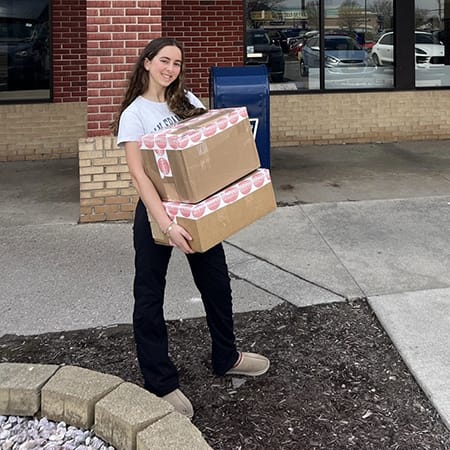
NILY SAMARA, FOUNDER OF BALLET BRIDGES, PREPARES TO MAIL DONATION BOXES. /COURTESY NILY SAMARA
Tell us about your volunteer role with Ballet Bridges.
I’m the founder of the organization, and I also lead all of the operations. I teach both in person and online. We do have some teachers who will be helping out next year, so I will also recruit people. I also work on the donation boxes. Through the website, we have people who apply for donations, usually dance studios, teachers or parents, and after the board goes over the applications, we match them with the donations we have received. We redistribute what we’ve collected. People can donate, and they send it over. There’s a lot of outreach on my side. Sometimes, stores or brands can donate too.
What inspired you to get started with this initiative?
It started quite informally. I was visiting my cousin the summer before my freshman year of high school, and she asked me to teach her some dance moves and skills, because she knew that I was a dancer. I started teaching her, and she loved it so much. My little cousin has a disability, so seeing how much confidence and enjoyment dancing gave her, I wanted to continue. That summer, I kept teaching her more, and she invited her friends over. The summer I was teaching classes in the neighborhood, I loved it so much that when I came home that summer, I decided to continue within my community.
What are your long-term plans or goals for the organization?
I want to work on expanding and making sure that we’re able to help all sides of the world. There’s only so much that I can do within my community and online, but I would love to continue teaching more classes in all parts of the world and build a team of ambassadors to do that. I’d also like to increase efficiency, because it’s very hard to constantly ship items out, especially internationally. So we often have to wait for fundraised money before we ship. I’d love to work on fundraising so that we can get stuff out more efficiently, and recruit a team so that we can teach more classes and increase the scope of our impact.
What’s been the most rewarding part of your work?
Seeing the smiles on people’s faces, whether it’s when I’m teaching a class or when I get pictures back from people who receive donations. It’s impactful to know that I’m doing something bigger than myself, and that I’m impacting so many people in such a simple way. It doesn’t take too much just to help out and to improve people’s access to something that makes me so happy, because I love dance so much. Being able to share it just makes me even happier.
What have you learned through your experiences as a volunteer?
I learned a lot about listening and being able to identify and pick up on small stuff. I certainly wasn’t the most experienced at teaching, because I’ve always been a student. I learned a lot about listening, collaborating, and determination as well, because it wasn’t easy to make this all happen. I think along the way, I learned a lot to make it easier.
Why is it important for others to get involved with causes they care about?
It doesn’t take too much effort to be able to share something that you know you have a skill in. For example, if you’re a dancer, that’s a very fortunate thing. A lot of people don’t have the opportunity to learn all this. Being able to share it brings a lot of happiness and a lot of joy. It’s very rewarding for you, but it’s also very impactful and brings a lot of joy and enjoyment to the person that’s being impacted. It’s a very simple thing that can make the world a better place.
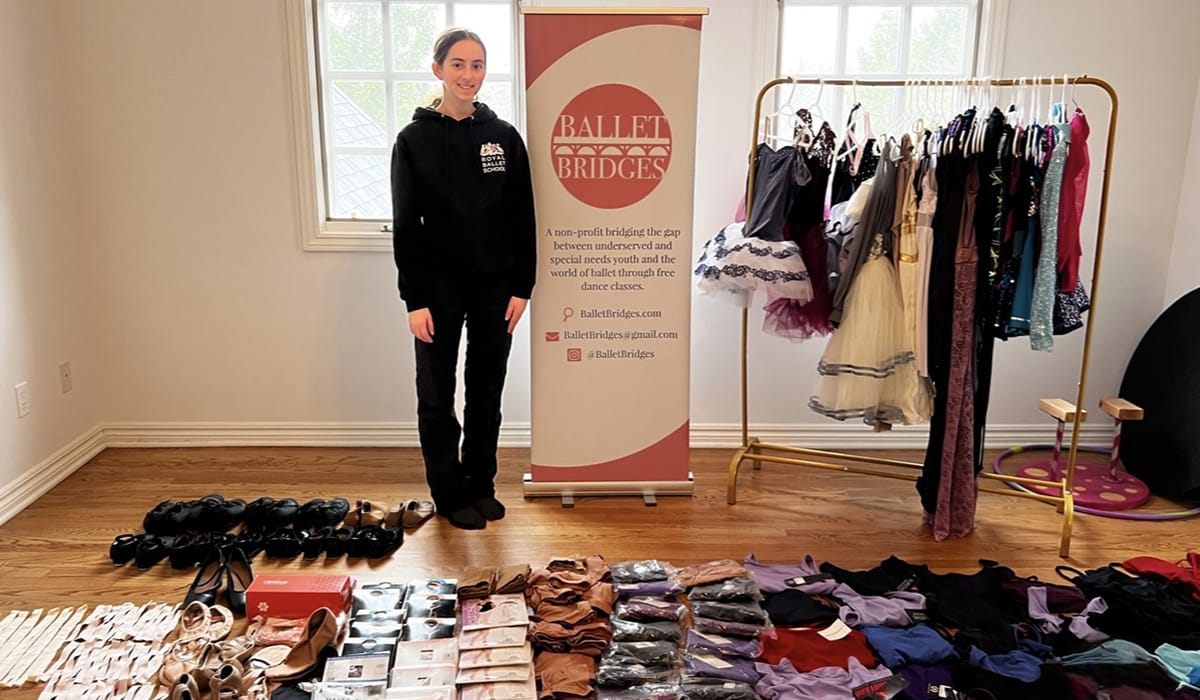
BALLET BRIDGES FOUNDER NILY SAMARA STANDS NEXT TO ITEMS COLLECTED FOR AN UPCOMING DONATION FOR A STUDIO IN PERU. /COURTESY NILY SAMARA
Any advice for people who want to start volunteering?
Look into something that you’re passionate about. For me, it’s dance. It could be anything that you’re super passionate about. And when you’re passionate about something, it comes much easier. I would just say to try it. It can be on a small scale. For me, it was very informal when I was teaching classes at first. It’s very enjoyable, especially when you do something that you love so much. You’re going to want to continue doing it. I would say to look for something that you enjoy and then try it and see how it goes. There are so many different ways you can volunteer. There’s something for everyone.
What do you want people to learn from your story?
I want people to learn that it’s okay and very normal to start small. Even on a small scale, your options can make such a big impact. If you stick with something as well, it will go very far. I had no idea this would turn into a whole organization, but all it takes is consistency. It can take you very, very far.
HELPING SCHENECTADY’S CHILDREN REACH THEIR POTENTIAL
Meet Daily Point of Light Award honoree Al Magid. Read his story, and nominate an outstanding volunteer or family as a Daily Point of Light.
At 87 years young, Al Magid is toying with the idea of retiring from all of his work in a few years. But until then, he’s still going strong with community involvement.
Over the years, Al’s wife Sally, a retired teacher, had long encouraged him to volunteer. When Al read a story in the local newspaper that detailed how poorly many Schenectady children did on literacy tests, the retired professor chose to take action. In December 2012, Al founded the Reading is Fun Program to assist Pre-K through Grade 3 students in the city’s elementary schools to attain critical grade-level literacy skills.
The program recruits, trains and supports reading partners to mentor the students weekly for 30-minute sessions, during which they read and discuss books, play games that focus on literacy and develop conversational skills. The children are also provided with a new book to bring home each week, helping them build up a home library of their own.
As the founder and executive director of the organization, Al mentored for two years. However, his role now is primarily of a larger scope, overseeing the organization’s tremendous accomplishments, of which there have been many. As a result of the program’s establishment back in 2012, over 8,000 books have been distributed to Schenectady’s children, 225 students have passed through the program and over 100 volunteers have worked with the program, completing more than 7,500 volunteer hours. In the next few years, Al plans to step back from the organization and let it continue to run successfully with someone else taking the helm.
Al and the team at the Reading Is Fun Program know that literacy is an essential building block of a brighter future. By helping the youth of Schenectady reach their potential, Al is preparing these children to become the best version of themselves that they can be. His journey is a powerful example of how volunteerism changes the lives of young people every day.
Tell us about your volunteer role with the Reading Is Fun Program.
I oversee everything that goes on in the program, partly because of the nature of the title and partly because that’s me. My personality is that I’m a fly on the wall. I’m a very curious person. I’m engaged in a wide range of interests. I average about 60 hours a month on the program, but probably longer than that. I work hard on it. I am also the chair of our leadership team, and in that role, I do a lot of leading, very democratically. For two years, I mentored myself. I do a lot of public speaking. I write letters and articles for the local newspaper and local media. In a sense, my name is synonymous with the program. I think the program needs a face, and I’m the face.
What inspired you to get started with this initiative?
I had long had an interest in volunteerism. It goes back to kindergarten, when I was a volunteer tutor to some of my classmates. I was a pretty proficient reader at 5 and a half, so I did volunteer work through tutoring. But in 2012, our local newspaper, The Daily Gazette, had a front-page article reporting on literacy data collected via testing by the New York State Education Department. My wife, Sally, had been a retired teacher for over 20 years. She had been urging me to volunteer. I immediately turned to Sally and said I had my project. It troubled me that the scores were so low. It led me to found the Reading is Fun program.
What are your long-term plans or goals for the organization?
I’m playing with the idea of retiring three years from now. That’ll make 15 years with the organization. It’s time for somebody else to step in, so my long-term plan is to not be involved, at least not in any official way. We’ve grown to a point now where, typically in a year, we’ll have 100 or more volunteers working with 250 or more children in all eleven elementary schools, and we continue to build on that.
What’s been the most rewarding part of your work?
Well, it’s going to sound terribly egoistic, and I don’t mean it in that way, but having started the program, I feel very, very good about it. As I said, I’ve long been interested in volunteerism. I considered other possibilities in my first 10 years from retirement, and they didn’t work out for me. I didn’t start them. This is important work. There are 25 million people in this country who are functionally illiterate. It profoundly upsets me to think that the country, with all its skills, could have 25 million people, most of them of school age, who can’t read.
What have you learned through your experiences as a volunteer?
As a volunteer myself, it’s a very tough job, largely because of the population we’re dealing with. We deal with people whose families don’t have English as a first language. They speak only Arabic, Spanish or Haitian Patois at home.
Why is it important for others to get involved with causes they care about?
I think it’s important that, if for no other reason, it militates against an understandable predisposition to be self-oriented. In our program, we are other-oriented and not self-oriented. I’m out of Schenectady, New York, where every child is everyone’s child. I believe that I’m highly motivated by the notion that your child is my child. Not my biological child. You can be sure that for the betterment of that child going into and through adulthood, society at large has to hold them to the highest standards and try to fulfill the expectations and attach to those standards. That’s what we’re about.
Any advice for people who want to start volunteering?
If such a group does not exist in your community, give serious thought to starting it up. Give serious thought to joining it and, from within, do good work and hopefully expand and enlarge, and make that group even more effective.
What do you want people to learn from your story?
Age-wise, you’re never too old. Most of our people are retirees. Some have a teaching background, but some have no background in education. We never use the words “succeeding” and “failing” in our program. We never fail. It’s not grade school. You don’t get an A, B, C, or D. If we fall on our faces, we get it wrong. We get up, we dust ourselves off. We said, “What went wrong?” And “Why is it worth fixing?” And then, ”Let’s try to fix it.”
Meet Daily Point of Light Award honoree Emily Luo. Read her story, and nominate an outstanding volunteer or family as a Daily Point of Light.
Emily Luo, though still in high school, is a consistent and compassionate presence on the Bay Area’s volunteer scene, having already dedicated over 250 hours to strengthening her community through hands-on service. A standout in her efforts is her ongoing work with Martin de Porres House of Hospitality, a San Francisco-based soup kitchen rooted in dignity for all. There, Emily contributes her time and energy preparing meals from scratch, serving clients with warmth and respect, and staying behind afterward to clean and restore the kitchen—ensuring that everyone who walks through the door experiences nourishment beyond the plate.
Her work with Martin de Porres isn’t a one-off act of kindness, but a sustained commitment. Week after week, Emily can be found behind the counter or at the sink, showing the consistency that is crucial in organizations that address food insecurity. Whether she’s chopping vegetables, washing dishes or greeting guests, Emily approaches every shift with purpose. Beyond her work in the kitchen, Emily also steps into the streets with gloves and garbage bags in hand. Participating in street cleanup efforts across underserved neighborhoods, she works with other volunteers to pick up litter and promote a cleaner, healthier environment.
Emily’s volunteerism is owed in part to HandsOn Bay Area, through which she has contributed her time to a range of nonprofit partners. Her engagement through this network shows just how strong her desire to connect with various causes and respond to the needs of her community in versatile ways is. Read on to hear more about what she does through her volunteerism.
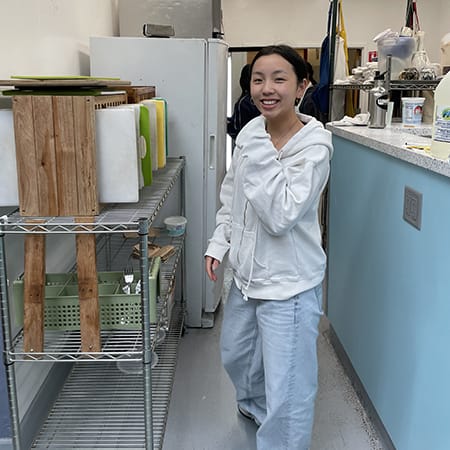
Emily is passionate about helping out with the community.
Tell us about your volunteer role.
HandsOn Bay Area allows me to sign up for various volunteer opportunities. One primary opportunity is Martin de Porres, a soup kitchen in the heart of San Francisco. As far as my everyday responsibilities, I help cook food, prepare food, wash dishes, bake, clean the space and more. The community is welcome to come for lunch, and that includes anyone who needs a meal. They’re encouraged to stop by and have a heartwarming meal. There’s a sense of community and unity, and it’s a greatly fulfilling opportunity.
How did you first get started at the soup kitchen?
I looked through all the volunteer opportunities on the HandsOn Bay Area website, and the soup kitchen’s aim was really attractive to me. And then the schedule and timing worked out. The organization has a very long history of providing assistance to community members. Every time I volunteer, I meet people who have been volunteering there for many, many years. It’s a staple in the community. As far as those we serve, there are a lot of regulars who come in, and I can tell by how grateful they are that this place means a lot to them. The meals they receive really impact their lives.
Why is this issue so important to you?
Especially in San Francisco, there’s a lot of food insecurity. The soup kitchen is located in a neighborhood where there are a lot of immigrants, as well as a fair amount of unhoused individuals. These communities don’t always have the same access to fresh produce, much less affordable fresh produce. Martin de Porres aims to serve love and compassion to the community through food. That really speaks to me, especially because we’re working with some of those underserved communities.
What have you learned through your experiences volunteering?
I’ve really learned how small steps can make a big impact. Even though serving food to the community may not seem like much, it really makes an impact. One thing I like is the conversation you have while serving. These face-to-face interactions really brighten up everyone’s day. It provides belonging and comfort, helps them feel understood in their community and environment. This is important, because some of these people are experiencing really hard times, like homelessness, or losing family members and friends to drug addiction. Just that small interaction, which isn’t long, may not seem like a lot, but can really make a big impact.
What’s been the most rewarding part of your work?
I think the sense of community, which is really strong, keeps me coming back. There is a diverse community at the soup kitchen. There are volunteers of all ages and backgrounds. The sense of belonging, that we’re all going there to serve the same aim, to support the community, is really heartwarming. I feel enthusiastic every time I go. I like meeting new people, new volunteers and new community members.
Why is it important for others to get involved with causes they care about?
I think volunteering is a more direct way to help out with the community. It tends to give more personal, hands-on insights about your community. For instance, just hearing that your community is struggling with food insecurity doesn’t give you the same context as serving in a hands-on way. When you volunteer, you can do your own part. Volunteering also allows us to target different areas as well, and different volunteer opportunities provide different things. We can target food insecurity by serving in a soup kitchen, but also planting trees that provide fruits and vegetables for the community. There are a multitude of ways to alleviate food insecurity or any of the issues that your community is facing or needs help with.
Any advice for people who want to start volunteering?
My advice is definitely to just try it out. You never know how it’s going to be, until you try it out. It’s worse to never try it, and regret that later. If you’re concerned about going on your own, you can start with a small group, or start with a few friends, which can make the experience more fun. And going alone allows you to make a connection with new people. For instance, I was interested in being an anesthesiologist and, through volunteering, met a professor who could tell me a lot more about the career I was interested in. There are a lot of virtual opportunities as well, especially when it comes to website maintenance or outreach. Just try it. Getting a foot out the door is a good way to start.
A THERAPY DOG TEAM BRIGHTENS THIS HOSPITAL’S HALLS
Meet Daily Point of Light Award honoree Joan Pedley. Read her story, and nominate an outstanding volunteer or family as a Daily Point of Light.
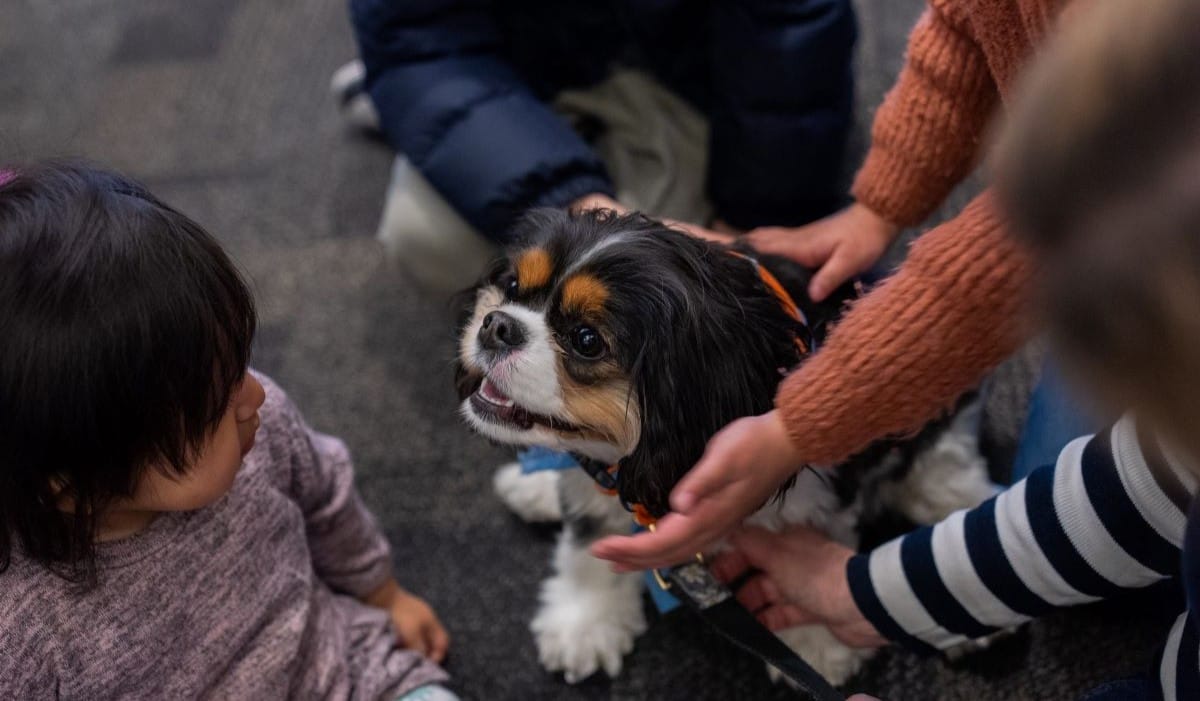
Joan Pedley and her three-year-old Cavalier King Charles Spaniel, Ellie, are changing lives at Mount Sinai Morningside.
Together, Joan and Ellie are a certified pet therapy team, bringing smiles and comfort to the staff and patients of the New York City hospital. When Joan first brought Ellie home nearly three years ago, she was struck by the loving dog’s even-keeled nature. Recognizing that Ellie had a gift that could be put to good use, Joan signed them up to get certified through The Good Dog Foundation. It was then that their journey as a therapy team began.
Joan and Ellie’s dedication to helping others has proven to go extremely far. When they started volunteering at Mount Sinai Morningside, they primarily spent their volunteering time with overworked staff members. While they still spend a lot of time helping staff de-stress, working at events like Nurses Week, the Empathy Olympics and hospital health fairs, Joan and Ellie also dedicate a significant amount of time to visiting patients. They often start their frequent visits in the pediatric emergency department and then visit the rehabilitation unit. Last week, they met a young man in the cardiac intensive care unit who was unexpectedly spending his birthday in the hospital. Ellie sat on his bed, eventually lying down next to him for 20 or 30 minutes. That short period of peace brought a significant amount of comfort to the young man in a very stressful period. Whether it’s somebody getting an infusion in the oncology suite or a person who’s terrified to undergo a major surgery, Ellie’s presence provides a calming atmosphere for everyone in the room.
Joan believes that volunteer work reminds us that we all have something to offer, no matter how small that thing is. Her and Ellie’s journey as a team is a powerful reminder of just how influential volunteerism can be.
Tell us about your volunteer role with Mount Sinai Morningside.
Ellie and I volunteer as a certified pet therapy team. What that means is we’re volunteers, and together, we come to the hospital to visit patients and families. We visit a lot of hospital staff to provide comfort, emotional support and fun moments of joy. A lot of times, we start in the pediatric emergency department, where we tend to ease a lot of kids’ anxiety. There are a lot of parents who are very anxious, as well. Having a dog there to divert your attention is great. Then, we’ll go up to the longer-term rehabilitation floor for people who’ve been injured or are there for a longer period. We hang out and we talk to people. There are just a lot of times when we try to take people’s minds off their problems.
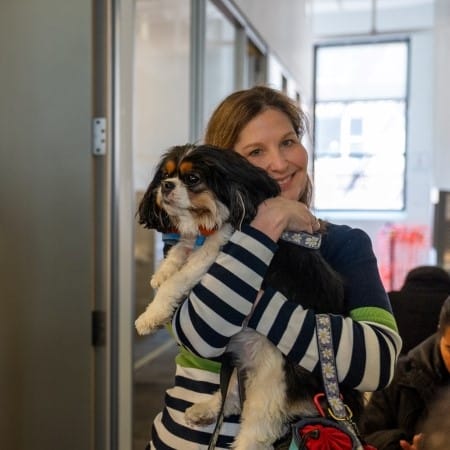
JOAN PEDLEY SNUGGLES HER THERAPY DOG ELLIE, WHOM SHE SERVES AS A VOLUNTEER VISITOR WITH AT MOUNT SINAI MORNINGSIDE. /COURTESY JOAN PEDLEY
What inspired you to get started with this initiative?
I’ve always believed in volunteering and in the healing power of animals. When I got Ellie, she was just so naturally gentle, and she has such a great temperament. I looked for ways that we could help others together. I found The Good Dog Foundation, and we became a certified pet therapy team. Once we graduated, I learned about the pet therapy program at Mount Sinai Morningside, and it just felt like a perfect fit. We applied and we were accepted, and it’s just been such a great experience.
What are your long-term plans or goals for the organization?
My goal in doing this is to continue to show up for the patients and the staff who need a lift, even if it’s just for a few minutes on a visit, even if we could stop by and spend five minutes with somebody. I know it makes a difference. I hope that our visits bring light to tough days and remind people that they’re not alone, and that’s why we continue to do this. Longer term, what I’d like to do is help expand the awareness of pet therapy programs and to inspire others to explore how their pets can help serve their communities, too.
What’s been the most rewarding part of your work?
The most rewarding part of this work is helping people in stressful moments. I’ve seen so many times where Ellie’s made a huge difference. Ellie and I spend time with kids who are anywhere from 13 to 18 or 19 years old, and they’re being watched by a nurse because they’re there for a specific reason. They feel like everybody’s staring at them. I think the most important thing in times like these is that people realize that we’re there just for them. We’re not judging them; we’re not we’re not there to talk about why they’re there. We’re just there to help and to listen and to be friends. And I think that’s what we do best.
What have you learned through your experiences as a volunteer?
Even the smallest acts of kindness can have a deep impact. Ellie’s a happy dog. I always say, when she smiles, she has a toothy grin. When I walk in with a dog that’s happy and wagging her tail and begging for treats, those types of things break through to people who are afraid or lonely. Also, the staff is exhausted. They’ve had bad days. We’ve come in when a nurse or a doctor has just intubated a patient. I sit back and I think we do make a difference. One person by one person, we can make a difference. The other thing this has taught me is that I have gained such a profound respect for the resilience of our patients and the unwavering compassion of all those healthcare workers. It’s day in, day out. Their jobs are hard. I’ve learned that we can make a difference just one day at a time, one patient at a time.
ELLIE THE THERAPY DOG BRIGHTENS FACES AT MOUNT SINAI MORNINGSIDE. /COURTESY JOAN PEDLEY
Why is it important for others to get involved with causes they care about?
My parents ingrained in us early that helping others strengthens the fabric of our community. If you help others, you create a stronger community. I think it’s important because it reminds us all that we have something to offer, no matter how small. Volunteering creates empathy. I think it fosters connection with other people. I get more than I give. I walk away with so much more than I’ve given. When we show up for each other, we can all rise together. Especially right now in the world, I think that it makes a difference to show that we care for one another.
Any advice for people who want to start volunteering?
I think the easiest thing to do is to figure out what you’re passionate about. Ellie and I didn’t want to volunteer in the long-term senior center, because I work with children. I’m in education, so I like being around kids or in a short-term situation. You can look for your community volunteer resources, and there are so many. With the internet, it’s such an easy thing to do. Start at your workplace or your church. Ask a neighbor. If you’re open to different ideas, you can always find a place to start. Once you raise your hand to help, it gets easier to do it and reach out to more people.
What do you want people to learn from your story?
Making a difference for people doesn’t require a lot. I thought it had to be a great gesture, like you have to serve on a board or have money to donate. But making a difference doesn’t require those grand gestures. Sometimes it’s simply showing up with an open heart. In my case, I have a cute dog by my side. Everybody has something to bring, and everybody has the capacity to bring comfort, joy and hope to other people. You just have to take that first step. Everybody can help bring joy to somebody else’s life.
Meet the Youth Volunteer Removing Barriers to Education
Meet Daily Point of Light Award honoree Sahana Solai. Read her story, and nominate an outstanding volunteer or family as a Daily Point of Light.
Pianist, violinist, tennis player, US Congressional Silver Award winner. Sahana Solai, 15, has only recently gotten her driving permit, but her accomplishments are already extensive. Even without wheels of her own, she’s been able to donate her time at nonprofits across St. Louis. Her volunteerism has already had an expansive reach, even earning her the Gold Presidential Volunteer Service Award.
Five years ago, during the pandemic, Sohana joined People for Urban and Rural Education (PURE) and has since become the chapter director for the St. Louis chapter and the assistant national student director on the national level. The group organizes several education initiatives as well as sponsorships for those facing economic hardship.
Sohana’s ongoing menstrual hygiene drive supports around 50 women each month, and the pickleball fundraiser she put together was the largest in her chapter’s history. The $1,800 raised went to bridge programs in unstable areas abroad for children who might otherwise be unhoused to get an education.
Outside of PURE, Sahana spends three to four hours a week helping people facing food insecurity in her hometown by making sandwiches with Missouri Ganesha Temple’s Sandwich Kitchen. Her volunteer work also extends to initiatives with the American Red Cross Missing Maps Team, the Youth Advisory Council of the West County Interfaith Alliance, Operation Food Search, St. Louis Area Foodbank, Salam Free Medical Clinic and Give Kids a Smile.
What inspires you to volunteer?
At first, volunteering was something I just wanted to try out, something my mom said would be good for me. Eventually, I really started to enjoy it, and I realized it was creating a bigger impact than I thought. The ripple effect is inspiring. It helps me understand how grateful I should be. I come home, and I basically have everything I need. It’s important to be grateful for that, and to develop gratitude and empathy towards others. Volunteering is great experience for developing those things.
As an assistant national student director of People for Urban and Rural Education as well as a leader of the St. Louis youth chapter, Sahana coordinates national campaigns as well as local initiatives.
What inspired you to get started with this initiative?
We found out about PURE through a family friend. Initially, I didn’t know it had such a broad spectrum of causes that it serves. I joined our St. Louis chapter, and it was a very nice community to be in. Everyone was kind and working together towards the same goals.
Tell us about your volunteer role with PURE.
I’m an assistant national student director. I help coordinate between chapters around the country. I also help organize and lead our St. Louis youth chapter and the service projects we do.
I help mentor younger volunteers and plan national campaigns that address a broad variety of issues—i.e., food insecurity, education inequality and health equity. I assist with communication and coordination for different projects and events. And I support our monthly youth meetings, donations and drives.
One of the projects I’m most proud of is a monthly donation of sanitary pads and hygiene products to support women’s empowerment. It’s one of the biggest causes that we address. I collect sanitary pads and other supplies, assemble kits and deliver them to a nonprofit called Circle of Concern, which serves low-income families in the St. Louis area. Menstrual products are often overlooked but are essential to a woman’s health and dignity.
What is something people might not know or understand about the population you serve through this organization?
Many children don’t have proper access to things, but there are many people with needs beyond that. There are whole families that need help. The causes that we serve are broad and varied. Sometimes, areas aren’t even considered unstable, where people think they’re in a good position but don’t know about having proper access to things like sanitary pads or basic hygiene necessities. Or education. It’s just not a part of their culture. Everyone has a different story. Sometimes we just need to keep an open mind and look out for that.
What are your long-term plans or goals for the organization?
My biggest goal is to expand our reach geographically and by impact. I want to empower more youth volunteers to lead, and I want to develop more sustainable programs that can outlast any one volunteer.
I’m also passionate about creating more toolkits and templates that make it easier for new chapters to start strong. Long term, I’d love to see the PURE Youth programs be more integrated into every high school.
What’s been the most rewarding part of your work?
We’re making a big impact. It’s a very rewarding experience, both mentally and emotionally.
What have you learned through your experiences as a volunteer?
I’ve learned a lot about leadership. It’s all about listening with an open mind, being consistent and showing up, even when things aren’t going right. It can be harder than you think to put together projects and to make sure we’re going in the right direction. It’s important to be aware of the needs around you and to do something about them.
Why is it important for others to get involved with causes they care about?
Getting involved is not always difficult. Sometimes, it’s just requires getting out of your comfort zone. Even small actions, when we work together, can create a big impact. It creates a positive ripple effect.
It also makes you aware of different populations and builds empathy and connections to others. You get a deeper understanding of the world in general. When people help others, it creates a more inclusive community that’s better to live in.
Any advice for people who want to start volunteering?
It’s never too early or too late, regardless of age. Just take the first steps. You don’t have to have everything figured out. I started small, but over time, I found my voice, my purpose and a nice community that was able to grow with me. You make your own opportunities.
What do you want people to learn from your story?
You think of volunteering as doing something for other people, but it’s more of a reward for yourself with the benefit of helping others. It makes you happier to feel like you’ve done something.
Illuminating and Inspiring a New Generation of Cancer Advocates
Meet Daily Point of Light Award honoree Shaan Kalyani. Read his story, and nominate an outstanding volunteer or family as a Daily Point of Light.
Shaan Kalyani’s volunteerism is rooted in personal experience, but its impact now spans statewide. After witnessing family members in India battle cancer, he transformed his concern into action—channeling his passion into the Leukemia & Lymphoma Society’s Student Visionaries of the Year (LLS SVOY) campaign. Over four years, he helped raise over $80,000 as a team member and captain. Now, as a junior member of the executive committee and part of the Maryland Junior Leadership Committee, he mentors and empowers a new wave of high school volunteers to continue the fight against blood cancers.
Shaan dedicates 15 to 20 hours each month coordinating fundraising events, overseeing campaign strategy and guiding new teams. His mentorship provides students across 30+ high schools in Maryland with the tools and confidence to exceed their fundraising goals. By encouraging over 250 teens from different backgrounds to join the cause, Shaan is helping build a sustainable and impactful movement. His approach ensures that the fight against cancer is not only well-resourced but also community-driven.
Beyond financial impact, Shaan’s leadership cultivates meaningful change in youth engagement. He fosters a strong sense of purpose and unity among participants, using his role to show peers how civic involvement can stem from personal stories. His dedication has earned him national recognition, including the President’s Volunteer Service Gold Award and induction into the Maryland LLS Hall of Fame. But more importantly, it has strengthened a statewide network of compassionate, motivated student leaders.
The 2024–2025 Maryland LLS campaign raised an astounding $1.4 million in total, a testament to the collective power of student-led efforts Shaan helped shape. These funds directly support cancer research and patient care—turning advocacy into action with lasting effects. Shaan’s work ensures that families facing cancer are met with both hope and support, reflecting his commitment to health equity and community solidarity.
Shaan Kalyani is not only fighting cancer—he’s reshaping what youth service can look like. Through mentorship, vision and a deep sense of responsibility, he is building a legacy of leadership that inspires others to turn personal challenges into transformative change. His story is a powerful reminder that even one voice, when lifted with purpose, can ignite a statewide movement.
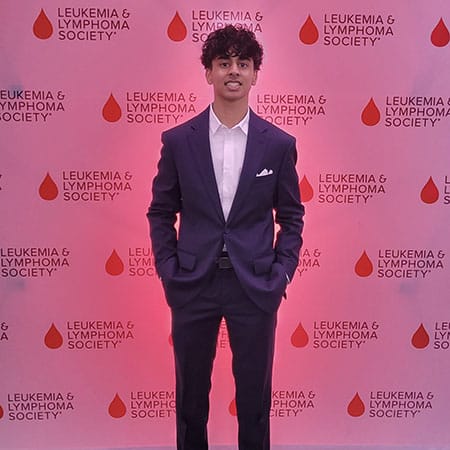
Shaan at the Grand Finale for the 2024 Maryland LLS SVOY campaign as captain of Team Survivor.
Tell us about your volunteer role.
I currently serve as a member of the Junior Leadership Committee for the Leukemia & Lymphoma Society’s Student Visionaries of the Year campaign in Maryland. As one of 20 high school students selected for this executive committee, I mentor teams statewide, providing guidance on campaign strategy, fundraising, team building and community outreach. My journey with LLS began four years ago as a team member during my freshman year of high school (2022), then I advanced to team captain (2023) and now I’m in this leadership role where I can make an even broader impact (2024–present).
Over these four years, my fundraising teams have altogether raised $80,000 for the LLS’s mission to cure blood cancers. The 2024-2025 Maryland campaign as a whole raised an incredible $1.4 million, a massive increase from the previous year’s campaign. My dedication to this work has been recognized through the President’s Volunteer Service Gold Award for accumulating over 100 volunteer hours in a single year, and I was also inducted into the Maryland LLS Hall of Fame.
I’m particularly proud that as part of the Junior Leadership Committee, we’ve collectively been able to inspire 250+ teenagers in 30+ high schools from diverse backgrounds to join the fight against blood cancers. This role allows me to create sustainable community involvement by ensuring that knowledge and passion transfer to new student leaders each year. My commitment has remained consistent throughout this entire four-year period, and I continue to actively participate in current campaigns while supporting the next generation of student volunteers. Through this consistent involvement, I’ve been able to develop meaningful relationships and contribute to building a foundation for ongoing community impact.
Why is this issue so important to you?
This cause is deeply personal to me because I’ve watched family members battle cancer, which completely transformed my perspective on the importance of research funding and patient support services. Watching loved ones quietly endure rounds of treatment while trying to maintain normalcy made me realize how important it is that no one face this journey alone. It showed me firsthand the difference that breakthrough research and strong patient services (such as that done by LLS) can make in someone’s fight against cancer or other chronic diseases.
Beyond my personal connection to the cause, I’ve come to understand that blood cancers affect people of all ages, backgrounds and circumstances. These experiences have reinforced my belief that we need to fund research not just for today’s patients, but to make sure that future generations have better treatment options and, hopefully, cures.
What inspired you to get started with this initiative?
My inspiration came from having a personal connection with family members affected by cancer, but what really motivated me to take action was learning about LLS’s incredible impact on the community through funding both cutting-edge research, policy, advocacy and essential patient services. When I first learned about the Student Visionaries campaign, I was struck by how it empowered young people – I was only a freshman in high school when I first joined – to make a real difference in the fight against blood cancers while simultaneously developing leadership skills.
I was also inspired by the innovative approach of having students lead these fundraising efforts. The idea that teenagers could unite diverse communities, collaborate with local businesses for sponsorships and create sustainable movements for change really resonated with me. I saw it as an opportunity to transform personal challenges into powerful community action, and I knew I wanted to be part of something that could have such a meaningful impact on patients and families facing these diseases.
What are your long-term plans or goals as you volunteer with the organization?
My primary goal is to continue expanding LLS’s reach among young people throughout Maryland. I want to help bring even more high schools into the campaign and create a sustainable pipeline of engaged student leaders who will carry this mission forward. Through my mentoring role as part of the Junior Leadership Committee, I’m focused on developing the next generation of fundraisers and advocates who will continue this work long after I graduate.
Further, I hope to leverage my experience in digital media and entrepreneurship to help LLS explore innovative fundraising approaches and reach new audiences. Through building a social media platform with over 450,000 followers and half a billion total views focused on feel-good sports content and youth digital wellness, I’ve seen how powerful social media can be for raising awareness and inspiring action.
I’ve already put this into practice by donating revenue from my social media business to support health-related causes close to my heart, including contributions to the Johns Hopkins Department of Child Life and LLS itself. Long-term, I want to see the Student Visionaries campaign become an even more integral part of how young people across the country engage with charitable causes, particularly in the fight against cancer.
What’s been the most rewarding part of your work?
The most rewarding aspect has been seeing the ripple effect of inspiration and action that this work creates. When I successfully recruit a new student to join a team, or even a new high school to join the campaign, and then watch them discover their own passion for the cause and go on to inspire others, that’s when I know we’re creating something truly sustainable. I’ve witnessed students who initially joined just to support a friend become some of our most dedicated advocates and leaders. Watching this transformation reminds me that behind every dollar we raise are real families and real hope for better treatments and outcomes.
What have you learned through your experiences volunteering?
Through my LLS work and my broader volunteer experiences, I’ve learned that meaningful change happens when you combine passion with persistence and strategic thinking. Leading fundraising teams taught me how to motivate diverse groups of people toward a common goal, while my role mentoring other teams has shown me the importance of empowering others to find their own leadership styles.
My volunteer work extends beyond LLS to include performing and teaching juggling – one of my other passions – at the Ronald McDonald House for families and children who are residing there, some of whom are battling cancer, and volunteering as part of the High School Summer Helpers Program (HS2) at Johns Hopkins Hospital in the pediatric emergency department.
I also co-founded a student-led community service project titled Ears4theElderly, where I bring joy to older residents in assisted living facilities through games, exercise, music and other forms of entertainment. These experiences have taught me that healing and hope come in many forms: sometimes it’s through funding groundbreaking research, and sometimes it’s through a simple juggling performance that brings a moment of joy to a child undergoing treatment. Each volunteer role has reinforced my belief that service is about meeting people where they are and bringing whatever skills and energy you have to make their day a little brighter.
Why is it important for others to get involved with causes they care about?
Getting involved with causes you care about transforms you from someone who simply cares about an issue into someone who actively works to solve it. When you volunteer, you develop a deeper understanding of complex problems and gain the skills to make meaningful contributions. I’ve seen and personally experienced how volunteer work creates far-reaching effects because when people commit to serving others, they often inspire family members, friends and classmates to get involved as well.
Volunteering also provides perspective that’s impossible to gain any other way. Whether I’m fundraising for blood cancer research through LLS or volunteering directly with patients at Johns Hopkins Hospital, these experiences have taught me about resilience, gratitude and the power of community support. When others get involved with causes they care about, they not only help address critical needs in their communities, but they also develop empathy, leadership skills and a sense of purpose that enriches their own lives. This reflects one of my favorite quotes from Mahatma Gandhi: “The best way to find yourself is to lose yourself in the service of others.”
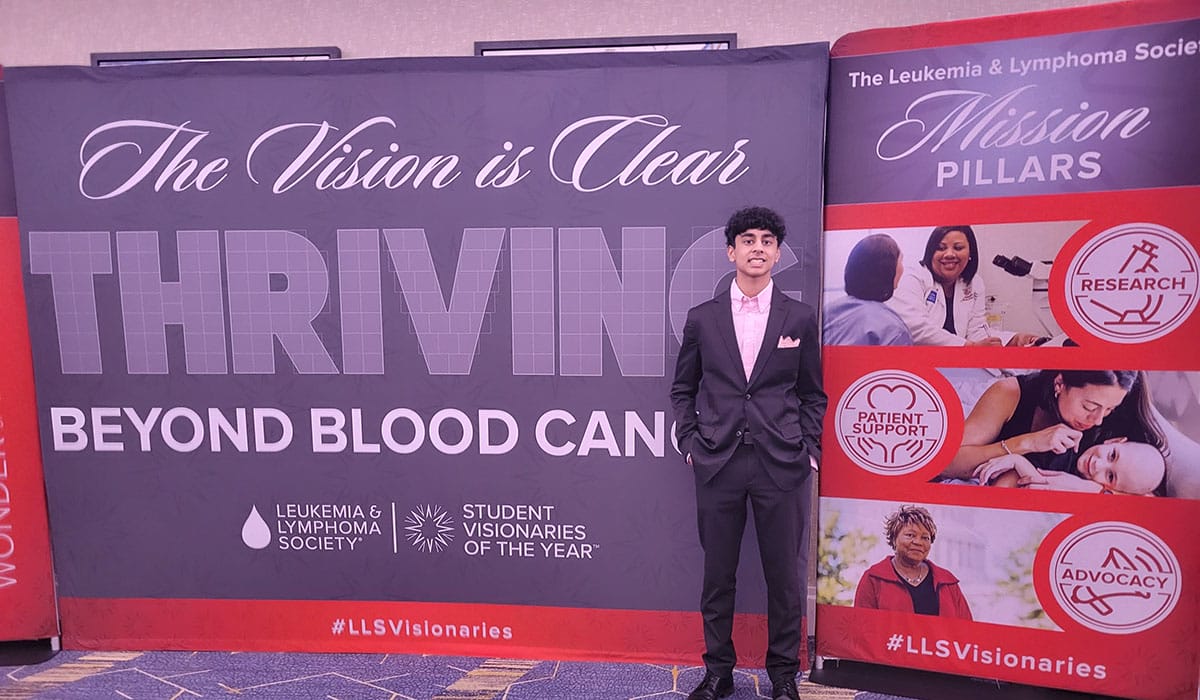
Shaan Kalyani at the Grand Finale for the 2025 Maryland LLS SVOY campaign as part of the Junior Leadership Committee.
Any advice for people who want to start volunteering.
My biggest piece of advice is to start with what personally motivates you whether that’s a cause that has affected your family, an issue you’re passionate about or a skill you want to share with others. When you have that personal connection, you’ll find the energy and commitment needed to make a real impact. Don’t worry about starting small; I began as just one team member among many, and that experience taught me the fundamentals that I now use in my leadership role.
Also, look for opportunities where you can grow and take on increasing responsibility over time. The most fulfilling volunteer experiences are those where you can develop new skills and relationships, take on leadership roles and mentor others. Whether you join an established organization like LLS, or create your own initiative like we did with Ears4theElderly, focus on building something sustainable that will continue making an impact long after your direct involvement ends.
Finally, don’t underestimate the power of bringing joy and personal connection to your volunteer work. Sometimes the smallest gestures, like mentoring a nervous new team captain or celebrating when a team reaches their fundraising goal, can create the most lasting impact on someone’s volunteer journey.