Change Notes: 125 Reasons to Celebrate Volunteer Service
<
Friends,
I heard a story recently that reminded me of the often unexpected impact of volunteer service.
Faye Hendrix is a sales associate at the Belk department store in Fayetteville, Ga., a main-street town south of Atlanta that is in many ways like the Georgia town where I grew up. It’s a community with deep roots, where neighbors don’t just know each others’ names, they know their aunts’ and uncles’ names, too. It’s a town where volunteer service isn’t a “movement,” it’s just something you do.
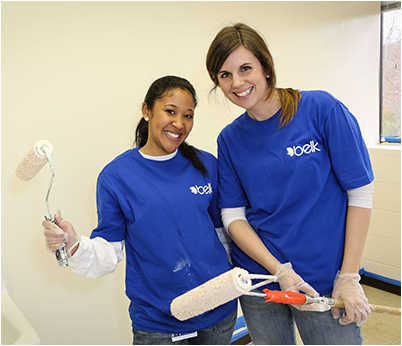
For the past eight months, Faye has worked at Belk, a family-owned store founded by William Henry Belk in 1888 and run today by his two grandsons, Johnny and Tim. Belk has been a fixture in towns like Fayetteville – and in cities like Charlotte, Atlanta and Dallas — for 125 years. To celebrate its 125th anniversary, the Belk family announced that it would give back to communities across the South with 125 Days of Service.
Over the next 125 days, Faye and all 23,000 other Belk employees will have the opportunity to volunteer on service projects in partnership with Points of Light and its HandsOn Network affiliates to improve schools in communities that need help — painting rooms, building bookcases, cleaning playgrounds, planting seeds, organizing book drives.
When Faye heard about the Belk project at Kemp Elementary in Fayetteville, she cried. Kemp Elementary is her daughters’ school. Belk’s $2 million commitment to improving schools matters to Faye not only because it matters to her employer, but because it matters to her daughters. And because she will have a hand in making it all happen.
Last week, as a student at Montclair Elementary in Charlotte watched 200 volunteers painting, building and landscaping at his school, he said just one word: “Awesome.” I couldn’t agree more.
Please “like” Points of Light on Facebook to see photos from the kickoff project and to join me in congratulating Belk and its employees on their 125th anniversary. May there be many more.
In service,
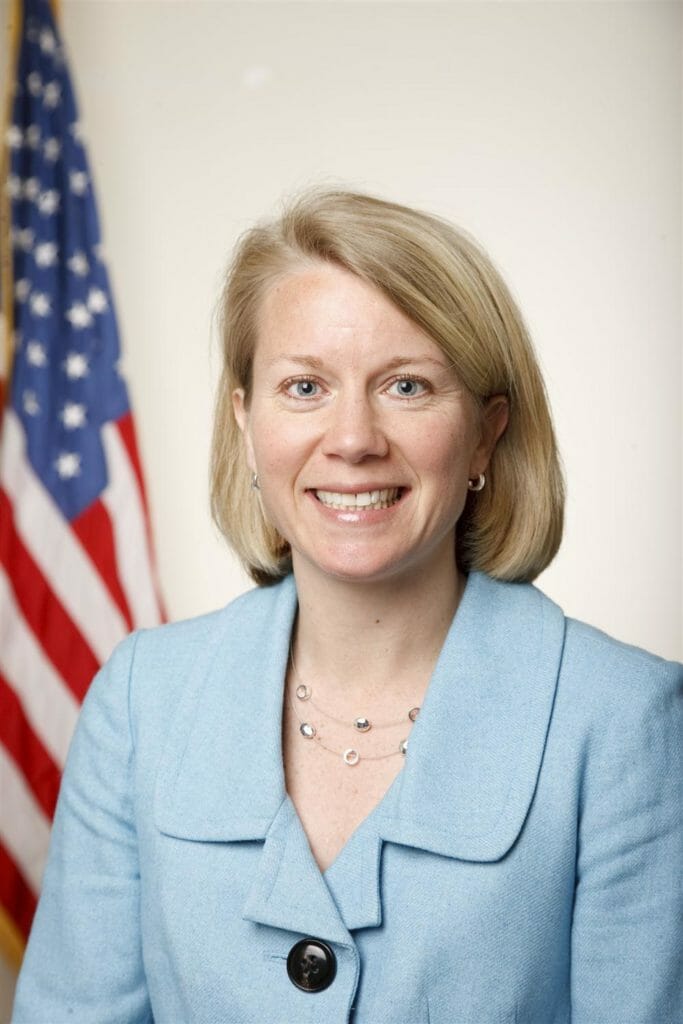
Michelle Nunn
CEO, Points of Light
5 Quotes and Reasons to Volunteer
Today’s post is written by Bill, who completed his undergraduate studies in Secondary Education from Arizona State University. After college Bill spent some time teaching Senior Economics in Anthem, Arizona. Bill is currently a traveling teacher, who has spent time teaching in the Caribbean, Africa, Europe, and Asia, where he has taught English, Health, Geography, Social Studies, and Outdoor Education
coming up next month (April 12-27), here are five reasons why we should take some time out of our schedule to help ourselves and others by volunteering.
To Be Challenged
A challenge in which a successful outcome is assured isn’t a challenge at all
–Jon Krakauer
Most of us are used to working in a specific field. Whether we are working in an office or outdoors, we’re use to applying a certain skill at your job every day. The reasons why we are able to hold onto these jobs and careers are because we are great at them, but every now and then, we need a challenge. Challenges can be very humbling, but they give us the passion to strive for excellence in everything we do.
Runner Up Quote:
Life is either a daring adventure or nothing at all.
–Helen Keller
To Do a Civic Duty
To be good, and to do good, is all we have to do.
–John Adams
There are times in life when we all could use a helping hand from a stranger. Whether it’s opening a door or helping someone load their groceries, helping others is ingrained in us all. The problem is that if you like to directly help someone, you may not be satisfied with your day to day job. Volunteering is a way to satisfy that need to directly help and change someone’s life.
Runner Up Quote:
Ask not what your country can do for you, ask what you can do for your country.
–John F. Kennedy
To Share a Skill or Passion
Three keys to more abundant living: caring about others, daring for others, sharing with others
–William Arthur Ward
Most of us learn from trial and error, experience. Others learn from what they have been taught by others. Volunteering and sharing a skill that you have with others, it may or may not have to do with the actual volunteering project, is a way for you to learn more about yourself and for others to learn about the great person that you are.
Runner Up Quote:
Give a man a fish and feed him for a day. Teach a man to fish and you feed him for a lifetime.
–Chinese Proverb
To Learn from Others
Any fool can know. The point is to understand.
–Albert Einstein
It’s hard to claim that once we have started a career, or have started to settle down, that we have stopped learning. We are learning about each other and ourselves every day. When we volunteer, not only do we learn a new skill or trade, we also learn the skills and trade that other volunteers that we work with bring along.
Runner Up Quote:
Tell me and I forget, teach me and I may remember, involve me and I learn.
–Benjamin Franklin
To Gain Leadership Skills
The greatest leader is not necessarily the one who does the greatest things. He is the one that gets the people to do the greatest things.
–Ronald Reagan
There are some people out there who are natural born leaders and there are others that strive to be leaders. While volunteering we are usually put into a situation where we are all equal and there is not one person who has an overwhelming amount of experience over another. This situation gives those who want to be leaders a chance to step up, take charge, and work on their
To handle yourself, use your head; to handle others, use your heart.
–Eleanor Roosevelt
Volunteering is an overall great experience. It gives us the opportunity to learn about ourselves, to learn about those around us, to build new relationships, and in some cases of
Cause Alignment: Capital One’s Formula for Aligning CSR With Everything It Does
Today’s blog is republished from the CSRwire blog, part three of the Civic 50 series. Today’s post is written by Jackie Norris, Executive Director of Points of Lights’ Corporate Institute.
A few years ago, Bladimir Martinez, then 16, was chosen as one of 10 high school students to run a real Capital One bank branch inside Parkdale High School in Prince George’s County, Maryland — a county where only 44 percent of high school graduates are considered college or career ready. In the few years since then, Martinez has transitioned from an ambitious kid who was “not much interested in school” into a bank teller and college student studying business.
Through Capital One’s student-run bank program, students like Martinez are not only responsible for operating a bank branch and offering savings products to their fellow students and faculty, but also for teaching their peers about money management topics such as budgeting and saving. The program provides real-world job experience – all of the students receive professional job training, entry-level bank teller salaries, mentoring, and career – and college preparatory experiences through colleges and universities.
Strategic Community Development: Connecting Education with Empowerment
The program, which focuses on schools in low- to moderate-income communities, has already paid off for many of the students. To date, more than 90 percent of the program’s alumni have since enrolled in college – a decision that could be worth a million dollars in income over the course of a lifetime for each of those young adults.
Martinez traces his turnaround to one of his first interviews with a Capital One Bank mentor who left a lasting impression on him. “That was the moment I thought, ‘To be this guy, I have to go through this.’ I realized that nothing happens overnight. School is a must in my life now.”
Financial literacy, education and workforce development are among the goals of Capital One’s Investing for Good strategy, which aligns the bank’s community engagement programs, funding decisions and employee skills with its core business capabilities as a bank.
“We believe that strong business and strong community go hand in hand,” said Carolyn Berkowitz, Managing Vice President, Community Affairs; and President of the Capital One Foundation.
“We recognize that creating thriving communities doesn’t happen overnight – it requires a long-term focus and commitment, coupled with deep partnerships with effective nonprofit organizations and community leaders, to drive lasting economic outcomes. Our community engagement goes beyond
‘checkbook philanthropy’ –
we don’t just write a check and walk away,” Berkowitz adds.
“
We focus on making strategic, long-term investments – through philanthropy, lending, and volunteering — to catalyze economic growth in our communities.”
This approach helped Capital One earn top honors in
, ranks corporations on seven dimensions of local involvement. The
cause alignment
dimension requires a firm to show that it uses its workers’ professional skills in community engagement programs that are consistent with its core business competencies and objectives.
Investing for Good: Focusing on Scale
One way Capital One does this is through its Investing for Good pro bono volunteer program, through which its employees in departments such as Brand, IT, Legal, and HR leverage their unique business skills to help local nonprofit organizations enhance their ability as a business to address local community needs.
For example, last year Capital One employees stepped in to help the Legal Aid Justice Center of Charlottesville, Va., find a solution when the economic downturn flooded Legal Aid with requests from new clients just as the organization’s government funding was cut by 20 percent. Legal Aid lost half of their staff attorneys as demand for their services increased by nearly 60 percent.
“We’d send emails and faxes and call lawyer after lawyer after lawyer” trying to match each client in need with a volunteer attorney somewhere in the state with the right skills for the case, said Alex Gulotta, executive director of the Legal Aid Justice Center. “Calling and calling and calling is not very efficient.”
Capital One sent a team of 15 volunteers from its legal, systems analysis, supply chain management communications and information technology departments to find a new approach.
The result of that collaboration was Justice Server, an electronic data management system that gives volunteer attorneys across Virginia easy access to Legal Aid’s computerized files on all the cases needing help.
“This is now our primary case-management system, and other states are looking at the model,” Gulotta said.
The Center “needed a different kind of technical solution for organizing their work, the kind of thing Capital One people develop all the time,” said Berkowitz. “And our people got involved in ways they feel really great about.”
When Capital One channels its employees’ talents to solve community problems, “they bring back to the company new leadership skills and are better employees,” Berkowitz said. In fact, more than 90 percent of Capital One managers said their associates’ leadership development skills were demonstrably improved after engaging in pro-bono work.
And when Capital One brings more to the community than just donations, it “helps make people in the community confident that we’re the kind of folks they’d like to bank with and it fosters long-term economic growth in the community that is also good for business. It’s a win-win for us,” added Berkowitz.
The Digital Native Fallacy: Teaching New Skills While Learning From Their Strengths
Today’s blog is another in the series from Huffington Post’s blog posts featuring thoughts and ideas from Civic Accelerator participants, a program that helps civic startups successfully launch and scale solutions to our nation’s social challenges by providing mentorship, education and investment.
We’ve often heard parents and educators quip that today’s young people are digital natives — a generation of youth who can rent movies on iTunes and buy school supplies on Amazon before they’re out of preschool. These tech-savvy kids seem to live and breathe digitally.
But for many American youth living in low-income communities, the digital native moniker doesn’t quite fit. For some, fluency in a few areas often hides substantial inadequacies in others. I was forced to confront misconceptions about students’ digital fluency through my work building EdTech software with
, a new venture that uses technology to help youth in low-income communities prepare for college and careers. We’ve launched technology-based programs with 500 students in low-income communities over the past year and have found some startling things.
Thanks in part to the support from the Civic Accelerator, we have hired interns to scale up our program offerings. Recently, I assigned an intern to edit a shared Google document. I was surprised to find him playing with his phone a few minutes later with his borrowed laptop idling in front of him. I had assumed he was using his phone for communications or games, but he was editing our Google doc on his phone. Unfortunately, because our intern was using his phone, his assignment took longer to complete and he had difficulty keeping up with the rest of the team. Without a laptop at home, he uses the Internet exclusively through his iPhone on borrowed Wi-Fi. His preference is for touchscreen over keyboard, for four inches over 13 inches. He’s adept on mobile, but he is far from the technology mastery we expect from a digital native.
Young people like our intern will find lots of creative ways to get around obstacles, but academic and professional success today still hinges on comfort with desktop and laptop interfaces. This can have profound effects for students as they move to college and then into the workforce. It is critical for these students that we recognize a gap in digital literacy exists and we start making investments to close this gap.
We have learned much from our work with students and wanted to share a few tricks and tips on working with school-aged digital natives:
Hire Them: If you work with students, hiring them as interns is a great way to learn more about their behaviors and motivations while helping them get valuable experience. Credit for this excellent strategy goes to our mentors at the Civic Accelerator who have emphasized the need to deeply understand your users.
Don’t Assume: Just because they are young doesn’t mean they are fluent online and with a computer. Sit down with them to talk through what they’re comfortable with and what skills they will need to learn. You may need to give them time to get comfortable, or a bit of extra training.
Ask For Tips: When you see them trying something online that you haven’t explored yet, ask them for tips and ways that it could help with your work. This could be a learning experience that they could share with the broader team, increasing everyone’s skill set.
Check For Comfort: Make sure students are comfortable using technology. If they’re squinting, show them how to increase the font size. If they’re hunched over, help them find a better posture to avoid fatigue or encourage them to take breaks. Remember that students are used to sitting still for no more than one class period at a time!
Interested in participating in the next round of the Civic Accelerator? Applications will be accepted from February 11-March 15. To learn more and apply, please visit
5 Lessons Between Tech and Social Entrepreneurship
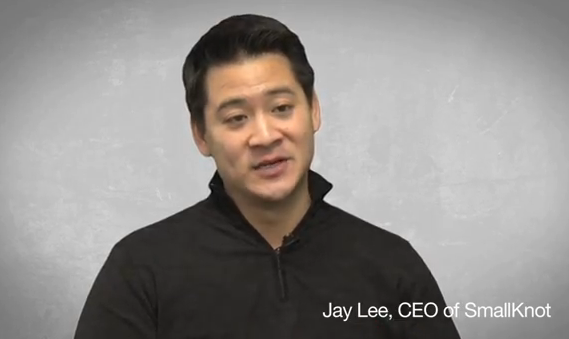
Today’s blog is another in the series from Huffington Post’s blog posts featuring thoughts and ideas from Civic Accelerator participants, a program that helps civic startups successfully launch and scale solutions to our nation’s social challenges by providing mentorship, education and investment. This is written by Jay Lee co-founder and CEO of Smallknot, republished from the Huffington Post Social Entrepreneurship section Feb. 28, 2013.
My company, Smallknot, is propelled by a dash of rage and a spoonful of optimism. We are angry about how the financial system works for real people. And we believe we can make it better. This is what drives us.
But between the tech and social enterprise spaces, it’s not always easy to know where we fit. As a business, our product is a community crowdfunding platform for local businesses. We help neighbors fund small businesses in exchange for premium goods, services and experiences. Our mission is to empower communities to cultivate local economies through social finance. But even though our goal is to replace bankers with a nurturing neighborhood, let’s be honest: tilting your head and squinting
just so
could make our pre-sale model resemble a saintly nonprofit lender like Kiva or the not-so-saintly Groupon.
Fortunately, we’ve been behind the curtain in both the tech and social enterprise worlds. After immersing ourselves in tech as part of TechStars NYC, we had a rare chance to peek into the impact and social enterprise world by joining the Civic Accelerator. Here we are surrounded by a group of ambitious people setting out to improve the world. It was like cracking open a can of crazy — the good kind. For you social entrepreneurs out there, here’s what the team at Smallknot thinks we’ve figured out so far:
1.
Talk dirty
. If you’re building a business, then build a business. Use all of the dirty words: sales, marketing, monetization, exit strategy, and, god forbid, profits. You will live or die by these concepts so don’t run away — lean into them. (Unless you have an endless supply of money that people will happily plow into your bank account. That also works.)
2.
Impact ≠ Soft.
You likely will spend hours wondering why money seems to be split between investors seeking a return and philanthropists who just
last year. Especially when, obviously, your world-changing idea will do both and you only need a measly half million. But the reality is crystal clear: Impact investors still need to see a strong business case. Do not expect breathing room on a soft business case because you might produce positive social outcomes. Focus on your business case. Be ruthless. Pitch investors with your vision for change, but I promise you — the second meeting will not be about that vision.
3.
Don’t overthink it
. Social entrepreneurship is red hot — #socent is the new black. You will find any number of conferences and write-ups about social innovation, social entrepreneurship, venture philanthropy and impact investing. You might feel bewildered by it – I certainly am. Next to traditional nonprofits self-styled as social entrepreneurs, you’ll find massive company bureaucrats in charge of social innovation, giving lessons to nonprofit microfinanciers. Someday I hope the wind companies that monetize tax credits will no longer be lumped into the same category as voter engagement software – but for now, don’t overthink the categories. Just do what you do
4.
Keep your mission out of your product.
Be passionate about your product, but don’t inject your mission into the product itself. Mission-driven startups have a hard time bridging the gap between fixing a social problem in the world and building a successful product that people want. Just because your mission is to empower at-risk youth through educational games doesn’t mean any kid is ever going to play them. There is tension between validating customer feedback on your product and the social outcome you
want to see.
For most of us, our customers shouldn’t have to care about our social mission for us to succeed. Let your passion drive you and let it drive your company. But not your product.
5.
Above all … Persist.
I love what I do and you should too, but entrepreneurship is not sexy — it’s hard. That’s okay. Don’t get discouraged. This is a chance to be something new in the world. Whether consumer preferences change to the extent that high-impact products will feed a growing demand (and, thus, profitability), or the tax code changes to make it easier for foundations to fund for-profit startups, something is happening. A transformation is coming – a new generation demands more from their business sector. Get started. Keep going.
Interested in participating in the next round of the Civic Accelerator? Applications will be accepted from February 11-March 15. To learn more and apply, please visit
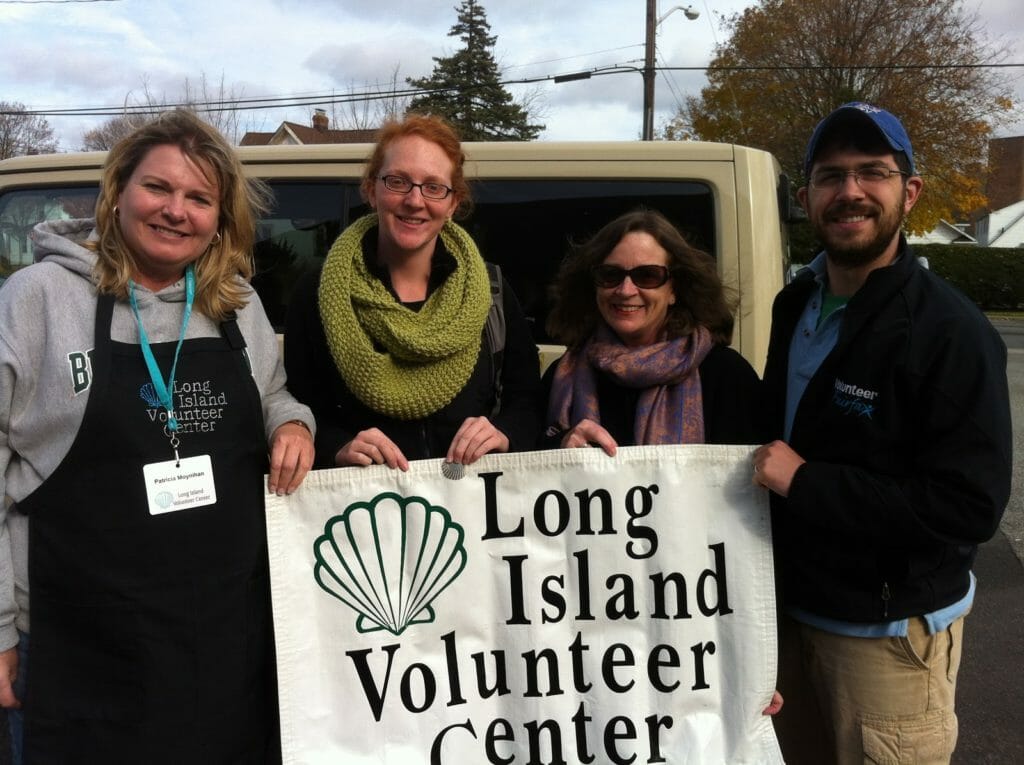
Lisa Tatum was deployed to the Long Island Volunteer Center as part of the HandsOn Network Disaster Task Force to respond to Hurricane Sandy. Lisa shares with us her top 5 most inspiring and memorable moments in responding to Sandy as an Alum.
Inspired by the Long Island Volunteer Center
This 24 member staff is 100% volunteers. Not one of them is a paid staff member. Each and every one of them was impacted personally by the storm. Some were without power for up to 15 days, others had trees fall through their roof and nearly all of them had friends or family members that needed help with cleanup as well. Their dedication to the effort was heroic. They had been through so much and yet they were doing everything they could to help others serve the community. I was humbled to be in their presence and to help in any way I possibly could.
Seeing a local AmeriCorps Alums Chapter Project through to completion
of which I am a part had conducted a September 11th commemoration project in which we created thank you cards to two specific groups. We made cards for Veterans and for AmeriCorps members serving on disaster relief assignment. I was just able to give cards to the members directly rather than having to mail them. I really enjoyed their smiles and laughter as they opened them. Most of the cards had been written by alums like myself who had served previously and just wanted to encourage the members during challenging circumstances. It was great to see a project through to completion. See the pictures of their reactions
I had worked with years before. They seemed like such a close and cohesive team that truly enjoyed working with one another. They also seemed to be very low key and flexible when it came to disaster and that is incredibly crucial. Every time the situation changed, they adapted and did so with positive attitudes and eagerness.
Diversity of Volunteers
More than 500 volunteers came to help and were assigned to projects. I was struck by the religious, ethnic and diversity of ages that were participating. I saw everyone from Southern Baptists to the Church of Scientology. Little kids to older folks. Everyone pitching in as best they could. What moved me the most was the smiles on the faces of the volunteers as they dropped off tools and gloves. People who did not know each other at the beginning of the day were laughing and joking with one another at the end of the day.
Seeing Disaster Collaboration Firsthand
During my time on this response I participated in conference calls and meetings with direct impact on the response. I saw how local, state, and federal government entities, faith based groups, corporations and community volunteers all work together. I was able to gather information to help better prepare North Texas for large disaster responses. While I have seen these things before it has never been for a response of this magnitude.
Georgia’s HOPE scholarship is one of the largest merit-based college scholarship programs in the United States, but it could be so much more. By rewarding both good grades and volunteer service, the HOPE scholarship could teach the rest of the nation how to produce educated, engaged citizens who know how to give back.
By requiring service, the HOPE scholarship would build on the legacy of the G.I. Bill, arguably one of the most successful and popular government programs in U.S. history. By the end of 1956, roughly 2.2 million World War II veterans used G.I. benefits to attend college. Giving veterans an education in return for their service helped create the “greatest generation,” building our country’s unparalleled economic strength and enriching our communities.
We recently increased the academic requirements for the HOPE scholarship in response to our state’s fiscal constraints. Today, high school students in Georgia earning a 3.0 grade point average or better qualify for scholarships to colleges in the state. That’s a great reward for academic performance. But if we’re eager to turn out good citizens, we have to do more.
Since 1993, Georgia has awarded HOPE scholarships worth almost $7 billion to more than 1.6 million students. Think of the impact on our communities and our students if each of them contributed by serving others. Tying service to scholarships would teach students that citizenship is a two-way street – benefits, yes, but responsibilities, too.
The value of student service time would add up in many ways, not the least of them economic. Last year, 203,000 students received HOPE scholarships. If we required each of these young people to spend just 100 hours volunteering while they were in high school, they would provide time worth nearly $150 million. Add a requirement to volunteer 50 hours each year during college, and we’d see an additional economic impact of $74 million.
Today, local governments and nonprofits face the challenge of providing more services with fewer resources. Student volunteers would bring energy and enthusiasm. And who knows, maybe some of these young people will come up with innovative solutions to community problems.
Research shows that service requirements benefit students in a host of welcome ways.
Students who participate in community service are 22 percent more likely to graduate from college.
Students who volunteer just one hour a week are 50 percent less likely to abuse drugs, alcohol or cigarettes.
Youth who serve develop social and civic responsibility and are more likely to become lifelong volunteers, and to vote and participate as active citizens.
In addition, service learning motivates students to achieve and helps them develop leadership skills and self-confidence. Students who serve find mentors or career interests, encounter new worlds, beef up their resumes, and improve their chances of being accepted into the most competitive colleges and getting jobs.
Over the past few years, our legislators have been forced to change the HOPE scholarship’s eligibility requirements to maintain its economic viability. If we need to increase the requirements for eligibility again, let’s add a service requirement rather than continuing to increase the GPA. We need students who are committed to academic excellence and giving back to our state.
A service requirement for the HOPE scholarship would cultivate the next generation of civic leaders by keeping not only the brightest but also the best kids in Georgia.
The Citi Foundation Finds New Ways to Measure the Impact of CSR Efforts
Today’s post is part two on the The Civic 50, published Feb. 26 on CSRwire. This blog is written by Ilir Zherka, Executive Director of the National Conference on Citizenship decodes the second dimension: measurement and strategy.
It’s not easy to capture the effects of philanthropic programs on people’s lives. But Citi recently earned top honors in
, a ranking of America’s most community-minded companies, thanks in part to the work of the Citi Foundation, the bank’s philanthropic arm.
The Civic 50
, a
partnership between National Conference on Citizenship and Points of Light, ranks corporations on seven dimensions of local involvement. The
measurement and strategy
dimension requires a firm to show that it has defined its programs’ goals, performance metrics and interim indicators – or in plain English, that it can trace its community funding to actual changes in individuals’ lives.
How Did The Citi Foundation Do It?
First, they realized they had room to grow. While the Foundation has always been able to count how many people its community-oriented grants and projects reach, getting beyond that was a challenge.
“We were really tracking activities, not the impact we were trying to achieve,” recalled Pamela Flaherty, president & CEO of the Citi Foundation and Director of Corporate Citizenship at Citi.
Second, they implemented a results-oriented measurement system, reevaluating their strategy and designing new ways to identify and track the impact of their grantmaking on people’s lives.
People like Ernst Nicolas.
A New York resident, Nicholas came to The Financial Clinic for help in sorting out his debts, repairing his credit rating and getting his spending under control. The clinic is one of 31 organizations seeking to strengthen their financial capability coaching programs through the work of the Citi Foundation’s partner NeighborWorks America.
With coaching, Nicolas made critical changes.
“Right now I have my priorities set,” Nicolas said. Top on his new budget: rent, child care and transportation, while one-on-one counseling is helping him restore his credit and rebuild his savings.
I do have a plan, and because of the coaching I’m getting, I’m more disciplined now when it comes to finances.
A Measurement System Built Around Results
The results-oriented measurement system allows the Citi Foundation to focus on creating positive gains for individuals and their communities. And they can begin to understand how their efforts are helping nonprofit partners to transform and how all this is informing broader systemic change.
Maggie Grieve, NeighborWorks director of success measures, said she worked with the Citi Foundation to develop yardsticks for people’s financial status, habits of behavior and resilience, “things that hadn’t been easily measured before.”
The Foundation provided a $5 million grant to NeighborWorks to put the criteria into practice: selecting the 31 organizations whose financial coaches would be trained, establishing project objectives, planning training activities and setting benchmarks.
The Citi Foundation really partnered with us to achieve mutual goals,” Grieve said. “We were able to demonstrate that significant numbers of low- and moderate-income people who participated were really able in less than a year to make progress toward their financial objectives.
The 400 coaches trained under the program have served some 65,000 people in just two years.
Using Measurement & Results to Scale Impact
Third, the Foundation uses the results of its new measurement system to lay a solid foundation for scaling up impact.
The Citi Foundation hopes the new tracking system will show that its grant to NeighborWorks helped create a financial coaching model that can be used nationally to assist low- to moderate-income individuals in adopting positive financial behaviors that build and preserve their assets over time.
This investment is part of Citi and the Citi Foundation’s commitment to “financial inclusion” – ensuring widespread access to affordable, high-quality financial products, services and asset-building opportunities for individuals, families and communities.
The more people who become financially savvy, carry less debt and rack up more savings, like Ernst Nichols, the better for any community and for the national economy.
And finally, the Foundation goes beyond grants and numbers to leverage the expertise and resources of its people to enhance philanthropic efforts. Its Volunteer Management System identifies ways employees can help, then tracks what they do.
In 2012, Citi employees contributed more than 1.3 million volunteer hours in efforts they know made a difference.
To learn more about optimizing your company’s community engagement programs, check out this upcoming
featuring IBM’s success in the “Community Partnerships” scoring dimension and Citi’s success with “Measurement and Strategy.”
The Story of Curaçao Cares
Today’s post is republished from the HandsOn blog and written from Deva-Dee Siliee, Co-founder Curaçao Cares
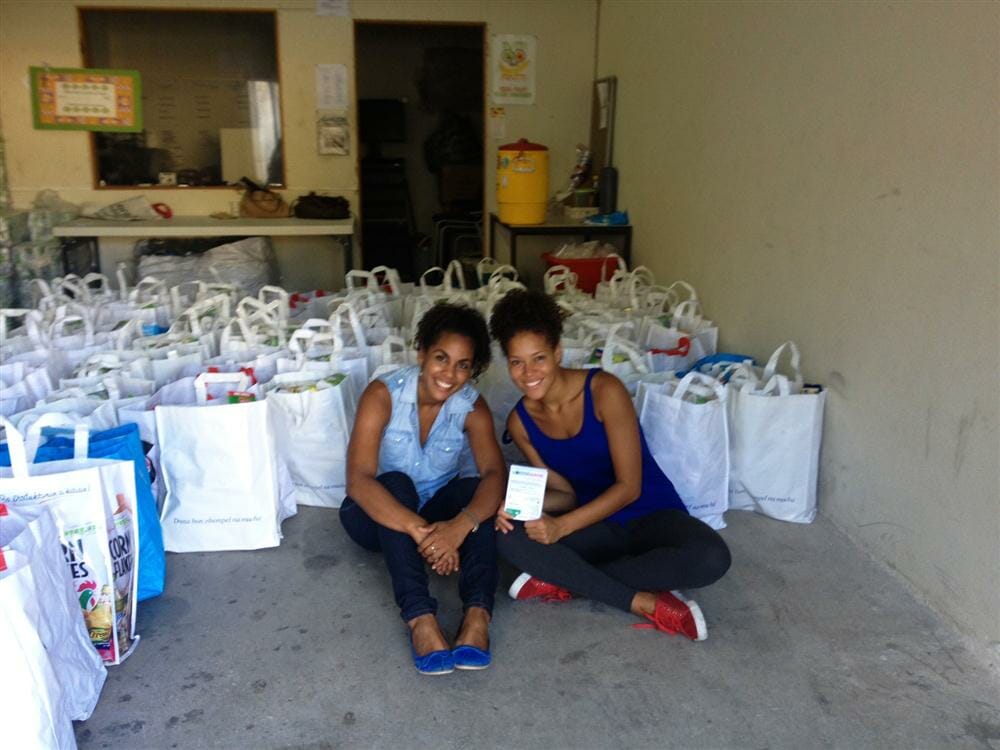
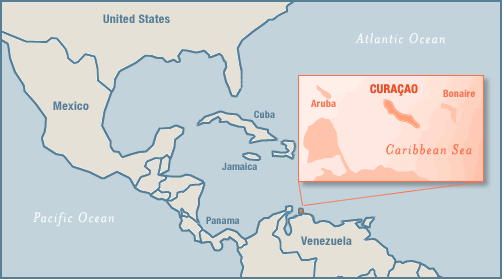
Curaçao Cares is the first of its kind volunteer and project management organization in Curaçao, a Dutch-Caribbean island. Curaçao is well known for its beautiful capital Willemstad that is on the UNESCO Heritage List, for its beaches, and of course for its blue liqueur. The island received country status within the Kingdom of the Netherlands in 2010 after the dissolution of the Netherlands Antilles, meaning that Curaçaoans would still keep a Dutch nationality, but that we would have autonomy over our internal affairs. After a transition period with many constitutional changes, we are now trying to stand on our own feet and build a nation in the face of great challenges; a dire financial situation, a dormant economy, poverty and school drop-out rates that are concerning, continuous brain-drain as a result of emigration, and perhaps most unfortunately, a lack of social cohesion.
The decision to found Curaçao Cares concretely took shape in the summer of 2011, when I was sitting around the coffee table with Lysayé de Windt and family members that were visiting New York, talking about Curaçao and about what we as individuals could do to contribute to the sustainable development of our beloved island. Lysayé and I reflected on the fact that as young adults privileged enough to have traveled and lived in different countries, we were so much more active in making other communities a better place to live in than our own.
I had just graduated Columbia University with a degree in Political Science and Human Rights. Though at a young age I had spent time volunteering to teach dance at my high school in Curaçao as well as in different foster homes, my real dedication to volunteering started while living in NY. I volunteered at New York Cares Days, spent some Saturdays instructing conflict resolution to elementary students in New York City public schools, and organizing seminars for High school students from underprivileged areas to raise awareness on public and international affairs. I also volunteered in Tanzania in 2008 and had a transformative experience teaching male juvenile detainees.
Lysayé also grew up attending and volunteering at Rotary and Inner Wheel events with her family, as her parents were both part of these organizations. In 2005, she had a life-changing experience studying abroad with the Semester at Sea program, visiting 10 countries, among others: Venezuela, Brazil, South Africa, India, Myanmar, Vietnam, Hong Kong, Japan. While abroad, she volunteered in the many countries with numerous local NGOs. Though her experiences in each country were relatively short, she observed the importance of the organizations and the positive impact they had on the local communities. After a few years working in the financial sector in New York and Amsterdam, she pursued her dream and established her own photography/visual communication and concept development company in Curaçao.
On that faithful afternoon we established that many people that would want to flexibly give their time, talent and skills in Curaçao, might also be asking how and where they can get more involved, but like us encountered that this information is hard to come by. We had witnessed how New York Cares had made community service accessible to millions of people from all walks of life in New York. “We must find a way to make this happen on an island of 150.000 people”, we thought. There is a lot of human capital and goodwill that is underutilized because there is no platform that can bridge the gap and manage connections.
As a new HandsOn affiliate, our mission is aligned with that of the network; to inspire and mobilize individuals to seek active citizenship through flexible engagement in meaningful service projects, and to create and manage flexible but sustainable volunteer projects in partnership with individuals, corporations, and non-profit/social organizations. Through volunteerism, we hope to foster understanding and facilitate crucial exchanges between citizens, in order to elevate the quality of life on the island and create a greater sense of community.
Curaçao Cares was officially established in October 2012, so it is still in a cocoon, but we are making strides. In this start-up phase, we are focusing on reaching out to community partners to understand their needs and the possibilities. On the other hand, we are working on building partnerships with corporate partners to create and implement corporate volunteer projects as part of a comprehensive CSR policy. Starting with the corporate community is important to see us through financially, since there are not many other ways to get subsidy. We are happy to announce that we already confirmed a three-year founding partnership with three large companies! For a fourth company, we are already working on an exciting photography project with a local special needs school.
We want to thank Points of Light and the HandsOn Network for their support and the wealth of knowledge that we have already received. We look forward to sharing our story and contributing to the growth of the network.
We the People: Civic Accelerator Brings Together Social Entrepreneurs to Solve Challenges
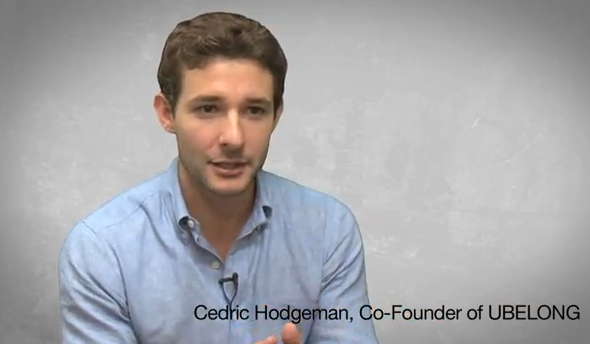
Today’s post is a series featured in the Huffington Post featuring thoughts and ideas from Civic Accelerator participants, a program that helps civic startups successfully launch and scale solutions to our nation’s social challenges by providing mentorship, education and investment. The Civic Accelerator is a joint venture between Points of Light and Village Capital and includes founding support from The PwC Charitable Foundation, Inc., and StarbucksFoundation. Today’s post is written by Cedric Hodgeman co-founder of UBELONG and republished from the Social Entrepreneurship section on Feb. 28, 2013.
This is the story of ten organizations brought together to gain invaluable insights from each other and a team of mentors as we strive to help solve social challenges. We are participants in the Civic Accelerator and we’re a diverse bunch. Our focuses extend from volunteer engagement and crowdfunding to green building. Our scopes range from the state of Maryland to the most remote corners of the developing world. And in a twist that illustrates the Accelerator’s forward thinking, half of us lead nonprofits while the other half lead for-profits.
Despite our dissimilarities, each of us operates from the fundamental belief that ordinary people are at the heart of social change. Reflecting the Accelerator’s values, we believe change happens from the ground-up. That’s why we focus laser-like on everyday folks.
It used to be that the only way for ordinary people to contribute socially was donating to a charity. Certainly, we funded worthy causes and felt good about it. But it was impersonal. To make the world a better place, most of us just wrote checks at our kitchen table.
Times have changed. Social media has empowered all of us to do more as it gives us all the unprecedented power to access and promote information. Seemingly distant challenges and crises have become much more real to us as we now discover the faces, names and stories that lie behind them simply from the writing, reading or sharing of a blog.
Social entrepreneurs reflect this civic awakening; instead of selling cars, cards or carbs, social entrepreneurs sell people the opportunity to do good. I’m proud to be part of this movement. The aim of my organization, UBELONG, is to mainstream international volunteering. Before our formation, unless you had years to spare in the Peace Corps or the cash to pay a niche tourism outfit for a “voluntourism” experience, volunteering abroad safely, comfortably and meaningfully proved difficult. Tapping the power of social media and buoyed by our belief in the power of ordinary people uniting, we have set out to tear down barriers and drive social change through international volunteering.
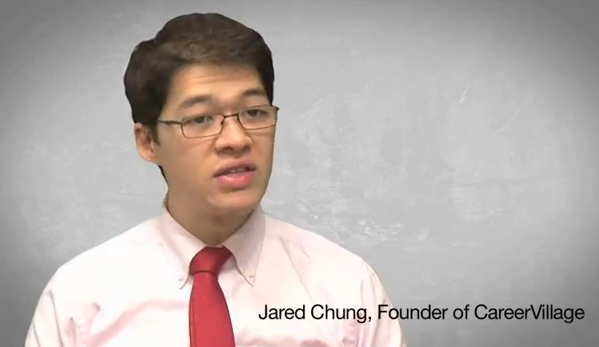
The UBELONG story is similar to that of our peers in the Civic Accelerator. Mymaryland is breaking down barriers between constituents and local officials in Maryland. Generation Citizen, Career Village and Moneythink are tapping university volunteers to serve as mentors and teachers to disadvantaged youth. Bould, which operates in the world of homebuilding, helps mainstream green building.
The Civic Accelerator exemplifies how civic ventures – -indeed, adventures — serve at the heart of engaging ordinary citizens to act together for the common good. All of us are united in our drive to mobilize people beyond donations and words. We seek to inspire people to collaborate and take action. The new communication tools of our age enable us to maximize our reach. And, while our organizations come in all shapes and sizes, we all believe the power to do good lies more than ever with we the people.
Interested in participating in the next round of the Civic Accelerator? Applications will be accepted from February 11-March 15. To learn more and apply, please visit www.pointsoflight.org/civic-accelerator