When Megan Jusczyk received the devastating news that her daughter Malia was diagnosed with stage four neuroblastoma cancer, it was compounded by also learning how little funding there was for pediatric cancer research. Despite being the number one disease killer for kids in the United States, the National Cancer Institute only allocates four percent of their budget to researching childhood cancer. Her desire to make a difference in the lives of other families affected by pediatric cancer led Megan and her husband to found For Kids’ Sake Foundation in 2011.
The nonprofit aims to raise both funding and awareness for neuroblastoma cancer through annual fundraising events. In the past 11 years, For Kids’ Sake Foundation has raised over 2.1 million dollars for pediatric cancer, with half of funds going to research and the other half being donated to help alleviate families’ expenses as they seek treatment for their child. While funds are primarily donated to families in Megan’s native Massachusetts as well as Florida, the nonprofit has helped families all across the country and internationally.
What inspired you to start For Kids’ Sake Foundation?
My daughter Malia was diagnosed on April 1, 2011 with stage four neuroblastoma cancer. I had never really heard it. Maybe I had seen a St. Jude’s commercial. In my mind, if kids got sick, it was very, very rare, and they all were cured, and St. Jude saved everybody. That was not the case. When Malia was diagnosed, it was a big wake up call for how devastating a diagnosis is. I didn’t know it was the number one disease killer of kids in the United States — that was shocking to me — and how little funding there was for research. In addition, we’ve met a lot of parents. They say over 50 percent of families end up going bankrupt from a pediatric cancer diagnosis, because typically one parent has to stop working and the other parent has to work less. I know Malia was a 14-month protocol, and a lot of times both of us had to be there. One of us had to be there all the time, so my husband stopped working completely. It was a very big wake up call when my daughter was diagnosed.
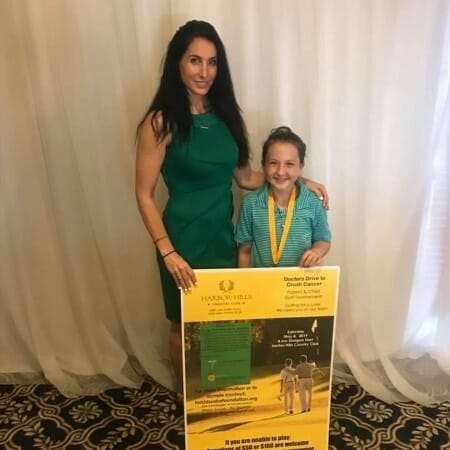
Megan Jusczyk, left, poses with her daughter Malia at one of For Kids’ Sake Foundation’s annual golf tournaments./Courtesy Megan Jusczyk
Where do you allocate the money you raise?
We fund research because only four percent of the National Cancer Institute’s budget goes to kids’ cancer, even though it’s the number-one disease killer. That’s [astounding] to me, and I truly believe will change, but that’s the way it is right now. Half of our money goes to research and half goes to families struggling to pay bills. Let’s say there’s a $10,000 deductible, and then there’s travel expanses. … Sometimes these families have to go out of state. All these expenses pile up and there’s not a ton of resources. Parking, for example, is $55 a day when you’re in New York City. Not everyone can even fathom doing that, so we try to help out so kids can get the treatment they need.
What drives you to put so much work into this organization despite all that you are going through while your daughter is in treatment?
I continued at the same level of passion through all those years because I would look at my daughter and I would see how she smiled through it all, everything we put her through, and she still loved us as parents. What a gift. Physically and emotionally, it feels like you’re torturing your child. The treatments are brutal. The fact that she could put a smile on her face, get up everyday, and work hard to become a great soccer player and softball player — the fact that she could get up and put that work in, how could I ever stop trying to help these families? It just wasn’t an option. These kids are giving their everything. Every single one of those kids are doing it. People are like, ‘Malia, she’s special and different,’ — of course she is, but every single one of those kids is fighting to live, and every single one of those families is giving everything that they can. If I’m in a position to help, how could I not?
What kind of feedback have you gotten from families you’ve been able to help?
It’s usually like, ‘thank you so much for allowing us to bridge that gap.’ It is about trying to help them through that financial toxicity piece that comes with a pediatric cancer diagnosis. It’s this little area that they need help. They just need help for this amount of time, and then hopefully they are in a place where their child is cancer free. Sometimes we pay mortgages for a month to give people that extra money to be able to spend on the nickel-and-diming little things. People are incredibly grateful. Speaking as somebody who has lived through it, I don’t want them to have to beg their friends for money or set up a fund where they have to beg their family for money. We try to help as much as we can as a medium-sized nonprofit, and I also try to let them know of other nonprofits where they can get help.
Do you have any future partnerships, programs, or events you want people to know about?
On June 26, we’re doing our 5K & 10K to Crush Cancer at the Plainville Park. It’s a great event to sponsor and participate in. It’s a great event to just go, even if you just want to cheer on the runners. We do a superhero theme if people want to dress up in superhero costumes. We encourage that because these kids are little superheroes, so it’s very appropriate to have a superhero theme.
Is there a specific fundraising event that is particularly memorable for you?
The 5K & 10K to Crush Cancer is an event we do in our hometown of Plainville, Massachusetts. We’re doing our 12th one this year. We started the event as soon as Malia was diagnosed, and we did it a few months later. Malia runs it. We’ve gotten to see her cross the finish line multiple years and run with her friends. That’s definitely the most exciting event, because she really gets to participate. She knows we enjoy it, but she doesn’t know how lucky we feel that we get to see her alive and thriving and running a 5K, and how much joy that brings us as parents because we know how lucky we are to have her.
What’s been the most rewarding part of your work?
To be in a position where you can help somebody when they need it most.
What do you want people to learn from your story?
To contact their legislators and tell them that four percent is unacceptable. Pediatric cancer is the number-one disease killer and we want change.
Cully Platt knows how important it is to have a mentor.
When he was in high school, a history teacher went out of his way to be an advocate and friend to him. This inspired Cully to start helping others as well, by providing after-school tutoring to his fellow students — ultimately kicking off a lifelong dedication to serving and mentoring others.
“Seeing people thrive, it definitely makes me a happier person and a more fulfilled person,” Cully said.
Cully currently serves as an advisory board member and volunteer for the Prison Entrepreneurship Program, a Texas-based nonprofit that prepares incarcerated individuals for their release from prison through career counseling, financial literacy counseling, and peer support. As a board member, Cully helps think through strategy of everything from curriculum and expansion, to community and corporate engagement.
In his volunteer role, he visited the prison each month prior to the COVID-19 pandemic, as well as the program’s halfway house. During the pandemic, he has volunteered with the prison virtually while continuing his work with the halfway house and men in the Houston community and plans to return to in-person prison visits soon.
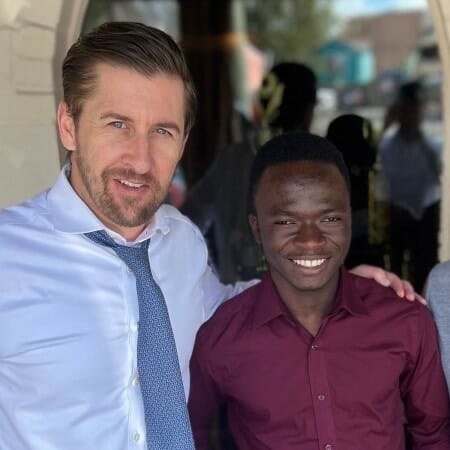
Cully Platt, left, poses with one of his mentees through YMCA International./Courtesy Cully Plat
As a Bank of America employee, Cully lends his financial expertise during his prison visits, meeting with incarcerated individuals to go over business plans, interview skills and how to discuss their charges and history with potential employers. His work with the halfway house is less structured, including meeting with the men for dinner and hosting holiday meals, while still providing them support and career advice.
The Prison Entrepreneurship Program is not Cully’s first foray into mentorship. His volunteer work over the years has primarily been with kids. He mentors two youth refugees with YMCA International, is a big brother with Big Brother Big Sisters, and mentors a young man with Eight Million Stories, a program for kids who have been incarcerated or expelled from the public school system. He also serves on the board of Texas’s first Black charter school, Beatrice Mayes Institute.
What drew him to the Prison Entrepreneurship Program was learning how many graduates of the program return home to kids after completing their sentences. Over five million children in the United States have had a parent in the system at one point, and many of those kids end up becoming incarcerated themselves.
“As fired up as I am about some other youth programs,” Cully said, “with this one, if you can get the dad or the mom or the uncle or whoever going back to really be a constructive influence, that’s a pretty interesting way to break the cycle of [children of incarcerated individuals] ending up in trouble.”
One of the programs that Cully implemented through the Prison Entrepreneurship Program was a dinner series at the halfway house. Charles Blain, who has served alongside Cully for the past four years, would join him in bringing dinner over and sitting down with the men to discuss how to get them back on their feet.
Cully Platt, left, bumps fists with his little brother through the Big Brother Big Sister program./Courtesy Cully Platt
Charles recalls how many of the men had walls built up and weren’t fully participating in the series. Cully began starting each dinner by having everyone go around in a circle, starting with himself, to discuss something they had been struggling with that week. Charles said it was remarkable to see how quickly the men’s walls broke down as they realized that many of them were dealing with similar issues. Cully’s exercise was so successful that they still do it each time they meet.
“He is truly a dedicated and selfless volunteer, and he is always looking for new ways to make a program better,” Charles said.
Cully’s personal goal is to complete at least 200 hours of volunteer work a year. He is driven to serve as much as he does due to the impact his high school history teacher had on him, as well as the mentality behind the quote “Talent is everywhere; opportunity is not,” something he said became very clear to him at a young age.
“If you get to know these guys, most of them had really challenging childhoods,” Cully said. “I’m not sure how many people would have overcome those situations. … There’s a lot of folks in there that I think, with the right training, we can get to a place where they’re ready to go back and they’re going to be a positive influence, both to their families and their communities.”
After volunteering with English as a Second Language students as an undergraduate, Cindy Mahoney’s career shifted, and she set out on a journey to help international students, refugees and immigrants learn the tools needed to navigate their new lives.
Even throughout the pandemic, Cindy stood firm on ensuring that her students were receiving support to meet their next goals of getting a job, getting a driver’s license, or passing a citizenship test. Cindy said they help her travel the world from her couch, and that she hopes that the ripple effect of service continues to spread.
Describe your volunteerism as an International Language Institute tutor.
I started working at ILI of Massachusetts as a teacher around 25 years ago when my oldest was an infant. I taught English to speakers of other languages and at that time, I had volunteers actually come into my class to observe my teaching. So, I was connected to the program at a very early level.
When I was no longer able to teach and commit to the time it takes to be a teacher because of family circumstances, I thought, wait a minute — I can volunteer and still do what I love without taking on a full class.
I really tried to use my teaching background to prepare lessons that would engage them and help them get the most out of the tutoring. Each session is about an hour online and it really does fly by. Students still drive the topic, but it’s just up to me to implement the lessons in an effective way so that they’re the ones mostly speaking and practicing what they’ve learned.
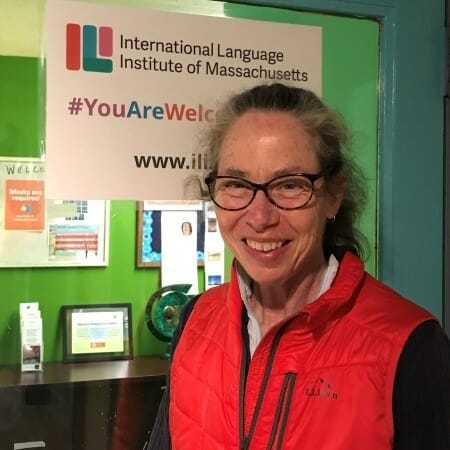
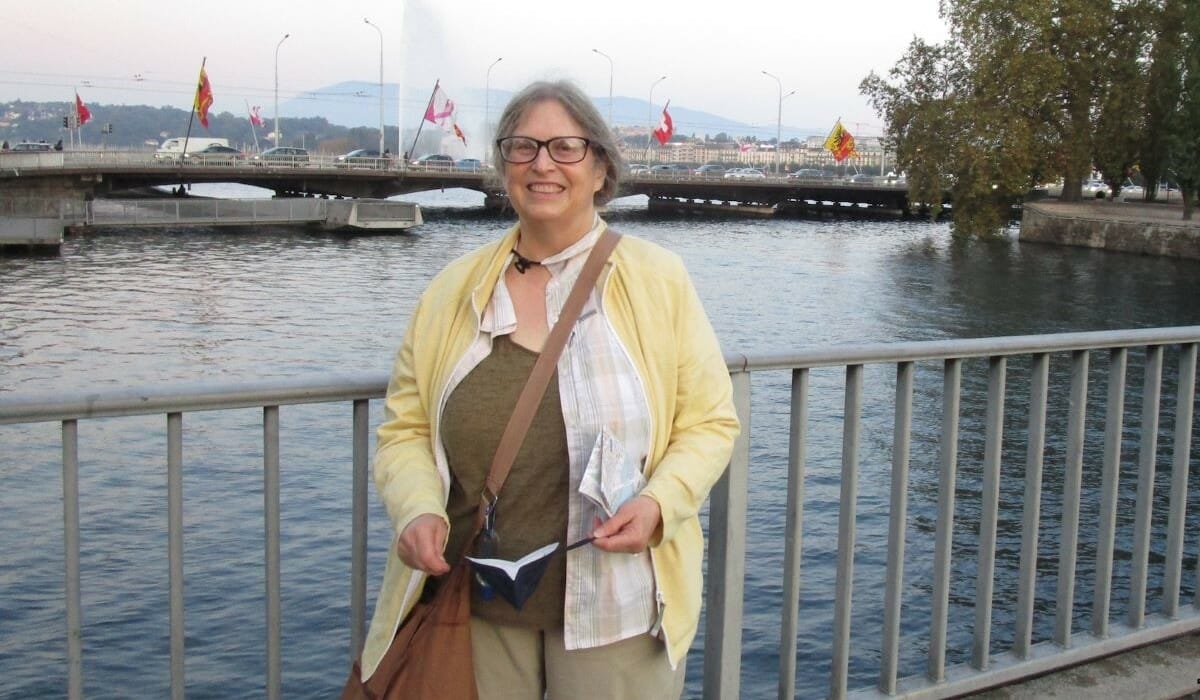
Cindy Mahoney tutors ESL students with the International Language Institute of Massachusetts, who in turn help her travel the world from her couch./Courtesy Cindy Mahoney
How did COVID-19 impact your tutoring?
It’s been a bit of a learning curve for me. There was not as much technology when I was in the teaching world compared to it now. I had to learn to Zoom and I worked with two women who were around my age mostly with citizenship questions and reviews.
For many of us, COVID-19 felt isolating but it allowed us to be a little more flexible with the tutoring that I’m doing. We don’t have to travel and we can find time on Zoom if things pop up in someone’s life like changing schedules or a childcare responsibility shift. We can find time without worrying about transportation and logistics of a classroom. Plus, on Zoom we didn’t have to wear masks so the pronunciation was easier because we could see each other’s faces. The barrier, of course, is the connection and energy that a traditional classroom gives you.
Describe the community you’re hoping to target with volunteerism.
In undergrad, I actually volunteered in an ESL program. It was just one of those things I picked up during my last semester when my school was looking for English tutors at a local middle school. It just became a passion to help people with language. There’s so much progress that’s made so quickly, it’s really exciting to see.
So, I started working with the adult education program and decided that’s what I wanted to pursue. Then I got my master’s in ESL education and it became my career after never intending to be a teacher.
Most of these learners leave everything behind — friends, family, jobs, homes — and start over, and I think of what I would need in that situation. I saw my role as helping them take whatever role was next. We went through the education ladder. And they helped me learn more about the world with their stories and tales of their home countries. It’s like traveling the world with a friend from my house.
What inspires you to volunteer?
In the pandemic, it was a difficult time because of my daughter’s remote schooling and my mother was in the end stages of Alzheimer’s. It was an intense time, but I’ve always stayed connected with ILI and I got an email about volunteering and I knew I could do this. And it became like a “me time” thing; I can focus on teaching since it’s something that I enjoy and I sort of got to put the pandemic and other struggles aside.
What have you learned through your experience as a volunteer?
I really do think I learned about connection. These women were my age and they were learning English, so it inspired me to take a Spanish class. It gave me the confidence to tackle a new challenge. It also made me realize how much I enjoy volunteering. I’ve volunteered now with two other programs, one of them being the Department of Children and Families. It’s about the connection with the community and the bridge to other volunteer opportunities.
Why is it important for others to give back, especially young people and students?
It really is sort of electrifying and I always feel like I get more out of it than the students. Again, it’s a way to connect with people outside of your family, your neighborhood or your job, and opens up the world. It’s like dropping a stone into the pond and the circle keeps getting bigger and bigger. I can see that my older daughters also realize that it’s important to reach out and give back and now my husband is getting more involved in local politics. Volunteering has become part of our family culture.
What would you want others to learn from your service story?
It can be scary; I was nervous at first. But afterwards I was so charged up. Just take that first step, you know. My daughters said the same thing, and you might not know anyone else volunteering, but you’ll go back and then you’ll know people the next time. Eventually, it just becomes something that you look forward to and is part of your routine.
Are there any partnerships, programs, or events that you are excited about?
The most exciting thing has been those one of the two women I tutor got a job, which was a long-time goal. I always look forward to our ILI monthly gathering of tutors. I do hope to get back to volunteering in the classroom, though.
Content Warning: Points of Light is proud to share the following uplifting and inspiring story. However, we acknowledge that a small portion below may be difficult for some readers. We encourage you to please care for your own wellbeing above all.
In 2018, Rebekah Bruesehoff of New Jersey stood in front of her state’s legislature, testifying in support of a bill requiring schools to teach the accomplishments and contributions that LGBTQ+ people have made throughout history.
Passionately speaking in front of these legislators, however, wasn’t a seasoned politician or a lobbyist. She wasn’t even an adult. Rebekah was then just a young 11-year-old, simply telling her story as a transgender girl so that she and others like her could feel more accepted and see themselves reflected in their classrooms and communities.
With the help of her testimony, the bill passed, allowing LGBTQ+ students in New Jersey to see examples of people like themselves represented in their schoolbooks and lessons.
Rebekah, now 15, is a teenager who is busy with schoolwork, field hockey and musical theater. Despite her packed schedule, her advocacy for LGBTQ+ inclusivity, especially for transgender youth, has only intensified. She is proving every day that age isn’t a barrier when it comes to making a difference.
While people assumed she was a boy at birth, Rebekah always knew herself to be a girl. When she socially transitioned at the age of eight with her new name and pronouns, she said everything just clicked.
“I went out into the world as Rebekah, and I was just so much happier. I was me,” Rebekah said.
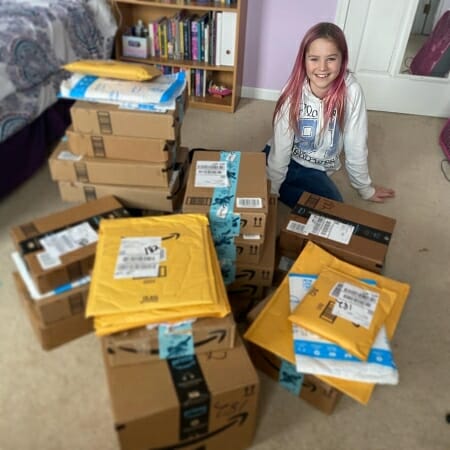
Rebekah launched a book drive in 2019 to get LGBTQ+ inclusive books into schools, libraries, community organizations and faith spaces across the U.S./ Courtesy Jamie Bruesehoff
While her parents showered her with an overwhelming amount of support and love, Rebekah quickly learned that she was an exception to an often harsh reality for many transgender and nonbinary youth. More than half seriously considered attempting suicide last year, according to The Trevor Project, often due to a lack of acceptance from their own families and surrounding communities. LGBTQ+ youth who had access to spaces that affirmed their gender identity reported lower rates of attempting suicide.
So, when Rebekah was offered the opportunity to speak at a rally in 2017 for transgender students’ rights, she jumped at the chance to show support and normalize the conversation.
“Every transgender kid deserves the support I get, and that’s why I’m here,” Rebekah told the crowd of over 200 people at the rally. “To any transgender kids out there: I hope your school supports you, but if it doesn’t, we will fight for you. Keep being yourself, it doesn’t matter what anyone else thinks. There’s nothing wrong with being transgender. It’s just who you are.”
Since that speech, Rebekah has shared her story with tens of thousands, if not millions more. In 2018, she spoke alongside her mom, Jamie, in front of a crowd of more than 30,000 at the Evangelical Lutheran Church in America Youth Gathering, bringing the audience to a standing ovation at the end of her inspiring speech. She has published opinion pieces in the Philadelphia Inquirer and has had numerous media appearances. In 2019, she even became a superhero as part of Marvel’s Hero Project streaming on Disney+.
In addition to her public speaking and political activism, Rebekah, being an avid reader, launched the Mighty Rebekah Book Drive in 2019 to get books featuring LGBTQ+ characters and stories into homes, classrooms, libraries and faith spaces across the country.
“Most folks in the United States of America say they’ve never met a transgender or nonbinary young person. And yet so much of what they read, see and hear is just false and ridiculously negative,” said Jennifer Grosshandler, founder of The Gender Cool Project. “Rebekah is solving that challenge by stepping up and being available on the largest possible platform so that people simply get the chance to know who she is as an extraordinary, talented, funny person.”
Rebekah uses her platform to be a voice for transgender youth and to fight for LGBTQ+ inclusivity./Courtesy Jamie Bruesehoff
While LGBTQ+ rights shouldn’t be a divisive topic, they too often are, which means both Rebekah and her mom Jamie have seen how scary things can get. But even when times are hard, Jamie said Rebekah sees the good in the world around her, a trait that inspires Jamie every day.
“We learn from Rebekah in her willingness to stand up for other people to make herself vulnerable in the hopes of making the world better for kids that don’t have families like hers,” Jamie said.
As a ninth grader, Rebekah has already accomplished so much, but she still has a long and bright future ahead of her. One thing Rebekah sure about is that she wants to continue using her voice to fight for LGBTQ+ inclusivity.
“I recognize the amazing advocates who came before me, but I also think about the kids who will come after me,” Rebekah said. “I want a future where everyone can be accepted and celebrated in their own identities, and everyone can have a seat at the table.”
If you or a young person from the LGBTQ+ community who you know may be considering suicide, contact The Trevor Project at 1-866-488-7386 or text 678678 to talk to a trained crisis counselor. It’s anonymous, free and available 24/7.
After Pandemic Dashed Traveling Plans, Retiree Turns to Volunteerism
Retiring in 2018 with dreams of seeing the world, Lynne Goodman’s travel plans were dashed when the COVID-19 pandemic struck. Then, the 65-year-old Monroe, Michigan resident’s more immediate world was impacted by the pandemic, her sister and niece both becoming ill and surviving, Lynne knew she wanted to help in some way.
As a volunteer with United Way for Southeastern Michigan’s 2-1-1 Helpline, Lynne has dedicated hundreds of service hours to helping fellow Southeast Michigan residents. Nearly every week since the start of the pandemic, Lynne has staffed the helpline from her computer to take calls from people in need, focusing on COVID-19 questions, connecting callers with needed resources and providing information about testing sites, vaccines and more. With call volume nearly doubling during the pandemic, the helpline receiving more than 1,000 calls each day, volunteer support like Lynne’s has been critical.
What inspires you to volunteer?
I was brought up that way. The term, tikkun olam, is a concept in Judaism which means ‘repairing the earth.’ I’m Jewish and that concept, we should be giving back, whether by money, time, or using our brain to help an organization. Both my parents ended up getting COVID about a month after I started volunteering, my father died immediately and my mother died a few months later. That made me even more willing to help people during the pandemic.
Describe your volunteerism with United Way.
As a United Way for Southeastern Michigan 211 Hotline volunteer, I staff at least one shift per week, half a day. For COVID-19, I might tell [the caller] where there is testing nearby, or I can sometimes make an appointment for them. I’ve also volunteered to set up tax appointments. During the Michigan flooding, I volunteered more. [Callers] needed someone to clean the basement out because the furnace was flooded, or help with utility bills.
Share one personal story with me from your volunteerism.
One lady called and had an appointment to get a COVID test, but she couldn’t find the facility, she wanted help to try to find it. I pulled up a map of Detroit and helped direct her to the appointment on time. She was really panicking and she really appreciated [my help.] It makes me feel good to be helpful, whether it’s helping someone get some assistance or setting up a COVID test appointment.
Volunteer support like Lynne’s has been critical to United Way for Southeastern Michigan, and nonprofit organizations like it, during the pandemic./Courtesy Lynne Goodman
Why do you think it’s important for others to give back?
It’s best if we help each other out because as a community we can do more.
What’s been the most rewarding part of your service?
It’s rewarding when I find a way to help people and when someone thanks me for it. That just makes me feel good.
What do you want people to learn from your story?
Think about how you can help others, whether it be your neighbor or through an official organization, whatever it is time or money. Someday we all might need help.
In one word, what does volunteering mean to you?
Worthwhile. [Volunteering] makes me feel worthwhile. Early on in the pandemic when I wasn’t doing anything else except for one other volunteering job, service gave me a feeling of self-worth versus just surviving.
After his kids moved out of the house, Greg Schneider found himself with more time to give back to his community. In the past decade, he’s volunteered with over 25 nonprofits in his Cincinnati area. But it was one volunteer project in particular — helping to build a wheelchair ramp for a veteran’s disabled widow — that led Greg to start his own nonprofit, and sent him on a mission to make change across the country.
Eight years ago, Greg and his wife founded Operation Ramp It Up, a nonprofit dedicated to installing wheelchair ramps for people with mobility issues. The organization has installed over 130 aluminum ramps and provided over 150 recycled ramps across 40 states. Greg travels the country to personally join as many ramp builds as he can.
Describe your volunteer role with Operation Ramp It Up.
Operation Ramp It Up is a nonprofit that installs wheelchair ramps for people with mobility issues. I’m the co-founder with my wife and I’m the CEO. I run daily operations and I do most of the installs across the country. We’ve been working on building ramps for the last eight years. We’re in 40 states, soon to be 41. We’re adding Alaska to our list of states very soon. We’ve had over 130 installs to help people with their mobility. We started out helping veterans with needs getting in and out of their homes. Recently in the past couple of years, we’ve been helping others — a lot of ALS patients, people with cerebral palsy, people in hospice care, anybody with any type of mobility issue.
What inspired you to start this?
I have a very good career, and all my children got to go to college and get married. I felt like I had some time to give back to my community. I started volunteering in my community, and I’ve worked with over 25 nonprofits in Cincinnati in the last five to ten years. I had an opportunity to build a ramp with one of the nonprofits locally. It was a spouse of a deceased Vietnam veteran. She couldn’t get up and down her five steps. The only way she could get out is if one of her children came, who didn’t live close, or she had to wait for a service and someone had to carry her down the steps. Within two hours, we built this aluminum wheelchair ramp and she was able to be wheeled out. The tears of joy, the excitement she had, was very emotional. We were happy for her to be able to leave her house. We did a couple more and I thought, I want to do this.
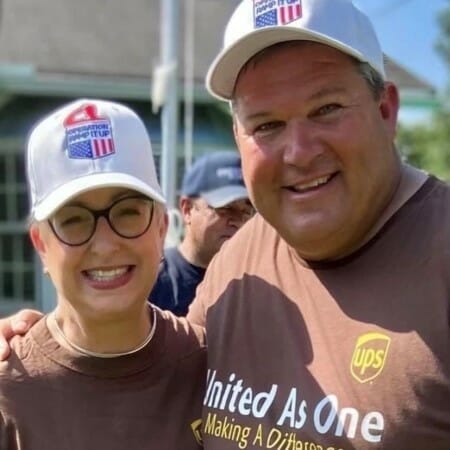
Greg Schneider, right, poses during a ramp build with Carol Tomé, the CEO of UPS, Greg’s employer of 40 years and a sponsor of Operation Ramp It Up./Courtesy Greg Schneider
Have any ramp builds been particularly memorable for you?
My youngest daughter is a graduate of Miami University in Ohio. One of her college friends who was 36, she saw on Facebook that he had ALS. My daughter came to me, “Dad, can we help my friend?” Without batting an eye, I said absolutely yes. We made it happen. Even my daughter went to the ramp build. We were able to help one of her friends. ALS is a terrible disease, but he was able, on his own, to get up and down his front yard with a ramp versus going up the steps. To see the impact we made on his life, and then to see the impact we made through my daughter’s eyes, was remarkable.
Do you have any future partnerships, programs, or events you want people to know about?
I just received my second NFL grant. I’ll be working with the Cincinnati Bengals again this year. I’ll be building a ramp either this spring or early summer with the Cincinnati Bengals. I’m pretty excited about that. I’ll be traveling to Anchorage, Alaska. I’m going to help a veteran community and a veteran lodge. I’m going to be building two ramps just north of Anchorage up in June. I’m pretty excited to add another state and help somebody north in that area. My goal is to have a ramp in all 50 states. Right now I’m close to that. I have connections, partners, sponsors, contractors, and volunteers all throughout the country, so it’s kind of neat to be able to work with people all over the U.S.
Do you have any other goals you would like to see Operation Ramp It Up achieve?
I want to be able to help everybody and anybody. Sometimes I get overwhelmed, especially when I have a little bit of publicity or there’s an interview. When we get the word out, we get overwhelmed with calls. Sometimes I have to really make sure everybody meets that criteria. Usually the people asking for a ramp have been trying for a long time to get a ramp. My goal is to be able to help as many people as I can and not turn anybody down.
What’s been the most rewarding part of your work?
The most rewarding part is to see somebody who is looking out their window and can’t get out of their home, and within two to four hours, they’re able to go get their mail from their mailbox, or go out to their driveway and turn around and get back in their house without anybody helping them.
What do you want people to learn from your story?
I never would have thought eight, ten years ago that I would be helping people 2,000 miles from my home. Never give up. Always help. If you’re privileged enough to wake up everyday to go to work and get in your car and leave, don’t take for granted that everyone can. Put a smile on someone’s face. Change their life and save their life.
High School Junior Bridges Digital Divide During Pandemic and Beyond
Meet Daily Point of Light Award honoree Ankita Sundar. Read her story and nominate an outstanding volunteer or family as a Daily Point of Light.
The COVID-19 pandemic took the world by storm in 2020, especially the world of education. Instead of remaining discouraged while learning virtually, Ankita Sundar set out to provide quality education and gender equality for girls around the world.
The current high school junior co-founded the nonprofit Digital Educate and bridges the digital divide through free programming and leadership classes to youth. Her programming has reached over 300 students and multiple countries throughout the pandemic and her podcast connects women changemakers to young aspiring leaders.
Describe Digital Educate and why you co-founded the organization.
When I was in middle school, I spent time volunteering at a community nonprofit that focused on bringing educational resources to low-income families. I tutored a young elementary-school girl, and I was shocked to hear that her family couldn’t access certain technology resources at home since they didn’t have the internet. I really noticed the digital divide. That realization led me to co-found Digital Educate, a nonprofit organization that provides access to education and digital media to underprivileged youth.
One of its main missions is to close the gender gap and gender disparities throughout the STEM (Science, Technology, Education, and Mathematics) field by encouraging girls to participate in more leadership activities.
As I became more involved in Digital Educate, I decided to also teach computer programming classes and leadership workshops to students in elementary and middle school — which was needed especially during the COVID-19 pandemic. I taught free virtual classes to over 350 students and wrote accessible blog content so more people could have mentorship resources.
How did Digital Educate help fill the education divide during the COVID-19 pandemic?
Since the pandemic started, it’s created a drastic impact on the world in terms of access to resources and education. But it really enabled us to prioritize education and the use of digital media to help students stay more engaged with learning and with school in general.
Everything shifted online, so I began to teach Python and Scratch programming to students worldwide. I also hosted a free virtual programming contest for middle school girls around the world and we had over 80 girls participate. We had several speakers and partnerships with local libraries and technology startups. Girls said they really felt a sense of belonging and identity. I was grateful to be able to reach out to different people and organizations to help me support this journey.
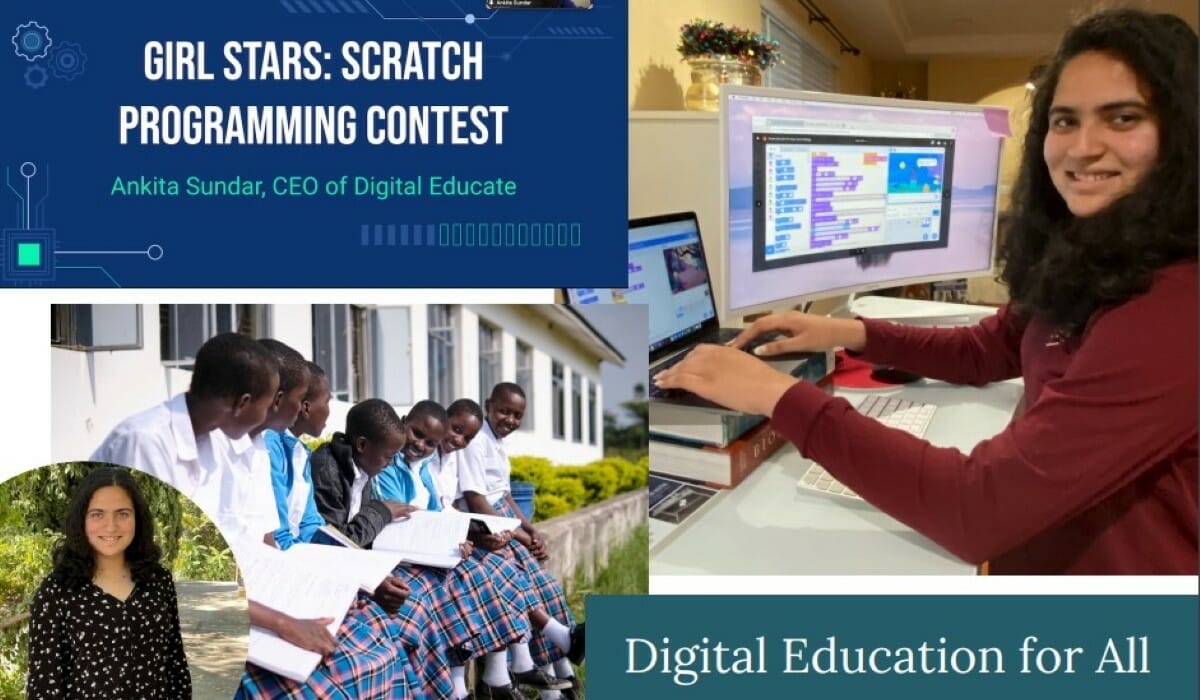
Ankita Sundar hosted Girl Stars: Scratch Programming Contest, a free virtual programming activity for over 80 middle school girls around the world./Courtesy Ankita Sundar
How has Digital Educate grown?
We’ve taught more online classes virtually and the pandemic emphasized that education is super important for youth worldwide since they are the next generation. We’ve also grown our partnerships with teachers around the world and with local libraries so students can participate in our resources. Overall, teaching and mentoring these students has been a really great experience. I’m really grateful to have this opportunity to create a more welcoming environment for these students to learn amidst the pandemic.
I’m also the host and founder of the podcast Power2LeadHER, which is all about promoting girls and women in high school and college who don’t have access to women leaders on a daily basis. Listeners can find mentorship throughout their career journeys, the lack of which is usually is a major problem — especially with this generation of students. We connect women changemakers to aspiring young women leaders in high school and college. I interview leaders mostly about technology, healthcare, journalism, and art among other things. Listeners can hear about their career journeys and hear advice. It’s all about building an inclusive community that really allows young women access to opportunity.
What inspires you to volunteer?
The joy and heartwarming effect that I get after helping someone in my community is so motivational and inspirational. During virtual classes, the students are always so proactive and excited to join with their cameras on and really big smiles on their faces. Their vibrant energy really just radiates throughout the Zoom screen. And even though it’s a virtual setting, it’s definitely something that makes me want to continue volunteering and the experience is truly humbling and rewarding.
What have you learned through your experience as a volunteer?
Giving back to my community and helping one another is one of the most important lessons I’ve learned in my life so far. I really learned that volunteering is a two-way street. So, if you provide people with the opportunity to share what they’re capable of doing, you’re making a difference in society — whether it may be big or small.
Why is it important for others to give back, especially students?
The importance of giving back is unmatched because it provides you with a sense of belonging and purpose in your community. By helping one another out, you are creating an environment where everyone has equal access and equal opportunities to learn, to grow and to lead. That brings communities closer together and ultimately creates a more inclusive community worldwide.
Are there any partnerships, programs, or events that you are excited about?
Recently, we’ve partnered with the Girls Education Collaborative, a nonprofit organization that provides access to education for girls in Tanzania. We’re hosting a fundraiser to help these girls in Tanzania continue their high school education and I’m really excited about this partnership and our support in enriching these girls with a strong and foundational education.
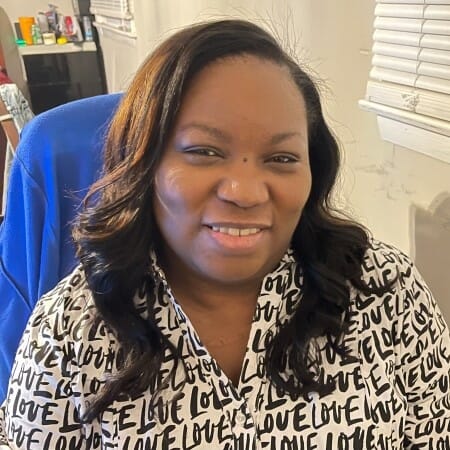
After Child’s Premature Birth, Volunteer Advocates for Health of Moms and Babies
Meet Daily Point of Light Award honoree La’Tonya Latimore. Read her story and nominate an outstanding volunteer or family as a Daily Point of Light.
After her daughter was born prematurely, La’Tonya Latimore says her time in the neonatal intensive care unit was a lonely experience. Her husband had to continue working as he didn’t have parental leave and friends and family were helping to care for their other children at home. Fast forward sixteen years, her baby now grown and healthy, La’Tonya, a Richton Park, Illinois resident, has committed her volunteerism to fighting for the health of all mothers and babies.
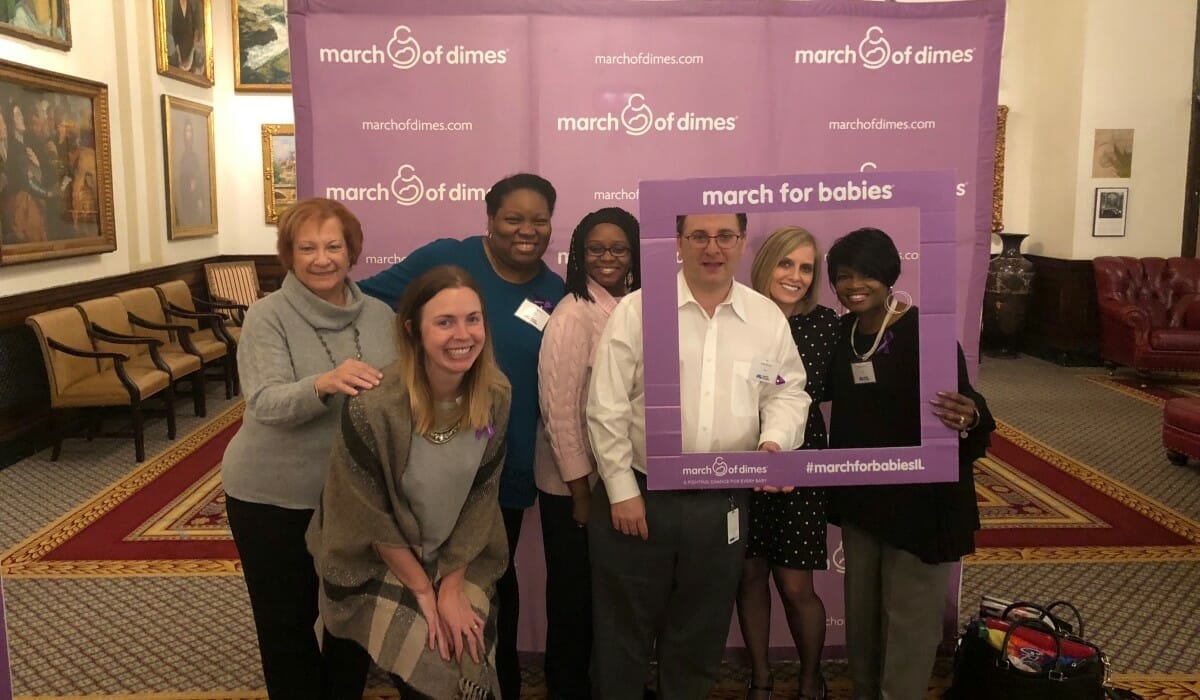
Through her volunteerism with March of Dimes, an organization that supports moms and babies throughout pregnancy, La’Tonya is helping to give back to millions of babies similar to her own daughter. Connecting with hundreds in the Chicagoland area and helping to raise more than $200,000 thus far through her employer, KPMG, La’Tonya is volunteering so that moms and babies of all ages, socioeconomic backgrounds and demographics can survive and thrive.
What inspires you to volunteer?
Even though she is healthy, I have a niece who was just born premature and my goddaughter just had a rainbow baby following a miscarriage. Assistance from the March of Dimes wasn’t available where I lived, and no one should have to go through that without support if they need it.
La’Tonya Latimore: “If you see something that you can do to help someone, pick up the torch and do it. Don’t be intimidated or afraid of helping, because everybody needs it.”/Courtesy La’Tonya Latimore
Describe your volunteerism with March of Dimes.
Our volunteerism helps moms to achieve full-term pregnancies and fund research for all problems that threaten the health of babies. This April 24, our team will be walking in March for Babies toward the goal of finding a cure for premature birth. I first volunteered with March of Dimes as a walker in 2006, and since 2015, I’ve served on the Chicago March for Babies Executive Leadership team. This team of individuals from different corporations meets monthly to coordinate on fundraising and employee engagement.
Share one personal story with me from your volunteerism.
March of Dimes has events before and after the walk. When I hear stories from families about how they have been helped by March of Dimes, to me, that’s the impact story. Whether they’ve received education on folic acid or surfactant, it gives me joy to know that someone else has been helped and they don’t have to go it alone.
Why do you think it’s important for others to give back?
Everybody needs help in some form or fashion. Volunteering gives you the opportunity to choose where you want to help and not just see someone go suffering. If we all support each other, it’ll be better for everyone.
How have you continued to volunteer throughout the pandemic?
We held a “virtual walk” last year, so March of Dimes sent out boxes and you raised funds and walked in your own community with people you felt comfortable with. Our walk is back on this year.
As a volunteer for the March of Dimes, La’Tonya Latimore supports moms and babies of all ages, socioeconomic backgrounds and demographics./Courtesy La’Tonya Latimore
What do you want people to learn from your story?
If you see something that you can do to help someone, pick up the torch and do it. Don’t be intimidated or afraid of helping, because everybody needs it.
In one word, what does volunteering mean to you?
Love.
How can readers help?
We are fundraising to bring comfort, information, and peace of mind to families whose baby was born too soon or sick. Please visit the KPMG March for Babies page to learn more about how you can help.
Meet Daily Point of Light Award honoree Natalie Wilson, who was a 2021 L’Oréal Paris Women of Worth Awardee. Each year L’Oréal Paris and Points of Light recognize and celebrate Women of Worth who make a beautiful difference in their communities. Ten honorees each receive a $20,000 grant to support their most cherished cause, and an online vote determines one honoree who will receive an additional $25,000 grant. Nominations for 2022 are now open! If you know a woman who works to create lasting and significant change in her community, nominate her to be one of the 2022 Women of Worth.
As a public relations executive, Natalie Wilson knows how to generate interest around a cause. For nearly 15 years, the 52-year-old Washington, D.C. resident has been using her professional skills for good as she works to bring home missing people of color.
“A young lady named Tamika Huston went missing from my sister-in-law’s hometown,” says Natalie. “We read how her family really struggled to get media coverage, particularly national media coverage [around the case.] A year later, Natalie Holloway disappeared and her name dominated the news cycle. We weren’t sure missing persons were an issue in our community because we definitely didn’t see our persons on the news.”
Today, Natalie says 40% of all missing persons are of color, a number that has increased since her work began. Realizing there wasn’t time to wait for someone else to solve the problem, Natalie and her sister-in-law, Derrica, launched the Black & Missing Foundation, Inc (BAMFI). The organization’s mission is to bring awareness to missing persons of color, provide vital resources and tools to the families and friends of the missing, and educate the minority community on personal safety.
“Missing persons of color is an issue that affects us all as a nation and it takes all of us, law enforcement, the media and our community,” says Natalie. “[We all] have a responsibility to have those tough conversations within our households about this issue because we all can make a difference, be mindful and help another family find their missing loved one. When you see a flyer, don’t disregard it because it’s not your loved one and it’s not top of mind because you’re not personally affected, do know this is someone’s son, daughter, grandfather or father that is missing, and we need to rally around these families to help them throughout the most traumatic moment of their lives.”
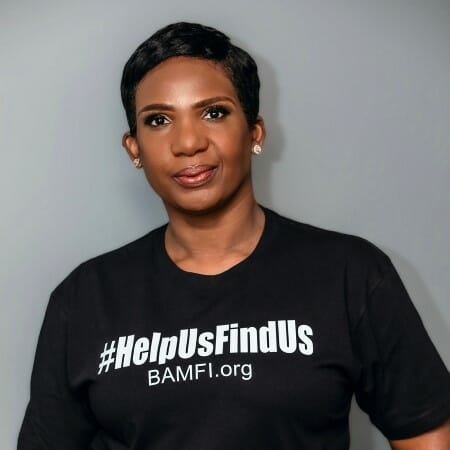
Natalie Wilson co-founded Black & Missing Foundation, Inc (BAMFI) to bring awareness to missing persons of color, provide vital resources and tools to the families and friends of the missing, and educate the minority community on personal safety./Courtesy Natalie Wilson
The help she is providing in these desperate situations has impacted thousands of families across the country, BAMFI bringing closure to close to 400 cases thus far, according to Natalie.
“There was a mother searching for her daughter and she had nowhere to go. We were able to get her on a national program, ABC’s “The View”. Within 14 minutes of the segment airing, we received a tip that her daughter was found. That shows the magnitude of national media coverage. It was a huge win not only for the organization, but for the mother and the families we serve. By getting [her] that national media coverage, they were able to get their daughter home. That’s what we’re trying to provide to thousands of families, answers or closures as to what happened to their missing loved one.”
Through her service, Natalie, who also serves as chief operating officer for BAMFI, is embracing responsibility to confront the issue across often underprivileged populations, the media and law enforcement.
“7% of missing persons of color receive media coverage and we’re trying to change that number. Awareness is key. If our community isn’t aware then they’re not looking for the individual. When the case gets visibility and media, it adds pressure to law enforcement too. By serving as a publicist for these families who wouldn’t get media coverage at all, I’m using my experience and my expertise to help our missing become household names too. We don’t want race to be a barrier for people to getting equal media coverage or treatment under the law.”
Developing relationships with family and friends of missing individuals, Natalie has become a trusted advocate, says Ni’cola Mitchell, whose goddaughter, Jade Morris, was kidnapped and murdered in 2012. When Natalie stepped in to help the family, Jade’s mother had been blown off by the media and police, says Ni’cola.
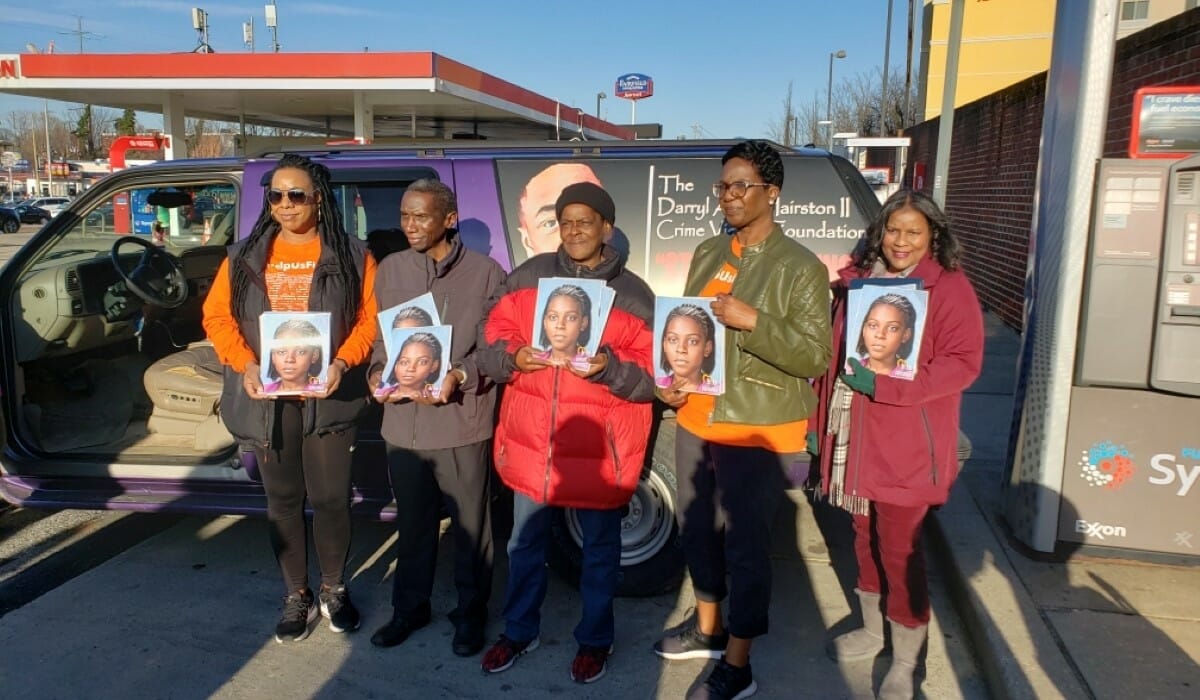
BAMFI founders and board member attend a candlelight vigil for Relisha Rudd missing from Washington, D.C./Courtesy Natalie Wilson
“[Jade] was murdered but Natalie did make an impact, because they weren’t even looking for her. When she made it on the national news, we had search parties going on,” says Ni’cola. “I still believe if Natalie didn’t do her due diligence, they wouldn’t have found [Jade] because she wasn’t important to look for. The police and everybody blew the mom off. They oversexualize and criminalize our children all the time, but Natalie makes people, no matter what their circumstances, feel like they’re human. That’s a God-given right but everybody don’t give us that. No matter what their circumstances are, be human.”
Change is happening because of BAMFI, says Natalie, including an outpouring of work from around the community, traction from the media, and police examining and questioning how they can do a better job when it comes to missing persons of color cases. Meanwhile, Natalie’s persistence in raising awareness continues, using events like BAMFI’s Hope Without Boundaries 5K to honor missing individuals and provide funding for families of the missing, flyer distribution, financial support, victim recovery, and burial service assistance.
“The world needs [volunteers] now more than ever. There are so many people that need help or resources and you don’t even have to give in a big way. You can give of your time, financial donations, just sit and listen, whatever it is. It’s so important to help someone that may feel isolated or alone, to know that the world cares, someone cares, and understands what they’re going through.”
Volunteer Firefighter Serves New York Suburb for 15 Years and Counting
Meet Daily Point of Light Award honoree Chris Zelenka. Read his story and nominate an outstanding volunteer or family as a Point of Light.
While watching the events of 9/11 unfold when he was 10 years old, Chris Zelenka begged his mother to allow him to travel into the city from their New York suburb so he could help the countless first responders he saw on TV. Seeing so many people working together that day is what sparked his passion for serving others, and led him to join the South Spring Valley Fire Department when he was 16.
Fifteen years after becoming a volunteer firefighter, Chris is still tirelessly serving his Rockland County, New York community. Along with his firefighting duties, he serves as the department’s financial secretary and co-lead of their fundraising committee. His service hasn’t stopped there — over the past several years, he has worked with a wide range of nonprofits, from Wreaths Across America to Special Olympics, Habitat for Humanity, and Advancing Opportunities. Chris also actively gathers and donates office materials and school supplies for Spring Valley High School and the Bergen County LGBTQ+ Alliance.
Describe your volunteer role with the South Spring Valley Fire Department.
I’m an interior fireman, which means I’m a certified first responder, and I can go into buildings and work outside as well. I am also on the fundraising committee and I am the financial secretary.
What inspired you to become a volunteer firefighter?
I would say my parents, grandparents, uncles, aunts, my community and my neighborhood made me feel like you should look out for your neighbor and get involved in the community. I think the major thing that got me into the fire industry would be 9/11. I was 10 years old at the time. I was born in Queens, had a lot of family in the city, and my father worked in the city, so we have a lot of ties there. I live in Rockland County, which is a suburb of New York. Seeing how the fire, EMS, the police, the MTA, the sandhogs and all these people came together really made me want to do something. I’m seeing this happening and I see all these volunteers going down there, and I actually cried and begged my mother to allow me to go down there and help. My brother at the time was 17 and he was in the fire department already, and he had been telling me how certain people were going down there to work. It really made me want to get involved.
Chris Zelenka utilizes multiple volunteer opportunities through his employer KPMG./Courtesy Chris Zelenka
What drives you to volunteer in so many different ways beyond firefighting?
I’ve realized as I’ve aged that I’m blessed and privileged to be physically, mentally and monetarily able to give back. That could turn around the other way one day and I might need help. The way I see it, you give what you get. That’s what keeps me going. Even at the company I work for, KPMG, there’s so many good people doing great things. There’s so many organizations we are involved with. When you meet those people [at these organizations] and hear their stories and see how much they work — and often underpaid when they’re in these organizations — there are just fantastic people. When you work with them and see what drives them, and see how busy they are but how much they’ll give time to you to talk about what you can do and how you can help, it’s inspiring. If everyone does a little bit, the world can be a lot better place.
What led you to start donating items to Spring Valley High School and Bergen County LGBTQ+ Alliance?
When [KPMG] employees retire or leave the firm, their laptop bags would often be disposed of. Particularly back in the day when there was less traveling for some folks, a lot of the laptop bags were brand new and still had the cellophane wrappings. I looked it up and realized they were $60-100. I graduated from Spring Valley High School, and I know there’s a lot of underprivileged folks there — a lot of people trying to get to college and make the best of their life. I wanted to give back to a place I knew. I ended up working with some of the leaders in my [KPMG] campus at Montvale and they gave me approval. I vet the bags to make sure they’re clean and sufficient. I would bring them over to my [Spring Valley High School] contact … and she would give those out at college fairs. I was just trying to help.
With the Bergen County LGBTQ+ Alliance, they were in need of some items because they moved into a new place. I was working with a Pride Business Resource Group that requested those items, we were able to get them items they could use, like binders and desk organizers. With Spring Valley High School, I’ve donated items from rulers to pens, folders, anything the kids could use.
Do you have any future partnerships, programs, or events you want people to know about?
I recently just did a food packing and distribution event for St. Joseph Social Service Center. They are in Elizabeth, N.J. if anyone wants to go out there. We had a terrific experience. We brought our African American Business Resource Group and Hispanic Latino Business Resource Group. Several times a week, they have clients, or New Jersey residents who are homeless or low-income, come and get groceries that are donated from local places. There’s another part of it where you help separate food items, which then go into bags, which are then distributed to their clients throughout the weeks and months. The people there are amazing, both the clients and the workers, and it was a terrific experience.
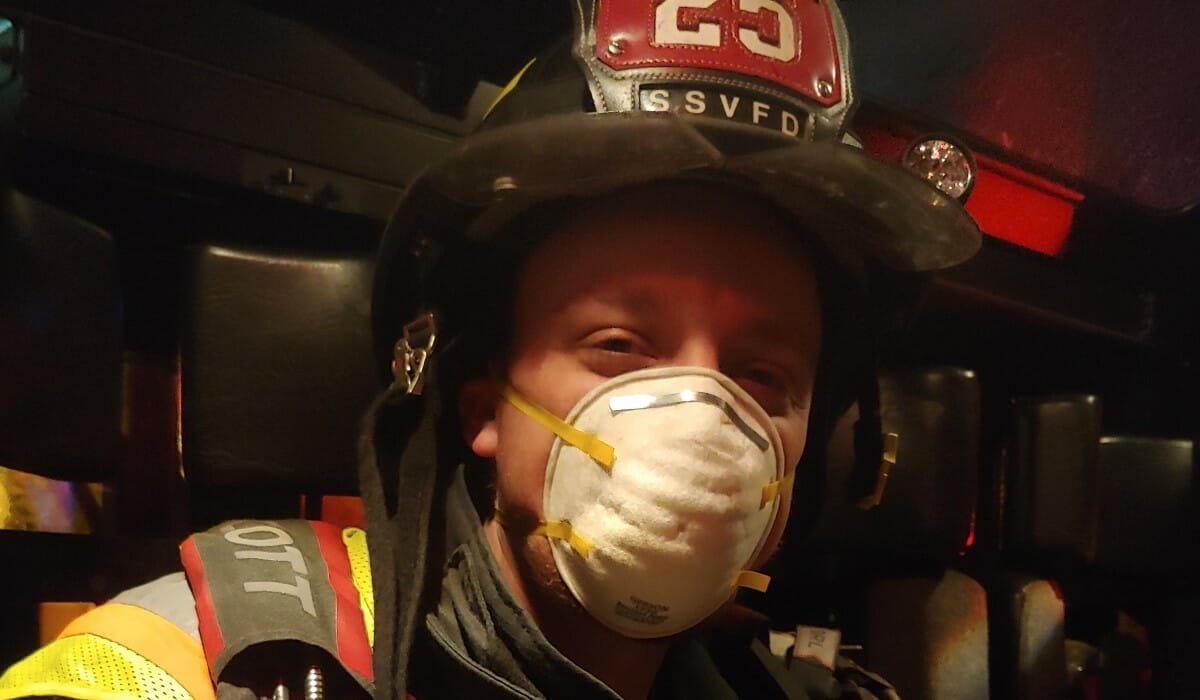
Chris Zelenka serves the South Spring Valley Fire Department, a volunteer role he has held for 15 years./Courtesy Chris Zelenka
What’s been the most rewarding part of your work?
I think it’s dealing with people. From a firefighting perspective, when you’re helping people, most of the calls we go to are false alarms or minor incidents. But no matter how big or small, keeping people at ease, seeing that they’re looking to you and you can help the situation — not always solve, but can help the situation — it feels good to do that. Organizations like the Special Olympics, where you get to work with the athletes and their parents and caregivers, and you see that energy, that’s the best part. They hug you and care and are appreciative of your work, no matter what you do. Organizations like Wreaths Across America, you get to go lay wreaths during the holidays at cemeteries for fallen soldiers, and you meet family members of the person who is lost. … That’s really the most satisfying thing, to say I was even involved with any of those fantastic groups.
What do you want people to learn from your story?
Do what you can. That’s the biggest thing. That could be a donation once in awhile. That could be giving blood. Obviously more is great, but I think sometimes people think they have to do so much. You can do little things and really make a big change, and it plays a bigger role into the grander scheme of things.