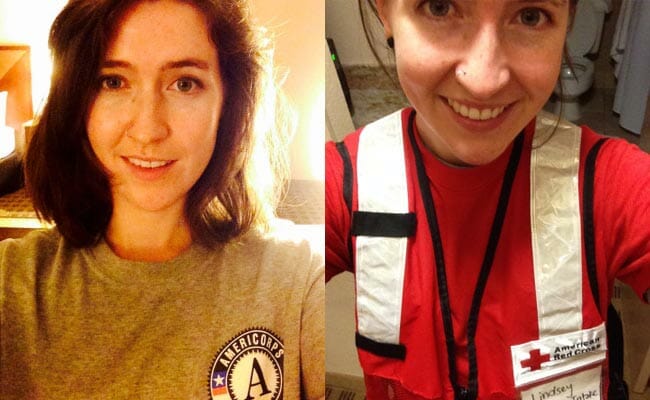
As Hurricane Harvey moved across Texas, causing massive flooding and damage, AmeriCorps Alums partnered with the American Red Cross to mobilize skills-based volunteers from the organization’s national service alumni network – specifically those who have served with FEMA Corps or NCCC, had experience with disaster response, and who could travel to Texas to assist with immediate recovery. Volunteers, like AmeriCorps alum Lindsey Earl, quickly responded and helped provide on-the-ground support in Houston.
Lindsey arrived in Houston on Aug. 19 to begin an internship with local nonprofit
at Illinois State University. She had heard news coverage of an impending hurricane heading her way, but could have never anticipated the scope of what was to occur.
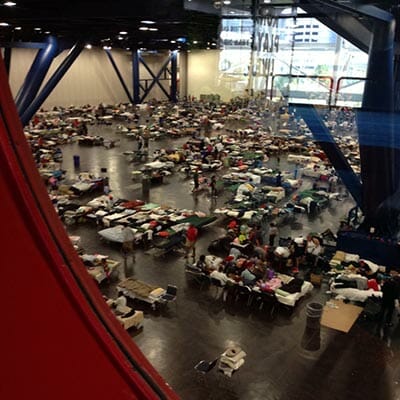
Exactly one week later, as Hurricane Harvey tore through Lindsey’s new community, she answered a phone call in the hotel where she was taking refuge. The Red Cross needed her help. Lindsey arrived at the local Red Cross headquarters and was asked to use the skills she had gained in AmeriCorps to support many tasks required in the response and recovery effort. Initially, she oriented incoming staff and created a resource guide for flood victims. Within several days, she moved to the George R. Brown Convention Center emergency shelter to conduct volunteer intake, where at times she was the sole manager as more than 6,000 volunteers streamed in.
Lindsey recently returned to her internship at Change Happens, where she will lead disaster recovery operations for the organization. She shared, “I’ve become extremely connected to the city of Houston. I truly can see the beauty in it. So many people poured in to assist those in need. It was phenomenal to watch people so eager and willing to help their neighbors.” No matter what comes next, Lindsey will continue to get things done, building upon her
A 60-second scroll on any digital device reveals the clutter of cynicism and spurious claims that we must constantly fight through to find stories about the light of humanity. But, that doesn’t stop us from constantly searching for those inspiring stories. And beyond being inspired, we’re constantly searching for swift and practical ways to work with others – friends, family, neighbors, coworkers – to do good.
In my first few days of joining the Points of Light team, Hurricane Harvey’s devastation was still unfolding along the Gulf Coast of Texas and Louisiana. What an introduction to this powerful organization. Points of Light’s
was supporting national first responders like FEMA and the American Red Cross, and coordinating the efforts of our local affiliates. Those affiliates quickly set up a virtual volunteer reception center, where people could sign up to become volunteers and nonprofits could request volunteer support. By the time the brick-and-mortar volunteer reception center was open, tens of thousands of people had signed up. We are now working with our affiliates to manage, train, and deploy those who raised their hands to help. Hurricane Harvey is only a snapshot of the work ahead for our disaster services team. The recovery and rebuilding efforts after Hurricanes Harvey, Irma and Maria will continue for years, and will only be successful with the support of volunteers.
The month of September has been chock-full of inspiration alongside stark demonstrations of the impact of volunteers. During the
, Points of Light called on its community of changemakers to act to improve the lives of military caregivers, hidden heroes who serve in a role that receives little recognition, through home beautification and revitalization projects. At an annual Points of Light board of directors meeting this month, we had the privilege of recognizing Daily Point of Light honorees in person. In commemoration of 9/11 Day and for her tireless work advocating for and supporting military caregivers, Joey Caswell was honored as
for their volunteer efforts at a senior center – three years and counting – in which they are nurturing friendships and finding something even more rewarding than they could have imagined.
Joey, Juli, Colby and Jason exemplify what it means to find that light within. They are representative of the tens of thousands who raised their hands to help in the aftermath of disaster. They are an inspiration and their efforts define swift and practical action for the good of others.
Inspiration. Swift and practical action for the good of others. These are just a few of the things that fuel my excitement about being the incoming CEO at Points of Light. I am also humbled by the opportunity to carry forward President George H.W. Bush’s bold vision and legacy of inspiring humanity to be the light, to work together, solve big problems, demonstrate impact and be our best. This light lives within me.
As my journey with Points of Light begins, I cannot wait to find more and better ways to ensure that the stories you see when you pick up your digital device to scroll through your feeds inspire you. And, once you’re inspired by those stories, Points of Light will have the tools to equip you to act, to be your best and help change the world.
The Critical Role of Volunteers in Hurricane-Affected Communities
On Oct. 29, 2012, vast numbers of Long Island communities suffered overwhelming devastation as Superstorm Sandy truly brought the region to its knees. But out of that loss and despair came hope, as neighbors helped neighbors, and local organizations and volunteers stepped up to assist with the immediate response and to embark on the long road to recovery.
“If I had to pick my one word for the response, it would be
community
, how we unselfishly came together to help those in deep distress by pooling our strength and sharing the work and the responsibility,” said Diana O’Neill, executive director of the
, a Points of Light affiliate. “I have never witnessed or experienced anything like it — manifestations of true camaraderie and genuine human-kindness. It was the greatest privilege of my life to have a front row seat at our Volunteer Recovery Center, seeing the myriad organizations easing human suffering together on such a grand scale.”
As other communities face the aftermath of devastating storms, Diana shares her reflections on recovery and how volunteers can help in disaster-affected areas today.
How did Superstorm Sandy impact your organization?
Being involved in such essential disaster work was made possible by public/private partnerships which gave us a roof over our heads, lift to our programming, and full logistics support for disaster groups. We were an all-volunteer organization and did not have in-house disaster expertise. As part of the
, the Long Island Volunteer Center opened the Volunteer Recovery Center in donated former office and warehouse space of Sleepy’s in 2012 and operated it through 2013 with the assistance of AmeriCorps St. Louis ERT and the Points of Light network disaster response team, which supported us with help from Boston Cares, North Dallas Volunteer Center, Volunteer Fairfax, Howard County Volunteer Center, Western New York Volunteer Center, Hands On Atlanta, and New York Cares. Also funding via American Red Cross, Major League Baseball Players Trust, Bessemer Trust, GE Foundation, The Nunn Family Foundation, and Allstate Foundation was secured through Points of Light. We are forever in their debt. I cannot speak more highly of the dedication and professionalism of the LIVC disaster team, which was assembled along the way and who led by example — such gifted professionals paved the way for a coordinated response.
What role did volunteers play in supporting Long Island and your organization after Superstorm Sandy, both in the immediate response and long-term recovery?
In the volunteer industry, being invited to the human condition is a gift, the most noble of causes. And those of us who responded to the call to action from Superstorm Sandy will never be the same. The VRC became more than a facility, it also was the symbol of recovery for the region. It was hard and dirty work that could have easily overwhelmed but the indomitable spirit of the volunteers and the resiliency of those they served inspired and informed all efforts.
Volunteers led the way supporting the immediate response with food/water distribution, staffing human and pet shelters, assisting with family support and household needs like debris removal and clean-up, environmental clean-ups and mitigation projects, and then full-scale hands-on rebuilding efforts. In the end, 51,662 volunteers served 521,829 hours from November 2012 through June 2016.*
We have endured as a region, with neighborliness and shared kindnesses enduring as well. Some of those helped along the way have expressed their gratitude but just the knowledge that lives have been lifted up is thanks enough since, as we know, volunteering is its own reward. Each person touched in the process certainly brought out the best in each of us.
What do you wish volunteers who want to support communities impacted by Hurricane Harvey, Irma and Maria knew?
Volunteers need to be patient and wait until official announcements are made about volunteering and donations so that the regions won’t be overwhelmed. Please resist holding donation drives unless there has been a stated need in the affected community and a designated place to send the items to avoid waste and not over-extend community resources. Disaster groups need time to become ready to receive both supplies and volunteers, in order to put them to work with proper supervision, instruction, and personal protective equipment to ensure safety.
What are some lessons learned, for your organization, and advice for other volunteer management organizations who face similar situations?
Prepare before disaster strikes. All organizations need to invest in creating for themselves a Continuity of Operations Plan to be at the ready to roll out in the event of a disaster. Participation in VOAD is necessary to ensure cooperative efforts of community-based organizations and disaster groups that come on scene, and coordination with local government/OEM/FEMA.
Volunteers need to be kept informed on a regular basis and have disaster trainings offered as appropriate to keep them engaged. Different permits need to be researched before disaster groups can do their work. A warehouse or large storage area is helpful to support the volunteer recovery efforts. Aligning partner organizations to the volunteer online platform pre-disaster is a good way to get things organized and running in the immediate aftermath to meet recruitment/referral needs.
As we approach the 5th anniversary of Superstorm Sandy, I just want to share that we all need to have faith in the process, love in our hearts, and always keep hope at the forefront of any thought and planned activity.
*Based on 166 organizations that reported volunteer activity supporting Sandy relief, recovery, and rebuild efforts.
How the Service Enterprise Initiative Drives Nonprofit Capacity Building
By Karen Baker, Chief Service Officer, CaliforniaVolunteers
Nearly a decade ago, we noticed a troubling trend in California: one out of every three volunteers was leaving their service site within the first six months of their experience. Simply put, California nonprofits were not providing solid recruitment, on-boarding, training and recognition of volunteers. Simultaneously, volunteer centers that had this knowledge lacked the investment dollars needed to put together a business model that would allow them to assist nonprofits in their markets for a reasonable fee.
At Points of Light’s Conference on Volunteering and Service in 2009, companies, volunteer centers, service commissions and nonprofits learned about new research reported from the TCC Group confirming that only 15 percent of nonprofits were operating as “Service Enterprises.” These were organizations that engaged volunteers, and which outperformed their peers in every measure of organizational capacity, including leadership, management, adaptive and technical capacities. At the same time, the Corporation for National and Community Service happened to announce a new grant opportunity, the Volunteer Generation Fund, which could potentially put these seemingly disconnected developments together into one grand idea by providing the funding needed for nonprofits to create a business model to scale Service Enterprises.
It was the perfect storm. By bringing together four leading volunteer centers — OneOC, The Volunteer Center Serving San Francisco and San Mateo Counties, HandsOn Central California and The Center for Volunteer and Nonprofit Leadership — CaliforniaVoluteers was able to provide the resources needed to create the Service Enterprise curriculum. The program now had a strong foundation, but wasn’t national. In 2012, Points of Light joined the initiative to further develop and scale the program.
Today, the Service Enterprise Initiative is a national program that helps organizations transform the way they engage human capital for social good. Through an assessment, training, coaching and certification model, selected nonprofits are equipped with the tools and technical assistance needed to transform their operations to better meet their missions. In fact, research shows that Service Enterprises are just as effective as their peers — yet they operate at almost half the average annual budget. For every $1 they invest in effective volunteer engagement, Service Enterprises can also expect $3-$6 in return through more effective program delivery. More than 300 nonprofits across the country have become certified Service Enterprises, joining a growing movement of organizations dedicated to meeting their missions more effectively using the power of volunteers.
This is true for Connolly Ranch, a nonprofit in Napa, California, that connects children and family to nature through farm-based education to inspire the next generation of environmental stewards. By becoming a certified Service Enterprise, “our leadership and staff has learned … that our return on volunteer investment was $4 for every $1 invested! This allows us to maximize what our community contributes to our organization and helps us better achieve our mission,” said Jennifer Fotherby, executive director at Connolly Ranch.
Habitat for Humanity in Fresno has also transformed the way it engages volunteers through the Service Enterprise Initiative. Now, volunteers are key to the success of the organization’s core mission to provide affordable housing. They are integrated into operational areas like fund development, and drive critical parts of Habitat’s programming, including their Neighborhood Revitalization and ReStores programs. This has helped shape a culture of volunteering at the organization. “When I think of the Service Enterprise Initiative,” said Matthew Grundy, CEO of Habitat for Humanity in Fresno. “I think of two words: investment and focus. It was an investment to participate in SEI that focused our efforts to build on our solid foundation, making sure our organizational culture embraced volunteers 2.0. Service Enterprise asked the right questions and we have experienced significant impact in moving our organization forward.”
For CaliforniaVolunteers, our proudest moment over the years was recognizing that not only was the Service Enterprise Initiative going to happen, but that it played to everyone’s strengths. We knew that the volunteer centers in California had the know-how, that researchers – such as Sarah Jane Rehnborg and Peter York – had the wisdom to develop a diagnostic tool, and that Points of Light was the right player to ensure credible national expansion. Our role was to put the deal together and get out of the way, and the rest is history.
The Service Enterprise Initiative today stands as a powerful tool to build nonprofit’s organizational capacity and is a resource they can use to help them better engage volunteers. Last year, more than 80 percent of Service Enterprises reported an increase in both volunteers and skills-based volunteers, which represents an additional 207,000 volunteers and 31,000 skills-based volunteers helping nonprofits and communities. And California? Far from being a laggard in volunteer engagement, the nonprofit sector in California now leads the national Service Enterprise movement and is on the cutting edge of innovative volunteer service models.
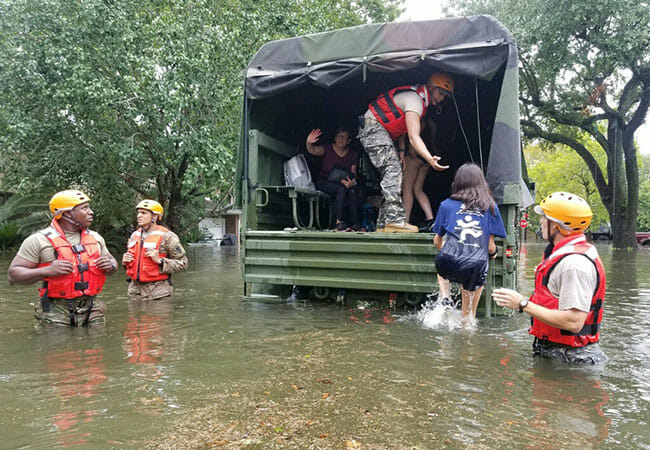
Texas National Guard soldiers arrive in Houston to aid citizens in heavily flooded areas from the storms of Hurricane Harvey.
Hurricane Harvey is the first Category 4 storm to strike the United States since Hurricane Charley in 2004, and the first major hurricane since the record-breaking 2005 Atlantic hurricane season, which saw such devastating storms as Katrina and Wilma. The slow-moving system is virtually unprecedented, forecasted to maintain tropical storm strength for five days as it moves along the Texas coast. While Harvey’s winds have weakened following landfall on Friday night, catastrophic flooding and life-threatening hazards continue to arise. In this current situation, with tropical storm Harvey still producing a lot of rain over the Gulf Coast, safety is our top concern. At this time, it is critical that people who want to volunteer, especially those outside of the immediate area, do not self-deploy.
Points of Light is currently supporting first responder organizations, like FEMA and the American Red Cross, connecting with Voluntary Organizations Active in Disaster chapters across the United States to assess the situation, and coordinating with our affiliates and partner organizations in the affected areas. All disasters are local; the members of the Points of Light HandsOn network are the local experts in volunteer management, and are often the lead organization in managing spontaneous unaffiliated volunteers throughout the response and recovery effort.
Texas is still in response mode and, until the storm has stopped, we will not have a clear sense of the damage or when it will be safe to begin recovery efforts. If you would like to support the recovery effort, here’s what you can do now to help:
Please don’t:
Don’t self-deploy at this time. The situation is still critical, highways and secondary roads are underwater, and travel is extremely difficult or unsafe throughout much of the affected area.
Don’t bring supplies or donations to fire stations, police departments, etc. First responders need to focus on immediate needs and emergency situations.
Please do:
Make a donation to help Points of Light and our affiliates support the mobilization of volunteers in ongoing response and recovery efforts.
If you are in the Houston area, volunteers are encouraged to contact Volunteer Houston, a Points of Light HandsOn Network affiliate, for opportunities to get involved. Nonprofits requesting assistance from volunteers can register their needs with the Volunteer Houston Virtual Volunteer Reception Center.
It’s been remarkable as a Houstonian to see the uprising of benevolent, kind-hearted points of light in our community that are trying to help each other, neighbor helping neighbor…it’s amazing to see this community come together to help people in their greatest time of need.
Points of Light is communicating and coordinating a humanitarian response with our affiliates and corporate partners. As the storm dissipates and a more clear assessment of the crisis and need is available, we will provide updates on how to get involved.
For the latest, please sign up for Points of Light email news and announcements, follow us on Twitter and check out our updates on Facebook.
Mobilizing Corporate and Community Volunteers to Improve Veterans’ Lives, One Home Repair at a Time
Providing support for the men and women who have served in the armed forces is a priority for many social organizations across the United States. Among the critical needs being addressed by these groups, such as providing access to healthcare, education and employment, is the need to help veterans find and maintain safe, sustainable housing. HandsOn Greater Phoenix, a Points of Light affiliate, has stepped up to this challenge, leveraging the power of corporate partnerships and volunteers to have an impact on the local veteran community.
The organization has been serving the Phoenix metro area for almost 25 years, connecting volunteers with opportunities to serve where they are needed most. Founded as Make A Difference in 1993, the organization set out to meet critical community needs, with a special focus on creating opportunities for working people to serve.
“There were a group of busy professionals that just liked the idea of plugging into multiple issue areas and using groups of colleagues and friends and networks to do good things in the community,” said Rhonda Oliver, president and CEO of HandsOn Greater Phoenix.
After 15 years of rapid growth, the organization re-established itself as HandsOn Greater Phoenix in 2008. Today, it functions as a traditional volunteer center, engaging all types of volunteers in more than 60 high-impact, one-time community service projects each month. But, Rhonda said, corporate volunteers are still a centerpiece of their programming.
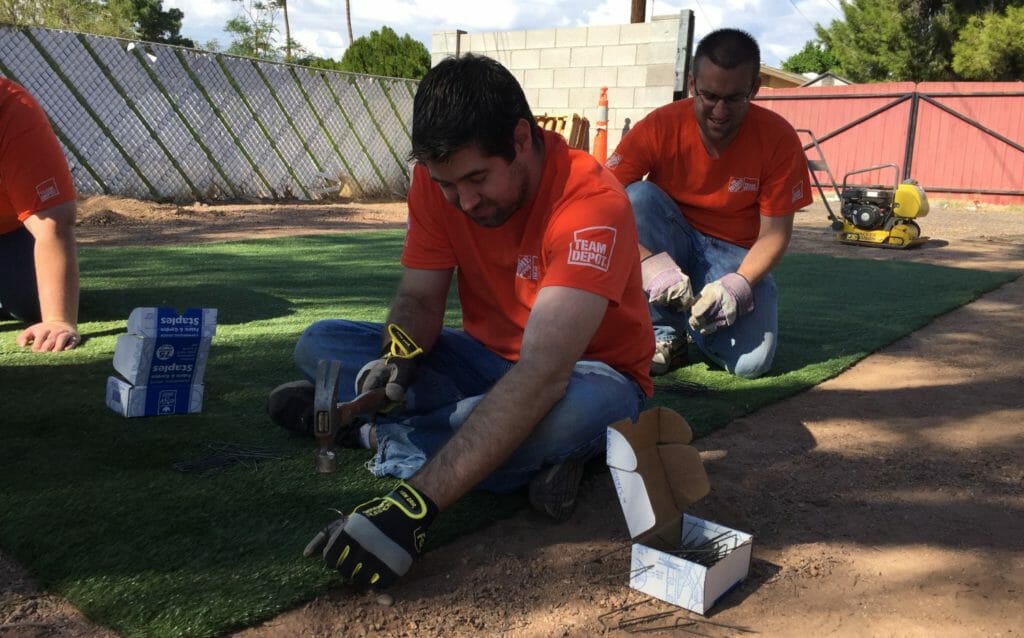
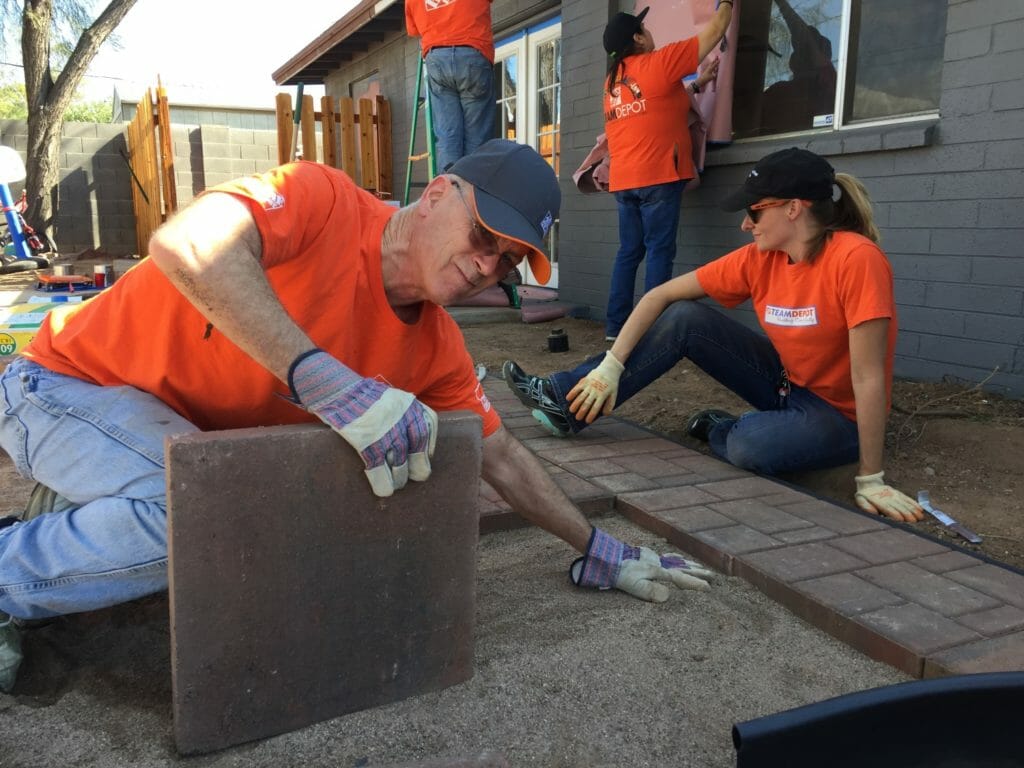
Through a long-standing partnership with Home Depot, HandsOn Greater Phoenix mobilizes teams of community and employee volunteers for its Veteran Home Improvement Program – supporting local veterans by providing needs-based home repairs and upgrades for weatherization, code violations or other modifications.
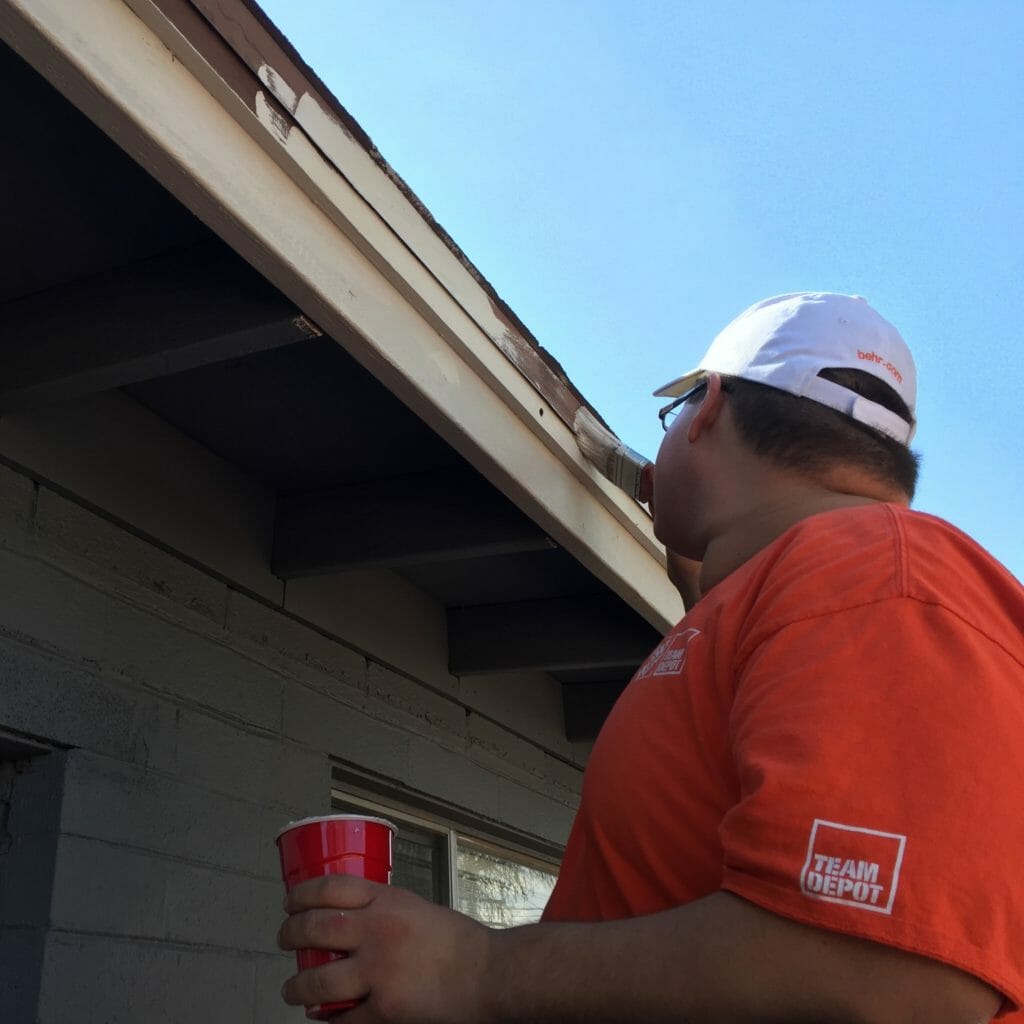
Four “Team Depot Captains” – representing the 39 Home Depot stores in the Greater Phoenix market – each conduct site visits, work with HandsOn Greater Phoenix to identify the improvements each home needs, and connect with local vendors that donate the necessary materials. Projects cover a range of activities, including painting, installing turf yards or even tree removal. Some of the most common projects are exterior paint jobs. HandsOn Greater Phoenix recruits community volunteers for these kinds of projects, as well as calling upon employee volunteers from other local businesses – among which, employees from companies like Wells Fargo, Intel and Cox are all regular contributors.
For more complex or large-scale projects, such as building ramps for disabled veterans, installing windows or walls, or other major modifications, Home Depot employees or volunteers from the vendor that donated the materials will offer up their time and skills to do the work.
“Some of our team captains have employees within their stores that have contracting-level experience,” said Steve Woodhams, a project manager at HandsOn Greater Phoenix. In one case, a Home Depot employee with experience as a contractor helped complete a renovation project that added a door in the shared wall between a veteran’s bedroom and her bathroom, giving her some added privacy as she prepared to welcome a foster child into her home. For projects like energy efficient window upgrades, where product warranties are important, employees from the window company often volunteer their time to complete the installation.
Veterans apply for the program through the HandsOn Greater Phoenix website, but they are also identified in a number of other ways, including through word of mouth and through the municipalities they live in, as cities and communities identify homes that are not up to code. The participating Home Depot stores will also identify veteran customers who would benefit from the program.
In addition to veterans, HandsOn Greater Phoenix programs support many causes. Through a youth mentorship program called Your Experience Counts, adults with daytime availability are put in classrooms to work alongside teachers and help ensure students’ academic success. The organization also has an AmeriCorps VISTA program that engages 19 VISTA members as volunteer or program coordinators serving with nonprofit partners across Phoenix, building infrastructure and providing the necessary tools for the nonprofits to more effectively manage their resources. Annual events like Serve-A-Thon, Make A Difference Day, Martin Luther King Jr. Day and 9/11 Week of Service and Remembrance also provide opportunities for volunteers to get involved.
This year for 9/11 Day of Service, HandsOn Phoenix is planning several projects, including a letter-writing campaign for active-duty service members and a curb address painting project to help first responders identify houses when answering emergency calls. The organization is also planning a veteran home makeover through the Veteran Home Improvement Program. Volunteers will help weatherize the home of WWII veteran Maxine and her daughter, who is her caretaker. The project, which is open to general volunteer sign-ups, will provide energy-efficiency updates and bring the exterior of the home up to city code compliance.
Since its founding, HandsOn Greater Phoenix has mobilized approximately 400,000 volunteers through its programs, events and initiatives. Its partnerships with both local companies and nonprofits make it one example of the many ways that Points of Light network affiliates are using local resources to meet community needs and putting volunteers to work where they are needed most.
Providing Opportunities for Central American Youth to Rise Above Violence and Unrest to Create Positive Change
A legacy of civil war and unrest has left the Central American region known as the Northern Triangle – El Salvador, Guatemala and Honduras – plagued with violence and fragile institutions. In fact, recent developments in Guatemala increasingly suggest the potential for a “Central American spring” as protestors, tired of corruption and violence, come forth to denounce their governments and demand accountability from leaders, according to the Council on Foreign Relations. In the meantime, the high rates of violence have caused many citizens, including youth, to flee their countries in search of a better life elsewhere.
The result has been a greater push by social organizations in these countries and bordering nations to support youth and, ideally, equip them to spark change and improve their communities – rather than leave them. Glasswing International is one such organization.
Glasswing International, a Points of Light affiliate founded in 2007, has helped more than 800,000 people through education, health, employment and entrepreneurship, community empowerment and other special initiatives. The organization has made it a priority to provide opportunities for young people to succeed. Over the last 10 years, an estimated 254,000 children have benefited from their education programs. The hope is that by providing kids with resources and opportunities, the youth they engage will grow to become leaders in their own communities, paying forward the support they received.
Founded in El Salvador, Glasswing has since expanded to have offices in seven other countries – Honduras, Guatemala, Costa Rica, the United States, the Dominican Republic, Nicaragua and Panama – and programs in a total of 16 countries. Glasswing uses an assets-based rather than needs-based approach, investing in a community’s existing strengths and resources – including its infrastructure and its people.
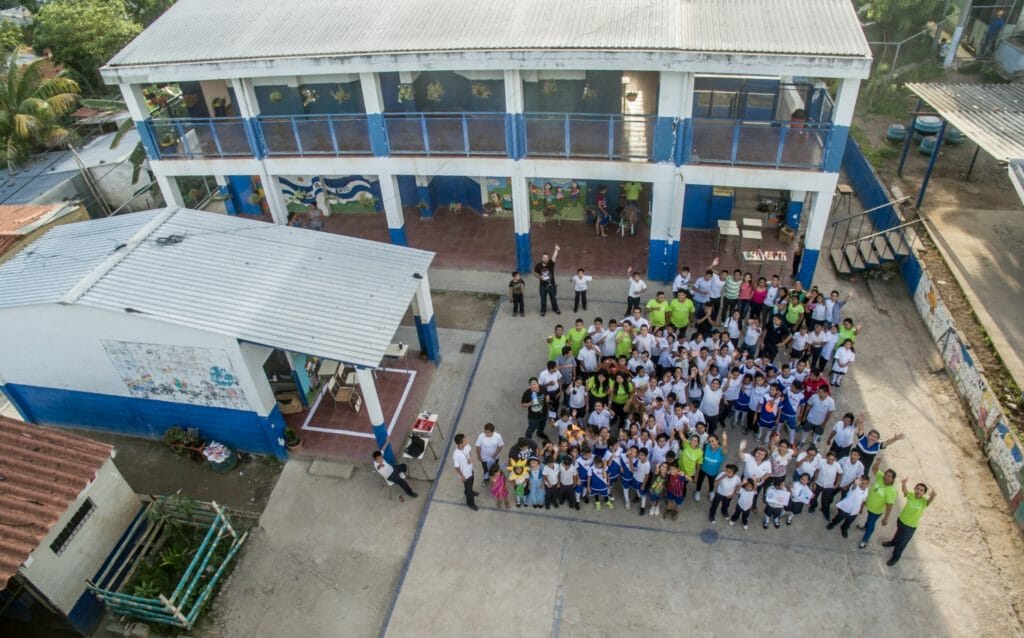
This approach can be seen in Glasswing’s Community Schools initiative, which aims to provide students with a supportive and enriching educational environment.
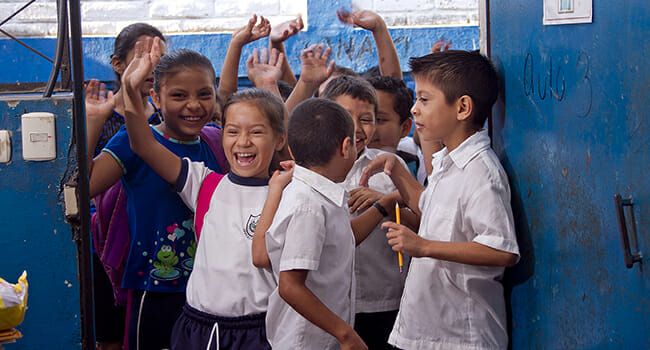
“We turn public schools into Community Schools,” said Ken Baker, CEO of Glasswing. “Kids in the region go to school for four hours a day and after that, the schools are empty. What we do is offer volunteer-led after-school programs to expand the school day, keeping children and youth off the streets, away from violence, and enabling them to thrive.”
Volunteers are central to operating these programs. Glasswing recruits volunteers from local businesses and organizations, as well as parents and other community members, to facilitate programs, spend time with students, expose them to new things, act as role models and encourage them to be involved in their school and their community. In addition to providing valuable support to the children, Community Schools also help build stronger communities by engaging citizens in the advancement of local youth and stressing the importance of education.
Following the assets-based model, Glasswing tailors these programs to meet the specific needs of each community. Youth are engaged not only as participants, but also as volunteers and peer leaders – and their experiences help inform the process.
“By encouraging young people’s participation in all aspects of our operating structure, we encourage sustainability and empower them to become more active members of their community,” said Alejandra Romero, regional communications fellow at Glasswing.
In the fall of 2016, Glasswing organized a two-day youth festival and concert with the goal of uniting youth from El Salvador, Honduras, Guatemala and Nicaragua, encouraging them to interact and engage with each other in a safe space and discover their power to create change. The youth festival and concert, called Generation Now, featured big-name artists like David Guetta as well as local artists and motivational speakers.
In conjunction with the festival, Glasswing also hosted a Regional Youth Forum to provide youth attending Gen Now an opportunity to connect and participate in discussions about leadership, perseverance, identity and a range of other social issues plaguing their countries. Through these discussions, youth identified ways to become part of the solution.
With a focus on having fun, Gen Now also provided an urban art space, where participants could practice artistic pursuits like DJing and break dancing that, in El Salvador, have traditionally been associated with malicious behavior or gang activity.
Alejandra explained that the concert provided youth with “a space to interact with each other – that is, a safe space where they don’t have to worry about the violence that, unfortunately, many of these kids face in the communities they live in.”
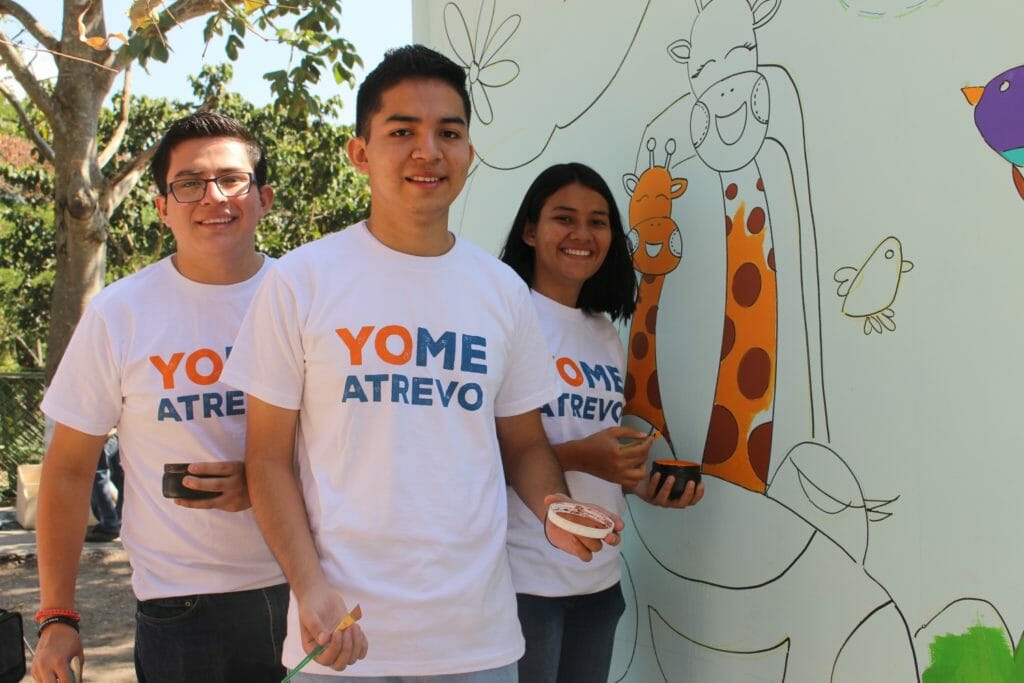
The whole event centered on the idea of “yo me atrevo,” meaning I dare to – according to Alejandra, the organization hopes to use this concept to turn Gen Now into a movement, something that youth are thinking about year-round.
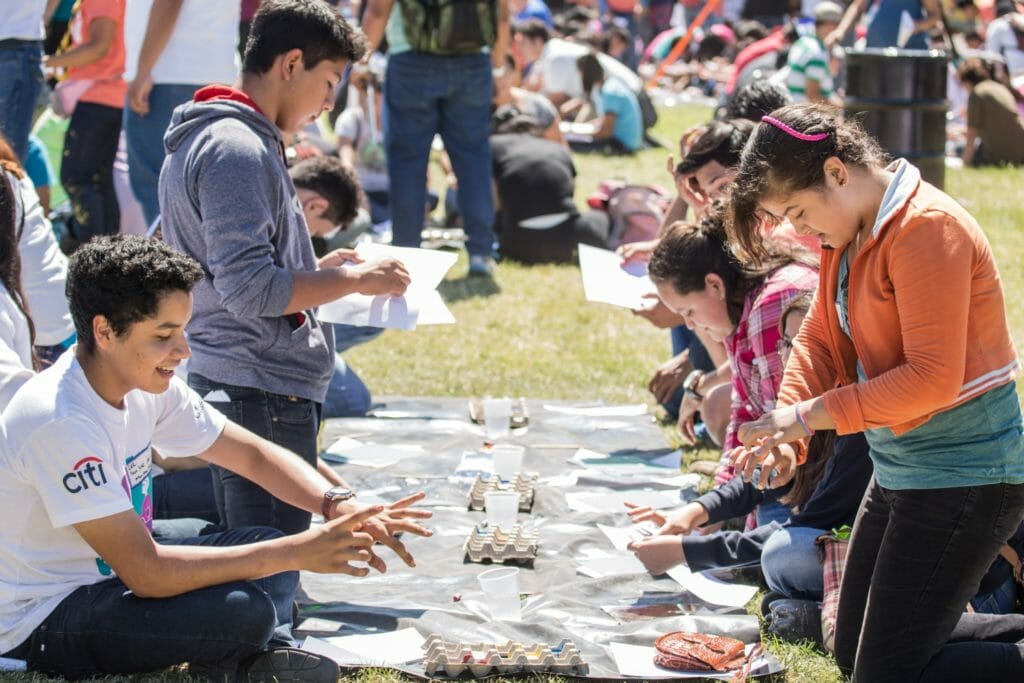
Five months after the Gen Now concert, Glasswing held its first Yo Me Atrevo Contest, which brought together groups of four to five youth to develop proposals for a project to improve their communities. With assistance from adult volunteers from their communities, more than 150 teams from Guatemala, Honduras and El Salvador submitted proposals to a panel of judges. In each country, the top three projects were awarded grants that ranged from $4,000 to $8,000 to help put their proposal into action.
The contest gave young changemakers the necessary tools to improve their communities and encouraged them to “dare” to make a difference. The winning proposal in El Salvador was the Centro Cultural Cristo Redentor – a project that will help improve an at-risk community by expanding the services provided by a community center dedicated to strengthening the arts, hosting sports and other engaging events, and fostering peace by creating a space where people can interact in a positive and meaningful way.
Through programs like these, Glasswing hopes to continue engaging youth and providing them with the resources to create change around them. And they have already seen some promising results – students who have graduated from their community schools program have returned as volunteers for their youth-focused programs and continue to come back school year after school year.
Volunteering Summer Camp Offers Hands-On Service, Leadership Experience to Bay Area Youth
Every summer, parents and high-school-aged students across the United States look for opportunities to help young people stay engaged and active throughout the season. Summer camps are a common solution, offering programs which are similarly structured to school, but with a more relaxed curriculum that allows for a wider array of learning opportunities.
, a leadership and volunteering day camp for high school students in the San Francisco Bay Area.
HandsOn Bay Area was founded through a merger between Hands On San Francisco and Community Impact – two organizations started by college students as a solution to help people interested in giving back locally find opportunities to do so. Since the 2004 merger, the organization has continued to grow and thrive with the goal of making volunteering a valuable resource to their community. Last year, HandsOn Bay Area engaged more than 20,000 volunteers in service across thousands of projects, in conjunction with 273 nonprofit partners in the Bay Area.
The organization enlists volunteers primarily through a community events calendar that lists more than 100 projects every month, giving individuals the opportunity to sign up for any number of low-commitment volunteer projects alone or with family or friends.
“It takes a lot of the fear out of it,” explained Lou Reda, executive director of HandsOn Bay Area. “All of them are done-in-a-day projects, so the commitment level is just for the project itself and then after that, you’re done.”
The organization has also responded to Bay Area companies looking for simple, low-commitment ways to get their employees involved in service to the community. Working with more than 50 companies of varying size, HandsOn Bay Area matches each with a nonprofit partner that fits the community goals of the company – such as hunger, homelessness, youth development or the environment. Then, they coordinate everything from project planning and supplies to logistics and providing project leadership.
Wanting to engage more young people in service, the organization launched the HandsOn Tomorrow program in 2015 to helps youth learn to be the change they wish to see in the world and to organize together to become community leaders in the Bay Area and beyond.
The annual summer program enlists several cohorts with a maximum of 20 volunteers each. Through the innovative
, Points of Light’s youth service division, the camp’s participants develop leadership skills through fun, hands-on activities, while also exploring and addressing specific challenges facing their communities.
Since the program started, HandsOn Tomorrow has engaged more than 50 youth volunteers. This year the camp is taking place at the end of July, and two of the three cohorts have already been filled.
During the two-week session, each cohort serves a different nonprofit every day. The mornings focus on hands-on leadership building activities, exposing youth to the background and mission of their host organization. After lunch, they get their hands dirty working on a project supporting that mission.
While the program allows youth to make a big difference in a short period of time, Lou explains that one of the most impactful parts of the program is the capstone project that takes place at the end of the two weeks.
“The biggest moments are when the youth lead their family and friends in volunteer activities during the capstone project,” said Lou. “They are the volunteer leaders of that project … and it’s just amazing to see how powerful it is for our youth to be in charge.”
In addition to earning 55 volunteer hours and gaining leadership skills, participants learn what it takes to make a difference in the community, and how to engage their peers, family and community in meaningful service and function in a team-based environment.
Every year, the youth who most excel in the HandsOn Tomorrow program are nominated by the camp leaders, and five are selected to join HandsOn Bay Area’s
service event – a mini-mural design project – to help beautify a local school.
Along with the opportunity to plan projects, members of the Youth Advisory Council get continued leadership advancement training, which in turn helps the organization build up its leadership pipeline.
“The plan is to move people along the leadership spectrum of engagement,” said Lou. “We’ve discovered it’s a pretty powerful program.”
How Higher Education Institutions Use Service to Develop 21st Century Citizens
examined the question of how colleges and universities can equip students to be 21st century citizens. Over the course of three sessions and a keynote presentation, speakers shared insights and concerns about how higher education institutions engage with broader society, provide opportunities for students to deepen their learning through volunteerism and service learning, and encourage interaction with people, cultures and views different from their own. The track, which was sponsored by
, brought together leaders from higher education, community intuitions and the private sector.
The first session, “Bridging Democratic Engagement and Service Learning Roundtable,” examined how institutions of higher education could encourage democratic engagement with service learning as a means to equip students with the necessary skills to prepare them to be active agents in their communities as well as strong members of the workforce.
Speakers from the University of Houston-Downtown, Tulane University and Colorado State University shared examples of programs and initiatives at their institutions. John Locke, a University of Houston-Downtown graduate talked about how he founded the
program on his campus to encourage college students to vote. The program has now grown to be a national model for student civic organization.
While the first session focused on examples from individual departments or programs, the second session invited college presidents to share their perspective on the role higher education plays in creating civic leaders.
One theme that emerged was that colleges and universities are seeing a resurgence and demand from students to offer volunteer and service learning opportunities connected to current political issues. For example, Dr. Bill Flores, provost, CEO and associate vice chancellor of Antioch University, and Dr. Otto Lee, president of Los Angeles Harbor Community College, shared that they have seen an increased interest from students in the politics of immigration and rights of undocumented students.
The third session, “Dialogue on Social Responsibility: How Corporations and Nonprofits Promote Social Responsibility and How Can Higher Ed Better Partner With Them,” brought together speakers from KeyBank, Starbucks and Youth Service America. The panelists shared how their organizations are partnering with higher education institutions to advance their philanthropic goals. Eric S. Brown, senior program officer for corporate philanthropy, at KeyBank shared that they believe we don’t have a single student to lose – their investments in education are about making sure every student gets an opportunity and succeeds in completing their education.
The day ended with a presentation by David Mathews of the Kettering Foundation. David startled the room by starting his speech, “We have a new challenge, our democracy is in trouble. Everyone in this room grew up with the assumption that you were going to live in a functioning democracy. There is a survey done by The Economist every year on the health of democracies in the world. The United States has fallen. Nobody would have ever believed that would happen, but it has. This trend has been developing for decades and nobody has paid any attention to it.”
David hypothesized that higher education is no longer seen as an agent of democracy, as a public good serving a public good, but simply as a vehicle for students to get high-paying careers. He challenged the room to rethink how colleges and universities equip students to be citizens and take home the lessons from the day to rethink their work.
Dr. Flores closed the track by reminding everyone of the important role they play and asking them to keep the conversation going. “We want to have an ongoing dialogue, not something that takes place one time, but something that we can build off of. We would like to work with you. You are the leaders and your community needs your leadership. It needs your discourse and engagement. This society, this country belong to us.”
Solutions for Community Resilience: Meeting the Urgent Needs
When government agencies, nonprofits and community changemakers focus on strengthening educational and economic advancement for youth and families, social equity and cultural expression, their collective action can lead to clear, measurable impact and sustainable long-term change.
Participants of the
learned about successful models that empower and equip everyday citizens to create healthy, vibrant, thriving communities, as well as best practices for engaging volunteers from across the community in consensus building and community organizing to tackle some of today’s toughest issues.
Citywide Volunteer Initiative Sparks Youth Interest In Careers
Local schools issued a challenge to 11 of the largest employers in Indianapolis: Open your doors so our kids can learn about the world of work and the skills they need to succeed. “Schools with 95 percent of their children living in poverty are a complex environment with complex issues,” said Joe Gramelspacher, special assistant to the superintendent of Indianapolis Public Schools. Fifteen months later, a broad cross-sector collaboration delivered an answer.
Workshop attendees learned how the
initiative – a team of businesses, educators, government agencies and nonprofits in Indianapolis – brought together 115 of the city’s employers, more than 3,000 volunteers, and 400 educators to build a two-day event to spark career inspiration for more than 7,000 eighth graders. Filled with hands-on learning experiences and demonstrations, the event presented on the types of jobs needed in the future for different industries, the skills needed and the pathways to acquiring them.
Whereas schools are primarily focused on closing the achievement gap, Jennifer Burk, president and CEO of Junior Achievement of Central Indiana, explained that, “JA JobSpark’s goal is to tackle the ‘exposure gap’ – the lack of opportunities for a student to see something that inspires them to consider what their future could look like.”
Engaging Veterans: The Second Mission
Veterans who served in the last decade represent less than half a percent of the total population, but their dedication to service and American democracy supports 100 percent of Americans. Jason Alves, program manager for the Washington State Department of Veterans Affairs, and Peter Schmidt, program coordinator for the Washington State Department of Veterans Affairs, led an engaging conversation around how we can access the strengths, skills and talents that exist in every service man and woman leaving our nation’s military. Workshop attendees discussed how it is crucial to evaluate situations from multiple perspectives when considering how a veteran’s experience and skill set can be used in a civilian volunteering opportunity. Jason and Peter also encouraged attendees to reframe post-traumatic stress as an opportunity for post-traumatic growth, as Jason explained it, “the experience of positive change resulting from the struggle with major life crisis.”
New Pathways to the American Dream for Youth
The path to college and career success is not always a straight one. More than 5 million youth are in need of new opportunities to participate in the labor market or continue school. Marcia Page, president and CEO of Education is Freedom, Terra Gay, senior vice president of programs at Points of Light, and Stephanie Lloyd, director of monitoring and evaluation at Points of Light, shared how volunteer service has provided opportunities for success for youth, as well as become an integral part of the solution in closing the opportunity gap via the
program.
A joint partnership between AmeriCorps, the Citi Foundation and Points of Light, ServiceWorks had a three-year charter, from 2014 to 2017, to provide 25,000 low-income youth scholars with the specific tools and platforms needed to increase their access to economic advancement through college and career success. “The idea isn’t to go and serve simply to fulfill a gap. It’s to help [opportunity youth] understand the need to serve as a volunteer so they can become the ones to teach it to their peers; it’s a building process,” Terra said. “ServiceWorks takes them through the process of elevating their thinking of how they are citizens within their own community and agents of change.”
In spring 2017,
, Lincoln Filene professor of citizenship and public Service and associate dean for research at Tufts University’s Jonathan M. Tisch College of Civic Life, conducted a review of ServiceWorks based on an assessment of program data and documents, plus interviews with participants and stakeholders.
Recent scholarship suggests a path to economic mobility lies in investing in low-income neighborhoods. Brian Humphreys, director of financial empowerment at South Sound Outreach; Megan Karch, CEO of FareStart; Catherine McConnell, vice president of advancement at Goodwill; and Kim Vu, senior vice president, Seattle market manager of enterprise business and community engagement at Bank of America, shared how community-level problem solvers, resident volunteers and local nonprofits can accelerate and sustain change by promoting financial empowerment while also re-imaging neighborhood community spaces to stabilize and, optimally, boost economic opportunity. “Where we are most successful are in the relationships that we build over time,” Megan said. “How we engage with volunteers is more in how they are establishing relationships and the appropriate boundaries with those that are being served.”