celebration honors individuals who have dedicated their lives to making a profound impact on their communities and the world. This year’s ceremony, set against the backdrop of what would have been President Bush’s 100th birthday year, carries an added layer of significance as it celebrates his enduring legacy.
The
are a diverse group representing a broad spectrum of causes – from addressing food insecurity and environmental concerns to supporting cancer patients and transforming the child welfare system. While their cause areas differ, they are united by an unwavering commitment to service. This two-part series highlights our honorees’ inspiring stories.
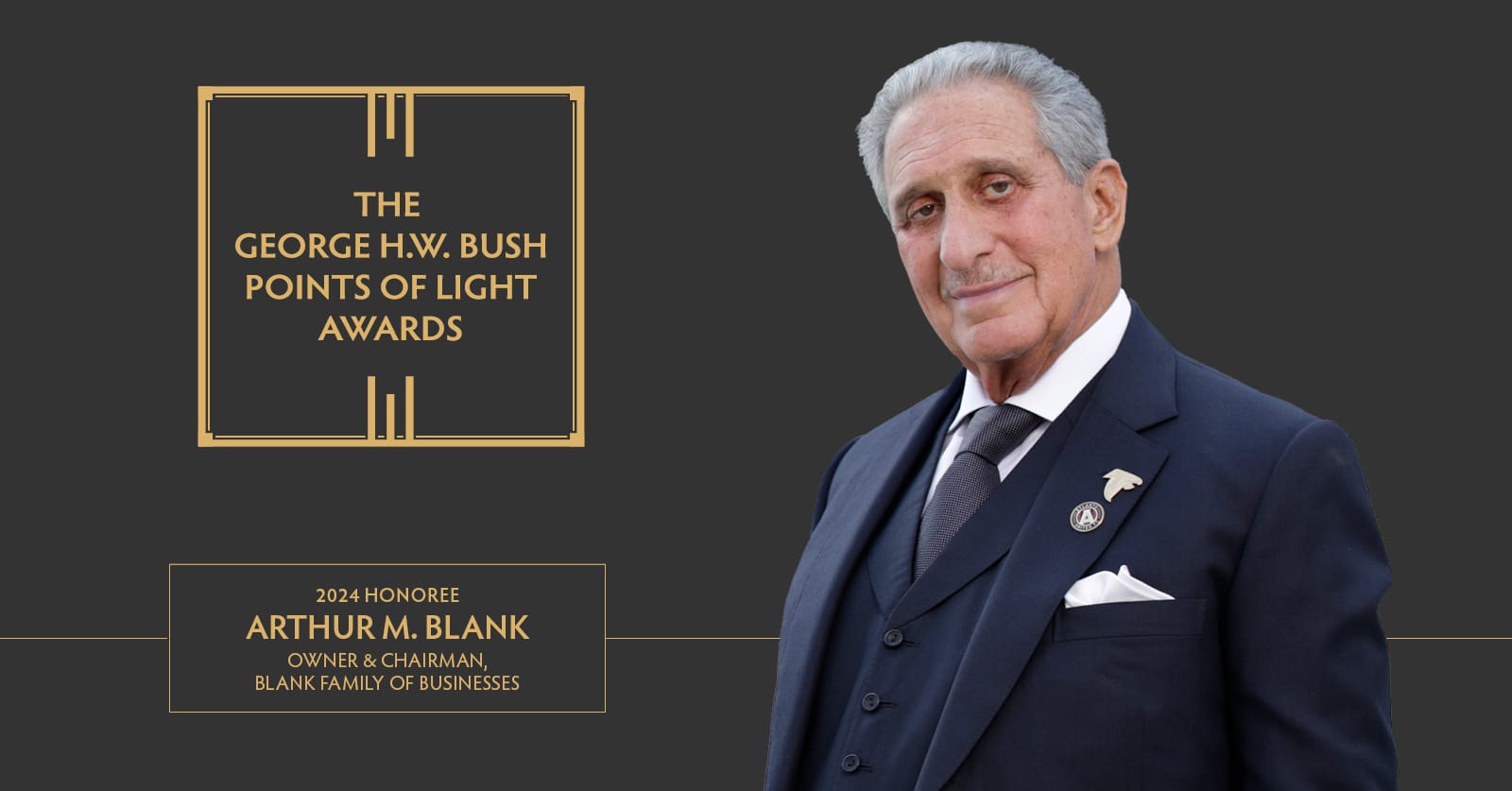
Arthur M. Blank: A Legacy of Community Involvement
embodies the belief that businesses should strive to make a positive impact alongside financial success. “Living life with purpose, whatever form that may be, is critical for all of us,” he said.
Getting involved in the community has been a pillar of Blank’s journey since his youth. His philanthropy was shaped by various influences, starting with his mother’s dedication to community service. Even with limited financial resources, she instilled in him the importance of touching lives and making a positive impact. “A lot of the notion of giving back and making a difference in other people’s lives probably came from my exposure to her,” Blank reflects.
He also credits role models and individuals who made a difference in the world as inspirations for his philanthropic endeavors. President George H.W. Bush’s “thousand points of light” concept resonates with Blank’s vision, as he believes that individual acts of kindness can collectively illuminate communities and create positive change.
The Blank Family Foundation focuses on several key areas: youth development, democracy, mental health and well-being, the environment, and Atlanta’s historic Westside. Blank recognizes the importance of long-term commitment to address societal issues, stating, “Most of these issues are not ones where you go in and fix it in ten minutes… It’ll take long-term commitments, often over several generations, to get resolved and to make significant progress.”
One of the foundation’s priorities is listening and responding to grantee partners and the communities they serve. Blank emphasizes the importance of capacity building, ensuring that grantees have the necessary tools and resources to multiply their impact. He values collaboration and active listening, seeking to understand the needs of the communities served by these organizations.
When asked about his proudest moments, Blank’s response is heartwarming: “What I’m most proud of is that my children, all six of them, all adults now, will want to spend time with their father.” This reflects his belief in the importance of family and the legacy he is building not only through philanthropy, but also through personal relationships.
Shrusti Amula: Turning Food Waste into a Feast of Hope
Shrusti Amula, a dynamic freshman at Georgetown University, embodies the spirit of a “solutionist.” At just 13 years old, she founded the
, driven by her passion for tackling food waste and insecurity. What began simply as a school project for a STEM competition transformed into a full-fledged organization that has diverted over 200,000 pounds of food waste from landfills and donated more than 300,000 meals to people facing hunger.
Amula shows the remarkable potential of young people to create lasting change. “One of the most important things I’ve learned is that no matter how young you are, you can always make a big change in your community as long as you’re willing to put in the work,” she shares, reflecting on her experiences. Her inspiration stemmed from a fervent desire to protect the environment. She recognized that food waste was a significant contributor to climate change and saw an opportunity to address both environmental and social issues simultaneously.
Through Rise N Shine, Amula has implemented composting programs in thirteen schools, educating students about the importance of reducing food waste and its positive impact on the environment. She also collaborates with the
to recover uneaten food from schools and donate it to individuals experiencing homelessness.
Amula’s commitment to finding solutions extends beyond community programs. She actively engaged in lobbying efforts for Senate Bill 124, a grant program for composting in Maryland schools. Through postcard campaigns, virtual testimonies and in-person meetings with legislators, Amula tirelessly advocated for the bill’s passage. Though funding for the bill remains a challenge, she remains dedicated to securing the necessary resources to support composting initiatives in schools. “I’ve learned that persistence is key and to not be discouraged by setbacks,” she said.
As Shrusti Amula continues to champion the fight against food waste and insecurity, her journey proves that even the youngest among us can spark change and build a better future for all. She states, “I’ve learned the value of being a solutionist – someone willing to work hard to ensure change – instead of just an activist.”
As recipients of The George H.W. Bush Points of Light Award, Arthur Blank and Shrusti Amula’s commitments to community and service shine brightly. Their legacies are ones of generosity, collaboration and a deep belief in the power of individuals to make a positive impact on the world. Points of Light is proud to honor them at The George H.W. Bush Points of Light Award celebration in Washington, D.C. at the Capital Hilton on October 23, 2024.
Ask a CSR Friend: Building a Board Service Program
Whether you’re a novice or a seasoned pro, we know it takes a village to create vibrant workplaces where employees are equipped to contribute to the communities and causes they care about. So, when you need a trusted advisor to lean on, rely on Points of Light to be Your CSR Friend. Each month, our experts share their wisdom and wit to address a specific but often universal challenge related to your work as a corporate social impact practitioner.
Have questions about employee community engagement? Submit your question and it may be featured in a future blog post.
Dear CSR Friend,
I work for a mid-sized business with a strong employee volunteer program. We offer lots of opportunities throughout the year ranging from on-site micro-volunteering to team-based school revitalization projects. I am positive we could get more investment from the company if we align and promote our opportunities using professional development outcomes, so I’m contemplating developing a board service program. We get plenty of requests from local nonprofits interested in tapping into support from our executives, however, I would want this new program to also be available to emerging leaders. Is that even possible? And if so, how do I get started?
Signed,
Board Curious in Boise
Dear Board Curious,
I love what you’re proposing! Gone are the days when nonprofit board service was reserved for the C-suite. Sure, execs bring business savvy and connections (and maybe even deep pockets if personal donations are expected), but the real magic happens when board service becomes more inclusive. By engaging a broader group, we generate fresh perspectives, foster innovation, and give nonprofits access to a wider range of skills and networks.
Nonprofits, frankly, can’t thrive without engaged board members. They provide:
Strategic Guidance: Helping shape long-term strategies and big decisions to ensure the nonprofit stays on track with its mission and achieving its goals.
Financial Oversight: Board members play a key role in budgeting, financial planning, and fundraising, which keeps the nonprofit solvent.
Leadership and Governance: Boards ensure ethical operations and legal compliance, holding leadership accountable and ensuring they have the resources and support needed to succeed.
Accountability and Sustainability: From managing risks to ensuring transparency, board members help keep nonprofits healthy, sound and around for the long haul.
Ambassadorship: They act as champions, advocating for the cause and raising visibility.
The reality in 2024? Nonprofits are struggling with recruitment, engagement, and diversity. The need for boards with broader representation and members with differing lived experiences and fresh perspectives is greater than ever. In fact, BoardSource’s report,
, tells us that nearly half (49%) of all nonprofit chief executives said that they did not have the right board members to “establish trust with the communities they serve.” Yet too many talented mid-level leaders shy away from board service because they think it’s a job for those with “Chief” in their title.
Why your company should care:
Creating a nonprofit board service program isn’t just good for nonprofits—it’s a win for your company too. When you offer board opportunities, employees sharpen leadership, governance, and strategic thinking skills, and they bring those skills back to work. It’s an untapped development tool that boosts employee engagement, strengthens community ties, and even helps with succession planning. Plus, employees who feel trusted and valued are more likely to stay—and stay motivated.
How to get started:
Align with CSR goals: Make sure the program complements your company’s values and culture, along with its social responsibility and professional development objectives.
Set clear goals and metrics: Define what success looks like—whether it’s leadership growth, nonprofit board diversity, or community impact.
Plan resources: Budget for training, event costs, internal and external outreach, and financial gifts tied to board roles. Will you match personal donations at the current rate or offer a pool for “first come, first served” board contributions?
Engage executive champions: Senior leaders can help drive awareness and support for the program and mentor participants.
Partner with nonprofits: Build relationships with local or national nonprofits that have vacant seats, starting with your grantees or those aligned with your company’s mission.
Select participants: Set your criteria and look for employees with passion and potential, not just titles. Diversity matters here.
Train well: Develop a curriculum on governance, finance, legal responsibilities, and fundraising. Consider real-world case studies and coaching.
Provide ongoing support: Offer resources and start an internal network for employees to share their board experiences and challenges. Determine how board service fits into your company’s volunteer time off policy.
Measure and adjust: Track progress and impact and use feedback – from employees and from nonprofits – to refine the program.
Celebrate successes: Highlight stories of impact to inspire others and showcase the value of board service.
By launching a nonprofit board service program, you’ll cultivate leaders, boost employee engagement, and make a real difference in the community—all while strengthening your company’s commitment to social impact.
One last note, I’d be remiss if I didn’t mention that nonprofit board service is a topic that is often mentioned by your peers when we convene them as part of Points of Light’s Corporate Service Council. In fact, we’ll be hosting a Council meeting on Oct. 16, 2024 on this very subject. I invite you to learn more about the
5 Ways to Make Disaster-Relief Donations Personal and Impactful
ID 319865667 @ Justlight | Dreamstime.com
When natural disasters strike, it can be overwhelming to think about how you can make a difference in disaster aid. For many people, there is a natural desire to do something substantial to help communities in need, but even the most ambitious recovery efforts and good intentions can go wrong in delicate environments. Some families, or even entire communities, lose everything after being hit by a devastating hurricane, super storm, flood, wildfire, landslide or tornado; we witness the stark reality of the word “disaster” come to life.
As the frequency and intensity of natural disasters increases, volunteer efforts must evolve. Clothing, food and stuffed animal donations can sometimes add to, rather than relieve, stress to a community. Instead of donating goods for disaster relief, experts and officials suggest that monetary donations have the greatest potential to address the specific needs of each person and community impacted.
Monetary donations are flexible and provide culturally beneficial support, and they can be used immediately in response to a crisis. Yet, we tend to view monetary donations as less impactful, less caring and compassionate. That’s not the case! Here are five ideas to make donations more personal.
Find Local Ways to Donate
Many reputable nonprofits and organizations, like those in
, are already working toward collecting and distributing funds in the area. Do some research to find trusted organizations using websites like Charity Navigator, GuideStar or
Corporations and organizations have immense potential to make an impact after a natural disaster. Check with your employer and ask if they are able to match funds donated by employees. Many companies have existing donation-matching programs already in place, and others are happy to set up such a program for specific circumstances. You can volunteer to be the campaign chairperson to get your colleagues involved.
Host a Disaster Relief Garage Sale
Do you have items that immediately come to mind for sending to disaster-affected areas? Instead of sending these items, sell them! Gather a few tables and advertise around your neighborhood for a disaster relief garage sale, then donate the proceeds to recovery efforts. Take it to the next level by organizing a community yard sale day, thus increasing the chances of multiplying your impact.
Use a Wish List
Many nonprofit organizations make Amazon wish lists for donors during a natural disaster. This tool allows you to fill in a specific and immediate need for a disaster-affected community. Browse the current wish lists, choose your items to purchase and encourage your neighbors, family and friends to do the same.
Think Long Term
Disaster recovery can take months or years in many communities. Think about the ways you can continue to support these communities over time as they continue to rebuild through a sustained giving plan to a local nonprofit.
10 Reasons Your Company Should Get Involved in Family Volunteer Day
, traditionally held on the Saturday before Thanksgiving in the U.S., offers a wonderful opportunity for families of all shapes and sizes to come together and make a positive impact in their communities. Each year, thousands of families use this day to teach valuable life lessons about compassion, empathy and the power of helping others while strengthening the bonds between each other and their communities.
The Benefits of Volunteering as a Family
Families contribute to their communities in various ways during Family Volunteer Day activities. Volunteering together provides a unique chance for kids, adults, and even aging parents to:
Make new friends and build social connections: Volunteering brings people together with shared goals, fostering new relationships and expanding social circles.
Develop compassion and empathy: Volunteering helps individuals understand different perspectives and develop a deeper sense of compassion for their neighbors.
Gain health benefits: Volunteering can reduce the effects of stress, anxiety and depression, while also improving physical health and cognitive abilities, particularly for older adults.
Learn new skills: Volunteering offers opportunities to learn new skills and develop existing ones, such as leadership, problem-solving and organization.
, communities are stronger and more resilient when youth participate. When they volunteer, young people gain:
New knowledge and skills
A sense of purpose and satisfaction
Stronger social networks
By actively addressing community challenges, young people realize they can truly make a difference and develop a lifelong commitment to service.
10 Reasons to Encourage Family Volunteering in the Workplace
If those proof points haven’t sold you yet, then consider 10 more. Providing opportunities through the workplace for families to volunteer together:
Supports employees’ work-life balance, which increases feelings of well-being and builds a positive attitude in the workplace.
Enhances quality time for families by expanding learning opportunities.
Provides an opportunity for family members to develop skills in such areas as teamwork, adaptability and accountability.
Improves and increases communication among family members.
Promotes family cohesion and builds stronger families. Research has identified several qualities that make strong families, including establishing routines such as shared activities, meaningful traditions and connecting to the community — all of which can be gained through volunteering.
Gives children positive role models.
Demonstrates to children and youth the values of kindness, empathy, respect, inclusivity and tolerance.
Contributes to healthy family connections by offering ways for family members to develop or act on a common interest or issue of concern.
Offers employees the chance to learn more about their community and the issues that impact their neighbors.
Inspires a lifetime of service.
In advance of Nov. 23, 2024, encourage your colleagues to dedicate time with their families to help others. Whether in-person or virtually, supporting a cause together creates lasting positive change.
Visit our
to find resources to share with your workplace, like ideas and instructions, DIY project videos, promotional and social media content, and more! You can also encourage employees to check out the
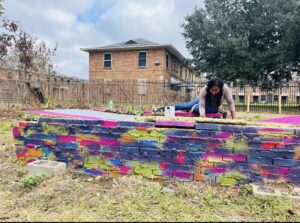
. This remarkable transformation illustrates the power of reclaiming neglected spaces and the profound impact that “third places” – spaces beyond home and work where people can connect – can have on community well-being.
Gertrude’s Garden is a testament to the vision and dedication of its founders. What was once an underutilized area is now a thriving space for art, community building and more. Their mission is to provide a safe and enriching environment for residents of all ages
The Garden has become a catalyst for positive change in the Burglund community. In 2023, they hosted their third annual Thanksgiving meal, serving over 200 residents at a warm and festive gathering. Additionally, an art installation named “Directions” now graces the space. This thought-provoking piece seeks to inspire the community’s youth.
Read on to hear more from Kevin Brown, Gertrude’s Garden’s community advocate.
What makes your organization an Impact Icon?
Image courtesy Gertrude’s Garden
Gertrude’s Garden is a re-imagined and re-purposed abandoned lot in the historic Burglund community in Mccomb, MS. The Garden is located betweeen Burglund Heights housing complex and a convenience store. Gertrude’s Garden program includes art, literacy, recreation and community building.
Tell us about a project or initiative you’re working on right now that’s making a big impact on your community.
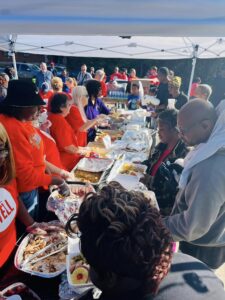
For our third annual Thanksgiving meal, over 200 residents were served a hot meal. We have also just completed an art installation named “Directions” which depicts the distance to well-known cities and identifies Burglund as the starting point for the journey of any youth of the community.
Community Impacts
The impact of Gertrude’s Garden is tangible, touching various aspects of community life:
Public Safety: Enhanced lighting, a new crosswalk and traffic signs create a safer environment for everyone.
Recreation: A playground, basketball court and other amenities provide much-needed opportunities for play and physical activity.
Social Connection: Community gatherings like holiday meals and formal galas foster a sense of belonging and togetherness.
What role does volunteerism play in your organization’s overall mission and objectives?
Image courtesy Gertrude’s Garden
Volunteerism plays the central role. There is nothing that we can achieve without volunteersism. We are not a nonprofit organization. All of our support comes from small in-kind donors and sweat equity.
How are you recognizing and thanking volunteers for their contributions?
We have a quarterly award certificate program, and we are also a
“A small step in the right direction can create change.” –Glenda Jordan, Gertrude’s Garden
What’s one piece of advice you’d give someone who’s looking to get more involved in their community through civic engagement?
Don’t wait, act! Any service that you can provide is an asset to your community.
Are you a nonprofit leader who is innovating in the social impact space and wants to become an Impact Icon? Answer our questionnaire, and you could be featured here on our blog!
Time Well Spent: Jocelyn Nelson’s Case for Volunteer Time Off
Jocelyn Nelson, director of Corporate Social Impact Consulting at Points of Light, has always had a heart for community service. From being a founding member of Liberation Library to leading the external affairs team at Chicago Cares and now her current role, Jocelyn’s path has been fueled by a deep-seated belief in the power of volunteering. Recently that belief was reaffirmed through her own transformative experiences with Volunteer Time Off (VTO), which shaped her understanding of its potential to benefit both employees and the communities they serve.
Points of Light is proud to offer VTO to all employees, which can be used in increments of either eight hours one day a month, or two hours per week. When Jocelyn joined the organization, she was eager to take advantage of this generous VTO policy. “At Points of Light, volunteerism is the center of our work,” she explains. “To know that we had a significant VTO policy showed me that the company was walking the talk. That policy – coupled with my being a somewhat newer resident of Rhode Island – gave me the opportunity to not only volunteer but also physically connect to the area where I lived. The work I do at Points of Light is very national and global, so getting hyper-local in my personal volunteer work was important to me.”
Jocelyn’s VTO led her to the Social Enterprise Greenhouse, a coworking space and network supporting social impact ecosystems in Rhode Island. Initially hesitant about her ability to contribute, she soon discovered her skills were much needed. “When I met with the volunteer manager there, I kept thinking to myself, ‘Honestly, what do I have to offer small businesses? My background is in nonprofit,’ But I soon learned that my assumptions were false,” she admits. “They were also supporting nonprofits. I learned that helping to organize this incredible network of volunteers was a need I could support by offering a new set of eyes to see opportunities, brainstorm volunteer categorization, define the volunteer pipeline and help build a volunteer engagement strategy.”
This is the work that Jocelyn and her team do at Points of Light every day, as they help enable companies to strengthen their corporate social responsibility and employee volunteer engagement strategy. With Social Enterprise Greenhouse, she realized her career skills were just what was needed for this pro bono volunteer opportunity.
“We mapped the types of experiences volunteers have and Jocelyn was an incredible soundboard in the process,” says Serena Manna, senior manager of Network Engagement at Social Enterprise Greenhouse. “She asks the right questions that help focus the objective – and she’s practical and patient through it all. With her support, there was less rumination on crucial decisions, and we finished drafting an intake form that feels personal and engaging!”
With her own experiences as living proof, Jocelyn firmly believes that companies can reap significant benefits from investing in robust VTO programs. Beyond boosting employee engagement, VTO shows potential and current employees that the company values community involvement. “A VTO policy serves as a signal for folks who are looking to apply for a position that community is a priority and a value for that company,” Jocelyn explains. “Plus,” she emphasizes, “as we know very well at Points of Light, there are incredible mental health benefits that can be experienced in powerful ways through volunteering. Providing a VTO policy encourages and promotes a critical component of employee well-being. So, it’s both a recruitment and retention tool.”
Nonprofits also stand to gain from VTO programs. Jocelyn, drawing from her experience in the nonprofit sector, highlights the year-round need for volunteers. “As someone who has worked at and with nonprofits for 15 years, I can say that nonprofits need volunteers throughout the year – not just during the holidays,” she states. “VTO policies that give employees the flexibility to volunteer when they want really helps meet community needs by supporting organizations that can, in turn, support their communities.”
“Skills-based volunteering brings a different dimension to a nonprofit,” Serena Manna adds. “Caseloads are high and most of the team is dedicated to the day-to-day support and coordinating various opportunities for participants. While we’re able to identify challenges, there isn’t a lot of time for implementing changes.”
In essence, VTO is a win-win proposition. It empowers employees to make a difference in their communities while fostering a sense of purpose and belonging. It also strengthens the company’s bond with the community and enhances its reputation as a responsible corporate citizen. Jocelyn adds, “VTO is also a way to celebrate and maximize the efforts of those who are already volunteering. A lot of what a VTO policy does is support existing behaviors, as well as make those behaviors permissible which, naturally, encourages more volunteering.”
Jocelyn’s passion for volunteerism and her insights into its benefits offer a compelling case for companies to embrace this valuable perk. As she eloquently puts it, VTO is not just about companies increasing their volunteer engagement; it’s about creating a ripple effect of positive change that benefits everyone involved – the employees, the community and the company itself.
If you’re ready to explore how Points of Light can help your organization implement a VTO policy or increase engagement in other ways, watch our latest virtual session “Policies that Enable Employee-Powered Change,” designed for corporate social responsibility practitioners. We’ll explore innovative and proven policies – like Volunteer Time Off – that enable employees to support their communities both during and outside of working hours.
And save the date for the launch of our Volunteer Time Off Learning Brief of Sept. 24!
A Year in Reflection: 5 Things I’ve Learned About Being a Point of Light
When I came to Points of Light a year ago, I was excited to begin leading this organization at a time when the world needs us most.
After spending nearly 25 years working in positive youth development, I was becoming more concerned about the society we were preparing youth to enter. I knew I wanted to do more to create a less polarized world where people are fully engaged and investing in each other and their communities through volunteering and civic engagement.
As I reflect on my first year, I’m excited to celebrate the journey I’ve been on with our dedicated team. I’m more energized than ever for the future and proud to lead this inspiring organization as we help solve some of the most difficult challenges of our time. Here are five takeaways from this year, and what I’m seeing in the future.
Growing From Our Roots
Upon joining Points of Light, I was excited to build on our important mission and unique legacy. We began by examining our founding purpose with the
goal of growing from our roots to serve society’s greatest needs today
. Our founder, President George H.W. Bush, had a vision of “a thousand points of light, of community organizations spread like stars throughout the nation doing good.” That aspiration for our culture is more relevant today than it was back in 1989. A loneliness epidemic, the lowest rate of formal volunteering in 30 years, and rising threats to communities, individuals and society, all make it clear that Points of Light’s role is more critical than ever.
The Power of Listening
I believe listening is a key privilege and duty of leadership. Much of my first year was spent in conversations, listening sessions, and focus groups with board members, staff, partners, donors, Global Network affiliates in 38 countries, and Daily Point of Light honorees. (There are nearly 8,000!) I heard about the concerns in their communities and their aspirations for new ways that Points of Light can be a catalyst for urgently needed solutions. In addition, the U.S. Surgeon General declared a loneliness epidemic and reports like Edelman’s Trust Barometer found 62% of people globally said, “the social fabric that once held this country together has grown too weak for unity and common purpose.” Findings like these helped shape my understanding of how critical volunteering is to addressing so many of our current challenges.
Getting to know our affiliate NGOs helped me understand the life-changing impact they have around the world, the barriers they face, and how to best support their success. I’ve been inspired by their tenacity and their steadfast commitment to the health and well-being of their local people and communities. And it’s inspired me to
make sure nonprofits have the volunteers they need to deliver on their missions
.
It’s Time to Reframe Volunteering
At my first Points of Light Conference this June, I met with a small group of our Daily Point of Light honorees, who are everyday people voluntarily serving others in extraordinary ways. This intimate gathering was one of the most impactful moments of the year for me. Too often, we think of volunteers as nice people who have extra time to do something good. As I listened to each Point of Light share their story, I was struck by how many were driven to serve not because it was nice, but because
it was necessary
. For many, serving others was necessary to heal from a personal tragedy or challenge. For others, volunteering was a necessary response to an immense need they felt called to fulfill. For others, serving was necessary to express their deep thankfulness or appreciation for the opportunity, mentorship, or support they had experienced. Every one of them is changing the world by volunteering.
They taught me the power of individuals to heal themselves and their communities through service.
A Future of Purposeful Volunteering
As the global leader in volunteering, Points of Light is dedicated to increasing the number of volunteers, shifting the perception of volunteering from nice to necessary, advancing volunteering with purpose, and shaping the future of volunteering. One of my favorite moments of the year was sharing this renewed strategic vision with our board and hearing from our Board Chair, Neil Bush, “My dad would be so happy about Points of Light’s future.”
The truth is there are increasing threats impacting individuals, communities and society. As record numbers of individuals around the world suffer from anxiety, depression and social isolation, we see that we need to catalyze social connection through volunteering because it brings people together and improves their overall well-being. Today, 47% of nonprofits in the United States struggle to recruit volunteers. When there aren’t enough volunteers, communities are threatened, and many needs go unmet. Volunteering also has the power to heal society by creating empathy and equity, increasing meaningful connections that bridge divides.
Volunteering is a solution that can help solve all three of these complex problems. In short, volunteering is essential for our personal and communal well-being.
Changing Culture Together
Partnerships are the most powerful way we can work to influence culture and create positive change. In the past year, our long-time partners and supporters became even more engaged, and new partnerships have blossomed. For instance, we’re working with
on an ambitious shared democracy goal for national service and volunteering and we recently announced that Points of Light is a
national resource partner to America250’s America Gives initiative
. Together we will lead a national effort to reinvigorate a year-round culture of service leading up to 2026. Our partnerships aim to achieve the largest-ever national service initiative in American history, as both are nonpartisan groups working to protect, renew and commemorate our democracy as we approach the 250th anniversary of the Declaration of Independence.
It’s hard to imagine anything topping this first year at Points of Light, but I know that working with our affiliates and our partners, the best is yet to come. As we look to the future, what I learned this year will guide us toward creating a world where everyone sees the benefits of volunteering for themselves, their community and our society. Please join us! You can find a volunteer opportunity at Points of Light’s
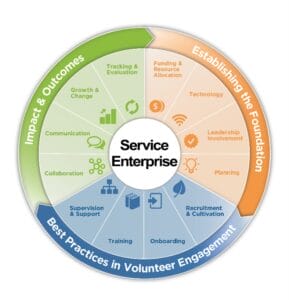
and Points of Light, with training and implementation partners nationwide. However, the true path to successful, enduring change lies in engaging the community — activating the community to fight for causes they care about, share their skills and lived experiences, and build a stronger sense of community.
Intentional community activation is about recognizing and valuing the role of community members in mobilizing and deploying their assets. They are the key to overcoming the issues their neighbors or themselves face, making them an integral part of the Service Enterprise process.
Throughout the curriculum and coaching, organizations focus on working with their community to make positive change instead of working for them. Words matter; intentionally inviting the community to volunteer with — not for — an organization, or exploring community solutions with — not for — the community creates a more equitable power dynamic and helps keep the focus centered on the community and the cause.
Ways Service Enterprises Take a Community-Centered Approach to Mission Delivery
United Way of New Bedford embodies this community-centered approach by having volunteer committees representing the communities they serve as donors and benefactors. Community members are actively involved in the design of volunteer opportunities and program delivery models.
ReEstablish Richmond relies on strong community partnerships to create a welcoming and inclusive environment for newcomers. What helps their collaborations thrive is clarifying roles and responsibilities so that community partners, volunteers and staff know how each other contributes and how they can ask each other for support when needed.
Willis Dady Homeless Services believes all volunteerism should be mutually beneficial. To that end, they help the community connect with established volunteer opportunities and welcome community members to share their insights and services to meet the community’s and client’s needs.
About AL!VE’s Service Enterprise Program
This organization-wide change management program engages a cross-functional team to transform how an organization sees, values and utilizes community members as volunteers. No matter the organization’s size or style, the Service Enterprise Training & Implementation Partners can meet organizations where they are and help them more strategically engage volunteers. We have seen success with hospitals, government libraries with unions, organizations with no paid staff or less than 1 FTE, and more. To learn more about delivering this program or having your organization join the movement, contact AL!VE’s National Service Enterprise Administrator, Kayla Paulson, at
Whether you’re a novice or a seasoned pro, we know it takes a village to create vibrant workplaces where employees are equipped to contribute to the communities and causes they care about. So, when you need a trusted advisor to lean on, rely on Points of Light to be Your CSR Friend. Each month, our experts share their wisdom and wit to address a specific but often universal challenge related to your work as a corporate social impact practitioner.
Have questions about employee community engagement? Submit your question and it may be featured in a future blog post.
Dear CSR Friend,
For years my employer has offered volunteer opportunities that connect to our focus area – financial literacy. We reward employees for supporting and participating in these activities and ask that the company match they receive, either for financial donations or for volunteer time, are donated to nonprofits working in this space. We’re proud of the deep impact we’ve created by closely aligning corporate and employee support for this specific cause. However, in the results from our most recent employee survey, I noted that there is waning interest in signing up for financial literacy projects. Why do you think this is happening and do signature volunteer programs continue to provide value?
Signed,
Impact Impasse in Irvine
Dear Impact Impasse,
Without knowing your exact short and long-term goals, I’ll give you a fairly general response – yes, they absolutely provide value and continue to be a strategic way to positively affect a particular cause or community.
Before answering your question, let me first describe for our readers how I define a signature volunteer program. I like to think of it as a standout or flagship, strategic initiative that reflects a company’s unique values and purpose, concentrating resources on a specific cause or community need to create significant, long-term impact. This intense focus can be referred to as being “a mile deep, rather than a mile wide.”
Signature initiatives are hopefully integrated across different functions so that each department plays a role in marrying their objectives with advancing the cause. They are often branded and provide a cohesive goal for employees, investors, and customers to rally behind. A signature program becomes a defining element of a company’s social impact efforts, reinforcing brand identity while engaging participants in a unified and meaningful way.
Okay, now that we’re all on the same page… let’s tackle the first part of your question – why interest in your employer’s signature volunteer program may be declining. I think the fading interest can be attributed to several workplace dynamics:
Desire for Greater Flexibility and Inclusivity: A signature program may be perceived as too restrictive, limiting employees’ ability to support diverse issues that matter to them personally. They may also expect their employer’s CSR efforts to reflect a broader range of social issues. A narrowly focused signature program may not resonate with the diverse interests of employees who are passionate about multiple causes.
Shift Toward Immediate Action: Employees can be motivated by opportunities that offer immediate, tangible impact. Signature programs, which often require long-term commitment, may be seen as less appealing in a world where employees want to address urgent and varied needs as they arise.
Perception of Brand Overreach: There can be a perception that a tightly aligned signature program is more about promoting the company’s brand than about genuine social impact. This perception can lead to skepticism among employees, particularly if the cause doesn’t resonate deeply with them or if the program feels more like a marketing effort than a sincere commitment to social change.
Potential for Volunteer Fatigue: Over time, employees may experience fatigue or burnout from being continually engaged in the same cause, particularly if they feel their efforts aren’t producing impact.
The evolving expectations and interests of employees can lead to decreased engagement, especially if you’re repeating similar messaging year-over-year and not taking the time to communicate the positive impact that employee volunteers generate for that particular organization or cause area.
But the value of signature programs remains, and I implore you to stay the course, while also contemplating how you might better meet the interests of your colleagues and support other community needs through a multi-faceted approach. In fact, companies that support both company-created and employee-created volunteering opportunities have participation rates that are, on average,
of those companies employing neither feature. Let’s look at the benefits of a signature volunteer program:
Positive Community Impact: A signature program allows the company to make a significant, long-term impact on a chosen social issue or community—full-stop. This deep, focused involvement leads to measurable outcomes and lasting change. Employees get to know your strategic partners and build a deep understanding of the issue or community need, which drives greater awareness in and outside the workplace.
Strengthened Brand Identity and Increased Recognition: A signature volunteer program can become synonymous with your brand, reinforcing your company’s commitment to social responsibility. It creates a unique identity that differentiates your company from competitors and enhances your brand’s reputation. These programs can also gain media attention and recognition from industry groups, which can further enhance your company’s public image.
Improved Accessibility: A signature program can be a way to provide greater access to volunteer opportunities. Because it can be seen as an important, enterprise-wide initiative it can have increased support and buy-in from all levels of management and it can be harder to deny participation. Read our learning brief, Making Social Impact Accessible for All Employee Roles and Settings, to explore additional ways to improve access.
Reinforced Corporate Culture: Signature volunteer programs foster a sense of unity and shared purpose among employees. As you know, employees who participate in meaningful volunteer activities are more engaged, feel a stronger connection to the company, and have higher job satisfaction. This can lead to improved employee retention and a more positive workplace culture.
Attraction of Top Talent: A well-publicized volunteer program can attract prospective employees, especially millennials and Gen Z, who often prioritize working for socially responsible companies. It can be a key differentiator in talent acquisition. According to the 2023 Bentley-Gallup Business in Society Report, 71% of American workers aged 18 to 29 say they would leave their job to work for an employer that has a greater positive impact, and 29% say they would take a 10% pay cut to do so.
Deeper Relationships with Stakeholders: A signature program can deepen relationships with key stakeholders, including customers, investors, and community leaders, by demonstrating your company’s long-term commitment to social issues.
By investing in a signature volunteer program, companies can create a legacy that benefits employees, communities, and the business itself.
My unsolicited advice to you is to two-fold.
Find time to critically evaluate your current signature program to ensure that it is still meeting both community and business goals, enhancing workplace culture, and building bonds with partners and stakeholders. Are there small tweaks in messaging or structure that can breathe new life into the program? If you’re not sure, ask your partners and fellow employees what they might suggest. A Fidelity Charitable study states that nearly half of Millennials want their voice heard about how their workplace giving programs are structured and managed.
Contemplate how you might begin to infuse new tactics that support the personal interests of your coworkers. A growing number of employees are showing a clear preference for programs that allow for personal or open choice. Recent research from Ares Management tells us employee ownership matters: 79% of survey respondents want variety in activities, 72% say that they would like variety in causes, 72% say they want to provide input on the types of volunteer activities that are made available, and 73% desire a voice in deciding the types of charitable organizations and causes that their organization supports.
Of course, balancing a signature volunteer program with an open choice model has its own set of pros and cons – just as sunsetting a signature program does whenever that time comes. But I’ll save those lists for future posts!
Until next time,
Your
9 Ways You Can Participate in 9/11 National Day of Service and Remembrance
It’s been more than two decades since the terrorist attacks of September 11, when the nation mourned the nearly 3,000 lives lost. While September 11, 2001, left an indelible mark on the United States, we have the opportunity to take back the day by turning the anniversary of 9/11 into a day of doing good.
This day has become a symbol of hope by uniting the goodwill and good deeds of the nation. The
can help pay tribute to those touched by the tragedies of this day, as well as keep hope for a better future alive. It is a chance to strengthen communities and pay tribute to those touched by the tragedies of this day, as well as keep hope for a better future.
9/11 National Day of Service and Remembrance Ideas
VOLUNTEER: PROMOTE HUNGER RELIEF THROUGH MEAL-PACKING
In partnership with AmeriCorps and Feeding America-affiliated food banks across the nation, 9/11 Day is organizing hunger relief projects in cities around the world. Last year, 20,000 volunteers packed 6 million meals! You can get involved with this year’s event or sign up your team via
exists to preserve the memories of the lives lost and affected on September 11, 2001, and document the historical events preceding and following the attacks on that day. This museum, based out of the World Trade Center in New York City, is free and open to the public seven days a week. It showcases exhibitions with artifacts, images and personal stories. The museum thrives on donations from supporters who wish to keep the memory of this historical day, as well as the stories of those involved, alive. You can make a one-time donation or become a member to support this mission.
LISTEN & LEARN: REVISIT THE EVENTS SURROUNDING 9/11
Remembrance is part of observing the 9/11 National Day of Service and Remembrance, but education is also a crucial component. WNYC Studios, in partnership with The History Channel, created an eight-episode podcast titled
. This series, which includes expert testimonials, interviews with government officials and even conversations with individuals linked with the attacks, provides a platform for listening and learning.
SERVICE: REMEMBER FIRST RESPONDERS WITH AND A DOCUMENTARY
Thousands of men and women in service roles (first responders, military, police, transit authority and more) risked and sacrificed their lives before, during and after the terrorist attacks of 9/11. A simple thank you to those who work in service roles is a worthwhile act this September 11. I
to better understand what makes the heroes of 9/11 so extraordinary. The film was made in collaboration with the 9/11 Memorial & Museum and documents the series of events that took place on this historic morning.
PURCHASE POWER: BUY FROM BUSINESSES THAT SUPPORT FIRST RESPONDERS
Using your purchase power to advocate for the causes you care about is another important element in leading a civically engaged life. Karmalize published a
, including coffee and food shops as well as other types of retailers, that serve and support first responders. The list includes the locations of these businesses, as well as the commitment each has made to support the first responder community. If you’re in one of the locations listed, consider supporting one of these local small businesses. If not, consider seeking out businesses in your own community that are actively supporting first responders, veterans or survivors of line-of-duty death of a loved one.
SOCIAL ENTREPRENEUR: EXPLORE SUPPORT FOR ENTREPRENEURSHIP
Social entrepreneurs identify needs that have not yet been met by traditional institutions, structures or systems, and lead creative and innovative solutions that drive change. The United States Department of Veterans Affairs (VA) has a unique opportunity for veterans and active duty military to receive
through the Small Business Administration (SBA). This may include training for entrepreneurial-minded individuals who qualify for education benefits through The Post-9/11 GI Bill, The Montgomery GI Bill (MGIB) and The Veterans’ Educational Assistance Program (VEAP). This is a great way for those in the military, whether veterans and active duty, to bring their ideas to life.
“Encouraging people to participate in community service on this day promotes civic engagement and a sense of duty to your community and the nation. It can lead to increased voter turnout, awareness of local issues and participation in other civic activities”
— Katy Elder, vice president of corporate insights, Points of Light
VOTE: CONTACT YOUR ELECTED OFFICIALS ABOUT YOUR CIVIC CONCERNS
While writing a letter to your elected officials and government representatives is always an excellent option for engaging in democracy, there are modern options that make contacting these officials easier. You can check out
, technology that allows you to either write or generate a letter using artificial intelligence (AI) voicing your concerns about issues like increased access to care for survivors affected by line-of-duty death, or better legislation for first responder mental health access.
VOICE: BE MINDFUL OF WHAT AND HOW YOU SHARE ON SOCIAL
Utilizing social media to make your voice heard can be beneficial. After all, these global platforms are a helpful way to disseminate information en masse and share with your networks about your priorities, as well as the causes and organizations you wish to support. But just as crucial as knowing how to use your voice is knowing how not to use your voice. In the case of days of remembrance like the 9/11 National Day of Service and Remembrance, being sensitive to what types of content you share or don’t share is key. Ragen PR Daily shares ideas on
. Start by inviting your colleagues to join you by planning and sharing their own good deeds. 9/11 Day recommends that, if you’re running an organizational initiative, you should send out reminder messages on September 5 and again on September 11. Post your #IWill message on social media on September 11. Finally, be sure to track your participation and measure your impact. There are several easy to use and inexpensive tools that you can use to track and measure the number of good deeds that your colleagues post on social media, including Sprout Social, Brand24, and Hootsuite.
However you choose to participate in this year’s 9/11 National Day of Service and Remembrance, know that any action taken – no matter how small – can contribute to the change you wish to see in your community and beyond. Creating a better, kinder world starts with you.