Environmental Responsibility and Individual Impact with HandsOn Bay Area and TriesteAltruista
As residents of this planet, we’re all responsible for taking care of the earth. We can contribute on an individual level — through recycling, garbage clean-ups, and donating to related organizations — and on a larger scale, like through driving environmental policy changes.
Environmental activism is a pillar issue for many nonprofit organizations. One of the ways
, a Points of Light Global Network affiliate, helps in this area is by empowering individuals to care for their physical environment through volunteering.
HandsOn Bay Area’s mission statement is “People Helping People™.” What that means in practice is that the nonprofit organizes and manages people power to make the community stronger, safer and more fair. This happens in deep partnership with over 300 nonprofits, schools and parks and with individual volunteers.
“Through our network of nonprofits we serve every issue area important to the community,” Lou Reda, executive director at HandsOn Bay Area, told us. “We have volunteers serving less resourced populations around hunger relief, education and job readiness. We have volunteers serving the needs of people who have disabilities. We have volunteers serving the needs of folks who are homebound and isolated. We have volunteers serving to help reverse the damage that has been done to the environment and much more!”
According to Lou, the secret sauce to volunteering is that the volunteer receives just as much benefit as the people being served. Volunteering makes individuals feel like they are part of the intricate fabric that binds a community together and makes it healthy.
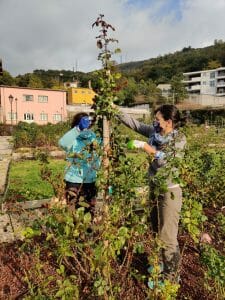
Volunteers prune roses to promote the growth of new flowers.
Across the pond,
, another Points of Light Global Network affiliate, is helping promote volunteering and the spread of altruism and solidarity in Italy. The nonprofit aims to mobilize large numbers of citizens in voluntary initiatives within their reach to respond to the needs of the city of Trieste.
For this reason, TristeAltruista not only guides aspiring volunteers in finding the project that suits them best, but also helps its partner organizations in finding volunteers with the right characteristics to achieve, and if possible, expand their goals. As Trieste is a coastal city, a large part of their work is cleaning up the shoreline. Every year they hold a “Cicca Day” to collect and dispose of cigarette butts on the beach.
TriesteAltruista helps individuals practice their natural “altruism.” For example, beginning in 2018 TriesteAltruista partnered with area organizations to launch the environmental and neighborhood volunteer project “PonzianAltruista.” This project’s aim was to tidy up and care for an abandoned green area inside the suburb of Ponziana, while directly involving the inhabitants.
This district exists in an area with as many as 34% of families made up of elderly women living alone. There is high socio-economic hardship, strong presence of multi-problematic subjects and deterioration of the common spaces. To date, more than 100 volunteers have participated in the project and the project managers who supervise and coordinate volunteers are inhabitants of the neighborhood. About 20 non-profit organizations have contributed with aggregation activities and the resulting gardens will be used by the neighborhood elementary schools horticulture courses, too.
Federico Bonfanti, president at TriesteAltruista, believes that volunteering is part of a civically engaged life in that it concretely immerses individuals in the various needs of their community. “Without volunteering, and therefore direct experience, issues remain a little too theoretical and individuals lack experiential awareness of the city’s reality,” he said.
Andino Castellano, vice-president and founder at TriesteAltruista, encourages volunteers to get involved and be aware that their actions will improve the lives of others and their environment: “A volunteer gesture costs little but is worth a lot, especially if it becomes a lifestyle. You can be an active rather than passive witness of this change.”
HandsOn Bay Area’s Lou Reda says, “For people who want to volunteer I say, don’t hold back. There is a tendency towards perfectionism that gets in the way of service. Just jump in and do what is needed now, regardless of whether you think you are the right person for the role or not. If you are there and you can help then you are the right person.”
Connect with HandsOn Bay Area on
Teens Encourage Youth to be the Driving Force in Reducing Single Use Plastic
17-year-old Amy Meek has always had a connection with nature, as she grew up in Nottingham, England. She remembers spending a lot of time with her sister Ella and her parents as they took family hiking trips and went on outdoor adventures. Eventually, her connection with the environment turned into a powerful youth movement to protect what she holds so close to her heart.
The Meek sisters couldn’t wait for someone else to do the work of protecting the environment because they believed that there was no guarantee that action would be taken — and that’s when Amy and Ella Meek brought Kids Against Plastic to life in 2016.
The Meek sisters took particular interest in plastic after learning about the UN Sustainable Development Goals, and one in particular had a vision of preventing the damage of plastic pollution — goal number 14: Life Below Water.
Their mission for Kids Against Plastic centers on reducing single use plastic consumption and encouraging individuals, schools and businesses to be more discerning when it comes to the damage that single use plastic can do. Single use plastic is essentially plastic that is used once and then thrown away and cannot be recycled. It ends up on landfills, and is commonly found in the ocean and around the animals that call it home.
Amy believes that the urgency in reducing single use plastic lies in the belief that it’s already proven to damage the environment and sea mammals — and that it will directly affect the future generations of our planet.
“If we don’t take action now to reduce plastic usage, it’s going to be something that we are forced to clean up for hundreds of years,” Amy said. “It’s not going away anytime soon and it looks like young people are going to be left with this massive environmental crisis that we’re going to have to fix despite not being the predominant cause of it,” she added.
First, Amy and Ella marched into a local café with plastic clipboards in hand and educated the staff on ways they could reduce their single use plastic. They continued this outreach in other cafes near Nottingham, and eventually began outreach in schools and other businesses.
Amy created the organization’s Plastic Clever Schools Initiative because she understands that reducing plastic can be initially intimidating, expensive and time consuming. The program is all about making small steps that eventually have a huge impact. These steps include using the main forms of plastic: plastic bottles, cups, lids, straws and bags.
The program has gathered more than 1,000 schools that have partnered with the sisters in making reusable items the new norm. She’s even spoken to the business manager at her own school about reducing plastic usage by supporting reusable lunch boxes, refillable canteens and wooden cutlery.
Amy also wants to see the organization and its volunteers pick up at least 100,000 pieces of plastic litter — one for every sea animal killed by plastic in the oceans every year. They’ve almost hit their goal with 90,000 pieces of litter picked so far.
Although Kids Against Plastic is based in the United Kingdom, Amy designed the organization’s educational resources to be adaptable anywhere around the globe. She believes in cleaning up the community you live in first before pointing fingers at others, and that everyone has a part to play in the global movement of protecting the environment.
Another important component of Kids Against Plastic is young people. Amy is dedicated to encouraging youth around the world to stand up for what they’re passionate about and stand firm in what they believe in. She’s seen youth involvement continue to grow, and the organization’s Kids Against Plastic Club — an initiative that encourages children to become active against plastic pollution— has reached 100 members.
A source of motivation for Amy and her sister lies in the fact that they no longer have to start educational conversations by telling people why plastic is harmful. They’ve seen attitudes towards plastic, environmentalism and litter have shifted on a global scale since 2016.
They also make it incredibly easy for schools and organizations to find educational resources on reducing plastic usage.
She was mostly at home with her family during the early months of the COVID-19 pandemic and turned a difficult season into an opportunity of growth by digitizing most of Kids Against Plastic’s work. The organization hosted workshops and Zoom conversations online — something Meek had no prior experience in. It’s also been a season of true reflection for Meek.
“It gave us a chance to sit down and think about how we could improve the outreach that we do and how we could better support the young people we work with,” Amy said. “It’s been really great to see something positive come out of this.”
As Amy approaches the end of her secondary education in England, she has dreams of becoming an environmental campaigner or activist. She also finds herself to be more and more passionate about youth engagement.
“It’s not just the environment issues, but also the power that young people have when they stand up to make a difference — no matter what issue it is,” Amy said.
An Environment of Service, During and Despite COVID-19
Our environment is a precious gift – one that we have both received from generations prior and one that we will give to those who come after us. And while our environment is a gift, it belongs to none of us individually and to all of us collectively at the same time.
We’ve been reminded of how “shared” our world is throughout the global COVID-19 pandemic.
During
we regularly highlighted Points of Light corporate partners who are demonstrating – and in today’s times, redefining – service.
For this post, we’d intended to highlight the ways
and its resources, using their global footprint to reduce their environmental one. Given the spread of the pandemic, it’s important to instead look at how the company is using its reach to help slow the spread of the virus, and to help communities come out stronger on the other side.
Credit: The Coca-Cola Company
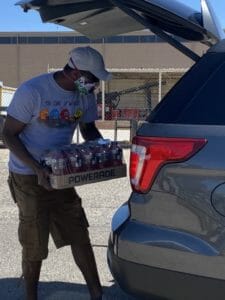
As grocery store workers are considered essential personnel, the company is going to great lengths to ensure its products – including critical items like bottled water and electrolyte-rich beverages – are not only available but are safely delivered to stores.
Coca-Cola is headquartered in Atlanta, just like we are at Points of Light. Incredibly, the company partnered with local university, Georgia Tech, to
for medical professionals. University engineers and others across Atlanta worked to design and manufacture protective gear using lasers and 3D printers. Coca-Cola donated 6,000 pounds of plastic, which will be used to make the masks.
Amazing.
Additionally, the company’s philanthropic arm, The Coca-Cola Foundation, has made financial contributions around the world, supporting relief efforts in China, Italy, the United States and Canada. The company is redirecting a large portion of the money it would otherwise have spent on advertising and marketing toward community relief programs, medical supplies and equipment – that’s in the short-term, for the long-term it’s making plans as to how to support a recovery and return to normal operations in the areas that are most impacted by the pandemic. Together, in conjunction with other relief efforts in development, brings Coca-Cola’s support for communities impacted by COVID-19 to more than $120 million … and counting.
Communities are stronger when we all play our part – and that’s true of the corporate partners in communities everywhere. There’s perhaps no corporate entity as “everywhere” as Coca-Cola and it’s wonderful to see their leadership and service – right when they’re needed most.
To learn more about Points of Light and Global Volunteer Month, please visit:
6 Ways to Do Good for the Environment Through Civic Engagement
Warm weather has arrived, and if you’re like us, you can’t wait to get outside and soak up some sunshine. The best part? You can get your daily dose of Vitamin D while making a significant and lasting impact on the environment, your community and the world!
Here are six ways to give back in the great outdoors, as told by Parks and Recreation.
1. USE YOUR PURCHASE POWER TO SUPPORT SUSTAINABLE GOODS & SERVICES
Have you ever thought about the impact your purchases make? You have the power to use your voice in many ways, including your wallet. When it’s time to make your next purchase, choose a company that supports a healthy environment and uses sustainable practices. Check out this free issue of
We know that volunteers are happier, healthier people as a result of making a difference in the lives of others, and studies show there are similar health benefits from gardening. So double up on health and happiness by contributing to a local community garden! Just BYOS (bring your own seeds) and grow your own produce — or donate your goods to a local food bank. Not only do community gardens yield fresh, nutritious food, they build neighborhood relationships, promote community development, conserve resources and improve quality of life. Find a community garden near you, or start your own.
Teddy Roosevelt once said, “To exist as a Nation, to prosper as a state and to live as a people, we must have trees.” There are myriad reasons to plant trees – they produce oxygen, provide habitat for wildlife, assist in water conservation, and prevent soil erosion. You can plant a tree any day of the year, or you can take part in the annual national celebration of trees – Arbor Day. Check out the Arbor Day volunteer center to find out how you can help.
4. Join or Organize a Park Clean-up in your Community
Just a few hours of clean-up work can result in the removal of multiple garbage bags’ worth of waste. Check your local government’s website to learn about ongoing clean-ups for which you can volunteer. Can’t find an opportunity in your area? This guide is full of useful tips for starting your own park clean-up and enlisting other volunteers to help you.
Like cities and parks, rivers are often left neglected during the colder months. The National River Cleanup campaign enlists volunteers annually to get outside as the weather warms up to help clear trash and pollutants out of the river environment so that natural recovery processes can take place.
Pitch in to help preserve America’s natural and cultural resources by volunteering at a state or national park. Volunteers of all ages and abilities are needed for one-time service activities, long-term commitments. Opportunities range from park improvements, upkeep and preservation and visitor services and campground hosts to more specialized roles for those interested in scientific fields, such as geology, botany and archeology. Browse the volunteer portal to find out what opportunities are available near you.
Today’s guest post is written by Neil Nicoll, president and CEO of YMCA of the USA, the national resource of the Y – a leading nonprofit for strengthening community through youth development, healthy living and social responsibility.
Strong community-based organizations play a critical role in addressing the nation’s most pressing social issues such as the rise of childhood obesity, type 2 diabetes and access to healthy food. Many of these organizations have learned over time that collaborating with like-minded partners can amplify the impact of our work to make a difference. When community-based organizations work as one and commit for the long term, we can move people and communities forward.
One specific example of how the Y collaborates with other community-based organizations to meet the needs of communities is through the YMCA’s Healthier Communities Initiatives. The Y engages local community leaders in policy and environmental change efforts to make the healthy choice the easy choice. As a result, this collaborative effort has led to solutions for change like providing access to nutritious foods in food deserts, creating safer routes for kids to walk to school and incorporating more physical education and physical activity during the school day.
While community organizations can make a difference in addressing needs and creating opportunities for individuals to thrive, we know that people also want to play a role in making their neighborhoods stronger. According to the Y Community Snapshot, a YMCA-commissioned survey that measures the quality of life in communities across the nation, many Americans report they are wary of what the future holds for their communities – an astounding 58 percent would move now if they could.
The survey further revealed that people are committed to making their communities better and want to get involved, take action and make a difference. In fact, when asked who has the greatest opportunity and responsibility to make a difference in improving the quality of life in their community, half of the respondents reported “me, my family and other members of our community.”
Individuals want to take responsibility for their communities, but most don’t know how. That’s where organizations like the Y play a key role. Across the country, the Y helps individuals give back and assist their neighbors by offering support, volunteer opportunities and programs that help strengthen community, improving the lives of hundreds of thousands of kids, adults and families.
Passionate community members help create a strong community, and strong communities create passionate community members. Community-based organizations help create both.
To learn more about the Y and our work in communities across the country visit ymca.net
Green Dollars and Sense: Community Gardening on Vacant Land
– Neal Santos
Today’s guest post is written by Diana Jih, a speaker at our National Conference of Volunteering and Service in Chicago and AmeriCorps member at the Pennsylvania Horticultural Society (PHS).
What can be done in historically vibrant communities burdened with neglect? As new studies report on what community members experience daily as the consequences of blight effect safety, health, and land value, we hope to offer some solutions. Diana Jih will present case studies of urban farms and networks of sustainable gardens and businesses in Philadelphia along with Michael Thompson, Co-founder and Farm Manager of the
, whose work includes many years of honey and fresh food production as well as job training, community education, and non-profit and cooperative business management. We’d like to present a framework for those interested in incubating or undertaking green ventures on vacant land.
We’ll cover
and different growers and buyers networks. Our discussion will also illuminate the often confusing path towards land stewardship or eventual ownership of vacant lots by navigating Philadelphia’s current land use policies and the potential for a land bank in its near future. We’ll also highlight policies in other cities.
No matter if you’re working with a market garden or an urban farm, we plan on incorporating your insight and lessons from the field into the discussion as well as any questions you might have. Together, we can examine different funding, cost-saving, and value adding approaches based on various economies of scale. We look forward to hearing about inspiring ventures from different cities and neighborhoods and to learning from each other.
Let’s empower our green initiatives to transform vacant land into healthier communities.
Diana Jih has engaged with environmental justice initiatives for many years including the current network of partners in community greening she works with through the Pennsylvania Horticultural Society (PHS). She builds capacity among individuals and organizations who want to plan their community’s development through urban greening. Her solution center highlights PHS’s City Harvest community gardens in her neighborhood that have transformed vacant land into sustainable garden spaces. Jih is presenting at Green Dollars and Sense: Community Gardening on Vacant Land.
Environmental Sessions at NCVS!
This year at NCVS, session content is organized across a series of issue areas so that attendees can tailor their schedules to meet their learning and networking needs.
Interested in learning about how service can impact the environment?
Want to learn about clean up efforts after environmental disasters?
Check out all of the sessions associated with the…
Environment
Community Cinema and Service Learning Through Film: A Village Called Versailles
Tuesday, June 7, 2011 12:00 PM – 2:00 PM
Session ID: 5718
Speaker: S. Leo Chiang
Twitter Hashtag: #NCVS5718
A Village Called Versailles is a documentary about Versailles, a community in eastern New Orleans that has be
In the aftermath of Hurricane Katrina, the Vietnamese American residents in Versailles impressively rise to the challenges by returning and rebuilding before any other flooded neighborhood in New Orleans, only to have their homes threatened by a new government-imposed toxic landfill just two miles away.
The film recounts the empowering story of how this group of people turns a devastating disaster into a catalyst for change.
Inspiring a Semester of Service: Learning through Community Impact
Tuesday, June 7, 2011 8:30 AM – 10:00 AM
Session ID: 5452
Speakers: Susan Abravanel, Steven Culbertson
Twitter Hashtag: #NCVS5452
How can teachers enhance academic content and re-engage students through service-learning?
This session introduces a successful program in which middle-school teachers working with Youth Service America’s Semester of Service program have demonstrated outcomes in academic achievement, through student engagement in addressing substantive community issues.
As youth lead and impact real environmental change in their communities, they also are showing increased academic success.
Participants will explore the elements of this comprehensive, extended service-learning program, to discover what works, what is especially challenging, what the accompanying body of research shows, and how to replicate the program in their own communities.
7th Ward Cleaning and Greening with Global Green USA!
Wednesday, June 8, 2011 8:00 AM – 12:00 PM
Session ID: 5083
Speaker: Camille Lopez
Twitter Hashtag: #NCVS5083
Come play an active role in rebuilding one of the neighborhoods hardest hit by the floods and help the 7th Ward Neighborhood Center and Global Green USA beautify and weatherize the homes of low income residents in this historic New Orleans neighborhood.
Projects include beautification efforts as well as small-scale energy efficiency improvements.
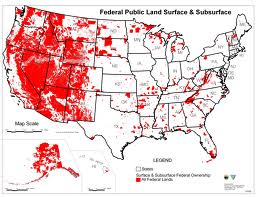
Connecting Service to Place – Tying in with Your Public Lands
Wednesday, June 8, 2011 8:00 AM – 12:00 PM
Session ID: 5509
Speakers: Eugenie Bostrom, Michael Saucier
Twitter Hashtag: #NCVS5509
Serving or volunteering on federally managed lands may seem daunting to some.
But partnering with the government on Public Lands is as simple as planting native trees on a beautiful Louisiana Wetland co-managed by several Land Management Agencies.
Come unravel the mysteries associated with partnering with the government on Public Lands.
Green Vegetables and Green Lights: Neighborhood Recovery in a Post-Disaster
Environment
Wednesday, June 8, 2011 8:00 AM – 12:00 PM
Session ID: 5446
Speakers: Michael Pizzolatto, Paul Baricos, Andreas Hoffman
Twitter Hashtag: #NCVS5446
In the Hollygrove neighborhood of New Orleans, residents and non profits joined forces to solve both immediate issues and long term problems from the flooding that followed Hurricane Katrina.
The Hollygrove Market and Farm was created as a response to the food desert of the neighborhood.
Green Light New Orleans started as a program that installed energy efficient light bulbs and is now an organization that hopes to change the energy sustainability of entire neighborhoods.
Together they work to solve daily issues for residents and affect long term issues of climate change and health and wellness.
Beyond the Nature Deficit: Engaging Urban Youth in Conservation
Wednesday, June 8, 2011 8:30 AM – 10:00 AM
Session ID: 5194
Speaker(s): Kate Hagner, Laura Herrin
Twitter Hashtag: #NCVS5194
Richard Louv’s book Last Child in the Woods opened national dialogue about the lack of nature in the lives of today’s wired youth.
This session will provide a framework for understanding what this “nature deficit” looks like in our urban communities and will use the experience of Student Conservation Association’s urban Community Conservation programs to share tools for engaging high school students in hands-on conservation projects restoring green spaces in urban neighborhoods.
Triple Whammy: Natural Resource Volunteers Critical to Response Efforts
Wednesday, June 8, 2011 10:30 AM – 12:00 PM
Session ID: 5371
Speaker: Douglas Blankinship
Twitter Hashtag: #NCVS5371
Hurricanes Katrina and Rita in 2005 along with the Gulf Oil Spill in 2010 threatened coastlines, ecosystems, and marine life and caused unprecedented and monumental natural resource damage.
These catastrophic events presented natural resource restoration and recovery challenges that governmental agencies and others are addressing with the help of conservation stewards and other volunteers.
The five states in the region encompass many different habitat-types — marinas, upland areas and coastal wetlands. Continued volunteer support is critical for recovery to succeed.
Come learn about how volunteers are helping with these natural resource challenges and lessons learned about effective volunteer engagement.
Triple Whammy: Natural Resource Volunteers Critical to Response Efforts
Laura Baird, minister and mom, travelled hundreds of miles to help transport one oiled seagull.
Eleven-year old Olivia Bouler raised $200,000 to support gulf recovery efforts by selling her drawings.
In April 2010, over 35,000 people across the country signed up and were willing to travel to the gulf to help in any way they could. And this is just a snapshot of the many volunteer efforts that are at work to restore the Gulf Coast.
Between Hurricanes Katrina and Rita in 2005 and the Gulf Oil Spill in 2010, the Gulf Coast has faced unprecedented and monumental natural resource damage. With the help of committed volunteers like these, recovery efforts are underway to restore these vital, and diverse, habitats.
Join us on
June 8th at 10:30am
for a panel discussion on the strategies used to build volunteer support for the long-term efforts needed for restoration.
, Mississippi and myself, Melissa Hopkins, manager of Audubon’s TogetherGreen program.
Join us for a candid discussion of the situation facing the Gulf Coast, and learn about the long-term engagement strategies and lessons we’ve learned in engaging volunteers for the long-haul.
For more information on some of the work being done around the region, please visit the U.S. Fish and Wildlife Service’s Southeast Louisiana Refuges Complex website at:




 Today’s guest post is written by Neil Nicoll, president and CEO of