Many people in today’s America identify as being biracial. They connect with multiple cultures and sometimes even multiple languages. Tristan Espinoza, 19, is Mexican. His grandfather moved to the United States before starting what became a large family. But Tristan’s family also has a long history in what is now the United States with his mother, a descendent of the Osage Nation, a tribe once living on a large swath of land across the current states of Missouri, Oklahoma and Arkansas. Today, the Osage Nation is a federally-recognized Native American government headquarted in Pawhuska, Oklahoma.
He’s proud of his heritage, but Tristan considered his high school years in the small Texas town of Princeton, just outside of Dallas, a bit of a challenge. Being white-passing (a Black, Indigenous or Person of Color who may be perceived as white), he often felt he had to fight for his identity to be seen. During that time, he found himself taking the initiative to push the school about National Honor Society policies and making the group more inclusive.
“My life was always this huge game of the television show Survivor, where I was basically thrown onto this island with people and clubs and different ideas that I just didn’t choose to be around as an indigenous kid who is also Mexican, who was also the only out queer person in his high school for four years,” he says.
Those experiences inspired his interest in politics and social justice. Now, as a sophomore political science major at Columbia University, he feels like he’s finally off the island. During his first year in New York City, Tristan befriended Dylan Baca, founder of Indigenous Peoples’ Initiative (IPI), a youth-led organization that aims to eliminate stereotypes of Native American communities, amplify their voices and advocate for a better future.
Dylan had just come off of a big win, successfully advocating for President Biden’s proclamation to designate Indigenous Peoples’ Day (IPD) as holiday alongside Columbus Day. He was becoming known as the kid who got a phone call from the president around campus and was looking to build on IPI’s success. Tristan jumped at the opportunity to join the advisory committee and, eventually, the board.
“Whenever I talk about my culture and identity, it’s always a narrative of either surviving something ‘past tense’ from colonialism, or constantly trying to fight to survive,” he states. “I feel like I have this platform to help make a difference.”
Since January 2022, Tristan has held a communications role going between tribal nations and government officials, pushing for more indigenous rights. He has worked on advocating for H.R. 5473, the Indigenous Peoples’ Day Act, and as chairman of the advisory committee, he leads the research that helps IPI make informed decisions and take action around things like how climate change is affecting indigenous communities’ access to clean water.
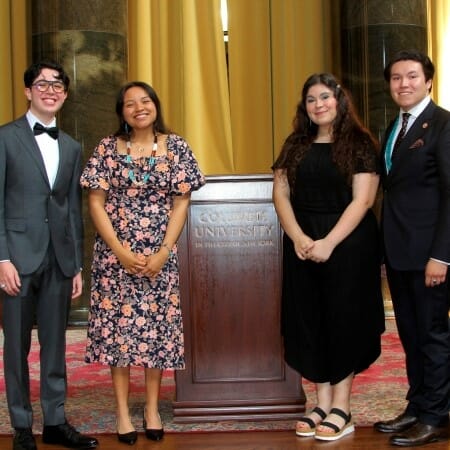
Tristan, left, stands with student organizers and speakers Kianna Pete, Hannah Jimenez and IPI founder Dylan Baca at the Indigenous Peoples’ Day speaking event./Courtesy Tristan Espinoza
“Tristan’s ability to relate to people and his ability to communicate well is really exceptional and makes him very valuable to the work that we do,” Dylan says. “He will put aside everything and look at finding common ground with people and visions and missions in what we’re trying to accomplish.”
Informing policy is important, but it’s a long game. While he enjoys the work, Tristan is focusing on short term projects as well.
“We’re now working with groups like the Smithsonian for returning artifacts back to tribal nations, making sure that tribes have clean water on their reservations and stuff like that,” he says.
Tristan typically spends two to three hours each day on various IPI endeavors. Last year, he also helped organize and implement a campus-wide celebration of Indigenous Peoples’ Day at Columbia with the support of Barnard College.
“There have been student-led celebrations, but the administration getting involved in any capacity had not happened,” Dylan recalls of the accomplishment.
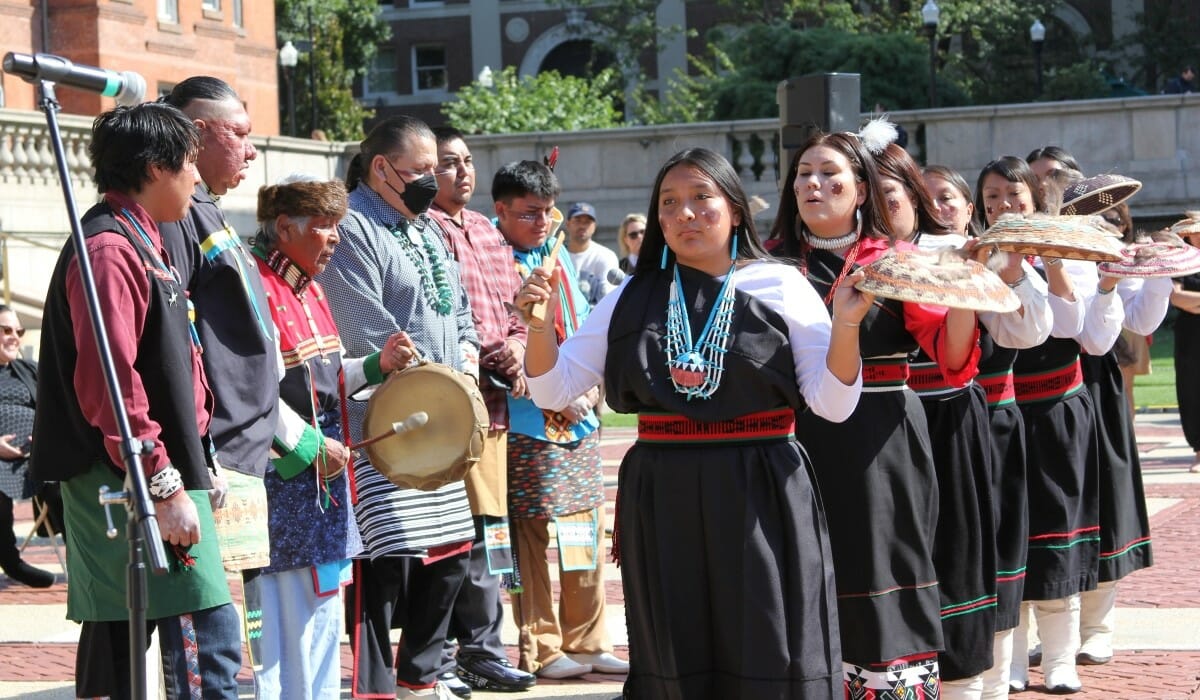
October 2022 was different. The president of Barnard and representatives from Columbia, local government officials and people from the Metropolitan Museum of Art were all in attendance. Even the co-founder and co-director of the Lenape Center, on whose tribal land Columbia sits, joined the festivities. Grand Chief Sky-Deer from Canada came to speak. And members of Picuris Pueblo did a basket dance, much to attendees’ delight.
Tristan spoke at the event and remembers seeing children from Picuris Pueblo excited to have travelled across the country to perform, sitting in the front row.
“I remember giving that speech almost looking directly at them, because they are the future. It was just really touching. It was like, this is who I’m doing it for,” he adds. “That was the most rewarding feeling I’ve ever felt through any of my political work.”
The Picuris Pueblo perform on Columbia’s Low Steps after the speaking event for the Indigenous Peoples’ Day celebration./Courtesy Tristan Espinoza
When it comes to his success, Tristan wastes no time in crediting the women in his life.
“I was one of the first kids in my entire high school ever to go to an Ivy League. And that was really to their sacrifices that they made,” he states. “I would be nothing if it wasn’t for the sacrifices of Indigenous women, especially of my grandmother and my mom. So, I owe everything to them.”
His mom works in international tech business and is starting to spearhead her company’s Native American network. Seeing her hard work has been a source of great inspiration for her son.
Tristan is happy about the trajectory of his life, but as with most advocacy work, there can be challenging times. In order to reset his motivation, Tristan does two things: watch an episode of “Survivor” and remember where he came from, and focuses on kids like his younger self who feel isolated and who need someone to fight for them, for their voice to be heard.
“It really isn’t about me. It’s about the people who came before me and the people who will come after me,” he states.
One of the biggest things he’s learned has been to listen. Regardless of where someone is on the political spectrum, whether they have been wronged or feel unheard, simply letting people speak is a starting point for learning. He’s quick to remind people not to speak over others or to speak for them, but to simply listen.
“You never know when you walk past someone the struggles that they face. There are likely people who need help who are too afraid to ask for it,” he adds.
The future of IPI is in good hands, and with their ongoing success, they look forward to expanding their scope to indigenous communities abroad. Tristan plans to continue his activist work while seeking a fruitful career as an indigenous artist and writer. In the meantime, he’s taking advantage of his time in college to push himself outside of his comfort zone. This semester, he’ll be in his first musical.
“When President Obama gave the Presidential Medal of Freedom to Joe Biden. He said, ‘To know Joe, [was] to know love without pretense, service without self-regard and to live life fully.’That is what encapsulates Tristan, as well,” Dylan summarizes.
Public servants tend to go where they are needed. Tristan isn’t running from the community where he felt unseen. He’s running towards it. And towards a lifetime of standing up for the rights of those who need it most.
“I want to make sure that I’m not just making change at my university, but I want to go back to Texas. I want to go back to my small town and go back to where it all started and help make a change there.”
Join the Global Volunteer Month celebration! Download our Global Volunteer Month toolkits and access resources to encourage volunteerism and civic action, recognize volunteers, and raise awareness for your organization’s needs and funding opportunities.
Community Leader and Public Health Activist Fights for a Better Future for His Neighbors in Puerto Rico
Jeffrey Rivera-Sanabria’s volunteer service started when he was just a kid and Hurricane Hugo, a category five storm, hit Puerto Rico. He helped collect and dispose of debris at the local elementary school. Years later, his commitment to serving his community has only increased. In college, he studied business administration and psychology with concentrations in computer information systems and social work — all topics that set him up for his expansive volunteer roles.
Among other things, Jeffrey is a community leader of the Residencial Luis Llorens Torres, a public housing complex in San Juan, Puerto Rico, where he helps in virtually every aspect of improving the lives of under-resourced residents. He has done everything from delivering essentials to seniors during the COVID-19 pandemic and solving problems that face the community to organizing programs promoting culture and the arts. Having grown up there himself, the complex holds a special place in his heart. Jeffrey has also been a member of the Puerto Rico Medical Reserve Corps since 2011. As such, he assists the Department of Health with emergencies, natural disasters and public health issue awareness.
Since 1997, Jeffrey has been recognized with numerous awards and leadership positions, and he has no intention of taking a break. With an eye on eventually joining the Peace Corps, he also hopes to further his education in social work. In short, he’s the neighbor everyone wishes they had but very few are lucky enough to get.
What inspires you to volunteer?
What inspires me to be a volunteer is being able to give what I know and have learned in my personal, professional and educational life, and put it towards helping the most vulnerable. I want to be part of social change, for all people to have the same opportunities, rights, equity, justice and respect. I want their dignity to be recognized.
Describe your volunteer work in Residencial Luis Llorens Torres and in disaster relief and public health.
My work with the residents of the Luis Llorens Torres Res. began as a kid in 1989, when Hurricane Hugo hit Puerto Rico. I helped collect and dispose of debris at the Luis Llorens Torres Elementary School. I continued through the Boy Scouts of America until I started volunteering in sports and recreation, education and cultural activities from 2009 to the present. After hurricanes Irma and María in 2017, I brought First Aid kits to the elderly residents and people with disabilities along with food, water, flashlights and other essentials for all residents.
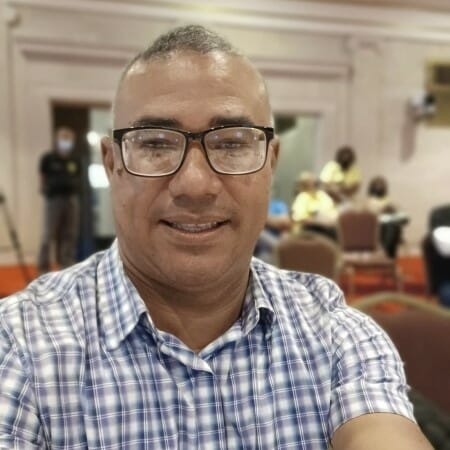
Jeffrey Rivera-Sanabria is a community leader of the Residencial Luis Llorens Torres, a public housing complex in San Juan, Puerto Rico, where he works to improve the lives of under-resourced residents./Courtesy Jeffrey Rivera-Sanabria
During the COVID-19 pandemic, I delivered food, masks, sanitizer, gloves and other supplies. I developed COVID prevention education and vaccination activities. I also carried out the following: a summer camp for young people; delivery of food and toys to children and youth; delivery of food to seniors and people with disabilities; distribution of groceries and turkeys for Thanksgiving dinner; delivery of roses, postcards and cookies for mothers; and tutoring assistance for students at all levels.
During Hurricane Fiona last year, I helped residents process documents from government agencies and their review appointments, as well as assisting people filing for FEMA aid due to loss of food during lack of electrical service.
What’s been the most rewarding part of your work?
My specific causes are helping seniors and people with disabilities, as well as the young people of my community. Older adults sometimes live alone, and sometimes their relatives don’t take care of them. Many of them live day-by-day with the little they receive either from their retirement funds or social security.
What have you learned through your experiences as a volunteer?
Children are our present and future, and we must give them the necessary tools to make good decisions and contribute to the well-being of Puerto Rico. We should also give them the opportunity to integrate into our spaces by listening to them and nurturing their ideas and contributions.
Volunteer work has changed my life. It has helped me differentiate myself from my peers and avoid the mistakes that many of those who grew up with me did not. I’ve learned to be patient and a supportive, more empathetic person. In addition, I’ve added on-the-ground experience to my knowledge base. I’ve been nourished professionally and personally by helping improve the quality of life of my neighbors. It gives me great satisfaction to help others, especially young people, get ahead and be good citizens. Although you can’t always see the results now, knowing that something is being done that will bear fruit in the future is fulfilling.
Are there any future partnerships, programs or events that you are excited about?
I am still working on my project: We Care About You! This consists of disease prevention efforts and helps in the delivery of food, hygiene and cleaning items.
We’ll also be working with EduConsejo on a project aimed at helping students of all levels with homework and offering writing, reading, Spanish, English and mathematics tutoring.
CiConsejo is another project that we hope to start in the next fiscal year through which we’ll bring science closer to the children and youth of our community by developing scientific activities and discussions.
Why is it important for others to get involved in causes they care about?
Those causes affect us all and if we want our communities to have the same opportunities, we must empower ourselves and assert our human and civil rights through the different initiatives and the tools that we have available. We have to recognize problems and needs in order to find solutions and improve our quality of life. This contributes to creating the healthy coexistence of people in our community.
What do you want people to learn from your story?
I want people to see me as an example and to understand that it’s not important where you come from, where you study or what your social status is. The important thing is that you believe in your abilities, experiences and strengths to be a great human being and change agent.
I want others to be able to emulate and help regardless of their living conditions and for the simple satisfaction of doing something for others. If you study and have discipline and dedication, you can achieve all your goals regardless of the adversities you face in life.
Join the Global Volunteer Month celebration! Download our Global Volunteer Month toolkits and access resources to encourage volunteerism and civic action, recognize volunteers, and raise awareness for your organization’s needs and funding opportunities.
Mother-Daughter Duo Grow Strong Bond While Volunteering Together Regularly
While volunteering is a rewarding, empowering experience for individuals, there’s something special that volunteering provides to family members who do social good together. April is Global Volunteer Month, and we’re highlighting some special Daily Point of Light honorees as shining examples of service in their communities.
Kim and Kate Quintero, a mother-daughter duo from Park Ridge, Illinois, have been volunteering together for years. Kate was 7 years old when she started with The Honeycomb Project, an organization that engages, mobilizes and inspires whole families to build strong and connected communities through service. Eventually, Kate and her mom, Kim, stepped up as ambassadors for The Honeycomb Project, spreading the word about Honeycomb’s offerings with their friends and family.
“Kate was in Catholic school and was doing community service and projects through the church, and I wanted to expand and look for other opportunities,” shared Kim. “With young children, it’s not easy to volunteer – there are often liability issues. So when I stumbled across Honeycomb. I thought, ‘this is amazing.’ They bring opportunities to you that are family-friendly, ready-to-go and so diverse in the types of programming they offer. We started with anti-cruelty and we just kept going from there.”
As part of the program, Kim and Kate assist families in completing service projects for many different nonprofits – all facilitated by The Honeycomb Project. Most recently they assembled craft kits for children in hospitals with Holiday Heroes, as well as made floor pillows for those transitioning from homelessness alongside Digs with Dignity. The pair has also done other projects such as beach cleanups, where a young Kate was fascinated by the issue of pollution and Googled it the whole way home, sharing facts and statistics with her mother.
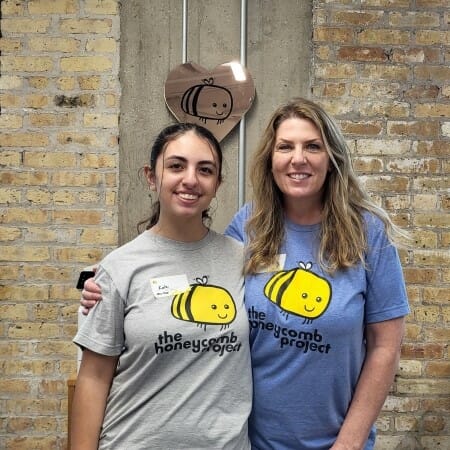
Kim and Kate have found that volunteering provides excellent opportunities for bonding while serving the community./Courtesy Kim & Kate Quintero
The mother-daughter team has led Honeycomb’s Volunteer at a Free Store event almost every month for the past few years. They set up a free outdoor market in Chicago’s Humboldt Park to distribute donations such as housewares to neighbors in need.
“Our favorite is the free store run by Our Lady of the Angels in Humboldt Park,” Kate said. “We help lead tables at the free store and organize housewares, children’s books, toys, car seats, electronics, etc. We set up the tables before the store opens. People can come to the food bank and then free store. You get to meet a lot of people and have great conversations.”
This mission grew even closer to their hearts after the Quintero family experienced a house fire. Suddenly, they saw the impact of free stores as they were the ones in need of clothing and housewares.
“I remember the first project we did after the fire was coming back from the free store. It gave the project so much more value. It gave us a whole new level of respect and appreciation after we had already been doing it for years,” said Kate.
“We always appreciated the project and loved it but to be on the flip side, having walked into a free store ourselves after the fire, gave us a different perspective,” Kim reflected. “For me, as a mom, everything was upside down. We didn’t have our house, our clothes, our things. But the one thing that was a constant for us was Honeycomb. It was so important for us to stay in that routine of volunteering. We could get up and know what we were doing that day. It gave us a purpose as we got back into our normal rhythm.”
Despite a challenging year, the Quinteros’ commitment to Honeycomb continued to grow. In the last year, the pair has logged more than 50 service hours. Kate, now in high school, was accepted into Honeycomb Leadership Corp (HLC) which is designed for teens and parents who wish to build their leadership skills through service.
“One key thing I learned from HLC was how much your attitude makes an impact,” Kate shared. “When you’re volunteering, you’re showing up and having a good time, you’re going to have a smile on your face. But with the Leadership Corp, you’re assisting families. I’ll see a kid walk in who’s 6 or 7 or 8 and it’s their first project. I can share that that used to be me, and just doing little things like checking in, giving them a big smile and telling them they’re doing great really makes them want to come back and volunteer.”
The Quinteros have certainly made an impact through their work with Honeycomb and beyond. One project in particular, New Life for Old Bags, ended up being far more wide-reaching than the pair anticipated. Kate ended up pitching the project, which involved making mats for unhoused individuals out of old plastic bags, to her eighth-grade class and it was voted as their service project. The class was featured on Channel 5, and a parish member made giant looms for the class to make more mats. The project has lived on for a couple of years now.
This mother-daughter team is certainly an inspiration to all civic-minded individuals and shows us that volunteer service as a family can provide a host of benefits to both the family members and their communities. We can’t wait to see what Kim and Kate accomplish next as they continue shining their lights through The Honeycomb Project.
Join the Global Volunteer Month celebration! Download our Global Volunteer Month toolkits and access resources to encourage volunteerism and civic action, recognize volunteers, and raise awareness for your organization’s needs and funding opportunities.
Denver Woman Celebrates Her 60th Birthday by Founding an LGBTQIA Volunteer Group
Jennifer Croft, a resident of Winter Park, Colorado, has made a significant impact in the Denver community through the power of volunteerism by starting a Meetup group called Lesbians For Good. This group formed out of the social isolation she felt during the pandemic as an outlet to be more involved with marginalized community members engaging with nonprofits.
In September of 2022, eight lesbian members gathered in a café for their first “Meet and Greet” and coat drive event. The group officially went live and grew to 111 members by December 2022. Today, it is 177 members strong.
Lesbians for Good has served eight organizations and had 20 volunteer events. The group’s total of volunteer hours to date is 342, with Jennifer’s administrative hours totaling 280 for a combined 622 volunteer hours. Their total donations add up to $7,389. Read on to find out more about how this initiative started and what this group is doing for its local Colorado communities.
What inspires you to volunteer?
I’ve done it pretty much my whole life in some fashion. It’s really to just contribute back. Most of what I did before I started Lesbians for Good was teaching people how to run their own small businesses. So I had taught three or four thousand people in person how to do that and started a website with free resources. So I’ve always believed in teaching and giving and helping others.
What inspired you to start Lesbians For Good?
I turned 60 last year, and what I really wanted for my birthday was more friends. After facing some isolation during the COVID-19 period, I had also really been thinking about my legacy of giving. At the end of my life, with my will, what nonprofits would I give to? And I started thinking, what was my life about, and what did I want this last portion of it to be about?
Jennifer Croft is the founder of Lesbians for Good, a Denver-based Meetup group focused on service in the local community./Courtesy Jennifer Croft
That’s when I came up with the idea that I wanted to do more volunteering outside of just the business realm – in part, so I could learn more about these organizations. So I came up with the idea of the Meetup group so I could marry those two things – meeting like-minded people and getting involved in the community. It startled me how quickly and how strongly I formed a community within this group of LGBTQIA volunteers. I think it’s the coolest thing that we now have a community that goes out and helps the community. It’s been really powerful, even more so than if I had just jumped into a volunteer activity.
What are some of the activities you do as a group?
I started it in August, and we had our first meeting to plan things in September. Since then, we’ve done 15 different events, with two different food banks, a clothing bank and a nonprofit that helps displaced people – one of my favorite projects. We painted a four-bedroom house in a single day for an Afghani family of eight people that were moving in. We got there at 9 am and by 3 pm, the house was ready, with 25 people that came that day. We also did a community cleanup project. We go to the cat shelter regularly and do mostly maintenance tasks and socialize the cats.
We’ve done a toiletry drive and a separate coat drive for a shelter for unhoused women and children. We did a fundraiser for Club Q after the tragedy. We quickly rallied with some other lesbian Meetup groups to do that fundraiser. Coming up, we’re going to help out with Pride Fest in Denver. We’re going to go work with an urban garden and help them. So my main goal is to offer a mix of different types of projects with different organizations, in different parts of the Denver Metro area. I’m trying to rotate projects to have a variety.
In the beginning, I was nervous partnering with these organizations, committing to them, and I didn’t know if people would show up. I couldn’t guarantee anything. But from the very first event, we’ve had people show up and we’ve had more and more people at each event. Now I’m looking for projects that accommodate 10-25, or 25-50 people. So I had a clear intention that I was going to do this for at least a year, even if it literally was just me showing up. It’s been one of the most inspiring, engaging and meaningful things I’ve ever done.
What are some lessons learned along the way?
The actual startup of the group took more time than I thought. I run my own business too, so I’m doing both. I ended up having to contact 40 or 50 organizations to even find our first six or seven projects. I needed to find events that would accommodate groups on weekends. So I think the amount of organizational time was more than I anticipated.
The main thing I learned was how many people out there were craving the same community that I was craving. And so many of them were already doing their own volunteer work or working for a nonprofit, which was really inspiring. And I learned what it was like to show up, and how powerful it was to show up with other lesbians and work side-by-side with everyone. So in one way, there’s nothing unusual about it, but in another, it is a huge act of courage for all of us.
What’s your advice for people who want to start volunteering?
I would wholeheartedly say to do something. Whatever stage of life you’re at, whatever age you’re at, it’s incredibly rewarding. So start somewhere. The other thing I’ve learned in this process is how much need there is. I really wasn’t aware of how much work nonprofits are doing and how much they’re shoring up people and causes. Anyone can find something that appeals to their interests.
I have a mantra before I start any project that I tell myself: “Focus on the work you’re doing, not the work that remains to be done.” Because it can be discouraging – sometimes I wonder if we even moved the needle. But the answer is always yes. And I’ve learned from these organizations how hard COVID hit them. People stopped volunteering. So there’s a ton of deferred maintenance and deferred work, and a lot of these organizations, they’re just trying to do what they’re doing. They’re not going to spend money to stain the fence outside. They’re providing services. So I think this volunteerism, this time, is focused on service.
How can people get involved?
LGBTQIA members and their allies in the Denver Metro Area can sign up through the Meetup link. They can sign up for individual events, based on what interests them. My goal is for us to complete two events every month.
Join the Global Volunteer Month celebration! Download our Global Volunteer Month toolkits and access resources to encourage volunteerism and civic action, recognize volunteers, and raise awareness for your organization’s needs and funding opportunities.
New York Mom Leads Next Generation of Girl Scouts to New Heights
Meet Daily Point of Light Award honoree Rebecca Roseboom. Read her story and nominate an outstanding volunteer or family as a Daily Point of Light.
The memories Rebecca Roseboom, 47, made as a Girl Scout have lasted a lifetime. Originally from Saratoga Springs, she and her husband moved to the small town of Perry, New York after passing through on their honeymoon and falling in love with the serenity. Her best friend lived there, too. And it didn’t hurt that the nearby factory makes the whole town smell like freshly baked cookies.
Now, as a mother of two girls and a boy, ages 18, 13 and 8, she is a co-leader of the Girl Scouts of Oatka Valley. Currently, eight girls are in Rebecca’s troop, ages 5 to 18. Rebecca spends up to 20 hours a week organizing activities, cookie sales, event planning, recruiting and more. And without a computer at home, she does much of it from her cell phone.
Rebecca fell off a diving board as a teenager that, despite multiple surgeries, has left her with lifelong issues. She often wears a brace for assistance. In spite of her injury, she spends her time hunting, fishing and baking, the latter two skills she shares with her troop. After all, her talent for making wedding cakes has been utilized in multiple friends’ kids’ big days. For over a decade, Rebecca has empowered her scouts to be kind, independent young women who look beyond limitations and go after their goals.
What inspires you to volunteer?
I started when my youngest daughter was eight, because I could see the troop needed help. I saw what needed to be done and just started doing it. From there, it gained momentum. I’ve been doing this for 10 years.
I almost didn’t come back in 2019. My best friend of 17 years passed away. I have the photo of our last troop meeting together. She was my co-leader. For a long time, I couldn’t cope with being back with my girls. Even today, I still am not who I used to be. But since then, my oldest daughter and I built a memorial down in our Girl Scout cabin in Warsaw, New York. We planted a butterfly bush, and for some reason, it went wild. It got to be close to eight feet tall – taller than our building – n just one year’s time.
Why is the Girl Scout organization so important to you?
I had so much fun in the Girl Scouts as a child. I went to camp. I sold cookies. It helped me with my numbers, with handling money. I learned how to do sign language. I enjoyed pushing myself. I tell my girls about this one time I can still remember cooking bacon and eggs in a brown paper lunch bag at camp. And I want to do that with them, even if I can’t do all that I could because of my own limitations. I want them to have those memories 40 years later.
Our town’s population is less than 3,000. For some of my girls, this is all they have. This is their only outlet. It’s a lower income community. We don’t ask our girls to pay for anything. We pay for everything with the money they earn through cookies. We’ve made homemade sushi and root beer. I’ve taken them fishing in our little pond. Next month, we’re trying to go camping. For some of my kids, it’s going to be their first time, and they’re teenagers.
It gives them leadership skills. It helps them set a goal and actually attain it. Right now, my girls are trying to sell 300 boxes of cookies per girl, because they will go to Darien Lake, an amusement here in New York, for free if we succeed.
Describe your volunteer role with the Girl Scouts.
I wear many hats within my troop. I’m not just a co-leader but I’m the cookie and candy mom. I do all the ordering. We organize the meetings and do crafts and projects. As the younger ones who need a lot of assistance get older, our primary goal is to guide and support them while they do it on their own. At a certain level, they’re the ones that choose what badges they work on, not us. So, I ask, “What do you need?” And my girls will tell you, if you want a badge from me, you’re going to earn it. They have that pride when they look at it on their vest.
One year, we had a Blue Rose Patch. I taught all my kids about accepting people for who they are, no matter what their disability is. Some of the newer girls never even knew I was disabled.
What’s been the most rewarding part of your work?
I love that if my girls leave the troop as teenagers – that’s the hardest time to keep them involved in Girl Scouts – they will see me a couple years later and still run up to hug me. One of my scouts lives next door, and she just told me she thinks of me like her second mom.
I love seeing their faces when they earn that badge or try something new. We do a pinewood derby, and kids come in with their dads having made these awesome cars and we have hot dogs and chips, and they get little prizes. They love it.
There have been so many times since my friend passed that I just want to give up. But I can’t. Because if I didn’t continue to do it, I don’t think anybody would, because somebody’s been doing it for so long. The way I think about it, is with such a small community, it’s kind of like karma: I help my girls, and maybe they’ll do great things too.
What have you learned through your experiences as a volunteer?
In order to take my kids camping, I have to be CPR and First Aid certified. So, I did all that. And you have to take a camping class so, for example, if you run out of water, you know what to do. I finally figured out what poison ivy looks like, and I’ve definitely learned how to Tetris lots of cases of cookies in my car. The biggest thing I’ve learned is how to approach the kids to teach them tolerance.
Why is it important for others to get involved in causes they care about?
Because if they didn’t, who would? Show the younger generation that we need to do these things.
What do you want people to learn from your story?
Even with a disability, you can still help kids succeed. My joy is seeing their joy. When I make cakes for people, I love seeing their excitement when they see — and taste — what I’ve created. That’s why I do it. For that look on their face, to see them enjoy something that I’ve done. It’s the same when these girls enjoy each week when I come up with something new.
Latino Professional Connects the Dots Between Passion and Careers for Young Underserved Women
Meet Daily Point of Light Award honoree Robert Quintero. Read his story and nominate an outstanding volunteer or family as a Daily Point of Light.
Throughout his career, Robert Quintero has recognized the importance of gender and cultural diversity in bringing new dimensions to any enterprise. This commitment has lead Robert to volunteer his time, professional knowledge and resources to Embracing Latina Leadership Alliances (ELLAS), a nonprofit established in 2003 by L’Oréal Paris Women of Worth honoree Pilar Pinel that facilitates academic and leadership opportunities for Latina youth.
As a mentor, former board member and advisor for ELLAS over the past 20 years, Robert is a dedicated advocate for the advancement of young underserved and underrepresented women in their careers. With his support, over the past 20 years, ELLAs has positively impacted 11,600 young women.
Read Robert’s story to learn more about the importance he sees in representation for underserved groups and how he is challenging gender stereotypes through his volunteerism.
What inspires you to volunteer?
My inspiration focuses on ensuring that others benefit and grow as a result of my contribution. If I can give my time and expertise, and in the course of doing that they achieve their goals, then I’ve succeeded. I am driven by simple things, like making connections that can change a young woman’s career trajectory and in fact her life.
Describe your volunteer role with ELLAS.
I am an advocate for the advancement of young underserved and underrepresented women. As such, my participation and involvement has been to serve as a mentor, advisor, ally and funder. The empowerment of women is all about rights and equitable societies. Empowerment includes the action of raising the status of women through education, awareness, literacy and training as we have done through ELLAS.
I served on the ELLAs board for 10 years. Today, I am in an advisory role. I identify and champion grant funding for program activities, I support the ELLAS monthly community outreach and the ELLAS Annual Empowerment Conference. This is a collaboration between educators, professionals and community partners to inspire, motivate and empower underprivileged Latinas and other marginalized young women while setting in place a much needed academic, socio-economic scaffolding absent in their young lives.
My goal and passion with working with ELLAS has always been to assist as many young women as possible to reach and achieve their full academic potentials and professional goals. I speak at the ELLAS Annual Empowerment Conference from the perspective of a friend, father, brother and ally to the young women. I have identified and secured dynamic and powerful women who participate in the empowerment conference to share their success stories that will resonate with the young women. I have also created a pipeline of mentors for these young women.
It is my passion to empower the ELLAS young women in a way that will boost their self-esteem, shut down negativity, support women owned businesses, facilitate proper education and job opportunities, and promote boosting other women.
What’s been the most rewarding part of your work?
Connecting the dots. If you can’t visualize yourself in a certain career or role, you won’t pursue it. However, if you see someone of your own gender, ethnicity, or background doing something you like, you relate to it. You think, “If they can do it, I can do it.” It’s important that these young ladies see themselves in their role models. That’s why most of our speakers and mentors are Latina, but not all. Again, I want to emphasize that men can also be excellent role models and mentors for young women.
ELLAS serves as the “neck” that turns the heads of these young women toward careers that are aligned with their passions.
We collaborate with role models who have already pioneered the way. Many of these girls are poised to be first-generation college students. They don’t know what they don’t know. If they’re the first in their family, they have no guidance in choosing a field of study. They also don’t know how to pay for school since they’re unaware of resources. And when it comes to a career path, these girls rarely have opportunities to interact with successful professionals, entrepreneurs and leaders from traditional and non-traditional careers: doctors, lawyers, news anchors, pilots, scientists and other STEM professionals, artists, motivational speakers and so on.
Robert is a dedicated advocate for the advancement of young underservered and underrepresented women in their careers./Courtesy Robert Quintero
What have you learned through your experiences as a volunteer?
By volunteering, you become grounded and humble. We often take our opportunities for granted and I realized that not everyone has had the opportunities I’ve been given. Through mentoring, I realized we all have different perspectives, and we all come with different gifts and backgrounds. In a culture of mansplaining (the explanation of something by a man, typically to a woman in a manner regarded as condescending or patronizing), I’ve become a better listener, allowing others to contribute; this creates robust conversations and solutions. It’s also important to make people see that their contributions made a difference.
Are there any future partnerships, programs, or events that you are excited about?
I am excited about the upcoming ELLAS empowerment conference. I actively seek out women within my company, Southern California Edison, who could serve as moderators and speakers. These presenting women are not just Latina women; I want to provide diverse individuals as role models since the attending students are not all Latina. SoCal Edison has a large volunteer program. Every year the company provides thirty $50,000 scholarships to high school students looking to pursue higher education. We surprise these young individuals with their scholarships in April and I can tell you, these are tearjerker moments! Some of these kids would not pursue higher education without these scholarships. The company also has an internship program, and contributes financially to ELLAs.
Why is it important for others to get involved with causes they care about?
We all have a purpose in life. Once you find that purpose, you fuel others’ passions by pulling them into participating in what they believe in. Being a voice of ELLAS, I’ve connected with people who say “Wow, I wish there had been something like this when I was in high school…” It’s a testament to what we do when some of our past young ladies come back as guest speakers, mentors, advisors, board members, or volunteers. Giving back without expecting anything in return and putting in the time and energy commitments has extraordinary rewards.
What do you want people to learn from your story?
What’s really important is as a Latino male, there can be stereotypes that men cannot be mentors to young ladies, because of the culture. Yet we are fathers, brothers and colleagues. Men can serve as role models and allies to women and help women move through their careers. If men were more inclusive of their female counterparts, we would have more progress and success in any area.
It doesn’t take a lot to make a difference. Just put it in your head that you’re going to volunteer for a certain number of hours a month or year. Volunteer at a food bank, mentor high school kids, participate in church programs or any local nonprofit. Giving your time is a great thing!
Tennis Lover Buddies Up to Bring Opportunity to the Upper Valley
Meet Daily Point of Light Award honoree Gianluca Audia. Read his story and nominate an outstanding volunteer or family as a Daily Point of Light.
After returning from a recent educational trip to Rome, Gianluca Audia, 18, was reinvigorated with an interest in classics. Latin, history and archaeology. Connecting with the people of the past is an interest for Gianluca, but connecting with those in the present is his passion.
Gianluca is an only child whose involvement in sports has been a way to build friendships alongside skills and fitness. Tennis, specifically, has been a point of joy since he started playing at age five. Not only does he love the sport, but he loves the welcoming community built around it. In seventh or eighth grade, realizing that not everyone had access to such a privilege, he discovered Buddy Up, a national organization that creates adaptive tennis programs for people with Down Syndrome.
After raising over $23,000 through tennis fundraising event Swing into Spring, Gianluca was able to bring the first Buddy Up Tennis program in New England to his hometown tennis club. These days, 12-18 athletes participate in the tennis clinic every weekend. Even more take on-site classes to learn life and fitness skills. And still more are paired with buddies to stay active, have fun and build friendships. Gianluca looks forward to continuing to make those connections as he attends college at Dartmouth this fall.
What inspires you to volunteer?
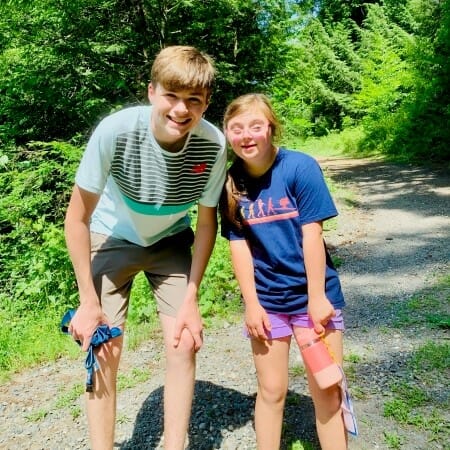
Gianluca and Ellie, a Buddy Up athlete, getting ready for a workout as part of Buddy Up Connections, started by the latter in Hanover, NH./Courtesy Gianluca Audia
One of my favorite memories as a kid is giving to others and seeing a need. I remember telling my mom in second grade that I was sad the Easter Bunny wouldn’t be able to visit kids at the hospital. So, we brought packaged eggs, candies and paper airplanes to the Children’s Hospital in Hanover. My mom has always fostered this idea of helping others and being appreciative of the opportunities that I have.
Describe your volunteer role with Swing into Spring and Buddy Up.
I organized the Spring into Spring event to raise money and awareness about the need for adaptive sports. We got to really take advantage of the amazing tennis community of Upper Valley as we also rallied behind this cause to bring a Buddy Up clinic to our community. I leave the tennis and fitness clinics to the coaches and staff at River Valley Club–it’s been running for about five years now—but I love being a buddy to athletes Ellie and David and helping out.
In 2021, I was the Northeast Regional Coordinator for Buddy Up and spearheaded the launch of Buddy Up For Life across New England, a program that offers life skills classes to people with Down Syndrome. I go to boarding school, so I’m not able to go every week but I love going back on breaks. It’s grown from just tennis to multiple other programs.
Another of those has been Buddy Up Connections, which was born out of COVID when we couldn’t hold tennis clinics. Buddy Up Connections got us active and together over Zoom. Then, as quarantine got relaxed, we met in person.
Can you expand on Buddy Up Connections?
We structured hour to hour-and-a-half meetings over Zoom with a 30-minute fun workout and an activity. Then we could just talk afterwards. Some of the activities were home stuff like building a baking soda volcano or making cupcakes. My buddy Ellie and I had a lot of fun that summer paddleboarding, hiking, playing tennis and just walking my dog after we could meet up in person.
I helped bring Buddy Up Connections Club to Phillips Exeter, my high school, too. I connected students with athletes from all over the nation in areas that had a local Buddy Up program but, due to COVID, were taking some time to restart. We provided them with another Buddy Up program to keep them active and connected. I coach and mentor the buddies and oversee logistics.
What is the age range of people who can participate?
There was one session where we had one athlete who was three or four years old. We were helping him hold the racket and just running around a bit, keeping him active and entertained. In that same session, we had another athlete who was 55. We accommodate all ages. For buddies, too, of course. The more the merrier.
Gianluca Audia, creator of the Swing Into Spring tennis program that raised over $23,000 and helped get Buddy Up established in the Upper Valley of New Hampshire./Courtesy Amanda Temple
What’s been the most rewarding part of your work?
It’s seeing the smiles and the laughter; everyone is so happy. And seeing the community that has formed around Buddy Up in the Upper Valley. I went to preschool with Ellie, so I had the pleasure of knowing her before this started, but I’ve been able to meet so many other people and their families that the program has helped. Being able to share something I love with others, especially others who wouldn’t be able to do it otherwise, is very fulfilling.
What have you learned through your experiences as a volunteer?
I’ve really learned how to make others feel more comfortable and connected with me. One thing that I struggled with at the start was when the athletes were a little hesitant or weren’t feeling like they wanted to play tennis or do pushups that day.
The music and keeping everything fun helps that, but oftentimes, you need to be a little inventive. One of my favorite memories with David was one day he didn’t want to run. A lot of these athletes are uncomfortable with touch, so I couldn’t just grab his hand and take him out onto the court.
Instead, I grabbed towels, and I told him we’d race as superheroes, using the towels as capes. The Flash is one of his favorite superheroes, and he was immediately a lot more excited. It’s small moments like that. It’s been something I’ve really enjoyed and that has really helped me grow.
Why is it important for others to get involved in causes they care about?
There are a lot of unexpected moments of growth that will come from whatever you do, but especially from helping and connecting with others. You get a very special opportunity to learn from other people.
What do you want people to learn from your story?
Take a chance, and don’t take anything for granted. With tennis, for example, I’m very grateful that I’m able to play. But I also took a chance. I had never interacted with anyone from Buddy Up before I reached out to them on a whim. And look how far it’s gone. Just take a shot.
Will you be playing tennis in college?
I’m definitely looking forward to joining the club team. I’m just super happy with the journey that I’ve been on and where it’s taken me, and I’m looking forward to continuing my work with Buddy Up.
Meet Daily Point of Light Award honoree Yvonne Koehnen. Read her story and nominate an outstanding volunteer or family as a Daily Point of Light.
“Bees, bees, bees have been my whole life!” says Yvonne Koehnen of her nearly 60-year career in beekeeping. She was a school teacher when she married a beekeeper. She could have gone on teaching, but her husband convinced her that beekeeping was far more lucrative.
C.F. Koehnen & Sons is a well-known apiary in the United States. You might associate apiaries with honey, but this one doesn’t sell honey. In the Sacramento Valley, there aren’t enough wildflower meadows to sustain bees when they forage; this means the bees have to be fed, which defeats the purpose of keeping bees for honey. Instead, the company performs pollination services for local farmers. The bees are taken to fields to pollinate almond trees, prune trees and smaller plants such as cucumbers, carrots, onions, watermelons and cantaloupes. The seeds from these plants are then harvested and sold to seed companies. The company also raises queen bees which are shipped to hobbyist beekeepers and other customers across the United States.
Beekeeping has been an important industry in the Northern California agricultural area, especially as more almond trees were planted. This required more bees to pollinate the almond trees. Tens of thousands of queen bees (80% of the queen bees in the United States) are produced annually in the area, leading to the designation of the city of Orland as the “Queen Bee Capital of North America.”
Yvonne has long been passionate about volunteering her time to educate others about bees and beekeeping, sharing her knowledge garnered from years of beekeeping. With the help of some good local beekeepers, Yvonne and her husband formed a committee to create a bee museum. Today, the Honeybee Discovery Center works to build public awareness and understanding of bees, whose numbers are declining alarmingly due to pesticides and loss of habitat.
What inspires you to volunteer?
I was volunteering long before I ever realized that I was volunteering. I just did what happened along the way as a beekeeper’s wife. I gave many talks about bees to elementary classes in local schools when the students learned about insects in the spring. I set up and organized a two-day event all about bees and beekeeping annually for over 14 years at a threshing bee which involved 10-12 beekeepers to man our different canopies explaining how to raise queen bees, pollination, an observation frame and, of course, the bee beard which was done twice daily. That’s a lot of organizing, but it was so much fun, and everyone enjoyed it so much.
Yvonne Koehnen is the founder of the Honeybee Discovery Center, a nonprofit that teaches the public about honeybees and the rich history of beekeeping in Northern California./Courtesy Yvonne Koehnen
Describe your volunteer role with the Honeybee Discovery Center.
I have been involved in many areas of our bee museum over the years, and created its more exciting name: the Honeybee Discovery Center. We hired a first-class architectural firm from Sacramento to create a state-of-the-art center, and it will be outstanding. Our mission now is to raise the $8-12 million to build it. My big focus now is to find big sponsors to contribute. We’ve done very well on our own raising funds each of the last few years in which we raised over $90,000 each year. But we need big help to build a building and this building is just a spectacular design, as you can see on our website.
What’s been the most rewarding part of your work?
I love seeing how little kids – and adults too – respond to learning about bees. I am committed to creating greater awareness and getting people passionate about protecting honeybees and other pollinators. Everyone wants to know how they can help to save the bees. I tell them to plant flowers for the bees. The bees need the nectar and pollen for their food.
What have you learned through your experiences as a volunteer?
Volunteering is a wonderfully satisfying venture. I believe it sets the United States apart from other countries. There are so many opportunities to volunteer. All people have a certain little passion they care about, and if they just check into things a little, they can find a fun way to add some excitement to their lives.
Are there any future partnerships, programs, or events that you are excited about?
Yes! Please check our website honeybeediscoverycenter.org for a big announcement, which will likely come before April. It is so exciting, nearly confirmed, but not yet able to be announced; it will be an amazing plus for our center!
Our Honeybee Discovery Center is creating a partnership with California Foundation for Agriculture in the Classroom for the bee curriculum.
“Casino Night with the Queen” on November 2, 2023, at the Butte Creek Country Club in Chico, California, will be a fun-filled fundraising event we are looking forward to enjoying with many locals who enjoy casinos.
Why is it important for others to get involved with causes they care about?
If you wish to enrich your life by meeting new like-minded individuals and you have a desire to make new friends, volunteering for a cause you admire or support may be the solution to fulfill a bit of unrealized happiness for you.
What do you want people to learn from your story?
What I’d like people to take away from my story is this: even if you don’t have the time to volunteer, you can help in other ways. If you’d like to help us build our Honeybee Discovery Center, please donate to the Honeybee Discovery Center. I’ll be so happy to send a thank you to you!
STEM-Passionate Teenager Helps Future Generations of Females with Access and Education
Meet Daily Point of Light Award honoree Zinia Khattar. Read her story and nominate an outstanding volunteer or family as a Daily Point of Light.
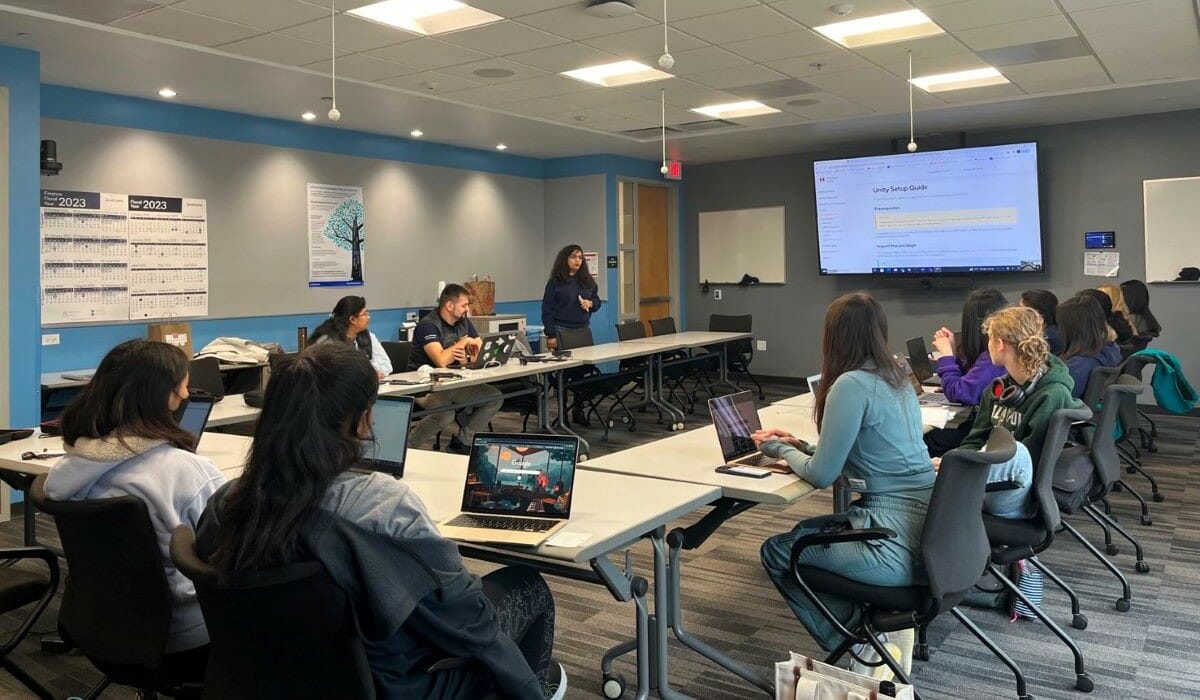
As a national headquarter leader of Scientella, a nonprofit that exists to empower the next generation of women STEM innovators, Zinia Khattar works diligently to ensure that future generations of girls are receiving more access to the world of STEM. Zinia, a resident of San Diego, volunteers across many facets of the organization, including organizing webinars and research/consulting projects for Scientella members.
She has worked closely with the program’s adult supervisors to arrange an Illumina research project, served as the manager of the Resmed Project, lead the Qualcomm Augmented and Virtual Reality Camp, helped organize the program booth at the San Diego Science Expo Fair and interviewed many professionals for webinars. She has also worked with other organizations at her school chapter to collaborate in fundraisers and contribute to the growing scholarship fund, currently at $80,000.
Scientella has reached roughly 280 girls from around the nation and has organized 25 different case studies, teaming up with Microsoft, Illumina, Resmed, HP, Quanterix, Navega Therapeutics, Qualcomm, Vizer, Embodied and professionals from other companies including LinkedIn and BrainLeap Technologies. By May of 2023, Scientella will have provided more than 12 scholarships of $1,000 dollars and greater to girls who have truly stayed involved in the work at Scientella and have made a difference.
Describe your volunteer role.
As a national headquarter leader of Scientella, a nonprofit established to empower the next generation of women STEM leaders, my role is to organize webinars and research/consulting projects for Scientella members.
As an ongoing board member for Scientella, I ensure the continued growth of the nonprofit by hosting interest meetings at different venues, managing selected social media accounts and reaching out to companies to advertise amongst employees.
What inspires you to volunteer?
Volunteering is a noble pursuit, as I have experienced firsthand as a leader of Scientella. The outcome of the efforts I put in to help my nonprofit succeed inspires me to volunteer. I know many peers have the same curiosity and desire as me to pursue a career in science and are eager to participate in corporate internships. However, just as an age requirement restricted me from applying, I have found my peers dealing with similar obstacles.
Through Scientella, I am able to provide students in my community with unique corporate activities many have always been interested in. Knowing that each day, an individual in Scientella is able to apply their skills in research of their choice has pushed me forward to continue using my connections and devoting my time to support them.
Among her many responsibilities, Zinia organizes webinars and research/consulting projects for Scientella members./Courtesy Zinia Khattar
What’s been the most rewarding part of your work?
It is gratifying to learn how students and peers I have interacted with have gone on to pursue great things. For example, in my school chapter, one participant was a senior who became actively involved in our Scientella matches, specifically our research projects with Microsoft and Qualcomm. She explored the depths of augmented and virtual reality, along with the features of cryptocurrency. Eventually, she took her learnings from Scientella’s experiences and applied them to other opportunities beyond our nonprofit, leading her to pursue an engineering degree at MIT.
Are there any future partnerships, programs or events that you are excited about?
This summer, Scientella is organizing another field trip to the Illumina Headquarters in San Diego. Like last year, we hope to partner up with organizations like Girls Who Lead and provide chances for middle and high school students to tour the labs and hear from employees at the company.
In addition, we have arranged for another Illumina and Microsoft research project, where in the latter, students will research the implications of ChatGPT.
Why do you think it’s important for others to get involved with causes they care about?
New norms can be established when there is a group of people advocating for a common cause. By knowing that there are likely many others in our community who have the same desires, and by getting involved in causes of your interest, each one of us can be a light and a representative of the things we treasure.
What do you want people to learn from your story?
Don’t be hesitant to take a leap and get out of your comfort zone. If you really want to make a difference, start with the people closest to you: your peers. Create a space of encouragement amongst your group so you can grow together. If you want something, don’t just think about it; make it happen.
New Jersey Teen Helps Keep Batteries Out of Landfills
Meet Daily Point of Light Award honoree Jashmitha Sappa. Read her story and nominate an outstanding volunteer or family as a Daily Point of Light.
Jashmitha Sappa is a high school sophomore from Edison, New Jersey. She first started to realize just how bad the human-caused damage to our Earth was around 2019. One major environmental hazard is something present in nearly every household: batteries.
With so many electronics now running on disposable batteries, many people don’t know that batteries shouldn’t be tossed in the trash because they are environmental hazards. Nearly 4 billion batteries are used every year in the United States, and most end up in landfills. Over time, as the batteries degrade, they leach heavy metals and other toxins.
This sparked Jashmitha’s interest in environmental issues. She quickly became involved in volunteering and joined with Recycle My Battery (RMB).
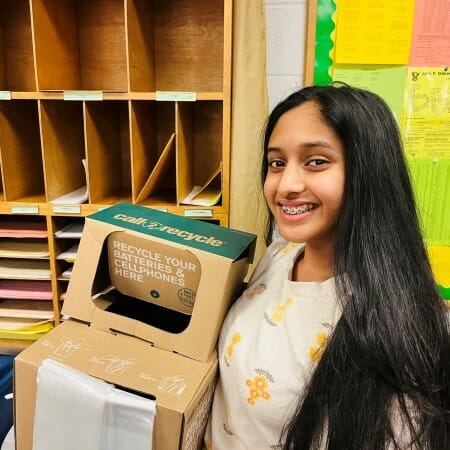
Jashmitha raises awareness and provides access to battery recycling. She has used her voice to spread awareness about battery recycling through different platforms, including in schools, communities and through social media. She’s held battery drives and placed multiple battery bins in various public areas such as schools, educational centers and communities to facilitate recycling batteries for the public. She has spread awareness to 4,000+ people and has recycled 1,000+ batteries. Jashmitha was selected by T-Mobile as one of the top 15 innovative changemakers teams out of hundreds and invited to the 2022 T-Mobile Changemaker lab at T-Mobile Headquarters.
Being the Director of the PR & Media team of Recycle My Battery is a significant part of who Jashmitha is today. Outside of RMB, she has many other interests. She is a passionate dancer who has been dancing for 11 or 12 years now (she also has a dance YouTube channel). She is part of her school dance team, and she enjoys baking, teaching arts and crafts to kids and tutoring kids.
What inspires you to volunteer?
I think it’s just the idea that I can help others or help combat an issue in some way. If I have the privilege and the ability to be able to take time out of my day to help the world in one way or another, then why not do so? Being able to spread the word on issues that I care about is also inspirational and keeps me motivated to volunteer.
Jashmitha Sappa placing a battery bin at her high school, to give access to more people to the battery recycling process./Courtesy Jashmitha Sappa
Describe your volunteer role with Recycle My Battery.
I’m the Director of the PR & Media team of Recycle My Battery. As the director of the PR & Media team, I work to spread the word about our organization, what we do and why we do it. We use various social media platforms – including Twitter, Instagram, Facebook and LinkedIn – to share updates about our organization, such as upcoming events or recognition that any RMB members have gotten for the work they do.
What’s been the most rewarding part of your work?
Seeing how the organization has grown over the years has been the most rewarding. I’ve been part of this organization from the very beginning, and it’s amazing to see how much we’ve grown and how many more people know the importance of battery recycling now, thanks to us. Also seeing how my efforts have been able to bring attention to these kids from the organization who are working hard to promote an environmental campaign is a really nice aspect of what I do in this organization.
What have you learned through your experiences as a volunteer?
I’ve learned how to do things without expecting something back. I find that many times as humans, when we do something for others, the majority of people expect something back, like a materialistic reward. But volunteering shows you that not all “rewards” are materialistic, and you don’t even need a reward. When you volunteer, you’re volunteering because you chose to help others without any expectations. So through my experiences in volunteering, I’ve learned to let go of the “do something to get something back” mentality, and move onto the “do things without expectations” mentality.
Are there any future partnerships, programs, or events that you are excited about?
I’m excited to expand Recycle My Battery’s social media presence. We’re seeing how to use our platforms more impactfully so that more people hear about us! We’re also looking to start releasing monthly newsletters showcasing any important environmental-related news of the month and highlighting things our organization has done. These are a work in progress and I can’t wait to release them!
Why is it important for others to get involved with causes they care about?
It’s important to get involved in the causes you care about, simply because you care about them. If there’s a change you want to happen, or you want to see more people learn about a certain issue or cause, looking at it won’t do anything. Getting involved will help you make this change, and also will help you learn more and go deeper into the cause. Also, finding something that you’re passionate about is amazing and keeps you motivated.
What do you want people to learn from your story?
I just want people to see how great volunteering is! I know a lot of people my age only do it for volunteer hours, to get recognized by colleges or to receive scholarships. In the midst of all this, some people forget the real meaning behind volunteering, and how you need to find something you’re genuinely passionate about to get involved.