The Many Ways Millennials Engage: Points of Light’s New Civic Engagement Research
The COVID-19 pandemic was just the first of a series of major events that turned 2020 into one of the most active and meaningful years of civic engagement the United States has ever seen. While the pandemic initially prompted plenty of action on its own, other significant occurrences further transformed life for Americans: nationwide demonstrations on racial equity, a contentious U.S. presidential election and an assault on the U.S. Capitol.
To truly understand the civic responses and opportunities these events catalyzed, Points of Light embarked on a series of actions and research studies to help individuals, businesses and nonprofit organizations find rewarding roles within civic life. In 2021, in partnership with Influence|SG, we focused the research on the civic engagement of the millennial generation, the largest generation in history, the one occupying the majority of the workforce and largely responsible for shaping our “new normal” as we emerge from the pandemic.
, shares how a concentration of extraordinary experiences in a brief period of time has influenced the civic involvement of the millennial generation and whether their intentions to do more for society have or are likely to come to fruition.
This research builds upon Points of Light’s 2020 civic engagement research “Civic Life Today: A Look at American Civic Engagement Amid a Global Pandemic,” which studied the attitudes, motivations and barriers to civic engagement. This year’s report includes some fascinating findings, namely that the issues that millennials are most concerned about are not necessarily the same ones they’re taking action to support.
The research shows that millennials view social issues through a very personal lens. Whereas social issues used to be something they volunteered for to help other people, they now see themselves as among those affected. And for companies and nonprofit organizations, this insight should certainly impact communication strategies.
Organizations across sectors would be wise to implement methods of two-way communication. No longer is it enough to ask for support or donations with the latest cause. For organizations to become a conduit for millennial civic engagement, they must partner with this generation to find solutions that work for all parties involved.
Millennials believe companies should be actively involved in social issues, and two-thirds visit corporate websites at least somewhat often to learn about their efforts. This means that corporate social responsibility is no longer a bonus effort or a nice-to-have — it’s directly affecting brands’ bottom lines. The same goes for recruiting and retention of the millennial workforce.
Points of Light will also host a webinar on Oct. 7 at 1 p.m. ET, featuring our President & CEO Natalye Paquin and Influence|SG’s managing director Derrick Feldman, to take a deeper dive into the research.
as well as key takeaways for applying this research as we forge ahead, making decisions that will shape the culture, policy and ethos of our brave new world.
How To Support Natural Disaster Relief Efforts
As natural disasters increase in frequency, we all express our deepest concern and compassion to all those affected, but sometimes that doesn’t feel like enough. Many of our Global Network affiliates and partners have mobilized to provide critical disaster relief services in many disasters, from emergency housing assistance to food and supply distribution.
Individuals throughout the nation and across the globe are searching for ways they can help support these relief efforts. Below we’ve included some tips for how you can maximize your contributions, provide help where it’s needed and keep from hindering the necessary emergency services in motion right now.
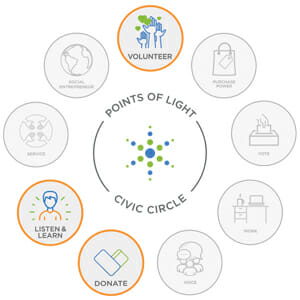
offers a holistic framework to help businesses, nonprofits and individuals to understand, identify and engage in the full scope of civic life. There is perhaps no better time to see the breadth of these various vehicles of engagement than during a crisis. Below are three ways you can make an impact and support relief efforts, as recommended by Points of Light and our Global Network disaster committee.
Want to donate? Donate cash. During a disaster, many people think the best way to help is to donate food, clothing or goods to those affected. But money is actually the most needed commodity in times of crisis, because it allows experienced responders the flexibility to obtain the exact resources needed. Numerous local and national organizations are assisting in the rescue and recovery efforts. Do your research thoroughly, as scams can unfortunately arise during natural disasters. Many nonprofit organizations make Amazon wish lists for donors during a natural disaster. This tool allows you to fill in a specific and immediate need for a disaster-affected community. To check if these are legitimate organizations, you can look them up on Charity Navigator to make sure donations and other efforts are going to those in need. Also, check with your employer and ask if they are able to match funds donated by employees. Corporations and organizations have immense potential to make an impact after a natural disaster. Many companies have existing donation-matching programs already in place, and others are happy to set up such a program for specific circumstances. Some of Points of Light’s recommended partners include HandsOn New Orleans, United Way of Acadiana, United Way of Southeast Louisiana, HandsOn River Region, American Red Cross, Good360, World Central Kitchenand Team Rubicon. Read more about impactful donations in the Donate issue of Civic Life Today.
Volunteer with an agency — not on your own.Volunteering locally during a crisis is an excellent way to provide boots-on-the-ground support. But don’t go it alone! Self-deploying in a disaster area is incredibly dangerous and you can inadvertently undermine the efforts of expert responders. Instead, support relief efforts by finding a Points of Light Global Network affiliate in your area, and wait until they ask for volunteer support. Many times, the most needed relief services with these organizations can happen remotely from your home.
Practice patience. Remember that recovery is a long (often multi-year) process. So if you feel like there’s little you can do right now, be patient. There will be volunteer and cash needs for many months, often years, after the disaster – especially when the community enters the long-term recovery period. Organizations that specialize in disaster relief tend to lose donations and volunteer support as time passes, so they’ll be glad to have as many people as possible stick around for the long haul. Stay informed by listening and learning to find out what the community needs and meet them where they are. And in the meantime, share on social media to use your voice to raise awareness about the disaster relief and long-term recovery needs.
For anyone impacted directly or indirectly by a natural disaster, the national Disaster Distress Helpline (DDH) offers 24/7 crisis & emotional support to anyone in the U.S. impacted by natural or human-caused disasters/traumatic events. Callers to the DDH 1-800-985-5990 can connect with counselors in 100+ languages via 3rd party interpretation services.
Follow us on social media @PointsofLight for updates from Points of Light and our Global Network affiliates.
3 Ways to Support Relief Efforts in Haiti and Afghanistan
Points of Light and our Global Network stand in compassionate solidarity with those impacted by the events in Haiti and Afghanistan. We value that acting globally means acting locally and have already seen our affiliates respond to pressing needs, from providing refugee housing assistance to organizing donation drives in their local communities and more.
In the immediate aftermath of any natural disaster or upheaval, we know that you may want to step up to help. Below are three ways you can make an impact and support relief efforts,
as recommended by Points of Light and our Global Network disaster committee.
Cash is best. Research and donate to a reputable international relief organization. Cash gives agencies the most flexibility in obtaining the most-needed resources, and a donation helps to put experienced responders on the ground, giving them the tools they need to help people recover. It’s also important to avoid charity scams, and background research can help make sure that your donation goes to a legitimate organization.
Register to volunteer with a responding agency. Do not self-deploy and don’t underestimate the complexity of working in a disaster area. Until a need has been identified and the community impacted has requested support, volunteers should not enter. There may also be opportunities to support disaster relief efforts from home or in your local community. Find a Points of Light Global Network affiliate in your area to learn how local organizations are responding to the events in Haiti and Afghanistan.
Be patient. Recovery lasts a lot longer than the media attention around international events. There will be volunteer and cash needs for many months, often years, after the disaster – especially when the community enters the long-term recovery period. Continue to monitor relief efforts and the organizations responding to the events so you’ll be ready to take action and connect to an opportunity when the need arises.
Follow us on social media @PointsofLight for updates from Points of Light and our Global Network affiliates.
A Year of Service: An Alternative Option for Young People
For high school students and college students alike, saying senior year is a busy and stressful time is an understatement. If you’re in high school, you’re probably beginning to complete the Common Application and registering to take your SAT. If you’re in college, maybe you’ve just completed a summer internship or you’re still looking to get work experience as you take your last year of classes. You’re preparing for the next step in life and may be wondering if the step you’re taking is the right one. Perhaps you feel just a bit under pressure during this transitional time.
Instead of going straight into college or entering the workforce immediately after graduation, some may decide to take a gap year. For others, neither their parents or bank accounts may support that kind of time off. Another option remains, however. Completing a year of service is one step that an increasing number of young people consider instead.
issue can give you a lot of details on what service means to those of us at Points of Light. In a nutshell, service is when you commit your time, energy and talent to public, national or military service. Traditionally, you’re giving a larger part of your time and/or skill than you would with volunteering. Many service roles are considered part-time or full-time positions.
How do you know if a year of service is right for you? Ask yourself:
Would you like to spend the next 9-24 months doing something a little different that positively impacts a community?
Are you able to devote your time and energy to a particular cause or work with a community that may or may not be different than your own?
If you’re looking to work in a community different than the one you grew up in, are you willing to learn about the community first and understand how they define their needs, then partner with them for a solution?
If you answered yes to any of these questions, take a look at a few service year options that are a good fit for people looking to give their time and skill for one to two years.
The largest service year umbrella program where you can find federally-funded opportunities through its three main service year categories: AmeriCorps State and National, AmeriCorps VISTA and AmeriCorps NCCC (National Civilian Community Corps).
Age or Experience Required
The age and experience requirements vary based on the particular program. See more on opportunities
Full-time AmeriCorps State and National members are given a modest living allowance, health care benefits and childcare, and they become eligible for the
A federally-funded program for U.S. citizens who would like to complete a service year abroad. You’ll partner with communities to make changes that are sustained after your service year is complete.
Age or Experience Required
U.S. citizens ages 18 and over are eligible. The program is best suited for young people with a college degree, making it a better option for those who aren’t looking to take on traditional employment right after college.
Benefits
Volunteers receive housing and a living stipend that enables them to live in a manner similar to people in their community of service as well as healthcare, student loan benefits, a stipend to help them transition into life after their service is complete and career and graduate school support.
Are there other options?
There are many state, city and private institutions that offer short term or yearlong service opportunities, such as
. Think about a particular issue you’d like to learn more about or part of the world you’d like to work in and there are sure to be service opportunities available. Always check with the Better Business Bureau or other authority to ensure the opportunity is legitimate. Happy decision making!
Honor & Remember: Ways to Participate in 9/11 National Day of Service
9/11 National Day of Service is an opportunity to turn tragedy into a day of remembrance and service. As we approach the 20th anniversary of September 11, 2001, this is an opportunity to pay tribute to the lives of those lost and injured, as well as create a new moment of meaning on this day.
Here are a few ways that you can participate in this day of remembrance and help make the world a better, kinder place.
Teach youth about the significance of this day with 9/11 Day lesson plans
Currently, young people were not even born when 9/11 happened, and many under 25 years old were too young to remember the experience. Fortunately, the
to be used for both virtual and in-person learning. If you’re a teacher, utilize the website for some helpful tools to share the importance of this day with your students.
Take action with DIY toolkits for first responders
On this historic day in 2001, first responders bravely provided emergency services to thousands across the Northeast United States and throughout the nation. These essential workers helped ensure that critical needs were met, often working constant overtime to show up and help. Now, during the COVID-19 pandemic, essential workers are still providing services to communities everywhere. Why not recognize their efforts through a
has a variety of toolkits tailored to these specific needs. Find ways to inspire your employees to take part in virtual volunteering, download logos for your marketing materials and more.
Join the 9/11 Day in Packing 2.5 Million Meals
On Sept. 11, 9/11 Day is organizing meal packing events in the following cities:
offers idea sharing around creative, impactful and inspiring ways for people to engage in their communities, so search for an organization near you to find out more. And stop by our
to identify in-person and virtual volunteer opportunities near you.
5 Ways to Volunteer During Back to School Season
We’re officially closing out the summer season and heading back to school; it’s an excellent time to begin or continue our commitment to civic engagement. Plus, September is National Literacy Month, so what better time to focus your service efforts on promoting literacy and access to education? Below we’ve compiled a list of some DIY service projects and volunteer ideas you can do to make it a successful school year for students. Additionally, always ask around in your community to see who is already doing some of this work and how you can support them.
Start a mobile library or hold a book drive. Early access to books is a key step in education, however many families aren’t able to afford or access books regularly. One way you can help provide greater accessibility to books is to start your very own mobile library, or hold a book drive in order to get more books into the hands of kids! Check out our detailed instructions here for starting a mobile library.
Tutor and Read to Youth. You can work with an organization like Story Mentors or Get Ready Set to help school-aged children become more confident readers. Sometimes, it just takes a little one-on-one time with a patient adult for a young reader to master the skills they need. JT Wu, a Daily Point of Light Honoree, founded Preface, a nonprofit that promotes childhood literacy by pairing high schoolers with elementary school students to mentor and read to them. You can work with a young person through a similar organization and make a big impact!
Put together a back-to-school backpack. According to the National Retail Federation, a caregiver will spend on average $789.49 on back-to-school supplies. For some families, this can be very challenging. So if you’re able, why not put together a backpack for a fellow student who needs one? Read our guide for tips on how to identify someone who might need a backpack, pulling together all the supplies and delivering to your school. Many local nonprofits will also hold backpack drives.
Host a Literacy Game Night. Help youth (and adults too!) practice their speaking skills and learn new vocabulary words by hosting an in-person or virtual game night. Games like Scrabble and Simon Says are ideal group activities for people with a wide range of verbal skills, and more advanced games like Scattergories are a fun way to build those more advanced linguistic skills. Daily Point of Light Honoree Sneha Nadella has done incredible service work with the World Literacy Foundation and knows the power of helping non-native English speakers to learn the language. Check out our step-by-step guide to help English Language Learners from anywhere in the world.
Inspire Students Love of STEM. As new fields are developed every day, young learners need to continue to be passionate about important fields like science, technology, engineering and math. Daily Point of Light Award honoree Serena Pei volunteers with Engage STEM, to ensure access to students for STEM tutoring and provides resources for learning outside the classroom.
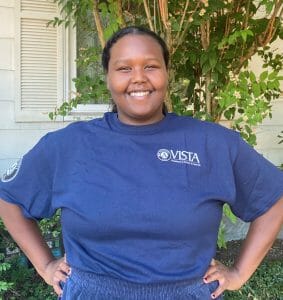
My AmeriCorps service year has been a huge part of my development both professionally and personally. The act of service is an integral part of the community I was raised in. My family and I immigrated to the United States at a young age and settled in the Pacific Northwest where we were met with a community of people who shared our background. We were immediately drawn to each other and supported one another through the difficulties of building a life in a new country. The kindness and service of others has been lifechanging for me and my family and because of that, the importance of service was instilled in me early on.
When I became a barista at Starbucks, I wanted to play a bigger role in the community I worked in. This meant doing my own research to learn about the needs in my community and how I could get involved. I found an organization near my store and was able to host a diaper drive in support of them. This was a great way for me and my fellow baristas to become engaged in community service. This experience made me curious about other ways I could lend my hand. After some digging, I learned of a program through Starbucks called The Starbucks Foundation Service Fellows (a program developed in partnership with Points of Light). I joined enthusiastically and was placed at an organization called United Way of King County, not knowing what this organization would have in store for me.
During the seven months of this fellowship, I worked with the Volunteer Engagement Team where I supported Martin Luther King Jr. Day of Service, built relationships with community-based organizations and was able to try my hand at a small amount of grantmaking. It was so exciting to engage with community in this way and to gain new skills while doing so. I didn’t want this time to end so I investigated ways I could continue to support this organization. I learned of a program called AmeriCorps VISTA or Volunteers in Service to America, in which an individual works a full time, one-year term at an organization to help build their capacity. This was just what I wanted. I was excited about the possibility of doing this work for an entire year. Shortly after my fellowship ended, I began my AmeriCorps term working on an early learning program called ParentChild+.
I worked with a brilliant team in the education department where I learned that achieving education equity started at an early age and that we needed to be strategic about how we made sure that children who are Black, Indigenous, and People of Color (BIPOC) have equal possibilities in the American school system from the start by providing culturally relevant educational support through this program. This was a huge turning point for me as I realized that a program like this could have been so helpful to me as a child. I learned that the number of BIPOC children who are not kindergarten ready was disproportionately higher compared to their white peers and I felt a connection with that experience. Throughout the year, I was encouraged to provide input on decisions made about the program and to continue my learning and participation in other areas of the organization, as well. I was a sponge during my term of service and learned, more intimately, about the needs of the community and how to think strategically to address the inequities that affected BIPOC communities, which included my own.
While I gained so much from my year of service, it was not without challenges. AmeriCorps has historically been a program that pays a living stipend under the federal poverty line. It was a challenge to support anti-poverty work while making such a low monthly stipend. I can imagine that for other BIPOC AmeriCorps members, who similarly may not have the generational wealth that others have to support them through the program, it was a challenge too. For the program to encourage more BIPOC individuals to apply and serve, I think it’s imperative that AmeriCorps members are paid a livable wage and that we acknowledge the important lived experience of BIPOC members who are uniquely positioned to respond to the tragedy of poverty that disproportionally impacts BIPOC communities.
My time as an AmeriCorps has come to an end, but I’m excited to take the skills I learned and transition them into my new position as a volunteer engagement manager at the same organization I served with, United Way of King County. I know my AmeriCorps service year was a huge part of the reason I got this opportunity and I’m so thankful. My commitment to service has taken me in many directions but it culminated in committing a year of my life to serve as an AmeriCorps VISTA. It was truly a life changing year.
Representation Matters: An Interview with Nicole Cannizzaro
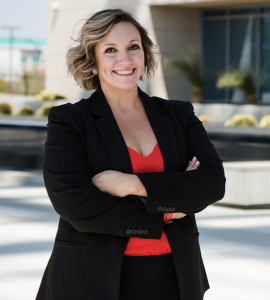
Nicole Cannizzaro was first elected to the Nevada State Senate in 2016. In 2019, Nicole became the first woman elected to the position of Majority Leader of the State Senate in Nevada’s history.
During her time in the legislature, Nicole has been a passionate advocate for our state’s most vulnerable communities, sponsoring legislation to protect senior citizens from elder abuse, crack down on domestic violence offenders and eliminate barriers for disabled veterans to obtain medical treatment. She also took the lead on legislation to increase access to mental health services through mobile mental health units and provided more workplace protections for pregnant women. She has also been a champion for Nevada public schools, passing the two largest education budgets in state history in both her sessions as Majority Leader of the Nevada Senate.
Nicole was born and raised in Las Vegas. A lifelong Nevadan,
she
is a product of Nevada’s public K-12 and higher education systems. She earned a Bachelor’s in Business Administration from the University of Nevada, Reno and, following college, she earned her law degree from the UNLV Boyd School of Law. Upon graduation, Nicole began her legal career in private practice with a focus on civil litigation. Nicole ultimately decided to pursue public service, and she joined the Clark County District Attorney’s Office in 2011. Currently, Nicole works as a Chief Deputy District Attorney in the gang unit. Nicole is married to her husband, Nathan, and they welcomed their first son this summer.
What inspired you to run for office and be a public servant?
For me, running for office is about supporting the community around you. Growing up, my parents worked as a bartender and a waitress. They moved to Nevada because there were opportunities for jobs. Not having a high school education, they worked hard every day to make sure my sisters and I had everything we needed.
When I was in elementary school, my mom used to work at a lunch cafe downtown and, from time to time, my dad would have to pick me up from school and drop me off at her workplace until she finished the shift. My parents worked opposite shifts to ensure someone was always home with the kids and someone was always working. The cafe was about a block away from the courthouse downtown. Naturally, the seats were filled with lawyers having lunch with colleagues. I saw them and thought lawyers seemed so cool, wearing suits, carrying briefcases and discussing important topics. From an early age, I told my mom I wanted to be a lawyer. That was a lofty goal in my family, but my mom told me if I worked hard and went to school, I could be a lawyer. I was fortunate to get a good education from teachers who cared about my education. They pushed me and challenged me. I earned a state scholarship to attend college, a scholarship the Nevada Legislature actually created.
I graduated from the University of Nevada, Reno and went on to attend law school at the University of Nevada, Las Vegas William S. Boys School of Law. I now work as a prosecutor in the District Attorney’s Office, just across the street from what was once a little lunch cafe filled with lawyers. This community gave me the opportunities to succeed, without which, I would not be where I am today.
As someone who benefitted from the community around me, I found myself engaged by the very issues that were so instrumental to my own experience; things like giving students a quality education, ensuring good paying jobs exist here and supporting working families. I became interested in how those decisions were being made at the state level, and eventually, decided to run for legislative office in hopes of working on those issues. If I wanted to make sure our state was investing in the same kinds of opportunities that afforded me the ability to succeed, then my voice needed to be at the table. What inspired me to run was my own experience and all of the support this community provided to me. The chance to serve in the legislature allows me to ensure Nevada is still the kind of place where opportunities are possible.
Politics can be polarizing for people. Why do you think public service is an important way to be civically engaged?
Politics can be a difficult space to feel comfortable because there can be so much disagreement and polarization. But, so many decisions that affect our everyday lives are made in the political and legislative space, and getting engaged in public service is one of the ways to ensure important voices and positions are part of those decisions. It can be easy to walk away from engaging in public service, but I would offer that without opposite viewpoints, we would be homogeneous in how we approach solutions to everyday issues.
I believe there is a healthy space where we can disagree, yet still hear each other out and come up with solutions that consider and address those differing viewpoints. There are so many shared values we have – things like ensuring kids can get a quality education, for example – and if we focus on coming together with those shared values in mind, there is room to have a healthy discussion about those issues without being polarizing. I would encourage anyone thinking of getting involved in public service to not get discouraged by the common notion that everything in politics is polarizing, and instead approach it as a discussion point to hear out all sides of an issue.
You’ve been a part of a number of significant firsts. You’re the first female majority leader in Nevada and the state is the first in the United States to have a majority-female legislature. Why is representation so important?
Being part of the first female majority legislature is not only exciting from a historical context, but also because it has allowed for voices that have traditionally been unrepresented in state legislatures to be at the forefront of decision making. If you walk through the halls of the Nevada Legislature, there are rows of composite pictures from past legislative sessions lining the hallways. Female legislators make up not just a minority of the body, but in many of them, represent a few or a handful of spots.
Now, if you walk the halls of the Nevada Legislative building and you were to randomly stop by an office, the odds of encountering a female legislator are greater than encountering a male legislator. This shift in representation means the voices of those women and their experiences are influencing and impacting policy decisions for the State. When the representation of a body reflects the people in the community, or when a traditionally underrepresented population is now part of the majority, those voices are better able to be heard, considered, and are therefore more impactful.
By example, prior to the female majority, there had been numerous attempts to pass an equal pay bill. Some versions over the years were heard and even voted on, while others were introduced, but never even given a hearing. During those hearings, the discussion often focused on whether equal pay was even an issue worth considering. Once we got a female majority, the conversation shifted from whether it was worth discussing to how we could implement a law that was balanced and purposeful. The conversation changes when more voices are at the table to share their experiences. I find the more we have diverse representation, the more those points of view can impact the policy decisions being made at the legislature.
Being the first can present some challenges. What have been the biggest obstacles you have encountered thus far? How do you overcome them?
Just prior to the 2018 elections, I started to get asked what would happen if we ended up with the first female majority legislature, and whether everything would change or if we would be able to continue to get the business of the State done during the legislative session. People were nervous about whether having a majority of women would mean that traditional topics or the essential business of the state would be set by the wayside. Instead, would we only focus on issues deemed to be “women’s issues”?
I think people were afraid of what and how much would change with a shift in leadership and representation. Any time you are the first of anything, you want to set a good example of what that milestone means. If you are breaking the mold, you also become the building block for the future and a new mold that people will follow, so naturally you want to do a good job and be able to look back at your accomplishments with pride. There’s also quite a bit of added pressure to make sure you are successful.
With the female majority, there was this idea that we might not be able to accomplish what we needed to, and if that did happen, it would then set a precedent that women cannot legislate effectively. It would make it more difficult for women to get support running for office, and certainly more difficult to fundraise to support those races. It would make it more difficult to elevate women to positions of leadership in the future or to trust them to handle important pieces of legislation.
So, there was a bit of pressure to make sure we had a successful session. In the end, we not only brought women’s issues to the table, like ensuring pregnant women had accommodations in the workplace, but we also managed to pass a state budget, fund education at the highest levels ever seen in the state, invest in renewable energy and create jobs, pass safeguards to reduce healthcare costs and so many other things that we left that session with a lengthy list of accomplishments that were done by the first female majority legislative body.
What advice would you give to someone who is interested in service but doesn’t know where to start?
There are so many opportunities to get involved in public service, not just getting involved in the legislative space, and I would encourage anyone who is interested in public service to start by thinking about the issues they are passionate about. For me, it was education and jobs, and most of those decisions are made at the legislative level, so that was a natural place for me to start. I actually just reached out to a few sitting legislators and their staff and started asking questions. I think that can be a highly effective way to figure out what the best approach may be for you. Wherever those decisions are being made for the things you care about, that’s where you need to be. Don’t be afraid to reach out, ask plenty of questions and jump in.
Service Is a Catalyst: An Interview with Scott Beale
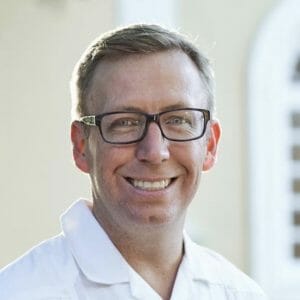
Scott is a lifelong champion for international volunteerism. Currently he is the Associate Director of the Peace Corps leading the agency’s global operations. He is passionate about supporting leaders from diverse backgrounds in the U.S. and around the world. For the past 15-years, Scott founded and led
, a leadership development program for the world’s best social change professionals.
Sometimes called a “reverse Peace Corps,” Atlas Corps brings leaders from around the world to serve in the U.S. Atlas Corps has supported more than 1,100 individuals from 110 countries. The Nonprofit Times twice named Scott one of the Top 50 Nonprofit CEOs in the U.S.
Previously, Scott worked with the State Department in India; he led Ashoka’s Youth Venture; he served in the Clinton White House as the associate director of intergovernmental affairs; and worked with Governor Carper when he was Chair of the National Governors’ Association. After volunteering in Mostar, Bosnia in 1996, Scott returned as a core supervisor for OSCE organizing the first-ever municipal elections.
He also authored ”The Millennial Manifesto,” a book on the politics and activism of the Millennial generation in 2003.
Scott has a bachelor’s degree from Georgetown University and a master’s in public administration from the University of Delaware. He is a Presidential Leadership Scholars alum and was an adjunct professor at Georgetown and UVA. He serves on the Board of AIESEC USA.
He has lived in eight different countries.
Scott is a triathlete who has completed a half-Iron Man and enjoys racing with his wife and two sons.
What role has service played in your life both personally and professionally?
My parents were both teachers and my education was paid for largely by the generosity of scholarships. Due to my parents’ influence and as a result of benefitting from the generosity of others, I committed myself to service early. This has been through public service (White House, State Department, Peace Corps) and through nonprofit service (as a volunteer in DC and Bosnia, and professionally through Ashoka and Atlas Corps). Initially service was a way for me to support a school, a community and a nation that had given me so much, but quickly my service evolved into a way to develop my own skills and to build my empathy and knowledge in a complicated world.
As a student at Georgetown, my service journey started through student government and expanded to include Alpha Phi Omega (international coed service fraternity). Through these groups I developed my leadership abilities and learned that I had the power to not only make a difference through my own actions, but to inspire and assist others on their service journey. I also learned the importance of building a personal community that inspired me to do more as well. These friends inspired me to volunteer at a youth house in Bosnia in 1996 and then drop out of school in 1997 to work for State Department organizing elections in Bosnia. Service put me on a trajectory that led to launching an international nonprofit that provides opportunities for thousands of people around the world to volunteer and to now leading global operations at the Peace Corps.
What is Atlas Corps and what inspired you to found it?
Atlas Corps is an international nonprofit with the mission to address critical social issues by developing leaders and strengthening organizations through professional development opportunities that include an overseas exchange as well as online training. Atlas Corps is most known for being a “reverse Peace Corps” that identifies civil society leaders overseas and gives them the opportunity to volunteer in the U.S., but the organization also has a robust online training program as well. Over the past 15 years, 1,100 leaders from 110 countries have joined the Atlas Corps Leaders Community.
I was inspired to found this organization because my own experience as a volunteer in Bosnia taught me the powerful affect service can have on developing one’s professional capacity and leadership skills. And while living in India as a U.S. Diplomat, it occurred to me that more people overseas should have the opportunity that I had to serve abroad. I was struck by how talent is universally distributed in the world, but opportunity is not. I founded Atlas Corps to give the world’s best leaders the opportunity to serve in the U.S. to advance their professional development, while also allowing people in the U.S. to learn from their perspectives and experience.
During your career, how have you witnessed the impact of service on an individual?
Much of my career has been focused on long-term, overseas service. I have interacted with thousands of people from all over the world who have participated in this type of service and it has literally changed the lives of every single participant. It is impossible to volunteer outside of your country for an extended period of time without being impacted by that experience.
One Atlas Corps Volunteer from India, Meenakshi Monga, who served at Making Cents International in the U.S., thanked me for changing her life and went on to say, “You’ve also changed the lives of my future children and grandchildren. This experience of service overseas has changed my perspective, advanced my skills and set me on a new path.” Her comment rang true with me because I met my own wife volunteering in college and our experiences volunteering overseas led us into State Department. We now have two boys who have spent most of their young lives abroad while my wife and I worked in Cuba and Mexico. There are so few decisions as powerful as the decision to volunteer abroad; it changes your life, the lives around you and impacts generations to come.
As you’ve noted, we know programs like Peace Corps and Atlas Corps have a profound impact on the people who serve. Tell us more about the importance of service for communities.
I believe one of the long-term effects of the pandemic is a reorientation of the focus from self, to a wider focus on others. My hope is that as we get through the terrible wake of COVID, there is a greater appreciation for how our actions can harm, or help, others and that we do not live in isolation.
To me, service is the highest form of love for others. In particular, volunteerism is most powerful when done with a humble heart, and an open and informed mind. We live in communities, in a country, in a world with great inequality – not just of resources, but also of opportunity. We live in a world shackled by structural racism and injustice. In different ways we are all a part of it and we are all held back by it. When done right (humble, open), volunteerism is a path to empower others and yourself to overcome some of these challenges. Whether tutoring a child in your community or in a refugee camp 1,000 miles away, you are expanding opportunities. When addressing climate change in your state or serving overseas on environmental projects, you are making an impact for everyone.
People in service want to make a positive impact on the communities they work with. How can they best balance this intention while avoiding unintentional harm that can come into play with service?
The greatest community impact of volunteerism is when the programs are well-designed to build the capacity of local communities, in partnership with local communities. We need to be careful to volunteer in ways that are not a form of white saviorism, nor neocolonialism. We must avoid the unintended consequences of creating dependencies through our actions. Much of this responsibility is on the organizers of the volunteer opportunities. From the very beginning the program design must have the input from the community – what help are they seeking, how can it be done in partnership, what must volunteers know to respect local traditions and customs. Too often the volunteer experiences are designed poorly from the start because the local community was engaged too late in the process. At the Peace Corps, each placement begins with the Host Country asking for the support and the sites are designed in partnership with the community.
It would be naïve to say all volunteerism is positive for all communities all of the time. But I truly believe the ingredients for success are not complicated and volunteers can address critical issues at home and abroad, particularly through long-term service that is done in partnership with communities and in a humble manner to both learn and serve. Service does not need to be perfect for it to be profoundly good, but it does require more than just good intentions.
What advice would you give to someone interested in a service program but is unsure if they want to make the commitment?
Ask yourself what is holding you back? Is it fear? It is your parents? Is it insecurity about how you can make a difference? Is it economic instability or some pre-determined definition of what success looks like? I understand this fear.
When I graduated from college not only did I have a ton of debt, I thought two years with the Peace Corps would be an eternity. I remember two years later one of my best friends coming back from serving in Costa Rica and thinking to myself, “I cannot believe two years just passed by.” And, that friend had more money from his education award than I had saved working on Capitol Hill. In fact, I am a firm believer there is no one best time to volunteer.
Most of the time, we create excuses for ourselves out of some form of fear. I hope you are able to overcome that fear and embark on a journey that will likely have the greatest impact on your life and those around you. For me, only who I married was a bigger decision – and I met her through volunteering! So, service can be a large commitment and can come with risks, but the rewards are so much greater and long lasting than you can even imagine.
Points of Light Engage Makes It Easy to Share Volunteer Opportunities: New Registration Features for Nonprofits, Schools, Government Agencies and More
According to Points of Light’s civic engagement research, one of the top barriers for people to get involved in their communities is not knowing where to go to find opportunities or not being able to find something near them that fits their interest.
To help solve that problem, Points of Light Engage, the world’s largest digital hub for volunteering and community engagement, was launched in January to allow nonprofits to post volunteer opportunities and make it easy for individuals to find ways to volunteer that are interesting, relevant and local to them.
New Upgrades for More Opportunities
We’re excited to expand our registration process beyond nonprofits to also include public and private schools, government agencies and more specialized nonprofit organizations like faith groups and school PTAs, so that more organizations will be able to connect with more individuals who want to make a difference.
Additionally, we know that many organizations deliver their services and need volunteers in multiple locations. For example, a metro-area YMCA may have an administrative address of record downtown, but dozens of branches across the city with distinct, local volunteer needs; a Salvation Army may have multiple thrift store operations, soup kitchens and donation centers; and a local Friends of Our City Parks nonprofit may organize volunteer projects at sites around the community.
Our new registration process allows nonprofit users to organize those multiple locations under the umbrella of their nonprofit, whether they are as large as the American Red Cross or a neighborhood Community Development Corporation with multiple service sites in the community. Users can then create and manage their volunteer opportunities under each of those locations, making it easier to connect with the individuals who want to get involved with a cause they care about.
These new features take us one step closer towards our more comprehensive vision of meeting volunteers where they are most commonly starting, a Google search of “volunteering near me,” and helps even the smallest organization showcase their opportunities to the motivated volunteers in their community.






 When I became a barista at Starbucks, I wanted to play a bigger role in the community I worked in. This meant doing my own research to learn about the needs in my community and how I could get involved. I found an organization near my store and was able to host a diaper drive in support of them. This was a great way for me and my fellow baristas to become engaged in community service. This experience made me curious about other ways I could lend my hand. After some digging, I learned of a program through Starbucks called The Starbucks Foundation Service Fellows (a program developed in partnership with Points of Light). I joined enthusiastically and was placed at an organization called United Way of King County, not knowing what this organization would have in store for me.
  Politics can be a difficult space to feel comfortable because there can be so much disagreement and polarization. But, so many decisions that affect our everyday lives are made in the political and legislative space, and getting engaged in public service is one of the ways to ensure important voices and positions are part of those decisions. It can be easy to walk away from engaging in public service, but I would offer that without opposite viewpoints, we would be homogeneous in how we approach solutions to everyday issues.
  Scott is a lifelong champion for international volunteerism. Currently he is the Associate Director of the Peace Corps leading the agency’s global operations. He is passionate about supporting leaders from diverse backgrounds in the U.S. and around the world. For the past 15-years, Scott founded and led