and dozens were injured in El Paso, Texas, and Dayton, Ohio. Also this weekend, though less covered in mainstream media, Chicago had its deadliest weekend of the year.
, seven of them fatally.
Like a lot of Americans, I know that the gun issue is a complex one. I grew up with family members and close relatives who have served in the military and in law enforcement. I have family members who own guns. I’ve also lived and worked on the southside of Chicago, where gun violence is a daily problem, and still have relatives there.
But no matter your position on gun access or gun control, we can all agree on one thing: We have to be better than this weekend. While gun violence in America is common, we need to remember it is not normal. This much hate and hurt is not normal.
It was reported that in Dayton, the governor’s remarks to the grieving were interrupted with chants of,
, and at Points of Light we believe in the power of people to make our vision for a better future a reality. It requires us to channel our outrage, our anger, our sadness and our fear to make us better.
We can use our voices
to advocate and amplify the messages and positions we support, talking about important topics with our friends and our networks.
We can vote
for leaders who’ll help us build a better future. We can tell them, loudly, what we envision that to look like, and we can help them be the agents for good that we expect them to be.
We can buy
products and services from companies taking an active role in building better communities today and for future generations.
We can volunteer
in our neighborhoods to make our communities stronger, safer places.
We can donate
our money, our things and our time to help those who need it, and to remind ourselves just who we are and what we value.
Times like these hold a mirror to our society. What we see when we look into that mirror is defined by the actions we take – even
and especially
when it’s hard.
We are better than this weekend. Collectively, we can prove it.
Natalye Paquin is president and CEO of Points of Light.
Trust & Respect: The World’s Greatest Currency
Many years ago, as a fellow of Leadership Philadelphia, I attended a seminar where an accomplished anthropologist spoke about the power and influence of networks. She asked the group of leaders, “what is the most valuable currency that will move a critical agenda forward in your company or organization?” Fellows, which included CEOs, executive directors and other C-suite leaders, took their best guesses – money, power, position, influence – but none were correct. The greatest currency? Trust and respect, she shared. That is the currency that moves civilizations.
When we think about today’s society, it’s evident that trust and respect are valuable. When present, this currency propels economies and provides limitless opportunities with connections we make through popular apps – allowing us to stay in a stranger’s home while on vacation, or to take a quick ride to work with someone who drives their own car for a couple of hours each day. These are signs of the power and potential this currency provides, when trust and respect are present. The lack of it impacts our daily lives, from how we navigate our personal and professional relationships, to our confidence in important institutions. As we try to build a better world and move society forward, with the greatest currency seemingly lacking in critical places, I feel compelled to ask: who is responsible for change?
Last month at the 2019 World Economic Forum in Davos, the Edelman Trust Barometer was released. This study, in its 19th year, measures trust around the world in formal institutions – including government, media, nonprofits and business. The results were staggering. Only 1 in 5 individuals feel that these systems are working for them; nearly half the population believe these systems are failing them.
As the world faces more political challenges, people are losing faith in the power of government. Here in the United States, we just concluded the longest government shutdown in our country’s history. Political unrest continues around the world as individuals want and expect more.
We see people turning to businesses, specifically their own employers. Of those surveyed in the Trust Barometer, 76 percent said CEOs should take the lead on change, rather than waiting for the government to impose it – an 11-point increase in the last year. Further, 73 percent of people also agreed that a company can increase profits, and improve economic and social conditions in communities where it operates.
Interesting swings in the pendulum, when just 10 years ago the same Trust Barometer told a very different story. In 2009, after the financial crisis of 2008, people were looking toward government to fix challenges and hold businesses accountable. Only 38 percent of people surveyed back then had trust in business.
Now, people are starting to think locally, trust locally, and invest in their local networks. The currency of trust is moving to local communities.
Each year, Points of Light polls U.S. businesses to establish The Civic 50 – honoring the 50 most community-minded companies in the country and turning their results into a benchmarking report. The results from last year showed these same trends to be true. People are expecting more and companies are answering the call, moving from just being supporters of causes to becoming stewards of community resources, working in partnership with people and organizations to drive meaningful change in the communities where their employees work and live.
However, businesses cannot become the sole entity relied upon to do good. While many companies have found ways to innovate and increase shareholder value, and commit resources to social progress through their corporate social responsibility programs, not all companies are achieving this balance.
So when we think about the earlier question – who is responsible for change? – the answer, I think, is that it requires partnerships, an intersection of many groups, but it starts with individuals. Individuals who may possess money, power, position or influence, but more importantly, individuals who hold the greatest currency in the world, trust and respect.
In my last blog, I talked about the force of human kindness. It is the lack of kindness and empathy that leads to an unjust society. When you see someone with less, but don’t care. When you see someone being bullied, but don’t stand up. When you see a woman being harassed, but don’t intervene. This lack of empathy, the ability to look away, creates a sense of “otherness” and is likely the initial seed of mistrust. It is the force of human kindness that will change this trend – but it will take every person, man, woman and child, to act to create this wave of change.
People outside business and government must work to make change locally, get involved and raise their voice. People within institutions must speak up and say, “we can do better.” It takes all of us.
Indeed, we have the power – there is light in all of us, and we must use it for good.
Improving the World Through the Force of Human Kindness
Photo courtesy of Atados, a Points of Light Network affiliate.
At the core of Points of Light’s philosophy is a belief that the most powerful force in the world is the individual who has realized their power to do good.
Whether you plug in or tune out, it is hard to avoid the topic of bitterness and division. It is in the headlines, on the nightly news, in our social media feeds and at our family gatherings. Everywhere we look, differences – political, racial, geographical, and otherwise – threaten to divide us. Amidst deep political divisions, heartbreaking displays of hate and intolerance, and a growing distrust of people and institutions, it is critical that we leverage every available opportunity to lift each other up and inspire one another to move beyond this destructive force field.
Instead, consider another power. The incredible power of people – as a force of human kindness.
At the core of our philosophy at Points of Light is a belief that the most powerful force in the world is the individual who has realized their power to do good, and who applies their time, talent, and resources to make a positive difference. I believe that every individual has the power to create change and no act is too small. It is not someone else – it is each of us.
Last month, the world paused to celebrate the life and legacy of our founder and 41st President of the United States, George H.W. Bush. In the many tributes spoken and written about his life, the primary focus was not on his many professional accomplishments, but on his character and the personal traits that most who knew him experienced and remembered. His friends reminded us of his empathy, respect, desire for people to be kind to one another, and his belief in the power of the human spirit to create positive change. Nearly every friend and leader who spoke about him expressed President Bush’s reference of “a thousand points of light.” It was clear in their reference, and in the president’s own words, that he used this phrase as metaphor to illustrate the multiplying effect of people doing good.
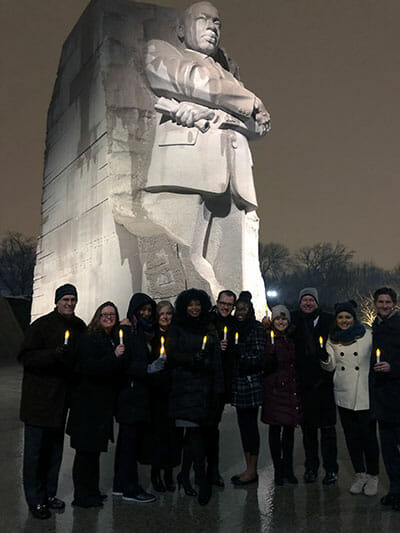
Last week, I had the pleasure of spending a couple of days in Washington, D.C., with nearly 100 corporate partners focused on integrating social purpose into their business strategy, as we came together for the annual meeting of our Corporate Service Council. After a day of connections and exchange, on the first night, a small group took a walking tour of the monuments and paused at the Martin Luther King Jr. Memorial for a special moment of reflection. Each person received a small book of “Quotations of Martin Luther King Jr.” and took turns reading their favorites aloud.
It was inspiring that so many of our partners extended their day to participate in this moment, despite the snow on a cold January night. Experiencing the monument together provided a brief moment of wholeness and hope. Now, each person has the opportunity to share and discuss that experience with others, whether in their homes, office, and communities around the country, and become multipliers, extending wholeness and hope.
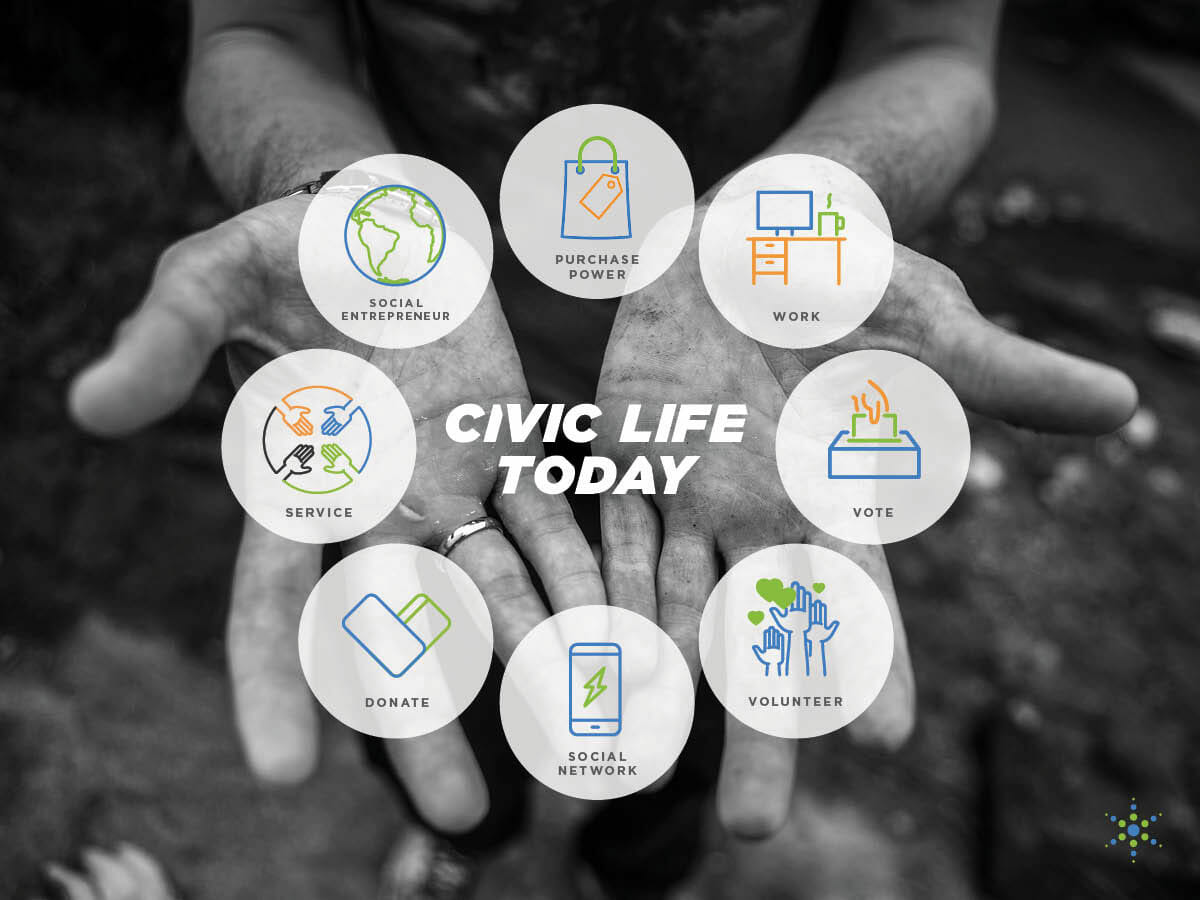
President Bush asked each of us to become a point of light. Dr. King challenged each of us to take an active role in building a better world. Both leaders encouraged us to serve others and live a civic life. Each year on MLK Day of Service, we have the unique opportunity to reflect on the gains we have made, and re-commit ourselves to the work that remains as we strive for a more just society. What is interesting is that our expression of civic life today is complex and evolving. Individuals are leading and lending support to causes they care about through many mechanisms.
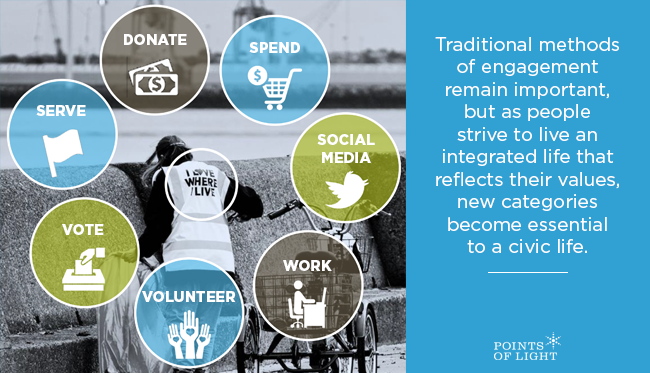
Today’s engaged person may express their desire to do good through their purchase decisions, in what they share on social media, or where and how they choose to work, and what non-profit organization to support as a volunteer or donor. Whether online, at the office, or the local food bank, whether with a vote, a voice, or a wallet – doing good comes in many forms. People are still working to achieve many of the same ideals Dr. King fought for in his lifetime. Peace, justice, equality, kindness – and the creation of a “Beloved Community,” a global society built on love for all people.
We are witnessing a significant shift in our civic culture, a revolution against apathy, marked by events and movements that have altered the way we connect with and engage in our communities and our world. If we look at eras of significant change throughout history, each was preceded by a period of disruption. The Industrial Revolution was the transition from hand tools to machine-powered manufacturing, and ushered in the Industrial Age. The Digital Revolution propelled us from analog to digital technology and electronics, and led us into the Information Age.
Where the Industrial Age centered on the rise of the factory system, I believe this new age is an era of civic engagement that is driven by human capital, connections through technology, a force of human kindness, and the extraordinary power of people to create change. When future generations look back on this time, they will see it was an era of sustained, meaningful civic engagement, fueled by a global community of people ready and willing to do good. The dawn of a “Civic Century.”
Each year we experience an astounding pace of advancement in science and technology, pushing humanity to new limits. While we can be certain that technology will continue to change, let’s also know that certain truths remain constant. As Dr. King taught us:
“Darkness cannot drive out darkness, only light can do that. Hate cannot drive out hate, only love can do that.”
“Never succumb to the temptation of bitterness.”
“We are now faced with the fact that tomorrow is today. We are confronted with the fierce urgency of now.”
Instead of sipping on stories of bitterness and division, I suggest a new fuel for the new year. Imagine kindness. The super power of people – the multiplying effect of a force of human kindness in the world.
What Black History Month Teaches Us About Civic Culture
Black History Month offers us a time to reflect on the many contributions African-Americans have made to this country and the world. Growing up as the children of hard-working parents in a melting pot community, the school my brother and I went to paused on a variety of special commemorative days to celebrate the rich diversity of all of our cultures and ethnicities. On black history day, we did book reports, made posters and created other projects to celebrate prominent African Americans like Dr. Charles Drew who discovered blood plasma; Alice Ball, a chemist who created the first effective treatment for leprosy; and, of course, the works and teachings of Dr. Martin Luther King.
As children, our parents taught us that to whom much is given, much is required, and that words and deeds matter. They lived these values out every day. The stories about their involvement in the civil rights movement are vivid, and I specifically recall, as a child, being bored as my brother and I played together sitting at polls while our parents volunteered as poll watchers for various elections. These early experiences and lessons from school have left an indelible imprint on my life, and what I recognize today is that these non-negotiable family values are distinctly connected to the work and service of many historical figures in black history whom we celebrate.
The achievements of these leaders are as diverse as their individual backgrounds but a common theme throughout their lives is service to others. A visit to the National Museum of African American History and Culture in Washington, D.C., will bring this to life. For example, Sojourner Truth became a prominent abolitionist and women’s right’s advocate but some of her earliest acts of civic engagement were as a volunteer when she collected supplies for black regiments during the Civil War. George Washington Carver, who extracted oil from peanuts, did so as part of his drive to find solutions to the debt and poverty that burdened black farmers – a civic or social entrepreneur of his time. And Muhammed Ali, who became a humanitarian and agent of goodwill after his boxing career because, as he famously said, “service to others is the rent you pay for your room here on earth.”
Great leaders in black history created change that has made all of our lives better. Today, there is an expectation of service to others – often talked about in terms of purpose but with the same goal in mind. But the world we seek to serve is continuously changing, led by constant innovations in technology and data, the evolution and rapid rise of social networks, a digitally native generation now entering the workforce, and a growing leadership crisis. If you are in the volunteering and service sector, you know that we must evolve to continue to make an impact.
We see that evolution in African-American leaders emerging today. These young leaders use technology and data in innovative and disruptive ways to benefit those they seek to serve. Their approach to serving others is nontraditional and representative of the next wave of service. They are social entrepreneurs who are engaged in local and digital communities. And they are rebuilding trust with these communities and recognizing the strength of the next generation. Leaders like Laura Weidman Powers and Jeff Boodie, graduates of the Points of Light Civic Accelerator — Laura started the nonprofit Code2040 to close the racial wealth gap by placing black and Latino engineering students in top tech firms; and Jeff Boodie developed a hiring platform that connects businesses with tech-savvy generation Z candidates in underserved communities.
At Points of Light, we too see the continuous societal shifts as an opportunity to ensure that society’s greatest needs are met because people have made volunteering and service, in any form, an expected part of everyday life. When individuals recognize themselves as citizens in the fullest sense they become partners in civilization and in our collective humanity. Igniting this civic culture is the pathway to carrying on the legacy and learnings of the leaders we learned about growing up and who we celebrate this month.
How Will You Make A Difference on Make a Difference Day?
Coming together to make a difference is a great way to not only improve your community, but deepen ties to your neighbors and have fun working together to do good! Join tens of thousands of volunteers across the country on Saturday, Oct. 28, to unite with common mission – to improve the lives of others through community-driven service projects.
Now in its 26th year, Make A Difference Day shows that anyone, no matter their age or background, can take action that improves their community. Big or small, every project makes a difference.
Plan a Project
Have a great idea for making a difference in your community? Planning a service project for Make A Difference Day gives you the chance to be a leader in your community, and bring others together to do good. All the tools you need to plan a perfect project are available on the Make A Difference Day website, including a marketing guide with project planning tips, volunteer leader guide, a volunteer social media toolkit, tips for working with youth, and much more!
And, project leaders who register a project will be eligible for the Make A Difference Day Awards – 14 winners each receive a $10,000 grant to donate to the charity served by their Make A Difference Day project! All submitted projects will be reviewed after Make A Difference Day, with awards given in the spring of 2018.
Not ready to start your own project? Use the ZIP code search on the Make A Difference Day website to find thousands of projects, and choose one that inspires you!
Need Inspiration?
Each year, TEGNA recognizes 14 outstanding leaders of Make A Difference Day projects, awarding $140,000 in grants to be donated to the charities served by the winning projects. Here are a few of last year’s honorees:
12-year-old Maggie Leach started “Operation Share the Load” to lighten the load for families who can’t afford to regularly clean their clothes. On Make A Difference Day 2016, she collected 81 rolls of quarters, a total of $810, and 21 baskets of laundry supplies for families served by a local shelter for women and families fleeing domestic violence. Read her story >>
In Opportunity Village, rebuilding lives starts with a safe and comfortable home. On Make A Difference Day 2016, 500 volunteers came together to begin construction of the tiny house community that would become home to some of the homeless residents of Pickens County, South Carolina – constructing 13 houses in just 14 hours. Read their story >>
Nearly 3,000 Mesa, Arizona, residents of all ages came together on Make A Difference Day 2016 to improve their community – and make a difference they did! Volunteers participated in in 36 different projects across the city, helping 2,650 members of the Mesa community. Read their story >>
Whether you plan a project or join an existing one, coming together on Make A Difference Day increases the strength of our communities and helps make the world a better place. Start planning how you’ll make a difference this year!
Made possible by TEGNA, with support from Points of Light and the Arby’s Foundation, Make A Difference Day is one of the largest annual single-days of service nationwide. On the fourth Saturday of October, volunteers across the nation come together to improve their communities through service. Project organizers are encouraged to register at www.makeadifferenceday.com to be eligible to be awarded a $10,000 grant for their Make A Difference Day charity.
A 60-second scroll on any digital device reveals the clutter of cynicism and spurious claims that we must constantly fight through to find stories about the light of humanity. But, that doesn’t stop us from constantly searching for those inspiring stories. And beyond being inspired, we’re constantly searching for swift and practical ways to work with others – friends, family, neighbors, coworkers – to do good.
In my first few days of joining the Points of Light team, Hurricane Harvey’s devastation was still unfolding along the Gulf Coast of Texas and Louisiana. What an introduction to this powerful organization. Points of Light’s
was supporting national first responders like FEMA and the American Red Cross, and coordinating the efforts of our local affiliates. Those affiliates quickly set up a virtual volunteer reception center, where people could sign up to become volunteers and nonprofits could request volunteer support. By the time the brick-and-mortar volunteer reception center was open, tens of thousands of people had signed up. We are now working with our affiliates to manage, train, and deploy those who raised their hands to help. Hurricane Harvey is only a snapshot of the work ahead for our disaster services team. The recovery and rebuilding efforts after Hurricanes Harvey, Irma and Maria will continue for years, and will only be successful with the support of volunteers.
The month of September has been chock-full of inspiration alongside stark demonstrations of the impact of volunteers. During the
, Points of Light called on its community of changemakers to act to improve the lives of military caregivers, hidden heroes who serve in a role that receives little recognition, through home beautification and revitalization projects. At an annual Points of Light board of directors meeting this month, we had the privilege of recognizing Daily Point of Light honorees in person. In commemoration of 9/11 Day and for her tireless work advocating for and supporting military caregivers, Joey Caswell was honored as
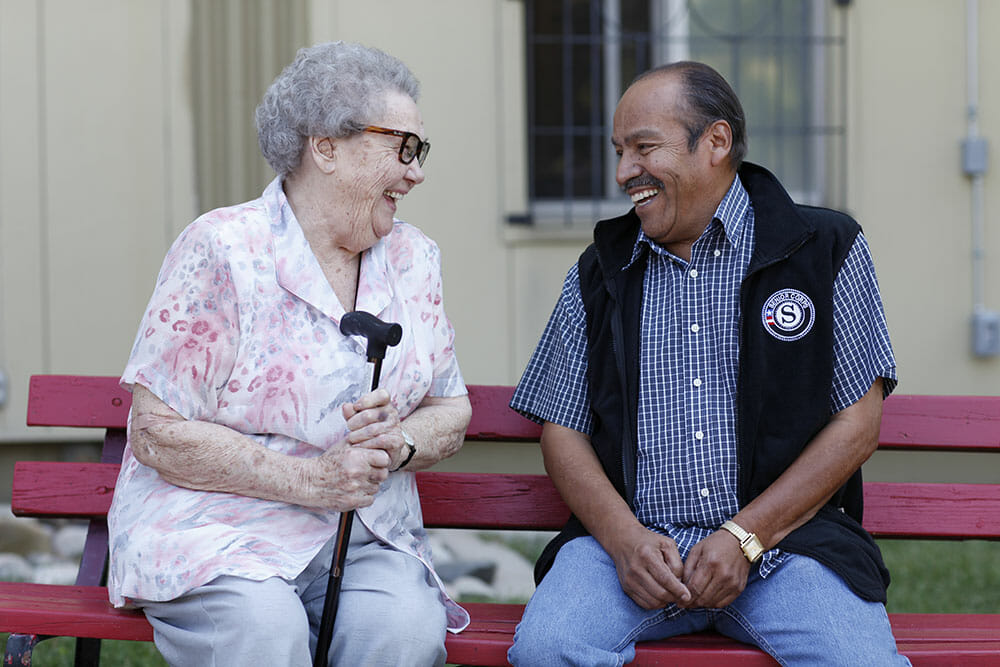
for their volunteer efforts at a senior center – three years and counting – in which they are nurturing friendships and finding something even more rewarding than they could have imagined.
Joey, Juli, Colby and Jason exemplify what it means to find that light within. They are representative of the tens of thousands who raised their hands to help in the aftermath of disaster. They are an inspiration and their efforts define swift and practical action for the good of others.
Inspiration. Swift and practical action for the good of others. These are just a few of the things that fuel my excitement about being the incoming CEO at Points of Light. I am also humbled by the opportunity to carry forward President George H.W. Bush’s bold vision and legacy of inspiring humanity to be the light, to work together, solve big problems, demonstrate impact and be our best. This light lives within me.
As my journey with Points of Light begins, I cannot wait to find more and better ways to ensure that the stories you see when you pick up your digital device to scroll through your feeds inspire you. And, once you’re inspired by those stories, Points of Light will have the tools to equip you to act, to be your best and help change the world.
Take a Stand for Service with Points of Light and Voices for National Service
The White House budget proposal for fiscal year 2018 calls for the elimination of the Corporation for National and Community Service over the course of the next year, which would include ending national service programs like AmeriCorps and Senior Corps. If enacted, these cuts would devastate thousands of faith- and community-based organizations, in communities across America – programs that serve children and families, respond to natural disasters, support military families, and generally serve as the backbone of community efforts to address pressing challenges.
Points of Light and Voices for National Service are partnering on a social media campaign to help supporters of national service take action and make their voices heard – calling on Congress and the White House to invest in, not eliminate, service and volunteering initiatives supported by CNCS. Add your voice.
Each year, more than 62 million Americans volunteer to improve their communities. Their work supports local efforts to provide food, clothing, shelter, education, youth engagement opportunities, medical services, community development, job training, addiction counseling, prisoner re-entry support, disaster response and much more. National service members who serve through AmeriCorps and Senior Corps support these volunteers who are donating their time and talent to community problem-solving.
Across the country, 80,000 AmeriCorps members and 270,000 Senior Corps members are currently serving local communities. Working hand in hand with thousands of nonprofit organizations, these dedicated Americans deliver vital services and recruit and manage millions of additional volunteers. At the same time, national service expands opportunity for its participants, especially young Americans, to gain marketable job skills and pursue higher education, which increases their employability and earning potential.
Our country’s modern national service programming began when President George H.W. Bush created the White House Office of National Service in 1989, a federal investment that has had bipartisan support in Congress and from subsequent presidents of both political parties. CNCS was created by Congress in 1993 to be a public-private partnership that would expand upon the White House Office of National Service, while decreasing dependency on government and empowering citizens to tackle pressing challenges at the local level.
“As we continue to make the case for strong funding in fiscal year 2018, we are counting on bipartisan leadership in Congress and the thousands of national service supporters across the country who will join the fight to ensure AmeriCorps and Senior Corps members can continue to provide critically needed services to their communities and the nation,” said AnnMaura Connolly, president of Voices for National Service.
CNCS’s FY 2017 budget of $1.03 billion makes up less than .03 percent of the federal budget. National service is a public-private partnership that recognizes that no one sector can meet our challenges alone. CNCS, which leverages more than $1.26 billion in resources from the private sector, foundations, and local agencies, is helping organizations across the country work in creative ways to tackle our most persistent and costly challenges. A study by economists at Columbia University found that for every dollar invested in national service, there is a $3.95 return to society in terms of higher earnings, increased output, and other community benefits.
And national service is tremendously popular. A poll in nine presidential battleground states found that 83 percent of registered voters support increased or maintained federal investment in national service. This overwhelming support defies party lines, including 78 percent of Republicans, 84 percent of Independents, and 90 percent of Democrats surveyed.
It’s easy to understand why voters support national service. CNCS programs harness the energy and ingenuity of our nation’s most valuable resource – our citizens – to address community needs and help local economies grow.
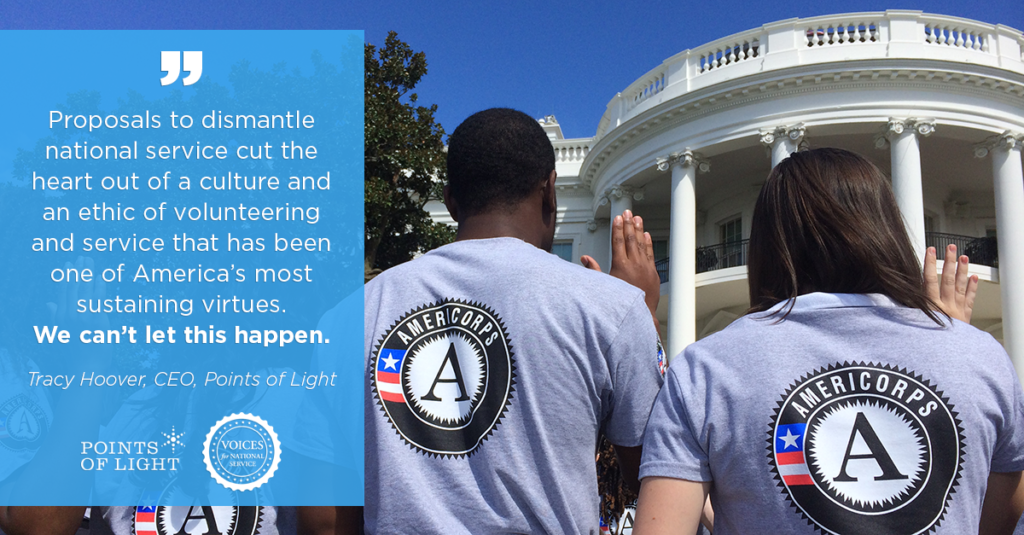
“Proposals to dismantle national service cut the heart out of a culture and an ethic of volunteering and service that has been one of America’s most sustaining virtues and that the rest of the world strives to emulate,” said Tracy Hoover, CEO of Points of Light. “We can’t let this happen.”
On June 20, during the Service Unites Summit at the Conference on Volunteering and Service, we will release a Thunderclap in support of national service. Thunderclap, the world’s first “crowdspeaking” platform, allows individuals and organizations to lend their voice – and social reach – to the causes they are most passionate about.
NFL Safety Michael Thomas Follows Lifelong Commitment to Give Back and Create Change
During National Volunteer Week, we celebrate volunteers who lend their time, talent, voice and support to causes they care about. Their stories inspire others to take action and discover their collective power to unite in making a difference. Points of Light is recognizing five NFL players with Daily Point of Light Awards; Competitors on the field, these players unite for a common cause as volunteers with the Van Duzer Foundation’s First Step program – acting as mentors and ambassadors of change. Meet honoree Michael Thomas, read his story and nominate an outstanding volunteer, family or organization as a Daily Point of Light.
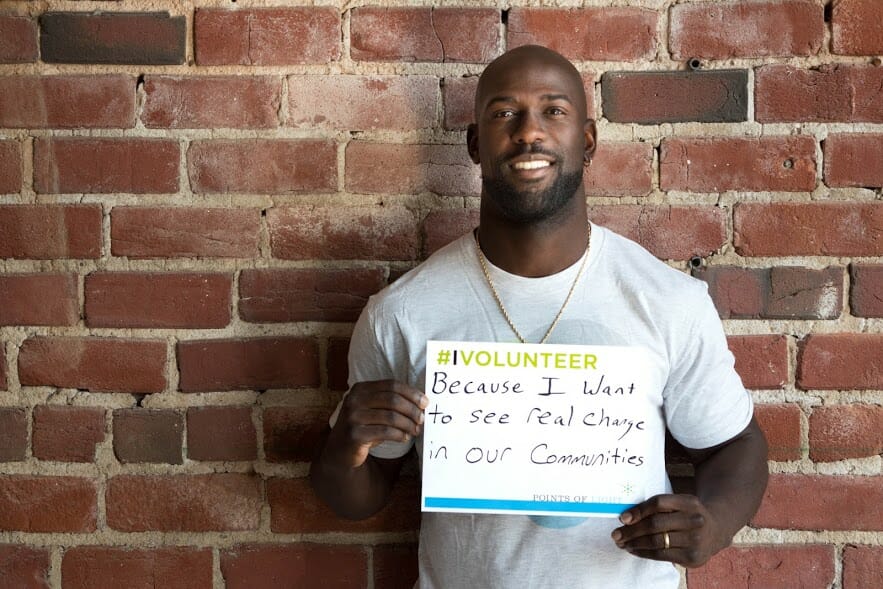
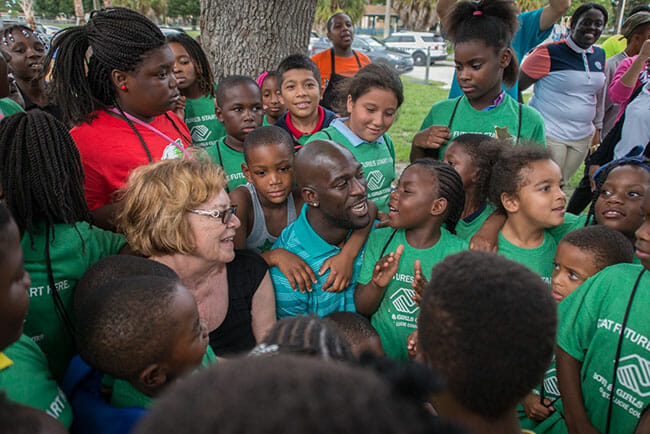
“I volunteer because I want to see real change in our communities,” said Michael Thomas, safety for the Miami Dolphins. Dedicated to giving back, he was one of the first NFL players to participate in the First Step Program – an initiative led by Daily Point of Light Award honoree
that gives kids and teens the opportunity to engage with community leaders on a regular basis, coming together for casual pick-up games, mentoring and small group discussions on community issues.
Michael has attended First Step events in the Fort Pierce community in Florida, playing touch football with local kids and speaking to them about relevant social issues, such as communication with law enforcement. “The best thing you can give to these kids in these communities is time,” he said. “To show that you actually care.”
In addition to his work with First Step, Michael is actively involved in several other initiatives that allow him to make a difference. He volunteers with the Boys & Girls Club and, in partnership with the Dreambuilders Foundation, supports mentoring programs in South Florida. Over the last three years, his Dreambuilders program has provided more than $35,000 of funding to Big Brothers Big Sisters of Miami, which pairs at-risk youth with positive mentors. Michael is heavily involved in the Ross Initiative in Sports for Equality, or RISE, and also runs a free youth football camp, which provides an entire day of SAT, ACT and college application prep. Along with fellow NFL players and Daily Point of Light Award honorees Jonathan Meeks and Coty Sensabaugh, he has also partnered with
, an organization that strives to end human poverty and world hunger around the world, to help provide fresh water systems to communities in Haiti. He is also a recipient of the President’s Volunteer Service Award.
“I always said that if I ever made it, I would give back,” Michael told a group of children at a First Step event at King Middle School in Atlanta. “The importance of giving back to your community is just showing those who come after you that I care about this community, I care about you, I want to give my time.”
Meet the other NFL players honored this week for their commitment to volunteerism and the First Step program: Sam Barrington, Jared Cook, Jonathan Meeks and Coty Sensabaugh.
You can help these Daily Point of Light honorees increase the impact of their work! The First Step program has pitched its creative solution to solving community needs to A Community Thrives, part of the USA Today network. Cast your vote to help First Step win a $100,000 grant to expand the program to neighborhoods across the United States. Vote today!
3 Ways to Participate in AmeriCorps Week (Even if You Haven’t Served)
Photo Credit: David Kennerly AmeriCorps members working with HandsOn Gulf Coast install a new ceiling in a Biloxi, Miss., home damaged by Hurricane Katrina.
members across America. AmeriCorps Week is a time to salute members and alums for their service, thank AmeriCorps community partners, and share stories about the impact AmeriCorps has on communities and on the individuals who serve.
AmeriCorps is a public-private partnership comprised of a network of local, state and national service programs, connecting more than 70,000 Americans each year in service to meet community needs in the areas of education, the environment, public safety, health, and homeland security. Members serve with more than 2,000 nonprofits, public agencies, and community organizations, in full- or part-time positions over a 10 to 12 month period. Upon completion of their service, members receive a
of up to $5,815 to pay for college, graduate school, or to pay back qualified student loans.
During AmeriCorps Week, Points of Light will be recognizing five of our outstanding AmeriCorps members who currently serve, or who have served, in our
.
Getting involved is easy. Here are three ways you can participate in AmeriCorps Week, even if you have never served:
1. Share your fast facts about AmeriCorps in your state
. One of the goals of AmeriCorps Week is to increase overall awareness of the valuable contributions AmeriCorps members make to our communities and our country. The Corporation for National and Community Service provides several
. One of the main reasons why people don’t serve is they are not asked. If you know of someone who is looking to make a difference in their community and willing to devote 9 to 12 months to a term of service, encourage them to apply for an open
.
If you served in AmeriCorps, here are three ways you can celebrate AmeriCorps Week as an alum:
1. Share a picture
Tuesday (3/7) – Share a current photo of you at work using #DayOfTheA. Write the program and year you served or where you work now in the blank space.
Thursday (3/9) – Dust off your old photos from service and share them on throwback Thursday (#TBT)
2.
Share your story.
AmeriCorps Alums wants to hear your story beyond AmeriCorps. How were you “Made in AmeriCorps,” how are you living out a lifetime of service, and what are you doing now?
, the only national network that connects alumni of all AmeriCorps programs to the people, ideas, and resources that support their commitment to a lifetime of service.
to gain access to professional development resources, discounts, networking opportunities and policy updates on the state of AmeriCorps.
No matter what your connection, celebrate AmeriCorps Week by sharing your “AmeriPride” with friends, family, and people you come in contact with throughout your day! Follow the festivities with #AmeriCorpsWorks
on social media.
Celebrating the Contributions of Extraordinary Black Changemakers
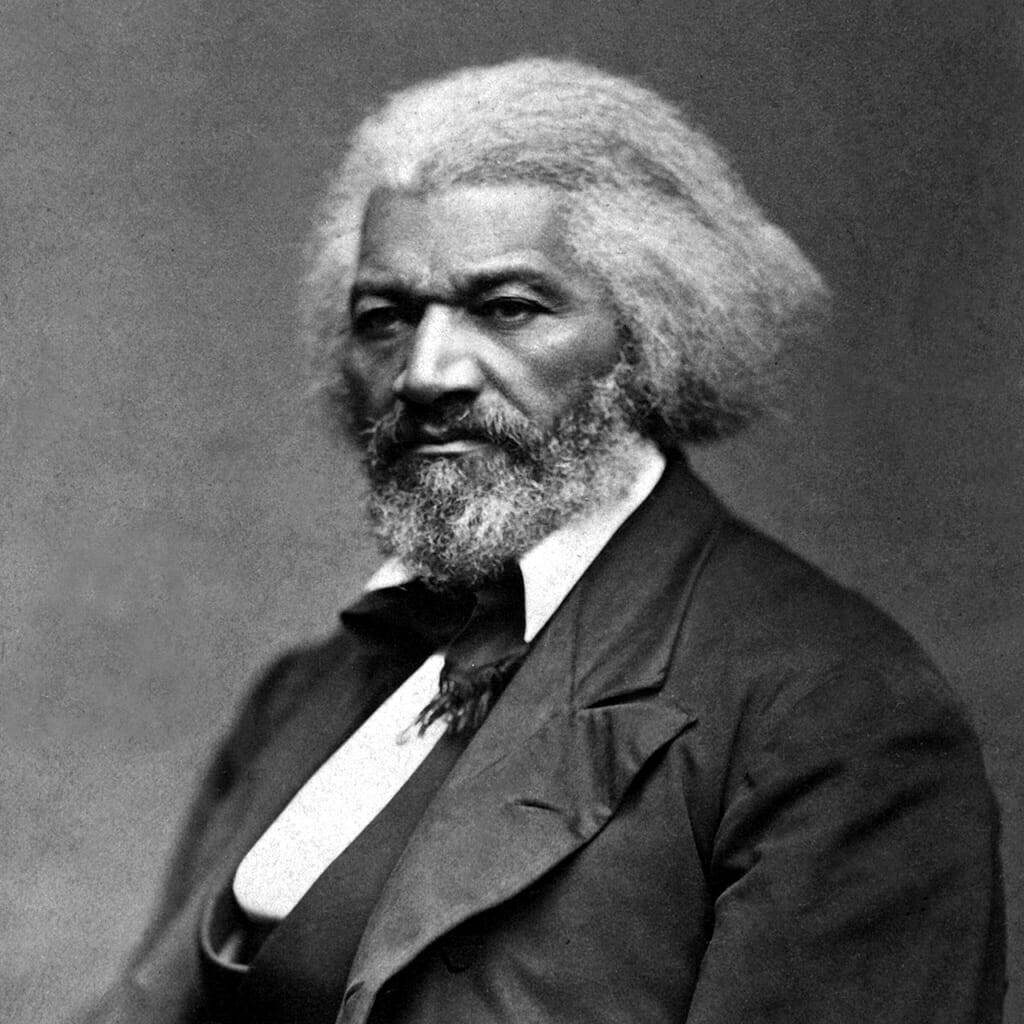
Famed orator and writer
Fredrick Douglass
was also a key architect of the movement that ended slavery, the very institution into which he was born. Even after his goal to abolish slavery was achieved, Douglass persisted in his struggle for equality, working in the women’s rights and civil rights movements to help set the stage for further landmark change in the United States.
Douglass is featured on the
, a one-mile walkway in Washington, D.C., that honors the actions and service of famous Americans who have transformed our nation and the world. During Black History Month, we recognize and celebrate the significant contributions that African-Americans have made throughout our history, recognizing their achievements and the great economic, social and political issues these points of light dedicated their lives to. Learn about other influential African-Americans featured on the Monument:
Harriet Tubman
escaped a life of slavery only to return south, at her own peril, time and again, to lead more than 300 fugitive slaves through the Underground Railroad to safety and freedom. After the Civil War, Tubman raised money to clothe and educate newly freed African-American children and established a home for and indigent African-Americans.
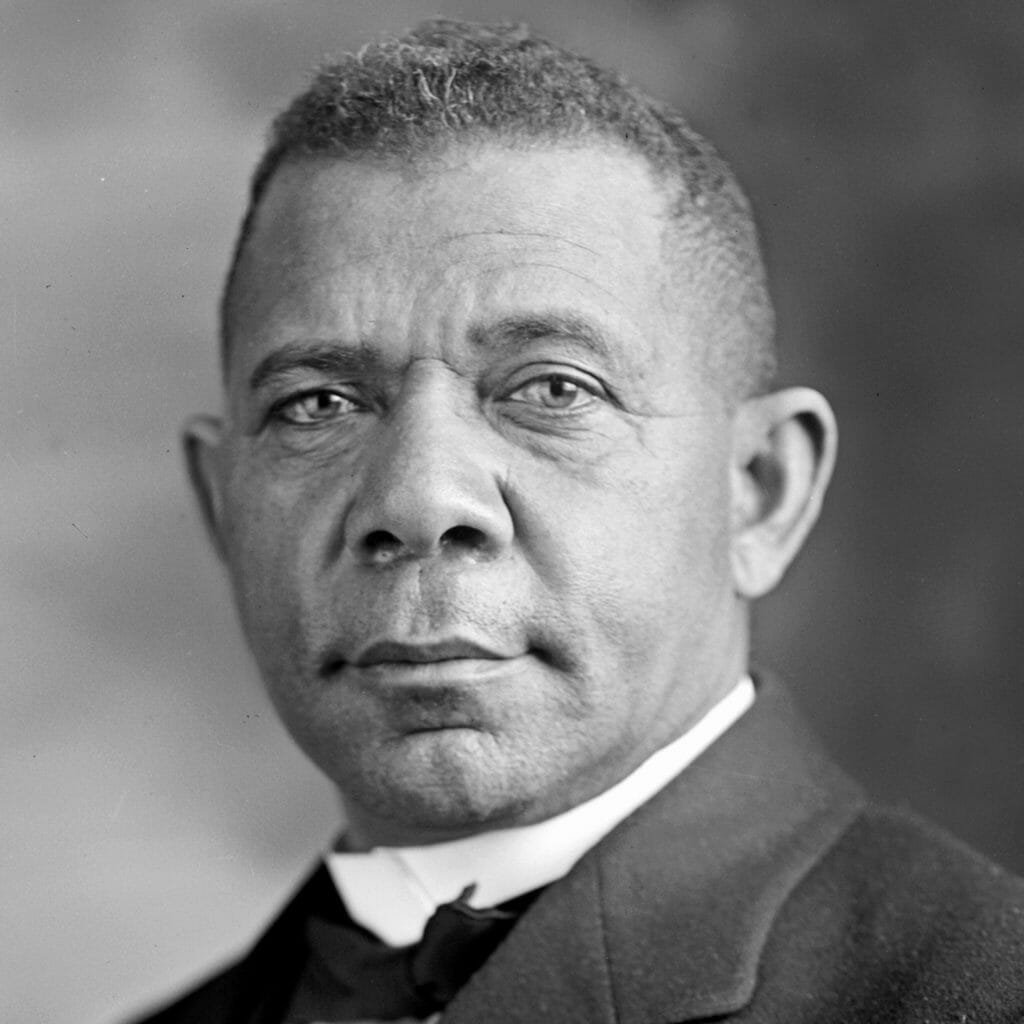
Booker T. Washington
negotiated a course between accommodation and progress in advocating greater civil rights for blacks. His philosophy of “request” not “protest” allowed him to gain the respect of presidents and politicians. He believed education was a cornerstone for the advancement of blacks and his efforts to raise money for his beloved Tuskegee Institute helped secure its well-deserved reputation as a leading educational institution for African-Americans.
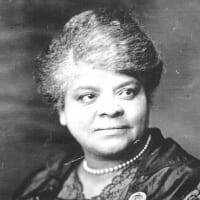
Ida Wells-Barnett
crusaded aggressively for civil rights her entire life and was unafraid to exercise those rights when custom ran contrary to the law. Involved in many civil rights causes, she played leadership roles in the women’s suffrage movement and in the founding of the NAACP. Ida Wells-Barnett became the era’s most outspoken crusader for ending the practice of lynching African-Americans.
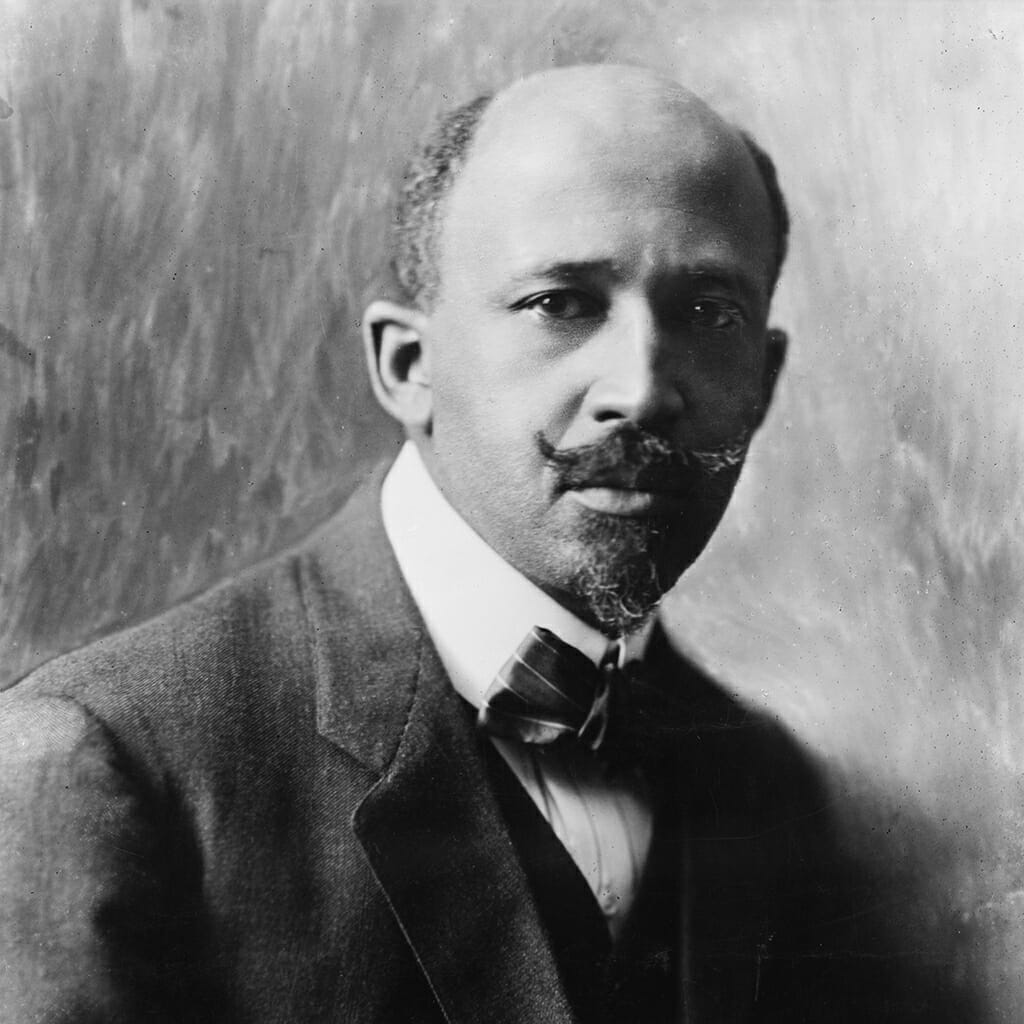
William Edward Burghardt (W.E.B)
DuBois
was one of the most influential black leaders of the 20
th
century, helping to form the Niagara Movement as a way to work for an end to segregation, discrimination and the denial of voting and civil rights. When Mary White Ovington called on civil rights activists to form the National Association for the Advancement of Colored People, he joined her as a principal founder in 1909.
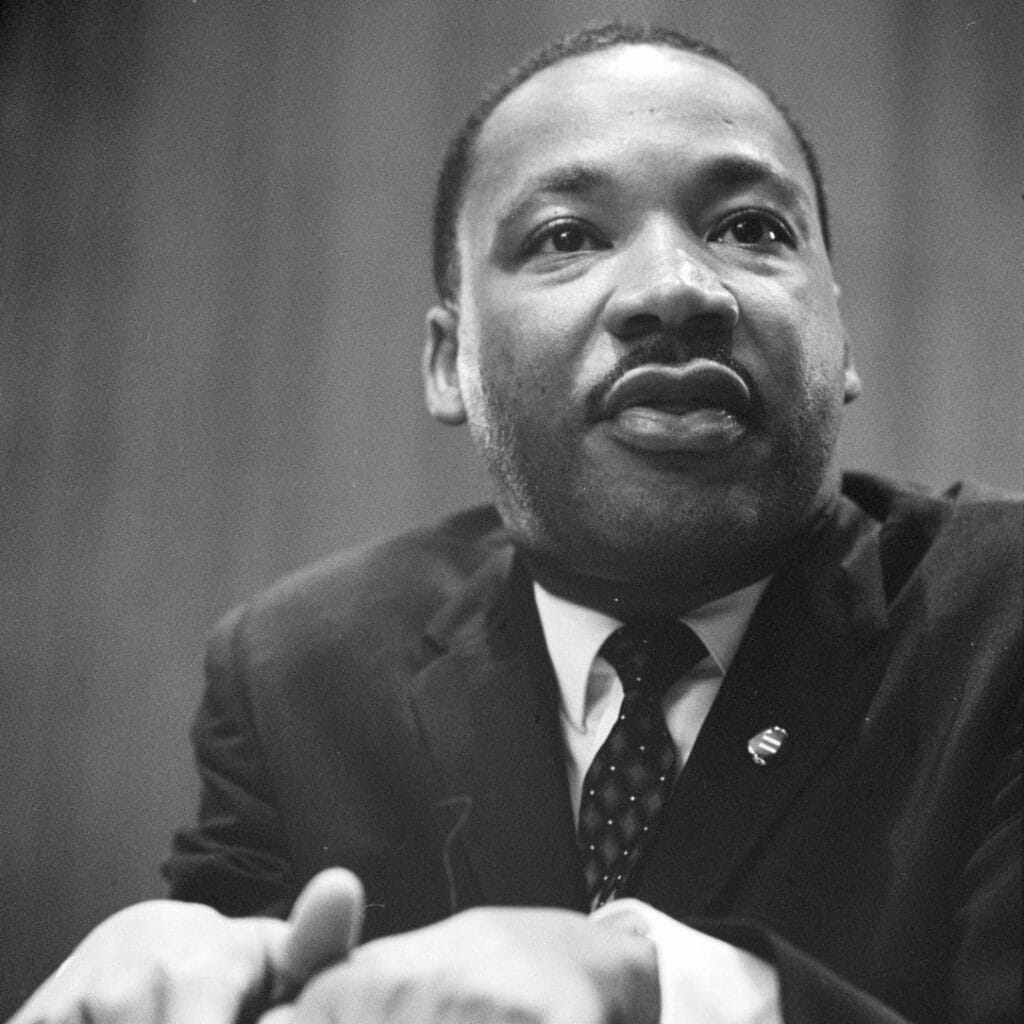
In founding the Southern Christian Leadership Conference,
Dr. Martin Luther King Jr.
gave momentum to the civil rights movement. Dr. King’s persistent efforts, inspiring oratory and non-violent protests, despite physical attacks, death threats and retaliatory violence, brought America closer to his dream of equality for all.
These trailblazers were important leaders during some of our country’s most divisive time periods and influential social movements. Their work and dedication to improving life for marginalized communities, across both civil and women’s rights movements, has left a lasting imprint on the social fabric of our nation.
Learn about other extraordinary changemakers featured on the