Disaster Corporate Aid Tracker: Stay Informed on Corporate Response to Recent Disasters
Use this tool from the U.S. Chamber of Commerce Foundation to stay up to date on the corporate response to recent disasters.
Disasters often leave record-breaking devastation in their wake. And while you can’t foresee how severely they may disrupt communities, your company can be prepared with a plan to support recovery efforts.
Your preparation might include exploring the ways companies have supported relief efforts from similar disasters. Short of searching through countless press releases, is there an easier approach to find out the ways in which industry peers and competitors have responded once a disaster occurs and damages are assessed?
The U.S. Chamber of Commerce Foundation’s Disaster Corporate Aid Tracker has been a tried-and-true tool to keep the corporate citizenship sector tuned-in. As companies respond and pledge to help devastated communities recover, the tracker is updated with their commitments.
If you’re curious to know how other companies are responding to current and past disasters, use the Disaster Corporate Aid Tracker to stay informed and strategic.
Corporate Disaster Relief and Response
As business and CSR leaders cautiously await the start of the Atlantic hurricane season (June 1 – Nov 30), Points of Light has created a list of tips to help shore up your corporate disaster relief and response plans.
Here are some basic principles of corporate disaster relief to consider:
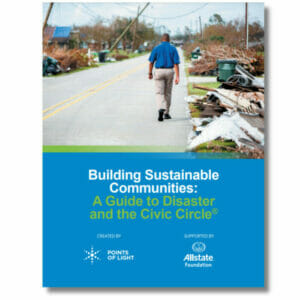
Provide employees with ways to take action throughout the disaster lifecycle by sharing this guide. Click image to download.
Ensure all employees in the affected areas are safe and accounted for, which might be a function of your HR department. If you don’t have a system in place (i.e., a hotline for employees to call or a phone tree for leaders to reach out, etc.), think about creating one to be prepared for the next natural disaster.
It’s instinctual to want to help others, so get in front of employees’ requests to be deployed. Know that spontaneous, unaffiliated volunteers can become burdensome, so devise plans to be ready with organized and strategic support, once the impacted areas have been deemed safe and ready for volunteers.
Find opportunities through one of our volunteer centers that are on the ground and often leading volunteer logistics.
Once impacted areas are ready for volunteer support, check in with your company’s risk management team to provide them with the chance to vet potential opportunities.
Think through the skills your employees have to offer the organizations responding to disasters. Skills-based volunteering from companies can play a significant role in response and recovery, not to mention building community resiliency. Check out Common Impact’s report, Disaster Response: From Relief to Resiliency, to find out how.
While employees might be driven to organize collection drives, palletized in-kind donations work best. Can your company work through an organization like Good 360 to provide much-needed supplies in bulk?
Launch a workplace giving campaign specific to the disaster and tailored to your top relief partners. Remind employees that cash contributions during a disaster go much farther than donated items.
Ensure impacted employees are aware of your company’s employee assistance/hardship fund and how to take advantage, while reminding the rest of your workforce how they can contribute.
Reach out to your nonprofit partners to find out how they have been impacted and how they are responding. Find resources to help you design a grant-making strategy through the Center for Disaster Philanthropy.
Keep up with your industry peers and their commitments by visiting the U.S. Chamber of Commerce Foundation’s Disaster Corporate Aid Tracker.
As you and your team respond to natural disasters, remember to stay safe and well. And tell us if Points of Light and our
can help you as we brace for the next likely disaster and the rest of the year.
The Role of Volunteers in Humanitarian Disasters: Insights from the IAVE Forum
As I stepped into EDP’s Portugal headquarters to join International Association for Volunteer Effort’s (IAVE) forum on the role of volunteerism in humanitarian disasters, I was greeted with a hug from a stranger. IAVE GNVL European Regional Coordinator Sonia Fernandes with Social Entreprenu Pista Magica excitedly shared her memory of learning from Points of Light twenty years ago, an experience supported her in creating a school of volunteering in Portugal.
I was humbled to see that the day kicked off grounded in the underpinnings of Points of Light’s mission to equip, mobilize and inspire. IAVE CEO and host of the convening Nichole Cirillo reminded the crowd that, “…as disasters continue with greater frequency and impact, we need volunteers in all three of the disaster phases, and in particular, in building the systems and mechanisms for recovery.”
The day’s work centered on the role of volunteers in response to the war in Ukraine. Iulia Barbanegra of Moldova Volunteer Center detailed the multi-faceted actions put together to support the 100,000 refugees who flowed immediate into Moldova following the beginning of the war. The team put together a hotline, a call center and structures for humanitarian aid that included border checkpoints, accommodation centers and education activities. MVC quickly sorted volunteers into areas of the greatest need even as they were fielding calls from across Europe from people who wanted to help.
“We didn’t have housing, even for Moldovan volunteers, let alone others,” she recounted. “Some of the refugees were angry, and of course, they have a right to be angry, but we had no time to train [our volunteers] on how to handle.”
The increasing necessity of preparing volunteers, both mentally and physically, in addition to the burden placed on volunteer centers, would emerge as a thread through the day’s conversation.
Dr. Amjad Mohamed Saleem, manager of volunteering, youth and education development from International Federation of Red Cross and Red Crescent Societies, shared the words of a Red Cross volunteer: “Kindness and humanity are superpowers.” Those words reminded me of the importance of the different elements of the Points of Light Civic Circle®. Are volunteerism and service pivotal change-making vehicles? Yes, but so is the act of building resiliency. Dr. Saleem continued to share that, despite what may appear as an overwhelming need, the first action of the Red Cross is to prepare volunteers vs. jumping into action.
I watched as heads nodded in the room with a shared understanding that, without proper training and mental health support, volunteers can ultimately become added challenges themselves within a disaster site.
There is a constant push and pull between the volume of interest from spontaneous volunteers and a need for formalized programs with trained volunteers. The Civic Circle offers much-needed options for those who “just want to help” by creating pathways to listening and learning about a cause area, using their voice to amplify stories of those impacted, and donating funds to support recovery.
If an organization as well supported and well established as the Red Cross can’t support the influx of interest from volunteers, there is a clear necessity to offer a greater diversity of ways for people to engage and become part of the solution.
As we moved from response to resiliency, I anticipated we would focus more on infrastructure and less on the necessity of training, but I was wrong. Increasingly, humanitarian volunteering comes with risk. Over the last year, there were over 300 deaths of volunteers as recorded by Medicos do Mundo. The single greatest risk for volunteers is a lack of formalized training before engagement. Marcio Silva shared Medicos do Mundo’s model of training which begins with “While I’m delighted you dreamed as a little girl to go as a first responder to a disaster site, you’re not cleared as you’re not trained.” Medicos do Mundos has put together an emergency volunteer training module that aligns skill sets with needs. They assume the necessity of skilled-based volunteering.
“You can’t run an emergency response without resources or communications,” Silva said, noting that intentionally keeping infrastructure supports apart from operations is a recipe for failure. There remains an increasing need to harness the energy and passion of those who want to volunteer in other ways. Points of Light’s Civic Circle offers that roadmap for a wide array of engagement strategies.
Executive Director Wolfgang Krell of Augsburg Volunteer Center shared how his organization had delineated the idea of formal and informal volunteering due to the necessity of volunteer centers responding to spontaneous disaster volunteers in a way that harnesses and focuses energy.
“Expectations need to be checked as we have volunteers that want to change the world in one week, and it is very difficult to do this,” said Krell. “Volunteering makes the world go round, especially in times of crisis.”
We headed into lunch, wrapping up the topic of community volunteers in the disaster preparedness portion of the day with Nicole Cirillo challenging us: “What can we do now? Networks are the key to resiliency. Time and time again research shows that you have a greater chance to survive and thrive as a part of a Network. Her words recalled my own experience with Points of Light’s Global Affiliate Network, a testament to the idea that the most powerful solution to challenges is collaboration.
The afternoon kicked off with Lorrie Foster, director of corporate at IAVE, reminding us that when a disaster strikes, phone ring off the hook with employees asking, “What can we do?” We then had the opportunity to hear from three companies with various takes on volunteer response programs.
“Intervention Model for Emergencies resembles closely the Points of Light Civic Circle as it asks employees to listen, learn, use their voice, be a part of social activation and donate to be ‘better citizens,’” shared Francisco Moro, Fundacion Telefonica.
Moro’s take on skilled based volunteering around disaster work is that this role falls to companies. He emphasized how critical it is that companies provide the technical skills to grow an NGO’s capacities. In other words, a company cannot just be an emergency response vehicle, it also needs to also provide preparedness and resilience support.
The most essential part of disaster response is to react to what people need, not to what you think they need. For example, when the war in Ukraine began, people wanted to send food, but the costs are astronomical to ship food to a foreign company. The true need was funding and monetary donations rather than food.
When disaster strikes, it’s common for people to feel compelled to help, but experienced social impact professionals know the importance of being gatekeepers when it comes to volunteer power. They understand the need to coordinate with first responders and provide the right help at the right time in the right ways — not just from volunteers but expert volunteers who can offer guidance in their core areas of expertise.
15 Volunteer Management Strategies for Times of Disaster
Most nonprofit organizations aren’t solely focused on disaster relief as part of their missions so may not have the dedicated staff or resources for enacting a disaster-response volunteer strategy. However, depending on the nature of a disaster, your organization may be called upon to address community needs or how your constituents, assets, etc., are impacted when a disaster strikes. Before you jump headfirst into disaster relief efforts, consider the following 15 volunteer management strategies in times of natural and human-made crises.
1. Develop Position Descriptions
Create a position description for each volunteer activity. Keep them short and simple. Be sure that everyone has a position description, regardless of the position they fill. Each volunteer should be provided a copy of their position description to set clear expectations for their role.
2. Identify Volunteer Leaders
Make sure you identify volunteers who have the skill set and the drive to manage tasks, processes and fellow volunteers. You cannot be everywhere all the time, so
and create a communication system that allows you to delegate tasks.
3. Protect Your Organization and Be Proactive About Risk
Check with your insurance agent to be sure your organization is fully covered during periods of emergency. You may want to consider adding a rider to your policy.
Make sure volunteers sign waiver and liability forms as well as any other organizational documentation. Volunteers should also sign in and out of their shifts.
Document the orientation and training given to each volunteer. Ensuring the safety of life and property is critical. By reviewing the volunteer activities for possible hazards and educating volunteers about safety, you will reduce the chance of someone getting hurt.
Keep a first aid kit and automated external defibrillators (AED’s) on hand if possible.
4. Create a Call List
Exchange cell phone numbers with all key contacts and update it regularly. Set up redundancies in communications in case cell phones are ineffective. Some suggestions of numbers to have on your call list include, but are not limited to, the following:
Emergency contacts
Volunteer leader contacts
Volunteer reception center contacts
Disaster response organization contacts
Contacts for organizations that accept donations
Media relations contacts
Mental health service contacts
5. Identify and Schedule Shifts
Identify and schedule appropriate shifts for each position. It is effective practice to identify shifts in two- to four-hour increments. To prevent burnout and fatigue, you should strongly discourage volunteers from filling more than two consecutive shifts. Also, make sure you have at least one volunteer leader (clearly identified) scheduled during each shift.
6. Inform Volunteers of Logistics
Communicate important logistics to volunteers prior to their shift. In addition to directions and shift times, volunteers may need to bring photo ID, gear and protective clothing.
7. Meet Basic Volunteer Needs
Make sure volunteers have access to food, water and restrooms. Remind volunteers to take breaks, eat, hydrate and call family. Oftentimes adrenaline will take over in disaster situations, and volunteers (and your staff) may need to be reminded to take care of themselves and their families. Ensure that standards of health and hygiene are maintained during long shifts and in any public facility. Arrange for sufficient supplies to sustain these standards.
8. Orient and Train Volunteers
Be sure to take time to orient and train the volunteers to their position duties and roles, and to the situation. Volunteers could be in situations in which they may view and/or experience traumatic situations. Volunteers must be oriented not only to their tasks, but also to potentially negative experiences. During particularly active periods, volunteer leader should give frequent updates to keep all volunteers informed of the most current situations.
9. Protect Your Volunteers
Make sure your volunteers are only engaged in work in which they are trained. If the scope of work changes, training should be provided to support the development of necessary skills and knowledge. Volunteers should be properly identified for ease of recognition by the public and by each other. Make sure that each volunteer has the equipment and tools needed to do their job.
10. Plan for Knowledge Transfer
Every position description should include an end-of-shift debrief/orientation process whereby the volunteer leaving his or her shift should communicate important information to the incoming volunteer (i.e., what is working well and what is not working, etc.). Volunteer leaders during each shift should ensure that this transfer of knowledge occurs in a timely and clear fashion.
11. Provide Ongoing Support
Monitor and support volunteer activities. Thank volunteers for giving their time. If you see volunteers who seem tired and worn out, encourage them to take a break. Remember that disasters may take a heavy toll on the physical and emotional well-being of volunteers and staff alike. Provide resources to volunteers to help take care of their health, such as access to mental health practitioners.
12. Establish and Maintain Standards of Conduct
Instill pride in performance but don’t hesitate to correct behavior that is counterproductive or injurious to the reputation of your organization or the best interests of the public. On rare occasions, it might even be necessary to relieve a volunteer of duty. Ensure at the outset that all of your volunteers know their terms of service. Keep handy a printed copy of your Volunteer Policy Manual.
13. Recognize Volunteers
Volunteers should be consistently thanked. You may not get a chance to formally thank your volunteers until after the disaster response is over, so take every chance you get to remind the volunteers that you appreciate them and their efforts to respond to the disaster. After the disaster response efforts have subsided, you can plan a more formal way to recognize them (examples include recognition event, formal email or letter, phone call, etc.) Recognize outstanding and dedicated volunteers by nominating them to be a
Plan for a debriefing for all staff and volunteers at the conclusion of each shift, as well as the end of the disaster operation. Acknowledge the many positives and identify lessons learned that can be addressed for upcoming shifts and future disasters. Capture recommendations in your After Action Report for future reference and development of next steps for your program. Follow through on the key steps.
15. Track Your Efforts
Always be mindful of organizational reporting requirements and develop processes to capture appropriate data. Tracking volunteer data in times of disaster may assist jurisdictions with in-kind matches for federal reimbursement. Capturing data is also important to tell your story to future funders, to your community and to your volunteers. Ideas for types of data to capture could include:
Number of volunteer hours
Number of volunteers
Number of meals served
Number of houses worked on or re-built
Number of people or families served
José Andrés, Food Innovator, is Feeding Millions
The fourth annual celebration ofThe George H.W. Bush Points of Light Awards honored incredibly inspiring individuals who are making sizable impacts on their communities and in the world.
José Andrés is an internationally recognized culinary innovator, New York Times bestselling author, educator and humanitarian. He was named one of Time Magazine’s “100 Most Influential People” in both 2012 and 2018 and awarded the 2015 National Humanities Medal from President Barack Obama.
As the chef/owner of the award-winning José Andrés Group, Andrés has been a pioneer of Spanish tapas in the United States and is also known for his groundbreaking avant-garde cuisine. Recently launched in 2021, José Andrés Media specializes in television, books, podcasts, and digital content with a focus on food- and culture-related stories. As a naturalized citizen originally from Spain, Andrés has also been a tireless advocate for immigration reform.
Andrés’ nonprofit,World Central Kitchen, has provided essential goods and services in the realm of disaster relief. FollowingHurricane Ian, the organization provided more than 800,000 meals in just the two weeks to the people of Florida. The team has continued to provide meals to people in crisis on six different continents, including responding to the war in Ukraine by providing hundreds of millions of meals to displaced people.
World Central Kitchen has also partnered with thousands of restaurants, farmers and community leaders around the country to combat food and nutrition insecurity, laying the groundwork for smarter national food policy.
Points of Light is proud to recognize Andrés as a changemaker who is driving significant and sustained impact through his efforts.
A Network of Volunteers Helps Displaced Ukrainian Children See a Zoo for the First Time
April 6 was a warm, sunny day. A group of displaced Ukrainian children and their families pulled up in front of the Budapest Zoo beneath a cloudless blue sky. They arrived by public bus, accompanied by a special police escort.
The group spent the day exploring the zoo, seeing all the highlights, from the menagerie of exotic animals to climbing to the top of an amazing “Magic Mountain.” It was a day filled with joy in the midst of a time of extraordinary hardship and sorrow. Making it happen took the time, dedication and cooperation of many volunteers and organizations.
Budapest Methodological Social Centre and Institutions (BMSZKI) is one of the largest social organizations in Hungary and in the Central European region. It has set up accommodation for refugees in two locations, hosting nearly 200 displaced people in total. One location, Gyáli út, has been welcoming mostly Ukrainian families, since late February, at the start of the Russian-Ukrainian conflict. According to capital city officials, about 2,000 refugees had been supported with food and housing by mid-March.
The BMSZKI’s Budapest institutions mainly accommodate Hungarian-speaking Roma families from Transcarpathia and Ukrainian Roma from the Kyiv region. These are typically larger families of anywhere from eight to twenty members. These families tend to be very disadvantaged and cannot travel farther West, so they’ve remained in Hungary for a longer period. The big question is: What will happen to the people who are staying, who may number in the thousands? By the end of March, 7,700 people had applied for asylum status, and that figure is considered to be a conservative estimate.
Their situation is dire in many ways. They are not familiar with their surroundings, have never traveled by metro or tram and they do not speak local languages. Families from outside Kyiv tend to speak Ukrainian and Gypsy. Many of the adults cannot read or write. Even those who did not flee directly from the fighting have been traumatized by war, with the lives they’ve built collapsing overnight accompanied by constant worries about their relatives and homes.
BMSZKI’s facilities are dedicated to the care of unhoused people, which means they are well versed in how to support people in these circumstances. When the crisis in Ukraine first began, BMSZKI had the infrastructure and experience to help those who were displaced in the quickest and most efficient ways. The biggest challenge turned out to be the sudden influx of children, which was beyond what they were prepared to handle, but that didn’t stop them from problem-solving on the fly.
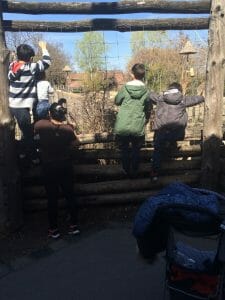
Displaced Ukrainian children enjoying the Budapest Zoo. Photo by Points of Light Global Network Affiliate Volunteering Hungary.
A weekly schedule was quickly developed, in cooperation with several Nongovernmental Organizations. It outlined which organization would host various children’s activities, along with when and how.
Many of the volunteers associated with these organizations were already giving their time to the Budapest Zoo, so it was decided that they would take a group of children, ages six months to 13 years — along with their families — on a field trip. The zoo’s philanthropic arm, Foundation for the Budapest Zoo, offered free tickets to the group.
Next came the challenge of how to get there. The Municipality of Budapest offered to provide a bus.
Once on site, Erzsi, a zoo volunteer, led the group on a tour of animal exhibits and other exciting highlights. The children loved climbing to the top of the “Magic Mountain,” where they could look around, see a beautiful view of Budapest and even slide down the mountainside. It was an unforgettable experience for the children and their parents, most of whom had never been to a zoo before. It turned out to be a glimmer of happiness in the midst of their trials, and the volunteers loved the experience too, receiving payment in the form of thanks and hugs from children and adults alike.
The group has plans to take the children on more adventures, including an expedition to a nearby airport to watch the planes take off and land. Participants say these activities are an essential part of keeping their enthusiasm going.
Corporate Volunteer Programme Coordinator Judit Tarcsai of
Points of Light operates with a network of innovative volunteer-mobilizing organizations who serve more than 177 affiliates across 38 countries around the world. Together we are inspiring, equipping and mobilizing more people to use their time, talent, voice and resources to create positive change in their communities. Learn more about our Global Network.
A Tale of Three Cities: What Humanitarian Relief Looks Like Across Europe
Hungary, Ireland and Spain. When it comes to aiding in the humanitarian relief effort around the Ukraine crisis, they share common ground. They are also worlds apart.
reports that a “very disadvantaged population” is arriving in her country. Some have never seen a toilet. Most have never attended school. Those with more education or a higher income tend to travel straight through. Only about 1,200 have been allowed to apply for refugee status in the country. For the rest, Judit and her coworkers pass out hygiene kits filled with toiletries and fresh clothing.
Fifteen hundred miles
away in Ireland, Terri O’Brien, corporate & programmes manager at
says that of the 15,000 displaced Ukrainians who have arrived so far, most tend to be from more highly educated and affluent backgrounds. However, the next wave is expected to be less advantaged. She noted that for her small country of five million, this influx is significant.
“We don’t always know people are coming,” she said. “It’s quiet, then 300 people arrive.”
Although Ireland has worked quickly to welcome displaced Ukrainian citizens, accommodations are already in short supply, and new arrivals are being diverted to remote towns. This latest crisis comes on the heels of the COVID-19 pandemic, which placed tremendous strain on Irish systems.
“Covid prepared us for disaster but has also contributed to burnout,” she said. “People are getting worn out, but still, amazing stuff is happening.”
Director of corporate social innovation Almudena Pérez Molina of
, painted a picture of hope in her homeland of Spain. For the next year, new arrivals will have the same rights as Spanish citizens. They can work and have access to free healthcare services. The government has set up four refugee reception centers across the nation designed to help find housing and field other integral needs.
Almudena shared that, prior to the Ukrainian crisis, there are some towns in Spain that were becoming depopulated because younger people were moving into big cities. These are perfectly functional places with infrastructure including roads, schools, hospitals and housing. They have come to be known as “Empty Spain.” The area of Galicia is one such example. Its inhabitants have welcomed displaced Ukrainians with open arms. Elderly Spanish citizens here, and in other small towns, are happy to welcome new people.
“This could be a beautiful opportunity for refugees,” said Almudena.
How You Can Help
The universal need across Europe is cash donations. When you donate to our Global Network affiliates,
you’re directly supporting real people, on the ground, doing essential work in humanitarian relief efforts. Your donation not only supports their important work but also stimulates their local economies through purchasing and hiring, which makes for a successful transition for displaced people and their host countries.
Gifts through this fund are directed to Global Network affiliates in the region that know best what the emergent needs are in their areas. These organizations are experts in their field and have a firm grasp on what must be done and how to do it.
Points of Light operates with a network of innovative volunteer-mobilizing organizations who serve more than 177 affiliates across 38 countries around the world. Together we are inspiring, equipping and mobilizing more people to use their time, talent, voice and resources to create positive change in their communities. Learn more about our Global Network.
Polish Family Opens Home to Ukrainian Mother and Daughter
“
I had to choose between staying together with my husband or saving my little child,” said a displaced Ukrainian woman, who wished to be kept anonymous for safety reasons. She escaped Krzywy Róg, the largest city in central Ukraine, with her four-year-old daughter.
“She
is too small to understand things, like how you have to react during the bomb attack,” she said. “I also know that such traumatic experiences can influence the rest of her life.”
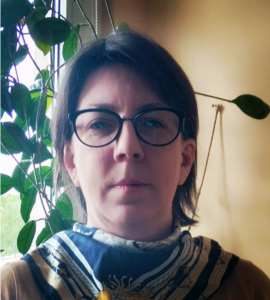
Agnieszka Lissowska-Lewkowicz, President of Points of Light Global Network affiliate and Polish non-governmental organization Centrum Wolontariatu.
This little family of two was forced to make the agonizing decision to leave their husband and father behind and escape to Warsaw. There they met Agnieszka Lissowska-Lewkowicz, who is the President of
affiliate and Polish non-governmental organization Centrum Wolontariatu.
From the start of the war, Agnieszka and her family knew they wanted to help. They began to consider hosting a displaced family but were unsure of what that truly meant in terms of the length of the commitment and how it would influence their home life. Then Agnieszka received a call from a friend who asked if she might consider welcoming the mother and daughter into her home.
“I thought maybe this is a good idea,” said Agnieszka. “This is an opportunity to help.”
Agnieszka and her husband, mother and 10-year-old daughter decided to open their divided two-story home. The first three weeks were a big adjustment, and then things began to fall into place. They fell into a rhythm, finding a balance between sharing meals and enjoying private time apart. Their guest found a job as a hairdresser, and her daughter was enrolled in a nearby kindergarten class.
“
I found a shelter with a good family, my daughter went to kindergarten and is doing great,” said the woman. “I already have a job. Of course, I still do not know the future. I don’t know the language, I don’t know how much time it will take me to learn Polish, if I earn enough to rent a place, when it will be possible to stand on my own.”
The Realities of Living Together
There are more than 2 million displaced people in Poland, nearly 300,000 in Warsaw alone. That makes for a 17 percent increase in the city’s population. These types of changes bring a host of complexities, the language divide being a big one.
Agnieska’s story is a micro-example of what’s happening in the city at large. The two families speak different languages – Polish and Russian. Even though the two languages are similar in many ways, the differences presented more challenges than expected.
“They are words similar, but there are words and sentences that we wouldn’t understand each other,” said Agnieszka. “I really thought it would be easier, so this was a big surprise for me.”
When the family of two arrived, they had nothing more than the clothes on their backs. Agnieszka had saved clothing that her daughter had outgrown and gathered clothing from friends. They bought toothbrushes, soap and other hygiene supplies. They also worked through the most pressing need of getting official documents in order to facilitate school enrollment and employment.
It has been three weeks since the pair moved in. Nobody knows how long they will stay, but that’s ok with Agnieszka and her family.
“She is a very strong person in a very difficult situation,” said Agnieszka. “At the beginning, I thought [they would be with us for] a few weeks. Now, I’m thinking a few months, but I’m not afraid because we stay good together. We are really lucky, which makes me smile.”
How Can You Help?
If you are in a position to host a displaced person or family, Agnieszka encourages a thoughtful approach that will enable you to sustain lasting support.
“Be sure everyone in your family is on the same page. Your family is your first obligation,” said Agnieszka. “Organize your life together in a way that there are moments together and there are moments [for just] your family. This balance is needed. Only with this balance you will be able to help long term.”
To support families doing this kind of work, visit Points of Light Global Network Affiliate
to make a donation or volunteer. Right now, they need funds and are also looking for a social media professional to help them use their voice as an organization to advocate for those in need, a service that can be offered remotely, from anywhere in the world.
Centrum Wolontariatu and other organizations like it are keenly aware of arising needs in real time. When you support the
, your gift is funneled to our affiliate network in the region so they can respond quickly and directly.
Points of Light operates with a network of innovative volunteer-mobilizing organizations who serve more than 177 affiliates across 38 countries around the world. Together we are inspiring, equipping and mobilizing more people to use their time, talent, voice and resources to create positive change in their communities. Learn more about our Global Network.
85 Orphans Rescued from Ukraine Find a New Home in Spain
At dawn on a Sunday, 85 orphaned children fled their home in Lviv, Ukraine.
Four volunteers from Fundación Madrina had traveled over 2,000 miles from Spain to help them evacuate, along with their caregivers, during crossfire. The group boarded a bus and drove for a full 24 hours, taking a circuitous route to avoid areas of conflict. They arrived in Krakow, where a military plane was waiting to deliver them to the Torrejón Air Base in Madrid. Once in Spain, they were temporarily taken in by a hotel until Spanish government officials and nonprofits were able to work collectively to find stable housing for them.
“After spending two days in a hotel in Madrid, the little ones needed a place to spend the next three months,” explained Director of Corporate Social Innovation Almudena Pérez Molina of Fundación Hazloposible, a member of the Points of Light Global Network. “They could not separate them into groups. They were offered a monastery in the province of Guadalajara, but the Guadalajara City Council, that same morning, informed them that the space was not ready with the necessary conditions. They were going to be separated, but someone from Fundación Madrina made an appeal to the collaborator, and finally, they were all transferred together to a hotel in Salamanca.”
Spain, like much of Europe, is seeing a rapid increase in displaced Ukrainians. In late March, the country welcomed 10,000. That number had increased to 100,000 in just two weeks’ time, and a quarter were not yet legally registered. Forty percent were children.
Almudena says she feels for the children who are affected by the Ukrainian crisis, but she’s also proud of how quickly Spanish citizens and organizations banded together to find a solution for this latest group. She cautioned that this crisis is going to require stamina and long-term thinking.
“The short term is already done. Many NGOs are working hard for doing this,” she said. “But this is not a one-day crisis. Four million people have left their homes, and although they would love to come back to their homes, we don’t know when the conflict will end, and probably their homes don’t exist anymore. So the people will need to build a new life, and they need the support to do it.”
When asked her advice on the best ways to help, Almudena encouraged people to connect with an organization doing work around this crisis to ask what the needs are before acting alone. A crisis of this magnitude requires a lot of coordination and united effort.
Almudena cautioned: “The individual response is great, but in these types of crises, we cannot do it all by ourselves as individuals.”
Points of Light operates with a network of innovative volunteer-mobilizing organizations who serve more than 177 affiliates across 38 countries around the world. Together we are inspiring, equipping and mobilizing more people to use their time, talent, voice and resources to create positive change in their communities. Learn more about our Global Network.
Transportation is an Essential Need in the Ukraine Crisis
As displaced Ukrainians make their way out of their homeland and begin to build new lives in new places, there are a whole host of needs that have arisen. Some are evident, like shelter and healthcare, while others are simpler but still important, like toiletries and socks. But right now, one of the most pressing needs is transportation.
At first glance, the need to move displaced people — individuals, families, and larger groups — from place to place seems obvious. Moving volunteers, goods and donations is an equally pressing issue.
Companies and individuals around the world have stepped up to answer the call for help.
The Washington Post reported that Tom Littledyke, a U.K.-based pub owner, drove his personal 16-seat minibus more than 1,000 miles from his home in Lyme Regis, a small coastal English town, to the Polish border of Ukraine to deliver more than $1,000 worth of supplies. He then continued to transport people from a train station in Lviv, Ukraine, to the Polish border so they could cross to safety.
News outlets in Europe report that Paddywagon, an Irish tour bus company, sent a fleet of coaches to Poland loaded with donations to support those who are displaced, including medical supplies, blankets, hygiene products, baby food, diapers and toys. After the buses were emptied of supplies, the drivers turned around and transported more than 200 Ukrainian refugees to France, where Brittany Ferries provided free cabins on the journey back to Ireland.
The European Travel Commission is a non-profit responsible for the promotion of Europe as a tourist destination. They have pledged to provide transportation, as well as shelter and food, to displaced Ukrainians.
“Travel is a force of peace towards a better future, and no aggression should stop it,” the ETC said in a statement.
How You Can Help
Drive.
No matter where you are in the world, you can have an impact on this humanitarian crisis. Volunteering your own time to transport those in need in your own vehicle is one path you can take. But do not self-deploy. Be sure to connect with a Points of Light
affiliate in your area that understands the landscape and the needs so that you can support the relief effort both safely and effectively.
Connect.
Appeal to companies and organizations that have the resources to help. If you know a transportation company that may be interested in loaning its vehicles, reach out to one of Points of Light’s
, we will funnel your donation directly to our affiliates in the area.
Points of Light operates with a network of innovative volunteer-mobilizing organizations who serve more than 177 affiliates across 38 countries around the world. Together we are inspiring, equipping and mobilizing more people to use their time, talent, voice and resources to create positive change in their communities. Learn more about our Global Network.