The Future is Bright: The George H.W. Bush Points of Light Awards Gala
I love the feeling after you’ve been to an amazing party, where you’ve really connected to something meaningful. Your soul feels full – it’s the kind of good vibe that stays with you for days.
On Thursday evening, we celebrated The George H.W. Bush Points of Light Awards at a beautiful gala at the Intrepid Sea, Air & Space Museum. It was a gorgeous event, honoring the legacy of our founder, President George H.W. Bush, and three incredible honorees who exemplify his legacy through their own work.
It was a brilliant evening. Overlooking the New York City skyline at sunset, the excitement and energy of the guests was palpable when entering the space. Everyone in the room seemed to be buzzing, and with the story of each honoree, the pride and awe in the room grew.
My main take away?
The future is bright.
The Intrepid Sea, Air & Space Museum provided the perfect space for the inaugural gala celebrating The George H.W. Bush Points of Light Awards.
Our honorees seemingly had not much in common. A country music legend. A millennial from a rural Iowa community. A 12-year-old from Los Angeles. But what they did share was a passion and a belief in the power of people to change the world.
, a superstar country music legend, was honored with The Inaugural George H.W. Bush Award for Caring and Compassion. In 1999, Brooks co-founded the Teammates for Kids Foundation with the mission of giving all kids, all around the world, an even start. Additionally, alongside wife Trisha Yearwood, Garth has also volunteered with Habitat for Humanity for more than a decade.
, inspired by her experiences as a food pantry volunteer, created the MEANS Database as a freshman at American University. The innovative nonprofit has rerouted more than 2.2 million pounds of excess food to communities in need across the United States, getting it into the hands of hungry people instead of into the trash.
was just 8 years old when she was inspired to start Khloe Kares to address the issue homelessness in her Los Angeles community. Now 12 years old, Thompson has distributed more than 5,000 handmade “Kare Bags” filled with socks, underwear, and a two- to three-month supply of toiletries and other necessities.
These three individuals – from completely different backgrounds, generations, locations – all saw an issue, and took action where and how they could. They didn’t wait or think it was too big. They made a change, where they could, how they could, one day at a time.
President Bill Clinton opened the evening by sharing personal stories about his relationship with President George H.W. Bush, and their shared commitment to service. We also celebrated our global impact. A special message from Boris Johnson, prime minister of the United Kingdom, highlighted the U.K. Point of Light Award and the Commonwealth Point of Light Award, and the profound impact recognition has in motivating and inspiring individuals to do good. And we were joined by dignitaries from many countries around the world, demonstrating that what unites us is far greater that what divides us.
Points of Light believes in the power of people to create a world where empathy defeats apathy – where it is impossible for people to sit on the sidelines.
After this wonderful evening, I believe, now more than ever, that the future is in the right hands to make this vision a reality.
Natalye Paquin was the president and chief executive officer of Points of Light from 2017–2022.
She is a visionary and results-oriented leader, with more than 20 years of experience providing strategic, operations and fiscal leadership in the nonprofit and public sectors.
Corporate Citizenship and Social Good at Clif Bar & Company
At Points of Light, we envision a world where it is impossible to sit on the sidelines, where every individual has the opportunity to get involved. Businesses are increasingly realizing the importance of this, too, making it easy to do good – both through the empowerment of their employees, and through executive leaders who choose to take a stand on important social issues.
Clif Bar is no stranger to this. Last year, we featured the company’s
through it’s employee volunteer program, CLIF® CORPS. And, the company recently took a stand in advocating for closing the gender wage gap, with its LUNA brand
to make up the difference in roster bonuses between the men’s and women’s teams.
Jenny Lawson, chief civic innovation officer spoke with Cassie Cyphers, Clif Bar’s community program manager, to learn more about their culture of giving back and social impact.
More and more, the demand from customers to have an opinion on social issues, and to engage appropriately, is a challenge for many companies. Do you view this as a risk, and how do you decide when to take a stand?
It can be a risk because we have employees in different parts of the United States, and with different backgrounds and perspectives. We struggle with supporting and ensuring that we are being sensitive to what employees care about, but also what’s right for Clif Bar & Company. I think that closing the pay gap in women’s soccer was successful because it aligned with a really strong brand that started with a very clear vision to create a product for women. The neat thing about Clif Bar is that we are beginning to take a look at each of our brands and ask, “what does this particular brand stand for, and how can we dig in and have an impact in area that’s specific to that brand?”
How do you balance aligning issues authentic to your brands with supporting employees to just be great citizens in their community?
We’re fortunate to be able to fall back on the inspiration of the programs from the founders and co-CEOs who are leading the company today. Kit Crawford’s inspiration was her mother, who volunteered a little bit every day. Her inspiration is very important to the company and it is why we support volunteering on company time. This provides us a with a broad approach and our employees with a broad perspective.
We’re at a time at Clif Bar where we can dig deeper into a specific issue or cause where we want employees to participate, and we can build their acumen around how you show up and how you work with a nonprofit. I think it grounds people, which is going to make them stronger when they decide to engage in what they’re passionate about.
Listen to the full interview between Jenny Lawson and Cassie Cyphers:
Learn more about Clif Bar’s innovative social impact programs:
which provides networking opportunities, best practices and new ideas that catalyze high-impact social change initiatives. To learn more about how your company could benefit from membership, connect with us at
How Volunteers Supported Wildfire Response and Long-Term Recovery Efforts in Northern California
Over the past few decades, several major disasters have tragically shaken communities across the United States. From natural disasters like hurricanes, tornadoes and wildfires, to man-made disasters like the Flint water crisis, these events test the unity, strength and resilience of our communities. The path to recovery and rebuilding is long, often continuing for years after a disaster strikes – and this work is most successful as a collaborative, cross-sector effort that includes the ongoing support of volunteers. Disasters can be scary and unpredictable, but the incredible individuals who step up to help represent the great humanitarian spirit that we see rise up, time and time again, in moments of need. As local experts in volunteer management, Points of Light Global Network affiliate often play a critical role in managing volunteers throughout response and recovery efforts.
North Bay Wildfires, Fall 2017
Wildfires are incredibly powerful and can gain speed rapidly, quickly devastating entire neighborhoods. The North Bay Wildfires caused thousands of families across Northern California to lose their homes and businesses, and brought more than 8,000 firefighters in to battle against raging flames.
In Napa, Marin, and Sonoma counties, the
serves as an emergency volunteer center, overseeing spontaneous volunteers and donations in the aftermath of a disaster. We spoke with CEO Linda Jacobs and Elaine Tokolahi, director of volunteer services, to learn more about their disaster preparedness, response and recovery efforts – and the critical role played by volunteers.
How did the North Bay Wildfires impact your community or region, and what was your organization’s role in the disaster response and recovery efforts?
In the last four years, CVNL has stood up an emergency volunteer center multiple times due to fires and earthquakes. The most recent disaster that struck our region was the North Bay Fires, which started on Oct. 9, 2017. We operated two EVCs simultaneously in two different counties. In Napa, we managed more than 2,000 volunteers who staffed three evacuation centers and shelters, and in Marin we managed nearly 1,000 volunteers who staffed one large evacuation center and shelter. Following the fires, we partnered with Redwood Credit Union to distribute $1.621 million to people impacted by the fires. We also distributed grants to nonprofits that provided direct services to people and animals impacted by the fires. CVNL is still involved in Napa’s long-term recovery by recruiting and managing volunteers for Napa’s Long-Term Recovery Group, comprised of nonprofit and government agencies dedicated to the whole community’s recovery.
How did this disaster impact your community?
In Napa County, more than 600 families lost their homes in the fire, many more people lost their jobs because businesses burned down, and thousands more residents suffered financially due to the weakened economy. Nonprofits saw a significant increase in the number of clients and in the severity of client needs.
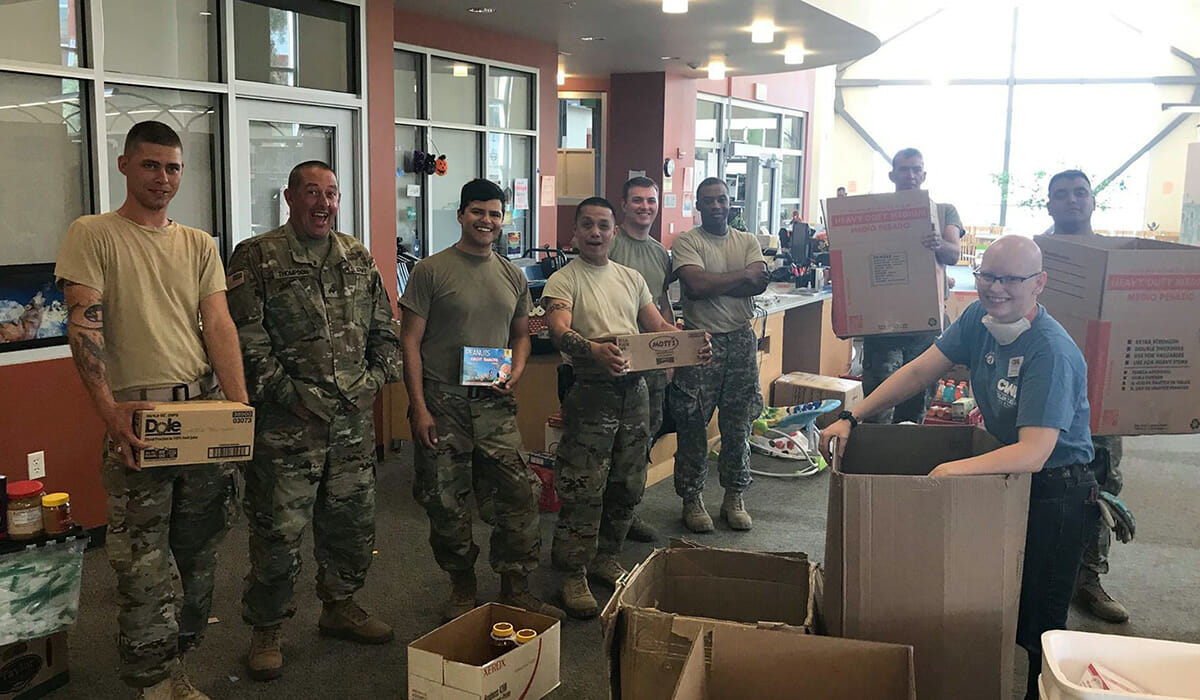
National Guard members from Travis Air Force Base visit the American Canyon shelter to help sort donations.
What role did volunteers play in supporting your organization and the community, both in the immediate response and long-term recovery?
During the fires, volunteers stepped up to fill nearly every role in the shelters and evacuation centers. They cooked and served food, set up cots, took care of animals, interpreted between Spanish and English, and sorted mountains of in-kind donations. Volunteers with professional affiliations provided medical care and childcare. AmeriCorps members filled volunteer lead positions. After the fires, volunteers continue to help. They rebuild homes and schools, plant trees, hold donation drives, and rally their coworkers to volunteers alongside them.
What do you want eager disaster-relief volunteers to know before they begin serving affected communities?
Registering in advance through the organization that manages the emergency volunteer center guarantees that you will be used if there is a need. Just showing up often gets in the way of the first- and/or second-responders. We recommend getting training ahead of time, as knowing what the roles are and how the process works in advance makes service smooth and more supportive during a chaotic time.
What lessons has your organization learned, and what advice do you have for other volunteer management organizations that may face a similar situation in the aftermath of a disaster?
As the old adage says, “practice makes perfect.” Dedicate time to practice your emergency plans and continuity of operations plans. Learn how to serve as an emergency volunteer center by practicing at least once a year. Work with your local government agencies so that they know how to integrate volunteers into their own plans. Ultimately, you will be staffing the response efforts that they lead, so show them that volunteers can be assets during disaster response. Government agencies often fear that spontaneous disaster volunteers will become liabilities, but when we strategically plan ahead for volunteer involvement in response, those fears go away and volunteers can significantly contribute to disaster response efforts.
Is there one particular moment or memory that stands out to you as you think back to this period of response and recovery?
Disaster volunteers come from all walks of life, yet share the same goal: alleviate suffering. One particular memory comes to mind. The local Islamic Center learned of our need for shelter volunteers, so three teenage sisters who worship there signed up for an evening shift at a shelter. They said they finished their homework and came right over, with their parents’ permission. On the second night, they volunteered again and brought their cousins to help. On the third night they brought their parents, too. By the last evening shift, the original group of three sisters had grown into a group of 12 volunteers, who stepped in to feed people, help the elderly walk around at night, gave water to sleepy children, signed-in new fire evacuees, and did anything else needed to make the shelter a warm and welcoming place.
In the event of a disaster, Points of Light supports first-responder organizations, like FEMA and the American Red Cross, connects with Voluntary Organizations Active in Disaster chapters across the United States to assess the situation, and coordinates with our Points of Light Global Network affiliates and partner organizations in the affected areas. Remember – in the immediate aftermath of a disaster, it is critical that people who want to volunteer, especially those outside of the immediate area, do not self-deploy. Connect with local organizations responding to the disaster to find out the best way to get involved.
Be a Role Model for Civic Engagement
It’s hard to believe that summer is already drawing to a close and it’s back-to-school season. After working in the education sector for more than a decade, it’s a time of year for me that offers space for planning, reflection and thought.
As we think about the new school year and all that our young people will learn and experience, especially with what has been
my mind turns to how they will be taught about the importance of improving community and civic engagement.
Certainly, teachers improve community by committing to a profession that’s all about giving of themselves, in the education of others to make the world a better place. And many families are deeply rooted in actions and traditions that improve community. But where else will our young people see this type of engagement, in a way that is organic and natural in every ecosystem? Where will they learn to celebrate it? To value it? To look for ways to get involved?
Young, old; rich, poor; no matter where we live in the world, we all have the same amount of time in a day. And what a privilege it is to be able to share any amount of time supporting issues that matter most to you, for the benefit of others.
Civic engagement, particularly in support of improving conditions for humanity, is not something that should be forced. It’s not an act or series of actions to categorized as a checked box, or had-to-do-it-for-credit thing. Emotions – be it passion, or empathy, or a determination for a better world –
that’s
what fuels willingness to get involved.
And youth are getting more and more involved. Young people are building the world we want to see tomorrow and they’re also impacting the world we see today. As we heard from Lindsay Peoples Wagner, editor-in-chief at Teen Vogue, at our Points of Light Conference in June, “young people are not the future, they are the NOW.”
The foster system, women’s health, hunger, the environment – at our conference, we heard from young people who are taking on these issues (and more), fueled by their passion and by the knowledge that they’re making a difference.
Where does that passion and commitment come from? How did they learn it?
It comes from all of us; from the role models who showed them that engagement matters, that it’s everyone’s job to be engaged, that even though they are young they can make change, and that together, we can create a better world.
Let’s model engagement for others, so we can keep building the Civic Century – making it impossible to stand on the sidelines. Let’s create pathways to make getting involved easier and part of our daily lives. Let’s recognize and celebrate all efforts of community involvement and inspire each other in ways that accelerate impact.
So, on the eve of a new school year, I ask: What will you do to encourage the young people in your life to get involved in their community and become civically engaged? How will you be a role model? Or, better yet, what can you do
together
in support of your neighbors, your community and others?
If you need help finding volunteer opportunities,
and other resources right here on the Points of Light website.
We’ll be glad you did. And the young people in your life may remember it for their lifetime.
Natalye Paquin was the president and chief executive officer of Points of Light from 2017–2022.
She is a visionary and results-oriented leader, with more than 20 years of experience providing strategic, operations and fiscal leadership in the nonprofit and public sectors.
Meet the 2019 Cabot Community Celebrity Cruise Honorees
When you do amazing things, people notice. That’s why we were so excited to honor these five incredible individuals on the
affiliate. While their projects range from literacy programs to food services, what these honorees have in common with each other is a desire to give back and make a difference in their community.
That impulse is shared by our Cabot farmers, too, and that’s what inspired
. It’s the heart and soul of Cabot, powered by the values of the co-op farmers, who also volunteer in their communities and want to encourage others to do the same.
These five Cabot Community Celebrities can inspire us all to do more:
Earl Dizon, volunteer with HandsOn Greater Portland.
Initiative and the Children’s Book Bank, Earl ensures children receive reading support and access to books early in life When asked why he volunteers, Earl said, “At first, it was just a way for me to pass the time. But once I realized I was able to help others in a way that reinvigorated me, I was hooked.”
, managing volunteer teams and special events. But even more important, she shepherds new volunteers – more than 5,000, so far – helping them get started. Those 5,000 volunteers have gone on to work on 12,000 projects for New York Cares, so you could say that Phara is a volunteer x 5,000!
Steffen Strayer (left), a volunteer with United Way of Northeast Florida.
to make his community better. He got the impulse to give back close to home from his grandmother, who also worked hard to serve her community. His focus at United Way is to help lift people out of poverty by providing support for basic needs, education and financial services. The best part about volunteering? “I like interacting with our clients,” Steffen says. “They have the most interesting and compelling stories to tell and the most love to share.”
both to give back and make new friends. Those connections are as invaluable as the connections she makes for network members with her work at Boston Cares, fulfilling a wide range of community needs, from ushering community concerts to judging student debates. Melissa makes sure affordable, healthy food can be had by all at
. She points out the importance of these connections: “A community depends on the strength of connections – between neighbors, community groups, public servants, and everyone in between,” Melissa said. “Volunteering builds those connections.”
, where she provides a wide range of services for various organizations. Her New York Cares experiences often inspire her to volunteer directly with a local organization, which is what happened with Bike NY, Road Runners and University Community Social Services, otherwise known as Meatloaf Kitchen.
and dozens were injured in El Paso, Texas, and Dayton, Ohio. Also this weekend, though less covered in mainstream media, Chicago had its deadliest weekend of the year.
, seven of them fatally.
Like a lot of Americans, I know that the gun issue is a complex one. I grew up with family members and close relatives who have served in the military and in law enforcement. I have family members who own guns. I’ve also lived and worked on the southside of Chicago, where gun violence is a daily problem, and still have relatives there.
But no matter your position on gun access or gun control, we can all agree on one thing: We have to be better than this weekend. While gun violence in America is common, we need to remember it is not normal. This much hate and hurt is not normal.
It was reported that in Dayton, the governor’s remarks to the grieving were interrupted with chants of,
, and at Points of Light we believe in the power of people to make our vision for a better future a reality. It requires us to channel our outrage, our anger, our sadness and our fear to make us better.
We can use our voices
to advocate and amplify the messages and positions we support, talking about important topics with our friends and our networks.
We can vote
for leaders who’ll help us build a better future. We can tell them, loudly, what we envision that to look like, and we can help them be the agents for good that we expect them to be.
We can buy
products and services from companies taking an active role in building better communities today and for future generations.
We can volunteer
in our neighborhoods to make our communities stronger, safer places.
We can donate
our money, our things and our time to help those who need it, and to remind ourselves just who we are and what we value.
Times like these hold a mirror to our society. What we see when we look into that mirror is defined by the actions we take – even
and especially
when it’s hard.
We are better than this weekend. Collectively, we can prove it.
Natalye Paquin is president and CEO of Points of Light.
How Companies Can Build Communities and Solve Social Issues
A sense of belonging – whether to a team, a neighborhood, a city, a state, a cause, a school or company – shapes our identities, making us healthier and more community oriented. We form communities in hundreds of ways. And yet for many people, the reality remains that they feel singled out, left behind, different. So how do we build stronger communities in all their forms, stopping attitudes and actions that isolate, and build more belonging?
Jenny Lawson, Chief Civic Innovation Officer
The 2019 Points of Light Conference left me with a vision for the answer. As we stand at the dawn of a new era – the Civic Century – where we imagine everyone being fully engaged, the idea of connecting to each other is an incredibly powerful stepping stone to the world we are yearning to create.
The strongest, most sustainable support for the Civic Century may come from companies. And why not? We will spend about 90,000 hours – almost one third of our lives – working. Companies can use this opportunity to educate, influence, and improve attitudes, skills and behaviors that can break down barriers and build more connected communities.
At the conference, companies came together – along with individuals and nonprofits – to hear from leaders in the sector on how building communities is not only good for the world, but good for business. Marc Freedman, president and CEO of Encore.org and author of the best-selling book
shared a vision of how we might increase our sense of belonging in the workplace. His premise: the barriers and boundaries we have created between young and old create separateness and isolation that might serve some definition of efficiency in the short run, but leave us less connected and less effective in the long run. His solution: look for ways your older employees can serve as coaches and mentors to younger employees – both in the workplace and in the community. Or, consider how younger employees may be able to help older employees polish 21st-century skills and redefine the value and opportunity offered by an aging workforce. While these tasks offer measurable value, the connections they create help to build a culture of belonging in the workplace and beyond.
In addition to Marc, speakers throughout the week discussed how businesses must focus on building community and purpose. Alison DaSilva, executive vice president of Cone Communications, discussed the value Gen Z places on purpose-driven brands, and Amy Smith, chief giving officer for TOMS, reminded corporate audiences that “staying on the sidelines and playing safe is no longer an option if you want to stay relevant.”
So how will we use community to solve the social challenges in front of us?
Points of Light is
, and the communities where their employees work and live, to move beyond deep divides and unite in action to improve the world. Bringing our collective partners of value and values along on the journey is how we will create the world that we envision. I hope you will join us in the year ahead.
Take a Look at Highlights from the 2019 Points of Light Conference:
Bringing MAVA to the Masses at the Points of Light Conference
had the unique opportunity to join forces with Points of Light as content partner for the 2019 Points of Light Conference, held in St. Paul, Minnesota. MAVA focused on what it does best — providing educational sessions for hundreds of nonprofit professionals looking for best practices in their industry. Points of Light brought its large following to Minnesota, exposing so many new people to our work, and the response was immense! Extra sessions added to meet the demands of the larger audience gave conference attendees from all over the world the chance to get their first taste of what MAVA has to offer.
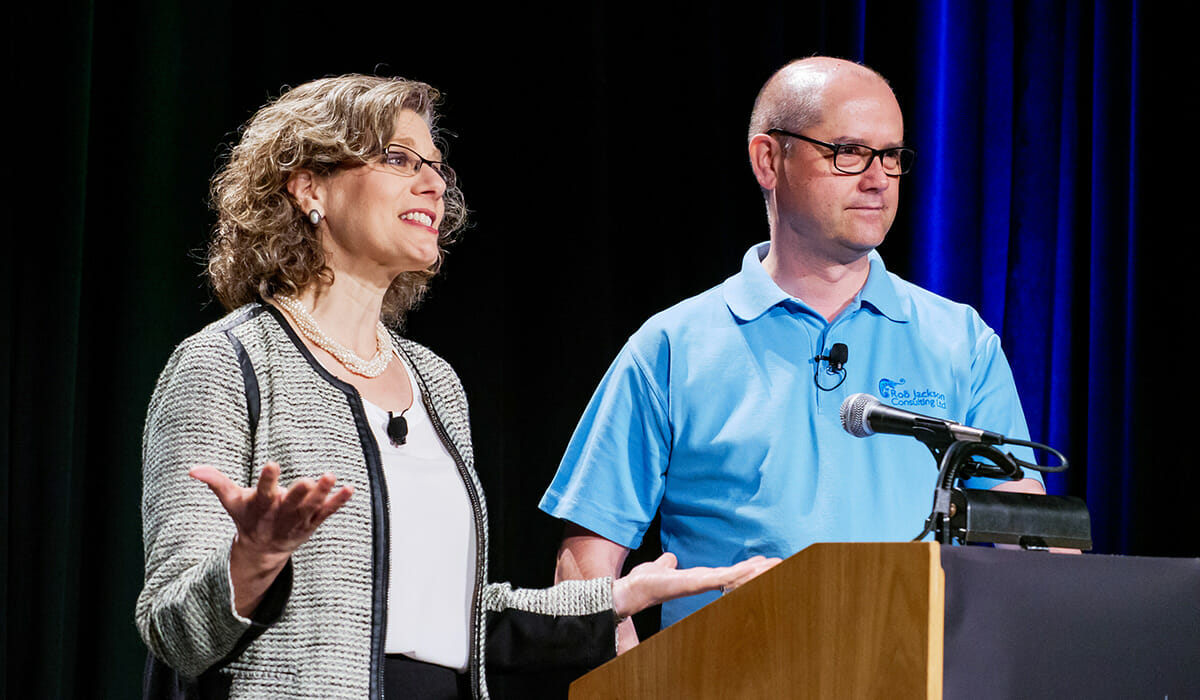
Many participants were introduced for the first time to established leaders in our industry. Rob Jackson, director of Rob Jackson Consulting Ltd., and Beth Steinhorn, president of VQ Volunteer Strategies, led an inspiring educational plenary at the Nonprofit Volunteer Engagement Opening Session, focused on the far-reaching effects that can be seen when we engage and enable volunteers. Attendees watched a series of videos, collected from across the globe, featuring volunteer managers speaking to the ripple effects that volunteers have had on projects within their communities. Buzzing with ideas and new motivation, the crowd set off for two and a half days of learning and sharing best practices, conversations with colleagues and those “ah ha!” moments. Sessions on creating an environment of inclusion displayed the trend of demographic changes in the volunteer population and our need to stay on top of them. And MAVA’s own Lisa Joyslin presented data collected from a recent inclusion study and the
. The need for data tracking and reporting on trends grows with the industry, and MAVA is a leader in these studies.
Beth Steinhorn and Rob Jackson lead an inspiring educational plenary at the Nonprofit Volunteer Engagement Opening Session.
“The interactions and questions that sprang forth from the participants were energizing, and really displayed the need for continued transparency and establishment of best practices to help each other move the industry into the professionally recognized and rewarding job we know it can be,” said Kristina Wilkes, manager of volunteer projects at Chicago’s Museum of Science and Industry. Kristina was among the volunteers staffing the MAVA information table, which offered attendees the opportunity to learn how MAVA might benefit them — even if they’re not in Minnesota.
“As a member who lives and works in Chicago, I was able to talk to the benefits that institutions receive even if they aren’t within the Minnesota State lines,” Kristina said. “It was empowering to share how best practices for the management of volunteers are being presented from state to state and professional to professional every week through MAVA. The foundation may lay in the Twin Cities, but the work we do is universal.”
With the learning and networking that we did at this year’s Points of Light Conference I know that next year’s MAVA Conference, June 3-5 in Minnesota, will be another great step in supporting not just Minnesota, as the land of volunteering, but all of America.
We extend our heartfelt thanks to Points of Light for bringing the conference to Minnesota and for shining a light on MAVA,
and the stellar volunteer engagement work conducted in Minnesota.
The 2020 Points of Light Conference will be held June 10-12, 2020, in Washington, D.C.! Subscribe to our email newsletter, and be the first to get conference-related news and updates, including the call for proposals and early-bird registration discounts.
Karmit Bulman is the executive director of the Minnesota Association of Volunteer Administration. She oversees strategic planning, board development, financial management, fundraising, program development and day-to-day programming at MAVA.
Power of People: Highlights from the 2019 Points of Light Conference
Wow! I’ve just returned from our annual Points of Light Conference in St. Paul, Minnesota, and all I can say is “wow!” That’s it. Just, “wow.”
Every year, our conference convenes thousands of leaders from all around the world to celebrate, learn, network and engage with one another. And our attendees told us that this year’s conference was exceptional! Of course, there is always room for improvement, and we look forward to creating an even more spectacular experience in the years to come.
Natalye Paquin, President & CEO, Points of Light at the 2019 Points of Light Conference.
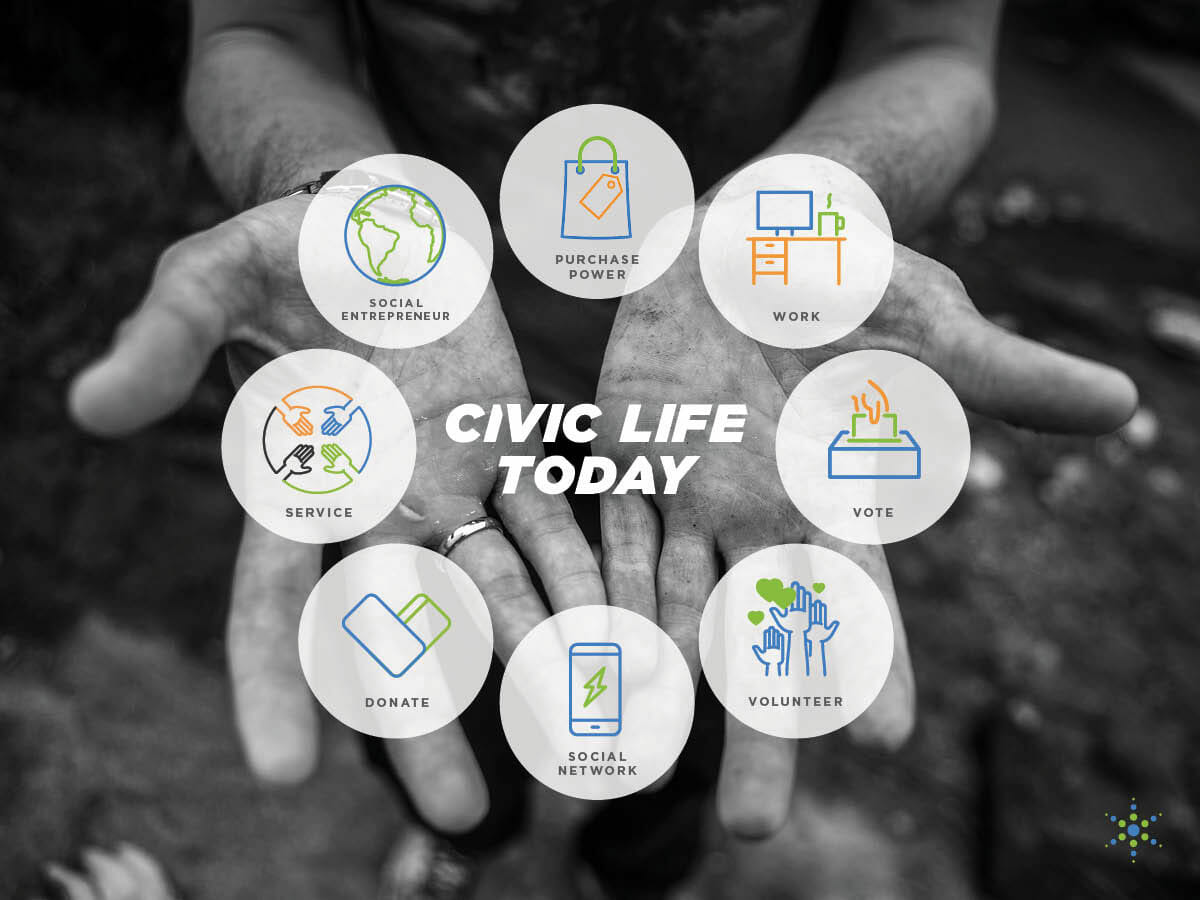
This year, attendees from 30 countries around the world gathered for four days of inspiration, elevation and celebration. We celebrated people using whatever tools they have to support any issue they care about. They’re doing things like raising their voices through social media or joining a hashtag revolution; donating to a nonprofit; becoming a social entrepreneur; directing their purchasing power to support businesses that demonstrate social consciousness or voting for a candidate who ideals align with their own; choosing to work for a company that prioritizes profit and social purpose; spending a year of service or taking time out of their busy lives to volunteer.
We celebrated all of it this week. And we reaffirmed that through the collective “power of people,” around the world, we are creating the Civic Century. Together, we are unquestionably demonstrating the holistic power of people to make change! The Civic Century is about recognizing the unique and individual contributions each one of us can make to our communities, even when it doesn’t fit under the mantle of “volunteering.”
Did you know that while 30% of Americans say they volunteer (which is great!), 62% say they “help out in other ways,” meaning they give of their time at work, with their families or neighbors. That is additive and communities need that!
At the conference last week, we also talked about how employers, nonprofits, companies and individuals can support and invest in individuals. This multiplies and accelerates their impact. And multipliers’ actions often inspire others to act, compounding the effect they have on communities.
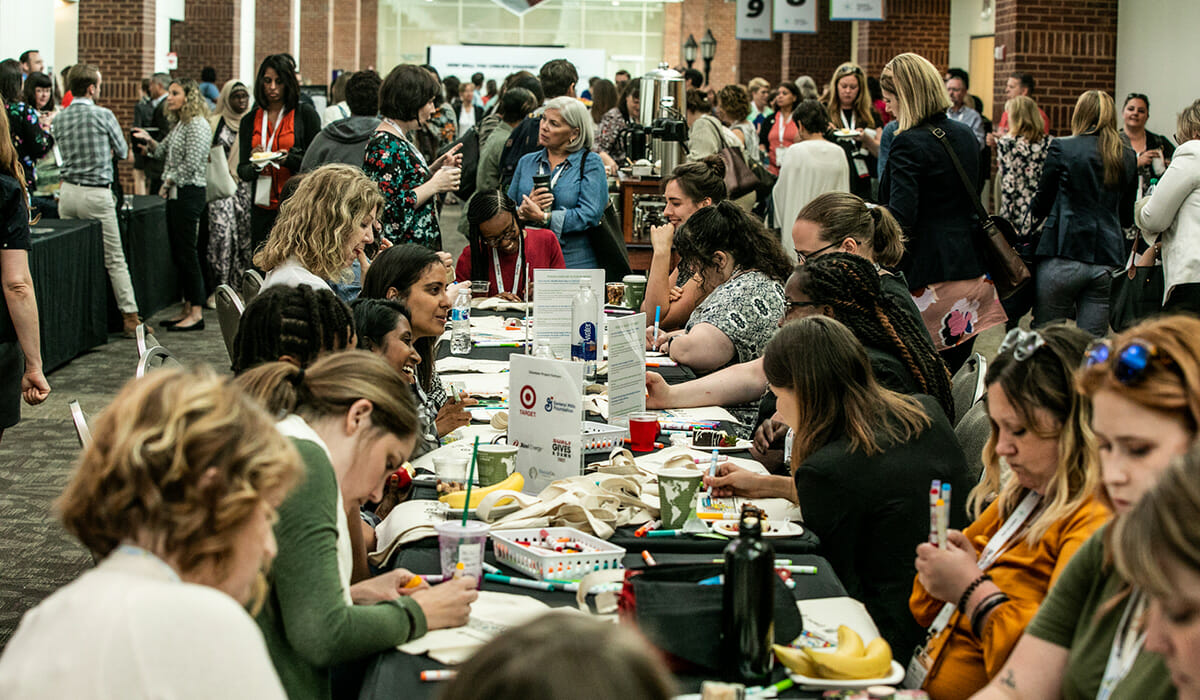
Attendees gather at the Points of Light Conference for forums, activities and civic talks.
It is exciting to highlight just a few multipliers who took the stage last week and created some very special moments during the conference:
How incredible it was to recognize HandsOn Twin Cities for one hundred years of service to the community (talk about a civic century!) and to celebrate with their Executive Director, Tracy Nielsen.
I loved it when Lindsey Peoples Wagner, the editor-in-chief of Teen Vogue, told our Youth Summit participants that there is no one way to do good in your community. And she reminded the adults that youth are not the future – they are the NOW!
It was great to hear social entrepreneur Marc Freedman speak with the corporate community about the importance of building bridges between generations. Most work environments are multi-generational and Marc’s theories about how we can all be more productive were riveting.
There was not a dry eye in the house when Neil Bush reflected on how other people eulogized his dad, our founder, former President George H.W. Bush. He said that people remembered his dad, not for his accomplishments in business or in politics, but for his character and the way he lived his life as a civic servant.
Of course, the audience cheered when former NFL player and current activist and corporate coach Wade Davis reminded us all about the impact of our language and not viewing the world through a deficit lens. He made everyone think about the words we use and the unconscious biases we all have.
And attendees were inspired by Nadya Okomoto and Christina Meredith, women who are using their personal experiences to take up huge causes like gender equality and foster care reform and using their powerful voices to challenge the status quo.
There were so many phenomenal moments throughout the week, and we had such a great time. I hope you will check out some of the
from the conference that are posted online and on social media.
If you want to learn more about what we do at Points of Light, or want to be part of it, join us! We’d love to have you. You can learn more at pointsoflight.org. Maybe we’ll see you at next year’s conference in Washington, D.C.!
Our World is Small, but Our Capacity for Service is Enormous
The world is small. Even though we’re 7 billion people. Speaking 6,000 languages. Living in more than 180 countries. We’re diverse and divided by oceans and time zones. But still, our world is small and it’s shrinking all the time.
We’re more connected than ever, thanks to technology, and those connections remind us that we have more in common than not. Think about the things that go viral. No matter our language or location, we think the same videos are funny, or sweet, or kind. We like the same kind of quotes that inspire us to seek out and become our very best. We’re empathetic, and we share the same belief that helping each other can have a profound impact.
Natalye Paquin, President & CEO, Points of Light
Last month at Points of Light we announced an expansion of a partnership with The Starbucks Foundation. It involves Starbucks employees (they’re called “partners”) working part time at community non-profit organizations – often Points of Light Global Network members – to provide not just support for the organization, but an expanded skill set and opportunity for the partner.
This innovative model allows Starbucks – as an employer of more than 280,000 people around the world – to help its partners become involved in their communities. Points of Light helps connect Starbucks partners with organizations who are doing deeply impactful work on the ground.
Employer-supported volunteering is essential to building the Civic Century we talk about so often at Points of Light. When employers help their employees volunteer during the workday – and make it easy – their capacity for service grows exponentially. Plus, it means more people have opportunities to give back.
A recent report from the UK’s National Council for Voluntary Organizations found that participants in employer-supported volunteering tend to be younger, male and from urban areas. The same report found that demand for these types of programs is growing and that about half of participants apply their professional skills to their volunteer service. Said another way: More people want more opportunities to apply their skills in ways that help people.
That’s what the Civic Century is all about. Finding ways that every individual can apply their skills and be fully engaged in every area of their life. We’ll be talking more about all of this at the 2019 Points of Light Conference in St. Paul (starting tomorrow!) and I’m very much looking forward to it.
Each year, the conference brings together individuals, nonprofits and corporate partners from around the world, who are working together toward making our vision for the future a reality, come together and share best practices and new ideas. Last year I left feeling inspired and exhilarated – and I want you to feel that way too! I hope you’ll join us in-person or follow along online using #PointsofLight19.