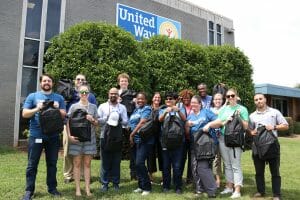
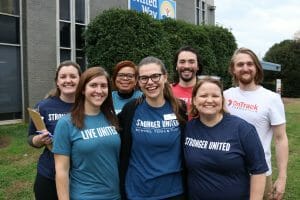
Volunteering is often painted as a rosy prospect — you don’t typically hear people acknowledge the challenges that can come along with bringing a variety of personalities together. The truth is, managing volunteers can involve managing conflict resolution and people with different perspectives. Understanding who your volunteers are can help you assign them to the right task on the project so they can have the best chance of personal success and compatibility with you and other volunteers. Some volunteers want to lead, some want to socialize, some pay attention to details, and others are compassionate and dependable.
You may also encounter volunteers who are headstrong, who aren’t actively involved or who might complain excessively. When dealing with volunteer groups, you are almost guaranteed to encounter clashing personalities at some point. Just remember to treat every individual with dignity and respect, and use these tactics to help navigate any problems that come up.
4 Tips for Conflict-Resolution When Managing Volunteers
When dealing with conflict from or between volunteers, here are some quick strategies to manage the issue effectively.
Talk openly and professionally with your volunteer to try to mitigate the problem.
Consult with another staff person or volunteer leader who can troubleshoot with you on ways to resolve the problem.
Document any incidents immediately, and contact a supervisor if you do not feel you can resolve the problem.
If the project is taking place at a partner organization or school and a client/student of that partner organization is causing the problem, consult with the organization/school contact immediately. Keep in mind that the organization/school is responsible for managing the clients/students. You are responsible for managing the volunteers.
3 Ways to Manage Challenging Volunteers
It is important to recognize and know how to deal with challenging volunteers. You can’t simply ignore the problem and expect it to go away. If you do, the circumstances may affect other volunteers and their experience, and may influence them negatively.
Here are three ways you can deal with challenging volunteers:
Ask them to play a leadership role in solving the problem. Doing so allows you to determine whether or not the challenging volunteer is willing to step up and help lead everyone toward a solution, or if they just want to complain about the situation.
Assign them to a volunteer “partner” to help address their specific issue(s). If they don’t want to help resolve the situation, assigning a volunteer partner to work with them may be the next best strategy for controlling an otherwise negative influence on the project. The one-on-one attention that an assigned volunteer partner (who has been fully briefed by the project leader) can offer a challenging volunteer will likely diffuse their complaints.
In very rare instances, it is necessary to ask a volunteer to leave if their behavior is too disruptive or inappropriate. This should be a last resort and only used when no other strategies are proving effective or the success of the project is threatened.
If you’re a volunteer coordinator or leader at your organization, remember that managing volunteers – even the challenging ones – can be done with the right leadership and techniques. If you approach a challenging situation like a puzzle, you can begin to find ways to show your volunteers how opposite personalities can complement each other if they try to understand the other’s perspective.
3 Ways to Leverage Volunteer Leaders to Build Capacity
There are many factors that influence the number of volunteers you should plan to have involved with your organization’s service projects, including budget, supplies and space. However, if the barrier to hosting a larger project is staffing, it’s time to think differently about how you manage projects.
Leveraging volunteer leaders is a great way to increase the size and scale of your projects while also building your organization’s capacity and community impact. As you explore adding volunteer leaders to your projects, consider these three ways to make the most of volunteers who want to impact their communities as well as your own organization’s capacity opportunities: .
1. Create a Position Description
It’s important to know what you’re looking for in a volunteer leader and which role you want them to play. What experience do they need to have? Do they need to be comfortable with public speaking? Should they have a specific skill or certification? Be clear on the profile you’re targeting when searching for volunteer leaders, as well as their roles and responsibilities, and then capture the details in a position description.
2. Recruit Volunteer Leaders Strategically
Sometimes you need to look no further than your existing network of volunteers to find great leaders. Most of us have that group of rock star volunteers who bring a lot of energy to projects, demonstrate great leadership and are dependable. Let these volunteers know that you recognize their contributions to your organization by sharing the opportunity with them.
Consider other ways to recruit volunteer leaders:
Post the position on your website.
Promote the position on your organization’s social media channels.
Share the position with local professional groups, civic engagement organizations and community service clubs of local universities.
Ask those rock star volunteers to share the position with those they think would be a good fit.
3. Offer Training and Support for Volunteer Leaders
Volunteer leaders are still volunteers, and it’s important to maintain a personal connection with them. After orientation and training, you will still want to coach and mentor them to help individual leaders grow their thinking and capacity to lead.
Provide clear guidelines, due dates, reminders and clarification of requirements. More importantly, know your their strengths, as well as opportunities for growth, so that you can better help them develop their skills. If you foster their development as you do for staff, your organization is more likely to retain a strong and growing body of committed, qualified volunteer leaders.
Decide whether you want to support volunteer leaders formally or informally. Formal support can include regularly scheduled meetings and task-specific training. Informal support occurs as it is needed rather than at scheduled times and can include calls or emails to check in.
Provide opportunities for volunteer leaders to share best practices and learn from each other, such as casual gatherings at a coffee shop or a virtual meetup. Recognize outstanding and dedicated volunteers by nominating them to be a Daily Point of Light or become a certifying organization for the President’s Volunteer Service Award.
Through this continued support, you are preparing volunteer leaders to take greater responsibility, and in doing so, engage even more volunteers.
How to Align Your Mission with Millennials and Civic Engagement
, millennials are shaping what civic engagement looks like today.
America’s millennials are poised to reshape society to a greater degree than any generation since the Greatest Generation. As 2 million baby boomers retire each year, millennials are projected to constitute 75% of the workforce. For
to gather some crucial data points. While it’s impossible to define a group of 72 million Americans, this data did provide insight into trends around how to partner with millennials and where they stand with civic engagement.
The Big Picture on Millennials and Civic Engagement
Findings from our research showed that almost 50% of millennials believe more in civic engagement now than before the COVID-19 pandemic. Sixty-nine percent are more likely to volunteer and 85% think people should help their community and the world.
With few exceptions, “spent time learning more about the issue” was the number-one action millennials took to support social issues.
Millennials are prime for civic impact and are actively looking to feel connected to your mission. So how can you better communicate with this generation and leverage their desire to do social good? Here are five things to include in your outreach and a few to leave out.
Speak directly to your audience.
The research shows that the millennial generation is motivated by more than simply helping others. They need to feel personally affected by the issues and want to channel that concern into action.
Use the “you” and “we” in your messaging to show that you recognize their personal experience and identification with an issue, and that you’re in it with them. This tactic is effective across all of your collateral, from social media to ad copy to your newsletters and annual report.
Demonstrate your desire for real change.
Millennials are masters at spotting lip service with. Instead of catchy slogans or gimmicky challenges, offer data points about what you’ve accomplished so far and what you hope to achieve with millennial involvement.
This generation does its research, and numbers can tell a strong story. Regular updates, as well as a comprehensive annual update, can help build trust among your millennial supporters.
Ask how you can partner with them.
Avoid soliciting contributions and involvement. Instead, open an honest and open two-way dialogue about what you as an organization can do to equip and empower millennials for social change.
Many millennials engage primarily through social media, so take note of the stats around volunteers and social media for your organization. Invite dialogue and seek feedback on the issues themselves, your organization’s proposed solutions, and any other ideas that this important demographic might offer to move the needle forward.
Home in on skills-based volunteer opportunities.
According to a
2020 Fidelity Charitable Report
, 65% of millennial respondents volunteered by “using a specific skill,” significantly more than Gen X or baby boomer respondents. Millennials are eager to apply skill sets that they already use (or don’t get the chance to use) in the workplace toward issues that they care about.
Since so many volunteers today are virtual, it’s a good idea to make volunteer roles in communication, marketing, technology, accounting or other skill areas widely accessible.
about the issue was the top-ranked way that millennials practiced civic engagement. You don’t need an existing program or a solution to a social issue in order to get this generation involved. Provide learning opportunities by hosting forums or webinars with experts in the field to help educate everyone about the issue at hand.
This option can also help build an asset-based approach to volunteering, where volunteers support community members from a place of greater awareness and honor their lived experience rather by working with the community rather than “saving” it. To get started, check out Points of Light’s
, an annual event that draws global nonprofit, government, business and civic leaders from all over the world, is the premier civic engagement, volunteer and CSR conference to keep you educated and inspired. Here are five reasons you should attend the Points of Light Conference in 2023.
What sets this civic engagement conference apart?
There’s no better way to access compelling professional development and CSR networking opportunities. A post-event survey from The Points of Light Conference 2022 showed that 81% of respondents left with new knowledge that they were able to apply in their work. One attendee said the conference “…was terrific – friendly, inspiring and educational!” Another leader reported, “We had team members from several different departments attend and everyone gained something!”
“There was a great diversity of perspectives and strategies about the subject matter, volunteering and the devotion to civic improvement that transcended a variety of international cultural perspectives. Additionally, everyone was very driven and practical in regards to outlining strategies for success that can be applied to a daily lived experience and can be scaled up or down.” — Points of Light Conference Attendee
, “58% of employees feel that their employers should lead in initiating higher standards to address various social justice issues affecting their communities,” while “64% of Millennials are not interested in working in companies that don’t value social responsibility” and “97% of past volunteers are more motivated in their duties” since the COVID-19 pandemic.
There’s no doubt about it: The Points of Light Conference is sure to provide a rich experience to aid you in the important, impactful work you do.
1. Get inspired by top speakers
Each year, Points of Light hosts inspiring speakers and presenters from across the globe who are making massive impacts in their spheres. Whether you’re a
, you will hear from some of the leading voices in the CSR and ESG fields. Past conferences have welcomed news anchors, bestselling authors, actors and entertainers, and leaders of some of the largest organizations in the world to the stage. Expect to hear inspiring stories from this year’s cohort and gain insight into steps you can take to increase and sustain your own impact.
2. Grow your network
One of the top reasons to attend this civic engagement conference is for the networking opportunities. Not only will you have the chance to meet inspiring leaders working toward the common good, but you get to rub elbows with like-minded people doing similar work. Want to exchange successful marketing strategies you’ve been using? Catch up on new initiatives your colleagues have implemented this past year? Have lunch with a friend from last year’s conference? Now’s your chance to build and sustain your own professional network.
3. Get equipped with the latest research and tools
Attending this CSR conference can open the door to ideas and resources that will transform the way you work. Explore the
shaping the social sector and deepen your impact with new tools and solutions to current problems. As the landscape has shift due to COVID-19, you can’t rely on pandemic-era methods of volunteer or employee engagement. At the Points of Light Conference, you will dive into the topics and tools most relevant to where you are now.
“The Points of Light Conference is a place for both bold civic engagement strategy conversations and re-energizing reflection to fuel your day-to-day work. It’s an investment of time and budget that pays off tenfold in new ideas, fresh inspiration, and relevant connections” — Katie Stearns, Chief Global Corporate Solutions Officer, Points of Light
4. Revitalize your passion and commitment
Keep burnout at bay by stoking your passion for civic engagement. When times get tough, how do other leaders and their teams handle the hurdles? What are the key moments that keep them engaged and committed to the work over the course of decades? Reconnect to the reasons you started on your civic engagement journey in the first place. From Main Stage moments to workshops and presentations, you’ll experience moving stories of both successes and failures. You’re sure to find a story you can personally relate to and draw on later through good times and challenges.
5. Make the most of your time in Chicago
This year’s conference provides a brand-new opportunity to explore a major metropolitan area: Chicago! We’re hosting the Points of Light Conference in the middle of June, which is the perfect time to explore the beautiful weather of the Midwest. Snap a selfie at Cloud Gate, (aka “The Bean”) at Millennium Park. Grab your group and head to The Garfield Park Conservatory or the Art Institute of Chicago, cultural staples of this bustling city. History buff? Take a 90-minute cruise along the Chicago River to hear about the origins behind the stunning Chicago architecture.
“We are thrilled to welcome the global Points of Light community to Chicago!” said Points of Light Conference Co-host Ellen Ray, CEO of Chicago Cares. “We look forward to the Points of Light conference serving as an opportunity to celebrate and strengthen the ways our beautiful and complicated city brings the power of people to the work of change.”
Register for the Points of Light Conference 2023
Whether you’re in the corporate world or the social sector, leading teams or new to your organization, don’t miss this powerful conference. The Points of Light Conference is your chance to refine your skills, revitalize your passion and network with other people making waves in the world of civic engagement. Head over to our
to sign up for updates and stay abreast of announcements.
We’re Saying Goodbye to Community – Our Online Content Hub for Nonprofits
As a convener of nonprofit thought leaders, Points of Light is always looking for ways to better serve you. Our online Community hub has provided an engaging place for idea sharing since 2020, and we’re thankful to our partners and staff who have provided valuable tips, expertise and templates over the last two years.
Our blog will still offer the same thought-provoking ideas made especially for nonprofit practitioners, like you, who want to innovate how to mobilize people power to bring your mission to life.
Thank you for being a part of Community and Points of Light.
3 Labor Day Employee Engagement Ideas to Help Busineses Reach CSR Goals
Labor Day is a federal holiday that recognizes the social and economic accomplishments of American workers. It celebrates a proud history that deserves to be remembered and honored. It’s the perfect day for
contributions of their employees. Here are three Labor Day employee engagement ideas to help you reach CSR goals, both big and small.
Why Do We Celebrate Labor Day?
Labor Day is officially celebrated on the first Monday of September. Labor activists began advocating for a holiday in the 1880’s. They used their collective
. First recognized among individual states, it was eventually deemed a holiday when Congress passed an act to officially recognize it as such on June 28, 1894.
How COMPANIES Can Support Employees on Labor Day
1. Give Employees the Holiday Off, and Pay Them for It
Provide your employees with a paid holiday. This practice can include just Monday, the actual holiday, but may also include the Friday before the weekend. Not only is observing important historical holidays like this an important part of staying civically engaged and culturally relevant, but it allows your employees time to recharge and come back refreshed, which means better productivity. It’s a win-win proposition.
In some parts of the U.S., this holiday can coincide with the first week or two of school, so many parents will be thankful for the additional time off. Employers can largely prevent burnout by supporting employees with regularly scheduled holidays and time off… and a strict no-work policy on holidays whenever possible.
2. Provide Volunteer Opportunities and/or Volunteer Time Off
Offer a paid volunteer day in addition to the holiday. Many organizations opt to host a company-wide volunteer day on the Thursday or Friday preceding the Labor Day holiday. Work with your
(or multiple activities, if you have employees or different locations.)
Provide clear communication about the volunteer event to your employees in advance so they can plan accordingly. Be sure to share that the time spent volunteering will still be paid. Alternatively, you can provide “volunteer time off,” allowing employees to choose their own volunteer activities. And if you don’t yet have an
in place, now is the time to start mobilizing towards creating one for your next fiscal year.
3. Review Your Internal Systems and Structures to Ensure Adequate Employee Support
It’s a great idea to do an annual audit of your internal processes and policies – and what better time than around the Labor Day holiday? You might choose to begin with an anonymous employee survey you can send out company-wide to gather current data and important feedback about improvements. In fact, we recommend keeping some channels for employee feedback and suggestions open year round. Often, employees are eager and willing to set up their own initiatives or suggest solutions, but only if they feel welcome to speak up.
Examine your current pay structures, benefits packages and recognition programs. How often are you saying “thank you” to your employees through competitive salaries, insurance plans and paid time off, annual bonuses, paid lunches or corporate retreats? This internal audit is also an excellent opportunity to review your diversity, equity and inclusion efforts. Where do you stack up among other employers in your industry with training and resources on DEI, as well as providing a safe and inclusive environment for your workers?
Above all, remember that your organization simply wouldn’t exist without your employees. Take this opportunity to celebrate Labor Day in a way that will feel meaningful to your workers. Remembering to thank them not only creates a culture of gratitude, it’s the right thing to do.
HandsOn London and HandsOn Greenville Excel in Capacity Building During the COVID-19 Pandemic
comprises 177 innovative volunteer-mobilizing organizations across 38 countries around the world. Day in and day out, these organizations are actively responding to the planet’s toughest conflicts.
While the COVID-19 pandemic left nonprofits across the globe short of resources, many developed new services, programming or partnerships in response. In fact, our Affiliate Annual Report showed that 91% of affiliates took this route in 2020 and 2021, pivoting in the face of immense challenge and finding ways to continue to support their communities.
made great strides in supporting two strands of work responding to community needs around the pandemic. The first was using grant funding to support capacity-building for a Westminster-based food bank.
Over the course of two months, 1,300 volunteer applications and 6,000 inquiries were processed. Six administrative volunteers were trained and worked tirelessly to deliver food parcels and handle the flow of volunteers.
HandsOn London’s second initiative involved developing a remote entertainment program for older people within two separate organizational projects. Not only did the team successfully achieve this outcome, they expanded their reach to two additional groups, or four weekly sessions.
One such group is The Crusoe Club, a club for visually impaired older members of the community. The group usually meets every Friday in person and has a hot meal prepared for them by volunteers. They play games, socialize, have a sing-a-long and even take part in a yoga class. However, these activities had to be put on hold during the pandemic, making this group more isolated than ever before. HandsOn London quickly pulled together volunteers to organize a weekly virtual video call, featuring activities like music quizzes and trivia games.
The calls were so successful that even after The Crusoe Club was able to start gathering in person again, they opted to keep the additional weekly virtual meeting.
“You are all magic. We are not worrying about Crusoe Club now, because you and your team are keeping them well connected.” – Tina Johnston, Coordinator, Positive Aging at Blackfriars Settlement
) also stepped up to the plate during the stresses of the COVID-19 pandemic. They utilized funding to expand existing programs and create new ones that responded to pandemic-specific needs.
Through the HandsOn Greenville 2020 Series and the COVID-19 Relief/Response program, the organization activated over 1,600 volunteers who completed almost 2,000 hours of service through food drives, educational workshops, back-to-school supply drives and virtual and in-person volunteer opportunities.
New programs that were supported with the aid of Points of Light and Center for Disaster
Philanthropy funds included supporting food banks and supplying direct-service agencies with essentials like first-aid kits and other household products. An essential school supply drive was another big success.
And the 2-1-1 Greenville Community Resource Line was also established, connecting people with the services available to address their needs. Through fielding these calls, HandsOn Greenville was able to learn firsthand what and where the highest number of people in need were living throughout the county. One-thousand-nine-hundred-twenty individuals and families were able to hear a reassuring voice on the other end of a phone call in moments of crisis, connecting them to critical services.
Both organizations’ work was done with new and ever-changing protocols, like contactless collection drives and mask-mandatory volunteer events. Learning new technology has been a challenge for many throughout the pandemic, but volunteers, communities and organizations are walking away with new knowledge and skills that could propel them for years to come.
Points of Light is proud of HandsOn London, HandsOn Greenville and all of our global affiliates for demonstrating what capacity building looks like in trying times. It’s clear that nonprofits around the world have ample opportunity to serve their communities, an
d we salute all who put forth effort and make great strides as a result.
Points of Light Engage Makes It Easy to Share Volunteer Opportunities: New Registration Features for Nonprofits, Schools, Government Agencies and More
According to Points of Light’s civic engagement research, one of the top barriers for people to get involved in their communities is not knowing where to go to find opportunities or not being able to find something near them that fits their interest.
To help solve that problem, Points of Light Engage, the world’s largest digital hub for volunteering and community engagement, was launched in January to allow nonprofits to post volunteer opportunities and make it easy for individuals to find ways to volunteer that are interesting, relevant and local to them.
New Upgrades for More Opportunities
We’re excited to expand our registration process beyond nonprofits to also include public and private schools, government agencies and more specialized nonprofit organizations like faith groups and school PTAs, so that more organizations will be able to connect with more individuals who want to make a difference.
Additionally, we know that many organizations deliver their services and need volunteers in multiple locations. For example, a metro-area YMCA may have an administrative address of record downtown, but dozens of branches across the city with distinct, local volunteer needs; a Salvation Army may have multiple thrift store operations, soup kitchens and donation centers; and a local Friends of Our City Parks nonprofit may organize volunteer projects at sites around the community.
Our new registration process allows nonprofit users to organize those multiple locations under the umbrella of their nonprofit, whether they are as large as the American Red Cross or a neighborhood Community Development Corporation with multiple service sites in the community. Users can then create and manage their volunteer opportunities under each of those locations, making it easier to connect with the individuals who want to get involved with a cause they care about.
These new features take us one step closer towards our more comprehensive vision of meeting volunteers where they are most commonly starting, a Google search of “volunteering near me,” and helps even the smallest organization showcase their opportunities to the motivated volunteers in their community.
. They are innovative volunteer-mobilizing organizations located in more than 200 cities and 37 countries around the world. Together, we promote strategies that inspire a passion for community mindedness, enable community action and deepen a culture of community service.
At Points of Light,
w
e believe that every action
, no matter the size,
is significant
. Over the course of 2020,
Points of Light and our
Global
Network
helped
individuals and organizations
finding new ways to work together and support each other
while apart.
As you reflect on the importance of volunteering, here are a few ways you can get involved today and all year-round:
Search our database Points of Light Engage for safe volunteer opportunities inside and outside of the home that fit your interest, location and comfort level.
Get inspired by watching TheGeorge H.W. Points of Light Award honorees’ videos and other content on our YouTube channel.
Help us continue making an impact by supporting the critical work of Points of Light and our Global Network withyour donation.
Our organization
was founded to encourage and empower the spirit of service.
We remain committed to
connecting individuals, nonprofits and corporations
to develop sustained civic engagement and
support
transformative change
across the globe.
4 Ways to Make Volunteering More Inclusive for All Abilities
Throughout October, we recognize the opportunity for all people in all walks of life to give back. This month is Disability Employment Awareness Month, and also recognizes Invisible Disabilities Week, so there is no better time to highlight how every person should have the opportunity to use their talents to volunteer.
Small and strategic changes to how programs are run can produce substantial positive impacts for organizations, volunteers, and the people they aim to serve. Organizations can significantly benefit from hearing new ideas and solutions from fresh perspectives, understanding challenges faced by other individuals, and increasing confidence in the community by showing an accurate representation of themselves. Moreover, diversity in volunteers will inevitably make a program more sustainable with a significantly broader pool of potential volunteers. By being more inclusive, every person can have the opportunity to give back and allow their unique talents and abilities to shine.
Having an inclusive volunteering program may also better reflect a demographic that an organization is hoping to serve, which will provide more insight into the program’s needs, actions, and aims. There is a
, which provides support and advice for voluntary and charity organizations, found that individuals with different abilities and those needing extra assistance are 7% less likely to volunteer than people with no disability. Unfortunately, many people who require additional support are excluded from contributing to volunteer efforts because of a lack of opportunity and access barriers. Ask yourself what barriers your organization faces – is the volunteer space handicap accessible? Does the project require full mobility or sensory input? Then ask yourself and your team how you can solve them.
Offer mentorship support
The individualized needs of people with different abilities may be easier to tackle by providing a dedicated point of contact within the volunteer organization. This mentor can provide support from the recruitment stage through the induction process and be available for regular check-ins on an on-going basis. By nurturing open dialogue between a mentor and volunteer, any specific additional needs that may arise can be more quickly overcome in confidence with the least amount of bureaucracy.
Focus on the individual
There is a lack of publicly available information regarding what support people with different abilities require to volunteer. However, every person’s abilities are unique, and as such, there cannot be a one-size-fits-all method for engagement and facilitation of more inclusive volunteer programs. By embracing a person-centered attitude and helping remove the barriers faced by each person involved, it is easier to move forward in a positive direction and adjust where needed.
Prioritize investing in inclusivity
There are a variety of benefits that inclusive volunteering can have for the organization, the volunteer and the community. Volunteer organizations need to
so that the skills, resources, time, and experience is available to provide people with additional needs the opportunity to volunteer. Being a functional, inclusive volunteer program is easily attainable if all organization levels are committed to it.