Co-Authored by Interns 4-Good and Volunteer New York!
It has never been easier than right now to find an engaging and meaningful volunteer opportunity – especially if you’re able to volunteer remotely.
Around the world as nonprofit organizations look for ways to adapt and continue to make a difference in a post COVID-19 reality, they have increasingly been turning to technology to deliver their mission and connect with volunteers using innovative and creative solutions. At Volunteer New York!, a regional volunteer connector organization serving the suburban counties just north of New York City, there has been a 92% increase in volunteer signups since March 2020. When compared to the same time period last year, people have been raising their hands to help now more than ever!
“Several of the opportunities for literacy and tutoring programs that were listed on our website have been so popular that we had to be taken down within days of posting due to so many requests to volunteer,” said Katie Pfiefer, senior director of programs, Volunteer New York!
Since September is National Literacy Month, here are a few examples of nonprofits offering unique remote volunteering opportunities to be mentors, tutors, and readers that we hope might inspire you:
The Pajama Program: a national organization with multiple chapters whose mission is to promote and support health sleep and bedtime routines for children, has come up with ability to let volunteers host Virtual Reading Parties for Kids as a way to spark the imagination of children and bring communities together during COVID-19.
Quarantine Tutors: an organization founded by students for students as a result of this pandemic after they saw a need to help those who were experiencing challenges with remote e-learning. Their opportunity for volunteers (who face a stringent screening process) to become Virtual Tutors relies on using Zoom, FaceTime or Google Meet.
Another great example of how established nonprofits are adapting is the organization JCY-Westchester Community Partners. They have come up with a specialized eTutor Program specifically to match volunteer mentors to help students with their assignments remotely.
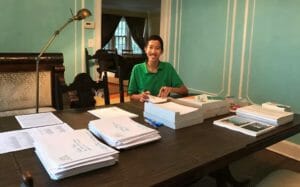
One standout organization that is leading the way to advance opportunity and education for teens while embracing technology is Interns 4-Good, which was founded by a Westchester high school student, Ellie Zimmerman. Check out what this innovative organization is up to in Ellie’s own words:
Interns 4-Good is a 501(3)(c) organization that connects teens with remote, skill-based internship opportunities at nonprofit organizations. Initially, I created the organization to allow high schoolers to utilize their skills and build their resumes while providing nonprofits with much-needed support. The nonprofits we work with serve causes ranging from health care to the education system. In response to COVID-19, Interns 4-Good mobilized its network of talented volunteers to help students in underserved communities with the transition to online learning. We set up a Zoom hotline to support teachers in navigating unfamiliar technology. Our volunteers also began tutoring lower and middle school students. When summer rolled around, we shifted gears to create fun summer enrichment programs and a virtual camp. To date, over 600 students have benefited from these services.
However, there are many students who do not have access to the technology needed for online learning. During this critical developmental time in many students’ learning careers, there is an immediate need for help. There are hundreds of students in need of electronic devices in order to benefit from our tutoring services and, more importantly, to participate in online learning.
Thanks to a grant from Points of Light, Interns 4-Good is planning to purchase refurbished tablets for these students. Our membership with TechSoup, a nonprofit technology marketplace, will allow us to obtain these tablets at discounted rates as low as $20. After securing the tablets, we will then follow up with a tutor to provide free homework help throughout the school year.
With thanks to resilient nonprofits and the amazing leadership of young changemakers like Ellie, there are more opportunities to make a difference with your time from the safety of your home. And there has never been a more important time than now to get off the sidelines and get started. To find volunteer opportunities near you, visit pointsoflight.org/volunteer to search the listings of hundreds of volunteer connector organizations around the globe!
A Global Youth Movement: Taking Action to Change the World
This is the second blog of a two-part series featuring Daily Point of Light honorees Shreyaa and Esha Venkat of Ashburn, Virginia, US and UK Point of Light Award honorees Amy and Ella Meek, of England, in a discussion around youth activism.
These incredible young women all speak at our 2020 Youth Summit, which inspires youth ages 13-18 to continue improving their communities and giving back. Register now to join us on Aug. 19.
As young people, you’ve all used school as a basis for your programs and also a place for support. Tell us more about that.
Amy and Ella:
Getting your school involved is also a great way to build support for your cause or campaign. At school, in normal times at least, you have easy access to a large number of young people your age to get on board. Plus, you’ll often find that your teachers are more than happy to help you with your mission, so doing talks to your tutor group (or homeroom) is a good way to develop your skills and get more confident speaking to an audience.
More often than not, you may find that the issue you’re passionate about tackling relates directly to your school as well. For example, our school used a lot of plastic in the canteen (such as plastic bottled water, and plastic cutlery). Schools aren’t small, and 1000+ students using, for example, a plastic fork every day for lunch can quickly add up, and so swapping these out for reusable cutlery can have a large positive impact. So, working with your school on the issue you’re campaigning against (be it plastic pollution, food waste, or period poverty) can help you make a big positive difference in a relatively short period of time.
Shreyaa and Esha:
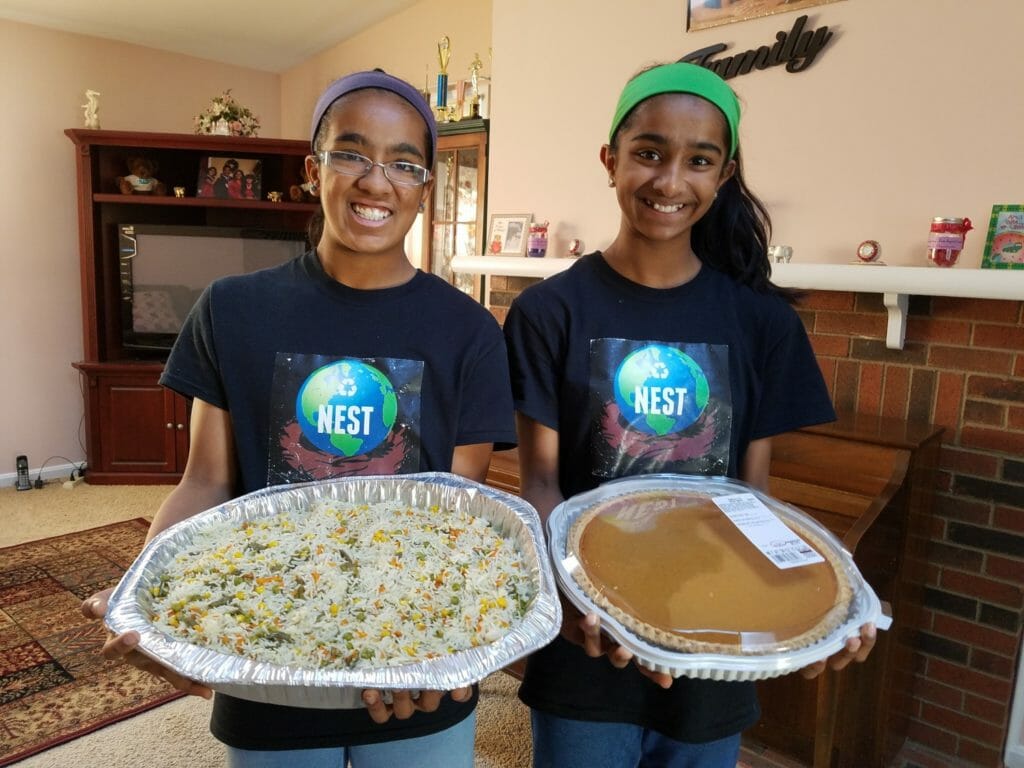
Inclusive, good-quality education is the foundation for dynamic and equitable societies. After witnessing the transformative effects of continued education in our own community, we set our sights on providing quality education and leadership & mentoring services for vulnerable students worldwide through NEST Tutors, our free virtual tutoring program, and NEST Inspires, our leadership program! We’ve impacted kids in 32+ schools and have over 250 high school and college mentors. Also, we’ve donated 10,000+ books to underprivileged kids worldwide! By forging global partnerships with organizations in Zambia, India, and Vietnam, we help underprivileged students achieve academic success while contributing to the Sustainable Development Goals.
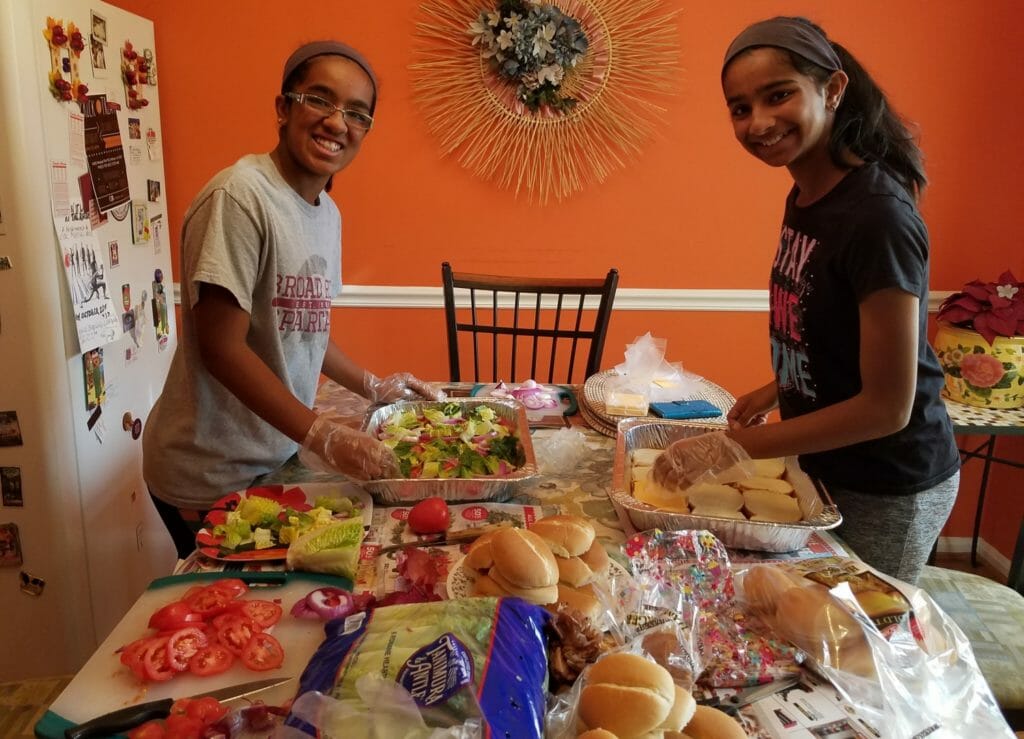
Shreyaa and Esha Venkat preparing meals for delivery in 2019.
How do maintain financial support for your organizations to continue running?
Amy and Ella:
If you’re looking to grow your campaign onto an even larger scale, financial support can be really useful. There are lots of grants available for youth-led organisations, but they’re certainly competitive. If you are keen to apply for some, make sure you have a clear focus of what you’d like to achieve with the funding you get – the more specific, the better. Also make sure you have targets in place for the future, as the last thing organisations or people offering funding is to see the impact fizzle out once the funding has stopped – they like longevity and for campaigns to become self-sustaining.
We’d definitely recommend getting your parents or carers to help you with this where possible – any extra experience with money and budgeting can be helpful, and some grants are only open to those 18+.
Shreyaa and Esha:
In the beginning, the biggest barrier NEST4US has faced has been getting adequate financial resources. Since we’re a teen-led organization, we were self-funding and relying on in-kind donations, community support, and mini-grants from local business partners to run our programs efficiently. As we developed NEST4US, we began receiving tremendous financial support, partnerships, and networking opportunities from corporate businesses and other organizations. We believe strongly in the power of collaboration and are continually forging partnerships with other nonprofits to find new and innovative ways to help those in need.
What are some final thoughts you have for youth who want to get involved?
Amy and Ella:
Don’t give up. Your cause is worth fighting for.
Shreyaa and Esha:
Finding a cause you’re passionate about helping and then spreading awareness about it is the first step towards getting more involved in your community. According to us, EVERYONE has the power to make a difference!
A Global Youth Movement: How Small Ideas Can Spark Big Change
This is the first blog of a two-part series featuring Daily Point of Light honorees Shreyaa and Esha Venkat of Ashburn, Virginia, US and UK Point of Light Award honorees Amy and Ella Meek, of England, in a discussion around youth activism.
These incredible young women all speak at our 2020 Youth Summit, which inspires youth ages 13-18 to continue improving their communities and giving back. Register now to join us on Aug. 19.
Tell us how you got started.
Shreyaa and Esha
: We started out volunteering together – helping at school, the library, and community events. However, we really wanted to get our friends and community involved, so we formed NEST4US, a nonprofit that provides volunteer solutions to the community to make the world better through kindness.
Shreyaa (left) and Esha (right) Venkat prepare food to bring to a local shelter.
Amy and Ella
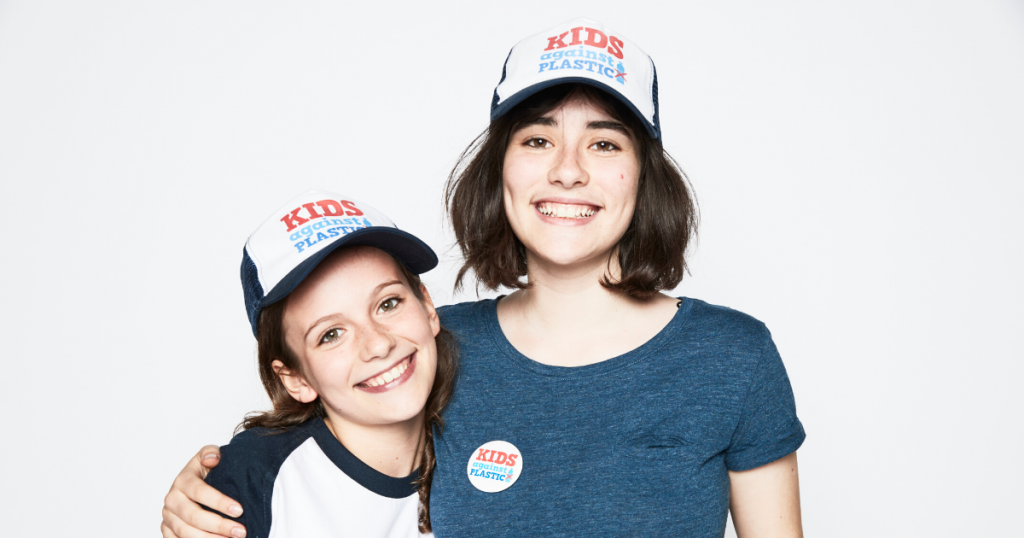
: We first started our charity, Kids Against Plastic, back in 2016 as a youth social action campaign after studying the UN’s Sustainable Development Goals and discovering the devastating impact that human’s use of disposable plastic is having on the environment. This was a few years back, and plastic pollution was far from the well-publicized issue it is today.
Amy and Ella Meek, founders of Kids Against Plastic.
Once you had your idea in mind, what were the next steps you took? How did you know where to start?
Shreyaa and Esha
: Initially, we noticed three key issues in our community that we wanted to tackle—food insecurity, the lack of volunteering with a passion, and diversity and inclusion. When we started volunteering, we noticed so many homeless people who didn’t have access to food. We also noticed that so much food goes to waste daily in our community. So, homeless people and food waste. We put two and two together and decided that our first program, NEST Nurtures, should focus on reducing food waste and feeding the hungry.
Amy and Ella
: One of the hardest parts about campaigning is certainly getting started, as the issues facing our world can feel so immense that it’s hard to know where to start. When we first started taking action with Kids Against Plastic, we began litter picking. We set ourselves the rather ambitious goal of picking up 100,000 pieces of plastic litter (one for every sea mammal allegedly killed by plastic in the oceans every year), grabbed some litter pickers and bags, and got to work. It allowed us to do something immediate instead of putting off action until the future, while still having a positive impact on the environment we were in.
What were some of the initial challenges you faced?
Shreyaa and Esha
: After we established NEST4US, we began to witness discrimination based on age, as many organizations doubted the ability of youth to make a true difference in the community. After all, we were only 13 and 10 years old, how could we make an impact? Also, most people do community service solely for hours or other incentives, which we believe defeats the purpose.
Amy and Ella
: When we first founded Kids Against Plastic, we set ourselves the target of getting plastic bottled water off UK supermarket shelves. After resistance from supermarkets, we realised that we needed to change our focus to driving consumer demand for more eco-friendly alternatives before trying to change large corporations. It’s important to bear in mind that you will get pushbacks like this when getting involved in youth activism, especially at the start of your work. Activism is a lot of trial and error, and a plan can and will fall into place as you progress and mature. The key thing to remember is to stay passionate, stay motivated and to start.
How did you start getting others involved in your work?
Amy and Ella
: We found that the best way to engage people with your cause is to give them a simple thing that they can do to get involved – a tangible action that they can take to make a difference. You see, often, people do care or empathise with the issue that you’re passionate about tackling, but it can be hard for them to know where to go or what to do to help.
For us, with our charity Kids Against Plastic, we helped people get involved through our Plastic Clever scheme. With so many products we all by and use daily wrapped in plastic, it’s hard for people to see how they can consume less plastic and make a difference, never mind become the virtually impossible and impractical ‘plastic free’. So, through the Plastic Clever initiative, we encourage people to take that first step to reduce their usage of plastic by stopping their use of four main items: plastic cups and lids, straws, bottles, and bags.
Shreyaa and Esha
: We decided to provide a variety of programs that allow people of all ages to give back by doing something that interests them. Through social media platforms, we serve as advocates for positive change in the community and promote diversity and inclusion by welcoming people of all backgrounds to our volunteer family. In just four years, NEST4US has grown from a small project to an impactful organization with over 1,000 volunteers, ranging from ages 4-70.
In part two of the series, Shreyaa, Esha, Amy and Ella will share how they sustain their work, places for support, and other thoughts for youth to get involved.
At Home Service Project Ideas for Kids and Teens
While it’s difficult for adults to process the impact COVID-19 is having on the world, it can be even harder for kids. For active families who have canceled activities, school or are even quarantined, finding something to do to pass the time and feel good is so important. However, just because you’re not able to participate in your favorite service activity in person right now, doesn’t mean you can’t still give back.
Here are seven ideas that families and youth groups could do to not only keep youth engaged, but also help others both locally and around the world.
Spread cheer by sending cards for those who are serving in the military or in the health care field
is encouraging you to donate clean, used towels and blankets to an animal shelter to make a furry friend’s stay more comfortable. You can also use old towels, blankets or event t-shirts to make tug toys!
You can also
. There are many issues that are important right now, and making sure your local leaders know that you care is a good way to move things through government. Have an issue you’d like to address? The
Make a video or post on social media about an issue you care about
. Is there an issue you or your family would like more people to learn about? Make a video and posting it online for others to see! You can interview people via phone or video conference, collect information on your cause area, then post your video. Use #LocalLight to share how you’re taking action.
In light of COVID-19, the health and safety of all volunteers is our top priority. Please see our COVID-19 Action Plan
to find resources and other ways to stay engaged and volunteer when in-person alternatives have been postponed or cancelled.
The Points of Light Youth Council, a collective group of youth across the country and the issues they are tackling, does the following:
Advises on Recognition program design
Increases the youth voice in Points of Light’s own work and across the country
Support youth in developing their own programs and platforms
This year’s Youth Council is made up of five of our Daily Point of Light honorees:
It’s hard to believe that summer is already drawing to a close and it’s back-to-school season. After working in the education sector for more than a decade, it’s a time of year for me that offers space for planning, reflection and thought.
As we think about the new school year and all that our young people will learn and experience, especially with what has been
my mind turns to how they will be taught about the importance of improving community and civic engagement.
Certainly, teachers improve community by committing to a profession that’s all about giving of themselves, in the education of others to make the world a better place. And many families are deeply rooted in actions and traditions that improve community. But where else will our young people see this type of engagement, in a way that is organic and natural in every ecosystem? Where will they learn to celebrate it? To value it? To look for ways to get involved?
Young, old; rich, poor; no matter where we live in the world, we all have the same amount of time in a day. And what a privilege it is to be able to share any amount of time supporting issues that matter most to you, for the benefit of others.
Civic engagement, particularly in support of improving conditions for humanity, is not something that should be forced. It’s not an act or series of actions to categorized as a checked box, or had-to-do-it-for-credit thing. Emotions – be it passion, or empathy, or a determination for a better world –
that’s
what fuels willingness to get involved.
And youth are getting more and more involved. Young people are building the world we want to see tomorrow and they’re also impacting the world we see today. As we heard from Lindsay Peoples Wagner, editor-in-chief at Teen Vogue, at our Points of Light Conference in June, “young people are not the future, they are the NOW.”
The foster system, women’s health, hunger, the environment – at our conference, we heard from young people who are taking on these issues (and more), fueled by their passion and by the knowledge that they’re making a difference.
Where does that passion and commitment come from? How did they learn it?
It comes from all of us; from the role models who showed them that engagement matters, that it’s everyone’s job to be engaged, that even though they are young they can make change, and that together, we can create a better world.
Let’s model engagement for others, so we can keep building the Civic Century – making it impossible to stand on the sidelines. Let’s create pathways to make getting involved easier and part of our daily lives. Let’s recognize and celebrate all efforts of community involvement and inspire each other in ways that accelerate impact.
So, on the eve of a new school year, I ask: What will you do to encourage the young people in your life to get involved in their community and become civically engaged? How will you be a role model? Or, better yet, what can you do
together
in support of your neighbors, your community and others?
If you need help finding volunteer opportunities,
and other resources right here on the Points of Light website.
We’ll be glad you did. And the young people in your life may remember it for their lifetime.
Natalye Paquin was the president and chief executive officer of Points of Light from 2017–2022.
She is a visionary and results-oriented leader, with more than 20 years of experience providing strategic, operations and fiscal leadership in the nonprofit and public sectors.
Improving Lives Through Technology and Mentorship, Volunteer Supports Rural Education and STEM Initiatives for Youth in India
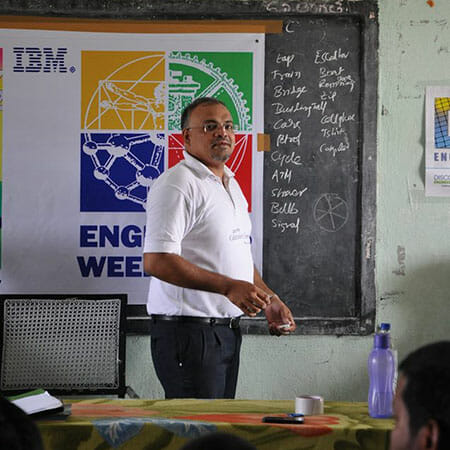
Naveen Prathapeneni is committed to changing the world in small, impactful ways. A lifelong volunteer from Hyderabad, Telangana, in India, who began giving back to others at an early age, he focuses on skills-based volunteering and works with multiple organizations to support rural education and STEM workshops for students.
Naveen believes that education is a fundamental right for everyone, and that a person’s background should not affect access to quality, affordable education. Outside of his job as a cloud solution architect with
, he helps nonprofits and organizations scale their operations through technology, mentors high school and college students and has developed a mobile application to help small-scale farming businesses.
Reaching more than 10,000 students annually, Naveen is devoted to improving lives through education, mentorship and technology. He believes in the power of people, and understands that it is the actions of individuals that have the power to change the world.
In recognition of his dedication to service, Naveen received the “Volunteer Hero” award from
a Points of Light Global Network affiliate in India that brings together volunteers and organizations to share time, skills and passion to promote social development. We spoke with Naveen to learn more about his work in rural development and education.
What inspires you to volunteer?
I come from a rural background where most of my schooling was done at rural schools that had minimal access to information and less exposed to career opportunities. After schooling, I could not choose a career path to align with my interests and passion. I had to face several challenges in positioning myself in the market in align to my interests. This experience had motivated me to focus on rural education and helping students.
Tell us about the organizations you volunteer with, and how you are involved
.
I work with several nonprofits and schools. I have been working with Nirmaan since 2011, helping them scale up their operations with technology adoption. I adopted one primary school and work with 12 rural high schools, one junior college and one degree college in Andhra Pradesh, Telangana.
Nirmann Education Helpline: I am considered a social ambassador, and motivate rural students and connect corporations. I have participated in several initiatives and flagship programs and have mobilized volunteers and conducted train-the-trainer workshops.
Remote Volunteering: I have been a service lead and remote mentor at a college in the Khammam, Telangana, district. I initiated remote mentoring programs and conducted career workshops, code camps and spoken English classes.
Old Alumni Alum Lead: I Initiated alumni setup at 12 high schools located in Mamidikuduru Mandal, East Godavari, Andhra Pradesh. I worked to improve rural schools, conducted career counseling, led train-the-trainer workshops, science fairs, science and engineering workshops and STEM sessions.
How did you become interested in education and sustainable agriculture? Why are these causes so important to you?
Naveen is devoted to improving lives through education, mentorship and technology, and works with multiple organizations to support rural education and STEM workshops for students.
My primary work areas are focused on rural education, improving schools and livelihood support. I also worked extensively in sustainable agriculture, promoting STEM careers, disaster management support and supporting people with disabilities.
Education is a fundamental right and everyone in society needs to have access to quality and affordable education to fulfill their aspirations
I strongly believe that a “do2Learn” orientation works better for students in rural areas, hence I focus on STEM education and conduct STEM workshops and prepare reusable kits. Every year I conduct STEM works workshops for 500+ students, and so far I have addressed more than 10,000 students.
I got an opportunity to work with nonprofits focusing on rural development while working with rural schools. This has created interest to explore the agriculture field. Voluntarily, I have developed a platform and mobile application to help small business and small-scale farmers to connect supply and demand, and access advisory support with minimal cost.
Tell us about the mobile application you developed, and how it helps users.
I proposed and initiated the development of the mobile/kiosk based app to help the Nirmaan Education Helpline to scale up their operations in disseminating career information to students, teachers and even counsellors with minimal effort.
This kiosk is touch-based and allows students to connect to the Education Helpline through a toll-free number. Student can register and complete the pre-assessment form and choose two careers choice of interest. The system asks a few questions – a psychometric test – and based on certain parameters, suggests a preferred career. Student can browse the careers and see videos related to the career, know about the path to achieve that career and other information like availability of hostel, total cost of the course, scholarships, etc., including list of colleges and entrance exams.
I was responsible for architecting, designing the solutions, training interns, day-to-day interactions with the development team, and conducting the pilot. I also made further enhancements to add cognitive features like a chat bot to answer career-related queries.
How are you involved with iVolunteer?
I participated in mentoring workshops conducted by iVolunteer and worked closely with the iVolunteer team in conducting STEM workshops as part of a STEM campaign organized by my organization.
What has been the most rewarding part of your volunteer work? Do you have a favorite memory or story to share?
Of course, there are many. In one incident, one student who studied in a rural school contacted me two years ago to express her gratitude for motivating her to pursue engineering, and mentoring her to overcome her career challenges. She updated me that she joined in a start-up company in Gujarat.
What have you learned from your experience as a volunteer?
Volunteering is not just a giving process or just giving. As I mentioned, it is both giving and receiving. I have learned how to face social issues, challenges, and some solutions and how technology can help in solving some of those. Lastly, often people tend to change the world, but my experiences made me stay focused on one of two areas where I can work long-term and see the benefit and impact that I can bring,rather than trying to address every problem of the world. This approach has given me an opportunity to apply my skills in specific societal problems and work at a grassroot level.
Why do you think it is important for others to volunteer in their community?
Enjoy in giving back to society, you will get a lot in return, like satisfaction, network, new learnings, new skills, new people, new relations, new stories, different dimensions in thinking … a lot.
What do you want people to learn from your story?
Always do what you like and like what you do. Choose your area of interest and stay focused.
Honestly, what you are going to gain will be more than what you give.
Time management and work-life-balance used to be a big challenge. I started involving my family members in my activities, and they started enjoying the work. I tried to pair some of my field activities with family trips so that they are also engaged and feel the difference.
What’s next for you as a volunteer?
Continuing my focus on education in rural areas, my key projects are:
Study Circle at Government Degree College Khammam: I will strengthen the study circle by strengthening alumni and motivate them to be part of this initiative and help more than 600 students to achieve their dreams and goals. I will also help empower them with livelihood skills and work-readiness aspects. When I started working with this college, 80 percent of the students expressed fear, lack of guidance and moral support as major challenges.
Extend classroom at Government Primary School, Pochammabasti: This school is operating in 2.5 class rooms with 140 children from first to fifth grade. There are several proposals to government officials but, no progress. I am planning to crowdsource funds along with my contributions to set up temporary classrooms by the beginning of next academic year in 2020.
Operational Efficiency at Nirman Vidya Helpline: Continuing my support to Nirman Educaiton Helpline, I plan to enhance the mobile application with psychometric tests and cognitive capabilities. This will help counselors to quickly access information and learn the processes at call centers, and students can access information by asking queries in natural language.
Committed to Improving Children’s Lives, She Fosters Family Relationships for Youth of Incarcerated Parents
Betty Mohlenbrock founded Reading Legacies to empower children and youth as valued family and community members through intergenerational shared-reading experiences.
Meet Betty Mohlenbrock, who was a Top 10 finalist for the L’Oréal Paris Women of Worth Award in 2018. Each year L’Oréal Paris and Points of Light recognize and celebrate Women of Worth who make a beautiful difference in their communities. Ten honorees each receive a $10,000 grant to support their most cherished cause, and an online vote determines one honoree who will receive an additional $25,000 grant. Nominations for 2019 are now open! If you know a woman who works to create lasting and significant change in her community, nominate her to be one of the 2019 Women of Worth.
“One of the core values that is most prominent at all times in my life is that when you give of yourself, even though you don’t realize it and it’s not the reason you do it, you are learning, you are growing,” said Betty Mohlenbrock.
As a former educator and nonprofit professional, Betty has always been committed to improving children’s lives, and when she retired, that commitment would continue. In 2011, she came out of retirement to establish
, a nonprofit dedicated to fostering supportive relationships between the children of incarcerated parents and the parents themselves through the simple act of reading aloud.
In 2012, an estimated 2.7 million children in the United States had experienced parental incarceration. Children whose parents are incarcerated often face a range of challenges, including an increased risk of depression, drug abuse, and poverty. On average, the children of incarcerated parents are six times more likely to become incarcerated themselves.
By helping to maintain the bonds between children and their incarcerated parents, Reading Legacies works to address the devastating impact of incarceration on families and communities. The organization operates two reading programs in the San Diego, California, area. The larger program,
, provides incarcerated parents with a way in which to connect with their children through recorded read-aloud sessions that are then delivered to the children’s homes. The smaller program,
, invites local teens – some of whom have experienced parental incarceration themselves – to read to children in their community on a weekly basis.
The central focus of these programs is the emotional and educational benefits that reading aloud has for children, but their impact is much broader. By participating in Reading Legacies programs, parents and teens learn to become role models, building their own self-confidence and sense of self-worth in the process. “That’s what’s happening with these incarcerated parents and these teens that we’re taking out of the gangs and the afterschool behavior that’s harmful to them,” said Betty. “It’s empowerment. It’s a double-edged benefit. It benefits the children, but the readers are getting so much out of it, too.”
Betty has partnered with many institutions in the area to bring programming to underserved populations, including the San Diego County Probation Department and Sheriff’s Department, the California Department of Corrections and Rehabilitation, school districts throughout San Diego County and many Head Start facilities. The work of Reading Legacies is made possible by the many volunteers who execute the programs. In 2017, volunteers dedicated 21,105 hours to Reading Legacies and its mission.
Although Betty is the visionary and leader of Reading Legacies, she insists that its success is due to the support and advice she has received from others. “None of this can be done well if you don’t bring smart people alongside,” she said. “That’s something that I learned very early on.”
The organization has made tremendous impact in the community. In 2017, Reading Legacies facilitated 8,000 interactions among parents, teens, children and family members participating in its programs. As a result of these interactions, Reading Legacies is seeing incredible effects. The families of children who have participated say that 73 percent of children are enjoying reading more, and that nearly 70 percent of them are communicating more with their parents.
As a former educator and nonprofit professional, Betty Mohlenbrock has always been committed to improving children’s lives, and when she retired, that commitment would continue.
Every teen who has volunteered with Reading Legacies says that the program strengthened their leadership skills, and 87 percent report an increase in self-confidence. Of the incarcerated parents who have participated, 94 percent have seen a boost in morale and feel more connected to their children at home.
Stephanie Scott, a long-time volunteer with Reading Legacies, has experienced incarceration. Her passion for the organization comes from seeing the positive change that the programs have had on parents. “For me, and also for some of the other ladies who serve, we have children, and some of us have experienced separation from our children,” she said. “We know firsthand how that can feel, so being able to instill some hope in parents – it’s such a rewarding experience.”
One of Betty’s greatest challenges is providing programming to incarcerated parents. A stigma is often attached to serving incarcerated people, and sending videos from prison is often complicated by prison regulations. “[Incarcerated parents are] difficult to reach, and they’re difficult to follow. It’s a transient population,” Betty said. None of these challenges deter her, however, and she’s proud of the unique work her organization is doing: “It’s worthwhile because it’s something that no one else is doing. It’s the right thing to do.”
Reading Legacies has created a ripple effect through families and communities. A father whose incarceration had strained his relationship with his eldest daughter found reconciliation through participating in Reading Legacies. “This program changed his life because it let him become a parent rather than a criminal,” said Betty. It changed the daughter’s life, too: she is now pursuing a career in education in the hopes of becoming a teacher.
Betty also tells the story of a young man who joined the Youth Readers program. He originally volunteered so he could spend more time with his girlfriend, but ended up realizing that he was good with children. “He stayed with the program for three years, then went on to college,” Betty said. “The first in his family.” He then became the vice principal at a high school in San Diego.
Volunteers Help Make the American Dream Possible for New York City Youth
New York Cares is giving life to the concept of the American Dream. These words are not new; they symbolize a dream where hope and opportunity come together in a whimsical, yet transformational way. But this goal, often the driving force behind the paths we take in life, sometimes doesn’t feel attainable. That is where New York Cares steps in, especially when it comes to education.
Since its founding in 1987, New York Cares has focused on three key issue areas for volunteers to get involved in: education, immediate community needs, and public spaces, with programming focused on all types of schools, hunger initiatives and sustainable environments.
The College Access program includes SAT preparation, “sophomore skills” academic tutoring, college preparation and FAFSA preparation. The organization and the volunteers it mobilizes are there from beginning to end to walk alongside the future leaders of our country. They are heroes without the capes, giving teens the chance at a bright future.
“Many public high schools in New York City don’t have existing resources to prepare their students for college. New York Care’s College Access programs work with partners to provide free resources that support students as they navigate what might otherwise be an intimidating process, by preparing them with academic enrichment, aspiration, knowledge and planning so that they have the foundational skills needed to begin their college journey,” said Darline Lalanne, director of education and family programs. “Volunteers who give their time to help young adults prepare in the classroom, navigate the financial aid system or find the right college fit, can do wonders for a students’ college success.”
New York Cares is currently recruiting for college prep volunteers, but their largest volunteer need remains in the SAT prep sector. Approximately 400 volunteers are needed to assist students from low-income families – a demographic that tested 166 points below the average on last year’s SAT and 396 points behind their wealthiest peers, according to NationSwell.
The unique part about New York Cares is that its college access programs match a volunteer with the same student for the duration of the student’s yearly involvement. Students are able to develop trusting relationships with their volunteers, and the results of their test scores and confidence prove that the key to success doesn’t always lie in expensive test prep classes.
“Without New York Cares, I wouldn’t be the person I am sitting here today. New York Cares gave me the confidence and helped with the entire college application process,” said York, a student who moved to New York from China just three years ago. He participated in the sophomore skills, college prep and SAT prep programs, and moved forward to have an incredible score increase that resulted in being Hunter College bound.
New York Cares has countless stories of College Access program successes, but teens’ capacity of care doesn’t just stop at the numbers; the students participating in the program authentically appreciate their volunteers as individuals. “Even though he has a working job, like 9 a.m. to 5 p.m., he still values us as students and his volunteering job as a whole,” said Lemali, a participating student, about one of the program volunteers. “Some Saturdays we would come in and just talk about life, and volunteers would share their own personal stories, which helped us all.”
New York Cares realizes that it’s all about the students. From York to Lemali, and the other 20,000 students they have engaged, the true American Dream is becoming a reality. The idea may take different shapes and forms depending on who the dreamer is, but for those students who are looking for a path to college and a brighter future, their dreams are coming true.
The Power of Youth: Making Their Mark on the World Through Volunteer Service
International Youth Day on Aug. 12 is the perfect opportunity to celebrate the importance of youth service and the ability of kids and teens to create meaningful change through volunteerism. As today’s youth continue to grow in our modern technological world, it is important to remember the power of uniting together in service. generationOn, our youth division, creates spaces and resources to empower youth to come together with fellow changemakers, share ideas and inspire their communities.
Earlier this summer, more than 50 youth came together in Atlanta for the second annual Points of Light Youth Summit at the Service Unites 2018 conference, demonstrating the power and dedication of kids and teens to make the world a better place. Participants, aged 11 to 18 years old, spent a full day in workshops that included important skills such as community mapping, how to budget, and how to pitch your ideas to funders. Finally, the groups pitched their community improvement projects to a panel of judges, including actress and activist Eden Duncan-Smith, artist and youth activist De’Andre Kind, and Hsuan Shen, district manager for Starbucks.
The kids and teens who participated in this year’s Youth Summit are inspiring examples of the power of youth to create meaningful change in their community. Here are a few highlights and key takeaways from the participants:
The Floating Island Project
Brooke Sullivan, 17, and her team, based in Greenville/Pitt County, North Carolina, pitched The Floating Island Project. She shares:
“This project will fill a void and provide a natural filtration system to the existing lake water sites at our city’s flagship park and nature center.
The Points of Light Youth Summit provided us with the opportunity to learn the important aspects of a speech, and how to enhance or change your pitch according to different factors such as audience members. This knowledge will allow us to enhance future grant funding pitches. The money enables us to purchase non-recyclables needed in the project’s construction, zip ties, spray foam, and additional native wetland plants, plus marketing and promotional materials, and water quality and habitat survey supplies.
My original initiative with this project was to raise awareness about the lack of recycling in our local school cafeterias and ensure plastic bottles are repurposed, kept out of our landfills, or recycled. Through this project, we are utilizing recycled materials to reduce landfill waste, preserving native species, increasing plant and animal habitats, creating awareness of our environment and water sources, and helping others understand the importance of youth service.”
“Fresh and So Green Green”
Jayden Philpot, 16, from Decatur, Georgia, presented, “Fresh and So Green Green,” his team’s plan for addressing food deserts through urban gardening. He shares:
“Through my experience of preparing for the Youth Summit, attending, presenting and meeting adults and other youth, I learned a great deal about food and nutrition, about other participants and about myself.
Communities that have limited access fresh produce have a higher rate of preventable diseases. I realized that I can make a difference by learning how to grow produce in those communities, teaching others how to start and maintain gardens, and by having community farmers markets.
I am encouraged to know that making change does not have to be some big elaborate plan involving lots of people and groups. I can start making a difference by myself with one person, one group, one neighborhood.
We plan to start a garden near our center and invite speakers to come and talk about gardening, nutrition and healthy food preparation. We will charge a small fee for the classes, sponsor farmers markets where vendors will pay a fee for booths, and we will also sell produce that comes from the gardens that we help start. Eventually we would like to have a mobile farmers market!”
The FLY Life
Ishaa Hope, 15, from College Park, Georgia, and her group pitched an app called the FLY Life. She shares:
“The FLY Life app allows girls to post and answer questions anonymously, and also allows them to direct message mentors. This app was created to give middle and high school girls someone to talk to in their times of need.
Through my experience at the Points of Light Youth Summit, I learned many helpful tips on public speaking, how to make a good pitch, and being confident. I will use what I learned to become a better speaker and to continue the development of the FLY Life app. The grant money we received will help support our work by helping us finish the coding for the app.
It is important for me to make a difference in my community because that is the only way to make a change. If we start making a change now, the world can be a better place in the future.”
Blessing Bags and The Drama Free Campaign
Jadyn Steele, 16, is a long-term member of Diamond In The Rough, a youth development program that creates a variety of activities designed to build self-esteem, character and leadership skills among girls of all ages. Their youth action team attended and pitched two ideas. She shares:
“Our youth action team, which included me and seven of my peers, attended the 2018 Points of Light Youth Summit. The event was very inspirational, and we saw many other youth leaders like us who wanted to see change in their community. My organization presented both the Blessing Bag project and the Drama Free Campaign.
I am very passionate about making a difference in my community. The issues facing our nation and world will have an affect me in one way or another, so helping to offer solutions and help change these issues is very important to me and many of my friends.
I personally learned a lot during the conference, including new presentation tactics, more team-building skills and the importance of participation. These major points that my peers and I learned will help us both in our organization and in our everyday life. Most importantly, these tools will help us in implementing our projects!
3 Volunteer Ideas that Benefit Kids and Teens
If you’re interested in putting your passion and skills to work, but aren’t sure where to start, look towards the next generation! There are so many opportunities to support kids and teens by inspiring them, supporting them and investing in them. Here are three ways you can get involved by helping kids and teens:
Students who struggle to read at an early age fall further behind and are four times more likely to leave school without a diploma. Getting youth excited about reading is an easy way to combat this statistic and get involved! Organizations like Ohana100, First Book, and Reach Out and Read provide gently used books to kids, as well as opportunities to become a volunteer reader. You can also contact your local libraries and schools, which are often looking for volunteer readers for story times.
Many kids and teens – including 13 million in the United States – are facing hunger and food insecurity. You can run a food drive and provide donations to your local food pantry, or serve meals at a soup kitchen. There are also lots of innovative ways to help the hungry! Make Your Mark on Hunger grantee Kate Atschinew started a coupon club called Cutting Out Hunger, which uses the concept of extreme couponing to help the hungry. Using couponing allows Kate to buy bulk food at a deep discount for her local food pantry; she also teaches community members how to use coupons to buy food at a lower cost and in a dignified way. To find ways you can help fight hunger in your community, visit www.generationOn.org/hunger.
Sometimes it’s not what you do, it’s just being there that’s enough to make a difference! Organizations including Boys & Girls Clubs, Big Brothers Big Sisters of America and Mentor are always looking for adult volunteers to participate and mentor youth. Exposing kids and teens to other options outside of their usual environment can go a long way to showing them there’s no limit to what the future can hold for them.