



Meet Daily Point of Light Award honoree Rishika Padhy. Read her story, and nominate an outstanding volunteer or family as a Daily Point of Light.
With the heat index often soaring past 100 degrees, Texas summers can be brutal. While many people escape into air-conditioned offices, outdoor laborers—many of them immigrants—spend long days working under the sun. The constant exposure puts them at risk for heat-related illness and has even led to a number of deaths that were largely preventable.
Seventeen-year-old Rishika Padhy felt that heat almost immediately after moving to Texas from India two years ago. Just walking outside to get where she needed to go, she could feel her skin burning. It made her stop and wonder how people who work outdoors every day manage to push through conditions like that.
That question led Rishika to Solace for Outdoor Workers, a nonprofit focused on protecting outdoor laborers from heat and sun exposure. What started as a social media internship quickly grew into something much bigger. Today, Rishika leads Solace’s Texas chapter, coordinating outreach, securing grants and distributing sun-protective gear to workers across North Texas, all while balancing life as a high school senior.
Beyond hands-on support, Rishika has also helped elevate workers’ voices at the policy level through partnerships with labor advocacy groups. Her work has contributed to efforts around Texas House Bill 446, proposed legislation aimed at improving workplace heat safety and protecting workers who speak up about dangerous conditions.
What first inspired you to start volunteering with Solace for Outdoor Workers?
I started with Solace during my sophomore year of high school. During that summer, I was really compelled to walk in the sun a lot because Dallas doesn’t really have public transportation, and my family didn’t have a car at the time. I walked to a lot of places in the heat, and that experience really stuck with me.
I discovered Solace through a social media internship opportunity. At first, I just wanted to spread awareness about the risks of heat exposure, especially for outdoor workers. But as I became more involved, I realized how many workers are overlooked and unprotected. Despite facing life-threatening conditions daily, they often don’t have access to even basic protection.
I wanted to give them a sense of gratitude and appreciation through my work. Eventually, through my consistent work ethic with Solace, I was promoted to lead the Texas chapter. That allowed me not just to educate people, but also to take action by creating tangible support systems for workers. That’s really when everything started for me.
Was there a specific moment that pushed your concern into action?
There was one particular outdoor worker I learned about while I was researching as a social media intern. They had skin cancer, and their entire family also had skin cancer. Many of them worked outside in extreme heat—some were gardeners, some were construction workers—and the illness had kind of run through the family.
That really pushed me to dive deeper into their experiences. I realized that many workers were in similar situations because they didn’t know what heat-related illness was or how dangerous long-term sun exposure could be. With climate change, the heat has become even more intense, especially in Texas.
Tell us about your volunteer role with Solace.
I lead the McKinney chapter, which also works closely with the Plano chapter and another chapter in Allen. The other two chapters aren’t as active right now, so I’ve mainly been leading the work across all of them.
I spend most of my time working on grants and outreach. One of our most important collaborations is with an organization in Arlington, Texas, that works directly with outdoor laborers and also has connections with Congress. They advocate heavily for outdoor workers’ rights and recently helped lobby for legislation focused on worker safety.
We collaborated closely with them throughout that process. Since many of the workers they support are Spanish-speaking, they help us with translation, while I work mainly on the English outreach side.
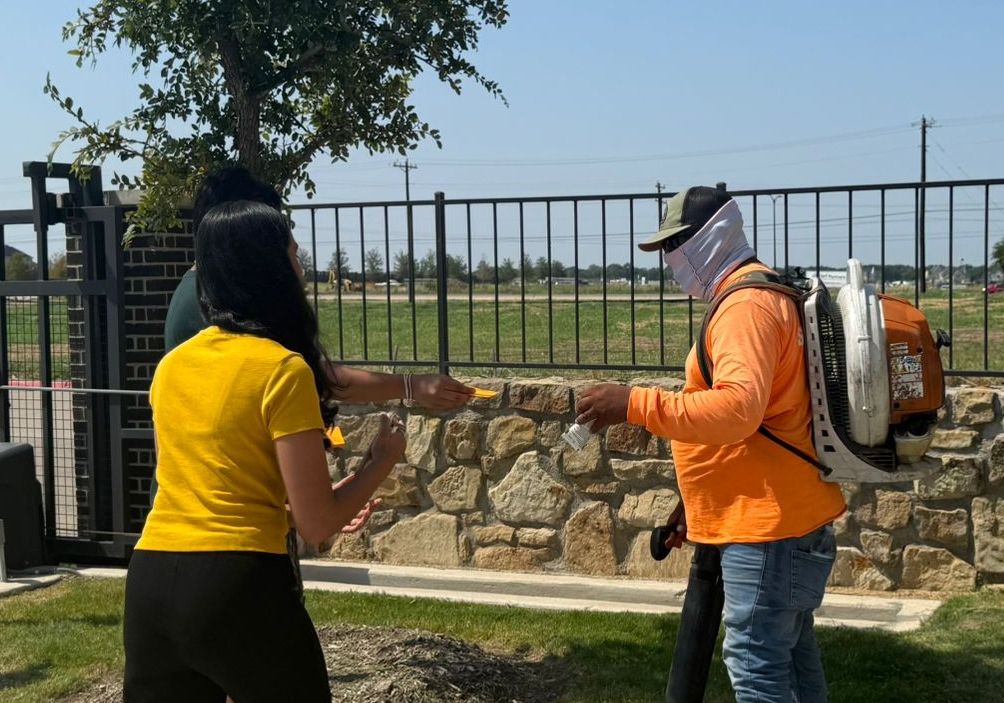
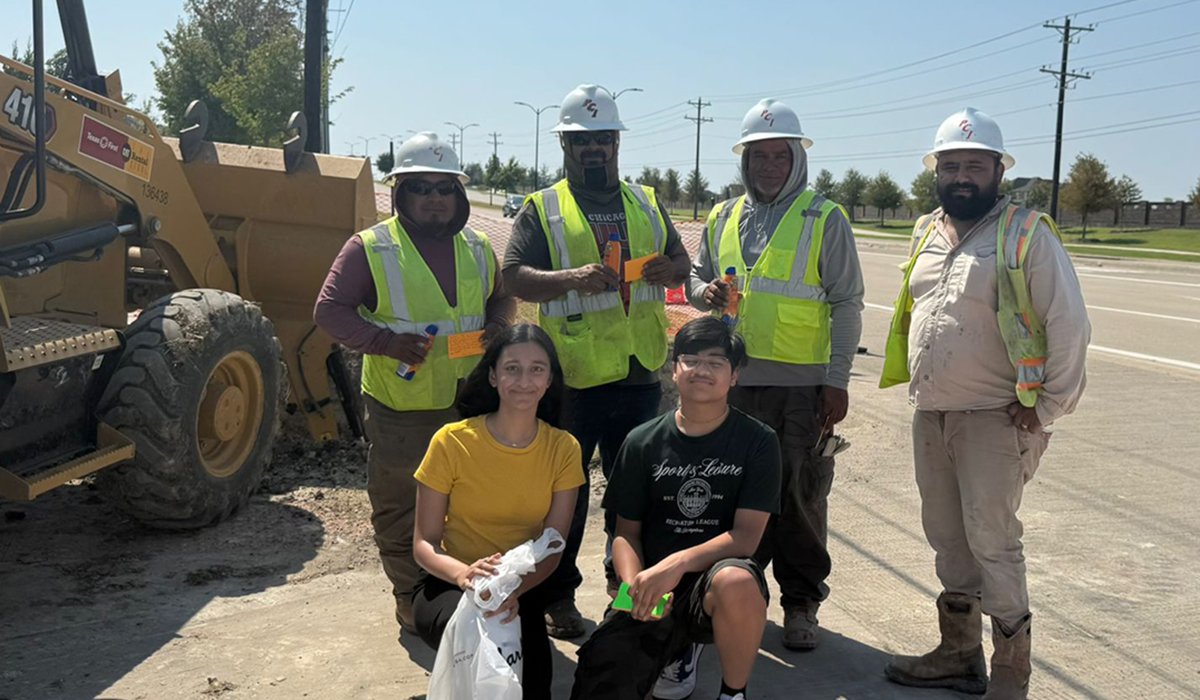
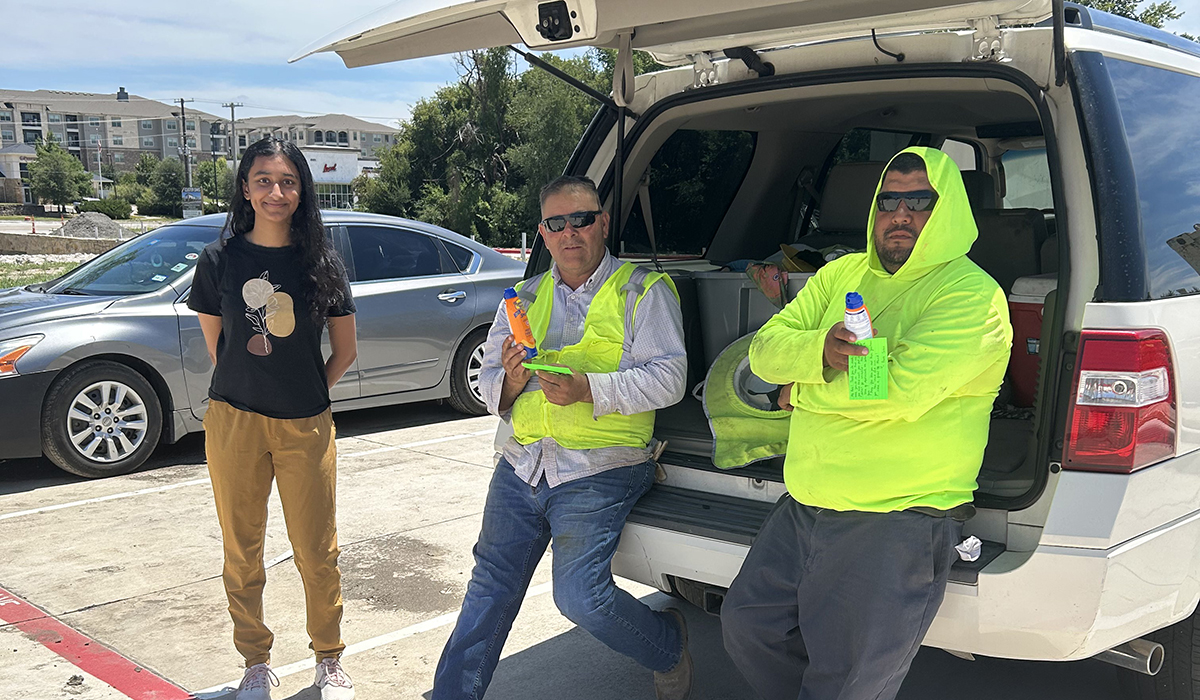
I also help distribute care products like sunscreen, cooling towels and hats to outdoor workers. In addition, I develop educational campaigns and materials to raise awareness about heat-related illness and safe work practices, which are often overlooked in North Texas.
Across all the chapters, we’ve raised about $1,500 together. And we’ve helped around 150-250 workers by providing sunscreen, hats and other protective gear.
Why was amplifying immigrant laborers’ voices at the national level important to you?
With everything going on in the U.S., I believe immigrant workers don’t deserve to be demoralized. They’re just trying to build better lives for themselves and their families.
These workers are incredibly hardworking, and many of them don’t have criminal histories. They contribute to America in ways that often go unrecognized. These are jobs that most people wouldn’t want to do because they’re so physically demanding, yet immigrant workers step up and do them.
I think it’s important to show appreciation for them without judging where they’re from or how they speak.
What has been the most rewarding part of your work?
Seeing the direct impact of my efforts. Even when language is a barrier, small gestures—smiles, simple interactions—help us connect and show that we care.
Watching their faces light up when they receive care products or safety guidance reminds me that even tiny actions can make someone feel valued, seen and protected. It’s powerful to know that our work provides both physical relief and emotional reassurance.
Do you plan to continue this work as you head to college?
Yes, I definitely plan to continue. I want to expand our chapter to more areas of Texas, especially low-income communities that are under-protected.
Even though there are rules and regulations around workplace safety, they’re often ignored. I want to make sure no one feels unseen or unsafe while working in these harsh environments. I’d love to expand outreach on campus, possibly by creating a club or fundraising for outdoor workers while I’m in college.
Why do you think it’s important for people to get involved in causes they care about?
Getting involved allows people to align their values with their actions and make a tangible difference in others’ lives. Volunteering builds empathy, awareness and leadership skills, and it fosters a sense of shared responsibility.
When people engage with causes they personally resonate with, it creates a deeper connection and amplifies the positive impact they can have.
What do you want people to learn from your story?
I want people to know that you don’t have to be defined by your circumstances. You can make a difference in other people’s lives.
Maybe you can become the person you needed when you yourself were struggling. Being a light in someone else’s life is incredibly important—and everyone has the ability to do that.
Do you want to make a difference in your community like Rishika? Find local volunteer opportunities.