
Meet Daily Point of Light Award honoree Sophia Birman. Read her story, and nominate an outstanding volunteer or family as a Daily Point of Light.
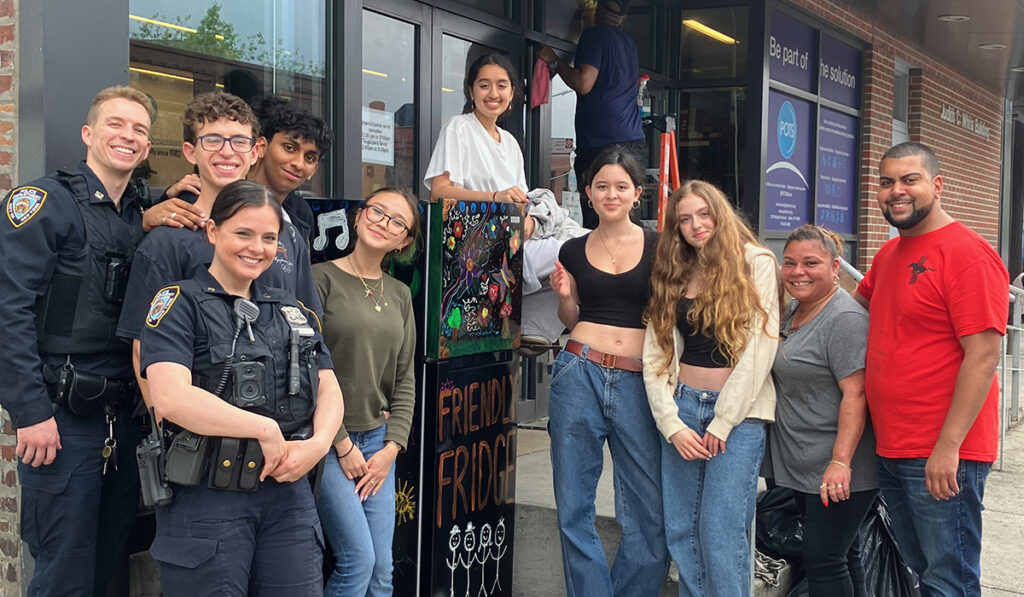
Sophia Birman, a senior at Bronx Science High School in New York City, is already making a profound impact on her community. While she is a dedicated advocate for gender equity in STEM, her most recent community service triumph addresses a vital need for food access. Recognizing that many food-insecure New Yorkers struggle to access traditional food pantries due to limited operating hours, Sophia, in her role as director of policy on the NYPD 52nd Precinct Youth Leadership Council, co-founded the “Friendly Fridges” initiative, a powerful, round-the-clock solution.
The need for a novel approach was especially urgent in the Bronx, the NYC borough facing the highest level of food insecurity. Sophia and her peers created “Friendly Fridges” to be free, communal refrigerators accessible 24 hours a day, seven days a week. The project required significant dedication; over a concentrated four-month effort, Sophia invested considerable time and talent into research, reporting, calculating solutions and building an implementation plan. Her outreach was extensive, including contacting over 300 local businesses to secure location, materials and stocking partners. Ultimately, this hard work resulted in a successful collaboration with Part of the Solution (POTS), a longtime Bronx nonprofit and food pantry.
The inaugural Friendly Fridge, which Home Depot donated at no cost, is connected to the exterior of the POTS food pantry. This single location now provides over 250 free meals to the community every day. For example, ahead of every Sunday when the pantry is closed, POTS staff stock the fridge with between 200 and 300 meals. They also ensure the fridge is stocked before closing on other days, solving the critical issue of access when pantries are shut. Though she serves on the Youth Leadership Council, which only meets 45 minutes a week, Sophia continues to dedicate approximately 12 hours each month to the ongoing, year-round operation.
Looking ahead, Sophia’s team is focused on expansion. The Friendly Fridges initiative is currently broadening its partnerships, with seven organizations agreeing to host a new fridge and 30 organizations—including large grocery chains such as Whole Foods—committed to stocking them. Sophia continues to personally lead outreach efforts, coordinating future fridges, securing materials, and ensuring food safety. Her positive and hopeful dedication to solving food insecurity for low-income communities in the Bronx proves that a simple, brilliant idea, backed by exceptional student leadership, can open doors to consistent community support.
Tell us about your organization and volunteer role.
I co-founded the “Friendly Fridges” project through the New York Police Department’s Youth Leadership Council Program. This is a city-wide program where different police precincts partner with a public high school to foster better community relations and create a community service project. My school was chosen to partner with the 52nd Precinct, and I was selected to be part of the council.
My school is in the North Bronx, one of the most food-insecure areas in the city. When we started meeting, we discussed what we could do to help our community, and what the biggest need was. We first noticed issues like homelessness and drug problems, but we began realizing that the root cause of much of this was a lack of food access. We saw that a lack of food access can lead to worse education outcomes and impede someone from attending a job. We identified food access as the biggest root cause, especially considering that, statistically, one in five people in the Bronx are food insecure, which is 5% more than any other borough in New York. That was how we initially got the idea to target food access and create the Friendly Fridge project.
What inspired you to get started with this initiative?
When we were thinking about food access, we recognized that a lot of food pantries were already there. We have these resources, but somehow the system is still failing. We started putting the numbers together: most food pantries, for example, close at 3 p.m., but most working-class people are working until 5 p.m. and are not able to get to the food pantry in time for dinner. Or, sometimes they can be closed on Sundays or one day a week. And people need food all days of the week.
We realized we couldn’t make these food pantries work 24/7; we understood that’s not structurally feasible. But we asked, “What can we do to solve for these gaps in the working hours?” That’s how we identified 24/7 community fridges. Our business model is that we partner with local organizations—restaurants, grocery stores or food pantries—to install a fridge outside of their storefront, and they help stock it. We put food in it either every day or every week.
This way, people can access food 24/7. It’s completely open; you can just open it up and take some food for yourself. While we knew there were other community fridges throughout the Bronx run by community members who donate, we wanted to ensure a more constant flow of food, which is why we wanted to partner with institutions like restaurants and grocery stores that could provide this consistent supply.
Why is fighting food insecurity so important to you?
Food insecurity is truly the gateway for so many other issues. At the most basic level, food is a necessity for survival. For anyone to be able to get a job, for example, to help themselves get out of poverty, they need to have food access to survive on. We have so many systemic issues, but I think a lot of them are just exacerbated by the lack of food access on many levels. The idea of expanding food access was not only because it’s the biggest issue facing our localized precinct, but also because all these more difficult and complex institutional issues, such as lack of access to education and lack of access to jobs, we thought could be solved through improving food access.
What are your long-term plans or goals for the organization?
We’re trying to expand to even more locations. As I said, we have one fridge that’s up and running, but we’ve encountered some logistical issues that we are trying to resolve. In general, going forward, we are focused on expanding to more places. We’re partnering with a food pantry that is willing to both host the fridge and provide the food, but we are hoping to negotiate some more complex agreements that would allow for even more fridges. For example, having a restaurant host the fridge, but having a grocery store stock it with non-perishables. Whole Foods, for one, has indicated that they might be willing to stock a fridge with items from their grocery store, which is amazing. Overall, the goal is just expanding for more fridges throughout the Bronx.
What’s the most rewarding part of your work?
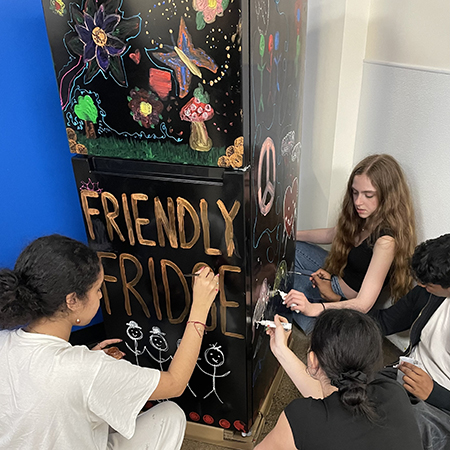
When we launched our first fridge, it took a lot of phone calls. We called over 300 businesses and grocery stores and things of that nature. Actually being able to install our first fridge was so rewarding. We came that day, we decorated, we painted the entire fridge and we installed it on the exterior. It was great because for a very long time we had theorized about this, but we knew it would be difficult to figure out the logistics. We had no funding. We had to organize for Home Depot to donate the fridge and then ask someone to store it outside of their storefront. I think that was definitely the most rewarding part of it, but it’s really just the idea that we’re making a difference. The idea that we’re seeing this fridge being restocked almost every day, and that people are actually using these resources, I think, is truly impactful.
What have you learned through your experiences volunteering?
Logistically, the impact is really in the small details. It was us noticing, “Okay, food pantries close at 3 p.m., but people get off work at 5 p.m. That two hours doesn’t line up.” It was noticing that small detail that allowed us to see these systemic gaps and actually fix them.
Maybe one lesson I learned is not to always look at the big picture. Don’t think I need to make a big, sweeping reform. Looking at these small things and thinking, “How can I change this?” is what can actually lead to long-term change.
Something else is drawing on lived experiences. My council, which created this project together, comes from all five boroughs of the city and lots of different backgrounds. The way we came to this idea was not one person saying, “Hey, I think we should do this.” It was through lots of iterations, using, “I actually have a fridge in my community, and it doesn’t work because of this,” or, “I’ve noticed this in other communities, and it works because of this.” We came up with a solution by taking all of our observations and unique backgrounds.
Why is it important for others, especially youth, to get involved with causes they care about?
Overall, I think it’s our duty as citizens and members of our society to be committed to bettering the circumstance for everyone. This is for a moral idea, but also just the fact that we are a society that grows collectively. If I’m able to help someone, give them food access and that enables them to get a job, that could enable them to innovate something or just help keep our society running. We are more interdependent on one another than we realize.
Specifically for youth, I think youth are the future of the nation. Sometimes we are put down, or we put ourselves down as, “We’re very young. We can’t change anything.” But I think it’s noticing these small things that we can change and then using those experiences so that when we get into those higher positions of power, when we become policymakers, we’re able to draw back on these experiences and create even more change. I also think we kind of have a unique perspective on things that adults may not realize, just because of the way we’ve encountered life differently, especially growing up in the technological era. Recognizing our unique insights is key.
Any advice for people who want to start volunteering?
It can definitely feel scary to create your own initiative. So, if you want to start volunteering, whether you’re in a big city or a rural town, there’s always space for you to volunteer where you’re always going to be appreciated. As I said, we try to foster a really collaborative environment in our project, and I know that many other initiatives tend to do so as well. It can even be online, and even the smallest thing makes a difference. I also think if you want to create something, it demands a lot of introspection and reflection, and what you need to do is not going to come to you immediately. That is completely okay. Just recognize that.
What do you want people to learn from your story?
Don’t be afraid to ask for help. For example, we were struggling to get a free fridge on our own. But thankfully, the police officers that we were working with were able to use their connections with Home Depot to help us get the fridge. Initially, we didn’t want to go to them. We thought, “Oh, we can do this on our own.” But not being afraid to ask for help, whether from your partners or even from your peers, is the biggest thing. Again, collaboration is really key to having a successful movement.
Do you want to make a difference in your community like Sophia? Find local volunteer opportunities.