



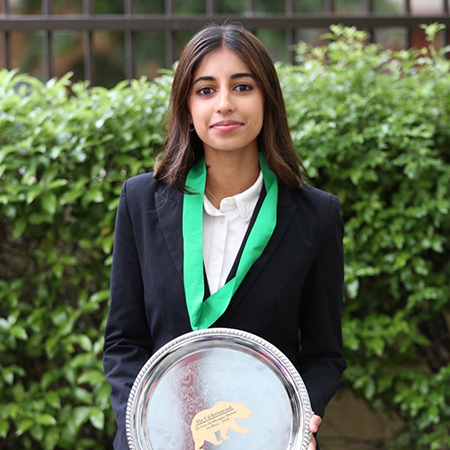
Meet Daily Point of Light Award honoree Viraja Shivhare. Read her story, and nominate an outstanding volunteer or family as a Daily Point of Light.
The fire of compassion often burns brightest when fueled by personal experience. For Viraja Shivhare, the co-founder and director of outreach for Fuel the World, her years spent living in India and her own struggle with anemia illuminated a heartbreaking reality: generational malnutrition. She witnessed firsthand how food aid, while well-intentioned, often lacked the dignity and crucial nutrition needed to break the cycle. Determined that the challenges she and others faced wouldn’t persist for future generations, Viraja set out to create systemic, youth-led change—a vision that has since grown into one of the world’s largest youth-led nonprofits.
Viraja’s dedication to thoughtful, community-focused service quickly crystallized into two flagship initiatives that offer both immediate and long-term solutions. The first, NourishNet, delivers fortified, culturally relevant meals, ensuring that food aid is not just filling, but genuinely nourishing and respectful of recipients’ heritage. The second, Nutrition Literacy Workshops, empowers families with the essential knowledge to sustain their health, teaching them to read labels, prepare affordable and nutritious meals and actively prevent chronic illness. This dual approach, blending tangible aid with vital education, demonstrates a profound understanding of the complex root causes of malnutrition.
Under Viraja’s passionate leadership, her commitment of roughly 30 to 33 hours per month—meticulously divided across 32 chapters, fundraising and hands-on volunteering—has yielded inspiring results. Fuel the World now boasts a network of over 300 volunteers, has achieved an incredible online reach of 90,000 people, and has successfully raised $24,000 to sustain its vital programs. Working with major partners like the Akshaya Patra Foundation, LifeMoves and the County of Santa Clara, and securing grants from organizations including Hershey’s and Destination: Home, Viraja has shown that even as a young leader, her vision is powerful enough to attract significant support and collaboration.
Tell us about your volunteer role.
Fuel the World is one of the world’s largest youth-led nonprofits dedicated to combatting malnutrition in underserved communities by empowering them with the tools and knowledge to achieve lasting nutritional security. Through our flagship initiatives, NourishNet and our Nutrition Literacy Workshops, we deliver fortified, culturally responsive meal packages tailored to specific community health needs, such as iron-rich meals for anemic youth or low-sugar options for families managing diabetes, while prioritizing dignity, culture and long-term wellness.
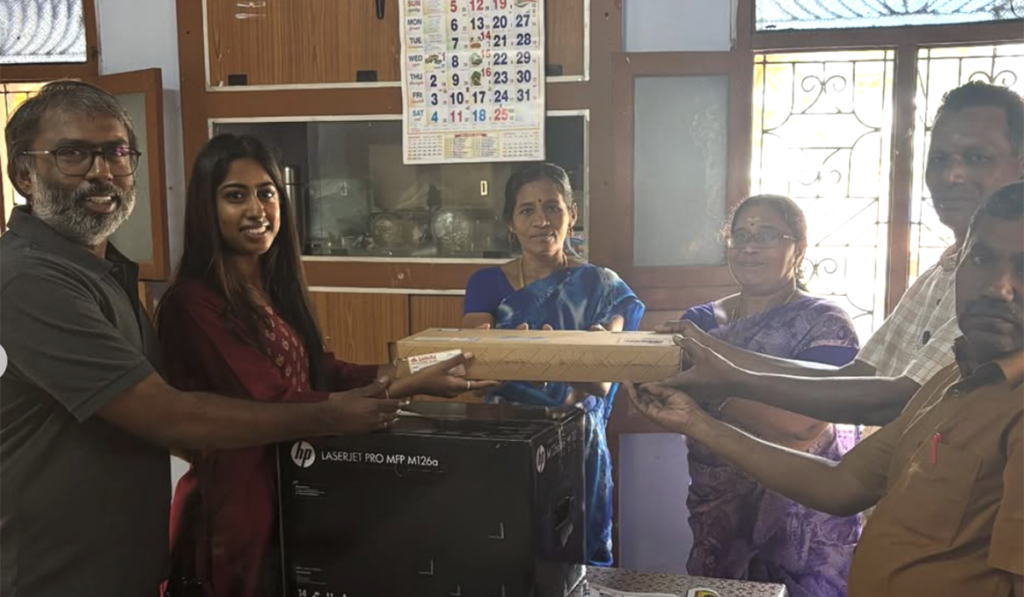
We also run free, youth-led in-person and virtual workshops at schools, libraries and community centers that teach participants how to navigate nutrition labels, make affordable and healthy food choices and prevent chronic illness through diet. Over the past three years, we have collectively raised nearly $24,000, secured three grants worth upwards of $1,000, expanded to 31 chapters globally, partnered with organizations such as the Akshaya Patra Foundation, LifeMoves, SF Marin Food Bank, BigHelp for Education, CityTeam, Jamba Juice, Panera Bread, Chipotle, Shake Shack, Hot Table and the County of Santa Clara, mobilized over 300 youth volunteers and reached more than 90,000 people through outreach and social media.
As the co-founder and director of outreach of Fuel the World, I help to build and nurture partnerships with community leaders, organizations and stakeholders to the distribution of our nutritional programs. I oversee outreach campaigns, coordinate volunteer efforts, and advocate for policies that support nutrition security. I spend a majority of my time supporting leaders and helping them to plan events, coordinate distribution and stay aligned with our outreach and nutrition goals. I also manage the Fundraising and Partnerships Task Force and previously managed the Fuel the World Summer 2025 Internship, where I managed donor communication and identified partnership opportunities. I also spend time weekly meeting with grantors and collaborating with organizations like Destination: Home, Hershey’s Company, Youth Service America and Karma4Cara through fiscal sponsorships and monetary grant contributions.
What inspired you to get started with this initiative?
It was the moment I realized that thinking about change wasn’t enough; I wanted to put pen to paper and actually build something that made a tangible difference. I’d spent so much time volunteering, learning about nutrition insecurity and seeing the gaps in access and education, but eventually the question became: What am I going to do with what I know? I didn’t want my frustration or empathy to stay theoretical. I wanted to translate it into programs, partnerships and resources that people could feel in their everyday lives. Creating Fuel the World was my way of moving from intention to impact, designing real systems, organizing real volunteers and addressing real needs rather than just talking about them. That shift from idea to action is what started this entire journey, and it still drives me today.
Why is this issue so important to you?
It matters to me on a deeply personal level because I’ve experienced the effects of malnutrition in my own life and seen how it can echo across generations. Growing up Indian, I was surrounded by stories, from my parents, grandparents and extended family, about how nutritional deficiencies were almost normalized in our community. For many South Asian families, especially women, conditions like anemia are so common that people stop questioning why they persist. I dealt with anemia myself, and even though I had access to healthcare and information, it still affected my energy, concentration and overall wellbeing.
That experience made me think about how many children don’t have the same support systems or resources I had. If something as “quiet” as anemia could shape my daily life, what does it mean for kids facing more severe or chronic nutritional gaps with far fewer resources to fall back on? The more I learned, the more I realized that malnutrition isn’t just an individual issue; it’s a generational one. It affects how children grow, how they learn and what opportunities they can pursue. It’s woven into systemic inequalities, cultural norms and long-standing gaps in access to nutritious food and education. Working on this issue feels like a way of breaking that cycle, not just for one community, but for any family or child who has been told, implicitly or explicitly, to simply “live with it.” Addressing malnutrition isn’t just about food; it’s about giving people the health and foundation they deserve from the very beginning. That personal connection is why I’m so committed to this work.
What are your long-term plans or goals for the organization?
My goal is to continue leading Fuel the World as a co-founder and director of outreach throughout high school, building on the foundation my team and I have created. After graduating, I want to establish a new high school board to preserve the youth-led, community-centered identity that defines our organization, while also expanding Fuel the World onto college campuses to broaden our reach. As our credibility grows, I plan to develop larger partnerships with other nonprofits and integrate our initiatives like Nutrition Literacy workshops and NourishNet into mainstream hunger-relief efforts nationwide. Ultimately, I envision Fuel the World contributing to policy change in schools by advocating for healthier food options and high-quality nutrition education beginning early in childhood, addressing generational malnutrition at its root.
What’s been the most rewarding part of your work?
Seeing the real, human impact of what started as a small idea. Watching families benefit from NourishNet meals or seeing students light up during our Nutrition Literacy workshops makes the long hours feel worth it. Just as meaningful, though, has been watching our volunteer network grow seeing younger students step into leadership roles, build confidence and create their own projects within Fuel the World.
Another deeply rewarding piece has been the collaborations we’ve built along the way. Getting to work with organizations I’ve admired for years like Akshaya Patra and Hershey’s has felt surreal at times. Our most recent and upcoming partnership with Kendra Scott shows that youth-led initiatives can stand shoulder to shoulder with established nonprofits, and it’s validating to know that our team’s work is recognized at that level. Altogether, the personal impact, the community we’ve built and the partnerships we’ve formed make this work incredibly meaningful and keep me excited to keep growing it.
What have you learned through your experiences volunteering?
The biggest lesson I’ve learnt is the importance of curiosity, thoroughness and research. When I first started Fuel the World, we began under a different name, “Humanity Bundles Initiative,” with a different mission and a different approach to solving the nutrition crisis. But, after a few months of operations, we weren’t satisfied with the change we were creating. This is when our team took a step back and began digging deep into the root causes of malnutrition. As a result, we learned that malnutrition can’t just be characterized by a lack of good, but also shaped by generational and biological history that has to be addressed first. Understanding this complexity forced us to broaden our perspective: malnutrition is a personal issue, but it’s also a systemic one shaped by history, culture and inequality. This caused us to realize that our previous programs were simply a Band-Aid, not a real fix to the problem at hand and forced us to redesign our organization as a whole into a complete rebrand. I think it’s important for volunteers and founders like me to think outside the box and be okay with their mission evolving and becoming more specific as they learn, but I believe this starts first with empathetically looking towards other stories, as well as digging deeper into our own.
Why is it important for others to get involved with causes they care about?
Real change doesn’t happen from the sidelines. It happens when individuals decide to act, even if they don’t feel “ready” or “qualified.” And youth especially play a crucial role in that. Young people bring energy, urgency and a willingness to rethink systems that adults often take for granted. When I first began doing community service work, I saw how easy it was for young volunteers to second-guess ourselves. Adults didn’t always take us seriously, and sometimes that made us question our own ability to create meaningful change. But I also learned that the best way to challenge that doubt, both from others and from within, is to show what’s possible through consistent action. Every workshop, every fundraiser, every partnership becomes evidence that age isn’t a limitation. That’s why youth participation matters.
Young people don’t wait for the “perfect moment” or the “perfect credentials.” We build credibility by showing up, learning as we go and proving our impact step by step. And because we’re not locked into old assumptions, we’re often the ones who push for solutions that are more creative, community-driven and equitable. When young people get involved, they don’t just support a cause; they expand what that cause is capable of achieving. Their involvement signals that change is not only necessary, but urgent, and that anyone, regardless of age, can help move it forward. I encourage anybody reading this to take the next step that they’ve been thinking about but holding themselves back from, because young founders and volunteers can have an impact beyond their comprehension.
Any advice for people who want to start volunteering?
When I first got involved in community service, I used to think impact only came from big, dramatic accomplishments. But I realized pretty quickly that the most meaningful progress often comes from breaking things down into manageable steps. Instead of trying to tackle everything at once, I gave myself smaller benchmarks that felt realistic and kept me grounded. I’d aim to complete one project, connect with one new partner, or organize one event at a time.
Focusing on these short-term targets made the work feel less overwhelming and gave me a sense of direction, especially on weeks when the bigger picture felt too far away. What surprised me is how easily these small efforts began to build on each other. Before I knew it, those little goals had grown into outcomes I never imagined when I started, more outreach, more volunteers and a deeper impact in the communities I cared about. If you’re beginning your own volunteer journey, start with something simple and achievable. Those small commitments stack up faster than you think, and they can lead you somewhere far beyond what you expected.
Do you want to make a difference in your community like Viraja? Find local volunteer opportunities.